pilotr: Simulate experimental and behavioural data from a portable design specification
SoftwareAbstract
Twin R and Python packages for simulating experimental and behavioural data from a portable design specification. pilotr supports crossed mixed-effects designs, power and precision analyses, and reproducible generation from the same specification in either language.
Overview
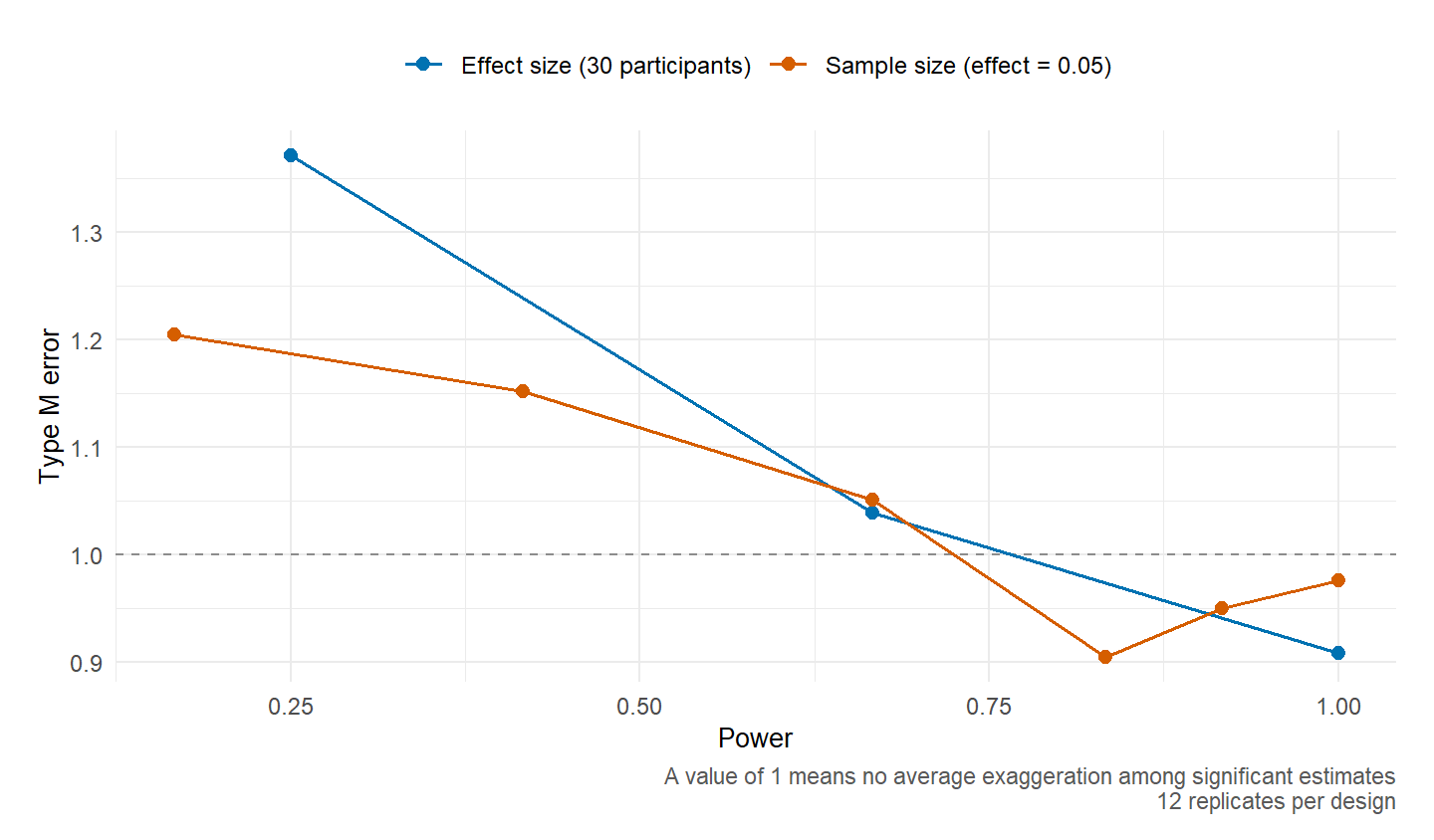
pilotr makes a planned study executable before data collection. A portable specification describes the units, predictors, response family, fixed effects and random-effects structure; the same specification can then be simulated and analysed from R or Python. The important output is not a single power percentage, but a design diagnosis that includes detection, precision, Type S and Type M errors, and model warnings.
Illustrative outputs
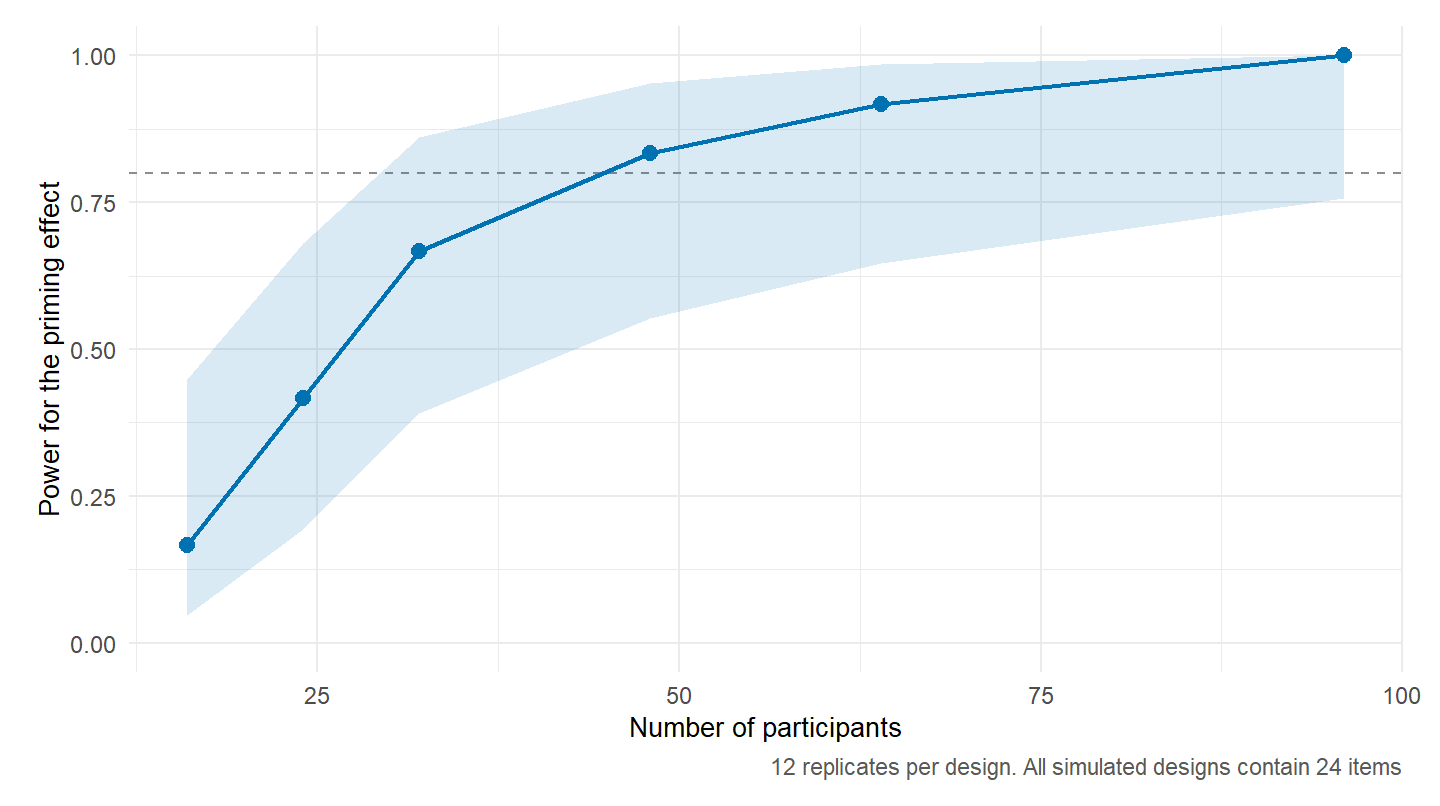
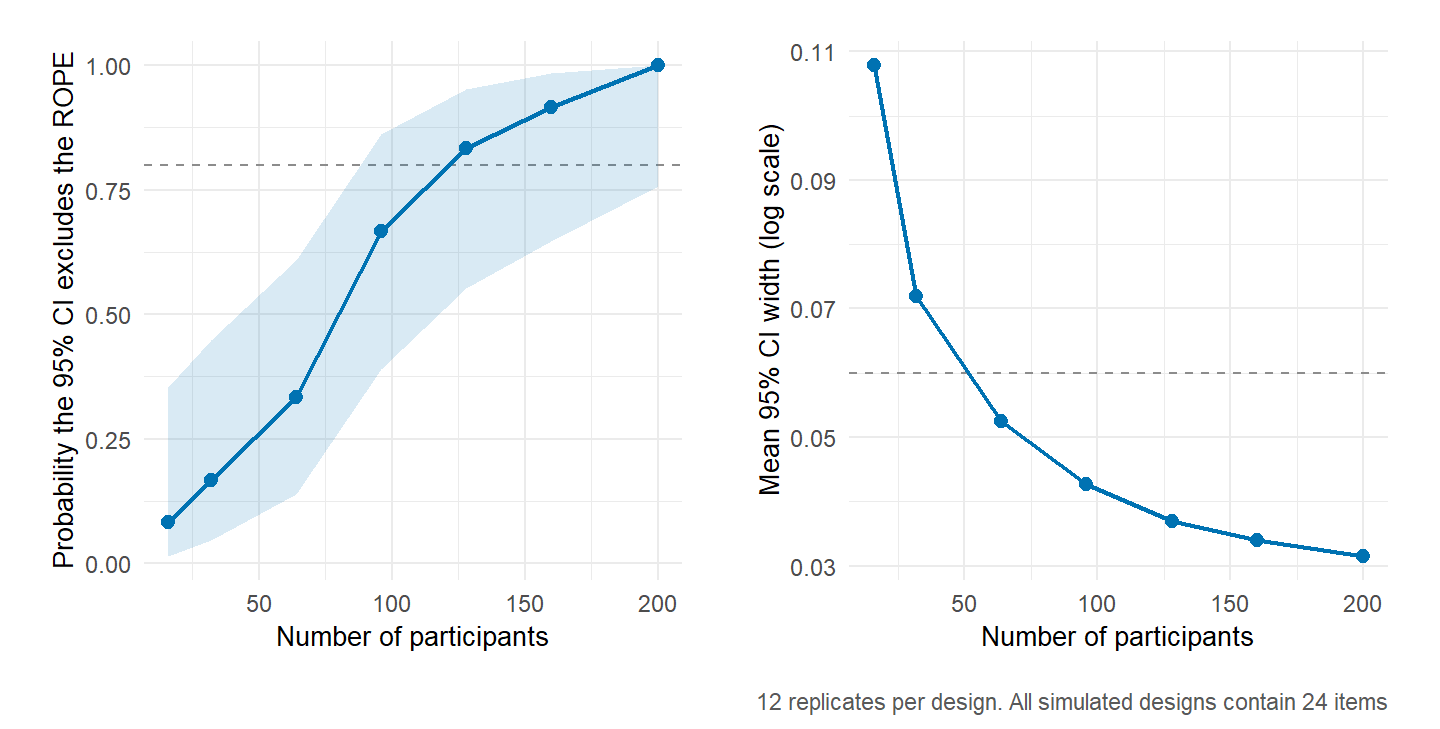
These plots show the complementary questions that a simulation-based design analysis should answer: how often the target effect is detected, how precisely it is estimated and how much significant estimates are exaggerated.
Reproducible planning
Treat the specification, simulation seed, package version, number of replicates and fitted model as part of the planning record. The smoke-test settings in the companion blog post demonstrate the pipeline; a real design decision requires many more replicates and a sensitivity analysis over plausible assumptions. Explore the full R documentation, Python documentation or browser app.
Reference
Bernabeu, P. (2026). pilotr: Simulate experimental and behavioural data from a portable design specification (Version 0.3.0) [Computer software]. Zenodo. https://doi.org/10.5281/zenodo.21266313
Comments are provided by Disqus and are not loaded automatically. Loading them connects your browser to Disqus, which may use cookies and process data under its privacy policy. See this site's privacy notice for details.