lexsync: Lexical optimisation and hardware-timed experiment generation
SoftwareAbstract
Twin R and Python packages for selecting and matching lexical stimuli, counterbalancing lists, generating pseudowords and writing PsychoPy, OpenSesame and jsPsych experiments with hardware-timed EEG triggers.
Overview
lexsync turns a lexical design into a checked set of stimuli and experiment files. It separates the candidate corpus from the design specification, reports whether matching and counterbalancing succeeded, and carries the resulting item table into PsychoPy, OpenSesame or jsPsych. The shared R/Python format makes the design inspectable before presentation software is involved.
Illustrative output
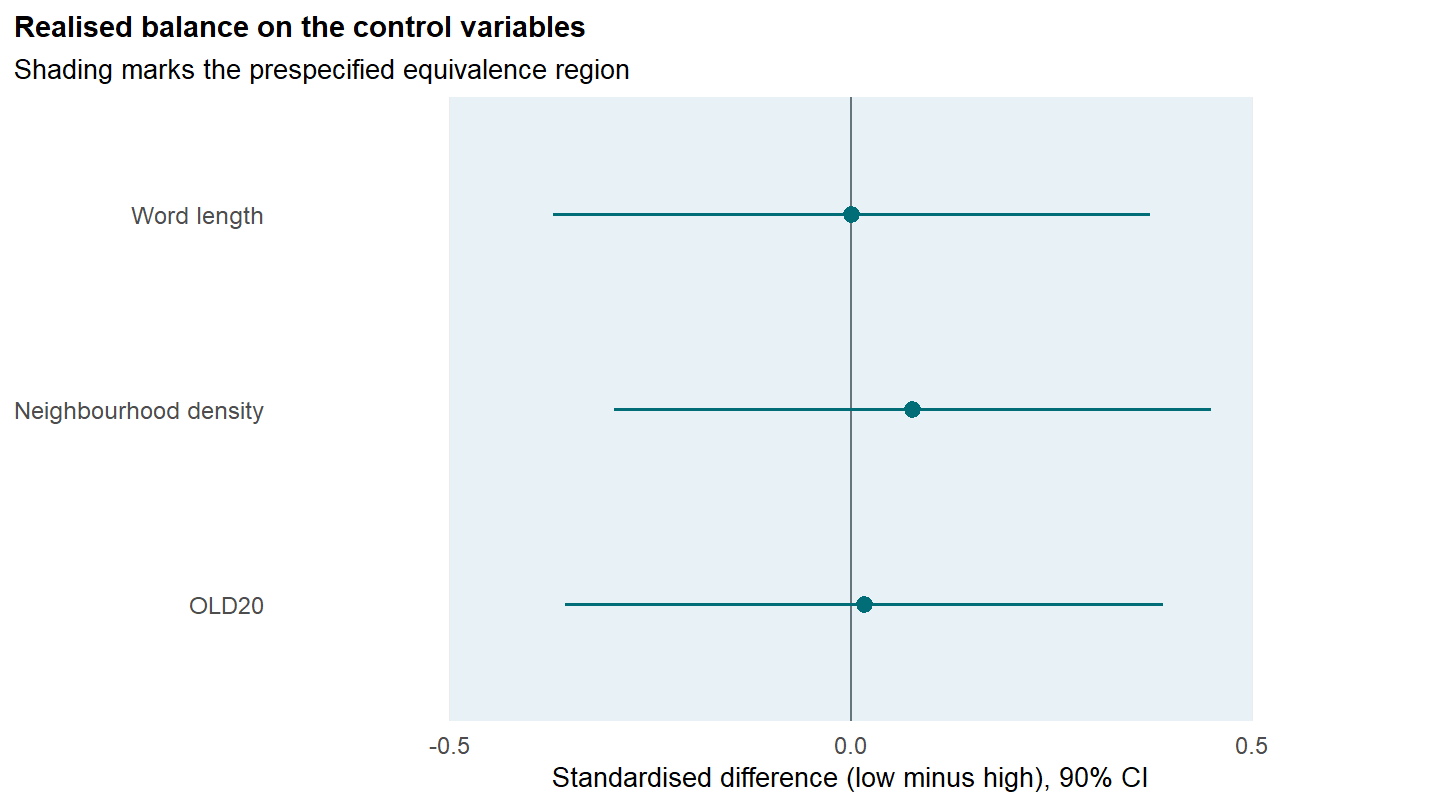
The balance plot makes the main quality-control question visible: do the conditions differ on the intended frequency measure while remaining comparable on the controls selected by the researcher?
Reproducible hand-off
Save the design, the source lexicon, the matching report and the generated experiment together. Before recording EEG, verify the exported timing, trigger codes, trial order and counterbalancing in the target presentation framework. The R documentation, Python documentation and companion blog post provide the complete workflow.
Reference
Bernabeu, P. (2026). lexsync: Lexical optimisation and hardware-timed experiment generation (Version 0.1.0) [Computer software]. https://github.com/pablobernabeu/lexsync
Comments are provided by Disqus and are not loaded automatically. Loading them connects your browser to Disqus, which may use cookies and process data under its privacy policy. See this site's privacy notice for details.