theoryforge: Systematic theory development
SoftwareVersioned, machine-checkable scientific theories in R and Python.

depictr: A unified toolkit for visualising statistical models and data
SoftwareA consistent, accessible visual language for statistical analysis in R and Python.

scopusflow: A reproducible workflow layer for Scopus bibliographic searches
SoftwareReproducible, quota-aware Scopus searches in R and Python.

pilotr: Simulate experimental and behavioural data from a portable design specification
SoftwareSimulation-based design analysis from a portable R and Python specification.

lexsync: Lexical optimisation and hardware-timed experiment generation
SoftwareLexical stimulus matching and experiment generation in R and Python.

Unlock the Lab: Your guide to reading science like a scientist
Interactive workshop application for developing science literacy and critical evaluation of research quality through peer assessment of 48 fictional research scenarios.
WebVTT caption transcription app
Conference paperOpen-source R-based application that converts video captions from WebVTT format into plain text by automatically removing timestamps and formatting the content into accessible documents.
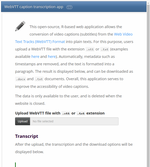
Web application for the simulation of experimental data
Conference paperOpen-source R-based web application for creating varied experimental data sets with customizable structures including between-group and within-participant variables that can be categorical or continuous.

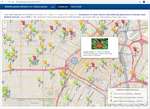
Data dashboard: Butterfly species richness in Los Angeles
Conference paperDashboard with open data from a study by Prudic et al. (2018), that compares citizen science with traditional methods in butterfly sampling. Coding tasks included long-transforming, merging, and as ever, wrangling with a table.
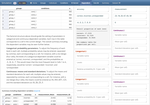
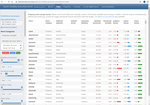
Dutch modality exclusivity norms
Conference paperThis app presents linguistic data over several tabs. The code combines the great front-end of Flexdashboard—based on R Markdown and yielding an unmatched user interface—, with the great back-end of Shiny—allowing users to download sections of data they select, in various formats. The hardest nuts to crack included modifying the rows/columns orientation without affecting the functionality of tables. A cool, recent finding was the reactable package. A nice feature, allowed by Flexdashboard, was the use of quite different formats in different tabs.
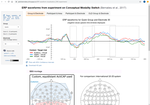
Modality switch effects emerge early and increase throughout conceptual processing
Conference paperWe tested whether conceptual processing is modality-specific by tracking the time course of the Conceptual Modality Switch effect. Forty-six participants verified the relation between property words and concept words. The conceptual modality of consecutive trials was manipulated in order to produce an Auditory-to-visual switch condition, a Haptic-to-visual switch condition, and a Visual-to-visual, no-switch condition. Event-Related Potentials (ERPs) were time-locked to the onset of the first word (property) in the target trials so as to measure the effect online and to avoid a within-trial confound. A switch effect was found, characterized by more negative ERP amplitudes for modality switches than no-switches. It proved significant in four typical time windows from 160 to 750 milliseconds post word onset, with greater strength in posterior brain regions, and after 350 milliseconds. These results suggest that conceptual processing may be modality-specific in certain tasks, but also that the early stage of processing is relatively amodal.