Multi-region investigation of ‘man’ as default in attitudes
Journal article



Abstract
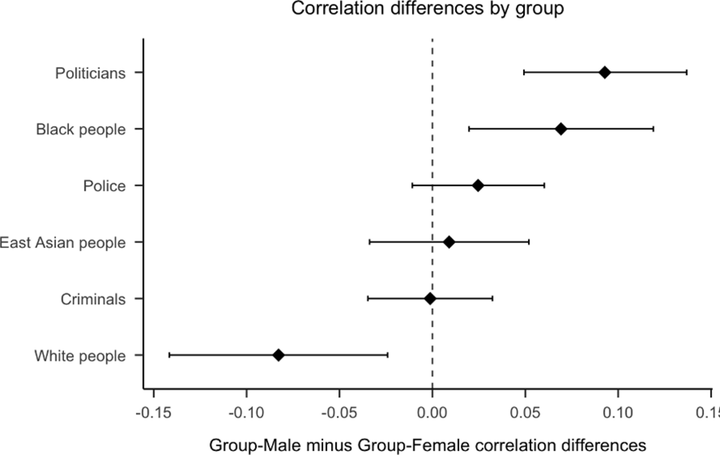
Previous research has studied the extent to which men are the default members of social groups in terms of memory, categorization, and stereotyping, but not attitudes which is critical because of attitudes’ relationship to behavior. Results from our survey (N > 5000) collected via a globally distributed laboratory network in over 40 regions demonstrated that attitudes toward Black people and politicians had a stronger relationship with attitudes toward the men rather than the women of the group. However, attitudes toward White people had a stronger relationship with attitudes toward White women than White men, whereas attitudes toward East Asian people, police officers, and criminals did not have a stronger relationship with attitudes toward either the men or women of each respective group. Regional agreement with traditional gender roles was explored as a potential moderator. These findings have implications for understanding the unique forms of prejudice women face around the world.
View full textStudy at a glance
across more than 40 regions"] --> B["Globally distributed
laboratory network"] B --> C["Measure attitudes towards each group
and towards its men and women"] C --> D["Stronger link with the men:
Black people, politicians"] C --> E["Stronger link with the women:
White people"] C --> F["No difference: East Asian people,
police officers, criminals"] D -- "for politicians" --> G["Regional agreement with traditional
gender roles moderates role-based
groups only, not race-based groups"] F -- "for police officers, criminals" --> G
Reference
Phills, C. E., Miller, J. K., Buchanan, E. M., Williams, A., Meyers, C., Brown, E. R., Zickfeld, J., Volsa, S., Stieger, S., Oberzaucher, E., Mlakic, V., Vasilev, M., Dalgar, İ., Çoksan, S., Söylemez, S., Solak, Ç., Özdoğru, A. A., Çoktok, B., Kung, C.-C., … Kekecs, Z. (2025). Multi-region investigation of ‘man’ as default in attitudes. PLOS ONE, 20(6), e0323938. https://doi.org/10.1371/journal.pone.0323938
Related references
A. Garcia, H. (2024). Post-Traumatic Stress Disorder and Post-Combat Reintegration. The Oxford Handbook of Evolution and the Emotions, 1262–1278. https://doi.org/10.1093/oxfordhb/9780197544754.013.65
Aaberg, O. R., Ballangrud, R., Husebø, S. I. E., & Hall-Lord, M. L. (2019). An interprofessional team training intervention with an implementation phase in a surgical ward: A controlled quasi-experimental study. Journal of Interprofessional Care, 39(1), 57–66. https://doi.org/10.1080/13561820.2019.1697216
Aabo, T., & Jensen, V. R. (2026). Only attractive women are welcome: Board bias and CEO selection. Global Finance Journal, 69, 101233. https://doi.org/10.1016/j.gfj.2026.101233
Aabo, T., & Rønnow, S. K. (2024). Female CEOs with a squeeze of narcissism: A perfect cocktail for corporate performance? Finance Research Letters, 64, 105469. https://doi.org/10.1016/j.frl.2024.105469
Aabo, T., Hansen, M., Krog, S. H., & Kynde, K. (2024). Explaining differences in CEO gender diversity across industries: Do personality traits matter? Global Finance Journal, 61, 100986. https://doi.org/10.1016/j.gfj.2024.100986
Aaldering, L., & Lecheler, S. (2025). Trick of the traits: a conceptual replication of the trait ownership hypothesis. Acta Politica. https://doi.org/10.1057/s41269-025-00390-w
Abdalla, M. I. (2022). “My Islam be Black”: resisting erasure, silence, and marginality at the intersection of race and religion. Communication, Culture and Critique, 16(1), 9–16. https://doi.org/10.1093/ccc/tcac042
Abdelkader Ali, A., Gabriela Andrei, A., Ruiz-Moreno, F., & Zingone, L. (2025). Exploring justice perceptions in online banking recovery: gender moderation and behavioral outcomes. Journal of Business Economics and Management, 26(1), 164–185. https://doi.org/10.3846/jbem.2025.22831
Abdelkader, M. G., Gao, Y., & Elamer, A. A. (2024). Board gender diversity and ESG performance: The mediating role of temporal orientation in South Africa context. Journal of Cleaner Production, 440, 140728. https://doi.org/10.1016/j.jclepro.2024.140728
Abdul Hamid, N., Kamal Azi, K., Mohmad Yazam, S. S. N., Mohd Rashid, S., & Ishak, M. S. (2024). Navigating The Media Maze: Perceived Work-Life Balance Among Women Journalists. Jurnal Komunikasi: Malaysian Journal of Communication, 40(1), 120–137. https://doi.org/10.17576/jkmjc-2024-4001-07. https://doi.org/10.17576/JKMJC-2024-4001-07
Abdul Kader, M. I., Morrison, E., & Gheorghiu, A. (2025). I like to move it move it - static and dynamic cues in social perception. The Journal of Social Psychology, 1–24. https://doi.org/10.1080/00224545.2025.2580295
Abel, M., Bomfim, E., Cisneros, I., Coyle, J., Eraou, S., Gebeyehu, M., Hernandez, G., Juantorena, J., Kaplan, L., Marquez, D., Mullen, J., Mulhern, P., Opong-Nyantekyi, A., Osathanugrah, R., Paul, J., Philie, A., Tingley, L., & Wang, J. (2024). Are women blamed more for giving incorrect financial advice? Journal of Economic Behavior & Organization, 228, 106781. https://doi.org/10.1016/j.jebo.2024.106781
Abideen, Z. ul, Jabeen, S., Lawanto, O., Minichiello, A., & Iqbal, A. (2025). WIP: Examining the Gender Difference on the Five Facets of Need for Cognitive Closure Among Engineering Students. 2025 IEEE Frontiers in Education Conference (FIE), 1–5. https://doi.org/10.1109/fie63693.2025.11328550. https://doi.org/10.1109/FIE63693.2025.11328550
Aboim, S. (2024). Decolonising Sexual and Gender Rights: Situated Citizenship and Regimes of Violence. The Palgrave Handbook of Gender and Citizenship, 51–72. https://doi.org/10.1007/978-3-031-57144-2_3
Aboim, S., & Vasconcelos, P. (2021). What does it Mean to be a Man? Trans Masculinities, Bodily Practices, and Reflexive Embodiment. Men and Masculinities, 25(1), 43–67. https://doi.org/10.1177/1097184x211008519. https://doi.org/10.1177/1097184X211008519
Aboim, S., & Vasconcelos, P. (2024). Gender Fields. https://doi.org/10.4324/9781003314240
Abouzahra, M., Guenter, D., & Tan, J. (2022). Exploring physicians’ continuous use of clinical decision support systems. European Journal of Information Systems, 1–22. https://doi.org/10.1080/0960085x.2022.2119172. https://doi.org/10.1080/0960085X.2022.2119172
Abraham, L. (2023). The gender gap in performance reviews. Journal of Economic Behavior & Organization, 214, 459–492. https://doi.org/10.1016/j.jebo.2023.07.039
Abraham, M., & Burbano, V. (2022). Congruence between leadership gender and organizational claims affects the gender composition of the applicant pool: Field experimental evidence. Organization Science, 33(1), 393–413. https://doi.org/10.1287/orsc.2021.1442
Abraham, M., Botelho, T. L., & Lamont-Dobbin, G. (2024). The (re)production of inequality in evaluations: A unifying framework outlining the drivers of gender and racial differences in evaluative outcomes. Research in Organizational Behavior, 44, 100207. https://doi.org/10.1016/j.riob.2024.100207
Abulbasal, R., Ingersoll, A., & Glass, C. (2024). Sociological approaches to women and leadership theory: toward an intersectional approach. Handbook of Research on Gender and Leadership, 84–98. https://doi.org/10.4337/9781035306893.00016
Abule, N., & Melo, G. (2025). Improving Fairness by Debiasing Intersectional Biases in Contextual AI Models. 2025 IEEE International Conference on Collaborative Advances in Software and COmputiNg (CASCON), 11–16. https://doi.org/10.1109/cascon66301.2025.00019. https://doi.org/10.1109/CASCON66301.2025.00019
Abus, M. (2023). A theory of gender’s effect on vote shift with a test based on Turkish elections. Mediterranean Politics, 29(5), 729–754. https://doi.org/10.1080/13629395.2023.2194154
Acharya, A., & Azhar, S. (2024). “We are Treated as Outsiders in Our Own City”: Lived Experiences of Intersectional Stigma Against Sex Workers in Kolkata, India. Sexuality Research and Social Policy, 22(3), 1417–1429. https://doi.org/10.1007/s13178-024-01054-8
Acharya, N., Sassenberg, A.-M., & Soar, J. (2023). The Role of Cognitive Absorption in Recommender System Reuse. Sustainability, 15(5), 3896. https://doi.org/10.3390/su15053896
Achour, Z. (2025). Impact of perceived glass ceiling on burnout among female public administrators in Tunisia: the moderating role of work-life balance. International Journal of Environment, Workplace and Employment, 9(1), 1–15. https://doi.org/10.1504/ijewe.2025.145494. https://doi.org/10.1504/IJEWE.2025.145494
Aczel, B. (2023). Why we need a ‘psychology of science.’ Nature Human Behaviour, 8(1), 4–5. https://doi.org/10.1038/s41562-023-01786-4
Adamchik, V., & Sedlak, P. (2024). Gender and organizational commitment: evidence from a nationwide survey in Poland. Central European Management Journal, 32(4), 515–533. https://doi.org/10.1108/cemj-05-2023-0201. https://doi.org/10.1108/CEMJ-05-2023-0201
Adame, B. J., & Mattson, L. D. (2024). Vested Interest Theory as a Framework for Understanding Anthropogenic Climate Change Risk Perceptions. Health Communication, 40(4), 598–607. https://doi.org/10.1080/10410236.2024.2357443
Adame, B. J., Corman, S. R., Endres, C. J., Farmer, R. D., & Awonuga, T. (2025). How partisan news outlets frame vested interests in climate change. Journal of Environmental Management, 375, 124159. https://doi.org/10.1016/j.jenvman.2025.124159
Adame, B. J., Corman, S. R., Von Feldt, P. A., Meneses, C. M., O’Rourke, H. P., & Tahir, A. (2025). Reactance as a cause of COVID-19 vaccination hesitancy. Vaccine, 57, 127209. https://doi.org/10.1016/j.vaccine.2025.127209
Adamovic, M., & Leibbrandt, A. (2022). A large‐scale field experiment on occupational gender segregation and hiring discrimination. Industrial Relations: A Journal of Economy and Society, 62(1), 34–59. https://doi.org/10.1111/irel.12318
Adamovic, M., & Molines, M. (2023). What if the supervisor has a different gender? The roles of value fit, identification, and beliefs in gender equality. Scandinavian Journal of Management, 39(1), 101259. https://doi.org/10.1016/j.scaman.2022.101259
Adams, G. A., & Webster, J. R. (2021). Relating supervisor interpersonal emotion management- and task-oriented leadership to adaptive performance: a moderated-mediation model incorporating trust and gender. Equality, Diversity and Inclusion: An International Journal, 41(4), 549–567. https://doi.org/10.1108/edi-07-2021-0174. https://doi.org/10.1108/EDI-07-2021-0174
Adams, R. B., Albohn, D. N., Hedgecoth, N., Garrido, C. O., & Adams, K. D. (2022). Angry White Faces: A Contradiction of Racial Stereotypes and Emotion-Resembling Appearance. Affective Science, 3(1), 46–61. https://doi.org/10.1007/s42761-021-00091-5
Adams, Z., Osman, M., Bechlivanidis, C., & Meder, B. (2023). (Why) Is Misinformation a Problem? Perspectives on Psychological Science, 18(6), 1436–1463. https://doi.org/10.1177/17456916221141344
Adamus, M., & Ballová Mikušková, E. (2023). Gender discrimination and the backlash effect in recruitment and dismissal processes: experimental evidence from Slovakia. Gender in Management: An International Journal, 39(1), 107–129. https://doi.org/10.1108/gm-01-2022-0002. https://doi.org/10.1108/GM-01-2022-0002
Adamus, M., Fedáková, D., & Čavojová, V. (2025). The Role of Educational Choices in Support of Gender Equality in Unpaid Domestic Work: A Case Study of Psychology and STEM Students in Slovakia. Czech Sociological Review, 60(6), 603–621. https://doi.org/10.13060/csr.2024.034
Adamus, M., Guzi, M., & Ballová Mikušková, E. (2025). Evaluators’ masculine gender identity may drive gender biases in peer evaluation of business plans. Journal of Behavioral and Experimental Economics, 119, 102473. https://doi.org/10.1016/j.socec.2025.102473
Adedoyin, O. B., & Altinay, F. (2023). Open educational resources: Evaluation of students’ intention to use and motivation to create. British Journal of Educational Technology, 54(6), 1790–1813. https://doi.org/10.1111/bjet.13313
Adefare, T., Adeola, O., Mogaji, E., Nguyen, N. P., & Mogaji, S. A. (2024). Empowering women agriculture entrepreneurs: banks’ role in achieving sustainable development goals. International Journal of Bank Marketing, 42(4), 692–724. https://doi.org/10.1108/ijbm-03-2023-0128. https://doi.org/10.1108/IJBM-03-2023-0128
Adikaram, A. S., & Razik, R. (2022). Femininity penalty: challenges and barriers faced by STEM woman entrepreneurs in an emerging economy. Journal of Entrepreneurship in Emerging Economies, 15(5), 1113–1138. https://doi.org/10.1108/jeee-07-2021-0278. https://doi.org/10.1108/JEEE-07-2021-0278
Adikaram, A., & Razik, R. (2023). Against all odds: women’s motivation to become STEM entrepreneurs in Sri Lanka. Journal of Business and Socio-Economic Development, 5(1), 37–54. https://doi.org/10.1108/jbsed-09-2022-0101. https://doi.org/10.1108/JBSED-09-2022-0101
Adisa, T. A., Gbadamosi, G., Lashmore, T., & Roy‐Mukherjee, S. (2025). Tokenism and the Concrete Ceiling: Navigating Racial and Gender Disparities in the Experiences of Black Female Police Officers. Gender, Work & Organization, 32(4), 1654–1667. https://doi.org/10.1111/gwao.13260
Adjei Boateng, F., & Heilman, M. E. (2024). Think Manager-Think Male Re-Examined: Race as a Moderator. Sex Roles, 90(12), 1717–1734. https://doi.org/10.1007/s11199-024-01542-6
Adnan, M., Zhu, N., Abdullah, & Bilal, M. (2025). The nexus between female CEOs, government subsidies and green innovation: probing board diversity dynamics. Total Quality Management & Business Excellence, 36(5–6), 395–423. https://doi.org/10.1080/14783363.2024.2448560
Adom-Opare, F. A. (2025). Positioning Disability as a Majority Issue in Development. Activating Arts to Understand Disability in Africa, 66–87. https://doi.org/10.4324/9781003565420-6
Adomako, S., Zhu, F., Hsu, D. K., Istipliler, B., & Wiklund, J. (2024). Navigating environmental threats to new ventures: A regulatory fit approach to bricolage. Journal of Management Studies, 62(4), 1524–1568. https://doi.org/10.1111/joms.13115
Afshar Jahanshahi, A., Kickul, J., Brownell, K. M., Schmitt, V. G. H., Rivas-Mendoza, M. I., Fernandez-Telleria, B., da Costa, P. R., García, X. C., Ibarra, V. G., Nuñez, J. G., Carbonell, S. T., García, F. I., Izaguirre, L. A. P., Leyva, A. O., Pigola, A., & Galera, V. (2025). When Darkness Dims the Social Light: The Dark Triad and Prosociality in Latin America. Journal of Business Ethics. https://doi.org/10.1007/s10551-025-06221-4
Afshari, L., Young, S., & Custovic, E. (2024). Women in STEM professions: how can education experiences help? Journal of Education and Work, 37(5–6), 353–366. https://doi.org/10.1080/13639080.2024.2443760
Agarwal, N., & Lourenco, S. F. (2025). Children’s decision‐making about others reflects gender stereotypes more than race: Evidence from a US sample. Social Development, 34(4). https://doi.org/10.1111/sode.70018
Agerström, J., Carlsson, M., & Erenel, A. (2023). The effect of social gender norms on parental leave uptake intentions: evidence from two survey experiments on prospective fathers and mothers. Applied Economics, 55(53), 6277–6293. https://doi.org/10.1080/00036846.2022.2142192
Aggarwal, R., Midha, V., & Sullivan, N. (2024). The effect of gender expectations and physical attractiveness on discussion of weakness in online professional recommendations. Information Systems Research, 35(1), 87–103. https://doi.org/10.1287/isre.2021.1032
Agha, M., & Pramathevan, S. (2023). Executive gender, age, and corporate financial decisions and performance: The role of overconfidence. Journal of Behavioral and Experimental Finance, 38, 100794. https://doi.org/10.1016/j.jbef.2023.100794
Agi, A. C., & Rivas-Drake, D. (2021). “Other People’s Battles”? Incorporating the Experiences of Immigrant-Origin Black American Youth in Ethnic/Racial Identity Research. Identity, 22(2), 101–115. https://doi.org/10.1080/15283488.2021.1919518
Agormedah, E. K. (2025). Association between learning engagement and learning satisfaction among first-year business students in higher education: the moderating effect of gender. Discover Education, 4(1). https://doi.org/10.1007/s44217-025-00499-2
Agorsor, P. D., Appau, M. W., Attakora-Amaniampong, E., & Anugwo, I. C. (2025). Indoor thermal inequities and adaptive strategies in student housing: a gender-based analysis from Ghana. Open House International, 1–21. https://doi.org/10.1108/ohi-06-2025-0214. https://doi.org/10.1108/OHI-06-2025-0214
Agterberg, S., van Rijn-van Gelderen, L., van Rooij, F., de Vos, M., Jaspers, E., Fukkink, R., Mochtar, M., Goddijn, M., & Bos, H. (2025). Demographic and arrangement-based predictors of Dutch people’s attitudes towards surrogacy in various family constitutions. Journal of Reproductive and Infant Psychology, 1–11. https://doi.org/10.1080/02646838.2025.2462076
Aguir, I., Boubakri, N., Marra, M., & Zhu, L. (2023). Gender diversity in leadership: Empirical evidence on firm credit risk. Journal of Financial Stability, 69, 101185. https://doi.org/10.1016/j.jfs.2023.101185
Agut, S., Hernández Blasi, C., & Pinazo, D. (2021). Agentic traits, even when perceived as low value, still hold sway in management. Journal of Gender Studies, 31(3), 351–363. https://doi.org/10.1080/09589236.2021.1949971
Ahiante, J., & Ndaguba, E. (2022). Misogynistic Influences of Female Managers in Local Governments: A Social Construction or Lived Experience. Social Sciences, 11(11), 533. https://doi.org/10.3390/socsci11110533
Ahmadi, M. N., Farsi, J. Y., Farokhmanesh, T., & Davari, A. (2026). Navigating Innovation: Gender Differences in Entrepreneurial Decision‐Making Logics in Platform‐Based Firms. Gender, Work & Organization. https://doi.org/10.1111/gwao.70125
Ahmed, A., & Hussain, A. (2024). Board gender diversity and corporate cash holdings: evidence from Australia. International Journal of Accounting & Information Management, 32(4), 622–650. https://doi.org/10.1108/ijaim-10-2023-0256. https://doi.org/10.1108/IJAIM-10-2023-0256
Ahmed, N., Iftekhar, L., Tasmin, M., Urmi, T. I., Ahmed, S., & Motahar, T. (2022). Challenges for women in computing in Bangladesh considering the learning and workplace environment over a period of eight years. SN Social Sciences, 2(10). https://doi.org/10.1007/s43545-022-00529-y
Ahuja, K. K. (2024). Right byte or left out? Gender differences in self-presentation among job-seekers on LinkedIn in India. Discover Psychology, 4(1). https://doi.org/10.1007/s44202-024-00176-9
Aikawa, S. M., Pietri, E. S., Floyd, N., & Park, B. (2026). Exploring the scientist stereotypes among a U.S. sample through an intersectional lens: How Black and White men and women (mis)align with scientist traits. Group Processes & Intergroup Relations. https://doi.org/10.1177/13684302261417969
Ainsworth, S., & Pekarek, A. (2022). Gender in Human Resources: Hiding in plain sight. Human Resource Management Journal, 32(4), 890–905. https://doi.org/10.1111/1748-8583.12437
Ajina, A. S., Ali, S., Javed, H. M. U., Khalid, N., Zamil, A. M. A., & Khan, K. (2025). Exploring the tripartite model of brand hate: antecedents and consequences in the context of shopping malls. Cogent Business & Management, 12(1). https://doi.org/10.1080/23311975.2025.2467846
Ajina, A. S., Javed, H. M. U., Ali, S., & Zamil, A. M. A. (2023). Are men from mars, women from venus? Examining gender differences of consumers towards mobile-wallet adoption during pandemic. Cogent Business & Management, 10(1). https://doi.org/10.1080/23311975.2023.2178093
Akiyama, T., & Kameda, T. (2025). Policies can accelerate EV diffusion by enhancing consumer expectations of future prevalence. Transportation Research Part D: Transport and Environment, 147, 104964. https://doi.org/10.1016/j.trd.2025.104964
Akkaş, I., Bulbuloglu, S., Aslan, S., & Cetintas, A. (2025). Investigation of individual cultural values and perceived gender role on disaster management in Generation Z earthquake victims. Frontiers in Psychology, 16. https://doi.org/10.3389/fpsyg.2025.1671334
Aksoy, B., Carpenter, C. S., & Sansone, D. (2024). Understanding Labor Market Discrimination Against Transgender People: Evidence from a Double List Experiment and a Survey. Management Science. https://doi.org/10.1287/mnsc.2023.02567
Al Ani, M. K., Altin, M., Pandey, K., & Atalay, M. O. (2025). CEO Salary Gap, Board Gender Diversity and Audit Quality: UK Experience. Gender Issues, 42(4). https://doi.org/10.1007/s12147-025-09381-9
Al Hameli, A., Mertzanis, C., & Kampouris, I. (2023). Women’s empowerment conditions, institutions and firm performance in the MENA region. Accounting Forum, 48(4), 635–664. https://doi.org/10.1080/01559982.2023.2179866
Al Muqarshi, A. S., & Kaparou, M. (2023). The Conundrum of Identity in the Omani Higher Education: A Case Study of an English Language Teaching (ELT) Context. Sage Open, 13(4). https://doi.org/10.1177/21582440231216194
Al Musawi, H. K. (2025). The Expanding Definitions and Impact of Domestic and Family Violence on Family Dynamics and Legal Frameworks. The Family Journal. https://doi.org/10.1177/10664807251321858
Al Riyami, S., Razzak, M. R., & Al-Busaidi, A. S. (2023). Mindfulness and workplace ostracism in the post-pandemic work from home arrangement: moderating the effect of perceived organizational support. Evidence-Based HRM: A Global Forum for Empirical Scholarship, 12(2), 353–370. https://doi.org/10.1108/ebhrm-10-2022-0259. https://doi.org/10.1108/EBHRM-10-2022-0259
Al- Sabateen, A., & Walid Al-Batsh, M. (2022). Developing Scales to Measure the Gender Roles of Children and Adults in Jordanian Society. Dirasat: Human and Social Sciences, 49(6), 565–587. https://doi.org/10.35516/hum.v49i6.3796
Al-Hasan, A. (2026). Examining Physician Credibility in the Age of Social Media: A Cross-Cultural Analysis. Journal of Global Information Technology Management, 1–24. https://doi.org/10.1080/1097198x.2026.2646731. https://doi.org/10.1080/1097198X.2026.2646731
Al-Muzahimi, M. K. R. M., Abunaser, F. M., & Al-Housni, H. A. M. (2025). Exploring female leadership: servant leadership practices in basic education in Oman. Humanities and Social Sciences Communications, 12(1). https://doi.org/10.1057/s41599-025-05185-0
Al-Rawi, A., Einifar, M., & Chun, W. (2023). Intersectionality and the gendered discussion around Muslim Canadian politicians on Twitter. Journal of Language Aggression and Conflict, 12(2), 207–233. https://doi.org/10.1075/jlac.00086.alr
Al-Serhan, A., Saada, R., & Alsayyed, N. (2023). Women and Leadership in the Jordanian Armed Forces. Administrative Sciences, 13(2), 45. https://doi.org/10.3390/admsci13020045
Al-Shammari, M., Dadanlar, H., Banerjee, S. N., & Doty, H. (2024). Do Female CEOs Promote Behavioral Consistency in Firm’s Nonmarket Strategy: The Moderating Effect of Board Gender Diversity. Group & Organization Management, 51(1), 356–398. https://doi.org/10.1177/10596011231225833
Ala-Heikkilä, V., Lämsä, A.-M., & Järvenpää, M. (2024). Management accountants—A gendered image. Critical Perspectives on Accounting, 99, 102724. https://doi.org/10.1016/j.cpa.2024.102724
Aladegbaiye, A. T., de Jong, M. D., & Beldad, A. D. (2023). “Honeymoon” acculturation orientation preferences of new international students: Influence of intercultural attitudes and intentions in an international learning environment. Research in Comparative and International Education, 18(3), 441–464. https://doi.org/10.1177/17454999221150316
Alamäki, A., Khan, U. A., Kauttonen, J., & Schlögl, S. (2024). An Experiment of AI-Based Assessment: Perspectives of Learning Preferences, Benefits, Intention, Technology Affinity, and Trust. Education Sciences, 14(12), 1386. https://doi.org/10.3390/educsci14121386
Alamanda, D. T., Ahmed, A., Kurniady, D. A., Rahayu, A., Ahmad, I., & Hashim, N. A. A. N. (2014). Linking Gender To Creativity: Role of Risk Taking and Support For Creativity Towards Creative Potential of Employees. Journal of Intercultural Communication, 1–17. LOCKSS. https://doi.org/10.36923/jicc.v24i1.219
Alatifi, N. M., Gray, K. M., & Hastings, R. P. (2023). Knowledge and reported use of evidence-based practices by early intervention professionals working with autistic children in Saudi Arabia. Research in Autism Spectrum Disorders, 105, 102182. https://doi.org/10.1016/j.rasd.2023.102182
Alayrac, P., Connolly, S., Hartlapp, M., & Kassim, H. (2025). Still struggling to reach the top? Women officeholders and gendered career pathways in the European commission. European Union Politics, 26(1), 23–44. https://doi.org/10.1177/14651165241300650
Alban, M. W. (2024). Word Choice Affects Social Judgments: Relational Messages Containing Low-Frequency Words Get Low Evaluations. Psychological Reports. https://doi.org/10.1177/00332941241287411
Albarello, F., Kenfack, C. S. K., & Pierro, A. (2026). “Think follower, think female”: need for cognitive closure, followership, and the mediation of congruity between follower prototype and gender stereotypes. Current Psychology, 45(2). https://doi.org/10.1007/s12144-025-08557-6
Albarello, F., Kenfack, C. S. K., Baldner, C., Capozza, D., Vezzali, L., & Pierro, A. (2025). ‘Think‐Leader—Think‐Who?’ The Role of Motivated Closed‐Mindedness and Positive Intergroup Contact on Secondary Transfer Effect. Journal of Community & Applied Social Psychology, 35(5). https://doi.org/10.1002/casp.70151
Albarracín, D., & Zhou, Y. (2025). Matching the Intervention to Its Intended Outcome. The Handbook of Personalized Persuasion, 191–210. https://doi.org/10.4324/9781003380511-11
Albarracín, D., Fayaz-Farkhad, B., & Granados Samayoa, J. A. (2024). Determinants of behaviour and their efficacy as targets of behavioural change interventions. Nature Reviews Psychology, 3(6), 377–392. https://doi.org/10.1038/s44159-024-00305-0
Albert, B., & Dowson, R. (2025). The science of inclusion and inclusivity. The Cultural Risk Assessment in Events, 49–68. https://doi.org/10.2307/jj.30051455.8
Albiston, C., Brito, T. L., Hu, C., & Campos Ugaz, D. (2025). “The Hamster Wheel Is on Fire”: How the Pandemic Amplified Inequality in the Academy. Gender, Work & Organization, 33(2), 624–643. https://doi.org/10.1111/gwao.70066
Albohn, D. N., & Todorov, A. (2026). A consistent but highly varied androcentric bias in the visual representation of “typical” faces. Group Processes & Intergroup Relations. https://doi.org/10.1177/13684302261426255
Albrecht, N., Franzke, S. K., Baum, M., & Isidor, R. (2025). Rebel, reverse, or relent: How female entrepreneurs develop communication strategies on social media to handle gender role stereotypes. European Management Journal. https://doi.org/10.1016/j.emj.2025.07.002
Albrecht, S., & Smerdon, D. (2022). The Social Capital Effects of Refugee Resettlement on Host Communities. Economic Record, 98*(320), 80–112. https://doi.org/10.1111/1475-4932.12654
Alckmin-Carvalho, F., Torre, R. D., Teixeira, I., Ledo, J., Oliveira, A., Nichiata, L. Y. I., & Pereira, H. (2025). Perceived Homonegativity and Psychological Distress in Gay Men in Brazil: Does Skin Color Matter? Healthcare, 13(9), 1030. https://doi.org/10.3390/healthcare13091030
Aldawsari, H., & Baloch, M. S. (2025). Corporate political activities and emerging MNCs’ internationalization: Interplay of CEO narcissism and gender. Journal of Asian Economics, 101, 102073. https://doi.org/10.1016/j.asieco.2025.102073
Aldrich, A. S., & Daniel, W. T. (2025). Gender Quotas as Game Changers for the Recruitment, Selection, and Performance of Elected Politicians. Oxford University PressOxford. https://doi.org/10.1093/9780198946878.001.0001
Alduhayyim, A., & Acar, S. (2025). The relationship between socioeconomic status and analytical, practical, and creative intelligence. Gifted and Talented International, 40(2), 161–175. https://doi.org/10.1080/15332276.2026.2616050
Alessandroni, N., & Byers-Heinlein, K. (2022). Ten Strategies to Foster Open Science in Psychology and Beyond. Collabra: Psychology, 8(1). https://doi.org/10.1525/collabra.57545
Alexander, J., & Charman, S. (2023). Parallel lines? The homogeneous and gendered career patterns of senior leaders in policing in England and Wales. Police Practice and Research, 25(3), 286–307. https://doi.org/10.1080/15614263.2023.2231593
Aley, M., & Hahn, L. (2023). Altruistic and Egoistic Motivations of Male and Female Characters in Common Sense Media Television Programming for Children. Sex Roles, 89(7–8), 347–359. https://doi.org/10.1007/s11199-023-01372-y
Alfonzetti, G., & Scivoletto, G. (2025). How gender affects compliments in Italian. Journal of Pragmatics, 247, 4–15. https://doi.org/10.1016/j.pragma.2025.07.009
Algner, M., Fay, D., & Lorenz, T. (2024). Validation and Measurement Invariance of the German and Spanish Gender Bias Scale for Women Leaders. Journal of Business and Psychology, 40(1), 155–178. https://doi.org/10.1007/s10869-024-09946-7
Alhalwachi, L. F., & Mordi, C. (2021). Gender inequality barriers and solutions to senior management positions: perspectives on women in Bahraini banking sector. Journal of Sustainable Finance & Investment, 15(4), 1040–1061. https://doi.org/10.1080/20430795.2021.1936441
Alhalwachi, L., Alkhater, N., Al Khalifa, S. Z., Eshaq, M., Zainaldeen, Z., & Alyusuf, A. (2024). Unveiling the Unseen: A Study on Women’s Leadership and Glass-Ceiling Impact of Gender Bias in Oman’s Public Sector Workplace. Achieving Sustainable Business Through AI, Technology Education and Computer Science, 281–292. https://doi.org/10.1007/978-3-031-73632-2_24
Alharthi, F. B. (2026). The double-edged sword of laissez-faire leadership: How gender and trust shape faculty motivation. Acta Psychologica, 263, 106285. https://doi.org/10.1016/j.actpsy.2026.106285
Ali, A., Benuyenah, V., Rajput, S. K. O., Afshan, G., & Ali, A. (2025). Sustainable Signals: A Global Exploration of Environmental Green Communication Dynamics “A Cross‐Continental, Cross‐Generational, Cross‐Gender and Cross‐Qualification Study.” Corporate Social Responsibility and Environmental Management, 32(4), 4636–4654. https://doi.org/10.1002/csr.3201
Ali, M. A., Ting, D. H., Abbasi, A. Z., & Waheed, A. (2024). Physical and Social Servicescape: Impact on Customer Affection and Behavior at Full-Service Restaurants. Journal of Quality Assurance in Hospitality & Tourism, 1–28. https://doi.org/10.1080/1528008x.2024.2397408. https://doi.org/10.1080/1528008X.2024.2397408
Ali, M. A., Ting, D. H., Isha, A. S. N., Ahmad-Ur-Rehman, M., & Ali, S. (2022). Does service recovery matter? Relationships among perceived recovery justice, recovery satisfaction and customer affection and repurchase intentions: the moderating role of gender. Journal of Asia Business Studies, 17(2), 308–326. https://doi.org/10.1108/jabs-02-2021-0060. https://doi.org/10.1108/JABS-02-2021-0060
Ali, M., Grabarski, M. K., & Baker, M. (2024). The influence of neurodiversity management on affective commitment and turnover intention: the role of neurodiversity awareness. Employee Relations: The International Journal, 46(3), 657–674. https://doi.org/10.1108/er-09-2023-0476. https://doi.org/10.1108/ER-09-2023-0476
Ali, M., Grabarski, M. K., Ahmed, S., & Imtiaz, N. (2023). Does leadership gender diversity drive corporate social responsibility and organizational outcomes? The role of organization size. Australian Journal of Management, 49(3), 319–339. https://doi.org/10.1177/03128962231160650
Ali, M., Shin, D., & Yang, Y. (2023). The impact of management gender diversity on productivity: The contextual role of industry gender composition. Australian Journal of Management, 50(1), 32–54. https://doi.org/10.1177/03128962231184664
Alinaghipour, S., Wu, K., & Yun, J. (2026). Do Tourists Cooperate with the Tour Guide? The Moderating Role of Tour Guide Gender; A Sequential Mixed-Methods Study. Journal of Global Marketing, 1–26. https://doi.org/10.1080/08911762.2025.2606977
Allee, K. A., & Mule’, T. N. (2025). Balancing Development and Rigor: Beliefs about Priorities and Threats in Early Childhood Education among Future Professionals. Early Childhood Education Journal. https://doi.org/10.1007/s10643-025-02023-5
Allen, A. M., Drain, A., Galán, C. A., Goharzad, A., Tung, I., & Bekele, B. M. (2024). Why DON’T We “Say Her Name”? An Intersectional Model of the Invisibility of Police Violence Against Black Women and Girls. Perspectives on Psychological Science, 20(6), 1003–1028. https://doi.org/10.1177/17456916241277554
Allen, A., Brooks, T. R., & Reysen, S. (2025). Prototypicality and Perception: Women’s Views on Vulvar Appearance and Personality. Journal of Psychosexual Health, 7(4), 346–355. https://doi.org/10.1177/26318318251390011
Allen, N., Ie, K. W., & Siklodi, N. (2025). Gender and the Collegial Face of Executive Politics: Priorities, Presence, and Power. Governance, 38(3). https://doi.org/10.1111/gove.70022
Almaatouq, A., & Becker, J. A. (2025). Studying collective intelligence in the lab. Handbook of Computational Social Science, 726–739. https://doi.org/10.4337/9781802207309.00069
Almaatouq, A., Griffiths, T. L., Suchow, J. W., Whiting, M. E., Evans, J., & Watts, D. J. (2022). Beyond playing 20 questions with nature: Integrative experiment design in the social and behavioral sciences. Behavioral and Brain Sciences, 47. https://doi.org/10.1017/s0140525x22002874. https://doi.org/10.1017/S0140525X22002874
Almalki, O. S., Fathelrahman, A. I., Alfayez, O. M., & Bawazeer, G. A. (2024). Current situation and barriers to women’s leadership in health care education in Saudi Arabia: A cross-sectional study. Saudi Pharmaceutical Journal, 32(5), 102000. https://doi.org/10.1016/j.jsps.2024.102000
Alnajjar, A., & Zibin, A. (2025). Gender stereotypes and communication styles: a case study of compliments on Facebook in Jordan. Lodz Papers in Pragmatics, 21(2), 199–227. https://doi.org/10.1515/lpp-2024-0063
Aloia, L. S., & Magusiak, A. (2023). Political speech: The influence of speaker sex and verbal aggression on message perception. Communication Reports, 37(1), 1–12. https://doi.org/10.1080/08934215.2023.2256798
Aloni, M., Hopwood, C. J., Lenhausen, M. R., Rosenfeld, D. L., & Mohan, K. O. (2024). The structure and correlates of vegan stereotypes. Group Processes & Intergroup Relations, 27(8), 1978–2009. https://doi.org/10.1177/13684302241230001
Alonso, N. M., & O’Neill, O. (Mandy). (2022). Going Along to Get Ahead: The Asymmetric Effects of Sexist Joviality on Status Conferral. Organization Science, 33(5), 1794–1815. https://doi.org/10.1287/orsc.2021.1510. https://doi.org/10.1287/ORSC.2021.1510
Alper, M., Cheema, S. E., DeVitre, Z., & Ram, S. (2025). Digitally Constructing Marginalized Neurodivergence: Understanding South Asian Diasporic Autism and ADHD Communities on TikTok. Social Media + Society, 11(4). https://doi.org/10.1177/20563051251406149
Alqahtani, N. H. (2024). Children’s Socialization to Gender Identity: A Study of Laurie Frankel’s This Is How It Always Is. Theory and Practice in Language Studies, 14(1), 257–264. https://doi.org/10.17507/tpls.1401.30
Alrashidi, K. M. H., & Ismail, A. B. (2025). Women Leaders’ Experiences at a Kuwaiti Higher Education Institution: Exploring the Leadership Labyrinth. International Journal of Learning, Teaching and Educational Research, 24(1), 116–135. https://doi.org/10.26803/ijlter.24.1.6
AlSamhori, J. F., Rayyan, R., Hammouri, M., Taha, H., Al-Huneidy, L., AlOweiwi, W., AlMohtasib, J., Mansour, S., Dardas, M., Qiqieh, J., Halasa, Z., Al-Huneidy, Y., & Al-Ani, A. (2023). Factors influencing gender preference towards surgeons among Jordanian adults: an investigation of healthcare bias. Scientific Reports, 13(1). https://doi.org/10.1038/s41598-023-38734-1
AlShammari, I. A., Alajmi, M., & Moorosi, P. (2024). Exploring the notion of feminine leadership in Kuwait’s private universities. Journal of Higher Education Policy and Management, 47(1), 108–125. https://doi.org/10.1080/1360080x.2024.2397891. https://doi.org/10.1080/1360080X.2024.2397891
Alsharif, S. I., Al Tamimi, A. F., Al-Talhi, J. S., Al-Omair, R. I., Al-Amri, S. A., Al Shehri, S. S., Faqihi, S. M., & Al-Sultan, M. A. (2025). Empowering Saudi women in tourism: challenges and policy solutions under vision 2030. Current Issues in Tourism, 1–23. https://doi.org/10.1080/13683500.2025.2533517
Alt, N. P., & Goh, J. X. (2024). Pervasive and pernicious underestimation of Asian Americans’ support for affirmative action. Analyses of Social Issues and Public Policy, 24(3), 757–776. https://doi.org/10.1111/asap.12398
Alt, N. P., Dayley, P. N., Faulkner, A. G., & Johnson, K. L. (2024). Gender/Sex Categories and Gendered Cues in People Perception: The Influence of Gender/Sex Ratio and Gendered Appearance on Group Judgments. Social Cognition, 42(2), 112–132. https://doi.org/10.1521/soco.2024.42.2.112. https://doi.org/10.1521/SOCO.2024.42.2.112
Alt, N. P., Wax, A., Brush, O. T., & Magalona, J. (2024). Asian American Women’s Workplace Experiences: A Review and Application of Gendered Race Theory and the Intersectional Prototypicality Model. American Behavioral Scientist, 70(4), 485–509. https://doi.org/10.1177/00027642241231313
Altenburger, L. E. (2022). Similarities and differences between coparenting and parental gatekeeping: implications for father involvement research. Journal of Family Studies, 29(3), 1403–1427. https://doi.org/10.1080/13229400.2022.2051725
Althans, R., Rosar, U., Junghänel, L., & Masch, L. (2025). Is there a beauty is beastly effect in electoral success? An empirical analysis of the German federal elections 2005 to 2021. Politics and the Life Sciences, 44(2), 143–168. https://doi.org/10.1017/pls.2025.6
Alton, J., Cimpian, A., & Butler, L. P. (2025). The role of gender labels and gendered appearances in children’s social inferences. Cognition, 265, 106281. https://doi.org/10.1016/j.cognition.2025.106281
Altunoğlu, A. E., Kocakula, Ö., & Özer, A. (2022). DEMOGRAPHIC DIFFERENCES MATTER ON JOB OUTCOMES: PSYCHOLOGICAL CONTRACT’S MEDIATING ROLE. Business, Management and Economics Engineering, 20(01), 1–22. https://doi.org/10.3846/bmee.2022.14895
Álvarez, M., Del Valle, C., & Silva, F. (2025). “Carecían de estrategia”: La gestión de prensa de grupos feministas, indígenas y ambientalistas en la Convención Constitucional chilena. Comunicación y Medios, 34(51), 26–38. https://doi.org/10.5354/0719-1529.2025.76362
Alves Rodrigues, C., Marguilho, M., Ferreira, B., Nascimento, S., Nascimento, M., Cardoso, S., Silva, M., Pablo, A. C., Soares, C., Fernandes, C., & Gonçalves, M. (2024). Gender dysphoria: Concepts, diagnosis and clinical management. Acta Médica Portuguesa, 37(5), 379–385. https://doi.org/10.20344/amp.21057
Alzahawi, S., Reit, E. S., & Flynn, F. J. (2024). A legend in one’s own mind: The link between ambition and leadership evaluations. PNAS Nexus, 3(8). https://doi.org/10.1093/pnasnexus/pgae295
Alzahrani, F., Al-Mansour, K., Alarifi, G., Alyahya, S., AlMehaizie, N., & Almoaibed, H. (2022). Estimating Implicit and Explicit Gender Leadership Bias among Primary Healthcare Professionals in Saudi Arabia. International Journal of Environmental Research and Public Health, 19(23), 15871. https://doi.org/10.3390/ijerph192315871
Amakye, S., Chimhutu, V., & Darkwah, E. (2021). Beyond the glass ceiling: an exploration of the experiences of female corporate organizational leaders in Ghana. Journal of Human Behavior in the Social Environment, 32(7), 858–875. https://doi.org/10.1080/10911359.2021.1970073
Amari, A., Mousa, M., Chaouali, W., Ghali-Zinoubi, Z., & Aloui, N. (2022). Dr. Jekyll or Mr. Hyde? Unpacking the Effects of Flexitime and Flexiplace: a Study on MENA Region. Public Organization Review, 23(4), 1333–1352. https://doi.org/10.1007/s11115-022-00667-0
Amaro, L., & Scheepers, C. B. (2022). Exploring the nexus between microlevel and contextual influencers on women leaders’ paradox mindset. Gender in Management: An International Journal, 38(1), 36–56. https://doi.org/10.1108/gm-11-2021-0335. https://doi.org/10.1108/GM-11-2021-0335
Amato, A. T., & Émond, G. (2023). A systematic review of psychosocial challenges for MSM living with HIV among diverse and intersecting minorities. The Canadian Journal of Human Sexuality, 32(3), 340–354. https://doi.org/10.3138/cjhs.2022-0048
Ambler, F., Hill, A. J., Willis, T. A., Gregory, B., Mujahid, S., Romeu, D., & Brennan, C. (2025). How Do the Psychological Functions of Eating Disorder Behaviours Compare with Self-Harm? A Systematic Qualitative Evidence Synthesis. Healthcare, 13(15), 1914. https://doi.org/10.3390/healthcare13151914. https://doi.org/10.3390/HEALTHCARE13151914
Amemiya, J., Mortenson, E., Heyman, G. D., & Walker, C. M. (2022). Thinking structurally: A cognitive framework for understanding how people attribute inequality to structural causes. Perspectives on Psychological Science, 18(2), 259–274. https://doi.org/10.1177/17456916221093593
Amemiya, J., Sodré, D., & Heyman, G. D. (2024). Early developmental insights into the social construction of race. Journal of Experimental Psychology: General, 153(12), 3062–3073. https://doi.org/10.1037/xge0001670
Ames, J. B., Waldman, D. A., Kim, J. (Jenny), Owens, B., & Balthazard, P. A. (2025). Can Narcissistic Women Leaders Be Seen as Effective? A Multi‐Method Examination. Journal of Organizational Behavior. https://doi.org/10.1002/job.70013
Amiriparian, S., Christ, L., Kathan, A., Gerczuk, M., Müller, N., Klug, S., Stappen, L., König, A., Cambria, E., Schuller, B. W., & Eulitz, S. (2024). The MuSe 2024 Multimodal Sentiment Analysis Challenge: Social Perception and Humor Recognition. Proceedings of the 5th on Multimodal Sentiment Analysis Challenge and Workshop: Social Perception and Humor, 1–9. https://doi.org/10.1145/3689062.3689088
Amit, A., Liviatan, I., Mentser, S., Venzhik, E., Karmel, Y., & Moran, T. (2024). Exemplar-based ingroup projection: The superordinate national category is associated more strongly with ingroup than outgroup political leaders. Journal of Experimental Social Psychology, 115, 104669. https://doi.org/10.1016/j.jesp.2024.104669
Amitay, G. (2021). From Helpless Rage to Loving Resistance: Resistance to Othering and Practices of Agency in Mentoring Children of Asylum Seekers in Israel. Child & Youth Care Forum, 51(4), 705–727. https://doi.org/10.1007/s10566-021-09649-7
Amo, D., García-López, M.-J., & Hamoudi, H. (2025). Gender Diversity on Boards: A Myth or a Missed Opportunity for Financial Performance? Administrative Sciences, 15(5), 167. https://doi.org/10.3390/admsci15050167
Amondarain, J., Barrainkua, I., & Espinosa-Pike, M. (2025). Gender diversity advantages in audit firms: differences in perceived evolution and advantages among female and male professionals. Sustainable Futures, 10, 101121. https://doi.org/10.1016/j.sftr.2025.101121
Amoukhteh, S., Hartley, I., Daker, R., Green, A., & Viskontas, I. (2025). Stopping Short: Gender Differences in Creativity Anxiety Predict Fluency but Not Originality in Creative Performance. Creativity Research Journal, 1–15. https://doi.org/10.1080/10400419.2025.2530893
An, J., Huang, D., Lin, C., & Tai, M. (2025). Measuring gender and racial biases in large language models: Intersectional evidence from automated resume evaluation. PNAS Nexus, 4(3). https://doi.org/10.1093/pnasnexus/pgaf089
An, S., & Lee, S.-Y. (2021). The Impact of Gender Diversity and Disparity on Organizational Performance: Evidence from Korean Local Government-Owned Enterprises. Review of Public Personnel Administration, 42(3), 395–415. https://doi.org/10.1177/0734371x21990718. https://doi.org/10.1177/0734371X21990718
Anderson-Foster, N. (2022). Black Women and Compulsive Sexual Behavior. Sexual Health & Compulsivity, 30(1), 38–56. https://doi.org/10.1080/26929953.2022.2150918
Anderson, K. J., & Accomando, C. H. (2023). Entitlement, Backlash, and Feminist Resistance. The Palgrave Handbook of Power, Gender, and Psychology, 557–578. https://doi.org/10.1007/978-3-031-41531-9_30
Anderson, P. (2023). Exploring the Noteworthy Experiences of African American Female Mid-Level Leaders in the United States. Applied Research Approaches to Technology, Healthcare, and Business, 55–72. https://doi.org/10.4018/979-8-3693-1630-6.ch005
Andrabi, U., Chhibber, P., Gani, R., & Qazi, A. J. (2024). Breaking the Glass Ceiling. Unleashing Absorptive Capacity and Unlearning for Organizational Excellence, 137–148. https://doi.org/10.4018/979-8-3693-3820-9.ch006
André, N., Grousset, M., & Audiffren, M. (2024). A behavioral perspective for improving exercise adherence. Sports Medicine - Open, 10(1). https://doi.org/10.1186/s40798-024-00714-8
Andreeva, T., & Zappa, P. (2023). Whose lips are sealed? Gender differences in knowledge hiding at work. Journal of Occupational and Organizational Psychology, 96(4), 828–855. https://doi.org/10.1111/joop.12444
Andrew H. Chwe, J., & Freeman, J. B. (2023). Trustworthiness of Crowds Is Gleaned in Half a Second. Social Psychological and Personality Science, 15(3), 351–359. https://doi.org/10.1177/19485506231164703
Andrich, A. (2025). Beyond Neutrality: A Longitudinal Analysis of Gender, Party, and Media Visibility in the Tone of US Political Coverage. The International Journal of Press/Politics. https://doi.org/10.1177/19401612251318187
Andrich, A., Bachl, M., & Domahidi, E. (2023). Goodbye, gender stereotypes? Trait attributions to politicians in 11 years of news coverage. Journalism & Mass Communication Quarterly, 100(3), 473–497. https://doi.org/10.1177/10776990221142248
Andrich, A., Bachl, M., & Domahidi, E. (2025). Do Women Write More About Women? The Impact of Journalist Gender on the Media Visibility of Female and Male Politicians. Medien & Kommunikationswissenschaft, 73(3), 386–403. https://doi.org/10.5771/1615-634x-2025-3-386. https://doi.org/10.5771/1615-634X-2025-3-386
Andsager, J. L., & Kim-Cho, Y. K. E. (2022). Incongruity of Gender Roles. Women in Mass Communication, 106–122. https://doi.org/10.4324/9781003316190-9
Ang, J. Y. Z., & Tsai, W. (2025). Age and Gender Effects on the Relationship Between Expressive Flexibility and Mental Health. Journal of Adult Development. https://doi.org/10.1007/s10804-025-09518-w
Angelakis, A., Inwinkl, P., Berndt, A., Ozturkcan, S., Zelenajova, A., & Rozkopal, V. (2023). Gender differences in leaders’ crisis communication: a sentiment-based analysis of German higher education leaderships’ online posts. Studies in Higher Education, 49(4), 609–622. https://doi.org/10.1080/03075079.2023.2246505
Angelini, J. R. (2023). Clicking around the dial: viewer choice of sports broadcasts. Communication Research Reports, 40(5), 227–237. https://doi.org/10.1080/08824096.2023.2248459
Anglin, A. H., Courtney, C., & Allison, T. H. (2021). Venturing for Others, Subject to Role Expectations? A Role Congruity Theory Approach to Social Venture Crowd Funding. Entrepreneurship Theory and Practice, 46(2), 421–448. https://doi.org/10.1177/10422587211024545
Anglin, A. H., Kincaid, P. A., Short, J. C., & Allen, D. G. (2022). Role Theory Perspectives: Past, Present, and Future Applications of Role Theories in Management Research. Journal of Management, 48(6), 1469–1502. https://doi.org/10.1177/01492063221081442
Anglin, A. H., Milanov, H., & Short, J. C. (2022). Religious Expression and Crowdfunded Microfinance Success: Insights from Role Congruity Theory. Journal of Business Ethics, 185(2), 397–426. https://doi.org/10.1007/s10551-022-05191-1
Anglin, A. H., Short, J. C., Wolfe, M. T., Mckenny, A. F., & Reid, S. W. (2025). Whose Rhetoric Matters? Social Responsibility Rhetoric and the Moderating Influence of Social Roles in Crowdfunding Pitches. Journal of Management Studies. https://doi.org/10.1111/joms.13262
Anglin, A., Bruton, G. D., & Bielicki, M. (2025). No Credit for Success, Penalized for Failure? An Examination of Entrepreneur Race, Gender, and Prior Fundraising Track Records in Crowdfunding. Entrepreneurship Theory and Practice, 49(5), 1392–1430. https://doi.org/10.1177/10422587251347054
Anguria, L. A. (2023). An Intersectional Reading of Senzeni Marasela’s Work: Making Visible the Marginalised Lived Experiences of Black South African Women in States of Perpetual Waiting. De Arte, 58(1), 75–99. https://doi.org/10.1080/00043389.2023.2250693
Anker, J. G., Carmichael-Tanaka, N., & Eby, L. T. (2024). Importance of considering intersectionality when studying weight at work. Industrial and Organizational Psychology, 17(1), 126–132. https://doi.org/10.1017/iop.2023.82
Annati, A., & Ramsey, L. R. (2021). Lesbian perceptions of stereotypical and sexualized media portrayals. Sexuality & Culture, 26(1), 312–338. https://doi.org/10.1007/s12119-021-09892-z
Annisa, N., Cahyawati, E., Suwargono, E., Murti, G. H., & Basuki, I. (2024). Intersectionality of race, gender, and class in Sherri L. Smith’s Flygirl. THE 2ND INTERNATIONAL CONFERENCE OF MATHEMATICS EDUCATION, LEARNING, AND APPLICATION, 3148, 030011. https://doi.org/10.1063/5.0241871
Annosi, M. C., Mattarelli, E., Micelotta, E., & Martini, A. (2022). Logics’ shift and depletion of innovation: A multi-level study of agile use in a multinational telco company. Information and Organization, 32(3), 100421. https://doi.org/10.1016/j.infoandorg.2022.100421
Anokhin, I. (2025). Academic leadership and the role of gender: where we are and where we are going. Perspectives: Policy and Practice in Higher Education, 1–12. https://doi.org/10.1080/13603108.2025.2566470
Ansah, M. O., Addai-Boamah, N., Bamfo, A. B., & Ry-Kottoh, L. A. (2021). Organizational ambidexterity and financial performance in the banking industry: evidence from a developing economy. Journal of Financial Services Marketing, 27(3), 250–263. https://doi.org/10.1057/s41264-021-00117-w
Anthony, M., & Soontiens, W. (2019). Reality checks for career women: An interpretevist paradigm. Journal of Management & Organization, 28(5), 1078–1099. https://doi.org/10.1017/jmo.2019.42
Antink‐Meyer, A., Brown, R. A., Parker, M. E., & Smith, J. (2025). A Review of Research on Engineering in K‐12 Science Education. Science Education, 109(3), 893–910. https://doi.org/10.1002/sce.21950
Antoniucci, C., Basili, E., Pistella, J., & Baiocco, R. (2023). Gender Typicality, Social Self-Efficacy, and Adjustment in Italian Sexual Minority Young Adults. Sexuality Research and Social Policy, 21(1), 1–13. https://doi.org/10.1007/s13178-023-00832-0
Antoniucci, C., Portengen, C., & Endendijk, J. J. (2023). Like parent, like child: General and specific associations between parents’ and children’s binary gender identity in a gender egalitarian context. Sex Roles, 88(5–6), 225–239. https://doi.org/10.1007/s11199-023-01356-y
Antretter, T., Lekkas, H. W., Djokovic, D., Souitaris, V., & Wincent, J. (2025). Not what you expected to see? Obesity stereotypes, expectancy violations, and angel investment decisions. Journal of Business Venturing, 40(5), 106510. https://doi.org/10.1016/j.jbusvent.2025.106510
Anwar, S., Agustia, D., & Dianawati, W. (2025). It is not just about numbers: international evidence of women leadership index and corporate performance. Gender in Management: An International Journal, 41(2), 256–279. https://doi.org/10.1108/gm-05-2025-0260. https://doi.org/10.1108/GM-05-2025-0260
Anwar, S., Dianawati, W., Rusanti, E., Nurdin, & Hasbullah, N. N. (2026). Educated to govern sustainably: female directors from reputable universities and ESG performance. Management & Sustainability: An Arab Review, 1–33. https://doi.org/10.1108/msar-06-2025-0216. https://doi.org/10.1108/MSAR-06-2025-0216
Anzures, G., Mildort, M., Bell, C., & Soethe, E. (2022). Visual examination of own- and other-race face identities and implicit racial bias. Current Psychology, 42(28), 24986–24997. https://doi.org/10.1007/s12144-022-03580-3
Aparna, S. M., & Kumar, S. (2025). Changing landscapes in recruitment: a critical analysis of past, present and future. Personnel Review, 54(5), 1276–1315. https://doi.org/10.1108/pr-01-2024-0098. https://doi.org/10.1108/PR-01-2024-0098
Aplin-Houtz, M., Lane, E., Rowsey, A., Schmidt, G., & Javadizadeh, B. (2025). Working mothers’ perceptions of fairness at home and work: a textual analysis of sentimental polarity in social discourse. Equality, Diversity and Inclusion: An International Journal, 45(1), 197–215. https://doi.org/10.1108/edi-04-2024-0179. https://doi.org/10.1108/EDI-04-2024-0179
Aquino, K. (2021). Investigating the Role of Disability in an Adult Learner Undergraduate Programme. International Journal of Disability, Development and Education, 70(4), 430–443. https://doi.org/10.1080/1034912x.2021.1882961. https://doi.org/10.1080/1034912X.2021.1882961
Aragón, O. R., Pietri, E. S., & Powell, B. A. (2023). Gender bias in teaching evaluations: the causal role of department gender composition. Proceedings of the National Academy of Sciences, 120(4). https://doi.org/10.1073/pnas.2118466120
Arain, G. A., Hameed, I., Babalola, M. T., Rudolph, C. W., & Ren, S. (2026). Unpacking Leader Bottom-Line Mentality (BLM) in Organizations: A Meta-analytic Review of Its Drivers, Consequences, Mechanisms, and Boundary Conditions. Journal of Business Ethics. https://doi.org/10.1007/s10551-025-06240-1
Araya-Pizarro, S., & Rojas-Escobar, L. (2024). Sobre las prácticas de las lideresas: evidencias de mujeres en cargos directivos de Chile. Andamios, Revista de Investigación Social, 21(54), 333–371. https://doi.org/10.29092/uacm.v21i54.1073
Arbuckle, K., Byaruhanga, Y., Nichols, H. J., Kaseke, C. M., Mwanguhya, F., & Mitchell, J. (2026). A Community Engagement Approach to Snakebite Prevention in Rural Uganda: Exploring Knowledge, Attitudes, and Practices. Toxins, 18(2), 78. https://doi.org/10.3390/toxins18020078
Arcand, M., Bilodeau-Houle, A., Juster, R.-P., & Marin, M.-F. (2023). Sex and gender role differences on stress, depression, and anxiety symptoms in response to the COVID-19 pandemic over time. Frontiers in Psychology, 14. https://doi.org/10.3389/fpsyg.2023.1166154
Arcand, M., Zerroug, Y., Peyrot, C., Cernik, R., Herba, C. M., & Marin, M. (2025). Effect of coping strategies on perceived stress and hair cortisol levels during the COVID‐19 pandemic according to sex. Stress and Health, 41(1). https://doi.org/10.1002/smi.70012
Archer, A. M. N., & Kam, C. D. (2022). She is the chair(man): Gender, language, and leadership. The Leadership Quarterly, 33(6), 101610. https://doi.org/10.1016/j.leaqua.2022.101610
Ardenghi, S., Russo, S., Bani, M., Rampoldi, G., & Strepparava, M. G. (2023). Supporting students with empathy: the association between empathy and coping strategies in pre-clinical medical students. Current Psychology, 43(2), 1879–1889. https://doi.org/10.1007/s12144-023-04397-4
Arena, C., Catuogno, S., Paoloni, P., & Pastore, P. (2023). Challenges for the New Generation of Female Entrepreneurs: An Assessment of the Studies. When the Crisis Becomes an Opportunity, 1–27. https://doi.org/10.1007/978-3-031-21932-0_1
Arena, D. F., Volpone, S. D., & Jones, K. P. (2022). (Overcoming) Maternity Bias in the Workplace: A Systematic Review. Journal of Management, 49(1), 52–84. https://doi.org/10.1177/01492063221086243
Argilés-Bosch, J. M., Kasperskaya, Y., Garcia-Blandon, J., & Ravenda, D. (2025). The interplay of author and editor gender in acceptance delays: evidence from accounting journals. Scientometrics, 130(3), 1939–1965. https://doi.org/10.1007/s11192-025-05259-5
Armaly, M. T., & Bruce, J. M. (2024). Democratizing U.S. Courts: Perceived representation and support for judicial elections. Political Research Quarterly, 78(1), 72–86. https://doi.org/10.1177/10659129241286891
Armstrong, Z. (2022). Transitioning into visibility. Contemporary Practice in Studio Art Therapy, 117–125. https://doi.org/10.4324/9781003095606-12
Arndt, A., & Henderson, M. (2022). O Brother, O Sister, Who Art Thou? Inferring the Gender of Others in Ambiguous Situations. The Handbook of Impression Formation, 54–72. https://doi.org/10.4324/9781003045687-5
Arquisola, M. J., & Rentschler, R. (2023). Gendered in-role behaviours of Indonesian university leaders: Experiences and voices. Cogent Education, 10(1). https://doi.org/10.1080/2331186x.2023.2170106. https://doi.org/10.1080/2331186X.2023.2170106
Arslan, A., Akturan, A., & Yener, S. (2025). Intersectional dimensions of hubris and power: a linguistic analysis of female executive discourse in Turkey. Gender in Management: An International Journal. https://doi.org/10.1108/gm-05-2025-0307. https://doi.org/10.1108/GM-05-2025-0307
Arslan, E., & Tanyeri-Günsür, B. (2025). Ambitious sons and understanding daughters: investor perceptions of gender and the valuation of family firms. Gender in Management: An International Journal, 41(2), 177–198. https://doi.org/10.1108/gm-11-2024-0636. https://doi.org/10.1108/GM-11-2024-0636
Arthur, L. C., Bastian, B., & Blake, K. R. (2024). Hormonal contraceptive use, not menstrual cycle phase, is associated with reduced interest in competition. Evolution and Human Behavior, 45(6), 106616. https://doi.org/10.1016/j.evolhumbehav.2024.106616
Arthur, M. M., Marchiondo, L. A., & Cook, A. (2026). Don’t mind her: firm anticipatory impression management strategies when announcing women CEOs. Journal of Business Research, 206, 115945. https://doi.org/10.1016/j.jbusres.2025.115945
Artificial Intelligence’s Moderating Role in Board Gender Diversity, Firms Performance and Earnings Management. (2025). Applied Mathematics & Information Sciences, 19(4), 791–804. https://doi.org/10.18576/amis/190406
Arun, K., & Yildirim Özmutlu, S. (2023). Effects of gender diversity in strategic orientation and strategy execution. Leadership & Organization Development Journal, 44(7), 882–906. https://doi.org/10.1108/lodj-10-2021-0494. https://doi.org/10.1108/LODJ-10-2021-0494
Ascenso, I., Ramos, M. R., Moriconi, M., & Marques, S. (2025). Leaders or Villains? The Role of Corruption in Shaping the Stereotypes of Politicians. European Journal of Social Psychology, 55(2), 294–310. https://doi.org/10.1002/ejsp.3143
Asfahani, A. M., Eskandarany, A., & Dahlan, D. A. (2025). The impact of Saudi Vision 2030 on female leadership: mediating effects of professional development and moderating influences of cultural dynamics. Gender in Management: An International Journal, 40(8), 951–972. https://doi.org/10.1108/gm-03-2024-0129. https://doi.org/10.1108/GM-03-2024-0129
Ash, E., Krümmel, J., & Slapin, J. B. (2024). Gender and reactions to speeches in German parliamentary debates. American Journal of Political Science, 69(3), 866–880. https://doi.org/10.1111/ajps.12867
Ash, E., Stammbach, D., & Tobia, K. (2023). What is (and was) a person? Evidence on historical mind perceptions from natural language. Cognition, 239, 105501. https://doi.org/10.1016/j.cognition.2023.105501
Ashburn-Nardo, L., Moss-Racusin, C. A., Smith, J. L., Sanzari, C. M., Vescio, T. K., & Glick, P. (2022). The Reproducibility Movement in Psychology: Does Researcher Gender Affect How People Perceive Scientists With a Failed Replication? Frontiers in Psychology, 13. https://doi.org/10.3389/fpsyg.2022.823147
Ashik, F., Voola, A., Voola, R., Carlson, J., & Wyllie, J. (2021). Advancing food well-being in poverty through intersectionality. Australasian Marketing Journal, 30(4), 278–287. https://doi.org/10.1177/1839334921998874
Askarzadeh, F., Lewellyn, K., Fainshmidt, S., & Judge, W. Q. (2024). Entrepreneurial Orientation and Underconformity to Female Board Representation Norms. Journal of Management Studies, 62(2), 539–564. https://doi.org/10.1111/joms.13062
Askarzadeh, F., Lewellyn, K., Islam, H., & Moghaddam, K. (2022). The effect of female board representation on the level of ownership in foreign acquisitions. Corporate Governance: An International Review, 30(5), 608–626. https://doi.org/10.1111/corg.12433
Aslan, H. S., & Akman, B. (2024). A look at the early childhood teacher education undergraduate curriculum: is it gender sensitive? Teachers and Teaching, 31(8), 1396–1410. https://doi.org/10.1080/13540602.2024.2411971
Aslanbeigui, N., Ramirez, K., & Petchel, J. (2024). Sex-based misconduct, media exposure, and gender diversity: evidence from the US information technology boards of directors. Journal of Management and Governance, 29(3), 603–633. https://doi.org/10.1007/s10997-024-09718-8
Asselmann, E., & Specht, J. (2023). Climbing the Career Ladder Does Not Make You Happy: Well-being Changes in the Years Before and After Becoming a Leader. Journal of Happiness Studies, 24(3), 1037–1058. https://doi.org/10.1007/s10902-023-00630-w
Asselmann, E., Holst, E., & Specht, J. (2022). Longitudinal bidirectional associations between personality and becoming a leader. Journal of Personality, 91(2), 285–298. https://doi.org/10.1111/jopy.12719
Astle, S., Anders, K. M., McAllister, P., Hanna-Walker, V., & Yelland, E. (2023). The Conceptualization and Measurement of Sexual Self-Concept and Sexual Self-Schema: A Systematic Literature Review. The Journal of Sex Research, 62(1), 95–106. https://doi.org/10.1080/00224499.2023.2244937
Atal, M. R. (2024). Institutional Violence against Afghan Refugees. Springer Fachmedien Wiesbaden. https://doi.org/10.1007/978-3-658-46370-0
Atanase, A., Popescu, D., Militaru, I.-A., Bulin, D., Nita, V., Pop, I., & (Curutiu), C. I. B. (2024). Virtual Front and Educational Impact: Virtual Reality Effects in War Tourism. Amfiteatru Economic, 26(Special 18), 1160. https://doi.org/10.24818/ea/2024/s18/1160. https://doi.org/10.24818/EA/2024/S18/1160
Atari, M., Haidt, J., Graham, J., Koleva, S., Stevens, S. T., & Dehghani, M. (2023). Morality beyond the WEIRD: How the nomological network of morality varies across cultures. Journal of Personality and Social Psychology, 125(5), 1157–1188. https://doi.org/10.1037/pspp0000470
Atay, E. J., Lee, C. S., & MacInnis, C. C. (2024). Black or White? It depends where you work: organization type influences how a racially ambiguous person is racially categorized. Community, Work & Family, 1–21. https://doi.org/10.1080/13668803.2024.2436463
Athanasios, T. (2025). Synergizing Servant and Teacher Leadership to Foster Team Mindfulness and Enhance Self-Directed Learning Readiness Among Secondary School Teachers: A Multilevel Analysis. Leadership and Policy in Schools, 1–30. https://doi.org/10.1080/15700763.2025.2573099
Atienza-Barba, M., del Brío-González, J., Mitre-Aranda, M., & Barba-Sánchez, V. (2025). Gender differences in the impact of ecological awareness on entrepreneurial intent. International Entrepreneurship and Management Journal, 21(1). https://doi.org/10.1007/s11365-025-01084-7
Atta, M. H. R., Madkour, A. M. A., Hamad, N. I. M., Abdallah, H. M. M., Alkubati, S. A., & Amin, S. M. (2025). “Breaking barriers: The power of self-efficacy in combating occupational stigma and advancing gender equity in nursing education.” Nurse Education Today, 149, 106632. https://doi.org/10.1016/j.nedt.2025.106632
AuBuchon, K. E., Lyons, M., Braun, E., Groninger, H., Graves, K., & Bowleg, L. (2024). A Narrative Review of the Current Research in Cancer-Related Pain Inequities: The Necessity of Applying Intersectionality to Advance Cancer Pain Research. Cancer Control, 31. https://doi.org/10.1177/10732748241274256
Audia, P. G., & Brion, S. (2023). A Carnegie plus Self-enhancement (CSE) model of organizational decision making under ambiguity. Research in Organizational Behavior, 43, 100194. https://doi.org/10.1016/j.riob.2023.100194
Auelua-Toomey, S. L., & Roberts, S. O. (2024). Romantic racism: How racial preferences (and beliefs about racial preferences) reinforce hierarchy in U.S. interracial relationships. Cultural Diversity & Ethnic Minority Psychology, 30(3), 532–552. https://doi.org/10.1037/cdp0000592
Austermann, C., von Blanckenburg, K., Iseke, A., & Tebbe, E. (2024). Stereotypical behavior vs. expectations: Gender differences in a dictator game. Journal of Economic Psychology, 103, 102742. https://doi.org/10.1016/j.joep.2024.102742
Avieli, H. (2025). Health challenges of older women following attempted intimate partner homicide. The Gerontologist, 66(3). https://doi.org/10.1093/geront/gnaf287
Avinash Natu, S. (2023). Psychology and Gender. https://doi.org/10.4324/9781003453758
Avishai, A., Brewer, N. T., Mendel, J. R., & Sheeran, P. (2021). Expanding the analysis of mechanisms of action in behavioral interventions: cognitive change versus cognitive activation. Psychology & Health, 38(4), 409–428. https://doi.org/10.1080/08870446.2021.1969021
Avnimelech, G., & Rechter, E. (2023). How and why accelerators enhance female entrepreneurship. Research Policy, 52(2), 104669. https://doi.org/10.1016/j.respol.2022.104669
Avnimelech, G., & Zelekha, Y. (2023). Religion and the gender gap in entrepreneurship. International Entrepreneurship and Management Journal, 19(2), 629–665. https://doi.org/10.1007/s11365-023-00855-4
Avsar, P., Renjith, V., Chima, C., Patton, D., O’Connor, T., & Moore, Z. (2023). Assessing nurses’ attitudes towards pressure ulcer prevention: an updated systematic review. Journal of Wound Care, 32(9), 544–554. https://doi.org/10.12968/jowc.2023.32.9.544
Awad, G. H., A. Hachem, Z., Sadek, K., Salim, R., Baidoun, F., Abdulle, A., & Eldiri, H. (2025). Racial/Ethnic Identification and Impacts of Prejudice, Racism, and Discrimination for Communities of Arab, Middle Eastern and North African (MENA) Descent. Social and Personality Psychology Compass, 19(10). https://doi.org/10.1111/spc3.70085
Awais, M., & Al Gharaibeh, F. (2026). Justice or tradition? Cross-national media framing of honor killings in India, Pakistan, and global outlets. Women’s Studies International Forum, 114, 103219. https://doi.org/10.1016/j.wsif.2025.103219
Axt, J. R., Atwood, S., Talhelm, T., & Hehman, E. (2022). Asian Men and Black Women Hold Weaker Race–Gender Associations: Evidence From the United States and China. Social Psychological and Personality Science, 14(6), 686–697. https://doi.org/10.1177/19485506221127493
Ayadi, A., & Zouari-Hadiji, R. (2025). Impact of CEO gender on firm performance: a dual mediation of venture capital and corporate social responsibility. Managerial Finance, 1–16. https://doi.org/10.1108/mf-06-2025-0429. https://doi.org/10.1108/MF-06-2025-0429
Ayadi, E., Ben Mbarek, N., & Chaabouni, I. (2025). From Optimism to Recalibration: The Temporal Dynamics of Market Reactions to Women’s Board Appointments in Saudi Arabia. Journal of Risk and Financial Management, 18(7), 369. https://doi.org/10.3390/jrfm18070369
Ayari, A. (2023). Unconscious Bias Against Women at Work. Corporate Psychology and Its Impact on Diversity, Equity, and Inclusion, 94–110. https://doi.org/10.4018/978-1-6684-9013-6.ch006
Ayenalem, K. A., & Taye, M. T. (2025). Women leadership in higher education: a comparative systematic review of participation and barriers in Ethiopia and beyond. Discover Education, 4(1). https://doi.org/10.1007/s44217-025-00654-9
Ayyildiz, F., Özalp Türetgen, I., & Bayazit, M. (2024). Effects of Stereotype Threat on Women’s Leadership Aspirations and Affective Responses: The Role of Stigma Consciousness. Psychological Reports, 129(2), 1373–1403. https://doi.org/10.1177/00332941241257434
Ayyildiz, P., & Banoglu, K. (2024). The leaky pipeline: where ‘exactly’ are these leakages for women leaders in higher education? School Leadership & Management, 44(2), 120–139. https://doi.org/10.1080/13632434.2024.2323731
Azevedo, L., & Beightley, J. (2026). Nonprofit Policies in an Anti-DEI Legislative Environment. Nonprofit and Voluntary Sector Quarterly. https://doi.org/10.1177/08997640261424430
Azmoude, E., Alirezaei, S., & Mokhtari, N. (2022). Relationships between Gender Roles and Attitudes Towards Menstruation and Perception of Menstrual Pain in Iranian Women. Current Womens Health Reviews, 18(3). https://doi.org/10.2174/1573404817666210612023250
Baams, L., Caprinali, A., & Fischer, M. (2025). Navigating time. Sexually and Gender Diverse Adolescents, 145–163. https://doi.org/10.4324/9781003479055-17
Babalola, O. O., du Plessis, Y., & Babalola, S. S. (2023). Power of shared success: how can sharing success and roles of others motivate African women in STEM? International Journal for Educational and Vocational Guidance, 24(3), 1–27. https://doi.org/10.1007/s10775-023-09583-1
Baber, H., Fanea-Ivanovici, M., Pana, M.-C., & Manole, A. M. (2024). Do price consciousness, anti-socializing behavior and content add fuel to consuming online video streaming? A multigroup analysis and moderating role of gender and marital status. Online Information Review, 48(7), 1389–1411. https://doi.org/10.1108/oir-09-2023-0444. https://doi.org/10.1108/OIR-09-2023-0444
Babinčák, P., & Jenčopaľová, L. (2021). Attitudes to poverty in Slovakia: a Q-methodology study. Social Identities, 28(1), 41–59. https://doi.org/10.1080/13504630.2021.1965868
Babo, I. (2025). The invisibility of women’s work and the visibilization of a cause. The feminist strike. Cogent Social Sciences, 11(1). https://doi.org/10.1080/23311886.2025.2549473
Bacchus, E. B., & Batto, N. F. (2024). Making Punches Count. Oxford University Press. https://doi.org/10.1093/oso/9780197744420.001.0001
Bäck, H., & Debus, M. (2024). Legislatures and legislative behaviour. Handbook of Comparative Political Institutions, 248–262. https://doi.org/10.4337/9781803929095.00024
Bacon, D., & Saffran, J. (2022). Role of speaker gender in toddler lexical processing. Infancy, 27(2), 291–300. https://doi.org/10.1111/infa.12455
Badawy, R., Brouer, R., & Stefanone, M. (2024). Reactions to gender-(counter)normative behavior online in the United States: attraction and hiring implications. Evidence-Based HRM: A Global Forum for Empirical Scholarship, 12(4), 832–849. https://doi.org/10.1108/ebhrm-05-2023-0115. https://doi.org/10.1108/EBHRM-05-2023-0115
Badiella‐Jarque, E., Planas‐Campmany, C., Zabaleta‐del‐Olmo, E., & Sevilla‐Guerra, S. (2026). Unequal Leadership: Gender Disparities in Nursing and Healthcare Leadership in a Public Health System. Journal of Nursing Scholarship, 58(2). https://doi.org/10.1111/jnu.70079
Baeza, M. A., Gonzalez, J., Chapa, O., & Rodriguez, R. A. (2022). Collectivistic norms, beliefs and Mexican OCBs: gender and generation differences. Cross Cultural & Strategic Management, 29(2), 349–378. https://doi.org/10.1108/ccsm-06-2021-0107. https://doi.org/10.1108/CCSM-06-2021-0107
Bafera, J., & Kleinert, S. (2022). Signaling Theory in Entrepreneurship Research: A Systematic Review and Research Agenda. Entrepreneurship Theory and Practice, 47(6), 2419–2464. https://doi.org/10.1177/10422587221138489
Bago, B., Kovacs, M., Protzko, J., Nagy, T., Kekecs, Z., Palfi, B., Adamkovic, M., Adamus, S., Albalooshi, S., Albayrak-Aydemir, N., Alfian, I. N., Alper, S., Alvarez-Solas, S., Alves, S. G., Amaya, S., Andresen, P. K., Anjum, G., Ansari, D., Arriaga, P., … Aczel, B. (2022). Situational factors shape moral judgements in the trolley dilemma in Eastern, Southern and Western countries in a culturally diverse sample. Nature Human Behaviour, 6(6), 880–895. https://doi.org/10.1038/s41562-022-01319-5
Bai, H., & Zhao, X. (2024). Asian = machine, Black = animal? The racial asymmetry of dehumanization. Journal of Personality and Social Psychology, 127(5), 1038–1061. https://doi.org/10.1037/pspi0000455
Bai, X. (2024). Converging Faith and Entrepreneurship: A Study of Auntie Anne’s. Faith-Based Entrepreneurship, 29–57. https://doi.org/10.1007/978-3-031-65199-1_2
Baierl, T.-M., Paul, J., & Bogner, F. X. (2025). From attitudes to action: a multidimensional model for sustainability education. Frontiers in Education, 10. https://doi.org/10.3389/feduc.2025.1654082
Bailey, A. H. (2022). Seeing men everywhere, even in toast. Trends in Cognitive Sciences, 26(5), 365–367. https://doi.org/10.1016/j.tics.2022.02.008
Bailey, A. H., & Leshin, R. A. (2026). People think of women as one thing, men as many. Trends in Cognitive Sciences. https://doi.org/10.1016/j.tics.2026.02.007
Bailey, A. H., Dembroff, R., Wodak, D., Ikizer, E. G., & Cimpian, A. (2024). People’s beliefs about pronouns reflect both the language they speak and their ideologies. Journal of Experimental Psychology: General, 153(5), 1388–1406. https://doi.org/10.1037/xge0001565
Bailey, A. H., Williams, A., & Cimpian, A. (2022). Based on billions of words on the internet, people = men. Science Advances, 8(13). https://doi.org/10.1126/sciadv.abm2463
Bailey, A. H., Williams, A., Poddar, A., & Cimpian, A. (2024). Intersectional Male-Centric and White-Centric Biases in Collective Concepts. Personality and Social Psychology Bulletin, 51(10), 2085–2102. https://doi.org/10.1177/01461672241232114
Bailey, J., & Skvoretz, J. (2023). Working together: Status effects of racial and gender identity on teammate selection. Social Psychology Quarterly, 87(3), 272–292. https://doi.org/10.1177/01902725231210252
Bain, K., Coll, K., Kreps, T. A., & Tenney, E. R. (2024). Silenced by Incivility. Journal of Business Ethics, 198(1), 107–125. https://doi.org/10.1007/s10551-024-05799-5
Baines, D., & Ysseldyk, R. (2025). Ageing, intersectionality, social location and identity. Ageing Equitably with Care, 94–110. https://doi.org/10.51952/9781447375067.ch006
Bajka, S. M., Combet, B., Emmenegger, P., & Seufert, S. (2025). Skill requirements versus workplace characteristics: exploring the drivers of occupational gender segregation. Socio-Economic Review, 23(4), 2065–2086. https://doi.org/10.1093/ser/mwaf034
Baker, B. A., Anyanso, V. E., Flint, J. R., & Endale, T. (2025). Hope as Praxis: A Process Model of Black Women’s Radical Hope and Activism. Journal of Community Psychology, 54(1). https://doi.org/10.1002/jcop.70077
Baker, G., & Allen, M. S. (2022). Perceptions of candidate strength in job recruitment: Does candidate race moderate the attractiveness bias in White women? International Journal of Selection and Assessment, 31(1), 135–146. https://doi.org/10.1111/ijsa.12405
Baker, K., & Palmieri, S. (2021). Can women dynasty politicians disrupt social norms of political leadership? A proposed typology of normative change. International Political Science Review, 44(1), 122–136. https://doi.org/10.1177/01925121211048298
Baker, M., Ali, M., Grabarski, M. K., & Konrad, A. (2025). Influence of Women in Leadership on Gender‐Equality, Work–Life, and Domestic Violence Coping Practices: The Role of Chief Executive Officer Gender. Human Resource Management Journal, 35(4), 1032–1046. https://doi.org/10.1111/1748-8583.12611
Bakhsh, J. T., Raw, K., Faulkner, E., Phillips, P., & Rowe, K. (2025). Investigating the cascading effects of board gender quotas: an event system theory perspective. Sport Management Review, 28(5), 903–929. https://doi.org/10.1080/14413523.2025.2520639
Bakken, I. V., & Vüllers, J. (2026). Who runs the NGOs? Women’s access to leadership in Nepal. World Development, 202, 107352. https://doi.org/10.1016/j.worlddev.2026.107352
Balabanis, G., & Lopez, C. (2022). Reflective versus unreflective country images: How ruminating on reasons for buying a country’s products alters country image. International Business Review, 31(5), 102024. https://doi.org/10.1016/j.ibusrev.2022.102024
Baldner, C., & Pierro, A. (2024). The Impact of the Need for Cognitive Closure on Attitudes toward Women as Managers and the Sequential Mediating Role of Belief in a Just World and Gender Essentialism. Behavioral Sciences, 14(3), 196. https://doi.org/10.3390/bs14030196
Baldner, C., Pierro, A., di Santo, D., & Cabras, C. (2021). How the mere desire for certainty can lead to a preference for men in authority (particularly among political liberals). Journal of Applied Social Psychology, 52(8), 710–720. https://doi.org/10.1111/jasp.12830
Baldner, C., Pierro, A., Di Santo, D., & Kruglanski, A. W. (2021). Men and women who want epistemic certainty are at-risk for hostility towards women leaders. The Journal of Social Psychology, 162(5), 549–565. https://doi.org/10.1080/00224545.2021.1933371
Baldner, C., Viola, M., & Pierro, A. (2022). The indirect Need for Cognitive Closure effect on preference for men in authority. Psychology Hub, Vol. 39 No. 3 (2022). https://doi.org/10.13133/2724-2943/17701
Baldner, C., Viola, M., Capozza, D., Vezzali, L., Kruglanski, A. W., & Pierro, A. (2022). Direct and imagined contact moderates the effect of need for cognitive closure on attitudes towards women managers. Journal of Community & Applied Social Psychology, 32(6), 1061–1076. https://doi.org/10.1002/casp.2616
Bali, C., Feher, Z., Arato, N., Kiss, B. L., Labadi, B., & Zsido, A. N. (2024). The mediating role of ICT learning confidence and technostress between executive functions and digital skills. Scientific Reports, 14(1). https://doi.org/10.1038/s41598-024-63120-w
Balikci, S., Gulboy, E., & Rakap, S. (2025). Early Childhood Administrators’ Attitudes Towards Inclusive Education: A Systematic Review. Education Sciences, 15(6), 734. https://doi.org/10.3390/educsci15060734
Balkin, D. B., Treviño, L. J., & Straub, C. (2021). The effect of gender inequities in the classroom and beyond in U.S. Business schools. Journal of Management Education, 46(3), 582–606. https://doi.org/10.1177/10525629211045604
Ball, E., Niedlich, C., & Steffens, M. C. (2024). Whose misbehavior is inexcusable—And which one? Job‐related discrimination against ethnic minority and majority women. Journal of Applied Social Psychology, 54(11), 708–725. https://doi.org/10.1111/jasp.13070
Ball, E., Pylypiw, P., Prestele, E., & Steffens, M. C. (2025). How Do Intersections of Sexual Orientation and Race Affect Impressions of Women in a Counter-stereotypical Job Context? A Comprehensive Test Manipulating Individuating Competence Information. Collabra: Psychology, 11(1). https://doi.org/10.1525/collabra.129119
Ball, E., Steffens, M. C., & Niedlich, C. (2022). Racism in Europe: Characteristics and intersections with other social categories. Frontiers in Psychology, 13. https://doi.org/10.3389/fpsyg.2022.789661
Ballestas, C., Kang, S., Huff, A., Dong, A., & Goucher-Lambert, K. (2025). Is Innovation Shaped by Masculine Norms? A Longitudinal Case Study of a Consumer Product. Proceedings of the 2025 ACM Designing Interactive Systems Conference, 959–981. https://doi.org/10.1145/3715336.3735834
Baluran, D. A. (2025). Docile or dangerous? An intersectional analysis of Asian-descent adults’ policing experiences. Ethnic and Racial Studies, 1–18. https://doi.org/10.1080/01419870.2025.2452907
Banaszkiewicz, P. (2022). Biological sex and psychological gender differences in the experience and expression of romantic jealousy. Social Psychological Bulletin, 17. https://doi.org/10.32872/spb.4161
Bandt-Law, B., Cheek, N. N., Glazier, J. J., Olson, K. R., & Kaiser, C. R. (2025). The Underestimation of Transgender Women’s Vulnerability to Workplace Sexual Harassment. Personality and Social Psychology Bulletin. https://doi.org/10.1177/01461672251368955
Baniamin, H. M., Jamil, I., Paudel, N. R., & Dhakal, P. B. (2024). Gender as Management Capital: An Experimental Exploration. Public Personnel Management, 54(2), 243–261. https://doi.org/10.1177/00910260241303823
Banker, D. V. (2023). Status of women leadership in the Indian higher education sector. International Journal of Educational Management, 37(3), 662–680. https://doi.org/10.1108/ijem-06-2022-0216. https://doi.org/10.1108/IJEM-06-2022-0216
Banks, G. C. (2023). Eight puzzles of leadership science. The Leadership Quarterly, 34(4), 101710. https://doi.org/10.1016/j.leaqua.2023.101710
Banks, G. C., Tonidandel, S., Dou, W., Gerson, M. J., Xu, D., & Yavorsky, J. E. (2025). How to Reduce Bias in the Life Cycle of a Data Science Project. Journal of Business and Psychology, 40(6), 1253–1273. https://doi.org/10.1007/s10869-025-10022-x
Banks, J., & Koban, K. (2022). A kind apart: The limited application of human race and sex stereotypes to a humanoid social robot. International Journal of Social Robotics, 15(11), 1949–1961. https://doi.org/10.1007/s12369-022-00900-2
Bannò, M., D’Allura, G. M., Coller, G., & Varum, C. (2022). Men are from Mars, women are from Venus: on lenders’ stereotypical views and the implications for a firm’s debt. Journal of Management and Governance, 27(2), 651–687. https://doi.org/10.1007/s10997-022-09641-w
Banno’, M., D’Allura, G. M., & Filippi, E. (2023). Women and international strategy: preliminary results. Sinergie Italian Journal of Management, 41(2), 77–100. https://doi.org/10.7433/s121.2023.05
Bano, A., & Nadeem, S. (2023). Examining women leaders’ identity conflict in a low gender egalitarian culture: a study of female corporate sector leaders in Pakistan. Gender in Management: An International Journal, 39(2), 274–290. https://doi.org/10.1108/gm-11-2021-0346. https://doi.org/10.1108/GM-11-2021-0346
Bano, S., & O’Shea, C. (2023). Factors Contributing to Imposter Phenomenon in Doctoral Students: A US-Based Qualitative Study. International Journal of Doctoral Studies, 18, 251–269. https://doi.org/10.28945/5195
Bansal, G., & Axelton, Z. (2024). She’s worth IT: challenges for female CIOs in ensuring IT security compliance. Information Technology & People. https://doi.org/10.1108/itp-05-2023-0524. https://doi.org/10.1108/ITP-05-2023-0524
Bansal, P. (2024). Re-envisioning Psychology. https://doi.org/10.4324/9781003471851
Bansal, S., Garg, N., & Singh, J. (2022). Exploring the psychometric properties of the Cyberbullying Attitude Scale (CBAS) and its relation with teasing and gratitude in Indian collegiates. International Journal of Educational Management, 37(1), 225–239. https://doi.org/10.1108/ijem-05-2022-0198. https://doi.org/10.1108/IJEM-05-2022-0198
Bansal, S., Garg, N., & Singh, J. (2023). Perpetrators’ perspective on cyberbullying: a qualitative systematic review with bibliometric analysis. Library Hi Tech, 43(1), 423–455. https://doi.org/10.1108/lht-06-2023-0265. https://doi.org/10.1108/LHT-06-2023-0265
Bansal, S., Garg, N., & Singh, J. (2026). Do Cyberbullies Develop Depressive Symptoms? A Longitudinal Multi-Study. Basic and Applied Social Psychology, 1–16. https://doi.org/10.1080/01973533.2026.2625487
Bao, H.-W.-S. (2024). The Fill-Mask Association Test (FMAT): Measuring propositions in natural language. Journal of Personality and Social Psychology. https://doi.org/10.1037/pspa0000396
Bao, H., & Gries, P. (2024). Intersectional race–gender stereotypes in natural language. British Journal of Social Psychology, 63(4), 1771–1786. https://doi.org/10.1111/bjso.12748
Bareket, O., & Fiske, S. T. (2025). Lost opportunities: How gendered arrangements harm men. Proceedings of the National Academy of Sciences, 122(5). https://doi.org/10.1073/pnas.2320788122
Barkley, K., & Okamoto, E. (2022). Breaking the mold. Journal of Asian Pacific Communication, 33(1), 38–60. https://doi.org/10.1075/japc.00076.bar
Barlett, C. (2023). Cyberbullying as a learned behavior: Theoretical and applied implications. Children, 10(2), 325. https://doi.org/10.3390/children10020325
Barling, J. (2023). Brave New Workplace. https://doi.org/10.1093/oso/9780190648107.001.0001
Barling, J., Weatherhead, J. G., Pupco, S., Turner, N., & Montgomery, A. W. (2022). Contextual, interpersonal, and personal predictors of young adults’ affective-identity motivation to lead. Leadership & Organization Development Journal, 43(7), 1118–1139. https://doi.org/10.1108/lodj-05-2021-0219. https://doi.org/10.1108/LODJ-05-2021-0219
Barnes, T. D., & Beaulieu, E. (Eds.). (2024). Handbook on Gender and Corruption in Democracies. https://doi.org/10.4337/9781803923246
Barnes, T. D., & O’Brien, D. Z. (2025). Gender and Leadership in Executive Branch Politics. Annual Review of Political Science, 28(1), 173–193. https://doi.org/10.1146/annurev-polisci-033123-014634
Barnett, C., Blackman, A., & Shalaby, M. (2025). Gender Stereotypes in Autocracies: Experimental Evidence from Morocco. The Journal of Politics, 87(3), 995–1011. https://doi.org/10.1086/733000
Baroudi, S. (2022). Leading in times of crisis: evidence of digital transformational leadership among Arab female educational leaders. International Journal of Leadership in Education, 29(2), 236–257. https://doi.org/10.1080/13603124.2022.2108506
Barra, C., Vargas, I., & Carter, K. (2025). Are Green Innovations Gender Sensitive? The Effect of Promoting Inventor Gender on Green Innovation Purchase Intentions. Business Strategy and the Environment. https://doi.org/10.1002/bse.70436
Barrett, B., Tackett, T., & Lorenz, A. (2025). Pistols and pearls: A textual analysis of women’s 2022 US gubernatorial political advertisements. Communication and Democracy, 59(2), 426–455. https://doi.org/10.1080/27671127.2025.2525762
Barry, I., & Stephenson, E. (2025). The Gendered, Epistemic Injustices of Generative AI. Australian Feminist Studies, 40(123), 1–21. https://doi.org/10.1080/08164649.2025.2480927
Bart-Plange, D.-J., & Trawalter, S. (2025). Gendered Colorism: Evidence From Social Categorization Studies. Social Psychological and Personality Science, 17(2), 242–253. https://doi.org/10.1177/19485506251330355
Barthel, A. D. T., & Buengeler, C. (2023). Servant versus directive leadership and promotability: does leader gender matter? Frontiers in Psychology, 14. https://doi.org/10.3389/fpsyg.2023.957121
Bartick, M., Dahlen, H., Gamble, J., Walker, S., Mathisen, R., & Gribble, K. (2025). Reconsidering “inclusive language:” Consequences for healthcare and equitableness of a growing linguistic movement to address gender identity with a path forward. Sexual & Reproductive Healthcare, 44, 101088. https://doi.org/10.1016/j.srhc.2025.101088
Baruch, O. K. (2024). The persistence of gender bias in student evaluations of teaching: The role of gender stereotypes. Journal of Academic Ethics, 23(2), 279–303. https://doi.org/10.1007/s10805-024-09535-6
Basma, L., & Rubie-Davies, C. M. (2025). Parents’ and teachers’ gender role attitudes and perceptions of mathematics achievement in Lebanon: bias against girls. Mathematics Education Research Journal. https://doi.org/10.1007/s13394-025-00549-w
Bassen, C. R. (2022). The persistent impact of stereotypes about women. Psychoanalytic Explorations of What Women Want Today, 114–129. https://doi.org/10.4324/9781003180036-11
Bast, J., & Oschatz, C. (2025). Which Visuals Really Matter? Effects of (Counter) Stereotypical Visual Information on Candidate Evaluations. Communication Research. https://doi.org/10.1177/00936502241309957
Bast, J., Oschatz, C., & Renner, A.-M. (2021). Successfully Overcoming the “Double Bind”? A Mixed-Method Analysis of the Self-Presentation of Female Right-wing Populists on Instagram and the Impact on Voter Attitudes. Political Communication, 39(3), 358–382. https://doi.org/10.1080/10584609.2021.2007190
Bastardoz, N., Matthews, M. J., Sajons, G. B., Ransom, T., Kelemen, T. K., & Matthews, S. H. (2023). Instrumental variables estimation: Assumptions, pitfalls, and guidelines. The Leadership Quarterly, 34(1), 101673. https://doi.org/10.1016/j.leaqua.2022.101673
Bastida, M., Vaquero García, A., Vázquez Taín, M. Á., & Del Río Araújo, M. (2025). Women leading the charge in the social and solidarity economy: A snapshot of gender perceptions of entrepreneurship. Annals of Public and Cooperative Economics, 96(2), 201–223. https://doi.org/10.1111/apce.12497
Bastos, J. L., Constante, H. M., Schuch, H. S., Haag, D. G., & Jamieson, L. M. (2022). How do state‐level racism, sexism, and income inequality shape edentulism‐related racial inequities in contemporary United States? A structural intersectionality approach to population oral health. Journal of Public Health Dentistry, 82(S1), 16–27. https://doi.org/10.1111/jphd.12507
Bastos, J. L., Constante, H. M., Schuch, H. S., Haag, D. G., & Jamieson, L. M. (2022). The Mouth as a Site of Compound Injustices: A Structural Intersectionality Approach to the Oral Health of Working-Age US Adults. American Journal of Epidemiology, 192(4), 560–572. https://doi.org/10.1093/aje/kwac205
Basuil, D. A., Agarwal, A., Manegold, J., & Casper, W. J. (2025). Gender differences in perception of gender inequity in human resource management practices. Human Resource Management Journal, 35(3), 687–698. https://doi.org/10.1111/1748-8583.12588
Basuthakur, Y., Bement, D., & Howard, M. D. (2025). Trading Up: How Women CEOs Leverage Directorship Ties to Gain Prestigious Board Appointments. Academy of Management Proceedings, 2025(1). https://doi.org/10.5465/amproc.2025.199bp. https://doi.org/10.5465/AMPROC.2025.199bp
Bataille, C. D., & Hyland, E. (2022). Involved fathering: how new dads are redefining fatherhood. Personnel Review, 52(4), 1010–1032. https://doi.org/10.1108/pr-06-2019-0295. https://doi.org/10.1108/PR-06-2019-0295
Batchelder, S., Kuratko, D. F., Brush, T., & Karlin, M. (2024). The challenge of gender diversity for case-based instruction in entrepreneurship education. Entrepreneurship Education and Pedagogy, 8(2), 267–293. https://doi.org/10.1177/25151274241247827
Batra, S., Gupta, V. K., Kumar, V., & Pierce, C. A. (2023). Effects of founder gender and workplace romance status on recruits’ evaluations of early-stage ventures. Journal of Small Business Management, 62(4), 2086–2115. https://doi.org/10.1080/00472778.2023.2197028
Batres, C., & Shiramizu, V. (2022). Examining the “attractiveness halo effect” across cultures. Current Psychology, 42(29), 25515–25519. https://doi.org/10.1007/s12144-022-03575-0
Battista, F., Lanciano, T., Zappimpulso, P., Puleo, F., Mangiulli, I., & Curci, A. (2026). False memories and biased judgments for physical touch: the role of misinformation on eyewitness reports. Frontiers in Psychology, 16. https://doi.org/10.3389/fpsyg.2025.1724728
Batz-Barbarich, C., Strah, N., & Ahmed, F. M. (2025). Do words matter? The impact of communal and agentic language on women’s application to job opportunities. Journal of Personnel Psychology, 24(3), 135–147. https://doi.org/10.1027/1866-5888/a000364
Bau, N. T. H., & Trang, T. L. T. (2025). Gendered Persuasive Language in Business Negotiations: A Case Study of Shark Tank US. Business and Professional Communication Quarterly. https://doi.org/10.1177/23294906251327947
Bauer, C. A., & Job, V. (2024). Double disadvantage: Female first-generation-students think of themselves as least talented, contributing to disproportionate disadvantage. Learning and Instruction, 90, 101865. https://doi.org/10.1016/j.learninstruc.2023.101865
Bauer, C. A., Poddar, A., Brummelman, E., & Cimpian, A. (2025). The Brilliance–Belonging Model: How Cultural Beliefs About Intellectual Ability Undermine Educational Equity. Educational Psychology Review, 37(3). https://doi.org/10.1007/s10648-025-10034-2
Bauer, N. M. (2022). Who Covers the Qualifications of Female Candidates? Examining Gender Bias in News Coverage Across National and Local Newspapers. Journalism & Mass Communication Quarterly, 101(3), 657–678. https://doi.org/10.1177/10776990221100514
Bauer, N. M. (2023). Gendered Ambivalence: The Structure of Attitudes About Female Candidates. Journal of Women, Politics & Policy, 45(4), 375–393. https://doi.org/10.1080/1554477x.2023.2257122. https://doi.org/10.1080/1554477X.2023.2257122
Bauer, N. M. (2023). Gendered Self-Promotion: Differences in How Voters Evaluate Women and Men Who Highlight Their Legislative Accomplishments. Political Research Quarterly, 77(1), 344–358. https://doi.org/10.1177/10659129231209132
Bauer, N. M. (2026). Feminizing Political Institutions. Oxford University PressNew York, NY. https://doi.org/10.1093/9780197841556.001.0001
Bauer, N. M., & Cargile, I. A. M. (2023). Women Get the Job Done: Differences in Constituent Communication from Female and Male Lawmakers. Politics & Gender, 19(4), 1110–1133. https://doi.org/10.1017/s1743923x23000259. https://doi.org/10.1017/S1743923X23000259
Bauer, N. M., & Santia, M. (2021). Going Feminine: Identifying How and When Female Candidates Emphasize Feminine and Masculine Traits on the Campaign Trail. Political Research Quarterly, 75(3), 691–705. https://doi.org/10.1177/10659129211020257
Bauer, N. M., & Santia, M. (2023). Gendered times: how gendered contexts shape campaign messages of female candidates. Journal of Communication, 73(4), 329–341. https://doi.org/10.1093/joc/jqac052
Bauer, N. M., & Taylor, T. (2022). Selling them Short? Differences in News Coverage of Female and Male Candidate Qualifications. Political Research Quarterly, 76(1), 308–322. https://doi.org/10.1177/10659129221086024
Bauer, N. M., Harman, M., & Russell, E. B. (2022). Do voters punish ambitious women? Tracking a gendered backlash toward the 2020 democratic presidential contenders. Political Behavior, 46(1), 1–20. https://doi.org/10.1007/s11109-022-09805-2
Bauer, N. M., Hewitt, C., & Labbe, P. (2023). How women attack: Candidate reliance on feminine and masculine traits in campaign negativity. Communication Research, 50(7), 803–827. https://doi.org/10.1177/00936502231179290
Bauer, N. M., Kalmoe, N. P., & Russell, E. B. (2021). Candidate aggression and gendered voter evaluations. Political Psychology, 43(1), 23–43. https://doi.org/10.1111/pops.12737
Baum, M. A., Braun, M. N., Hart, A., Huffer, V. I., Meßmer, J. A., Weigl, M., & Wennerhold, L. (2022). The first author takes it all? Solutions for crediting authors more visibly, transparently, and free of bias. British Journal of Social Psychology, 62(4), 1605–1620. https://doi.org/10.1111/bjso.12569
Baumgartner, H. A., Alessandroni, N., Byers-Heinlein, K., Frank, M. C., Hamlin, J. K., Soderstrom, M., Voelkel, J. G., Willer, R., Yuen, F., & Coles, N. A. (2023). How to build up big team science: a practical guide for large-scale collaborations. Royal Society Open Science, 10(6). https://doi.org/10.1098/rsos.230235
Baumler, R., & Palomares, N. A. (2025). Using Gender-Inclusive Restrooms Promotes Positive Attitudes Toward Trans and Non-Binary People: Explanations from Gender Salience and Intergroup Contact. Sex Roles, 92(1). https://doi.org/10.1007/s11199-025-01636-9
Bava, S. (2024). Asian Americans’ Invisibilization and Racialization. Asian American Identities, Relationships, and Post-Migration Legacies, 15–38. https://doi.org/10.4324/9781003321590-3
Bayazit, M., Czukor, G., Dural Şenoğuz, U., & Özalp Türetgen, İ. (2024). Backlash towards male versus female leaders’ interpersonal emotion management strategy use: The role of followers’ gender‐based leadership stereotypes. Asian Journal of Social Psychology, 27(3), 454–472. https://doi.org/10.1111/ajsp.12608
Bayram, V., & Korkmaz, A. N. (2025). Sustainable Presence of Women in Company Management: The Role of Gender Composition and Strategic Management. Sustainable Digital Technology and Ethics in an Ever-Changing Environment, 459–472. https://doi.org/10.1007/978-3-031-86708-8_38
Bear, J. B., & Miron-Spektor, E. (2024). Understanding the role of gender in humor expression: Directions for future scholarship. Current Opinion in Psychology, 55, 101724. https://doi.org/10.1016/j.copsyc.2023.101724
Bear, J. B., Pinkley, R., Barsness, Z., Mazei, J., Bhatia, N., & Sleesman, D. J. (2023). Gender, pay transparency, and competitiveness: Why salary information sometimes, but not always, mitigates gender gaps in salary negotiations. Group Decision and Negotiation, 32(5), 1143–1163. https://doi.org/10.1007/s10726-023-09837-x
Bear, J. B., Treviño, L. J., & Aguinis, H. (2025). A Star Is Born or Not: Understanding the Star Emergence Gender Gap. Journal of Organizational Behavior, 46(2), 351–367. https://doi.org/10.1002/job.2858
Beasley, C. R., & Xiao, Y. J. (2023). Incarceration history and ethnic bias in hiring perceptions: An experimental test of intersectional bias & psychological mechanisms. PLOS ONE, 18(1), e0280397. https://doi.org/10.1371/journal.pone.0280397
Beauregard, K., Holman, M., & Sheppard, J. (2022). Sexism and Attitudes Toward Policy Spending in Australia and the United States. Frontiers in Political Science, 4. https://doi.org/10.3389/fpos.2022.892111
Beauregard, P. (2024). Emotional labor in decision making: Gender, race, and relational practices in the White House. Presidential Studies Quarterly, 54(3), 350–365. https://doi.org/10.1111/psq.12884
Bechthold, L., Huber, L. R., & Eddleston, K. A. (2026). Debiasing entrepreneurial careers: A field experiment on female role model effects on entrepreneurial self-efficacy and early-stage career choices. Journal of Business Venturing, 41(3), 106582. https://doi.org/10.1016/j.jbusvent.2026.106582
Beckers, K., van Dijk, R. E., Van Aelst, P., & De Swert, K. (2023). A Long March Toward Equality: Predicting the Presence of Women in Television News. Journalism & Mass Communication Quarterly, 101(2), 477–499. https://doi.org/10.1177/10776990231211806
Beckley, J. (2023). Thriving and Striving: The Paradox of Leading and Following for Women Mid-level Administrators in the Community College. Advancing Women in Leadership Journal, 42, 98–109. https://doi.org/10.21423/awlj-v42.a409
Beddoes, K. (2021). Gender as structure in the organisational socialisation of newcomer civil engineers. European Journal of Engineering Education, 47(1), 102–116. https://doi.org/10.1080/03043797.2021.1915251
Beer, J., Eastwick, P., & Goh, J. X. (2023). Hits and misses in the last decade of open science: Researchers from different subfields and career stages offer personal reflections and suggestions. Social Psychological Bulletin, 18. https://doi.org/10.32872/spb.9681
Begeny, C. T., Huo, Y. J., & Ryan, M. K. (2022). A leadership looking glass: How reflected appraisals of leadership shape individuals’ own perceived prototypicality and group identification. Self and Identity, 22(1), 129–154. https://doi.org/10.1080/15298868.2022.2057580
Begum, G. T. (2024). Achieving sustainable development goals for mental health and gender equality through work-life balance and emotional intelligence. Gender in Management: An International Journal, 40(1), 134–150. https://doi.org/10.1108/gm-04-2023-0149. https://doi.org/10.1108/GM-04-2023-0149
Beharrie, T. M., & Mabitsela, T. (2023). Emotional labour as experienced by women in leadership positions. SA Journal of Industrial Psychology, 49. https://doi.org/10.4102/sajip.v49i0.2119
Beischel, W. J., Mao, J., Irwin, J. A., & van Anders, S. M. (2024). Gender pleasure and minoritized gender/sex/ual experiences. Psychology of Sexual Orientation and Gender Diversity. https://doi.org/10.1037/sgd0000753
Beißert, H., Staat, M., & Bonefeld, M. (2022). The role of gender for teachers’ reactions to social exclusion among students. Frontiers in Education, 7. https://doi.org/10.3389/feduc.2022.819922
Beiza, A., Maneethai, D., & Madera, J. M. (2024). How gendered language emerges in applicant materials and leadership descriptions in the hospitality industry: A text analysis study. International Journal of Hospitality Management, 120, 103756. https://doi.org/10.1016/j.ijhm.2024.103756
Belasen, A. T., & Belasen, A. R. (2024). Signaling trust during disruptions: perceived gender differences in trustworthy leadership traits. Gender in Management: An International Journal, 40(2), 197–214. https://doi.org/10.1108/gm-04-2024-0187. https://doi.org/10.1108/GM-04-2024-0187
Belcher, H. L., Uglik-Marucha, N., Vitoratou, S., Ford, R. M., & Morein-Zamir, S. (2023). Gender bias in autism screening: measurement invariance of different model frameworks of the Autism Spectrum Quotient. BJPsych Open, 9(5). https://doi.org/10.1192/bjo.2023.562
Belinchón, M., Polo, P., Rodriguez-Sickert, C., Figueroa, O., Valenzuela, N., Pavez, P., & Muñoz-Reyes, J. A. (2024). The effect of intergroup competition outcome on ingroup cooperation: insights from the male warrior hypothesis. Frontiers in Psychology, 15. https://doi.org/10.3389/fpsyg.2024.1303372
Bell, T. R., & Hunter, T. (2025). Black, disabled, and gay: A pragmatic approach to counseling clients at multiple intersections. Journal of Multicultural Counseling and Development, 53(3), 161–168. https://doi.org/10.1002/jmcd.12322
Bellet-Navarro, X., & Crespi-Vallbona, M. (2025). Unveiling the Power of Female Leadership: A Comprehensive Study on the Viability, Barriers, and Inequalities of Businesswomen in Catalonia. Organisational Behaviour and Design, 63–82. https://doi.org/10.1007/978-3-031-80422-9_4
Bellibaş, M. Ş., Boz, A., Liu, S., & Polatcan, M. (2026). Nurturing Female Teachers’ Leadership Aspiration: The Role of Principal–Teacher Relationships, Resilience and Self‐Efficacy. European Journal of Education, 61(1). https://doi.org/10.1111/ejed.70475
Belluigi, D. Z., & Thondhlana, G. (2020). ‘Your skin has to be elastic’: the politics of belonging as a selected black academic at a ‘transforming’ South African university. International Journal of Qualitative Studies in Education, 35(2), 141–162. https://doi.org/10.1080/09518398.2020.1783469
Belluigi, D. Z., Arday, J., & O’Keeffe, J. (2024). Data snapshots of the access and participation of ‘women’ academics in
Belwal, R., Al Fazari, M., & Mansour, S. (2025). Women working in public and private sector organisations in Oman: are they free to glide? Equality, Diversity and Inclusion: An International Journal, 45(1), 117–145. https://doi.org/10.1108/edi-04-2024-0145. https://doi.org/10.1108/EDI-04-2024-0145
Ben Hagai, E., Annechino, R., & Antin, T. (2021). Comparing conceptions of gender, sexuality and lesbian identity between baby boomers and millennials. Journal of Lesbian Studies, 26(3), 216–234. https://doi.org/10.1080/10894160.2021.1972915
Benard, S., Manago, B., Acosta Russian, A., & Cha, Y. (2023). Mapping the Content of Asian Stereotypes in the United States: Intersections with Ethnicity, Gender, Income, and Birthplace. Social Psychology Quarterly, 86(4), 432–456. https://doi.org/10.1177/01902725221126188
Beneito, P., Rochina-Barrachina, M. E., & Sanchis, A. (2022). Female R&D teams and patents as quality signals in innovative firms. Economics of Innovation and New Technology, 32(7), 891–922. https://doi.org/10.1080/10438599.2022.2052053
Benenson, J. F. (2022). Human Females as a Dispersal-Egalitarian Species: A Hypothesis about Women and Status. Adaptive Human Behavior and Physiology, 8(4), 433–460. https://doi.org/10.1007/s40750-022-00191-x
Benfield, A., Johnston, M. V., Miller, C., Harper, A. E., Shih, M., & Skidmore, E. R. (2025). Engagement in evidence-based practice activities and thinking by rehabilitation therapists: Predictive factors. Archives of Rehabilitation Research and Clinical Translation, 7(4), 100542. https://doi.org/10.1016/j.arrct.2025.100542
Benhmama, A., & Sabiri, B. (2026). Understanding the Psychological Roots of Gender-Based Discrimination in Corporate Leadership in Moroccan Context. Strategic Decision-Making in Dynamic Business Environments, 267–276. https://doi.org/10.1007/978-3-032-07220-7_25
Bennett, A. M., Connor, R. A., Bryant, M. M., & Metzger, S. M. (2024). What is she wearing and how does he lead?: An examination of gendered stereotypes in the public discourse around women political candidates. Technological Forecasting and Social Change, 205, 123454. https://doi.org/10.1016/j.techfore.2024.123454
Bennett, H. (2025). The state of play: A critical look at the current state of diversity in sport – centering equity and belonging for women in sport. Performance Enhancement & Health, 13(3), 100370. https://doi.org/10.1016/j.peh.2025.100370
Benson, A. J., Woodley, H. J. R., Jensen, L., & Hardy, J. (2024). Mapping the traits desired in followers and leaders onto fundamental dimensions of social evaluation. Journal of Experimental Psychology: Applied, 30(4), 586–606. https://doi.org/10.1037/xap0000514
Benson, A., & Shaw, K. (2025). What Do Managers Do? An Economist’s Perspective. Annual Review of Economics, 17(1), 635–664. https://doi.org/10.1146/annurev-economics-082222-073303
Benson, A., Li, D., & Shue, K. (2026). “Potential” and the Gender Promotion Gap. American Economic Review, 116(2), 375–417. https://doi.org/10.1257/aer.20220831
Benson, G. P., & Volpe, V. V. (2022). Too Manly and Too Straight? Perceived Sexual Orientation of Black and White Men and Women. Journal of Homosexuality, 70(11), 2490–2513. https://doi.org/10.1080/00918369.2022.2070445
Benstead, L. J., Muriaas, R., & Wang, V. (2022). Explaining backlash: Social hierarchy and men’s rejection of women’s rights reforms. Social Politics: International Studies in Gender, State & Society, 30(2), 496–524. https://doi.org/10.1093/sp/jxac037
Benz, S. H., & Baum, M. (2023). What predicts effectuation preferences Disentangling individual and environmental factors and illuminating decision criteria. International Journal of Entrepreneurial Venturing, 15(1), 91. https://doi.org/10.1504/ijev.2023.129283. https://doi.org/10.1504/IJEV.2023.129283
Berdahl, J. L., & Bhattacharyya, B. (2024). Do White Women Gain Status for Engaging in Anti-black Racism at Work? An Experimental Examination of Status Conferral. Journal of Business Ethics, 193(4), 839–858. https://doi.org/10.1007/s10551-024-05727-7
Berdahl, J. L., Cooper, M., Glick, P., Livingston, R. W., & Williams, J. C. (2023). Workplace masculinity contests and culture1. Routledge Handbook on Men, Masculinities and Organizations, 138–149. https://doi.org/10.4324/9781003193579-12
Bergstrom, V. N. Z., Cadieux, J., Thakkar, D., & Chasteen, A. L. (2023). Same view, different lens: How intersectional identities reduce Americans’ stereotypes of threat regarding Arab and Black men. Group Processes & Intergroup Relations, 27(2), 348–365. https://doi.org/10.1177/13684302231153802
Bergstrom, V. N. Z., Plaks, J. E., & Chasteen, A. L. (2022). To believe or not to believe: Stereotypes about agnostics. Psychology of Religion and Spirituality, 14(1), 21–30. https://doi.org/10.1037/rel0000419
Berkebile-Weinberg, M. M., Krosch, A. R., & Amodio, D. M. (2022). Economic scarcity increases racial stereotyping in beliefs and face representation. Journal of Experimental Social Psychology, 102, 104354. https://doi.org/10.1016/j.jesp.2022.104354
Berkebile-Weinberg, M., Goldwert, D., Doell, K. C., Van Bavel, J. J., & Vlasceanu, M. (2024). The differential impact of climate interventions along the political divide in 60 countries. Nature Communications, 15(1). https://doi.org/10.1038/s41467-024-48112-8
Berkery, E., & Ryan, N. (2022). Balancing the scales: Changing perceptions of gender stereotypes among students in a PRME champion business school. Business Schools, Leadership and Sustainable Development Goals, 85–99. https://doi.org/10.4324/9781003244905-8
Berkery, E., & Ryan, N. F. (2023). A longitudinal study investigating changing implicit leadership theory in an Irish business school. Gender in Management: An International Journal, 38(5), 687–702. https://doi.org/10.1108/gm-10-2021-0319. https://doi.org/10.1108/GM-10-2021-0319
Berkery, E., & Ryan, N. F. (2023). Think manager – Think male or female: exploring the content of gendered stereotypes of the managerial role among undergraduate business students in Ireland over a 10-year period. Gender in Management: An International Journal, 39(3), 328–344. https://doi.org/10.1108/gm-03-2023-0099. https://doi.org/10.1108/GM-03-2023-0099
Berkovich, I. (2025). Gender stereotypes of feminine and masculine school management and leadership: examination of traits and behaviours. Gender in Management: An International Journal, 40(6), 795–811. https://doi.org/10.1108/gm-07-2024-0395. https://doi.org/10.1108/GM-07-2024-0395
Berle, E. C., Kavajecz, K., & Onozaka, Y. (2023). Effect of gender composition of committees. Human Relations, 77(5), 622–649. https://doi.org/10.1177/00187267221135846
Berliner, D., Shneor, R., & Wald, A. (2025). What influences equity investors’ decision-making in entrepreneurial finance: a systematic literature review 1983–2022. Venture Capital, 1–35. https://doi.org/10.1080/13691066.2025.2496743
Bernardes, S. F., & Samulowitz, A. (2026). On the contextuality of gender biases in pain care: theory and evidence. Health Psychology Review, 1–28. https://doi.org/10.1080/17437199.2026.2643504
Bernhard, R. (2021). Wearing the Pants(suit)? Gendered Leadership Styles, Partisanship, and Candidate Evaluation in the 2016 U.S. Election. Politics & Gender, 18(2), 513–545. https://doi.org/10.1017/s1743923x20000665. https://doi.org/10.1017/S1743923X20000665
Bernhard, S., & Leicht-Scholten, C. (2024). Gendering and Transforming Engineering Education. Questioning Gender Politics, 215–228. https://doi.org/10.4324/9781003397502-15
Beroíza-Valenzuela, F. (2025). Implicit gender stereotypes in STEM: measuring cognitive bias and group differences through reaction times. International Journal of STEM Education, 12(1). https://doi.org/10.1186/s40594-025-00541-7
Beroíza-Valenzuela, F., Salas-Guzmán, N., & Huepe, D. (2024). Gender disparities in higher education: development and validation of the FACT-GÉN instrument. Frontiers in Education, 9. https://doi.org/10.3389/feduc.2024.1456085
Beroíza‐Valenzuela, F., & Salas‐Guzmán, N. (2025). Gender stereotypes and language processing: Cognitive and social insights from a decade of research (2012–2023). European Journal of Education, 60(2). https://doi.org/10.1111/ejed.70063
Bertereau, C. (2024). Stereotypes. Encyclopedia of Equality, Equity, Diversity and Inclusion, 321–325. https://doi.org/10.4337/9781800886377.ch67
Bertola, L., Colombo, L., Fedi, A., & Martini, M. (2022). Are work–life policies fair for a woman’s career? An Italian qualitative study of the backlash phenomenon. Gender in Management: An International Journal, 38(1), 1–16. https://doi.org/10.1108/gm-12-2021-0366. https://doi.org/10.1108/GM-12-2021-0366
Bertolini, L., Consoli, S., & Weeds, J. (2025). Dreams are more “predictable” than you think. Frontiers in Sleep, 4. https://doi.org/10.3389/frsle.2025.1625185
Bertram, I., Bouwman, R., & Tummers, L. (2022). Socioeconomic Status and Public Sector Worker Stereotypes: Results from a Representative Survey. Public Administration Review, 82(2), 237–255. https://doi.org/10.1111/puar.13461
Bertrand, M., & Duflo, E. (2023). Field Experiments: Correspondence Studies. Handbook on Economics of Discrimination and Affirmative Action, 151–234. https://doi.org/10.1007/978-981-19-4166-5_16
Bertussi, V. C., Ferreira, L. A., Pereira, L. S., Santana, L. C., & Junqueira, M. A. de B. (2024). RISCO DE SUICÍDIO NA ENFERMAGEM E SUA RELAÇÃO COM AS ATITUDES DE ASSISTÊNCIA SEGURA. Cogitare Enfermagem, 29. https://doi.org/10.1590/ce.v29i0.92477
Bertussi, V. C., Ferreira, L. A., Pereira, L. S., Santana, L. C., & Junqueira, M. A. de B. (2024). SUICIDE RISK IN NURSING AND ITS RELATIONSHIP WITH SAFE CARE ATTITUDES. Cogitare Enfermagem, 29. https://doi.org/10.1590/ce.v29i0.94834
Bërxulli, D., Kelmendi, K., Aliaj, S., & Beqiri, R. (2024). Agency and communion among youth in Kosovo and Albania: An exploratory study. International Journal of Adolescence and Youth, 29(1). https://doi.org/10.1080/02673843.2024.2356237
Besoain, F., & Gallardo, I. (2023). Think About It: Promoting Physical Activity With a Mobile App With a Theory-Based Approach. IEEE Access, 11, 37021–37030. https://doi.org/10.1109/access.2023.3265891. https://doi.org/10.1109/ACCESS.2023.3265891
Best, C., Holt, C., & Matthews, L. (2022). Navigating multiple identities in the American workplace: Microaggression and the caribbean diaspora. Qualitative Social Work, 22(4), 753–770. https://doi.org/10.1177/14733250221094781
Betz, D. E., Deegan, K., & Gomes, A. (2023). Men’s Hostile Sexism Predicts Skepticism of Sexual Assault Science. Psychology of Women Quarterly, 48(2), 195–208. https://doi.org/10.1177/03616843231215373
Bevilacqua, S., Rodrigues de Oliveira, C., & Freitas de Paula, V. (2022). How are women represented in advertising? Evaluating consumers’ attitude in Brazil. Comunicação Mídia e Consumo, 19(55). https://doi.org/10.18568/cmc.v19i55.2596
Bezgin, S., Aşkan, E. S., Aktuğ, Y., Örün, M., & Tatlı, M. (2025). The moderating role of gender in the effect of gender perceptions on the sexual satisfaction of married individuals. BMC Psychology, 13(1). https://doi.org/10.1186/s40359-025-03736-3
Bezrukova, K., Griffith, T. L., Spell, C., Rice, V., & Yang, H. E. (2023). Artificial Intelligence and Groups: Effects of Attitudes and Discretion on Collaboration. Group & Organization Management, 48(2), 629–670. https://doi.org/10.1177/10596011231160574
Bhardwaj, S., Morgan, D., & Elms, N. (2024). Why women on corporate boards are more than just tokens: an Indian perspective. Gender in Management: An International Journal, 39(6), 745–760. https://doi.org/10.1108/gm-12-2022-0384. https://doi.org/10.1108/GM-12-2022-0384
Bhargava, S., Sharma, R., & Kulshreshtha, M. (2023). Promoting subjective well-being of IT professionals through gratitude practice: a moderated mediation analysis of gender and employee engagement. Management Research Review, 47(4), 559–580. https://doi.org/10.1108/mrr-05-2022-0363. https://doi.org/10.1108/MRR-05-2022-0363
Bharti, B., Kumar, A., & Phore, J. (2024). Revisiting the Glass Ceiling Phenomenon: Taking Stock of the Twenty Years of Research and a Future Research Agenda. The International Journal of Organizational Diversity, 25(1), 67–94. https://doi.org/10.18848/2328-6261/cgp/v25i01/67-94. https://doi.org/10.18848/2328-6261/CGP/v25i01/67-94
Bharti, D., Sharma, A., Sharma, M., Singh, R., Kumar, A., & Saxena, R. (2024). Cultivating a Greener Tomorrow: Sustainable Agriculture Strategies for Minimizing Agricultural Waste. Valorization of Biomass Wastes for Environmental Sustainability, 317–333. https://doi.org/10.1007/978-3-031-52485-1_18
Bhaskar, R., Li, P., Bansal, S., & Kumar, S. (2023). A new insight on CEO characteristics and corporate social responsibility (CSR): A meta-analytical review. International Review of Financial Analysis, 89, 102815. https://doi.org/10.1016/j.irfa.2023.102815
Bhatia, S., Olivola, C. Y., Bhatia, N., & Ameen, A. (2022). Predicting leadership perception with large-scale natural language data. The Leadership Quarterly, 33(5), 101535. https://doi.org/10.1016/j.leaqua.2021.101535
Bhattacharyya, B., & Berdahl, J. L. (2023). Do you see me? An inductive examination of differences between women of color’s experiences of and responses to invisibility at work. Journal of Applied Psychology, 108(7), 1073–1095. https://doi.org/10.1037/apl0001072
Bhattacharyya, B., & DeSouza, L. (2025). The Urgency of Adopting an Intersectional Lens to Sexual Harassment Research and Practice. What the #MeToo Movement Highlights and Hides about Workplace Sexual Harassment, 154–183. https://doi.org/10.4324/9781003300953-10
Bhattacharyya, B., Erskine, S. E., & McCluney, C. (2024). Not all allies are created equal: An intersectional examination of relational allyship for women of color at work. Organizational Behavior and Human Decision Processes, 182, 104331. https://doi.org/10.1016/j.obhdp.2024.104331
Bian, L. (2022). Mindsets of Intelligence: Their Development, Consequences, and Relation to Group-Based Inequality. Intelligence in Context, 289–316. https://doi.org/10.1007/978-3-030-92798-1_12
Bian, L. (2026). How early beliefs about brilliance shape gender gaps. Trends in Cognitive Sciences, 30(3), 239–250. https://doi.org/10.1016/j.tics.2025.07.001
Bianchi, F., Kalluri, P., Durmus, E., Ladhak, F., Cheng, M., Nozza, D., Hashimoto, T., Jurafsky, D., Zou, J., & Caliskan, A. (2023). Easily Accessible Text-to-Image Generation Amplifies Demographic Stereotypes at Large Scale. 2023 ACM Conference on Fairness, Accountability, and Transparency, 1493–1504. https://doi.org/10.1145/3593013.3594095
Bianchi, R., De Beer, L. T., Engelbrecht, G. J., van der Vaart, L., & Schonfeld, I. S. (2025). The occupational anxiety inventory: A new measure of job-related distress. International Journal of Stress Management, 32(4), 470–485. https://doi.org/10.1037/str0000371
Bianchini, S., Llerena, P., Öcalan-Özel, S., & Özel, E. (2022). Gender diversity of research consortia contributes to funding decisions in a multi-stage grant peer-review process. Humanities and Social Sciences Communications, 9(1). https://doi.org/10.1057/s41599-022-01204-6
Biefeld, S. D., & Brown, C. S. (2022). Fat, sexy, and human? Perceptions of plus-size sexualized women and dehumanization. Body Image, 42, 84–97. https://doi.org/10.1016/j.bodyim.2022.05.002
Biella, M., Gemignani, A., Conversano, C., Miniati, M., & Orrù, G. (2025). Psychometric Assessment of the Italian Version of the Vaccination Attitudes Examination (VAX) Scale and Exploration of Its Link With Policy Endorsement. Collabra: Psychology, 11(1). https://doi.org/10.1525/collabra.136895
Biella, M., Orrù, G., Ciacchini, R., Conversano, C., Marazziti, D., & Gemignani, A. (2023). Anti-vaccination attitude and vaccination intentions against COVID-19: a retrospective cross-sectional study investigating the role of media consumption [JD]. Clinical Neuropsychiatry, 20(4), 252–263. https://doi.org/10.36131/cnfioritieditore20230404
Bierema, L. L. (2024). Rethinking Adult Career Development. https://doi.org/10.4337/9781035309139
Bilimoria, D., & Stewart, A. J. (2023). Intersectional Invisibility and the Academic Work Experiences of Lesbian Faculty. Disrupting the Culture of Silence, 215–222. https://doi.org/10.4324/9781003444299-18
Bills, M. A., & Hayes, B. E. (2020). The Association between Adherence to Sexist Beliefs and Traditional Family Norms, Religion, and Attitudes toward Sexual Minorities. Journal of Homosexuality, 1–26. https://doi.org/10.1080/00918369.2020.1826836
Billups, S., Thelamour, B., Thibodeau, P., & Durgin, F. H. (2022). On intersectionality: visualizing the invisibility of Black women. Cognitive Research: Principles and Implications, 7(1). https://doi.org/10.1186/s41235-022-00450-1
Binderkrantz, A. S., & Bisgaard, M. (2023). A gender affinity effect: the role of gender in teaching evaluations at a Danish university. Higher Education, 87(3), 591–610. https://doi.org/10.1007/s10734-023-01025-9
Binderkrantz, A. S., Bisgaard, M., & Lassesen, B. (2022). Contradicting findings of gender bias in teaching evaluations: evidence from two experiments in Denmark. Assessment & Evaluation in Higher Education, 47(8), 1345–1357. https://doi.org/10.1080/02602938.2022.2048355
Bird, Y., Li, J. (Jason), Zhu, Y., & Liao, Z. (2025). Gender and social entrepreneurship fundraising: A mission drift perspective. Organizational Behavior and Human Decision Processes, 188, 104407. https://doi.org/10.1016/j.obhdp.2025.104407
Birhane, A., Dehdashtian, S., Prabhu, V., & Boddeti, V. (2024). The Dark Side of Dataset Scaling: Evaluating Racial Classification in Multimodal Models. The 2024 ACM Conference on Fairness, Accountability, and Transparency, 1229–1244. https://doi.org/10.1145/3630106.3658968
Birnbaum, H. J., McClanahan, K. J., & Unzueta, M. (2025). Silence on injustices speaks volumes: When and how silence impacts perceptions of managers. Journal of Applied Psychology, 110(3), 336–357. https://doi.org/10.1037/apl0001240
Birnbaum, H. J., Wilson, D., & Waytz, A. (2024). Advantaged groups misperceive how allyship will be received. Organizational Behavior and Human Decision Processes, 181, 104309. https://doi.org/10.1016/j.obhdp.2024.104309
Bisbee, J., Fraccaroli, N., & Kern, A. (2025). “Yellin’ at Yellen”: Hostile Sexism in the Federal Reserve Congressional Hearings. The Journal of Politics, 87(4), 1365–1382. https://doi.org/10.1086/734254
Bishop, A. J., & Mitchell, S. (2023). Networking and other important requirements for women leaders in their advancement to senior leadership positions in the National Health Service (NHS): a qualitative study. BMJ Leader, 7(Suppl 2), e000770. https://doi.org/10.1136/leader-2023-000770
Bishop, R. (2024). Intersectional Identity and Well-being During COVID-19: An Investigation into the Disproportionate Effects of Stress and Burnout on Educators Holding One or More Marginalized Identities. Journal of Underrepresented & Minority Progress, 8(SI(1)). https://doi.org/10.32674/jump.v8isi.5922. https://doi.org/10.32674/jump.v8iSI.5922
Bishu, S. G., & Osei‐Kojo, A. (2023). Representative bureaucracy and family planning service delivery in Tanzania. Public Administration Review, 84(2), 274–292. https://doi.org/10.1111/puar.13687
Biswas, N., & Stacey, N. (2025). “A book of myths in which our names do not appear”: a historical overview of women’s economic participation in the commercial seafood sector of the Northern Territory, Australia. Maritime Studies, 24(4). https://doi.org/10.1007/s40152-025-00456-7
Biswas, S., Logan, N. S., Davies, L. N., Sheppard, A. L., & Wolffsohn, J. S. (2023). Assessing the utility of ChatGPT as an artificial intelligence‐based large language model for information to answer questions on myopia. Ophthalmic and Physiological Optics, 43(6), 1562–1570. https://doi.org/10.1111/opo.13207
Björklund, T. A., Gilmartin, S. K., & Sheppard, S. D. (2022). The dynamics of innovation efforts in the early career. Creativity and Innovation Management, 32(1), 80–99. https://doi.org/10.1111/caim.12534
Bjornsdottir, R. T., & Beacon, E. (2024). Stereotypes bias social class perception from faces: The roles of race, gender, affect, and attractiveness. Quarterly Journal of Experimental Psychology, 77(11), 2339–2353. https://doi.org/10.1177/17470218241230469
Bjornsdottir, R. T., Holzleitner, I. J., & Ishii, K. (2025). Preferences for facial femininity/masculinity across culture and the sexual orientation spectrum. Journal of Experimental Psychology: General, 154(5), 1284–1302. https://doi.org/10.1037/xge0001720
Bjørnshagen, V., Rooth, D.-O., & Ugreninov, E. (2025). Disability, gender, and hiring discrimination: a field experiment. European Societies, 27(4), 644–673. https://doi.org/10.1162/euso_a_00006
Blaikie, K., Mooney, S. J., Hill, H. D., Rhew, I. C., & Hajat, A. (2024). Intersectional trends in poor mental health and health inequities across the US. SSM - Mental Health, 6, 100349. https://doi.org/10.1016/j.ssmmh.2024.100349
Blake, A. B., Luu, V. H., Petrenko, O. V., Gardner, W. L., Moergen, K. J. N., & Ezerins, M. E. (2022). Let’s agree about nice leaders: A literature review and meta-analysis of agreeableness and its relationship with leadership outcomes. The Leadership Quarterly, 33(1), 101593. https://doi.org/10.1016/j.leaqua.2021.101593
Blalock, K., Chan, F., Cardoso, E., Lee, E.-J., Iwanaga, K., Wu, J.-R., & Chen, X. (2022). Psychometric Validation of the Scale of Ethnocultural Empathy in a Sample of Undergraduate and Graduate Students in Rehabilitation: A Brief Report. Rehabilitation Counseling Bulletin, 67(2), 131–138. https://doi.org/10.1177/00343552221102395
Blanc, A. (2023). Attitudes toward sexual behaviors: relationship with gender and sexual orientation. Current Psychology, 43(2), 1605–1614. https://doi.org/10.1007/s12144-023-04398-3
Blanchard, M. P., Jowers, C. E., Huprich, S. K., Porcerelli, J., Haggerty, G., & Siefert, C. (2022). Assessing the Impact of Relationship Profile Test Scores, Self-Identified Ethnic Group, and Gender on Adult Attachment Style. Journal of Nervous & Mental Disease, 210(11), 838–849. https://doi.org/10.1097/nmd.0000000000001539. https://doi.org/10.1097/NMD.0000000000001539
Bland, S. (2023). Rationality in Context. https://doi.org/10.4324/9781003401193
Blau, F. D., & Lynch, L. M. (2024). Fifty Years of Breakthroughs and Barriers: Women in Economics, Policy, and Leadership. The ANNALS of the American Academy of Political and Social Science, 711(1), 225–244. https://doi.org/10.1177/00027162241292175
Block, C. J., Gupta, A., & Li, A. (2022). Can a relationship buffer women leaders against the negative consequences of anger expression? Journal of Vocational Behavior, 133, 103665. https://doi.org/10.1016/j.jvb.2021.103665
Blomkvist, K., Engzell, J., Kappen, P., & Zander, I. (2025). Exploring innovative work behavior: A gender perspective on corporate competitive culture, role models and intrapreneurs. Journal of Business Research, 189, 115155. https://doi.org/10.1016/j.jbusres.2024.115155
Blondé, J., Gianettoni, L., Gross, D., & Guilley, E. (2022). Hegemonic masculinity, sexism, homophobia, and perceived discrimination in traditionally male-dominated fields of study: A study in Swiss vocational upper-secondary schools. International Journal for Educational and Vocational Guidance, 24(2), 353–374. https://doi.org/10.1007/s10775-022-09559-7
Boakye, M. K. (2025). Understanding the determinants influencing snake meat consumption intention in Ghana using the extended theory of planned behavior. Scientific Reports, 15(1). https://doi.org/10.1038/s41598-025-23464-3
Boateng, F. K., Darko, R., Ahwireng, D., & Intsiful, E. (2024). A phenomenological study of gender stereotyping patterns in preschools in Ghana. SN Social Sciences, 4(9). https://doi.org/10.1007/s43545-024-00945-2
Boccaccini, M. T., & Murrie, D. C. (2024). Decision-Making by Forensic Mental Health Evaluators. The Cambridge Handbook of Psychology and Legal Decision-Making, 211–224. https://doi.org/10.1017/9781009119375.014
Boccio, C. M. (2021). Do as I Say, Not as I Do? Examining Possible Individual-Level Moderators in the Relationship Between Criminal Attitudes and Offending. Criminal Justice and Behavior, 49(5), 761–777. https://doi.org/10.1177/00938548211038995
Bode, C., Rogan, M., & Singh, J. (2021). Up to No Good? Gender, Social Impact Work, and Employee Promotions. Administrative Science Quarterly, 67(1), 82–130. https://doi.org/10.1177/00018392211020660
Bodea, C., & Kerner, A. (2025). Expectations, Gender Bias, and Federal Reserve Talk: Do Americans Trust Women as Central Bankers? The Journal of Politics, 000–000. https://doi.org/10.1086/735501
Bodenschatz, A., & Walkowitz, G. (2025). Slipping on stereotypes – Interactive gender effects in the erosion of ethical behavior. Journal of Economic Psychology, 106, 102785. https://doi.org/10.1016/j.joep.2024.102785
Bodla, A. A., Li, Y., Ali, A., & Hernandez Bark, A. S. (2022). Female leaders’ social network structures and managerial performance: The moderating effects of promotional orientation and climate for inclusion. Scandinavian Journal of Psychology, 64(2), 160–170. https://doi.org/10.1111/sjop.12875
Bogacz-Wojtanowska, E., Góral, A., & Wrona, S. (2025). Women managers of co-operative shops in Poland during the communist period. Feminist Perspectives in Business Studies, 334–353. https://doi.org/10.4337/9781035336005.00024
Boger, C. A., Bradford, B. S., Dunmars, J., & Goh, A. (2024). Racial Hospitality Faculty Inclusion: Does It Even Matter? Journal of Hospitality & Tourism Education, 37(3), 253–264. https://doi.org/10.1080/10963758.2023.2295547
Bohnet, I., Hauser, O. P., & Kristal, A. S. (2025). Can gender and race dynamics in performance appraisals be disrupted? The case of social influence. Journal of Economic Behavior & Organization, 235, 107032. https://doi.org/10.1016/j.jebo.2025.107032
Bohr, J., & Granato, N. (2024). Gender inequality in leadership positions. Soziale Welt, 75(1), 78–112. https://doi.org/10.5771/0038-6073-2024-1-78
Bojkowski, Ł. (2022). Psychological Femininity and Masculinity and Motivation in Team Sports. International Journal of Environmental Research and Public Health, 19(23), 15767. https://doi.org/10.3390/ijerph192315767
Bol, J., & Fogel-Yaari, H. (2023). Death by a Thousand Cuts: The Impact of Gender Bias on Career Progression. Why Diversity, Equity, and Inclusion Matter, 67–92. https://doi.org/10.1142/9789811278419_0004
Boldyreva, E. V. (2025). The influence of gender characteristics on career strategy choices and motivation in women. National Psychological Journal, 20(4), 240–252. https://doi.org/10.11621/npj.2025.0418
Bolinger, M. T., Brownell, K. M., & Covin, J. G. (2024). Keeping it real: How entrepreneurs effectively disclose risk. Strategic Entrepreneurship Journal, 19(2), 283–312. https://doi.org/10.1002/sej.1525
Bolsen, T., & Thornton, J. R. (2024). Do norm-based appeals affect the acceptance of the singular use of they/them pronouns? Research & Politics, 11(4). https://doi.org/10.1177/20531680241264078
Boman, L., Andersson, J., & de Oliveira Neto, F. G. (2024). Breaking Barriers: Investigating the Sense of Belonging Among Women and Non-Binary Students in Software Engineering. Proceedings of the 46th International Conference on Software Engineering: Software Engineering Education and Training, 93–103. https://doi.org/10.1145/3639474.3640072
Bond, K. T., Gunn, A., Williams, P., & Leonard, N. R. (2021). Using an Intersectional Framework to Understand the Challenges of Adopting Pre-exposure Prophylaxis (PrEP) Among Young Adult Black Women. Sexuality Research and Social Policy, 19(1), 180–193. https://doi.org/10.1007/s13178-021-00533-6
Bonesso, S. (2022). Cultivating gender inclusive leadership in higher education: Insights from a laboratory learning experience. 8th International Conference on Higher Education Advances (HEAd’22). https://doi.org/10.4995/head22.2022.14548. https://doi.org/10.4995/HEAd22.2022.14548
Bonesso, S., & Cortellazzo, L. (2025). A journey into women’s managerial career development through the social cognitive career lens. European Management Journal, 43(6), 980–990. https://doi.org/10.1016/j.emj.2024.10.006
Bonilla, G. S., & Piña-Watson, B. (2025). Conflictos con Papá y Mamá: Exploring Traditional Gender Roles, Intergenerational Conflict, and Depressive Symptom Associations Among Mexican Descent College Students. Journal of Child and Family Studies, 34(5), 1211–1224. https://doi.org/10.1007/s10826-025-03066-3
Bonnesen, L. (2026). “Volunteers Are Part of Our Community”: Managing Staff-Volunteer Conflicts in Co-Produced Care Services. Human Service Organizations: Management, Leadership & Governance, 1–23. https://doi.org/10.1080/23303131.2026.2649854
Bonsaksen, T., Thørrisen, M. M., Hashemi, N., Gimeno Ruiz de Porras, D., & Aas, R. W. (2022). Do health professionals’ attitudes towards alcohol use matter for alcohol prevention efforts? Results from the WIRUS-OHS study. BMC Health Services Research, 22(1). https://doi.org/10.1186/s12913-022-08400-9
Bonta, J., & Andrews, D. A. (2023). The Psychology of Criminal Conduct. https://doi.org/10.4324/9781003292128
Bopp, T., Keaton, A., Carter-Francique, A., & Vadeboncoeur, J. D. (2025). ‘Comfortable in my own skin’: the intersecting identities of Black women student-athletes at an HWIHE. Sport in Society, 29(3), 511–534. https://doi.org/10.1080/17430437.2025.2510941
Bora, S., Biswal, B., Gandhi, Y., Iyengar, S., Velleman, R., Singla, D. R., Patel, V., Pacheco, M. G., Nalawade, N., & Nadkarni, A. (2026). Interventions to Improve Mental Health Help-Seeking Attitudes, Intentions and Behaviours: A Systematic Review of Recent Advances. Cambridge Prisms: Global Mental Health, 1–77. https://doi.org/10.1017/gmh.2026.10183
Borel, P., & Essig, E. (2021). L’autocensure des hommes face au congé parental: Le cas français. Canadian Journal of Administrative Sciences / Revue Canadienne Des Sciences de l’Administration, 39(2). https://doi.org/10.1002/cjas.1656
Borges, L., Ramos, A., & Ferraz, J. (2025). Perception of gender stereotypes in the intention to undertake in the area of information technology: A qualitative study with undergraduate students at a federal university. REGEPE Entrepreneurship and Small Business Journal, 14. LOCKSS. https://doi.org/10.14211/regepe.esbj.e2644
Bormann, M. L., Kang, J. Y., Lorenz, A. K., Maberry, M. D., & Matchett, C. L. (2025). Challenges and Successes of Female Physician Leaders in Academic Medicine. Women’s Health Reports, 6(1). https://doi.org/10.1177/26884844251405798
Bos, A. L., Greenlee, J. S., Holman, M. R., Oxley, Z. M., & Lay, J. C. (2021). This One’s for the Boys: How Gendered Political Socialization Limits Girls’ Political Ambition and Interest. American Political Science Review, 116(2), 484–501. https://doi.org/10.1017/s0003055421001027. https://doi.org/10.1017/S0003055421001027
Bosak, J., & O’Connor, P. (2023). Gender and academic careers in Ireland: towards greater gender equality. Understanding Careers Around the Globe, 172–181. https://doi.org/10.4337/9781035308415.00028
Bosak, J., Kulich, C., Paustian‐Underdahl, S. C., & Dingli, R. B. (2024). The role of perspective‐taking in attenuating self‐group distancing in women managers. British Journal of Social Psychology, 64(2). https://doi.org/10.1111/bjso.12812
Bosson, J. K., Wilkerson, M., Kosakowska-Berezecka, N., Jurek, P., & Olech, M. (2022). Harder Won and Easier Lost? Testing the Double Standard in Gender Rules in 62 Countries. Sex Roles, 87(1–2), 1–19. https://doi.org/10.1007/s11199-022-01297-y
Botelho, T. L., & Gertsberg, M. (2022). The Disciplining Effect of Status: Evaluator Status Awards and Observed Gender Bias in Evaluations. Management Science, 68(7), 5311–5329. https://doi.org/10.1287/mnsc.2021.4161
Botelho, T. L., & Marx, M. (2025). Beyond blame: Evaluative stigma, attribution, and employee careers after employer failure. Administrative Science Quarterly, 71(1), 166–214. https://doi.org/10.1177/00018392251396949
Botello-Juárez, F. A., Vega-Almeida, R. L., & Arencibia-Jorge, R. (2024). El Etnocentrismo como objeto de investigación: un enfoque bibliométrico. Iberoamerican Journal of Science Measurement and Communication, 4(1). https://doi.org/10.47909/ijsmc.100
Botvinik-Nezer, R., & Wager, T. D. (2023). Reproducibility in neuroimaging analysis: Challenges and solutions. Biological Psychiatry: Cognitive Neuroscience and Neuroimaging, 8(8), 780–788. https://doi.org/10.1016/j.bpsc.2022.12.006
Bouckenooghe, D., Brown, K., Trabelsi, S., & Vashahi, M. (2025). Religiosity and Gender Dynamics in Executive Leadership: Impact on CEO Appointments and Pay Disparities. Journal of Business Ethics, 203(2), 341–355. https://doi.org/10.1007/s10551-025-06029-2
Boukemia, J., Sältzer, M., & Boyer, S. (2024). Misogyny, politics, and social media determinants of hostile engagement against women parliamentarians on Twitter. Legislative Studies Quarterly, 50(3). https://doi.org/10.1111/lsq.12486
Bourass, N., El Attari, A., Belaziz, H., Tenkoul, A., & Ennam, A. (2024). Social media shaping youth’s perception of Moroccan female political leaders. Studies in Media and Communication, 12(4), 262. https://doi.org/10.11114/smc.v12i4.7020
Bourke, A. M., Spanò, T., & Schuman, E. M. (2023). A European perspective on structural barriers to women’s career progression in neuroscience. Nature Neuroscience, 26(11), 1842–1847. https://doi.org/10.1038/s41593-023-01467-5
Boutté, R. L., Johnson, A., Goel, N. J., Simpson, C. C., & Mazzeo, S. E. (2025). Racialized body dissatisfaction in Black women: development of the Black feminist model of body image. Journal of Eating Disorders, 13(1). https://doi.org/10.1186/s40337-025-01190-5
Boutyline, A., Arseniev-Koehler, A., & Cornell, D. J. (2023). School, Studying, and Smarts: Gender Stereotypes and Education Across 80 Years of American Print Media, 1930–2009. Social Forces, 102(1), 263–286. https://doi.org/10.1093/sf/soac148
Bowern, C., Kage, R., Rosenbluth, F., & Tanaka, S. (2023). Voter responses to female candidates’ voice pitch: experimental evidence from Japan. Japanese Journal of Political Science, 24(1), 17–29. https://doi.org/10.1017/s1468109922000354. https://doi.org/10.1017/S1468109922000354
Bowles, H. R., Mazei, J., & Liu, H. H. (2024). “When” versus “whether” Gender/Sex differences: Insights from psychological research on negotiation, risk-taking, and leadership. Perspectives on Psychological Science, 20(5), 855–873. https://doi.org/10.1177/17456916241231584
Bowles, H. R., Thomason, B., & Macias-Alonso, I. (2022). When gender matters in organizational negotiations. Annual Review of Organizational Psychology and Organizational Behavior, 9(1), 199–223. https://doi.org/10.1146/annurev-orgpsych-012420-055523
Boyer, E. J., Reid, R., & Patton, D. (2022). Does gender influence leadership styles? A view from the U.S. Nonprofit sector. Public Organization Review, 23(4), 1505–1520. https://doi.org/10.1007/s11115-022-00669-y
Boysen, G. A., Axtell, E. L., Kishimoto, A. G., & Sampo, B. L. (2022). The racial stereotype about mental illness. The Journal of Social Psychology, 163(4), 501–514. https://doi.org/10.1080/00224545.2021.2023086
Bracht, E. M., Hernandez Bark, A. S., She, Z., Van Dick, R., & Junker, N. M. (2023). The downside of phones at work: exploring negative relationships between leader phubbing and follower engagement/performance. Leadership & Organization Development Journal, 45(1), 82–93. https://doi.org/10.1108/lodj-03-2023-0129. https://doi.org/10.1108/LODJ-03-2023-0129
Bracic, A., Israel-Trummel, M., Johnson, T., & Tipler, K. (2023). “Because He Is Gay”: How Race, Gender, and Sexuality Shape Perceptions of Judicial Fairness. The Journal of Politics, 85(4), 1167–1181. https://doi.org/10.1086/723996
Bradley, E. S. (2025). Silenced and seen: the Black experience. The Journal of Social Psychology, 166(1), 125–135. https://doi.org/10.1080/00224545.2025.2572666
Brahma, S., & Boateng, A. (2025). Board gender diversity, CEO power and LGBTQ-supportive corporate policies. Research in International Business and Finance, 74, 102664. https://doi.org/10.1016/j.ribaf.2024.102664
Braimah, M., Zhu, H., Opoku-Mensah, F. A., & Braimah, R. (2025). Charting success of female leaders: Case study of accomplished female leaders’ inspirational journeys in education. Women’s Studies International Forum, 113, 103172. https://doi.org/10.1016/j.wsif.2025.103172
Branca, E., Intenza, M., Doni, F., & Bianchi Martini, S. (2025). Women in the top management team: bridging the gender divide in advanced technologies. Employee Relations: The International Journal, 47(9), 234–256. https://doi.org/10.1108/er-01-2025-0017. https://doi.org/10.1108/ER-01-2025-0017
Brands, D., Coenders, M., Prins, H., & ter Weel, B. (2025). Can More Standardized Selection Processes Reduce Ethnic Discrimination in Recruitment? An Experimental Study on the Effectiveness of Resume Screening Methods for Internship Recruitment in the Netherlands. De Economist. https://doi.org/10.1007/s10645-025-09463-9
Brands, R. A., & Mannucci, P. V. (2024). Joining disconnected others reduces social identity threat in women brokers. Organizational Behavior and Human Decision Processes, 185, 104376. https://doi.org/10.1016/j.obhdp.2024.104376
Brands, R., Ertug, G., Fonti, F., & Tasselli, S. (2022). Theorizing Gender in Social Network Research: What We Do and What We Can Do Differently. Academy of Management Annals, 16(2), 588–620. https://doi.org/10.5465/annals.2020.0370
Brannon, E. L., & Frantzeskakis, N. (2025). Acting Out and Speaking Up: The Parliamentary Behavior of Ex-Rebel Women. British Journal of Political Science, 55. https://doi.org/10.1017/s0007123425000420. https://doi.org/10.1017/S0007123425000420
Brannon, L. (2016). Gender. Routledge. https://doi.org/10.4324/9781315621821
Braun, M., Heintz, L., Kruschinski, S., Trepte, S., & Scharkow, M. (2023). Gender diversity at academic conferences—the case of the International Communication Association. Journal of Communication, 73(6), 601–615. https://doi.org/10.1093/joc/jqad032
Bravo-Moreno, A. (2024). Biotechnologies and Reproductive Agency. https://doi.org/10.4324/9781003269755
Brenner, J., O’Dea, C. J., Rapp, S., & Moss-Racusin, C. (2023). Perceptions of Parental Responses to Gender Stereotype Violations in Children. Sex Roles, 89(1–2), 1–18. https://doi.org/10.1007/s11199-023-01377-7
Brewster, S. (2024). To All the Parts That Served Me: An Intersectional Portrait of Black Undergraduate Women’s Identity Development at an HSI. Student Success and Intersectionality at Hispanic-Serving Institutions, 187–200. https://doi.org/10.1007/978-3-031-74576-8_15
Breyer, M. (2025). Perceptions of the social status hierarchy and its cultural and economic sources. European Journal of Political Research, 64(2), 810–833. https://doi.org/10.1111/1475-6765.12712
Bria, M., Cociş, A. M., Trif, S. R., Curşeu, P. L., Fodor, O. C., & Heilman, R. M. (2025). Gender and pregnancy discrimination in the selection process. Does It (Still) Exist? Gender, Work & Organization, 33(1), 219–233. https://doi.org/10.1111/gwao.70039
Briceño-Olivera, X., Galván-Cabello, M., Tereucán, J., Rodriguez, V., Lemunao, M., & Briceño, C. (2026). Gender Stereotypes and Sexual Double Standards Among Chilean University Students: Psychometric and Sociocultural Evidence. Behavioral Sciences, 16(2), 200. https://doi.org/10.3390/bs16020200
Brick, C., Hood, B., Ekroll, V., & de-Wit, L. (2021). Illusory Essences: A Bias Holding Back Theorizing in Psychological Science. Perspectives on Psychological Science, 17(2), 491–506. https://doi.org/10.1177/1745691621991838
Briggs, C. Q., Gardner, D. M., & Ryan, A. M. (2023). Competence-Questioning Communication and Gender: Exploring Mansplaining, Ignoring, and Interruption Behaviors. Journal of Business and Psychology, 38(6), 1325–1353. https://doi.org/10.1007/s10869-022-09871-7
Brione, R., Halliday, S., & Nicholls, J. (2025). Diminishing Consent and Promoting Invisibility. Narratives of Consent and Reproductive Subjects, 1–31. https://doi.org/10.4324/9781003262954-1
Brisbane, L., Hua, W., & Jamieson, T. (2023). Morality and the Glass Ceiling: How Elite Rhetoric Reflects Gendered Strategies and Perspectives. Politics & Gender, 19(3), 806–840. https://doi.org/10.1017/s1743923x2200023x. https://doi.org/10.1017/S1743923X2200023X
Brito-Placencia, D., Araneda-Bernal, J., Ansoleaga Moreno, E., & Arenas Medina, C. (2025). GÉNERO, LIDERAZGO Y SALUD MENTAL DE TRABAJADORES SANITARIOS. REVISIÓN SISTEMÁTICA DE ALCANCE. Horizonte de Enfermeria, 36(2), 712–723. https://doi.org/10.7764/horiz_enferm.36.2.712-723. https://doi.org/10.7764/Horiz_Enferm.36.2.712-723
Britt, N., Schuster, A. M., Agrawal, S., Chang, C.-H., Van Fossen, J. A., Mack, E. A., & Cotten, S. R. (2025). Truck drivers and autonomous trucks: a topic modeling analysis of truck driver posts. Transportation Research Interdisciplinary Perspectives, 34, 101765. https://doi.org/10.1016/j.trip.2025.101765
Britzman, K., & Mehić-Parker, J. (2023). Understanding Electability: The Effects of Implicit and Explicit Sexism on Candidate Perceptions. Journal of Women, Politics & Policy, 44(1), 75–89. https://doi.org/10.1080/1554477x.2023.2155773. https://doi.org/10.1080/1554477X.2023.2155773
Broadbridge, A. (2023). Conclusions. The Emerald Handbook of Appearance in the Workplace, 343–360. https://doi.org/10.1108/978-1-80071-174-720230021
Broadbridge, A. (2023). Introduction. The Emerald Handbook of Appearance in the Workplace, 1–17. https://doi.org/10.1108/978-1-80071-174-720230001
Brodsky, J. E., Brooks, P. J., Pavlounis, D., & Johnston, J. L. (2023). Instruction increases Canadian students’ preference for and use of lateral reading strategies to fact-check online information. AERA Open, 9. https://doi.org/10.1177/23328584231192106
Broekema, M., Strohmaier, N., Adriaanse, J., & van der Rest, J.-P. (2024). Are Insolvency Practitioners Human? On the Role of Similarity, Outcome and Gender Bias in Insolvency Situations. Erasmus Law Review, 17(2), 3–16. https://doi.org/10.5553/elr.000255. https://doi.org/10.5553/ELR.000255
Brohmer, H., Hofer, G., Bauch, S. A., Beitner, J., Berkessel, J. B., Corcoran, K., Garcia, D., Gruber, F. M., Giuliani, F., Jauk, E., Krammer, G., Malkoc, S., Metzler, H., Mües, H. M., Otto, K., Rahal, R.-M., Salwender, M., Sczesny, S., Stahlberg, D., … Athenstaedt, U. (2024). Effects of the Generic Masculine and Its Alternatives in Germanophone Countries: A Multi-Lab Replication and Extension of Stahlberg, Sczesny, and Braun (2001). International Review of Social Psychology, 37(1). https://doi.org/10.5334/irsp.522
Brohmer, H., Köstenbaumer, D., Thaller, A. E., Fleiß, E., Athenstaedt, U., & Posch, A. (2023). Changing behavior while having climate change in mind? An investigation of social-psychological predictors for specific pro-environmental behaviors in the energy domain. Energy Efficiency, 16(7). https://doi.org/10.1007/s12053-023-10157-x
Brown-Iannuzzi, J. L., Cooley, E., Attick, E., Bissainthe, R., & Caluori, N. (2025). Economic inequality, racial stereotypes, and attitudes toward policies aimed at mitigating inequality. Handbook of Experimental Social Psychology, 296–315. https://doi.org/10.4337/9781035310661.00026
Brown-Iannuzzi, J. L., Trawalter, S., Lisnek, J. A., Hoffman, K. M., & Payne, B. K. (2023). The invisible man: A replication study investigating whether interpersonal goals moderate White women’s inattentional blindness to African American men. Group Processes & Intergroup Relations, 27(3), 583–596. https://doi.org/10.1177/13684302231179914
Brown, E. R., Graham, J. E., Tate, D. P., & Baker, Z. (2026). A place for all? Feminine gender expression and communal opportunities in STEM bolster STEM belonging and motivation for sexual and gender minorities. Analyses of Social Issues and Public Policy, 26(1). https://doi.org/10.1111/asap.70057
Brown, E. R., Smith, J. L., & Rossmann, D. (2022). “Broad” Impact: Perceptions of Sex/Gender-Related Psychology Journals. Frontiers in Psychology, 13. https://doi.org/10.3389/fpsyg.2022.796069
Brown, K. L., Massingill, D., Walker, D., & Boateng, F. D. (2025). Officer Gender and Procedural Injustice: An Experimental Examination of Favorability Towards Women in Policing. Feminist Criminology. https://doi.org/10.1177/15570851251335341
Brown, M. (2025). The face of getting over: Facial formidability informs expectations for the performance of male professional wrestlers. Evolutionary Behavioral Sciences, 19(2), 152–164. https://doi.org/10.1037/ebs0000329
Brown, M., & Tracy, R. E. (2023). Preliminary evidence for neck musculature in shaping functional stereotypes of men’s relationship motives. Scandinavian Journal of Psychology, 65(1), 136–143. https://doi.org/10.1111/sjop.12963
Brown, V. L., & Harris, E. E. (2022). The Association of Female Leaders with Donations and Operating Margin in Nonprofit Organizations. Journal of Business Ethics, 185(1), 223–243. https://doi.org/10.1007/s10551-022-05182-2
Browne, I., & Hu, A. (2025). Social Psychology and Intersectionality. Handbook of Social Psychology, 97–117. https://doi.org/10.1007/978-3-031-93138-3_6
Brownell, K. M., Hechavarria, D. M., Robb, C. C., & Kickul, J. (2024). Culture and social entrepreneurship: the role of value-practice misalignment. Small Business Economics, 64(3), 863–887. https://doi.org/10.1007/s11187-024-00938-8
Brownell, K., Kickul, J., & Hechavarria, D. (2024). Power to the she: early-stage female entrepreneurs and innovation. International Journal of Gender and Entrepreneurship, 16(4), 425–445. https://doi.org/10.1108/ijge-01-2024-0018. https://doi.org/10.1108/IJGE-01-2024-0018
Bruno, F., Laganà, V., Pistininzi, R., Tarantino, F., Martin, L., & Servidio, R. (2022). Validation and psychometric properties of the Italian Vaccination Attitudes Examination (VAX-I) scale. Current Psychology, 42(25), 21287–21297. https://doi.org/10.1007/s12144-022-03209-5
Brush, O., Warren, C., Wax, A., & Galvez, G. (2024). Development and Validation of the Ambivalent Homoprejudice Toward Lesbian Women at Work Scale. Sex Roles, 91(1). https://doi.org/10.1007/s11199-024-01550-6
Bu, J., Zhao, E. Y., Li, K. J., & Li, J. M. (2022). Multilevel optimal distinctiveness: Examining the impact of within‐ and between‐organization distinctiveness of product design on market performance. Strategic Management Journal, 43(9), 1793–1822. https://doi.org/10.1002/smj.3377
Bucci, V., Ferrara, G., & Resce, G. (2023). Female presence in local government and cost efficiency: the case of Italian municipalities. Regional Studies, 58(1), 16–29. https://doi.org/10.1080/00343404.2023.2186386
Buchanan, E. M., Cavagnaro, D. R., Premachandra, B., Wu, D. J., Lewis, N. A., Taylor, V. J., Urry, H. L., & Forscher, P. S. (2026). The Challenges and Solutions of In‐Person Big‐Team Science. Social and Personality Psychology Compass, 20(1). https://doi.org/10.1111/spc3.70121
Buchanan, E. M., Cuccolo, K., Heyman, T., van Berkel, N., Coles, N. A., Iyer, A., Peters, K., van ’t Veer, A. E., Montefinese, M., Maxwell, N. P., Taylor, J. E., Valentine, K. D., Arriaga, P., Barzykowski, K., Boucher, L., Collins, W. M., Vaidis, D. C., Aczel, B., Al-Hoorie, A. H., … Lewis, S. C. (2025). Measuring the semantic priming effect across many languages. Nature Human Behaviour, 10(1), 182–201. https://doi.org/10.1038/s41562-025-02254-x
Buchanan, E. M., Lewis, S. C., Paris, B., Forscher, P. S., Pavlacic, J. M., Beshears, J. E., Drexler, S. M., Gourdon-Kanhukamwe, A., Mallik, P. R., Silan, M. A. A., Miller, J. K., IJzerman, H., Moshontz, H., Beaudry, J. L., Suchow, J. W., Chartier, C. R., Coles, N. A., Sharifian, M., Todsen, A. L., … Primbs, M. A. (2023). The Psychological Science Accelerator’s COVID-19 rapid-response dataset. Scientific Data, 10(1). https://doi.org/10.1038/s41597-022-01811-7
Budhwani, H., Paulino-Ramírez, R., Waters, J., Bond, C. L., Ruiz, I., Long, D. M., Varas-Díaz, N., Naar, S., Nyblade, L., & Turan, J. M. (2022). Adapting and pilot testing an HIV and intersectional stigma reducing intervention for Dominican Republic healthcare contexts: Protocol for translational research. Contemporary Clinical Trials Communications, 29, 100980. https://doi.org/10.1016/j.conctc.2022.100980
Buelvas-Baldiris, T., Rubira-García, R., & Pocevičienė, R. (2023). Savęs atstovavimas moterų lyderystėje STEAM srityse Lietuvoje: diskursas, lyties tapatybė ir vaidmenų suderinamumas. Information & Media, 98, 8–22. https://doi.org/10.15388/im.2023.97.60. https://doi.org/10.15388/Im.2023.97.60
Buengeler, C., Reinert, C., & Daldrop, C. (2025). Managing Team Diversity Through Leadership. Handbook of Diversity Competence, 151–165. https://doi.org/10.1007/978-3-031-69308-3_11
Buhl, S., Asbrock, F., Sibley, C. G., & Houkamau, C. (2023). Damned if she does: The subordinate male target hypothesis and discrimination of social dominant female minority members. British Journal of Social Psychology, 63(3), 1073–1090. https://doi.org/10.1111/bjso.12716
Bulala, T., & Ntumi, S. (2025). Evaluating gender gaps in STEM achievement in African secondary schools: a quantile regression and mediation analysis approach. Frontiers in Education, 10. https://doi.org/10.3389/feduc.2025.1607412
Bulkan, S., & Higgs, M. (2025). Dark Leadership. Springer Nature Switzerland. https://doi.org/10.1007/978-3-031-97103-7
Bullough, A., Guelich, U., Manolova, T. S., & Schjoedt, L. (2021). Women’s entrepreneurship and culture: gender role expectations and identities, societal culture, and the entrepreneurial environment. Small Business Economics, 58(2), 985–996. https://doi.org/10.1007/s11187-020-00429-6
Bulut, A. T., & Yildirim, T. M. (2021). Elite Influence on Attitudes About Gender Egalitarianism: Evidence from a Population-Based Survey Experiment. Political Behavior, 45(2), 659–678. https://doi.org/10.1007/s11109-021-09722-w
Bunkaewsuk, P., Uppathampracha, R., Peng, B., & Anwar, M. (2024). Unpacking the relationship between ethical leadership and innovative work behavior: A moderated mediation model. Banks and Bank Systems, 19(2), 184–198. https://doi.org/10.21511/bbs.19(2).2024.15. https://doi.org/10.21511/bbs.19(2).2024.15
Burd, K. A., Schweitzer, K., Flick, C., Smith, O. K. H., & Sturges, H. A. (2025). Attitudes Towards Police Legitimacy and Mock Grand Juror Indictment Decisions in Cases of Lethal Force. Journal of Community & Applied Social Psychology, 35(3). https://doi.org/10.1002/casp.70110
Burger, K., & Strassmann Rocha, D. (2023). Psychische Gesundheit, Geschlecht und Hochschulabschluss. Zeitschrift Für Erziehungswissenschaft, 27(1), 89–122. https://doi.org/10.1007/s11618-023-01187-3
Burke, V., Grandey, A. A., Melloy, R. C., Ferris, D. L., & England, K. (2024). Are women penalized for showing pride at work? Gender disparities in the competence‐warmth tradeoff. Journal of Applied Social Psychology, 54(8), 455–473. https://doi.org/10.1111/jasp.13052
Burnett, M. (2024). Environmentally sustainable spillover effects. Responsible Marketing for Well-Being and Society, 25–47. https://doi.org/10.4324/9781003390671-3
Burns, C., & Perry, K. (2025). Women Leaders and Peacekeeping Contributions. International Peacekeeping, 32(3), 487–516. https://doi.org/10.1080/13533312.2025.2461154
Burrows, B., Selvanathan, H. P., & Lickel, B. (2021). My Fight or Yours: Stereotypes of Activists From Advantaged and Disadvantaged Groups. Personality and Social Psychology Bulletin, 49(1), 110–124. https://doi.org/10.1177/01461672211060124
Burrows, D., Pietri, E. S., Johnson, I. R., & Ashburn-Nardo, L. (2021). Promoting inclusive environments: In-group organizational endorsement as a tool to increase feelings of identity-safety among Black women. Sex Roles, 86(1–2), 67–88. https://doi.org/10.1007/s11199-021-01253-2
Burton, Dr. L., & Parker, Dr. H. (2025). Gender Typing in Management: Evaluation of Managerial Subroles for Sport. Advancing Women in Leadership Journal, 30. https://doi.org/10.21423/awlj-v30.a299
Buser, W., Batz-Barbarich, C. L., & Hayter, J. K. (2022). Evaluation of Women in Economics: Evidence of Gender Bias Following Behavioral Role Violations. Sex Roles, 86(11–12), 695–710. https://doi.org/10.1007/s11199-022-01299-w
Buss, M., Andler, S., & Tiberius, V. (2025). Female leadership: An integrative review and research framework. The Leadership Quarterly, 36(3), 101858. https://doi.org/10.1016/j.leaqua.2024.101858
Butler-Rees, A., & Chatzitheochari, S. (2022). Giving a socially distanced voice to disabled young people: Insights from the Educational Pathways and Work Outcomes longitudinal study. International Journal of Social Research Methodology, 26(4), 483–496. https://doi.org/10.1080/13645579.2022.2049517
Butler, C., Brown, M., Kotrial, T., & Gunby, N. (2023). Sexual, Gender and Relationship Diverse Affirmative Therapy. Sexual Minorities and Mental Health, 193–221. https://doi.org/10.1007/978-3-031-37438-8_9
Butler, C., van Dijk, R. E., Miori, M., & Ford, R. (2026). Greater intra-party democracy in candidate selection has different effects on gender, ethnicity and class. Electoral Studies, 101, 103056. https://doi.org/10.1016/j.electstud.2026.103056
Butticè, V., Croce, A., & Ughetto, E. (2022). Gender Diversity, Role Congruity and the Success of VC Investments. Entrepreneurship Theory and Practice, 47(5), 1660–1698. https://doi.org/10.1177/10422587221096906
Büttner, C. M., Rudert, S. C., & Kachel, S. (2024). Ostracism experiences of sexual minorities: Investigating targets’ experiences and perceptions by others. Personality and Social Psychology Bulletin, 51(10), 2015–2030. https://doi.org/10.1177/01461672241240675
Bye, H. H., Solianik, V. V., Five, M., & Agai, M. S. (2022). Stereotypes of women and men across gender subgroups. Frontiers in Psychology, 13. https://doi.org/10.3389/fpsyg.2022.881418
Byrd, D. R., & Allen, J. O. (2023). Multiple forms of discrimination and inflammation in Black Americans: Are there differences by sex? Social Science & Medicine, 321, 115785. https://doi.org/10.1016/j.socscimed.2023.115785
Byrne, A. E., & Chadwick, I. C. (2023). How women leaders’ identities coexist through public and private identity endorsements. Journal of Leadership & Organizational Studies, 31(1), 59–75. https://doi.org/10.1177/15480518231208576
Cabaleiro-Casal, R., & Buch-Gómez, E. J. (2025). The impact of mayors’ gender dissimilarity on budgetary stability in the EU: the case of Spanish municipalities. Regional Studies, 59(1). https://doi.org/10.1080/00343404.2024.2441221
Cabaleiro, R., & Buch, E. J. (2024). Does the gender dissimilarity of female mayors with their political government team affect municipalities’ budgets? Evidence from Spain. Journal of Urban Affairs, 47(10), 3849–3871. https://doi.org/10.1080/07352166.2024.2357386
Cabras, C., Sechi, C., Agus, M., Cois, E., Casula, C., Raffo, L., & Mosca, O. (2022). To be assertive or not to be assertive: That is the question! Students’ reactions to sexual harassment in academia. Frontiers in Psychology, 13. https://doi.org/10.3389/fpsyg.2022.949103
Cabrera Tineo, Y. A., Wang, W., Peña, J. M., Rojas, P., Sanchez, M., & De La Rosa, M. (2026). A longitudinal analysis: The moderating and mediating effect of alcohol outcome expectancies on traditional masculine gender norms and alcohol use among Latino immigrant men. Psychology of Men & Masculinities, 27(2), 169–181. https://doi.org/10.1037/men0000556
Cai, M., & Ahmed, S. (2025). Barrier or catalyst? How gender discrimination on social media shapes political participation. Journal of Broadcasting & Electronic Media, 70(1), 115–133. https://doi.org/10.1080/08838151.2025.2596370
Cai, Q., Li, D., & Liu, H. (2025). Gender minority: A non-pecuniary approach to political capital. Journal of Comparative Economics, 53(3), 834–855. https://doi.org/10.1016/j.jce.2025.05.007
Cai, R., Deng, D. S., Chi, C. G., & Harrington, R. J. (2024). The eyes have it: How do gender cues in wine labels influence U.S. women wine consumers? International Journal of Hospitality Management, 123, 103930. https://doi.org/10.1016/j.ijhm.2024.103930
Calabrò, A., Conti, E., & Masè, S. (2023). Trapped in a “golden cage”! The legitimation of women leadership in family business. Journal of Family Business Strategy, 100569. https://doi.org/10.1016/j.jfbs.2023.100569
Caleo, S., & Whitman, D. S. (2026). Missteps, Misbehavior, and Mischief. Gender and Leadership, 76–94. https://doi.org/10.4324/9781003488590-6
Calic, G., Lévesque, M., & Shevchenko, A. (2023). On why women-owned businesses take more time to secure microloans. Small Business Economics, 63(3), 917–938. https://doi.org/10.1007/s11187-023-00851-6
Callahan, C., Mitra, A., & Sauerwald, S. (2024). Ethics of Care and Employees: The Impact of Female Board Representation and Top Management Leadership on Human Capital Development Policies. Journal of Business Ethics, 195(3), 615–629. https://doi.org/10.1007/s10551-024-05673-4
Callard, F. (2022). Replication and Reproduction: Crises in Psychology and Academic Labour. Review of General Psychology, 26(2), 199–211. https://doi.org/10.1177/10892680211055660
Calzavarini, F., & Voltolini, A. (2022). Perception of faces and other progressively higher-order properties. Topoi, 41(4), 671–684. https://doi.org/10.1007/s11245-022-09802-4
Camacho, G., Reinka, M. A., & Burt, C. J. (2026). The effects of skin tone and prototypicality on the dynamic racial categorization and stereotyping of Latine Americans. Frontiers in Social Psychology, 4. https://doi.org/10.3389/frsps.2026.1678079
Camacho, L. (2023). “Be that Light for the Next Generation”: Latino Men Find Agency During Their Undergraduate Experiences. The Journal of Men’s Studies, 32(2), 300–324. https://doi.org/10.1177/10608265231215076
Camarena, L., & Jung, H. (2024). Leadership Ambition: The Gendered and Racialized Differences of Leadership Representation in Public Organizations. Review of Public Personnel Administration, 46(1), 3–28. https://doi.org/10.1177/0734371x241258201. https://doi.org/10.1177/0734371X241258201
Camilo, R., & Minas, M. (2023). “In My Time…”: A Generational Difference in the Relation between Gender Roles and Well-Being. PSICOLOGIA. https://doi.org/10.17575/psicologia.1771
Campbell, E. L., & Shea, C. T. (2025). The Gendered Complexity of Sponsorship: How Male and Female Sponsors’ Goals Shape Their Social Network Strategies. Academy of Management Journal, 68(5), 1055–1083. https://doi.org/10.5465/amj.2023.1110
Campbell, E. L., Aven, B., & Chow, R. M. (2023). From exception to exceptional: How gender and Tenure impact sponsor effectiveness. Academy of Management Discoveries, 9(1), 17–45. https://doi.org/10.5465/amd.2021.0083
Campbell, J. T., Hudson, S. T. J., & Ratliff, K. A. (2023). The influence of perceiver and target race in hostile and benevolent sexist attitudes. Sex Roles, 89(11–12), 644–657. https://doi.org/10.1007/s11199-023-01421-6
Campbell, Y., & Johnson-Myers, T.-A. (2023). Gender Inequality and Women’s Citizenship. https://doi.org/10.4324/9781003130987
Campeggiani, P., Viola, M., & Marini, M. (2025). The boys’ club: gender biases in students’ evaluations of their philosophy professors. Philosophical Psychology, 1–27. https://doi.org/10.1080/09515089.2025.2551237
Campopiano, G., Gabaldón, P., & Gimenez-Jimenez, D. (2022). Women directors and corporate social performance: An integrative review of the literature and a future research agenda. Journal of Business Ethics, 182(3), 717–746. https://doi.org/10.1007/s10551-021-04999-7
Canlas, I. P., Ceblano, M. V., Gayrama, V. P., & Panit, N. M. (2024). A call for gender-neutral and/or sensitive pedagogy: gender invariance and moderation in self-determination and technology-use efficacy in self-regulated learning. Gender, Technology and Development, 28(1), 78–98. https://doi.org/10.1080/09718524.2023.2270798
Cao, J., & Paraskevas, A. (2025). Beyond the “broken rung”: a multi-level analysis of gender bias in Male-dominated hotel management roles. Worldwide Hospitality and Tourism Themes, 17(5), 642–652. https://doi.org/10.1108/whatt-03-2025-0103. https://doi.org/10.1108/WHATT-03-2025-0103
Cao, S., & Yang, D. (2025). The relationship between Chinese government officials’ sense of power and empathy: a moderated mediation model. Current Psychology, 44(6), 4326–4336. https://doi.org/10.1007/s12144-025-07382-1
Cao, X., & Kosinski, M. (2024). Large language models know how the personality of public figures is perceived by the general public. Scientific Reports, 14(1). https://doi.org/10.1038/s41598-024-57271-z
Cao, X., Li, H., Xu, Q., & Zhu, R. (2025). Detecting Gender Stereotype Biases Against Women Entrepreneurs in Large Language Models. Journal of Business Ethics. https://doi.org/10.1007/s10551-025-06216-1
Cao, Y., Sotnikova, A., Daumé III, H., Rudinger, R., & Zou, L. (2022). Theory-Grounded Measurement of U.S. Social Stereotypes in English Language Models. Proceedings of the 2022 Conference of the North American Chapter of the Association for Computational Linguistics: Human Language Technologies, 1276–1295. https://doi.org/10.18653/v1/2022.naacl-main.92
Capuano, P., & Carabelli, M. (2023). Impact of women’s board presence on firm performance: An empirical analysis on the Italian capital market. Journal of Governance and Regulation, 12(4), 92–100. https://doi.org/10.22495/jgrv12i4art9
Caputo-Levine, D., & Guitar-Judd, D. (2023). At the Breaking Point. Mass Incarceration in the 21st Century, 149–160. https://doi.org/10.4324/9781003274292-21
Carbone, L., & Vandenbosch, L. (2023). A Meta-Analysis of Studies Examining the Effect of Music on Beliefs. Communication Research, 51(1), 28–55. https://doi.org/10.1177/00936502231163633
Carboni, I. (2023). Women Alone in the Middle: Gender Differences in the Occupation and Leverage of Social Network Brokerage Roles. Understanding Workplace Relationships, 101–134. https://doi.org/10.1007/978-3-031-16640-2_4
Cardador, M. T., Hill, P. L., & Lopez‐Alvarez, G. (2022). Examining interests and goals as predictors of gender differences in engineers’ pursuit of managerial roles. Journal of Engineering Education, 111(4), 852–867. https://doi.org/10.1002/jee.20479
Cardador, M. T., Hill, P. L., & Salles, A. (2021). Unpacking the Status-Leveling Burden for Women in Male-Dominated Occupations. Administrative Science Quarterly, 67(1), 237–284. https://doi.org/10.1177/00018392211038505
Carlisle, J. L. (2024). Women Navigating Educational Leadership. Bloomsbury Publishing Plc. https://doi.org/10.5040/9781350410015
Carlo, G. S. di. (2024). Is Italy ready for gender-inclusive language? Inclusiveness Beyond the (Non)Binary in Romance Languages, 82–102. https://doi.org/10.4324/9781003432906-7
Carnaghi, A., Rusconi, P., Bianchi, M., Fasoli, F., Coladonato, R., & Hegarty, P. (2021). No country for old gay men: Age and sexuality category intersection renders older gay men invisible. Group Processes & Intergroup Relations, 25(4), 964–989. https://doi.org/10.1177/1368430220987606
Carpanelli, G., Gerasia, R., Roletto, A., Bombelli, L., & Federico, L. (2026). Diversity, equity, and inclusion in interventional radiology: results from a national survey on gender, parenthood, and workplace environment in Italy. Radiography, 103370. https://doi.org/10.1016/j.radi.2026.103370
Carpini, J. A., Ahmed, M., Johnston, C., Bhusal, A., Wang, B., Seubert, L., Clifford, R., & Ashoorian, D. (2026). Patient gender and familiarity influence responses to suicide signs: an experimental vignette study of Australian pharmacists. Current Psychology, 45(4). https://doi.org/10.1007/s12144-025-08615-z
Carpini, J. A., Luksyte, A., Parker, S. K., & Collins, C. G. (2023). Can a familiar gender stereotype create a not‐so‐familiar benefit for women? Evidence of gendered differences in ascribed stereotypes and effects of team member adaptivity on performance evaluations. Journal of Organizational Behavior, 44(4), 590–605. https://doi.org/10.1002/job.2702
Carr, M., & Kelan, E. K. (2024). Competing against oneself and others? Competition as gendered technologies of the self. Gender, Work & Organization, 32(1), 351–368. https://doi.org/10.1111/gwao.13154
Carrasco, A., & Díaz, M. E. (2021). The construction of a leadership identity based on empathy, care, and participation: María Eliana’s history. Educational Management Administration & Leadership, 51(6), 1322–1339. https://doi.org/10.1177/17411432211038012
Carrick, O., & Schlösser, A. (2025). Creating a Safe Space: A Grounded Theory Analysis of How Mothers Enable Their Transgender Child to Flourish. Journal of Child and Family Studies, 34(7), 1896–1908. https://doi.org/10.1007/s10826-025-03103-1
Carrión-Yaguana, V., Carrington, S. J., & Velástegui Moya, G. (2022). Female Candidate Performance and Gender Quotas: The Case of Ecuador. Journal of Women, Politics & Policy, 44(2), 152–167. https://doi.org/10.1080/1554477x.2022.2066390. https://doi.org/10.1080/1554477X.2022.2066390
Carter, A. B., Danbold, F., & Wiesenfeld, B. M. (2025). Construal Level Stereotypes: Perceived Differences in Groups’ Abstract Versus Concrete Cognitive Tendencies. Personality and Social Psychology Bulletin. https://doi.org/10.1177/01461672251406462
Carter, E., Shima, L., & Singal, N. (2025). Understanding and addressing gendered learning and socioemotional differences among students: teachers’ insights from Rwanda. Cambridge Journal of Education, 55(5), 605–627. https://doi.org/10.1080/0305764x.2025.2534347. https://doi.org/10.1080/0305764X.2025.2534347
Casad, B. J., Garasky, C. E., Jancetic, T. R., Brown, A. K., Franks, J. E., & Bach, C. R. (2022). U.S. Women Faculty in the Social Sciences Also Face Gender Inequalities. Frontiers in Psychology, 13. https://doi.org/10.3389/fpsyg.2022.792756
Casey, R. C., & Brenner, G. E. (2025). “You’re getting a little big for this”: fat characters in Disney animated films. Fat Studies, 14(3), 322–333. https://doi.org/10.1080/21604851.2025.2580808
Cassar, A., & Rigdon, M. (2022). Sustaining the potential for cooperation as female competitive strategy. Philosophical Transactions of the Royal Society B: Biological Sciences, 378(1868). https://doi.org/10.1098/rstb.2021.0440
Cassese, E., Conroy, M., Mehta, D., & Nestor, F. (2021). Media Coverage of Female Candidates’ Traits in the 2020 Democratic Presidential Primary. Journal of Women, Politics & Policy, 43(1), 42–63. https://doi.org/10.1080/1554477x.2022.2004846. https://doi.org/10.1080/1554477X.2022.2004846
Castanho Silva, B., Pullan, D., & Wäckerle, J. (2024). Blending in or standing out? Gendered political communication in 24 democracies. American Journal of Political Science, 69(2), 653–668. https://doi.org/10.1111/ajps.12876
Castille, C. M., Köhler, T., & O’Boyle, E. H. (2022). A brighter vision of the potential of open science for benefiting practice: A ManyOrgs proposal. Industrial and Organizational Psychology, 15(4), 546–550. https://doi.org/10.1017/iop.2022.70
Çat, O., Chang, J., Hlatky, R., Li, H., & Nielson, D. L. (2024). Behavioral nudges in social media ads show limited ability to encourage COVID-19 vaccination across countries. PNAS Nexus, 3(8). https://doi.org/10.1093/pnasnexus/pgae189
Čatipović, M., Puharić, Z., Čatipović, P., & Schweigert, J. (2024). Development and Validation of a Questionnaire on Breastfeeding Behavior, Attitudes and Knowledge of a Sample of Croatian Health Worker. Paediatria Croatica, 67(1–2), 1–11. https://doi.org/10.13112/pc.2023.1. https://doi.org/10.13112/PC.2023.1
Cattani, L. (2024). Segregazione come distinzione? Classi occupazionali e segregazione di genere. SOCIOLOGIA DEL LAVORO, 167, 189–220. https://doi.org/10.3280/sl2023-167009. https://doi.org/10.3280/SL2023-167009
Ćavar, I., & Opačić, A. (2023). Perception and Experience of Gender Discrimination Among Students at the University of Zagreb. Revija Za Sociologiju, 53(2), 179–212. https://doi.org/10.5613/rzs.53.2.1
Caverley, J. D., & Krupnikov, Y. (2024). Leaders but Not Authorities? Gender, Veterans, and Messages about National Security. American Political Science Review, 119(1), 261–276. https://doi.org/10.1017/s0003055424000182. https://doi.org/10.1017/S0003055424000182
Caza, B. B., Heaphy, E. D., Roberts, L. M., & Spreitzer, G. (2024). Revaluing Ordinary Moments: Disrupting Gendered Positive Self-Concepts through a Narrative Feedback Intervention. Academy of Management Discoveries, 10(1), 38–62. https://doi.org/10.5465/amd.2021.0021
Caza, B. B., Main, K., & Stuart-Edwards, A. (2022). Jack of All Trades, Master of None? Exploring Factors That Influence Responses to White-Collar Professionals with Multiple Jobs. Academy of Management Discoveries, 8(4), 585–607. https://doi.org/10.5465/amd.2020.0109
Ceballo, R., Alers-Rojas, F., Mora, A. S., & Cranford, J. A. (2022). Exposure to community violence: Toward a more expansive definition and approach to research. Child Development Perspectives, 16(2), 96–102. https://doi.org/10.1111/cdep.12448
Cech, E. A. (2022). The intersectional privilege of white able-bodied heterosexual men in STEM. Science Advances, 8(24). https://doi.org/10.1126/sciadv.abo1558
Ceci, S. J., Kahn, S., & Williams, W. M. (2023). Exploring Gender Bias in Six Key Domains of Academic Science: An Adversarial Collaboration. Psychological Science in the Public Interest, 24(1), 15–73. https://doi.org/10.1177/15291006231163179
Ceja Morales, G., & Trautner, M. N. (2026). The invisibility of inequality: men’s perspectives of gender issues in the workplace. Journal of Gender Studies, 1–21. https://doi.org/10.1080/09589236.2026.2642074
Cerbara, L., Ciancimino, G., & Tintori, A. (2022). Are We Still a Sexist Society? Primary Socialisation and Adherence to Gender Roles in Childhood. International Journal of Environmental Research and Public Health, 19(6), 3408. https://doi.org/10.3390/ijerph19063408
Cervone, C., Lucarini, A., Salvador Casara, B. G., Filippi, S., Scatolon, A., & Bettinsoli, M. L. (2024). The Words of (Non-)Humanity: Sexist Slurs Elicit Self-Dehumanization in Women. Journal of Language and Social Psychology, 44(1), 12–37. https://doi.org/10.1177/0261927x241292308. https://doi.org/10.1177/0261927X241292308
Cesaro, S. (2023). Silencing queer asylum seekers within the French reception system. The Gender of Borders, 51–66. https://doi.org/10.4324/9781003229346-5
Çetin, M., Şevik, Ü., & Kökalan, Ö. (2023). Being a woman in a “man’s work”: effects of gender roles on occupational commitment and life satisfaction of women. Management Research Review, 46(12), 1837–1851. https://doi.org/10.1108/mrr-01-2022-0019. https://doi.org/10.1108/MRR-01-2022-0019
Cha, H., Uchida, Y., & Choi, E. (2023). Gender differences in perceived legitimacy and status perception in leadership role. Frontiers in Psychology, 14. https://doi.org/10.3389/fpsyg.2023.1088190
Chadwick, I. C., & Dawson, A. (2023). From imposter fears to authenticity: a typology of women entrepreneurs. Small Business Economics, 62(3), 1025–1050. https://doi.org/10.1007/s11187-023-00795-x
Chakraborty, O. (2023). Nurturing and Empowering of Women in Leadership Positions. Stabilizing and Empowering Women in Higher Education, 161–192. https://doi.org/10.4018/978-1-6684-8597-2.ch009
Chakraborty, S. (2024). Safe and suitable yet unequal for women: understanding the inequalities in the hiring process in the Indian software industry. Research Handbook on Inequalities and Work, 420–434. https://doi.org/10.4337/9781800886605.00039
Chan‐Serafin, S., Sanders, K., Wang, L., & Restubog, S. L. D. (2022). The adoption of human resource practices to support employees affected by intimate partner violence: Women representation in leadership matters. Human Resource Management, 62(5), 745–764. https://doi.org/10.1002/hrm.22157
Chan, C. F., & Feldman, G. (2024). The link between Empathy and Forgiveness: Replication and extensions Registered Report of McCullough et al. (1997)’s Study 1. Cognition and Emotion, 39(6), 1227–1249. https://doi.org/10.1080/02699931.2024.2434156
Chan, E. L., & Reichard, R. J. (2025). Developing women leaders. Elgar Encyclopedia on Gender in Management, 96–101. https://doi.org/10.4337/9781803922065.ch28
Chan, M., Sharkey, J. D., Dowdy, E., Nylund-Gibson, K., & Furlong, M. J. (2024). School Climate Perception among Latinx and White Students: An Examination of Intersecting Race/Ethnicity and Socioeconomic Identities in Context. School Psychology Review, 54(2), 237–249. https://doi.org/10.1080/2372966x.2023.2301234. https://doi.org/10.1080/2372966X.2023.2301234
Chance, N. L. (2021). Resilient leadership: A phenomenological exploration into how Black women in higher education leadership navigate cultural adversity. Journal of Humanistic Psychology, 62(1), 44–78. https://doi.org/10.1177/00221678211003000
Chandler, J. A., Johnson, N. E., Jordan, S. L., B, D. K., & Short, J. C. (2023). A meta-analysis of humble leadership: Reviewing individual, team, and organizational outcomes of leader humility. The Leadership Quarterly, 34(1), 101660. https://doi.org/10.1016/j.leaqua.2022.101660
Chaney, K. E. (2022). An examination of diversity rationales: How instrumental and moral diversity rationales create minority spotlight. European Journal of Social Psychology, 52(5–6), 783–796. https://doi.org/10.1002/ejsp.2852
Chaney, K. E., Pereira-Jorge, I., & Blanchette, F. (2025). A Framework for the Attributions Of Ideology and Motivation from Identity Safety Efforts. Advances in Prejudice Research Volume 1, 1–66. https://doi.org/10.4324/9781003528043-1
Chaney, K. E., Sanchez, D. T., & Remedios, J. D. (2022). Confronting First Impressions: Motivating Self-Regulation of Stereotypes and Prejudice through Prejudice Confrontation. The Handbook of Impression Formation, 435–458. https://doi.org/10.4324/9781003045687-24
Chang, E. H., & Kirgios, E. L. (2024). Demographic “Stickiness”: The Demographic Identity of Departing Group Members Influences Who Is Chosen to Replace Them. Management Science, 70(7), 4236–4259. https://doi.org/10.1287/mnsc.2023.4897
Chang, E. H., Kirgios, E. L., & Zlatev, J. J. (2026). Race, Sexual Orientation, and Intersectionality in Distributive Negotiation Outcomes for Men. Organization Science, 37(2), 750–771. https://doi.org/10.1287/orsc.2023.18464
Chang, J. (2025). Decoding the gender gap: Unseen forces of inequity in IT. Gender, Work & Organization, 33(2), 350–366. https://doi.org/10.1111/gwao.70042
Chang, M.-L., & Tu, C.-C. (2026). Unlocking how agency contributes to the female leadership advantage: An evolutionary leadership theory perspective. Journal of Business Research, 210, 116155. https://doi.org/10.1016/j.jbusres.2026.116155
Chang, Y.-Y., Purevlochin, U., & Chen, H.-Y. (2024). Seeking silver lining for leaders’ well-being: understanding gender differences in work-family conflict, leadership style and prioritizing coping strategy. Asia-Pacific Journal of Business Administration, 17(2), 428–446. https://doi.org/10.1108/apjba-11-2023-0581. https://doi.org/10.1108/APJBA-11-2023-0581
Chang, Y.-Y., Sanchez-Loor, D. A., Hsieh, H.-C., & Chang, W.-S. (2022). How aging affects opportunity-necessity entrepreneurship: Demographic and perceptual view. Australian Journal of Management, 48(1), 67–89. https://doi.org/10.1177/03128962221101084
Chanhom, C., Benchakhan, K., & Jakkapattarawong, S. (2024). THE RELATIONSHIP BETWEEN DEMOGRAPHIC FACTORS AND EXECUTIVE LEADERSHIP AT SUAN SUNANDHA RAJABHAT UNIVERSITY: ACADEMIC AND SUPPORT STAFF’S PERSPECTIVES. Proceedings on Engineering Sciences, 5(4), 99–108. https://doi.org/10.24874/pes06.01.012. https://doi.org/10.24874/PES06.01.012
Chao, C.-H., Kao, S.-F., & Tsai, C.-Y. (2022). Coaching efficacy and coaching effectiveness in predicting athlete satisfaction: A self-other agreement framework. International Journal of Sports Science & Coaching, 18(2), 350–360. https://doi.org/10.1177/17479541221138043
Chao, S.-Y., & Wilson, K. B. (2025). Intersecting Identities and Career-Related Factors Among College Students with Disabilities Across Ethnic Groups. Healthcare, 13(17), 2119. https://doi.org/10.3390/healthcare13172119
Chaouali, W., Souiden, N., Aloui, N., Ben Dahmane Mouelhi, N., Woodside, A. G., & Ben Abdelaziz, F. (2024). Roles of barriers and gender in explaining consumers’ chatbot resistance in banking: a fuzzy approach. International Journal of Bank Marketing, 42(7), 1867–1887. https://doi.org/10.1108/ijbm-03-2023-0153. https://doi.org/10.1108/IJBM-03-2023-0153
Chapdelaine-Feliciati, C. (2025). The Status of the Girl Child under International Law. https://doi.org/10.1017/9781009072120
Chappetta, K. C., & Barth, J. M. (2020). Gaming roles versus gender roles in online gameplay. Information, Communication & Society, 25(2), 162–183. https://doi.org/10.1080/1369118x.2020.1764608. https://doi.org/10.1080/1369118X.2020.1764608
Chappuis, C., & Grandjean, D. (2022). Set the tone: Trustworthy and dominant novel voices classification using explicit judgement and machine learning techniques. PLOS ONE, 17(6), e0267432. https://doi.org/10.1371/journal.pone.0267432
Charafeddine, R., Castelain, T., & Van der Henst, J.-B. (2023). When Maya Children do not see Power as More Masculine: Evidence From Self-Perception and Gender-Power Association Tasks. Cross-Cultural Research, 58(2–3), 157–179. https://doi.org/10.1177/10693971231202885
Charlesworth, T. E. S., & Banaji, M. R. (2021). Patterns of Implicit and Explicit Stereotypes III: Long-Term Change in Gender Stereotypes. Social Psychological and Personality Science, 13(1), 14–26. https://doi.org/10.1177/1948550620988425
Charlesworth, T. E. S., Ghate, K., Caliskan, A., & Banaji, M. R. (2024). Extracting intersectional stereotypes from embeddings: Developing and validating the Flexible Intersectional Stereotype Extraction procedure. PNAS Nexus, 3(3). https://doi.org/10.1093/pnasnexus/pgae089
Charmaraman, L., Smucker, R., Theran, S. A., Dam, S., & Anthony, J. (2025). The Benefits and Challenges of the Parental Monitoring of YouTube in Adolescents’ Lives: A Qualitative Study of Emotion and Sleep Regulation. Behavioral Sciences, 15(6), 805. https://doi.org/10.3390/bs15060805
Chase, S. R., Shepherd, D. A., Parida, V., Patzelt, H., & Wincent, J. (2025). The Glass Is Half Full: A Gendered Model of Illegal Entrepreneurship. Journal of Management. https://doi.org/10.1177/01492063251397380
Chasserio, S., & Bacha, E. (2023). Women-only training programmes as tools for professional development: analysis and outcomes of a transformative learning process. European Journal of Training and Development, 48(3/4), 455–477. https://doi.org/10.1108/ejtd-12-2021-0210. https://doi.org/10.1108/EJTD-12-2021-0210
Chathurangi, B. N. M., Kamardeen, I., & Firose, M. M. (2025). Career sustainability of women professionals in the Sri Lankan construction industry. Smart and Sustainable Built Environment, 1–34. https://doi.org/10.1108/sasbe-06-2025-0343. https://doi.org/10.1108/SASBE-06-2025-0343
Chatman, J. A., Sharps, D., Mishra, S., Kray, L. J., & North, M. S. (2022). Agentic but not warm: Age-gender interactions and the consequences of stereotype incongruity perceptions for middle-aged professional women. Organizational Behavior and Human Decision Processes, 173, 104190. https://doi.org/10.1016/j.obhdp.2022.104190
Chatterjee, D., Jacob, G. A., Varvayanis, S. S., Wefes, I., Chalkley, R., Nogueira, A. T., Fuhrmann, C. N., Varadarajan, J., Hubbard, N. M., Gaines, C. H., Layton, R. L., & Chaudhary, S. (2023). Career self-efficacy disparities in underrepresented biomedical scientist trainees. PLOS ONE, 18(3), e0280608. https://doi.org/10.1371/journal.pone.0280608
Chatterjee, S., & Vincent, V. (2025). Hyper(in)visibility and the crisis of missing Black girls in Monday’s Not Coming and When You Look Like Us. Journal of Black Studies, 56(8), 737–760. https://doi.org/10.1177/00219347251369044
Chatterjee, S., Hastawala, S., & Taveras, E. (2025). Female politicians and corruption in rural India. European Journal of Political Economy, 90, 102764. https://doi.org/10.1016/j.ejpoleco.2025.102764
Chatzitheochari, S., & Butler-Rees, A. (2022). Disability, social class and stigma: An intersectional analysis of disabled young people’s school experiences. Sociology, 57(5), 1156–1174. https://doi.org/10.1177/00380385221133710
Chaudhary, N., & Dutt, A. (2022). Women as agents of change: Exploring women leaders’ resistance and shaping of gender ideologies in Pakistan. Frontiers in Psychology, 13. https://doi.org/10.3389/fpsyg.2022.800334
Chaudhary, N., Thakur, H. K., & Dwivedi, R. (2022). An ensemble model to optimize modularity in dynamic bipartite networks. International Journal of System Assurance Engineering and Management, 13(5), 2248–2260. https://doi.org/10.1007/s13198-022-01633-1
Chaudhuri, A., Iversen, V., Jensenius, F. R., & Maitra, P. (2022). Time in office and the changing gender gap in dishonesty: Evidence from local politics in India. American Journal of Political Science, 68(1), 106–122. https://doi.org/10.1111/ajps.12733
Chaudhury, S., Gupta, A., Nair, K., Vats, A., Chaudhuri, R., Hussain, Z., & Chatterjee, S. (2024). Taking the edge of ostracism – a slow death: from socio-legal perspective. International Journal of Law and Management, 66(5), 602–623. https://doi.org/10.1108/ijlma-01-2024-0011. https://doi.org/10.1108/IJLMA-01-2024-0011
Chaudoir, S. R. (2023). Multiple stigmas and magnitudes of illness symptoms: Who bears the most burden? Stigma and Health, 8(3), 355–362. https://doi.org/10.1037/sah0000405
Chaurasiya, N. (2024). Deconstructing Gender. Contemporary Perspectives on Childhood and Adolescence, 143–169. https://doi.org/10.4324/9781003505501-7
Chawla, N., Lennard, A., Bartels, A. L., Nguyen, C., & Garcia, A. (2025). A gendered perspective to emotion regulation in the workplace. Handbook of Emotion Regulation at Work, 268–286. https://doi.org/10.4337/9781035314607.00024
Cheeks, M. E., & Yancey, G. B. (2022). Examining diversity climate through an intersectional lens. Psychology of Leaders and Leadership, 25(1), 12–33. https://doi.org/10.1037/mgr0000122
Cheema, S. N., & Baruch, Y. (2024). Impediments to progress toward discrimination-free workplaces: the overlooked causes of gender-based discrimination in the Pakistan and UK contexts. Equality, Diversity and Inclusion: An International Journal, 45(1), 17–42. https://doi.org/10.1108/edi-09-2023-0305. https://doi.org/10.1108/EDI-09-2023-0305
Cheeseborough, T., Rosenthal, L., Khukhlovich, A., Brown, B. E., Godfrey, C.-J., Albritton, T., & Overstreet, N. M. (2024). Similarities Across Difference: Consequences of Intersectional Sexual Stereotypes for Black and Latinx Women and Men in the United States. Women & Therapy, 47(3), 308–330. https://doi.org/10.1080/02703149.2024.2380174
Chemke‐Dreyfus, A., Crimston, C. R., Selvanathan, H. P., & Jetten, J. (2026). Moral or economic arguments? Understanding men’s responses to workplace gender equality messaging. Journal of Applied Social Psychology, 56(3), 199–217. https://doi.org/10.1111/jasp.70046
Chen Zeng, T., Cheng, J. T., & Henrich, J. (2022). Dominance in humans. Philosophical Transactions of the Royal Society B, 377(1845). https://doi.org/10.1098/rstb.2020.0451
Chen-Xia, X. J., Betancor, V., Chas, A., & Rodríguez-Pérez, A. (2022). Gender inequality in incivility: Everyone should be polite, but it is fine for some of us to be impolite. Frontiers in Psychology, 13. https://doi.org/10.3389/fpsyg.2022.966045
Chen, A., Treviño, L. K., Joshi, A., & Caligiuri, M. D. (2024). “Hireability” prospects for known bystander reporters of sexual harassment: Moral character, agreeableness, and gender effects. Journal of Organizational Behavior, 45(7), 1047–1069. https://doi.org/10.1002/job.2812
Chen, C., Lai, I. K. W., & Kuang, T. (2025). A Systematic Literature Review of Female Leadership in Business (2014–2023). Sage Open, 15(2). https://doi.org/10.1177/21582440251340140
Chen, C., Zhang, J., Bu, X., & Gao, J. (2022). Fueling the passion: The role online brand experiences play in developing harmonious or obsessive brand passion. Human Systems Management, 41(5), 629–642. https://doi.org/10.3233/hsm-211566. https://doi.org/10.3233/HSM-211566
Chen, G., Tang, Y., Shen, W., Jiang, Q., & Zhang, R. (2022). Effect of women entrepreneurs’ gender-role orientation on new venture performance in China: the role of organizational legitimacy and obtaining investments. Asia Pacific Business Review, 30(1), 22–48. https://doi.org/10.1080/13602381.2022.2040835
Chen, H., Kita, S., Baba, K., Iwasaki-Motegi, R., Kishi, E., Skowronski, D. P., Karystianis, G., & Kamibeppu, K. (2025). Comparisons of Intergenerational Transmission of Violence Between Genders: A Multiple-Group Structural Equation Modeling. Journal of Interpersonal Violence. https://doi.org/10.1177/08862605251353495
Chen, I.-J., & Chen, Z. (2023). A study of the mechanism for intergenerational transmission of gender roles in single-parent families. Heliyon, 9(12), e22952. https://doi.org/10.1016/j.heliyon.2023.e22952
Chen, I.-J., Wang, X., Sun, Z., Tang, P., & Chen, P. (2024). Intergenerational transmission of parental child-rearing gender-role attitudes and its influence on gender roles in single-parent families. BMC Psychology, 12(1). https://doi.org/10.1186/s40359-024-01594-z
Chen, J. M., Quinn, K. A., & Maddox, K. B. (2022). Bridging the Gap between Spontaneous Behavior- and Stereotype-Based Impressions. The Handbook of Impression Formation, 93–115. https://doi.org/10.4324/9781003045687-7
Chen, J. M., Tao, K. W., Norman, J. B., Nam, Y., Neufeld, B., & Geerling, D. M. (2025). UNDERSTANDING AND FACILITATING WOMEN’S THRIVING IN STEM DOCTORAL PROGRAMS. Journal of Women and Minorities in Science and Engineering, 31(5), 1–25. https://doi.org/10.1615/jwomenminorscieneng.2024048003. https://doi.org/10.1615/JWomenMinorScienEng.2024048003
Chen, J., Sohl, J. E., & Lien, W.-C. (2022). Angel investors’ political ideology and investments in women-owned ventures. Journal of Business Ethics, 188(2), 379–396. https://doi.org/10.1007/s10551-022-05302-y
Chen, J., Toprak, M., Karakus, M., & Kouhsari, M. (2024). The Network Structure of School Principal Resilience: Gender Differences. European Journal of Education, 60(1). https://doi.org/10.1111/ejed.12756
Chen, J., Zhang, Z., & Wang, X. (2026). Break the mold: does CEO narcissism affects corporate strategic distinctiveness? Strategy & Leadership, 1–22. https://doi.org/10.1108/sl-10-2025-0353. https://doi.org/10.1108/SL-10-2025-0353
Chen, L.-J. (2023). What determines voting for women candidates? An analysis of Taiwan Council elections. Asian Women, 39(2), 69. https://doi.org/10.14431/aw.2023.6.39.2.69
Chen, P. (2022). The impact of smart city pilots on corporate total factor productivity. Environmental Science and Pollution Research, 29(55), 83155–83168. https://doi.org/10.1007/s11356-022-21681-1
Chen, P., Hassan, A. B., Hamzah, F. M., Murad, S. S., & Wu, H. (2025). Impact of gender role stereotypes on STEM academic performance among high school girls: Mediating effects of educational aspirations. STEM Education, 5(4), 617–642. https://doi.org/10.3934/steme.2025029
Chen, P., Liang, L., Dagestani, A. A., & Jiang, Y. (2025). Advantages vs. Disadvantages: The Role of Female CEOs in Environmental Scrutiny—Evidence From Fluctuations in Environmental Fines Data. Corporate Social Responsibility and Environmental Management, 32(4), 5574–5587. https://doi.org/10.1002/csr.3243
Chen, P., Thomas, M., Gosselin, T., & Harell, A. (2024). “What’s Her Job?” Agentic Women, Sexism, and the Consequences for Political Candidate Emergence. Journal of Women, Politics & Policy, 46(1), 73–91. https://doi.org/10.1080/1554477x.2024.2359140. https://doi.org/10.1080/1554477X.2024.2359140
Chen, P., Thomas, M., Harell, A., & Gosselin, T. (2023). Explicit Gender Stereotyping in Canadian Politics. Canadian Journal of Political Science, 56(1), 209–221. https://doi.org/10.1017/s0008423922000890. https://doi.org/10.1017/S0008423922000890
Chen, S.-C., & Shao, J. (2022). Feminine traits improve transformational leadership advantage: investigation of leaders’ gender traits, sex and their joint impacts on employee contextual performance. Gender in Management: An International Journal, 37(5), 569–586. https://doi.org/10.1108/gm-06-2020-0167. https://doi.org/10.1108/GM-06-2020-0167
Chen, S.-C., Buchanan, E. M., Kekecs, Z., Miller, J. K., Szabelska, A., Aczel, B., Bernabeu, P., Forscher, P., Szuts, A., Vally, Z., Al-Hoorie, A. H., Helmy, M., da Silva, C. S. A., da Silva, L. O., de Moraes, Y. L., Hsu, R. M. C. S., Mafra, A. L., Valentova, J. V., Varella, M. A. C., … Chartier, C. R. (2025). Investigating object orientation effects across 18 languages. Current Psychology, 44(24), 19148–19174. https://doi.org/10.1007/s12144-025-08304-x
Chen, S.-H., Wang, W.-T., & Wang, Y.-J. (2023). Effects of social connection on dual attitudes and continuance intentions of using social media. International Journal of Human–Computer Interaction, 40(22), 6883–6898. https://doi.org/10.1080/10447318.2023.2266790
Chen, S., Chen, Y., & Jebran, K. (2023). Beyond the glass ceiling: Informal gender-based status hierarchy and corporate misconduct. Journal of Business Research, 169, 114281. https://doi.org/10.1016/j.jbusres.2023.114281
Chen, T., Foong, H. F., Li, J., Sun, Y., Tang, W., Fu, J., Ibrahim, R., & Ahmad, S. A. (2025). The relationship between smartphone use and cognitive function among Chinese community-dwelling older adults: the moderating role of sex. Behaviour & Information Technology, 44(14), 3404–3415. https://doi.org/10.1080/0144929x.2025.2469666. https://doi.org/10.1080/0144929X.2025.2469666
Chen, X. (2025). Segmented intersectionality and job loss: Unpacking race, gender, and occupational segregation. Social Science Quarterly, 106(4). https://doi.org/10.1111/ssqu.70063
Chen, X., & Zheng, L. (2023). Relationships of modern sexism and misogyny to feminist attitudes and engagement in China. Women’s Studies International Forum, 101, 102847. https://doi.org/10.1016/j.wsif.2023.102847
Chen, X., Guo, S., & Han, S. (2024). The role of gender-identity congruity in cross-gender endorsement in the context of live streaming. Journal of Research in Interactive Marketing, 18(6), 1001–1016. https://doi.org/10.1108/jrim-05-2023-0167. https://doi.org/10.1108/JRIM-05-2023-0167
Chen, X., Wang, C. L., & Zhou, L. (2023). Does character’s gender matter in inspirational brand story? Exploring the moderating effect of gender role conformity. International Journal of Consumer Studies, 47(5), 1749–1757. https://doi.org/10.1111/ijcs.12943
Chen, Y. (2023). Does students’ evaluation of teaching improve teaching quality? Improvement versus the reversal effect. Assessment & Evaluation in Higher Education, 48(8), 1195–1207. https://doi.org/10.1080/02602938.2023.2177252
Chen, Y.-C., Chen, P.-H., Hsu, W.-C., & Lee, M. H. (2025). Exploring the impact of anthropomorphism to individual context in voice assistants: a dual-contextual analysis. Industrial Management & Data Systems, 1–35. https://doi.org/10.1108/imds-04-2025-0528. https://doi.org/10.1108/IMDS-04-2025-0528
Chen, Y.-L., & Wang, S.-Y. (2025). Challenges of face identification with varied mask coverage in the post COVID-19 era. Frontiers in Psychology, 16. https://doi.org/10.3389/fpsyg.2025.1486808
Chen, Y., McKay, D., Anderson, K., & Andrade, R. (2025). Inclusive and Accessible Bystander Interventions for Technology Facilitated Sexual Violence. Companion Proceedings of the ACM on Web Conference 2025, 2772–2775. https://doi.org/10.1145/3701716.3716879
Chen, Y., Ofosu, E., O’Sullivan, D., Tang, S., & Zolotoy, L. (2025). Do Women Executives Make Workplaces Safer? Evidence from Workplace Safety Violations. Journal of Management Studies. https://doi.org/10.1111/joms.70055
Chen, Y., Song, Z., & Fang, H. C. (2026). One Size Doesn’t Fit All: Navigating Gendered Ageism in Older Women’s Entry into Entrepreneurship. Journal of Business Ethics. https://doi.org/10.1007/s10551-026-06284-x
Cheng, C.-Y., Lim, A. J., Tan, Y. W., & Lee, F. (2024). Gender and Professional Identities in Businesswomen’s Negotiation. Psychological Reports. https://doi.org/10.1177/00332941241287422
Cheng, G. D., Whitson, J., & Wang, C. S. (2025). I am, I am not: Strategies to cope with negative group labels. Journal of Experimental Social Psychology, 120, 104790. https://doi.org/10.1016/j.jesp.2025.104790
Cheng, H., & Wang, J. (2023). What’s in store for females after breaking the glass ceiling? Evidence from the Chinese audit market. Frontiers in Psychology, 14. https://doi.org/10.3389/fpsyg.2023.1321391
Cheng, J. T., Gerpott, F. H., Benson, A. J., Bucker, B., Foulsham, T., Lansu, T. A. M., Schülke, O., & Tsuchiya, K. (2023). Eye gaze and visual attention as a window into leadership and followership: A review of empirical insights and future directions. The Leadership Quarterly, 34(6), 101654. https://doi.org/10.1016/j.leaqua.2022.101654
Cheng, J. T., Hemelrijk, C. K., Hentschel, T., Huchard, E., Kappeler, P. M., & Veldman, J. (2023). Editorial: Sex and gender effects on power, status, dominance, and leadership – an interdisciplinary look at human and other mammalian societies. Frontiers in Ecology and Evolution, 11. https://doi.org/10.3389/fevo.2023.1340095
Cheng, L., Hao, M., Xiao, L., & Wang, F. (2020). Join us: Dynamic norms encourage women to pursue STEM. Current Psychology, 41(9), 5967–5977. https://doi.org/10.1007/s12144-020-01105-4
Cheng, L., Zhang, J., Liao, J., Peng, F., & Wang, X. (2025). Dehumanization and aggression: A meta-analysis. Aggression and Violent Behavior, 84, 102079. https://doi.org/10.1016/j.avb.2025.102079
Cheng, M., Durmus, E., & Jurafsky, D. (2023). Marked Personas: Using Natural Language Prompts to Measure Stereotypes in Language Models. Proceedings of the 61st Annual Meeting of the Association for Computational Linguistics (Volume 1: Long Papers), 1504–1532. https://doi.org/10.18653/v1/2023.acl-long.84
Cheng, M., Piccardi, T., & Yang, D. (2023). CoMPosT: Characterizing and Evaluating Caricature in LLM Simulations. Proceedings of the 2023 Conference on Empirical Methods in Natural Language Processing, 10853–10875. https://doi.org/10.18653/v1/2023.emnlp-main.669
Cheon, J. E., Kim, J. J., & Kim, Y.-H. (2024). Wives with long and high-quality hair have more frequent sex. Frontiers in Psychology, 14. https://doi.org/10.3389/fpsyg.2023.1294660
Cheryan, S., Lombard, E. J., Hailu, F., Pham, L. N. H., & Weltzien, K. (2024). Global patterns of gender disparities in STEM and explanations for their persistence. Nature Reviews Psychology, 4(1), 6–19. https://doi.org/10.1038/s44159-024-00380-3
Cheung, E., Mills, D., & Ventura, B. A. (2025). “But my horse is well cared for”: A qualitative exploration of cognitive dissonance and enculturation in equestrian attitudes toward performance horses and their welfare. Animal Welfare, 34. https://doi.org/10.1017/awf.2025.10028
Cheung, H. K., Anderson, A. J., King, E. B., Mahabir, B., Warner, K., & Jones, K. P. (2022). Beyond the Baby Bump: Subtle Discrimination Against Working Mothers In the Hiring Process. Journal of Business and Psychology, 37(6), 1181–1198. https://doi.org/10.1007/s10869-022-09790-7
Chiang, A., Aguilera, M., Cabana, R., & Mora, M. (2023). Caracterización de los consumidores de cerezas frescas en Beijing, China: actitud hacia la calidad percibida. Idesia (Arica), 41(1), 17–26. https://doi.org/10.4067/s0718-34292023000100017
Chiao, Y.-C., Chang, Y.-C., Hsu, Y.-J., Lu, C. H., & Chang, M.-L. (2024). Gender diversity in top management team and corporate social responsibility performance: examining the moderating nature of TMT international experience. Gender in Management: An International Journal, 40(2), 272–291. https://doi.org/10.1108/gm-01-2024-0033. https://doi.org/10.1108/GM-01-2024-0033
Chiara Antoniucci, Jessica Pistella, & Roberto Baiocco. (2023). Atteggiamenti verso l’educazione alla tipicalità di genere nelle scuole: tra (in)esperienza e (im)preparazione, stereotipi e bullismo [JB]. Giornale italiano di psicologia, 2, 289–320. https://doi.org/10.1421/107793
Chinman, M., Acosta, J., Ebener, P., & Shearer, A. (2021). “What We Have Here, Is a Failure to [Replicate]”: Ways to Solve a Replication Crisis in Implementation Science. Prevention Science, 23(5), 739–750. https://doi.org/10.1007/s11121-021-01286-9
Chirco, P., & Buchanan, T. M. (2022). Dark faces in white spaces: The effects of skin tone, race, ethnicity, and intergroup preferences on interpersonal judgments and voting behavior. Analyses of Social Issues and Public Policy, 22(1), 427–447. https://doi.org/10.1111/asap.12304
Chiriacescu, F. S., Chiriacescu, B., Grecu, A. E., Miron, C., Panisoara, I. O., & Lazar, I. M. (2023). Secondary teachers’ competencies and attitude: A mediated multigroup model based on usefulness and enjoyment to examine the differences between key dimensions of STEM teaching practice. PLOS ONE, 18(1), e0279986. https://doi.org/10.1371/journal.pone.0279986
Chitando, E., Maseno, L., & Tarusarira, J. (2023). Religion and Inequality in Africa. https://doi.org/10.5040/9781350307407
Chitra, K. R., & Senthilkumar, N. (2023). Gender representations and portrayal of adults in children’s television advertising: content analysis of prime cartoon channels in India. Frontiers in Psychology, 14. https://doi.org/10.3389/fpsyg.2023.1234678
Chiu, C.-Y. (Chad), Perera, S., & Caines, V. (2026). Silent struggle: How older employees’ relational age and voice behavior shape co-worker trust and performance in professional teams. Human Relations. https://doi.org/10.1177/00187267261435537
Cho, H., Lee, H., & Suh, M. (2026). How gender norms shape preference: the role of counter-stereotypes. Social Influence, 21(1). https://doi.org/10.1080/15534510.2026.2629038
Cho, S. (2022). Occupational sex composition and the relative pay of managerial work. The Social Science Journal, 63(1), 399–413. https://doi.org/10.1080/03623319.2022.2049554
Cho, S. K., Crenshaw, K. W., & McCall, L. (2022). Toward a Field of Intersectionality Studies. Theories of Race and Racism, 614–624. https://doi.org/10.4324/9781003276630-45
Choi, J., Lee, S., Chae, C., & Vaccaro, V. (2025). Gendered Morality and Positivity in Social Entrepreneurship: A Trend Analysis across Global Crises. Journal of Social Entrepreneurship, 1–25. https://doi.org/10.1080/19420676.2025.2498742
Choi, S., & Ko, Y. (2024). Does she belong here? Women in leadership positions and organizational performance in gendered institutions. Public Administration Review, 85(1), 238–251. https://doi.org/10.1111/puar.13806
Chopik, W. J. (2023). A space-time theory of psychological development. Current Research in Ecological and Social Psychology, 4, 100085. https://doi.org/10.1016/j.cresp.2022.100085
Chopra, S. B., & Kawamura, K. Y. (2025). Social implications: Impact of body image on personal and social identities. Body Image and the Asian Experience, 299–328. https://doi.org/10.1016/b978-0-323-99980-9.00009-0. https://doi.org/10.1016/B978-0-323-99980-9.00009-0
Chordiya, R., & Hubbell, L. (2022). Fostering Internal Pay Equity Through Gender Neutral Job Evaluations: A Case Study of the Federal Job Evaluation System. Public Personnel Management, 52(1), 25–47. https://doi.org/10.1177/00910260221124866
Chou, Y.-Y. P. (2023). From an existential-humanistic perspective: examining factors contributing to purpose in life among artistically inclined individuals from middle to later life. Ageing and Society, 45(2), 342–360. https://doi.org/10.1017/s0144686x23000430. https://doi.org/10.1017/S0144686X23000430
Chou, Y.-Y. P. (2023). Must one take the bitter with the sweet? Sensory processing sensitivity and factors associated with resilience among artistically inclined individuals. Current Psychology, 43(20), 18631–18646. https://doi.org/10.1007/s12144-023-04759-y
Choubak, M., & Safdar, S. (2023). Intersectionality of ethnicity, gender, and sexual orientation: Intergroup bias towards immigrants in Canada. International Journal of Intercultural Relations, 96, 101854. https://doi.org/10.1016/j.ijintrel.2023.101854
Choubak, M., Soltan, H., & Safdar, S. (2025). The experiences of gay and lesbian first-generation immigrants to Canada: Negotiating identities post-migration. International Journal of Intercultural Relations, 108, 102242. https://doi.org/10.1016/j.ijintrel.2025.102242
Choudhary, S., Mishra, K., & Garud, N. (2025). How goal attainment framing interacts with corporate social responsibility practices to shape employer brands during recruitment. The International Journal of Human Resource Management, 36(17), 3052–3089. https://doi.org/10.1080/09585192.2025.2587676
Christian, A. Z. C., Emmanuel, O. N. B., & Patrice, E. N. Y. (2025). Terrorism and gender inequalities in politics: An empirical analysis. Journal of Government and Economics, 19, 100157. https://doi.org/10.1016/j.jge.2025.100157
Chu, C.-C., Friedman, R., & Chi, S.-C. (2024). Early-Life Power and Self-Interested Behavior: The Interplay Between Past and Present. Negotiation and Conflict Management Research, 17.0(1.0). https://doi.org/10.34891/36SA-JZ51. https://doi.org/10.34891/36sa-jz51
Chu, J., Tang, Y., & Wan, G. (2024). Do Female State Officials Improve Corporate Social Responsibility in their Jurisdictions? A Disadvantage‐Prohibiting Perspective. Journal of Management Studies, 63(3), 1032–1058. https://doi.org/10.1111/joms.13172
Chu, P., Elsayed, M., & Ahmed, Y. (2024). Do women in the boardroom influence foreign acquisitions’ premium and outcomes? Evidence from China. International Journal of Finance & Economics, 30(2), 1163–1189. https://doi.org/10.1002/ijfe.2964
Chuang, D.-M., Leung, V. W. Y., Lung, Y., & Fang, L. (2022). Negative social interactions at the intersection of gender, race and immigration status in Canada. The British Journal of Social Work, 53(4), 2057–2078. https://doi.org/10.1093/bjsw/bcac224
Chun, R. S. (2025). Amplification of conventional female gender displays and reinforcement of Asian stereotypes in user-generated Artificial Intelligence (AI) images on social media. Visual Communication. https://doi.org/10.1177/14703572241299109
Chwe, J. A. H., Lick, D. J., & Freeman, J. B. (2024). Reflexive activation of monoracial categories during multiracial categorization. Personality and Social Psychology Bulletin, 52(1), 161–175. https://doi.org/10.1177/01461672241273194
Ciaffoni, S., Rubini, M., & Moscatelli, S. (2025). The Unbearable Weight of Gender Inequalities: Development and Validation of the Social Treatment and Experiences of Women (STEW) Scale. Sex Roles, 91(1). https://doi.org/10.1007/s11199-024-01555-1
Cicchiello, A. F., Kazemikhasragh, A., & Monferrà, S. (2020). Gender differences in new venture financing: evidence from equity crowdfunding in Latin America. International Journal of Emerging Markets, 17(5), 1175–1197. https://doi.org/10.1108/ijoem-03-2020-0302. https://doi.org/10.1108/IJOEM-03-2020-0302
Cinar, A. C., & Kıbrıs, Ö. (2023). Persistence of voice pitch bias against policy differences. Political Science Research and Methods, 12(3), 591–605. https://doi.org/10.1017/psrm.2023.51
Ciosk, M. A., & Hegarty, P. (2025). Unthinkable gay Black men: Asymmetric conjunction fallacies at the intersection of race and sexual orientation. British Journal of Social Psychology, 65(1). https://doi.org/10.1111/bjso.70032
Citci, S. H., Begen, N., & Deniz, D. N. (2025). Gender discrimination in hiring decisions: Evidence from a field experiment. Gender Issues, 43(1). https://doi.org/10.1007/s12147-025-09398-0
Civera, A., Temporin, G., Meoli, A., Caviggioli, F., & Colombelli, A. (2025). Women’s academic entrepreneurship: Understanding gender disparities. Foundations and Trends® in Entrepreneurship, 21(6), 591–737. https://doi.org/10.1561/0300000129
Clabaugh, A., Fields, L., Duque, J. F., & Brown, E. (2022). Are you advocating for me? Social penalties toward teachers that (dis)confirm gender stereotypes during the COVID-19 pandemic. The Journal of Social Psychology, 163(6), 773–788. https://doi.org/10.1080/00224545.2021.2020205
Clanton, T. L., Shelton, R. N., & Franz, N. E. (2023). Thriving Despite the Odds. Handbook of Research on Exploring Gender Equity, Diversity, and Inclusion Through an Intersectional Lens, 423–437. https://doi.org/10.4018/978-1-6684-8412-8.ch020
Clark, C. E., Arora, P., & Gabaldon, P. (2021). Female Representation on Corporate Boards in Europe: The Interplay of Organizational Social Consciousness and Institutions. Journal of Business Ethics, 180(1), 165–186. https://doi.org/10.1007/s10551-021-04898-x
Clarke, B., Lee, P. Y. (Katherine), Schiavone, S. R., Rhemtulla, M., & Vazire, S. (2026). The prevalence of direct replication articles in top-ranking psychology journals. American Psychologist, 81(2), 238–253. https://doi.org/10.1037/amp0001385
Clarke, B., Schiavone, S., & Vazire, S. (2023). What limitations are reported in short articles in social and personality psychology? Journal of Personality and Social Psychology, 125(4), 874–901. https://doi.org/10.1037/pspp0000458
Clarke, L. L., Hine, B., England, D., Flew, P. P. M. S., Alzahri, R., Juriansz, S. N., & Garcia, Ma. J. B. C. (2024). The gendered behaviors displayed by Disney protagonists. Frontiers in Sociology, 9. https://doi.org/10.3389/fsoc.2024.1338900
Claveria, S., & Lavezzolo, S. (2023). Don’t put a ring on it: Gender stereotypes in citizens’ preferences for executive positions. International Political Science Review, 45(4), 568–583. https://doi.org/10.1177/01925121231214272
Clawson, S. K., Pate, M. L., Edgar, D., & Sorensen, T. (2022). Bias Towards Female Instructors of Agricultural Technology Courses. 2022 Houston, Texas July 17-20, 2022. https://doi.org/10.13031/aim.202200984
Clay-Gilmore, M. (2024). Exploring the Roots of the Slave Mentality: Phallicism, Genocidal Violence, Homoeroticism, and Rape in the Jewish Holocaust and American Police State. Journal of African American Studies, 28(4), 393–414. https://doi.org/10.1007/s12111-025-09680-1
Claypool, H. M., & Trujillo, A. (2023). Are Rejection Fears during Interracial Interactions Moderated by the Racial Composition of the Interacting Partner’s Social Network? A Pre-Registered Replication and Extension Experiment. Basic and Applied Social Psychology, 45(1), 1–12. https://doi.org/10.1080/01973533.2023.2173600
Clément-Guillotin, C., Colombel, F., Easthope, C. A., & Fontayne, P. (2022). Being incidentally exposed to a sport context: same consequences on gender schema activation as being in a sport context? Movement & Sport Sciences - Science & Motricité, 116, 61–72. https://doi.org/10.1051/sm/2022012
Cloutier, A. E., & Barling, J. (2024). Adolescent dating violence and leader role occupancy. Journal of Occupational and Organizational Psychology, 98(1). https://doi.org/10.1111/joop.12558
Cloutier, A., & Barling, J. (2022). Witnessing interparental violence and leader role occupancy: the roles of insecure attachment and gender. Equality, Diversity and Inclusion: An International Journal, 41(6), 866–888. https://doi.org/10.1108/edi-10-2021-0279. https://doi.org/10.1108/EDI-10-2021-0279
Cloutier, B., Lecomte, T., Diotte, F., Lamontagne, J., Abdel-Baki, A., Daneault, J.-G., Gélineau Rabbath, M. E., de Connor, A., & Perrine, C. (2023). Improving romantic relationship functioning among young men with first-episode psychosis: Impact of a novel group intervention. Behavior Modification, 47(5), 1170–1192. https://doi.org/10.1177/01454455231186586
Codello, P., & Patry, C. (2022). Une femme dirigeante a-t-elle le droit d’être drôle au travail ? Humour et leadership au féminin. Communication & Management, Vol. 19(1), 21–31. https://doi.org/10.3917/comma.191.0021
Coggins, T. N., & Steinert, S. (2023). The seven troubles with norm-compliant robots. Ethics and Information Technology, 25(2). https://doi.org/10.1007/s10676-023-09701-1
Coladonato, R., Bianchi, M., Case, F., & Carnaghi, A. (2022). Age stereotyping of gay and heterosexual men: Why does a minority sexual orientation blur the age of old men, in particular? European Journal of Social Psychology, 52(4), 611–625. https://doi.org/10.1002/ejsp.2841
Coladonato, R., Carnaghi, A., Bianchi, M., Ciosk, M. A., Piccoli, V., & Fantoni, C. (2024). An Intersectional Perspective on Age Stereotypes: Bisexual and Gay Men are Stereotyped as Younger than Heterosexual Men Even When Aging. Journal of Homosexuality, 1–25. https://doi.org/10.1080/00918369.2024.2334777
Coladonato, R., Carnaghi, A., Ciosk, M. A., Bianchi, M., & Piccoli, V. (2022). A Cognitive Look at the “Invisibility” of Older Gay Men Within the Categories ‘Gay Man’ and ‘Elderly Man.’ Journal of Language and Social Psychology, 42(2), 231–244. https://doi.org/10.1177/0261927x221137581. https://doi.org/10.1177/0261927X221137581
Coladonato, R., Yzerbyt, V., & Carnaghi, A. (2023). Category intersections as conceptual combinations: Combining male categories of age and sexual orientation. British Journal of Social Psychology, 63(2), 518–543. https://doi.org/10.1111/bjso.12690
Çolak, F. Z., Parra, S. L., & Wansink, B. (2025). “I Just Get a Different Feeling in This Class”: Belonging as Affective Praxis at a Dutch Urban Secondary Education School. Journal of Community Psychology, 54(1). https://doi.org/10.1002/jcop.70073
Cole, D., Rosca, E., & Taylor, K. M. (2025). From social good to operational good? How women influence sustainable operations. International Journal of Operations & Production Management, 46(3), 400–424. https://doi.org/10.1108/ijopm-09-2024-0826. https://doi.org/10.1108/IJOPM-09-2024-0826
Cole, E. R. (2023). Beyond Identity: Intersectionality and Power. The Palgrave Handbook of Power, Gender, and Psychology, 29–42. https://doi.org/10.1007/978-3-031-41531-9_3
Cole, E. R., & Duncan, L. E. (2022). Better policy interventions through intersectionality. Social Issues and Policy Review, 17(1), 62–78. https://doi.org/10.1111/sipr.12090
Cole, E., Su, S., Zhang, M., Walls, J., & Thang, J. (2026). COVID-19 Discrimination and Social Anxiety in Burmese Refugees: The Role of Acculturation and Peer Social Support. Journal of Immigrant & Refugee Studies, 1–20. https://doi.org/10.1080/15562948.2026.2641523
Colella, A., & Bruyère, S. M. (2022). Implications and Needed Next Steps. Neurodiversity in the Workplace, 316–328. https://doi.org/10.4324/9781003023616-13
Coleman-King, C. (2021). Making Limeade: Finding Home in Othering, Isolation, and Life at the Border. Qualitative Inquiry, 28(1), 28–36. https://doi.org/10.1177/10778004211057285
Coleman‐King, C., Brown, T. T. C., Haynes‐Thoby, L., & Dowie‐Chin, T. (2022). ‘“Reclaiming our time”’: Black mothers cultivating the homeplace during times of crisis. Journal of Social Issues, 79(3), 1022–1034. https://doi.org/10.1111/josi.12570
Coles, N. A., Hamlin, J. K., Sullivan, L. L., Parker, T. H., & Altschul, D. (2022). Build up big-team science. Nature, 601(7894), 505–507. https://doi.org/10.1038/d41586-022-00150-2
Colledge, H. E., & Runacres, J. (2023). “But why isn’t it an accomplishment not to have children?”: A Qualitative Investigation into Millennial Perceptions of Voluntarily Childless Women. Society, 60(6), 968–982. https://doi.org/10.1007/s12115-023-00919-9
Collie, A. I. M., Nicholson, J. S., & Phills, C. E. (2025). Emerging Adults’ Perception of the Typical Dementia Patient Based on Gender and Race. American Journal of Alzheimer’s Disease & Other Dementias®, 40. https://doi.org/10.1177/15333175251378275
Colón-López, A. (2024). Gendering trust in general surgery training: Examining the role of trust between residents and attendings. SSM - Qualitative Research in Health, 5, 100388. https://doi.org/10.1016/j.ssmqr.2023.100388
Coluccio, G., Muñoz-Herrera, S., Adriasola, E., & Escobar, E. (2024). Leadership Development in Women STEM Students: The Interplay of Task Behaviors, Self-Efficacy, and University Training. Behavioral Sciences, 14(11), 1087. https://doi.org/10.3390/bs14111087
Combet, B. (2023). Women’s aversion to majors that (seemingly) require systemizing skills causes gendered field of study choice. European Sociological Review, 40(2), 242–257. https://doi.org/10.1093/esr/jcad021
Combs, A., Tierney, G., Alqabandi, F., Cornell, D., Varela, G., Castro Araújo, A., Argyle, L. P., Bail, C. A., & Volfovsky, A. (2023). Perceived gender and political persuasion: a social media field experiment during the 2020 US Democratic presidential primary election. Scientific Reports, 13(1). https://doi.org/10.1038/s41598-023-39359-0
Commone, C., Neoh, M. J. Y., & Hong, Y. Y. (2025). Parenting, Cultural Contexts, and Gender Identities: Socio-Historical Perspectives With Professor Hong. The Journal of Genetic Psychology, 1–6. https://doi.org/10.1080/00221325.2025.2484564
Condry, R., & Miles, C. (2022). Who counts? The invisibility of mothers as victims of femicide. Current Sociology, 71(1), 43–59. https://doi.org/10.1177/00113921221097153
Conley, N., & Bilimoria, D. (2021). Barriers and Mitigating Strategies of Entrepreneurial Business Growth: The Role of Entrepreneur Race and Gender. Entrepreneurship Research Journal, 12(3), 391–439. https://doi.org/10.1515/erj-2020-0061
Conner, M., & Norman, P. (2022). Understanding the intention-behavior gap: The role of intention strength. Frontiers in Psychology, 13. https://doi.org/10.3389/fpsyg.2022.923464
Conner, M., van Harreveld, F., & Norman, P. (2021). Attitude stability as a moderator of the relationships between cognitive and affective attitudes and behaviour. British Journal of Social Psychology, 61(1), 121–142. https://doi.org/10.1111/bjso.12473
Conner, M., Wilding, S., & Norman, P. (2022). Testing predictors of attitude strength as determinants of attitude stability and attitude–behaviour relationships: A multi‐behaviour study. European Journal of Social Psychology, 52(4), 656–668. https://doi.org/10.1002/ejsp.2844
Connor, P., Weeks, M., Glaser, J., Chen, S., & Keltner, D. (2023). Intersectional implicit bias: Evidence for asymmetrically compounding bias and the predominance of target gender. Journal of Personality and Social Psychology, 124(1), 22–48. https://doi.org/10.1037/pspa0000314
Conroy, M., Cassese, E., Mehta, D., Hammond, C., Beail, L., Johri, A., Long, S., & Stecula, D. (2025). Mayor Pete is Smart and Elizabeth Warren is Unlikable? Coverage of Warmth and Competence Traits in the 2020 Democratic Presidential Primary. Politics & Gender, 21(4), 794–823. https://doi.org/10.1017/s1743923x25000091. https://doi.org/10.1017/S1743923X25000091
Contreras, G., Mateos de Cabo, R., & Gimeno, R. (2025). Women who LinkedIn: The gender networking gap among executives. European Management Journal, 43(3), 383–398. https://doi.org/10.1016/j.emj.2024.10.003
Contu, F., Albarello, F., & Pierro, A. (2024). Motivation to Avoid Uncertainty, Implicit Person Theories about the Malleability of Human Attributes and Attitudes toward Women as Leaders vs. Followers: A Mediational Analysis. Behavioral Sciences, 14(1), 64. https://doi.org/10.3390/bs14010064
Conzon, V. M. (2023). The equality policy paradox: Gender differences in how managers implement gender equality–related policies. Administrative Science Quarterly, 68(3), 648–690. https://doi.org/10.1177/00018392231174235
Cook, A., Esplin, A., Glass, C., Judd, J. S., & Olsen, K. (2025). Management forecasts and reactions by analysts and investors: The effect of CEO gender. Journal of Business Finance & Accounting, 52(4), 1840–1867. https://doi.org/10.1111/jbfa.12869
Cook, A., Glass, C., & Ingersoll, A. (2023). Institutional predictors of campus sexual misconduct reporting: the role of gender in leadership. Studies in Higher Education, 48(7), 963–981. https://doi.org/10.1080/03075079.2023.2174096
Cook, A., Glass, C., & Ingersoll, A. (2024). Antecedents and repercussions of CEO dismissals in the US: A glass cliff for women CEOs? Journal of General Management. https://doi.org/10.1177/03063070241309690
Cook, A., Glass, C., & Ingersoll, A. (2024). Leading while female: Analyzing women CEOs’ post‐appointment trajectory. Social Science Quarterly, 105(7), 2080–2092. https://doi.org/10.1111/ssqu.13473
Cook, A., Glass, C., & Ingersoll, A. R. (2023). Who speaks? Individual and institutional predictors of CEO activism. Social Science Quarterly, 104(4), 521–534. https://doi.org/10.1111/ssqu.13276
Cooke, A., Russell‐Bennett, R., Wang, D., & Whyte, S. (2022). Branding beyond the gender binary. Psychology & Marketing, 39(8), 1621–1632. https://doi.org/10.1002/mar.21675
Cooke, F. L., Sanders, K., De Cieri, H., & Bhoir, K. B. (2025). Women’s authorship in international human resource management research: Implications for responsible management education and emerging scholars. Human Resource Management Review, 35(3), 101087. https://doi.org/10.1016/j.hrmr.2025.101087
Cooke, L. N. (2023). Boy v. man: The role of perception and the attribution of blame in court proceedings. Heliyon, 9(7), e18116. https://doi.org/10.1016/j.heliyon.2023.e18116
Cooper, C. D., & Schweitzer, M. E. (2025). Organizational Humor: A Foundation for Future Scholarship, a Review, and a Call to Action. Annual Review of Organizational Psychology and Organizational Behavior, 12(1), 215–237. https://doi.org/10.1146/annurev-orgpsych-110622-041448
Cooper, M. A., Jung, S., & Gordon, J. L. (2022). Identity Process Treatment Model for Transgender and Gender Nonconforming Clients. Studies in Gender and Sexuality, 23(2), 112–122. https://doi.org/10.1080/15240657.2022.2072574
Cooper, M., Smith, S., Sumner, A. L., Eilenberg, J., Childs-Fegredo, J., Kelly, S., Subramanian, P., Holmes, J., Barkham, M., Bower, P., Cromarty, K., Duncan, C., Hughes, S., Pearce, P., Rameswari, T., Ryan, G., Saxon, D., & Stafford, M. R. (2025). Humanistic therapy for young people: Client-perceived helpful aspects, hindering aspects, and processes of change. Journal of Child and Family Studies, 34(3), 686–705. https://doi.org/10.1007/s10826-024-02955-3
Cooper, Y. (2024). Black Men and Racial Trauma. https://doi.org/10.4324/9781003430551
Çorapçı, F., Börkan, B., Buğan-Kısır, B., Yeniad, N., Sart, H., & Müderrisoğlu, S. (2023). Preliminary Findings of a Home Visiting Program on Stimulating Parenting and Child Vocabulary in a Sample of Economically-Disadvantaged Families. Child & Youth Care Forum, 53(3), 779–800. https://doi.org/10.1007/s10566-023-09772-7
Corbett, C., Voelkel, J. G., Cooper, M., & Willer, R. (2022). Pragmatic bias impedes women’s access to political leadership. Proceedings of the National Academy of Sciences, 119(6). https://doi.org/10.1073/pnas.2112616119
Corbett, C., Wullert, K. E., Gilmartin, S. K., & Simard, C. (2024). Glass Ceilings, Step Stools, and Sticky Floors: The Racialized Gendered Promotion Process. Socius: Sociological Research for a Dynamic World, 10. https://doi.org/10.1177/23780231241274238
Corbett, S., & Johnston, K. (2023). Neo-androgynous management: managing the English further education in an era of neoliberalism? Journal of Education and Work, 36(5), 329–344. https://doi.org/10.1080/13639080.2023.2213172
Corbu, N., Udrea, G., Buturoiu, R., & Negrea-Busuioc, E. (2024). Navigating the information environment about the Ukraine war. Convergence: The International Journal of Research into New Media Technologies, 31(1), 347–367. https://doi.org/10.1177/13548565241247412
Cordoba, S. (2022). Non-Binary Gender Identities. https://doi.org/10.4324/9781003120360
Corine Stella Kana Kenfack, Flavia Albarello, & Antonio Pierro. (2026). Positive contact and attitudes toward women as managers: The moderating role of implicit person theory (or mindset) about the malleability of human attributes [JB]. Psicologia sociale, 1, 123–143. https://doi.org/10.1482/119975
Corneille, O., & Gawronski, B. (2024). Self-reports are better measurement instruments than implicit measures. Nature Reviews Psychology, 3(12), 835–846. https://doi.org/10.1038/s44159-024-00376-z
Coron, C. (2024). Gender Stereotypes in Europe. Economie et Statistique / Economics and Statistics, 541, 33–53. https://doi.org/10.24187/ecostat.2023.541.2106
Coron, C. (2024). Questioning ‘Feminine Managerial Behavior’ – A European Study Considering Gender Ideology. M@n@gement. https://doi.org/10.37725/mgmt.2024.8864
Coronado Ruiz, C., & Navarro López, C. M. (2025). Women who inspire: Female leadership in STEM in Spain. European Public & Social Innovation Review, 10, 1–23. https://doi.org/10.31637/epsir-2025-2012
Coronel-Dávila, A., Zavaleta-Aguilar, G., & Pérez-Lara, C. (2025). Gender Perspectives in Intimate Partner Violence: The Influence of Alexithymia in Peri-Urban Contexts. Healthcare, 13(8), 853. https://doi.org/10.3390/healthcare13080853
Corpora, M. (2021). The Privilege of a Good Death: An Intersectional Perspective on Dying a Good Death in America. The Gerontologist, 62(5), 773–779. https://doi.org/10.1093/geront/gnab130
Corpuz, E., Augoustinos, M., & Due, C. (2023). “You can be the kind of woman that you are”: the discursive management of intersecting identities in leadership talk. Psychology: The Journal of the Hellenic Psychological Society, 28(1), 8–23. https://doi.org/10.12681/psy_hps.31495
Correa Duque, M. C., Díaz Flórez, M. J., Díaz López, J., Santa Montoya, P., & Gómez-Tabares, A. S. (2026). La interseccionalidad como herramienta analítica para el abordaje de las intervenciones psicosociales en psicología social. Apuntes: Revista de Ciencias Sociales, 53(100), 183–213. https://doi.org/10.21678/apuntes.100.2249
Corredor, E. S., & Anderson, M. J. (2024). Secrecy, Uncertainty, and Trust: The Gendered Nature of Back-Channel Peace Negotiations. International Studies Review, 26(2). https://doi.org/10.1093/isr/viae023
Corwin, E. S., Loncarich, H., & Ridge, J. W. (2021). What’s It Like Inside the Hive? Managerial Discretion Drives TMT Gender Diversity of Women-Led Firms. Journal of Management, 48(4), 1003–1034. https://doi.org/10.1177/01492063211011755
Costa, P. J. C., Inman, R. A., & Moreira, P. A. S. (2025). Social–emotional expertise and subjective wellbeing in adolescents. Personality and Individual Differences, 243, 113236. https://doi.org/10.1016/j.paid.2025.113236
Costello, R. A., Ewell, S. N., Adams, P. E., Aranda, M. L., Curry, A., De Jesus, M. M., Dunk, R. D. P., García-Ojeda, M. E., Gutzler, S. J., Habersham, L. R. A., Kjelvik, M. K., Mateen, M., Metzger, K. J., Mulligan, K. X., Owens, M. T., Pigg, R. M., Quillin, K., Rice, M. M., Sovi, S., … Ovid, D. (2025). Highlighting Counterstereotypical Scientists in Undergraduate Life Science Courses. CBE—Life Sciences Education, 24(2). https://doi.org/10.1187/cbe.24-02-0082
Coster, S. D., & Broidy, L. (2024). Current Perspectives on Female Offending. Gender and Crime, 32–51. https://doi.org/10.4324/9781003305040-3
Cotter, K., Keane, T., Dadvand, B., & Garvis, S. (2026). Gendered organisational impacts on women’s educational leadership aspirations in schools. Cambridge Journal of Education, 1–19. https://doi.org/10.1080/0305764x.2026.2643352. https://doi.org/10.1080/0305764X.2026.2643352
Courtice, E. L., Lawrence, M., Collin, C. A., & Boutet, I. (2026). Emojis at work: The effects of emoji use on perceptions of competence and appropriateness. Collabra: Psychology, 12(1). https://doi.org/10.1525/collabra.147309
Covarrubias, R., & Laiduc, G. (2021). Complicating College-Transition Stories: Strengths and Challenges of Approaches to Diversity in Wise-Story Interventions. Perspectives on Psychological Science, 17(3), 732–751. https://doi.org/10.1177/17456916211006068
Covarrubias, R., & Valle, I. (2023). In the In-Between: Low-Income Latinx Students Sensemaking of Paradoxes of Independence and Interdependence. Personality and Social Psychology Bulletin. https://doi.org/10.1177/01461672231180148
Covarrubias, R., & Valle, I. (2025). Reflections on Intersectionality and First-Generation Students. How First-Generation Students Navigate Higher Education through An Embrace of Their Multiple Identities, 90–116. https://doi.org/10.4324/9781003587873-6
Covarrubias, R., Laiduc, G., & Valle, I. (2022). What Institutions Can Learn From the Navigational Capital of Minoritized Students. Journal of First-Generation Student Success, 2(1), 36–53. https://doi.org/10.1080/26906015.2022.2065109
Cowburn, M., & Conroy, M. (2025). Where Do Women Win Primaries? Asymmetric Opportunity Theory in Congressional Nominations. Journal of Women, Politics & Policy, 47(1), 1–21. https://doi.org/10.1080/1554477x.2025.2552576. https://doi.org/10.1080/1554477X.2025.2552576
Cowden, B., Karami, M., Tang, J., Ye, W., & Adomako, S. (2023). The gendered effects of effectuation. Journal of Business Research, 155, 113403. https://doi.org/10.1016/j.jbusres.2022.113403
Cox Han, L. (2023). New Directions in the American Presidency. Routledge. https://doi.org/10.4324/9781003253471
Cox, E. A., Burchell, D., Bonnell, K., Gauthier, C., Smilovsky, K., Meunier, S., Luc, S., & Coulombe, S. (2023). The impact of multiple marginalized social statuses: How being a sexual minority, a woman, or living with low income relates to workers’ well‐being. Canadian Journal of Administrative Sciences / Revue Canadienne Des Sciences de l’Administration, 40(3), 309–325. https://doi.org/10.1002/cjas.1704
Cozza, B. (2022). Driving Theoretical Frameworks—Women Leaders in Higher Education Systems. Voices from Women Leaders on Success in Higher Education, 3–14. https://doi.org/10.4324/9781003219897-2
Craps, S., Pinxten, M., Knipprath, H., & Langie, G. (2021). Different roles, different demands. A competency-based professional roles model for early career engineers, validated in industry and higher education. European Journal of Engineering Education, 47(1), 144–163. https://doi.org/10.1080/03043797.2021.1889468
Creaven, A.-M., Button, K. S., Cleland-Woods, H., & Nordmann, E. (2023). Maximising the Educational and Research Value of the Undergraduate Dissertation in Psychology. Collabra: Psychology, 9(1). https://doi.org/10.1525/collabra.90216
Crimmins, G., Casey, S., Carruthers Thomas, K., & Tsouroufli, M. (2025). How Gender Equity Schemes Might Inadvertently “Gender‐Wash” Universities, Provoke Backlash, and Propagate Inequality. Gender, Work & Organization, 33(1), 234–245. https://doi.org/10.1111/gwao.70032
Croft, C., & Dawson, A. (2023). How to Develop Inclusive, Sustainable Leadership in Nursing? Clean the Sticky Floor! Shaping High Quality, Affordable and Equitable Healthcare, 115–130. https://doi.org/10.1007/978-3-031-24212-0_6
Crone, C. L., & Kallen, R. W. (2022). Interview with an avatar: Comparing online and virtual reality perspective taking for gender bias in STEM hiring decisions. PLOS ONE, 17(6), e0269430. https://doi.org/10.1371/journal.pone.0269430
Crooks, J., Trotter, S., OBE, R. B., Monaghan, E., & Clarke, G. (2023). How does ethnicity affect presence of advance care planning in care records for individuals with advanced disease? A mixed-methods systematic review. BMC Palliative Care, 22(1). https://doi.org/10.1186/s12904-023-01168-7
Cross, K. J., Farrell, S., Chavela, R., & Tsugawa, M. (2025). Queerness in science, technology, engineering, and mathematics (STEM): Insights and foresights from experienced lesbian, gay, bisexual, transgender, queer, and plus (LGBTQ+) advocates. Journal of Diversity in Higher Education, 18(4), 501–513. https://doi.org/10.1037/dhe0000528
Cruz-Castro, L., & Sanz-Menéndez, L. (2023). Gender bias in funding evaluation: A randomized experiment. Quantitative Science Studies, 4(3), 594–621. https://doi.org/10.1162/qss_a_00263
Cuadrado Guirado, I., López-Rodríguez, L., Estevan-Reina, L., Constantin, A. A., & Robles, A. (2024). Effects of attractiveness and occupation type on attitudes toward working women and men. Basic and Applied Social Psychology, 46(2), 83–96. https://doi.org/10.1080/01973533.2024.2302464
Cuesta, J. (2025). Gender bias in Artificial Intelligence. Journal of Economic Policy Reform, 29(1), 1–25. https://doi.org/10.1080/17487870.2025.2579039
Cuffee, Y. L., Preston, P. A. J., Akuley, S., Jaffe, R., Person, S., & Allison, J. J. (2024). Examining race-based and gender-based discrimination, trust in providers, and mental well-being among Black women. Journal of Racial and Ethnic Health Disparities, 12(2), 732–739. https://doi.org/10.1007/s40615-024-01913-5
Cui, F., Deng, K., Liu, J., Huang, X., Yang, J., Luo, Y., Feng, C., & Gu, R. (2023). Resource scarcity aggravates ingroup bias: Neural mechanisms and cross‐scenario validation. British Journal of Psychology, 114(4), 778–796. https://doi.org/10.1111/bjop.12654
Cui, H., & Yasseri, T. (2026). Gender bias in perception of human managers extends to AI managers. Computers in Human Behavior Reports, 21, 100984. https://doi.org/10.1016/j.chbr.2026.100984
Cui, H., Bi, X., Zhou, X., Zhang, W., & Ma, Y. (2023). Family function and adolescent altruistic behavior: the multiple mediating effects of self-affirmation and psychological resilience. Frontiers in Psychology, 14. https://doi.org/10.3389/fpsyg.2023.1184985
Cui, M., Chen, Z., & Huang, M. (2025). The impact of human interviewers versus AI interviewers on applicant self‐efficacy and offer acceptance. Asian Journal of Social Psychology, 28(2). https://doi.org/10.1111/ajsp.70009
Cui, S., & Lu, Q. (2025). When gender beliefs meet life roles: How marriage, parenthood, and culture shape employed women’s work centrality. Journal of Cross-Cultural Psychology, 57(3), 484–509. https://doi.org/10.1177/00220221251387726
Cummins, R. G. (2026). Sports Reporting, Reporter Sex, and Perceived Credibility: After 30 Years, What Do We Know? Communication & Sport. https://doi.org/10.1177/21674795261428470
Cuñat Giménez, R. J., & Cuñat Roldán, M. (2024). ¿Existen diferencias entre las cooperativas dirigidas por hombres y por mujeres?: Análisis de los resultados económico-financieros en las cooperativas valencianas durante el periodo 2008-2021. CIRIEC-España, Revista de Economía Pública, Social y Cooperativa, 112, 287–318. https://doi.org/10.7203/ciriec-e.112.27904. https://doi.org/10.7203/CIRIEC-E.112.27904
Cundiff, J. L., & Warner, L. R. (2025). WAGES-Classroom (Workshop Activity for Gender Equity Simulation): Using Pedagogical Frameworks to Address Challenges of Bias Interventions. Psychology of Women Quarterly, 49(3), 419–444. https://doi.org/10.1177/03616843251349696
Cundiff, N. L. (2022). Gender and organizational culture: Perceptions of leadership style and effectiveness. Advancing Women in Leadership Journal, 41(1), 50–63. https://doi.org/10.21423/awlj-v41.a342
Cunningham, G. B. (2023). Diversity, Equity, and Inclusion at Work. https://doi.org/10.4324/9781003413110
Cunningham, G. B., Webb, T., & Wicker, P. (2024). Female officials in Europe and their sport’s diversity climate. European Sport Management Quarterly, 25(3), 409–430. https://doi.org/10.1080/16184742.2024.2391843
Currier, C. L. (2024). The Asian American dilemma in DEI: Finding space in the diversity debates. Education Sciences, 14(3), 305. https://doi.org/10.3390/educsci14030305
Currin, J. M., Rice, L., Evans, A. E., Snidman, H. R., & Taylor, C. D. (2022). Gender normative behavior as a predictor of acceptance of transgender individuals in the workplace by cisgender coworkers. Journal of LGBTQ Issues in Counseling, 16(2), 169–185. https://doi.org/10.1080/26924951.2022.2043213
Currin, J. M., Trussell, M., De Angelis, K., & Garos, S. (2026). Beliefs in Traditional Gender Norms and Rape Myth Acceptance. Sexuality & Culture. https://doi.org/10.1007/s12119-026-10548-z
Cwynar, A., Bialowolski, P., Porzak, R., & Weziak‐Bialowolska, D. (2025). Language and gender differences in financial literacy: The role of feminized, masculinized, and neutral question phrasing. International Journal of Consumer Studies, 49(4). https://doi.org/10.1111/ijcs.70083
Czukor, G., O’Brien, A., & Pye, A. (2024). Boosting Him but Not Her: Negative Stereotypes and Leader–Follower Relations. Trends in Psychology. https://doi.org/10.1007/s43076-024-00416-w
D’Agostino, M., Levine, H., Sabharwal, M., & Johnson-Manning, A. C. (2022). Organizational Practices and Second-Generation Gender Bias: A Qualitative Inquiry into the Career Progression of U.S. State-Level Managers. The American Review of Public Administration, 52(5), 335–350. https://doi.org/10.1177/02750740221086605
D’Agostino, S. (2023). Intersectional feminist activisms in Europe: invisibility, inclusivity and affirmation. Handbook of Feminist Governance, 347–358. https://doi.org/10.4337/9781800374812.00037
D’Angelo, A., Quarato, F., Cambrea, D. R., & Latella, P. (2025). Unlocking female CEOs’ contribution to the internationalization of family‐controlled firms. European Management Review. https://doi.org/10.1111/emre.70033
D’Apice, H. K., Song, J., & Wotipka, C. M. (2024). A milestone in the pursuit of gender equality: Predicting first women presidents in U.S. higher education institutions, 1980–2018. Sociology Compass, 18(4). https://doi.org/10.1111/soc4.13204
D’souza, C. P., & Tapas, P. (2026). Stereotypes, struggles and SDG 5: supporting “sheroes” of supply chain. The International Journal of Logistics Management, 1–32. https://doi.org/10.1108/ijlm-08-2024-0499. https://doi.org/10.1108/IJLM-08-2024-0499
Daher-Moreno, N. E., & Arnold, K. A. (2023). Cooperative organizational cultures: a factor promoting equal gender representation in leadership. Gender in Management: An International Journal, 39(3), 409–426. https://doi.org/10.1108/gm-12-2022-0402. https://doi.org/10.1108/GM-12-2022-0402
Dahl Andersen, M. (2025). Unpacking the adaptive role of recruiters in fostering diversity. The International Journal of Human Resource Management, 36(4), 548–579. https://doi.org/10.1080/09585192.2025.2452969
Dai, W., & Albarracín, D. (2022). It’s time to do more research on the
Dai, W., Yang, T., White, B. X., Palmer, R., Sanders, E. K., McDonald, J. A., Leung, M., & Albarracín, D. (2023). Priming behavior: A meta-analysis of the effects of behavioral and nonbehavioral primes on overt behavioral outcomes. Psychological Bulletin, 149(1–2), 67–98. https://doi.org/10.1037/bul0000374
Daiiani, M., Sweetser Kyburz, P., Stanley, S., Van Rooy, D., & Caldwell, S. (2025). Gameful interventions for pro-environmental attitude change. International Journal of Human-Computer Studies, 196, 103439. https://doi.org/10.1016/j.ijhcs.2024.103439
Daldrop, C., Buengeler, C., & Homan, A. C. (2023). An intersectional lens on young leaders: bias toward young women and young men in leadership positions. Frontiers in Psychology, 14. https://doi.org/10.3389/fpsyg.2023.1204547
Daldrop, C., Homan, A. C., & Buengeler, C. (2025). Too young to lead? Role incongruity explains age bias against young leaders. The Leadership Quarterly, 36(4), 101878. https://doi.org/10.1016/j.leaqua.2025.101878
Dalege, J., Galesic, M., & Olsson, H. (2025). Networks of beliefs: An integrative theory of individual- and social-level belief dynamics. Psychological Review, 132(2), 253–290. https://doi.org/10.1037/rev0000494
Dalitso, R. (2022). Eugenic Caricatures of Black Male Death from the Nineteenth- to Twenty-first Centuries. Theory & Event, 25(3), 665–688. https://doi.org/10.1353/tae.2022.0032
Damann, T. J., Kim, D., & Tavits, M. (2024). Women and Men Politicians’ Response to War: Evidence from Ukraine. International Organization, 78(2), 321–340. https://doi.org/10.1017/s0020818324000080. https://doi.org/10.1017/S0020818324000080
Damodar, P., Shetty, A., Prakash, A., & Dsouza, K. J. (2024). Transformative career maturity training for rural adolescents: an exploratory approach. International Journal of Adolescence and Youth, 29(1). https://doi.org/10.1080/02673843.2024.2398044
Damon, F., Quinn, P. C., Méary, D., & Pascalis, O. (2022). Asymmetrical responding to male versus female other‐race categories in 9‐ to 12‐month‐old infants. British Journal of Psychology, 114(S1), 71–93. https://doi.org/10.1111/bjop.12582
Daneyko, O., & Zavagno, D. (2025). Perceiving teaching roles through biased eyes: The effects of gender and age. Social Sciences, 14(11), 628. https://doi.org/10.3390/socsci14110628
Daniels, J. D. (2022). The Fluid Movement of the Spirit: (Re)Conceptualizing Gender in Pentecostalism. Journal of Religious Ethics, 50(4), 577–599. https://doi.org/10.1111/jore.12409
Darvin, L., Gray, C., Baker, T., Wells, J., & Holden, J. (2024). Development of the hostility and inclusion in gaming scale (HIGS): A gender-based analysis. Technology in Society, 79, 102711. https://doi.org/10.1016/j.techsoc.2024.102711
Darvin, L., Lotspeich, S., Hindman, L., & Pegoraro, A. (2025). ‘Who’ Makes a ‘Good’ Leader? Examining the Influence of Leader Gender with Perceptions of Leader Competency and Employee Outcomes. Gender Issues, 42(3). https://doi.org/10.1007/s12147-025-09371-x
Darwish, I. M., Bazzi, A. M., & Ali, A. A. (2024). The antecedents of customers’ green purchase intention: bridging the eco gender gap. Environment, Development and Sustainability. https://doi.org/10.1007/s10668-024-05568-4
Das, A., & Ward, R. M. (2025). Evaluating Impacts of Racism in Academic Departments on the Mental Health of Global Majority Students in the Midwest. Journal of Racial and Ethnic Health Disparities. https://doi.org/10.1007/s40615-025-02755-5
Das, B., Adhikary, M., Singha, S. R., & Parmar, D. (2024). Who is Anaemic in India? Intersections of class, caste, and gender. Journal of Biosocial Science, 56(4), 731–753. https://doi.org/10.1017/s0021932024000245. https://doi.org/10.1017/S0021932024000245
Das, S., Dorsi, C., Moore, J., & Rogers, L. O. (2025). “Black Girls, Since We Struggled So Hard, We Push to Get More”: Adolescent Black Girls’ Awareness of Intersectional Oppression. Journal of Adolescent Research. https://doi.org/10.1177/07435584251334736
Das, S., Hedayet, H., Haney, U., Akter, N., Islam, S. S., Khan, Md. S. H., Islam, S. S., & Haseen, F. (2025). Evaluating the Impact of the “Gender Equity Movement in Schools” (GEMS) Intervention on Gender Knowledge and Attitudes Among Male Adolescents in Bangladesh: A Mixed‐Methods Cross‐Sectional Study. Health Science Reports, 9(1). https://doi.org/10.1002/hsr2.71695
Das, S., Pitts, J., Arevalo, K., Cox, B., Blood, T., Hughes, D., Coulanges, V., Keryc, C., Rogers, O., & Way, N. (2022). Lessons of Resistance from Black Mothers to their Black Sons. Journal of Research on Adolescence, 32(3), 981–998. https://doi.org/10.1111/jora.12740
Dash, S., Ranjan, S., Bhardwaj, N., & Rastogi, S. K. (2023). Workplace ostracism: a qualitative enquiry. Personnel Review, 53(4), 965–982. https://doi.org/10.1108/pr-06-2022-0454. https://doi.org/10.1108/PR-06-2022-0454
Davcheva, M., & González-Romá, V. (2022). Proportion of women in work teams and team performance: a moderated mediation model. Current Psychology, 42(29), 25028–25041. https://doi.org/10.1007/s12144-022-03534-9
Davidson-Schmich, L. K., Jalalzai, F., & Och, M. (2023). Crisis, Gender Role Congruency, and Perceptions of Executive Leadership. Politics & Gender, 19(3), 900–907. https://doi.org/10.1017/s1743923x22000411. https://doi.org/10.1017/S1743923X22000411
Davis, G. E. (2023). Reacting to Non-Prototypical Victims: Blame, Empathy, and Willingness to Label Sexual Assaults of Men and Sexual Minority Victims. Journal of Interpersonal Violence, 38(11–12), 7457–7484. https://doi.org/10.1177/08862605221145709
Davis, N., & Kim, T. (2024). ‘Woman-Owned Business’ Labels Enhance Perceived Competence. Journal of Consumer Research, 52(1), 115–134. https://doi.org/10.1093/jcr/ucae050
Davis, N., Smith, R. K., & Sevilla, J. (2024). Mixed Couples, Mixed Attitudes: How Interracial Couples in Marketing Appeals Influence Brand Outcomes. Journal of Consumer Research, 51(6), 1144–1166. https://doi.org/10.1093/jcr/ucae047
Davis, T. M., Jones, M. K., Settles, I. H., & Russell, P. G. (2021). Barriers to the Successful Mentoring of Faculty of Color. Journal of Career Development, 49(5), 1063–1081. https://doi.org/10.1177/08948453211013375
Daviss, C., & Leung, M. D. (2025). Reactions, Revisions, and Rehiring: Changes in Employers’ Gendered Preferences in Online Labor Markets. Organization Science, 36(6), 2087–2107. https://doi.org/10.1287/orsc.2023.17383
Davoudpour, S. (2023). Don’t Be My Neighbor: Exploring Social and Value Predictors of Sexual Prejudice Expressed by Those Who Fully Accept Sexual Minorities. Archives of Sexual Behavior, 52(6), 2337–2353. https://doi.org/10.1007/s10508-023-02567-w
Davoudpour, S., Salvador, R. O., & Phillips, G. (2025). Association with immorality explains HIV stigma in the USA. Public Health Ethics, 18(1). https://doi.org/10.1093/phe/phaf002
Davy, L., Vromen, A., Rutledge‐Prior, S., & Saunders, M. (2025). Caring Futures: Australian Attitudes About the Desirability of Care Work. Australian Journal of Social Issues, 60(4), 1096–1106. https://doi.org/10.1002/ajs4.70001
Dawson, L. L. (2026). Assessing the Constructivist Critique of the Evidential Value of Terrorists’ Accounts of Their Actions. Explaining Extreme Belief and Behavior, 100–123. https://doi.org/10.1093/9780197768914.003.0006
De Benedetto, M. A., Giacobbe, P., & Mosca, A. (2025). Female political representation and budget forecast errors. European Journal of Political Economy, 90, 102766. https://doi.org/10.1016/j.ejpoleco.2025.102766
de Castro Romero, L., Martín Barroso, V., & Santero-Sánchez, R. (2023). Does gender equality in managerial positions improve the gender wage gap? Comparative evidence from Europe. Economies, 11(12), 301. https://doi.org/10.3390/economies11120301
De Clercq, D., & Pereira, R. (2021). Let’s work together, especially in the pandemic: finding ways to encourage problem-focused voice behavior among passionate employees. Journal of Organizational Effectiveness: People and Performance, 9(2), 169–192. https://doi.org/10.1108/joepp-05-2021-0121. https://doi.org/10.1108/JOEPP-05-2021-0121
de Graaf, B. (2024). The Radical Redemption Model. Oxford University PressNew York. https://doi.org/10.1093/oso/9780197792469.001.0001
de Graaf, B. (2025). Why Do We Need to Historicize Terrorism, and How Should We Do It? Conceptualizing Extreme Beliefs and Behaviors, 29–53. https://doi.org/10.1093/9780197760222.003.0003
de Klerk, K., & Singh, F. (2023). Does Gender and Cultural Diversity Matter for Sustainability in Healthcare? Evidence from Global Organizations. Sustainability, 15(15), 11695. https://doi.org/10.3390/su151511695
de León López, E. D. (2024). Managing Educational Quality through AI: Leveraging NLP to Decode Student Sentiments in Engineering Schools. 2024 Portland International Conference on Management of Engineering and Technology (PICMET), 1–10. https://doi.org/10.23919/picmet64035.2024.10653271. https://doi.org/10.23919/PICMET64035.2024.10653271
de Leon, R. P., & Rosette, A. S. (2022). “Invisible” Discrimination: Divergent Outcomes for the Nonprototypicality of Black Women. Academy of Management Journal, 65(3), 784–812. https://doi.org/10.5465/amj.2020.1623. https://doi.org/10.5465/AMJ.2020.1623
De Masi, S., Zattoni, A., & Słomka-Gołębiowska, A. (2025). More than having a seat at the table: From bringing women into the boardroom to making their voices heard. Feminist Perspectives in Business Studies, 447–468. https://doi.org/10.4337/9781035336005.00031
De Massis, A., Muñoz-Bullón, F., Sanchez-Bueno, M. J., Velasco, P., & Vismara, S. (2024). Executive gender and firm leverage decisions: The role of firm ownership and governance. Journal of Business Research, 179, 114700. https://doi.org/10.1016/j.jbusres.2024.114700
De Menezes, A., Nunes, A. C., Pimenta, D. N., Lotta, G., Nkya, T., Krieger, M. M., Schall, B., & Wenham, C. (2022). Examining the Intersection between Gender, Community Health Workers, and Vector Control Policies: A Text Mining Literature Review. The American Journal of Tropical Medicine and Hygiene, 106(3), 768–774. https://doi.org/10.4269/ajtmh.21-0619
de Morais, M. A. S., da Silva, A. A., & de Oliveira, T. P. (2024). Methodological Strategies Employed in Psychological Studies on Gender Stereotypes Among Children: A Systematic Review. Trends in Psychology. https://doi.org/10.1007/s43076-024-00417-9
De Simone, S., & Pileri, J. (2022). Resistance to gender education: a case study of a kindergarten in Italy. Equality, Diversity and Inclusion: An International Journal, 41(8), 1243–1261. https://doi.org/10.1108/edi-01-2021-0027. https://doi.org/10.1108/EDI-01-2021-0027
De Souza, L., & Schmader, T. (2026). Beyond confronting: Cultivating inclusion through proactive Allyship. Journal of Experimental Social Psychology, 125, 104923. https://doi.org/10.1016/j.jesp.2026.104923
De Toni, D., Pompermayer, R., Lazzari, F., & Milan, G. S. (2021). The symbolic value of wine, moderating and mediating factors and their relationship to consumer purchase intention. International Journal of Wine Business Research, 34(2), 190–211. https://doi.org/10.1108/ijwbr-01-2021-0006. https://doi.org/10.1108/IJWBR-01-2021-0006
De Vet, B., & Devroe, R. (2022). Gender and Strategic Opposition Behavior: Patterns of Parliamentary Oversight in Belgium. Politics and Governance, 11(1). https://doi.org/10.17645/pag.v11i1.6135
de Vet, B., & Devroe, R. (2022). Party Control, Intraparty Competition, and the Substantive Focus of Women’s Parliamentary Questions: Evidence from Belgium. Politics & Gender, 19(1), 247–271. https://doi.org/10.1017/s1743923x21000490. https://doi.org/10.1017/S1743923X21000490
de Vries, E. E., van der Pol, L. D., Groeneveld, M. G., & Mesman, J. (2023). Fathers’ and mothers’ sensitivity during free play with gendered toys. Journal of Family Psychology, 37(7), 1106–1114. https://doi.org/10.1037/fam0001083
de Vries, L., & Steinmetz, S. (2023). Sexual orientation, workplace authority and occupational segregation: Evidence from Germany. Work, Employment and Society, 38(3), 852–870. https://doi.org/10.1177/09500170231158513
DeBlaere, C., Zelaya, D. G., Dean, J.-A. B., Chadwick, C. N., Davis, D. E., Hook, J. N., & Owen, J. (2023). Multiple microaggressions and therapy outcomes: The indirect effects of cultural humility and working alliance with Black, Indigenous, women of color clients. Professional Psychology: Research and Practice, 54(2), 115–124. https://doi.org/10.1037/pro0000497
Debrosse, R., Touré Kapo, L., & Métayer, K. (2023). The imperative to support Black youths in resisting low and limiting expectations. American Journal of Community Psychology, 71(1–2), 90–100. https://doi.org/10.1002/ajcp.12637
Dechrai, I. M., Mazzoli, E., Hanna, L., Morgan, P. J., Young, M. D., Grounds, J. A., Kennedy, S.-L., Pollock, E. R., & Barnett, L. M. (2022). Are gender-stereotyped attitudes and beliefs in fathers and daughters associated with girls’ perceived motor competence? Physical Education and Sport Pedagogy, 29(4), 409–422. https://doi.org/10.1080/17408989.2022.2083097
Decker, M. W., & Hekman, D. R. (2026). Help or Handicap? How Gender Moderates Pay Outcomes in Same‐Gender Work Groups. Human Resource Management. https://doi.org/10.1002/hrm.70067
Dehankar, P., & Das, S. (2024). Empowering Her Voice. Empowering Women Through Rural Sustainable Development and Entrepreneurship, 121–138. https://doi.org/10.4018/979-8-3693-6572-4.ch007
del Carmen Triana, M., Song, R., Um, C. T., & Huang, L. (2023). Stereotypical Perception in Management: A Review and Expansion of Role Congruity Theory. Journal of Management, 50(1), 188–215. https://doi.org/10.1177/01492063231180836
Del Giudice, M. (2023). Ideological Bias in the Psychology of Sex and Gender. Ideological and Political Bias in Psychology, 743–778. https://doi.org/10.1007/978-3-031-29148-7_28
Del Toro, J., Umaña-Taylor, A. J., Schaefer, J., Luciana, M., Lee, R. M., & Wilson, S. (2026). A case for change in policy: An integrative conceptual framework to promote more conversations about race/ethnicity in school contexts. American Psychologist, 81(3), 344–359. https://doi.org/10.1037/amp0001558
Delgado-Alvarez, C., & Sanchez-Prada, A. (2021). Stereotypes About Battered Women and Victim’s Self-Defense: Legal Implications. Journal of Interpersonal Violence, 37(21–22). https://doi.org/10.1177/08862605211055154
Deliormanli, A. (2022). Tourism and Women. Handbook of Research on Sustainable Tourism and Hotel Operations in Global Hypercompetition, 203–219. https://doi.org/10.4018/978-1-6684-4645-4.ch010
Della Croce, Y. (2025). Assisted Dying, Discrimination, and Structural Injustice. In SpringerBriefs in Ethics. Springer Nature Switzerland. https://doi.org/10.1007/978-3-032-11093-0
Della Giusta, M., Jaworska, S., Sevilla, A., & Razzu, G. (2026). Gender stereotypes, language and performance∗. European Economic Review, 184, 105271. https://doi.org/10.1016/j.euroecorev.2026.105271
Della Piana, B., Bayraktar, S., & Jimenez, A. (2024). Entrepreneurial Mindsets Across Cultures. Humane Entrepreneurship and Innovation, 175–191. https://doi.org/10.1108/978-1-83797-374-320241010
deMayo, B. E., Gallagher, N. M., Leshin, R. A., & Olson, K. R. (2025). Stability and change in gender identity and sexual orientation across childhood and adolescence. Monographs of the Society for Research in Child Development, 90(1–3), 7–172. https://doi.org/10.1111/mono.12479
Demerouti, E., & Bakker, A. B. (2022). Job demands-resources theory in times of crises: New propositions. Organizational Psychology Review, 13(3), 209–236. https://doi.org/10.1177/20413866221135022
Demers, V., Leanza, Y., Yampolsky, M., Brisset, C., Arsenault, S., Marquis, J.-P., Rhéaume, A., Jones-Lavallée, A., Giroux, D., Gagnon, R., Tétreault, S., Gulfi, A., & Kühne, N. (2022). Context and consequences of helping-profession students’ intercultural experiences before they enter profession. International Journal of Intercultural Relations, 91, 200–215. https://doi.org/10.1016/j.ijintrel.2022.09.010
Demetriou, K. (2020). Do you want to play with me? Acceptance and preference dilemmas in choosing playmates with physical disability. Early Child Development and Care, 192(6), 947–963. https://doi.org/10.1080/03004430.2020.1825406
DeMora, S. L., Lindke, C. A., Merolla, J. L., & Stephenson, L. B. (2022). Ready for a Woman President? Public Opinion Quarterly, 86(2), 270–292. https://doi.org/10.1093/poq/nfac012
Deng, J.-S., Huang, C.-L., Hu, Q.-Y., Shi, L., Chen, X.-Y., Luo, X., Tung, T.-H., & Zhu, J.-S. (2024). Impact of prior SARS-CoV-2 infection on college students’ hesitancy to receive additional COVID-19 vaccine booster doses: A study from Taizhou, China. Preventive Medicine Reports, 41, 102709. https://doi.org/10.1016/j.pmedr.2024.102709
Derks, B., Manzi, F., van Laar, C., & Ellemers, N. (2026). Don’t rock the boat! Do men prefer women leaders who support the status quo? British Journal of Social Psychology, 65(2). https://doi.org/10.1111/bjso.70053
Derricks, V., Johnson, I. R., & Pietri, E. S. (2022). Black (patients’) lives matter: Exploring the role of identity-safety cues in healthcare settings among Black Americans. Journal of Health Psychology, 28(1), 30–47. https://doi.org/10.1177/13591053221090850
Desai, S. D., & Gunia, B. C. (2023). The interplay of gender and perceived sexual orientation at the bargaining table: A social dominance and intersectionalist perspective. Organizational Behavior and Human Decision Processes, 179, 104279. https://doi.org/10.1016/j.obhdp.2023.104279
Desender, K., & Lamy, M. L. (2024). What Drives Corporate Gender Diversity in Latin America? Contemporary Examination of Latin America and the Caribbean, 141–170. https://doi.org/10.4018/979-8-3693-3763-9.ch006
Deshpande, A., Kaul, N., Mittal, A., Bhandari, H., & Raut, R. (2023). Breaking barriers: A review of career transition trends for women. The Open Psychology Journal, 16(1). https://doi.org/10.2174/0118743501280610231122112320
DesJardine, M. R., & Shi, W. (2023). The Downside of Displaying Agentic Values: Evidence from Shareholder Activism. Organization Science, 34(4), 1577–1601. https://doi.org/10.1287/orsc.2022.1637
Desjardins, G., Caceres, B. A., & Juster, R.-P. (2022). Sexual minority health and allostatic load in the National Health and Nutrition Examination Survey: A systematic scoping review with intersectional implications. Psychoneuroendocrinology, 145, 105916. https://doi.org/10.1016/j.psyneuen.2022.105916
Deters, J. (2022). Analytics and Intuition in the Process of Selecting Talent. https://doi.org/10.1515/9783110980967
DeTienne, K., Alessandri, A., & Evans, W. (2024). Creating value through leveraging gender norms. Journal of Creating Value, 10(1), 30–58. https://doi.org/10.1177/23949643241247429
Detjen, J., MacLean, T., & Webber, S. S. (2024). Men’s experience in masculine contest cultures. Business and Society Review, 129(1), 1–25. https://doi.org/10.1111/basr.12343
Deuschle, C., Keith, J., Dugan, K., Williams, M., Taravath, S., & Lecci, L. (2021). Baseline concussion testing increases agreement with favorable concussion safety decisions in hypothetical scenarios. Health Education & Behavior, 49(4), 732–739. https://doi.org/10.1177/10901981211003509
Devasahayam, T. W. (2022). “Indian Mothers, ‘Chinese’ Daughters”: Child Adoption in Pre-Independence Malaysia and Singapore. A Kaleidoscope of Malaysian Indian Women’s Lived Experiences, 43–58. https://doi.org/10.1007/978-981-19-5876-2_3
Deventer, C., & Zidda, P. (2024). Providing healthcare shopping advice through knowledge-based virtual agents. Data & Knowledge Engineering, 153, 102336. https://doi.org/10.1016/j.datak.2024.102336
DeVona, K., & Weiner, J. M. (2024). Day Camp Leadership: Women’s Experiences with Gender Bias, Inequity, and Double Binds. Journal of Experiential Education, 47(2), 218–237. https://doi.org/10.1177/10538259241228479
Devroe, R. (2022). Women’s blame, men’s merit? The effect of gender on voters’ evaluation of ministers’ governing performance. Women’s Studies International Forum, 94, 102619. https://doi.org/10.1016/j.wsif.2022.102619
Devroe, R., & Çakin, B. (2026). Stereotype Crossroads: Investigating the Interplay of Gender and Religious Symbols in Shaping Political Gender Stereotypes in Flanders (Belgium), Turkey and the UK. Political Studies Review. https://doi.org/10.1177/14789299251409090
Devroe, R., & Van Trappen, S. (2021). Keeping women in their place? The prevalence of gender role attitudes among local party chairs in Flanders. Acta Politica, 57(3), 472–488. https://doi.org/10.1057/s41269-021-00204-9
Dhamija, P., Chiarini, A., & Shapla, S. (2021). Technology and leadership styles: a review of trends between 2003 and 2021. The TQM Journal, 35(1), 210–233. https://doi.org/10.1108/tqm-03-2021-0087. https://doi.org/10.1108/TQM-03-2021-0087
Dhanasekar, Y., & KS, A. (2025). Gender’s influence on perceived organizational politics and withdrawal dimensions among construction professionals. Construction Economics and Building, 25(2). https://doi.org/10.5130/ajceb.v25i2.9358. https://doi.org/10.5130/AJCEB.v25i2.9358
Dhenge, S. A., Ghadge, S. N., Ahire, M. C., Gorantiwar, S. D., & Shinde, M. G. (2022). Gender attitude towards environmental protection: a comparative survey during COVID-19 lockdown situation. Environment, Development and Sustainability, 24(12), 13841–13886. https://doi.org/10.1007/s10668-021-02015-6
Dhungana, P., Sunar, P. K., Maharjan, B., Suwal, S., & Dahal, N. (2024). Cultural Collaborative Ways of Knowing, Doing, Valuing and Becoming: A ‘Pandheri Guff’ Inquiry of Nepali Women Scholars. Journal of Underrepresented & Minority Progress, 8(2). https://doi.org/10.32674/vbq7bv03
di Paola, V., Dupray, A., & Moullet, S. (2022). Does occupational gender composition affect women’s chances of becoming managers? Evidence from France, Sweden, Switzerland and the UK. International Journal of Sociology and Social Policy, 43(5/6), 473–490. https://doi.org/10.1108/ijssp-12-2021-0315. https://doi.org/10.1108/IJSSP-12-2021-0315
Di Renzo, G. M. (2023). Interseccionalidad. Estudios Eclesiásticos. Revista de Investigación e Información Teológica y Canónica, 98(386), 443–468. https://doi.org/10.14422/ee.v98.i386.y2023.001
Di, X., Ma, S., & Lin, C. (2025). The Role of Gender and Year of Study on Learning Engagement in a Blended Learning Context. Forum for Linguistic Studies, 7(7). https://doi.org/10.30564/fls.v7i7.9623
Diab, A.-K. (2025). From intersectional marginalization to empowerment: Palestinian women transforming through higher education. Education Sciences, 15(9), 1144. https://doi.org/10.3390/educsci15091144
Diaz-Asper, C., Hauglid, M. K., Chandler, C., Cohen, A. S., Foltz, P. W., & Elvevåg, B. (2024). A framework for language technologies in behavioral research and clinical applications: Ethical challenges, implications, and solutions. American Psychologist, 79(1), 79–91. https://doi.org/10.1037/amp0001195
Diaz, A. M., Salas, L. M., Piras, C., & Suaya, A. (2026). What Job Would You Apply To? Findings on the Impact of Language on Job Searches. Gender, Work & Organization. https://doi.org/10.1111/gwao.70117
DiBello, A. M., Hatch, M. R., Miller, M. B., Mastroleo, N. R., & Carey, K. B. (2022). Attitude toward heavy drinking as a key longitudinal predictor of alcohol consumption and problems. Alcoholism: Clinical and Experimental Research, 46(4), 682–694. https://doi.org/10.1111/acer.14800
DiBello, A. M., Miller, M. B., Hatch, M. R., Mastroleo, N. R., & Carey, K. B. (2025). Longitudinal analysis for between‐ and within‐person influences of descriptive alcohol drinking norms and attitudes on drinking outcomes. Alcohol, Clinical and Experimental Research, 49(4), 883–892. https://doi.org/10.1111/acer.70008
Dickinson, K. J., Caldwell, K. E., Graviss, E. A., Nguyen, D. T., Awad, M. M., Olasky, J., Tan, S., Winer, J. H., & Pei, K. Y. (2022). Perceptions and behaviors of learner engagement with virtual educational platforms. The American Journal of Surgery, 224(1), 371–374. https://doi.org/10.1016/j.amjsurg.2022.02.043
Diederich, S., Iseke, A., Pull, K., & Schneider, M. (2023). Role (in-)congruity and the Catch 22 for female executives: how stereotyping contributes to the gender pay gap at top executive level. The International Journal of Human Resource Management, 35(7), 1283–1311. https://doi.org/10.1080/09585192.2023.2273331
Diehl, A. B., Dzubinski, L. M., & Stephenson, A. L. (2024). Never quite right: Identity factors contributing to bias and discrimination experienced by women leaders in the United States. Human Resource Development Quarterly, 36(4), 367–386. https://doi.org/10.1002/hrdq.21555
Diekman, A. B., & Schmader, T. (2024). Gender as Embedded Social Cognition. The Oxford Handbook of Social Cognition, Second Edition, 471–501. https://doi.org/10.1093/oxfordhb/9780197763414.013.17
Diekman, A. B., White, A. D., & Heiman, S. L. (2025). Gender, Significance, and Mattering. The Routledge International Handbook of Human Significance and Mattering, 139–152. https://doi.org/10.4324/9781003424437-15
Diestre, L., Lumineau, F., & Durand, R. (2023). Litigate or let it go? Multi-market contact and IP infringement-litigation dynamics. Research Policy, 52(6), 104784. https://doi.org/10.1016/j.respol.2023.104784
Dietrich, J., Schmiedek, F., & Moeller, J. (2022). Academic motivation and emotions are experienced in learning situations, so let’s study them. Introduction to the special issue. Learning and Instruction, 81, 101623. https://doi.org/10.1016/j.learninstruc.2022.101623
Digaeva, A., Bishop, D. T., & Szameitat, A. J. (2024). Learning everyday multitasking activities—An online survey about people’s experiences and opinions. PLOS ONE, 19(12), e0312749. https://doi.org/10.1371/journal.pone.0312749
Dikwal-Bot, D. (2024). Internalised misogyny and intragroup discrimination: a critical discourse analysis of anti-gender equality comments on Nigerian female blogs. Critical Discourse Studies, 23(2), 158–175. https://doi.org/10.1080/17405904.2024.2436881
Dill, K., & Soliman, M. (2022). Understanding the role of gender identity in charitable giving—recruiting bone marrow donors. Journal of Philanthropy and Marketing, 28(1). https://doi.org/10.1002/nvsm.1771
Dimitrova‐Grajzl, V., Gornick, J., & Obasanjo, I. (2022). Leader gender, country culture, and the management of COVID‐19. World Medical & Health Policy, 14(4), 773–797. https://doi.org/10.1002/wmh3.547
Dinella, L. M., Levinson, J. A., & Srouji, M. A. (2022). Can Princesses Be Powerful? A Quasi-Experimental Study Examining Children’s Perceptions of Princesses and the Self. The Journal of Genetic Psychology, 184(1), 70–91. https://doi.org/10.1080/00221325.2022.2124904
Ding, A., & Xing, C. (2026). Artificial Intelligence and Female Entrepreneurship in Confucian Contexts: A Conceptual Framework. Journal of Economic Surveys. https://doi.org/10.1111/joes.70071
Ding, B., Guo, Z., & Liu, W. (2025). The influence of an additional robot apology and robot gender after a human service failure. Industrial Management & Data Systems, 125(8), 2398–2425. https://doi.org/10.1108/imds-01-2024-0061. https://doi.org/10.1108/IMDS-01-2024-0061
Ding, R., Duan, T., Hou, W., Liu, X., & Xu, Z. (2022). Do women drive corporate social responsibility? Evidence from gender diversity reforms around the world. International Review of Law and Economics, 72, 106097. https://doi.org/10.1016/j.irle.2022.106097
Dingler, S. C., & Kroeber, C. (2022). Myths About Women in the Political Executive—How Gender Stereotypes Shape the Way MPs Assess the Competences of Ministers. Political Research Quarterly, 76(3), 1403–1417. https://doi.org/10.1177/10659129221141871
Dingler, S. C., & Ramstetter, L. (2021). When does she rebel? How gender affects deviating legislative behaviour. Government and Opposition, 58(3), 437–455. https://doi.org/10.1017/gov.2021.40
Dingler, S. C., Hayek, L., Schwaderer, C., Senn, M., Kraxberger, A. M., & Ragheb, N. (2025). Everyone will know someone who died of Corona: Government threat language during the COVID‐19 pandemic. European Journal of Political Research, 64(1), 53–71. https://doi.org/10.1111/1475-6765.12676
Dinhof, K., & Willems, J. (2023). The odd woman out: An (in)congruity analysis of gender stereotyping in
Ditonto, T., & Mattes, K. (2024). Gender, Sexism, and Contempt in Candidate Evaluation. Journal of Women, Politics & Policy, 45(4), 394–410. https://doi.org/10.1080/1554477x.2024.2300934. https://doi.org/10.1080/1554477X.2024.2300934
Ditonto, T., Andersen, D. J., & Peterson, D. A. M. (2025). The Gendered Risks of Violating Expectations and the Importance of Information for Women Candidates. Politics & Gender, 1–31. https://doi.org/10.1017/s1743923x25100159. https://doi.org/10.1017/S1743923X25100159
Dittrich, D., & Schomerus, G. (2022). Intersectional Stigma in Substance Use Disorders. The Stigma of Substance Use Disorders, 88–106. https://doi.org/10.1017/9781108936972.006
Divon, S. A., Vestlie, A. W., & Jessen, R. S. (2023). Strategic adjustments: Daily experiences of lesbian, gay, bisexual, transgender, queer, and intersex persons in Nairobi. Sexualities, 28(3), 955–975. https://doi.org/10.1177/13634607231224237
Dixit, D., & Sinha, A. S. (2024). Entrepreneurial functions performed by women entrepreneurs: Do incubators make a difference? Australian Journal of Management, 50(3), 939–961. https://doi.org/10.1177/03128962241270736
Dixon, S., Niewoehner-Green, J. E., Smulowitz, S., Smith, D. N., Rutstein-Riley, A., & Thomas, T. M. (2023). Girls’ and young women’s leader identity development: a scoping review. Gender in Management: An International Journal, 38(7), 896–924. https://doi.org/10.1108/gm-03-2022-0108. https://doi.org/10.1108/GM-03-2022-0108
do Prado Bueno, A., Cassaro, E., Tonial, G., Oro, I. M., & Bernardy, R. J. (2026). Female entrepreneurship and the competitiveness of micro, small and medium enterprises in Latin America. Journal of Management Development, 1–14. https://doi.org/10.1108/jmd-08-2025-0439. https://doi.org/10.1108/JMD-08-2025-0439
Do, H. T. K., Hoang, D. P., & Pham, T. T. (2021). Determinants of multi-destination travel in Vietnam: a rational choice perspective. International Journal of Tourism Cities, 8(2), 289–310. https://doi.org/10.1108/ijtc-10-2020-0239. https://doi.org/10.1108/IJTC-10-2020-0239
Döbler, N. A., & Carbon, C.-C. (2025). Does creating the perfect child mean enforcing or dismantling normative gender stereotypes? Evidence from an interactive virtual genetic engineering exhibit. Acta Psychologica, 254, 104748. https://doi.org/10.1016/j.actpsy.2025.104748
Dobrescu, L., Motta, A., & Shanker, A. (2024). The Power of Knowing a Woman Is in Charge: Lessons from a Randomized Experiment. Management Science, 70(12), 8217–8244. https://doi.org/10.1287/mnsc.2023.00325
Docka-Filipek, D., Draper, C., Snow, J., & Stone, L. B. (2023). ‘Professor Moms’ & ‘Hidden Service’ in Pandemic Times: Students Report Women Faculty more Supportive & Accommodating amid U.S. COVID Crisis Onset. Innovative Higher Education, 48(5), 787–811. https://doi.org/10.1007/s10755-023-09652-x
Dodeigne, J., Erzeel, S., & Randour, F. (2024). Putting the European Parliament’s gender exceptionalism to the test: MEPs’ specialisation in masculine and feminine policy domains in parliamentary questions. European Union Politics, 26(1), 115–144. https://doi.org/10.1177/14651165241299115
Dodson, S. J., Goodwin, R. D., Wakslak, C. J., Diekmann, K. A., & Graham, J. (2025). She sees the trees, he sees the forest: Descriptive gender stereotypes of concreteness and abstractness. Journal of Personality and Social Psychology, 129(6), 1054–1082. https://doi.org/10.1037/pspa0000453
Doğan, İ., Baruh, L., Cemalcilar, Z., Kuru, O., Yıldırım, K., & Çarkoğlu, A. (2021). Biased perceptions against female scientists affect intentions to get vaccinated for COVID-19. Public Understanding of Science, 31(2), 239–251. https://doi.org/10.1177/09636625211060472
Doğrul, Ü., & Tekeli, S. (2022). Female consumers’ clothing-related attribute expectations differ according to their gender identities. Tekstilec, 65(2), 91–105. https://doi.org/10.14502/tekstilec.65.2021058
Doliński, D., Kulesza, W., Rędzio, A. M., Muniak, P., Guzek, M., Silczuk, A., & Gujski, M. (2022). The Effects of Offering Freedom to Comply by Pediatricians and Nurses, Using the But-You-Are-Free (BYAF) Technique, on Vaccination Compliance on 185 Parents of Newborn Babies Conducted in Outpatient Clinics in Poland Between January 2022 and July 2022. Medical Science Monitor, 29. https://doi.org/10.12659/msm.938743. https://doi.org/10.12659/MSM.938743
Domínguez-Soto, C., Labajo, V., & Labrador-Fernández, J. (2024). Torture and blessing: the impostor phenomenon among Spanish female executives. Equality, Diversity and Inclusion: An International Journal, 44(2), 209–227. https://doi.org/10.1108/edi-11-2023-0400. https://doi.org/10.1108/EDI-11-2023-0400
Domínguez-Soto, C., Labajo, V., & Labrador-Fernández, J. (2026). Pursuing Ithaca: the leadership journey of top executive women in Spain. Gender in Management: An International Journal, 41(3), 511–531. https://doi.org/10.1108/gm-07-2024-0387. https://doi.org/10.1108/GM-07-2024-0387
Dong, J. (2024). Fairness, Relationship, and Identity Construction in Human–AI Interaction. Journal of Sociolinguistics, 28(5), 35–37. https://doi.org/10.1111/josl.12687
Donkoh, J. A., Swan, E., & Tiessen, R. (2025). Expanding our understanding of wellbeing: exploring feminist flourishing as a conceptual framework. Canadian Journal of Development Studies / Revue Canadienne d’études Du Développement, 46(4), 554–573. https://doi.org/10.1080/02255189.2025.2560825
Donner, C. M., & Maskály, J. (2025). Examining the effect of warrior and guardian mindsets on attitudes toward use of force: an analysis of US police recruits. Policing: A Journal of Policy and Practice, 19. https://doi.org/10.1093/police/paaf001
Doornkamp, L., Doornkamp, F., Van der Pol, L. D., Groeneveld, S., Mesman, J., & Groeneveld, M. G. (2024). Student–teacher gender congruence and student performance: The role of context. Social Psychology of Education, 27(6), 3299–3328. https://doi.org/10.1007/s11218-024-09922-2
Doornkamp, L., Van der Pol, L. D., Groeneveld, S., Mesman, J., Endendijk, J. J., & Groeneveld, M. G. (2022). Understanding gender bias in teachers’ grading: The role of gender stereotypical beliefs. Teaching and Teacher Education, 118, 103826. https://doi.org/10.1016/j.tate.2022.103826
Dora, J., Piccirillo, M., Foster, K. T., & King, K. M. (2023). Accelerating addiction research via Open Science and Team Science. New Directions in Addiction Science, 109–146. https://doi.org/10.1016/bs.plm.2023.06.004
Döring, M., & Kroll, A. (2025). Team Gender Composition Correlates With Ratings of Women and Men Leaders: On the Role of Group Prototypicality. Public Administration Review. https://doi.org/10.1111/puar.70049
Döring, M., & Willems, J. (2021). Processing stereotypes: professionalism confirmed or disconfirmed by sector affiliation? International Public Management Journal, 26(2), 221–239. https://doi.org/10.1080/10967494.2021.1971125
Dorison, C. A., Lerner, J. S., Heller, B. H., Rothman, A. J., Kawachi, I. I., Wang, K., Rees, V. W., Gill, B. P., Gibbs, N., Ebersole, C. R., Vally, Z., Tajchman, Z., Zsido, A. N., Zrimsek, M., Chen, Z., Ziano, I., Gialitaki, Z., Ceary, C. D., Lin, Y., … Coles, N. A. (2022). In COVID-19 Health Messaging, Loss Framing Increases Anxiety with Little-to-No Concomitant Benefits: Experimental Evidence from 84 Countries. Affective Science, 3(3), 577–602. https://doi.org/10.1007/s42761-022-00128-3
Dougez, C., Taillandier-Schmitt, A., & Combalbert, N. (2024). Influence of sex on judgments of an aggressive North African woman. Psychologie Française, 69(3), 203–217. https://doi.org/10.1016/j.psfr.2022.09.001
Doughman, J., & Khreich, W. (2025). Beyond the spotlight: Unveiling the gender bias curtain in movie reviews. PLOS ONE, 20(1), e0316093. https://doi.org/10.1371/journal.pone.0316093
Douglas, E. J., & Venugopal, V. (2025). The complex causality of gender and entrepreneurship: to grow or not to grow? Small Business Economics, 65(2), 1209–1240. https://doi.org/10.1007/s11187-025-01047-w
Douglas, E. J., Salavou, H. E., & Mamakou, X. J. (2024). A social milieu perspective of parental influence on adolescents’ entrepreneurial and employment intentions. Small Business Economics, 65(1), 25–60. https://doi.org/10.1007/s11187-024-00982-4
Douglas, K. M., & Sutton, R. M. (2022). Toeing the party line: Politically driven responses to the coronavirus pandemic in the USA. Journal of Social and Political Psychology, 10(1), 323–334. https://doi.org/10.5964/jspp.6089
Doungphummes, N., Aydin, H., Rodyim, M., & Siwapathomchai, S. (2026). Perceptions of campus climate on LGBTQ+ students’ inclusion in Thai higher education. Journal of Ethnic and Cultural Studies, 13(2), 29–54. https://doi.org/10.29333/ejecs/2614
Dovi, S. (2024). On Political Misogyny. American Political Science Review, 119(2), 1054–1067. https://doi.org/10.1017/s0003055424000777. https://doi.org/10.1017/S0003055424000777
Dowd, J., Crabtree, A. K., & Cannon, B. C. (2021). Movies, gender, and social change: the hollywood romance film. Journal of Gender Studies, 32(2), 201–214. https://doi.org/10.1080/09589236.2021.1979479
Dowe, P. K. F. (2023). The Radical Imagination of Black Women. Oxford University PressNew York. https://doi.org/10.1093/oso/9780197650790.001.0001
Dragojevic, M., Occa, A., & Dayton, Z. A. (2023). Effects of character accent on perceived similarity, transportation, and narrative persuasion. Health Communication, 39(4), 818–827. https://doi.org/10.1080/10410236.2023.2185926
Dream, S., Woolfolk, M., & Chen, H. (2022). Gender role incongruency in general surgery applicants. The American Journal of Surgery, 224(3), 900–902. https://doi.org/10.1016/j.amjsurg.2022.04.037
Dreijerink, L., Handgraaf, M., & Antonides, G. (2022). The impact of personal motivation on perceived effort and performance of pro-environmental behaviors. Frontiers in Psychology, 13. https://doi.org/10.3389/fpsyg.2022.977471
Dress, C. (2024). Shifting Perceptions of Women’s Weight. Embodiment and Representations of Beauty, 33–54. https://doi.org/10.1108/s1529-212620240000035004. https://doi.org/10.1108/S1529-212620240000035004
Dreyfus, S., & Baillie, E. (2025). Anonymizing technology, women, and whistleblowing. Routledge Handbook of Gender and Corruption, 171–189. https://doi.org/10.4324/9781003567912-13
Drysdale, K., Creagh, N. S., Nightingale, C., Whop, L. J., & Kelly-Hanku, A. (2024). Inclusive language in health policy – a timely case (study) of cervical screening in Australia. Health Sociology Review, 33(3), 325–341. https://doi.org/10.1080/14461242.2024.2356868
Du, Y. Y. L., Wee, S., & Rounds, J. (2024). Gender Differences in Vocational Interests Across 57 Countries: A Test of the Interest–Gender-Equality Paradox. Social Psychological and Personality Science, 16(1), 27–44. https://doi.org/10.1177/19485506241280321
Du, Y., & Yang, H. (2024). The influence of subjective value on mobile payment security warnings: An eye movement study. Displays, 82, 102629. https://doi.org/10.1016/j.displa.2023.102629
Duan, S., Zhou, C., Liu, Q., Gong, Y., Dou, Z., Li, J., & Chuan-Peng, H. (2024). Assessing the measurement invariance of Free Will and Determinism Plus scale across four languages: a registered report. Royal Society Open Science, 11(11). https://doi.org/10.1098/rsos.220876
Duan, W., Li, L., Freeman, G., & McNeese, N. (2025). A Scoping Review of Gender Stereotypes in Artificial Intelligence. Proceedings of the 2025 CHI Conference on Human Factors in Computing Systems, 1–20. https://doi.org/10.1145/3706598.3713093
Duanmu, J.-L. (2025). Breaking the glass ceiling: The home-host diffusion of gender-equal practice in multinational corporations (MNCs). International Business Review, 34(4), 102445. https://doi.org/10.1016/j.ibusrev.2025.102445
Duarte, E., & Gallon, S. (2022). ‘No, I do not suffer from it’: the analysis of the manipulation of the subjectivity of the executive woman in the rise of the career. Brazilian Business Review, 19(1), 78–95. https://doi.org/10.15728/bbr.2022.19.1.5
Duarte, K., Rodriguez, N. N., Krems, J. A., French, J. E., & Byrd-Craven, J. (2025). (Why) do people disfavor competitiveness in women? Preregistered tests between three theories. Evolutionary Behavioral Sciences. https://doi.org/10.1037/ebs0000382
Dubé, K., Kanazawa, J., Campbell, C., Boone, C. A., Maragh-Bass, A. C., Campbell, D. M., Agosto-Rosario, M., Stockman, J. K., Diallo, D. D., Poteat, T., Johnson, M., Saberi, P., & Sauceda, J. A. (2022). Considerations for Increasing Racial, Ethnic, Gender, and Sexual Diversity in HIV Cure-Related Research with Analytical Treatment Interruptions: A Qualitative Inquiry. AIDS Research and Human Retroviruses, 38(1), 50–63. https://doi.org/10.1089/aid.2021.0023
Duchek, S., Foerster, C., & Scheuch, I. (2022). Bouncing up: The development of women leaders’ resilience. Scandinavian Journal of Management, 38(4), 101234. https://doi.org/10.1016/j.scaman.2022.101234
Dudley, J. S. K., & Neff, O. T. (2025). The Cost of Political Action Committee Funding: Evidence on Political Action Committee Funding Refusal Across Candidate Race and Gender. The Journal of Race, Ethnicity, and Politics, 10(2), 454–480. https://doi.org/10.1017/rep.2024.32
Duffy, C., Jolliffe, P., & Collins, H. (2024). ‘It’s Down to Hard Work, Lonely Work, Long, Long Hours, and You Have to be Able to Sacrifice’: Removing the Veil of the Gender-Neutral Organisation. Gender Issues, 41(4). https://doi.org/10.1007/s12147-024-09337-5
Duijs, S. E., Abma, T., Plak, O., Jhingoeri, U., Abena‐Jaspers, Y., Senoussi, N., Mazurel, C., Bourik, Z., & Verdonk, P. (2022). Squeezed out: Experienced precariousness of self‐employed care workers in residential long‐term care, from an intersectional perspective. Journal of Advanced Nursing, 79(5), 1799–1814. https://doi.org/10.1111/jan.15470
Duijs, S. E., Abma, T., Schrijver, J., Bourik, Z., Abena-Jaspers, Y., Jhingoeri, U., Plak, O., Senoussi, N., & Verdonk, P. (2022). Navigating Voice, Vocabulary and Silence: Developing Critical Consciousness in a Photovoice Project with (Un)Paid Care Workers in Long-Term Care. International Journal of Environmental Research and Public Health, 19(9), 5570. https://doi.org/10.3390/ijerph19095570
Duijs, S. E., van Wees, M., Abma, T., Bourik, Z., Plak, O., Jaspers, Y., Jhingoeri, U., Senoussi, N., & Verdonk, P. (2024). “We just take care after each other”: Relational health strategies of nurses and nursing aides working in residential long-term care as a mechanism of in- and exclusion in care teams. Work, 78(4), 983–994. https://doi.org/10.3233/wor-220653. https://doi.org/10.3233/WOR-220653
Dulla, N., Mishra, S., & Sahoo, M. (2023). Perceived Support and Employee Creativity: A Moderated Mediation Model of Intrinsic Motivation and Gender Stereotype. Management and Labour Studies, 48(4), 497–513. https://doi.org/10.1177/0258042x231160971. https://doi.org/10.1177/0258042X231160971
Dulla, N., Priyadarshini, S., Sahoo, M., Mishra, S., Panda, S., Appasani, B., & Jha, A. V. (2025). Challenges of Prepartum Working Professionals Amid the Pandemic: Navigating Non-Work Responsibilities, Burnout, Work-Life Imbalance, and Emotional Exhaustion. COVID, 5(9), 144. https://doi.org/10.3390/covid5090144
Dungy, M., & Krings, A. (2024). Responsibilization and Retraditionalization: How Neoliberal Logics Reproduce Gender Inequities Among Women Community Organizers in Chicago. Affilia, 39(4), 683–700. https://doi.org/10.1177/08861099241238199
Dunleavy, D. J., & Lacasse, J. R. (2023). Is Social Work Research in Crisis? Research on Social Work Practice, 35(3), 264–276. https://doi.org/10.1177/10497315231188684
Dunlop, R., & Scheepers, C. B. (2022). The influence of female agentic and communal leadership on work engagement: vigour, dedication and absorption. Management Research Review, 46(3), 437–466. https://doi.org/10.1108/mrr-11-2021-0796. https://doi.org/10.1108/MRR-11-2021-0796
Duong, H., & Yachin, M. (2026). Changing Attitudes and Understanding Behaviour. Professional Communication, 178–187. https://doi.org/10.4324/9781003543589-19
Duong, L., Gugenishvili, I., Brännback, M., & Kickul, J. (2025). Gender stereotypes and Gen Z: navigating gender beliefs transfer through entrepreneurial pitching. International Journal of Entrepreneurial Behavior & Research, 31(11), 293–313. https://doi.org/10.1108/ijebr-01-2025-0083. https://doi.org/10.1108/IJEBR-01-2025-0083
Dupree, C. H. (2022). Forming and Managing Impressions Across Racial Divides. The Handbook of Impression Formation, 256–275. https://doi.org/10.4324/9781003045687-16
Dupree, C. H. (2024). Words of a Leader: The Importance of Intersectionality for Understanding Women Leaders’ Use of Dominant Language and How Others Receive It. Administrative Science Quarterly, 69(2), 271–323. https://doi.org/10.1177/00018392231223142
Dupree, C. H. (2025). A theory of stereotype negotiation. Research in Organizational Behavior, 45, 100228. https://doi.org/10.1016/j.riob.2025.100228
Dupree, C. H. (2025). Racial diversity. Handbook of Experimental Social Psychology, 243–261. https://doi.org/10.4337/9781035310661.00023
Dupuis, H. E., & Girme, Y. U. (2023). “Cat Ladies” and “Mama’s Boys”: A Mixed-Methods Analysis of the Gendered Discrimination and Stereotypes of Single Women and Single Men. Personality and Social Psychology Bulletin, 50(2), 314–328. https://doi.org/10.1177/01461672231203123
Duque, M., De Coninck, D., Montero-Zamora, P., Sahbaz, S., Bautista, T., Ertanir, B., Garcia, M. F., Alpysbekova, A., Scaramutti, C., Laboy, M., Vo, D., Acaf, Y., Vignoles, V., & Schwartz, S. J. (2024). The spillover effect of implicit immigrant stereotypes and incidental pandemic threat. International Journal of Intercultural Relations, 99, 101939. https://doi.org/10.1016/j.ijintrel.2024.101939
Durand, F., Bonnefoy, B., Marchand, D., & Meyer, T. (2022). Psychological Antecedents of the Intention to Open the Windows at Home and Exposure to a Ventilation Recommendation. Frontiers in Psychology, 13. https://doi.org/10.3389/fpsyg.2022.872626
Dutriaux, L., Clark, N. E., Papies, E. K., Scheepers, C., & Barsalou, L. W. (2023). The Situated Assessment Method (SAM2): Establishing individual differences in habitual behavior. PLOS ONE, 18(6), e0286954. https://doi.org/10.1371/journal.pone.0286954
Dutta, N., & Mallick, S. (2022). Gender and access to finance: Perceived constraints of majority‐female‐owned Indian firms. British Journal of Management, 34(2), 973–996. https://doi.org/10.1111/1467-8551.12623
Dutz, R., Hubner-Benz, S., Emmerling, F., & Peus, C. (2023). Sure you are ready? Gendered arguments in recruitment for high-status positions in male-dominated fields. Frontiers in Psychology, 13. https://doi.org/10.3389/fpsyg.2022.958647
Dutz, R., Hubner, S., & Peus, C. (2021). When agency “fits” regardless of gender: Perceptions of applicant fit when job and organization signal male stereotypes. Personnel Psychology, 75(2), 441–483. https://doi.org/10.1111/peps.12470
Dwidar, M. A. (2021). Coalitional Lobbying and Intersectional Representation in American Rulemaking. American Political Science Review, 116(1), 301–321. https://doi.org/10.1017/s0003055421000794. https://doi.org/10.1017/S0003055421000794
Dwivedi, P., & Paolella, L. (2024). Tick Off the Gender Diversity Box: Examining the Cross-Level Effects of Women’s Representation in Senior Management. Academy of Management Journal, 67(4), 991–1023. https://doi.org/10.5465/amj.2021.0506
Dwivedi, P., Gee, I. H., Withers, M. C., & Boivie, S. (2023). No reason to leave: The effects of CEO diversity-valuing behavior on psychological safety and turnover for female executives. Journal of Applied Psychology, 108(7), 1262–1276. https://doi.org/10.1037/apl0001071
Dykhuis, E. M., Mendonça, S. E., Lamb, M., & Jayawickreme, E. (2024). The moral role models scale: Assessing connections to and functions of moral exemplars. Journal of Moral Education, 54(4), 744–762. https://doi.org/10.1080/03057240.2024.2382449
Eagly, A. H. (2022). A Quest for Social Psychology That Spans the Psychological and the Social. Pillars of Social Psychology, 105–113. https://doi.org/10.1017/9781009214315.013
Eagly, A. H., & Karau, S. J. (2024). Implications of Dominance versus Agency in the Interpretation of Preferences for Female and Male Leaders. Evolution and Human Behavior, 45(3), 311–312. https://doi.org/10.1016/j.evolhumbehav.2024.04.008
Eagly, A. H., & Revelle, W. (2022). Understanding the Magnitude of Psychological Differences Between Women and Men Requires Seeing the Forest and the Trees. Perspectives on Psychological Science, 17(5), 1339–1358. https://doi.org/10.1177/17456916211046006
Eareckson, H. B., & Heilman, M. E. (2024). Explaining Penalties and Rewards for Gender Norm Violations: A Unified Theory. Sex Roles, 90(12), 1701–1716. https://doi.org/10.1007/s11199-024-01540-8
Eareckson, H. B., & Heilman, M. E. (2026). Is what’s unexpected undesirable? Investigating the expectedness and desirability of gender-stereotypic behaviors in men and women. PLOS One, 21(4), e0343921. https://doi.org/10.1371/journal.pone.0343921
Easton, C. (2022). Winning in philosophy: Female under-representation, competitiveness, and implications for inclusive high school philosophy competitions. Journal of Philosophy in Schools, 9(1), 47. https://doi.org/10.46707/jps.9ii.146
Eastwick, P. W., Finkel, E. J., & Joel, S. (2023). Mate evaluation theory. Psychological Review, 130(1), 211–241. https://doi.org/10.1037/rev0000360
Eastwick, P. W., Sparks, J., Finkel, E. J., Meza, E. M., Adamkovič, M., Adu, P., Ai, T., Akintola, A. A., Al-Shawaf, L., Apriliawati, D., Arriaga, P., Aubert-Teillaud, B., Baník, G., Barzykowski, K., Batres, C., Baucom, K. J., Beaulieu, E. Z., Behnke, M., Butcher, N., … Coles, N. A. (2025). A worldwide test of the predictive validity of ideal partner preference matching. Journal of Personality and Social Psychology, 128(1), 123–146. https://doi.org/10.1037/pspp0000524
Eaton, A. A., Scott, A. J., Flynn, A., & Powell, A. (2026). Perceptions of sexualized deepfake abuse across three nations: An exploration of how victim gender and race shape attitudes towards deepfake abuse in the United States, the United Kingdom, and Australia. Computers in Human Behavior, 177, 108899. https://doi.org/10.1016/j.chb.2025.108899
Ebrahim, A., Palvia, A., Vähämaa, E., & Vähämaa, S. (2025). Poor performance and CEO turnover in community banks: the role of gender in managerial successions. The European Journal of Finance, 1–32. https://doi.org/10.1080/1351847x.2025.2512116. https://doi.org/10.1080/1351847X.2025.2512116
Eddy, Z., Small, P. A., Padilla-Garcia, D., & Major, B. (2025). Examining the effects of genetic ancestry information on appraisals of contested racial identities. Cultural Diversity & Ethnic Minority Psychology, 31(2), 266–270. https://doi.org/10.1037/cdp0000630
Edrington, C. (2022). Chapter 6 Can You Hear Me Now? How #ShareTheMicNow used Dialogue and Collaboration to Amplify the Voices of Black Women. Contemporary Trends in Conflict and Communication, 91–108. https://doi.org/10.1515/9783110687262-007
Edward Taylor, & Fabio Fasoli. (2022). Who is most discriminated against? First impression and hiring decisions about non-binary and trans woman candidates [JB]. Psicologia sociale, 3, 381–405. https://doi.org/10.1482/105494
Edwards, T., & Lyndon, H. (2025). “She is pretty and sparkly; he is a good teacher” Is it the teacher or their gender that counts? England case study. Young Children’s Perspectives on Teacher Gender, 193–209. https://doi.org/10.4324/9781003401049-13
Egner, J. (2023). “My existence is resistance!” Disability in Dialogue, 170–198. https://doi.org/10.1075/ds.33.08egn
Eichenauer, C. J., Ryan, A. M., & Alanis, J. M. (2021). Leadership During Crisis: An Examination of Supervisory Leadership Behavior and Gender During COVID-19. Journal of Leadership & Organizational Studies, 29(2), 190–207. https://doi.org/10.1177/15480518211010761
Eichenauer, C., & Ryan, A. M. (2024). Gender and leadership evaluations: what happens if we actually measure expectations–behavior incongruence? Gender in Management: An International Journal, 39(5), 664–679. https://doi.org/10.1108/gm-06-2023-0205. https://doi.org/10.1108/GM-06-2023-0205
Eichhorn, H., & Mönkediek, B. (2024). What explains the sex differences in family leisure activities of children? A genetically sensitive analysis with twin data. Journal of Family Research, 36, 327–350. https://doi.org/10.20377/jfr-988
Eilers, M. A. (2024). Attitudes and Behavior Feedback Loops for Young Women’s Premarital Sex. Socius: Sociological Research for a Dynamic World, 10. https://doi.org/10.1177/23780231241277690
Ein‐Gar, D., Ma, J., Levontin, L., & Kogut, T. (2025). Helping a Boy or a Girl? The Effect of Recipient’s Gender and Donor’s Culture on Donation Decisions. Journal of Behavioral Decision Making, 38(4). https://doi.org/10.1002/bdm.70040
Eisenman, S. R., & Rogers, L. O. (2024). Narratives of Racially/Ethnically diverse genderqueer & non-binary identities in the U.S. Context of transnormativity and Whiteness. Emerging Adulthood, 12*(5), 894–910. https://doi.org/10.1177/21676968241261105
Ekanayake, U., & Heyden, M. (2024). What Do Celebrity CEOs Look Like? The Oxford Handbook of Individual Differences in Organizational Contexts, 261–286. https://doi.org/10.1093/oxfordhb/9780192897114.013.6
Ekl, E. A., & Brooks, C. V. (2022). Take the Day Off: Examining the Sick Role for Chronic Back Pain by Race and Gender. Social Psychology Quarterly, 85(3), 300–324. https://doi.org/10.1177/01902725221078541
El Galad, A., Sebok-Syer, S. S., Panza, M., Ng, K., & Lingard, L. (2025). Beyond the Scores: Gendered Interpretations of Emergency Medicine Resident Assessments of Interdependent Performances. Perspectives on Medical Education, 14(1). https://doi.org/10.5334/pme.1937
El Haj, M., Dalle, A., Lippens, L., & Baert, S. (2025). How Do Employers View Applicants With and Without Children? Journal of Marriage and Family, 88(1), 192–212. https://doi.org/10.1111/jomf.70008
El-Alayli, A., Schriner, E., Hansen-Brown, A., Santoyo, C., Moline, W., & Rosenau, W. (2023). Students’ Address and Reference Term Choices for Female versus Male Professors. College Teaching, 73(4), 242–251. https://doi.org/10.1080/87567555.2023.2262677
Elenbaas, L., Hitti, A., Kneeskern, E., Ackerman, A., Fisher, K., Cao, J., & Irwin, C. (2024). “Honestly, they are just like us”: U.S. parents choose middle-class gender and racial ingroup peers for their children. Developmental Psychology, 60(4), 637–648. https://doi.org/10.1037/dev0001724
Eleonora Crapolicchio, Claudia Manzi, Loris Vezzali, Gian Antonio Di Bernardo, & Camillo Regalia. (2025). Gender discrimination and negative consequences at work: Exploring the mediating role of the relationship with the leader [JB]. Psicologia sociale, 2, 257–283. https://doi.org/10.1482/117300
Elfahmi, F. K., Fahimah, N., Te-Sheng, C., & Huang, Y.-J. (2026). Sexuality education in early childhood: A quantitative analysis of support and resistance among early childhood education stakeholders in Indonesia. International Journal of Child Care and Education Policy, 20(1). https://doi.org/10.1186/s40723-026-00167-4
Elgoibar, P., & Shijaku, E. (2022). Bringing the social back into sustainability: Why integrative negotiation matters. Sustainability, 14(11), 6699. https://doi.org/10.3390/su14116699
Elia, E. (2024). Can the Fairer Sex Save the Day? Voting for Women After Corruption Scandals in Latin America. Political Behavior, 47(1), 97–117. https://doi.org/10.1007/s11109-024-09943-9
Elias, A. (2025). Where Do We Go From Here? The Future of Gender and Negotiation Research. Social and Personality Psychology Compass, 19(1). https://doi.org/10.1111/spc3.70034
Elias, H., Alnabilsy, R., Pagorek-Eshel, S., & Levin, L. (2023). Structural and Socio-Political Barriers to Providing Services to Arab-Palestinian Young Women: Social Workers’ Perspectives. The British Journal of Social Work, 54(2), 568–586. https://doi.org/10.1093/bjsw/bcad216
Elmoudden, S. (2022). The (In)visible Spectrum of Moroccan Muslim Women in the USA. Journal of Intercultural Communication Research, 51(5), 460–477. https://doi.org/10.1080/17475759.2022.2031635
Else-Quest, N. M., French, A. M., & Telfer, N. A. (2023). The intersectionality imperative: Calling in stigma and health research. Stigma and Health, 8(3), 269–278. https://doi.org/10.1037/sah0000397
Emami, A., Ashourizadeh, S., & Packard, M. D. (2023). The impact of social network support on opportunity intention among prospective male and female entrepreneurs during 2019-nCov pandemic. International Journal of Entrepreneurial Behavior & Research, 29(11), 132–169. https://doi.org/10.1108/ijebr-03-2022-0223. https://doi.org/10.1108/IJEBR-03-2022-0223
Emami, A., Welsh, D. H. B., & Hakimian, R. (2024). The impact of entrepreneurial hubris and narcissism on personal social responsibility. Strategic Change, 33(4), 257–274. https://doi.org/10.1002/jsc.2579
Emanuel-Correia, R., Abdul-Rahman, S., & Althalathini, D. (2026). Empathy in action: unravelling crowdfunding dynamics for female refugee entrepreneurs in Lebanon, Jordan, and Palestine. World Development, 200, 107268. https://doi.org/10.1016/j.worlddev.2025.107268
Embracing the Complexity of Gender. (2025). https://doi.org/10.1016/c2024-0-02063-2. https://doi.org/10.1016/C2024-0-02063-2
Emge, D., Kleespies, M. W., & Wenzel, V. (2024). Measuring attitudes towards historic gardens: development and validation of the Garden Heritage Scale. Humanities and Social Sciences Communications, 11(1). https://doi.org/10.1057/s41599-024-03323-8
Endendijk, J. J. (2023). When intergroup contact correlates with gender‐prejudice beliefs of emerging adults. British Journal of Developmental Psychology, 42(1), 97–113. https://doi.org/10.1111/bjdp.12462
Endendijk, J. J., & Portengen, C. M. (2022). Children’s views about their future career and family involvement: Associations with children’s gender schemas and parents’ involvement in work and family roles. Frontiers in Psychology, 12. https://doi.org/10.3389/fpsyg.2021.789764
Endo, Y., & Ono, Y. (2023). Opposition to Women Political Leaders: Gender Bias and Stereotypes of Politicians Among Japanese Voters. Journal of Women, Politics & Policy, 44(3), 371–386. https://doi.org/10.1080/1554477x.2023.2174365. https://doi.org/10.1080/1554477X.2023.2174365
Endo, Y., & Ono, Y. (2025). Emphasizing or downplaying political ambitions: Exploring the role of candidate gender in shaping voter perceptions. Electoral Studies, 98, 103004. https://doi.org/10.1016/j.electstud.2025.103004
Engel-Rebitzer, E., Kogan, J. R., & Heath, J. K. (2023). Gender-Based Differences in Language Used by Students to Describe Their Noteworthy Characteristics in Medical Student Performance Evaluations. Academic Medicine, 98(7), 844–850. https://doi.org/10.1097/acm.0000000000005141. https://doi.org/10.1097/ACM.0000000000005141
Engstrom, H. R., Laurin, K., Zuroff, D. C., & Schmader, T. (2025). Do people lead men and women differently? Multimethod evidence that group gender affects leaders’ dominance. Journal of Experimental Psychology: General, 154(7), 1960–1980. https://doi.org/10.1037/xge0001735
Entschew, E. M. (2024). Discriminatory data yields discriminatory systems: when AI biases harm human beings. The Elgar Companion to Applied AI Ethics, 37–65. https://doi.org/10.4337/9781803928241.00009
Eom, D., Molder, A. L., Tosteson, H. A., Howell, E. L., DeSalazar, M., Kirschner, E., Goodwin, S. S., & Scheufele, D. A. (2025). Race and gender biases persist in public perceptions of scientists’ credibility. Scientific Reports, 15(1). https://doi.org/10.1038/s41598-025-87321-z
Eom, K., & Choy, B. K. C. (2024). Exposure to different motives of scientists moderates responses to scientific consensus: The case of cultured meat. Science Communication, 47(3), 319–347. https://doi.org/10.1177/10755470241277196
Epitropaki, O., & Avramidis, P. (2024). Becoming a leader with clipped wings: The role of early-career unemployment scarring on future leadership role occupancy. The Leadership Quarterly, 35(4), 101786. https://doi.org/10.1016/j.leaqua.2024.101786
Erby, A. N., & White, M. E. (2020). Broaching partially-shared identities: Critically interrogating power and intragroup dynamics in counseling practice with trans people of Color. International Journal of Transgender Health, 1–11. https://doi.org/10.1080/26895269.2020.1838389
Ercan, N. B., & Karaoğlu, N. (2025). Gender perception of physician candidates: a cross-sectional study from Turkey. Korean Journal of Medical Education, 37(3), 269–280. https://doi.org/10.3946/kjme.2025.340
Erentzen, C. A., Bergstrom, V. N. Z., Zeng, N., & Chasteen, A. L. (2022). The gendered nature of Muslim and Christian stereotypes in the United States. Group Processes & Intergroup Relations, 26(8), 1726–1749. https://doi.org/10.1177/13684302221138036
Erfani, A., Hickey, P. J., & Cui, Q. (2023). Likeability versus Competence Dilemma: Text Mining Approach Using LinkedIn Data. Journal of Management in Engineering, 39(3). https://doi.org/10.1061/jmenea.meeng-5213. https://doi.org/10.1061/JMENEA.MEENG-5213
Erickson, M. C., Mellinger, C., Park, B., & Dimidjian, S. (2024). Stereotypes About Who is Affected by Eating Disorders Disadvantage Risk Perception for Black Girls and Women. Sex Roles, 90(8), 1075–1098. https://doi.org/10.1007/s11199-024-01496-9
Erikson, J., & Josefsson, C. (2020). The Parliament as a Gendered Workplace: How to Research Legislators’ (UN)Equal Opportunities to Represent. Parliamentary Affairs, 75(1), 20–38. https://doi.org/10.1093/pa/gsaa049
Erikson, J., & Josefsson, C. (2023). Feminine Leadership Ideals and Masculine Practices: Exploring Gendered Leadership Conditions in the Swedish Parliament. Politics & Gender, 19(4), 1061–1086. https://doi.org/10.1017/s1743923x23000090. https://doi.org/10.1017/S1743923X23000090
Eriksson, M., Safeeq, M., Padilla, L., Pathak, T., O’Geen, T., Egoh, B., Lugg, J., & Bales, R. (2023). Drivers of social acceptance of natural-resource management: A comparison of the public and professionals in California. Journal of Environmental Management, 345, 118605. https://doi.org/10.1016/j.jenvman.2023.118605
Erlandsson, A. (2023). Gendered ethnic discrimination and the role of recruiter gender. A field experiment. Acta Sociologica, 67(2), 232–250. https://doi.org/10.1177/00016993231201482
Erle, T. M., Hertogs, N. J., & Tran, C. B. (2025). The effects of gender and gender (in)congruency on level-2 visuo-spatial perspective-taking performance: An individual participant data meta-analysis. Journal of Experimental Psychology: Human Perception and Performance, 51(1), 20–31. https://doi.org/10.1037/xhp0001256
Erol, M., Demir, R., & Erol, A. (2025). The effect of family-involved STEM education on girls’ engineering habits of mind. The Journal of Educational Research, 118(5), 500–516. https://doi.org/10.1080/00220671.2025.2496314
Erro-Garcés, A., & Urien, B. (2024). Leader-follower gender and job satisfaction. A two-wave study from Europe. Review of Business Management, 26(3), 1–24. https://doi.org/10.7819/rbgn.v26i03.4270
Ertac Cankan, M. (2024). Challenges faced by female lecturers and students in tourism departments and suggested remedies. Worldwide Hospitality and Tourism Themes, 16(1), 48–60. https://doi.org/10.1108/whatt-01-2024-0005. https://doi.org/10.1108/WHATT-01-2024-0005
Ertl, M. M., & Fresquez, C. L. (2023). Do Traditional Gender Role Beliefs Promote Abstinence and Sexual Health Behaviors Among Latina College Students? Archives of Sexual Behavior, 53(3), 1141–1151. https://doi.org/10.1007/s10508-023-02760-x
Erving, C. L., Cobb, R. J., & Sheehan, C. (2022). Attributions for Everyday Discrimination and All-Cause Mortality Risk Among Older Black Women: A Latent Class Analysis Approach. The Gerontologist, 63(5), 887–899. https://doi.org/10.1093/geront/gnac080
Erving, C. L., Zajdel, R., McKinnon, I. I., Van Dyke, M. E., Murden, R. J., Johnson, D. A., Moore, R. H., & Lewis, T. T. (2023). Gendered Racial Microaggressions and Black Women’s Sleep Health. Social Psychology Quarterly, 86(2), 107–129. https://doi.org/10.1177/01902725221136139
Erwin, S. K. (2022). Social learning and career navigation in the U.S. Military: the personal experiences, observations and socializations of servicewomen. Industrial and Commercial Training, 54(4), 613–622. https://doi.org/10.1108/ict-01-2022-0005. https://doi.org/10.1108/ICT-01-2022-0005
Erwin, S. K. (2022). The complex relationship between leadership and gendered experiences:asandwith. Defence Studies, 23(1), 25–42. https://doi.org/10.1080/14702436.2022.2092473
Erwin, S., Jenner, B., Hennessey, M. J., & Weigle, B. (2024). Gendered experiences in professional military education: Implications for diversity, equity, and inclusion. Gender, Work & Organization, 32(1), 55–74. https://doi.org/10.1111/gwao.13131
Erzeel, S., Fieremans, M., Van Bavel, A., Blanckaert, B., & Caluwaerts, D. (2024). Angry men and angry women: gender, system-directed anger and populist radical right voting in Belgium. Frontiers in Political Science, 6. https://doi.org/10.3389/fpos.2024.1401601
Esaulova, Y., & von Stockhausen, L. (2022). Empirical evidence for subtle gender biases in language. The Acquisition of Gender, 49–70. https://doi.org/10.1075/sibil.63.03esa
Escobar-Soler, C., Berrios, R., Peñaloza-Díaz, G., Melis-Rivera, C., Caqueo-Urízar, A., Ponce-Correa, F., & Flores, J. (2023). Effectiveness of Self-Affirmation Interventions in Educational Settings: A Meta-Analysis. Healthcare, 12(1), 3. https://doi.org/10.3390/healthcare12010003
Esfandiari Bahraseman, S., Dashtabi, M. D., Firoozzare, A., Boccia, F., Pakook, S., & Covino, D. (2025). Understanding consumer behavior in the choice of healthy food retail outlets: An examination of information types and the interplay between institutional trust and social recommendations. Economic Analysis and Policy, 86, 2070–2094. https://doi.org/10.1016/j.eap.2025.05.035
Eshraghi, A., & Safaeepour, Z. (2025). GLASS CEILING AMONG FEMALE PROSTHETISTS & ORTHOTISTS: PERCEPTIONS, OPPORTUNITIES AND STRATEGIES FOR MOVING FORWARD. CANADIAN PROSTHETICS & ORTHOTICS JOURNAL, 8(1). https://doi.org/10.33137/cpoj.v8i1.44720
Eshraq, B., & Valkanou, T. (2025). The Changing Landscape of Gender in Greek and Iranian Children’s and Young Adult Books. The Routledge Companion to Gender and Childhood, 379–391. https://doi.org/10.4324/9781003431923-35
Esiobu, D., Tan, X., Hosseini, S., Ung, M., Zhang, Y., Fernandes, J., Dwivedi-Yu, J., Presani, E., Williams, A., & Smith, E. (2023). ROBBIE: Robust Bias Evaluation of Large Generative Language Models. Proceedings of the 2023 Conference on Empirical Methods in Natural Language Processing, 3764–3814. https://doi.org/10.18653/v1/2023.emnlp-main.230
Esnard, T. (2025). Voice, positionality, and social justice in higher education. Handbook of Social Justice in the Global South, 431–443. https://doi.org/10.4337/9781803921150.00039
Espírito-Santo, A., Sanches, E. R., & Kartalis, Y. (2024). Gender, Intraparty Competition, and the Substantive Focus of Parliamentary Questions in South Africa. Politics and Governance, 12. https://doi.org/10.17645/pag.8326
Ess, M., & Burke, S. E. (2022). Class attitudes and the American work ethic: Praise for the hardworking poor and derogation of the lazy rich. Journal of Experimental Social Psychology, 100, 104301. https://doi.org/10.1016/j.jesp.2022.104301
Essien, E. D., & Ekre, A. B. (2023). Gender Stereotypes and Vulnerability Influences. Handbook of Research on Diversity and Gender Differences in Spiritual Experiences, 75–94. https://doi.org/10.4018/978-1-6684-6826-5.ch005
Estorcien, V., Chen, C., Deb, A., & Neshkova, M. I. (2024). Are Women Commissioners More Compassionate Spenders? Evidence From Florida County Governments. The American Review of Public Administration, 54(7), 664–678. https://doi.org/10.1177/02750740241247566
Estrada-Cruz, M., Rodriguez-Hernández, N., Verdú-Jover, A. J., & Gómez-Gras, J. M. (2020). The effect of competitive intensity on the relationship between strategic entrepreneurship and organizational results. International Entrepreneurship and Management Journal, 18(1), 1–24. https://doi.org/10.1007/s11365-020-00670-1
Estupiñán Fdez. de Mesa, M., Marcu, A., Ream, E., & Whitaker, K. L. (2024). Socioeconomic inequities in care experienced by women with breast cancer in England: An intersectional cross-sectional study. European Journal of Oncology Nursing, 72, 102648. https://doi.org/10.1016/j.ejon.2024.102648
Esveldt, S. E. (2025). Do women want to lead? Gender differences in motivation to lead in healthcare employees. Development and Learning in Organizations: An International Journal, 40(1), 9–11. https://doi.org/10.1108/dlo-10-2024-0304. https://doi.org/10.1108/DLO-10-2024-0304
Eswaran, U., Eswaran, V., Murali, K., & Eswaran, V. (2024). Barriers and Challenges. Empowering and Advancing Women Leaders and Entrepreneurs, 1–16. https://doi.org/10.4018/979-8-3693-7107-7.ch001
Etaugh, C. A., & Bridges, J. S. (2023). Women’s Lives. https://doi.org/10.4324/9781003231134
Evans-Krimme, R. (2023). Internal coaching. Ethical Case Studies for Coach Development and Practice, 129–132. https://doi.org/10.4324/b23351-32
Evans, C. A., Adler, K., Yucalan, D., & Schneider-Bentley, L. M. (2024). Gender patterns in engineering PhD teaching assistant evaluations corroborate role congruity theory. International Journal of STEM Education, 11(1). https://doi.org/10.1186/s40594-023-00460-5
Evans, E., & Reher, S. (2023). Gender, disability and political representation: understanding the experiences of disabled women. European Journal of Politics and Gender, 1–18. https://doi.org/10.1332/251510823x16779382116831. https://doi.org/10.1332/251510823X16779382116831
Evans, J. B. (2023). Gender and humor. Current Opinion in Psychology, 54, 101719. https://doi.org/10.1016/j.copsyc.2023.101719
Evans, T. R., Kviatkovskyte, R., O’Regan, S., Adolph, S. A., Tasnim, N., Nkagbu Chukwudi, F. O., Wildova, T., & Krzan, M. M. (2024). Corruption and hierarchy: a replication of studies 1c and 6 of Fath & Kay 2018. The Journal of General Psychology, 151(4), 536–553. https://doi.org/10.1080/00221309.2024.2317247
Eversole, B. W. (2025). The Leadership Spectrum. Springer Nature Switzerland. https://doi.org/10.1007/978-3-031-73557-8
Evtikhiev, M., Koshchenko, E., & Kovalenko, V. (2025). What Could Possibly Go Wrong: Undesirable Patterns in Collective Development. ACM Transactions on Software Engineering and Methodology, 34(3), 1–50. https://doi.org/10.1145/3707451
Ezeugwu, C. R., Ogunleke, S., Akpovino, C. U., Oluwatosin, A., Olaseni, J. T., & Oyekola, A. O. (2026). “A woman’s job?” Gendered perceptions of preschool teaching in Nigeria. Journal of Early Childhood Research. https://doi.org/10.1177/1476718x261417796. https://doi.org/10.1177/1476718X261417796
Fabella, M., Seki, M., & Kakinaka, M. (2025). General Perceptions of Career Decision‐Making Autonomy Among Youth in Rural Philippines: An Experimental Study Examining Cultural and Gender Dynamics. The Developing Economies. https://doi.org/10.1111/deve.12453
Fahim, A., Khan, R. A., & Sethi, A. (2022). Use of situational judgment tests for assessing non‐cognitive attributes of final year dental students. Journal of Dental Education, 87(2), 158–169. https://doi.org/10.1002/jdd.13113
Fakhri, M., Raharja, S., Purnomo, M., & Rivani, R. (2024). What makes servant leadership effective for female employees? Servant leadership application during the COVID-19 pandemic. International Journal of Innovative Research and Scientific Studies, 7(2), 559–566. https://doi.org/10.53894/ijirss.v7i2.2683
Famutimi, E., & Blackshear, T. B. (2026). The “Burden of Service” as a Barrier to Earning Tenure for Black Women. Disrupt the “Not-Telling,” 46–61. https://doi.org/10.1093/9780197789964.003.0003
Fan, L., Tybur, J. M., & Jones, B. C. (2022). Are people more averse to microbe-sharing contact with ethnic outgroup members? A registered report. Evolution and Human Behavior, 43(6), 490–500. https://doi.org/10.1016/j.evolhumbehav.2022.08.007
Fan, M., Khalique, A., Qalati, S. A., Gillal, F. G., & Gillal, R. G. (2021). Antecedents of sustainable e-waste disposal behavior: the moderating role of gender. Environmental Science and Pollution Research, 29(14), 20878–20891. https://doi.org/10.1007/s11356-021-17275-y
Fan, X., Tao, W., Yu, H., & Wang, Z. (2025). The higher the better? A study on the dark side of high engagement atmosphere in live streaming sales on consumer post-purchase satisfaction. Journal of Retailing and Consumer Services, 85, 104303. https://doi.org/10.1016/j.jretconser.2025.104303
Fan, Y., Pan, J., & Zhang, T. (2024). Gender and political compliance under authoritarian rule. Comparative Political Studies, 58(9), 1890–1929. https://doi.org/10.1177/00104140241283007
Fana, M., Villani, D., & Bisello, M. (2022). Gender gaps in power and control within jobs. Socio-Economic Review, 21(3), 1343–1367. https://doi.org/10.1093/ser/mwac062
Fang, L. (2025). Constructing gender: research on gender performativity among video game players. Journal of Gender Studies, 1–13. https://doi.org/10.1080/09589236.2025.2474664
Faragalla, W. A., Tiron-Tudor, A., Stanca, L., & Deliu, D. (2023). Gender discrimination insights in Romanian accounting organisations. International Journal of Environmental Research and Public Health, 20(1), 797. https://doi.org/10.3390/ijerph20010797
Farago, F., Martin, C. L., Granger, K. L., Santos, C. E., & Miller, C. F. (2022). Teachers’ gender-role attitudes and gendered classroom practices. Sex Roles, 87(9–10), 471–486. https://doi.org/10.1007/s11199-022-01331-z
Faragó, F., Savoy, S., Sanchez, E. A., Khaleghi, N., Evans, L., Adams, E. L., & Palomino, E. (2022). Gender Typicality, Pressure to Conform to Gender Norms, and Anti-Fat and Appearance Stereotypes in Girls. Archives of Sexual Behavior, 51(4), 2183–2198. https://doi.org/10.1007/s10508-021-02252-w
Farole, S. A., & Sari-Genc, E. (2023). The experience premium and women’s nomination to local elections in South Africa’s African National Congress party. Party Politics, 30(6), 1051–1063. https://doi.org/10.1177/13540688231190499
Farrell, A. P. (2026). Reinscribing the Racial Order: Reflected Whiteness and the Anticipated Racial Hierarchy among Multiracial Americans. Social Currents, 13(2), 67–87. https://doi.org/10.1177/23294965261426974
Farrell, C., Mulvihill, A., & Slaughter, V. (2025). Using a continuous measure of child gender identity to explore mother–child agreement. Social Development, 35(1). https://doi.org/10.1111/sode.70036
Farrell, L., Mizael, T. M., & Gould, E. R. (2023). Gender Is the Name of the Frame: Understanding Gender through the Lens of Relational Frame Theory. Social Sciences, 12(10), 532. https://doi.org/10.3390/socsci12100532
Faruk, S., Asadullah, M., & Tsang, A. K. T. (2025). Religious‐Tailoring of Mental Health Services in Ontario: A Qualitative Study Exploring Service User and Provider Recommendations. Journal of Community Psychology, 53(7). https://doi.org/10.1002/jcop.70036
Fasce, A., Schmid, P., Holford, D. L., Bates, L., Gurevych, I., & Lewandowsky, S. (2023). A taxonomy of anti-vaccination arguments from a systematic literature review and text modelling. Nature Human Behaviour, 7(9), 1462–1480. https://doi.org/10.1038/s41562-023-01644-3
Fasoli, F., Dragojevic, M., Rakić, T., & Johnson, S. (2023). Voice matters: Social categorization and stereotyping of speakers based on sexual orientation and nationality categories. Language & Communication, 90, 114–128. https://doi.org/10.1016/j.langcom.2023.02.001
Fasoli, F., Frost, D. M., & Serdet, H. (2023). How voice transition and gender identity disclosure shape perceptions of trans men in the hiring process. Gender, Work & Organization, 31(1), 36–58. https://doi.org/10.1111/gwao.13053
Fassiotto, M., & Girod, S. C. (2025). How to Recognize and Address Unconscious Bias. Roberts Academic Medicine Handbook, 283–292. https://doi.org/10.1007/978-3-031-91745-5_29
Fath, S., Ma, A., & Shelby Rosette, A. (2022). Self-views of disadvantage and success impact perceptions of privilege among White men. Organizational Behavior and Human Decision Processes, 169, 104114. https://doi.org/10.1016/j.obhdp.2021.104114
Fattoracci, E. S. M., & Wang, A. (2023). Understanding the Impact of Concealable Disabilities on Employee Experiences and Evaluations in the Workplace. Why Diversity, Equity, and Inclusion Matter, 243–259. https://doi.org/10.1142/9789811278419_0011
Fauzi, M. A., Tan, C. N.-L., Muhamad Tamyez, P. F., Abd Aziz, N. A., & Wider, W. (2024). Women leadership in higher education: past, present and future trends. Asian Education and Development Studies, 13(2), 117–133. https://doi.org/10.1108/aeds-11-2023-0168. https://doi.org/10.1108/AEDS-11-2023-0168
Fedele, V., Dell’Aguzzo, L., & Lavadera, G. L. (2025). Academic Women in the Arab Region. Springer Nature Switzerland. https://doi.org/10.1007/978-3-031-98227-9
Federo, R. (2024). The Rainbow Glass Ceiling: Breaking Barriers for LGBTQ+ Inclusion in Board Diversity. Academy of Management Perspectives, 38(3), 325–348. https://doi.org/10.5465/amp.2023.0186
Feenstra, S., Stoker, J. I., Lammers, J., & Garretsen, H. (2023). Managerial stereotypes over time: the rise of feminine leadership. Gender in Management: An International Journal, 38(6), 770–783. https://doi.org/10.1108/gm-10-2022-0331. https://doi.org/10.1108/GM-10-2022-0331
Feldberg, A. C. (2022). The task bind: Explaining gender differences in managerial tasks and performance. Administrative Science Quarterly, 67(4), 1049–1092. https://doi.org/10.1177/00018392221124607
Felix, B., & Silva Ribeiro, V. (2025). Generational differences in the impact of CEO narcissism on risk-taking and questionable behaviors. Human Resource Development International, 1–20. https://doi.org/10.1080/13678868.2025.2537166
Fellnhofer, K., & Deng, Y. (2023). Investor intuition promotes gender equality in access to reward-based crowdfunding. Entrepreneurship Theory and Practice, 48(2), 675–718. https://doi.org/10.1177/10422587231192150
Felmlee, D., Francisco, S., & Hardy, M. (2024). Networks of Negativity: Gaining Attention Through Cyberbullying. International Journal of Environmental Research and Public Health, 21(12), 1699. https://doi.org/10.3390/ijerph21121699
Feng, E., Zhao, X., & Wang, H. (2023). Chinese EFL learners’ basic psychological needs satisfaction and foreign language emotions: a person-centered approach. International Review of Applied Linguistics in Language Teaching, 63(1), 735–758. https://doi.org/10.1515/iral-2023-0087
Feng, J., Wang, D., Huang, L., & Zhang, R. (2023). Hidden treasures or red flags? A recruiter’s view of (not) hiring former entrepreneurs into corporate jobs. Personnel Psychology, 77(1), 109–129. https://doi.org/10.1111/peps.12607
Feng, Q., Luo, H., Li, W., Chen, T., & Song, N. (2023). Effects of gender diversity on college students’ collaborative learning: From individual gender to gender pairing. Heliyon, 9(6), e16237. https://doi.org/10.1016/j.heliyon.2023.e16237
Feng, Q., Yang, Y., & Cui, M. (2024). Indulgent Parenting and Adolescents’ Maladjustments: The Roles of Cultural Context and Parental Gender. Children, 11(9), 1132. https://doi.org/10.3390/children11091132
Feng, S., Lu, C., Shen, S., Ning, N., Wang, M., & Wang, S. (2025). Identifying students’ cognitive-affective profiles and associations with gender and behaviors in virtual scientific inquiry. Educational Technology Research and Development, 74(1), 97–121. https://doi.org/10.1007/s11423-025-10567-x
Feng, T., Wang, X., Chen, Q., Liu, X., Yang, L., Liu, S., & Zhang, Y. (2022). Sympathy and active defending behaviors among Chinese adolescent bystanders: A moderated mediation model of attitude toward bullying and school connectedness. Psychology in the Schools, 59(9), 1922–1936. https://doi.org/10.1002/pits.22736
Feng, Y. (2024). Women and Leadership in Transnational Higher Education. Developments and Future Trends in Transnational Higher Education Leadership, 16–38. https://doi.org/10.4018/979-8-3693-2857-6.ch002
Feng, Z., Ma, A., Dwivedi, P., & Liu, F. (2026). The competence shield: Fostering competence perceptions weakens the dominance penalty for women in leadership. Journal of Applied Psychology, 111(2), 246–261. https://doi.org/10.1037/apl0001279
Fennis, B. M., & Stroebe, W. (2025). The Psychology of Advertising. https://doi.org/10.4324/9781032621326
Ferguson, Z. E., Glazier, J. J., Bandt-Law, B., & Kaiser, C. R. (2025). Do gender prototypes influence attorney willingness to represent sexual harassment victims? Law and Human Behavior, 49(6), 579–592. https://doi.org/10.1037/lhb0000624
Fernandes, C., & Lourenço, M. L. (2023). Lugar de Mulher é… na Política: Reflexões sobre Micro e Macroagressões de Identidades. Revista de Administração Contemporânea, 27(5). https://doi.org/10.1590/1982-7849rac2023220252.por
Fernández-Guadaño, J., & Martín-López, S. (2023). Gender differences in Social Entrepreneurship: Evidence from Spain. Women’s Studies International Forum, 96, 102663. https://doi.org/10.1016/j.wsif.2022.102663
Fernández-Theoduloz, G., Brunet, N., Godoy, J. C., Steinberg, L., & López-Gómez, A. (2023). Risk Sexual Behaviors in Uruguayan Adolescents: the Role of Self-Regulation and Sex-Gender. Trends in Psychology, 33(2), 449–468. https://doi.org/10.1007/s43076-023-00284-w
Fernandez, D., Wong, C. Y., Bedford, S., Oliveria‐Silva, L., Begeny, C., & Ryan, M. (2025). Further Disadvantages of Socioeconomic Status: The Role of Subjective Social Status in University Students’ Sense of Belonging. Journal of Community & Applied Social Psychology, 35(1). https://doi.org/10.1002/casp.70037
Fernandez, J. L., & Karupiah, P. (2022). Introduction. A Kaleidoscope of Malaysian Indian Women’s Lived Experiences, 1–17. https://doi.org/10.1007/978-981-19-5876-2_1
Fernandez, J. M., & Yetter, E. (2025). Sentiment Analysis of Teaching Evaluations: Evidence From Nearly 8 Million Rate My Professor Reviews. Southern Economic Journal, 92(2), 637–661. https://doi.org/10.1002/soej.12787
Ferrari, F. (2025). Social Identity Theory and diversity management: A socio-psychological approach to inter-gender dynamics in organizations. Feminist Perspectives in Business Studies, 57–73. https://doi.org/10.4337/9781035336005.00011
Ferreira, P., Domingos, F. D., & Ito, N. (2025). Promotion at re-entry: gender-contingent configurations in boomerang careers. The International Journal of Human Resource Management, 36(18), 3350–3374. https://doi.org/10.1080/09585192.2025.2600380
Fertig, J., O’Neill, B. S., Wells, P., & Bassil, C. B. (2022). Who they are versus what they want: How dominance, influence, steadiness, and compliance profiles can aid in developing employability. Industry and Higher Education, 36(6), 795–806. https://doi.org/10.1177/09504222211070950
Fiamoncini, A. A., Zwielewski, G., Machado, V., & Giacomozzi, A. I. (2025). Sexual beliefs in men with sexual dysfunctions: a scoping review. Current Psychology, 44(21), 16883–16898. https://doi.org/10.1007/s12144-025-08355-0
Fields, B. (2023). ACTing Like a Lawyer: An Affect Control Theory Explanation of Gender Gaps in Law. Socius: Sociological Research for a Dynamic World, 9. https://doi.org/10.1177/23780231231216291
Figgou, L. (2023). Intersectionality as researchers’ and participants’ resource: A commentary on the contributions to the Special Issue. Psychology: The Journal of the Hellenic Psychological Society, 28(1), 116–121. https://doi.org/10.12681/psy_hps.34686
Figuereo, V., Rosales, R., Zelaya, D. G., Inirio, Z., & Moreno, O. (2023). Examining a race–sex interaction effect on binge drinking among Afro-Latina/o adults in the US. Journal of Racial and Ethnic Health Disparities, 11(5), 3223–3232. https://doi.org/10.1007/s40615-023-01778-0
Figueroa, A., Goodwin, R. D., & Wakslak, C. J. (2024). Who handles the tough talk? Supervisor sense of power and confronting difficult issues. Social and Personality Psychology Compass, 18(8). https://doi.org/10.1111/spc3.12991
Figueroa, Y. L., & Roper, E. A. (2022). Gender and Strength. The Routledge Handbook of Gender Politics in Sport and Physical Activity, 70–80. https://doi.org/10.4324/9781003093862-8
Filippi, E., Bannò, M., & Trento, S. (2023). Automation technologies and the risk of substitution of women: Can gender equality in the institutional context reduce the risk? Technological Forecasting and Social Change, 191, 122528. https://doi.org/10.1016/j.techfore.2023.122528
Fine, R. D., Schudson, Z. C., Beischel, W. J., & Gelman, S. A. (2025). Development and validation of the Gender/Race acknowledgment and disregard scales (G/RADS). Sex Roles, 91(8). https://doi.org/10.1007/s11199-025-01606-1
Fingas, S. M., Busch, C., Dreyer, R., & Lehmann‐Willenbrock, N. (2025). Zooming in: Identifying fine‐grained verbal dynamics that influence coachees’ self‐regulation statements during copreneur coaching sessions. Journal of Occupational and Organizational Psychology, 98(2). https://doi.org/10.1111/joop.70021
Finkel, M. K., Grøn, C. H., & Hughes, M. M. (2021). Moving On Up? Effects of Leadership Training and Intersectoral Mobility on Women’s Advancement in Danish Public Administration Management. Review of Public Personnel Administration, 43(2), 215–238. https://doi.org/10.1177/0734371x211054875. https://doi.org/10.1177/0734371X211054875
Finley, S., Charania, S., Lewis, T., Millward, B., & Wang, S. (2021). Gender bias in morphological inferences. Language and Cognition, 14(1), 47–60. https://doi.org/10.1017/langcog.2021.21
Fino, E., & Russo, P. M. (2025). The Invisibility of the Multiply Stigmatized Patient: Intersections of Ethnic Prejudice and Stigma of Chronic Disease in Medical Students. Journal of Racial and Ethnic Health Disparities, 13(1), 598–612. https://doi.org/10.1007/s40615-024-02272-x
Fino, E., Russo, P. M., & Gobbini, M. I. (2025). The (in)visible cloak: How intersecting stigmas associated with mental and chronic physical disease shape perceptions in a healthcare setting. British Journal of Health Psychology, 31(1). https://doi.org/10.1111/bjhp.70038
Fischer, T., Dietz, J., & Antonakis, J. (2024). A fatal flaw: Positive leadership style research creates causal illusions. The Leadership Quarterly, 35(3), 101771. https://doi.org/10.1016/j.leaqua.2023.101771
Fiset, J., & Byrne, A. (2024). Getting away “Scott” (but not Susan) free: The effects of safety‐specific abusive supervision and supervisor gender on follower attributions and safety outcomes. Journal of Organizational Behavior, 46(1), 90–107. https://doi.org/10.1002/job.2837
Fish, L. R., & Tasimi, A. (2025). How gender and content shape children’s bragging expectations. Scientific Reports, 15(1). https://doi.org/10.1038/s41598-025-26342-0
Fisher, P. A., Robie, C., Hedricks, C. A., Rupayana, D. D., & Puchalski, L. (2022). Little cause for concern: Analysis of gender effects in structured employment references. International Journal of Selection and Assessment, 30(3), 361–377. https://doi.org/10.1111/ijsa.12380
Fisk, S. R., Dress, C., & Wyatt, L. (2025). The social psychology of work: how social psychological processes reinforce and recreate occupational segregation. Handbook of Social Psychology, 189–213. https://doi.org/10.4337/9781035306596.00021
Fitch, K., Clark, T., Kaur, K., Simorangkir, D. N., & Souket, R. (2022). Investigating Women as Public Relations Leaders in Australia, Indonesia and Malaysia. Towards a New Understanding of Masculine Habitus and Women and Leadership in Public Relations, 176–191. https://doi.org/10.4324/9781003161622-13
Fitzsimmons, T. W., & Callan, V. J. (2021). Managing gender diversity and board dynamics: The role of male chairpersons of large listed firms. Australian Journal of Management, 47(3), 454–473. https://doi.org/10.1177/03128962211066536
Fjendbo, T. H., Jacobsen, C. B., & An, S.-H. (2021). The importance of similarity: How gender congruence matters for the impact of leadership training. Administration & Society, 54(8), 1542–1571. https://doi.org/10.1177/00953997211064220
Flade, F., & Imhoff, R. (2024). Closing a conceptual gap in race perception research: A functional integration of the other-race face recognition and “who said what?” paradigms. Journal of Personality and Social Psychology, 127(1), 1–30. https://doi.org/10.1037/pspa0000388
Flake, J. K., Luong, R., & Shaw, M. (2022). Addressing a crisis of generalizability with large-scale construct validation. Behavioral and Brain Sciences, 45. https://doi.org/10.1017/s0140525x21000376. https://doi.org/10.1017/S0140525X21000376
Flamini, G., Morelli, C., Gnan, L., & Cori, E. (2024). The role of women in HRM in family SMEs. Journal of Family Business Management, 15(4), 1157–1178. https://doi.org/10.1108/jfbm-04-2024-0083. https://doi.org/10.1108/JFBM-04-2024-0083
Flanders, C. E., Khandpur, S., & Fitzgerald, R. (2022). Intersectional Stigma and Sexual Health Among Sexual and Gender Minority Women. Current Sexual Health Reports, 14(4), 190–199. https://doi.org/10.1007/s11930-022-00338-7
Flanders, C. E., Wright, M., Khandpur, S., Kuhn, S., Anderson, R. E., Robinson, M., & VanKim, N. (2022). A Quantitative Intersectional Exploration of Sexual Violence and Mental Health among Bi + People: Looking within and across Race and Gender. Journal of Bisexuality, 22(4), 485–512. https://doi.org/10.1080/15299716.2022.2116515
Flavián, C., Pérez-Rueda, A., Belanche, D., & Casaló, L. V. (2021). Intention to use analytical artificial intelligence (AI) in services – the effect of technology readiness and awareness. Journal of Service Management, 33(2), 293–320. https://doi.org/10.1108/josm-10-2020-0378. https://doi.org/10.1108/JOSM-10-2020-0378
Flaxman, J. (2023). Storying the gap: Women’s leadership literacies. Teachers College Record: The Voice of Scholarship in Education, 125(7–8), 354–379. https://doi.org/10.1177/01614681231206709
Flaxman, J. R. (2023). Networking and adapting their way forward: Women heads of large, K-12 independent schools and their leadership literacies. Frontiers in Education, 8. https://doi.org/10.3389/feduc.2023.1086688
Fleming, C. J., & Bodkin, C. P. (2022). Non-compliant managers, judging citizens: An experiment of motives, identities, and public reaction to bureaucratic rule breaking. Public Integrity, 25(2), 189–206. https://doi.org/10.1080/10999922.2022.2029094
Flores, A., Strode, D., & Haider‐Markel, D. P. (2024). Political psychology and the study of LGBTQI+ groups, politics, and policy: Existing research and future directions. Political Psychology, 46(S1), 213–249. https://doi.org/10.1111/pops.12989
Flores, G., Garcia, M. F., Nguyen, H., Triana, M. del C., & Choirat, C. (2024). The only daughters effect: examining the relationship between child gender and a CEO’s hiring decisions. Equality, Diversity and Inclusion: An International Journal. https://doi.org/10.1108/edi-03-2023-0086. https://doi.org/10.1108/EDI-03-2023-0086
Floris, M., Cella, F., & Borgna, C. (2026). Who’s the Surgeon? Cognitive Implications of Gendered Language. Review of Philosophy and Psychology. https://doi.org/10.1007/s13164-025-00794-9
Flynn, E. (2025). Constraints, competencies, or choices? How lay theories of the gender gap impact diversity support. Academy of Management Journal, 68(6), 1380–1406. https://doi.org/10.5465/amj.2023.0625
Foláyan, M. O., Ishola, G. A., & Haire, B. (2025). Institutional Patriarchy, Gender Barriers, and Nigeria’s Oral Health Workforce. Advances in Dental Research, 33(1), 35–38. https://doi.org/10.1177/00220345251392060
Foltz, P. W., Chandler, C., Diaz-Asper, C., Cohen, A. S., Rodriguez, Z., Holmlund, T. B., & Elvevåg, B. (2023). Reflections on the nature of measurement in language-based automated assessments of patients’ mental state and cognitive function. Schizophrenia Research, 259, 127–139. https://doi.org/10.1016/j.schres.2022.07.011
Fong, E., & Sun, B. (2022). Negative Sentiment Toward Recent Migrants in a Post-Colonial City: A Case Study in Hong Kong. International Migration Review, 57(2), 810–838. https://doi.org/10.1177/01979183221131550
Foo, Y. Z., Sutherland, C. A. M., Burton, N. S., Nakagawa, S., & Rhodes, G. (2021). Accuracy in Facial Trustworthiness Impressions: Kernel of Truth or Modern Physiognomy? A Meta-Analysis. Personality and Social Psychology Bulletin, 48(11), 1580–1596. https://doi.org/10.1177/01461672211048110
Forbes, C. E., Amey, R. C., & Olcaysoy Okten, I. (2026). Aversive responses to stereotypic science and math-based (STEM) images predict women’s long–term STEM memories and underperformance in math. Scientific Reports, 16(1). https://doi.org/10.1038/s41598-025-27999-3
Forbes, M. K., Fried, E. I., & Vaidyanathan, U. (2023). Studying fine-grained elements of psychopathology to advance mental health science. Journal of Psychopathology and Clinical Science, 132(7), 793–796. https://doi.org/10.1037/abn0000872
Forbes, M. K., Ringwald, W. R., Allen, T., Cicero, D. C., Clark, L. A., DeYoung, C. G., Eaton, N., Kotov, R., Krueger, R. F., Latzman, R. D., Martin, E. A., Naragon-Gainey, K., Ruggero, C. J., Waldman, I. D., Brandes, C., Fried, E. I., Goghari, V. M., Hankin, B., Sperry, S., … Wright, A. G. C. (2024). Principles and procedures for revising the hierarchical taxonomy of psychopathology. Journal of Psychopathology and Clinical Science, 133(1), 4–19. https://doi.org/10.1037/abn0000886
Forget, A.-A., Vandervoort, M., & L. Lalumière, M. (2024). University students’ perspectives on physiological sexual arousal in victims of sexual assault: The role of gender and rape myths. The Canadian Journal of Human Sexuality, 33(3), 340–356. https://doi.org/10.3138/cjhs-2024-0021
Forman‐Rabinovici, A., & Beeri, I. (2026). Gender Dimensions of Support for Local Policy: Resident, Policymaker, and Policy Gender. Policy Studies Journal. https://doi.org/10.1111/psj.70096
Formanowicz, M., & Hansen, K. (2021). Subtle Linguistic Cues Affecting Gender In(Equality). Journal of Language and Social Psychology, 41(2), 127–147. https://doi.org/10.1177/0261927x211035170. https://doi.org/10.1177/0261927X211035170
Formanowicz, M., Bettinsoli, M. L., Pietraszkiewicz, A., & Saguy, T. (2023). The role of agency and communion in humanness conceptualization- a multi-measure and method approach. Current Research in Ecological and Social Psychology, 5, 100151. https://doi.org/10.1016/j.cresp.2023.100151
Formanowicz, M., Hodel, L., & Sczesny, S. (2024). Why Using Feminine Job Titles in German Is Profitable for Women: Ascribed Linguistic Competence Enhances Prospects of Being Hired. Journal of Language and Social Psychology, 43(3), 388–398. https://doi.org/10.1177/0261927x231222881. https://doi.org/10.1177/0261927X231222881
Formanowicz, M., Leszko, M., & Hansen, K. (2026). Gender-Inclusive Language. The Routledge Handbook of Communication and Social Cognition, 289–300. https://doi.org/10.4324/9781003411741-30
Formanowicz, M., Witkowska, M., Hryniszak, W., Jakubik, Z., & Cisłak, A. (2023). Gender bias in special issues: evidence from a bibliometric analysis. Scientometrics, 128(4), 2283–2299. https://doi.org/10.1007/s11192-023-04639-z
Fors Connolly, F., & Goossen, M. (2025). The interplay between gender and personality in relationship outcomes: Satisfaction across domains and partnership status. Journal of Research in Personality, 119, 104674. https://doi.org/10.1016/j.jrp.2025.104674
Forscher, P. S., Wagenmakers, E.-J., Coles, N. A., Silan, M. A., Dutra, N., Basnight-Brown, D., & IJzerman, H. (2022). The Benefits, Barriers, and Risks of Big-Team Science. Perspectives on Psychological Science, 18(3), 607–623. https://doi.org/10.1177/17456916221082970
Forson, M. A., Hao, F., & Cheung, C. (2025). Women’s career and imposter syndrome: moderating effects of female role model and diversity management in the hospitality and tourism sector. International Journal of Contemporary Hospitality Management, 37(3), 939–955. https://doi.org/10.1108/ijchm-04-2024-0512. https://doi.org/10.1108/IJCHM-04-2024-0512
Förster, C., Scheuch, I., & Duchek, S. (2025). Rising against the odds: Key lessons for promoting female leaders’ resilience. German Journal of Human Resource Management: Zeitschrift Für Personalforschung. https://doi.org/10.1177/23970022251400578
Forte, J. A. (2026). Human Behavior in the Environment. https://doi.org/10.4324/9781003618911
Fortin-Rittberger, J., & Eder, C. (2025). Disentangling different types of sexist attitudes and vote choice in Germany. Political Research Exchange, 7(1). https://doi.org/10.1080/2474736x.2025.2508382. https://doi.org/10.1080/2474736X.2025.2508382
Foss, N., Lee, P. M., Murtinu, S., & Scalera, V. G. (2022). The XX factor: Female managers and innovation in a cross-country setting. The Leadership Quarterly, 33(3), 101537. https://doi.org/10.1016/j.leaqua.2021.101537
Foster-Hanson, E., Ziska, K. M., & Rhodes, M. (2024). How cultural input shapes the development of idealized biological prototypes. Journal of Cognition and Development, 26(2), 221–249. https://doi.org/10.1080/15248372.2024.2409680
Foster‐Hanson, E., & Rhodes, M. (2022). Stereotypes as prototypes in children’s gender concepts. Developmental Science, 26(4). https://doi.org/10.1111/desc.13345
Fourgassie, L., Subra, B., & Sanitioso, R. B. (2023). Stereotype content of North African men and women in France and its relation to aggression. Social Psychology Quarterly, 87(1), 64–83. https://doi.org/10.1177/01902725231159938
Fox, N., & Nyseth Nzitatira, H. (2024). Political invisibility: Rescue acts by mothers during the 1994 genocide in Rwanda. Social Problems, 73(1), 208–222. https://doi.org/10.1093/socpro/spae067
Fraile-Rojas, B., De-Pablos-Heredero, C., & Mendez-Suarez, M. (2025). Female perspectives on algorithmic bias: implications for AI researchers and practitioners. Management Decision, 63(9), 3042–3065. https://doi.org/10.1108/md-04-2024-0884. https://doi.org/10.1108/MD-04-2024-0884
Fraile, M., & de Miguel Moyer, C. (2021). Risk and the gender gap in internal political efficacy in Europe. West European Politics, 45(7), 1462–1480. https://doi.org/10.1080/01402382.2021.1969146
Fraile, M., & Marinova, D. (2024). Closing the Gender Gap in Internal Political Efficacy? Gender Roles and the Masculine Ethos of Politics in Spain. Political Behavior, 46(4), 2287–2311. https://doi.org/10.1007/s11109-024-09918-w
Franceschet, S., Lucas, J., & Rayment, E. (2024). Do Women Politicians Know More about Women’s Policy Preferences? Evidence from Canada. Politics & Gender, 20(3), 579–597. https://doi.org/10.1017/s1743923x24000060. https://doi.org/10.1017/S1743923X24000060
Francis-Tan, A., & Saperstein, A. (2023). Conflicting signals: Exploring the socioeconomic implications of gender discordant names. Social Science Research, 110, 102842. https://doi.org/10.1016/j.ssresearch.2022.102842
Francoeur, C., Li, Y., Singer, Z., & Zhang, J. (2022). Earnings forecasts of female CEOs: quality and consequences. Review of Accounting Studies, 28(3), 1721–1764. https://doi.org/10.1007/s11142-021-09669-7
Frangi, L., Boodoo, M. U., & Hebdon, R. (2020). Demobilised or dormant? Exploring pro-strike attitudes among employees who have never joined a strike. Economic and Industrial Democracy, 43(3), 1236–1259. https://doi.org/10.1177/0143831x20980059. https://doi.org/10.1177/0143831X20980059
Frank, D.-A., & Otterbring, T. (2023). Being seen… by human or machine? Acknowledgment effects on customer responses differ between human and robotic service workers. Technological Forecasting and Social Change, 189, 122345. https://doi.org/10.1016/j.techfore.2023.122345
Frank, M. C., Braginsky, M., Cachia, J., Coles, N., Hardwicke, T. E., Hawkins, R. D., Mathur, M. B., & Williams, R. (2025). Experimentology. https://doi.org/10.7551/mitpress/14810.001.0001
Frank, M., Jaeger, L., & Manuel Ranft, L. (2023). Using contextual factors to predict information security overconfidence: A machine learning approach. Computers & Security, 125, 103046. https://doi.org/10.1016/j.cose.2022.103046
Franzen, A., & Wöhner, F. (2026). Is the evaluation of performance gender specific? Evidence from two large experimental studies. PLOS One, 21(2), e0336066. https://doi.org/10.1371/journal.pone.0336066
Frasca, T., Alvarado, I., Bühlmann, P., & Hutchison, E. (2025). Identifying Gaps in Sexual Harassment Remediation Efforts in Higher Education. https://doi.org/10.17226/29095
Fraser, K. C., Kiritchenko, S., & Nejadgholi, I. (2022). Computational Modeling of Stereotype Content in Text. Frontiers in Artificial Intelligence, 5. https://doi.org/10.3389/frai.2022.826207
Frazier, C. (2025). Perceptions matter: Physical neighborhood disadvantage and older adults’ emotional health. Wellbeing, Space and Society, 8, 100266. https://doi.org/10.1016/j.wss.2025.100266
Frederick, D. A., Schaefer, L. M., Hazzard, V. M., Rodgers, R. F., Tylka, T. L., Ong, L. Q., Pennesi, J.-L., Convertino, L., Parent, M. C., Brown, T. A., Compte, E. J., Cook-Cottone, C. P., Crerand, C. E., Malcarne, V. L., Nagata, J. M., Perez, M., Pila, E., Kevin Thompson, J., & Murray, S. B. (2022). Racial identity differences in pathways from sociocultural and objectification constructs to body satisfaction: The U.S. Body Project I. Body Image, 41, 140–155. https://doi.org/10.1016/j.bodyim.2022.01.019
Freeland, R. E., Smith-Lovin, L., Rogers, K. B., Hoey, J., & Quinn, J. (2024). Perceived Occupational Gender Composition: A Census and Exploration. Advances In Group Processes, Volume 41, 57–77. https://doi.org/10.1108/s0882-614520240000041003. https://doi.org/10.1108/S0882-614520240000041003
Freeman, J. A., Gottfried, M. A., & Odle, T. K. (2023). Explaining Course Enrollment Gaps in High School: Examination of Gender-Imbalance in the Applied Sciences. Educational Policy, 38(4), 897–936. https://doi.org/10.1177/08959048231174884
Freeman, V., Merritt, B., Kirby, A., & Courouleau, T. (2025). Gender Attitudes and Experience Influence Vocal and Conceptual Word Gender Processing. Journal of Language and Social Psychology, 45(1), 90–121. https://doi.org/10.1177/0261927x251339209. https://doi.org/10.1177/0261927X251339209
Freiburger, E., Hall, E. V., & Petsko, C. D. (2025). An Integrative Framework of Intersectional Stereotyping: Merging the Lens Model and MOSAIC to Explain Variations in Black-Threat Stereotyping. Personality and Social Psychology Review. https://doi.org/10.1177/10888683251403213
Freiburger, E., Quintanilla, V. D., Hugenberg, K., Erman, S., Yel, N., Kim, A., & Murphy, M. C. (2022). The impact of the COVID‐19 pandemic on first‐generation women test‐takers: Magnifying adversities, stress, and consequences for bar exam performance. Journal of Social Issues, 79(3), 878–906. https://doi.org/10.1111/josi.12550
Frener, R., & Trepte, S. (2022). Theorizing gender in online privacy research. Journal of Media Psychology, 34(2), 77–88. https://doi.org/10.1027/1864-1105/a000327
Freund, A., & Shomer, Y. (2025). Effect of leader gender on countries’ performance: Evidence from four COVID-19 waves. European Journal of Political Research, 64(2), 864–871. https://doi.org/10.1111/1475-6765.12707
Frey, B. S., Osterloh, M., & Rost, K. (2022). The rationality of qualified lotteries. European Management Review, 20(4), 698–710. https://doi.org/10.1111/emre.12550
Friebel, G., Heinz, M., Hoffman, M., & Zubanov, N. (2023). What Do Employee Referral Programs Do? Measuring the Direct and Overall Effects of a Management Practice. Journal of Political Economy, 131(3), 633–686. https://doi.org/10.1086/721735
Friedmann, E., & Efrat-Treister, D. (2022). Gender Bias in Stem Hiring: Implicit In-Group Gender Favoritism Among Men Managers. Gender & Society, 37(1), 32–64. https://doi.org/10.1177/08912432221137910
Friedrich, M. C. G., & Krenz, B. (2025). Comprehensibility of gender-fair language in German-language video lectures. Frontiers in Psychology, 15. https://doi.org/10.3389/fpsyg.2024.1496140
Friedrich, M. C. G., Gajewski, S., Hagenberg, K., Wenz, C., & Heise, E. (2024). Does the gender asterisk (“Gendersternchen”) as a special form of gender-fair language impair comprehensibility? Discourse Processes, 61(9), 439–461. https://doi.org/10.1080/0163853x.2024.2362027. https://doi.org/10.1080/0163853X.2024.2362027
Friedrich, M. C. G., Muselick, J., & Heise, E. (2022). Does the use of Gender-Fair Language Impair the Comprehensibility of Video Lectures? – An Experiment Using an Authentic Video Lecture Manipulating Role Nouns in German. Psychology Learning & Teaching, 21(3), 296–309. https://doi.org/10.1177/14757257221107348
Friedrich, T. L., Peterson, D. R., & Van Doorn, S. (2024). Exploring the Sequential Relationship of a Leader’s Collective Leadership Style and the Team’s Shared Leadership: The Moderating Role of Gender. Group & Organization Management. https://doi.org/10.1177/10596011241273129
Frisanco, A., Cantoni, C., Ferri, D., Provenzano, L., & Aglioti, S. M. (2025). Influence of Embodying Angela Merkel’s Avatar on Females’ Self-Perceived Leadership Traits: Comparing Priming vs. Proteus Effects. International Journal of Human–Computer Interaction, 42(3), 1247–1258. https://doi.org/10.1080/10447318.2025.2520935
Froehlich, L., Tsukamoto, S., Morinaga, Y., Sakata, K., Uchida, Y., Keller, M. M., Stürmer, S., Martiny, S. E., & Trommsdorff, G. (2022). Gender stereotypes and expected backlash for female STEM students in Germany and Japan. Frontiers in Education, 6. https://doi.org/10.3389/feduc.2021.793486
Fry, A. D. J. (2023). Gender Inequality in the Ordained Ministry of the Church of England. https://doi.org/10.4324/9781003081913
Fu, H., Wang, X., & Li, J. (2026). From creative personality to creative thinking in adolescents: the moderating role of creative environment and gender differences. Current Psychology, 45(7). https://doi.org/10.1007/s12144-026-09226-y
Fu, R., & He, H. (2025). The influence of embodied cognition on the perception and representation of numbers: A meta-analysis. Acta Psychologica, 258, 105180. https://doi.org/10.1016/j.actpsy.2025.105180
Fu, X., Ran, Y., Xu, Q., & Chu, T. (2022). Longitudinal research on the dynamics and internal mechanism of female entrepreneurs’ passion. Frontiers in Psychology, 13. https://doi.org/10.3389/fpsyg.2022.1037974
Fuerstein, M. (2024). Experiments in Living Together. Oxford University PressNew York. https://doi.org/10.1093/oso/9780197784280.001.0001
Fujii, T., Seaborn, K., & Steeds, M. (2024). Silver-Tongued and Sundry: Exploring Intersectional Pronouns with ChatGPT. Proceedings of the CHI Conference on Human Factors in Computing Systems, 1–14. https://doi.org/10.1145/3613904.3642303
Fujii, T., Seaborn, K., Steeds, M., & Kato, J. (2025). Inter(sectional) Alia(s): Ambiguity in Voice Agent Identity via Intersectional Japanese Self-Referents. Proceedings of the 2025 CHI Conference on Human Factors in Computing Systems, 1–18. https://doi.org/10.1145/3706598.3713323
Fukuda, E., Scott, K. E., Swerbenski, K. L., Huth, N., Barnett, K. C., Sarmiento, N., Henkel, M. A., & Shutts, K. (2025). A systematic review of modern measures for capturing children’s ethnic and racial attitudes, stereotypes, and discrimination. Developmental Review, 76, 101189. https://doi.org/10.1016/j.dr.2025.101189
Fuligni, A. J., Smola, X. A., & Salek, S. A. (2022). Youth’s Experiences of the Devaluing of Their Contributions Due to Their Ethnicity and Gender. Journal of Youth and Adolescence, 51(8), 1667–1678. https://doi.org/10.1007/s10964-022-01617-1
Fünderich, J. H., Beinhauer, L. J., & Renkewitz, F. (2024). Reduce, reuse, recycle: Introducing
Funk, K. D., Jensen, U. T., Molina, A. L., & Stritch, J. M. (2021). Does leader gender matter for performance evaluations? Evidence from two experiments. Public Management Review, 25(5), 971–989. https://doi.org/10.1080/14719037.2021.2000222
Funk, L. (2025). Teaching on the margins: When political clarity is compromised. Journal of Curriculum and Pedagogy, 1–25. https://doi.org/10.1080/15505170.2025.2503347
Funk, M., & Lorenz, T. (2024). Assessing age discrimination in workplaces: psychometric exploration of the Workplace Age Discrimination Scale (WADS-G). Frontiers in Psychology, 15. https://doi.org/10.3389/fpsyg.2024.1345923
Fussi, A. (2022). Anger, Hatred, Prejudice. An Aristotelian Perspective. Empathy, Intersubjectivity, and the Social World, 389–412. https://doi.org/10.1515/9783110698787-020
Gaan, N., & Shin, Y. (2022). Multilevel analysis of resonant leadership and subordinate’s work performance during COVID-19: a study of the indian software industry. Current Psychology, 43(13), 12045–12060. https://doi.org/10.1007/s12144-022-02746-3
Gabarrot, F. (2025). (De)Constructing invisible barriers: the gender projection model of organizational inequality. Frontiers in Sociology, 10. https://doi.org/10.3389/fsoc.2025.1686983
Gabino-Campos, M., Baile, J. I., & Padilla-Martínez, A. (2025). Social Biases in AI-Generated Creative Texts: A Mixed-Methods Approach in the Spanish Context. Social Sciences, 14(3), 170. https://doi.org/10.3390/socsci14030170
Gabriel, A. S., Diefendorff, J. M., & Grandey, A. A. (2023). The acceleration of emotional labor research: Navigating the past and steering toward the future. Personnel Psychology, 76(2), 511–545. https://doi.org/10.1111/peps.12576
Gaffney, Dr. A. M., & Blaylock, Dr. D. L. (2025). Hillary Clinton’s Race: Did She Match the Presidential Prototype? Advancing Women in Leadership Journal, 30. https://doi.org/10.21423/awlj-v30.a294
Gagné, T., Henderson, C., & McMunn, A. (2022). Is the self-reporting of mental health problems sensitive to public stigma towards mental illness? A comparison of time trends across English regions (2009–19). Social Psychiatry and Psychiatric Epidemiology, 58(4), 671–680. https://doi.org/10.1007/s00127-022-02388-7
Gaikwad, H., & Pandey, S. (2025). From management to leadership: a comparative analysis of leadership styles among women in academic hierarchies. Cogent Business & Management, 13(1). https://doi.org/10.1080/23311975.2025.2597708
Gaikwad, H., Pandey, S., & Sharma, N. (2025). Breaking barriers - Exploring the leadership trajectories of women in Indian Civil Services. Social Sciences & Humanities Open, 11, 101449. https://doi.org/10.1016/j.ssaho.2025.101449
Gaines, Jr., S. O. (2025). A Critical Approach to Conceptual and Historical Issues in Psychology. https://doi.org/10.4324/9781003528708
Gaines, S. O. (2023). The Self in Relationships. Oxford University PressNew York. https://doi.org/10.1093/oso/9780197687635.001.0001
Gaio, L. E., Lucas, A. C., Junior, J. H. P., & Belli, M. M. (2024). Gender diversity in management and corporate financial performance: A systematic literature review. Corporate Social Responsibility and Environmental Management, 31(5), 4047–4067. https://doi.org/10.1002/csr.2793
Gaither, S. E., & Sims, J. P. (2022). How Cross-Discipline Understanding and Communication Can Improve Research on Multiracial Populations. Social Sciences, 11(3), 90. https://doi.org/10.3390/socsci11030090. https://doi.org/10.3390/SOCSCI11030090
Gala, P., Kashmiri, S., & Nicol, C. D. (2024). Female CEOs and corporate social responsibility: effect of CEO gender on relational and rational CSR. European Journal of Marketing, 58(10), 2129–2168. https://doi.org/10.1108/ejm-06-2023-0448. https://doi.org/10.1108/EJM-06-2023-0448
Galán, C. A., Auguste, E. E., Smith, N. A., & Meza, J. I. (2022). An Intersectional‐Contextual Approach to Racial Trauma Exposure Risk and Coping Among Black Youth. Journal of Research on Adolescence, 32(2), 583–595. https://doi.org/10.1111/jora.12757
Galán, C. A., Feldman, J. S., & McClaine, R. N. (2022). Using the social information processing model to understand gender differences in the manifestation and frequency of aggression. Aggression and Violent Behavior, 66, 101766. https://doi.org/10.1016/j.avb.2022.101766
Galanakis, Y., & Gosling, A. (2026). Mind the (gender pay) gap: the role of board gender composition. Journal of Population Economics, 39(1). https://doi.org/10.1007/s00148-026-01159-x
Gałecka, M., Biegun, K., & Choroś, B. (2026). Money, gender, and political alignment: determinants of mayoral re-election in post-transition Poland. Journal of Contemporary European Studies, 1–23. https://doi.org/10.1080/14782804.2025.2610824
Galesic, M., Barkoczi, D., Berdahl, A. M., Biro, D., Carbone, G., Giannoccaro, I., Goldstone, R. L., Gonzalez, C., Kandler, A., Kao, A. B., Kendal, R., Kline, M., Lee, E., Massari, G. F., Mesoudi, A., Olsson, H., Pescetelli, N., Sloman, S. J., Smaldino, P. E., & Stein, D. L. (2023). Beyond collective intelligence: Collective adaptation. Journal of The Royal Society Interface, 20(200). https://doi.org/10.1098/rsif.2022.0736
Gali, N., & Chui, S. L. M. (2023). Entrepreneurship: An Auspicious Context for Examining Its Connection to Wellbeing. The Palgrave Handbook of Fulfillment, Wellness, and Personal Growth at Work, 323–337. https://doi.org/10.1007/978-3-031-35494-6_17
Galindo-Manrique, A. F., & Rojas-Vargas, N. P. (2025). The Role of Digital Financial Services in Narrowing the Gender Gap in Low–Middle-Income Economies: A Bayesian Machine Learning Approach. Risks, 13(5), 96. https://doi.org/10.3390/risks13050096
Gallagher, N. M., Foster-Hanson, E., & Olson, K. R. (2025). Gender categorization and memory in transgender and cisgender people. Journal of Experimental Social Psychology, 116, 104691. https://doi.org/10.1016/j.jesp.2024.104691
Gallardo Pérez, J. M., Rivilla Arias, I., Ramírez Muñoz, A., Castro López, R., San Juan Ferrer, B., & Prieto Andre, J. M. (2024). Videojuegos, implicaciones educativas [JB]. Revista de Educación, 405, 127–150. https://doi.org/10.4438/1988-592X-RE-2024-405-632
Gallo‐Cruz, S. (2023). Policy for People with the Fewest Choices: Ontology and Actorhood for Sex Trade Abolition. Sociological Forum, 38(4), 1442–1455. https://doi.org/10.1111/socf.12958
Galloway, L. (2025). Leadership and Imposter Syndrome. Leadership and Leadership Development, 174–181. https://doi.org/10.4324/9781032624976-10
Galos, D. R., & Coppock, A. (2023). Gender composition predicts gender bias: A meta-reanalysis of hiring discrimination audit experiments. Science Advances, 9(18). https://doi.org/10.1126/sciadv.ade7979
Galsanjigmed, E., & Sekiguchi, T. (2026). Gendered leadership in organizations: Men and women. Encyclopedia, 6(1), 16. https://doi.org/10.3390/encyclopedia6010016
Galusca, C., Helmlinger, A. E., Barat, E., Pascalis, O., & Van der Henst, J. (2024). Rooting for their own gender: Preschoolers’ selective preference for winners. Developmental Science, 28(1). https://doi.org/10.1111/desc.13575
Galvin, B. M., Badura, K., LePine, J., & LePine, M. (2023). A theoretical integration of leader emergence and leadership effectiveness: Over, under, and congruent emergence. Journal of Organizational Behavior, 45(2), 295–312. https://doi.org/10.1002/job.2724
Gamache, D. L., Devers, C. E., Klein, F. B., & Hannigan, T. (2023). Shifting perspectives: How scrutiny shapes the relationship between CEO gender and acquisition activity. Strategic Management Journal, 44(12), 3012–3041. https://doi.org/10.1002/smj.3529
Gandhi, M. (2023). Women in leadership. India Higher Education Report 2022, 265–278. https://doi.org/10.4324/9781003415916-17
Ganesan, S., Ferraro, T., Smaoui, S., Zitoun, L., Pramanik, L., & Cardman, E. A. (2025). Trends of female authorship in speech-language pathology publications over the last decade. BMJ Open, 15(7), e098811. https://doi.org/10.1136/bmjopen-2025-098811
Gangadharaiah, R., Brooks, J. O., Rosopa, P. J., Su, H., Boor, L., Edgar, A., Kolodge, K., & Jia, Y. (2023). The Development of the Pooled Rideshare Acceptance Model (PRAM). Safety, 9(3), 61. https://doi.org/10.3390/safety9030061
Gans, H. M., Horhota, M., & Chasteen, A. L. (2023). Ageism against Older Adults: How do Intersecting Identities Influence Perceptions of Ageist Behaviors? Journal of Applied Gerontology, 42(6), 1191–1199. https://doi.org/10.1177/07334648231161937
Gantman, A. P., & Paluck, E. L. (2021). A Behavioral-Science Framework for Understanding College Campus Sexual Assault. Perspectives on Psychological Science, 17(4), 979–994. https://doi.org/10.1177/17456916211030264
Gao, H., Wang, X. (Shane), Li, X., & Cotte, J. (2025). Crowdfunding Success for Female Versus Male Entrepreneurs Depends on Whether a Consumer Versus Investor Decision Frame Is Salient. Journal of Marketing Research, 62(2), 274–293. https://doi.org/10.1177/00222437241286790
Gao, Q., Zhuang, X., Li, Z., & Wang, Y. (2024). Female leadership in sports coaching: a case analysis of Chinese coaches through the ability–motivation–opportunity framework. Chinese Management Studies, 19(1), 131–152. https://doi.org/10.1108/cms-11-2023-0630. https://doi.org/10.1108/CMS-11-2023-0630
Gao, R., Zhao, M., Xie, P., & Cheng, Y. (2025). Don’t give up in adversity: A moderated mediation model of network centrality and performance in leadership identity construction. Acta Psychologica, 260, 105526. https://doi.org/10.1016/j.actpsy.2025.105526
García Izquierdo, A. L., & Castaño Pérez, A. M. (2022). Work characteristics and occupational health: validation and proposal of a shortened version of the Work Design Questionnaire. Anales de Psicología, 38(1), 149–162. https://doi.org/10.6018/analesps.480481. https://doi.org/10.6018/ANALESPS.480481
Garcia Quevedo, D., Glaser, A., & Verzat, C. (2025). Enhancing Theorization Using Artificial Intelligence: Leveraging Large Language Models for Qualitative Analysis of Online Data. Organizational Research Methods, 29(1), 92–112. https://doi.org/10.1177/10944281251339144
García-Cabrera, A. M., Suárez-Ortega, S. M., Gutiérrez-Pérez, F. J., & Miranda-Martel, M. J. (2023). The influence of supervisor supportive behaviors on subordinate job satisfaction: the moderating effect of gender similarity. Frontiers in Psychology, 14. https://doi.org/10.3389/fpsyg.2023.1233212
Garcia-Centeno, M.-C., Morales-de-Vega, M.-E., & Martínez-Martínez, M. (2026). From metrics to strategy: quantifying the glass ceiling and its influence on strategic performance in finance. Journal of Strategy and Management, 1–14. https://doi.org/10.1108/jsma-09-2025-0352. https://doi.org/10.1108/JSMA-09-2025-0352
García-Jiménez, L., & Herrero, E. (2022). Narrating the field of communication through some female voices: Women’s experiences and stories in academia. Communication Theory, 32(2), 289–297. https://doi.org/10.1093/ct/qtac002
García-Jiménez, L., & Herrero, E. (2025). (Anti)canon de la investigación de la comunicación en España. Análisis a partir de la visibilidad de sus autores y autoras (1979-1989). Revista Mediterránea de Comunicación, 16(1), e26877. https://doi.org/10.14198/medcom.26877. https://doi.org/10.14198/MEDCOM.26877
García-Jiménez, L., Torrado-Morales, S., & Díaz Tomás, J. M. (2022). El rol de la mujer en la ciencia y la docencia en comunicación: análisis a partir de los programas universitarios en España. Revista de Comunicación, 21(2), 91–113. https://doi.org/10.26441/rc21.2-2022-a5. https://doi.org/10.26441/RC21.2-2022-A5
García-Sánchez, I.-M., Aibar-Guzmán, C., Núñez-Torrado, M., & Aibar-Guzmán, B. (2023). Women leaders and female same-sex groups: The same 2030 Agenda objectives along different roads. Journal of Business Research, 157, 113582. https://doi.org/10.1016/j.jbusres.2022.113582
García-Silva, E., Perez-Suarez, S., Zavala-Parrales, A., Meléndez-Anzures, F. E., & Dominguez, A. (2025). Continuing education of academic women in STEM: perspectives on mentoring and professional roles. Frontiers in Education, 10. https://doi.org/10.3389/feduc.2025.1473331
García‐Moya, I., Paniagua, C., & Jiménez‐Iglesias, A. (2025). Gender differences in adolescent school stress: A mixed‐method study. Journal of Research on Adolescence, 35(1). https://doi.org/10.1111/jora.13057
Garcia, R., & Treude, C. (2026). A case study of gender and online team communication in Software Engineering Education. Journal of Systems and Software, 231, 112644. https://doi.org/10.1016/j.jss.2025.112644
Garcia, V. (2025). Role Incongruity of Women in United States Law Enforcement: A National Survey Exploring Global and Specific Resistance in a Gendered Organization. Gender, Work & Organization, 32(4), 1511–1522. https://doi.org/10.1111/gwao.13245
Gardiner, E., Adams, J., Debrulle, J., & Maes, J. (2024). Exploring the impact of entrepreneurship on physical and psychological health in the context of active ageing: a systematic review. Entrepreneurship & Regional Development, 1–21. https://doi.org/10.1080/08985626.2024.2394877
Garg, A., Pandey, T., Singhal, R. K., Sharma, H., & Singh, A. K. (2024). Exploring Enlarged Perceptions of Value. Service Innovations in Tourism, 215–253. https://doi.org/10.4018/979-8-3693-1103-5.ch011
Garnham, W. (2024). Social Psychology for Foundation Year. Routledge. https://doi.org/10.4324/9781003396208
Garretsen, H., & Stoker, J. I. (2025). The seductive call for ‘new’ leaders. Leadership in a Turbulent Era, 62–83. https://doi.org/10.4337/9781035327294.00011
Garritzmann, J. L., & Siderius, K. (2024). Introducing ‘ministerial politics’: Analyzing the role and crucial redistributive impact of individual ministries in policy‐making. Governance, 38(1). https://doi.org/10.1111/gove.12859
Garrosa, E., Blanco-Donoso, L. M., Moreno-Jiménez, J. E., McGrath, E., Cooper-Thomas, H. D., & Ladstätter, F. (2022). Energy Loss After Daily Role Stress and Work Incivility: Caring for Oneself with Emotional Wellness. Journal of Happiness Studies, 23(8), 3929–3959. https://doi.org/10.1007/s10902-022-00570-x
Gartzia, L. (2021). Self and other reported workplace traits: A communal gap of men across occupations. Journal of Applied Social Psychology, 52(8), 568–587. https://doi.org/10.1111/jasp.12848
Gartzia, L., Berrios, M. P., Aramburu, N., & Pulido-Martos, M. (2026). The female advantage in team dynamics: The role of genuine emotional displays. European Management Journal, 44(1), 123–131. https://doi.org/10.1016/j.emj.2024.12.002
Gasparetto, T., Dietl, H., Nesseler, C., & Muñiz, C. (2023). When a woman replaces a man: evaluating coach dismissal in professional tennis. Managing Sport and Leisure, 31(1), 193–208. https://doi.org/10.1080/23750472.2023.2235363
Gatto, M. (2023). Parents at Work. Springer International Publishing. https://doi.org/10.1007/978-3-031-15482-9
Gauci, P., Luck, L., O’Reilly, K., & Peters, K. (2023). Workplace gender discrimination in the nursing workforce—An integrative review. Journal of Clinical Nursing, 32(17–18), 5693–5711. https://doi.org/10.1111/jocn.16684
Gauci, P., Luck, L., O’Reilly, K., You, W., & Peters, K. (2025). Insights and Perceptions of Gender Discrimination in a Woman‐Dominated Profession: A Cross‐Sectional Study of Women in Nursing. Journal of Advanced Nursing. https://doi.org/10.1111/jan.70282
Gaur, D., Gupta, K., & Pal, A. (2023). Transformational women leadership: a road to sustainable development goal of women empowerment. Journal of Global Responsibility, 15(2), 193–214. https://doi.org/10.1108/jgr-04-2023-0053. https://doi.org/10.1108/JGR-04-2023-0053
Gause, S. A. F. (2022). Black Women’s Resiliency in Community College Leadership. Journal of Education Human Resources, 40(3), 386–409. https://doi.org/10.3138/jehr-2021-0012
Gause, S. A. F. (2023). Women of Color as Outsiders Within the Borders of Academic Leadership. Leadership in Turbulent Times, 51–66. https://doi.org/10.1108/978-1-83753-494-420231004
Gay, T. M., Farinu, O. T. O., & Issano Jackson, M. (2022). “From All Sides”: Black-Asian Reddit Communities Identify and Expand Experiences of the Multiracial Microaggression Taxonomy. Social Sciences, 11(4), 168. https://doi.org/10.3390/socsci11040168
Gbadamosi, A. (2024). Consumer Behaviour and Digital Transformation. https://doi.org/10.4324/9781003242031
Geissmar, J., Niemand, T., & Kraus, S. (2023). Surprisingly unsustainable: How and when hindsight biases shape consumer evaluations of unsustainable and sustainable products. Business Strategy and the Environment, 32(8), 5969–5991. https://doi.org/10.1002/bse.3468
Gemignani, M., & de Falco, S. (2025). Exploring the contribution of gender roles on adults’ EEG responses to infant faces. Archives of Sexual Behavior, 54(10), 4145–4155. https://doi.org/10.1007/s10508-025-03242-y
Gender perspective in gambling disorder. (2024). Revista Española de Drogodependencias, 49(4), 62–77. https://doi.org/10.54108/10097
Genedy, M., Naldi, L., Hellerstedt, K., & Wiklund, J. (2026). Scaling With Bias? The Role of Founders’ HR Knowledge and Experience in Hiring and Managerial Appointments. Human Resource Management, 65(3), 893–923. https://doi.org/10.1002/hrm.70056
Genga, C. A., & Babalola, S. S. (2024). Women and Leadership: A Case of the Kenyan and South African Banking Sector. Social Sciences, 13(9), 456. https://doi.org/10.3390/socsci13090456
Genon, L. J. (2022). Intersectionalities of gender, ethnicity, and leadership in the narratives of Meranao women in the Philippines. Journal of Asian Pacific Communication, 32(1), 154–171. https://doi.org/10.1075/japc.00088.gen
George, L., Singh, A., Berthouze, N., Hobbs, L., & Gibbs, J. (2023). Jamming-as-exploration: Creating and Playing Games to Explore Gender Identity. Proceedings of the 2023 CHI Conference on Human Factors in Computing Systems, 1–19. https://doi.org/10.1145/3544548.3580646
George, M. M., Strauss, K., Mell, J. N., & Vough, H. C. (2023). When “who I am” is under threat: Measures of threat to identity value, meanings, and enactment. Journal of Applied Psychology, 108(12), 1952–1978. https://doi.org/10.1037/apl0001114
George, M., Guilfoyle, J. R., Struthers, C. W., & Steele, J. R. (2025). An investigation of how gender shapes the appearance and judgment of apologetic faces. Group Processes & Intergroup Relations, 28(6), 1193–1212. https://doi.org/10.1177/13684302251322754
Gerdes, A. B. M., Fraunfelter, L.-A., Braband, M., & Alpers, G. W. (2022). Girls’ Stuff? Maternal Gender Stereotypes and Their Daughters’ Fear. Frontiers in Psychology, 12. https://doi.org/10.3389/fpsyg.2021.741348
Gerdes, Dr. E. P. (2025). We Did It Our Way: Motivations, Satisfactions, and Accomplishments of Senior Academic Women. Advancing Women in Leadership Journal, 30. https://doi.org/10.21423/awlj-v30.a295
Gerke, A., Ianiro-Dahm, P. M., & Lehmann-Willenbrock, N. (2025). Health or wealth? How gendered demands, resources and work–family interferences relate to entrepreneurial income and health. International Journal of Gender and Entrepreneurship, 1–29. https://doi.org/10.1108/ijge-02-2025-0064. https://doi.org/10.1108/IJGE-02-2025-0064
Gerrard, B., Morandini, J., & Dar-Nimrod, I. (2022). Gay and straight men prefer masculine-presenting gay men for a high-status role: Evidence from an ecologically valid experiment. Sex Roles, 88(3–4), 119–129. https://doi.org/10.1007/s11199-022-01332-y
Gershman, S. J., & Cikara, M. (2023). Structure learning principles of stereotype change. Psychonomic Bulletin & Review, 30(4), 1273–1293. https://doi.org/10.3758/s13423-023-02252-y
Geyton, T. A., Town, M., Hunte, R., & Johnson, N. (2022). Magnifying inequality: How Black women found safety in the midst of dual pandemics. Journal of Social Issues, 79(2), 716–734. https://doi.org/10.1111/josi.12565
Ghaderi, Z., Bagheri, F., Makian, S., & Sinha, R. (2025). Women’s fight for equality in tourism and hospitality; insights from conservative cultures. Tourism Recreation Research, 1–16. https://doi.org/10.1080/02508281.2025.2490954
Ghali, Z. (2023). Determinants of ethically minded consumer behavior in relation to climate change: a cognitive hierarchal model perspective. Environment, Development and Sustainability, 27(3), 6225–6253. https://doi.org/10.1007/s10668-023-04128-6
Ghali, Z., & Garrouch, K. (2026). Drivers of Loyalty Toward Branded Food Delivery Apps: The Roles of Customers’ Gender, Age, and Perceived Values. Services Marketing Quarterly, 1–21. https://doi.org/10.1080/15332969.2026.2634577
Ghani, A., Hudson, S. T. J., Rumaney, H., & Sidanius, J. (2024). Of Christians, Jews, and Muslims: When gender is unspecified, the default is men. Psychology of Religion and Spirituality, 16(2), 251–261. https://doi.org/10.1037/rel0000500
Ghatak, A., & Bhowmick, B. (2021). Should I Start My Own Venture? Moderating Effect of Pull Factors on the Relationship of Push Factors with Women Entrepreneurial Intentions. Entrepreneurship Research Journal, 12(3), 299–327. https://doi.org/10.1515/erj-2021-0062
Ghate, K., Charlesworth, T., Diab, M. T., & Caliskan, A. (2025). Biases Propagate in Encoder-based Vision-Language Models: A Systematic Analysis From Intrinsic Measures to Zero-shot Retrieval Outcomes. Findings of the Association for Computational Linguistics: ACL 2025, 18562–18580. https://doi.org/10.18653/v1/2025.findings-acl.955
Ghazal Aswad, N., & Partain, L. (2025). Gift or gilded cage? Performing gratitude and the “respectability politics of refuge.” Communication and Critical/Cultural Studies, 22(2), 180–198. https://doi.org/10.1080/14791420.2025.2505630
Ghazali, E. M., Mutum, D. S., & Cheah, J. J. (2025). Dining with robots: An integrated perspective on functional, emotional and relational dimensions of customer experience. Electronic Markets, 35(1). https://doi.org/10.1007/s12525-025-00797-5
Ghazi, A., Miramontes, G., & Brahme, M. (2023). The Servant Leadership Style of Successful Women Leaders in Entrepreneurship. The Palgrave Handbook of Servant Leadership, 463–487. https://doi.org/10.1007/978-3-031-01323-2_26
Gheorghe, A., & Curșeu, P. L. (2022). Leading through affiliation: the effect of humor type and gender on likelihood of being perceived as a leader. Current Psychology, 42(26), 23028–23039. https://doi.org/10.1007/s12144-022-03383-6
Giacomin, M., Tskhay, K. O., & Rule, N. O. (2022). Gender stereotypes explain different mental prototypes of male and female leaders. The Leadership Quarterly, 33(6), 101578. https://doi.org/10.1016/j.leaqua.2021.101578
Giannella, V. A., Manzi, C., Crapolicchio, E., & Prast, H. (2025). “Beat the market!” or “Take care of your savings”: Can language in bank advertisements influence women’s attitudes towards finance? An experimental comparison of different - inclusive - languages to counter the gender gap in finance. Journal of Behavioral and Experimental Economics, 117, 102399. https://doi.org/10.1016/j.socec.2025.102399
Giannella, V. A., Pagliaro, S., & Barreto, M. (2022). Leader’s morality, prototypicality, and followers’ reactions. The Leadership Quarterly, 33(4), 101596. https://doi.org/10.1016/j.leaqua.2021.101596
Giebel, S., Alvero, A., Gebre-Medhin, B., & Antonio, A. L. (2022). Signaled or Suppressed? How Gender Informs Women’s Undergraduate Applications in Biology and Engineering. Socius: Sociological Research for a Dynamic World, 8. https://doi.org/10.1177/23780231221127537
Gierke, L. A., Schlamp, S., & Gerpott, F. H. (2024). Which organisational context factors help women to obtain and retain leadership positions in the 21st century? A systematic review and research agenda for human resource management. Human Resource Management Journal, 35(1), 336–370. https://doi.org/10.1111/1748-8583.12568
Gilal, F. G., Shaikh, A. R., Yang, Z., Gilal, R. G., & Gilal, N. G. (2024). Secondhand consumption: A systematic literature review and future research agenda. International Journal of Consumer Studies, 48(3). https://doi.org/10.1111/ijcs.13059
Gilani, P., Rook, C., Razeghi, Y., & Carr, M. (2021). Swimming against the current: Negotiating leadership challenges for women in Iran. Leadership, 18(1), 162–185. https://doi.org/10.1177/17427150211047102
Gill, L. J., & Olson, M. A. (2023). A dual‐process framework for diversity training to reduce discrimination in organizational settings. Social Issues and Policy Review, 17(1), 79–103. https://doi.org/10.1111/sipr.12094
Gillespie, G. S. R., Shropshire, J. L., & Johnson, K. L. (2022). Social Categorizations as Decisions Made under Uncertainty. The Handbook of Impression Formation, 3–19. https://doi.org/10.4324/9781003045687-2
Gilmartin, S. K., Brunhaver, S. R., Jordan-Bloch, S., Gall Rosa, G., Simard, C., & Sheppard, S. D. (2023). Early-Career Assignments and Workforce Inequality in Engineering. Engineering Studies, 16(1), 8–32. https://doi.org/10.1080/19378629.2023.2272807
Gimenez-Jimenez, D. (2024). How Entrepreneurs are Driving Sustainable Development. https://doi.org/10.1108/9781803822099
Giner-Sorolla, R., Montoya, A. K., Reifman, A., Carpenter, T., Lewis, N. A., Aberson, C. L., Bostyn, D. H., Conrique, B. G., Ng, B. W., Schoemann, A. M., & Soderberg, C. (2024). Power to detect what? Considerations for planning and evaluating sample size. Personality and Social Psychology Review, 28(3), 276–301. https://doi.org/10.1177/10888683241228328
Giraut, C. (2025). “The icing on the cake”: negotiating diversity and intersectional ascription to gain access to Sciences Po. French Politics, 23(4), 523–543. https://doi.org/10.1057/s41253-025-00282-7
Girgis, H. (2025). One Childhood, Many Experiences. Perspectives on Childhood, 165–181. https://doi.org/10.4324/9781003416265-12
Giscombe, K. (2026). Women of Color in Business Organizations. Gender and Leadership, 42–66. https://doi.org/10.4324/9781003488590-4
Gish, J. J., Barnes, C. M., Gupta, A., & Nair, K. (2023). Presumed patriarchy: How a CEO’s masculine appearance affects perceptions of sexual harassment in organizations. Journal of Management, 51(2), 812–842. https://doi.org/10.1177/01492063231206351
Gisselbaek, M., Barreto Chang, O., & Saxena, S. (2023). Gender equity in anesthesia: is it time to rock the boat? BMC Anesthesiology, 23(1). https://doi.org/10.1186/s12871-023-01987-4
Giusi Gaeta, E. (2023). Women in Entrepreneurial Finance: The Academic Perspective. Women in Alternative Finance, 5–54. https://doi.org/10.1007/978-3-031-43467-9_2
Gjergji, R., Vena, L., Campopiano, G., Sciascia, S., & Cortesi, A. (2024). Strategy disclosure and cost of capital: The key role of women directors for family firms. Journal of Family Business Strategy, 15(2), 100570. https://doi.org/10.1016/j.jfbs.2023.100570
Gleason, S. A. (2023). I Can’t See You; Can You Hear Me? Gender Norms and Context During In-Person and Teleconference U.S. Supreme Court Oral Arguments. Politics & Gender, 20(2), 318–345. https://doi.org/10.1017/s1743923x23000594. https://doi.org/10.1017/S1743923X23000594
Gleason, S. A., & Smart, E. (2022). You Think; Therefore I Am: Gender Schemas and Context in Oral Arguments at the Supreme Court, 1979–2016. Political Research Quarterly, 76(1), 143–157. https://doi.org/10.1177/10659129211069176
Gligorić, V., Jost, J. T., Mićanović, I., Tase, O., Araújo Do Bú, E., Arévalo-Romero, C., Balabanova, A., Baracaldo, P., Basáñez, T., Çakmak, H., Capella, M., Chen, T. Y., Eldesouky, L., Erhan, E., Fadhlia, T. N., Farahat, E., Farías-Yapur, A., Faruk, Md. O., Ghazal, S., … Schaaf, J. V. (2025). Macro-Economic Inequality and National Stereotypes in 45 Non-Western Countries. Social Psychological and Personality Science, 17(4), 492–509. https://doi.org/10.1177/19485506251370424
Glim, S., Körner, A., & Rummer, R. (2025). An ERP-based comparison of gender representations elicited by generic masculine role nouns and the German gender star form. Journal of Neurolinguistics, 73, 101231. https://doi.org/10.1016/j.jneuroling.2024.101231
Glock, S., Baumann, T., & Kleen, H. (2022). German Teachers’ Implicit and Explicit Attitudes Toward Female and Male Muslim Students and Reactions to Social Exclusion. Social Psychology, 53(3), 178–183. https://doi.org/10.1027/1864-9335/a000489
Glock, S., Dickert, J., & Kleen, H. (2025). Students’ Gender and Social Background: Intersectional and Dominance Effects in Preservice Teachers’ Stereotypical Judgments. Basic and Applied Social Psychology, 47(6), 351–360. https://doi.org/10.1080/01973533.2025.2527110
Glöckner, A., Gollwitzer, M., Hahn, L., Lange, J., Sassenberg, K., & Unkelbach, C. (2024). Quality, Replicability, and Transparency in Research in Social Psychology. Social Psychology, 55(3), 134–147. https://doi.org/10.1027/1864-9335/a000548
Gloor, J. L., Braun, S., Hoobler, J. M., Pham, H., & Peus, C. (2026). More Motivated to Help Male Leaders? Explaining Fatherhood Bonuses via Follower Helping. Journal of Business Ethics. https://doi.org/10.1007/s10551-026-06248-1
Gnambs, T., Stein, J.-P., Zinn, S., Griese, F., & Appel, M. (2025). Attitudes, experiences, and usage intentions of artificial intelligence: A population study in Germany. Telematics and Informatics, 98, 102265. https://doi.org/10.1016/j.tele.2025.102265
Godechot, O., Safi, M., & Soener, M. (2025). Organizational Intersectionality: Do Gender and Migration Status Inequalities Reinforce or Offset Each Other in French Workplaces? Work, Employment and Society, 39(6), 1463–1485. https://doi.org/10.1177/09500170251348848
Godfrey, C.-J., Young, D. L., & Muellers, K. (2025). Queer Interracial Relationships. The Routledge International Handbook of Interracial and Intercultural Relationships and Mental Health, 368–381. https://doi.org/10.4324/9781003385547-34
Godin, D., Brendgen, M., Ouellet-Morin, I., Juster, R.-P., Vitaro, F., Dionne, G., & Boivin, M. (2026). Peer victimization in college: The role of gendered personality traits and previous peer victimization experiences. International Journal of Behavioral Development. https://doi.org/10.1177/01650254261430631
Goedhart, N. S., Verdonk, P., & Dedding, C. (2022). “Never good enough.” A situated understanding of the impact of digitalization on citizens living in a low socioeconomic position. Policy & Internet, 14(4), 824–844. https://doi.org/10.1002/poi3.315
Goh, J. X. (2025). Are Brenda, Juanita, and Latoya More Feminine Than Jia and Neha? Gendered Evaluations of Racialized Names. Collabra: Psychology, 11(1). https://doi.org/10.1525/collabra.127678
Goh, J. X., & Trofimchuk, V. (2023). Gendered perceptions of East and South Asian men. Social Cognition, 41(6), 537–561. https://doi.org/10.1521/soco.2023.41.6.537
Goh, J. X., Lei, R. F., & Zou, L. X. (2023). Positioning Asian Americans in social cognition. Social and Personality Psychology Compass, 17(6). https://doi.org/10.1111/spc3.12760
Goh, Z. H., & Zhang, X. (2023). Gender differences in perceived well-being: Exploring the mediating effects of agentic and communal internet use from a social role perspective. Journal of Human Behavior in the Social Environment, 35(2), 309–328. https://doi.org/10.1080/10911359.2023.2298008
Goh, Z. H., & Zhang, X. (2025). Development and validation of the online agentic and communal behaviour scale: implications for emotional well-being. Behaviour & Information Technology, 44(15), 3811–3823. https://doi.org/10.1080/0144929x.2025.2450008. https://doi.org/10.1080/0144929X.2025.2450008
Gokcekus, O., & Dubois, M. (2025). Wine critic and winemaker gender alignment in sensory wine evaluation: exploratory analysis in Austria and Germany. British Food Journal, 1–22. https://doi.org/10.1108/bfj-07-2025-0853. https://doi.org/10.1108/BFJ-07-2025-0853
Golant, S. M. (2024). Aging in the right places and older people’s adoption of gerontechnology solutions. Handbook on Aging and Place, 329–350. https://doi.org/10.4337/9781802209983.00030
Golik, J., & Wasilczuk, J. E. (2025). Feminist lens on gender roles in entrepreneurial intention and implementation. Gender, Work & Organization, 32(4), 1523–1539. https://doi.org/10.1111/gwao.13246
Gómez Berrocal, C., Cervilla, O., Álvarez-Muelas, A., & Sierra, J. C. (2022). The Bem Sex-Role Inventory: Proposal of a short version in Spanish. Anales de Psicología, 38(3), 530–537. https://doi.org/10.6018/analesps.502311
Gomez, C., & Hogue, M. (2024). Communal Leadership and Heroism. Encyclopedia of Heroism Studies, 266–269. https://doi.org/10.1007/978-3-031-48129-1_197
Gonçalves, A. R., Breda Meira, A., Shuqair, S., & Costa Pinto, D. (2023). Artificial intelligence (AI) in FinTech decisions: the role of congruity and rejection sensitivity. International Journal of Bank Marketing, 41(6), 1282–1307. https://doi.org/10.1108/ijbm-07-2022-0295. https://doi.org/10.1108/IJBM-07-2022-0295
Gong, X., Kee, R., Snyder, A. L., Zhao, Z., & Huskey, R. (2025). Cognitive Communication Science Lab: Some Tips for Running a Small, Scrappy, and Successful Communication Neuroscience Lab. Creating Communication and Media Research Labs, 77–84. https://doi.org/10.1007/978-3-031-93054-6_9
González-Pérez, S., Martínez-Martínez, M., Rey-Paredes, V., & Cifre, E. (2022). I am done with this! Women dropping out of engineering majors. Frontiers in Psychology, 13. https://doi.org/10.3389/fpsyg.2022.918439
González, A. K., & Ferré-Pavia, C. (2023). Colombian politicians and Twitter usage: on the path to gender parity. Political Research Exchange, 5(1). https://doi.org/10.1080/2474736x.2023.2218909. https://doi.org/10.1080/2474736X.2023.2218909
Gonzalez, F., Welsh, L., Caicedo, J., Clark, A., Okafor, I. M., Nelson, K. P., Frausto, S., & Cleveland Manchanda, E. C. (2025). Differences in language used to describe racial groups in emergency medicine standardized letter of evaluation. AEM Education and Training, 9(3). https://doi.org/10.1002/aet2.70054
Gonzalez, G. D. S., & Scerbo, R. (2024). Teaching intersectionality in social psychology: Understanding the complexities of identity. Teaching Social Psychology, 135–148. https://doi.org/10.4337/9781035327133.00020
González, R., Carvacho, H., & Tausch, N. (2025). Psychological processes underlying normative transformation and social change. Nature Reviews Psychology, 4(6), 404–416. https://doi.org/10.1038/s44159-025-00448-8
Good, T. L. (2024). Reflecting on decades of teacher expectations and teacher effectiveness research: Considerations for current and future research. Educational Psychologist, 59(2), 111–141. https://doi.org/10.1080/00461520.2024.2324386
Goodboy, A. K., Dillow, M. R., Knoster, K. C., & Howard, H. A. (2023). Dyadic processes of relational turbulence theory. Personal Relationships, 30(3), 1000–1023. https://doi.org/10.1111/pere.12487
Goodman, K. L., & Mayhorn, C. B. (2023). It’s not what you say but how you say it: Examining the influence of perceived voice assistant gender and pitch on trust and reliance. Applied Ergonomics, 106, 103864. https://doi.org/10.1016/j.apergo.2022.103864
Goosby, B. J., Winkle-Wagner, R., & Zhang, A. (2024). The Uterus Keeps the Score: Black Women Academics’ Insights and Coping with Uterine Fibroids. Journal of Health and Social Behavior, 66(2), 212–227. https://doi.org/10.1177/00221465241268434
Gooty, J., Banks, G. C., McBride, A., & van Knippenberg, D. (2023). Is authenticity a “true self,” multiple selves, behavior, evaluation, or a hot mess? Response to Helmuth et al. Journal of Organizational Behavior, 45(1), 145–150. https://doi.org/10.1002/job.2752
Gooty, J., McBride, A., Kreamer, L., Banks, G. C., & Tonidandel, S. (2025). When Super (Wo)man fails to appear: Beyond idealized prototypes in crisis leadership. Journal of Organizational Behavior, 46(6), 813–832. https://doi.org/10.1002/job.2881
Górak-Sosnowska, K. (2022). Polish Platonic Islamophobia. Managing Spoiled Identity, 103–134. https://doi.org/10.1163/9789004529540_006
Gordon, I. M., Hrazdil, K., & Spector, S. (2024). The Gender Pay Gap in Academia: Evidence from the Beedie School of Business. Administrative Sciences, 14(5), 103. https://doi.org/10.3390/admsci14050103
Görsch, R., Perlaviciute, G., & Steg, L. (2025). Temporal stability of public acceptability of novel and established energy technologies. Energy Efficiency, 18(3). https://doi.org/10.1007/s12053-025-10305-5
Górska, A. M. (2023). Gender and Academic Career Development in Central and Eastern Europe. https://doi.org/10.4324/9781003319504
Górska, A. M., & Ryś, M. (2025). Hey ChatGPT, are we winning yet? A gendered analysis of generative AI usage in hackathons. Gender, Technology and Development, 1–16. https://doi.org/10.1080/09718524.2025.2600496
Gosden-Kaye, E. Z., Smith-Merry, J., & O’Donovan, M.-A. (2024). Integrating Feminism, Transforming the National Disability Insurance Scheme (NDIS): An Analysis of the Scheme Through the NDIS Plans of People with Intellectual Disability. Australian Feminist Studies, 40(124–125), 313–334. https://doi.org/10.1080/08164649.2024.2366942
Gotal Dmitrovic, L., Selec, H., & Čerepinko, D. (2023). Cinemetrics of environmental educational video materials according to the analysis of the use of color and frame length. Journal of Sustainable Development of Energy, Water and Environment Systems, 11(3), 1–16. https://doi.org/10.13044/j.sdewes.d11.0451
Gothreau, C. M., Alvarez, A. M., & Friesen, A. (2022). Objectified and Dehumanized: Does Objectification Impact Perceptions of Women Political Candidates? Journal of Experimental Political Science, 10(2), 174–187. https://doi.org/10.1017/xps.2022.15. https://doi.org/10.1017/XPS.2022.15
Gothreau, C., & Laustsen, L. (2025). Shifting Stereotypes About Men and Women Candidates: Experimental Evidence from the United States. Politics & Gender, 21(4), 742–766. https://doi.org/10.1017/s1743923x25000042. https://doi.org/10.1017/S1743923X25000042
Gothreau, C., Arceneaux, K., & Friesen, A. (2022). Hostile, Benevolent, Implicit: How Different Shades of Sexism Impact Gendered Policy Attitudes. Frontiers in Political Science, 4. https://doi.org/10.3389/fpos.2022.817309
Gottardello, D., Calvard, T., & Song, J. (2025). When neurodiversity and ethnicity combine: Intersectional stereotyping and workplace experiences of neurodivergent ethnic minority employees. Human Resource Management, 64(3), 841–859. https://doi.org/10.1002/hrm.22286
Göttgens, I., Modderkolk, L., Jansen, C., Darweesh, S. K. L., Bloem, B. R., & Oertelt-Prigione, S. (2023). The salience of gender in the illness experiences and care preferences of people with Parkinson’s disease. Social Science & Medicine, 320, 115757. https://doi.org/10.1016/j.socscimed.2023.115757
Göttgens, I., Modderkolk, L., Vermuë, P., Darweesh, S. K. L., Bloem, B. R., & Oertelt-Prigione, S. (2023). Gender-aware Parkinson’s care: a design-based study of patient perspectives on gender norms and gender-sensitive care. EClinicalMedicine, 65, 102285. https://doi.org/10.1016/j.eclinm.2023.102285
Götz, F. M., Maertens, R., Loomba, S., & van der Linden, S. (2024). Let the algorithm speak: How to use neural networks for automatic item generation in psychological scale development. Psychological Methods, 29(3), 494–518. https://doi.org/10.1037/met0000540
Götz, M., & Field, J. G. (2022). Data Sharing and Data Integrity. Data, Methods and Theory in the Organizational Sciences, 49–72. https://doi.org/10.4324/9781003015000-4
Goudeau, S., Stephens, N. M., Markus, H. R., Darnon, C., Croizet, J.-C., & Cimpian, A. (2025). What causes social class disparities in education? The role of the mismatches between academic contexts and working-class socialization contexts and how the effects of these mismatches are explained. Psychological Review, 132(2), 380–403. https://doi.org/10.1037/rev0000473
Gould, R. K., Demarest, B., Ivakhiv, A., & Cheney, N. (2024). Nature is resource, playground, and gift: What artificial intelligence reveals about human–Nature relationships. PLOS ONE, 19(6), e0297294. https://doi.org/10.1371/journal.pone.0297294
Gouvard, P., & Durand, R. (2023). To Be or Not to Be (Typical): Evaluation-Mode Heterogeneity and Its Consequences for Organizations. Academy of Management Review, 48(4), 659–680. https://doi.org/10.5465/amr.2020.0314
Govaart, G. H., Hofmann, S. M., & Medawar, E. (2022). The Sustainability Argument for Open Science. Collabra: Psychology, 8(1). https://doi.org/10.1525/collabra.35903
Goyanes, M., Demeter, M., Bajić, N. S., & de Zúñiga, H. G. (2025). Gender disparities in first authorship: examining the Matilda effect across communication, political science, and sociology. Scientometrics, 130(5), 2947–2961. https://doi.org/10.1007/s11192-025-05303-4
Goyanes, M., Herrero, E., & de-Marcos, L. (2024). Gender differences in representation, citations, and h-index: An empirical examination of the field of communication across the ten most productive countries. PLOS ONE, 19(11), e0312731. https://doi.org/10.1371/journal.pone.0312731
Goyanes, M., Tóth, T., & Háló, G. (2024). Gender differences in google scholar representation and impact: an empirical analysis of political communication, journalism, health communication, and media psychology. Scientometrics, 129(3), 1719–1737. https://doi.org/10.1007/s11192-024-04945-0
Grahe, J. E., Lee, S., Obeid, R., McFall, J., & Fagan, J. (2025). Studying Emerging Adulthood with a Crowd. Flourishing as a Scholar, 158–181. https://doi.org/10.1093/oso/9780197677797.003.0010
Grandey, A. A., Burke, V., Zeytun, D., Frasca, T. J., & Matsick, J. L. (2025). Do Hot Flashes Get the Cold Shoulder? Menopausal Symptoms and Disclosure Influence Leader Ratings. Journal of Business and Psychology, 41(1), 27–45. https://doi.org/10.1007/s10869-025-10039-2
Grangeiro, R. da R., Silva, L. E. N., & Esnard, C. (2021). I broke the glass ceiling, now what? Overview of metaphors to explain gender inequality in organizations. International Journal of Organizational Analysis, 30(6), 1523–1537. https://doi.org/10.1108/ijoa-07-2020-2281. https://doi.org/10.1108/IJOA-07-2020-2281
Granjon, M., Rohmer, O., Popa-Roch, M., Aubé, B., & Sanrey, C. (2023). Disability stereotyping is shaped by stigma characteristics. Group Processes & Intergroup Relations, 27(6), 1403–1422. https://doi.org/10.1177/13684302231208534
Grant, A. I., & Jayawickreme, E. (2024). Wisdom and Heroism. Encyclopedia of Heroism Studies, 2233–2239. https://doi.org/10.1007/978-3-031-48129-1_525
Grant, L., & Yates, J. (2023). Girls in the combined cadet force: a qualitative exploration of the impact of their experiences on their graduate employability skills. Education + Training, 65(8/9), 1006–1022. https://doi.org/10.1108/et-03-2022-0101. https://doi.org/10.1108/ET-03-2022-0101
Grapilon, R. M. F., Martinez, J. R. T., Veñegas, S. J. B., Mabalay, A. A., Blasa‐Cheng, A. C., & Golamco, A. G. (2026). Leading on the edge: Exploring the lived experiences of Filipino women leaders on the glass cliff. Gender, Work & Organization, 33(3), 985–1002. https://doi.org/10.1111/gwao.70102
Grappendorf, H., Simmons, J., & Hancock, M. (2020). ‘I Will Go to the Game, While You Stay Home with the Kids’’: Gender Role Expectations and Sport Fan-Family Conflict.’ Journal of Global Sport Management, 8(1), 322–339. https://doi.org/10.1080/24704067.2020.1819652
Grappendorf, H., Veraldo, C. M., Farrell, A., & Grube, A. (2022). What female sport management professors think: Adherence to gender roles and the impact on salary negotiation. Sport Management Education Journal, 16(1), 4–16. https://doi.org/10.1123/smej.2020-0073
Grappendorf, H., Veraldo, C., Grube, A., & Farrell, A. (2024). Mentoring in salary negotiation for female sport management students. Advancing Women in Leadership Journal, 43, 29–41. https://doi.org/10.21423/awlj-v43.a456
Gray, J. (2025). Powering Workplace Proactivity. https://doi.org/10.4324/9781003480693
Gray, S. M., Howell, T., Strassman, J., & Yamamoto, K. (2024). Credentials or Chemistry? Entrepreneur Gender and Cofounder Selection. Academy of Management Journal, 67(5), 1302–1330. https://doi.org/10.5465/amj.2022.0640
Grebelsky-Lichtman, T., & Gur-Dick, M. (2024). Female physicians in senior management positions during a crisis: a constructive multimodal communication framework of feminine leadership. Gender in Management: An International Journal, 40(2), 234–255. https://doi.org/10.1108/gm-09-2023-0331. https://doi.org/10.1108/GM-09-2023-0331
Green, D. J., & Klein, N. D. (2025). Expressive suppression in response to discrimination: Examining its motivational antecedents and consequences for Black individuals. Social and Personality Psychology Compass, 19(11). https://doi.org/10.1111/spc3.70097
Green, D. J., Wout, D. A., Murphy, M. C., & Milless, K. L. (2025). The role of gender in shaping Black and Latina women’s experiences in anticipated interracial interactions. Journal of Experimental Social Psychology, 116, 104686. https://doi.org/10.1016/j.jesp.2024.104686
Green, J. P., Dalal, R. S., Fyffe, S., Zaccaro, S. J., Putka, D. J., & Wallace, D. M. (2023). An empirical taxonomy of leadership situations: Development, validation, and implications for the science and practice of leadership. Journal of Applied Psychology, 108(9), 1515–1539. https://doi.org/10.1037/apl0001083
Green, J., & Shorrocks, R. (2021). The gender backlash in the vote for Brexit. Political Behavior, 45(1), 347–371. https://doi.org/10.1007/s11109-021-09704-y
Green, N. A., Rodrigues, M., Perez, S. E., Milu, A., Martin, G., Caldas, J. J., Loureiro, S., & Cook, S. H. (2025). Exploring intersectionality in psychoneuroendocrinology research: A systematic review. Psychoneuroendocrinology, 180, 107536. https://doi.org/10.1016/j.psyneuen.2025.107536
Greenwald, G. (2023). Israeli media coverage of international male and female politicians: Gender and ethnopolitical aspects. Communications, 48(2), 226–248. https://doi.org/10.1515/commun-2021-0030
Gregory‐Smith, I., & Main, B. G. M. (2023). The symbolic management of women on company boards: Evidence using the UK Davies review. British Journal of Management, 35(1), 228–242. https://doi.org/10.1111/1467-8551.12713
Greif, S. (2025). The Future of Coaching. Springer Nature Switzerland. https://doi.org/10.1007/978-3-031-96192-2
Greve-Poulsen, K., Larsen, F. K., Pedersen, R. T., & Albæk, E. (2021). No gender bias in audience perceptions of male and female experts in the news: Equally competent and persuasive. The International Journal of Press/Politics, 28(1), 116–137. https://doi.org/10.1177/19401612211025499
Grewal, S., & Cebul, M. D. (2022). Can Religious Reinterpretations Bridge the Secular-Religious Divide? Experimental Evidence from Tunisia. Journal of Conflict Resolution, 67(2–3), 428–456. https://doi.org/10.1177/00220027221119097
Grigorovicius, M. (2026). Lesbian views on gay men and other lesbians pursuing adoption. Sociological Spectrum, 1–17. https://doi.org/10.1080/02732173.2026.2618258
Grigoryev, D. (2022). Ethnic Stereotype Content Beyond Intergroup Relations Within Societies: Exploring the North-South Hypothesis for Competence and Warmth. Cross-Cultural Research, 56(4), 345–384. https://doi.org/10.1177/10693971221080618
Grimme, F., Wittner, B., & Kauffeld, S. (2025). Networking and career success: analysing social capital in formal female networks. Journal of Management Development, 45(2), 226–248. https://doi.org/10.1108/jmd-01-2025-0017. https://doi.org/10.1108/JMD-01-2025-0017
Griswold, K. R., Phillips, J. M., Kim, M. S., Mondragon, N., Liff, J., & Gully, S. M. (2021). Global differences in applicant reactions to virtual interview synchronicity. The International Journal of Human Resource Management, 33(15), 2991–3018. https://doi.org/10.1080/09585192.2021.1917641
Grøn, C. H., Opstrup, N., Salomonsen, H. H., & Villadsen, A. R. (2021). Together forever? The relation between (dis)similar demographics in politico-administrative relationships and executive turnover. International Public Management Journal, 25(6), 962–979. https://doi.org/10.1080/10967494.2021.1969487
Grondelaers, S., & van Gent, P. (2022). Aicha Is More Dutch but Less Dynamic than Ahmed: The Gendered Nature of Race in the Netherlands. Dutch Crossing, 46(3), 274–290. https://doi.org/10.1080/03096564.2022.2145043
Gronfeldt, B., Cislak, A., Marinthe, G., & Cichocka, A. (2023). When Less Is More: Defensive National Identity Predicts Sacrifice of Ingroup Profit to Maximize the Difference Between Groups. Social Psychological and Personality Science, 15(5), 570–580. https://doi.org/10.1177/19485506231185406
Grönlund, A., & Öun, I. (2024). Shackled by double disadvantage? Gender, segregation and immigrants’ occupational attainments. Acta Sociologica, 68(1), 83–101. https://doi.org/10.1177/00016993231219133
Grönroos, T., Hagfors, H., Kontto, J., Latvala, T. A., & Salonen, A. H. (2025). Trends in attitudes towards gambling among Finnish women and men: Cross-sectional population studies 2011, 2015, 2019 and 2023. Nordic Studies on Alcohol and Drugs, 42(2), 168–183. https://doi.org/10.1177/14550725251320729
Grosch, K., Müller, S., Rau, H. A., & Wasserka-Zhurakhovska, L. (2025). Gender differences in dishonesty when leaders make decisions on behalf of their team. The Leadership Quarterly, 36(6), 101910. https://doi.org/10.1016/j.leaqua.2025.101910
Gruber, J., Jurow, A. S., Colunga, E., Sabeti, P., & King, L. A. (2023). It’s time to talk about scholarly harassment. Nature Reviews Psychology, 2(6), 326–327. https://doi.org/10.1038/s44159-023-00191-y
Gruszczynski, M., Brown, D. K., Pierce, H., & Grabe, M. E. (2022). Facing the Competition: Gender Differences in Facial Emotion and Prominence in Visual News Coverage of Democratic Presidential Primary Candidates. Journalism & Mass Communication Quarterly, 100(3), 498–528. https://doi.org/10.1177/10776990221124944
Grzanka, P. R., & Cole, E. R. (2022). Intersectionality is not a footnote: Commentary on Roberts and Rizzo (2021). American Psychologist, 77(3), 476–478. https://doi.org/10.1037/amp0000911
Guan, J., & Shi, Y. (2025). Go the extra mile, but not in one direction: The interactive effect between employee helping and voice on supervisory performance evaluation. Current Psychology, 44(2), 1260–1271. https://doi.org/10.1007/s12144-024-07174-z
Guenaga, M., Eguíluz, A., Garaizar, P., & Mimenza, A. (2022). The Impact of Female Role Models Leading a Group Mentoring Program to Promote STEM Vocations among Young Girls. Sustainability, 14(3), 1420. https://doi.org/10.3390/su14031420
Guénault, E., Ginsborg, J., & Habron-James, J. (2024). The leaky pipeline: gender ratios in UK brass playing. British Journal of Music Education, 42(2), 228–244. https://doi.org/10.1017/s0265051724000329. https://doi.org/10.1017/S0265051724000329
Guénault, E., Ginsborg, J., & Habron-James, J. (2025). A Brass-Playing Identity. Journal of World Popular Music, 12(1), 120–143. https://doi.org/10.1558/jwpm.33050
Guerra, A., & Turrini, E. (2024). Social norms on unethical behaviors in the workplace: a lab experiment. International Review of Economics, 72(1). https://doi.org/10.1007/s12232-024-00479-2
guerrero, valerie a., & Salinas, C. (2023). “I am Latina and Latinx”: A Narrative Study of How Three Latina/Latinx College Students Create Identity Boundaries. Journal of Women and Gender in Higher Education, 16(3), 220–238. https://doi.org/10.1080/26379112.2023.2230605
Guidetti, M., Graziani, A. R., Scaglioni, G., Cucchi, S., & Cavazza, N. (2023). When a Politician Disappoints: The Role of Gender Stereotypical Expectations in Post-Scandal Judgment. Journal of Women, Politics & Policy, 44(2), 245–256. https://doi.org/10.1080/1554477x.2023.2165428. https://doi.org/10.1080/1554477X.2023.2165428
Guilbeault, D., Delecourt, S., & Desikan, B. S. (2025). Age and gender distortion in online media and large language models. Nature, 646(8087), 1129–1137. https://doi.org/10.1038/s41586-025-09581-z
Guilbeault, D., Delecourt, S., Hull, T., Desikan, B. S., Chu, M., & Nadler, E. (2024). Online images amplify gender bias. Nature, 626(8001), 1049–1055. https://doi.org/10.1038/s41586-024-07068-x
Guillén, L., Kakarika, M., & Heflick, N. (2023). Sexualize one, objectify all? The sexualization spillover effect on female job candidates. Journal of Organizational Behavior, 45(4), 576–594. https://doi.org/10.1002/job.2758
Guimarães, P., Jerónimo, H. M., & Lopes Henriques, P. (2026). Beyond gender stereotypes: The lack of gender-typed behaviors in Portuguese Army careers. Military Psychology, 1–10. https://doi.org/10.1080/08995605.2026.2651476
Gulati, A., Martínez-Garcia, M., Fernández, D., Lozano, M. A., Lepri, B., & Oliver, N. (2024). What is beautiful is still good: the attractiveness halo effect in the era of beauty filters. Royal Society Open Science, 11(11). https://doi.org/10.1098/rsos.240882
Güler, Ş., & Beytekin, O. F. (2025). Organizational democracy and organizational alienation behaviours of faculty members at universities. Policy Reviews in Higher Education, 9(2), 348–380. https://doi.org/10.1080/23322969.2025.2517547
Gunasekara, A. N., Wheeler, M. A., & Bardoel, A. (2022). The impact of working from home during COVID-19 on time allocation across competing demands. Sustainability, 14(15), 9126. https://doi.org/10.3390/su14159126
Gundala, R. R., Nawaz, N., R M, H., Boobalan, K., & Gajenderan, V. K. (2022). Does gender moderate the purchase intention of organic foods? Theory of reasoned action. Heliyon, 8(9), e10478. https://doi.org/10.1016/j.heliyon.2022.e10478
Gunderson, A., Bauer, N., Rains, E., & Sheehan-Dean, A. (2025). Gender Stereotypes across Electoral Contexts. Political Behavior. https://doi.org/10.1007/s11109-025-10093-9
Gunderson, A., Kim, J. H., Lane, E., Bauer, N., Davis, B., & Searles, K. (2025). Candidate gender, campaign appeals, and voter support in judicial elections. The Journal of Politics, 87(1), 172–189. https://doi.org/10.1086/730721
Gunes, U., & Chang, W.-W. (2025). Women’s pathways to leadership: A bibliometric review and qualitative inquiry into career progression in Turkey. Women’s Studies International Forum, 110, 103098. https://doi.org/10.1016/j.wsif.2025.103098
Gunnarsdóttir, S., Christiansen, Þ. H., Óladóttir, Á. D., & Kristjánsdóttir, E. S. (2025). Exploring Women’s Leadership in CEO Appointments: A Qualitative Study of Board Member Perspectives in Iceland’s Listed Companies. Sage Open, 15(2). https://doi.org/10.1177/21582440251339804
Guo, L., Li, G., & Zheng, Y. (2025). There’s always another way: A case of female teachers’ career mobility in Xiong’an New Area, China. Women’s Studies International Forum, 113, 103195. https://doi.org/10.1016/j.wsif.2025.103195
Guo, P., Liu, Y., Yu, J., & Chen, Y. (2025). Female CEOs and Green Innovation in Family Firms: Promoting or Inhibiting? Business Strategy and the Environment, 34(7), 9059–9080. https://doi.org/10.1002/bse.70060
Guo, P., Wu, Z., Yao, Q., & Chen, Y. (2024). Female CEOs and earnings management: examining risk aversion versus social identity theories. Applied Economics, 57(36), 5486–5506. https://doi.org/10.1080/00036846.2024.2364934
Guo, X., & Wadhwa, P. (2022). Work–family decisions: exploring the role of racial variation. Gender in Management: An International Journal, 37(5), 679–697. https://doi.org/10.1108/gm-11-2020-0335. https://doi.org/10.1108/GM-11-2020-0335
Guo, Y., Zhang, Y., Ruan, H., Xiang, Y., & Du, Y. (2024). How do female
Gusdorff, M., Grissom, A., Rocha Neto, J. F. S., Lin, Y., Trotter, R., & Lei, R. F. (2024). Considering how machine‐learning algorithms (Re)produce social biases in generated faces. Social and Personality Psychology Compass, 18(11). https://doi.org/10.1111/spc3.70021
Gutermuth, D., & Hamstra, M. R. W. (2024). Promotion focus is valued in men more than in women. Journal of Organizational Behavior, 45(5), 764–781. https://doi.org/10.1002/job.2781
Gutiérrez Aragón, Ó., Gassiot Melian, A., Fondevila Gascón, J. F., & Denia Ruiz, A. (2024). Female leadership in a masculinized sector. The case of the automotive sector in Spain. Dirección y Organización, 16–31. https://doi.org/10.37610/dyo.v0i82.657
Haag, D. G., Bastos, J. L., Soares, G. H., Poirier, B., Jamieson, L., & Schuch, H. S. (2025). Whose Knowledge Counts? Considering Gender, Sexuality, and Race in Description, Prediction, and Causal Inference in Oral Epidemiology. Advances in Dental Research, 33(1), 22–25. https://doi.org/10.1177/00220345251392147
Hadida, L., Wacht, O., Riven, I. L., & Grinstein-Cohen, O. (2024). Attitudes of nurses, paramedics, and medics towards security prisoners: a cross-sectional study. Health & Justice, 12(1). https://doi.org/10.1186/s40352-024-00275-8
Hadziabdic, S., & Frangi, L. (2021). Rationalizing the irrational: Making sense of (in)consistency among union members and non-members. European Journal of Industrial Relations, 28(2), 147–174. https://doi.org/10.1177/09596801211056836
Haeckl, S., Moeller, J., & Zednik, A. (2025). Can being competitive but unsuccessful harm you, even more so if you are a woman? Journal of Economic Behavior & Organization, 236, 107108. https://doi.org/10.1016/j.jebo.2025.107108
Haghanikar, T. M., Jiang, S., Tomek, S., & Hooper, L. M. (2022). Exploring Pre-Service Teachers’ Perspectives: Gender and Gender Representation across Human Protagonists in Picture Books. International Journal of Educational Methodology, 8(1), 91–105. https://doi.org/10.12973/ijem.8.1.91. https://doi.org/10.12973/IJEM.8.1.91
Hahn, D., Meoli, A., & Sansone, G. (2026). Does entrepreneurial learning translate into personal initiative in the workplace? A role congruity perspective. Journal of Business Research, 207, 115963. https://doi.org/10.1016/j.jbusres.2025.115963
Haider, S., Khan, M. A., & Sharma, H. (2026). Firms’ Green Investment Practices: Are Female Leaders Greener? Business Strategy and the Environment. https://doi.org/10.1002/bse.70711
Haim, M., & Maurus, K. (2021). Stereotypes and sexism? Effects of gender, topic, and user comments on journalists’ credibility. Journalism, 24(7), 1442–1461. https://doi.org/10.1177/14648849211063994
Haines, A. C., & McKeown, E. (2023). Exploring perceived barriers for advancement to leadership positions in healthcare: a thematic synthesis of women’s experiences. Journal of Health Organization and Management, 37(3), 360–378. https://doi.org/10.1108/jhom-02-2022-0053. https://doi.org/10.1108/JHOM-02-2022-0053
Haines, E. L., Schachtman, R., Glick, P., & Earvolino, J. (2022). Trash talk about the other gender: Content of, reactions to, and willingness to confront stereotypical comments about men and women. Group Processes & Intergroup Relations, 26(7), 1660–1680. https://doi.org/10.1177/13684302221125182
Haines, S., Nater, C., & Sczesny, S. (2024). Creating a system that cares: A PRISMA review and road map to increase men’s representation in early childhood education and care. Psychology of Men & Masculinities, 25(4), 451–465. https://doi.org/10.1037/men0000486
Haines, S., Sczesny, S., & Graf, S. (2025). Who cares? Stereotypes of and support for men working in childcare. Sex Roles, 91(3). https://doi.org/10.1007/s11199-025-01559-5
Haire, S., Hendricks-Benton, A., & Kudumuri, V. (2024). Gender and racial influences on judicial decision making. Research Handbook on Judicial Politics, 85–99. https://doi.org/10.4337/9781035309320.00014
Haj Youssef, M., & Sayour, N. (2026). Family matters: parental entrepreneurial background and intentions. Management Decision, 1–24. https://doi.org/10.1108/md-12-2024-2867. https://doi.org/10.1108/MD-12-2024-2867
Håkansson, S. (2023). Explaining Citizen Hostility against Women Political Leaders: A Survey Experiment in the United States and Sweden. Politics & Gender, 20(1), 1–28. https://doi.org/10.1017/s1743923x23000144. https://doi.org/10.1017/S1743923X23000144
Håkansson, S. (2023). The Gendered Representational Costs of Violence against Politicians. Perspectives on Politics, 22(1), 81–96. https://doi.org/10.1017/s1537592723001913. https://doi.org/10.1017/S1537592723001913
Håkansson, S., & Grahn, M. (2025). The Cost of Debating Harassment Against Politicians: Are Women and Men Affected Equally? Political Behavior, 48(1), 493–515. https://doi.org/10.1007/s11109-025-10039-1
Haldorai, K., Kim, W. G., & Li, J. (Justin). (2025). Fitting in or standing out: How neurodivergence, gender, and diversity policies shape hiring decisions. International Journal of Hospitality Management, 131, 104339. https://doi.org/10.1016/j.ijhm.2025.104339
Halfmann, A., Schwenzer, J., & Naab, T. K. (2025). Small Word Change, Large Effect on News Users? How the Use of Gender-Inclusive Language in News Articles Influences News Selection and News Engagement. Media Psychology, 1–24. https://doi.org/10.1080/15213269.2025.2570293
Halfon, C. G., McCray, D., & Kulibert, D. (2025). Do People Judge Sexual Harassment Differently Based on the Type of Job a Victim Has? Behavioral Sciences, 15(6), 757. https://doi.org/10.3390/bs15060757
Halim, M. L. D., Glazier, J. J., Martinez, M. A., Stanaland, A., Gaither, S. E., Dunham, Y., Pauker, K., & Olson, K. R. (2023). Gender attitudes and gender discrimination among ethnically and geographically diverse young children. Infant and Child Development, 33(3). https://doi.org/10.1002/icd.2482
Halim, M. L. D., Sakamoto, D. J., Russo, L. N., Echave, K. N., Portillo, M. A., & Tawa, S. (2022). Early gender differences in valuing strength. Archives of Sexual Behavior, 51(4), 2169–2182. https://doi.org/10.1007/s10508-021-02185-4
Halkiyo, A. B., & Hailu, M. F. (2023). Black women’s placemaking in undergraduate engineering. Journal of Engineering Education, 112(4), 918–937. https://doi.org/10.1002/jee.20545
Hall, B., Schmidt, K., Wagge, J., Lewis, S. C., Weissgerber, S. C., Kiunke, F., Pfuhl, G., Stieger, S., Tran, U. S., Barzykowski, K., Bogatyreva, N., Kowal, M., Massar, K., Pernerstofer, F., Sorokowski, P., Voracek, M., Chartier, C. R., Brandt, M. J., Grahe, J. E., … Buchanan, E. M. (2024). Registered Replication Report: A Large Multilab Cross-Cultural Conceptual Replication of Turri et al. (2015). Advances in Methods and Practices in Psychological Science, 7(4). https://doi.org/10.1177/25152459241267902
Hall, K. E., Cho, B., Wilensky, S. M., & Stafford, J. (2025). The role of gender in the relationship between negative reactions to sexual abuse disclosure and masculinity norm adherence. Journal of Child Sexual Abuse, 34(1), 84–102. https://doi.org/10.1080/10538712.2024.2448470
Hall, L., Frenkel, R., & Carolin, A. (2024). Intersectional (In)visibility in the 21st-Century South African Queer-Themed Short Story. Research in African Literatures, 54(3), 20–39. https://doi.org/10.2979/ral.00014
Ham, J., Li, S., Shah, P., & Eastin, M. S. (2024). Are Virtual Influencers More Effective In Real-World Advertisement Settings? Journal of Advertising Research, PAP_015. https://doi.org/10.2501/jar-2024-015. https://doi.org/10.2501/JAR-2024-015
Hameed, I., Arain, G. A., & Nicolau, J. L. (2023). Leader knowledge hiding and employee change-oriented voice: A dual mediation process. Tourism Management, 98, 104781. https://doi.org/10.1016/j.tourman.2023.104781
Hamel, B. T., & Bauer, N. M. (2024). Gender, Issue Stereotypes, and the Electoral Returns to Distributive Politics in the United States. Politics & Gender, 20(4), 858–878. https://doi.org/10.1017/s1743923x24000321. https://doi.org/10.1017/S1743923X24000321
Hamilton, P., & Dynes, R. (2023). From ‘tiaras and twirls’ to ‘action and adventure’. Eliciting children’s gendered perceptions of Disney characters through participatory visual methodology. International Journal of Early Years Education, 31(2), 482–501. https://doi.org/10.1080/09669760.2022.2164259
Hamjediers, M., & Peters, E. (2023). Gender compositions of occupations and firms jointly shape switches from gender-atypical towards more gender-typical positions. European Societies, 26(4), 1170–1194. https://doi.org/10.1080/14616696.2023.2290254
Hammack, P. L., & Manago, A. M. (2025). The psychology of sexual and gender diversity in the 21st century: Social technologies and stories of authenticity. American Psychologist, 80(3), 375–388. https://doi.org/10.1037/amp0001366
Hamori, M., Monneuse, D., & Yan, Z. (2024). Gender promotion gaps across business units in a multiunit organization: Supply‐ and demand‐side drivers. Human Resource Management, 63(6), 959–979. https://doi.org/10.1002/hrm.22244
Hamplová, E., Janeček, V., & Lefley, F. (2022). Board gender diversity and women in leadership positions – are quotas the solution? Corporate Communications: An International Journal, 27(4), 742–759. https://doi.org/10.1108/ccij-02-2022-0022. https://doi.org/10.1108/CCIJ-02-2022-0022
Hamrouni, A., Khenissi, M., & Ben Farhat, N. (2024). L’influence de la présence des femmes au sein du conseil d’administration sur l’intégration des critères RSE dans la rémunération des dirigeants : cas des sociétés de SBF 120. Revue de Gestion Des Ressources Humaines, n° 133(3), 3–25. https://doi.org/10.3917/grhu.133.0003
Han, H., Lee, Y., Zhang, C., Lu, J., & Wang, L. (2025). He or she? A male-default bias in Chatbot gender attribution across explicit and implicit measures. Computers in Human Behavior Reports, 20, 100860. https://doi.org/10.1016/j.chbr.2025.100860
Han, J. (Ashley), & Zatepilina-Monacell, O. (2023). Overcoming hurdles of gender and race: seasoned U.S. practitioners reflect on their career progressions in journalism and public relations. Atlantic Journal of Communication, 32(5), 747–762. https://doi.org/10.1080/15456870.2023.2216332
Han, Y., & Chen, J. (2025). Irreversible Effects of Affiliation With Delinquent Peers on Cyberbullying Perpetration Among Adolescents in Hong Kong: Moderating Effect of Student–Teacher Relationships. Behavioral Sciences & the Law, 44(1), 120–130. https://doi.org/10.1002/bsl.70030
Hanashiro, D. M. M., Samaha, M. B., & Gonçales, N. G. S. V. (2024). Underlying reasons for the underrepresentation of women on Brazilian corporate boards: Empirical evidence. RAM. Revista de Administração Mackenzie, 25(5). https://doi.org/10.1590/1678-6971/eramg240151. https://doi.org/10.1590/1678-6971/eRAMG240151
Handa, R. J., Sheng, J. A., Castellanos, E. A., Templeton, H. N., & McGivern, R. F. (2022). Sex differences in acute neuroendocrine responses to stressors in rodents and humans. Cold Spring Harbor Perspectives in Biology, 14(9), a039081. https://doi.org/10.1101/cshperspect.a039081
Hanek, K. J., & Garcia, S. M. (2022). Barriers for women in the workplace: A social psychological perspective. Social and Personality Psychology Compass, 16(10). https://doi.org/10.1111/spc3.12706
Hanek, K. J., & Garcia, S. M. (2023). Gender and competitive performance: Closing gaps with smaller competitions. Journal of Behavioral Decision Making, 36(5). https://doi.org/10.1002/bdm.2345
Hankla, C., Banerjee, S., Thomas, A., & Banerjee, A. (2022). Electing Women in Ethnically Divided Societies: Candidates, Campaigns, and Intersectionality in Bihar, India. Comparative Political Studies, 56(9), 1433–1469. https://doi.org/10.1177/00104140221141838
Hanlon, C., Millar, P., Doherty, A., & Craike, M. (2019). Building capacity of community sport clubs to increase female participation. Leisure Sciences, 44(7), 827–846. https://doi.org/10.1080/01490400.2019.1686445
Hannak, A., Joseph, K., Larremore, D. B., & Cimpian, A. (2023). Field-specific ability beliefs as an explanation for gender differences in academics’ career trajectories: Evidence from public profiles on ORCID.Org. Journal of Personality and Social Psychology, 125(4), 681–698. https://doi.org/10.1037/pspa0000348
Hannan, R., Lafferty, N., & Mannix-McNamara, P. (2025). Gendered perceptions of diversity in educational leadership promotions in Irish schools: A quantitative study. Education Sciences, 15(10), 1323. https://doi.org/10.3390/educsci15101323
Hans, E., & Hans, A. (2025). Comprehensive Overview of the Role of Women in Leadership Positions for Fostering a Future Sustainable Society. Managing for Sustainability, 173–196. https://doi.org/10.1142/9789819807215_0008
Hansch, J., & Janning-Backfisch, N. (2024). Women Leaders in Male-Dominated Industries. Sociology, Work, and Organisations, 133–146. https://doi.org/10.4324/9781003314769-12
Hansen, E. R., & Mautner, C. (2024). Job Talk: Candidate Gender and Presentation of Prior Experience in Television Ads in the US. Politics & Gender, 20(4), 814–833. https://doi.org/10.1017/s1743923x24000370. https://doi.org/10.1017/S1743923X24000370
Hanu, C., Agbenyegah, A. T., Kumadey, G., Amankwaa, R., & Ofosu-Appiah, S. (2023). Bottom-line mentality and abusive supervisory behaviour in MSMEs: how do they affect employee outcomes? Journal of Entrepreneurship in Emerging Economies, 16(5), 1276–1297. https://doi.org/10.1108/jeee-07-2022-0215. https://doi.org/10.1108/JEEE-07-2022-0215
Hanu, C., Dzandu, M. D., & Amegbe, H. (2024). Understanding Consumers’ Continuous use of Fintech Solutions in Emerging Economies: A Blended Theory Approach (2024). IEEE Transactions on Engineering Management, 71, 11053–11065. https://doi.org/10.1109/tem.2024.3401095. https://doi.org/10.1109/TEM.2024.3401095
Hao, X., Hu, F., & Li, Z. (2024). Entrepreneur-investor gender match effects in startup funding: Evidence from an entrepreneurial-themed reality TV show in China. International Review of Economics & Finance, 93, 811–832. https://doi.org/10.1016/j.iref.2024.03.038
Haraldsson, A. (2021). Media discrimination and gender differences in political ambition in a laboratory experiment. Political Research Quarterly, 75(4), 1158–1172. https://doi.org/10.1177/10659129211046890
Harbin, M. B. (2023). Creating Commonality Through Storytelling? Social Media Responses to Identity Appeals in Thrifting Narratives. Journal of Women, Politics & Policy, 44(1), 121–137. https://doi.org/10.1080/1554477x.2023.2155455. https://doi.org/10.1080/1554477X.2023.2155455
Hardaker, J., Dyer, S., Hurd, F., & Harcourt, M. (2023). “They expect me to be caring”: the challenges of claiming an androgynous leadership approach. Gender in Management: An International Journal, 38(6), 804–820. https://doi.org/10.1108/gm-07-2021-0187. https://doi.org/10.1108/GM-07-2021-0187
Hardin, A. E. (2024). The More You Know: The Impact of Personal Knowledge on Interpersonal Treatment at Work. Organization Science, 35(5), 1908–1929. https://doi.org/10.1287/orsc.2021.15606
Harding, C., Pratt, D., Wilkinson, J., & Lea, J. (2025). The experiences of minority stressors endured by people who identify as Lesbian and Gay and a member of the Global Majority within the United Kingdom: A systematic thematic synthesis. Journal of Gay & Lesbian Mental Health, 29(3), 302–344. https://doi.org/10.1080/19359705.2024.2421546
Hardrick, J., Landorf, H., Musil, C. M., & Doscher, S. (2023). Making Global Learning Universal. Routledge. https://doi.org/10.4324/9781003445807
Hardy, J. H., Tey, K. S., Cyrus-Lai, W., Martell, R. F., Olstad, A., & Uhlmann, E. L. (2021). Bias in Context: Small Biases in Hiring Evaluations Have Big Consequences. Journal of Management, 48(3), 657–692. https://doi.org/10.1177/0149206320982654
Harel, T., Reizer, A., Ben-Shalom, U., Kanat-Maymon, Y., & Svetlitzky, V. (2025). Serving with female combatants: comparing turnover intentions, commitment, and organisational prestige between males working in mixed-gender and non-mixed-gender teams. Human Resource Development International, 1–36. https://doi.org/10.1080/13678868.2025.2505835
Hargrave, L. (2022). A Double Standard? Gender Bias in Voters’ Perceptions of Political Arguments. British Journal of Political Science, 53(2), 327–345. https://doi.org/10.1017/s0007123422000515. https://doi.org/10.1017/S0007123422000515
Hargrave, L. (2023). Earning Their Stripes? How Political Experience Shapes Gendered Policy Prioritization. Legislative Studies Quarterly, 49(3), 429–454. https://doi.org/10.1111/lsq.12444
Hargrave, L., & Blumenau, J. (2022). No Longer Conforming to Stereotypes? Gender, Political Style and Parliamentary Debate in the UK. British Journal of Political Science, 52(4), 1584–1601. https://doi.org/10.1017/s0007123421000648. https://doi.org/10.1017/S0007123421000648
Hargrave, L., & Smith, J. C. (2023). Working hard or hardly working? Gender and voter evaluations of legislator productivity. Political Behavior, 46(2), 909–930. https://doi.org/10.1007/s11109-022-09853-8
Hargrave, L., Smith, J. C., Valgarðsson, V., Devine, D., Bunting, H., & Leicht, C. (2026). Who is trusted to navigate the storm? Gendered leadership preferences in times of crisis. Electoral Studies, 99, 103023. https://doi.org/10.1016/j.electstud.2025.103023
Harknett, K., O’Herron, C., & Bellew, E. (2024). Can’t Catch a Break: Intersectional Inequalities at Work. Sociological Science, 11, 233–257. https://doi.org/10.15195/v11.a10. https://doi.org/10.15195/V11.A10
Harmse, L., & Dichaba, M. (2025). Investigating the Factors Contributing to the Underrepresentation of Female Lecturers in STEM Disciplines at a TVET College. Journal of Culture and Values in Education, 8(1), 70–85. https://doi.org/10.46303/jcve.2025.5
Haro, J. M. de, García-Izquierdo, M., Castaño, A., & García-Izquierdo, A. L. (2023). Predictive competences of high-potential talent employees. Journal of Work and Organizational Psychology, 39(3), 121–130. https://doi.org/10.5093/jwop2023a16
Harrington, A. G., Overall, N. C., & Maxwell, J. A. (2022). Feminine Gender Role Discrepancy Strain and Women’s Self-Esteem in Daily and Weekly Life: A Person x Context Perspective. Sex Roles, 87(1–2), 35–51. https://doi.org/10.1007/s11199-022-01305-1
Harris, E. A., Gormezano, A. M., & van Anders, S. M. (2022). Gender Inequities in Household Labor Predict Lower Sexual Desire in Women Partnered with Men. Archives of Sexual Behavior, 51(8), 3847–3870. https://doi.org/10.1007/s10508-022-02397-2
Harris, J. C. (2023). Centering Women of Color in the Discourse on Sexual Violence on College Campuses. Intersections of Identity and Sexual Violence on Campus, 42–59. https://doi.org/10.4324/9781003445418-4
Harris, M., Jones, C., & Brown, D. (2022). Alcohol use by Athletes: Hierarchy, status, and Reciprocity. Journal of Sport and Social Issues, 47(3), 277–300. https://doi.org/10.1177/01937235221144432
Hart, C. G. (2024). Tensions of making women’s marginalization salient in men-dominated workplaces. Work and Occupations, 52(3), 358–387. https://doi.org/10.1177/07308884241268704
Hart, C. G., & McLaughlin, H. (2024). Sexual Harassment and Hierarchical Workplace Relationships after #MeToo: Consequences for Women Subordinates. Socius: Sociological Research for a Dynamic World, 10. https://doi.org/10.1177/23780231241290545
Hart, T. A., Kirschbaum, A. L., & Zahran, A. (2026). Social anxiety, gender, and sexuality. Social Anxiety, 117–137. https://doi.org/10.1016/b978-0-443-14146-1.00003-6. https://doi.org/10.1016/B978-0-443-14146-1.00003-6
Harteveld, E. (2025). Political stereotypes and affective polarization. Handbook of Affective Polarization, 258–268. https://doi.org/10.4337/9781035310609.00028
Harti, S. D., Marbun, T. O., Selan, Y., & Putra, A. (2023). Politics identity in Christian perspective and the implication for Christian politicians in Indonesia. Pharos Journal of Theology, 104(4). https://doi.org/10.46222/pharosjot.104.419
Harush, P., Elikishvili, S., & Kaspi-Baruch, O. (2021). Perceiving an ambiguous situation as sexual harassment: the influence of observer and harasser gender. Journal of Gender Studies, 32(1), 33–47. https://doi.org/10.1080/09589236.2021.1975107
Haselhuhn, M. P., & Ormiston, M. E. (2024). Fragility and forgiveness: Masculinity concerns affect men’s willingness to forgive. Journal of Experimental Social Psychology, 114, 104626. https://doi.org/10.1016/j.jesp.2024.104626
Haselmayer, M., Dingler, S. C., & Jenny, M. (2021). How Women Shape Negativity in Parliamentary Speeches—A Sentiment Analysis of Debates in the Austrian Parliament. Parliamentary Affairs, 75(4), 867–886. https://doi.org/10.1093/pa/gsab045
Hasenour, K. (2023). Juror gender and influence in a domestic violence trial. Social Sciences & Humanities Open, 8(1), 100745. https://doi.org/10.1016/j.ssaho.2023.100745
Haslam, S. A., Alvesson, M., & Reicher, S. D. (2024). Zombie leadership: Dead ideas that still walk among us. The Leadership Quarterly, 35(3), 101770. https://doi.org/10.1016/j.leaqua.2023.101770
Haslam, S. A., Gaffney, A. M., Hogg, M. A., Rast, D. E., & Steffens, N. K. (2022). Reconciling identity leadership and leader identity: A dual-identity framework. The Leadership Quarterly, 33(4), 101620. https://doi.org/10.1016/j.leaqua.2022.101620
Haslam, S. A., Steffens, N. K., Reicher, S. D., Platow, M. J., Peters, K., & Dick, R. van. (2025). Leadership as a social identity process: The importance of engaging with ‘us’ (not just ‘me’). Handbook of Social Identity Research, 363–382. https://doi.org/10.4337/9781035316595.00032
Hässler, T., Fogwell, N. T., Gonzalez, A., Anderson, J. R., & Atwood, S. (2024). Reimagining LGBTIQ+ research – Acknowledging differences across subpopulations, methods, and countries. Journal of Social Issues, 80(3), 821–842. https://doi.org/10.1111/josi.12643
Hastie, M. J., Lee, A., Siddiqui, S., Oakes, D., & Wong, C. A. (2023). Idées reçues concernant les femmes en position de leadership en médecine universitaire. Canadian Journal of Anesthesia/Journal Canadien d’anesthésie, 70(6), 1019–1025. https://doi.org/10.1007/s12630-023-02458-7
Hatungimana, W. (2022). How people appraise their government: corruption perception of police and political legitimacy in Africa. The Journal of Modern African Studies, 60(1), 1–22. https://doi.org/10.1017/s0022278x21000392. https://doi.org/10.1017/S0022278X21000392
Havrylyshyn, A., Schepker, D. J., & Nyberg, A. J. (2022). In the Club? How Categorization and Contact Impact the Board Gender Diversity-Firm Performance Relationship. Journal of Business Ethics, 184(2), 353–374. https://doi.org/10.1007/s10551-022-05168-0
Hawkins, I., Roden, J., Attal, M., & Aqel, H. (2023). Race and gender intertwined: why intersecting identities matter for perceptions of incivility and content moderation on social media. Journal of Communication, 73(6), 539–551. https://doi.org/10.1093/joc/jqad023
Hawks, K., Hegtvedt, K. A., & Johnson, C. (2023). Interactional Contexts of Workplace Inequality: Differential Emotional Responses to Men and Women in Authority Positions. Advances in Group Processes, 115–140. https://doi.org/10.1108/s0882-614520230000040006. https://doi.org/10.1108/S0882-614520230000040006
Hayes, B. E., & Pinchevsky, G. M. (2023). An international examination of the role of normative and cultural contexts on attitudinal support for intimate partner violence against wives. International Journal of Comparative Sociology, 64(6), 602–620. https://doi.org/10.1177/00207152231171159
Hayes, B. E., Connolly, E. J., Wang, X., Mason, M., & Ingham, C. (2020). Chinese Police Cadets’ Attitudes Toward Domestic Violence: A Pretest/Posttest Design. Crime & Delinquency, 68(2), 232–252. https://doi.org/10.1177/0011128719901110
Hayes, D., & Lawless, J. L. (2021). The contingent effects of sexism in primary elections. Political Research Quarterly, 75(4), 1021–1036. https://doi.org/10.1177/10659129211043134
Hayes, L. J., Bays, R. B., Arthur, S., Ghani, N., & Vazquez, C. (2022). Predictors of Attitudes Toward Pharmacological Cognitive Enhancers in College Students. Emerging Adulthood, 10(3), 609–619. https://doi.org/10.1177/21676968221084846
He, H., Zhu, Y., Jiao, J., & Liu, S. (2025). The Effects of Body Image and Physical Fitness on Academic Performance of Chinese Adolescent: A Mediating Role of Mental Health. Youth & Society, 58(3), 391–413. https://doi.org/10.1177/0044118x251348944. https://doi.org/10.1177/0044118X251348944
He, J. C., & Kang, S. K. (2025). Debiasing job ads by replacing masculine language increases gender diversity of applicant pools. Proceedings of the National Academy of Sciences, 122(7). https://doi.org/10.1073/pnas.2409854122
He, J. C., Jachimowicz, J. M., & Moore, C. (2025). Passion Penalizes Women and Advantages (Unexceptional) Men in High-Potential Designations. Organization Science, 36(4), 1438–1465. https://doi.org/10.1287/orsc.2023.18018
He, J. C., Keller, B. B., & Kang, S. K. (2025). Bridging individual-level and system-level approaches to advance psychology-based diversity initiatives. Nature Reviews Psychology, 4(11), 702–717. https://doi.org/10.1038/s44159-025-00493-3
He, K., Gamst, G., Kernes, J. L., & Der-Karabetian, A. (2025). The Relationship among Cultural Variables and Mental Health for Chinese International Students in the U.S. International Journal for the Advancement of Counselling, 48(1). https://doi.org/10.1007/s10447-025-09630-2
Heath, M. L., Silvera, G. A., & Porter, T. H. (2025). From the backroom to the boardroom: Health care chief information officers, stereotypes, and strategic leadership in the digital transformation era. Health Care Management Review, 50(2), 104–111. https://doi.org/10.1097/hmr.0000000000000436. https://doi.org/10.1097/HMR.0000000000000436
Hechler, F. C., Tuomainen, O., & Caruana, N. (2025). Autistic traits, gender and age interact to influence attitudes towards Artificial Intelligence. Computers in Human Behavior Reports, 20, 100847. https://doi.org/10.1016/j.chbr.2025.100847
Heckman, M., Bhargava, R., & Ndulue, E. B. (2023). Powerful in pearls and Willie Brown’s mistress: a computational analysis of gendered news coverage of Kamala Harris on the partisan extremes. Feminist Media Studies, 25(1), 1–19. https://doi.org/10.1080/14680777.2023.2280545
Hegarty, P., & Fasoli, F. (2023). Sounds Like There was No Sexual Orientation Discrimination? Attributions to Discrimination on the Basis of Auditory Gaydar. Journal of Homosexuality, 71(10), 2319–2340. https://doi.org/10.1080/00918369.2023.2233655
Hehman, E., & Neel, R. (2024). Prejudice model 1.0: A predictive model of prejudice. Psychological Review, 131(5), 1235–1265. https://doi.org/10.1037/rev0000470
Heidrich, V., & Imhoff, R. (2025). Through the lens of race: Accounting for majority-minority relations in cross-race categorization and individuation. Journal of Experimental Social Psychology, 120, 104763. https://doi.org/10.1016/j.jesp.2025.104763
Heilman, M. E., Caleo, S., & Manzi, F. (2024). Women at work: Pathways from gender stereotypes to gender bias and discrimination. Annual Review of Organizational Psychology and Organizational Behavior, 11(1), 165–192. https://doi.org/10.1146/annurev-orgpsych-110721-034105
Heine, E. C. E., Stouten, J., & Liden, R. C. (2025). Performance feedback: A critical systematic review. Journal of Organizational Behavior, 47(2), 312–361. https://doi.org/10.1002/job.70033
Heinzel, M., Kern, A., Metinsoy, S., & Reinsberg, B. (2024). International Monetary Fund programmes and the glass cliff effect. European Journal of Political Research, 63(4), 1515–1539. https://doi.org/10.1111/1475-6765.12660
Heiserman, N. (2023). Intersectional Complexity in Stereotype Content. American Journal of Sociology, 129(3), 753–795. https://doi.org/10.1086/728051
Heiserman, N. (2025). Structural Origins of Intersectional Stereotype Content. Social Psychology Quarterly, 88(3), 348–372. https://doi.org/10.1177/01902725251339477
Heit, E. (2024). Knowledge and Concept Learning. Knowledge, Concepts And Categories, 7–42. https://doi.org/10.4324/9781003575344-2
Heite, J., Hoisl, K., & Widmann, R. (2025). Motives, Gender, and Experience: Performance Effects in Crowdsourcing Contests. Strategy Science, 10(4), 421–444. https://doi.org/10.1287/stsc.2023.0068
Helgeson, V. S., Balhan, K. M., & Winterrowd, E. (2025). Psychology of Gender/Sex. https://doi.org/10.4324/9781032643526
Hellwege, J. M., Mrozla, T., & Knutelski, K. (2021). Gendered perceptions of procedural (in)justice in police encounters. Police Practice and Research, 23(2), 143–158. https://doi.org/10.1080/15614263.2021.1924170
Helsen, V. (2023). Development of the attitude toward mediation scale. Conflict Resolution Quarterly, 40(4), 447–465. https://doi.org/10.1002/crq.21380
Hemshorn de Sánchez, C. S., Mangels, J., Degner, J., & Lehmann-Willenbrock, N. (2025). Understanding emergent leader–follower patterns and the role of gender in teams: a micro-temporal account. Leadership & Organization Development Journal, 46(2), 314–333. https://doi.org/10.1108/lodj-09-2023-0537. https://doi.org/10.1108/LODJ-09-2023-0537
Henault, J. L., Thomas, A. A., McGill, C. M., & Vega, G. P. (2023). Gender and sexual identity development. Advising Lesbian, Gay, Bisexual, Transgender, and Queer College Students, 13–29. https://doi.org/10.4324/9781003442950-2
Henderson, D. K. (2026). Black Girls’ Experiences of Invisibility in School. Journal of Adolescent Research. https://doi.org/10.1177/07435584251414671
Hennekam, S., & Dumazert, J. (2023). Intersectional (in)visibility of transgender individuals with an ethnic minority background throughout a gender transition: Four longitudinal case studies. Gender, Work & Organization, 30(5), 1585–1610. https://doi.org/10.1111/gwao.12992
Henningsen, L., Eagly, A. H., & Jonas, K. (2021). Where are the women deans? The importance of gender bias and self‐selection processes for the deanship ambition of female and male professors. Journal of Applied Social Psychology, 52(8), 602–622. https://doi.org/10.1111/jasp.12780
Henry, P. J., & Steiger, R. L. (2022). Sexual orientation as gendered to the everyday perceiver. Sex Roles, 87(3–4), 117–138. https://doi.org/10.1007/s11199-022-01313-1
Hepp, J., Niedtfeld, I., & Schulze, L. (2023). Experimental paradigms in personality disorder research: A review of covered RDoC constructs, methodological issues, and future directions. Personality Disorders: Theory, Research, and Treatment, 14(1), 50–61. https://doi.org/10.1037/per0000588
Hermawati, O., Hardiman, F. B., Pramono, R., & Prasetya, A. B. (2023). The Meaning of Vocation in the Leadership Journey of Women Pastors: A Narrative Analysis Approach to 20 Women Pastor Figures in Indonesia. Pharos Journal of Theology, 104(5). https://doi.org/10.46222/pharosjot.104.509. https://doi.org/10.46222/PHAROSJOT.104.509
Hernandez Bark, A. S., Monzani, L., & van Dick, R. (2022). I am one of you! Team prototypicality as a facilitator for female leaders. Frontiers in Psychology, 13. https://doi.org/10.3389/fpsyg.2022.859577
Hernandez Bark, A. S., Seliverstova, K., & Ohly, S. (2021). Getting credit for proactivity? The effects of gender. Journal of Applied Social Psychology, 52(8), 660–675. https://doi.org/10.1111/jasp.12833
Hernández-Medina, P., Pinilla-Rodríguez, D., Toapanta, J., & Delgado, C. (2023). Beliefs and Social Structure: Determinants of Female Labour Participation in an Ecuadorian Andean Community. Economies, 11(8), 212. https://doi.org/10.3390/economies11080212
Hernández‐Linares, R., López‐Fernández, M. C., Eddleston, K. A., & Kellermanns, F. (2023). Learning to be entrepreneurial: Do family firms gain more from female leadership than nonfamily firms? Strategic Entrepreneurship Journal, 17(4), 971–1001. https://doi.org/10.1002/sej.1482
Hernández, A. B., Solbes Canales, I., & Martínez Martín, I. (2023). Conocimiento y naturalización de los estereotipos de género en estudiantes de secundaria y su relación con la aceptación en el grupo de iguales. Revista Complutense de Educación, 34(4), 857–868. https://doi.org/10.5209/rced.80172
Herrick, R., & Thomas, S. (2021). Not Just Sticks and Stones: Psychological Abuse and Physical Violence among U.S. State Senators. Politics & Gender, 18(2), 422–447. https://doi.org/10.1017/s1743923x2000063x. https://doi.org/10.1017/S1743923X2000063X
Herrick, R., & Thomas, S. (2023). An Intersectional Exploration of Psychological Violence, Threats, and Physical Violence of Mayors in 2021. American Politics Research, 52(3), 264–278. https://doi.org/10.1177/1532673x231220648. https://doi.org/10.1177/1532673X231220648
Herrick, R., Thomas, S., & Bartholomy, K. (2021). Gender, Power, and Colleague Aggression in U.S. State Senates. Political Research Quarterly, 75(1), 134–146. https://doi.org/10.1177/1065912920985313
Herrnson, P. S., Hunt, C., & Kettler, J. J. (2022). Vive la Différence? Is There a Gender Gap in Campaign Strategy and Spending, and Does It Matter? Journal of Women, Politics & Policy, 43(4), 463–482. https://doi.org/10.1080/1554477x.2022.2030893. https://doi.org/10.1080/1554477X.2022.2030893
Hester, N., & Hehman, E. (2023). Dress is a fundamental component of person perception. Personality and Social Psychology Review, 27(4), 414–433. https://doi.org/10.1177/10888683231157961
Hester, N., Axt, J. R., Siemers, N., & Hehman, E. (2022). Evaluating validity properties of 25 race-related scales. Behavior Research Methods, 55(4), 1758–1777. https://doi.org/10.3758/s13428-022-01873-w
Hester, N., Xie, S. Y., Bertin, J. A., & Hehman, E. (2022). Stereotypes shape response competition when forming impressions. Group Processes & Intergroup Relations, 26(8), 1706–1725. https://doi.org/10.1177/13684302221129429
Heyder, A., & Kortzak, O. (2024). Backlash Against Women and Support for Men? On the Perception of Men and Women Researchers in Gender Stereotype-Inconsistent Domains. Psychology of Women Quarterly, 48(3), 411–429. https://doi.org/10.1177/03616843241236397
Hickman, E. (2023). Diversity, Merit and Power in the C-Suite. https://doi.org/10.5040/9781509946594
Hicks, H. M. (2021). Intersectional Stereotyping in Media Coverage: The Case of Stacey Abrams Versus Stacey Evans in Georgia. Journal of Women, Politics & Policy, 43(1), 95–106. https://doi.org/10.1080/1554477x.2022.2005388. https://doi.org/10.1080/1554477X.2022.2005388
Hidayah, S. N., Abdalla, M., Faris, N., & Kutieleh, S. (2025). Redefining leadership frames: Understanding the frames of female leaders in Indonesian Islamic higher education institutions. Ulumuna, 29(2), 1039–1070. https://doi.org/10.20414/ujis.v29i2.1518
Hideg, I., Hancock, S., & Shen, W. (2023). Women With Mandarin Accent in the Canadian English-Speaking Hiring Context: Can Evaluations of Warmth Undermine Gender Equity? Psychology of Women Quarterly, 47(3), 402–426. https://doi.org/10.1177/03616843231165475
Hideg, I., Krstic, A., Powell, D. M., & Zhan, Y. (2023). Supporting women during motherhood and caregiving necessary, but not sufficient: The need for men to become equal partners in childcare. Industrial and Organizational Psychology, 16(2), 215–220. https://doi.org/10.1017/iop.2023.12
Hideg, I., Krstić, A., Trau, R. N. C., Zhan, Y., & Zarina, T. (2024). Agency Penalties From Taking Parental Leave for Women in Men-Dominated Occupations: Archival and Experimental Evidence. Sex Roles, 90(10), 1326–1345. https://doi.org/10.1007/s11199-024-01517-7
Hiemstra, L. A., Kerslake, S., Clark, M., Temple-Oberle, C., & Boynton, E. (2022). Experiences of Canadian Female Orthopaedic Surgeons in the Workplace. Journal of Bone and Joint Surgery, 104(16), 1455–1461. https://doi.org/10.2106/jbjs.21.01462. https://doi.org/10.2106/JBJS.21.01462
Higginbotham, G. D., Shropshire, J., & Johnson, K. L. (2021). You play a sport, right? A persistent and pernicious intersectional bias in categorization of students vs. Student-athletes. Personality and Social Psychology Bulletin, 48(11), 1531–1547. https://doi.org/10.1177/01461672211044067
Hildebrand, L. K., Monteith, M. J., Carter, E. R., & Burns, M. D. (2022). Honey, Sweetie, Dear: Terms of Endearment Communicate, Reflect, and Reinforce Sexism Toward Adult Women. Sex Roles, 87(3–4), 185–210. https://doi.org/10.1007/s11199-022-01311-3
Hill-Jarrett, T. G., Cintron, D. W., Sims, K. D., Mayeda, E. R., Whitmer, R. A., Gilsanz, P., Mungas, D., & Glymour, M. M. (2025). Evaluating the Measurement Invariance of the Everyday Discrimination Scale Among Older Black Men and Women. Journal of Black Psychology, 52(3), 275–310. https://doi.org/10.1177/00957984251387982
Hill, P. L., Wilson, M. E., & Strecher, V. J. (2023). Sense of purpose among transgender adults in the United States: comparisons of levels and health correlates. Psychology, Health & Medicine, 28(10), 3107–3116. https://doi.org/10.1080/13548506.2023.2224038
Hines, C. T., Kalil, A., & Ryan, R. M. (2021). Differences in Parents’ Attitudes Toward Spanking Across Socioeconomic Status and Region, 1986–2016. Social Indicators Research, 160(1), 133–158. https://doi.org/10.1007/s11205-021-02803-7
Hing, L. S. S., Xie, S. J., & Singh, J. R. (2024). Gender in the workplace. Elgar Encyclopedia of Organizational Psychology, 274–280. https://doi.org/10.4337/9781803921761.00055
Hitch, A. E., & Brown, J. L. (2023). Sexual orientation concealment and mental health among Black, indigenous, and people of color men who have sex with men living in the U.S.: A scoping review. Journal of Gay & Lesbian Mental Health, 28(4), 525–548. https://doi.org/10.1080/19359705.2023.2239732
Hitsuwari, J., & Takano, R. (2025). Associating attitudes towards AI and ambiguity: The distinction of acceptance and fear of AI. Acta Psychologica, 260, 105581. https://doi.org/10.1016/j.actpsy.2025.105581
Ho, P. J., Lim, Z. L., Liu, J., Mohamed Riza, N. K., Chew, Y. J., Lim, Y. Y., Tan, H. L., Goh, S.-A., Oh, H. B., Chin, C. H., Kwek, S. C., Zhang, Z. P., Ong, D. L. S., Quek, S. T., Wijerathne, S., Iau, P. T. C., Hartman, M., & Li, J. (2026). Breast Cancer Screening Knowledge and Sentiments in Singaporean Women: Mixed Methods Study Using Topic Modeling, Sentiment Analysis, and Structured Questionnaire Data. Journal of Medical Internet Research, 28, e78439–e78439. https://doi.org/10.2196/78439
Hoang Thanh, N., Tran Thanh, L., & Truong Cong, B. (2025). Gender diversity matters: unveiling the impact on intellectual capital disclosure – experimental evidence from Vietnam. Corporate Governance: The International Journal of Business in Society, 1–21. https://doi.org/10.1108/cg-01-2025-0051. https://doi.org/10.1108/CG-01-2025-0051
Hoang, T., Okhai, R., Hwang, J., & Sabharwal, M. (2024). Preventing the Glass Cliff. Making Sense of Identity and Equity in Public Sector Workplaces, 101–116. https://doi.org/10.4324/9781003530152-9
Hobgood, C. D., & Draucker, C. (2022). Barriers, Challenges, and Solutions: What Can We Learn About Leadership in Academic Medicine From a Qualitative Study of Emergency Medicine Women Chairs? Academic Medicine, 97(11), 1656–1664. https://doi.org/10.1097/acm.0000000000004772. https://doi.org/10.1097/ACM.0000000000004772
Hobgood, C., Marks, M., Choi, Y., Papini, N. M., & Draucker, C. (2024). More Than a Joke: The Intersection of Gender-Based Humor and Gender Inequities Experienced by Women Department Chairs in Academic Medicine. Journal of Women’s Health, 33(7), 948–955. https://doi.org/10.1089/jwh.2023.1006
Hochstrasser, S. R., Amacher, S. A., Tschan, F., Semmer, N. K., Becker, C., Metzger, K., Hunziker, S., & Marsch, S. (2021). Gender‐focused training improves leadership of female medical students: A randomised trial. Medical Education, 56(3), 321–330. https://doi.org/10.1111/medu.14658
Hodel, L., Formanowicz, M., Pietraszkiewicz, A., & Sczesny, S. (2025). The role of social class in the use of gender-inclusive language: An analysis of Polish and German job titles. Social Psychological Bulletin, 20. https://doi.org/10.32872/spb.13535
Hoff, K. A., Granillo-Velasquez, K. E., Hanna, A., Morris, M., Nelson, H. S., & Oswald, F. L. (2024). Interested and employed? A national study of gender differences in basic interests and employment. Journal of Vocational Behavior, 148, 103942. https://doi.org/10.1016/j.jvb.2023.103942
Hoffman, A. J., Kurtz-Costes, B., Dumas, F., Loose, F., Smeding, A., & Régner, I. (2021). The development of gender stereotypes about academic aptitude among European French and North African French boys. European Journal of Developmental Psychology, 20(1), 24–49. https://doi.org/10.1080/17405629.2021.2012144
Hoffmann, C., & Thommes, K. (2022). Seizing the Opportunity for Automation—How Traffic Density Determines Truck Drivers’ Use of Cruise Control. IEEE Transactions on Human-Machine Systems, 52(6), 1205–1215. https://doi.org/10.1109/thms.2022.3212335. https://doi.org/10.1109/THMS.2022.3212335
Hofmann, V., Kalluri, P. R., Jurafsky, D., & King, S. (2024). AI generates covertly racist decisions about people based on their dialect. Nature, 633(8028), 147–154. https://doi.org/10.1038/s41586-024-07856-5
Hofstetter, R., & Schneuwly, B. (2024). On the Fate of Women: “Equality Does Not Mean Identity.” The International Bureau of Education (1925-1968), 319–336. https://doi.org/10.1007/978-3-031-41308-7_20
Hoggard, L. S., & Lutchman, M. T. (2023). Police‐perpetrated racism and health in African American and Black communities. Social and Personality Psychology Compass, 18(1). https://doi.org/10.1111/spc3.12868
Höhmann, D. (2022). Political parties, issue salience, and the appointment of women cabinet members. European Political Science Review, 15(1), 145–153. https://doi.org/10.1017/s1755773922000492. https://doi.org/10.1017/S1755773922000492
Höhne, E., Lotz, C., Deiglmayr, A., & Zander, L. (2024). How Do Perceived Instructors’ Mindset Beliefs Influence STEM Students’ Belonging Uncertainty and Dropout Intentions? Zeitschrift Für Entwicklungspsychologie Und Pädagogische Psychologie, 56(1–2), 55–72. https://doi.org/10.1026/0049-8637/a000290
Holleman, A. (2022). The Resilience of Clergywomen?: Gender and the Relationship between Occupational Distress and Mental Health among Congregational Leaders. Journal for the Scientific Study of Religion, 62(1), 89–107. https://doi.org/10.1111/jssr.12817
Holley, R. P. (2025). The Advantages of Being a Library Manager. Journal of Library Administration, 65(5), 627–634. https://doi.org/10.1080/01930826.2025.2506153
Hollings, J. (2022). I’d Be Surprised If You Get Anyone Admitting to These Things: New Zealand Journalists’ Experiences of Aggressive Reporting Practices. Journalism Practice, 18(7), 1621–1640. https://doi.org/10.1080/17512786.2022.2124431
Hollweck, T., Everitt, L. M., & Kendrick, A. H. (2025). Unaccounted work of women leaders – the experience and impact of providing emotional labour on women leaders. Journal of Educational Administration, 64(2), 161–174. https://doi.org/10.1108/jea-01-2025-0036. https://doi.org/10.1108/JEA-01-2025-0036
Holman, M. R. (2023). Gender Stereotyping Questions Accurately Measure Beliefs About the Traits and Issue Strengths of Women and Men in Politics. Journal of Women, Politics & Policy, 44(1), 90–104. https://doi.org/10.1080/1554477x.2023.2162285. https://doi.org/10.1080/1554477X.2023.2162285
Holman, M. R., Merolla, J. L., & Zechmeister, E. J. (2021). The Curious Case of Theresa May and the Public That Did Not Rally: Gendered Reactions to Terrorist Attacks Can Cause Slumps Not Bumps. American Political Science Review, 116(1), 249–264. https://doi.org/10.1017/s0003055421000861. https://doi.org/10.1017/S0003055421000861
Holmes IV, O., Nkomo, S., & Ruggs, E. N. (2025). Ring the alarm: Project 2025’s anti-DEI threat to higher education. Equality, Diversity and Inclusion: An International Journal, 1–24. https://doi.org/10.1108/edi-04-2025-0296. https://doi.org/10.1108/EDI-04-2025-0296
Holmsten, S., Hughes, M. M., & Moser, R. (2023). Invisibility or Inclusion? Ethnic Parties, Ethnic Seats, and Gender Quotas and the Representation of Minoritized Women. Journal of Women, Politics & Policy, 45(2), 191–212. https://doi.org/10.1080/1554477x.2023.2256625. https://doi.org/10.1080/1554477X.2023.2256625
Holtzblatt, K., & Marsden, N. (2022). Inclusion Techniques for Team Practices in HCI. CHI Conference on Human Factors in Computing Systems Extended Abstracts, 1–3. https://doi.org/10.1145/3491101.3503753
Holzmeister, F., Johannesson, M., Camerer, C. F., Chen, Y., Ho, T.-H., Hoogeveen, S., Huber, J., Imai, N., Imai, T., Jin, L., Kirchler, M., Ly, A., Mandl, B., Manfredi, D., Nave, G., Nosek, B. A., Pfeiffer, T., Sarafoglou, A., Schwaiger, R., … Dreber, A. (2024). Examining the replicability of online experiments selected by a decision market. Nature Human Behaviour, 9(2), 316–330. https://doi.org/10.1038/s41562-024-02062-9
Hom, P. W., Leong, F. T. L., & Golubovich, J. (2010). Insights from vocational and career developmental theories: their potential contributions for advancing the understanding of employee turnover. Research in Personnel and Human Resources Management, 115–165. https://doi.org/10.1108/s0742-7301(2010)0000029006. https://doi.org/10.1108/S0742-7301(2010)0000029006
Homan, A. C., & Abbaszadeh, Y. (2025). Obstacles for marginalized group members in obtaining leadership positions: Threats and opportunities. Current Opinion in Psychology, 62, 101971. https://doi.org/10.1016/j.copsyc.2024.101971
Hommadova Lu, A., & Guerrero, L. K. (2023). Effects of Nonverbal Immediacy and Similarity on Perceptions of Likability and Friendship Potential: First Impressions of U.S. and Middle Eastern Students on Zoom. Journal of Nonverbal Behavior, 47(3), 321–344. https://doi.org/10.1007/s10919-023-00427-8
Honeycutt, L. D., Stannard, C., & Mamp, M. E. (2025). Black and Creole Louisiana Trailriders. Dress, 51(2), 173–189. https://doi.org/10.1080/03612112.2025.2509455
Hong, M. H., & Kim, N. K. (2022). Electing More Women to National Legislatures: An Interplay between Global Normative Pressure and Domestic Political Regimes. International Studies Quarterly, 66(4). https://doi.org/10.1093/isq/sqac071
Hons, M., Onea, E., & Kober, S. E. (2026). Gender favoritism in derogatory and non-derogatory political discourse. PLOS One, 21(2), e0342899. https://doi.org/10.1371/journal.pone.0342899
Hoogeveen, S., Berkhout, S. W., Gronau, Q. F., Wagenmakers, E.-J., & Haaf, J. M. (2023). Improving Statistical Analysis in Team Science: The Case of a Bayesian Multiverse of Many Labs 4. Advances in Methods and Practices in Psychological Science, 6(3). https://doi.org/10.1177/25152459231182318
Hooper, H. (2026). An Evaluation of the Gender Inclusivity of UK Senior Academic Job Advertisements. Gender, Work & Organization. https://doi.org/10.1111/gwao.70092
Hopp, C., & Pruschak, G. (2023). Is there such a thing as leadership skill? – A replication and extension of the relationship between high school leadership positions and later-life earnings. The Leadership Quarterly, 34(4), 101475. https://doi.org/10.1016/j.leaqua.2020.101475
Hora, S., Campion, E. D., Sajjadiani, S., & Lee, D. (2026). Translating human capital amid varying intentions to stay: An integrative conceptual review of the immigrant employment attainment process. Journal of Applied Psychology. https://doi.org/10.1037/apl0001343
Horgan, T. G. (2024). The Nonverbal Communication of Our Gendered and Sexual Selves. Springer International Publishing. https://doi.org/10.1007/978-3-031-54361-6
Horrell, K. E., Elizabeth Lewis Hall, M., Anderson, T. L., & Lee, G. (2021). Gender Role Ideologies, Marital Satisfaction, and Eudaimonic Well-Being in Evangelical Women. Journal of Psychology and Theology, 50(3), 292–305. https://doi.org/10.1177/00916471211011598
Horton, E. K. J., Schermerhorn, N. E. C., & Hanel, P. H. P. (2026). The impact of toxic masculinity on restrictive emotionality and mental health seeking support. Personality and Individual Differences, 248, 113459. https://doi.org/10.1016/j.paid.2025.113459
Horwitz, S. K. (2023). The impact of personal reputation on leader emergence in autonomous work teams: theoretical considerations for future research. European Journal of Management Studies, 28(1), 23–36. https://doi.org/10.1108/ejms-03-2022-0018. https://doi.org/10.1108/EJMS-03-2022-0018
Hosoda, M., & Nagano, S. (2023). Breaking the glass ceiling: gender equality practices in a Japanese bank. Corporate Governance: The International Journal of Business in Society, 24(2), 264–277. https://doi.org/10.1108/cg-04-2023-0139. https://doi.org/10.1108/CG-04-2023-0139
Hossain, A. N. M. Z. (2024). Problems of Female Civil Servants in the Agriculture Sector of Bangladesh: Digitalization to Reduce the Trap Between Career and Typical Family Expectation: Problems of Female Civil Servants in the Agriculture Sector of Bangladesh. Proceedings of the Central and Eastern European EDem and EGov Days 2024, 77–85. https://doi.org/10.1145/3670243.3673859
Hossain, M., Ahmad, S., & Islam, S. (2025). Reflection of Gender Equality in the Leadership Process of Bangladesh. Gender Equality and Leadership, 231–242. https://doi.org/10.1201/9781779643308-13
Hotchkins, B. K., Mcnaughtan, J., & Lujan, J. (2022). “Coalition of the Willing”: Promoting Antiracism Through Empowering Community College Campus Members. Community College Review, 50(4), 415–435. https://doi.org/10.1177/00915521221111465
Hou, Y., & Huang, J. (2025). Natural language processing for social science research: A comprehensive review. Chinese Journal of Sociology, 11(1), 121–157. https://doi.org/10.1177/2057150x241306780. https://doi.org/10.1177/2057150X241306780
Houston, T. (2023). Servant Leadership: Practices, Experiences, and Effective Ways to Mitigate Barriers. The Palgrave Handbook of Servant Leadership, 1307–1325. https://doi.org/10.1007/978-3-031-01323-2_78
Howansky, K., Wittlin, N., Bonagura, D., & Cole, S. (2021). Him, her, them, or none: misgendering and degendering of transgender individuals. Psychology & Sexuality, 13(4), 1026–1040. https://doi.org/10.1080/19419899.2021.1978529
Howard, C. J., Oshri, A., Card, N., Muñoz, M., Thomas, C. R., & Brown, G. L. (2025). Perceived Mother and Father Parenting and Adolescent Social Anxiety Symptoms: A Meta-Analysis. Adolescent Research Review. https://doi.org/10.1007/s40894-025-00268-0
Howard, G. S., & Maxwell, S. E. (2023). ORMA: A strategy to reduce Psychology’s replication problems. New Ideas in Psychology, 68, 100991. https://doi.org/10.1016/j.newideapsych.2022.100991
Howard, J. L., & Slemp, G. R. (2025). Why we need a living meta-analysis of self-determination theory: an illustration examining temporal changes in need supportive education. Motivation and Emotion, 50(1), 193–210. https://doi.org/10.1007/s11031-025-10132-2
Howard, L. (2024). Authenticity and woman’s leadership: a qualitative study of professional business services in the UK. Journal of Work-Applied Management, 17(1), 67–81. https://doi.org/10.1108/jwam-09-2023-0092. https://doi.org/10.1108/JWAM-09-2023-0092
Howard, M. C. (2025). Adding Breadth and Nuance to the Study of Recycling Perceptions: Development the Multidimensional Negative Perceptions of Recycling Scale. Environment and Behavior, 57(3–4), 216–265. https://doi.org/10.1177/00139165251340179
Howell, F. M., McCarthy, K. J., Boychuk, N., Burdick, M., Nowlin, S., Maru, S., Oshewa, O., Monterroso, M., Rodriguez, A., Katzenstein, C., Longley, R., Cabrera, C., Howell, E. A., Levine, L., Janevic, T., & Gundersen, D. A. (2024). Racism in obstetric care: a psychometric study of the Gendered Racial Microaggressions Scale among Global Majority birthing people in obstetric contexts . BMC Pregnancy and Childbirth, 24(1). https://doi.org/10.1186/s12884-024-06642-5
Hoyt, C. L. (2024). Gender and Heroism. Encyclopedia of Heroism Studies, 693–696. https://doi.org/10.1007/978-3-031-48129-1_13
Hozien, W. (2024). Strategies and Insights for Women Leaders in Higher Education. https://doi.org/10.4324/9781003515722
Hrazdil, K., & Novak, J. (2023). Executive personality and the gender pay gap. Finance Research Letters, 53, 103672. https://doi.org/10.1016/j.frl.2023.103672
Hsu, N., Newman, D. A., & Badura, K. L. (2022). Emotional Intelligence and Transformational Leadership: Meta-Analysis and Explanatory Model of Female Leadership Advantage. Journal of Intelligence, 10(4), 104. https://doi.org/10.3390/jintelligence10040104
Hsu, P.-Y., Ku, E. C. S., Lai, T.-C., & Hsu, S. (2020). Developing a Muslim tourism market: the perspective of travel agencies. Journal of Hospitality and Tourism Insights, 5(1), 166–185. https://doi.org/10.1108/jhti-08-2020-0155. https://doi.org/10.1108/JHTI-08-2020-0155
Hu, A., & Ma, S. (2025). Persuading Investors: A Video‐Based Study. The Journal of Finance, 80(5), 2639–2688. https://doi.org/10.1111/jofi.13471
Hu, J., Zhang, T. H., & Jackson, C. J. (2023). The effects of leadership levels and gender on leader well-being. Journal of Occupational Health Psychology, 28(5), 325–342. https://doi.org/10.1037/ocp0000361
Hu, L. (2025). Does calibration mean what they say it means; or, the reference class problem rises again. Philosophical Studies, 182(5–6), 1305–1331. https://doi.org/10.1007/s11098-025-02322-y
Hu, L., Jiang, N., Huang, H., & Liu, Y. (2022). Perceived competence overrides gender bias: gender roles, affective trust and leader effectiveness. Leadership & Organization Development Journal, 43(5), 719–733. https://doi.org/10.1108/lodj-06-2021-0312. https://doi.org/10.1108/LODJ-06-2021-0312
Hu, T., & Collier, N. (2024). Quantifying the Persona Effect in LLM Simulations. Proceedings of the 62nd Annual Meeting of the Association for Computational Linguistics (Volume 1: Long Papers), 10289–10307. https://doi.org/10.18653/v1/2024.acl-long.554
Hu, Y., Yu, M., Han, X., Congdon, N., Wu, Z., Liu, J., Liu, Z., Huo, H., Song, J., He, M., & Bi, H. (2025). Behavioral Intervention with Eye-Use Monitoring to Delay Myopia Onset and Progression in Children. Ophthalmology, 132(6), 701–712. https://doi.org/10.1016/j.ophtha.2025.01.003
Huang, J., Mizumoto, A., & Bailey, B. (2024). Examining the Effects of the L2 Learning Experience on the Ideal L2 Self and Ought‐to L2 Self in a Japanese University Context. International Journal of Applied Linguistics, 35(2), 745–755. https://doi.org/10.1111/ijal.12659
Huang, K. G., Jing, R., Xia, J., Zhang, C. M., Zhong, W., & Zhu, D. H. (2024). Coevolution of SOEs and the Chinese Economy: The Roles of SOE Heterogeneity from the Institutional, Strategic, and Organizational Perspectives. Management and Organization Review, 20(5), 704–715. https://doi.org/10.1017/mor.2024.68
Huang, L., Carnevale, J. B., Mackey, J., Paterson, T. A., Li, X., & Yang, D. (2025). Fulfilling moral duty or prioritizing moral image? The moral self-regulatory consequences of ethical voice. Journal of Applied Psychology, 110(1), 49–66. https://doi.org/10.1037/apl0001217
Huang, Q., Dastane, O., Cham, T.-H., & Cheah, J.-H. (2024). Is ‘she’ more impulsive (to pleasure) than ‘him’ during livestream e-commerce shopping? Journal of Retailing and Consumer Services, 78, 103707. https://doi.org/10.1016/j.jretconser.2024.103707
Huang, R., Wu, H., Yuan, Y., Xu, Y., Qian, H., Zhang, C., Wei, X., Lu, S., Zhang, X., Kan, J., Wan, C., & Liu, Y. (2025). Evaluation and Bias Analysis of Large Language Models in Generating Synthetic Electronic Health Records: Comparative Study. Journal of Medical Internet Research, 27, e65317. https://doi.org/10.2196/65317
Huang, S., Mustafa, M. J., & Ramos, H. M. (2026). Psychological capital and employee creative performance at work: does gender matter? Review of Managerial Science. https://doi.org/10.1007/s11846-026-00978-2
Huang, W., & Yuan, C. (2023). Workplace ostracism and helping behavior: A cross-level investigation. Journal of Business Ethics, 190(4), 787–800. https://doi.org/10.1007/s10551-023-05430-z
Huang, Y.-H. (2025). Defending exclusion: Combating overrepresentation in democratic legislatures. European Journal of Political Theory. https://doi.org/10.1177/14748851251337311
Huang, Y., & Yao, R. (2025). The Imperfect ‘Perfect’ Fraudster: Exploring How Vulnerability Framing, Fraudster Identity, and Victim Attachment Shape Financial Risk Perception. European Journal on Criminal Policy and Research. https://doi.org/10.1007/s10610-025-09638-9
Huang, Y., Miller, T., Awad, C., Reyes, P. G. M., Tuerxuntuoheti, A., & Mende-Siedlecki, P. (2024). Target Weight and Gender Moderate Anti-Black Bias in Pain Perception. Social Psychological and Personality Science, 16(6), 669–683. https://doi.org/10.1177/19485506241244547
Huang, Y., Yuan, Y., Yu, S., Shou, Y., & Wang, J. (2025). Unraveling key factors enhancing female entrepreneurial performance in China: a pls-sem and fsqca analysis. Humanities and Social Sciences Communications, 12(1). https://doi.org/10.1057/s41599-024-04192-x
Huber, B., & Baena, L. Q. (2023). Women scientists on TikTok: New opportunities to become visible and challenge gender stereotypes. Media and Communication, 11(1), 240–251. https://doi.org/10.17645/mac.v11i1.6070
Huber, L., & Gunderson, A. (2022). Putting A Fresh Face Forward: Does the Gender of a Police Chief Affect Public Perceptions? Political Research Quarterly, 76(3), 1418–1432. https://doi.org/10.1177/10659129221142598
Hubner, A. Y., & Bond, R. (2022). I Am a Scientist… Ask Me Anything: explicating the role of past behavioral attitudes on scientists’ future public engagement intentions. Journal of Science Communication, 21(07), A02. https://doi.org/10.22323/2.21070202
Hubner, A. Y., & Bullock, O. M. (2024). Why Science Should Have a Female Face: Female Experts Increase Liking, Competence, and Trust in Science. Science Communication, 47(4), 527–552. https://doi.org/10.1177/10755470241295676
Hubner, A. Y., & Coker, C. (2025). Breaking—or Embracing—the Mold: Examining the Influence of Stereotypical News Frames on the Perceptions of a Female Presidential Candidate. Communication Studies, 77(1), 51–68. https://doi.org/10.1080/10510974.2025.2485348
Hubner, S., Rudic, B., & Baum, M. (2021). How entrepreneur’s leadership behavior and demographics shape applicant attraction to new ventures: the role of stereotypes. The International Journal of Human Resource Management, 34(11), 2137–2172. https://doi.org/10.1080/09585192.2021.1893785
Hübner, V., & Pfost, M. (2024). Leap, learn, earn: exploring academic risk taking and learning success across gender and socioeconomic groups. Higher Education, 90(1), 49–67. https://doi.org/10.1007/s10734-024-01307-w
Hudson, S. T. J., & Ghani, A. (2023). Sexual Orientation and Race Intersectionally Reduce the Perceived Gendered Nature of Normative Stereotypes in the United States. Psychology of Women Quarterly, 48(1), 56–79. https://doi.org/10.1177/03616843231187851
Hudson, S. T. J., & Uenal, F. (2023). The connections between personality, ideology and (counter‐)empathic emotions depend on the target. Journal of Personality, 92(3), 883–906. https://doi.org/10.1111/jopy.12860
Hudson, S. T. J., Figueroa, A., Osborne, M., & Lei, R. F. (2025). Taking an intersectional approach to diversity, equity, and inclusion interventions and policies. Policy Insights from the Behavioral and Brain Sciences, 13(1), 195–203. https://doi.org/10.1177/23727322251405261
Hudson, S. T. J., Myer, A., & Berney, E. C. (2024). Stereotyping, prejudice, and discrimination at the intersection of race and gender: An intersectional theory primer. Social and Personality Psychology Compass, 18(2). https://doi.org/10.1111/spc3.12939
Huffman, N., Olson, L. P., & Vander Wielen, R. J. (2025). Proving Her Strength: The Partisan and Gendered Implications of Legislative Obstruction. Legislative Studies Quarterly, 50(4). https://doi.org/10.1111/lsq.70026
Hüffmeier, J., & Kühner, C. (2024). Replication marketplaces would help science to become more self-correcting. Royal Society Open Science, 11(10). https://doi.org/10.1098/rsos.240850
Hufnagl, J. (2024). Intersectional discrimination in the transition to vocational education and training. Zeitschrift Für Entwicklungspsychologie Und Pädagogische Psychologie, 56(1–2), 37–54. https://doi.org/10.1026/0049-8637/a000289
Hugenberg, K., Carlston, D. E., & Johnson, K. L. (2024). Social Cognition Today and Tomorrow. The Oxford Handbook of Social Cognition, Second Edition, 1117–1130. https://doi.org/10.1093/oxfordhb/9780197763414.013.41
Hughes, A. E., Nowakowska, A., & Clarke, A. D. F. (2024). Bayesian multi-level modelling for predicting single and double feature visual search. Cortex, 171, 178–193. https://doi.org/10.1016/j.cortex.2023.10.014
Hughes, C. (2023). Diversity Intelligence. Springer Nature Switzerland. https://doi.org/10.1007/978-3-031-33250-0
Hughes, C. (2025). Women’s Career Development in Virtual Remote Work Environments. Springer Nature Switzerland. https://doi.org/10.1007/978-3-031-85394-4
Huidobro, A. (2026). Partners in government: politicians’ gender preferences in coalition formation. Political Science Research and Methods, 1–19. https://doi.org/10.1017/psrm.2025.10077
Huidobro, A., & Falcó-Gimeno, A. (2023). Women Who Win but Do Not Rule: The Effect of Gender in the Formation of Governments. The Journal of Politics, 85(4), 1562–1568. https://doi.org/10.1086/724956
Hull, S. J., Massie, J. S., Holt, S. L., & Bowleg, L. (2023). Intersectionality Policymaking Toolkit: Key Principles for an Intersectionality-Informed Policymaking Process to Serve Diverse Women, Children, and Families. Health Promotion Practice, 24(4), 623–635. https://doi.org/10.1177/15248399231160447
Hulugalla, N., Seki, M., Yamada, K., & Kakinaka, M. (2024). Unethical behaviours, leadership, and gender in the village development programme: the case of rural Sri Lanka. Public Management Review, 27(3), 836–869. https://doi.org/10.1080/14719037.2024.2382254
Humayun, F. (2025). Enhancing Evaluations of Female Politicians’ Suitability for the Foreign Affairs Portfolio. Political Research Quarterly, 78(2), 552–567. https://doi.org/10.1177/10659129251314377
Humbert, A. L. (2026). Intersectional Multilevel Modelling. https://doi.org/10.4324/9781003538813
Humphrey, N. M. (2021). Racialized emotional labor: An unseen burden in the public sector. Administration & Society, 54(4), 741–758. https://doi.org/10.1177/00953997211037583
Hundschell, A., Razinskas, S., Backmann, J., & Hoegl, M. (2021). The effects of diversity on creativity: A literature review and synthesis. Applied Psychology, 71(4), 1598–1634. https://doi.org/10.1111/apps.12365
Huq, A. M., Cieślak, K., & Sundberg, K. (2024). Board governance drivers of corporate sustainability levels in private firms: evidence from Sweden. Sustainability Accounting, Management and Policy Journal, 15(7), 106–132. https://doi.org/10.1108/sampj-04-2024-0402. https://doi.org/10.1108/SAMPJ-04-2024-0402
Hussain, M. A., & Haj-Salem, N. (2022). Did the Arab Spring change female emancipation perceptions? Gender in Management: An International Journal, 38(4), 433–453. https://doi.org/10.1108/gm-10-2021-0299. https://doi.org/10.1108/GM-10-2021-0299
Hussain, S., Soni, G., Harkison, T., & DeMicco, F. (2024). Workplace experiences and career advancement prospects for women in the hotel industry in India. Turyzm/Tourism, 34(1), 7–21. https://doi.org/10.18778/0867-5856.34.1.01
Hussain, Y., & Findlay, K. (2025). Understanding the power dynamics affecting black and minority ethnic females in leadership roles. Women’s Studies International Forum, 109, 103066. https://doi.org/10.1016/j.wsif.2025.103066
Hutchings, R. J., Freiburger, E., Sim, M., & Hugenberg, K. (2024). Racial prejudice affects representations of facial trustworthiness. Psychological Science, 35(3), 263–276. https://doi.org/10.1177/09567976231225094
Huynh, C. M., Fuller, K. M., & Ralph, A. (2025). The Intersection of Race and Gender: Exploring Racial and Ethnic Minority Women’s Decision to Pursue (and Not Pursue) a Policing Career. Women & Criminal Justice, 1–17. https://doi.org/10.1080/08974454.2025.2589073
Huys, Q. J. M., & Paulus, M. (2023). Special Issue on Reliable Mechanisms for Translational Applications. Biological Psychiatry: Cognitive Neuroscience and Neuroimaging, 8(8), 778–779. https://doi.org/10.1016/j.bpsc.2023.06.004
Hwang, I. H., Lim, H., & Lee, C.-S. (2022). Exploring the gender gap in welfare attitudes: relational skills and perceptions of pay equity. Socio-Economic Review, 21(3), 1291–1342. https://doi.org/10.1093/ser/mwac057
Hwang, J., Cooley, A., Cooley, S., & Hinck, R. (2025). Ingroup favoritism surrounding COVID-19 vaccinations in the Hispanic communities: Experimental study. Journal of Medical Internet Research, 27, e71188. https://doi.org/10.2196/71188
Hwang, W., & Jung, E. (2021). Helicopter Parenting Versus Autonomy Supportive Parenting? A Latent Class Analysis of Parenting Among Emerging Adults and Their Psychological and Relational Well-Being. Emerging Adulthood, 10(3), 731–743. https://doi.org/10.1177/21676968211000498
Hwang, Y., Park, J., Kim, K. H., & Han, S. H. (2025). Female CEOs in turbulent times: The effect of terrorist attacks on executive compensation. Global Finance Journal, 68, 101198. https://doi.org/10.1016/j.gfj.2025.101198
Hyde, J. S. (2023). Gender development. Encyclopedia of Child and Adolescent Health, 112–123. https://doi.org/10.1016/b978-0-12-818872-9.00104-7. https://doi.org/10.1016/B978-0-12-818872-9.00104-7
Hyman, J. E., White, D. A., & David, J. L. (2021). The sisters of sport psychology: An examination of the professional black female experience. Journal of Applied Sport Psychology, 34(3), 624–645. https://doi.org/10.1080/10413200.2021.1872733
Iacoviello, V., Valsecchi, G., Vétois, M., & Falomir-Pichastor, J. M. (2024). Reducing the gender gap on adolescents’ interest in study fields: The impact of perceived changes in ingroup gender norms and gender prototypicality. Social Psychology of Education, 27(3), 1043–1063. https://doi.org/10.1007/s11218-024-09909-z
Iankilevitch, M., & Chasteen, A. L. (2024). Perceptions of women and men in mixed-race heterosexual relationships. Group Processes & Intergroup Relations, 27(8), 1757–1772. https://doi.org/10.1177/13684302241233505
Ibasco, G. C., Ahmed, S., Cai, M., & Chib, A. (2024). When experiencing discrimination predicts greater outgroup affiliation: The role of intergroup mobility in moderating rejection-(Dis)identification patterns. International Journal of Intercultural Relations, 101, 102004. https://doi.org/10.1016/j.ijintrel.2024.102004
Ibrahim, A. F. A., McKellar, S. E., Yates, J. F., & Shah, P. (2025). Oh, the places you can go … if you ace calculus: helping minoritized students succeed in undergraduate mathematics. Frontiers in Education, 10. https://doi.org/10.3389/feduc.2025.1465832
Ibrahim, F., Sulistyo, S. R., & Hartono, B. (2025). Construction sustainability: attitudes, practices, and performance in Indonesian firms. Production, 35. https://doi.org/10.1590/0103-6513.20250002
Idrovo Carlier, S., Morales, B., López, M. P., Luna Ramírez, M. Á., & Rodríguez Andrade, C. (2026). The relationship between perceived barriers to women’s promotion and individual work outcomes in Colombian organizations. Cogent Business & Management, 13(1). https://doi.org/10.1080/23311975.2025.2612410
Iguodala-Cole, H. I., & Haruna, M. O. (2023). Gender Equality as a Cultural Requisite for Sustainable Development in Nigeria. Handbook of Research on Deconstructing Culture and Communication in the Global South, 187–206. https://doi.org/10.4018/978-1-6684-8093-9.ch013
Ilac, E. J. D., & Mactal, Ma. T. D. (2024). The role of gender and culture in psychopathic leadership from a Southeast Asian context. Psychology of Leaders and Leadership, 27(2), 245–267. https://doi.org/10.1037/mgr0000157
Imose, R. A., Martinez, J., Finkelstein, L. M., & Brooks, V. N. (2025). Workplace Age Stereotypes Across Gender Groups and Gender Stereotypes Across Age Groups: Similarities and Discrepancies. Psychological Reports. https://doi.org/10.1177/00332941251352407
Impellizzeri, F. M., Murphy, J., Mesquida, C., Warne, J., Hecksteden, A., Batomen, B., Wang, C., Meyer, T., & Lakens, D. (2025). Introducing a new “Preliminary Report” submission category for small-sample intervention studies: rationale and instructions. Science and Medicine in Football, 10(1), 1–11. https://doi.org/10.1080/24733938.2025.2580319
İnal-Cavlan, G., & Ertan, Ş. S. (2023). The glass ceiling. Dark Sides of Organizational Life, 97–120. https://doi.org/10.4324/9781003376972-6
Ingels, D. J., Spitzmueller, C., Thomas, C. L., Kazmi, M. A., Allen, N. J., & Hysong, S. (2022). Team-member role characteristics as predictors of response behavior on team-related surveys. Small Group Research, 54(3), 335–368. https://doi.org/10.1177/10464964221110145
Ingersoll, A. R., Cook, A., & Glass, C. (2023). A free solo in heels: Corporate risk taking among women executives and directors. Journal of Business Research, 157, 113651. https://doi.org/10.1016/j.jbusres.2023.113651
Ingersoll, A. R., Glass, C., & Cook, A. (2024). Gender, credentials & success: An examination of educational attainment in top management teams. Social Science Research, 124, 103078. https://doi.org/10.1016/j.ssresearch.2024.103078
Inostroza, M. A., Sepúlveda Velásquez, J., & Ortúzar, S. (2023). Gender and decision-making styles in male and female managers of Chilean SMEs. Academia Revista Latinoamericana de Administración, 36(3), 289–334. https://doi.org/10.1108/arla-05-2022-0115. https://doi.org/10.1108/ARLA-05-2022-0115
Insarauto, V., & Bolano, D. (2025). Gender Role Attitudes and the Reproduction of Occupational Sex Segregation: An Analysis of Attitudes towards Women’s Voluntary Childlessness in Europe. Work, Employment and Society, 39(6), 1415–1439. https://doi.org/10.1177/09500170251348821
Ipek-Ugay, S., Freiheit, J., & Siegeris, J. (2025). Forschungsvorhaben zur Intersektionalität als Schlüssel zur Förderung und Bindung von Frauen in der IT. Gesellschaft Für Informatik E.V. https://doi.org/10.18420/INF2025_38. https://doi.org/10.18420/inf2025_38
Ipek, G., Drobnič, S., & Boehnke, K. (2024). Work-family interference and life satisfaction: the role of life goals. Community, Work & Family, 1–23. https://doi.org/10.1080/13668803.2024.2424358
Iqbal, J., & Saeed, A. (2025). Female directors and risk management sentiment: does feminism in boardrooms matter? Management Decision, 1–23. https://doi.org/10.1108/md-03-2024-0535. https://doi.org/10.1108/MD-03-2024-0535
Irshad, S., & Khan, R. A. A. (2026). Breaking the Glass Ceiling: The Role of Organizational Identity, Gender Self-Efficacy, and Stereotypes in Women’s Rise to Leadership Positions. Gender Issues, 43(1). https://doi.org/10.1007/s12147-025-09401-8
Irwin, K., Li, S., & Vandecar-Burdin, T. (2025). Layers of marginalisation: The transition from hardship to entrepreneurial success. International Small Business Journal: Researching Entrepreneurship, 44(2), 222–252. https://doi.org/10.1177/02662426251351913
Ischinsky, E., & Tisch, D. (2022). Women in the Global Super Rich. An Analysis of the Forbes World’s Billionaires List, 2010–2023. Australian Feminist Studies, 37(114), 458–474. https://doi.org/10.1080/08164649.2023.2243649
Işıkgöz, M. E., Şahbudak, M., Deveci, M. E., & Öztunç, M. (2025). Challenges and successes in promoting gender equality through physical education and sports: a systematic review. BMC Public Health, 25(1). https://doi.org/10.1186/s12889-025-23373-0
Islam, Md. F., Arpon, Md. E. I., Alam, Md. N., Hridoy, Md. A. T., Afroze, F., Islam, Md. M., & Baten, Md. A. (2026). Unveiling the Dengue Knowledge Gap and Symptom Awareness Among Students of Shahjalal University of Science and Technology, Sylhet: A Cross‐Sectional Study. Health Science Reports, 9(4). https://doi.org/10.1002/hsr2.72208
Islam, S., & Schmidt, G. B. (2024). Elements of Leadership: Lessons from Avatar The Last Airbender. https://doi.org/10.1108/9781804550731
Islas-Preciado, D., Ramos-Lira, L., & Estrada-Camarena, E. (2025). Unveiling the burden of premenstrual dysphoric disorder: a narrative review to call for gender perspective and intersectional approaches. Frontiers in Psychiatry, 15. https://doi.org/10.3389/fpsyt.2024.1458114
Ito, T. A. (2022). How group membership affects neural responses to faces. The Neuroscience of Intergroup Relations, 59–75. https://doi.org/10.4324/9781003042426-5
Itzkovitch-Malka, R. (2024). How do gender stereotypes about leadership positions change in the face of a crisis? Research & Politics, 11(4). https://doi.org/10.1177/20531680241293602
Ivanova, M. A. (2025). The Modern Bulgarian Woman in Search of a Balance between Work, Family, Learning. Gender and Adult Education Research in the Face of Social and Cultural Changes, 116–136. https://doi.org/10.1163/9789004748880_008
Ivanová, M., & Kyseľová, M. (2022). Attitudes towards gender-inclusive language among Slovak, Czech, and Polish speakers. Journal of Linguistics/Jazykovedný Casopis, 73(3), 395–420. https://doi.org/10.2478/jazcas-2023-0015
Iwamoto, D. K., Le, T. P., Clinton, L., Grivel, M., & Lucaine, E. (2023). Why conform?: The implications of conformity to feminine norms on psychological distress among college women. Current Psychology, 43(10), 8655–8664. https://doi.org/10.1007/s12144-023-05023-z
Izelmaden, M. (2024). Understanding Women’s Career Experiences in Moroccan Businesses. Springer Fachmedien Wiesbaden. https://doi.org/10.1007/978-3-658-44870-7
Izzo, F., Saija, E., Pallini, S., Ioverno, S., Baiocco, R., & Pistella, J. (2024). Happy Moments between Children and Their Parents: A Multi-method and Multi-informant Perspective. Journal of Happiness Studies, 25(3). https://doi.org/10.1007/s10902-024-00735-w
Jachimowicz, J. M., Davidai, S., Goya‐Tocchetto, D., Szaszi, B., Day, M. V., Tepper, S. J., Phillips, L. T., Mirza, M. U., Ordabayeva, N., & Hauser, O. P. (2022). Inequality in researchers’ minds: Four guiding questions for studying subjective perceptions of economic inequality. Journal of Economic Surveys, 37(5), 1534–1561. https://doi.org/10.1111/joes.12507
Jackson, A., Colson-Fearon, B., & Versey, H. S. (2022). Managing Intersectional Invisibility and Hypervisibility During the Transition to College Among First-Generation Women of Color. Psychology of Women Quarterly, 46(3), 354–371. https://doi.org/10.1177/03616843221106087
Jackson, E. F., & Bussey, K. (2022). Broadening gender self‐categorization development to include transgender identities. Social Development, 32(1), 17–31. https://doi.org/10.1111/sode.12635
Jackson, J. C. (2025). Dismantling the Master’s House: An Assessment of the Gender Gap in the Political Knowledge of African Americans. Social Science Quarterly, 106(3). https://doi.org/10.1111/ssqu.70015
Jackson, S. C., & Sadik, R. (2024). Implied Communality Deficit and Heroism. Encyclopedia of Heroism Studies, 1183–1186. https://doi.org/10.1007/978-3-031-48129-1_303
Jackson, S. C., Rennekamp, K. M., & Steenhoven, B. A. (2024).
Jacob, J., & Chen, J. M. (2023). Not in my group: Protecting group reputation by excluding stereotypical targets. European Journal of Social Psychology, 53(5), 939–955. https://doi.org/10.1002/ejsp.2945
Jacobs, C., Van De Mieroop, D., & Van Laar, C. (2022). A reversed gender bias? Exploring intersectional identity work by Belgian women with a Turkish or Moroccan migration background. Globalisation, Geopolitics, and Gender in Professional Communication, 106–126. https://doi.org/10.4324/9781003159674-6
Jacobsen, M. H., Gadeberg, A. K., Rossau, H. K., Nilsson, I. M. S., & Villadsen, S. F. (2025). Understanding fathers’ responses to breastfeeding as a “shared parental task”: a realist evaluation of a Danish breastfeeding support intervention. Archives of Public Health, 83(1). https://doi.org/10.1186/s13690-025-01790-2
Jaeger, B., & Wilks, M. (2023). The Relative Importance of Target and Judge Characteristics in Shaping the Moral Circle. Cognitive Science, 47(10). https://doi.org/10.1111/cogs.13362
Jäggi, T., Gygax, P. M., Decock, S., Gabriel, U., Hoof, S. V., Verhaegen, H., & Vincent, C. (2025). Beyond She and He: A Framework for Studying the Cognitive, Psychological and Social Effects of Gender-Neutral Pronouns. Journal of Language and Social Psychology, 44(6), 850–880. https://doi.org/10.1177/0261927x251346193
Jaich, H. (2021). Linking environmental management and employees’ organizational identification: The mediating role of environmental attitude. Corporate Social Responsibility and Environmental Management, 29(2), 305–315. https://doi.org/10.1002/csr.2201
Jain, N., Le Sante, D., Viswesvaran, C., & Belwal, R. (2021). Incongruent influences: joint effects on the job attitudes of employees with psychological contract breach in the MENA region. Review of International Business and Strategy, 32(3), 387–404. https://doi.org/10.1108/ribs-01-2021-0021. https://doi.org/10.1108/RIBS-01-2021-0021
Jakada, M. B. (2024). Effect of servant leadership on lecturers’ attitudinal and behavioral loyalty in Nigeria: conservation of resource theory perspective. International Journal of Educational Management, 39(1), 88–106. https://doi.org/10.1108/ijem-05-2023-0253. https://doi.org/10.1108/IJEM-05-2023-0253
Jalalkamali, A., & Doratli, N. (2022). Public Space Behaviors and Intentions: The Role of Gender through the Window of Culture, Case of Kerman. Behavioral Sciences, 12(10), 388. https://doi.org/10.3390/bs12100388
Jalalzai, F., & Jurek, S. (2023). The “Accidental Candidate” Versus Europe’s Longest Dictator: Belarus’s Unfinished Revolution for Women. Politics and Governance, 11(1). https://doi.org/10.17645/pag.v11i1.6167
Jalalzai, F., Kreft, B., Martinez-Port, L., dos Santos, P. A. G., & Smith, B. M. (2022). A tough woman around tender men: Dilma Rousseff, gendered double bind, and misogynistic backlash. Frontiers in Political Science, 4. https://doi.org/10.3389/fpos.2022.926579
James, R., Fisher, J. R. B., Carlos-Grotjahn, C., Boylan, M. S., Dembereldash, B., Demissie, M. Z., Diaz De Villegas, C., Gibbs, B., Konia, R., Lyons, K., Possingham, H., Robinson, C. J., Tang, T., & Butt, N. (2023). Gender bias and inequity holds women back in their conservation careers. Frontiers in Environmental Science, 10. https://doi.org/10.3389/fenvs.2022.1056751
Jamieson, M. K., Govaart, G. H., & Pownall, M. (2023). Reflexivity in quantitative research: A rationale and beginner’s guide. Social and Personality Psychology Compass, 17(4). https://doi.org/10.1111/spc3.12735
Jamjoom, L. A., & Mills, A. J. (2022). Narratives of workplace resistance: Reframing Saudi women in leadership. Human Relations, 76(7), 955–989. https://doi.org/10.1177/00187267221087593
Jampol, L., Rattan, A., & Wolf, E. B. (2022). A bias toward kindness goals in performance feedback to women (vs. Men). Personality and Social Psychology Bulletin, 49(10), 1423–1438. https://doi.org/10.1177/01461672221088402
Janczyk, M., Giesen, C. G., Moeller, B., Dignath, D., & Pfister, R. (2022). Perception and action as viewed from the Theory of Event Coding: a multi-lab replication and effect size estimation of common experimental designs. Psychological Research, 87(4), 1012–1042. https://doi.org/10.1007/s00426-022-01705-8
Jang, S., Allen, T. D., Kim, E., O’Brien, K. E., Cho, I., & Ceylan, S. (2022). Measurement invariance of organizational citizenship behavior across gender. Applied Psychology, 71(4), 1535–1564. https://doi.org/10.1111/apps.12373
Jankelová, N., Dabić, M., Maley, J. F., Joniaková, Z., & Némethová, I. (2024). Junior doctor retention strategies: Integrating knowledge management with supportive leadership and organizational climate. Journal of the Knowledge Economy, 16(3), 13166–13192. https://doi.org/10.1007/s13132-024-02316-x
Jankowiak, K., Naranowicz, M., Skałba, A., Drążkowski, D., & Pawelczyk, J. (2024). Norms for gender stereotypically congruent, stereotypically incongruent, semantically correct, and semantically incorrect sentences in Polish and English. PLOS ONE, 19(5), e0302594. https://doi.org/10.1371/journal.pone.0302594
Jankowiak, K., Naranowicz, M., Skałba, A., Drążkowski, D., & Pawelczyk, J. (2024). Stereotypically thinking: Norms for stereotypical gender nouns in Polish and English. PLOS ONE, 19(12), e0312405. https://doi.org/10.1371/journal.pone.0312405
Jankowska, D. M., & Gralewski, J. (2022). THE FAMILIAL CONTEXT OF CHILDREN’S CREATIVITY: PARENTING STYLES AND THE CLIMATE FOR CREATIVITY IN PARENT–CHILD RELATIONSHIP. Creativity Studies, 15(1), 1–24. https://doi.org/10.3846/cs.2022.13449
Janssen, C. (2021). Ethnicity, gender, and intersectionality: How context factors shape the intersectional (dis)advantage under proportional representation rules. Politics, 42(3), 289–308. https://doi.org/10.1177/0263395721997676
Janusheva, V. (2023). THE GENDER-SPECIFIC NOUNS DENOTING PROFESSION/ROLE: THE MACEDONIAN CASE. LLT Journal: A Journal on Language and Language Teaching, 26(1), 115–133. https://doi.org/10.24071/llt.v26i1.5645
Jaoul‐Grammare, M. (2023). Gendered professions, prestigious professions: When stereotypes condition career choices. European Journal of Education, 59(2). https://doi.org/10.1111/ejed.12603
Jaramillo-Dent, D. (2023). “My Way or No Way”: Political Polarization and Disagreement Among Immigrant Influencers and Their Followers. Politics and Governance, 11(2). https://doi.org/10.17645/pag.v11i2.6375
Jaramillo-Rincón, S. (2026). From empowerment to impowerment: reimagining gender equity as systemic justice in anaesthesiology. British Journal of Anaesthesia, 136(4), 1401–1403. https://doi.org/10.1016/j.bja.2025.10.036
Jaramillo, J., Pagkas-Bather, J., Waters, K., Shackelford, L. B., Campbell, R. D., Henry, J., Grandberry, V., Ramirez, L. F., Cervantes, L., Stekler, J., Andrasik, M. P., & Graham, S. M. (2021). Perceptions of Sexual Risk, PrEP Services, and Peer Navigation Support Among HIV-Negative Latinx and Black Men who have Sex with Men (MSM) Residing in Western Washington. Sexuality Research and Social Policy, 19(3), 1058–1068. https://doi.org/10.1007/s13178-021-00595-6
Jarke, H., Anand-Vembar, S., Alzahawi, S., Andersen, T. L., Bojanić, L., Carstensen, A., Feldman, G., Garcia-Garzon, E., Kapoor, H., Lewis, S., Todsen, A. L., Većkalov, B., Zickfeld, J. H., & Geiger, S. J. (2022). A Roadmap to Large-Scale Multi-Country Replications in Psychology. Collabra: Psychology, 8(1). https://doi.org/10.1525/collabra.57538
Jarlenski, M., & Spencer, N. (2022). Perceptions of Safety Around Use of Cannabis and Nicotine/Tobacco in Pregnancy. Clinical Obstetrics & Gynecology, 65(2), 319–333. https://doi.org/10.1097/grf.0000000000000692. https://doi.org/10.1097/GRF.0000000000000692
Jassal, N., & Barnhardt, S. (2023). Do Women Prefer In-Group Police Officers? Survey and Experimental Evidence From India. Comparative Political Studies, 57(10), 1591–1633. https://doi.org/10.1177/00104140231194070
Jauch, M., Büttner, C. M., Albath, E. A., & Greifeneder, R. (2023). Unvaccinated and left out: The mismatch of vaccine supply and demand during COVID‐19 as a source of interpersonal and societal exclusion. Analyses of Social Issues and Public Policy, 23(3), 537–551. https://doi.org/10.1111/asap.12360
Jauch, M., Rudert, S. C., & Greifeneder, R. (2022). Social pain by non-social agents: Exclusion hurts and provokes punishment even if the excluding source is a computer. Acta Psychologica, 230, 103753. https://doi.org/10.1016/j.actpsy.2022.103753
Javadizadeh, B., Ross, J., Valenzuela, M. A., Adler, T. R., & Wu, B. (2022). What’s the point in even trying? Women’s perception of glass ceiling drains hope. The Journal of Social Psychology, 164(4), 488–510. https://doi.org/10.1080/00224545.2022.2119121
Javeed, A., Khan, M. Y., Alomair, A., & Al Naim, A. S. (2026). Inclusive leadership and financial–marketing decision-making in crises: gender diversity and brand resilience. Frontiers in Psychology, 17. https://doi.org/10.3389/fpsyg.2026.1730375
Jayaswal, P., & Parida, B. (2023). The role of augmented reality in redefining e-tailing: A review and research agenda. Journal of Business Research, 160, 113765. https://doi.org/10.1016/j.jbusres.2023.113765
Jayne, A. (2025). Conflating competence with confidence: Student perceptions of a professor with imposter phenomenon. Scholarship of Teaching and Learning in Psychology. https://doi.org/10.1037/stl0000461
Jean-Baptiste, T., King, D. D., & Burrows, D. N. (2025). The important role of policy in employee intersectional authenticity. Academy of Management Perspectives, 39(3), 365–378. https://doi.org/10.5465/amp.2023.0399
Jee, M. J., & Hashimoto, K. (2024). Summary and Implications for Other Anglophone Countries. Rethinking the Asian Language Learning Paradigm in Australia, 151–161. https://doi.org/10.1007/978-3-031-74149-4_7
Jeffries, E. (2022). 5–9-year-olds categorisation of regional accents: The role of exposure to variation. Lingua, 267, 103189. https://doi.org/10.1016/j.lingua.2021.103189
Jehle, A. M. C., van Veen, D., Groeneveld, M. G., van der Pol, L. D., & Mesman, J. (2025). Ethnic and gender representation in German, Italian and Dutch school textbooks. Journal of Community Psychology, 54(1). https://doi.org/10.1002/jcop.70063
Jenichen, A., & Deka, T. (2025). Intersectionality in International Religious Freedom Policies. Foreign Policy Analysis, 21(3). https://doi.org/10.1093/fpa/oraf015
Jenifer, J. B., Jaxon, J., Levine, S. C., & Cimpian, A. (2023). “You need to be super smart to do well in math!” Young children’s field‐specific ability beliefs. Developmental Science, 27(1). https://doi.org/10.1111/desc.13429
Jenkins, M., & Tinkler, J. (2024). The Weight of It All. Du Bois Review: Social Science Research on Race, 22(1), 28–47. https://doi.org/10.1017/s1742058x24000158. https://doi.org/10.1017/S1742058X24000158
Jennings, J. E., & Tonoyan, V. (2022). Research on gender stereotyping and entrepreneurship: Suggestions for some paths worth pursuing. Entrepreneurship Research Journal, 12(3), 187–212. https://doi.org/10.1515/erj-2022-0235
Jeong, S.-H., Mooney Murphy, A., Zhang, Y., & Quigley, T. J. (2022). How do Investors Really React to the Appointment of Black CEOs? Academy of Management Proceedings, 2022(1). https://doi.org/10.5465/ambpp.2022.13061abstract
Jeong, Y.-C., Lim, J., Shin, D., & Bazmohammadi, S. (2024). The burden of being atypical: The impact of (A)typicality in leader profiles on organizational reputation. Strategic Organization. https://doi.org/10.1177/14761270241304377
Jhuremalani, A., Tadros, E., & Goody, A. (2022). Stereo-atypical: An Investigation into the Explicit and Implicit Gender Stereotypes in Primary School-Aged Children. Early Childhood Education Journal, 51(7), 1115–1129. https://doi.org/10.1007/s10643-022-01355-w
Ji, C., Li, K., & He, Q. (2024). Understanding user’s continuance intention of mobile social media apps: fear of missing out (FoMO) and users’ desired value. Current Psychology, 43(21), 19330–19343. https://doi.org/10.1007/s12144-024-05753-8
Ji, G. M., Cheah, J.-H., Lim, W. M., & Luo, X. (2026). On product exposure and clicks: gender differences in using product cues. Electronic Commerce Research. https://doi.org/10.1007/s10660-025-10082-4
Ji, S., & Chen, Z. (2024). How job crafters are selected during recruitment: An invisible filter based on job crafting experiences and applicant gender. Journal of Business Research, 170, 114348. https://doi.org/10.1016/j.jbusres.2023.114348
Ji, Y. (2021). Stereotypes from the Inside. Journal of International Students, 12(1). https://doi.org/10.32674/jis.v12i1.3174
Jiang, C., & Ning, Y. (2025). Does the female labor market exhibit name effects? Evidence from China. Women’s Studies, 54(8), 875–900. https://doi.org/10.1080/00497878.2025.2511256
Jiang, F., Cai, Y., & Xia, X. (2024). Does chairperson gender matter? Evidence from the cost of equity capital. Asia-Pacific Journal of Accounting & Economics, 32(3), 437–456. https://doi.org/10.1080/16081625.2024.2333751
Jiang, L., John, L. K., Boghrati, R., & Kouchaki, M. (2022). Fostering perceptions of authenticity via sensitive self-disclosure. Journal of Experimental Psychology: Applied, 28(4), 898–915. https://doi.org/10.1037/xap0000453
Jiang, S., Ren, H., Gao, Y., Zhang, Y.-C., Qi, L., Xiao, D., Fan, J., Tang, R., & Wang, W. (2026). Large language models for spreading dynamics in complex systems. Physics Reports, 1171, 1–50. https://doi.org/10.1016/j.physrep.2026.01.006
Jiang, X., & Wang, X. (2024). Gender difference in leaders framed with responsibility or authority: An experimental study. China Economic Review, 88, 102267. https://doi.org/10.1016/j.chieco.2024.102267
Jiang, X., Agolli, A., & Harold, C. M. (2025). Leader role transition: A systematic review and agenda for future research. Journal of Organizational Behavior, 47(2), 288–311. https://doi.org/10.1002/job.2897
Jiang, X., Zhao, Q., Zeng, R., Lei, N., & Wang, L. (2025). Prevalence of depressive symptoms and knowledge, attitude, and practice among adolescents in Chengdu, China: a cross-sectional study. Frontiers in Psychiatry, 16. https://doi.org/10.3389/fpsyt.2025.1607695
Jiang, Y., Cheng, W., & Xie, X. (2024). The Dismissal of New Female CEOs: A Role Congruity Perspective. Journal of Business Ethics, 194(2), 387–432. https://doi.org/10.1007/s10551-024-05630-1
Jiang, Y., Jiang, Z., & Chen, Z. (2024). Women entrepreneurship in China: A bibliometric literature review and future research agenda. Journal of Business Research, 179, 114688. https://doi.org/10.1016/j.jbusres.2024.114688
Jiao, Y.-C., & Wang, Y.-C. (2023). Under the mask: The double-edged sword effect of leader self-sacrifice on employee work outcomes. Frontiers in Psychology, 14. https://doi.org/10.3389/fpsyg.2023.1052623
Jiménez Rodrigo, M. L. (2022). Políticas de igualdad de género e interseccionalidad: estrategias y claves de articulación. Convergencia Revista de Ciencias Sociales, 29, 1. https://doi.org/10.29101/crcs.v29i0.17792
Jiménez-Moya, G., SanMartín, A. N., & Carvacho, H. (2025). Body creams and electric screwdrivers: how counter-stereotypical but trivial tasks trigger gender identity threat. Frontiers in Psychology, 16. https://doi.org/10.3389/fpsyg.2025.1675146
Jiménez-Valverde, G., Fabre-Mitjans, N., & Guimerà-Ballesta, G. (2026). Potions & Dragons: Player-Informed Web-Based Gamification for Science Attitudinal Change in Initial Teacher Education. Computers, 15(2), 78. https://doi.org/10.3390/computers15020078
Jimenez, T., Helm, P. J., & Arndt, J. (2022). Racial prejudice predicts police militarization. Psychological Science, 33(12), 2009–2026. https://doi.org/10.1177/09567976221112936
Jin, H., Wang, Q., Yang, Y.-F., Zhang, H., Gao, M. (Miranda), Jin, S., Chen, Y. (Sharon), Xu, T., Zheng, Y.-R., Chen, J., Xiao, Q., Yang, J., Wang, X., Geng, H., Ge, J., Wang, W.-W., Chen, X., Zhang, L., Zuo, X.-N., & Chuan-Peng, H. (2023). The Chinese Open Science Network (COSN): Building an Open Science Community From Scratch. Advances in Methods and Practices in Psychological Science, 6(1). https://doi.org/10.1177/25152459221144986
Jin, Z., & Cheng, Z. (2026). Executive live streaming. Journal of Corporate Finance, 98, 102954. https://doi.org/10.1016/j.jcorpfin.2026.102954
Jing, Z. (2025). RETRACTED: Does man has a place in kindergarten leadership? A literature review in China’s early child education. Psychology in the Schools, 62(7), 2178–2191. https://doi.org/10.1002/pits.23458
Jo, Y., & Oh, J. (2025). Perceived employee status and proactivity: roles of CEO proactiveness and hierarchical climate. Leadership & Organization Development Journal, 46(3), 465–481. https://doi.org/10.1108/lodj-05-2024-0316. https://doi.org/10.1108/LODJ-05-2024-0316
Jo, Y., Kim, M., & Do, B. (2025). Female leaders’ journey after childbirth: Exploring the longitudinal relationship between work-family conflict and affective commitment using a mixed-method approach. Journal of Vocational Behavior, 161, 104152. https://doi.org/10.1016/j.jvb.2025.104152
Joel, S., Eastwick, P. W., & Khera, D. (2025). A Credibility Revolution for Relationship Science: Where Can We Step Up Our Game? Social and Personality Psychology Compass, 19(2). https://doi.org/10.1111/spc3.70042
Johansen, V. (2025). To what extent do the prevalence of sickness presence and reasons for sickness presence vary between school classes in upper secondary schools? A cross-sectional survey in Trøndelag county, Norway. BMJ Open, 15(1), e072702. https://doi.org/10.1136/bmjopen-2023-072702
John, J. J., John, E. S., Pioppo, L., Gupta, A., Chokhavatia, S., & Tilara, A. (2020). Gender Disparity in Academic Gastroenterology: Beginning of the End of the Underrepresentation of Women? Digestive Diseases and Sciences, 67(2), 380–387. https://doi.org/10.1007/s10620-020-06692-7
Johnson James, T. D., Forrester, J., & Reed, N. (2025). Practicing wholeness: how Black women in academia defy devaluation and claim their worth. Equality, Diversity and Inclusion: An International Journal. https://doi.org/10.1108/edi-06-2024-0247. https://doi.org/10.1108/EDI-06-2024-0247
Johnson, D. R., & Vaidyanathan, B. (2025). Is Bias the Problem? Scientists’ Perceptions of Bias in Hiring in the United States, United Kingdom, Italy, and India. Innovative Higher Education, 51(1), 179–202. https://doi.org/10.1007/s10755-025-09788-y
Johnson, I. R., & Pietri, E. S. (2020). An ally you say? Endorsing White women as allies to encourage perceptions of allyship and organizational identity-safety among Black women. Group Processes & Intergroup Relations, 25(2), 453–473. https://doi.org/10.1177/1368430220975482
Johnson, I. R., & Pietri, E. S. (2025). Signaling safety and fostering fairness: Exploring the psychological processes underlying (in)congruent cues among Black women. Journal of Personality and Social Psychology, 129(2), 313–340. https://doi.org/10.1037/pspi0000466
Johnson, J., Sattler, D. N., Smith-Galeno, B., Ginther, K., Otton, K., & Dierckx, K. (2023). “Say Her Name”: Symbolic Racism and Officer Valuing Predict White Americans’ Reactions to the Fatal Police Shooting of a Black Woman. Violence Against Women, 30(10), 2588–2608. https://doi.org/10.1177/10778012231179210
Johnson, K. L., & Hugenberg, K. (2024). Perception of Faces and Bodies. The Oxford Handbook of Social Cognition, Second Edition, 222–244. https://doi.org/10.1093/oxfordhb/9780197763414.013.8
Johnson, L. N., & Johnson, A. T. (2025). Conflicting cultures, compromising care: A heuristic inquiry of women directors of college counseling centers. Journal of Diversity in Higher Education, 18(4), 418–429. https://doi.org/10.1037/dhe0000516
Johnson, M. A., Weber, K. L., Parambath, A., Shah, N., Dardas, A. Z., Ronen, S., & Shah, A. S. (2023). A glass ceiling in orthopedic surgery: Publication trends by gender. Orthopedics, 46(2). https://doi.org/10.3928/01477447-20221024-05
Johnson, M. J. (2023). Navigating the cultural landscape through publishing brands: A theoretical, gendered perspective. Publishing Research Quarterly, 39(2), 162–177. https://doi.org/10.1007/s12109-023-09953-1
Johnson, M. J. (2026). Pop Culture Marketing in the Publishing Industry. https://doi.org/10.4324/9781003724384
Johnson, N. N. (2023). Rooted in justice: one Black woman’s unique, intersectional educational leadership journey. School Leadership & Management, 44(2), 140–158. https://doi.org/10.1080/13632434.2023.2290512
Johnston, K., Alberti, F., & Kravariti, F. (2023). Representative bureaucracy and organizational attractiveness: An experimental study of symbolic representation of the
Joksimović, K. (2024). Critical Considerations When Conducting Adult Education Research with Transgender and Gender Non-Binary People. Adult Education and Difference, 11–32. https://doi.org/10.1163/9789004692626_002
Jonason, P. K., & De Gregorio, M. (2022). Psychological and physical cues to vulnerability: Antagonism, empathy, and sex effects. Personality and Individual Differences, 184, 111189. https://doi.org/10.1016/j.paid.2021.111189
Jones, C. W., & Mitchell, J. S. (2021). Women reporters as experts on security affairs in Jordan? Rethinking gender and issue competency stereotypes. Mediterranean Politics, 28(3), 434–462. https://doi.org/10.1080/13629395.2021.1996765
Jones, C. W., & Mitchell, J. S. (2025). Social desirability and political sensitivity: Interviewer gender effects on men in five Arab countries. Public Opinion Quarterly, 89(4), 998–1030. https://doi.org/10.1093/poq/nfaf016
Jones, D. R., & Sasson, N. J. (2025). Intersectional effects of race and gender on first impressions of Black and White autistic adults. Autism, 30(2), 452–465. https://doi.org/10.1177/13623613251389291
Jones, E. E. (2024). Women Leading Opera in the UK. The Routledge Companion to Women and Musical Leadership, 374–385. https://doi.org/10.4324/9781003024767-32
Jones, E., & Tabassum, N. (2024). Gender Stereotyping and Women in Managerial Roles. Patriarchy and Gender Stereotypes in the Contemporary World, 61–78. https://doi.org/10.4324/9781003474135-5
Jones, K. T., Zwickle, A., Campbell, B., & A. Hamm, J. (2025). An integrated measure of sustainability attitudes. Sustainability, 17(24), 10951. https://doi.org/10.3390/su172410951
Jones, M. K., Grower, P., Settles, I. H., Buchanan, N. T., Dotson, K., O’Rourke, M., Rinkus, M. A., Wiklund, L. O., Miller-Tejada, S., Harrison, E., & Gaskin-Cole, G. (2025). Initial development and validation of the Faculty Epistemic Exclusion Scale. Journal of Diversity in Higher Education, 18(6), 793–804. https://doi.org/10.1037/dhe0000612
Jones, M. K., Grower, P., Settles, I. H., Gaskin‐Cole, G., Son, E. J., Buchanan, N. T., & Dotson, K. (2025). Exploring disparities in research through the lens of epistemic exclusion: A focus on Analyses of Social Issues and Public Policy. Analyses of Social Issues and Public Policy, 25(1). https://doi.org/10.1111/asap.12450
Jones, S., & Patel, T. (2022). Inaccessible and stigmatizing: LGBTQ+ youth perspectives of services and sexual violence. Journal of LGBT Youth, 20(3), 632–657. https://doi.org/10.1080/19361653.2022.2134253
Jong, J. (2023). The role of leader and subordinate gender in the leadership–empowerment relationship. Public Personnel Management, 52(3), 317–343. https://doi.org/10.1177/00910260231157344
Jongen, H. (2023). Beyond the numbers on women’s representation: Recognition of women’s leadership in global governance. Review of International Studies, 50(2), 312–332. https://doi.org/10.1017/s0260210523000542. https://doi.org/10.1017/S0260210523000542
Joo, J., Kim, H. S., Song, S. G., Ro, Y. J., & Song, J. H. (2023). Performance-oriented HR and career development of women managers: the mediation of self-leadership and the moderated mediation of supervisor’s gender equality. European Journal of Training and Development, 48(7/8), 786–804. https://doi.org/10.1108/ejtd-11-2022-0131. https://doi.org/10.1108/EJTD-11-2022-0131
Joo, K., Kim, H. M., & Hwang, J. (2023). Consequences of Psychological Benefits in the Context of Eco-Friendly Indoor Smart Farm Restaurants: The Moderating Role of Curiosity. Sustainability, 15(21), 15496. https://doi.org/10.3390/su152115496
Joo, M., Lee, J., Kong, D. T., & Jolly, P. M. (2022). Gender diversity advantage at middle management: Implications for high performance work system improvement and organizational performance. Human Resource Management, 62(5), 765–785. https://doi.org/10.1002/hrm.22159
Jose, A., Walusimbi, M., Vanitha, C., Gurramkonda, B., Gonmei, M., & Aswathi, P. K. (2025). Self-concept of adolescents in small-scale fishing communities. International Journal of Adolescence and Youth, 30(1). https://doi.org/10.1080/02673843.2025.2471539
Joseph, J. (2022). Invisible Police Lethal Violence against Black Women in the United States: An Intersectional Approach. Peace Review, 34(2), 177–186. https://doi.org/10.1080/10402659.2022.2044729
Joseph, J. (2022). Multiple Invisibility of Black Victims of Transfemicide: An Intersectional Approach. Peace Review, 34(4), 501–517. https://doi.org/10.1080/10402659.2022.2132109
Joshi, A., Oh, S., & DesJardine, M. (2024). A New Perspective on Gender Bias in the Upper Echelons: Why Stakeholder Variability Matters. Academy of Management Review, 49(2), 322–343. https://doi.org/10.5465/amr.2021.0131
Joshi, K. D. (2023). Is this a Gender Issue? ACM SIGMIS Database: The DATABASE for Advances in Information Systems, 54(1), 7–10. https://doi.org/10.1145/3583581.3583583
Joshi, K. D., Nithithanatchinnapat, B., & Trauth, E. (2025). Thank You For Your (lip) Service? The Reality of Attracting Military Veterans with Disabilities into the Information Technology Profession. Proceedings of the 57th Hawaii International Conference on System Sciences. https://doi.org/10.24251/hicss.2025.824
Joshi, M. P., & Diekman, A. B. (2021). My Fair Lady? Inferring Organizational Trust From the Mere Presence of Women in Leadership Roles. Personality and Social Psychology Bulletin, 48(8), 1220–1237. https://doi.org/10.1177/01461672211035957
Joshi, P. (2026). The Role of Gender in Communication. Gender and Leadership, 95–113. https://doi.org/10.4324/9781003488590-7
Jost, M., Sajons, G. B., & Schmid Mast, M. (2026). Are women less convincing or perceivers biased? Understanding differential reactions towards men and women’s intentions to exert influence. The Leadership Quarterly, 37(1), 101882. https://doi.org/10.1016/j.leaqua.2025.101882
Joyeaux, M.-C., & Bechtoldt, M. N. (2025). A Commentary on Wolf and Stock-Homburg (2025) – Examining Robot Readiness Through Gendered and Intersectional Perspectives. Group & Organization Management. https://doi.org/10.1177/10596011251351706
Ju, D., Ullrich, K., & Williams, A. (2024). Are Female Carpenters like Blue Bananas? A Corpus Investigation of Occupation Gender Typicality. Findings of the Association for Computational Linguistics ACL 2024, 4254–4274. https://doi.org/10.18653/v1/2024.findings-acl.253
Ju, H.-J., Harley, D., & Miller-Rankin, J. (2023). Manifestations of Public and Self-Stigma of Physical Disability: A Scoping Review in Rehabilitation and Disability Research. Journal of Applied Rehabilitation Counseling, 54(3), 178–199. https://doi.org/10.1891/jarc-2022-0016. https://doi.org/10.1891/JARC-2022-0016
Jun, H. (2024). Social Justice, Multicultural Counseling, and Practice. Springer Nature Switzerland. https://doi.org/10.1007/978-3-031-50361-0
Jung, S., Murthy, D., Bateineh, B. S., Loukas, A., & Wilkinson, A. V. (2024). The Normalization of Vaping on TikTok Using Computer Vision, Natural Language Processing, and Qualitative Thematic Analysis: Mixed Methods Study. Journal of Medical Internet Research, 26, e55591. https://doi.org/10.2196/55591
Jungblut, M., & Haim, M. (2021). Visual gender stereotyping in campaign communication: Evidence on female and male candidate imagery in 28 countries. Communication Research, 50(5), 561–583. https://doi.org/10.1177/00936502211023333
Junior Ladeira, W., de Oliveira Santini, F., & Hasan Jafar, S. (2026). Mapping meta-analytic insights in banking research: thematic clusters, heterogeneity and research agendas. International Journal of Bank Marketing, 1–41. https://doi.org/10.1108/ijbm-04-2025-0336. https://doi.org/10.1108/IJBM-04-2025-0336
Junkins, E. J., Briley, D. A., & Derringer, J. (2025). The Assessment and Heritability of a Brief Measure of Agency. Behavior Genetics, 55(3), 185–198. https://doi.org/10.1007/s10519-025-10220-6
Junkins, E. J., Dugan, K. A., Chehab, S., Han, Y. S., Liu, T., Yuan, J., & Derringer, J. (2024). Systematic review of queer and minority identities in romantic relationships research. Psychology & Sexuality, 15(4), 517–538. https://doi.org/10.1080/19419899.2024.2307045
Jurado-Caraballo, M. Á., & Quintana-García, C. (2026). Is female leadership related to the hiring of people with disabilities? Evidence from European firms. Personnel Review, 55(2), 700–723. https://doi.org/10.1108/pr-07-2024-0644. https://doi.org/10.1108/PR-07-2024-0644
Juranek, J. F., & Pochwatko, G. (2026). The Polish adaptation of the artificial intelligence attitude scale: AIAS-4-PL. Current Psychology, 45(4). https://doi.org/10.1007/s12144-025-08930-5
Justicia-Galiano, M. J., Martín-Puga, M. E., Linares, R., & Pelegrina, S. (2023). Gender stereotypes about math anxiety: Ability and emotional components. Learning and Individual Differences, 105, 102316. https://doi.org/10.1016/j.lindif.2023.102316
K Nartey, E. (2025). Generative AI in Higher Education:Guiding Principles for Teaching and Learning. https://doi.org/10.1201/9781003561507
Kabat-Farr, D., & Walsh, B. M. (2025). Sexual harassment in the contemporary workplace: cyber-sexual harassment, virtual work, and independent work arrangements. Handbook of Counterproductive Work Behavior, 33–50. https://doi.org/10.4337/9781035306671.00010
Kaciak, E., & Memili, E. (2023). The critical role of assertiveness of women business owners in the link between firm performance and family instrumental support. International Small Business Journal: Researching Entrepreneurship, 42(3), 308–334. https://doi.org/10.1177/02662426231196077
Kacperczyk, O., Younkin, P., & Rocha, V. (2023). Do Employees Work Less for Female Leaders? A Multi-Method Study of Entrepreneurial Firms. Organization Science, 34(3), 1111–1133. https://doi.org/10.1287/orsc.2022.1611
Kaddouri, O. (2026). The new normal of corporate sustainability: A post-pandemic perspective on greenwashing discourse and manager perceptions. European Management Journal, 44(1), 132–144. https://doi.org/10.1016/j.emj.2024.12.003
Kader, M. I. A., Morrison, E., & Gheorghiu, A. (2026). Better when I’m dancin’ — The role of dynamic cues, sex and sexual dimorphism in social perception. Acta Psychologica, 263, 106201. https://doi.org/10.1016/j.actpsy.2025.106201
Kaestner, R., & Malamud, O. (2022). Headstrong girls and dependent boys: Gender differences in the labor market returns to child behavior. ILR Review, 76(1), 112–134. https://doi.org/10.1177/00197939221086929
Kaine, G., & Wright, V. (2024). COVID-19 in new Zealand: The moderating effect of involvement on the roles of attitudes and subjective norms. COVID, 4(1), 74–84. https://doi.org/10.3390/covid4010007
Kaine, G., & Wright, V. (2026). Motivation and Personal Engagement with Biodiversity. Conservation, 6(1), 25. https://doi.org/10.3390/conservation6010025
Kaiser, C. R., Bandt-Law, B., Cheek, N. N., & Schachtman, R. (2022). Gender prototypes shape perceptions of and responses to sexual harassment. Current Directions in Psychological Science, 31(3), 254–261. https://doi.org/10.1177/09637214221078592
Kaithathara, S. T., John, N., Jose, A., Joshi, H., & Gillariose, J. (2022). Confrontations Faced by Women in Higher Education Institutions and Strategies to Overcome the Anomalies in the Mid-Career. Women in Higher Education and the Journey to Mid-Career, 52–72. https://doi.org/10.4018/978-1-6684-4451-1.ch004
Kakarika, M., Taghavi, S., & González-Gómez, H. V. (2023). Don’t Shoot the Messenger? A Morality- and Gender-Based Model of Reactions to Negative Workplace Gossip. Journal of Business Ethics, 189(2), 329–344. https://doi.org/10.1007/s10551-023-05355-7
Kakkai, B., & Dave, N. (2025). Exploring gendered professions in nursery rhymes: Implications for learning and social interaction. Journal of Childhood, Education & Society, 6(2), 177–189. https://doi.org/10.37291/2717638x.202562524. https://doi.org/10.37291/2717638X.202562524
Kakkar, H. (2024). Achieving social influence across gender and time: Are dominance and prestige equally viable for men and women? Journal of Personality and Social Psychology. https://doi.org/10.1037/pspa0000380
Kalibatseva, Z., & Yang, K. (2026). Student multicultural attitudes and ethnocultural empathy in psychology classes. Scholarship of Teaching and Learning in Psychology, 12(1), 98–111. https://doi.org/10.1037/stl0000404
Kalkan-Cengiz, R. B., Sels, L., Verhees, M. W. F. T., & Kuppens, P. (2025). Exploring the heterogeneity in depression through value attached to agency and communion. PLOS One, 20(10), e0334686. https://doi.org/10.1371/journal.pone.0334686
Kallmuenzer, A., Khurshid, R., Khizar, H. M. U., & Yuan, J. (2025). Unveiling the hidden dynamics: A configurational analysis of personality traits, demographic factors, and knowledge hiding. Journal of Innovation & Knowledge, 10(2), 100666. https://doi.org/10.1016/j.jik.2025.100666
Kamaha Njiwa, M., Atif, M., Arshad, M., & Mirza, N. (2023). The impact of female dominance on business resilience: A technology adoption perspective. Journal of Business Research, 161, 113846. https://doi.org/10.1016/j.jbusres.2023.113846
Kamke, K., Widman, L., & Javidi, H. (2021). The Multidimensionality of Adolescent Girls’ Gender Attitudes. Gender Issues, 39(2), 236–251. https://doi.org/10.1007/s12147-021-09288-1
Kampf, R., & Nicolaidou, I. (2025). Serious Games and Game Performance Before and During the Israel-Hamas War: The Case of Fact Finders and PeaceMaker. Games and Culture. https://doi.org/10.1177/15554120251327701
Kamran, M., Niaz, U., Rafiq, J., & Saleem, A. (2025). Psychometric validation of the gender equity scale in science education. Discover Education, 4(1). https://doi.org/10.1007/s44217-025-00939-z
Kanet, S. (2025). Animal pronouns matter: The importance of language for activism and education. Journal of Animal Ethics, 15(2), 138–150. https://doi.org/10.5406/21601267.15.2.04
Kang, J., Tan, M., Zhou, X., Li, Y., & Chen, X. (2025). Association between music use and depression among college students: The moderating roles of regulatory emotional self-efficacy and gender. Psychology of Aesthetics, Creativity, and the Arts. https://doi.org/10.1037/aca0000784
Kange, E. (2025). Enhancing Cybersecurity in the Face of the Current Global Crisis: Empowering Africa and Its Diaspora. Africa and Navigating the Current Global Crisis, 285–309. https://doi.org/10.1108/978-1-83708-222-320251016
Kaniecki, M., Novak, N. L., Gao, S., Lira, N., Treviño, T. A., O’Connor, K., & Stern, A. M. (2023). Racialization and Reproduction: Asian Immigrants and California’s Twentieth-Century Eugenic Sterilization Program. Social Forces, 102(2), 706–729. https://doi.org/10.1093/sf/soad060
Kantarcıoğlu, B., & Kubat Dokumacı, U. (2025). Understanding gen Z’s fast fashion consumption: the role of gender identity and consumer values. Journal of Fashion Marketing and Management: An International Journal, 29(7), 1221–1242. https://doi.org/10.1108/jfmm-03-2025-0114. https://doi.org/10.1108/JFMM-03-2025-0114
Kántás, É. M., Faragó, L., & Kovacs, M. (2021). If you can dream it, you can do it!—The role of sexual orientation in preferences toward boys’ and girls’ career orientation and gendered behaviour. European Journal of Social Psychology, 52(2), 305–325. https://doi.org/10.1002/ejsp.2789
Kantorowicz-Reznichenko, E., Dabrowska, J., & Kantorowicz, J. (2025). A Feminine or Masculine Crisis? Gender Stereotypes and Leadership During a Pandemic. Politics & Gender, 21(2), 275–305. https://doi.org/10.1017/s1743923x24000369. https://doi.org/10.1017/S1743923X24000369
Kao, D., Mubarrat, S. T., Joshi, A., Pandita, S., Mousas, C., Liang, H.-N., & Ratan, R. (2024). Exploring how gender-anonymous voice avatars influence women’s performance in online computing group work. International Journal of Human-Computer Studies, 181, 103146. https://doi.org/10.1016/j.ijhcs.2023.103146
Kara, M., Ogras, E. B., Talaghir, L.-G., Iconomescu, T. M., & Gumus, H. (2025). Mental fatigue and return to well-being in athletes: roles of cognitive reappraisal, gender, and alcohol consumption. Frontiers in Psychology, 16. https://doi.org/10.3389/fpsyg.2025.1569973
Karabatak, S., Alanoğlu, M., & Aslan, S. (2025). The relationship between social justice leadership and work engagement: The mediating role of well‐being and the moderating role of gender. European Journal of Education, 60(4). https://doi.org/10.1111/ejed.70362
Karacan-Ozdemir, N., & Gurbuz-Akcay, F. (2025). Career experiences of women early career researchers in higher education in Türkiye. European Educational Research Journal. https://doi.org/10.1177/14749041251392120
Karagiannopoulou, S., Andronikidis, A., Sariannidis, N., & Giannarakis, G. (2025). Is Board Gender Diversity a Superficial Goal or a Strategic Asset for CSR Performance? The Role of Critical Mass and Board Size. Corporate Social Responsibility and Environmental Management, 32(6), 8674–8687. https://doi.org/10.1002/csr.70162
Karakulak, A., Başkurt, A. B., Koseoglu, G., & Aycan, Z. (2022). Worrying About Leadership: Is It a Liability or an Advantage for Leadership of Women and Men? Frontiers in Psychology, 13. https://doi.org/10.3389/fpsyg.2022.675522
Karakullukcu, O. F., Ayhan, C., Guder, F., Talaghir, L.-G., Cosoreanu, D. M., & Bentea, C. C. (2025). Understanding the moderating role of gender in physical activity enjoyment and mental well-being: evidence from university students’ campus recreation participation. Frontiers in Public Health, 13. https://doi.org/10.3389/fpubh.2025.1679353
Karami, A., Swan, S. C., White, C. N., & Ford, K. (2024). Hidden in plain sight for too long: Using text mining techniques to shine a light on workplace sexism and sexual harassment. Psychology of Violence, 14(1), 1–13. https://doi.org/10.1037/vio0000239
Karim, S., & Hill, Jr., D. W. (2024). Positioning Women in Conflict Studies. Oxford University PressNew York, NY. https://doi.org/10.1093/9780197757970.001.0001
Kark, R., & Buengeler, C. (2024). Wo∼Men and Leadership: Re-Thinking the State of Research on Gender and Leadership Through Waves of Feminist Thinking. Journal of Leadership & Organizational Studies, 31(3), 245–266. https://doi.org/10.1177/15480518241257105
Kark, R., & Cohen, B. S. (2024). The Crown must always win: Rethinking authentic leadership through ‘The Crown’ series. Journal of Management & Organization, 30(6), 1699–1727. https://doi.org/10.1017/jmo.2024.70
Kark, R., D. T. Barthel, A., & Buengeler, C. (2023). Leadership theories through the eyes of she: a gendered and feminist analysis of the development of leadership theories. A Research Agenda for Gender and Leadership, 29–51. https://doi.org/10.4337/9781800883826.00007
Kark, R., Meister, A., & Peters, K. (2021). Now You See Me, Now You Don’t: A Conceptual Model of the Antecedents and Consequences of Leader Impostorism. Journal of Management, 48(7), 1948–1979. https://doi.org/10.1177/01492063211020358
Kark, R., Yacobovitz, N., Segal‐Caspi, L., & Kalker‐Zimmerman, S. (2023). Catty, bitchy, queen bee or sister? A review of competition among women in organizations from a paradoxical‐coopetition perspective. Journal of Organizational Behavior, 45(2), 266–294. https://doi.org/10.1002/job.2691
Karl, K. L., & Cormack, L. (2021). Big Boys Don’t Cry: Evaluations of Politicians Across Issue, Gender, and Emotion. Political Behavior, 45(2), 719–740. https://doi.org/10.1007/s11109-021-09727-5
Karlsen, T., Hall-Lord, M. L., Wangensteen, S., & Ballangrud, R. (2022). Bachelor of nursing students’ attitudes toward teamwork in healthcare: The impact of implementing a teamSTEPPS® team training program — A longitudinal, quasi-experimental study. Nurse Education Today, 108, 105180. https://doi.org/10.1016/j.nedt.2021.105180
Karlsson, C., Mårtensson, M., & Persson, T. (2023). Is Oppositional Behaviour in European Union Affairs Gendered? Evidence from Plenary Debates and Committee Deliberations in Four Legislatures. JCMS: Journal of Common Market Studies, 62(2), 412–429. https://doi.org/10.1111/jcms.13507
Karlstrøm, B., Jansen, T. M., & Solheim, M. C. W. (2023). Talking with venture capitalists: gender perceptions in investment decisions. International Journal of Entrepreneurial Behavior & Research, 30(7), 1867–1893. https://doi.org/10.1108/ijebr-11-2022-0993. https://doi.org/10.1108/IJEBR-11-2022-0993
Karmali, F., & Kawakami, K. (2023). Posing while black: The impact of race and expansive poses on trait attributions, professional evaluations, and interpersonal relations. Journal of Personality and Social Psychology, 124(1), 49–68. https://doi.org/10.1037/pspa0000313
Karpowitz, C. F., Monson, J. Q., Preece, J. R., & Aldridge, A. (2024). Selecting for Masculinity: Women’s Under-Representation in the Republican Party. American Political Science Review, 118(4), 1873–1894. https://doi.org/10.1017/s0003055423000783. https://doi.org/10.1017/S0003055423000783
Karri, V. R. S., & Dogra, J. (2022). Destination stereotypes: a phenomenon of destination image. Journal of Hospitality and Tourism Insights, 6(3), 1290–1308. https://doi.org/10.1108/jhti-03-2022-0111. https://doi.org/10.1108/JHTI-03-2022-0111
Kashikar, L., Soemers, L., Lüke, T., & Grosche, M. (2024). Influence of the ‘Learning Disability’ label on teachers’ performance expectations—a matter of attitudes towards inclusion? Journal of Research in Special Educational Needs, 24(3), 696–712. https://doi.org/10.1111/1471-3802.12664
Kaslovsky, J., & Rogowski, J. C. (2021). Under the Microscope: Gender and Accountability in the US Congress. American Political Science Review, 116(2), 516–532. https://doi.org/10.1017/s0003055421001118. https://doi.org/10.1017/S0003055421001118
Kasprzak, E. K. (2023). Career patterns and career satisfaction of women and men in Poland in years 1990-2010. Journal of Gender Studies, 33(1), 31–44. https://doi.org/10.1080/09589236.2023.2245337
Kass, D., Kim, J. S., Rotenberry, P. F., & Bommer, W. H. (2024). Self–Other Rating Accuracy and Leadership Emergence: Does Rating Accuracy Influence Who Emerges as a Leader? Journal of Leadership Studies, 17(4), 5–26. https://doi.org/10.1002/jls.21873
Kassab, Y. J., Halbeisen, G., & Walther, E. (2025). The unfairness we feel: How positive and aggressive affect could shape relative deprivation and aggression. BMC Psychology, 13(1). https://doi.org/10.1186/s40359-025-02732-x
Kassinis, G. I., Kay, A. A., Papagiannakis, G., & Vlachos, P. A. (2022). Stigma as Moral Insurance: How Stigma Buffers Firms from the Market Consequences of Greenwashing. Journal of Management Studies, 59(8), 2154–2190. https://doi.org/10.1111/joms.12873
Katz, H. T., & Acquah, E. O. (2022). Places of freedom or entrapment? Black adolescent girls’ school experiences. International Journal of Qualitative Studies in Education, 37(3), 816–831. https://doi.org/10.1080/09518398.2022.2098401
Kaua, C. G., & Gitonga, T. M. (2023). Gender analysis of access and control of resources and livelihoods in pastoral livelihood systems: the case of Kurikuri Community land in Laikipia County, Kenya. SN Social Sciences, 3(10). https://doi.org/10.1007/s43545-023-00754-z
Kaukonen, E. (2022). Sooliselt markeeritud sõnad eesti spordiuudistes. Keel Ja Kirjandus, 65(6), 526–545. https://doi.org/10.54013/kk774a3
Kaukonen, E. (2023). Cleaning aunts and police uncles in action. Unveiling gender dynamics in Estonian compound words. Eesti Ja Soome-Ugri Keeleteaduse Ajakiri. Journal of Estonian and Finno-Ugric Linguistics, 14(3). https://doi.org/10.12697/jeful.2023.14.3.05. https://doi.org/10.12697/JEFUL.2023.14.3.05
Kaukonen, E., Oskolskaia, P., Lindström, L., & Marling, R. (2025). Gender, language and labour: gender perception of Estonian and Russian occupational titles. Frontiers in Communication, 9. https://doi.org/10.3389/fcomm.2024.1454022
Kaupins, G., & Chenoweth, T. (2023). Impact of female and male university instructors revealing their high-functioning autism to their students. Current Psychology, 43(1), 214–222. https://doi.org/10.1007/s12144-023-04268-y
Kauppila, O. (2024). Revisiting the relationships between leadership and job satisfaction. European Management Review, 22(1), 256–270. https://doi.org/10.1111/emre.12637
Kaur, C., & Kaur, A. (2020). Malaysian Sikh youths’ perception of diverse sexual identities. Millennial Asia, 13(1), 83–107. https://doi.org/10.1177/0976399620956289
Kaur, D., & Kaur, R. (2022). Elucidating the role of gender differences via TAM in e-recruitment adoption in India: a multi-group analysis using MICOM. The Bottom Line, 35(2/3), 115–136. https://doi.org/10.1108/bl-11-2021-0104. https://doi.org/10.1108/BL-11-2021-0104
Kaur, H., Singh, R., Singh, T., & Hyunh, M. (2026). Women Leaders Driving Innovation in America. Women in the Technology and Innovation Ecosystem, 84–115. https://doi.org/10.1201/9781003604402-7
Kaur, N., & Kang, L. S. (2022). The interplay of gendered identities and employees perception of organizational citizenship behavior. Evidence-Based HRM: A Global Forum for Empirical Scholarship, 11(3), 430–447. https://doi.org/10.1108/ebhrm-05-2021-0106. https://doi.org/10.1108/EBHRM-05-2021-0106
Kaur, N., Ricciardelli, R., & Clow, K. (2022). Men in Nursing: A Qualitative Examination of Students’ Stereotypes of Male Nurses through the Framework of Social Role Theory and Stereotype Content Model. The Journal of Men’s Studies, 31(1), 157–178. https://doi.org/10.1177/10608265221108209
Kaushal, N. (2023). Servant Leadership: An Inextricable Technique and Persuasive Criterion for Emerging Leaders. The Palgrave Handbook of Fulfillment, Wellness, and Personal Growth at Work, 565–588. https://doi.org/10.1007/978-3-031-35494-6_30
Kavoosi, S., Safari, A., & Shaemi Barzoki, A. (2024). A mixed-method approach on the glass cliff phenomenon: a case of public sector service organizations in Iran. Management Research Review, 47(9), 1360–1399. https://doi.org/10.1108/mrr-09-2023-0716. https://doi.org/10.1108/MRR-09-2023-0716
Kaymaz, Ç., Yükçü, Ş. B., Tok, A. İ., & Çopur, Z. (2026). Inherited expectations, new realities: the changing gender roles of millennial mothers. Current Psychology, 45(3). https://doi.org/10.1007/s12144-025-08602-4
Kazemikhasragh, A., Cicchiello, A. F., Monferrá, S., & Girón, A. (2022). Gender Inequality in Financial Inclusion: An Exploratory Analysis of the Middle East and North Africa. Journal of Economic Issues, 56(3), 770–781. https://doi.org/10.1080/00213624.2022.2079936
Kea-Edwards, A. N., Diaz, J. B. B., & Reichard, R. J. (2023). Development or discrimination: Black women leaders’ experience with multisource feedback. Consulting Psychology Journal, 75(1), 68–93. https://doi.org/10.1037/cpb0000215
Kearns, K. N., Rabinovich, E. P., Shabo, L., Shaffrey, M. E., Jane, J. A., & Park, M. S. (2022). Gender Equity of Promoting Practices in Academic Neurosurgery in the United States. World Neurosurgery, 158, 139–147. https://doi.org/10.1016/j.wneu.2021.11.017
Keaton, A. C. I. (2022). Black women diversity leaders’ perceptions of organizational inclusivity in college sports. Frontiers in Sports and Active Living, 4. https://doi.org/10.3389/fspor.2022.923649
Keaton, A. C. I. (2024). An interpretative phenomenological analysis of Black women diversity and inclusion leaders in sport organizations. Journal of Sport Management, 38(1), 12–25. https://doi.org/10.1123/jsm.2022-0004
Keblbeck, D. K., Piatek-Jimenez, K., & Medina Medina, C. (2024). Undergraduate physics students’ experiences: Exploring the impact of underrepresented identities and intersectionality. Physical Review Physics Education Research, 20(2). https://doi.org/10.1103/physrevphyseducres.20.020120. https://doi.org/10.1103/PhysRevPhysEducRes.20.020120
Keener, E., & Kotvas, K. (2022). Beyond He and She: Does the Singular Use of “They, Them, Their” Function Generically as Inclusive Pronouns for Cisgender Men and Women? Gender Issues, 40(1), 23–43. https://doi.org/10.1007/s12147-022-09297-8
Keener, S. K., Kepes, S., & Torka, A.-K. (2023). The trustworthiness of the cumulative knowledge in industrial/organizational psychology: The current state of affairs and a path forward. Acta Psychologica, 239, 104005. https://doi.org/10.1016/j.actpsy.2023.104005
Kehoe, R. R., Collings, D. G., & Cascio, W. F. (2022). Simply the best? Star performers and high‐potential employees: Critical reflections and a path forward for research and practice. Personnel Psychology, 76(2), 585–615. https://doi.org/10.1111/peps.12558
Keister, L. A., Thébaud, S., & Yavorsky, J. E. (2022). Gender in the Elite. Annual Review of Sociology, 48(1), 149–169. https://doi.org/10.1146/annurev-soc-020321-031544
Kelley, M. S. (2021). Feminism and Firearms: Gun Ownership, Gun Carrying, and Women’s Empowerment. Sociological Perspectives, 65(1), 77–96. https://doi.org/10.1177/07311214211028603
Kelley, M. S. (2025). A Gun of Her Own. https://doi.org/10.4324/9781003615224
Kelly, C., Sharma, S., Jieman, A.-T., & Ramon, S. (2022). Sense-making narratives of autistic women diagnosed in adulthood: a systematic review of the qualitative research. Disability & Society, 39(3), 663–695. https://doi.org/10.1080/09687599.2022.2076582
Kelly, L. (2023). Mindfulness for Authentic Leadership. In Palgrave Studies in Workplace Spirituality and Fulfillment. Springer International Publishing. https://doi.org/10.1007/978-3-031-34677-4
Kelton, A. S. (2026). The effect of CEO gender and CEO apologies on investor judgments. Advances in Accounting, 70, 100874. https://doi.org/10.1016/j.adiac.2026.100874
Kengatharan, N., & Gnanarajan, A. H. (2023). Teacher self-efficacy and student misbehaviour: the moderating role of gender–classroom management. International Journal of Educational Management, 37(2), 507–525. https://doi.org/10.1108/ijem-04-2022-0141. https://doi.org/10.1108/IJEM-04-2022-0141
Kennedy, M., Nelson, M. J., & Heidt-Forsythe, E. (2024). Gender stereotypes and candidate qualifications in judicial elections. Political Research Quarterly, 78(1), 182–197. https://doi.org/10.1177/10659129241275458
Kennett, A., Davies, M., & Sewell, A. (2022). Voice Practices to Support Pupils of Diverse Genders. Diverse Voices in Educational Practice, 132–149. https://doi.org/10.4324/9781003165842-7
Kenny, K. E., Kauppi, K., & Matinheikki, J. (2025). Sustainable supply chain decisions – (when) does gender matter? International Journal of Operations & Production Management, 46(3), 519–552. https://doi.org/10.1108/ijopm-09-2024-0754. https://doi.org/10.1108/IJOPM-09-2024-0754
Kent, P., Thornton, L. M., & Ekpo, A. (2024). U.S. Public sector supplier diversity: An intersectional invisibility perspective. Production and Operations Management, 34(3), 493–501. https://doi.org/10.1177/10591478241256381
Kenzheali, Y., Kenzhegulova, G., Kireyeva, A., & Ainakul, N. (2024). Assessing gender differences in managerial roles, wages, education, and soft skills in Kazakhstan. Problems and Perspectives in Management, 22(3), 341–357. https://doi.org/10.21511/ppm.22(3).2024.27. https://doi.org/10.21511/ppm.22(3).2024.27
Kerney, M. A., & Malone, N. (2024). Twenty toes down (not including the ancestors): two Black feminists’ autoethnographic accounts of doing decolonial work as doctoral students. Counselling Psychology Quarterly, 39(1), 117–136. https://doi.org/10.1080/09515070.2024.2447034
Kertcher, C., & Turin, O. (2022). ‘Lost in translation’: United Nations commentaries on gender stereotypes to Muslim countries. The International Journal of Human Rights, 27(2), 219–237. https://doi.org/10.1080/13642987.2022.2070612
Kertechian, K. S. (2026). Workplace Discrimination. International Encyclopedia of Business Management, 605–608. https://doi.org/10.1016/b978-0-443-13701-3.00062-1. https://doi.org/10.1016/B978-0-443-13701-3.00062-1
Kessler, E. H. (2025). Being AND Becoming a Wise Leader. Journal of Management, Spirituality & Religion, 22(3), 265–290. https://doi.org/10.51327/omrl7217. https://doi.org/10.51327/OMRL7217
Kevins, A., & Vis, B. (2021). Do public consultations reduce blame attribution? The impact of consultation characteristics, gender, and gender attitudes. Political Behavior, 45(3), 1121–1142. https://doi.org/10.1007/s11109-021-09751-5
Kevins, A., & Vis, B. (2024). Blame, Public Consultations, and the Impact of Gender. The Politics and Governance of Blame, 704–738. https://doi.org/10.1093/oso/9780198896388.003.0029
Keys, D. (2023). “Reckless brutality to womankind”: police violence against black women in Colonial Nigeria. Journal of Gender Studies, 33(1), 72–83. https://doi.org/10.1080/09589236.2023.2206638
Kərimov, M. (2025). Müasir cəmiyyətdə gənclərin sosial identikliyinin formalaşdırılması. SCIENTIFIC WORK, Special(Issue 3), 58–63. https://doi.org/10.36719/2663-4619/117/58-63
Khan, M. H., Williams, J., Williams, P., & French, E. (2021). Post-heroic heroism: Embedded masculinities in media framing of Australian business leadership. Leadership, 18(2), 298–327. https://doi.org/10.1177/17427150211049600
Khan, S., Kirubarajan, A., Shamsheri, T., Clayton, A., & Mehta, G. (2021). Gender bias in reference letters for residency and academic medicine: a systematic review. Postgraduate Medical Journal, 99(1170), 272–278. https://doi.org/10.1136/postgradmedj-2021-140045
Khanna, K., & Meadow, T. (2023). The Fragile Male: An Experimental Study of Transgender Classification and the Durability of Gender Categories. Gender & Society, 37(4), 553–583. https://doi.org/10.1177/08912432231180152
Khatun, F., Nawrin, N., Mahbub, A., & Islam, M. B. (2024). Equity for the Women in Workplace in Bangladesh. Empowering and Advancing Women Leaders and Entrepreneurs, 195–230. https://doi.org/10.4018/979-8-3693-7107-7.ch010
Khawaja, Z., & Khan, A. A. (2024). The Central Role of Women in Polio Vaccine Acceptance Among the Pashtun in Pakistan. Handbook on Sex, Gender and Health, 611–629. https://doi.org/10.1007/978-981-97-2098-9_25
Kheloui, S., Jacmin-Park, S., Larocque, O., Kerr, P., Rossi, M., Cartier, L., & Juster, R.-P. (2023). Sex/gender differences in cognitive abilities. Neuroscience & Biobehavioral Reviews, 152, 105333. https://doi.org/10.1016/j.neubiorev.2023.105333
Khenissi, M., Hamrouni, A., & Ben Farhat, N. (2024). Do independent directors inform the share of CSR criteria in executive compensation? Moderating effect of gender diversity. Business Ethics, the Environment & Responsibility, 34(4), 1316–1327. https://doi.org/10.1111/beer.12712
Khine, M. S., & Koul, R. (Eds.). (2026). Thematic Synthesis of Educational Learning Environments. Springer Nature Singapore. https://doi.org/10.1007/978-981-95-4326-7
Khoo, C., & Guan, X. (2024). Contesting women’s history in cultural and heritage tourism: a horizon 2050 paper. Tourism Review, 80(1), 392–403. https://doi.org/10.1108/tr-01-2024-0044. https://doi.org/10.1108/TR-01-2024-0044
Khosravi, F., Jamali, J., Didehban, E., & Norouzi, Z. (2024). The Moderating Effect of Gender Role in Relationship Between Emotional Divorce and Marital Satisfaction: Comparison of Partial Least Square (PLS) And Consistent Partial Least Square Methods (PlSc) Methods. Journal of Family & Reproductive Health. https://doi.org/10.18502/jfrh.v18i3.16661
Khouna, J., Achour, M., Fakhar, H., & Tahiri, A. (2025). An Investigation of Secondary Pupils’ Misconception about Electric Current and Voltage Concepts. International Research Journal of Multidisciplinary Scope, 06(03), 215–226. https://doi.org/10.47857/irjms.2025.v06i03.04481
Khreich, W., & Doughman, J. (2025). Genderly: a data-centric gender bias detection system. Complex & Intelligent Systems, 11(7). https://doi.org/10.1007/s40747-025-01859-z
Khushk, A., Zengtian, Z., & Hui, Y. (2022). Role of female leadership in corporate innovation: a systematic literature review. Gender in Management: An International Journal, 38(3), 287–304. https://doi.org/10.1108/gm-01-2022-0028. https://doi.org/10.1108/GM-01-2022-0028
Kiebler, J. M., & Stewart, A. J. (2021). Stereotypes in attributions about women’s gender-based mistreatment. Violence Against Women, 28(3–4), 740–760. https://doi.org/10.1177/10778012211012100
Kiebler, J. M., & Stewart, A. J. (2022). Gender stereotypes, class, and race in attributions of blame for women’s gender‐linked mistreatment. Analyses of Social Issues and Public Policy, 22(1), 351–377. https://doi.org/10.1111/asap.12299
Kiebler, J. M., & Stewart, A. J. (2023). “Their Great Shame is Poverty”: Women Portrayed as Among the “Undeserving Poor” are Seen as Deserving Sexual Assault. Sex Roles, 89(5–6), 236–256. https://doi.org/10.1007/s11199-023-01383-9
Kiefner, V., Mohr, A., & Schumacher, C. (2022). Female executives and multinationals’ support of the UN’s sustainable development goals. Journal of World Business, 57(3), 101304. https://doi.org/10.1016/j.jwb.2021.101304
Kielblock, S., & Woodcock, S. (2023). Who’s included and Who’s not? An analysis of instruments that measure teachers’ attitudes towards inclusive education. Teaching and Teacher Education, 122, 103922. https://doi.org/10.1016/j.tate.2022.103922
Kiessling, T., Maley, J. F., Yadav, S., & Dabić, M. (2026). Gender and Innovation During a Business Crisis. Gender, Work & Organization. https://doi.org/10.1111/gwao.70124
Kilby, B. (2023). Gender and communication in children and school: aligning theory and evidence. SN Social Sciences, 3(2). https://doi.org/10.1007/s43545-023-00622-w
Kim, A. T., & Kim, C. (2025). Double disadvantage of Black, Hispanic, and Asian American women in earnings, revisited. Research in Social Stratification and Mobility, 96, 101018. https://doi.org/10.1016/j.rssm.2025.101018
Kim, F., Ke, X., Johnston, E. L., & Fan, Y. (2025). Relationships between numerical score and free text comments in student evaluations of teaching: A sentiment topic analysis reveals the influence of gender and culture. PLOS One, 20(6), e0324619. https://doi.org/10.1371/journal.pone.0324619
Kim, H. G. (2022). Presidential hairstyles: The politics of women political leaders’ appearance in the Korean media. Asian Journal of Women’s Studies, 28(2), 186–204. https://doi.org/10.1080/12259276.2022.2054078
Kim, H. S., & Sherman, D. K. (2025). The most difficult thing in the world: a sociocultural perspective on putting pro-environmental thoughts into action. Current Opinion in Behavioral Sciences, 61, 101465. https://doi.org/10.1016/j.cobeha.2024.101465
Kim, H. S., Eom, K., Chuang, R., & Sherman, D. K. (2021). Psychology and the Threat of Contagion: Feeling Vulnerable to a Disease Moderates the Link Between Xenophobic Thoughts and Support for Ingroup-Protective Actions. Personality and Social Psychology Bulletin, 48(10), 1465–1482. https://doi.org/10.1177/01461672211037138
Kim, J. (Jenny), Mitchell, M. S., Waldman, D. A., & Siegel, D. S. (2025). Do Gender-Role Violations in Initiating Structure and Consideration Help or Harm Employee Stress and Well-Being? Journal of Management. https://doi.org/10.1177/01492063251346400
Kim, J. H. (2021). Voting in referendums increases internal political efficacy of men but not women: evidence from Ireland’s 2018 abortion referendum. Journal of Elections, Public Opinion and Parties, 32(3), 707–726. https://doi.org/10.1080/17457289.2021.1929258
Kim, J. H., & Kweon, Y. (2024). Double penalty? How candidate class and gender influence voter evaluations. Research & Politics, 11(1). https://doi.org/10.1177/20531680241226511
Kim, J. J., Gleim, M. R., Lawson, S. J., & McCullough, H. (2025). Closing the gender wage gap: strategies for mitigating the effect of gender on pricing decisions. Journal of Marketing Theory and Practice, 34(2), 373–385. https://doi.org/10.1080/10696679.2025.2541365
Kim, J. K., Harold, C. M., & Holtz, B. C. (2021). Evaluations of abusive supervisors: The moderating role of the abuser’s gender. Journal of Organizational Behavior, 43(3), 465–482. https://doi.org/10.1002/job.2581
Kim, J. Y., & Meister, A. (2022). Microaggressions, interrupted: The experience and effects of gender microaggressions for women in STEM. Journal of Business Ethics, 185(3), 513–531. https://doi.org/10.1007/s10551-022-05203-0
Kim, J., & Chung, M.-H. (2023). Trust networks, compassionate helping and employee performance. Personnel Review, 53(2), 605–620. https://doi.org/10.1108/pr-08-2021-0593. https://doi.org/10.1108/PR-08-2021-0593
Kim, J., Angst, S., Gygax, P., Gabriel, U., & Zufferey, S. (2022). The masculine bias in fully gendered languages and ways to avoid it: A study on gender neutral forms in Québec and Swiss French. Journal of French Language Studies, 33(1), 1–26. https://doi.org/10.1017/s095926952200014x. https://doi.org/10.1017/S095926952200014X
Kim, K. Y., Shen, W., Evans, R., & Mu, F. (2022). Granting leadership to Asian Americans: the activation of ideal leader and ideal follower traits on observers’ leadership perceptions. Journal of Business and Psychology, 37(6), 1157–1180. https://doi.org/10.1007/s10869-022-09794-3
Kim, K. Y., Takeuchi, R., Clark, K. D., & Patel, P. C. (2025). Entrepreneurial team design and outcomes: Exploring the influence of ownership structure, team size, and gender composition. Journal of Business Research, 200, 115651. https://doi.org/10.1016/j.jbusres.2025.115651
Kim, K., Ryoo, Y., Manika, D., Yoon, N., & Yoon, S. (2024). From ugly to attractive: Leveraging anthropomorphism to increase demand for irregular‐appearing produce. Psychology & Marketing, 41(9), 2033–2056. https://doi.org/10.1002/mar.22025
Kim, M. (2024). Race and Ethnicity in the Economics Profession: Problems and Remedies. Forum for Social Economics, 53(2), 170–184. https://doi.org/10.1080/07360932.2024.2333873
Kim, M. J. (2025). Generational Status, Gender, and Health: The Role of Identity Centrality among Asian Americans in the United States. International Migration Review. https://doi.org/10.1177/01979183251363508
Kim, N. K., & Kang, A. J. (2021). External threat environments and individual bias against female leaders. Political Science Research and Methods, 10(1), 1–17. https://doi.org/10.1017/psrm.2020.54
Kim, R. J.-H. (2025). Authenticity and Empowerment: Asian American Women Leaders and the Impacts of Transformative Learning in Higher Education. Journal of Transformative Education. https://doi.org/10.1177/15413446251401096
Kim, S. (2022). Are Your Employees Hopeful at Work? The Influence of Female Leadership, Gender Diversity and Inclusion Climate on Japanese Employees’ Hope. Frontiers in Psychology, 13. https://doi.org/10.3389/fpsyg.2022.936811
Kim, S. C., Hernandez, I., & Li, J. (2026). When Algorithms Favor the Underrepresented – Race and Gender Biases in LLM Résumé Evaluations. Journal of Personnel Psychology. https://doi.org/10.1027/1866-5888/a000388
Kim, S.-W., Kim, S.-S., & Kim, B.-S. (2025). Buyer-Seller Fit in the Beauty Service Industry: The Role of Gender and Relational Factors. Services Marketing Quarterly, 46(3–4), 220–249. https://doi.org/10.1080/15332969.2025.2485836
Kim, S., & Banks, J. (2024). Expanding experiences and anxieties: gender-identity and sexual-orientation differences in attitudes toward synthetic pornography. Porn Studies, 1–19. https://doi.org/10.1080/23268743.2024.2400945
Kim, S., Praveen Parboteeah, K., Cullen, J. B., & Jeong, N. (2022). Social institutions approach to women’s firm ownership and firm bribery activity: A study of small-sized firms in emerging markets. Journal of Business Research, 144, 1333–1349. https://doi.org/10.1016/j.jbusres.2022.01.082
Kim, T., & Ryu, K. (2025). Understanding the effects of information quality on travelers’ intentions to use airport guide robots: Focus on demographic perspectives. International Journal of Tourism Research, 27(6). https://doi.org/10.1002/jtr.70160
Kinahan, M. M., Bosak, J., & Eagly, A. H. (2025). Where and why do women lead? The importance of leadership for private profit versus purpose beyond profit. British Journal of Social Psychology, 64(2). https://doi.org/10.1111/bjso.12868
Kincade, L. L. (2023). At the Crossroads. Stabilizing and Empowering Women in Higher Education, 87–105. https://doi.org/10.4018/978-1-6684-8597-2.ch006
King, B. D. (2022). Social Identities, Intersectionality, and the Experiences of Women and Women of Color in Marine, Aquatic, and Fisheries Science Professions. Fisheries, 48(1), 20–28. https://doi.org/10.1002/fsh.10838
King, D. D., Fattoracci, E. S. M., Hollingsworth, D. W., Stahr, E., & Nelson, M. (2023). When thriving requires effortful surviving: Delineating manifestations and resource expenditure outcomes of microaggressions for Black employees. Journal of Applied Psychology, 108(2), 183–207. https://doi.org/10.1037/apl0001016
King, D. D., Hall, A. V., Johnson, L., Carter, J., Burrows, D., & Samuel, N. (2022). Research on Anti-Black Racism in Organizations: Insights, Ideas, and Considerations. Journal of Business and Psychology, 38(1), 145–162. https://doi.org/10.1007/s10869-022-09804-4
King, E. L., Hack, E. M., Bicknell, G. C., Crownover, B. N., & Oliver, M. A. (2025). Social Role Violations in a Greedy Institution: Gender, Spouses’ Military Status, and Servicemembers’ Marital Problems. Sex Roles, 91(5). https://doi.org/10.1007/s11199-025-01585-3
King, J., Edwards, N., & Watling, H. (2021). Leadership for change: pathways to activism for African women with disability. Disability & Society, 38(7), 1164–1185. https://doi.org/10.1080/09687599.2021.1994373
Kingsberry, F. S., & Jean-Marie, G. (2022). Unpacking Black Women Superintendents’ Experiences: Intersectionality of Race, Gender, and Resiliency. Journal of Education Human Resources, 40(3), 360–385. https://doi.org/10.3138/jehr-2021-0015
Kingsley, M. J. (2024). Psychological Approaches to the Acute Patient in PICUs. Psychiatric Intensive Care, 187–204. https://doi.org/10.1017/9781108976770.019
Kingsman, J., & Davis, I. (2024). Reflexivity in co-constructed meanings: the impact of gender specific perspectives in the qualitative research context. Qualitative Research Journal, 25(5), 569–589. https://doi.org/10.1108/qrj-09-2023-0144. https://doi.org/10.1108/QRJ-09-2023-0144
Kinias, Z. (2025). Immigrant. Expatriate. Visitor. Settler. International Perspectives of Diversity, Equity, and Inclusion, 53–66. https://doi.org/10.1108/978-1-83708-960-420251005
Kiralj, J., & Ajduković, D. (2022). Integration of refugees in Croatia – A qualitative study of the integration process and intergroup relations of refugees from Syria. Drustvena Istrazivanja, 31(4), 661–682. https://doi.org/10.5559/di.31.4.05
Kirgios, E. L., & Chang, E. H. (2025). Diversity incentives can increase women’s aspirations to lead. Academy of Management Journal, 68(6), 1328–1354. https://doi.org/10.5465/amj.2024.0691
Kisfalusi, D. (2023). Roma students’ academic self-assessment and educational aspirations in Hungarian primary schools. British Journal of Sociology of Education, 44(5), 879–895. https://doi.org/10.1080/01425692.2023.2206003
Kislev, E., & Marsh, K. (2023). Intersectionality in studying and theorizing singlehood. Journal of Family Theory & Review, 15(3), 412–427. https://doi.org/10.1111/jftr.12522
Kislev, N., & Saguy, T. (2025). Parents’ aversion to the possibility of having a gay or lesbian child predicts gendered parenting. PLOS One, 20(12), e0338209. https://doi.org/10.1371/journal.pone.0338209
Kislev, N., & Saguy, T. (2025). The Gendered Toy Choice (GTC): validating a behavioral measure of gendered parenting. Frontiers in Psychology, 16. https://doi.org/10.3389/fpsyg.2025.1601339
Kislev, N., Reifen-Tagar, M., Joel, D., & Saguy, T. (2025). The underpinnings of gendered parenting: The role of social dominance orientation, gender essentialism, and gender ideology. Group Processes & Intergroup Relations, 28(6), 1168–1192. https://doi.org/10.1177/13684302251320358
Kiyosue, Y., Morinaga, Y., & Fukudome, K. (2026). The backlash effect in japan: how agency and communality influence the evaluation of agentic female leaders. Current Psychology, 45(4). https://doi.org/10.1007/s12144-026-09032-6
Kılıç, E., & Ozbilgin, M. F. (2025). Proactive Behaviors (PBs): Towards a Gender and LGBTQ+ Inclusive Approach. Empowering Employee Proactive Behavior, 97–127. https://doi.org/10.1007/978-3-031-49673-8_5
Kjøller, F. K., & Pedersen, L. H. (2025). The Gendered Cost of Politics. British Journal of Political Science, 55. https://doi.org/10.1017/s0007123424000310. https://doi.org/10.1017/S0007123424000310
Klaas, E., & Boukes, M. (2020). A woman’s got to write what a woman’s got to write: the effect of journalist’s gender on the perceived credibility of news articles. Feminist Media Studies, 22(3), 571–587. https://doi.org/10.1080/14680777.2020.1838596
Klein, S., Zestcott, C. A., & Brenick, A. (2024). Dance in Black and White: Examining the Stereotypes of Black and White Ballerinas and Hip-Hop Dancers. Women in Sport and Physical Activity Journal, 32(1). https://doi.org/10.1123/wspaj.2023-0035
Kleinert, S., & Mochkabadi, K. (2021). Gender stereotypes in equity crowdfunding: the effect of gender bias on the interpretation of quality signals. The Journal of Technology Transfer, 47(6), 1640–1661. https://doi.org/10.1007/s10961-021-09892-z
Kleiss, D. F., & Waiguny, M. K. J. (2025). Gender-fair language and diversity labels in German job ads impacting job attraction: findings from two experimental studies. Equality, Diversity and Inclusion: An International Journal, 44(9), 103–123. https://doi.org/10.1108/edi-07-2024-0334. https://doi.org/10.1108/EDI-07-2024-0334
Klysing, A. (2023). Prototypicality at the intersection of gender and sexual orientation. British Journal of Social Psychology, 62(3), 1506–1533. https://doi.org/10.1111/bjso.12645
Knausenberger, J., Hellmann, J. H., & Echterhoff, G. (2023). Residents’ attitudes toward refugee integration: The role of shared identity and refugees’ perceived openness to novel experiences. Current Research in Ecological and Social Psychology, 5, 100160. https://doi.org/10.1016/j.cresp.2023.100160
Knežević, G., Lazarević, L. B., Bosnjak, M., & Keller, J. (2022). Proneness to psychotic‐like experiences as a basic personality trait complementing the HEXACO model—A preregistered cross‐national study. Personality and Mental Health, 16(3), 244–262. https://doi.org/10.1002/pmh.1537
Knowles, P., Schneider, K., Bugwadia, A. K., Sorcar, P., Pea, R. D., Daneshvar, D. H., & Baugh, C. M. (2024). The importance of language in describing concussions: A qualitative analysis. PM&R, 17(1), 6–13. https://doi.org/10.1002/pmrj.13256
Knowlton, K. (2025). Trailblazing motivation and marginalized group members: Changing expectations to pave the way for others. Organization Science, 36(1), 477–513. https://doi.org/10.1287/orsc.2021.15624
Knuckey, J., & Mathews, A. (2024). Racial resentment, sexism, and evaluations of Kamala Harris in the 2020 U.S. presidential election. Social Science Quarterly, 105(4), 1266–1279. https://doi.org/10.1111/ssqu.13405
Ko, A., & Neuberg, S. L. (2025). Ecological Affordances across Life Stages: An Affordance Management Framework. Behavioral and Brain Sciences, 1–74. https://doi.org/10.1017/s0140525x25000056. https://doi.org/10.1017/S0140525X25000056
Koburtay, T., Abualigah, A., Syed, J., & Ali, A. J. (2023). Misconceptions and misunderstandings: an exploration of the interplay of religion, culture and gender from Muslim scholars and clerics. Career Development International, 28(6/7), 649–665. https://doi.org/10.1108/cdi-03-2023-0082. https://doi.org/10.1108/CDI-03-2023-0082
Koburtay, T., Abuhussein, T., & Sidani, Y. M. (2022). Women leadership, culture, and Islam: Female voices from Jordan. Journal of Business Ethics, 183(2), 347–363. https://doi.org/10.1007/s10551-022-05041-0
Kocabatmaz, H. (2024). A Study on Prospective Teachers Internalized Misogyny. Hacettepe University Journal of Education. LOCKSS. https://doi.org/10.16986/huje.2024.524. https://doi.org/10.16986/HUJE.2024.524
Koçak, A., & Derous, E. (2025). Women’s Intention to Apply to Top-Executive Positions: The Role of Gender Meta-Stereotypes in Job Ads. Sex Roles, 91(2). https://doi.org/10.1007/s11199-024-01557-z
Koch, L. H., Berger, E. S. C., & Kuckertz, A. (2025). Gender bias and discrimination towards women entrepreneurs by venture capitalists – a randomized response survey. Venture Capital, 1–27. https://doi.org/10.1080/13691066.2025.2493049
Koch, M. J., Carolus, A., Wienrich, C., & Latoschik, M. E. (2024). Meta AI literacy scale: Further validation and development of a short version. Heliyon, 10(21), e39686. https://doi.org/10.1016/j.heliyon.2024.e39686
Koellner, S. (2022). The Art of Negative Stereotyping: Reframing Blackness in Katrina Andry’s The Unfit Mommy and Her Spawn Will Wreck Your Comfortable Suburban Existence (2010) and It’s About Hard Work, Not Crippling Handout for the Poor (2017). Surveillance & Society, 20(2), 221–226. https://doi.org/10.24908/ss.v20i2.14893
Koffi, I. U., & Ukpohor, E. T. (2025). Addressing Career Development Challenges Faced by Young Female Engineers and Technologists in Nigeria. SPE Nigeria Annual International Conference and Exhibition. https://doi.org/10.2118/228718-ms. https://doi.org/10.2118/228718-MS
Kohaut, S., & Möller, I. (2023). Women and leading positions in Germany: The role of promotion programs for women. Management Revue, 34(1), 30–52. https://doi.org/10.5771/0935-9915-2023-1-30
Koirikivi, P., Benjamin, S., Kuusisto, A., & Gearon, L. (2021). Values, lifestyles, and narratives of prejudices amongst Finnish youth. Journal of Beliefs & Values, 44(1), 32–46. https://doi.org/10.1080/13617672.2021.2010266
Kokić, E., Wagner, L., García López del Amo, A., Giering, C. L., Ly Truong, V., Petrowsky, H. M., Husen, O. M., & Loschelder, D. D. (2024). Empowered or informed? Seeking to mitigate gender differences in first-offer assertiveness through pre-negotiation interventions. Journal of Economic Psychology, 105, 102775. https://doi.org/10.1016/j.joep.2024.102775
Kokorelias, K. M., Su, E., Brown, P., McKinlay, S., Flanagan, A., Walmsley, S., Zhabokritsky, A., Lee, K., & Sirisegaram, L. (2024). “It’s like it’s the old boys club”—the age‐related experiences of diverse older women living with
Koliqi, D., Koliqi, K., & Zabeli, N. (2023). Pre‐service teachers’ attitudes and the factors influencing their formation regarding inclusive education in Kosovo. British Journal of Special Education, 50(3), 379–393. https://doi.org/10.1111/1467-8578.12463
Koliqi, D., Zabeli, N., & Koliqi, K. (2023). Exploring Experiences, Attitudes, Practices, and Concerns of Kosovo Teachers toward Inclusive Education: A Phenomenological Study. The International Journal of Diversity in Education, 23(2), 67–91. https://doi.org/10.18848/2327-0020/cgp/v23i02/67-91. https://doi.org/10.18848/2327-0020/CGP/v23i02/67-91
Komlenac, N., Eggenberger, L., Walther, A., Maresch, F., Lamp, E., & Hochleitner, M. (2023). Measurement invariance and psychometric properties of a German-language Conformity to Masculine Norms Inventory among cisgender sexual minority and heterosexually identified women and men. Psychology of Men & Masculinities, 24(3), 248–260. https://doi.org/10.1037/men0000429
Komlenac, N., Neugebauer, L., Birke, J., & Hochleitner, M. (2023). All employees benefit: arguments that help increase support for affirmative action in academic careers. Humanities and Social Sciences Communications, 10(1). https://doi.org/10.1057/s41599-023-02508-x
Komodromos, M. (2024). Gender Barriers Experienced by Women Entrepreneurs in Cyprus. Women Entrepreneurship Policy, 169–186. https://doi.org/10.1007/978-981-97-3607-2_9
Kong, H.-Y. (2023). Gendered Voices Effect in Social Drones. Proceedings of the Future Technologies Conference (FTC) 2023, Volume 3, 181–193. https://doi.org/10.1007/978-3-031-47457-6_12
Kong, S., Maresh-Fuehrer, M. M., & Gleason, S. (2024). Helpful or harmful? The impact of gender stereotypes on publics’ crisis response. Corporate Communications: An International Journal, 29(6), 818–843. https://doi.org/10.1108/ccij-09-2023-0131. https://doi.org/10.1108/CCIJ-09-2023-0131
König, A., Stöcklein, B., Hiller, N. J., Cooper, C. D., & Bong, D. (2025). Good Fun or Laughingstock? How CEO Humor Affects Infomediaries’ Social Evaluations of Organizations. Academy of Management Review, 50(3), 581–611. https://doi.org/10.5465/amr.2020.0526
Konings, F., Sumter, S. R., & Vandenbosch, L. (2024). Gender Roles and Mobile Dating Applications: Exploring Links Between User Characteristics and Traditional Gender Expressions in Self-Presentations. Archives of Sexual Behavior, 53(6), 2361–2376. https://doi.org/10.1007/s10508-024-02884-8
Koo, S. (2026). Exploring the links between patriarchy, informal networks, and corruption tolerance: Evidence from Kazakhstan. Women’s Studies International Forum, 114, 103213. https://doi.org/10.1016/j.wsif.2025.103213
Koolen, R., van Amelsvoort, M., van der Beek, S., Borst, R., Claassen, S., Goudbeek, M., & Looij, P. (2026). Hope or fear? Children’s responses to climate change fiction. Environmental Education Research, 1–21. https://doi.org/10.1080/13504622.2026.2618476
Koprowski, S., Benner, A., & Sanbonmatsu, K. (2024). Agents of Change? Women Candidates and Support for Campaign Finance Reform. Journal of Women, Politics & Policy, 46(2), 93–111. https://doi.org/10.1080/1554477x.2024.2430783. https://doi.org/10.1080/1554477X.2024.2430783
Korb, S., Deniz, T. C., Ünal, B., Clarke, A., & Silani, G. (2021). Emotion perception bias associated with the hijab in Austrian and Turkish participants. Quarterly Journal of Experimental Psychology, 75(5), 796–807. https://doi.org/10.1177/17470218211048317
Kordi, F., & Maung, M. (2025). Do Social Trust and Tolerance Affect Board Gender Diversity? An International Evidence. Corporate Governance: An International Review, 33(6), 1706–1744. https://doi.org/10.1111/corg.70004
Korenman, L., Wetzler, E., Leahy, S., & Young, L. V. (2023). Voices of Leadership. Advancing Women in Leadership Journal, 42, 123–131. https://doi.org/10.21423/awlj-v42.a400
Korlat, S., Holzer, J., Schultes, M.-T., Buerger, S., Schober, B., Spiel, C., & Kollmayer, M. (2022). Benefits of Psychological Androgyny in Adolescence: The Role of Gender Role Self-Concept in School-Related Well-Being. Frontiers in Psychology, 13. https://doi.org/10.3389/fpsyg.2022.856758
Korlat, S., Reiter, J., Kollmayer, M., Holzer, J., Pelikan, E., Schober, B., Spiel, C., & Lüftenegger, M. (2023). Basic psychological needs and agency and communion during the COVID-19 pandemic. Journal of Individual Differences, 44(1), 18–35. https://doi.org/10.1027/1614-0001/a000378
Körner, A., Glim, S., & Rummer, R. (2024). Examining the glottal stop as a mark of gender-inclusive language in German. Applied Psycholinguistics, 45(1), 156–179. https://doi.org/10.1017/s0142716424000018. https://doi.org/10.1017/S0142716424000018
Koroleva, N. (2025). Executive Coaching as a Leader/ship Identity Enhancement Space. Oxford Brookes University. https://doi.org/10.24384/NJ11-X985. https://doi.org/10.24384/nj11-x985
Kosakowska-Berezecka, N., Besta, T., Jurek, P., Olech, M., Sobiecki, J., Bosson, J., Vandello, J. A., Best, D., Zawisza, M., Safdar, S., Włodarczyk, A., & Żadkowska, M. (2024). Towards Gender Harmony Dataset: Gender Beliefs and Gender Stereotypes in 62 Countries. Scientific Data, 11(1). https://doi.org/10.1038/s41597-024-03235-x
Kosakowska-Berezecka, N., Sawicki, A., Celikkol, G., Bosson, J. K., Van Laar, C., Van Rossum, A., Best, D., Jurek, P., Besta, T., Olech, M., & Glick, P. (2024). Does Culture Moderate Gender Stereotypes? Individualism Predicts Communal (but Not Agentic) Prescriptions for Men Across 62 Nations. Social Psychological and Personality Science, 16(4), 359–372. https://doi.org/10.1177/19485506231221913
Koster, S., & Isaak, A. (2025). Exploring the Impact of Gender Dynamics in Equity Crowdfunding: A Social Role Theory Perspective. Raising Finance, 463–526. https://doi.org/10.1142/9781800617032_0010
Kotoye, C., & McDonald, M. M. (2024). Emotions and Intergroup Conflict. The Oxford Handbook of Evolution and the Emotions, 698–716. https://doi.org/10.1093/oxfordhb/9780197544754.013.39
Kotzur, P. F., Stricker, J., Fricke, R., McPhetres, J., & Meyer, B. (2022). How does team diversity relate to the willingness to collaborate with asylum seekers? It depends on the diversity dimensions investigated and boundary conditions. PLOS ONE, 17(3), e0266166. https://doi.org/10.1371/journal.pone.0266166
Kouassi, H. A. A., Andrianisa, H. A., Traoré, M. B., Sossou, S. K., Nguematio, R. M., & Djambou, M. D. (2023). Acceptance Factors for the Social Norms Promoted by the Community-Led Total Sanitation (CLTS) Approach in the Rural Areas: Case Study of the Central-Western Region of Burkina Faso. Sustainability, 15(15), 11945. https://doi.org/10.3390/su151511945
Kowal, J., Jasińska-Biliczak, A., & Weichbroth, P. (2024). Organizational ethics and position relationship moderators among knowledge workers: a regional study of Poland. Information Technology for Development, 31(3), 683–705. https://doi.org/10.1080/02681102.2024.2408692
Kowal, M. (2024). Translation practices in cross-cultural social research and guidelines for the most popular approach: back-translation. Anthropological Review, 87(3), 19–32. https://doi.org/10.18778/1898-6773.87.3.02
Kowalski, T. (2026). From replication crisis to research rigor: What applied sport science can learn from psychology. Journal of Science and Medicine in Sport. https://doi.org/10.1016/j.jsams.2026.02.006
Koziol, K., Schmitz, M., & Bort, S. (2025). Gender differences in entrepreneurial equity financing—a systematic literature review. Small Business Economics, 65(1), 231–286. https://doi.org/10.1007/s11187-024-00989-x
Kozlenkova, I. V., Warren, C., Kotha, S., Boghrati, R., & Palmatier, R. W. (2025). Conceptual research: Multidisciplinary insights for marketing. Journal of Marketing, 89(4), 1–20. https://doi.org/10.1177/00222429241302814
Kraft-Todd, G. T., Kleiman-Weiner, M., & Young, L. (2022). Assessing and dissociating virtues from the ‘bottom up’: A case study of generosity vs. fairness. The Journal of Positive Psychology, 18(6), 894–905. https://doi.org/10.1080/17439760.2022.2154254
Kraft, P. S. (2022). The
Krajewski, A. T., Worrall, J. L., & Scales, R. M. (2025). How Subject Gender Shapes the Level and Progression of Police Use of Force. Justice Quarterly, 43(3), 552–578. https://doi.org/10.1080/07418825.2025.2550298
Kramer, R. S. S. (2025). Comparing ChatGPT with human perceptions of illusory faces. Visual Cognition, 33(2), 119–130. https://doi.org/10.1080/13506285.2025.2529875
Krämer, S., & Zimmermann, F. (2025). Teachers’ perceptions of students with different disabilities through the lens of the stereotype content model. Social Psychology of Education, 28(1). https://doi.org/10.1007/s11218-025-10046-4
Kraus, M. W., Hudson, S. T. J., & Richeson, J. A. (2021). Framing, Context, and the Misperception of Black–White Wealth Inequality. Social Psychological and Personality Science, 13(1), 4–13. https://doi.org/10.1177/19485506211020910
Kraus, M. W., Sanji, D. J., Burns, M. E., da Silva Frost, A., Cha-Ju, I., Vinluan, A. C., Hollie, L., & Dupree, C. H. (2025). A functional approach to the psychology of inequality. Nature Reviews Psychology, 4(10), 669–679. https://doi.org/10.1038/s44159-025-00483-5
Krause, F., Chan, H. F., Schmidt, S. L., Schreyer, D., & Torgler, B. (2022). Which female makes it to the top? Exploring the gender differences in the role of nuanced personality and psychosocial traits in elite sports career progression. Journal of Vocational Behavior, 138, 103767. https://doi.org/10.1016/j.jvb.2022.103767
Kray, L. J., Kennedy, J. A., & Rosenblum, M. (2022). Who do they think they are?: A social-cognitive account of gender differences in social sexual identity and behavior at work. Organizational Behavior and Human Decision Processes, 172, 104186. https://doi.org/10.1016/j.obhdp.2022.104186
Kray, L. J., Mishra, S., Townsend, C. H., & Kennedy, J. A. (2025). Psychological drivers of gender disparities in leadership paths. Trends in Cognitive Sciences. https://doi.org/10.1016/j.tics.2025.10.008
Kreamer, L., Obenauer, W. G., & Cobb, H. R. (2025). Bridging the academic–practice gap through big team science initiatives. Industrial and Organizational Psychology, 18(2), 195–200. https://doi.org/10.1017/iop.2025.13
Kreitzer, R. J., & Sweet-Cushman, J. (2021). Evaluating student evaluations of teaching: a review of measurement and equity bias in SETs and recommendations for ethical reform. Journal of Academic Ethics, 20(1), 73–84. https://doi.org/10.1007/s10805-021-09400-w
Kreps, S., & Jakesch, M. (2023). Can AI communication tools increase legislative responsiveness and trust in democratic institutions? Government Information Quarterly, 40(3), 101829. https://doi.org/10.1016/j.giq.2023.101829
Kretschmer, D., & Leszczensky, L. (2021). In-Group Bias or Out-Group Reluctance? The Interplay of Gender and Religion in Creating Religious Friendship Segregation among Muslim Youth. Social Forces, 100(3), 1307–1332. https://doi.org/10.1093/sf/soab029
Krings, F., Manoharan, S., & Mendes de Oliveira, A. (2022). Backlash for high self‐promotion at hiring depends on candidates’ gender and age. International Journal of Selection and Assessment, 31(3), 361–375. https://doi.org/10.1111/ijsa.12410
Kristensen, S. M., & Vestad, L. (2025). The ubiquitous sex differences in adolescent mental health: Do we overlook parts of a more complex puzzle? Frontiers in Psychology, 16. https://doi.org/10.3389/fpsyg.2025.1707505
Kristinsson, K., Stangej, O., Sund, B., & Minelgaite, I. (2024). Does gender matter in ethical leadership perceptions? Cross-national evidence. Economics & Sociology, 17(1), 236–255. Internet Archive. https://doi.org/10.14254/2071-789x.2024/17-1/15. https://doi.org/10.14254/2071-789X.2024/17-1/15
Krivoshchekov, V., Graf, S., & Sczesny, S. (2023). Passion is key: High emotionality in diversity statements promotes organizational attractiveness. British Journal of Social Psychology, 63(2), 544–571. https://doi.org/10.1111/bjso.12693
Kroeber, C., & Hüffelmann, J. (2021). It’s a Long Way to the Top: Women’s Ministerial Career Paths. Politics & Gender, 18(3), 741–767. https://doi.org/10.1017/s1743923x21000118. https://doi.org/10.1017/S1743923X21000118
Kroeber, C., & Krauss, S. (2023). Whose bread I eat, their song I sing? How the gender of MPs influences the use of oversight mechanisms in government and opposition. European Political Science Review, 15(4), 600–616. https://doi.org/10.1017/s1755773923000061. https://doi.org/10.1017/S1755773923000061
Kroeber, C., Stephan, L., Dingler, S. C., & Montero, C. (2026). Gender Bias in Legislative Oversight: Do Parliamentarians Control Women Ministers More Tightly than Men Ministers? British Journal of Political Science, 56. https://doi.org/10.1017/s0007123425101221. https://doi.org/10.1017/S0007123425101221
Kroes, J., Land, A., Manikas, A. S., & Klein, F. (2024). Gender diversity and injustice among supply chain executives: exploring outcomes that advance social justice. International Journal of Operations & Production Management, 45(3), 677–699. https://doi.org/10.1108/ijopm-06-2023-0524. https://doi.org/10.1108/IJOPM-06-2023-0524
Krohn, K. M., Thielen, B. K., Hane, J., Bakker, C., Tessier, K. M., Gladding, S., Rogers, E. A., Pitt, M. B., & Mustapha, T. (2025). Addressing gender disparities in academic hospital medicine: The role of micro‐recognitions. Journal of Hospital Medicine, 20(12), 1365–1368. https://doi.org/10.1002/jhm.70131
Krook, M. L. (2022). Semiotic violence against women: Theorizing harms against female politicians. Signs: Journal of Women in Culture and Society, 47(2), 371–397. https://doi.org/10.1086/716642
Kroon, A. C., & Selm, M. van. (2024). Good intentions aside: Stereotype threat in the face of media strategies to counter age bias. Research on Aging, 46(9–10), 480–491. https://doi.org/10.1177/01640275241249117
Kroon, A. C., & van der Meer, T. G. L. A. (2021). Who’s to Fear? Implicit Sexual Threat Pre and Post the “Refugee Crisis.” Journalism Practice, 17(2), 319–335. https://doi.org/10.1080/17512786.2021.1916401
Krstić, A., & Hideg, I. (2025). Parental leaves and men’s communality advantage at work. Sex Roles, 91(8). https://doi.org/10.1007/s11199-025-01591-5
Krstić, A., Shen, W., Varty, C. T., Lam, J. Y., & Hideg, I. (2025). Taking on the Invisible Third Shift: The Unequal Division of Cognitive Labor and Women’s Work Outcomes. Psychology of Women Quarterly, 49(2), 205–219. https://doi.org/10.1177/03616843251330284
Krueger, J. I., & Grüning, D. J. (2024). Inductive reasoning can facilitate tribalism. The Tribal Mind and the Psychology of Collectivism, 69–87. https://doi.org/10.4324/9781003395836-5
Krueger, K. L., Diabes, M. A., & Weingart, L. R. (2022). Reprint of: The psychological experience of intragroup conflict. Research in Organizational Behavior, 42, 100186. https://doi.org/10.1016/j.riob.2023.100186
Krueger, K. L., Diabes, M. A., & Weingart, L. R. (2022). The psychological experience of intragroup conflict. Research in Organizational Behavior, 42, 100165. https://doi.org/10.1016/j.riob.2022.100165
Krueger, S. (2026). Who Feels Prestigious? Gender Differences in Self-Rated Occupational Prestige. Socius: Sociological Research for a Dynamic World, 12. https://doi.org/10.1177/23780231251412640
Krug, M. (2025). Inconsequential female autonomy in misogynic hate communication: male dominance, dehumanization, and sexualization in digital collaborative storytelling. Frontiers in Communication, 10. https://doi.org/10.3389/fcomm.2025.1662590
Kruger, R., Levy, C., & Lourenco, S. F. (2026). Children Do Not Endorse a “Male = Brilliance” Stereotype When Reasoning About Novel Occupations. Developmental Science, 29(2). https://doi.org/10.1111/desc.70154
Krumhuber, E. G., Wang, X., & Guinote, A. (2022). The powerful self: How social power and gender influence face perception. Current Psychology, 42(18), 15438–15452. https://doi.org/10.1007/s12144-022-02798-5
Kubi, G., Johnson, M., Yang, H. M., Cherukuvada, S., & Montgomery, H. (2024). “We … speak up … because we care”: Critical conversation spaces as consciousness-raising contexts for Black girls. Curriculum Inquiry, 54(4), 301–326. https://doi.org/10.1080/03626784.2024.2444891
Kubota, J., Gautam, R., & Cloutier, J. (2023). The intergroup level. The Routledge International Handbook of the Psychology of Morality, 118–134. https://doi.org/10.4324/9781003125969-19
Kucharska, W., & Szeluga-Romanska, M. (2025). How can the double bias of mistakes block organizational intelligence? Gender and position analysis. Gender in Management: An International Journal, 40(4), 531–554. https://doi.org/10.1108/gm-08-2024-0438. https://doi.org/10.1108/GM-08-2024-0438
Küchler, C., Stoll, A., Ziegele, M., & Naab, T. K. (2022). Gender-Related Differences in Online Comment Sections: Findings From a Large-Scale Content Analysis of Commenting Behavior. Social Science Computer Review, 41(3), 728–747. https://doi.org/10.1177/08944393211052042
Kudo, Y., Shimizu, Y., & Karasawa, K. (2024). Do negative attitudes toward older adults vary by occupation? Focus on the stereotype content model. Frontiers in Social Psychology, 2. https://doi.org/10.3389/frsps.2024.1486914
Kühn, J., & Wolbring, T. (2024). Beauty pays, but not under all circumstances: Evidence on gendered hiring discrimination from a novel experimental treatment using deepfakes. Research in Social Stratification and Mobility, 94, 100992. https://doi.org/10.1016/j.rssm.2024.100992
Kulibert, D., Reidt, I., & O’Brien, L. (2024). Is That Really Sexual Harassment? The Effect of a Victim’s Sexual Orientation on How People View a Sexual Harassment Claim. Journal of Homosexuality, 72(1), 20–44. https://doi.org/10.1080/00918369.2024.2302428
Kulik, L. (2024). Does the marital pay gap matter? Women’s family-work experiences by earning pattern and ethnic community. Community, Work & Family, 1–20. https://doi.org/10.1080/13668803.2024.2398584
Kulkarni, A., & Mishra, M. (2021). Aspects of Women’s Leadership in the Organisation: Systematic Literature Review. South Asian Journal of Human Resources Management, 9(1), 9–32. https://doi.org/10.1177/23220937211056139
Kumar, D. (2023). Development of Gender Roles in Children Through Child-Rearing Techniques by Parents. Gender Equality from a Modern Perspective, 41–52. https://doi.org/10.1201/9781003377979-3
Kumar, J., & Rani, V. (2024). Financial innovation and gender dynamics: a comparative study of male and female FinTech adoption in emerging economies. International Journal of Accounting & Information Management, 33(2), 334–353. https://doi.org/10.1108/ijaim-03-2024-0098. https://doi.org/10.1108/IJAIM-03-2024-0098
Kumar, K. A., Azam, S. F., & Jeppu, A. K. (2023). Nascent Entrepreneurial Behaviour Among Medical Students in Malaysia: The Role of Sociodemographic Factors. Education in Medicine Journal, 15(4), 109–119. https://doi.org/10.21315/eimj2023.15.4.8
Kumar, P. (2023). Gender Equity in Hospitality: The Case of India. https://doi.org/10.1108/9781803826653
Kumar, S. M., Esposito, L., Villaseñor, A., & Macedo, S. (2026). Gender, race and their interplay with economic status: intersectionality and asymmetric jeopardies in Brazilian education. World Development, 199, 107232. https://doi.org/10.1016/j.worlddev.2025.107232
Kumar, U. P. S., Jaiswal, C., & Kumar, N. (2025). Gender Matters: Psychological Drivers of Unethical Pro-organizational Behavior in India. Business Perspectives and Research. https://doi.org/10.1177/22785337251384818
Kumra, S. (2024). Reflections on glass: second-wave feminist theorizing in a third-wave feminist age? Handbook of Research on Gender and Leadership, 33–46. https://doi.org/10.4337/9781035306893.00012
Kundra, S., Sreen, N., & Dwivedi, R. (2023). Impact of work from home and family support on Indian women’s work productivity during COVID-19. Vikalpa: The Journal for Decision Makers, 48(1), 39–53. https://doi.org/10.1177/02560909231162918
Kundro, T. G., & Rothbard, N. P. (2023). Does Power Protect Female Moral Objectors? How and When Moral Objectors’ Gender, Power, and Use of Organizational Frames Influence Perceived Self-Control and Experienced Retaliation. Academy of Management Journal, 66(1), 306–334. https://doi.org/10.5465/amj.2019.1383
Kunst, J. R., Juettemeier, M., Bailey, A. H., Anjum, G., English, A. S., Obaidi, M., Sam, D. L., Yaşın-Tekizoğlu, F., & Agyemang, C. B. (2023). Investigation of gender bias in the mental imagery of faces. Group Processes & Intergroup Relations, 27(6), 1376–1402. https://doi.org/10.1177/13684302231200168
Kunstman, J. W., Ogungbadero, T., Deska, J. C., Bernstein, M. J., Smith, A. R., & Hugenberg, K. (2023). Race-based biases in psychological distress and treatment judgments. PLOS ONE, 18(10), e0293078. https://doi.org/10.1371/journal.pone.0293078
Kuntz, J. C., & Moorfield, J. (2024). Exploring athletes’ gendered views of coaches and their impact of coach competency ratings. Psychology of Sport and Exercise, 74, 102664. https://doi.org/10.1016/j.psychsport.2024.102664
Kuo, P. X., Starr, E. J., & Miller, M. (2025). Gendered emotion socialization in families of preschoolers: The role of parents’ masculinity ideology. Psychology of Men & Masculinities, 26(3), 400–409. https://doi.org/10.1037/men0000485
Kuru, O., Chan, M. S., Lu, H., Stecula, D. A., Jamieson, K. H., & Albarracín, D. (2022). Religious affiliation and philosophical and moral beliefs about vaccines: A longitudinal study. Journal of Health Psychology, 27(13), 3059–3081. https://doi.org/10.1177/13591053221082770
Kushins, E. R., & Quispe-Agnoli, M. (2025). Cultural reproduction or cultural repertoire: women leaders, legitimacy and performance in family and nonfamily firms. SN Business & Economics, 5(9). https://doi.org/10.1007/s43546-025-00897-6
Kuske, J., Zapkau, F. B., Gänser-Stickler, G. M., & Schwens, C. (2024). Too small to care? Developing a model explaining managers’ decision to adopt employee stress prevention practices in micro and small enterprises. Industrial Marketing Management, 121, 40–54. https://doi.org/10.1016/j.indmarman.2024.06.005
Kuwabara, K., & Martin, A. (2025). Who Says Women Shouldn’t Network? Mindsets That Predict and Reduce Bias Against Female Networkers. Personnel Psychology, 79(1), 25–39. https://doi.org/10.1111/peps.70016
Kwan, M. Y., Macaulay, C. C., Gartrell, H. N., & Doggett, H. M. (2022). Weight stigmatization in political contexts: an interaction with gender. Trends in Psychology, 32(3), 760–775. https://doi.org/10.1007/s43076-022-00238-8
Kwapisz, A., & Hechavarria, D. M. (2025). Tokenomics: Challenges for All-Female Founding teams in accelerator cohorts. Journal of Business Research, 193, 115326. https://doi.org/10.1016/j.jbusres.2025.115326
Kweon, Y. (2024). We see symbols but not saviors: Women’s representation and the political attitudes of working‐class women. Political Psychology, 45(4), 673–691. https://doi.org/10.1111/pops.12953
Kwok, K., & Potter, J. (2021). Gender stereotyping in student perceptions of teaching excellence: applying the shifting standards theory. Higher Education Research & Development, 41(7), 2201–2214. https://doi.org/10.1080/07294360.2021.2014411
Kwon, A., Chung, L., & Namkung, Y. (2025). Can service technologies make you feel justice like human agents? Journal of Services Marketing, 39(7), 864–879. https://doi.org/10.1108/jsm-08-2024-0415. https://doi.org/10.1108/JSM-08-2024-0415
Kwon, S., Jang, J., & Park, S.-H. (2026). Beyond homophily: AI-driven analysis of facial and personality similarity preferences in online dating. Computers in Human Behavior, 178, 108906. https://doi.org/10.1016/j.chb.2026.108906
Kyriazos, T., & Poga, M. (2024). Planfulness in Psychological Well-being: Mediating Roles of Self-Efficacy and Presence of Meaning in Life. Applied Research in Quality of Life, 19(4), 1927–1950. https://doi.org/10.1007/s11482-024-10314-z
Kyrikaki, E. (2023). Emotional and Professional Support Measures for ESOL Educator Flourishing. Mentoring and Reflective Teachers in ESOL and Bilingual Education, 215–247. https://doi.org/10.4018/978-1-6684-8380-0.ch009
Kyung, M., Lee, S.-J., Wagner, L. M., Harris-Adamson, C., & Hong, O. (2024). Factors Associated With Reporting Attitudes of Work-Related Musculoskeletal Disorders Among Direct Care Workers in South Korea. Workplace Health & Safety, 72(8), 345–353. https://doi.org/10.1177/21650799241247078
La Virgne, S. (2025). Disparities in the Stanislavsky Tradition. Stanislavsky and Gender, 99–130. https://doi.org/10.4324/9781003411611-5
Labelle-Deraspe, R., & Mathieu, C. (2023). Exploring incivility experiences of marginalized employees: implications for psychological distress. Current Psychology, 43(6), 5163–5178. https://doi.org/10.1007/s12144-023-04470-y
Lacerenza, C. N., Johnson, S. K., Lambert, B., & Van Wagoner, H. P. (2024). The benefits of inclusive organizational behavior: Why diversity climate improves mental health and retention among women during a crisis. Journal of Organizational Behavior, 45(9), 1344–1363. https://doi.org/10.1002/job.2768
Ladeira, W. J., Santini, F. de O., Rasul, T., Cheah, I., Elhajjar, S., Yasin, N., & Akhtar, S. (2024). Big data analytics and the use of artificial intelligence in the services industry: a meta-analysis. The Service Industries Journal, 44(15–16), 1117–1144. https://doi.org/10.1080/02642069.2024.2374990
Ladge, J. J., Sugiyama, K., Smith, A. N., Watkins, M. B., & Carlton, P. (2025). Minding the gap: How perspective-taking and status reflexivity help Black women executives to relate across difference at work. Organization Science, 36(4), 1357–1383. https://doi.org/10.1287/orsc.2020.14375
Ladhani, M., Jaure, A., Davidson, B., Barday, Z., Lerminiaux, L., Bandolo, N. V., Gomez, M. P., Matus-Gonzalez, A., Narasimhan, G., Sapir-Pichhadze, R., Soki, K., Vinson, A., Shah, S., Wong, G., & Scholes-Robertson, N. (2025). A multinational qualitative study examined the perspectives and experiences of women with a kidney transplant on access to healthcare. Kidney International, 108(6), 1123–1134. https://doi.org/10.1016/j.kint.2025.07.027
Lagos, A.-R., & Papavassilopoulos, G. P. (2022). Network topology design to influence the effects of manipulative behaviors in a social choice procedure. Journal of the Franklin Institute, 359(7), 3046–3070. https://doi.org/10.1016/j.jfranklin.2022.02.031
Lagowska, U., Sobral, F., Jacob, J., Hafenbrack, A. C., & Goldszmidt, R. (2024). Following community norms or an internal compass? The role of prospective leaders’ social category membership in the differential effects of authentic and ethical leadership on stereotype threat. Journal of Applied Psychology, 109(5), 622–649. https://doi.org/10.1037/apl0001156
Lai, J. C., & Williams, J. L. (2024). Trade marks and gender: instrumentalising the law for gender-diverse marketing? A Research Agenda for Intellectual Property Law and Gender, 157–186. https://doi.org/10.4337/9781035301775.00014
Lai, J. C., Geldenhuys, R., & Tabari, M. K. (2025). What do clients presume about women in intellectual property? Voices from Australia and New Zealand. Queen Mary Journal of Intellectual Property, 15(1), 10–29. https://doi.org/10.4337/qmjip.2025.01.01
Lai, Q., & Lee, G. (2023). RETRACTED: An Exploratory Study of the Intrinsic Mechanisms of Occupational Stigma Consciousness, Career Development, and Work–Life Balance among Female Leaders. Sustainability, 15(22), 15945. https://doi.org/10.3390/su152215945
Laiduc, G., Slattery, I., & Covarrubias, R. (2024). Disrupting neoliberal diversity discourse with critical race college transition stories. Journal of Social Issues, 80(1), 308–340. https://doi.org/10.1111/josi.12600
Lakens, D. (2022). Sample Size Justification. Collabra: Psychology, 8(1). https://doi.org/10.1525/collabra.33267
Lakens, D. (2025). Concerns About Theorizing, Relevance, Generalizability, and Methodology Across Two Crises in Social Psychology. International Review of Social Psychology, 38(1). https://doi.org/10.5334/irsp.1038
Lamer, S. A., Beck, H. B., ten Brinke, L., & Preston, G. M. (2025). How culturally prevalent patterns of nonverbal behavior can influence discrimination against women leaders. Psychology of Women Quarterly, 49(2), 220–242. https://doi.org/10.1177/03616843251318964
Lamer, S. A., Preston, G. M., Bonagura, D., & Ruskey, M. (2025). Tracing Pathways From Social Ecology to the Mind: A Cultural Snapshots Approach to Understanding Gender Stereotype Socialization. Social and Personality Psychology Compass, 19(7). https://doi.org/10.1111/spc3.70074
Lamour, C. (2025). The Patriarch is Dead, Long Live the Patriarchy: Berlusconi, Women, and the Quality Press in Our Kulturkampf Zeitgeist. International Journal of Politics, Culture, and Society, 38(3), 401–422. https://doi.org/10.1007/s10767-025-09509-5
Lanchimba, C., Welsh, D. H. B., & Kaswengi, J. (2024). Unveiling the interplay of psychological capital, family business, and gender on firm performance during COVID-19. International Entrepreneurship and Management Journal, 20(2), 1401–1427. https://doi.org/10.1007/s11365-024-00963-9
Landon-Smith, K., & Hay, C. (2024). Playing with Difference in Actor Training. Critical Acting Pedagogy, 34–45. https://doi.org/10.4324/9781003393672-4
Landon, B., Thomas, E. D., Orlando, L., Evans, R., Murray, T., Mohammed, L., Noel, J., Isaac, R., & Waechter, R. (2023). Spare the rod, spoil the child: measurement and learning from an intervention to shift corporal punishment attitudes and behaviors in Grenada, West Indies. Frontiers in Public Health, 11. https://doi.org/10.3389/fpubh.2023.1127687
Lane, J. N., Lakhani, K. R., & Fernandez, R. M. (2024). Setting Gendered Expectations? Recruiter Outreach Bias in Online Tech Training Programs. Organization Science, 35(3), 911–927. https://doi.org/10.1287/orsc.2022.16499
Lang, Y., Huang, M., & Tian, G. (2022). Empowering leadership, promotion focus, and creativity: Gender matters. Journal of Occupational and Organizational Psychology, 95(4), 798–820. https://doi.org/10.1111/joop.12404
Lange, E. M., Schulze, I., & Sopp, K. (2025). Does It Matter? Experimental Evidence on the (Signaling) Effect of Gender-Specific Accelerator Programs on Access to Angel Capital. Administrative Sciences, 15(9), 366. https://doi.org/10.3390/admsci15090366
Lange, E., & von Stockhausen, L. (2025). What affects people’s use of and attitudes toward gender-inclusive language? A literature review. Frontiers in Psychology, 16. https://doi.org/10.3389/fpsyg.2025.1657753
Langley, B., & Ariel, B. (2024). Teaching Police Officers Fairness. Springer Nature Switzerland. https://doi.org/10.1007/978-3-031-74367-2
Lanlan, L., Lau, E., & Hijjo, N. (2025). English Translations of Mencius from Three Different Centuries: A progression to More Gender-neutral Language. 3L The Southeast Asian Journal of English Language Studies, 31(1), 304–321. https://doi.org/10.17576/3l-2025-3101-20. https://doi.org/10.17576/3L-2025-3101-20
Lantz, B., & Wenger, M. R. (2022). Co-offending and police notification: the differential reporting of young groups to the police. Psychology, Crime & Law, 30(8), 799–822. https://doi.org/10.1080/1068316x.2022.2118748. https://doi.org/10.1080/1068316X.2022.2118748
Lanzrath, A. I., Homburg, C., & Ruhnau, R.-C. M. (2023). Women’s underrepresentation in business-to-business sales: Reasons, contingencies, and solutions. Journal of the Academy of Marketing Science, 53(2), 533–562. https://doi.org/10.1007/s11747-023-00988-6
LaPalme, M., Luo, P., Cipriano, C., & Brackett, M. (2022). Imposter Syndrome Among Pre-service Educators and the Importance of Emotion Regulation. Frontiers in Psychology, 13. https://doi.org/10.3389/fpsyg.2022.838575
Lapeira, M., & Samara, G. (2025). She is the boss: determinants of legitimacy of women as family business leaders. Journal of Strategy and Management, 18(2), 468–493. https://doi.org/10.1108/jsma-06-2024-0122. https://doi.org/10.1108/JSMA-06-2024-0122
Lapierre, M. A., Ashtaputre, A., & Stevens Aubrey, J. (2022). Boys Go, Girls Go Along: exploring gender and price differences regarding themes present on children’s graphic t-shirts. Young Consumers, 23(3), 432–448. https://doi.org/10.1108/yc-07-2021-1353. https://doi.org/10.1108/YC-07-2021-1353
LaPlant, K. M. (2024). No laughing matter: The moderating role of gender stereotypes in humorous political attack advertisements. The Social Science Journal, 62(4), 933–952. https://doi.org/10.1080/03623319.2024.2432201
Larasatie, P., Jones, E., Hansen, E., & Lewark, S. (2024). A wake-up call? A review of inequality based on the forest-related higher education literature. Environmental Science & Policy, 162, 103942. https://doi.org/10.1016/j.envsci.2024.103942
Lari, N., Al-Ansari, M., & El-Maghraby, E. (2022). Challenging gender norms: women’s leadership, political authority, and autonomy. Gender in Management: An International Journal, 37(4), 476–493. https://doi.org/10.1108/gm-06-2021-0159. https://doi.org/10.1108/GM-06-2021-0159
Larios Arias, A. M. (2023). Gender and Followership. The Nature of Biblical Followership, Volume 2, 215–235. https://doi.org/10.1007/978-3-031-37331-2_13
Laritza, M.-R., Eva, C., Pilar, L. S., & Mónica, S.-P. (2025). The role of experiential and transformative learning in fostering young women’s leadership: A pilot study. The International Journal of Management Education, 23(2), 101123. https://doi.org/10.1016/j.ijme.2024.101123
Larrabee Sonderlund, A., Charifson, M., Ortiz, R., Khan, M., Schoenthaler, A., & Williams, N. J. (2022). A comprehensive framework for operationalizing structural racism in health research: The association between mass incarceration of Black people in the U.S. and adverse birth outcomes. SSM - Population Health, 19, 101225. https://doi.org/10.1016/j.ssmph.2022.101225
Larrucea-Iruretagoyena, M., Echezarraga, A., Orue, I., Gorostiaga-Marcos, N., Alvarez-Garcia, N., & Calvete, E. (2026). Validation of Attitudes and Behavioral Intentions of Cyberbullying Witnesses Questionnaire: Exploring Mechanisms of Intention in the Relationship Between Attitudes and Perpetration. Journal of Interpersonal Violence. https://doi.org/10.1177/08862605261426589
Lasarov, W., Orth, U. R., Wirtz, J., & Holm, M. (2023). Exploring the nonlinear influence of nonverbal dominance in marketing communicators: Instrumental outcomes, social outcomes, and persuasion. Journal of Business Research, 168, 114201. https://doi.org/10.1016/j.jbusres.2023.114201
Łaskawiec, J., & Krogulska, A. (2025). Is it easier to explore one’s identity as a minority? Determinants of neurodivergence and queerness acceptance. Psychology & Sexuality, 1–28. https://doi.org/10.1080/19419899.2025.2596049
Lassiter, J. M., Dacus, J., & Johnson, M. O. (2021). A systematic review of Black American same-sex couples research: Laying the groundwork for culturally-specific research and interventions. The Journal of Sex Research, 59(5), 555–567. https://doi.org/10.1080/00224499.2021.1964422
Lassiter, J. M., Garrett-Walker, J., Anwar, K., Foye, A. S., & Follins, L. D. (2023). Black sexual and gender diverse scholars’ contributions to psychology. American Psychologist, 78(4), 589–600. https://doi.org/10.1037/amp0001149
Latif, M., Sugden, N., O’Hagan, M. L., & Moulson, M. C. (2025). Toronto Ethnically Diverse face database: a multi-faceted stimulus set. Frontiers in Psychology, 16. https://doi.org/10.3389/fpsyg.2025.1541546
Latorre, F., Ramos, A., Tomás, I., & Ramos, J. (2025). Do transformational leaders reduce the barriers women face in accessing managerial positions? The moderating role of leaders’ gender. Current Psychology, 44(15), 13674–13691. https://doi.org/10.1007/s12144-025-08127-w
Lau, V. W., Scott, V. L., Warren, M. A., & Bligh, M. C. (2022). Moving from problems to solutions: A review of gender equality interventions at work using an ecological systems approach. Journal of Organizational Behavior, 44(2), 399–419. https://doi.org/10.1002/job.2654
Laurin, R., & Bernache-Assollant, I. (2025). Perspective taking and sexism in job interviews: Effect of Self/Other perspective taking and Traditional/Immersive media. International Journal of Human–Computer Interaction, 42(4), 2717–2734. https://doi.org/10.1080/10447318.2025.2530084
Lauritsen, M. W. (2023). An Alternative Procedure for Subgroup Analyses in the Think Manager–Think Male Paradigm. Journal of Personnel Psychology, 22(2), 76–88. https://doi.org/10.1027/1866-5888/a000312
LaVan, H., & Lopez, Y. P. (2022). An interdisciplinary approach to examining prejudice at work: a levels of analysis perspective. Management Decision, 61(4), 896–923. https://doi.org/10.1108/md-06-2021-0771. https://doi.org/10.1108/MD-06-2021-0771
Lavender Forsyth, G. A., Chaudhuri, A., & Atkinson, Q. (2025). The Dual Foundations of Political Ideology Are Ubiquitous across Human Social Life. Current Anthropology, 66(3), 389–412. https://doi.org/10.1086/735619
Lavy, V., Sand, E., & Shayo, M. (2022). Discrimination between religious and non-religious groups: Evidence from marking high-stakes exams. The Economic Journal, 132(646), 2308–2324. https://doi.org/10.1093/ej/ueac014
Law, C. G., Howell, T., Bingham, C., & Bermiss, Y. S. (2025). From joiners to founders: Startup employment and underrepresented entrepreneurs. Strategic Management Journal, 46(7), 1639–1665. https://doi.org/10.1002/smj.3705
Lawless, J. L., & Fox, R. L. (2025). It Takes More Than a Candidate. https://doi.org/10.1017/9781009598248
Lawson, M. A., Martin, A. E., Huda, I., & Matz, S. C. (2022). Hiring women into senior leadership positions is associated with a reduction in gender stereotypes in organizational language. Proceedings of the National Academy of Sciences, 119(9). https://doi.org/10.1073/pnas.2026443119
Lawson, M. A., Matz, S. C., Götz, F. M., & Martin, A. E. (2026). The Gendered Benefits of Communication Strategies: Women Leaders Are Less Effective but More Liked When They Use Prevention-Focused Language. Personality and Social Psychology Bulletin. https://doi.org/10.1177/01461672261420854
Lazaro, V., & Bian, L. (2024). Children’s social preference for peers engaged in brilliance-required activities: The impact of gender and race. Developmental Psychology, 60(12), 2233–2241. https://doi.org/10.1037/dev0001822
Lazëri, M., & Coenders, M. (2022). Dutch national identity in a majority-minority context: when the dominant group becomes a local minority. Journal of Ethnic and Migration Studies, 49(9), 2129–2153. https://doi.org/10.1080/1369183x.2022.2104698. https://doi.org/10.1080/1369183X.2022.2104698
Le Floch, V., Brunel, M., Py, J., Herman, G., & Pansu, P. (2022). Backlash effect on highly skilled North African males seeking professional advancement in France. Journal of Personnel Psychology, 21(2), 76–85. https://doi.org/10.1027/1866-5888/a000291
Le Quoc, D. (2024). The relationship between digital financial inclusion, gender inequality, and economic growth: dynamics from financial development. Journal of Business and Socio-Economic Development, 4(4), 370–388. https://doi.org/10.1108/jbsed-12-2023-0101. https://doi.org/10.1108/JBSED-12-2023-0101
Leammukda, F., Boyd, B., & Roehrig, G. H. (2024). FOSTERING STEM INTEREST IN MIDDLE-SCHOOL GIRLS THROUGH COMMUNITY-EMBEDDED INTEGRATED STEM. Journal of Women and Minorities in Science and Engineering, 30(2), 59–87. https://doi.org/10.1615/jwomenminorscieneng.2023039905. https://doi.org/10.1615/JWomenMinorScienEng.2023039905
LeAnn, B., & Claire, P.-L. (2025). Bright Voice Quality and Fundamental Frequency Variation in Non-binary Speakers. Journal of Voice, 39(1), 282.e1-282.e17. https://doi.org/10.1016/j.jvoice.2022.08.001
Leavy, D., Baum, D., Calvert, I., Bowles, B., Erickson, H., Owens, M., & Ashcraft, J. (2024). The Unique Professional Journey of Female High School Principals in Utah. Education Sciences, 14(5), 445. https://doi.org/10.3390/educsci14050445
Leberman, S., & Hurst, J. (2022). “Is training with your children a double-edged sword?”: Motherhood and martial arts. Motherhood and Sport, 30–47. https://doi.org/10.4324/9781003140757-4
Lecoutere, E., Spielman, D. J., & Van Campenhout, B. (2023). Empowering women through targeting information or role models: Evidence from an experiment in agricultural extension in Uganda. World Development, 167, 106240. https://doi.org/10.1016/j.worlddev.2023.106240
Ledgerwood, A., da Silva Frost, A., Kadirvel, S., Maitner, A. T., Wang, Y. A., & Maddox, K. B. (2024). Methods for Advancing an Open, Replicable, and Inclusive Science of Social Cognition. The Oxford Handbook of Social Cognition, Second Edition, 114–140. https://doi.org/10.1093/oxfordhb/9780197763414.013.4
Ledgerwood, A., Hudson, S. T. J., Lewis, N. A., Maddox, K. B., Pickett, C. L., Remedios, J. D., Cheryan, S., Diekman, A. B., Dutra, N. B., Goh, J. X., Goodwin, S. A., Munakata, Y., Navarro, D. J., Onyeador, I. N., Srivastava, S., & Wilkins, C. L. (2022). The Pandemic as a Portal: Reimagining Psychological Science as Truly Open and Inclusive. Perspectives on Psychological Science, 17(4), 937–959. https://doi.org/10.1177/17456916211036654
Ledgerwood, A., Lawson, K. M., Kraus, M. W., Vollhardt, J. R., Remedios, J. D., Westberg, D. W., Uskul, A. K., Adetula, A., Leach, C. W., Martinez, J. E., Naumann, L. P., Reddy, G., Chucky Tate, C., Todd, A. R., Weltzien, K., Buchanan, N., González, R., Montilla Doble, L. J., Romero-Canyas, R., … Zou, L. X. (2024). Disrupting Racism and Global Exclusion in Academic Publishing: Recommendations and Resources for Authors, Reviewers, and Editors. Collabra: Psychology, 10(1). https://doi.org/10.1525/collabra.121394
Lee-Koo, K., & Pruitt, L. (2024). Prospects for intergenerational peace leadership: Reflections from Asia and the Pacific. Cooperation and Conflict, 60(2), 369–389. https://doi.org/10.1177/00108367241246535
Lee, C. (2020). How does openness about sexual and gender identities influence self-perceptions of teacher leader authenticity? Educational Management Administration & Leadership, 50(1), 140–162. https://doi.org/10.1177/1741143220929036
Lee, C. (2021). How do male and female Headteachers evaluate their authenticity as school leaders? Management in Education, 37(1), 46–55. https://doi.org/10.1177/0892020621999675
Lee, C. D., & Chun, E. (2023). Search Committees. https://doi.org/10.4324/9781003446910
Lee, C. D., & Graham, S. (2025). Commentary: It takes a multidisciplinary village. Educational Psychologist, 60(4), 330–337. https://doi.org/10.1080/00461520.2025.2561338
Lee, E.-J., Park, J., Tseng, Y. C., Elmer, J., & Tsen, J. (2026). Exploring two marginalized identities among Asian Americans with disabilities: A qualitative investigation. Rehabilitation Psychology. https://doi.org/10.1037/rep0000649
Lee, G., & Kim, H.-Y. (2024). Human vs. AI: The battle for authenticity in fashion design and consumer response. Journal of Retailing and Consumer Services, 77, 103690. https://doi.org/10.1016/j.jretconser.2023.103690
Lee, H. C. B., Wang, Y.-Y., Qi, K., Sambamurthy, V., & Evans, J. D. (2026). Venture Capital, Gender, and Deregulation in IT Startup Performance. Journal of Management Information Systems, 43(1), 109–141. https://doi.org/10.1080/07421222.2025.2602398
Lee, H., & Albarracín, D. (2025). Changing beliefs or changing behavior? Understanding the belief‐to‐behavior process and intervening to curb the impact of misinformation. Journal of Consumer Psychology, 36(1), 114–132. https://doi.org/10.1002/jcpy.70014
Lee, H., & Albarracín, D. (2025). From beliefs to behavior: Clarifying the roles of attitudes and context. Journal of Consumer Psychology, 36(1), 151–155. https://doi.org/10.1002/jcpy.70012
Lee, J. (2023). A critical review and theorization of workplace backlash: Looking back and moving forward through the lens of social dominance theory. Human Resource Management Review, 33(1), 100900. https://doi.org/10.1016/j.hrmr.2022.100900
Lee, J. S. K., & Zhao, G. (2024). The effect of founder-successor value congruence on succession willingness: the moderating effect of gender. Women in Family Business, 274–296. https://doi.org/10.4337/9781802206364.00020
Lee, J., Gao, M., & Lee, C. (2022). Gendered racial disparities in health of parents with children with developmental disabilities. Frontiers in Psychology, 13. https://doi.org/10.3389/fpsyg.2022.926655
Lee, J., Gao, S., Norton, M., Domínguez, S., Tebbe, E. A., & Budge, S. L. (2026). Understanding psychotherapy goals of two spirit, trans, and nonbinary people of color in a culturally responsive psychotherapy. Journal of Counseling Psychology, 73(1), 54–65. https://doi.org/10.1037/cou0000838
Lee, M., Russen, M., Dawson, M., & Madera, J. M. (2023). Enhancing Performance and Perceived Justice in Hospitality Organizations: An Integrated Model of Gender Diversity Within Top Management Teams. Cornell Hospitality Quarterly, 64(4), 503–524. https://doi.org/10.1177/19389655231164063
Lee, R. D., & Luo, F. (2023). Parental Incarceration in Childhood and Adult Intimate Partner Violence Perpetration: Race/Ethnicity and Sex Differences. Criminal Justice and Behavior, 50(11), 1661–1678. https://doi.org/10.1177/00938548231202801
Lee, R., & Luo, F. (2023). Parental incarceration in childhood and violent delinquent behaviors in adulthood: Race/ethnicity and sex differences. Journal of Family Trauma, Child Custody & Child Development, 21(1), 41–56. https://doi.org/10.1080/26904586.2023.2200773
Lee, S. S., & Chao, M. M. (2023). Employee psychological wellbeing in the face of pandemic: The role of belief in work priority. Social and Personality Psychology Compass, 17(11). https://doi.org/10.1111/spc3.12846
Lee, S. S., Chao, M. M., & He, H. (2022). When family interrupted work: The implications of gendered role perception in the face of COVID‐19. Journal of Social Issues, 79(3), 861–877. https://doi.org/10.1111/josi.12504
Lee, Y. (2023). Board gender diversity and nonprofit CEO compensation: Implications for gender pay gap. Nonprofit and Voluntary Sector Quarterly, 53(1), 257–273. https://doi.org/10.1177/08997640231158596
Lee, Y. G., Koval, C. Z., & Lee, S. S. (2023). The Glass Wall and the Gendered Evaluation of Role Expansion in Freelancing Careers. Academy of Management Journal, 66(4), 1042–1070. https://doi.org/10.5465/amj.2020.1176
Lee, Y.-I. (2023). Higher Expectations, Greater Disappointment: Ambivalent Sexism and Backlash After the Impeachment of the First Woman President of South Korea. Journal of Women, Politics & Policy, 44(3), 387–399. https://doi.org/10.1080/1554477x.2023.2194233. https://doi.org/10.1080/1554477X.2023.2194233
Lee, Y., King, D. P., & Fulton, B. R. (2025). Barriers Inhibiting Women’s Path to the Pulpit and the Gender Gap in Compensation. Journal for the Scientific Study of Religion, 64(3), 265–278. https://doi.org/10.1111/jssr.12952
Lee, Y., Yoon, H. J., & Joo, J. (2023). Role of fresh start mindset framing in reducing stigma and promoting mental health help‐seeking behavior. Journal of Consumer Behaviour, 22(3), 701–720. https://doi.org/10.1002/cb.2155
Legate, N., Nguyen, T., Weinstein, N., Moller, A., Legault, L., Vally, Z., Tajchman, Z., Zsido, A. N., Zrimsek, M., Chen, Z., Ziano, I., Gialitaki, Z., Ceary, C. D., Jang, Y., Lin, Y., Kunisato, Y., Yamada, Y., Xiao, Q., … Primbs, M. A. (2022). A global experiment on motivating social distancing during the COVID-19 pandemic. Proceedings of the National Academy of Sciences, 119(22). https://doi.org/10.1073/pnas.2111091119
Lehmann, P. S. (2023). The trial tax and the intersection of race/ethnicity, gender, and age in criminal court sentencing. Law and Human Behavior, 47(1), 201–216. https://doi.org/10.1037/lhb0000514
Lehtiniemi, K., Tossavainen, A., Auvinen, E., Herttalampi, M., & Feldt, T. (2023). Do intensified job demands predict burnout? How motivation to lead and leadership status may have a moderating effect. Frontiers in Psychology, 14. https://doi.org/10.3389/fpsyg.2023.1048487
Lei, R. F., & Leshin, R. A. (2025). Addressing Fundamental Inequalities Requires Starting Early. Psychological Inquiry, 36(2), 142–146. https://doi.org/10.1080/1047840x.2025.2513825. https://doi.org/10.1080/1047840X.2025.2513825
Lei, R. F., Cohen, A. J., Wong, P., & Hudson, S. T. J. (2024). Investigating hair cues as a mechanism underlying Black women’s intersectional invisibility. Developmental Psychology, 60(10), 1928–1934. https://doi.org/10.1037/dev0001729
Lei, R. F., Foster-Hanson, E., & Goh, J. X. (2023). A sociohistorical model of intersectional social category prototypes. Nature Reviews Psychology, 2(5), 297–308. https://doi.org/10.1038/s44159-023-00165-0
Lei, R. F., Leshin, R. A., Moty, K., Foster-Hanson, E., & Rhodes, M. (2022). How race and gender shape the development of social prototypes in the United States. Journal of Experimental Psychology: General, 151(8), 1956–1971. https://doi.org/10.1037/xge0001164
Lei, Y., Kong, X., Wang, Y., Yang, K., Zhao, F., Zuo, B., & Wen, F. (2025). The role of group gender composition in shaping intergroup evaluations and interaction willingness. Archives of Sexual Behavior, 54(10), 4273–4288. https://doi.org/10.1007/s10508-025-03280-6
Leicht, C. V. (2024). Not (wo)man enough? Representations of gender stereotypes in political comedy coverage of presidential candidates. European Journal of Politics and Gender, 1–23. https://doi.org/10.1332/25151088y2024d000000035. https://doi.org/10.1332/25151088Y2024D000000035
Leichtmann, B., Hartung, J., Wilhelm, O., & Nitsch, V. (2023). New Short Scale to Measure Workers’ Attitudes Toward the Implementation of Cooperative Robots in Industrial Work Settings: Instrument Development and Exploration of Attitude Structure. International Journal of Social Robotics, 15(6), 909–930. https://doi.org/10.1007/s12369-023-00996-0
Leidecker-Sandmann, M., Promies, N., & Lehmkuhl, M. (2025). Female expertise in public discourses: Visibility of female compared to male scientific experts in German media coverage of eight science-related issues. Public Understanding of Science, 35(1), 2–23. https://doi.org/10.1177/09636625251363937
Leigh, A., & Desai, S. D. (2023). What’s Race Got to Do with It? The Interactive Effect of Race and Gender on Negotiation Offers and Outcomes. Organization Science, 34(2), 935–958. https://doi.org/10.1287/orsc.2022.1629
Leigh, A., & Melwani, S. (2022). “Am I Next?” The Spillover Effects of Mega-Threats on Avoidant Behaviors at Work. Academy of Management Journal, 65(3), 720–748. https://doi.org/10.5465/amj.2020.1657. https://doi.org/10.5465/AMJ.2020.1657
Lekic-Subasic, Z. (2023). Online Harassment of Women Journalists in the Balkans. Handbook of Research on Exploring Gender Equity, Diversity, and Inclusion Through an Intersectional Lens, 118–144. https://doi.org/10.4018/978-1-6684-8412-8.ch007
Lema Moreira, E. (2024). A literature review of gender identity in scientific research. European Public & Social Innovation Review, 9, 1–18. https://doi.org/10.31637/epsir-2024-569
Lenart-Gansiniec, R., Czakon, W., Sułkowski, Ł., & Pocek, J. (2022). Understanding crowdsourcing in science. Review of Managerial Science, 17(8), 2797–2830. https://doi.org/10.1007/s11846-022-00602-z
Leon-Morales, D., Navarro, J.-B., Lamarca, M., González-Higueras, F., Torres, P., Cid, J., Frigola-Capell, E., Birulés, I., Ochoa, S., Vidal, C., Garrido, G., Crosas, J. M., Aznar, A., Palma-Sevillano, C., Sastre-Buades, A., Sevilla-Llewellyn-Jones, J., Vallina-Fernández, O., Gutiérrez, E., Calvo, A., … Barajas, A. (2025). Effect of self-stigma on personal recovery: sex differences in people with psychotic spectrum disorders. Frontiers in Global Women’s Health, 6. https://doi.org/10.3389/fgwh.2025.1655885
Leon, C. M., & Aizpurua, E. (2023). Do Youth Dream of Gender Stereotypes? The Relationship among Gender Stereotyping, Support for Feminism, and Acceptance of Gender-Based Violence. International Journal of Environmental Research and Public Health, 20(3), 2439. https://doi.org/10.3390/ijerph20032439
Leopold, A., Schulz, K., Burkard, A., Köller, M. M., & Renger, D. (2025). The lack of fit framework in school: girls’ perceived misfit and its consequences in a male-stereotyped discipline. Social Psychology of Education, 28(1). https://doi.org/10.1007/s11218-025-10094-w
Lesch, L., Scharfenkamp, K., & Wicker, P. (2023). The perceived role fit of women and men academics: evidence from the social sports sciences. Frontiers in Psychology, 14. https://doi.org/10.3389/fpsyg.2023.1239944
Lesch, L., Zierke, C., & Wicker, P. (2025). Sports Development Faces Gender Representation. Management of Sports Development, 235–247. https://doi.org/10.4324/9781003510260-20
Leschanowsky, A., Sergeeva, A., Bauer, J., Vijapurapu, S., & Dubiel, M. (2025). Exploring the impact of modality and speech rate manipulation in voice permission requests—limits of applicability and potential for influencing decision-making. International Journal of Human-Computer Studies, 205, 103590. https://doi.org/10.1016/j.ijhcs.2025.103590
Leshin, R. A., & Rhodes, M. (2025). Girls as objects, boys as humans: Young children tend to be objectified along gender lines. Journal of Personality and Social Psychology, 129(2), 266–285. https://doi.org/10.1037/pspa0000448
Leshin, R. A., Benitez, J., Fu, S., Cordeiro, S., & Rhodes, M. (2025). “Kids and Girls”: Parents convey a male default in child-directed speech. Proceedings of the National Academy of Sciences, 122(11). https://doi.org/10.1073/pnas.2420810122
Leshin, R. A., Lei, R. F., Byrne, M., & Rhodes, M. (2021). Who is a typical woman? Exploring variation in how race biases representations of gender across development. Developmental Science, 25(2). https://doi.org/10.1111/desc.13175
Leshin, R. A., Shachnai, R., Tian, Y., Wang, M., & Cimpian, A. (2026). What predicts girls’ and boys’ political ambition? Evidence from the United States and China. Journal of Experimental Psychology: General, 155(1), 27–43. https://doi.org/10.1037/xge0001834
Leszko, M., Cisłak, A., & Formanowicz, M. (2025). Assessing the Use of Feminine Professional Titles Among Women in Poland: Insights from Two Representative Surveys. Journal of Language and Social Psychology, 44(5), 704–723. https://doi.org/10.1177/0261927x251328681. https://doi.org/10.1177/0261927X251328681
Letwin, C., Ciuchta, M. P., Johnson, M., Stevenson, R., & Ford, C. (2023). Passion and attractiveness on display: an examination of gender bias in crowdfunding. Small Business Economics, 63(1), 165–192. https://doi.org/10.1007/s11187-023-00808-9
Leverett, M. (2023). Gender Differences in Followership. The Nature of Biblical Followership, Volume 2, 199–213. https://doi.org/10.1007/978-3-031-37331-2_12
Levine, A. S. (2024). Collaborate Now!. https://doi.org/10.1017/9781009411882
Lewandowski, M. J., Kurnikowski, A., Vanek, L., Bretschneider, P., Schwaiger, E., Krenn, S., Hödlmoser, S., Gauckler, P., Pirklbauer, M., Horn, S., Brunner, M., Zitt, E., Kirsch, B., Windpessl, M., Aringer, I., Wiesholzer, M., Ritschl, V., Stamm, T., Jauré, A., & Hecking, M. (2024). Patient and Caregiver Perspectives on Gender Disparity in CKD. Kidney360, 6(2), 227–235. https://doi.org/10.34067/kid.0000000594. https://doi.org/10.34067/KID.0000000594
Lewellen, K. (2025). Women in Charge: Evidence from Hospitals. The Journal of Finance, 80(4), 2199–2253. https://doi.org/10.1111/jofi.13455
Lewellyn, K. B., & Muller-Kahle, M. I. (2021). A configurational exploration of how female and male CEOs influence their compensation. Journal of Management, 48(7), 2031–2074. https://doi.org/10.1177/01492063211027225
Lewis, D. C., Flores, A. R., Haider-Markel, D. P., Miller, P. R., & Taylor, J. K. (2024). Cultural threat, outgroup discrimination, and attitudes toward transgender rights. Political Behavior, 46(4), 2401–2426. https://doi.org/10.1007/s11109-024-09924-y
Lewis, N. A., Russell Pascual, N., Sekaquaptewa, D., & Meadows, L. A. (2025). First Year to Future Career: Women’s Engagement in Technical Participation Is Associated with Long-Term Retention. Behavioral Sciences, 15(2), 140. https://doi.org/10.3390/bs15020140
Lhuillier, S., Piolino, P., Nicolas, S., & Gyselinck, V. (2022). “Run to the hills”: Specific contributions of anticipated energy expenditure during active spatial learning. Quarterly Journal of Experimental Psychology, 75(12), 2287–2307. https://doi.org/10.1177/17470218221076533
Li, A., Purse, R., & Holliday, N. (2022). Variation in global and intonational pitch settings among black and white speakers of Southern American English. The Journal of the Acoustical Society of America, 152(5), 2617–2628. https://doi.org/10.1121/10.0014906
Li, C., Huang, C., Sun, L., & Song, T. (2024). The effect of business owners’ personal characteristics on enterprises’ human resource management strategies – a multigroup comparison model based on micro, small and medium-sized private enterprises. Journal of Advances in Management Research, 22(2), 238–262. https://doi.org/10.1108/jamr-07-2024-0264. https://doi.org/10.1108/JAMR-07-2024-0264
Li, D., Raymond, L., & Bergman, P. (2025). Hiring as Exploration. Review of Economic Studies, 93(2), 1200–1240. https://doi.org/10.1093/restud/rdaf040
Li, H., & Tong, X. (2023). When does a female leadership advantage exist? Evidence from SOEs in China. Corporate Governance: An International Review, 31(6), 945–970. https://doi.org/10.1111/corg.12510
Li, H., Xing, W., Zhu, W., Zhang, S., & Liu, Z. (2025). Should educational AI models include gender attribute? explaining the why based on environmental psychology course with gender imbalance. Journal of Computing in Higher Education, 37(4), 1371–1412. https://doi.org/10.1007/s12528-025-09467-z
Li, J., Colombo, M. G., Rossi-Lamastra, C., & Brush, C. (2025). Gender disparities in entrepreneurial finance: drivers, mechanisms, boundary conditions, and future research avenues. The Journal of Technology Transfer. https://doi.org/10.1007/s10961-025-10214-w
Li, J., Fu, C., & Sun, Y. (2025). The influence of gender stereotypes on gender judgement and impression evaluation based on face and voice. PeerJ, 13, e18900. https://doi.org/10.7717/peerj.18900
Li, J., Knippenberg, D. van, Chattopadhyay, P., & Wu, W. (2022). Team members’ reactions to a gender‐dissimilar leader: Competence monitoring and influence. Journal of Applied Social Psychology, 52(10), 1002–1016. https://doi.org/10.1111/jasp.12908
Li, L., Zhang, R., Yuan, Y., Harris, M., Cai, H., Chen, B., Zhang, X., Wang, J., & Peng, Z. (2025). Connections can make a difference: Understanding EV owners’ motivations for agreeing to share their HCSs in megacities through a mixed methods approach study. Transportation Research Part F: Traffic Psychology and Behaviour, 109, 180–210. https://doi.org/10.1016/j.trf.2024.12.007
Li, S. X., Yao, X., & Yang, J. (2024). Ecological Examination of Mortality Rate in an Infant Industry: The Roles of Legitimacy and Illegitimacy. Journal of Management, 51(7), 2980–3016. https://doi.org/10.1177/01492063241248097
Li, S., Ma, B., & Radivojevic, I. (2024). Employee Moral Evaluation of Supervisor Leniency for Coworkers’ Misconduct: The Role of Attributed Altruistic and Instrumental Motives. Journal of Business Ethics, 200(1), 115–135. https://doi.org/10.1007/s10551-024-05809-6
Li, W., Sedikides, C., Zhou, X., Du, F., & Gregg, A. P. (2025). Asian Evasion: Identifying and Countering a Bias Toward Avoiding Asians With COVID-19. Journal of Cross-Cultural Psychology, 56(4), 419–439. https://doi.org/10.1177/00220221241273442
Li, X., Hsee, C. K., & Wang, S. (2024). Cherry‐Picking Tolerance About Untruthful News. Journal of Behavioral Decision Making, 37(5). https://doi.org/10.1002/bdm.70003
Li, X., Kong, D., Chan, H. Y. L., & Wu, B. (2026). Gender, harmony, and face: Latent profile moderation testing culture-marriage links in older couples with mild cognitive impairment. Journal of Social and Personal Relationships. https://doi.org/10.1177/02654075251413804
Li, Y. X., Hu, Y. L., Peng, H. M., Li, Y., Wan, X. L., Li, Y., Su, W. Q., Yang, L. M., Huang, X., & Chen, Q. (2026). Gender perspectives on experiences of kangaroo mother care for preterm infants in neonatal intensive care unit in China: A qualitative study. International Journal of Nursing Studies, 176, 105350. https://doi.org/10.1016/j.ijnurstu.2026.105350
Li, Y., & Wei, X. (2022). Examining the effects of male candidates’ gender nonconformity on employment decisions. Asia Pacific Journal of Human Resources, 62(1). https://doi.org/10.1111/1744-7941.12363
Li, Y., & Zhao, Y. (2023). The gender gap in job status and career development of Chinese publishing practitioners. Publications, 11(1), 13. https://doi.org/10.3390/publications11010013
Li, Y., Hu, J., Song, R., & Hu, L. (2026). Enhancing fairness in decision-making of natural language understanding systems: An intersectional bias debiasing model via information theory-based disentanglement. Expert Systems with Applications, 306, 130940. https://doi.org/10.1016/j.eswa.2025.130940
Li, Y., Marneros, S., Efstathiades, A., & Papageorgiou, G. (2025). A Framework of Core Competencies for Effective Hotel Management in an Era of Turbulent Economic Fluctuations and Digital Transformation: The Case of Shanghai, China. Tourism and Hospitality, 6(3), 130. https://doi.org/10.3390/tourhosp6030130
Li, Y., Wu, S., Yuan, Y., & Wang, Y. (2024). How past identity shapes consumer attitudes toward upcycled product advertisements: The mediating role of outcome efficacy. Journal of Business Research, 185, 114913. https://doi.org/10.1016/j.jbusres.2024.114913
Li, Y., Zhang, J., Zhang, J., Li, J., Chen, Y., & Zuo, M. (2024). A lower gender equality consciousness in rural and left-behind children: a latent class analysis. Frontiers in Psychology, 15. https://doi.org/10.3389/fpsyg.2024.1368023
Li, Y., Zuo, M., Peng, Y., Zhang, J., Chen, Y., Tao, Y., Ye, B., & Zhang, J. (2022). Gender Differences Influence Gender Equality Awareness, Self-Esteem, and Subjective Well-Being Among School-Age Children in China. Frontiers in Psychology, 12. https://doi.org/10.3389/fpsyg.2021.671785
Liang, L., Tian, G., Zhang, X., & Tian, Y. (2024). New Voice Channel and Voice Endorsement: How the Information Displayed on Online Idea Management Platforms Influences Voice Endorsement? International Journal of Business Communication. https://doi.org/10.1177/23294884241255122
Liang, S., Li, R., Lan, B., Chu, Y., Zhang, M., & Li, L. (2024). Untouchable them: the effect of chatbot gender on angry customers. Journal of Research in Interactive Marketing, 18(6), 1099–1135. https://doi.org/10.1108/jrim-02-2023-0061. https://doi.org/10.1108/JRIM-02-2023-0061
Liang, Z., & Chen, Y. (2024). An Intersectional Exploration of Outness, Encountered Discrimination and Violence, and Non-Suicidal Self-Injury among Asexual Youth across Gender Identities. Journal of Youth and Adolescence, 53(9), 2045–2059. https://doi.org/10.1007/s10964-024-01999-4
Lianidou, T. (2024). Leaders Appointed in Times of Crisis and Leader and Leadership Development. Leadership During a Crisis, 29–45. https://doi.org/10.4324/9781003344629-3
Lianidou, T., & Lytle, A. (2025). Understanding How Status Cues Can Influence Gender and Race Effects on Leader Selection and Leadership Impressions. Leadership and Leadership Development, 133–148. https://doi.org/10.4324/9781032624976-8
Lianidou, T., & Zheng, W. (2022). Leader diffuse status and leadership outcomes: Towards an integrative framework. International Journal of Management Reviews, 25(3), 443–466. https://doi.org/10.1111/ijmr.12316
Liao, X., & Zhang, Y. (2023). Stylistic and linguistic variations in compliments: an empirical analysis of children’s gender schema development with machine learning algorithms. Humanities and Social Sciences Communications, 10(1). https://doi.org/10.1057/s41599-023-01648-4
Liao, Z., Zhang, J. H., Wang, N., Bottom, W. P., Deichmann, D., & Man Tang, P. (2024). The gendered liability of venture novelty. Academy of Management Journal, 67(2), 299–330. https://doi.org/10.5465/amj.2021.1425
Liaquat, U., & Jost, J. T. (2023). Expectations about system justification predict the ideological gap in attitudes towards immigrants. Scientific Reports, 13(1). https://doi.org/10.1038/s41598-023-38347-8
Liaquat, U., Balcetis, E., & Jost, J. T. (2025). Multiple Identities Model of Collective Inaction: How Belonging to Psychologically Incompatible Groups Reinforces the Status Quo. Social and Personality Psychology Compass, 19(6). https://doi.org/10.1111/spc3.70065
Liatsou, I., Triantafyllou, K., Malliori, M.-M., Tzavellas, E., & Paparrigopoulos, T. (2025). Problematic Internet Pornography Use and Sexist Attitudes: An Internet-Based Observational Study. Sexuality & Culture, 29(3), 1034–1050. https://doi.org/10.1007/s12119-024-10311-2
Liebenow, H. A., Boucher, K. L., & Cassidy, B. S. (2022). Understanding Evaluations of Kamala Harris in 2020: Political Ideology Qualifies Perceived Communality Effects When Communal Cues Are Present. Psychology of Women Quarterly, 46(4), 399–419. https://doi.org/10.1177/03616843221104383
Liebenow, H. A., Boucher, K. L., & Cassidy, B. S. (2024). Femininity Is Favorable: Sexually Dimorphic Facial Features Affect Assessments of White Women’s Leadership Abilities. Social Cognition, 42(5), 376–414. https://doi.org/10.1521/soco.2024.42.5.376
Liebenow, H. A., Boucher, K. L., & Cassidy, B. S. (2024). Trait inferences from the “big two” produce gendered expectations of facial features. Journal of Experimental Social Psychology, 111, 104585. https://doi.org/10.1016/j.jesp.2023.104585
Liebenow, H., & Cassidy, B. (2025). Unpacking Anti‐Transgender Bias: Leveraging Mechanisms From Person Perception. Social and Personality Psychology Compass, 19(5). https://doi.org/10.1111/spc3.70059
Lietz, M., Mazei, J., Mertes, M., & Hüffmeier, J. (2022). Are Strategies for Women in Compensation Negotiations More Appealing When It Is Explained How They Are Meant to Impact Negotiation Outcomes? Psychology of Women Quarterly, 47(1), 80–112. https://doi.org/10.1177/03616843221128484
Light, A. E., Reidinger, B., Henderson, M. A., & Ma, D. S. (2023). Differential impacts of face masks for threat evaluations of Asian versus Black faces. Group Processes & Intergroup Relations, 27(4), 759–778. https://doi.org/10.1177/13684302231194549
Lim, C., Ratan, R., Pandita, S., Foxman, M., Hales, G. E., Liu, H., Lei, Y. S., & Beyea, D. (2025). Openness to the Metaverse Workplace: Zoom Fatigue and Metaverse Information Seeking Mediate Gender Inequities. Human Behavior and Emerging Technologies, 2025(1). https://doi.org/10.1155/hbe2/8808655
Lim, J. Y.-K. (2022). Gender and psychological safety in virtual teams: the role of awareness types enabled by information technologies. Team Performance Management: An International Journal, 28(5/6), 351–366. https://doi.org/10.1108/tpm-01-2022-0006. https://doi.org/10.1108/TPM-01-2022-0006
Lim, S., & Tanaka, S. (2024). Barking up the wrong tree? Voter bias and female underrepresentation in Japanese politics. Social Science Japan Journal, 27(2), 199–219. https://doi.org/10.1093/ssjj/jyae010
Lin, F., Binti Mohamad, D., Zhu, C. Z. G., Wu, D. C. W., & Yang, J. (2025). Short Video on Food Tourism Marketing: Empirical Evidence from Chongqing, China. International Journal of Hospitality & Tourism Administration, 27(2), 413–428. https://doi.org/10.1080/15256480.2025.2481634
Lin, M. S., Sharma, A., & Xu, Y. (2024). Navigating Grant Program Representative Bias: Insights from Paycheck Protection Program for Hospitality SMEs and Entrepreneurs. International Journal of Hospitality Management, 120, 103772. https://doi.org/10.1016/j.ijhm.2024.103772
Lin, S.-H. (Joanna), Woodall, J. P., Mitchell, M. S., Chi, N.-W., & Johnson, R. E. (2025). The gendered nature of leader behaviors: Navigating stereotype threat from conservation of resources and gender role perspectives. Journal of Applied Psychology, 110(8), 1083–1104. https://doi.org/10.1037/apl0001263
Lin, Z. (2024). Modernizing authorship criteria and transparency practices to facilitate open and equitable team science. Accountability in Research, 32(8), 1564–1587. https://doi.org/10.1080/08989621.2024.2405041
Linaker, T. (2023). Identity construction in the UK higher education: How cultural gendered identity is shaped through leadership practice. Training, Language and Culture, 7(1), 70–85. https://doi.org/10.22363/2521-442x-2023-7-1-70-85. https://doi.org/10.22363/2521-442X-2023-7-1-70-85
Lindley, S. M., Burd, K. A., Freng, S., Grella, O. N., Aliev, J. M., & Anzovino, A. (2026). What’s in a Name? Public Perceptions of Sex Worker Professionals Are Differentially Influenced by Terminology. The Journal of Sex Research, 1–10. https://doi.org/10.1080/00224499.2026.2633527
Lindner, J., Makarova, E., Bernhard, D., & Brovelli, D. (2022). Toward Gender Equality in Education—Teachers’ Beliefs about Gender and Math. Education Sciences, 12(6), 373. https://doi.org/10.3390/educsci12060373
Lindsay, J. (2022). Male Default: When Images of Neutral Characters from Picture Books Are Not So Neutral. Gender Issues, 40(1), 119–143. https://doi.org/10.1007/s12147-022-09309-7
Lindsay, J. (2023). Where Have All the Girls Gone? Examining Gender Representation Within Children’s Picture Books. Journal of Research in Childhood Education, 38(3), 433–458. https://doi.org/10.1080/02568543.2023.2280790
Linhares, L. V., Torres, A. R. R., de Lucena, A. K. V., & de Napolis, N. S. C. (2022). Culpabilización de la víctima negra: color de la piel y la creencia en el mundo justo. Trends in Psychology, 31(1), 1–15. https://doi.org/10.1007/s43076-021-00134-7
Link, S. (2024). The use of gender-fair language in Austria, Germany, and Switzerland: A contrastive, corpus-based study. Lingua, 308, 103787. https://doi.org/10.1016/j.lingua.2024.103787
Linsenmeyer, W., Heiden-Rootes, K., Drallmeier, T., Thomure, M., Nye, E., & Armstrong, E. (2022). Nutrition and exercise as a ‘source of empowerment’: A narrative inquiry of transgender men. SSM - Qualitative Research in Health, 2, 100128. https://doi.org/10.1016/j.ssmqr.2022.100128
Linsenmeyer, W., Rahman, R., & Stewart, D. B. (2020). The Evolution of A Transgender Male’s Relationship with Food and Exercise: A Narrative Inquiry. Journal of Creativity in Mental Health, 17(1), 2–14. https://doi.org/10.1080/15401383.2020.1820924
Lipovka, A., Yerimpasheva, A., Rakhimbekova, Z., & Zakirova, A. (2023). Women’s participation in political leadership: Standpoints from Central Asia and Central Europe. Journal of Eastern European and Central Asian Research (JEECAR), 10(3), 376–386. https://doi.org/10.15549/jeecar.v10i3.1179
Lisauskiene, N., Darskuviene, V., & Butkus, M. (2024). Passive vs active robo-advisors and disposition effect. Moderating role of gender and financial literacy. Baltic Journal of Economics, 24(2), 239–260. https://doi.org/10.1080/1406099x.2024.2422673. https://doi.org/10.1080/1406099X.2024.2422673
Lisnek, J. A., Caluori, N., Brown-Iannuzzi, J. L., & Oishi, S. (2024). Investigating how high perceived economic inequality exacerbates intergroup competition, zero-sum beliefs, and perceived intergroup prejudice. Personality and Social Psychology Bulletin, 51(10), 1942–1961. https://doi.org/10.1177/01461672241234787
Litchfield, J., Douarin, E., & Gashi, F. (2024). Angry men and civic women? Gendered effects of conflict on political participation in Kosovo. Feminist Economics, 30(2), 257–296. https://doi.org/10.1080/13545701.2024.2323657
Liu, D., Ren, I. Y., Wei, L., Cui, G., Pang, X., Yang, Y., & Liu, Z. (2025). Why Leaders’ Daily Affect Fluctuation Inhibits Their Justice Rule Adherence: The Mechanism of Ego‐Depletion and the Moderating Role of Gender. Journal of Organizational Behavior, 46(9), 1346–1372. https://doi.org/10.1002/job.2890
Liu, J., & Lin, Z. (2023). Race/Ethnicity, Nativity, and Gender Disparities in Mental Health Trajectories from Mid- to Later-Life: A Life Course-Intersectional Approach. Journal of Racial and Ethnic Health Disparities, 11(6), 3544–3560. https://doi.org/10.1007/s40615-023-01808-x
Liu, J., Wei, W., & Liu, J. (2025). Mindfulness and work engagement in hospitality: the mediating role of psychological capital and conditional effects of age and gender. Current Psychology, 44(18), 15053–15064. https://doi.org/10.1007/s12144-025-08196-x
Liu, L.-W., Wang, C.-C., Pahrudin, P., Royanow, A. F., Lu, C., & Rahadi, I. (2023). Does virtual tourism influence tourist visit intention on actual attraction? A study from tourist behavior in Indonesia. Cogent Social Sciences, 9(1). https://doi.org/10.1080/23311886.2023.2240052
Liu, M., Xie, Z., Yang, A. J., Yu, C., Xu, J., Ding, Y., & Bu, Y. (2024). The prominent and heterogeneous gender disparities in scientific novelty: Evidence from biomedical doctoral theses. Information Processing & Management, 61(4), 103743. https://doi.org/10.1016/j.ipm.2024.103743
Liu, Q., Li, Z., & Zhu, J. (2024). Online Self-Disclosure and Self-Concept Clarity Among Chinese Middle School Students: A Longitudinal Study. Journal of Youth and Adolescence, 53(6), 1469–1479. https://doi.org/10.1007/s10964-024-01964-1
Liu, S., Delaruelle, K., & Bracke, P. (2024). Sandwich Generation and Ever-married Women’s Perceived Stress: Do “Gone Lovers” Matter? Society and Mental Health, 15(2), 132–148. https://doi.org/10.1177/21568693231223886
Liu, S., Li, N., & Xu, M. (2022). Good Soldiers Instead of Good Change Agents: Examining the Dual Effects of Self-Sacrificial Leadership on Pro-Social Behavior and Change-Oriented Behavior in Teams. Journal of Management, 50(2), 490–522. https://doi.org/10.1177/01492063221117529
Liu, S., Mao, J., Li, N., & Yue, Z. (2024). Not the Time to be Humble! When and Why Leader Humility Enhances and Deteriorates Evaluations on Leader Effectiveness and Satisfaction with Leader. Journal of Management Studies, 62(7), 2707–2733. https://doi.org/10.1111/joms.13137
Liu, X., & Liu, W. (2025). Using Network Analysis to Identify Central Facets of Androgynous Development Between Sexes in Chinese Adolescents. Behavioral Sciences, 15(10), 1375. https://doi.org/10.3390/bs15101375
Liu, Y. L., Park, H. D., & Velamuri, S. R. (2023). How Different Institutional Logics Affect the Female CEO Gender Effect on IPO Underpricing in China. Entrepreneurship Theory and Practice, 48(2), 451–477. https://doi.org/10.1177/10422587231170210
Liu, Y., & Cai, L. (2024). Consumption Habits in Revenge-Buying: A Conceptual Model Integrating Protection Motivation Theory and the Concept of Attitudes. Systems, 12(10), 413. https://doi.org/10.3390/systems12100413
Liu, Y., & Chatterjee, J. S. (2024). The role of activists’ sexual orientation and gender identity in their participation in LGBT movements: a case study from Yunnan, China. Culture, Health & Sexuality, 27(2), 191–204. https://doi.org/10.1080/13691058.2024.2364768
Liu, Y., & Wang, X. (2025). Can service robots recover themselves? The effect of service recovery agents and robot service failure types on customer response. International Journal of Hospitality Management, 124, 103951. https://doi.org/10.1016/j.ijhm.2024.103951
Liu, Y., & Wang, Z. (2024). All the President’s Women? Female Leaders, Family Ties, and Gendered Cabinet Appointments Worldwide. Politics & Gender, 20(3), 669–700. https://doi.org/10.1017/s1743923x24000138. https://doi.org/10.1017/S1743923X24000138
Liu, Y., Amin, A., & Frazier, P. (2025). The role of demographic characteristics in US medical students’ professional well-being and medical school experiences: An intersectional approach. PLOS One, 20(12), e0338906. https://doi.org/10.1371/journal.pone.0338906
Liu, Y., Huang, Y., Wen, L., Chen, P., & Zhang, S. (2025). Temporal focus, dual-system self-control, and college students’ short-video addiction: a variable-centered and person-centered approach. Frontiers in Psychology, 16. https://doi.org/10.3389/fpsyg.2025.1538948
Liu, Y., Streeper, N. M., & Conroy, D. E. (2025). Urges to drink predict urine output volume in patients with kidney stones. Urology, 202, 29–34. https://doi.org/10.1016/j.urology.2025.04.035
Liu, Z., Chuang, T.-Y., & Wang, S. (2024). Race and gender biases in assessing pain intensity and medication needs among Chinese observers. PAIN Reports, 10(1), e1231. https://doi.org/10.1097/pr9.0000000000001231. https://doi.org/10.1097/PR9.0000000000001231
Liu, Z., Rattan, A., & Savani, K. (2023). Reducing gender bias in the evaluation and selection of future leaders: The role of decision-makers’ mindsets about the universality of leadership potential. Journal of Applied Psychology, 108(12), 1924–1951. https://doi.org/10.1037/apl0001112
Livingston, B. A., Jeong, S., Klein, F. B., & Chakroborty, A. (2025). Mind the gap: An integrative review of the causes of the gender pay gap. Journal of Organizational Behavior, 47(2), 261–287. https://doi.org/10.1002/job.70034
Livne‐Tarandach, R., Pychlau, S., Grotto, A. R., & Arora, P. (2025). Unpacking the Differential Effects of Compassion at Work on Leadership Emergence: The Role of Gender, Compassion Type, and Work Context. Journal of Organizational Behavior, 47(3), 455–475. https://doi.org/10.1002/job.70030
Liwag-Lomibao, Ma. A. (2021). Dapat, kita: Representations of the Schema of Heteronormativity and the Visibility of Abuse in Domestic Violence. Plaridel. https://doi.org/10.52518/2021-12lmibao
Llamas, V. G. (2023). Between transgression and tokenism: The simultaneous inclusion and exclusion of trans and gender non-conforming bodies in fashion. Fashion, Style & Popular Culture, 10(1), 83–104. https://doi.org/10.1386/fspc_00128_1
Lledó Rando, C., Perles Novas, F. F., & SanMartín García, J. (2024). Psychological violence behaviors in young couples for preventions programs. MASKANA, 15(1), 9–25. https://doi.org/10.18537/mskn.15.01.01
Llinares-Segura, J., Alarcón, A., Mendoza, M. E., Green, J. P., & Capafons, A. (2025). The Development and Use of the Valencia Scales of Attitudes and Beliefs Toward Hypnosis. International Journal of Clinical and Experimental Hypnosis, 73(3), 315–341. https://doi.org/10.1080/00207144.2025.2507720
Lo Hog Tian, J. M., McFarland, A., Penny, L., Bennett, T., Musumbulwa, K., Watson, J. R., Apondi, J. O., Baral, S., Worthington, C., Monteith, K., Oliver, B., Payne, M., & Rourke, S. B. (2025). Intersecting gender, ethnicity, and sexual orientation identities and HIV stigma: results from the People Living with HIV Stigma Index study in three provinces in Canada. Culture, Health & Sexuality, 27(12), 1624–1641. https://doi.org/10.1080/13691058.2025.2499638
Lo Iacono, S., Przepiorka, W., Buskens, V., Corten, R., van Assen, M., & van de Rijt, A. (2023). The competitive advantage of sanctioning institutions revisited: A multilab replication. PNAS Nexus, 2(5). https://doi.org/10.1093/pnasnexus/pgad091
Loepp, E., & Redman, S. M. (2020). Partisanship, sexuality, and perceptions of candidates. Journal of Elections, Public Opinion and Parties, 32(2), 297–321. https://doi.org/10.1080/17457289.2019.1711099
Löfstrand, P., & Zakrisson, I. (2025). Exploring the impact of role-playing exercises on cognitive and emotional processes: a social- and educational psychological perspective. Frontiers in Psychology, 16. https://doi.org/10.3389/fpsyg.2025.1645213
Loh, J., Johns, R., & English, R. (2024). Can 21st century women have the best of both worlds? Reality or dream? Qualitative Research in Organizations and Management: An International Journal, 19(4), 309–329. https://doi.org/10.1108/qrom-11-2023-2628. https://doi.org/10.1108/QROM-11-2023-2628
Lohmann, S., & Caspari, M. (2023). Beste Voraussetzungen für Erfolg schaffen. BWK ENERGIE., 75(9–10), 12–15. https://doi.org/10.37544/1618-193x-2023-9-10-12. https://doi.org/10.37544/1618-193X-2023-9-10-12
Loizides, L. (2024). The Individual Within the System. Building Inclusive Leadership Beyond the Gender Binary, 149–164. https://doi.org/10.4018/979-8-3693-3928-2.ch009
Lokshin, B., Boone, C., & Post, C. (2026). How Gender Diversity and Equality in R&D Departments Jointly Affect Firm-Level Innovation Through Innovation Capabilities. Journal of Management. https://doi.org/10.1177/01492063251407611
Lombard, E. J., & Cheryan, S. (2023). Does my work matter? Reduced sense of mattering as a source of gender disparities. Social and Personality Psychology Compass, 18(1). https://doi.org/10.1111/spc3.12907
Lonati, S., & Van Vugt, M. (2024). Ecology, culture and leadership: Theoretical integration and review. The Leadership Quarterly, 35(1), 101749. https://doi.org/10.1016/j.leaqua.2023.101749
Lopes, M. V., Ihle, A., Gouveia, É. R., Marques, A., & França, C. (2024). Analyzing Parental Involvement in Youth Basketball. Sports, 12(12), 350. https://doi.org/10.3390/sports12120350
López Ortega, A., & Radojevic, M. (2024). Visual conjoint vs. Text conjoint and the differential discriminatory effect of (visible) social categories. Political Behavior, 47(1), 335–353. https://doi.org/10.1007/s11109-024-09953-7
Lopez-Zafra, E., Pulido-Martos, M., & Carmona-Cobo, I. (2023). Nurse profiles in evaluating incivility: even a slight sexism in employment affects the evaluation. Contemporary Nurse, 59(3), 249–257. https://doi.org/10.1080/10376178.2023.2220430
Lopez‐Alvarez, G., Cardador, M. T., & Restubog, S. L. D. (2024). Do women perceive incivility from men as selective? Examining main effects, coping responses, and boundary conditions. Human Resource Management, 63(3), 517–532. https://doi.org/10.1002/hrm.22213
Lopez, J. J., Munoz-Salgado, A., Ward-Griffin, E., Dai, J. D., Yellowtail, J. L., Santos, N., LeBlanc, J., Farero, A., Fryberg, S. A., & Eason, A. E. (2026). Indigenous, Invisible: Sensitivity to Misrepresentation and Omission, Perceptions of Group Discrimination and Psychological Well-Being. Personality and Social Psychology Bulletin. https://doi.org/10.1177/01461672261423646
Lőre, J., & Ablonczy-Mihályka, L. (2025). Challenges faced by female leaders through a lens of a Western Hungarian research. Societies, 15(9), 262. https://doi.org/10.3390/soc15090262
Lorenz, A., & Tackett, T. (2025). Using Public Interest Communication to Construct Women’s Political Candidate Identities Amid Impossible Expectations. The Journal of Public Interest Communications, 9(2), 4. https://doi.org/10.32473/jpic.v9.i2.p4
Loriga, L. (2025). Body Integrity Dysphoria and the Ethical Dilemma of On-Demand Amputation. Springer Nature Switzerland. https://doi.org/10.1007/978-3-031-82443-2
Louis, G. K. K., & Chithra, G. K. (2024). Finding the Lost Home: Restorative Nostalgia in the Characters of Game of Thrones. The International Journal of Literary Humanities, 23(2), 21–37. https://doi.org/10.18848/2327-7912/cgp/v23i02/21-37. https://doi.org/10.18848/2327-7912/CGP/v23i02/21-37
Lovelace, J. B., Bundy, J., Pollock, T. G., & Hambrick, D. C. (2022). The push and pull of attaining CEO celebrity: A Media Routines perspective. Academy of Management Journal, 65(4), 1169–1191. https://doi.org/10.5465/amj.2020.0435
Low, M. P., Cham, T.-H., Chang, Y.-S., & Lim, X.-J. (2021). Advancing on weighted PLS-SEM in examining the trust-based recommendation system in pioneering product promotion effectiveness. Quality & Quantity, 57(S4), 607–636. https://doi.org/10.1007/s11135-021-01147-1
Loy, T. R., & Rupertus, H. (2020). How Does the Stock Market Value Female Directors? International Evidence. Business & Society, 61(1), 117–154. https://doi.org/10.1177/0007650320949839
Lu, J. G. (2024). A creativity stereotype perspective on the Bamboo Ceiling: Low perceived creativity explains the underrepresentation of East Asian leaders in the United States. Journal of Applied Psychology, 109(2), 238–256. https://doi.org/10.1037/apl0001135
Lu, J. G., Zhao, M. X., Liao, H., & Zhang, L. D. (2025). Breaking ceilings: Debate training promotes leadership emergence by increasing assertiveness. Journal of Applied Psychology, 110(9), 1225–1239. https://doi.org/10.1037/apl0001273
Lu, L., & Wang, L. (2023). When mothers are more negative while fathers are less positive: Offspring’s temporary feelings of depression affect parental work engagement via the asymmetric effects of emotions transmission. PsyCh Journal, 12(3), 408–420. https://doi.org/10.1002/pchj.644
Lu, L., Zhou, K., Wang, Y., & Zhu, S. (2022). Relationship Between Paternalistic Leadership and Employee Innovation: A Meta-Analysis Among Chinese Samples. Frontiers in Psychology, 13. https://doi.org/10.3389/fpsyg.2022.920006
Lu, Y., & Li, X. (2025). Lost in Translation: Gender Gap in Education–Occupation Mismatch among Highly Educated Workers. Work and Occupations, 53(2), 429–472. https://doi.org/10.1177/07308884251380099
Lucchetti, M., Zhu, C., & Caliskan, A. (2023). Perceived gender barriers and recommendations for addressing gender inequality in academic leadership: a thematic analysis of MOOC discussion forums. International Journal of Leadership in Education, 1–24. https://doi.org/10.1080/13603124.2023.2274364
Lucciola, N. (2022). The Perks of Being Female: Gender Stereotypes and Voters’ Preferences in Brazil. Politics & Gender, 19(2), 507–532. https://doi.org/10.1017/s1743923x22000113. https://doi.org/10.1017/S1743923X22000113
Lucero Jones, R. (2022). Gender, religion, and employment: How LDS working women navigate familial conflict concerning their paid work. Journal of Feminist Family Therapy, 35(1), 24–54. https://doi.org/10.1080/08952833.2022.2143620
Lucero, L. (2022). A Maze of Challenges and Opportunities: An Autoethnography of a Queer Latinx Woman and Her Journey in Elementary Education Workplaces in the Borderland. Journal of Education Human Resources, 40(3), 305–334. https://doi.org/10.3138/jehr-2021-0020
Luckhoff, H. K., Asmal, L., Scheffler, F., du Plessis, S., Chiliza, B., Smit, R., Phahladira, L., & Emsley, R. (2022). Sex and gender associations with indicators of neurodevelopmental compromise in schizophrenia spectrum disorders. Schizophrenia Research, 243, 70–77. https://doi.org/10.1016/j.schres.2022.02.012
Luckhoff, H. K., Smit, R., Phahladira, L., du Plessis, Emsley, R., & Asmal, L. (2024). Sex versus gender associations with brain structure. Journal of Clinical Neuroscience, 122, 103–109. https://doi.org/10.1016/j.jocn.2024.03.009
Luguterah, A. W., & Kokoe, J. (2026). Intersectional Invisibility: Exploring Systemic Barriers and Lived Experiences of Mental Health Access for Female Athletes in Male-Dominated Sports Cultures. Women in Sport and Physical Activity Journal, 34(1). https://doi.org/10.1123/wspaj.2025-0086
Lühiste, M., Praet, S., Popa, S. A., Theocharis, Y., Barberá, P., Fazekas, Z., & Tucker, J. A. (2025). When Does Fame Not Matter? Examining Gender Differences in Politicians’ Social Media Experiences. Politics & Gender, 1–28. https://doi.org/10.1017/s1743923x25100111. https://doi.org/10.1017/S1743923X25100111
Lui, F., & Anglin, D. M. (2021). Institutional ethnoracial discrimination and microaggressions among a diverse sample of undergraduates at a minority-serving university: a gendered racism approach. Equality, Diversity and Inclusion: An International Journal, 41(4), 648–672. https://doi.org/10.1108/edi-06-2021-0149. https://doi.org/10.1108/EDI-06-2021-0149
Luksyte, A., Unsworth, K. L., Avery, D. R., Cordery, J. L., & Seah, J. (2022). Gender differences in the relationship between presenteeism and extra‐role behaviors. Journal of Organizational Behavior, 44(6), 957–972. https://doi.org/10.1002/job.2651
Luksyte, A., Yeo, G., Avery, D. R., & Howard, E. (2025). Presenteeism during public health crises: Examining why organisational sickness preventative practices work differently for men and women. Australian Journal of Management, 51(1), 239–263. https://doi.org/10.1177/03128962241312724
Luna-Cortes, G., & Aristizabal Cuellar, J. A. (2022). Effect of masculine eating and drinking beliefs on male consumers’ concern with healthy eating and binge drinking. European Journal of Marketing, 56(11), 3078–3106. https://doi.org/10.1108/ejm-07-2021-0513. https://doi.org/10.1108/EJM-07-2021-0513
Lundmark, R., Tafvelin, S., & Stenling, A. (2023). Depleting pathways of self-sacrificial and laissez-faire leadership: The roles of leader gender and perceived organizational support. International Journal of Stress Management, 30(4), 376–387. https://doi.org/10.1037/str0000305
Luo, Q., Zhang, S., & Gu, Z. (2026). Development and validation of a game-based assessment tool for abstraction skills in lower primary students. Thinking Skills and Creativity, 59, 101955. https://doi.org/10.1016/j.tsc.2025.101955
Luo, S., Huang, S., Lee, E. W. J., Jiang, H., Xie, L., Ye, X., Lee, H. H., Hui, K. H., Mo, P. K. H., & Xin, M. (2026). Spillover between influenza and COVID-19 vaccination behaviors across pandemic phases and implications for general vaccine hesitancy. Npj Vaccines, 11(1). https://doi.org/10.1038/s41541-026-01398-9
Luong, A., Sprung, J. M., & Zickar, M. J. (2023). Personnel Psychology. https://doi.org/10.4324/9781315731735
Luong, R., & Butler, K. (2022). Informal psychology education and the fundamental attribution error: Testing the effectiveness of accessible online passages. Current Psychology, 42(16), 14012–14024. https://doi.org/10.1007/s12144-021-02432-w
Lup, D., & Canonico, E. (2024). Bridges and gatekeepers: Employees’ willingness to refer qualified candidates on the autism spectrum. Human Resource Management, 63(6), 1025–1043. https://doi.org/10.1002/hrm.22247
Lupacheva, T. (2025). No I in team? parties’ and voters’ gendered response to pronominal choice in parliamentary speechmaking in Estonia. East European Politics, 42(1), 171–194. https://doi.org/10.1080/21599165.2025.2555812
Lust, E., & Benstead, L. J. (2024). Is the future female? Lessons from a conjoint experiment on voter preferences in six Arab countries. Comparative Political Studies, 57(14), 2376–2413. https://doi.org/10.1177/00104140241237462
Lüthi, S., & Wolter, S. C. (2023). Is being competitive always an advantage? Competitiveness, gender, and labour market success. Labour Economics, 85, 102457. https://doi.org/10.1016/j.labeco.2023.102457
Lux, A. A., Salehi, N., Hurley, D., & Emanuel, E. (2024). Dismantling pervasive gender stereotypes in healthcare leadership contexts with an ecological systems theory approach. Journal of Management & Organization, 30(6), 2223–2254. https://doi.org/10.1017/jmo.2024.79
Lynch, T., Dooley, A., & Erxleben, M. R. (2024). Examining How Sex Appeal Cues and Strength Cues Influence Impressions of Female Video Game Characters. Communication Research. https://doi.org/10.1177/00936502241279625
Lyu, J., Hahn, K., & Lee, H.-J. (2022). Potential determinants of consumers’ intention to purchase 3D printed fashion products. International Journal of Retail & Distribution Management, 51(8), 1027–1044. https://doi.org/10.1108/ijrdm-09-2021-0437. https://doi.org/10.1108/IJRDM-09-2021-0437
Lyu, T., Huang, K., & Chen, H. (2024). Exploring the Impact of Technology Readiness and Innovation Resistance on User Adoption of Autonomous Delivery Vehicles. International Journal of Human–Computer Interaction, 41(12), 7663–7683. https://doi.org/10.1080/10447318.2024.2400387
Lyu, Y. (2024). Role Hierarchy as a Status Construction Machine: A Replication. Social Psychology Quarterly, 88(2), 285–297. https://doi.org/10.1177/01902725241289105
Lyubykh, Z., Alonso, N. M., & Turner, N. (2024). Beyond allies and recipients: Exploring observers’ allyship emulation in response to leader allyship. Organizational Behavior and Human Decision Processes, 181, 104308. https://doi.org/10.1016/j.obhdp.2023.104308
Lyubykh, Z., Turner, N., Hershcovis, M. S., & Deng, C. (2022). A meta-analysis of leadership and workplace safety: Examining relative importance, contextual contingencies, and methodological moderators. Journal of Applied Psychology, 107(12), 2149–2175. https://doi.org/10.1037/apl0000557
Lyubykh, Z., Zhong, R., Vuong, T. T., Robinson, S. L., & Hershcovis, M. S. (2025). Understanding the impact of witnessed workplace mistreatment: A meta-analysis of observer deontic reactions and employee outcomes. Journal of Applied Psychology, 110(3), 381–403. https://doi.org/10.1037/apl0001239
M. Taylor-Robinson, M., & Geva, N. (Eds.). (2023). The Image of Gender and Political Leadership. https://doi.org/10.1093/oso/9780197642726.001.0001
M. van de Rozenberg, T., G. Groeneveld, M., P. van Veen, D., D. van der Pol, L., & Mesman, J. (2023). Hidden in Plain Sight: Gender Bias and Heteronormativity in Dutch Textbooks. Educational Studies, 59(3), 299–317. https://doi.org/10.1080/00131946.2023.2194536
Ma, A., Rosette, A. S., & Koval, C. Z. (2022). Reconciling female agentic advantage and disadvantage with the CADDIS measure of agency. Journal of Applied Psychology, 107(12), 2115–2148. https://doi.org/10.1037/apl0000550
Ma, C., Fan, A., & Lee, S. A. (2024). Unveiling the role of congruity in service robot design and deployment. International Journal of Contemporary Hospitality Management, 36(12), 4150–4170. https://doi.org/10.1108/ijchm-11-2023-1686. https://doi.org/10.1108/IJCHM-11-2023-1686
Ma, D. S., Berzenski, S., & Eccleston, C. (2024). The iii-rg: An individual difference measure of intersectional identities integration of race and gender identities. Self and Identity, 24(1–2), 51–80. https://doi.org/10.1080/15298868.2024.2436022
Ma, H., & Dvorak, R. D. (2025). Moderating Effects of Social Norms on Message Frame in Vaping Prevention: An Application of Deviance Regulation Theory. Substance Use & Misuse, 60(7), 1016–1026. https://doi.org/10.1080/10826084.2025.2478606
Ma, L., Li, B., & Guo, H. (2025). Exploring the interplay of critical thinking dispositions, perceived teacher enthusiasm, willingness to communicate, and gender among Chinese EFL learners. International Journal of Educational Research, 130, 102532. https://doi.org/10.1016/j.ijer.2024.102532
Ma, M. (2022). Gendered performance evaluation in CEO turnover. Journal of Corporate Finance, 77, 102302. https://doi.org/10.1016/j.jcorpfin.2022.102302
Ma, Z., Ma, R., Chen, M., & Walter, N. (2023). Present, empathetic, and persuaded: a meta-analytic comparison of storytelling in high versus low immersive mediated environments. Human Communication Research, 50(1), 27–38. https://doi.org/10.1093/hcr/hqad030
Macbeth, J. L., & Sprake, A. (2025). ‘Yes, everyone is blindfolded but that doesn’t make it equal’’: the intersectional experiences of visually impaired women footballers in England.’ Sport, Education and Society, 30(9), 1182–1195. https://doi.org/10.1080/13573322.2025.2460173
Macbeth, J., Sprake, A., & Grecic, D. (2025). “I literally played seven minutes and then got scouted for England”: Player experiences of talent identification and development in women’s blind football. Journal of Sports Sciences, 1–13. https://doi.org/10.1080/02640414.2025.2604958
Macchione, A. L., & Sacco, D. F. (2021). The effect of workplace gender composition on investment interest in hypothetical companies. Psychological Reports, 125(4), 2109–2129. https://doi.org/10.1177/00332941211009134
Macdonald-Roach, E., Rottmann, C., & Moore, E. (2024). Making EDI Visible: The Power of Identity Theories in Reviewing the Engineering Career Paths Literature. Proceedings of the Canadian Engineering Education Association (CEEA). https://doi.org/10.24908/pceea.2023.17092
Machado, D., Braga, V., Correia, A., Braga, A., & Silva, C. (2023). How female entrepreneurship may boost business innovation and internationalization. Global Business and Organizational Excellence, 42(5), 91–110. https://doi.org/10.1002/joe.22220
Mack, D. Z., Chen, G., Hsu, P.-H., Lee, Y. T., & George, G. (2025). Interfaces, social information processing, and diversity cascades: How board diversity influences invention output. Research Policy, 54(1), 105148. https://doi.org/10.1016/j.respol.2024.105148
MacKenzie, A. (2023). A Feminist Postdigital Analysis of Misogyny, Patriarchy and Violence Against Women and Girls Online. Constructing Postdigital Research, 275–294. https://doi.org/10.1007/978-3-031-35411-3_14
Macrae, Z., & Baur, J. E. (2024). Female CEO Leadership at the Fortune 500 Level: Personality, Culture, and Profit. Research in Personnel and Human Resources Management, 115–144. https://doi.org/10.1108/s0742-730120240000042004. https://doi.org/10.1108/S0742-730120240000042004
Madanay, F., Bundorf, M. K., & Ubel, P. A. (2025). Physician Gender and Patient Perceptions of Interpersonal and Technical Skills in Online Reviews. JAMA Network Open, 8(2), e2460018. https://doi.org/10.1001/jamanetworkopen.2024.60018
Maddocks, J. (2023). Introducing an attitude-based approach to emotional intelligence. Frontiers in Psychology, 13. https://doi.org/10.3389/fpsyg.2022.1006411
Mader, E. M., Lampman, J., Kendregan, H., Diuk-Wasser, M. A., Fritz, M. L., Harrington, L. C., & Greiner Safi, A. (2026). Are we asking the right questions? A dive into the knowledge, attitudes, and practices literature on behavior change in tick bite prevention. BMC Public Health, 26(1). https://doi.org/10.1186/s12889-026-26270-2
Madera, J., Ng, L., Zajac, S., & Hebl, M. (2024). When Words Matter: Communal and Agentic Language on Men and Women’s Resumes. Journal of Business and Psychology, 40(2), 479–496. https://doi.org/10.1007/s10869-024-09969-0
Madrid, R., Merolla, J. L., Yanez Ruiz, A., & Schroedel, J. R. (2022). The relevance of religion for political office: Voter bias toward candidates from different religious backgrounds. Political Behavior, 44(2), 981–1001. https://doi.org/10.1007/s11109-022-09782-6
Madva, A. (2025). Biases that won’t budge: implicit ageism, or explicit gerontocracy? Critical Review of International Social and Political Philosophy, 1–27. https://doi.org/10.1080/13698230.2025.2541155
Madva, A. (2025). Implicit Bias and Latinxs in Philosophy. The Latinx Philosophy Reader, 536–548. https://doi.org/10.4324/9781003385417-49
Maeng, A., & Aggarwal, P. (2022). The face of political beliefs: Why gender matters for electability. Journal of the Association for Consumer Research, 7(3), 360–370. https://doi.org/10.1086/719579
Maeng, A., & Aggarwal, P. (2026). Facial cues or racial hues? The role of fWHR and racial bias in perception of leadership. Acta Psychologica, 266, 106726. https://doi.org/10.1016/j.actpsy.2026.106726
Magin, M., Haßler, J., Larsson, A. O., & Skogerbø, E. (2024). Walking the line of the double bind: A cross-country comparison on women and men politicians’ self-presentations on social media. Nordic Journal of Media Studies, 6(1), 157–184. https://doi.org/10.2478/njms-2024-0008
Magnanelli, B. S., & Raoli, E. (2025). Female Leadership. Diversity and Equity in Accounting, 175–187. https://doi.org/10.1007/978-3-031-78247-3_12
Mah, J., Kolev, K. D., McNamara, G., Pan, L., & Devers, C. E. (2023). Women in the C-Suite: A review of predictors, Experiences, and outcomes. Academy of Management Annals, 17(2), 586–625. https://doi.org/10.5465/annals.2021.0042
Mahasneh, A., Gazo, A., Batineh, O., & Al-Adamat, O. (2024). Social Well-being and its Relationship to Social Media Usage among Hashemite University Students. Dirasat: Human and Social Sciences, 51(1), 187–202. https://doi.org/10.35516/hum.v51i1.2504
Mahdi Abaker, M. O. S., Khan, K., & Siddiqua, S. I. (2025). Women’s motivation at work in Asian countries: a configuration analysis. Journal of Management Development, 45(2), 183–206. https://doi.org/10.1108/jmd-09-2024-0312. https://doi.org/10.1108/JMD-09-2024-0312
Maher, N., & Hastings, R. (2023). Coaching for gender diversity: A thematic analysis of approaches, frameworks, and their efficacy. Consulting Psychology Journal, 75(2), 154–175. https://doi.org/10.1037/cpb0000253
Mahmood, T. (2022). He said, she said: Unpacking the determinants of Pakistan’s Intra-household gender differences. Quality & Quantity, 57(1), 213–237. https://doi.org/10.1007/s11135-022-01355-3
Mahmoud, A. B., Berman, A., Grigoriou, N., & Solakis, K. (2023). Investigating gender as a moderator of extreme-context perception effects on behavioural tendencies towards fashion brands on Instagram in West Africa. Journal of Marketing Communications, 31(7), 726–748. https://doi.org/10.1080/13527266.2023.2278058
Maier, J., Oschatz, C., & Bast, J. (2026). Gender, perceptions of benefits and costs, and negative campaigning. Evidence from German candidate surveys. Party Politics. https://doi.org/10.1177/13540688251414991
Maimon, M. R., Sanchez, D. T., Rodriguez, S., & Albuja, A. F. (2023). Personality traits as identity threat cues: Stigmatized perceivers infer prejudice from disagreeableness. Journal of Personality, 92(2), 620–635. https://doi.org/10.1111/jopy.12855
Maisonneuve, C., & Taillandier-Schmitt, A. (2022). Empathy arousal and emotional reactions to victims of the gender pay gap. The Journal of Social Psychology, 164(5), 566–587. https://doi.org/10.1080/00224545.2022.2136058
Majunke, J., Ondrusch, N., Quandt, V., & Sperrfechter, C. (2025). Ein Informatik-Festival als Vehikel, Schülerinnen die Vielfalt der Informatik zu zeigen. Gesellschaft Für Informatik E.V. https://doi.org/10.18420/INF2025_42. https://doi.org/10.18420/inf2025_42
Majzoubi, M., Murray, A., & Mayew, W. J. (2026). Shaping expectations, losing flexibility: A study of CEO promises as strategic communication tools. Strategic Management Journal, 47(7), 1980–2061. https://doi.org/10.1002/smj.70068
Majzoubi, M., Zhao, E. Y., Zuzul, T., & Fisher, G. (2025). The Double-Edged Sword of Exemplar Similarity. Organization Science, 36(1), 121–144. https://doi.org/10.1287/orsc.2022.16855
Makarius, E. E., Dachner, A. M., & Brymer, R. A. (2025). You Say Goodbye, and I Say Hello: The Alumni–Organization Relationship and Post-Separation Value. Academy of Management Review, 50(2), 251–271. https://doi.org/10.5465/amr.2022.0242
Malapally, A., & Bruckmüller, S. (2024). Talking About Privilege: Framing Inequality as Advantage Is More Likely for Inequality in Positive Than in Negative Outcomes. Personality and Social Psychology Bulletin, 52(1), 90–104. https://doi.org/10.1177/01461672241265779
Malcome, M., Toro, J. D., Rasoul, F., & Taylor, R. J. (2026). “We Have to Be in Fear”: Racism-Related Vigilance Among Older Black Mothers. Psychology of Women Quarterly, 50(1), 29–43. https://doi.org/10.1177/03616843251411426
Malecki, W. P., Weik von Mossner, A., Sorokowski, P., & Frackowiak, T. (2021). Extinction stories matter: The impact of narrative representations of endangered species across media. ISLE: Interdisciplinary Studies in Literature and Environment, 30(4), 846–864. https://doi.org/10.1093/isle/isab094
Malekzadeh, A. N., Zota, A. R., Lyons, M., & Taggart, T. (2025). “Am I Truly Invisible?”: A Qualitative Study on Black Women’s Experiences of and Coping With Intersectional Invisibility in Uterine Fibroid Treatment. Women’s Health Issues, 35(5), 342–349. https://doi.org/10.1016/j.whi.2025.05.005
Malerbi, K. F., Brubaker, A., Weindling, M., Thompson, K. N., Habib, C. M., Jeong, Y., Donovan, B. M., & Wedow, R. (2026). Developing and Teaching Curriculum to Reduce Genetic Essentialism in University Classrooms. Behavior Genetics. https://doi.org/10.1007/s10519-026-10251-7
Maliakkal, N. T., & Reiter‐Palmon, R. (2022). The effects of leader support for creativity and leader gender on subordinate creative
Malibari, M., Bajaba, S., Bajaba, A., & Basahal, A. (2025). Taking stock and moving forward: A bibliometric systematic literature review on entrepreneurial leadership. Applied Psychology, 74(6). https://doi.org/10.1111/apps.70043
Malik, S., & Sayin, E. (2021). Hand movement speed in advertising elicits gender stereotypes and consumer responses. Psychology & Marketing, 39(2), 331–345. https://doi.org/10.1002/mar.21598
Malm, A., Tinghög, P., & Bränström, R. (2025). Differences in mental health symptoms and treatment by sexual orientation and migration background in a population-based sample. Social Psychiatry and Psychiatric Epidemiology, 60(5), 1197–1209. https://doi.org/10.1007/s00127-025-02848-w
Malmberg, F. G., & Saikkonen, I. A. ‐L. (2024). Cautious or marginalized? Perceptions of the riskiness of engaging in corruption and gender differences in corruptness. Politics & Policy, 52(1), 89–117. https://doi.org/10.1111/polp.12578
Malmström, M., Burkhard, B., Sirén, C., Shepherd, D., & Wincent, J. (2023). A Meta-Analysis of the Impact of Entrepreneurs’ Gender on their Access to Bank Finance. Journal of Business Ethics, 192(4), 803–820. https://doi.org/10.1007/s10551-023-05542-6
Maltz, E., Walker, R., Omar Muhammad, R., & Joseph, J. (2023). A biosocial gender analysis of entrepreneurial behaviors in conflict zones: evidence from Iraqi-Kurdistan. Journal of Entrepreneurship in Emerging Economies, 16(1), 89–118. https://doi.org/10.1108/jeee-10-2022-0315. https://doi.org/10.1108/JEEE-10-2022-0315
Mamaro, L. P. (2026). The gender dynamics in crowdfunding success: Evidence from Africa during the COVID-19 pandemic. COVID, 6(3), 34. https://doi.org/10.3390/covid6030034
Man, X., Liu, J., & Xue, Z. (2022). Does Bullying Attitude Matter in School Bullying among Adolescent Students: Evidence from 34 OECD Countries. Children, 9(7), 975. https://doi.org/10.3390/children9070975
Manchester, C. F., Leroy, S., Dahm, P. C., & Glomb, T. M. (2023). Amplifying the gender gap in academia: “Caregiving” at work during the pandemic. Industrial Relations: A Journal of Economy and Society, 62(3), 288–316. https://doi.org/10.1111/irel.12326
Mancuso, R., Rossi-Lamastra, C., & Franzoni, C. (2023). Topic choice, gendered language, and the under-funding of female scholars in mission-oriented research. Research Policy, 52(6), 104758. https://doi.org/10.1016/j.respol.2023.104758
Manels-Murphy, M., & Holmvall, C. M. (2025). Agentic behaviour penalties for female leaders. Elgar Encyclopedia on Gender in Management, 25–28. https://doi.org/10.4337/9781803922065.ch05
Mann, C. E., & Sosa Antunez, Y. (2024). Dangerous intersection: An experimental examination of layered or “double stigma” toward Latiné persons living with mental illness. Stigma and Health. https://doi.org/10.1037/sah0000565
Manoharan, A., Hutchinson, C., Treuren, G. J. M., & Madera, J. M. (2023). Disability employment in the hospitality industry: A systematic literature review. Cornell Hospitality Quarterly, 65(3), 362–377. https://doi.org/10.1177/19389655231214744
Manongsong, A. M., & Collins, J. C. (2022). Using Feminist Mentoring to Deconstruct Privilege and Power in Developmental Relationships: A Narrative Inquiry. HRD Perspectives on Developmental Relationships, 197–217. https://doi.org/10.1007/978-3-030-85033-3_9
Manos, R., & Sidon, G. (2025). Infrastructure Finance, Gender, and Peer-to-Peer Microfinance Lending. The Routledge Handbook of Infrastructure Finance, 338–370. https://doi.org/10.4324/9781032712031-21
Mansell, J., Harell, A., Thomas, M., & Gosselin, T. (2021). Competitive loss, gendered backlash and sexism in politics. Political Behavior, 44(1), 455–476. https://doi.org/10.1007/s11109-021-09724-8
Manzi, F., Caleo, S., & Heilman, M. E. (2024). Unfit or disliked: How descriptive and prescriptive gender stereotypes lead to discrimination against women. Current Opinion in Psychology, 60, 101928. https://doi.org/10.1016/j.copsyc.2024.101928
Manzoor, M., Altaf, Z., -ul-Haq, Z., & Shah, F. A. (2025). Gender differences in attitude toward transit audio ads, purchase intention and impulsive buying tendencya multi-group study. SN Business & Economics, 5(10). https://doi.org/10.1007/s43546-025-00891-y
Mao, J. J., Williams, C., Stroe, S., & Sirén, C. (2026). Poker face and steady voice: Gender and reactions to emotional neutrality in crowdfunding. Journal of Business Venturing Insights, 25, e00600. https://doi.org/10.1016/j.jbvi.2026.e00600
Maranges, H. M., Allman, K. R., Etz Mendonça, S., & Lamb, M. (2024). Exemplars of purpose: Reliance on moral exemplars supports college students’ purpose in life. International Journal of Educational Research, 123, 102269. https://doi.org/10.1016/j.ijer.2023.102269
Marangoni, V. S. L., Ferraz, S. B., Veloso, A. R., Hildebrand, D. F. N., & Lopes, L. V. M. (2025). It’s a Non-binary World (After All): The Effect of Intersectionality on Transgender Consumers Experiencing Vulnerability. Journal of Macromarketing, 45(1), 227–242. https://doi.org/10.1177/02761467241309858
Marchiondo, L. A. (2026). Introduction to Gender and Leadership. Gender and Leadership, 1–10. https://doi.org/10.4324/9781003488590-1
Margolin, L. (2024). Women Accused of Sexual Harassment. Springer Nature Switzerland. https://doi.org/10.1007/978-3-031-79021-8
Mariappan, J., & Krishnan, C. (2025). Empowering Women Entrepreneurs: Navigating Challenges and Fostering Gender Equality for Economic Growth. Gender Equality and Leadership, 69–86. https://doi.org/10.1201/9781779643308-4
Marinelli, L., Lucht, P., & Saitis, C. (2024). A multimodal understanding of the role of sound and music in gendered toy marketing. PLOS ONE, 19(11), e0311876. https://doi.org/10.1371/journal.pone.0311876
Marinho, B. F. D., & Costa Melo, I. (2022). Fostering Innovative SMEs in a Developing Country: The ALI Program Experience. Sustainability, 14(20), 13344. https://doi.org/10.3390/su142013344
Marinoni, C., Zanetti, M. A., & Caravita, S. C. S. (2023). Sex differences in cyberbullying behavior and victimization and perceived parental control before and during the COVID-19 pandemic. Social Sciences & Humanities Open, 8(1), 100731. https://doi.org/10.1016/j.ssaho.2023.100731
Marisetty, V. B., & Prasad, S. (2022). On the side effects of mandatory gender diversity laws in corporate boards. Pacific-Basin Finance Journal, 73, 101741. https://doi.org/10.1016/j.pacfin.2022.101741
Markowitz, D. M. (2022). Gender and ethnicity bias in medicine: a text analysis of 1.8 million critical care records. PNAS Nexus, 1(4). https://doi.org/10.1093/pnasnexus/pgac157
Marks, K., Moore, S. R., Olenick, A., Smith-Ryan, A. E., & Cowley, E. S. (2025). Invisible Sportswomen 4.0—“Everyone Will Know You’re a Mum, It’s Part of Your Resume”: A Mixed-Methods Cross-Sectional Study Exploring the Impact of Family on Women’s Experiences in Exercise and Sport Science Academia. Women in Sport and Physical Activity Journal, 33(1). https://doi.org/10.1123/wspaj.2024-0122
Markwei, U., Attiogbe, E. J. K., Asante, R. E., Okyireh, M. A. A., & Fleischer, J. E. (2025). Women at a glance! A qualitative study of the experiences of female academics working with women leaders in Ghanaian universities. Social Sciences & Humanities Open, 12, 102009. https://doi.org/10.1016/j.ssaho.2025.102009
Markwei, U., Attiogbe, E. J. K., Asante, R. E., Opoku Mensah, A., & Aboagye-Darko, N. O. (2025). Machoism of female academics in Ghana: masculine strategies adopted by women faculty to fit in the academy. Equality, Diversity and Inclusion: An International Journal, 1–16. https://doi.org/10.1108/edi-03-2024-0101. https://doi.org/10.1108/EDI-03-2024-0101
Markwei, U., Attiogbe, E. J., Asomaning Antwi, A., & Boafo, G. K. (2023). Women in uniform breaking the glass ceiling? An exploratory study of female officers in leadership positions in Ghana’s Security Services. Gender in Management: An International Journal, 38(8), 1191–1205. https://doi.org/10.1108/gm-02-2022-0048. https://doi.org/10.1108/GM-02-2022-0048
Marquis, L., & Tresch, A. (2022). The Accessibility and Electoral Consequences of Issue Competence Perceptions: Evidence from the Swiss 2019 Election. Swiss Political Science Review, 28(2), 254–276. https://doi.org/10.1111/spsr.12517
Marquis, L., & Tresch, A. (2025). Explaining the (In)Stability of Voters’ Issue Ownership Perceptions: Evidence from the 2019 Swiss Election. Political Studies. https://doi.org/10.1177/00323217251375705
Marsden, E., & Morgan‐Short, K. (2023). (Why) Are Open Research Practices the Future for the Study of Language Learning? Language Learning, 73(S2), 344–387. https://doi.org/10.1111/lang.12568
Marsden, N., Ahmadi, M., Wulf, V., & Holtzblatt, K. (2022). Surfacing Challenges in Scrum for Women in Tech. IEEE Software, 39(6), 80–87. https://doi.org/10.1109/ms.2021.3115461. https://doi.org/10.1109/MS.2021.3115461
Marshall, J. D., Aguinis, H., & Beltran, J. R. (2024). Theories of Performance: A Review and Integration. Academy of Management Annals, 18(2), 600–625. https://doi.org/10.5465/annals.2022.0049
Marshall, J., Gollwitzer, A., Mermin‐Bunnell, K., & Mandalaywala, T. (2022). The role of status in the early emergence of pro‐White bias in rural Uganda. Developmental Science, 25(4). https://doi.org/10.1111/desc.13240
Marti, E. (n.d.). You can transmit sound via light? An engineering activity to demonstrate energy conversion among different types of waves (Resource Exchange). 2025 ASEE Annual Conference & Exposition Proceedings. https://doi.org/10.18260/1-2--57561
Martiarena, A. (2020). How gender stereotypes shape venture growth expectations. Small Business Economics, 58(2), 1015–1034. https://doi.org/10.1007/s11187-020-00431-y
Martín-Peña, M. L., Cachón-García, C. R., & De Vicente y Oliva, M. A. (2023). Determining factors and alternatives for the career development of women executives: a multicriteria decision model. Humanities and Social Sciences Communications, 10(1). https://doi.org/10.1057/s41599-023-01936-z
Martín‐Zamora, M., Borralho, J. M. C., & Hernández‐Linares, R. (2024). Gender diversity in top management teams and corporate reputation: Evidence from Spanish listed companies. Gender, Work & Organization, 32(3), 1144–1168. https://doi.org/10.1111/gwao.13202
Martin, A. E. (2023). Gender relativism: How context shapes what is seen as male and female. Journal of Experimental Psychology: General, 152(2), 322–345. https://doi.org/10.1037/xge0001264
Martin, A. E. (2023). The divergent effects of diversity ideologies for race and gender relations. Organizational Behavior and Human Decision Processes, 175, 104226. https://doi.org/10.1016/j.obhdp.2023.104226
Martin, A. E., & Mason, M. F. (2022). What does it mean to be (seen as) human? The importance of gender in humanization. Journal of Personality and Social Psychology, 123(2), 292–315. https://doi.org/10.1037/pspa0000293
Martin, A. E., & Mason, M. F. (2023). Hey Siri, I love you: People feel more attached to gendered technology. Journal of Experimental Social Psychology, 104, 104402. https://doi.org/10.1016/j.jesp.2022.104402
Martin, A. E., & North, M. S. (2022). Equality for (almost) all: Egalitarian advocacy predicts lower endorsement of sexism and racism, but not ageism. Journal of Personality and Social Psychology, 123(2), 373–399. https://doi.org/10.1037/pspi0000262
Martin, A. E., & Slepian, M. L. (2025). The process of gendering: gender as a verb. Trends in Cognitive Sciences, 29(1), 73–84. https://doi.org/10.1016/j.tics.2024.09.004
Martin, A. E., & Yoo, S. J. (2025). The paradox of privilege: The downsides of masculinity for men and organizations. Research in Organizational Behavior, 45, 100226. https://doi.org/10.1016/j.riob.2025.100226
Martin, A. E., Guevara Beltran, D., Koster, J., & Tracy, J. L. (2024). Is gender primacy universal? Proceedings of the National Academy of Sciences, 121(35). https://doi.org/10.1073/pnas.2401919121
Martin, C. L., Xiao, S. X., DeLay, D., Fabes, R. A., Hanish, L. D., & Oswalt, K. (2024). Differing gender diverse children have differing experiences with same‐ and other‐gender peers. British Journal of Developmental Psychology, 43(2), 376–395. https://doi.org/10.1111/bjdp.12500
Martin, D. J., & Conroy, M. (2024). Female Candidates’ Incumbency and Quality (Dis)Advantage in Local Elections. Journal of Women, Politics & Policy, 45(3), 335–349. https://doi.org/10.1080/1554477x.2024.2301090. https://doi.org/10.1080/1554477X.2024.2301090
Martin, K. J., & Johnson, K. L. (2024). You can’t dismantle what you don’t recognize: The effect of learning critical Black history in healthcare on perspective-taking. Journal of Experimental Psychology: General, 153(11), 2631–2641. https://doi.org/10.1037/xge0001482
Martindale, J. M., Christy, A. L., Gombolay, G. Y., Aravamuthan, B. R., Jansen, L., Joshi, S., Strober, J. B., Terrell, M., Tilton, A. H., Pearl, P. L., Silver, J. K., Mink, J. W., & Khakoo, Y. (2024). Analysis of Gender Discrepancies in Leadership Roles and Recognition Awards in the Child Neurology Society. Neurology, 103(5). https://doi.org/10.1212/wnl.0000000000209746. https://doi.org/10.1212/WNL.0000000000209746
Martínez-Baquero, L. C., & Vallejo-Medina, P. (2024). Hostile Sexism Predicts Negative Attitudes Toward Condom Use. Sage Open, 14(2). https://doi.org/10.1177/21582440241259698
Martinez-Ferrero, J., Sánchez-Sancho, M., & García-Meca, E. (2025). The paradigm of female directors in the managerial capture of sustainability assurance: an analysis supported by natural language processing methods. Meditari Accountancy Research, 33(5–6), 1293–1328. https://doi.org/10.1108/medar-05-2024-2483. https://doi.org/10.1108/MEDAR-05-2024-2483
Martínez-Moreno, E., Elgorriaga, E., Gil de Montes, L., & Larruskain-Mandiola, O. (2024). Effects of candidate gender and qualification on hiring recommendations in asynchronous video interview tools. Journal of Work and Organizational Psychology, 40(3), 165–174. https://doi.org/10.5093/jwop2024a14
Martínez‐Ferrero, J., García‐Meca, E., & Ramón‐Llorens, M. C. (2023). What if my boss is a narcissist? The effects of chief executive officer narcissism on female proportion in top management teams. Business Ethics, the Environment & Responsibility, 32(4), 1201–1216. https://doi.org/10.1111/beer.12559
Martínez, C., Costa, A. B., & Tomicic, A. (2022). Development of a Collaborative Network: Latin-American Network for Research in Psychotherapy and Mental Health in Sexual and Gender Diversity. Trends in Psychology, 31(3), 548–560. https://doi.org/10.1007/s43076-022-00204-4
Martinez, J. (2022). Ethics and Equity. Cases on Servant Leadership and Equity, 112–131. https://doi.org/10.4018/978-1-6684-5812-9.ch007
Martins, I., & Perez, J. P. (2025). Individual entrepreneurial orientation: analyzing what we know, what we need to know, and future directions. Journal of Small Business Management, 64(1), 1–50. https://doi.org/10.1080/00472778.2025.2472199
Martins, R. S., Gillani, M., Jawaid, S., Zaidi, S. M. Z., & Malik, M. A. (2022). Societal Preferences for Gender of Surgeons: A Cross‐Sectional Study in the General Population of Pakistan. World Journal of Surgery, 46(4), 757–766. https://doi.org/10.1007/s00268-021-06418-4
Martos, T., Rosta-Filep, O., León, G. A., Orbán, K., & Kanth, B. (2025). Conducting Multi-nation Research. Experiences of Sexual Minority and Gender Diverse Individuals in Romantic Relationships, 8–32. https://doi.org/10.1017/9781009345774.003
Marwansyah, M., Sastrawan, J., Suciyani, W. O., Oktavia, H. C., & Midiyanti, R. (2022). The Mediating Role of Self-Efficacy in the Relationship between Leadership Development and Academic Resilience among Indonesian Students. The International Journal of Educational Organization and Leadership, 29(2), 19–32. https://doi.org/10.18848/2329-1656/cgp/v29i02/19-32. https://doi.org/10.18848/2329-1656/CGP/v29i02/19-32
Marx, D. M., Ko, S. J., & da Rosa, V. A. (2024). “Are they like me?”: Assessing college math students’ academic and personal similarity perceptions of female peer role models. Social Psychology of Education, 27(4), 2031–2058. https://doi.org/10.1007/s11218-024-09894-3
Marzuki, A. A., Wong, K. Y., Chan, J. K., Na, S. Y., Thanaraju, A., Phon-Amnuaisuk, P., Vafa, S., Yap, J., Lim, W. G., Yip, W. Z., Arokiaraj, A. S., Shee, D., Lee, L. G. L., Chia, Y. C., Jenkins, M., & Schaefer, A. (2024). Mapping computational cognitive profiles of aging to dissociable brain and sociodemographic factors. Npj Aging, 10(1). https://doi.org/10.1038/s41514-024-00171-3
Masade-Olowola, I. (2025). The Chief Sustainability Officer and the Impact of Gendered Leadership. Sustainability Management and Strategy, 219–230. https://doi.org/10.4324/9781003517368-26
Maslakçı, A., Sürücü, L., & Şeşen, H. (2022). Positive psychological capital and university students’ entrepreneurial intentions: does gender make a difference? International Journal for Educational and Vocational Guidance, 24(1), 125–150. https://doi.org/10.1007/s10775-022-09545-z
Mason, M., Knight, M., & Harris, L. (2024). Phenomenological exploration of how microaggressions are experienced by LGBTQ+ drag performers of color. Journal of LGBTQ Issues in Counseling, 18(4), 394–413. https://doi.org/10.1080/26924951.2024.2389528
Mason, S. A., & Kuttal, S. K. (2024). Diversity’s Double-Edged Sword: Analyzing Race’s Effect on Remote Pair Programming Interactions. ACM Transactions on Software Engineering and Methodology, 34(1), 1–45. https://doi.org/10.1145/3699601
Massey, S. (2023). Using draw a person tasks to measure children’s Assigned gender Ability Beliefs. International Journal of Social Research Methodology, 27(6), 693–705. https://doi.org/10.1080/13645579.2023.2251321
Masters-Waage, T., Madera, J., St. Aubin, A., Ash, J., Edema-Sillo, E., & Spitzmueller, C. (2025). Women advocates and men critics: How referees’ gender influences candidates’ likelihood of receiving a promotion. Research Policy, 54(5), 105217. https://doi.org/10.1016/j.respol.2025.105217
Masters, S., & Barth, J. (2022). Do Gender Conformity Pressure and Occupational Knowledge Influence Stereotypical Occupation Preferences in Middle Childhood? Frontiers in Education, 6. https://doi.org/10.3389/feduc.2021.780815
Masters, S., Peeples, B., & Barth, J. M. (2025). Beyond the binary: Occupational gender stereotypes of transgender individuals. Sex Roles, 91(6). https://doi.org/10.1007/s11199-025-01587-1
Masuda, A. D., Sortheix, F. M., Holtschlag, C., & Morales, C. (2023). When gender is more likely to predict pay via self‐enhancement values and working hours: The role of country’s level of gender inequality. Applied Psychology, 73(1), 135–156. https://doi.org/10.1111/apps.12467
Mathew, S., Jia, J., & George, A. (2024). Ethical Boundaries Reimagined. Cases on Trauma-Informed Gatekeeping in Counselor Education, 173–202. https://doi.org/10.4018/979-8-3693-3832-2.ch007
Mathur, M. B., & Fox, M. P. (2023). Toward Open and Reproducible Epidemiology. American Journal of Epidemiology, 192(4), 658–664. https://doi.org/10.1093/aje/kwad007
Matsick, J. L., Kruk, M., Palmer, L., Layland, E. K., & Salomaa, A. C. (2022). Extending the social category label effect to stigmatized groups: Lesbian and gay people’s reactions to “homosexual” as a label. Journal of Social and Political Psychology, 10(1), 369–390. https://doi.org/10.5964/jspp.6823
Matta, H., Orner, A., & Netz, H. (2025). Unexpected cultural echoes: gender representation in Hebrew and Arabic children’s picture books. Language and Education, 1–20. https://doi.org/10.1080/09500782.2025.2591061
Matthäus, D., & Schäfer, P. (2022). Where did you get that from? Gender differences in bargaining for gifts and bought goods. Applied Economics Letters, 30(13), 1784–1792. https://doi.org/10.1080/13504851.2022.2083057
Matthews, M. J., Anglin, A. H., Drover, W., & Wolfe, M. T. (2024). Just a number? Using artificial intelligence to explore perceived founder age in entrepreneurial fundraising. Journal of Business Venturing, 39(1), 106361. https://doi.org/10.1016/j.jbusvent.2023.106361
Matthijs, M., & Craps, S. (2026). Women engineers in leadership: navigating emotional labour and emotion stereotypes. European Journal of Engineering Education, 1–22. https://doi.org/10.1080/03043797.2026.2653623
Mattson, T., Weng, Q., & Ren, J. (2025). Unveiling Gender Dynamics for Mental Health Posts in Social Media and Generative Artificial Intelligence. Proceedings of the 57th Hawaii International Conference on System Sciences. https://doi.org/10.24251/hicss.2025.784
Matud, M. P., Ibáñez, I., Fortes, D., & Bethencourt, J. M. (2023). Adolescent Stress, Psychological Distress and Well-Being: A Gender Analysis. Child & Youth Services, 45(3), 300–323. https://doi.org/10.1080/0145935x.2023.2210833. https://doi.org/10.1080/0145935X.2023.2210833
Matysiak, A., Hardy, W., & van der Velde, L. (2024). Structural Labour Market Change and Gender Inequality in Earnings. Work, Employment and Society, 39(2), 426–448. https://doi.org/10.1177/09500170241258953
Mauro Bertolotti, Laura Picciafoco, & Patrizia Catellani. (2024). Populism and the effects of political attacks on male and female candidates [JB]. Comunicazione politica, 2, 195–218. https://doi.org/10.3270/114098
Mavin, S., & Yusupova, M. (2022). ‘I’m competitive with myself’: A study of women leaders navigating neoliberal patriarchal workplaces. Gender, Work & Organization, 30(3), 881–896. https://doi.org/10.1111/gwao.12939
Mazei, J., Backhaus, N., Wöhrmann, A. M., Brauner-Sommer, C., & Hüffmeier, J. (2023). Similar, but Different: Gender Differences in Working Time Arrangements and the Work–Life Interface. Collabra: Psychology, 9(1). https://doi.org/10.1525/collabra.87546
Mazei, J., Bear, J. B., & Hüffmeier, J. (2021). Avoiding Backlash or Proving One’s Manhood? Beliefs About Gender Differences in Negotiation. Group Decision and Negotiation, 31(1), 81–110. https://doi.org/10.1007/s10726-021-09757-8
Mazei, J., Bear, J. B., & Hüffmeier, J. (2023). When and why do men negotiate assertively? It depends on specific threats to their masculinity and the negotiation topic. Psychology of Men & Masculinities, 24(2), 137–148. https://doi.org/10.1037/men0000420
Mazei, J., Bear, J. B., Schaumberg, R., & Hüffmeier, J. (2026). Explaining gender differences in negotiation: A close replication of Amanatullah and Morris (2010). Journal of Experimental Psychology: General, 155(3), 819–838. https://doi.org/10.1037/xge0001886
Mba Fokwa, A. (2025). Financial access and women’s political representation in Sub-Saharan Africa: the role of ethnic fragmentation. Review of Behavioral Finance, 17(2), 249–271. https://doi.org/10.1108/rbf-09-2024-0258. https://doi.org/10.1108/RBF-09-2024-0258
Mbassi Manga, C. (2025). Language, Home, and Belonging in Migratory Contexts. https://doi.org/10.4324/9781003472728
Mbuli, T., & Sibindi, N. (2023). Staring at the Glass Ceiling: A South African Lived Experience. The International Journal of Interdisciplinary Organizational Studies, 18(2), 117–138. https://doi.org/10.18848/2324-7649/cgp/v18i02/117-138. https://doi.org/10.18848/2324-7649/CGP/v18i02/117-138
Mcalister, T.-J., Rogers, K., Brockman, R., Bodkin-Andrews, G., & McAloon, J. (2024). The interactive effects of Indigenous identity and lateral violence on youth adjustment in Aboriginal and Torres Strait Islander children. Australian Journal of Psychology, 76(1). https://doi.org/10.1080/00049530.2024.2341699
McAuliffe, A., Hart, J., & Kuttal, S. K. (2022). Evaluating Gender Bias in Pair Programming Conversations with an Agent. 2022 IEEE Symposium on Visual Languages and Human-Centric Computing (VL/HCC), 1–4. https://doi.org/10.1109/vl/hcc53370.2022.9833146. https://doi.org/10.1109/VL/HCC53370.2022.9833146
McCadney, O. K. (2023). The ‘Blackface’ within White Supremacy. Black Faculty Do It All: A Moment in the Life of a Blackademic, 33–40. https://doi.org/10.1108/979-8-88730-212-620251007
McCallum, M., & Clarke, V. (2025). Exploring Black women’s experiences in psychotherapeutic training and practice in the
McClean, E. J., Kim, S., & Martinez, T. (2022). Which ideas for change are endorsed? How agentic and communal voice affects endorsement differently for men and for women. Academy of Management Journal, 65(2), 634–655. https://doi.org/10.5465/amj.2019.0492
McConnell, E. A., & Birkett, M. (2025). “We Live in Different Chicagos”: Racial/Ethnic Differences in the Neighborhood Affiliations of Young Men Who Have Sex with Men as Drivers of HIV Risk. AIDS and Behavior, 29(9), 2764–2782. https://doi.org/10.1007/s10461-025-04734-7
McCormick, S. S. (2025). We Are Pregnant with Freedom: Black Feminist Storytelling for Reproductive Justice. https://doi.org/10.1525/luminos.236
McDermott, R. (2022). Commentary on Gries, Muller and Jost’s “The Market for Belief Systems: A Formal Model of Ideological Choice.” Psychological Inquiry, 33(2), 117–122. https://doi.org/10.1080/1047840x.2022.2065137. https://doi.org/10.1080/1047840X.2022.2065137
McDonald, J. (2023). Feeling Their Pain. Oxford University PressNew York. https://doi.org/10.1093/oso/9780197696897.001.0001
McGee, E. O., White, D. T., Main, J. B., Cox, M. F., & Parker, L. (2023). How women of colour engineering faculty respond to wage disparities. Ethnic and Racial Studies, 46(6), 1182–1203. https://doi.org/10.1080/01419870.2022.2159474
McGorray, E. L., & Petsko, C. D. (2023). Perceptions of bisexual individuals depend on target gender. Social Psychological and Personality Science, 15(5), 550–560. https://doi.org/10.1177/19485506231183467
McGorray, E. L., Emery, L. F., Garr-Schultz, A., & Finkel, E. J. (2023). “Mostly White, heterosexual couples”: Examining demographic diversity and reporting practices in relationship science research samples. Journal of Personality and Social Psychology, 125(2), 316–344. https://doi.org/10.1037/pspi0000417
McGovern, J., & Dinella, L. M. (2024). Gender-Typing of Children’s Sports Toys Persists: A Mixed-Methods Investigation. Sex Roles, 90(11), 1633–1652. https://doi.org/10.1007/s11199-024-01520-y
McGowan-Kirsch, A. M. (2021). Women in the 113th Senate cultivating the appearance of bipartisanship. Atlantic Journal of Communication, 31(2), 115–129. https://doi.org/10.1080/15456870.2021.2017939
McGowan, F. P. (2023). The rule of tome? Longer novels are more likely to win literary awards. Journal of Cultural Economics, 48(2), 311–329. https://doi.org/10.1007/s10824-023-09488-5
McGregor, C. M., & Shannon, R. B. (2025). The association between essentialist attitudes and parental distress: A mixed‐methods study. Family Relations, 74(4), 2146–2166. https://doi.org/10.1111/fare.13181
McGurgan, P., Calvert, K., Celenza, A., Nathan, E. A., & Jorm, C. (2023). The Schweitzer effect: The fundamental relationship between experience and medical students’ opinions on professional behaviours. Medical Teacher, 46(6), 782–791. https://doi.org/10.1080/0142159x.2023.2284660. https://doi.org/10.1080/0142159X.2023.2284660
McLaughlin, P. T. (2023). More Money, Less Credit? Legislator Gender and the Effectiveness of Congressional Credit Claiming. Politics & Gender, 20(2), 346–362. https://doi.org/10.1017/s1743923x23000582. https://doi.org/10.1017/S1743923X23000582
McLean, K. C., Koepf, I. M., & Lilgendahl, J. P. (2021). Identity development and major choice among underrepresented students interested in STEM majors: A longitudinal qualitative analysis. Emerging Adulthood, 10(2), 386–401. https://doi.org/10.1177/21676968211015549
McManus, I. P. (2023). Workforce automation risks across race and gender in the United States. The American Journal of Economics and Sociology, 83(2), 463–492. https://doi.org/10.1111/ajes.12554
McMinn, M. (2023). ‘Science is a Boys’ Subject’—Changing Perceptions in the Arabian Gulf. Gender in STEM Education in the Arab Gulf Countries, 3–30. https://doi.org/10.1007/978-981-19-9135-6_1
McPherson, E., Banchefsky, S., & Park, B. (2022). Trait Stereotypes of Scientists as Analytical and Cold Align With Perceptions of Men More Than Women on Both Implicit and Explicit Measures. Social Cognition, 40(3), 228–258. https://doi.org/10.1521/soco.2022.40.3.228. https://doi.org/10.1521/SOCO.2022.40.3.228
Meacham, S., Wee, S.-J., Kim, J., Han, S., & Hsieh, W.-Y. (2024). Early Childhood and the Asian American Experience. https://doi.org/10.4324/9781003436850
Means, T. N. (2022). Her Honor: Black Women Judges’ Experiences with Disrespect and Recusal Requests in the American Judiciary. Journal of Women, Politics & Policy, 43(3), 310–327. https://doi.org/10.1080/1554477x.2022.2068120. https://doi.org/10.1080/1554477X.2022.2068120
Medeiros, K. E., Griffith, J. A., Shipe, S. D., Crayne, M. P., Campagna, R., & McIntosh, T. (2022). Minding the ($500,000) Gap: Accounting for the Gender-Driven Gap in Executive Severance Agreements. Journal of Business and Psychology, 37(5), 1065–1077. https://doi.org/10.1007/s10869-021-09785-w
Medler-Liraz, H., & Seger-Guttmann, T. (2025). Service employees’ flirting type and customers’ outcomes in luxury and non-luxury restaurants. Journal of Services Marketing, 39(2), 154–164. https://doi.org/10.1108/jsm-06-2024-0298. https://doi.org/10.1108/JSM-06-2024-0298
Meeussen, L., Begeny, C. T., Peters, K., & Ryan, M. K. (2021). In traditionally male‐dominated fields, women are less willing to make sacrifices for their career because discrimination and lower fit with people up the ladder make sacrifices less worthwhile. Journal of Applied Social Psychology, 52(8), 588–601. https://doi.org/10.1111/jasp.12750
Mehnaz, N. A., Jin, J., Ahmad, W., & Hussain, A. (2023). Factors predicting customer satisfaction in online hotel booking using machine learning technique: evidence from developing countries. International Journal of Applied Decision Sciences, 16(6), 741–759. https://doi.org/10.1504/ijads.2023.134200. https://doi.org/10.1504/IJADS.2023.134200
Mehrotra, A., Pradelski, B. S. R., & Vishnoi, N. K. (2022). Selection in the Presence of Implicit Bias: The Advantage of Intersectional Constraints. 2022 ACM Conference on Fairness Accountability and Transparency, 599–609. https://doi.org/10.1145/3531146.3533124
Meier, E. L., Kajfez, S., Zaman, C., Haskell, G., Ugent, L., Wei, G., & Sheppard, S. M. (2025). Gender Imbalance in Citation Practices in Communication Sciences and Disorders Before and During the COVID-19 Pandemic. American Journal of Speech-Language Pathology, 34(2), 571–591. https://doi.org/10.1044/2024_ajslp-24-00321. https://doi.org/10.1044/2024_AJSLP-24-00321
Meimoun, E., Aelenei, C., & Bonnot, V. (2024). Theorizing and studying reactions to gender norm violations. Collabra: Psychology, 10(1). https://doi.org/10.1525/collabra.125682
Meimoun, E., Bonnot, V., Berenguer, J., & Aelenei, C. (2023). How are gender counter-stereotypical adolescents evaluated by their peers? Investigating the backlash effect in French schools. Social Psychology of Education, 27(3), 833–857. https://doi.org/10.1007/s11218-023-09807-w
Melendrez-Ruiz, J., Dujourdy, L., Goisbault, I., Charrier, J.-C., Pagnat, K., Nicklaus, S., Arvisenet, G., & Chambaron, S. (2022). “You look at it, but will you choose it”: Is there a link between the foods consumers look at and what they ultimately choose in a virtual supermarket? Food Quality and Preference, 98, 104510. https://doi.org/10.1016/j.foodqual.2021.104510
Melin, J. L. (2023). The Help-Seeking Paradox: Gender and the Consequences of Using Career Reentry Assistance. Social Psychology Quarterly, 87(2), 152–174. https://doi.org/10.1177/01902725231180804
Melis, A., & Nawaz, T. (2023). The Impact of CEOs’ Personal Traits on Organisational Performance: Evidence from Faith-Based Charity Organisations. Journal of Business Ethics, 190(4), 919–939. https://doi.org/10.1007/s10551-023-05412-1
Melki, J. (2024). Media Literacy of the Oppressed. https://doi.org/10.4324/9780429322167
Memmert, D., Strauss, B., & Theweleit, D. (2023). Mind Match Soccer. Springer Berlin Heidelberg. https://doi.org/10.1007/978-3-662-68035-3
Memmini, A. K., Van Pelt, K. L., Wicklund, A., Breedlove, K. M., & Broglio, S. P. (2021). Evaluating Adult Decision-Making Modifiers in Support of Youth Contact-Sport Participation. Journal of Athletic Training, 57(1), 44–50. https://doi.org/10.4085/1062-6050-0125.21
Mende-Siedlecki, P., Goharzad, A., Tuerxuntuoheti, A., Reyes, P. G. M., Lin, J., & Drain, A. (2022). Assessing the speed and spontaneity of racial bias in pain perception. Journal of Experimental Social Psychology, 101, 104315. https://doi.org/10.1016/j.jesp.2022.104315
Mendiratta, E. (2023). Illusion of Inclusion: Examining Trickle-Down Effects of the Board Gender Quota Regulation in India. Gender & Society, 37(6), 884–913. https://doi.org/10.1177/08912432231195070
Mendiratta, E., Mukherjee, S., & Oehmichen, J. D. R. (2025). Breaking through only to break up: A cross‐country analysis of the speed of advancement and exit of female executives. Human Resource Management, 64(3), 769–791. https://doi.org/10.1002/hrm.22277
Menendez, D., Labotka, D., Umscheid, V. A., & Gelman, S. A. (2024). The social aspects of illness: Children’s and parents’ explanations of the relation between social categories and illness in a predominantly white U.S. sample. Child Development, 95(5), 1676–1692. https://doi.org/10.1111/cdev.14110
Meng, J., Neill, M. S., & Kim, S. (2022). Barriers to leadership advancement in an age of turbulence. Towards a New Understanding of Masculine Habitus and Women and Leadership in Public Relations, 55–73. https://doi.org/10.4324/9781003161622-6
Meng, X., Okanda, M., Kanakogi, Y., Uragami, M., Yamamoto, H., & Moriguchi, Y. (2024). Gender stereotypes regarding power and niceness in Japanese children. Royal Society Open Science, 11(7). https://doi.org/10.1098/rsos.230863
Menis–Mastromichalakis, O., Filandrianos, G., Symeonaki, M., Stamatopoulou, G., Parsanoglou, D., & Stamou, G. (2025). Gender bias in machine learning: insights from official labour statistics and textual analysis. Quality & Quantity, 60(1), 619–653. https://doi.org/10.1007/s11135-025-02261-0
Mensa, M., Yang, Y., Sharma, S., & Ha, L. (2026). Gender and Advocacy: Social Causes and Brand Endorsements Among Global Social Media Influencers. Journalism and Media, 7(1), 29. https://doi.org/10.3390/journalmedia7010029
Mensah, A., Toivanen, S., Diewald, M., Ul Hassan, M., & Nyberg, A. (2022). Workplace gender harassment, illegitimate tasks, and poor mental health: Hypothesized associations in a Swedish cohort. Social Science & Medicine, 315, 115520. https://doi.org/10.1016/j.socscimed.2022.115520
Merchant, S. M., Dust, S. B., Steed, L. B., Babatunde, S., & Rode, J. (2025). Gender Differences on Dual-Earners’ Money as Achievement Congruence and Needs-Supplies Fit. Journal of Business and Psychology. https://doi.org/10.1007/s10869-025-10094-9
Mercier, C. M., Banks, B. M., Concepción Cabán, L. D., & Duong, M. (2026). Shades of stress: Colorism as minority stress for women of color. Psychology of Women Quarterly, 50(1), 44–59. https://doi.org/10.1177/03616843261418296
Meriläinen, J.-M. (2024). The Role of Gender in Hate Speech Targeting Politicians: Evidence from Finnish Twitter. International Journal of Politics, Culture, and Society, 38(3), 423–449. https://doi.org/10.1007/s10767-024-09476-3
Merle, J. L., Cook, C. R., Locke, J. J., Ehrhart, M. G., Brown, E. C., Davis, C. J., & Lyon, A. R. (2023). Teacher attitudes toward evidence-based practices: Exploratory and confirmatory analyses of the school-adapted evidence-based practice attitude scale. Implementation Research and Practice, 4. https://doi.org/10.1177/26334895221151026
Merluzzi, J., & Phillips, D. J. (2022). Early Career Leadership Advancement: Evidence of incongruity penalties toward young, single women professionals. Organization Studies, 43(11), 1719–1743. https://doi.org/10.1177/01708406221081619
Merma-Molina, G., Ávalos-Ramos, M. A., & Martínez Ruiz, M. Á. (2021). Gender stereotypes: persistence and challenges. Equality, Diversity and Inclusion: An International Journal, 41(7), 1112–1135. https://doi.org/10.1108/edi-12-2018-0229. https://doi.org/10.1108/EDI-12-2018-0229
Merma-Molina, G., Urrea-Solano, M., Baena-Morales, S., & Gavilán-Martín, D. (2022). The Satisfactions, Contributions, and Opportunities of Women Academics in the Framework of Sustainable Leadership: A Case Study. Sustainability, 14(14), 8937. https://doi.org/10.3390/su14148937
Meroño-Cerdán, A. L. (2022). Unexpected Successor in Family Firms: Opportunity or Trap for Women? Journal of Family and Economic Issues, 44(2), 313–324. https://doi.org/10.1007/s10834-022-09826-3
Merritt, S. M., & Lynch, E. E. (2020). Weight and gender bias in observer perceptions of organizational leadership: Effects of perceived leader prototypicality and unit performance. Journal of Applied Social Psychology, 53(3), 242–256. https://doi.org/10.1111/jasp.12730
Merritt, S. M., Ryan, A. M., Gardner, C., Liff, J., & Mondragon, N. (2023). Gendered competencies and gender composition: A human versus algorithm evaluator comparison. International Journal of Selection and Assessment, 32(2), 225–248. https://doi.org/10.1111/ijsa.12459
Merriweather, T. J. (2024). Intersectionality. Encyclopedia of Equality, Equity, Diversity and Inclusion, 206–209. https://doi.org/10.4337/9781800886377.ch43
Mertzanis, C., Marashdeh, H., & Ashraf, S. (2023). Female corporate leadership, institutions and financing constraints around the world. International Journal of Managerial Finance, 20(1), 40–70. https://doi.org/10.1108/ijmf-07-2022-0340. https://doi.org/10.1108/IJMF-07-2022-0340
Mesbah, H., & Alfailakawi, Y. (2023). TAM Constructs Predicting the Use of Mainstream Social Networking Sites by College Students in Kuwait. Journal of Creative Communications, 18(1), 93–108. https://doi.org/10.1177/09732586221137144
Meseguer Paños, E., & Abraham, M. (2025). Enseigner l’égalité avec Barbarella : un scénario pédagogique pour la classe de FLE. Thélème. Revista Complutense de Estudios Franceses, 40(1), 169–178. https://doi.org/10.5209/thel.97753
Metcalfe, B. D., & Makarem, Y. (2024). Feminism, Diversity and HRD. Routledge. https://doi.org/10.4324/9781315471051
Mete, B. (2026). From role incongruity to androgynous leadership: women managers’ experiences in Turkiye’s hospitality industry. Gender in Management: An International Journal, 1–20. https://doi.org/10.1108/gm-10-2025-0650. https://doi.org/10.1108/GM-10-2025-0650
Metin, C., & Tekozel, M. (2024). Elephant on the Dance Floor: Revealing the Significance of Dancers’ Sex in Coalition Quality Assessments. Evolutionary Psychological Science, 10(2), 89–99. https://doi.org/10.1007/s40806-024-00389-0
Meuris, J., & Elias, A. (2022). Task interdependence and the gender wage gap: The role of the gender composition of an occupation. Journal of Organizational Behavior, 44(4), 606–620. https://doi.org/10.1002/job.2677
Meuris, J., & Merluzzi, J. (2024). A Hidden Barrier to Diversification? Performance Recognition Penalties for Incumbent Workers in Male-Dominated Occupations. American Sociological Review, 89(2), 256–297. https://doi.org/10.1177/00031224241233696
Meyer, B., van Dijk, H., & van Engen, M. (2022). (Mitigating) the self-fulfillment of gender stereotypes in teams: The interplay of competence attributions, behavioral dominance, individual performance, and diversity beliefs. Journal of Applied Psychology, 107(11), 1907–1925. https://doi.org/10.1037/apl0000995
Meyer, H. M., Mocarski, R., Holt, N. R., Hope, D. A., & Woodruff, N. (2023). Transgender and gender diverse consumers on navigating the stigmatized process of gender affirmation in the Central Plains USA. Qualitative Market Research: An International Journal, 26(3), 185–213. https://doi.org/10.1108/qmr-04-2021-0045. https://doi.org/10.1108/QMR-04-2021-0045
Mezzapelle, J. L., & Reiman, A. (2024). (Mis)Matching Expectations: The Effects of Claimant Gender Identity and Harassment Form on Perceptions of Sexual Harassment Claims. European Journal of Social Psychology, 55(1), 83–98. https://doi.org/10.1002/ejsp.3122
Mezzapelle, J. L., & Reiman, A.-K. (2022). How do people perceive sexual harassment targeting transgender women, lesbians, and straight cisgender women? Journal of Experimental Psychology: Applied, 28(3), 644–660. https://doi.org/10.1037/xap0000361
Mezzapelle, J. L., & Reiman, A.-K. (2024). Do Sexual Harassment Claimants’ Gender Identity and Race Influence Third-Party Observers’ Assumptions About the Harassment Incident? Psychology of Women Quarterly, 48(4), 546–570. https://doi.org/10.1177/03616843241252658
Miao, W., & Tian, X. (2022). Persona: How professional women in China negotiate gender performance online. Social Media + Society, 8(4). https://doi.org/10.1177/20563051221136111
Micalizzi, A., & Paraciani, R. (2023). Words Backstage: Italian Music Industry and Gender Discrimination [JD]. Comunicazioni sociali, 2, 246–260. https://doi.org/10.26350/001200_000188
Michael, K., Abbas, R., Jayashree, P., Bandara, R. J., & Aloudat, A. (2022). Biometrics and AI Bias. IEEE Transactions on Technology and Society, 3(1), 2–8. https://doi.org/10.1109/tts.2022.3156405. https://doi.org/10.1109/TTS.2022.3156405
Michailovič, I., & Šumskaitė, L. (2024). Violence of Adult Sons Against Mothers in the Context of Matricide. Filosofija. Sociologija, 35(2 Special). https://doi.org/10.6001/fil-soc.2024.35.2priedas.special-issue.3. https://doi.org/10.6001/fil-soc.2024.35.2Priedas.Special-Issue.3
Michaud, A., Blanchette, V., Boudreau, F., Lafontaine, S., Leroux, D., Miquelon, P., Vallée, M., Rousseau-Bédard, J., & Cloutier, L. (2025). Characterizing users and intention to use online health information resources: A comprehensive study. Informatics in Medicine Unlocked, 55, 101640. https://doi.org/10.1016/j.imu.2025.101640
Michel, D. O. (2023). How gender shapes the experience of running for office: A comparative study of women and men candidates from Bolivia’s local and national elections (2020−2021). Women’s Studies International Forum, 98, 102736. https://doi.org/10.1016/j.wsif.2023.102736
MIKIĆ Ljubi, J. (2026). SEKSIZEM V POIMENOVANJIH POKLICEV? ANALIZA POKLICNIH NAZIVOV V SLOVENSKIH ČASOPISIH IN REVIJAH (1958–2018). Teorija in Praksa, 781. https://doi.org/10.51936/tip.62.4.781
Miller‐Friedmann, J., Hillier, J., & Wilkin, N. (2024). Being a physicist: Gendered identity negotiations on the pathways to becoming an elite female physicist in the
Miller, C. F. (2025). Children’s accessible gender stereotypes about what girls and boys approach, avoid, and how they are similar and different. Sex Roles, 91(12). https://doi.org/10.1007/s11199-025-01629-8
Miller, C. F., Wheeler, L. A., & Woods, B. (2023). A multidimensional examination of children’s endorsement of gender stereotypes. Social Development, 33(2). https://doi.org/10.1111/sode.12725
Miller, D. I., Lauer, J. E., Tanenbaum, C., & Burr, L. (2024). The development of children’s gender stereotypes about STEM and verbal abilities: A preregistered meta-analytic review of 98 studies. Psychological Bulletin, 150(12), 1363–1396. https://doi.org/10.1037/bul0000456
Miller, E. L. (2022). A conditional embrace—Swedish LGBTQ+ spaces through the eyes of ethnic minority non-heterosexual individuals. Frontiers in Psychology, 13. https://doi.org/10.3389/fpsyg.2022.1009192
Miller, E. L., & Zakrisson, I. (2024). Between the dog and the wolf: an interpretative phenomenological analysis of bicultural, sexual minority people’s lived experiences. Discover Psychology, 4(1). https://doi.org/10.1007/s44202-024-00113-w
Miller, J., & Otcu-Grillman, B. (Eds.). (2023). Mentoring and Reflective Teachers in ESOL and Bilingual Education. Advances in Higher Education and Professional Development. https://doi.org/10.4018/978-1-6684-8380-0
Miller, R. A., Friedensen, R., Vaccaro, A., & Kimball, E. (2025). The Intersectionality of Accessibility. The New Accessibility in Higher Education, 177–210. https://doi.org/10.1093/9780197773482.003.0007
Miller, R., Šlipogor, V., Caspar, K. R., Lois-Milevicich, J., Soulsbury, C., Reber, S. A., Mettke-Hofmann, C., Lambert, M., Ashton, B. J., Auersperg, A. M. I., Bateson, M., Belle, S., Bilčík, B., Biondi, L. M., Bonadonna, F., Brucks, D., Butler, M. W., Caro, S. P., … Zanutto, J. A. (2025). A large-scale study across the avian clade identifies ecological drivers of neophobia. PLOS Biology, 23(10), e3003394. https://doi.org/10.1371/journal.pbio.3003394
Min, J., & Kim, G. (2024). Breaking gender stereotypes in management practices: Promoting paternity leave. Corporate Social Responsibility and Environmental Management, 31(5), 3823–3835. https://doi.org/10.1002/csr.2776
Minehan, S. N., & Wesselbaum, D. (2024). Gender, personality, and performance. Journal of Behavioral and Experimental Economics, 108, 102132. https://doi.org/10.1016/j.socec.2023.102132
Miranda-Rochín, D., López-Walle, J., Cantú-Berrueto, A., & Ramis, Y. (2024). Estado actual de la investigación sobre valores en el contexto deportivo: revisión sistemática. Revista de Psicología Aplicada al Deporte y El Ejercicio Físico, 9(1). https://doi.org/10.5093/rpadef2024a5
Miranda, M. E. G., Navarro-Galera, A., Buendía-Carrillo, D., & Lara-Rubio, J. (2022). An empirical analysis of women’s influence on management of financial risk in local governments. Revista de Contabilidad, 25(2), 271–281. https://doi.org/10.6018/rcsar.447901. https://doi.org/10.6018/RCSAR.447901
Mireles, A. (2025). Moving the Mark: College Feminization and the Value of the College Degree. Socius: Sociological Research for a Dynamic World, 11. https://doi.org/10.1177/23780231251393358
Mirowska, A., & Arsenyan, J. (2025). The A(I) Team: Effects of Human‐Likeness and Conformity to Gender Stereotypes on Initial Trust and Willingness to Work With an AI Teammate. Journal of Organizational Behavior. https://doi.org/10.1002/job.70009
Mishkin, H. M., Chekijian, S., Lema, P. C., Binz, N., Linden, J. A., Platt, M. A., Sun, W. W., Thomas, Y. T., Walker, L. E., Werner, S. L., Raukar, N., & Sethuraman, K. N. (2026). Empowering Women in Academic Emergency Medicine: A Time‐Efficient Workshop Incorporating Large Language Models to Enhance Leadership Skills. AEM Education and Training, 10(2). https://doi.org/10.1002/aet2.70128
Mishra, S. (2025). What is mine cannot be yours: How zero-sum perceptions of power and status shape men’s perceptions of ingroup harm from women’s hierarchical advancement. Journal of Personality and Social Psychology. https://doi.org/10.1037/pspi0000496
Mishra, S., & Kray, L. J. (2022). The mitigating effect of desiring status on social backlash against ambitious women. Journal of Experimental Social Psychology, 102, 104355. https://doi.org/10.1016/j.jesp.2022.104355
Mishra, S., Lee, M., & Kray, L. J. (2023). Precarious manhood increases men’s receptivity to social sexual behavior from attractive women at work. Journal of Experimental Social Psychology, 104, 104409. https://doi.org/10.1016/j.jesp.2022.104409
Misra, R., & Kumar, V. (2026). South Asia’s Gender Divide: Structural and Social Barriers. Millennial Asia. https://doi.org/10.1177/09763996261421657
Mitchell, R. L., Matusik, J. G., & Johnson, R. E. (2023). Backlashes or boosts? The role of warmth and gender in relational uncertainty reductions. Human Resource Management, 62(6), 851–865. https://doi.org/10.1002/hrm.22166
Mitra, G., Gupta, V., & Gupta, G. (2025). A systematic literature review on the determinants of corporate governance for firm performance: evidence from India. International Journal of Disclosure and Governance, 22(4), 941–990. https://doi.org/10.1057/s41310-025-00317-z
Miwa, H., & Ogura, I. (2025). Do Politicians’ Genders Influence Voter Persuasion? Political Communication, 43(1), 43–64. https://doi.org/10.1080/10584609.2025.2519159
Mizova, B., & Bakracheva, M. (2025). Teacher attitudes toward ICT implementation for educational purposes: Bulgarian and international research (scoping review). THE NATIONAL UNIVERSITY OF SCIENCE AND TECHNOLOGY INTERNATIONAL CONFERENCE FOR ENGINEERING SCIENCES, 3303, 040009. https://doi.org/10.1063/5.0245965
Mkhize, Z. (2024). First-Generation African Students in STEM Disciplines in South African Universities. Journal of First-Generation Student Success, 4(3), 221–241. https://doi.org/10.1080/26906015.2024.2332232
Moake, T. R., & Robert, C. (2021). Gender, formal organizational status and humor use: perceptions of social acceptance. Journal of Managerial Psychology, 37(4), 332–345. https://doi.org/10.1108/jmp-11-2020-0593. https://doi.org/10.1108/JMP-11-2020-0593
Modh, B. (2023). Role of Women Parliamentarians in Achieving Sustainable Development Goals in India. In Sustainable Development Goals Series. Springer Nature Singapore. https://doi.org/10.1007/978-981-99-2178-2
Moeller, J. (2025). Specific, situated, intra-individual, ambivalent, and open: integrating and advancing the research on entrepreneurial passion. Frontiers in Psychology, 16. https://doi.org/10.3389/fpsyg.2025.1453625
Moffitt, U., Katsiaficas, D., Ghavami, N., Minor, I., Padilla, D., & Rogers, L. O. (2023). Intersectionality and Identity: A Systematic Review and Qualitative Analysis of U.S. Research in Psychological Science. Identity, 23(4), 288–313. https://doi.org/10.1080/15283488.2023.2223647
Mohabeer, R. N. (2021). A method to analyze invisibility: Navigating the dissonance between woke and safe. Current Sociology, 70(7), 1031–1047. https://doi.org/10.1177/00113921211017605
Mohamadamin, K. A., & Shabila, N. P. (2025). Women in healthcare leadership: assessment of experiences, challenges, and opportunities. Human Resources for Health, 23(1). https://doi.org/10.1186/s12960-025-01016-0
Mohammad, S. M. (2022). Ethics Sheet for Automatic Emotion Recognition and Sentiment Analysis. Computational Linguistics, 48(2), 239–278. https://doi.org/10.1162/coli_a_00433
Mohan, G., Seijts, G., & Miller, R. (2022). Does Leader Character Have a Gender? Journal of Business Ethics, 188(1), 169–186. https://doi.org/10.1007/s10551-022-05313-9
Mohebi, L., Alghamdi, A. K. H., & Shaukat, S. (2026). Unveiling perceived gender bias in Middle Eastern academia: cross-country analysis of women’s leadership. Cogent Education, 13(1). https://doi.org/10.1080/2331186x.2026.2621465. https://doi.org/10.1080/2331186X.2026.2621465
Mohsenin, S., & Munz, K. P. (2024). Gender-ambiguous voices and social disfluency. Psychological Science, 35(5), 543–557. https://doi.org/10.1177/09567976241238222
Mojzisch, A., & Roswag, M. (2025). Climbing the ladder under pressure: precarious manhood and the ambition gender gap. Career Development International, 1–14. https://doi.org/10.1108/cdi-01-2025-0046. https://doi.org/10.1108/CDI-01-2025-0046
Mokady, A., & Reggev, N. (2022). The Role of Predictions, Their Confirmation, and Reward in Maintaining the Self-Concept. Frontiers in Human Neuroscience, 16. https://doi.org/10.3389/fnhum.2022.824085
Molu, B. (2025). Nursing students’ perceptions of gender and race in AI healthcare imagery. Nursing Ethics. https://doi.org/10.1177/09697330251403134
Momeni, A., Hellman, M., & Ghiabi, M. (2025). “A Double Decline in Character”: A Grounded Theory Analysis of Female Drug User Experiences in Iran. Contemporary Drug Problems, 52(3), 295–309. https://doi.org/10.1177/00914509241312578
Monahan, C., Lytle, A., Araiza, A., & Levy, S. R. (2025). U.S. stereotypes of older adults living with disabilities: How perceptions vary based on gender, disability, and older age. Analyses of Social Issues and Public Policy, 25(3). https://doi.org/10.1111/asap.70045
Monk, E. (2026). Beauty, Race/Ethnicity, and Gender Inequalities. Handbook of Beauty and Inequality, 213–223. https://doi.org/10.1007/978-3-032-08035-6_16
Monne, J., Rutterford, J., & Sotiropoulos, D. P. (2023). Risk taking in the context of financial advice: does gender interaction matter? The European Journal of Finance, 30(3), 249–268. https://doi.org/10.1080/1351847x.2023.2201471. https://doi.org/10.1080/1351847X.2023.2201471
Montañés Muro, M. P., Ayala Calvo, J. C., & Manzano García, G. (2022). Burnout in nursing: A vision of gender and “invisible” unrecorded care. Journal of Advanced Nursing, 79(6), 2148–2154. https://doi.org/10.1111/jan.15523
Montanye, M. R., & Livingston, B. A. (2024). What’s in a norm? Deviation from the Ideal Worker Norm as an explanation for backlash against leave‐takers. Journal of Occupational and Organizational Psychology, 97(4), 1681–1715. https://doi.org/10.1111/joop.12535
Monteith, M. J., Hildebrand, L. K., & Mallett, R. K. (2025). Social costs of bias confrontation are persistent but independent of bias reduction. Group Processes & Intergroup Relations, 28(8), 1645–1667. https://doi.org/10.1177/13684302251344800
Montgomery, N. V., & Cowen, A. P. (2024). Rumor has it: CEO gender and response to organizational denials. Journal of Applied Psychology, 109(11), 1817–1832. https://doi.org/10.1037/apl0001206
Moon, K.-K., & Lim, J. (2025). Gender and Gender Inequalities: Elucidating the Role of Supervisor–EmployeeGender Congruence Through United States Survey Results. Sage Open, 15(2). https://doi.org/10.1177/21582440251334940
Moon, S. H., & Feng, J. B. (2026). Technofeminism at Work: Artificial Intelligence‐Mediated Negotiations and the Reproduction of Gendered Communication Norms. Gender, Work & Organization. https://doi.org/10.1111/gwao.70145
Mooney, A. (2022). Invited to the party but not allowed to dance? Examining strategic decision-making inclusion of top female executives. Equality, Diversity and Inclusion: An International Journal, 41(8), 1137–1153. https://doi.org/10.1108/edi-07-2021-0184. https://doi.org/10.1108/EDI-07-2021-0184
Moore, C. J., & Gagné, P. (2023). Gendered Power in Child Welfare. The Rowman & Littlefield Publishing Group. https://doi.org/10.5040/9781666989564
Moore, O. A., & Munley, V. G. (2026). Understanding peer learning participation: A multi-method study of gender roles, team interdependence, and personal attributes. Learning and Motivation, 94, 102245. https://doi.org/10.1016/j.lmot.2026.102245
Moorosi, P., & Showunmi, V. (2023). Understanding leadership identity construction: a gendered analysis. International Encyclopedia of Education(Fourth Edition), 429–437. https://doi.org/10.1016/b978-0-12-818630-5.05004-1. https://doi.org/10.1016/B978-0-12-818630-5.05004-1
Moors, A. C., Stewart, A. J., & Malley, J. E. (2022). Gendered Impact of Caregiving Responsibilities on Tenure Track Faculty Parents’ Professional Lives. Sex Roles, 87(9–10), 498–514. https://doi.org/10.1007/s11199-022-01324-y
Mor, K., Gündemir, S., & van der Toorn, J. (2025). ‘Are they just putting up with me’? How diversity approaches impact LGBTQ + employees’ sense of being tolerated at work. British Journal of Social Psychology, 64(4). https://doi.org/10.1111/bjso.70006
Mora, Y. L., Quinton, J.-C., Klein, O., & Smeding, A. (2025). The Middle Dot Challenge: Influence of Gender-Fair Language on Representations and Stereotypical Associations of Science and Care Jobs. Journal of Language and Social Psychology, 45(1), 63–89. https://doi.org/10.1177/0261927x251339203. https://doi.org/10.1177/0261927X251339203
Moradbakhti, L., Mara, M., Castellano, G., & Winkle, K. (2023). (Counter-)stereotypical gendering of robots in care: Impact on needs satisfaction and gender role concepts in men and women users. International Journal of Social Robotics, 15(11), 1769–1790. https://doi.org/10.1007/s12369-023-01033-w
Moradbakhti, L., Schreibelmayr, S., & Mara, M. (2022). Do Men Have No Need for “Feminist” Artificial Intelligence? Agentic and Gendered Voice Assistants in the Light of Basic Psychological Needs. Frontiers in Psychology, 13. https://doi.org/10.3389/fpsyg.2022.855091
Moradi, B., Parent, M. C., Nusrath, S. F., & Falk, M. R. (2022). Psychology of Women Quarterly: Citation Network Analysis of Its Landscape and Evolution. Psychology of Women Quarterly, 47(1), 16–34. https://doi.org/10.1177/03616843221119972
Moraitopoulou, E.-M., Thomai, K., Gkeka, M., & Koliouli, F. (2026). “A Strange Fit”: Parents’ Social Representations of Male Kindergarten Teachers. Early Childhood Education Journal. https://doi.org/10.1007/s10643-026-02170-3
Moraka, NV. (2024). Appointment of women to mining boards - Evidence of tokenism. Journal of the Southern African Institute of Mining and Metallurgy, 123(12), 565–572. https://doi.org/10.17159/2411-9717/2848/2023
Morales-Álvarez, A., Valdés-Cuervo, A. A., & Parra-Pérez, L. G. (2025). Supportive parenting and adolescents digital citizenship behaviors: The mediating role of self-regulation. Cyberpsychology: Journal of Psychosocial Research on Cyberspace, 19(1). https://doi.org/10.5817/cp2025-1-2. https://doi.org/10.5817/CP2025-1-2
Moran, T., Hughes, S., Van Dessel, P., & De Houwer, J. (2022). The role of trait inferences in evaluative conditioning. Collabra: Psychology, 8(1). https://doi.org/10.1525/collabra.31738
Morehouse, K. N., Charlesworth, T. E. S., Devos, T., & Banaji, M. R. (2025). Who is American? A comprehensive analysis of the American = White/Foreign = Asian stereotype (2007–2023). Scientific Reports, 15(1). https://doi.org/10.1038/s41598-024-83794-6
Morehouse, K. N., Maddox, K., & Banaji, M. R. (2023). All human social groups are human, but some are more human than others: A comprehensive investigation of the implicit association of “Human” to US racial/ethnic groups. Proceedings of the National Academy of Sciences, 120(22). https://doi.org/10.1073/pnas.2300995120
Morell, S., Hahn, L., & Ostfeld, M. (2024). Engendering equality: Unraveling the influence of family cues on young men’s attitudes toward women’s rights. Political Psychology, 46(5), 1121–1136. https://doi.org/10.1111/pops.13063
Moreno-Bella, E., Kulich, C., Willis, G. B., & Moya, M. (2023). Wage (in)equality matters: the effect of organizational economic inequality on others’ and self-ascriptions. The Journal of Social Psychology, 163(5), 716–734. https://doi.org/10.1080/00224545.2023.2192398
Moreno-Bella, E., Willis, G. B., Quiroga-Garza, A., & Moya, M. (2022). Economic inequality shapes the agency–communion content of gender stereotypes. Group Processes & Intergroup Relations, 26(5), 1075–1098. https://doi.org/10.1177/13684302221095338
Moreno, Á., & Lara, C. F. (2022). Who takes the blame? Factors of the perpetuation of the glass ceiling in public relations and strategic communication in Latin America. Towards a New Understanding of Masculine Habitus and Women and Leadership in Public Relations, 74–89. https://doi.org/10.4324/9781003161622-7
Morgan Campbell, K. A. D. (2025). Charting the Caribbean Landscape. Afro-Caribbean Dynamics of Sex and Relationships, 11–18. https://doi.org/10.4324/9781003582731-3
Morgan, E. M., Bosson, J. K., & Davis-Delano, L. R. (2022). The roles of gender and sexual orientation in predicting reactions to suitors: Revealing intersectional complexities. Journal of Homosexuality, 70(13), 3271–3295. https://doi.org/10.1080/00918369.2022.2092805
Morgenroth, T. (2025). Language about gender/sex should be used intentionally and flexibly. British Journal of Psychology, 116(2), 499–502. https://doi.org/10.1111/bjop.12769
Morgenroth, T., & Means, K. K. (2025). Reviewing Research on Transgender and Nonbinary People in Social Psychology: Insights and Future Research Directions. European Journal of Social Psychology, 56(1), 1–18. https://doi.org/10.1002/ejsp.70027
Morgenroth, T., Begeny, C. T., Kirby, T. A., Paaßen, B., & Zeng, Y. (2024). Dissecting Whiteness: consistencies and differences in the stereotypes of lower- and upper-class White US Americans. Self and Identity, 23(1–2), 70–94. https://doi.org/10.1080/15298868.2024.2322179
Morgenroth, T., Ryan, M. K., & Fine, C. (2022). The Gendered Consequences of Risk-Taking at Work: Are Women Averse to Risk or to Poor Consequences? Psychology of Women Quarterly, 46(3), 257–277. https://doi.org/10.1177/03616843221084048
Morgenroth, T., Ryan, M. K., Arnold, M. F., & Faber, N. S. (2024). The Moralization of Women’s Bodies. European Journal of Social Psychology, 55(1), 227–239. https://doi.org/10.1002/ejsp.3136
Morris, G. R., & Kozuch, S. (Eds.). (2024). Developments and Future Trends in Transnational Higher Education Leadership. Advances in Higher Education and Professional Development. https://doi.org/10.4018/979-8-3693-2857-6
Morris, S. M., Gunter, K. E., Jia, J. L., & Baig, A. A. (2024). Factors Influencing Shared Decision-Making Between Healthcare Providers and Lesbian, Gay, Bisexual, Transgender, and Queer People of Color About Intimate Partner Violence. Journal of Interpersonal Violence, 40(1–2), 489–509. https://doi.org/10.1177/08862605241248434
Morrow, W. J., Adams, B. L., & Vickovic, S. G. (2023). Exploring the gendered nature of work-family conflict on job stress, job satisfaction, and organizational commitment among correctional officers. Criminal Justice Studies, 36(4), 370–395. https://doi.org/10.1080/1478601x.2023.2265538. https://doi.org/10.1080/1478601X.2023.2265538
Morse, L., Teodorescu, M. H. M., Awwad, Y., & Kane, G. C. (2021). Do the Ends Justify the Means? Variation in the Distributive and Procedural Fairness of Machine Learning Algorithms. Journal of Business Ethics, 181(4), 1083–1095. https://doi.org/10.1007/s10551-021-04939-5
Moschella-Smith, E. A., Potter, S. J., & Mumford, E. A. (2022). Academic and career outcomes following sexual assault in early adulthood: A comparison of LGBQ+ and heterosexual women. Violence Against Women, 29(6–7), 1168–1182. https://doi.org/10.1177/10778012221101919
Moser, C. E., & Branscombe, N. R. (2022). Communicating inclusion: How men and women perceive interpersonal versus organizational gender equality messages. Psychology of Women Quarterly, 47(2), 250–265. https://doi.org/10.1177/03616843221140300
Moser, C. E., Branscombe, N. R., & Muragishi, G. A. (2025). Talk is cheap: The role of (in)sincere allyship cues from men on women’s identity-safety and retention at work. Journal of Experimental Social Psychology, 120, 104767. https://doi.org/10.1016/j.jesp.2025.104767
Moser, C. E., Siegel, J. A., & Wiley, S. (2024). Men in feminism: A self-determination perspective and goals for the future. Psychology of Men & Masculinities, 25(4), 438–450. https://doi.org/10.1037/men0000480
Moser, C. E., Watkins, E. C., & Branscombe, N. R. (2024). Perceived social influence of allied men drives their ability to communicate respect to women in male-dominated fields. Group Processes & Intergroup Relations, 28(1), 186–207. https://doi.org/10.1177/13684302241257184
Moser, S., Reinwald, M., & Kunze, F. (2022). Does my leader care about my subgroup? A multilevel model of team faultlines, LMX quality, and employee absenteeism. European Journal of Work and Organizational Psychology, 32(2), 234–244. https://doi.org/10.1080/1359432x.2022.2136522. https://doi.org/10.1080/1359432X.2022.2136522
Moskowitz, D., Sanchez, D. R., & Trinh, B. (2023). Using video vignettes to understand perceptions of leaders. Multimodal Technologies and Interaction, 7(12), 110. https://doi.org/10.3390/mti7120110
Mosley, A. J. (2024). The Aversive Racism Theory of Cultural Appropriation: Attributions of Target Intent Suppresses Evaluations of Intergroup Harm. Personality and Social Psychology Bulletin, 52(4), 964–991. https://doi.org/10.1177/01461672241292427
Mosley, A. J. (2025). A Model Investigating How Cultural Appropriation Increases Group‐Based Stigma Through Racialized Objectification. Social and Personality Psychology Compass, 19(9). https://doi.org/10.1111/spc3.70083
Mosley, A. J., Bharj, N., & Biernat, M. (2023). Shifting Standards of Sexuality: An Intersectional Account of Men’s Objectification of Black and White Women. Sex Roles, 89(9–10), 567–594. https://doi.org/10.1007/s11199-023-01414-5
Moss-Racusin, C. A., Rapp, S. A., Brown, S. S., O’Brien, K. A., & Croft, A. (2024). Gender equality eliminates gender gaps in engagement with female-stereotypic domains. Journal of Experimental Psychology: Applied, 30(1), 62–73. https://doi.org/10.1037/xap0000459
Moss‐Racusin, C. A., Van der Toorn, J., Beneke, G., & Olson, K. R. (2024). Mothers of transgender youth experience stigma‐by‐association. Journal of Applied Social Psychology, 54(4), 209–220. https://doi.org/10.1111/jasp.13024
Mothapo, M. J., Stumke, O., & van der Niet, B. M. (2024). Market responses to appointment of women and men as directors: A study of top 40 Johannesburg Stock Exchange-listed companies. South African Journal of Economic and Management Sciences, 27(1). https://doi.org/10.4102/sajems.v27i1.5287
Motro, D., Pittarello, A., Nolan, K. P., Shahani-Denning, C., & Lenaghan, J. A. (2022). The dark side of leave: how voluntary leave shapes preferences for male and female supervisors. Journal of Managerial Psychology, 38(1), 21–33. https://doi.org/10.1108/jmp-05-2021-0267. https://doi.org/10.1108/JMP-05-2021-0267
Mount, M. P., Sharpe, W. H., Lai, K. M. Y., & Gul, F. A. (2024). Are boards sensitive to CEO masculinity? The effect of CEO facial and vocal masculinity on CEO dismissal. Journal of Management Studies, 62(7), 3153–3181. https://doi.org/10.1111/joms.13159
Mourelatos, E., Krimpas, G., & Giotopoulos, K. (2024). Sexual identity and gender gap in political leadership Ambition:An experiment. Review of Behavioral Economics, 11(1), 73–121. https://doi.org/10.1561/105.00000181
Mu, F., Shen, W., Bobocel, D. R., & Barron, A. H. (2024). Investigating gendered reactions to manager mistreatment: Testing the presumed role of prescriptive stereotypes. Journal of Organizational Behavior, 45(5), 720–740. https://doi.org/10.1002/job.2763
Muawanah, A., & Adhariani, D. (2024). Exploring the drivers of modern slavery reporting quality in Indonesia. Business Strategy & Development, 7(3). https://doi.org/10.1002/bsd2.420
Mudawi, S., Murphy, S. P., Urio, P. J., & Moses, I. (2024). Case Study: Disruptive Development. Gender-Inclusive Higher Education in Tanzania, 115–128. https://doi.org/10.4324/9781003471622-9
Muehlenbein, M. P., Dore, K. M., Gassen, J., Nguyen, V., Jolley, O. G., & Gallagher, C. (2021). Travel medicine meets conservation medicine in St. Kitts: Disinhibition, cognitive‐affective inconsistency, and disease risk among vacationers around green monkeys (Chlorocebus sabaeus). American Journal of Primatology, 84(4–5). https://doi.org/10.1002/ajp.23301
Mugambi, D. A., Keshavjee, K., Aygun, O. E., Mbinda, T. K., & Guergachi, A. (2025). Workplace inequities and health outcomes among Black professionals in Canada. PLOS ONE, 20(4), e0311729. https://doi.org/10.1371/journal.pone.0311729
Muharam, R. S., Pradhanawati, A., Fitriyah, F., & Supratiwi, S. (2024). Gender Quota of Women Election Supervisors in The Implementation of Indonesian Election Law. Pertanika Journal of Social Sciences and Humanities, 32(3), 1165–1182. https://doi.org/10.47836/pjssh.32.3.18
Mui, R., & Hill, A. D. (2023). Delving into feminine stereotypes: Female CEOs and the corporate social (Ir)Responsibility–Firm performance relationship. Journal of Management, 50(7), 2452–2489. https://doi.org/10.1177/01492063231186342
Mui, R., Parker, O., & Titus, V. (2022). Merit versus maleness: How strategic positioning can mitigate external gender bias. Business Horizons, 65(4), 427–436. https://doi.org/10.1016/j.bushor.2021.05.003
Muja, H., Vasil, S., Toçi, D., Clemens, T., Brand, H., & Burazeri, G. (2024). Ability to Maintain and Improve Health and Socio-Demographic Correlates among Children in Albania. Slovenian Journal of Public Health, 63(3), 113–122. https://doi.org/10.2478/sjph-2024-0016
Mukherjee, J., & Bhattacharjee, A. (2023). Dynamics of Gender Identity and Gender Difference: Influence of Child-Rearing Practices. Gender Equality from a Modern Perspective, 53–75. https://doi.org/10.1201/9781003377979-4
Mukherjee, S., & Krammer, S. M. S. (2024). When the going gets tough: Board gender diversity in the wake of a major crisis. The Leadership Quarterly, 35(5), 101784. https://doi.org/10.1016/j.leaqua.2024.101784
Mulchandani, P., Pandey, R., Debata, B., Rayapati, Y. K., & Sarkar, A. (2024). Women on boards: quota fillers or contributing members Evidence from Indian IPO firms. Global Business and Economics Review, 30(4), 421–440. https://doi.org/10.1504/gber.2024.138794. https://doi.org/10.1504/GBER.2024.138794
Muldagaliyeva, A., Dosmagambetova, D., Aisultanova, K., Gumarova, S., & Zhyrenshina, K. (2025). Cultural-Communicative and Pragmatic Functions of Youth Socialization and Education Proverbs in the Kazakh Context. International Journal of Society, Culture and Language, Online First. https://doi.org/10.22034/ijscl.2025.2065351.4116
Mule’, T., & Allee, K. (2025). University students’ beliefs about gendered play: implications for teacher education. Journal of Early Childhood Teacher Education, 1–23. https://doi.org/10.1080/10901027.2025.2591105
Müller-Horn, F., Fourné, S. P. L., Arndt, F., & Obembe, D. (2022). Cognition and gender diversity in top management teams: what do we know and where do we go? Management Review Quarterly, 74(2), 567–596. https://doi.org/10.1007/s11301-022-00310-8
Muller, G. D., Sonnenberg, N. C., & Donoghue, S. (2024). Gender Influences at the Core of CSR Initiatives and Sustainable Fashion. Corporate Social Responsibility in Textiles and Fashion, 61–85. https://doi.org/10.1007/978-3-031-61099-8_4
Muñoz-Reyes, J. A., Torrico-Bazoberry, D., Polo, P., Figueroa, O., Guzmán-Lavín, E., Fajardo, G., Valenzuela, N., Belinchón, M., Rodríguez-Sickert, C., & Pita, M. (2023). Evidence of the active participation of women in the intergroup conflict based on the use of aggression and cooperation. Scientific Reports, 13(1). https://doi.org/10.1038/s41598-023-45012-7
Munsch, C. L., O’Connor, L. T., & Fisk, S. R. (2023). Gender and the Disparate Payoffs of Overwork. Social Psychology Quarterly, 87(1), 22–43. https://doi.org/10.1177/01902725221141059
Muradoglu, M., Horne, Z., Hammond, M. D., Leslie, S.-J., & Cimpian, A. (2022). Women—particularly underrepresented minority women—and early-career academics feel like impostors in fields that value brilliance. Journal of Educational Psychology, 114(5), 1086–1100. https://doi.org/10.1037/edu0000669
Murphy-Hill, E., Jaspan, C., Egelman, C., & Cheng, L. (2022). The pushback effects of race, ethnicity, gender, and age in code review. Communications of the ACM, 65(3), 52–57. https://doi.org/10.1145/3474097
Murray, R., & Bjarnegård, E. (2023). Bringing men and masculinities into political science. European Journal of Politics and Gender, 1–18. https://doi.org/10.1332/251510823x16920325768482. https://doi.org/10.1332/251510823X16920325768482
Murry, V. M. (2024). Seizing the moments and lessons learned from the global response to
Mushtaq, M., & de Visser, R. O. (2023). Gender role beliefs and wellbeing among young adults in Pakistan and the United Kingdom: Testing a multiple moderator model. Journal of Human Behavior in the Social Environment, 34(6), 879–892. https://doi.org/10.1080/10911359.2023.2239863
Mushunje, M. T., & Sewpaul, V. (2023). Negotiating ethical dilemmas in research: to act or not to act in the face of the normalisation of gender injustice encountered in the research process. Critical and Radical Social Work, 11(2), 215–230. https://doi.org/10.1332/204986021x16215150830259. https://doi.org/10.1332/204986021X16215150830259
Musso, P., Ligorio, M. B., Ibe, E., Annese, S., Semeraro, C., & Cassibba, R. (2022). STEM-gender stereotypes: Associations with school empowerment and school engagement among Italian and Nigerian adolescents. Frontiers in Psychology, 13. https://doi.org/10.3389/fpsyg.2022.879178
Muzaci, A., & Tabassum, N. (2024). Gender Inequality and Women in Higher Education. Patriarchy and Gender Stereotypes in the Contemporary World, 79–93. https://doi.org/10.4324/9781003474135-6
Muzaffar, H. (2022). Pandemic silver lining: how the COVID-19 pandemic helped women to beat the “gender stereotypes pandemic” in entrepreneurship. Gender in Management: An International Journal, 38(1), 76–92. https://doi.org/10.1108/gm-10-2021-0316. https://doi.org/10.1108/GM-10-2021-0316
Myers, C. D., & Hvidsten, T. (2024). Who is the Party? The Effect of Counter-Stereotypical Partisan Exemplars on Inter-Party Stereotypes and Affect. Political Behavior, 47(3), 1317–1338. https://doi.org/10.1007/s11109-024-09991-1
Nabih, Y., Massoud, H. K., Ayoubi, R. M., & Crawford, M. (2023). A revisit to the role of gender in moderating the effect of emotional intelligence on leadership effectiveness: A study from Egypt. Cogent Business & Management, 10(2). https://doi.org/10.1080/23311975.2023.2215078
Nabil, B., Srouji, A., & Abu Zer, A. (2021). Gender stereotyping in accounting education, why few female students choose accounting. Journal of Education for Business, 97(8), 542–554. https://doi.org/10.1080/08832323.2021.2005512
Nachmias, S., Mitsakis, F., Aravopoulou, E., Rees, C. J., & Kouki, A. (2021). Line managers’ perceptions of diversity management: insights from a social exchange theory perspective. Employee Relations: The International Journal, 44(2), 294–318. https://doi.org/10.1108/er-12-2019-0484. https://doi.org/10.1108/ER-12-2019-0484
Nacht, C. L., Lentz, C., Vincent, W., Siconolfi, D., Pollack, L. M., Kegeles, S. M., Campbell, C. K., Ogunbajo, A., & Storholm, E. D. (2025). Untangling Discrimination: The Impact of Internalizing Oppression on HIV Treatment Engagement Among Young Black Sexual Minority Men in the Southern US. AIDS and Behavior, 29(10), 3264–3274. https://doi.org/10.1007/s10461-025-04774-z
Nag, D., Arena, D. F., & Jones, K. P. (2022). How promotion loss shapes expectations of discrimination: an intersectional approach. Gender in Management: An International Journal, 37(4), 441–456. https://doi.org/10.1108/gm-02-2021-0048. https://doi.org/10.1108/GM-02-2021-0048
Nag, D., Berry, P. M., Jones, K. P., Arena, D. F., & Lindsey, A. P. (2026). Examining How Pressure to Disclose Personal Information During Job Interviews Backfires on Organizations. Journal of Business and Psychology. https://doi.org/10.1007/s10869-026-10112-4
Nagassar, R. P., Bridgelal-Nagassar, R. J., Rajkumarsingh, S., Husband, D., Juman, S., Ramsawak, N., Villafana, S., & Jules, M.-F. (2025). A comparison of knowledge, attitudes and practices of hand hygiene between in-service healthcare workers in East Trinidad and Tobago. Discover Public Health, 22(1). https://doi.org/10.1186/s12982-025-00510-z
Nagpal, M., Cao, J., Mai, K. M., & de Cremer, D. (2023). How Can Women Take Advantage of the High-Tech Era to be Perceived as Effective Leaders? Being Tech-Savvy Helps. Journal of Leadership & Organizational Studies, 30(4), 397–412. https://doi.org/10.1177/15480518231200618
Naguib, R., & Madeeha, M. (2023). “Making visible the invisible”: Exploring the role of gender biases on the glass ceiling in Qatar’s public sector. Women’s Studies International Forum, 98, 102723. https://doi.org/10.1016/j.wsif.2023.102723
Naguib, S. M., Sobaih, A. E. E., & Edrees, H. N. E. (2025). EMPOWERING VOICES: CONFRONTING THE GLASS CEILING FOR EGYPTIAN WOMEN IN THE TOURISM AND HERITAGE SECTOR. Geojournal of Tourism and Geosites, 62(4), 2076–2085. https://doi.org/10.30892/gtg.62407-1573
Nai, A., Valli, C., Maier, J., & Aaldering, L. (2024). Gendered Backlash Depends on the Context. Reassessing Negative Campaigning Sanctions Against Female Candidates via Large-Scale Comparative Data. Political Communication, 42(3), 454–475. https://doi.org/10.1080/10584609.2024.2434930
Naidoo, V., Mthombeni, M., & Chiba, M. D. (2024). The pervasive lack of gender diversity in the boardroom: The inconvenience of ambivalent sexism. SA Journal of Human Resource Management, 22. https://doi.org/10.4102/sajhrm.v22i0.2439
Naidu, E. S., Knowles, J. M., Adelson, J. L., Goldin-Meadow, S., & Gaither, S. E. (2026). Talk to the hand: Black and White cultural differences in gesture use. Journal of Experimental Psychology: General, 155(2), 388–402. https://doi.org/10.1037/xge0001862
Naik, A., Karthikeyan, S. K., Ramesh, J. J., Bhaskar, S., Ganapathi, C. A., & Biswas, S. (2024). An Insight into Knowledge, Perspective, and Practices of Indian Optometrists towards Childhood Myopia. Vision, 8(2), 22. https://doi.org/10.3390/vision8020022
Nair, K., Mosleh, M., & Kouchaki, M. (2024). Racial Minorities Face Discrimination From Across the Political Spectrum When Seeking to Form Ties on Social Media: Evidence From a Field Experiment. Psychological Science, 35(11), 1278–1286. https://doi.org/10.1177/09567976241274738
Najdowski, C. J. (2023). How the “Black criminal” stereotype shapes Black people’s psychological experience of policing: Evidence of stereotype threat and remaining questions. American Psychologist, 78(5), 695–713. https://doi.org/10.1037/amp0001159
Namrouti, H., Sik-Lanyi, C., & Guzsvinecz, T. (2026). Gender influences on virtual reality colour matching task: performance, presence, usability, cognitive load, accuracy, and physiological response. The Visual Computer, 42(1). https://doi.org/10.1007/s00371-025-04334-5
Nandkeolyar, A. K., Bagger, J., & Ekkirala, S. (2022). Damned if she does, damned if she doesn’t: The interactive effects of gender and agreeableness on performance evaluation. Journal of Business Research, 143, 62–71. https://doi.org/10.1016/j.jbusres.2022.01.066
Nannetti, F., & Perry-Smith, J. (2023). Social networks and creativity: A gender perspective. Handbook of Organizational Creativity, 303–316. https://doi.org/10.1016/b978-0-323-91840-4.00022-0. https://doi.org/10.1016/B978-0-323-91840-4.00022-0
Nantongo, N., Ntayi, J. M., Namagembe, S., & Mkansi, M. (2026). Examining the influence of industry-level factors on women’s engagement in decision-making in the logistics sector. The International Journal of Logistics Management, 1–24. https://doi.org/10.1108/ijlm-08-2025-0520. https://doi.org/10.1108/IJLM-08-2025-0520
Napier, J. L., Bettinsoli, M. L., Coladonato, R., Formanowicz, M., & Carnaghi, A. (2026). Folk devils? Perceived lack of traditional values explains youth-related stereotypes of sexual minorities and Black men. Journal of Experimental Social Psychology, 123, 104869. https://doi.org/10.1016/j.jesp.2025.104869
Napp, C. (2023). Gender stereotypes embedded in natural language are stronger in more economically developed and individualistic countries. PNAS Nexus, 2(11). https://doi.org/10.1093/pnasnexus/pgad355
Narayanan, A. (2026). The Socialization of Binary Gender in India: The Research in Psychology. A Handbook of Human Development: Perspectives From India, 101–115. https://doi.org/10.1007/978-981-95-4037-2_8
Narayanan, S., & Pifer, N. D. (2023). A data-driven framing of player and team performance in U.S. Women’s soccer. Frontiers in Sports and Active Living, 5. https://doi.org/10.3389/fspor.2023.1125528
Narayanan, S., & Pifer, N. D. (2024). An xG of Their Own: Using Expected Goals to Explore the Analytical Shortcomings of Misapplied Gender Schemas in Football. Journal of Sport Management, 38(2), 92–109. https://doi.org/10.1123/jsm.2023-0022
Nash, J., & Sidhu, C. (2023). ‘Pink is for girls, blue is for boys’ exploring brand gender identity in children’s clothing, a post-evaluation of British retailer John Lewis. Journal of Brand Management, 30(5), 381–397. https://doi.org/10.1057/s41262-023-00310-3
Nasie, M., Ben Yaakov, O., Nassir, Y., & Diesendruck, G. (2022). Children’s biased preference for information about in- and out-groups. Developmental Psychology, 58(3), 493–509. https://doi.org/10.1037/dev0001304
Nassim, S., Banihani, M. S., & Abdelfattah, M. (2025). Leadership Patterns Between Men and Women School Principals in Oman: In Perspective of Sustainable Goal 5. AI and IoT: Driving Business Success and Sustainability in the Digital Age, 317–329. https://doi.org/10.1007/978-3-031-92240-4_29
Nassir, M., & Benoliel, P. (2022). Principal–teacher gender (dis)similarity as a moderator in the relationship between paternalistic leadership and organisational citizenship behaviour in the Arab minority in Israel. Educational Management Administration & Leadership, 52(5), 1154–1177. https://doi.org/10.1177/17411432221127655
Nasta, L., Magnanelli, B. S., & Pirolo, L. (2025). Empowering innovation: the role of female transformational leadership and intellectual capital. Innovation, 1–20. https://doi.org/10.1080/14479338.2025.2610188
Natale, P., Hecking, M., Kurnikowski, A., Scholes-Robertson, N., Carrero, J. J., Wong, G., Strippoli, G., & Jaure, A. (2023). Perspectives of Nephrologists on Gender Disparities in Access to Kidney Transplantation. Clinical Journal of the American Society of Nephrology, 18(10), 1333–1342. https://doi.org/10.2215/cjn.0000000000000238. https://doi.org/10.2215/CJN.0000000000000238
Nater, C., Eagly, A. H., Heilman, M. E., Messerli-Bürgy, N., & Sczesny, S. (2024). Emphasizing the communal demands of a leader role makes job interviews less stressful for women but not more successful. Sex Roles, 90(11), 1506–1520. https://doi.org/10.1007/s11199-024-01509-7
Nater, C., Heilman, M. E., & Sczesny, S. (2022). Footsteps I would like to follow? How gender quotas affect the acceptance of women leaders as role models and inspirations for leadership. European Journal of Social Psychology, 53(1), 129–146. https://doi.org/10.1002/ejsp.2892
Nater, C., Miller, D. I., Eagly, A. H., & Sczesny, S. (2026). Gender stereotypes across nations relate to the social position of women and men: Evidence from cross-cultural public opinion polls. Proceedings of the National Academy of Sciences, 123(2). https://doi.org/10.1073/pnas.2510180122
Naunov, M. (2024). The Effect of Protesters’ Gender on Public Reactions to Protests and Protest Repression. American Political Science Review, 119(1), 135–151. https://doi.org/10.1017/s0003055424000133. https://doi.org/10.1017/S0003055424000133
Navarro Cerda, P. A., Giménez Páez, M. A., & Aparicio García, M. E. (2025). Doing gender in psychotherapy: are Spanish-speaking therapists aware of practices that reproduce gender with LGBTIQA+ clients? An exploratory study. Counselling Psychology Quarterly, 1–20. https://doi.org/10.1080/09515070.2025.2556709
Navarro, J. C., Malvitz, S. A., & Hansen, M. A. (2025). Gendered perceptions of police conduct: public reactions to officer gender in a traffic stop scenario. Policing: An International Journal, 48(5), 944–961. https://doi.org/10.1108/pijpsm-03-2025-0043. https://doi.org/10.1108/PIJPSM-03-2025-0043
Nawroth, C., Gray, H., & Olsson, I. A. S. (2026). Exploring open science in applied ethology: practice and attitudes among researchers. BMC Research Notes, 19(1). https://doi.org/10.1186/s13104-026-07685-x
Nazirova, Z., & Borbala, S. (2024). Values, attitudes and the behaviour paradigm: A systematic literature review. Journal of Human Values, 30(2), 214–239. https://doi.org/10.1177/09716858241236902
Ndobo, A., Faure, A., Galharret, J., Sarda, E., & Debont, L. (2022). The coping strategies of individuals in multiple jeopardy settings: the case of unemployed older women. The Journal of Social Psychology, 164(5), 640–665. https://doi.org/10.1080/00224545.2022.2143313
Ndubisi, N. O., Li, Y., de Sousa Jabbour, A. B. L., Jabbour, C. J. C., & Ndubisi, P. A. C. (2022). Managing Covid-19 pandemic and supply chain disruptions through employee attitude: A cross-country analysis based on the transtheoretical model. Operations Management Research, 15(3–4), 1096–1114. https://doi.org/10.1007/s12063-021-00234-8
Nedzinskaitė-Mačiūnienė, R., Stasiūnaitienė, E., & Česnavičienė, J. (2024). Vadovo lyderiavimo stiliaus ir kontekstinių kintamųjų sąsajos. Pedagogika, 153(1), 69–89. https://doi.org/10.15823/p.2024.153.4
Nee, R. C. (2022). #JoeandtheHoe: Exploring Gender and Racial Stereotypes Used to Discredit Kamala Harris in the 2020 Presidential Election. Howard Journal of Communications, 34(3), 273–292. https://doi.org/10.1080/10646175.2022.2160678
Neel, R., & Neuberg, S. L. (2024). Evolutionary Approaches to Social Cognition. The Oxford Handbook of Social Cognition, Second Edition, 773–799. https://doi.org/10.1093/oxfordhb/9780197763414.013.28
Neel, R., Lassetter, B., & Lam, E. Q. Y. (2023). Threats and opportunities: Independent dimensions of goal relevance shape social cognition and behavior. American Psychologist, 78(9), 1079–1090. https://doi.org/10.1037/amp0001243
Nehemia, N. M., & Lenkoe, N. M. (2023). The impact of South African culture on the work-life balance of women in leadership positions. International Journal of Innovative Research and Scientific Studies, 6(2), 212–226. https://doi.org/10.53894/ijirss.v6i2.1218
Nennstiel, R., & Gilgen, S. (2024). Does chubby Can get lower grades than skinny Sophie? Using an intersectional approach to uncover grading bias in German secondary schools. PLOS ONE, 19(7), e0305703. https://doi.org/10.1371/journal.pone.0305703
Neo, S., Bertram, I., Szydlowski, G., Bouwman, R., de Boer, N., Grimmelikhuijsen, S., Charbonneau, É., Moon, M. J., & Tummers, L. (2023). Working 9 to 5? A cross-national analysis of public sector worker stereotypes. Public Management Review, 26(7), 2064–2093. https://doi.org/10.1080/14719037.2023.2254306
Nepaul, A., & Stern, S. (2026). A Dynamic Discrete Choice Approach to Attitude Stability and Constraint. Political Analysis, 1–20. https://doi.org/10.1017/pan.2026.10034
Netchaeva, E., Sheppard, L. D., & Balushkina, T. (2022). A meta-analytic review of the gender difference in leadership aspirations. Journal of Vocational Behavior, 137, 103744. https://doi.org/10.1016/j.jvb.2022.103744
Nett, N., Nett, T., Englert, J., & Gaschler, R. (2021). Think scientists—Think male: Science and leadership are still more strongly associated with men than with women in Germany. Journal of Applied Social Psychology, 52(8), 643–659. https://doi.org/10.1111/jasp.12761
Netto, W. C., Silva, G. M., Tomassini, A., Arbia, A. A., Lourenço, M. F. T., Pereira, V. S., & Ronzani, T. M. (2025). Poverty, Gender, Drug Use, and Stigma: An Intersectional Discussion from the Perspective of Homeless Women. Social Stigma and Drug Use, 29–43. https://doi.org/10.1007/978-3-031-94813-8_3
Neuenswander, K. L., Goodale, B. M., Bryant, G. A., & Johnson, K. L. (2024). Sex ratios in vocal ensembles affect perceptions of threat and belonging. Scientific Reports, 14(1). https://doi.org/10.1038/s41598-024-65535-x
Neuenswander, K. L., Haines, E. L., & Stroessner, S. J. (2023). Caring or competent? Apparent prioritization of childcare over work affects evaluations and stereotyping of fathers. Sex Roles, 89(5–6), 328–346. https://doi.org/10.1007/s11199-023-01401-w
Neumann, M., Franklin Fowler, E., & Ridout, T. N. (2022). Body Language and Gender Stereotypes in Campaign Video. Computational Communication Research, 4(1). https://doi.org/10.5117/ccr2022.1.007.neum. https://doi.org/10.5117/CCR2022.1.007.NEUM
Neundorf, A., & Shorrocks, R. (2021). Revisiting the impact of modernization on support for women politicians: The role of women’s political empowerment. Comparative Political Studies, 55(8), 1298–1331. https://doi.org/10.1177/00104140211066214
Nevo, S. (2025). Atypical entrepreneurs in the venture idea elaboration phase. Journal of Business Venturing, 40(2), 106466. https://doi.org/10.1016/j.jbusvent.2024.106466
Newburry, W., Alvarado-Vargas, M. J., & Hermans, M. (2025). When power shifts towards women or lesbian and gay coworkers: Effects on trust in coworkers and the role of firm international proactiveness. Journal of International Management, 31(4), 101255. https://doi.org/10.1016/j.intman.2025.101255
Newstead, T. P., & Wilson, S. (2025). Crisis leadership reimagined: Virtues-language and the Shift from masculinized to inclusive approaches. Leadership, 22(1), 61–81. https://doi.org/10.1177/17427150251401763
Newstead, T., Eager, B., & Wilson, S. (2023). How AI can perpetuate – Or help mitigate – Gender bias in leadership. Organizational Dynamics, 52(4), 100998. https://doi.org/10.1016/j.orgdyn.2023.100998
Ng, R., & Indran, N. (2023). Impact of Old Age on an Occupation’s Image Over 210 Years: An Age Premium for Doctors, Lawyers, and Soldiers. Journal of Applied Gerontology, 42(6), 1345–1355. https://doi.org/10.1177/07334648231155025
Ng, S. L. (2022). Effects of Risk Perception on Disaster Preparedness Toward Typhoons: An Application of the Extended Theory of Planned Behavior. International Journal of Disaster Risk Science, 13(1), 100–113. https://doi.org/10.1007/s13753-022-00398-2
Ng, W. J. R., See, Y. H. M., & Cheung, M. W.-L. (2024). The Influence of affective and cognitive appeals on persuasion outcomes: a cross-cultural meta-analysis. Journal of Communication, 75(2), 101–111. https://doi.org/10.1093/joc/jqae042
Ngai, J., Capdeville, M., Sumler, M., & Oakes, D. (2023). A Call for Diversity: Women, Professional Development, and Work Experience in Cardiothoracic Anesthesiology. Journal of Cardiothoracic and Vascular Anesthesia, 37(6), 870–880. https://doi.org/10.1053/j.jvca.2022.12.002
Ngalim, L. (2024). ESG ratings and female corporate leadership: Evidence from African firms. Finance Research Letters, 69, 106181. https://doi.org/10.1016/j.frl.2024.106181
Ngo, T. (Alice), Huang, Q., Zhou, W., & Dou, J. (2026). Revisiting the gender gap in innovation: A qualitative comparative analysis of high-tech new ventures in China. International Small Business Journal: Researching Entrepreneurship. https://doi.org/10.1177/02662426251410782
Ngonyama-Ndou, T. (Thuli), & Makola, Z. S. (2025). Exploring the Impact of Gender Diversity on the Performance of Entrepreneurial Teams. Inclusive Entrepreneurship in Africa, 87–101. https://doi.org/10.4324/9781003512721-8
Ngunjiri, F. W., & Gardiner, R. A. (2024). Future strategies for developing women as leaders. Handbook of Research on Gender and Leadership, 455–467. https://doi.org/10.4337/9781035306893.00041
Nguyen-Phuong-Mai, M. (2025). Intercultural Communication. Routledge. https://doi.org/10.5117/9789462985414
Nguyen-Thi-Phuong, A., Vu, D., To-The, N., Vu-Tien, V., Dao-Anh, N., Nguyen-Thi, N., & Nguyen-Anh, T. (2022). What Shapes Undergraduate Students’ Satisfaction in Unstable Learning Contexts? Journal of Higher Education Theory and Practice, 22(9). https://doi.org/10.33423/jhetp.v22i9.5376
Nguyen, A. W., Qin, W., Wei, W., Keith, V. M., & Mitchell, U. A. (2023). Racial discrimination and 12-month and lifetime anxiety disorders among African American men and women: Findings from the National Survey of American Life. Journal of Affective Disorders, 330, 180–187. https://doi.org/10.1016/j.jad.2023.03.004
Nguyen, H.-T., Lin, H.-C., & Chang, S.-C. (2021). The emergence of TMT learning goal orientation: contextual effects of TMT demographic diversity on TMT cognitive processes. Asian Business & Management, 22(1), 26–54. https://doi.org/10.1057/s41291-020-00146-8
Nguyen, H., Albayay, J., Höchenberger, R., Bhutani, S., Boesveldt, S., Busch, N. A., Croijmans, I., Cooper, K. W., de Groot, J. H. B., Farruggia, M. C., Fjaeldstad, A. W., Hayes, J. E., Hummel, T., Joseph, P. V., Laktionova, T. K., Thomas-Danguin, T., Veldhuizen, M. G., Voznessenskaya, V. V., Parma, V., … Ohla, K. (2023). Covid-19 affects taste independent of taste–smell confusions: results from a combined chemosensory home test and online survey from a large global cohort. Chemical Senses, 48. https://doi.org/10.1093/chemse/bjad020
Nguyen, N. T. T., & Le, Q. C. (2024). Local leader traits, local values and citizens’ political participation in Vietnam. International Journal of Public Administration, 48(3), 167–179. https://doi.org/10.1080/01900692.2024.2329658
Nguyen, P. L. L., & Syed, M. (2025). Transparency and Open Science Practices in Research on Emerging Adulthood. Flourishing as a Scholar, 9–30. https://doi.org/10.1093/oso/9780197677797.003.0002
Nguyen, T. L.-H., & Hsieh, H.-C. (2025). Iron curtain echoes: The enduring impact of communism and crowdfunding. Journal of Corporate Finance, 91, 102723. https://doi.org/10.1016/j.jcorpfin.2024.102723
Nguyen, T. P. H., Bell, B. S., & Yuan, Y. C. (2024). Multiple status signals in multinational teams: Implications of lingua franca proficiency and task expertise for informal leadership. Group & Organization Management. https://doi.org/10.1177/10596011241293506
Nguyen, T. T., Nguyen, K. H., & Rohde, N. (2024). Economic Disparities, Life Events, and the Gender Mental Health Gap. Social Indicators Research, 174(3), 1053–1100. https://doi.org/10.1007/s11205-024-03424-6
Nguyen, T.-M., & Malik, A. (2021). Employee acceptance of online platforms for knowledge sharing: exploring differences in usage behaviour. Journal of Knowledge Management, 26(8), 1985–2006. https://doi.org/10.1108/jkm-06-2021-0420. https://doi.org/10.1108/JKM-06-2021-0420
Nguyen, U., Russo‐Tait, T., Riegle‐Crumb, C., & Doerr, K. (2022). Changing the gendered status quo in engineering? The encouraging and discouraging experiences of young women with engineering aspirations. Science Education, 106(6), 1442–1468. https://doi.org/10.1002/sce.21748
Ni, D., Li, N., & Zheng, X. (2022). Why Do Women Entrepreneurs Behave Dominantly in the Workplace, and What Does It Mean?: A Family Embeddedness Perspective. Group & Organization Management, 49(4), 860–901. https://doi.org/10.1177/10596011221116729
Nichols, A. D., Axt, J., Gosnell, E., & Ariely, D. (2023). A field study of the impacts of workplace diversity on the recruitment of minority group members. Nature Human Behaviour, 7(12), 2212–2227. https://doi.org/10.1038/s41562-023-01731-5
Nicholson, A. A., Narikuzhy, S., Wolf, J., Pichtikova, M., Siegel, M., Mirabelli, J., Hatchard, T., Hosseini-Kamkar, N., Bawagan, E., Roth, S. L., Mutschler, C., Lanius, R. A., Hosseiny, F., Eckstrand, K., & Lueger-Schuster, B. (2025). Identity in turmoil: Investigating the morally injurious dimensions of minority stress. European Journal of Psychotraumatology, 16(1). https://doi.org/10.1080/20008066.2025.2479396
Nicol, A. A. M., & Mayrand Nicol, A. (2024). Attitudes towards women in the military and their relation to both quantity and quality contact with female leaders. Frontiers in Psychology, 15. https://doi.org/10.3389/fpsyg.2024.1282835
Nicolas, G., & Caliskan, A. (2024). Directionality and representativeness are differentiable components of stereotypes in large language models. PNAS Nexus, 3(11). https://doi.org/10.1093/pnasnexus/pgae493
Nicolas, G., & Fiske, S. T. (2023). Valence biases and emergence in the stereotype content of intersecting social categories. Journal of Experimental Psychology: General, 152(9), 2520–2543. https://doi.org/10.1037/xge0001416
Nicolas, G., Bai, X., & Fiske, S. T. (2022). A spontaneous stereotype content model: Taxonomy, properties, and prediction. Journal of Personality and Social Psychology, 123(6), 1243–1263. https://doi.org/10.1037/pspa0000312
Niebel, V. (2025). Gender-inclusive communication in academic organisations. Scientific Excellence and Equality at University, 127–140. https://doi.org/10.4324/9781003564348-13
Nielsen, K. S., Cologna, V., Bauer, J. M., Berger, S., Brick, C., Dietz, T., Hahnel, U. J. J., Henn, L., Lange, F., Stern, P. C., & Wolske, K. S. (2024). Realizing the full potential of behavioural science for climate change mitigation. Nature Climate Change, 14(4), 322–330. https://doi.org/10.1038/s41558-024-01951-1
Nielson, M. G., Martin, C. L., England, D. E., Hanish, L. D., Santos, C. E., Delay, D., Updegraff, K. A., & Rogers, A. A. (2024). Patterns of gender development across intersections of age, gender, and ethnicity-race. Archives of Sexual Behavior, 53(5), 1793–1812. https://doi.org/10.1007/s10508-024-02824-6
Nielson, M. G., Romanello, B., & Martin-Storey, A. (2025). How privilege affects reactions to men’s femininity. Journal of Gender Studies, 1–26. https://doi.org/10.1080/09589236.2025.2560385
Nielson, M. G., Tolman, D., Martin, C. L., & Fraser, A. M. (2023). Boys’ Internalized Appearance-Related Norms from Different Socializers Uniquely, Negatively Relate to Wellbeing and Gender Beliefs. The Journal of Early Adolescence, 44(3), 306–333. https://doi.org/10.1177/02724316231176961
Nikitina, I. L., Kudryashova, E. K., & Kelmanson, I. A. (2022). Prenatal androgen exposure and gender behavior in disorders of sex development. Sexologies, 31(2), 129–137. https://doi.org/10.1016/j.sexol.2021.04.006
Nisha, P., & Vasumathi, A. (2025). The impact of personality traits of women advocates towards glass ceiling beliefs for career development. International Journal of Process Management and Benchmarking, 19(2), 147–192. https://doi.org/10.1504/ijpmb.2025.143986. https://doi.org/10.1504/IJPMB.2025.143986
Nishii, L. H., & Leroy, H. (2022). A Multi-Level Framework of Inclusive Leadership in Organizations. Group & Organization Management, 47(4), 683–722. https://doi.org/10.1177/10596011221111505
Niu, M. (2025). Uneasy lies the head that wears a crown: How celebrity CEOs affect corporate social responsibility—An empirical study of Chinese listed firms. Heliyon, 11(1), e41489. https://doi.org/10.1016/j.heliyon.2024.e41489
Niu, Y., Guo, X., Cai, H., Zhao, B., & Luo, L. (2025). Reciprocal Relationships among the Educational Expectations of Fathers, Mothers, and Adolescents from Fourth Grade to Ninth Grade. Journal of Youth and Adolescence, 54(11), 2842–2858. https://doi.org/10.1007/s10964-025-02218-4
Nizamidou, C., Chatziioannou, A., & Gkorezis, P. (2024). Empowering leadership and organizational exploration: the role of preoccupation with failure and leader gender. Management Decision, 62(5), 1494–1515. https://doi.org/10.1108/md-02-2023-0240. https://doi.org/10.1108/MD-02-2023-0240
Njoto, S., Cheong, M., Lederman, R., McLoughney, A., Ruppanner, L., & Wirth, A. (2022). Gender Bias in AI Recruitment Systems: A Sociological-and Data Science-based Case Study. 2022 IEEE International Symposium on Technology and Society (ISTAS), 1–7. https://doi.org/10.1109/istas55053.2022.10227106. https://doi.org/10.1109/ISTAS55053.2022.10227106
Nkedishu, V., Ekwevugbe, A. O., & Ayoro, R. (2026). Personal attributes of principals and educators´ effectiveness in public secondary schools in Anambra, Nigeria. Millenium - Journal of Education, Technologies, and Health, 2(29), e42237. https://doi.org/10.29352/MILL0229.42237. https://doi.org/10.29352/mill0229.42237
Nkosi, V. J., & Zondi, N. B. (2022). Imicabango yababhali base-Afrika ngempumelelo yabesifazane: kuhlaziywa inoveli kaJabulani Mngadi ethi Usumenyezelwe-ke Umcebo. South African Journal of African Languages, 42(2), 144–151. https://doi.org/10.1080/02572117.2022.2094054
Noh, Y., Ahn, N. Y., & Kang, S. (2026). Democracy, transparency, economic development, religion, and women on boards of national Olympic committees: Evidence from 89 countries. PLOS One, 21(2), e0342030. https://doi.org/10.1371/journal.pone.0342030
Nohe, C., Hüffmeier, J., Bürkner, P., Mazei, J., Sondern, D., Runte, A., Sieber, F., & Hertel, G. (2022). Unethical choice in negotiations: A meta-analysis on gender differences and their moderators. Organizational Behavior and Human Decision Processes, 173, 104189. https://doi.org/10.1016/j.obhdp.2022.104189
Noman, M., Kaur, A., Mullick, J., & Wang, H. (2025). Navigating dual narratives: the lifestories of successful women leaders in higher education. Higher Education Research & Development, 44(5), 1176–1190. https://doi.org/10.1080/07294360.2025.2476537
Nordstrom, O., Hsu, D., Shinnar, R., & Kim, D. (2025). Entrepreneurs’ post-pandemic career choices: government relief and situated optimism. Management Decision, 1–16. https://doi.org/10.1108/md-08-2024-1866. https://doi.org/10.1108/MD-08-2024-1866
Norman, J. B., Castro Lingl, D., Hehman, E., & Chen, J. M. (2024). Race in the eye of the beholder: Decomposing perceiver- and target-level variation in perceived racial prototypicality. Journal of Experimental Social Psychology, 115, 104667. https://doi.org/10.1016/j.jesp.2024.104667
Northey, K. (2022). Double and Triple Binds: How Status, Gender, and Race Influence the Work of State Prekindergarten Leaders. Journal of Education Human Resources, 40(3), 282–304. https://doi.org/10.3138/jehr-2021-0018
Nouri, S., Biedermann, S. V., Joue, G., Auer, M. K., Sommer, T., & Fuss, J. (2022). Effects of circulating estradiol on physiological, behavioural, and subjective correlates of anxiety: A double-blind, randomized, placebo-controlled trial. Psychoneuroendocrinology, 138, 105682. https://doi.org/10.1016/j.psyneuen.2022.105682
Novais, R. A., & Araújo, V. (2024). Targeted for being women and reporting on the presidency: gendered-based violence against female journalists by populists in office. Journal of Gender Studies, 34(7), 1008–1022. https://doi.org/10.1080/09589236.2024.2421199
Nowicka, M. (2022). Where Difference Begins. Revisualising Intersectionality, 11–53. https://doi.org/10.1007/978-3-030-93209-1_2
Nudelman, G., Carmeli, H. S., & Hamdan, S. (2024). Is shyness related to depression and suicide risk? Scandinavian Journal of Psychology, 65(5), 947–953. https://doi.org/10.1111/sjop.13047
Nukui, H., Miwa, H., & Ono, Y. (2025). Preferences for female successors: Evidence from a survey experiment among Japanese local politicians. Electoral Studies, 96, 102956. https://doi.org/10.1016/j.electstud.2025.102956
Null, D. C., & Asirvatham, J. (2022). College students are pro-environment but lack sustainability knowledge: a study at a mid-size Midwestern US university. International Journal of Sustainability in Higher Education, 24(3), 660–677. https://doi.org/10.1108/ijshe-02-2022-0046. https://doi.org/10.1108/IJSHE-02-2022-0046
Nunes, K. L., Hawthorn, D. M. L., Bateman, E. R., Griffith, A. L., & Fraser, J. M. (2023). First steps in the development of a new measure of attitudes toward sexual offending against children. Sexual Offending: Theory, Research, and Prevention, 18. https://doi.org/10.5964/sotrap.11895
Nunes, K. L., Pedneault, C. I., & Hermann, C. A. (2022). Do Attitudes Toward Violence Affect Violent Behavior? Journal of Aggression, Maltreatment & Trauma, 31(7), 835–850. https://doi.org/10.1080/10926771.2021.2019158
Núñez-Román, F., Gómez-Camacho, A., & Hunt-Gómez, C. I. (2023). Gender-Inclusive Textisms: How Spanish-speaking educational communities promote linguistic innovations on twitter. Linguistics and Education, 76, 101191. https://doi.org/10.1016/j.linged.2023.101191
Núñez-Román, F., Hunt-Gómez, C. I., & Gómez-Camacho, A. (2022). Textismos como procedimientos de lenguaje inclusivo. Comunicación digital docente e implicaciones educativas. HUMAN REVIEW. International Humanities Review / Revista Internacional de Humanidades, 11(Monográfico), 1–11. https://doi.org/10.37467/revhuman.v11.4235
Nur Asrofi, D. A., Pratomo, D. S., Syafitri, W., & Pangestuty, F. W. (2026). Parental education and work: effects on youth’s higher education opportunities in Indonesia. Cogent Education, 13(1). https://doi.org/10.1080/2331186x.2026.2636436. https://doi.org/10.1080/2331186X.2026.2636436
Nuweihed, W., & Trendel, O. (2025). Gender Differences in Responses to Informational and Transformational Advertising Appeals. International Journal of Consumer Studies, 49(4). https://doi.org/10.1111/ijcs.70093
Nyul, B., Ksenofontov, I., Fleischmann, A., & Kahalon, R. (2025). Brilliance as gender deviance: Gender-role incongruity as another barrier to women’s success in academic fields. Journal of Experimental Social Psychology, 116, 104680. https://doi.org/10.1016/j.jesp.2024.104680
Nyyssönen, T., Heimo, O., Helle, S., Lehtonen, T., Mäkilä, T., & Jauhiainen, J. (2023). Anonymous Collaboration in Metaverse. Human-Centered Metaverse and Digital Environments. https://doi.org/10.54941/ahfe1003937
O’Brien, D. Z., & Piscopo, J. M. (2023). Gender and Political Representation in Times of Crisis. Politics & Gender, 19(3), 891–899. https://doi.org/10.1017/s1743923x22000228. https://doi.org/10.1017/S1743923X22000228
O’Brien, L. T., & Merritt, S. K. (2021). Attributions to Discrimination Against Black Victims in a Multiracial Society: Isolating the Effect of Perpetrator Group Membership. Personality and Social Psychology Bulletin, 48(1), 120–134. https://doi.org/10.1177/0146167220988372
O’Brien, L. T., Casteigne, M., Bivins-Sanchez, Y., & Waldon-Lee, T. (2025). The Prototype Model of Attributions to Discrimination. Advances in Prejudice Research Volume 1, 143–181. https://doi.org/10.4324/9781003528043-4
O’Brien, L. T., Casteigne, M., Waldon-Lee, T., Lowe, C., & Simon, S. (2024). Attributions to discrimination in multiracial contexts: Isolating the effect of target group membership. Journal of Experimental Psychology: General, 153(11), 2751–2770. https://doi.org/10.1037/xge0001475
O’Hagan, M. L., Pejic, S. R., & Deska, J. C. (2025). Black racial phenotypicality: Implications for the #BlackLivesMatter Movement. Journal of Experimental Social Psychology, 116, 104696. https://doi.org/10.1016/j.jesp.2024.104696
O’Neill, B. K. (2024). ‘The Naked Truth’ about degendering. Gender and Language, 18(2), 99–124. https://doi.org/10.1558/genl.24202
O’Neill, B. S., & Hassell, M. D. (2023). Team psychological contracts: Effects of gender and social comparison orientation. Industry and Higher Education, 38(2), 191–202. https://doi.org/10.1177/09504222231189719
O’Reilly, C., Maher, P. J., & Quayle, M. (2024). The likes that bind: Even novel opinion sharing can induce opinion‐based identification. British Journal of Social Psychology, 63(4), 2031–2051. https://doi.org/10.1111/bjso.12773
O’Reilly, C., Maher, P. J., Smith, E. M., MacCarron, P., & Quayle, M. (2023). Social identity emergence in attitude interactions and the identity strengthening effects of cumulative attitude agreement. European Journal of Social Psychology, 54(1), 97–117. https://doi.org/10.1002/ejsp.3000
Obenauer, W. G., & Kalsher, M. J. (2023). Is white always the standard? Using replication to revisit and extend what we know about the leadership prototype. The Leadership Quarterly, 34(4), 101633. https://doi.org/10.1016/j.leaqua.2022.101633
Obi-Aso, N. E., Ewurum, N. I., & Ewurum, I. C. (2023). Brokerage performance drivers amongst married working women in an emerging real estate market. Property Management, 42(3), 412–430. https://doi.org/10.1108/pm-06-2023-0053. https://doi.org/10.1108/PM-06-2023-0053
Obioma, I. F., Hentschel, T., & Hernandez Bark, A. S. (2021). Gender stereotypes and self‐characterizations in Germany and Nigeria: A cross‐cultural comparison. Journal of Applied Social Psychology, 52(8), 764–780. https://doi.org/10.1111/jasp.12801
Obioma, I. F., Şahin, M. N., Rumeli, Y., van Dick, R., & Bark, A. S. H. (2025). Gender, Self-Stereotyping, and Life Goals Predict Career Interest in Germany, Nigeria, and Turkey. Sex Roles, 91(6). https://doi.org/10.1007/s11199-025-01579-1
Oc, B., & Chintakananda, K. (2025). Well-being of formal leaders: A critical and interdisciplinary review of predictors shaping leader well-being. The Leadership Quarterly, 36(1), 101842. https://doi.org/10.1016/j.leaqua.2024.101842
Oden, A., Russell, A., & Bauer, N. M. (2024). Gendered agenda-building: How female candidates communicate heterogeneous issue agendas. Mass Communication and Society, 28(3), 554–576. https://doi.org/10.1080/15205436.2024.2334842
Offringa, S., & Groeneveld, S. (2023). Are Leadership Preferences Gendered? A Conjoint Analysis of Employee Preferences for Manager Characteristics in Male- and Female-Dominated Public Sub-Sectors in the Netherlands. Review of Public Personnel Administration, 44(4), 740–767. https://doi.org/10.1177/0734371x231182970. https://doi.org/10.1177/0734371X231182970
Ogallar-Blanco, A. I., Lara-Moreno, R., & Godoy-Izquierdo, D. (2025). Unveiling the Secrets of Female Sexual Satisfaction: Exploring Multidimensional Patterns of Sexual Behavior in Young and Middle-Aged Women through Cluster Analysis. The Spanish Journal of Psychology, 28. https://doi.org/10.1017/sjp.2025.10. https://doi.org/10.1017/SJP.2025.10
Ogbe, A. (2022). A seat at the table is not enough: a perspective on Black women representation in academia. Immunology & Cell Biology, 100(9), 679–682. https://doi.org/10.1111/imcb.12584
Ogbolu, M. N. (2025). Policing success out of the African American entrepreneur. The Review of Black Political Economy, 52(4), 485–498. https://doi.org/10.1177/00346446251315936
Oh, D., Wedel, N., Labbree, B., & Todorov, A. (2023). Trustworthiness judgments without the halo effect: A data-driven computational modeling approach. Perception, 52(8), 590–607. https://doi.org/10.1177/03010066231178489
Oh, S., Joshi, A., & Polineni, S. (2026). An integrative conceptual review of gender bias in leader evaluations: An observer-focused motive-driven process model. Journal of Applied Psychology. https://doi.org/10.1037/apl0001350
Oi, K., & Pollitt, A. M. (2023). The roles of non-heterosexuality outside of identity and gender non-conformity in Allostatic Load among young adults. SSM - Population Health, 22, 101400. https://doi.org/10.1016/j.ssmph.2023.101400
OjiNjideka Hemphill, N., Crooks, N., Zhang, W., Fitter, F., Erbe, K., Rutherford, J. N., Liese, K. L., Pearson, P., Stewart, K., Kessee, N., Reed, L., Tussing-Humphreys, L., & Koenig, M. D. (2023). Obstetric experiences of young black mothers: An intersectional perspective. Social Science & Medicine, 317, 115604. https://doi.org/10.1016/j.socscimed.2022.115604
Ojong, V., & Sooryamoorthy, R. (2025). Gender Research in Africa. https://doi.org/10.4324/9781003649786
Okada, T. (2020). Gender performance and migration experience of Filipino transgender women entertainers in Japan. International Journal of Transgender Health, 1–12. https://doi.org/10.1080/26895269.2020.1838390
Okara, A., Tani, M., & Mbaye, L. M. (2025). Rowing with and against the flow: Fatherhood of daughters and perception about women. Journal of Behavioral and Experimental Economics, 118, 102434. https://doi.org/10.1016/j.socec.2025.102434
Okocha, M., Akinwole, T., & Adetunji, A. (2025). Navigating patriarchy: Challenges and prospects for female executives in the Nigerian media industry. Journal of Radio & Audio Media, 32(2), 281–297. https://doi.org/10.1080/19376529.2025.2564983
Okoro, O. N., Hillman, L. A., & Cernasev, A. (2021). Intersectional invisibility experiences of low-income African-American women in healthcare encounters. Ethnicity & Health, 27(6), 1290–1309. https://doi.org/10.1080/13557858.2021.1899138
Okosu, A. P., Ablo, A. D., & Wrigley-Asante, C. (2025). Local participation beyond the law: Gendered employment in Ghanaian oil and gas companies. The Extractive Industries and Society, 23, 101663. https://doi.org/10.1016/j.exis.2025.101663
Oksavik, J. D., Vik, E., & Kirchhoff, R. (2024). Digital leadership: Norwegian healthcare managers’ attitudes towards using digital tools. DIGITAL HEALTH, 10. https://doi.org/10.1177/20552076241277036
Oktaviani, F. H. (2023). Indonesian women leaders navigating hegemonic femininity: A Gramscian lens. Gender, Work & Organization, 31(2), 472–493. https://doi.org/10.1111/gwao.13084
Olgay, S. Ş., Kırık, B., Uğur, E., & Özkan, H. A. (2025). From classroom to clinic: a qualitative study of gendered experiences among nursing students and educators in Türkiye. BMC Nursing, 24(1). https://doi.org/10.1186/s12912-025-03648-y
Oliveira-Silva, L. C., Fernández, D. P., Sojo, V., Fisher, A. N., & Ryan, M. K. (2025). Decolonizing interventions for workplace gender equity: An intersectional and Latin American lens. Personality and Social Psychology Review, 29(4), 339–351. https://doi.org/10.1177/10888683251350913
Oliver, A. G., Pfarrer, M. D., & Neville, F. (2022). Grand Challenges and Female Leaders: An Exploration of Relational Leadership During the COVID-19 Pandemic. Business & Society, 63(4), 954–987. https://doi.org/10.1177/00076503221141880
Oliver, A., Tracy, R. E., Young, S. G., & Wout, D. A. (2023). Black + White = Prototypically Black: Visualizing Black and White People’s Mental Representations of Black–White Biracial People. Personality and Social Psychology Bulletin, 50(7), 1113–1127. https://doi.org/10.1177/01461672231164026
Ollier-Malaterre, A. (2023). Social contagion in employees’ assessment of work-life practices: a framework of social contagion processes, assessment dimensions, and national context. Community, Work & Family, 28(4), 541–557. https://doi.org/10.1080/13668803.2023.2244656
Olsen, K. B., Olsen, M., Parks-Stamm, E. J., Thorsteinsen, K., Kosakowska-Berezecka, N., Sawicki, A., Celikkol, G., Sobiecki, J., Besta, T., & Martiny, S. E. (2025). Deviating from agentic norms is negatively related to young men’s well-being and satisfaction with life. Sex Roles, 91(12). https://doi.org/10.1007/s11199-025-01624-z
Olsen, K., & LaGree, D. (2023). Taking action in the first five years to increase career equality: the impact of professional relationships on young women’s advancement. Gender in Management: An International Journal, 38(7), 925–941. https://doi.org/10.1108/gm-02-2022-0058. https://doi.org/10.1108/GM-02-2022-0058
Olsen, M., Olsson, M. I. T., Parks-Stamm, E. J., Kvalø, M., Thorsteinsen, K., Steffens, M. C., & Martiny, S. E. (2022). What do I want to be? Predictors of communal occupational aspirations in early to middle childhood. International Journal of Behavioral Development, 46(6), 528–541. https://doi.org/10.1177/01650254221121842
Olsson-Collentine, A., van Aert, R. C. M., Bakker, M., & Wicherts, J. (2025). Meta-analyzing the multiverse: A peek under the hood of selective reporting. Psychological Methods, 30(3), 441–461. https://doi.org/10.1037/met0000559
Olsson, H., Barman-Adhikari, A., Galesic, M., Hsu, H.-T., & Rice, E. (2023). Cognitive strategies for peer judgments. Decision, 10(3), 268–287. https://doi.org/10.1037/dec0000208
Oluwafemi, T. B. (2024). Are female entrepreneurs ambidextrous leaders? A qualitative study through the lens of social role theory. Development and Learning in Organizations: An International Journal, 40(1), 38–41. https://doi.org/10.1108/dlo-10-2024-0311. https://doi.org/10.1108/DLO-10-2024-0311
Omari, R., Akuffobea-Essilfie, M., Baah-Tuahene, S., Hagan, E., Sarpong-Anane, A. B., Asabo, R., Akon-Yamga, G., & Kouevi, T. A. (2024). Barriers to women’s participation in higher engineering education: a qualitative assessment of the role of social networks of students in a Ghanaian university. Discover Education, 3(1). https://doi.org/10.1007/s44217-024-00186-8
Omari, R., Akuffobea-Essilfie, M., Hagan, E., Baah-Tuahene, S., Sarpong-Anane, A., Kouevi, T. A., Asabo, R., Akon-Yamga, G., Andoh, H., & Tetteh, E. K. (2025). A qualitative assessment of barriers within the university learning environment and their influence on students’ participation in engineering education. Learning Environments Research, 28(3), 539–569. https://doi.org/10.1007/s10984-025-09536-1
Omelicheva, M. Y., & Carter, B. (2024). The Queens’ gambit: Women leadership, gender expectations, and interstate conflict. The British Journal of Politics and International Relations, 26(4), 1055–1079. https://doi.org/10.1177/13691481231221474
Oncioiu, I., & Priescu, I. (2022). The Use of Virtual Reality in Tourism Destinations as a Tool to Develop Tourist Behavior Perspective. Sustainability, 14(7), 4191. https://doi.org/10.3390/su14074191
Ondercin, H. L. (2022). Location, Location, Location: How Electoral Opportunities Shape Women’s Emergence as Candidates. British Journal of Political Science, 52(4), 1523–1543. https://doi.org/10.1017/s0007123421000508. https://doi.org/10.1017/S0007123421000508
Ondercin, H. L., & Dalton, C. (2023). Gender Candidate Evaluations and Campaign Donations. Journal of Women, Politics & Policy, 44(1), 56–74. https://doi.org/10.1080/1554477x.2023.2158703. https://doi.org/10.1080/1554477X.2023.2158703
Ongis, M., & Kidd, D. (2025). The importance of moral fit to expectations of academic and professional wellbeing. Frontiers in Psychology, 16. https://doi.org/10.3389/fpsyg.2025.1433194
Ono, Y., & Zilis, M. A. (2021). Ascriptive Characteristics and Perceptions of Impropriety in the Rule of Law: Race, Gender, and Public Assessments of Whether Judges Can Be Impartial. American Journal of Political Science, 66(1), 43–58. https://doi.org/10.1111/ajps.12599
Onozaka, Y., & Nemoto, K. (2023). Digital Transformation, Leadership, and Gender Equality: Are They Related? Adopting and Adapting Innovation in Japan’s Digital Transformation, 155–173. https://doi.org/10.1007/978-981-99-0321-4_10
Opara, V., Ryan, M. K., Sealy, R., & Begeny, C. T. (2023). “Fitting in whilst standing out”: Identity flexing strategies of professional British women of African, Asian, and Caribbean ethnicities. Frontiers in Sociology, 8. https://doi.org/10.3389/fsoc.2023.820975
Oradi, J., Makarem, N., & Hesarzadeh, R. (2025). Do female audit partners matter for audit quality? Evidence from Iran. Journal of International Accounting, Auditing and Taxation, 59, 100706. https://doi.org/10.1016/j.intaccaudtax.2025.100706
Orantes, D., Hartung, C. M., Lefler, E. K., Abu-Ramadan, T. M., Stevens, A. E., Serrano, J. W., Banerjee, M., & Antshel, K. M. (2025). Self-reported lifetime ADHD diagnosis and sexual and gender minority identities in college students. Journal of Gay & Lesbian Mental Health, 1–24. https://doi.org/10.1080/19359705.2024.2446183
Ortiz, J. A. F., Guevarez, R. R., Corrada, M. S., & Ortiz, M. (2023). Politics as a Spectacle: The Role of Advertising and Physical Image in Visualizing a Political Candidate as Merchandise and Their Impact on Voting Intentions. Journal of Creative Communications, 18(3), 328–348. https://doi.org/10.1177/09732586231164485
Osborn, P. R., Lopez, R., & Stone-Sabali, S. (2024). The relationships between discrimination and academic help-seeking: the indirect effects of the impostor phenomenon among undergraduates students. Current Psychology, 43(41), 32245–32257. https://doi.org/10.1007/s12144-024-06767-y
Oschatz, C., Maier, J., Dian, M., & Geber, S. (2024). ‚That’s not appropriate!‘ examining social norms as predictors of negative campaigning. Political Behavior, 47(2), 457–478. https://doi.org/10.1007/s11109-024-09958-2
Osoro, R. A., Smith, R. A., & Sterner, G. (2025). Digital storytelling and public stigma: Investigating recovery narratives and intersectionality. Communication Monographs, 93(1), 46–66. https://doi.org/10.1080/03637751.2025.2504919
Ostermann, M. (2022). Recidivism of low-risk people that receive residential community-based correctional programs: The role of risk contamination. Journal of Research in Crime and Delinquency, 59(5), 659–695. https://doi.org/10.1177/00224278221078020
Oswald, F., & Adams, R. B. (2022). Feminist social vision: Seeing through the lens of marginalized perceivers. Personality and Social Psychology Review, 27(3), 332–356. https://doi.org/10.1177/10888683221126582
Oswald, F., Champion, A., Khera, D., Young, M., & Pedersen, C. L. (2022). Stereotype application at the intersection of body shape, Gender/Sex, and sexual orientation. The Journal of Sex Research, 60(6), 841–858. https://doi.org/10.1080/00224499.2022.2026286
Otaye‐Ebede, L., & Shaffakat, S. (2024). Breaking the concrete ceiling: Resources and strategies for career success amongst Black and Asian minority ethnic women leaders. Journal of Occupational and Organizational Psychology, 97(4), 1243–1281. https://doi.org/10.1111/joop.12520
Othman, N., Rahman, R. S. A. R. A., Abdullah, N., & Ramly, R. (2023). Female leadership in Malaysia: Issues and challenges. Asian Women, 39(1), 1. https://doi.org/10.14431/aw.2023.12.39.1.1
Otoo, S., Oduro, G. Y., Amoah, J. O., & Asiama, A. A. (2025). Redefining Community Development: Exploring the Untapped Potentials of Ashanti Queen Mothers as Catalysts for Community Transformation in the Ashanti Region of Ghana. Journal of Community & Applied Social Psychology, 35(6). https://doi.org/10.1002/casp.70175
Otterbring, T., Elbæk, C. T., & Lu, C. (2022). Can Digit Ratio and Gender Identity Predict Preferences for Consumption Options With a Distinct Gender Image? Frontiers in Psychology, 13. https://doi.org/10.3389/fpsyg.2022.923709
Otto, S., Dekker, V., Dekker, H., Richter, D., & Zabel, S. (2021). The joy of gratifications: Promotion as a short‐term boost or long‐term success – The same for women and men? Human Resource Management Journal, 32(1), 151–168. https://doi.org/10.1111/1748-8583.12402
Ouellet, C., & Tremblay-Antoine, C. (2024). Stereotypes and stereotyping: Measuring the accuracy of lifestyle-based judgments on political affiliation. International Journal of Public Opinion Research, 36(2). https://doi.org/10.1093/ijpor/edae011
Ovans, Z., Ayala, M. R., Asmah, R., Hu, A., Montoute, M., Van Horne, A. O., Qi, Z., Morini, G., & Huang, Y. T. (2025). The Feasibility of Remote Visual-World Eye-Tracking With Young Children. Open Mind, 9, 992–1019. https://doi.org/10.1162/opmi.a.16
Overstreet, N. M., Rosenthal, L., Godfrey, C.-J., Brown, B. E., Khukhlovich, A., & Albritton, T. (2023). Navigating sexual stereotypes across time, space, and place: Exploring Black women’s practices of resistance, refusal, and reclamation. Stigma and Health, 8(3), 289–298. https://doi.org/10.1037/sah0000438
Oyewuwo, O. B., & Walton, Q. L. (2023). “We Can Only Go So Far”: Employing Intersectionality in Research with Middle-Class Black Women and Black Muslim Women. Affilia, 38(4), 656–672. https://doi.org/10.1177/08861099231196565
Ozcan, T., Hair, M., & Hattat, A. M. (2022). Eric is bad, but Erica is worse: greater negativity bias toward female brands. Journal of Marketing Theory and Practice, 31(3), 300–315. https://doi.org/10.1080/10696679.2022.2067066
Özdemir, G. Ş. (2023). Intersectional (In)visibility: experiences of irregular migrants in Barcelona. Journal of Ethnic and Migration Studies, 50(8), 1862–1885. https://doi.org/10.1080/1369183x.2023.2298351. https://doi.org/10.1080/1369183X.2023.2298351
Özdemir, M., Aypay, A., Ertem, H. Y., & Gafu, G. (2025). Faculty views on normative behaviors in graduate teaching, research, and mentoring. Innovative Higher Education, 50(6), 2269–2295. https://doi.org/10.1007/s10755-025-09813-0
Ozer, A. L. (2023). Women experts and gender bias in political media. Public Opinion Quarterly, 87(2), 293–315. https://doi.org/10.1093/poq/nfad011
Ozer, A. L., Sullivan, B. W., & Van, D. S. (2022). Viewed from Different Engels? Differences in Reactions to “Socialism” as a Policy Label. Political Research Quarterly, 75(4), 1297–1312. https://doi.org/10.1177/10659129211037402
Ozoguz, S. (2025). The developmental aspirations of women in Turkey: gender roles, contextual demands and shifting Dreams across the lifespan. Current Psychology, 44(12), 12107–12117. https://doi.org/10.1007/s12144-025-07974-x
Pabst, L. M., & Kollmayer, M. (2023). How to make a difference: the impact of gender-fair language on text comprehensibility amongst adults with and without an academic background. Frontiers in Psychology, 14. https://doi.org/10.3389/fpsyg.2023.1234860
Packard, B. W.-L., & Fortenberry, N. L. (2023). Successful STEM Mentoring Initiatives for Underrepresented Students. https://doi.org/10.4324/9781003447245
Paek, E. (2022). Manager gender and changing attitudes toward schedule control: evidence from the Work, Family, and Health Study. Community, Work & Family, 27(1), 98–115. https://doi.org/10.1080/13668803.2022.2043827
Paganini, G. A., McConnell, A. A., Deska, J. C., Almaraz, S. M., Hugenberg, K., & Lloyd, E. P. (2023). Waist-to-Hip Ratio Predicts Sexual Perception and Responses to Sexual Assault Disclosures. Personality and Social Psychology Bulletin, 50(6), 857–870. https://doi.org/10.1177/01461672221148008
Paganini, G. A., Weaver, A. E., Carroll, A., Ruben, M. A., Mathur, V. A., & Paige Lloyd, E. (2025). Leveraging insights from the psychological science of gender stereotyping to advance scholarship on gender-diverse individuals’ pain experiences. The Journal of Pain, 33, 105430. https://doi.org/10.1016/j.jpain.2025.105430
Pageau, F., Cornaz, C. D., Seaward, H., Elger, B. S., & Wangmo, T. (2023). Crime hierarchy, victimization and coping results of a qualitative study on the older incarcerated Person’s mental health in Switzerland. International Journal of Law and Psychiatry, 87, 101870. https://doi.org/10.1016/j.ijlp.2023.101870
Pahl, A., & Tschiesner, R. (2024). Teaching Topic Preferences in the Nature–Human–Society Subject: How Trainee Teachers Justify Their Likes and Dislikes. Education Sciences, 14(11), 1184. https://doi.org/10.3390/educsci14111184
Pahlevan Sharif, S., Naghavi, N., Waheed, H., & Ehigiamusoe, K. U. (2022). The role of education in filling the gender gap in financial inclusion in low-income economies. International Journal of Emerging Markets, 18(12), 5755–5777. https://doi.org/10.1108/ijoem-07-2021-0991. https://doi.org/10.1108/IJOEM-07-2021-0991
Pahnke, E. C., Zuzul, T., & Howard, M. (2026). Strategic positioning and accelerating regulatory clearance for new ventures. Strategic Management Journal. https://doi.org/10.1002/smj.70072
Pakseresht, A., Ahmadi Kaliji, S., & Canavari, M. (2022). Review of factors affecting consumer acceptance of cultured meat. Appetite, 170, 105829. https://doi.org/10.1016/j.appet.2021.105829
Palanović, A., Trojak, N., & Galić, Z. (2026). Up to You and up to Them—Achievement and Power Motives as Building Blocks of Leadership Potential and Overall Reputation. Behavioral Sciences, 16(1), 131. https://doi.org/10.3390/bs16010131
Pałasz, M., Pieniążek, M., & Wydra, J. (2024). Language Affects Climate. Foundations of Science, 30(2), 541–555. https://doi.org/10.1007/s10699-024-09952-1
Palermo, M., Kelly, A. M., & Krakehl, R. (2022). Intersectional Analysis of Advanced Placement Chemistry Enrollment and Performance by Gender and Ethnicity. Journal of Chemical Education, 99(3), 1347–1357. https://doi.org/10.1021/acs.jchemed.1c01047
Pallotti, F., Mascia, D., & Giorgio, L. (2023). A multilevel study of social networks and collective reactions to organizational change. Journal of Organizational Behavior, 44(7), 1109–1128. https://doi.org/10.1002/job.2687
Palm, R. (2024). Navigating the Worlds of Geography and Higher Education Administration: A Woman’s Retrospective. Geography of Time, Place, Movement and Networks, Volume 1, 193–213. https://doi.org/10.1007/978-3-031-58021-5_12
Palma, A. G., Arellano, N., Celi, M. A., Chimenti, M. de los Á., De los Ríos, M., & Ayelén Stetie, N. (2024). Lenguaje inclusivo: vademécum lingüístico. REVISTA CUHSO, 34(1), 709–750. https://doi.org/10.7770/cuhso-v34n1-art713
Pálmai, L., Kőmüves, Z., Végvári, B., & Szécsi, G. (2025). Factors Influencing Female Managerial Performance: A Pilot Study for Model Validation. Emerging Science Journal, 9(5), 2739–2756. https://doi.org/10.28991/esj-2025-09-05-026. https://doi.org/10.28991/ESJ-2025-09-05-026
Palmer, L., Matsick, J. L., Stevens, S. M., & Kuehrmann, E. (2021). Sexual orientation and gender influence perceptions of disciplinary fit: Implications for sexual and gender diversity in STEM. Analyses of Social Issues and Public Policy, 22(1), 315–337. https://doi.org/10.1111/asap.12290
Palmer, R. (2022). The Other Side of Safety. https://doi.org/10.1201/9781003340799
Palo, S., & Menon, S. R. (2024). Decoding Alpha Females: Manoeuvring through the Maze of Adaptability and Emotional Closeness Compared to Non-alpha Peers. The Indian Journal of Social Work, 85(1), 67–88. https://doi.org/10.32444/ijsw.2024.85.1.67-88. https://doi.org/10.32444/IJSW.2024.85.1.67-88
Palo, S., & Menon, S. R. (2024). Unleashing potential: how alpha female status shape extra-role performance across life’s stages and marital roles. Journal of Management Development, 43(6), 807–832. https://doi.org/10.1108/jmd-05-2024-0176. https://doi.org/10.1108/JMD-05-2024-0176
Palomares, N. A. (2025). Gender and its constellation of constructs: A theory of gender identity and how to reduce gender-ignorance and -phobias via gender-inclusive spaces. Atlantic Journal of Communication, 33(5), 785–806. https://doi.org/10.1080/15456870.2025.2525795
Palomino-Suárez, C., & García, M. E. A. (2025). Information, Beliefs, and Gender Stereotypes: Analysis of Socio-Cognitive Factors Influencing Healthcare for Intersex People. Healthcare, 13(22), 2949. https://doi.org/10.3390/healthcare13222949
Paluch, R. M., & Shum, V. (2024). The non-White standard: Racial bias in perceptions of diversity, equity, and inclusion leaders. Journal of Applied Psychology, 109(7), 971–986. https://doi.org/10.1037/apl0001106
Palvia, P., Cooper, V., & Kakhki, M. D. (2026). The flight of women from the information technology profession: nuances and global perspectives. Information & Management, 63(3), 104299. https://doi.org/10.1016/j.im.2025.104299
Pan, J., Mahdavi, A., Mino-Rodriguez, I., Martínez-Muñoz, I., Berger, C., & Schweiker, M. (2024). The untapped potential of causal inference in cross-modal research. Building and Environment, 248, 111074. https://doi.org/10.1016/j.buildenv.2023.111074
Pan, L., McNamara, G., Devers, C. E., & Yonish, L. M. (2025). Taking a broader view: Female directors, CEO strategic attention breadth, and firm performance. Organization Science, 36(2), 737–761. https://doi.org/10.1287/orsc.2023.17599
Pan, W., & Zhou, Y. (2026). Changing trends in female character portrayals: representation and stereotypes across popular video games (2011–2022). Entertainment Computing, 57, 101107. https://doi.org/10.1016/j.entcom.2026.101107
Pana, A. G., Bonilla-Algovia, E., Carrasco Carpio, C., & Checa Romero, M. (2024). Escala de Actitudes Contra la Igualdad de Género: Diseño y Validación. Revista Internacional de Educación Para La Justicia Social, 13(2), 95–114. https://doi.org/10.15366/riejs2024.13.2.006
Pandey, D. L., Risal, N., & Luitel, M. K. (2024). Emotional intelligence and transformational leadership strategy: The study of the financial sector governance in the emerging market. Journal of Governance and Regulation, 13(4, special issue), 284. https://doi.org/10.22495/jgrv13i4siart7
Pandey, S., DeHart-Davis, L., Pandey, S., & Ahlawat, S. (2021). Fight or flight: How gender influences follower responses to unethical leader behaviour. Public Management Review, 27(7), 1786–1806. https://doi.org/10.1080/14719037.2021.2000220
Panerati, S., Moscatelli, S., Ruggieri, D., Menegatti, M., Ciaffoni, S., Mazzuca, S., & Rubini, M. (2025). Capturing Perceived Gendered Expectations in the Workplace: Development and Validation of the ‘Perfection Bias’ Scale. European Journal of Social Psychology, 55(5), 872–892. https://doi.org/10.1002/ejsp.3175
Pangrazio-Kulbersh, V., & Featheringham, D. A. (2025). Women in leadership in orthodontics. Seminars in Orthodontics, 31(3), 376–385. https://doi.org/10.1053/j.sodo.2024.12.002
Panzeri, F., & Abbondanza, M. (2025). Gender-inclusive language and male bias: Task matters! Linguistic Intersections of Language and Gender, 157–172. https://doi.org/10.1515/9783111388694-010
Papadakou, C., & Sternberg, R. J. (2025). A WICS-based model for women’s leadership. Frontiers in Psychology, 16. https://doi.org/10.3389/fpsyg.2025.1586457
Pape, H., & Johnsen, B. (2026). Attitudinal exceptionalism? Norwegian prison officer students’ views towards prisoners and punishment. European Journal of Criminology. https://doi.org/10.1177/14773708251412617
Parchment, T. M., Paredes, T., Freeman, J., & Palacios, M. (2023). Risk factors of paternal postpartum depression among Latino fathers: Treatment implications. Journal of Social and Personal Relationships, 41(1), 3–22. https://doi.org/10.1177/02654075231206410
Parisse, C., Livi, S., Prislei, L., Marini, M., & Berry, J. W. (2025). Italian Adaptation of the Revised Multicultural Ideology Scale (MCI‐r). International Journal of Psychology, 60(4). https://doi.org/10.1002/ijop.70073
Park, E., & Lee, S. H. (2023). Ostracizing sources avoid communal tastes: Effect of ostracizing behaviour on extraordinary consumption. International Journal of Consumer Studies, 47(3), 1173–1188. https://doi.org/10.1111/ijcs.12896
Park, G.-R., Choi, J., & Du, H. (2026). Coping with stigma and choosing silence: Discrimination and concealment among public housing residents. Social Science & Medicine, 392, 118948. https://doi.org/10.1016/j.socscimed.2026.118948
Park, I., & Oh, W. (2026). Florist Experience Programs and Middle–School Students’ Perceptions of Flowers and Careers: A Case Study in Daegu, Korea. Journal of People, Plants, and Environment, 29(1), 1–16. https://doi.org/10.11628/ksppe.2026.29.1.1
Park, I., Choo, T., & Na, C. (2022). Burnout in the DA’s office: Correlates and coping strategies among male and female prosecutors. International Journal of Law, Crime and Justice, 69, 100533. https://doi.org/10.1016/j.ijlcj.2022.100533
Park, J., Eom, H. J., & Spence, C. (2022). The effect of perceived scarcity on strengthening the attitude–behavior relation for sustainable luxury products. Journal of Product & Brand Management, 31(3), 469–483. https://doi.org/10.1108/jpbm-09-2020-3091. https://doi.org/10.1108/JPBM-09-2020-3091
Park, J., Kitayama, S., & Miyamoto, Y. (2023). When High Subjective Social Status Becomes a Burden: A Japan–U.S. Comparison of Biological Health Markers. Personality and Social Psychology Bulletin, 50(7), 1098–1112. https://doi.org/10.1177/01461672231162747
Park, J., Leung, X. Y., Ponting, S. S.-A., & Cain, L. (2024). Impact of supervisor identity on hospitality employees’ work intentions: Rethinking of social dominance and intersectionality theory. Journal of Hospitality and Tourism Management, 59, 49–59. https://doi.org/10.1016/j.jhtm.2024.03.011
Park, K., & Joo, J. (2023). Perceived masculinity from Facebook photographs of candidates predicts electoral success. EPJ Data Science, 12(1). https://doi.org/10.1140/epjds/s13688-023-00404-7
Park, L. E., Aknin, L. B., Gaither, S. E., Impett, E. A., & Whillans, A. V. (2024). Starting and sustaining fruitful collaborations in psychology. Social and Personality Psychology Compass, 18(4). https://doi.org/10.1111/spc3.12950
Park, S. Y., Lee, K. Y. (Kailey), & Mo, K. (2025). Female CEOs and employee gender diversity: evidence from Korea. Applied Economics, 1–19. https://doi.org/10.1080/00036846.2025.2546110
Parker, J. S., Haskins, N., Coleman-Chatman, T., Duru, C., Ramirez, D., Chae, N., Fulmore, K., & Nortey, A. (2023). Dismantling the Imposter Syndrome: A Case Study of Early Career Women of Color in School Mental Health Fields. The Journal for Specialists in Group Work, 49(1), 3–24. https://doi.org/10.1080/01933922.2023.2281670
Parker, M. A., & Savage, S. S. (2026). A Troubleshoot Test of Student Evaluations of Teaching: Role Congruity, Gendered Language, and Educational (In)Equalities. Education Sciences, 16(3), 448. https://doi.org/10.3390/educsci16030448
Parks‐Stamm, E. J., & Tharp, D. T. (2022). But what did they do on leave? Differing evaluations of men and women’s completion of work tasks on parental leave. Journal of Occupational and Organizational Psychology, 96(2), 235–241. https://doi.org/10.1111/joop.12421
Parmak, M., & Tyfa, D. A. (2022). The Link Between Conscription Experience and Conscripts’ Attitude Toward National Military Service at the End of Training: An Example from Estonia. Armed Forces & Society, 49(3), 662–686. https://doi.org/10.1177/0095327x221078883. https://doi.org/10.1177/0095327X221078883
Parry, M., Bjørnnes, A. K., Nickerson, N., & Lie, I. (2025). Family Caregivers and Cardiovascular Disease: An Intersectional Approach to Good Health and Wellbeing. International Perspectives on Family Caregiving, 135–157. https://doi.org/10.1108/978-1-83549-612-120251008
Pártay, L. B., Teich, E. G., & Cersonsky, R. K. (2023). Not yet defect-free: the current landscape for women in computational materials research. Npj Computational Materials, 9(1). https://doi.org/10.1038/s41524-023-01054-z
Pasley, A., Hamilton, T., & Veale, J. (2022). Transnormativities. Rethinking Transgender Identities, 124–147. https://doi.org/10.4324/9781315613703-8
Passah, K. H., & Panda, N. M. (2021). A structural relationship model of gender-role orientation and entrepreneurial intention: examining the mediating effect of motivational antecedents in Northeast India. International Journal of Gender and Entrepreneurship, 14(2), 167–187. https://doi.org/10.1108/ijge-03-2021-0039. https://doi.org/10.1108/IJGE-03-2021-0039
Passaretta, G., & Triventi, M. (2023). Inequality at the top. The gender earnings gap among the Italian educational elite. Research in Social Stratification and Mobility, 85, 100796. https://doi.org/10.1016/j.rssm.2023.100796
Patel, K. S., Danovitch, J. H., & Noles, N. S. (2025). Children’s beliefs about Black and White men’s and women’s scientific knowledge: An intersectional approach. Developmental Psychology, 61(6), 1097–1111. https://doi.org/10.1037/dev0001854
Patel, P., & Singh, T. (2025). Mitigation strategies to address glass ceiling for leadership roles in Industry 4.0: a systematic review and future research agenda. Gender in Management: An International Journal, 41(2), 342–363. https://doi.org/10.1108/gm-08-2024-0430. https://doi.org/10.1108/GM-08-2024-0430
Pater, I. de. (2025). On the Creation of Developmental Jobs. Transformative Work Design, 285–302. https://doi.org/10.1093/oso/9780197692554.003.0011
Pathki, C. S., Swab, R. G., Kluemper, D. H., & Johnson, P. D. (2025). The Effect of Leader-Follower Hypercompetitiveness Dissimilarity on Relationship and Performance Outcomes. Group & Organization Management. https://doi.org/10.1177/10596011251381477
Patra, A., Zephania, C. F. S., & Chakraborty, S. (2025). Prejudice-driven spite: A discontinuous phase transition in the ultimatum game. Physical Review E, 112(5). https://doi.org/10.1103/r3fb-xkmt
Patterson, M. M., Rosen, L. H., England, E. A., & Vannoy, M. R. (2025). Adults’ perceptions of children’s negotiation: Effects of target and perceiver gender. Journal of Applied Developmental Psychology, 100, 101853. https://doi.org/10.1016/j.appdev.2025.101853
Patton, L. D., Copridge, K., & Sharp, S. (2023). Black Women Undergraduates’ Reflections on the Pathway to College. Investing in the Educational Success of Black Women and Girls, 145–159. https://doi.org/10.4324/9781003445449-13
Pauker, K., Weisbuch, M., & Lamer, S. (2026). Cultural snapshots: A method to explain cultural transmission of bias. Advances in Experimental Social Psychology, 1–68. https://doi.org/10.1016/bs.aesp.2025.10.004
Paul, N., Sui, M., & Searles, K. (2021). Look Who’s Writing: How Gender Affects News Credibility and Perceptions of News Relevance. Journalism & Mass Communication Quarterly, 99(1), 183–212. https://doi.org/10.1177/10776990211042595
Paustian-Underdahl, S. C., Devine, R. A., Hideg, I., Holmes, R. M., Lamont, B. T., & Lam, J. Y. (2025). Mind the Gap: A Psychological and Structural Perspective on Activist Shareholders’ Targeting of Women CEOs. Journal of Management. https://doi.org/10.1177/01492063251335563
Paustian-Underdahl, S. C., Smith Sockbeson, C. E., Hall, A. V., & Halliday, C. S. (2024). Gender and evaluations of leadership behaviors: A meta-analytic review of 50 years of research. The Leadership Quarterly, 35(6), 101822. https://doi.org/10.1016/j.leaqua.2024.101822
Pavlović, T., Franc, R., & Maglić, M. (2025). Klase mladih s obzirom na odnos prema klimatskim promjenama – uloga sklonosti socijalnoj dominaciji. Socijalna Ekologija, 34(1), 3–29. https://doi.org/10.17234/socekol.34.1.1. https://doi.org/10.17234/SocEkol.34.1.1
Payne, A. N. (2022). Hip Hop, identity, & Black girlhood: how Black girls (re)construct racial and gender identity through Hip Hop. Journal of Youth Studies, 27(2), 252–273. https://doi.org/10.1080/13676261.2022.2119837
Payton, F. C., Yarger, L., & Mbarika, V. (2021). Black Lives Matter: A perspective from three Black information systems scholars. Information Systems Journal, 32(1), 222–232. https://doi.org/10.1111/isj.12342
Pecher, D., Bornemann, J., van Pelt, S., Verheyen, S., & van Mierlo, H. (2026). How stereotypes develop from memory limitations and second-hand knowledge. Journal of Experimental Social Psychology, 124, 104890. https://doi.org/10.1016/j.jesp.2026.104890
Pedneault, C. I., Hawthorn, D. M. L., & Nunes, K. L. (2025). Attitude Toward Sexual Aggression Against Women (ASAW) Scale: Evidence of Discriminant and Incremental Validity. Sexual Abuse, 38(1), 45–77. https://doi.org/10.1177/10790632251393993
Pedneault, C. I., Hermann, C. A., Hawthorn, D. M. L., & Nunes, K. L. (2025). Attitude Toward Sexual Aggression Against Women (ASAW) Scale: Development and Structural Validity. Sexual Abuse, 38(1), 23–44. https://doi.org/10.1177/10790632251334754
Peebles, I. S., Kinney, D. B., & Foster-Hanson, E. (2024). Systematic decision frameworks for the socially responsible use of precision medicine. Npj Genomic Medicine, 9(1). https://doi.org/10.1038/s41525-024-00433-9
Peelen, A., Geurts, N., & Glas, S. (2025). Being and experiencing: the role that self-assessed identities play in experienced political representation of minoritized migrant-background citizens through an intersectional lens. Journal of Ethnic and Migration Studies, 1–22. https://doi.org/10.1080/1369183x.2025.2569600. https://doi.org/10.1080/1369183X.2025.2569600
Pejic, S. R., & Deska, J. C. (2023). Biased Beliefs About White Releasees’ Sensitivity to Social Pain. Personality and Social Psychology Bulletin, 51(4), 644–656. https://doi.org/10.1177/01461672231207952
Pejic, S. R., & Deska, J. C. (2025). Narrow prototypes of Asian subgroups in the United States: Implications for the Stop Asian Hate movement. Group Processes & Intergroup Relations, 28(3), 528–545. https://doi.org/10.1177/13684302241305368
Peleg, S., & Kahalon, R. (2025). Defensive Responses to Masculinity Threat: The Role of Precarious Manhood in Reactions to the Male Contraceptive Pill. Health Communication, 40(12), 2686–2695. https://doi.org/10.1080/10410236.2025.2476683
Penfold, A., Callaghan, P., & Chur-Hansen, A. (2026). “Like Going Through High School All Over Again” – A Social Identity Perspective on Conflict, Exclusion, and Belonging in Online Communities of LGBTQ+ Adults. Journal of Homosexuality, 1–26. https://doi.org/10.1080/00918369.2026.2644426
Peng, A. Y. (2022). A Chinese feminist analysis of Chinese social media responses to the Russian invasion of Ukraine. International Feminist Journal of Politics, 24(3), 482–501. https://doi.org/10.1080/14616742.2022.2082511
Peng, A. Y., Cummings, J., & Li, Y. (2020). Post-reform gender politics: how do Chinese Internet users portray Theresa May on Zhihu. Feminist Media Studies, 22(1), 48–65. https://doi.org/10.1080/14680777.2020.1788110
Peng, C., Yam, P. P. C., & Gries, P. (2025). The White gaze in racial stereotype research: Sample bias and its consequences. British Journal of Social Psychology, 64(2). https://doi.org/10.1111/bjso.12889
Peng, W., & Huang, Q. (2022). When we feel compassionate: Stereotypical and attributional determinants of attitudes toward abortion. Atlantic Journal of Communication, 32(1), 16–30. https://doi.org/10.1080/15456870.2022.2094381
Peng, Y. (2025). Gender stereotypes in dance education: a study of implicit biases and intervention strategies in the teaching process. Humanities and Social Sciences Communications, 13(1). https://doi.org/10.1057/s41599-025-06314-5
Peng, Y., & Lu, L. (2024). The pre-purchase search channel and purchase behavior: Role of social commerce vs traditional e-commerce. Journal of Retailing and Consumer Services, 81, 104024. https://doi.org/10.1016/j.jretconser.2024.104024
Peng, Z. (Lavi), Mattila, A. S., & Sharma, A. (2025). Gendered robots and persuasion: The interplay of the robot’s gender, the consumer’s gender, and their power on menu recommendations. Journal of Hospitality and Tourism Management, 62, 294–303. https://doi.org/10.1016/j.jhtm.2025.01.019
Peng, Z., Wang, C., & Jiang, X. (2025). On How Vocal Cues Impact Dynamic Credibility Judgments: Mouse-Tracking Paradigm Examining Speaker Confidence and Gender Through Voice Morphing. Journal of Speech, Language, and Hearing Research, 68(11), 5261–5277. https://doi.org/10.1044/2025_jslhr-24-00849. https://doi.org/10.1044/2025_JSLHR-24-00849
Pentus, K., Ruusu, M., Kuusik, A., Dorokhova, L., & Ploom, K. (2023). How Sexualised Images in Advertisements Influence the Attention and Preference of Consumers with a Modern View. Organizations and Markets in Emerging Economies, 14(2(28)), 366–385. https://doi.org/10.15388/omee.2023.14.97
Pepple, D., Oseghale, R., Nmecha, E., & Nwagu, J. (2024). Glass ceiling in the Nigerian banking sector: Evidence from senior male and female employees. Contemporary Economics, 18(1), 101–117. https://doi.org/10.5709/ce.1897-9254.528
Peralta-Jiménez, G. A., Moraga-Escobar, E. I., Chambi-Martínez, C. A. A., & Torres-Quevedo, R. E. (2022). Resultados del sistema de puntuación del Concurso Nacional de Ingreso a los Servicios de Salud entre 2016 y 2020. Revista Médica de Chile, 150(4), 473–482. https://doi.org/10.4067/s0034-98872022000400473. https://doi.org/10.4067/S0034-98872022000400473
Perella-Holfeld, F., Sallam, S., Petrie, J., Gomez, R., Irani, P., & Sakamoto, Y. (2024). Parent and educator concerns on the pedagogical use of AI-Equipped social robots. Proceedings of the ACM on Interactive, Mobile, Wearable and Ubiquitous Technologies, 8(3), 1–34. https://doi.org/10.1145/3678556
Perera, T. P. S. S., Asanka, P. P. G. D., & Prasadika, A. P. K. J. (2024). Gender Biases and Gender Stereotypes in STEM Sectors: A Systematic Literature Review. 2024 International Research Conference on Smart Computing and Systems Engineering (SCSE), 1–5. https://doi.org/10.1109/scse61872.2024.10550842. https://doi.org/10.1109/SCSE61872.2024.10550842
Pérez-Arredondo, C., Cárdenas-Neira, C., & Cárcamo-Ulloa, L. (2023). The construction and legitimation of Elisa Loncón as a Mapuche female political leader on Instagram. Journal of Language and Politics, 23(1), 21–44. https://doi.org/10.1075/jlp.22144.per
Pérez-Uribe, R. I., Ocampo-Guzmán, D., Ramírez-Garzón, M. T., & Lozano-Correa, L. J. (Eds.). (2026). AI for Organizational Excellence and Inclusive Growth. Advances in Computational Intelligence and Robotics. https://doi.org/10.4018/979-8-2600-0439-5
Perez, D., Oestreicher-Singer, G., Zalmanson, L., & Rubin, M. M. (2022). “No, Thanks”: How Do Requests for Feedback Affect the Consumption Behavior of Non-Compliers? Marketing Letters, 34(1), 83–97. https://doi.org/10.1007/s11002-022-09631-w
Pérez, E. O., & Vicuña, B. V. (2023). The Gaze from Below. The Oxford Handbook of Political Psychology, 918–944. https://doi.org/10.1093/oxfordhb/9780197541302.013.24
Pergelova, A., Zwiegelaar, J., & Smale, B. (2025). The eudaimonic well-being of entrepreneurs: A gendered perspective. Journal of Small Business Management, 64(1), 445–481. https://doi.org/10.1080/00472778.2025.2490563
Périlleux, A., & Szafarz, A. (2021). Women in the boardroom: a bottom–up approach to the trickle-down effect. Small Business Economics, 58(4), 1783–1800. https://doi.org/10.1007/s11187-021-00475-8
Perillo, J. T., Sykes, R. B., Bennett, S. A., & Reardon, M. C. (2023). Examining the consequences of dehumanization and adultification in justification of police use of force against Black girls and boys. Law and Human Behavior, 47(1), 36–52. https://doi.org/10.1037/lhb0000521
Perkins, T. R., & Durkee, M. I. (2025). Impostor phenomenon among Black undergraduates: Contributions of microaggressions, gender, and school belonging. Cultural Diversity & Ethnic Minority Psychology, 31(4), 637–648. https://doi.org/10.1037/cdp0000694
Permtip Buaphet. (2023). Images of girls in educational comics in Thailand. Humanities, Arts and Social Sciences Studies, 123–134. https://doi.org/10.14456/HASSS.2023.12. https://doi.org/10.14456/hasss.2023.12
Perry, K., & Burns, C. (2022). Remembering the “Human” in Human Trafficking: An Analysis of Female Leadership and Anti-Trafficking Policy Choices. International Studies Perspectives, 24(2), 148–168. https://doi.org/10.1093/isp/ekac014
Perry, N., Adi-Japha, E., & Spektor-Levy, O. (2023). What a cool classroom! Voices of 5-year-olds on the design of physical learning environments. Early Childhood Research Quarterly, 63, 370–385. https://doi.org/10.1016/j.ecresq.2023.01.003
Perry, S. J., Hunter, E. M., Corrington, A. R., & Hebl, M. “Mikki” R. (2022). Facing an Unexpected Negotiation Partner: the Impact of Hiring Manager Gender Role Violation on Job Candidates. Journal of Business and Psychology, 39(1), 109–135. https://doi.org/10.1007/s10869-022-09863-7
Perugini, A., Gambarota, F., Toffalini, E., Lakens, D., Pastore, M., Finos, L., & Altoè, G. (2025). The Benefits of Reporting Critical-Effect-Size Values. Advances in Methods and Practices in Psychological Science, 8(2). https://doi.org/10.1177/25152459251335298
Pervin, M., & Hagmayer, Y. (2022). Attitudes Towards Evidence-Based Practice of Professionals Working with Children and Adolescents with Autism Spectrum Disorder in Bangladesh. Administration and Policy in Mental Health and Mental Health Services Research, 49(5), 861–880. https://doi.org/10.1007/s10488-022-01205-2
Pervin, N., & Mokhtar, M. (2023). Lifelong learning opportunities for professional women in Bangladesh: to what extent does patriarchy act as a barrier? International Journal of Lifelong Education, 42(5), 451–469. https://doi.org/10.1080/02601370.2023.2238903
Peteros, E. D. (2025). Evaluating the perspectives and skills related to research among students in graduate teacher education within the context of the Philippines. Humanities and Social Sciences Letters, 13(1), 156–167. https://doi.org/10.18488/73.v13i1.4040
Peters, H. C., & Luke, M. (2025). Interventions for Anti-Oppressive Clinical Supervision. Routledge. https://doi.org/10.4324/9781003470656
Peterson Gloor, J. L., Okimoto, T. G., & King, E. B. (2021). “Maybe baby?” The employment risk of potential parenthood. Journal of Applied Social Psychology, 52(8), 623–642. https://doi.org/10.1111/jasp.12799
Peterson, S., Halpert, B., & Heick, J. D. (2024). What do patients with lumbar spinal stenosis think is physical therapy’s best card? A survey of perceived message strength. Journal of Manual & Manipulative Therapy, 33(2), 142–148. https://doi.org/10.1080/10669817.2024.2438182
Petrylaite, E., & Robson, A. (2022). Situated Masculinities and Leadership in an All-male Entrepreneurial Team. Entrepreneurial Place Leadership: Negotiating the Entrepreneurial Landscape, 29–47. https://doi.org/10.1108/s2040-724620220000015003. https://doi.org/10.1108/S2040-724620220000015003
Petsko, C. D., & Connor, P. (2026). Intersectional prejudice in context: Do naturalistic background images moderate implicit bias? Journal of Experimental Social Psychology, 123, 104870. https://doi.org/10.1016/j.jesp.2025.104870
Petsko, C. D., & Rosette, A. S. (2023). Are leaders still presumed white by default? Racial bias in leader categorization revisited. Journal of Applied Psychology, 108(2), 330–340. https://doi.org/10.1037/apl0001020
Petsko, C. D., & Vogler, S. (2023). Is men’s heterosexuality perceived as more precarious than women’s? An intersectional, race-by-gender analysis. Personality and Social Psychology Bulletin, 50(5), 766–779. https://doi.org/10.1177/01461672221143839
Petsko, C. D., Ponce de Leon, R., & Rosette, A. S. (2025). Beyond the motherhood penalty: Evidence of a (potentially race-based) parenthood boost in workplace evaluations. Journal of Experimental Social Psychology, 119, 104753. https://doi.org/10.1016/j.jesp.2025.104753
Petsko, C. D., Rosette, A. S., & Bodenhausen, G. V. (2022). Through the looking glass: A lens-based account of intersectional stereotyping. Journal of Personality and Social Psychology, 123(4), 763–787. https://doi.org/10.1037/pspi0000382
Petts, R. J., Mize, T. D., & Kaufman, G. (2022). Organizational policies, workplace culture, and perceived job commitment of mothers and fathers who take parental leave. Social Science Research, 103, 102651. https://doi.org/10.1016/j.ssresearch.2021.102651
Petts, R. J., Mize, T. D., & Kaufman, G. (2024). Does taking parental leave make you a more likeable worker? Evidence from a survey experiment. Community, Work & Family, 28(5), 641–665. https://doi.org/10.1080/13668803.2024.2321124
Peytcheva, M. (2023). He, him, his: Masculine language in professional guidance and assessed equity and inclusion of women and LGBTQ+ people in the profession. Accounting, Organizations and Society, 106, 101413. https://doi.org/10.1016/j.aos.2022.101413
Pfundmair, M., & Matanovic, R. (2025). The devil effect triggered by sexual crimes. Frontiers in Psychology, 16. https://doi.org/10.3389/fpsyg.2025.1602972
Phalen, H. J., Lawrence, M. L., Gittings, K. L., Line, E. N., Thomas, S. N., Eerdmans, R. E., Bettis, T. C., Campbell, J. C., & Salerno, J. M. (2024). Regional gender bias and year predict gender representation on civil trial teams. Law and Human Behavior, 48(5–6), 580–596. https://doi.org/10.1037/lhb0000585
Pham, M. D., & Chaney, K. E. (2024). Passing Down the Mic Signals Trustworthy Intersectional Allyship and Promotes Organizational Identity-Safety. Social Psychological and Personality Science, 16(6), 634–645. https://doi.org/10.1177/19485506241287974
Pham, M. D., Chaney, K. E., & Garr-Schultz, A. (2025). Strength-Based Solidarity: Shared Strengths as a Novel Pathway Toward Holistic and Sustained Intraminority Solidarity. Personality and Social Psychology Review. https://doi.org/10.1177/10888683251392766
Phan, A. N. Q. (2022). In-Betweenness, Mother Guilt, and Juggling Roles: The Emotional Experiences of a Vietnamese International Doctoral Student Mother. The Educational Forum, 86(4), 338–354. https://doi.org/10.1080/00131725.2022.2086654
Phan, A. T., & Nguyen, H.-H. D. (2022). Workers’ attitudes toward women managers: evidence from Vietnam. Equality, Diversity and Inclusion: An International Journal, 42(1), 53–69. https://doi.org/10.1108/edi-08-2021-0215. https://doi.org/10.1108/EDI-08-2021-0215
Philip, A. A., King, J., Durham, J., & Mullens, A. (2025). “Double Wahala for dead body …” – perspectives of service providers about adherence to antiretroviral therapy among persons with disabilities living with HIV in Nigeria. Disability and Rehabilitation, 1–14. https://doi.org/10.1080/09638288.2025.2597131
Philipp, J. (2022). Gendered university major choice: the role of intergenerational transmission. Journal of Population Economics, 36(2), 1049–1097. https://doi.org/10.1007/s00148-022-00900-6
Phillips, C., Wysocka, J., Harvey-Golding, L., Simpson, D., & Chantkowski, M. (2024). ‘They have no right to safety and protection’: Brexit, Eastern European women in the UK and domestic abuse. Journal of Gender-Based Violence, 1–21. https://doi.org/10.1332/23986808y2024d000000060. https://doi.org/10.1332/23986808Y2024D000000060
Phillips, L. T., Jun, S., & Shakeri, A. (2022). Barriers and boosts: Using inequity frames Theory to Expand understanding of Mechanisms of Race and gender inequity. Academy of Management Annals, 16(2), 547–587. https://doi.org/10.5465/annals.2020.0314
Phills, C. E. (2024). Measuring and reducing implicit prejudice against Black women and people with intersectional identities. Social and Personality Psychology Compass, 18(7). https://doi.org/10.1111/spc3.12981
Phills, C. E., Miller, J. K., Buchanan, E. M., Williams, A., Meyers, C., Brown, E. R., Zickfeld, J., Volsa, S., Stieger, S., Oberzaucher, E., Mlakic, V., Vasilev, M., Dalgar, İ., Çoksan, S., Söylemez, S., Solak, Ç., Özdoğru, A. A., Çoktok, B., Kung, C.-C., … Kekecs, Z. (2025). Multi-region investigation of ‘man’ as default in attitudes. PLOS One, 20(6), e0323938. https://doi.org/10.1371/journal.pone.0323938
Phipps, D. J., Hagger, M. S., & Hamilton, K. (2025). Relative effects of implicit and explicit attitudes on behavior: A meta-analytic review and test of key moderators. Psychological Bulletin, 151(12), 1395–1447. https://doi.org/10.1037/bul0000506
Phoenix, A., & Craddock, N. (2024). Complicating the Idea of Light-Skin Privilege in the UK. The Routledge International Handbook of Colorism, 151–171. https://doi.org/10.4324/9781003410676-13
Phung, V., Liu, C., & Luo, Z. (2025). Follower Ostracism and Micromanagement Leadership: The Roles of Power Threat and Gender. Behavioral Sciences, 16(1), 35. https://doi.org/10.3390/bs16010035
Phuong, J., Rowe, P., & Lawless, A. (2023). Navigating the river: Experiences of women academic leaders in Vietnam. Australian Journal of Management, 48(4), 754–768. https://doi.org/10.1177/03128962231180261
Piatak, J., McDonald, J., & Mohr, Z. (2022). The Role of Gender in Government and Nonprofit Workplaces: An Experimental Analysis of Rule Compliance and Supervisor Trust. Public Administration Review, 82(3), 556–569. https://doi.org/10.1111/puar.13469
Piatak, J., McDonald, J., Portillo, S., & Mohr, Z. (2025). Race, gender, and rules: How intersectionality and congruence shape leadership perceptions. International Public Management Journal, 29(1), 90–104. https://doi.org/10.1080/10967494.2025.2510630
Piccio, B., Todd, L., & Robertson, M. (2024). The festival industry and gender inequality: The case of Edinburgh, the world’s leading festival city. Tourism Management Perspectives, 54, 101317. https://doi.org/10.1016/j.tmp.2024.101317
Pick, K. (2024). Women, leadership, and power. Handbook of Research on Gender and Leadership, 220–240. https://doi.org/10.4337/9781035306893.00025
Pickard, B. (2022). The importance of collaboration. Developing Expertise for Teaching in Higher Education, 69–84. https://doi.org/10.4324/9781003198772-7
Pickern, J. (2025). The stigmatization of Black physicians in the United States: a qualitative narrative analysis. Employee Relations: The International Journal, 48(1), 1–13. https://doi.org/10.1108/er-03-2025-0217. https://doi.org/10.1108/ER-03-2025-0217
Piekarska, J. (2022). Perception Of Communication In Marriage: The Role Emotional Intelligence And Gender Schema. Advances in Cognitive Psychology, 18(2), 156–164. https://doi.org/10.5709/acp-0357-z
Pielichaty, H. (2024). Gender, Sport and Society. https://doi.org/10.4324/9781003276821
Pierce, J. R., & Thompson, L. (2021). Feeling competitiveness or empathy towards negotiation counterparts mitigates sex differences in lying. Journal of Business Ethics, 178(1), 71–87. https://doi.org/10.1007/s10551-021-04776-6
Piergentili, A., Savoldi, B., Fucci, D., Negri, M., & Bentivogli, L. (2023). Hi Guys or Hi Folks? Benchmarking Gender-Neutral Machine Translation with the GeNTE Corpus. Proceedings of the 2023 Conference on Empirical Methods in Natural Language Processing, 14124–14140. https://doi.org/10.18653/v1/2023.emnlp-main.873
Pierre, T., & Coleman-King, C. (2022). “Yardie get di blame”: exploring positionality, transnationalism, and cultural capital in social justice STEM education. Cultural Studies of Science Education, 18(3), 577–587. https://doi.org/10.1007/s11422-022-10137-0
Pietri, E. S., Moser, C. E., Derricks, V., & Johnson, I. R. (2024). A framework for understanding effective allyship. Nature Reviews Psychology, 3(10), 686–700. https://doi.org/10.1038/s44159-024-00359-0
Piggott, L. V., Rosvold, M., & Sæther, S. A. (2026). Sociocultural processes and outcomes in the integration of a semi-professional women’s team into a professional men’s football club in Scandinavia. European Sport Management Quarterly, 1–21. https://doi.org/10.1080/16184742.2026.2648228
Pillemer, J. (2024). Strategic authenticity: Signaling authenticity without undermining professional image in workplace interactions. Organization Science, 35(5), 1641–1659. https://doi.org/10.1287/orsc.2020.14807
Pinedo, A., Frisby, M., Kubi, G., Vezaldenos, V., Diemer, M. A., McAlister, S., & Harris, E. (2023). Charting the longitudinal trajectories and interplay of critical consciousness among youth activists. Child Development, 95(1), 296–312. https://doi.org/10.1111/cdev.13977
Pinedo, M., Zemore, S., & Mulia, N. (2020). Black-White differences in barriers to specialty alcohol and drug treatment: findings from a qualitative study. Journal of Ethnicity in Substance Abuse, 21(1), 112–126. https://doi.org/10.1080/15332640.2020.1713954
Pinelli, M., Sarda, E., & Bry, C. (2023). How Can I Help You? The Influence of Situation and Hostile Sexism on Perception of Appropriate Gender of Conversational Agents. International Review of Social Psychology, 36(1). https://doi.org/10.5334/irsp.669
Pireddu, S., Bongiorno, R., Ryan, M. K., Rubini, M., & Menegatti, M. (2021). The deficit bias: Candidate gender differences in the relative importance of facial stereotypic qualities to leadership hiring. British Journal of Social Psychology, 61(2), 644–671. https://doi.org/10.1111/bjso.12501
Pistilli, L., Paccagnini, A., Breschi, S., & Malerba, F. (2022). Gender Bias in Entrepreneurship: What is the Role of the Founders’ Entrepreneurial Background? Journal of Business Ethics, 187(2), 325–346. https://doi.org/10.1007/s10551-022-05275-y
Pit-ten Cate, I. M., & Glock, S. (2023). A Systematic Review on Teachers’ Stereotypical Beliefs and Expectations. The Routledge International Handbook of Gender Beliefs, Stereotype Threat, and Teacher Expectations, 238–250. https://doi.org/10.4324/9781003275763-24
Piterová, I., & Kováčová Holevová, B. (2022). Validation of populist attitudes scales in Slovakia. Ceskoslovenska Psychologie, 66(5), 487–513. https://doi.org/10.51561/cspsych.66.5.487
Pittarello, A., & Motro, D. (2024). Women who cry to manipulate others face more backlash than men. Journal of Behavioral Decision Making, 37(2). https://doi.org/10.1002/bdm.2374
Piva, E., & Rovelli, P. (2021). Mind the gender gap: the impact of university education on the entrepreneurial entry of female and male STEM graduates. Small Business Economics, 59(1), 143–161. https://doi.org/10.1007/s11187-021-00525-1
Plante, C. N., & Reysen, S. (2024). “They’re just weird”: Cognitive and affective mediators of the association between perceived nonprototypicality of, and prejudice toward, fan culture. Psychology of Popular Media, 13(1), 55–65. https://doi.org/10.1037/ppm0000440
Pleyers, G., Janssen, F., & Shinnar, R. S. (2025). Female but not too feminine. Perceptions of female entrepreneurs and their ventures: the role of gender and feminine adornments. Entrepreneurship & Regional Development, 37(5–6), 692–713. https://doi.org/10.1080/08985626.2025.2458015
Ploll, U., Weingarten, N., & Hartmann, M. (2023). Frame by frame, attitude by attitude – The effect of information framing in videos on consumers’ acceptance of sustainable food production innovations. Journal of Environmental Psychology, 92, 102185. https://doi.org/10.1016/j.jenvp.2023.102185
Plückelmann, C., Bernhard-Oettel, C., Sczesny, S., & Gustafsson Sendén, M. (2025). Fostering leadership aspirations through participative decision-making: Insights into gender differences. Economic and Industrial Democracy. https://doi.org/10.1177/0143831x251380963. https://doi.org/10.1177/0143831X251380963
Plückelmann, C., Gustafsson Sendén, M., Bernhard-Oettel, C., Leineweber, C., & Sczesny, S. (2024). Women’s and men’s experiences with participative decision-making at workplace and organizational levels. Frontiers in Psychology, 14. https://doi.org/10.3389/fpsyg.2023.1240117
Poeller, S., Steen, A., Baumann, N., & Mandryk, R. L. (2023). Not Tekken Seriously? How Observers Respond to Masculine and Feminine Voices in Videogame Streamers. Proceedings of the 18th International Conference on the Foundations of Digital Games, 1–12. https://doi.org/10.1145/3582437.3582444
Polin, B., Doyle, S. P., Kim, S., Lewicki, R. J., & Chawla, N. (2024). Sorry to ask but … how is apology effectiveness dependent on apology content and gender? Journal of Applied Psychology, 109(3), 339–361. https://doi.org/10.1037/apl0001128
Poljak, Ž. (2022). The Role of Gender in Parliamentary Attacks and Incivility. Politics and Governance, 10(4). https://doi.org/10.17645/pag.v10i4.5718
Poma, E., & Pistoresi, B. (2024). Do women on boards break the glass ceiling or face the glass cliff? Corporate Governance: The International Journal of Business in Society, 24(8), 22–45. https://doi.org/10.1108/cg-12-2022-0504. https://doi.org/10.1108/CG-12-2022-0504
Ponce de Leon, R., & Bailey, E. R. (2025). The preeminence of communality in the leadership preferences of followers. Journal of Personality and Social Psychology, 129(2), 226–243. https://doi.org/10.1037/pspa0000437
Pongratz, H., & Schoemann, M. (2026). A large-scale dataset of choice and response-time data in intertemporal choice. Scientific Data, 13(1). https://doi.org/10.1038/s41597-026-06947-4
Popa, C., Nistor, F., & Lupu, S. (2025). Gender Bias Assessment in Project Implementation Framework. Societies, 15(6), 169. https://doi.org/10.3390/soc15060169
Popovaite, I. (2022). Gender and leadership in space analogs: A study of MDRS commanders’ reports. Acta Astronautica, 195, 355–364. https://doi.org/10.1016/j.actaastro.2022.03.027
Porat, R., Gantman, A., Green, S. A., Pezzuto, J.-H., & Paluck, E. L. (2024). Preventing sexual violence: A behavioral problem without a behaviorally informed solution. Psychological Science in the Public Interest, 25(1), 4–29. https://doi.org/10.1177/15291006231221978
Portengen, C. M., Harrewijn, A., van Baar, A. L., & Endendijk, J. J. (2024). Gender-Differentiated Emotion Socialization: Evoked by Child Behaviors, Parents’ Neural Responses Toward Gender-Stereotype Violations, or Both? Parenting, 25(1), 39–65. https://doi.org/10.1080/15295192.2024.2426679
Portengen, C. M., Junge, C. M. M., van Baar, A. L., & Endendijk, J. J. (2023). Women are expected to smile: Preliminary evidence for the role of gender in the neurophysiological processing of adult emotional faces in 3‐year‐old children. Developmental Psychobiology, 66(1). https://doi.org/10.1002/dev.22443
Portengen, C. M., van Baar, A. L., & Endendijk, J. J. (2023). A neurocognitive approach to studying processes underlying parents’ gender socialization. Frontiers in Psychology, 13. https://doi.org/10.3389/fpsyg.2022.1054886
Portengen, C. M., van Baar, A. L., & Endendijk, J. J. (2024). Mothers’ and fathers’ neural responses toward gender-stereotype violations by their own children. Social Cognitive and Affective Neuroscience, 19(1). https://doi.org/10.1093/scan/nsae025
Portillo, S., Humphrey, N., & Bearfield, D. A. (2022). Representative Bureaucracy Theory and the Implicit Embrace of Whiteness and Masculinity. Public Administration Review, 82(3), 594–597. https://doi.org/10.1111/puar.13477
Posada Rodríguez, C., Pushpanadh, S., Albrecht Soto, S., & Soto, J. A. (2025). The Coming Out Process of Sexual and Gender Minority Latines in the United States. Journal of Homosexuality, 1–26. https://doi.org/10.1080/00918369.2025.2573439
Poveda-Bautista, R., Diego-Mas, J. A., González-Urango, H., & Corona-Sobrino, C. (2025). Conscious and Unconscious Gender Bias in Competence Evaluations: Mental Representations of Project Managers. Complexity, 2025(1). https://doi.org/10.1155/cplx/7974362
Powell, G. N., & Butterfield, D. A. (2022). Aspirations to top management over five decades: a shifting role of gender? Gender in Management: An International Journal, 37(8), 953–968. https://doi.org/10.1108/gm-10-2021-0330. https://doi.org/10.1108/GM-10-2021-0330
Powell, G. N., & Butterfield, D. A. (2026). Is the future of the linkage between gender and leadership androgynous? A Research Agenda for the Future of Inclusivity in Work, 183–196. https://doi.org/10.4337/9781035328932.00016
Powell, G. N., Butterfield, D. A., & Jiang, X. (2022). Gender, diversity and the 2020 US presidential election: towards an androgynous presidential profile? Gender in Management: An International Journal, 37(7), 785–800. https://doi.org/10.1108/gm-06-2021-0182. https://doi.org/10.1108/GM-06-2021-0182
Pownall, M., & Heflick, N. (2024). Male psychologists and female mathematicians: Gender beliefs and undergraduate degree choices. Journal of Community & Applied Social Psychology, 34(2). https://doi.org/10.1002/casp.2784
Pownall, M., Terry, J., Collins, E., Sladekova, M., & Jones, A. (2023). UK Psychology PhD researchers’ knowledge, perceptions, and experiences of open science. Cogent Psychology, 10(1). https://doi.org/10.1080/23311908.2023.2248765
Poynton-Smith, E., Orrell, M., Osei, A., Ohene, S.-A., Ansong, J., Gyimah, L., McKenzie, C., Moro, M. F., Drew-Bold, N., Baingana, F., Carta, M. G., Tawiah, P., Brobbey, K., & Funk, M. (2023). A quantitative analysis of human rights-related attitude changes towards people with mental health conditions and psychosocial, intellectual, or cognitive disabilities following completion of the WHO QualityRights e-training in Ghana. International Journal of Mental Health Systems, 17(1). https://doi.org/10.1186/s13033-023-00609-3
Pozniak, C., Corbeau, E., & Burnett, H. (2023). Contextual dilution in French gender inclusive writing: An experimental investigation. Journal of French Language Studies, 34(2), 273–292. https://doi.org/10.1017/s0959269523000236. https://doi.org/10.1017/S0959269523000236
Prakash, A., & Yadav, I. S. (2025). Analysing gender pay disparities and structural barriers among software developers: a cross-country study. Journal for Labour Market Research, 59(1). https://doi.org/10.1186/s12651-025-00407-z
Prašnikar, J., Bole, V., & Redek, T. (2025). A Dual-Approach to Project Team Optimisation: Balancing the “Shackleton” and “Weakest-Link” Effects. Drustvena Istrazivanja, 34(2), 145–167. https://doi.org/10.5559/di.34.2.01
Prather, R. W. (2021). Fear not of cognition in context. Infant and Child Development, 31(1). https://doi.org/10.1002/icd.2249
Pratoom, K. (2021). Fostering individual-level absorptive capacity and adaptive performance through leadership context. Baltic Journal of Management, 17(1), 107–123. https://doi.org/10.1108/bjm-10-2020-0377. https://doi.org/10.1108/BJM-10-2020-0377
Pratto, F., Hegarty, P., & Lemieux, A. F. (2025). Black figures on White ground: Explanations of differences by race. Group Processes & Intergroup Relations, 28(7), 1347–1368. https://doi.org/10.1177/13684302251332168
Preston, M. C., & Carton, A. M. (2024). Echoes from the past: The impact of racial Transference on leader selection during Succession. Academy of Management Journal, 67(2), 331–358. https://doi.org/10.5465/amj.2021.1031
Prialé, M. A., Dávalos, J. E., Daza, B., & Ninahuanca, E. F. (2023). The effect of women’s entrepreneurship on corporate social responsibility. Management Research: Journal of the Iberoamerican Academy of Management, 22(3), 364–388. https://doi.org/10.1108/mrjiam-04-2023-1408. https://doi.org/10.1108/MRJIAM-04-2023-1408
Priebe, C., & Van Tongeren, D. R. (2021). Women pay a steeper price for arrogance: Examining presentation style, gender, and humility. The Journal of Positive Psychology, 18(1), 121–129. https://doi.org/10.1080/17439760.2021.1991451
Pritchard, V. E., & Rizkallah, S. (2022). Perceptions of Parent Stressors in the Neonatal Intensive Care Unit Among the General Public and Healthcare Professionals. Journal of Perinatal & Neonatal Nursing, 36(2), 186–197. https://doi.org/10.1097/jpn.0000000000000643. https://doi.org/10.1097/JPN.0000000000000643
Priyashantha, K. G., De Alwis, A. C., & Welmilla, I. (2021). Three perspectives on changing gender stereotypes. FIIB Business Review, 12(2), 120–131. https://doi.org/10.1177/23197145211049604
Pröbster, M., & Marsden, N. (2023). The Social Perception of Autonomous Delivery Vehicles Based on the Stereotype Content Model. Sustainability, 15(6), 5194. https://doi.org/10.3390/su15065194
Proctor, C., Hopkins, N., Reece, C., & Griffeth, L. L. (2025). “Can I Speak to the Bossman?” Sources of Stress, Behavioral Adaptations, and Role Incongruency in Female Farmers☆. Rural Sociology, 90(2), 197–215. https://doi.org/10.1111/ruso.12591
Proebster, M., & Marsden, N. (2026). Retention of Women in Tech – A Systematic Literature Review. Journal of Computer Information Systems, 1–15. https://doi.org/10.1080/08874417.2026.2616426
Proudfoot, D., & Kay, A. C. (2023). Communal expectations conflict with autonomy motives: The western drive for autonomy shapes women’s negative responses to positive gender stereotypes. Journal of Personality and Social Psychology, 124(1), 1–21. https://doi.org/10.1037/pspa0000311
Prowse, J., Prowse, P., & Perrett, R. (2020). ‘Women take care and men take charge’: The case of leadership and gender in the Public and Commercial Services Union. Economic and Industrial Democracy, 43(2), 773–792. https://doi.org/10.1177/0143831x20943682. https://doi.org/10.1177/0143831X20943682
Pujari, S. P., Dasgupta, S., & Majumdarr, S. (2025). Impact of Managerial Gender Roles and Social Style on Employee Behavior in Remote Work Models. Business and Professional Communication Quarterly. https://doi.org/10.1177/23294906251342523
Pułaczewska, H. (2024). Cross-gender hijacking of high achievers by translation students: English to Polish. The Interpreter and Translator Trainer, 18(4), 600–617. https://doi.org/10.1080/1750399x.2024.2381933. https://doi.org/10.1080/1750399X.2024.2381933
Pullen, A., & Vachhani, S. (2023). Feminist Ethics and Women Leaders: From Difference to Intercorporeality. Leadership, Gender, and Organization, 63–81. https://doi.org/10.1007/978-3-031-24445-2_4
Purushothaman, M. B., Jessica, P., & Rotimi, F. E. (2025). Analysis of Cognitive Biases in Construction Health and Safety in New Zealand. Buildings, 15(7), 1033. https://doi.org/10.3390/buildings15071033
Puthillam, A., Montilla Doble, L. J., Delos Santos, J. J. I., Elsherif, M. M., Steltenpohl, C. N., Moreau, D., Pownall, M., Silverstein, P., Anand‐Vembar, S., & Kapoor, H. (2023). Guidelines to improve internationalization in the psychological sciences. Social and Personality Psychology Compass, 18(1). https://doi.org/10.1111/spc3.12847
Pyszkowska, A., Nowacki, A., & Stefanek, F. (2026). Loud and proud: Collective self-esteem is negatively associated with internalized stigma and minority stress. A mixed methods study of intersectional stigma among queer autistic adults from Poland. Research in Autism, 130, 202781. https://doi.org/10.1016/j.reia.2025.202781
Qi, D., Kim, C., & Bauer, N. M. (2023). Asian American and Pacific Islander Women Leaders & Political Communication. Distinct Identities, 172–187. https://doi.org/10.4324/9781003297031-12
Qi, J., Huang, D., Chen, Y., Huang, D., & Jiang, Z. (2025). From the frontlines to the future: Anti-epidemic volunteer experience and career rewards for doctors. PLOS One, 20(7), e0328044. https://doi.org/10.1371/journal.pone.0328044
Qian, Z., Li, J., Zhang, Y., Liu, Y., & Wang, Q. (2025). Understanding gender differences in online protective products purchases through an impression management perspective: Evidence from a natural experiment. Information Processing & Management, 62(5), 104181. https://doi.org/10.1016/j.ipm.2025.104181
Qin, X., Zhou, X., Chen, C., Wu, D., Zhou, H., Dong, X., Cao, L., & Lu, J. G. (2025). AI aversion or appreciation? A capability–personalization framework and a meta-analytic review. Psychological Bulletin, 151(5), 580–599. https://doi.org/10.1037/bul0000477
Qu‐Lee, J., & Balcetis, E. (2024). Shielded perspectives: How visual attention moderates the link between social identity and biased judgments about police. Social and Personality Psychology Compass, 18(8). https://doi.org/10.1111/spc3.12994
Quartarella, G., Morda, R., & Chapin, L. A. (2024). ‘Finding their voice’: exploring female adolescents’ perspectives and experiences of a youth leadership programme. Community Development Journal, 60(2), 360–380. https://doi.org/10.1093/cdj/bsad040
Quartey, S. H., Akuffo-Kwapong, B., & Etone, D. (2021). Exploring female lawyers’ competence in Ghanaian law firms: clients’ perspective. International Journal of the Legal Profession, 29(1), 103–121. https://doi.org/10.1080/09695958.2020.1863218
Quigley, N. R., & Patel, P. C. (2022). Reexamining the gender gap in microlending funding decisions: the role of borrower culture. Small Business Economics, 59(4), 1661–1685. https://doi.org/10.1007/s11187-021-00593-3
Quignon, A. (2025). Crowd and the gender gap in evaluating entrepreneurship. Small Business Economics, 66(2), 879–900. https://doi.org/10.1007/s11187-025-01120-4
Quilloy, K., Newman, A., & Pyman, A. (2023). Antecedents of the social impact of social enterprises: A systematic review and agenda for future research. Nonprofit and Voluntary Sector Quarterly, 53(3), 689–715. https://doi.org/10.1177/08997640231191794
Quinn-Jensen, E. A., Tran, A. L. K., Burke, S. E., Major, B., & Liberman, Z. (2025). The Comparative Status Hypothesis: Inferences About Discrimination Vary Based on Identity Salience. Personality and Social Psychology Bulletin. https://doi.org/10.1177/01461672251347735
Quintanilla Domínguez, F., Bell-Martin, R., & Bessen, B. R. (2025). Stereotypes and scandals: Politician gender and public judgments about scandal in Mexico. Research & Politics, 12(4). https://doi.org/10.1177/20531680251409456
Quintero, K. R., González, C. C., Patiño-Jacinto, R. A., & Haynes, K. (2024). Gender stereotypes of women accounting academics in Colombia. Critical Perspectives on Accounting, 100, 102772. https://doi.org/10.1016/j.cpa.2024.102772
Radfard, A., Hassani, S., & Pistilli, L. (2025). The right to be known as knowing: how CEO political ideology shapes discrimination against female scientists. Journal of Business Research, 201, 115695. https://doi.org/10.1016/j.jbusres.2025.115695
Radic, A., Koo, B., Kim, J. J., & Han, H. (2022). No jab, no international travel? Linking TRA, mass media, motivation, and experience. Journal of Vacation Marketing, 29(3), 365–385. https://doi.org/10.1177/13567667221095587
Radice, P. G., Zelaya, D. G., Kemo, M., Lopez, D., López, G., Kahler, C. W., & Rosales, R. (2024). Latinx Sexual Minority Women and Substance Use: a Scoping Review and Call to Action. Current Addiction Reports, 11(5), 783–796. https://doi.org/10.1007/s40429-024-00586-8
Radišić, J., & Knain, E. (2026). Sustainability, Environment and Competencies to Act: Road Ahead for Science Education Across Europe. Educating Pupils for Environmental Sustainability in Europe, 27–51. https://doi.org/10.1007/978-3-032-14725-7_2
Radke, H. R. M., & Hanson, A. (2025). Women are derogated for expressing group-based anger which undermines collective action for gender equality. The Journal of Social Psychology, 1–18. https://doi.org/10.1080/00224545.2025.2529850
Radulovich, L. (2024). Managing Across Generations and Cultures. https://doi.org/10.4324/9781003489139
Rahden, J., Rubach, C., & Porsch, R. (2025). Competence beliefs using technology in school and teaching - How can we use variance and covariance to identify teachers’ profiles? Teaching and Teacher Education, 154, 104869. https://doi.org/10.1016/j.tate.2024.104869
Rahman, Md. M., Yeasmin, F., & Jamila, M. (2025). Gender Politics in Mythology: A Reading of Aeschylus’s Agamemnon. The International Journal of Literary Humanities, 23(2), 217–234. https://doi.org/10.18848/2327-7912/cgp/v23i02/217-234. https://doi.org/10.18848/2327-7912/CGP/v23i02/217-234
Raiber, K., & Spierings, N. (2022). An agnostic approach to gender patterns in parliamentary speech: a question of representation by topic and style. European Journal of Politics and Gender, 1–21. https://doi.org/10.1332/251510821x16539489608628. https://doi.org/10.1332/251510821X16539489608628
Rains, E. (2025). (When) does informal labor close political gender gaps? Theory and evidence from urban India. Studies in Comparative International Development, 60(3), 478–511. https://doi.org/10.1007/s12116-024-09451-1
Raj, P., Pandey, M., & Khatoon, A. (2023). Breaking the Mold-Analyzing Gender Stereotyping in the Workplace Through Bibliometric and Content Analysis. Sage Open, 13(4). https://doi.org/10.1177/21582440231215154
Rajaei, A., & Ansari, S. (2025). Money Can’t Buy Healing: Exploring Succession’s Portrayal of Trauma, Identity, and Family Systems. The American Journal of Family Therapy, 1–15. https://doi.org/10.1080/01926187.2025.2551614
Rajha, B. L., & Ruiters, M. (2025). Exploring men’s perceptions of implicit bias and exclusion on women’s advancement to senior leadership roles. South African Journal of Economic and Management Sciences, 28(1). https://doi.org/10.4102/sajems.v28i1.6193
Ramachandran, R., & Dhayanithy, D. (2022). Psychological Undercurrents in the Struggles Faced by Women Employees in Fulfilling Their Career Aspirations: An Image Theatre-Based Exploration. Understanding Psychology in the Context of Relationship, Community, Workplace and Culture, 207–222. https://doi.org/10.1007/978-981-19-2693-8_13
Ramdeo, J. (2023). Black women educators’ stories of intersectional invisibility: experiences of hindered careers and workplace psychological harm in school environments. Educational Review, 77(2), 475–494. https://doi.org/10.1080/00131911.2023.2217358
Ramon-Pinat, E., & Esteban, I. (2024). Angela Merkel’s journey to conviction leadership during COVID-19 pandemic. European Journal of Women’s Studies, 31(3), 340–353. https://doi.org/10.1177/13505068241262123
Ramos, A., Latorre, F., Tomás, I., & Ramos, J. (2022). TOP WOMAN: Identifying barriers to women’s access to management. European Management Journal, 40(1), 45–55. https://doi.org/10.1016/j.emj.2021.06.005
Ramseook-Munhurrun, P., Naidoo, P., & Armoogum, S. (2023). Navigating the challenges of female leadership in the information and communication technology and engineering sectors. Journal of Business and Socio-Economic Development, 5(1), 55–70. https://doi.org/10.1108/jbsed-03-2023-0014. https://doi.org/10.1108/JBSED-03-2023-0014
Ranganathan, A., & Das, A. (2023). Marching to Her Own Beat: Asynchronous Teamwork and Gender Differences in Performance on Creative Projects. American Sociological Review, 88(5), 901–937. https://doi.org/10.1177/00031224231199502
Ranganathan, R., & Driska, A. (2023). Is premature theorizing hurting skill acquisition research? Frontiers in Sports and Active Living, 5. https://doi.org/10.3389/fspor.2023.1185734
Ranganathan, R., Cone, S., & Fox, B. (2022). Predicting individual differences in motor learning: A critical review. Neuroscience & Biobehavioral Reviews, 141, 104852. https://doi.org/10.1016/j.neubiorev.2022.104852
Rani, V., & Kumar, J. (2023). Gender differences in FinTech adoption: What do we know, and what do we need to know? Journal of Modelling in Management, 19(4), 1215–1236. https://doi.org/10.1108/jm2-06-2023-0121. https://doi.org/10.1108/JM2-06-2023-0121
Ranjeeni, K., & Naidu, D. (2024). Do Investors Undervalue Female Directors Due to Gender Role Stereotypes? Evidence from the United States. Abacus, 60(3), 492–538. https://doi.org/10.1111/abac.12321
Rapp, C., Manatschal, A., James, O., Fernandez‐i‐Marìn, X., & Adam, C. (2025). The effects of perspective‐taking on multiple dimensions of discrimination: Can one size fit all? Political Psychology. https://doi.org/10.1111/pops.70101
Rassool, G. H. (2023). Advancing Islāmic Psychology Education. https://doi.org/10.4324/9781003329596
Rassool, G. H. (2023). Integrated Research Methodologies in Islāmic Psychology. https://doi.org/10.4324/9781003346241
Rastgoo, R., Nayeri, D., Mohammadi, A., Bath, A. J., & Farhadinia, M. S. (2025). Who welcomes the bear: Evidence for a disconnect between attitudes and acceptability of killing brown bears. People and Nature, 7(9), 2106–2118. https://doi.org/10.1002/pan3.70099
Rasti, S., Vaesen, K., & Lakens, D. (2026). A Conceptual Model of the Dimensions of Scientific Coordination. Collabra: Psychology, 12(1). https://doi.org/10.1525/collabra.156501
Ratan, R., Chen, V., De Grove, F., Breuer, J., Quandt, T., & Williams, P. (2022). Gender, Gaming Motives, and Genre: Comparing Singaporean, German, and American Players. IEEE Transactions on Games, 14(3), 456–465. https://doi.org/10.1109/tg.2021.3116077. https://doi.org/10.1109/TG.2021.3116077
Ratten, V. (2023). Gender and climate change: A sustainable tourism perspective. Thunderbird International Business Review, 65(6), 553–566. https://doi.org/10.1002/tie.22351
Rawski, S. L., Djurdjevic, E., Soderberg, A. T., & Foster, J. R. (2023). The Devil is in the Details: Sexual Harassment e-Training Design Choices and Perceived Messenger Integrity. Journal of Business Ethics, 195(4), 879–898. https://doi.org/10.1007/s10551-023-05479-w
Ray Chaudhury, P. (2021). The Political Asceticism of Mamata Banerjee: Female Populist Leadership in Contemporary India. Politics & Gender, 18(4), 942–977. https://doi.org/10.1017/s1743923x21000209. https://doi.org/10.1017/S1743923X21000209
Raychaudhury, P. (2023). ‘Working at becoming a communist’: institutional belonging and political self-making of women in the Communist Party of India (Marxist). Commonwealth & Comparative Politics, 61(1), 36–64. https://doi.org/10.1080/14662043.2023.2169364
Rayee, Z. (2024). Deconstruction of Women’s Leadership and Representation in Health Governance: An Indian Experience. Intersecting Realities of Health Resilience and Governance in India: Emerging Domestic and Global Perspectives, 325–343. https://doi.org/10.1007/978-981-97-9096-8_17
Raymondie, R. A., & Steiner, D. D. (2021). Backlash against counter‐stereotypical leader emotions and the role of follower affect in leader evaluations. Journal of Applied Social Psychology, 52(8), 676–692. https://doi.org/10.1111/jasp.12778
Raymondie, R. A., & Steiner, D. D. (2024). Leader’s conveyed emotional labor and leadership evaluations. Journal of Personnel Psychology, 23(3), 122–133. https://doi.org/10.1027/1866-5888/a000337
Raza, F. A., & Singh, A. D. (2026). Contemplating Career Exit among Senior Women in Malaysian STEM. European Journal of East Asian Studies, 1–30. https://doi.org/10.1163/15700615-tat00001. https://doi.org/10.1163/15700615-TAT00001
Razavi, T. B. (2023). Paradise Lost, Paradigm Found? Women and Inequality in a Changing World, 159–177. https://doi.org/10.4324/9781003281382-13
Read, C. E., Tracz, J. A., Mhaimeed, N., Mainville, R. N., & Elzie, C. A. (2023). Examination of residency program websites for the use of gendered language and imagery. BMC Medical Education, 23(1). https://doi.org/10.1186/s12909-023-04677-4
Recendes, T., Chandler, J. A., Huang, Z., & Hill, A. D. (2023). Toward a Stakeholder View of Upper Echelons: A Framework Synthesis Review and Future Research Agenda. Journal of Management, 50(6), 2073–2118. https://doi.org/10.1177/01492063231209942
Reddy, K. J., & Malu, B. (2025). Multidisciplinary Perspectives in Social Cognition. Routledge. https://doi.org/10.4324/9781003499855
Redhead, D., & Power, E. A. (2022). Social hierarchies and social networks in humans. Philosophical Transactions of the Royal Society B, 377(1845). https://doi.org/10.1098/rstb.2020.0440
Redl, T., Szuba, A., de Swart, P., Frank, S. L., & de Hoop, H. (2022). Masculine generic pronouns as a gender cue in generic statements. Discourse Processes, 59(10), 828–845. https://doi.org/10.1080/0163853x.2022.2148071. https://doi.org/10.1080/0163853X.2022.2148071
Redlawsk, D. P., Nam, J., & Walter, A. S. (2023). Gender and moral language on the presidential campaign trail. Presidential Studies Quarterly, 54(1), 25–45. https://doi.org/10.1111/psq.12856
Reese, J., Santos, A. S., & Palma, T. A. (2023). A case of ‘de-immigrantization’: when sexual minority individuals lose immigrant status. Current Psychology, 43(11), 10217–10236. https://doi.org/10.1007/s12144-023-05142-7
Reese, J., Santos, A. S., Palma, T. A., & Fasoli, F. (2026). Can Speaking English Negatively Impact Non-Native Speakers? Investigating the Vocal Cross-Categorizations and Evaluations of Majority and Minority Members Across Language and Accent in a Non-English-Speaking Country. Journal of Language and Social Psychology. https://doi.org/10.1177/0261927x251409835. https://doi.org/10.1177/0261927X251409835
Reese, J., Santos, A. S., Palma, T. A., & Roberto, M. S. (2023). Triggering competence may protect multiple minority members from hiring discrimination. Humanities and Social Sciences Communications, 10(1). https://doi.org/10.1057/s41599-023-02379-2
Reher, S., & Evans, E. (2024). Someone Like Me? Disability Identity and Representation Perceptions. Political Behavior, 47(2), 689–709. https://doi.org/10.1007/s11109-024-09969-z
Reich-Stiebert, N., Froehlich, L., & Voltmer, J.-B. (2023). Gendered mental labor: A systematic literature review on the cognitive dimension of unpaid work within the household and childcare. Sex Roles, 88(11–12), 475–494. https://doi.org/10.1007/s11199-023-01362-0
Reich, S., & Bachl, M. (2025). When Sexism Becomes the Norm: The Effect of Sexism on Women’s Participation in Political Online Discussions. Communication Research. https://doi.org/10.1177/00936502251343988
Reichelt, M., & Müller, C. (2026). Salience Shifts and Managerial Discretion: How Periods of Islamist Terrorism Affect the Employment of Middle Eastern Men. American Sociological Review. https://doi.org/10.1177/00031224261424488
Reid, G., Yigit, S., Orvell, A., Foster‐Hanson, E., & Lei, R. F. (2025). A Developmental Perspective on the Racial Socialization of White Children: Linguistic and Social‐Cognitive Considerations. Social and Personality Psychology Compass, 19(10). https://doi.org/10.1111/spc3.70095
Reid, H., Leite Junior, J. D., Rudman, D. L., & Huot, S. (2025). Integrating intersectionality into occupation-based research: Reflections on methodological challenges and potential. Cadernos Brasileiros de Terapia Ocupacional, 33. https://doi.org/10.1590/2526-8910.cto412740522
Reid, H., Leite, J. D., Huot, S., & Rudman, D. L. (2025). Intersectionality Theory. Routledge Companion to Occupational Therapy, 518–535. https://doi.org/10.4324/9781003526766-41
Reigeluth, C. S. (2023). Gender socialization of boys and (un)intended consequences. Encyclopedia of Child and Adolescent Health, 463–477. https://doi.org/10.1016/b978-0-12-818872-9.00025-x. https://doi.org/10.1016/B978-0-12-818872-9.00025-X
Reilly, D., Neumann, D. L., & Andrews, G. (2022). Gender Differences in Self-Estimated Intelligence: Exploring the Male Hubris, Female Humility Problem. Frontiers in Psychology, 13. https://doi.org/10.3389/fpsyg.2022.812483
Reiman, A. (2025). The reproductive rights of pregnant people: Abortion attitudes and gender‐inclusive language. Analyses of Social Issues and Public Policy, 25(1). https://doi.org/10.1111/asap.70007
Reinders, M. J., Battjes - Fries, M. C. E., Bouwman, E. P., & Meeusen – van Onna, M. J. G. (2024). Effectively implementing healthy and sustainable food practices in out-of-home food service locations: The perspective of the catering staff members. Appetite, 193, 107152. https://doi.org/10.1016/j.appet.2023.107152
Reinhold, M., Stenling, A., Keisu, B.-I., Lundmark, R., & Tafvelin, S. (2025). Does gender matter? The impact of gender and gender match on the relation between destructive leadership and follower outcomes. BMC Psychology, 13(1). https://doi.org/10.1186/s40359-025-02566-7
Reinwald, M., Zaia, J., & Kunze, F. (2022). Shine Bright Like a Diamond: When Signaling Creates Glass Cliffs for Female Executives. Journal of Management, 49(3), 1005–1036. https://doi.org/10.1177/01492063211067518
Reisdorf, C. A., Lehnert, K., & Sánchez, C. M. (2024). Mulheres como líderes: descompactando as percepções de gênero, confiança e desempenho organizacional. Estudios Gerenciales, 204–215. https://doi.org/10.18046/j.estger.2024.171.6478
Reiter, D., & Wolford, S. (2021). Gender, sexism, and war. Journal of Theoretical Politics, 34(1), 59–77. https://doi.org/10.1177/09516298211061151
Reizer, A., & Brender-Ilan, Y. (2024). Start With a Joke: Humor, Presenter’s Status, Gender, and Investment Level. Sage Open, 14(4). https://doi.org/10.1177/21582440241299562
Remsö, A., Bäck, H., & Renström, E. A. (2025). A Sexist Language? Gender Differences in Attitudes and Use of Gender-Inclusive Pronouns. Journal of Language and Social Psychology, 44(5), 682–703. https://doi.org/10.1177/0261927x251335305. https://doi.org/10.1177/0261927X251335305
Ren, X., Li, J., Wang, X., & Lei, X. (2024). Female directors and CSR: Does the presence of female directors affect CSR focus? International Review of Financial Analysis, 92, 103101. https://doi.org/10.1016/j.irfa.2024.103101
Ren, X., Tan, R., & Tao, M. (2026). Diversifying power: Impact of political gender diversity on renewable energy supply chain vulnerability. Renewable and Sustainable Energy Reviews, 231, 116737. https://doi.org/10.1016/j.rser.2026.116737
Renduchintala, A., & Williams, A. (2022). Investigating Failures of Automatic Translationin the Case of Unambiguous Gender. Proceedings of the 60th Annual Meeting of the Association for Computational Linguistics (Volume 1: Long Papers), 3454–3469. https://doi.org/10.18653/v1/2022.acl-long.243
Renerte, B., Hausfeld, J., & Twardawski, T. (2023). Male and overconfident groups overinvest due to inflated perceived ability to beat the odds. Frontiers in Behavioral Economics, 2. https://doi.org/10.3389/frbhe.2023.1111317
Rennick, S., & Roberts, S. G. (2025). Not Gamers, Just Women Who Play Video Games: A Survey of Women’s Attitudes to Mobile Games in the UK. Sex Roles, 91(9). https://doi.org/10.1007/s11199-025-01612-3
Renström, E. A. (2023). Differences between prescriptive and proscriptive gender stereotypes and gendered self‐evaluations in Sweden. Scandinavian Journal of Psychology, 65(3), 511–520. https://doi.org/10.1111/sjop.12995
Renström, E. A. (2025). The implementation of neo- and nonbinary pronouns: a review of current research and future challenges. Frontiers in Psychology, 15. https://doi.org/10.3389/fpsyg.2024.1507858
Renström, E. A., & Klysing, A. (2024). Ideological origins of resistance against gender‐inclusive language reforms: Singular they as a de‐gendering or multi‐gendering strategy. Political Psychology, 46(5), 1062–1080. https://doi.org/10.1111/pops.13058
Renström, E. A., Lindqvist, A., Klysing, A., & Gustafsson Sendén, M. (2023). Personal pronouns and person perception – Do paired and nonbinary pronouns evoke a normative gender bias? British Journal of Psychology, 115(2), 253–274. https://doi.org/10.1111/bjop.12686
Reppmann, M., Harms, S., Edinger-Schons, L. M., & Foege, J. N. (2024). Activating the sustainable consumer:The role of customer involvement in corporate sustainability. Journal of the Academy of Marketing Science, 53(2), 310–340. https://doi.org/10.1007/s11747-024-01036-7
Restubog, S. L., Li, Y., Schilpzand, P., He, Y., & Nerona, R. (2025). Leading with pride: An interdisciplinary integrative review on LGBTIQ + leadership and an agenda for future research. The Leadership Quarterly, 36(4), 101883. https://doi.org/10.1016/j.leaqua.2025.101883
Rettig, L., & Isermann, L. (2026). Just like me? Testing descriptive attributes as voting heuristics. Electoral Studies, 100, 103045. https://doi.org/10.1016/j.electstud.2026.103045
Reutzel, C. R., Belsito, C. A., & Collins, J. D. (2023). The influence of gender and social attention to gender equality on applicant acceptance into venture development programs: competing perspectives. New England Journal of Entrepreneurship, 26(1), 56–75. https://doi.org/10.1108/neje-11-2022-0102. https://doi.org/10.1108/NEJE-11-2022-0102
Reyes, M. E. S., Aliento, J. M. M., Carreon, R. J. V., Hama, R. F., Hung, J. K. U., Mapoy, A. J. D., & Konopka, K. (2025). Bi+ Reality: An Investigation on Filipinos’ Attitude Regarding Bisexuality. Sexuality & Culture. https://doi.org/10.1007/s12119-025-10442-0
Rhode, D. L. (2024). Gender stereotypes and unconscious bias1. Handbook of Research on Gender and Leadership, 327–339. https://doi.org/10.4337/9781035306893.00032
Rhodes, A., & Russomanno, D. (2026). Does an Executive’s Role and Susceptibility to Workplace Gender Biases Matter? Evidence from Chief Accounting Officers and Financial Reporting Failures. Journal of Management Accounting Research, 38(1), 157–182. https://doi.org/10.2308/jmar-2023-061. https://doi.org/10.2308/JMAR-2023-061
Ribeiro, B. F. G., Rodrigues, M. Â. V., & Tejedo-Romero, F. (2026). Voter preferences for or against female candidates in local elections? Experimental evidence from Portugal. South European Society and Politics, 31(1), 33–58. https://doi.org/10.1080/13608746.2026.2625104
Ricci, F., Marozza, G., Crespi, E., Tanzi, C., & Broccoli, M. (2022). Preventing violence against children (0–3 years) in nurseries: effectiveness of participatory training. Early Years, 44(2), 299–313. https://doi.org/10.1080/09575146.2022.2120459
Rice, D. R., Hudson, S. T. J., & Noll, N. E. (2021). Gay = STIs? Exploring gay and lesbian sexual health stereotypes and their implications for prejudice and discrimination. European Journal of Social Psychology, 52(2), 326–341. https://doi.org/10.1002/ejsp.2793
Rice, L., Currin, J. M., Snidman, H. R., Evans, A. E., & Taylor, C. D. (2021). Examining the perception of work-related skills for transgender employees. Gender Issues, 39(1), 64–74. https://doi.org/10.1007/s12147-021-09278-3
Rice, T. M., & Ogolsky, B. G. (2024). Discrimination, gender, and class: An intersectional investigation of Black Americans’ personal and relational well-being. Journal of Family Psychology, 38(3), 466–475. https://doi.org/10.1037/fam0001173
Richard Schoenherr, J., & Le-Bouar, C. (2024). Representing and Communicating Health Information. Fundamentals and Frontiers of Medical Education and Decision-Making, 270–312. https://doi.org/10.4324/9781003316091-12
Richard, E. M., Walsh, J. J., & Young, S. F. (2022). Leader-facilitated emotion management and perceived effectiveness: moderating roles of leader gender and culture. Human Resource Development International, 26(1), 48–71. https://doi.org/10.1080/13678868.2022.2039022
Richard, O., Triana, M. del C., & Stewart, M. (2022). Store leader gender and store sales performance: When and why do women and men underperform? Human Resource Management, 61(6), 623–641. https://doi.org/10.1002/hrm.22108
Richards, K., Litchfield, C., & Osborne, J. (2021). ‘We need a whole range of different views’: exploring the lived experiences of women leaders in Australian rules football. Sport in Society, 25(10), 1940–1956. https://doi.org/10.1080/17430437.2021.1905630
Richardson, K. (2025). The End of Binaries. Oxford University Press. https://doi.org/10.1093/oso/9780197812228.001.0001
Richardson, L., & Murillo, J. (2025). An In-Depth Analysis of Structural Barriers to Recovery and Rehabilitation for Drug Use Among Black Mothers. Journal of Underrepresented & Minority Progress, 9(3), 113–134. https://doi.org/10.32674/f85p1243
Richter-Trummer, S. (2024). A Potential-Oriented Perspective on Aging across the Working Lifespan. Springer Fachmedien Wiesbaden. https://doi.org/10.1007/978-3-658-45991-8
Ridgeway, C. L. (2025). Intersectional Gender and Race in Interaction and Inequality: An Updated Account for Group Processes. Advances in Group Processes, 1–24. https://doi.org/10.1108/s0882-614520250000042001. https://doi.org/10.1108/S0882-614520250000042001
Ridgeway, C. L., & Markus, H. R. (2022). The Significance of Status: What It Is and How It Shapes Inequality. RSF: The Russell Sage Foundation Journal of the Social Sciences, 8(6), 1–25. https://doi.org/10.7758/rsf.2022.8.6.01. https://doi.org/10.7758/RSF.2022.8.6.01
Ridgeway, C. L., & Markus, H. R. (2022). The Significance of Status: What It Is and How It Shapes Inequality. RSF: The Russell Sage Foundation Journal of the Social Sciences, 8(7), 1–25. https://doi.org/10.7758/rsf.2022.8.7.01. https://doi.org/10.7758/RSF.2022.8.7.01
Ridgeway, C. L., Korn, R. M., & Williams, J. C. (2022). Documenting the routine burden of devalued difference in the professional workplace. Gender & Society, 36(5), 627–651. https://doi.org/10.1177/08912432221111168
Ridgway, M., Oldridge, L., & Mavin, S. (2024). ‘Leading’ by example? Gendered language in Human Resource job adverts. Human Resource Management Journal, 35(1), 1–24. https://doi.org/10.1111/1748-8583.12549
Rifon, N. J., Jiang, M., & Wu, S. (2022). Consumer response to celebrity transgression: investigating the effects of celebrity gender and past transgressive and philanthropic behaviors using real celebrities. Journal of Product & Brand Management, 32(4), 517–529. https://doi.org/10.1108/jpbm-12-2021-3781. https://doi.org/10.1108/JPBM-12-2021-3781
Riggio, H. R. (2025). Sex and Gender. https://doi.org/10.4324/9781003541219
Riggio, R. E., & Johnson, S. K. (2022). Introduction to Industrial/Organizational Psychology. https://doi.org/10.4324/9781003143987
Riggs, A. E., Kinard, D., & Long, M. (2022). Children’s evaluations of gender non-conforming peers. Sex Roles, 88(1–2), 17–34. https://doi.org/10.1007/s11199-022-01322-0
Rikers, R. M. J. P., & Loyens, S. M. M. (2025). Bias at the board: implicit gender stereotypes and dual-task effects in chess evaluations. Cogent Psychology, 12(1). https://doi.org/10.1080/23311908.2025.2517918
Riley, A. D., & Mensah, F. M. (2023). “Things your history teacher won’t teach you: Science edition”: Black women science teachers as anti‐racist teachers. Journal of Research in Science Teaching, 61(4), 809–840. https://doi.org/10.1002/tea.21912
Riordan, M. A., & Glikson, E. (2020). On the Hazards of the Technology Age: How Using Emojis Affects Perceptions of Leaders. International Journal of Business Communication, 63(1), 37–58. https://doi.org/10.1177/2329488420971690
Rios, K. (2024). Harnessing the many facets of White identity to reduce feelings of threat and improve intergroup relations. Group Processes & Intergroup Relations, 27(5), 1014–1026. https://doi.org/10.1177/13684302241240688
Rios, K., & Cohen, A. B. (2022). Taking a “multiple forms” approach to diversity: An introduction, policy implications, and legal recommendations. Social Issues and Policy Review, 17(1), 104–130. https://doi.org/10.1111/sipr.12089
Riquelme, A. R., Vizcaíno-Cuenca, R., Carretero-Dios, H., Megías, J. L., & Romero-Sanchez, M. (2025). Subvert or Reinforce Status Quo? The Role of Men (vs. Women) as Feminist Joke Tellers and Feminist Identification on Collective Action. Psychology of Women Quarterly, 49(4), 543–558. https://doi.org/10.1177/03616843251382258
Riskind, R. G., & Tornello, S. L. (2022). “I think it’s too early to know”: Gender identity labels and gender expression of young children with nonbinary or binary transgender parents. Frontiers in Psychology, 13. https://doi.org/10.3389/fpsyg.2022.916088
Rivera, A., Chapman, N., Nick, S., Salehi, S., & Nardo, J. (2024). Understanding the Institutional Challenges, Resources, and Strategies for Minoritized Students to Pursue STEM Degrees. Proceedings of the 18th International Conference of the Learning Sciences - ICLS 2024, 2095–2096. https://doi.org/10.22318/icls2024.791591
Rivera, H. H., Chang, H., Zhu, Y., Jimenez, D. D., Bemani, M., & Taheri, M. (2024). Examining the Home Learning Environment Practices for Emergent Bilinguals: Insights from Parental Survey. Education Sciences, 14(11), 1152. https://doi.org/10.3390/educsci14111152
Rizzo, M. T., Roberts, S. O., & Rhodes, M. (2023). The effect of group status on children’s hierarchy‐reinforcing beliefs. Developmental Science, 26(6). https://doi.org/10.1111/desc.13393
Rizzotti, D., & Frisenna, C. (2025). Do Women Behave More Ethically Than Men? Evidence from the Impact of Female CEO on the Level of Earnings Management. Diversity and Equity in Accounting, 215–225. https://doi.org/10.1007/978-3-031-78247-3_15
Rizzuto, T. E., Manongsong, A. M., St Aubin, A., Jeong, S., Spitzmueller, C., & Madera, J. M. (2025). Measuring leadership language: faculty leadership LIWC dictionary validation study. Frontiers in Education, 10. https://doi.org/10.3389/feduc.2025.1572933
Roberson, Q., Hoff, K., Pyram, R., & Holmes, J. (2024). Diversity in the career lifecycle: A review and research agenda. Journal of Vocational Behavior, 151, 103998. https://doi.org/10.1016/j.jvb.2024.103998
Robert, S. J., & Kadhiravan, S. (2025). The moderating effect of gender on the relationship between digital intelligence and digital amnesia. Discover Mental Health, 5(1). https://doi.org/10.1007/s44192-025-00310-6
Roberts, D. C., & Utych, S. (2022). A Delicate Hand or Two-Fisted Aggression? How Gendered Language Influences Candidate Perceptions. American Politics Research, 50(3), 353–365. https://doi.org/10.1177/1532673x211064884. https://doi.org/10.1177/1532673X211064884
Roberts, L. M., & Caza, B. B. (2025). Positive Identity Construction in Diverse Organizations. Annual Review of Organizational Psychology and Organizational Behavior, 12(1), 423–451. https://doi.org/10.1146/annurev-orgpsych-110721-041934
Roberts, L. M., & Nkomo, S. (2025). Navigating marginalized identities in diverse organizations. Current Opinion in Psychology, 62, 101983. https://doi.org/10.1016/j.copsyc.2024.101983
Robertson, C. (2025). Paternalistic Push & Pull: The Role of Sexism in Public Opinion of Kamala Harris. The Journal of Race, Ethnicity, and Politics, 1–23. https://doi.org/10.1017/rep.2025.10036
Robinson, H. (2023). Language, Diaspora, Home. https://doi.org/10.4324/9781003317135
Robinson, S. C. (2024). Leadership “Qualities” and Gendered Social Cues. Building Inclusive Leadership Beyond the Gender Binary, 1–16. https://doi.org/10.4018/979-8-3693-3928-2.ch001
Robinson, S. L., Kulich, C., Assilaméhou-Kunz, Y., Aelenei, C., & Iacoviello, V. (2024). Women and Ethnic Minority Candidates Face Dynamic Party Divergent Glass Cliff Conditions in French Elections. International Review of Social Psychology, 37(1). https://doi.org/10.5334/irsp.770
Roden, J. (2022). #MeToo movement backlash: How evaluations of women advocates as more “sexist” weaken movement support. Media Psychology, 25(6), 763–778. https://doi.org/10.1080/15213269.2022.2064877
Rodero, E., Larrea, O., & Mas, L. (2022). Speakers’ expressions before and in a public presentation. Pleasantness, emotional valence, credibility, and comprehension effects. El Profesional de La Información. https://doi.org/10.3145/epi.2022.jul.05
Rodgers, M. S., Kim, T., Chen, T., & David, E. (2023). Effects of leader group prototypicality on leadership outcomes through leader identity threat: The moderating effects of leader perceptions of organizational support. Journal of Management Studies, 61(4), 1427–1456. https://doi.org/10.1111/joms.12927
Rodrigues, D. L., & Lopes, D. (2022). Seeking security or seeking pleasure in sexual behavior? Examining how individual motives shape condom use attitudes. Current Psychology, 42(21), 17649–17660. https://doi.org/10.1007/s12144-022-02926-1
Rodriguez-Hart, C., Boone, C. A., del Río-González, A. M., Kutner, B. A., Baral, S., Burns, P. A., German, D., Eaton, L., Lucas, L., Remien, R. H., Ellis, M., & Dale, S. K. (2022). Monitoring Intersectional Stigma: A Key Strategy to Ending the HIV Epidemic in the United States. American Journal of Public Health, 112(S4), S350–S355. https://doi.org/10.2105/ajph.2022.306733. https://doi.org/10.2105/AJPH.2022.306733
Rodríguez-López, A., Balluerka, N., Gorostiaga, A., & Ulacia, I. (2022). Personality traits and job performance among public sector managers: The role of gender. Current Psychology, 42(29), 25353–25366. https://doi.org/10.1007/s12144-022-03634-6
Rodríguez-Menés, J., Palomo Lario, C., & Saadi, F. (2026). Show Me Respect! Age Differences and Women’s Risks of Revictimization From Their Intimate Partners. Journal of Interpersonal Violence. https://doi.org/10.1177/08862605251412372
Rodríguez-Rad, C., & Sánchez del Rio-Vázquez, M.-E. (2023). The relevance of participation Behavior, organizational Commitment, and attitudinal loyalty to the management of professional associations. Journal of Business Research, 154, 113324. https://doi.org/10.1016/j.jbusres.2022.113324
Rodriguez, J. K. (2024). Intersectionality in work and employment. A Research Agenda for Work and Employment, 41–60. https://doi.org/10.4337/9781803929972.00008
Rodriguez, J. K., Guenther, E. A., & Faiz, R. (2022). Feminist futures in gender-in-leadership research: self-reflexive approximations to intersectional situatedness. Gender in Management: An International Journal, 38(2), 230–247. https://doi.org/10.1108/gm-07-2022-0253. https://doi.org/10.1108/GM-07-2022-0253
Roe, D., & Jowett, S. (2025). “Advantage male”: Elite university tennis players’ views on working with female tennis coaches. International Journal of Sports Science & Coaching, 20(5), 1783–1793. https://doi.org/10.1177/17479541251358568
Roe, H. (2023). Collective arrogance: a norms-based account. Synthese, 202(2). https://doi.org/10.1007/s11229-023-04259-3
Rogalin, C. L., & Addison, S. M. (2025). The State of Intersectionality in Experimental Masculinity Threat Literature: A 30-Year Systematic Review. Advances in Group Processes, 25–47. https://doi.org/10.1108/s0882-614520250000042002. https://doi.org/10.1108/S0882-614520250000042002
Rogalin, C. L., Lucas, J. W., Baxter, A. R., Soboroff, S. D., & Guo, R. (2024). Perceptions of Gender and Leadership. Advances In Group Processes, Volume 41, 145–160. https://doi.org/10.1108/s0882-614520240000041007. https://doi.org/10.1108/S0882-614520240000041007
Rogers, A. A., Cook, R. E., & Guerrero, K. (2022). Is My Femininity a Liability? Longitudinal Associations between Girls’ Experiences of Gender Discrimination, Internalizing Symptoms, and Gender Identity. Journal of Youth and Adolescence, 51(2), 335–347. https://doi.org/10.1007/s10964-022-01571-y
Rogers, K., & Sanbonmatsu, K. (2022). The Persistence of Gender in Campaigns and Elections. The Cambridge Handbook of Political Psychology, 258–271. https://doi.org/10.1017/9781108779104.018
Rogers, L. O., Syed, M., & Wilkinson Westberg, D. (2025). “I’m just a girl; not a white girl”: Early Adolescents Making Sense of Race and Gender Intersectionality and Identity. Journal of Adolescent Research. https://doi.org/10.1177/07435584251334729
Rogova, N., & Matta, S. (2022). The role of identity in digital consumer behavior: A conceptual model and research propositions based on gender. AMS Review, 13(1–2), 55–70. https://doi.org/10.1007/s13162-022-00237-z
Rohling, M. L., Ready, R. E., Dhanani, L. Y., & Suhr, J. A. (2020). Shift happens: The gender composition in clinical neuropsychology over five decades. The Clinical Neuropsychologist, 36(1), 1–23. https://doi.org/10.1080/13854046.2020.1778791
Rohrbach, T. (2022). Loud and negative: Exploring negativity in voter thoughts about women and men politicians. Politics and Governance, 10(4). https://doi.org/10.17645/pag.v10i4.5752
Rohrbach, T. (2024). Are Women Politicians Kind and Competent? Disentangling Stereotype Incongruity in Candidate Evaluations. Political Behavior, 47(1), 411–434. https://doi.org/10.1007/s11109-024-09956-4
Rohrbach, T. (2024). Media-based mechanisms of gendered evaluations of politicians (Dissertation Summary). Studies in Communication Sciences, 24(2), 265–276. https://doi.org/10.24434/j.scoms.2024.02.3350
Rohrbach, T., & Schönhagen, P. (2024). Gender on the mind? Gender heuristics and rationalizations in candidate evaluations. Political Psychology, 46(4), 766–784. https://doi.org/10.1111/pops.13036
Rohrbach, T., Aaldering, L., & Pas, D. van der. (2025). Gender. Elgar Encyclopedia of Political Communication, 92–95. https://doi.org/10.4337/9781035301447.vol2.00025
Rohrbach, T., Aaldering, L., & Van der Pas, D. J. (2022). Gender differences and similarities in news media effects on political candidate evaluations: a meta-analysis. Journal of Communication, 73(2), 101–112. https://doi.org/10.1093/joc/jqac042
Rohrer, J. M., Hünermund, P., Arslan, R. C., & Elson, M. (2022). That’s a Lot to Process! Pitfalls of Popular Path Models. Advances in Methods and Practices in Psychological Science, 5(2). https://doi.org/10.1177/25152459221095827
Romagna, B. (2023). The art of resilience: a psychobiography of Frida Kahlo. International Review of Psychiatry, 36(1–2), 91–103. https://doi.org/10.1080/09540261.2023.2258959
Romano, E. K., & Rich, K. (2025). Diverse stories: understanding recreation and leisure in older lesbian, gay, and bisexual lives. Leisure/Loisir, 1–28. https://doi.org/10.1080/14927713.2025.2461784
Romanova, E. (2024). Stable habits and psychological attitudes in the behavior of people seeking financial well-being and pro-environmental behaviour. BIO Web of Conferences, 93, 05005. https://doi.org/10.1051/bioconf/20249305005
Romdhani, A., Trabelsi, O., Selmi, O., Guelmami, N., Weiss, K., Rosemann, T., Zghibi, M., & Knechtle, B. (2025). Verbal encouragement during strength and endurance assessments: The gender of the encourager can matter. Acta Psychologica, 255, 104919. https://doi.org/10.1016/j.actpsy.2025.104919
Rona, C., Joonyoung, P., Anushree, B., Ha, B., & Jessica, P. (2024). Puberty: A social developmental perspective. Encyclopedia of Adolescence, 377–391. https://doi.org/10.1016/b978-0-323-96023-6.00129-9. https://doi.org/10.1016/B978-0-323-96023-6.00129-9
Roohi Mumtaz. (2022). Does Gender Differences Matter! Investigating the Prejudiced Practices and Gender-Role Conflict Among Female Professionals Working in Male-Dominated Professions. International Journal of Business and Society, 23(2), 1297–1315. https://doi.org/10.33736/ijbs.4872.2022. https://doi.org/10.33736/IJBS.4872.2022
Roos, F., & De Mulder, H. (2025). From “acteurs/actrices” to “zangers/zangeressen”: The Interpretation of Word Pairs and Generically Intended Masculine Role Nouns in Speakers of Dutch. Journal of Language and Social Psychology, 45(2), 365–394. https://doi.org/10.1177/0261927x251386476. https://doi.org/10.1177/0261927X251386476
Rosari, R., & Danarilia, V. O. (2024). Facts on Women’s Leadership: A Bibliometric Analysis and Future Research Directions. Eurasian Business and Economics Perspectives, 103–130. https://doi.org/10.1007/978-3-031-62719-4_6
Röseler, L., Kaiser, L., Doetsch, C., Klett, N., Seida, C., Schütz, A., Aczel, B., Adelina, N., Agostini, V., Alarie, S., Albayrak-Aydemir, N., Aldoh, A., Al-Hoorie, A. H., Azevedo, F., Baker, B. J., Barth, C. L., Beitner, J., Brick, C., Brohmer, H., … Zhang, Y. (2024). The Replication Database: Documenting the Replicability of Psychological Science. Journal of Open Psychology Data, 12. https://doi.org/10.5334/jopd.101
Rosenberger, E. J., & Claypool, H. M. (2023). The impact of gender-exclusive language on women’s anticipated ostracism: A preregistered replication of Stout and Dasgupta (2011). PLOS ONE, 18(9), e0290709. https://doi.org/10.1371/journal.pone.0290709
Rosenfeld, D. L., Brannon, T. N., & Tomiyama, A. J. (2022). Racialized Perceptions of Vegetarianism: Stereotypical Associations That Undermine Inclusion in Eating Behaviors. Personality and Social Psychology Bulletin, 49(11), 1601–1614. https://doi.org/10.1177/01461672221099392
Rosengren, L. M., Kaseva, J., Sell, M., & Raymond, C. M. (2024). Assessing leverage points for strengthening adaptive capacity in a Global South food system: A psychometric approach. Climate Risk Management, 44, 100592. https://doi.org/10.1016/j.crm.2024.100592
Rosler, N., Yuchtman‐Yaar, E., & Alkalay, Y. (2022). Gender and Attitudes Towards a Peace Agreement in Situations of Intractable Conflict: The Case of the Jewish‐Israeli Society. Political Psychology, 44(2), 361–382. https://doi.org/10.1111/pops.12850
Rossenkhan, Z., Au, W. C., & Ahmed, P. K. (2024). Role incongruity and prejudice: barriers in Malay Muslim women managers’ career experiences. Equality, Diversity and Inclusion: An International Journal, 44(8), 1181–1200. https://doi.org/10.1108/edi-03-2023-0075. https://doi.org/10.1108/EDI-03-2023-0075
Rossi, M., Arcand, M., Schmidt, M., Sandfort, T. G. M., Jean-Baptiste, F., Marin, M.-F., Pantazatos, S. P., & Juster, R.-P. (2025). Gender role identity, personality factors, and psychiatric symptoms among American adults: the Nathan Kline Institute Rockland Sample. Frontiers in Psychiatry, 16. https://doi.org/10.3389/fpsyt.2025.1594762
Roth, P. (2022). How social context impacts the emergence of leadership structures. Leadership, 18(4), 539–562. https://doi.org/10.1177/17427150221090375
Rothausen, T. J. (2022). Diverse, Ethical, Collaborative Leadership Through Revitalized Cultural Archetype: The Mary Alternative. Journal of Business Ethics, 187(3), 627–644. https://doi.org/10.1007/s10551-022-05259-y
Rothbard, N. P., Ramarajan, L., Ollier-Malaterre, A., & Lee, S. S. (2022). OMG! My Boss Just Friended Me: How Evaluations of Colleagues’ Disclosure, Gender, and Rank Shape Personal/Professional Boundary Blurring Online. Academy of Management Journal, 65(1), 35–65. https://doi.org/10.5465/amj.2018.0755
Rothe-Wulf, A., Cristescu, A., & Marsden, N. (2025). Bridging the Gender Gap: Roles and Attitudes Toward Artificial Intelligence of Women in Diverse Professional Environments. Human-Computer Interaction, 419–438. https://doi.org/10.1007/978-3-031-93982-2_27
Rouillard, C.-A., & Prémont, K. (2026). Caught Up in the Storm: Gendered Mediation of Women and Men Involved in U.S. Presidential Scandals. Women’s Studies in Communication, 1–17. https://doi.org/10.1080/07491409.2026.2636067
Round, H., McKay, J., & Singer, M. (2025). Wearing a “Mask at Work:” The Performativity of Female Leadership in Contemporary Organizations. Gender, Work & Organization, 32(6), 2233–2251. https://doi.org/10.1111/gwao.70004
Round, S. (2023). Reciprocal mentoring in private sector organisations. Reciprocal Mentoring, 187–204. https://doi.org/10.4324/9781003302537-9
Rovelli, P., & Mismetti, M. (2025). Breaking the TMT glass ceiling: Myth or reality? Female CEOs, decision authority, and family firms. Journal of Business Research, 192, 115324. https://doi.org/10.1016/j.jbusres.2025.115324
Rowe, N. (2023). Intersectional Psychodynamic Music Therapy. The Oxford Handbook of Queer and Trans Music Therapy, 195–211. https://doi.org/10.1093/oxfordhb/9780192898364.013.13
Rowlands, C. E., Folberg, A. M., Beickman, Z. K., Devor, E. J., Leslie, K. K., & Givens, B. E. (2023). Particles and Prejudice: Nanomedicine Approaches to Reducing Health Disparities in Endometrial Cancer. Small. https://doi.org/10.1002/smll.202300096
Roy, E., Hehman, E., & Axt, J. (2023). Local legislation is associated with regional transgender attitudes. Personality and Social Psychology Bulletin, 51(8), 1361–1373. https://doi.org/10.1177/01461672231218340
Rozenberg, T., & Scheepers, P. (2022). Rejection of equal adoption rights for same‐sex couples across European countries: Socializing influences on the national level and cross‐national interactions. Social Science Quarterly. https://doi.org/10.1111/ssqu.13129
Rua-Gomez, C., Carnabuci, G., & Goossen, M. C. (2023). Reaching for the Stars: How Gender Influences the Formation of High-Status Collaboration Ties. Academy of Management Journal, 66(5), 1501–1528. https://doi.org/10.5465/amj.2021.0218
Ruben, M. A., & Stosic, M. D. (2024). Documenting Race and Gender Biases in Pain Assessment and a Novel Intervention Designed to Reduce Biases. The Journal of Pain, 25(9), 104550. https://doi.org/10.1016/j.jpain.2024.104550
Rubien-Thomas, E., Lin, Y.-C., Chan, I., Conley, M. I., Skalaban, L., Kopp, H., Adake, A., Richeson, J. A., Gee, D. G., Baskin-Sommers, A., & Casey, B. (2024). Interactive effects of participant and stimulus race on cognitive performance in youth: Insights from the ABCD study. Developmental Cognitive Neuroscience, 67, 101393. https://doi.org/10.1016/j.dcn.2024.101393
Rubin‐McGregor, J., Heitt, J., & Hunger, J. (2025). Multiple Marginalized Identities, Minority Stress, and Mental Health. Social and Personality Psychology Compass, 19(8). https://doi.org/10.1111/spc3.70077
Rubio-Guzmán, E. M., & Urra-Canales, M. (2024). Análisis Crítico de la Masculinidad Agresiva y la Feminidad Protectora en Adolescentes y Jóvenes Adultos. Masculinities & Social Change, 1–30. https://doi.org/10.17583/mcs.12582
Rucinski, C. L., Mandalaywala, T. M., & Tropp, L. R. (2023). Escalation effects in teacher perceptions of classroom behavior in a U.S. context: The intersecting roles of student race, gender, and behavior severity. Social Psychology of Education, 27(3), 813–832. https://doi.org/10.1007/s11218-023-09822-x
Ruck, N., & Sieben, A. (2024). The Feminist Perspective. Cultural Psychology, 109–116. https://doi.org/10.1007/978-3-658-45155-4_12
Rucker, D. D., D’Agostino, J., Dyer, M., & Tormala, Z. L. (2024). The allure of consensus: People (over)seek consensus in selecting group persuasion strategies. Journal of Personality and Social Psychology, 126(4), 566–586. https://doi.org/10.1037/pspa0000382
Ruedas-Gracia, N., Jiang, G., & Maghsoodi, A. H. (2023). Is Belonging Stable Over Time?: A Four-Year Longitudinal Examination of University Belonging Differences Among Students. Emerging Adulthood, 11(4), 1022–1038. https://doi.org/10.1177/21676968231181720
Ruel, S., Silva, M., Fritz, M., & Jaegler, A. (2024). Gender Diversity for Supply Chain Sustainability. The Palgrave Handbook of Supply Chain Management, 163–182. https://doi.org/10.1007/978-3-031-19884-7_14
Ruggs, E. N., Bilotta, I., Membere, A., King, E. B., & Shelby Rosette, A. (2023). At the Intersection: The Influence of Race on Women’s Leadership Self-Efficacy Development. Group & Organization Management, 48(2), 507–545. https://doi.org/10.1177/10596011231161973
Runderkamp, Z. (2024). No more simultaneous chess: Understanding dropout of local-level women politicians in gendered institutions. DiGeSt - Journal of Diversity and Gender Studies, 11(1). https://doi.org/10.21825/digest.89668
Ruprecht, S., & Zumbrunn, A. (2024). Not Tough Enough? Gender Stereotypes and Vote Choice in Switzerland. Journal of Women, Politics & Policy, 46(1), 19–35. https://doi.org/10.1080/1554477x.2024.2338587. https://doi.org/10.1080/1554477X.2024.2338587
Russell, A., Evans, H., & Gervais, B. (2022). Good and pissed: gendered emotional appeals on Twitter. Journal of Information Technology & Politics, 20(4), 422–436. https://doi.org/10.1080/19331681.2022.2144978
Russell, S. T., & McCurdy, A. L. (2023). Examination of the “model minority” stereotype through ethnicity and sexual orientation heterogeneity among Asian American youth. Journal of Adolescence, 95(6), 1258–1273. https://doi.org/10.1002/jad.12200
Russen, M., Dawson, M., & Legendre, T. (2024). The role of masculine and feminine gender enactment in hospitality leadership. International Journal of Contemporary Hospitality Management, 37(3), 918–938. https://doi.org/10.1108/ijchm-04-2024-0594. https://doi.org/10.1108/IJCHM-04-2024-0594
Russo, M., & Morandin, G. (2023). A network approach to work-family conflict. Human Resource Management Review, 33(2), 100943. https://doi.org/10.1016/j.hrmr.2022.100943
Russo, M., Morandin, G., Ohana, M., & Bergami, M. (2025). Does signaling high commitment to nonwork roles penalize newcomers at work? European Management Review, 23(1), 55–69. https://doi.org/10.1111/emre.70008
Rutherford, A., & Rabovsky, T. (2025). Revisiting the importance of representation and glass cliffs in predicting the selection of women to lead public sector organizations. International Public Management Journal, 1–52. https://doi.org/10.1080/10967494.2025.2552238
Rutledge, J. D. (2023). Exploring the role of empowerment in Black women’s HIV and AIDS activism in the United States: An integrative literature review. American Journal of Community Psychology, 71(3–4), 491–506. https://doi.org/10.1002/ajcp.12644
Rutledge, J., & Abrams, J. (2023). Gender role socialization and adolescent health. Encyclopedia of Child and Adolescent Health, 647–659. https://doi.org/10.1016/b978-0-12-818872-9.00089-3. https://doi.org/10.1016/B978-0-12-818872-9.00089-3
Ryan, M. K. (2022). Addressing workplace gender inequality: Using the evidence to avoid common pitfalls. British Journal of Social Psychology, 62(1), 1–11. https://doi.org/10.1111/bjso.12606
Ryan, M. K., & Morgenroth, T. (2024). Why We Should Stop Trying to Fix Women: How Context Shapes and Constrains Women’s Career Trajectories. Annual Review of Psychology, 75(1), 555–572. https://doi.org/10.1146/annurev-psych-032620-030938
Rye, B. J. (2023). The Sexual Self as a Function of Relationship Status in an Emerging Adult Sample. Behavioral Sciences, 13(6), 505. https://doi.org/10.3390/bs13060505
Rys, M., & Górska, A. M. (2025). Inclusive innovation: balancing gender equality and gender neutrality in hackathons. Equality, Diversity and Inclusion: An International Journal, 45(2), 292–309. https://doi.org/10.1108/edi-08-2024-0344. https://doi.org/10.1108/EDI-08-2024-0344
Saaka, S. S. (2025). Shuffled and Shortchanged? The Gender Gap in Cabinet Shuffles in Africa. African Affairs, 124(495), 175–203. https://doi.org/10.1093/afraf/adaf017
Sabey, A. K., Jensen, J. F., & Jacobs, B. (2025). Fathers Are Frightened but May Not Know It: Considering Masculinity and Attachment When Working With Fathers in Family Therapy. Journal of Family Theory & Review. https://doi.org/10.1111/jftr.70040
Sabharwal, M., McCandless, S. A., & Viswanath, S. (2024). Gender in public administration. Handbook on Diversity, Equity, and Inclusion in Public Administration, 42–58. https://doi.org/10.4337/9781802206173.00015
Sabik, N. J., & Brown, A. (2025). Are gender traits and stereotypes associated with stress and burnout among midlife women? Journal of Women & Aging, 37(2), 131–144. https://doi.org/10.1080/08952841.2024.2442773
Sabik, N. J., & Versey, H. S. (2023). A reconsideration of group differences in social psychology: Towards a critical intersectional approach. Social and Personality Psychology Compass, 18(2). https://doi.org/10.1111/spc3.12928
Sacco, D. F., Badon, J., & Brown, M. (2021). Cross-race responses to mental illness cues. The Journal of General Psychology, 150(1), 26–45. https://doi.org/10.1080/00221309.2021.1913397
Saddik, B., Al-Bluwi, N., Shukla, A., Barqawi, H., Alsayed, H. A. H., Sharif-Askari, N. S., Temsah, M.-H., Bendardaf, R., Hamid, Q., & Halwani, R. (2021). Determinants of healthcare workers perceptions, acceptance and choice of COVID-19 vaccines: a cross-sectional study from the United Arab Emirates. Human Vaccines & Immunotherapeutics, 18(1), 1–9. https://doi.org/10.1080/21645515.2021.1994300
Sadhani, U., Simoes, M., & Kadakol, A. M. (2026). Role-Specific Gender Differences in Employee Attrition: Evidence from a Multi-Method Workforce Study. Information Systems for Intelligent Systems, 558–565. https://doi.org/10.1007/978-3-032-12983-3_52
Sadri, S. R., Buzzelli, N. R., Payne, J. L., & Billings, A. C. (2025). Navigating Gender Roles From the Sports Sidelines: Gender Schemas and Industry Expectations of Female Sideline Reporters. International Journal of Sport Communication, 18(2), 233–243. https://doi.org/10.1123/ijsc.2024-0240
Saeed, A., & Riaz, H. (2022). Women Directors’ Turnover Following Financial Misconduct: What’s Social Environment Got to Do with It? British Journal of Management, 34(2), 805–830. https://doi.org/10.1111/1467-8551.12639
Sáez, G., Riemer, A. R., Klein, O., & Gervais, S. J. (2025). The Evaluative Process Model of Objectification: how men’s evaluations of patriarchal security and women’s fit with conventional beauty and sexuality norms interact to predict perpetration of sexually objectifying behaviors. Frontiers in Social Psychology, 2. https://doi.org/10.3389/frsps.2024.1466577
Safadi, N. S. (2024). Feminist leadership and social work. The Routledge International Handbook of Feminisms in Social Work, 317–327. https://doi.org/10.4324/9781003317371-31
Safari, M. (2021). Gender diversity on board of directors: comprehensive analysis of female directorate networks and the linkage between busyness and performance. Meditari Accountancy Research, 30(1), 213–243. https://doi.org/10.1108/medar-11-2019-0606. https://doi.org/10.1108/MEDAR-11-2019-0606
Safari, M., & Gekara, V. (2024). Investigation of the effectiveness of the implementation of gender equality strategies: a case study of an Australian public sector organization in a male-dominated industry. Meditari Accountancy Research, 33(1), 144–165. https://doi.org/10.1108/medar-11-2023-2243. https://doi.org/10.1108/MEDAR-11-2023-2243
Safarpour, A. C., Gaynor, S. W., Rouse, S. M., & Swers, M. L. (2022). When Women Run, Voters Will Follow (Sometimes): Examining the Mobilizing Effect of Female Candidates in the 2014 and 2018 Midterm Elections. Political Behavior, 44(1), 365–388. https://doi.org/10.1007/s11109-021-09767-x
Safraou, I., Errajaa, K., & Razgallah, M. (2025). The direct and indirect effect of gender role orientation on entrepreneurial intention. Current Psychology, 44(11), 11103–11125. https://doi.org/10.1007/s12144-025-07914-9
Saha, P., & Kiran, K. B. (2025). Assessing the predictors of intention to use unified payment interface: the role of age and gender as moderators. International Journal of Business Innovation and Research, 36(3), 333–348. https://doi.org/10.1504/ijbir.2025.144743. https://doi.org/10.1504/IJBIR.2025.144743
Saha, S., & Weeks, A. C. (2020). Ambitious women: Gender and voter perceptions of candidate ambition. Political Behavior, 44(2), 779–805. https://doi.org/10.1007/s11109-020-09636-z
Saia, T., Yaghmaian, R., Cuesta, R., Mueller, C., & Pebdani, R. N. (2023). A call to action for disability and rehabilitation research using a DisCrit and Disability Justice framework. Disability and Rehabilitation, 46(14), 3189–3195. https://doi.org/10.1080/09638288.2023.2242780
Sakaluk, J. K., De Santis, C., Kilshaw, R., Pittelkow, M.-M., Brandes, C. M., Boness, C. L., Botanov, Y., Williams, A. J., Wendt, D. C., Lorenzo-Luaces, L., Schleider, J., & van Ravenzwaaij, D. (2023). Reconsidering what makes syntheses of psychological intervention studies useful. Nature Reviews Psychology, 2(9), 569–583. https://doi.org/10.1038/s44159-023-00213-9
Salavou, H., Mamakou, X. J., & Douglas, E. J. (2023). Entrepreneurial intention in adolescents: The impact of psychological capital. Journal of Business Research, 164, 114017. https://doi.org/10.1016/j.jbusres.2023.114017
Salmen, A., & Dhont, K. (2022). Animalizing women and feminizing (vegan) men: The psychological intersections of sexism, speciesism, meat, and masculinity. Social and Personality Psychology Compass, 17(2). https://doi.org/10.1111/spc3.12717
Saltzer, S., & McGrath, M. C. (2022). Voter bias and the partisan gender-gap in office. Political Behavior, 46(1), 473–500. https://doi.org/10.1007/s11109-022-09832-z
Salvati, M., Sari, T., Pellegrini, V., & De Cristofaro, V. (2023). Gay, Lesbian, and Bisexual (LGB) peoples’ leadership self-effectiveness: The roles of internalized sexual stigma, LGB positive identity, and traditional masculinity. Frontiers in Sociology, 8. https://doi.org/10.3389/fsoc.2023.1108085
Samaniego, C., Lindner, P., Kazmi, M. A., Dirr, B. A., Kong, D. T., Jeff-Eke, E., & Spitzmueller, C. (2023). Higher research productivity = more pay? Gender pay-for-productivity inequity across disciplines. Scientometrics, 128(2), 1395–1407. https://doi.org/10.1007/s11192-022-04513-4
Samba, C., & Degbey, W. Y. (2025). Leadership Emergence. Elgar Encyclopedia of Leadership, 180–182. https://doi.org/10.4337/9781035307074.00081
Samuel, A., Soh, M. Y., Durning, S. J., Cervero, R. M., & Chen, H. C. (2023). Parity representation in leadership positions in academic medicine: a decade of persistent under-representation of women and Asian faculty. BMJ Leader, 7(Suppl 2), e000804. https://doi.org/10.1136/leader-2023-000804
Sánchez-Padilla, R., & Díaz, S. R. (2025). Más allá del cuerpo perfecto. Perspectivas contemporáneas del capacitismo en las ciencias sociales. Dilemas: Revista de Estudos de Conflito e Controle Social, 18(3), e64021. https://doi.org/10.4322/dilemas.v18.n3.64021
Sánchez-Rodríguez, Á., Moreno-Bella, E., & García-Sánchez, E. (2023). Mapping gender stereotypes: a network analysis approach. Frontiers in Psychology, 14. https://doi.org/10.3389/fpsyg.2023.1193866
Sánchez-Soriano, J.-J., García-Jiménez, L., & Alsina, M. R. (2025). La comunidad científica ante el espejo: una mirada a las investigadoras iberoamericanas de la comunicación. Cuadernos.Info, 61. https://doi.org/10.7764/cdi.61.89480
Sanford, A., & Tremblay-Boire, J. (2023). Investor reactions to board changes: does gender matter? Applied Economics Letters, 32(5), 693–696. https://doi.org/10.1080/13504851.2023.2288024
Santarpia, F. P., Sommovigo, V., Brecciaroli, S., Consiglio, C., & Borgogni, L. (2024). From intra-team conflict to interpersonal strain: the role of leader’s interpersonal modulation of emotional responses and sex. International Journal of Conflict Management, 35(5), 841–862. https://doi.org/10.1108/ijcma-04-2023-0068. https://doi.org/10.1108/IJCMA-04-2023-0068
Santhanagopalan, R., Heck, I. A., & Kinzler, K. D. (2022). Leadership, gender, and colorism: Children in India use social category information to guide leadership cognition. Developmental Science, 25(3). https://doi.org/10.1111/desc.13212
Santia, M., & Bauer, N. M. (2022). The intersection of candidate gender and ethnicity: How voters respond to campaign messages from Latinas. The International Journal of Press/Politics, 28(4), 975–994. https://doi.org/10.1177/19401612211072697
Santia, M., Upton, J., & Hirko, S. (2024). Promoting Coaches on Instagram: A Content Analysis of Posts Featuring NCAA Division I Coaches of Women’s Sports. Journal of Intercollegiate Sport, 17(2). https://doi.org/10.17161/04w5rq04
Santia, M., Willnat, L., & Jastrzebski, S. (2024). Who covers what? Analyzing audience perceptions of gender differences in news beat coverage. Journalism, 26(1), 24–44. https://doi.org/10.1177/14648849241245201
Santoniccolo, F., Trombetta, T., Paradiso, M. N., & Rollè, L. (2023). Gender and Media Representations: A Review of the Literature on Gender Stereotypes, Objectification and Sexualization. International Journal of Environmental Research and Public Health, 20(10), 5770. https://doi.org/10.3390/ijerph20105770
Santos, A. C., Arriaga, P., Daniel, J. R., Cefai, C., Melo, M. H. S., Psyllou, A., Shieh, J.-J., Schutte, N., Furtado, C., David, C. H., Azevedo, M. C., Andreou, E., & Simões, C. (2022). Social and emotional competencies as predictors of student engagement in youth: a cross-cultural multilevel study. Studies in Higher Education, 48(1), 1–19. https://doi.org/10.1080/03075079.2022.2099370
Santos, A. C., Simões, C., Melo, M. H. S., Santos, M. F., Freitas, I., Branquinho, C., Cefai, C., & Arriaga, P. (2023). A systematic review of the association between social and emotional competencies and student engagement in youth. Educational Research Review, 39, 100535. https://doi.org/10.1016/j.edurev.2023.100535
Santos, M. H., Romão, N., & Cerqueira, C. (2022). Gender, Class, and Ethnicity: Perspectives of White Portuguese and Black African Women on Labor Dynamics in the Cleaning Sector. Social Sciences, 12(1), 20. https://doi.org/10.3390/socsci12010020
Santos, S. C., & Neumeyer, X. (2021). Culture and gender in entrepreneurial teams: the effect on team processes and outcomes. Small Business Economics, 58(2), 1035–1050. https://doi.org/10.1007/s11187-020-00432-x
Santos, S. C., Costa, S., Shafi, K., & Neumeyer, X. (2024). Tweeting to Triumph: Gender differences in harnessing social media for crowdfunding. Journal of Small Business Management, 63(6), 2860–2889. https://doi.org/10.1080/00472778.2024.2425392
Sarabi, Y., & Smith, M. (2023). Gender diversity and publication activity—an analysis of STEM in the UK. Research Evaluation, 32(2), 321–331. https://doi.org/10.1093/reseval/rvad008
Sarac Durgun, H. S., Uzun, K., & Arikan, A. (2023). Linguistic construction of gendered lives in Alice Munro’s “Boys and Girls.” Ilha Do Desterro A Journal of English Language, Literatures in English and Cultural Studies, 76(1). https://doi.org/10.5007/2175-8026.2023.e88172
Sarafoglou, A., van der Heijden, A., Draws, T., Cornelisse, J., Wagenmakers, E.-J., & Marsman, M. (2022). Combine Statistical Thinking With Open Scientific Practice: A Protocol of a Bayesian Research Project. Psychology Learning & Teaching, 21(2), 138–150. https://doi.org/10.1177/14757257221077307
Sargent, A. C., Shanock, L. G., Banks, G. C., & Yavorsky, J. E. (2022). How gender matters: A conceptual and process model for family-supportive supervisor behaviors. Human Resource Management Review, 32(4), 100880. https://doi.org/10.1016/j.hrmr.2021.100880
Sarigul, B., Schneider, F. M., & Utz, S. (2026). Beyond voice: how do social role and speech style affect the perceived credibility and intelligence of voice assistants? Review of Communication, 1–21. https://doi.org/10.1080/15358593.2026.2621084
Sarkar, A. (2022). Factors associated with general self-efficacy of women leaders in India. Leadership & Organization Development Journal, 43(7), 1080–1097. https://doi.org/10.1108/lodj-12-2021-0540. https://doi.org/10.1108/LODJ-12-2021-0540
Sarmal, A., Cha, L., & Skinner, A. L. (2024). Shifts in Racial Inequalities and White Backlash in the 21st Century U.S. Personality and Social Psychology Bulletin, 52(4), 915–926. https://doi.org/10.1177/01461672241286613
Sarpong, D. (2024). Attitudes Toward Immigrants in Ghana: Does Xenophobia Matter? Journal of Immigrant & Refugee Studies, 1–18. https://doi.org/10.1080/15562948.2024.2385984
Satagopan, J. M., Dharamdasani, T., Mathur, S., Kohler, R. E., Bandera, E. V., & Kinney, A. Y. (2023). Experiences and lessons learned from community-engaged recruitment for the South Asian breast cancer study in New Jersey during the COVID-19 pandemic. PLOS ONE, 18(11), e0294170. https://doi.org/10.1371/journal.pone.0294170
Satchell, L., Jaeger, B., Jones, A., López, B., & Schild, C. (2023). Beyond reliability in first impressions research: Considering validity and the need to “Mix it up with folks.” Social Psychological Bulletin, 18. https://doi.org/10.32872/spb.10211
Sattar, M., Biswas, P. K., & Roberts, H. (2021). Private firm performance: do women directors matter? Meditari Accountancy Research, 31(3), 602–634. https://doi.org/10.1108/medar-03-2021-1233. https://doi.org/10.1108/MEDAR-03-2021-1233
Sauder, M. H., Mudrick, M., & Davies, M. (2024). Worth a Shot? The Impact of Athletes’ Vaccine Advocacy on Fan Attitudes and Behaviors. Sport Marketing Quarterly, 33(2), 181–196. https://doi.org/10.32731/smq.332.062024.06. https://doi.org/10.32731/SMQ.332.062024.06
Savell, S. M., Niguse, M., Caluori, N., Brown-Iannuzzi, J. L., Wilson, M. N., Lemery-Chalfant, K., & Shaw, D. S. (2024). Cascading Influences of Caregiver Experiences of Discrimination and Adolescent Antisocial Behavior. Journal of Clinical Child & Adolescent Psychology, 54(6), 657–671. https://doi.org/10.1080/15374416.2024.2301770
Savina, M., Antonovych, M., Gorova, O., Shevchenko, L., & Melnychuk, T. (2022). Peculiarities of defense mechanisms and personal maturity in different women’s sex-role types with signs of exercise addiction. Neuropsychiatria i Neuropsychologia, 17(1–2), 58–65. https://doi.org/10.5114/nan.2022.117957
Savoy, S., Faragó, F., Khaleghi, N., Sanchez, E. A., DeGuenther, A., & Thompson, J. N. (2022). Gender Typicality, Pressure to Conform to Gender Norms, and Body Esteem in 6- to 9-Year-Old Girls. Merrill-Palmer Quarterly, 68(2), 125–146. https://doi.org/10.1353/mpq.2022.0007
Sawhney, G., McCord, M. A., Cunningham, A., Cook, P., Adjei, K., & Flinn, T. (2026). A meta-analytic review of 60 years of role stressor research. Journal of Vocational Behavior, 167, 104234. https://doi.org/10.1016/j.jvb.2026.104234
Saxena, A. K. (2024). Quantitative Measurement of Bias in AI-Generated Content: A Comprehensive Narrative Literature Review. 2024 IEEE International Symposium on Technology and Society (ISTAS), 1–5. https://doi.org/10.1109/istas61960.2024.10732696. https://doi.org/10.1109/ISTAS61960.2024.10732696
Scappini, A., Donati, M. A., & Fioravanti, G. (2023). Heterosexual script in Italian young adults: Measurement across genders. Sexuality Research and Social Policy, 20(3), 1152–1167. https://doi.org/10.1007/s13178-022-00786-9
Scarlata, M., Alemany, L., & Zacharakis, A. (2021). A gendered view of risk taking in venture philanthropy. Journal of Social Entrepreneurship, 15(1), 100–118. https://doi.org/10.1080/19420676.2021.1924840
Schaad, L., Eisner, L., Tschurr, N., Schmitz-Wilhelmy, A., Ullrich, J., & Hässler, T. (2025). Gendernauts in the Cistem – How Do Nonbinary People Handle Social Groups and Gender Minority Stress? Journal of Homosexuality, 73(1), 154–180. https://doi.org/10.1080/00918369.2025.2461688
Schachtman, R., & Kaiser, C. R. (2024). Bystanders’ thresholds for intervention in Black vs. White women’s sexual harassment. PLOS ONE, 19(2), e0296755. https://doi.org/10.1371/journal.pone.0296755
Schachtman, R., Gallegos, J., & Kaiser, C. R. (2023). Gender prototypes hinder bystander intervention in women’s sexual harassment. Personality and Social Psychology Bulletin, 51(6), 1007–1029. https://doi.org/10.1177/01461672231203290
Schaerer, M., du Plessis, C., Nguyen, M. H. B., van Aert, R. C. M., Tiokhin, L., Lakens, D., Giulia Clemente, E., Pfeiffer, T., Dreber, A., Johannesson, M., Clark, C. J., & Luis Uhlmann, E. (2023). On the trajectory of discrimination: A meta-analysis and forecasting survey capturing 44 years of field experiments on gender and hiring decisions. Organizational Behavior and Human Decision Processes, 179, 104280. https://doi.org/10.1016/j.obhdp.2023.104280
Scharfenkamp, K., & Wicker, P. (2025). A closer look at gender equity in the boardroom: women’s representation in powerful positions in local sport governing bodies. Sport Management Review, 29(1), 26–51. https://doi.org/10.1080/14413523.2025.2573545
Scharfenkamp, K., Wicker, P., Thormann, T. F., & Davies, L. E. (2022). Do Women Perceive a Payoff from Working without Pay? A Gender Comparison of Perceived Career Outcomes of Sport Volunteering. Sustainability, 14(19), 11907. https://doi.org/10.3390/su141911907
Scharff, L. F. V., & Butler Samuels, M. A. (2023). Developing and Assessing Respect for Human Dignity in College Students. Teaching and Learning Inquiry, 11. https://doi.org/10.20343/teachlearninqu.11.12
Schaub, S., & Lütolf, M. (2023). Attitudes and self-efficacy of early childhood educators towards the inclusion of children with disability in day-care. European Journal of Special Needs Education, 39(2), 185–200. https://doi.org/10.1080/08856257.2023.2200106
Scheepers, C. B. (2025). Women’s entrepreneurial leadership. Elgar Encyclopedia on Gender in Management, 471–473. https://doi.org/10.4337/9781803922065.ch142
Scheepers, C. B. (2026). A Postcolonial Feminist Reading of Entrepreneurial Leadership. Gender, Work & Organization, 33(3), 960–973. https://doi.org/10.1111/gwao.70105
Scheepers, C. B., & Mahlangu, R. (2022). Male executives’ experiences of mentoring Black African women in South Africa. Equality, Diversity and Inclusion: An International Journal, 41(9), 47–69. https://doi.org/10.1108/edi-11-2021-0285. https://doi.org/10.1108/EDI-11-2021-0285
Scheepers, C., Cairns-Lee, H., & Kleyn, N. (2025). Leading on Good and Bad Days: Experiences of Women Business School Deans. Women In, and Beyond, Business Schools, 90–98. https://doi.org/10.4324/9781003640615-13
Scheibmayr, I., & Reichel, A. (2023). Who benefits from (Human Resource Management) professionalization? The moderating role of gender on professionalization effects in organisations. Human Resource Management Journal, 34(3), 668–693. https://doi.org/10.1111/1748-8583.12508
Scheifele, C., Van Laar, C., & Steffens, M. C. (2024). Predictors of expectant fathers’ parental leave-taking intentions before birth: masculinity, fatherhood beliefs, and social support. Frontiers in Psychology, 15. https://doi.org/10.3389/fpsyg.2024.1247193
Schell, C. S., Dignath, C., Kleen, H., John, N., & Kunter, M. (2024). Judging a book by its cover? Investigating pre-service teacher’s stereotypes towards pupils with special educational needs. Teaching and Teacher Education, 142, 104526. https://doi.org/10.1016/j.tate.2024.104526
Schermerhorn, N. E. C., & Vescio, T. K. (2021). Perceptions of a sexual advance from gay men leads to negative affect and compensatory acts of masculinity. European Journal of Social Psychology, 52(2), 260–279. https://doi.org/10.1002/ejsp.2775
Scheuer, C.-L., Loughlin, C., Prowse, D., McNally, C., Arnold, K. A., & Chalise, S. (2025). Diversity-specific empowering leadership: An alternative approach to reducing sex-based bias and enabling inclusivity. Journal of Business Ethics, 201(1), 111–144. https://doi.org/10.1007/s10551-025-05973-3
Schiffbaenker, H., Besselaar, P. van den, Holzinger, F., Mom, C., & Vinkenburg, C. (2022). Gender Bias in Peer Review panels. Inequalities and the Paradigm of Excellence in Academia, 109–128. https://doi.org/10.4324/9780429198625-9
Schillaci, C. E., de Cosmo, L. M., Piper, L., Nicotra, M., & Guido, G. (2024). Anthropomorphic chatbots’ for future healthcare services: Effects of personality, gender, and roles on source credibility, user satisfaction, and intention to use. Technological Forecasting and Social Change, 199, 123025. https://doi.org/10.1016/j.techfore.2023.123025
Schiralli, J. E., Peragine, D. E., Chasteen, A. L., & Einstein, G. (2022). Explicit and Implicit Gender-Related Stereotyping in Transgender, Gender Expansive, and Cisgender Adults. Archives of Sexual Behavior, 51(4), 2065–2076. https://doi.org/10.1007/s10508-022-02339-y
Schlamp, S., Gerpott, F. H., Hentschel, T., Gierke, L. A., & Van Quaquebeke, N. (2025). The challenge of claiming leadership for younger female managers: Exploring differences between employees’ behaviors and perceptions. Journal of Leadership & Organizational Studies, 33(1), 44–66. https://doi.org/10.1177/15480518251360815
Schliebener, M., & Dufner, M. (2024). Beyond the Lab: Validating Personality Impressions and Behavioral Observations in Online Video Calls. Collabra: Psychology, 10(1). https://doi.org/10.1525/collabra.118833
Schmader, T. (2023). Gender inclusion and fit in STEM. Annual Review of Psychology, 74(1), 219–243. https://doi.org/10.1146/annurev-psych-032720-043052
Schmalbach, I., Albani, C., Petrowski, K., & Brähler, E. (2022). Client-therapist dyads and therapy outcome: Does sex matching matters? A cross-sectional study. BMC Psychology, 10(1). https://doi.org/10.1186/s40359-022-00761-4
Schmid, I., Witkower, Z., Götz, F. M., & Stieger, S. (2022). Registered report: Social face evaluation: ethnicity-specific differences in the judgement of trustworthiness of faces and facial parts. Scientific Reports, 12(1). https://doi.org/10.1038/s41598-022-22709-9
Schmidt, K., Haeffel, G. J., Levy, N., Moreau, D., Lee, S. T. H., Buchanan, E. M., Krafnick, A. J., Voracek, M., Pfuhl, G., Barzykowski, K., Kowal, M., & Wagge, J. (2024). A Response to a Comment on Hall et al. (2024). Advances in Methods and Practices in Psychological Science, 7(4). https://doi.org/10.1177/25152459241268249
Schmidt, R., & Stenger, K. (2023). Frame plurality and ‘or/rationality’: a dialogic approach to the behavioral state. Behavioural Public Policy, 10(2), 362–381. https://doi.org/10.1017/bpp.2023.34
Schmidt, X., Muehlfeld, K., & Peter, A. (2021). Determinants of role-incongruent knowledge transfer behavior of apprentices and trainers in the context of the German apprenticeship system. German Journal of Human Resource Management: Zeitschrift Für Personalforschung, 36(4), 474–504. https://doi.org/10.1177/23970022211029291
Schnackenberg, H. L. (2024). motherscholar and MotherLeader. Narratives on Defining Moments for Women Leaders in Higher Education, 25–46. https://doi.org/10.4018/979-8-3693-3144-6.ch002
Schneider, M. C., & Bos, A. L. (2023). The Political Psychology of Gender. The Oxford Handbook of Political Psychology, 694–732. https://doi.org/10.1093/oxfordhb/9780197541302.013.18
Schneider, M. C., Bos, A. L., & DiFilippo, M. (2021). Gender Role Violations and Voter Prejudice: The Agentic Penalty Faced by Women Politicians. Journal of Women, Politics & Policy, 43(2), 117–133. https://doi.org/10.1080/1554477x.2021.1981095. https://doi.org/10.1080/1554477X.2021.1981095
Schneider, M. C., Sweet-Cushman, J., & Gordon, T. (2023). Role Model Do No HARM: Modeling Achievable Success Inspires Social Belonging and Women’s Candidate Emergence. Journal of Women, Politics & Policy, 44(1), 105–120. https://doi.org/10.1080/1554477x.2023.2155775. https://doi.org/10.1080/1554477X.2023.2155775
Schneider, S., Rentzsch, K., & Schütz, A. (2022). The gender pay gap is smaller in occupations with a higher ratio of men: Evidence from a national panel study. PLOS ONE, 17(7), e0270343. https://doi.org/10.1371/journal.pone.0270343
Schoenherr, J. R. (2022). Ethical Artificial Intelligence from Popular to Cognitive Science. https://doi.org/10.4324/9781003143284
Schoenherr, J. R. (2022). The Wholly Alliance: Psychographics Ethics and the Internet of Things. 2022 IEEE International Symposium on Technology and Society (ISTAS), 1–8. https://doi.org/10.1109/istas55053.2022.10227096. https://doi.org/10.1109/ISTAS55053.2022.10227096
Schofield, C. A., Brown, S., Siegel, I. E., & Moss-Racusin, C. A. (2024). What you don’t expect when you’re expecting: Demonstrating stigma against women with postpartum psychological disorders. Stigma and Health, 9(3), 372–378. https://doi.org/10.1037/sah0000431
Scholl, A., Rapp, H., van Kleef, G. A., & Sassenberg, K. (2025). On the road to power: Showing benevolence and integrity fuels power granting. Journal of Experimental Psychology: Applied, 31(4), 243–259. https://doi.org/10.1037/xap0000535
Schooler, D., & Aubrey, J. S. (2023). Objectification and the Candidate: Examining the Effects of Objectification Paired with Candidate Coverage on Candidate Evaluations and Gender Bias. Western Journal of Communication, 88(2), 305–327. https://doi.org/10.1080/10570314.2023.2176193
Schotel, A. L. (2021). A Rainbow Bundestag? An Intersectional Analysis of LGBTI Representation in Angela Merkel’s Germany. German Politics, 31(1), 101–118. https://doi.org/10.1080/09644008.2021.1991325
Schramm, M., Stark, A., & Crasnic, L. (2024). “Back to the Kitchen”: Corruption Charges Against Women Heads of Government. Canadian Journal of Political Science, 57(3), 665–692. https://doi.org/10.1017/s0008423924000246. https://doi.org/10.1017/S0008423924000246
Schramm, M., Stark, A., & McCulloch, C. (2026). Mapping the International Supply and Demand Side of Women’s Political Leadership in Crises. International Studies Review, 28(1). https://doi.org/10.1093/isr/viaf029
Schreiber, D., & Saintilan, P. (2023). Managing Organizations in the Creative Economy. https://doi.org/10.4324/9781003262923
Schreiber, J. A., Zebian, Y., & Uysal, M. S. (2026). ‘None of us are free until all of us are free’: Introducing collective liberation as a praxis‐oriented framework and concept into social psychology. British Journal of Social Psychology, 65(2). https://doi.org/10.1111/bjso.70071
Schreiber, R., Hess, M., Grichnik, D., Shepherd, D. A., Tobler, P. N., & Wincent, J. (2024). An attractiveness bias? How women entrepreneurs’ physical appearance affects men investors. Journal of Management, 51(7), 3148–3180. https://doi.org/10.1177/01492063241249699
Schroeder, K., Argo, A., Miller, C., Steger, B., Miller, A., & Rodriguez, A. (2025). Female Leadership for a Sustainable Future: Stories of Six Resilient Global Leaders. Global Leadership for a Sustainable Future, 47–65. https://doi.org/10.1108/978-1-83662-646-620251008
Schroeder, T., Best, R., & Teigen, J. M. (2023). See G.I. Jane Run: The Rise of Female Military Veteran Candidates for Congress. American Politics Research, 51(4), 467–479. https://doi.org/10.1177/1532673x231157388. https://doi.org/10.1177/1532673X231157388
Schroter, F. A., & Jansen, P. (2022). Making peace with disliked others: the effects of a short loving-kindness meditation on implicit and explicit emotional evaluations. BMC Psychology, 10(1). https://doi.org/10.1186/s40359-022-00817-5
Schug, J., Gosin, M., & Alt, N. P. (2025). A historical psychology approach to gendered racial stereotypes: An examination of a multi-million book sample of 20th century texts. Current Research in Ecological and Social Psychology, 9, 100248. https://doi.org/10.1016/j.cresp.2025.100248
Schulcz, P., & Zsigmond, T. (2025). Balancing Success: The Secrets of Female Entrepreneurs in Leadership and Personal Life. Gender Issues, 43(1). https://doi.org/10.1007/s12147-025-09397-1
Schuler, P. (2023). Gender and Clientelism: Do Expectations of Patronage Penalize Women Candidates in Legislative Elections? Comparative Political Studies, 57(14), 2348–2375. https://doi.org/10.1177/00104140231204248
Schuler, P., & Ding, X. (2025). Informal Taxation, Co‐Production and Political Gender Bias: A Theory of Voter Bias Against Women Village Leaders. Governance, 38(3). https://doi.org/10.1111/gove.70023
Schulte, A., Weitzel, A. I., Alves, H., & Lammers, J. (2025). Understanding the Devaluation of Female Leaders: A Cognitive-Ecological Perspective. Social Psychological and Personality Science, 17(1), 7–16. https://doi.org/10.1177/19485506251324071
Schunck, R., Gereke, J., & Hellriegel, E. (2025). Gendered beauty inequalities? A multiverse analysis of physical attractiveness, occupational gender-typicality and earnings in the German labour market. European Sociological Review, 41(6), 935–950. https://doi.org/10.1093/esr/jcaf008
Schwab, J. R., & Stamper, A. J. (2024). Flourishing in a Binary World: The Creation of Transgender Alternative Narratives. Sex Roles, 90(7), 859–874. https://doi.org/10.1007/s11199-024-01475-0
Schwartzman, E., & Rule, N. O. (2024). Accuracy in Impression Formation. The Oxford Handbook of Social Cognition, Second Edition, 591–615. https://doi.org/10.1093/oxfordhb/9780197763414.013.21
Scott-Storey, K., O’Donnell, S., Ford-Gilboe, M., Varcoe, C., Wathen, N., Malcolm, J., & Vincent, C. (2022). What About the Men? A Critical Review of Men’s Experiences of Intimate Partner Violence. Trauma, Violence, & Abuse, 24(2), 858–872. https://doi.org/10.1177/15248380211043827
Scott, A., & McGrath, A. (2026). Staff attitudes to trauma-informed care for young people in NSW, Australia. Psychiatry, Psychology and Law, 1–14. https://doi.org/10.1080/13218719.2026.2632606
Scott, J. S., Lane, E. A., & Schoenherr, J. A. (2025). You Better Shop Around: Litigant Characteristics and Supreme Court Support. The Journal of Politics, 87(3), 1012–1027. https://doi.org/10.1086/732956
Sczesny, S., Nater, C., & Haines, S. (2021). Perceived to be incompetent, but not a risk: Why men are evaluated as less suitable for childcare work than women. Journal of Applied Social Psychology, 52(8), 693–703. https://doi.org/10.1111/jasp.12845
Sczesny, S., Nater, C., Rudman, L., Lohmore, A., Malayeri, S., Sakallı, N., Saxler, F. M., & Gustafsson Sendén, M. (2025). How Women and Men Should (Not) Be: Gender Rules and Their Alignment With Status Beliefs Across Nations. Psychology of Women Quarterly, 49(2), 243–263. https://doi.org/10.1177/03616843251328263
Seaborn, K. (2023). Interacting with Masculinities: A Scoping Review. Extended Abstracts of the 2023 CHI Conference on Human Factors in Computing Systems, 1–12. https://doi.org/10.1145/3544549.3585770
Seaborn, K., & Kim, Y. (2023). “I’m” Lost in Translation: Pronoun Missteps in Crowdsourced Data Sets. Extended Abstracts of the 2023 CHI Conference on Human Factors in Computing Systems, 1–6. https://doi.org/10.1145/3544549.3585667
Seaborn, K., Barbareschi, G., & Chandra, S. (2023). Not Only WEIRD but “Uncanny”? A Systematic Review of Diversity in Human–Robot Interaction Research. International Journal of Social Robotics, 15(11), 1841–1870. https://doi.org/10.1007/s12369-023-00968-4
Seaborn, K., Chandra, S., & Fabre, T. (2023). Transcending the “Male Code”: Implicit Masculine Biases in NLP Contexts. Proceedings of the 2023 CHI Conference on Human Factors in Computing Systems, 1–19. https://doi.org/10.1145/3544548.3581017
Sebastián-Tirado, A., Félix-Esbrí, S., Forn, C., & Sanchis-Segura, C. (2023). Gender stereotypes selectively affect the remembering of highly valued professions. Sex Roles, 88(7–8), 326–347. https://doi.org/10.1007/s11199-023-01355-z
Sechman, M. S., & Huang, L. T.-L. (2025). Towards a Mechanistic Account of Embodied Implicit Bias: Heterarchical Control Network and Its Implications for Intervention. Topoi, 44(4), 899–914. https://doi.org/10.1007/s11245-025-10176-6
Seclen Luna, J. P., Moya-Fernandez, P., Kuschel, K., & Brenes, R. (2026). Assessing technological strategies and innovation in South American manufacturing firms’ performance: the role of women managers. Management Research: Journal of the Iberoamerican Academy of Management, 1–23. https://doi.org/10.1108/mrjiam-07-2025-1766. https://doi.org/10.1108/MRJIAM-07-2025-1766
Sedlacek, Q. C., Friend, M., Villa, A. M., Dozier, S., León, M., Haeger, H., Lomelí, K., Pérez, G., Solís-Lemus, C., & Mejia, J. A. (2025). STEM Disciplines are More Diverse Than Undergraduate Courses Depict. Science & Education. https://doi.org/10.1007/s11191-025-00701-9
Sedlacek, Q., Villa, A. M., Friend, M., Pérez, G., Dozier, S., Haeger, H., Lomelí, K., & Mejia, J. A. (2025). How representation matters: Conceptualizing systemic racism to develop diversity research agendas for undergraduate STEM education. Educational Psychology Review, 37(2). https://doi.org/10.1007/s10648-025-10021-7
Seeboli, G. K., Girish, G. P., Aruna, B., & Geetha, S. (2023). Navigating the crowdfunding landscape for women entrepreneurs in India: Opportunities and barriers. International Journal of ADVANCED AND APPLIED SCIENCES, 10(9), 75–81. https://doi.org/10.21833/ijaas.2023.09.009
Seibert, S., Akkermans, J., & Liu, C.-H. (Jerry). (2024). Understanding Contemporary Career Success: A Critical Review. Annual Review of Organizational Psychology and Organizational Behavior, 11(1), 509–534. https://doi.org/10.1146/annurev-orgpsych-120920-051543
Seide, K. (2025). Navigating Health Challenges in Post-2010 Haiti: Disability, Informal Caregiving, and Community Strategies. Illness, Crisis & Loss. https://doi.org/10.1177/10541373251340003
Seide, K., Casanova, F. O., Ramirez, E., McKenna, M., Cepeda, A., & Nowotny, K. M. (2023). Piloting a flexible solicited diary study with marginalized Latina women during the COVID-19 pandemic. International Journal of Qualitative Methods, 22. https://doi.org/10.1177/16094069231183119
Seigner, B. D. C., & Milanov, H. (2023). Mirror, mirror—A gendered lens on female entrepreneurs’ facial attractiveness in reward-based crowdfunding. Journal of Business Venturing Insights, 20, e00399. https://doi.org/10.1016/j.jbvi.2023.e00399
Seigner, B. D. C., Milanov, H., & McKenny, A. F. (2022). Who can claim innovation and benefit from it? Gender and expectancy violations in reward‐based crowdfunding. Strategic Entrepreneurship Journal, 16(2), 381–422. https://doi.org/10.1002/sej.1426
Seiter, C. R., Kejejyan, H., & Itadani, R. (2025). Falling on dead ears: A multi-media content analysis of messages from prominent figures in the death positive movement. Communication Quarterly, 73(3), 331–349. https://doi.org/10.1080/01463373.2025.2488760
Seldomridge, A. C., Wang, D. C., Dryjanska, L., & Schwartz, J. P. (2024). Adherence to Gender Roles on PTSD Symptoms of Hurricane Harvey Survivors. Journal of Loss and Trauma, 29(7), 803–827. https://doi.org/10.1080/15325024.2024.2345071
Sell, A., & Sznycer, D. (2023). Societal institutions echo evolved human nature: An analysis of the Western criminal justice system and its relation to anger. Evolution and Human Behavior, 44(3), 210–221. https://doi.org/10.1016/j.evolhumbehav.2023.01.007
Semela, T., & Hailu, S. (2024). Women’s Leadership Dilemma: Why Ethiopian Women in Academia Prefer to Stay away from Decision-Making? Higher Education Policy, 38(4), 867–892. https://doi.org/10.1057/s41307-024-00371-2
Sen, S. S., Alexandrov, A., Jha, S., McDowell, W. C., & Babakus, E. (2022). Convenient = competitive? How Brick-And-Mortar Retailers can cope with Online Competition. Review of Managerial Science, 17(5), 1615–1643. https://doi.org/10.1007/s11846-022-00566-0
Senaratne, S., Jayakodi, S., Pascoe, R. D., & Atkins, A. (2025). Challenges and Strategies for the Retention of Female Construction Professionals: An Empirical Study in Australia. Buildings, 15(13), 2187. https://doi.org/10.3390/buildings15132187
Sengupta, A. (2025). Leadership. https://doi.org/10.4324/9781003617556
SenGupta, S. (2025). The unsung ‘sheroes’: studying the role of women as decision makers in curbing conflicts. Defence and Peace Economics, 1–19. https://doi.org/10.1080/10242694.2025.2606890
Sensales, Di Cicco, & Prislei. (2024). Linguistic gendered biases in the representations of populist and nonpopulist Italian leaders. Naming strategies and psycholinguistic markers on the Facebook comments of their followers [JB]. Testing, Psychometrics, Methodology in Applied Psychology, 31(4), 671. https://doi.org/10.4473/TPM31.4.14
Sensales, G., & Prislei, L. (2025). Sexism. Elgar Encyclopedia of Political Communication, 481–486. https://doi.org/10.4337/9781035301447.vol3.00117
Seol, S., Mejia, J., & Dennis, A. R. (2024). Lying for Viewers: Commingled Partisan Falsehoods Increase Viewing and Sharing of News Media. MIS Quarterly, 48(2), 551–582. https://doi.org/10.25300/misq/2023/17928. https://doi.org/10.25300/MISQ/2023/17928
Serafini, L., Leo, I., & Pesciarelli, F. (2024). Event-related potential correlates of implicit processing of own- and other-race faces in children. Journal of Experimental Child Psychology, 238, 105773. https://doi.org/10.1016/j.jecp.2023.105773
Serra-Permanyer, M. (2022). La arquitectura social de Itziar González Virós: por una construcción democrática del espacio. ZARCH, 18, 148–159. https://doi.org/10.26754/ojs_zarch/zarch.2022186195
Servajean-Hilst, R., & Ruel, S. (2025). Any gender differences exist in the collaborative and innovative mindset of supply managers? Supply Chain Forum: An International Journal, 1–19. https://doi.org/10.1080/16258312.2025.2557787
Sesko, A. K., & Biernat, M. (2025). Experienced invisibility and well-being among people with multiple-stigmatized identities. Self and Identity, 24(7), 757–787. https://doi.org/10.1080/15298868.2025.2526451
Setter, J., Dovchin, S., & Ramjattan, V. A. (Eds.). (2025). The Oxford Handbook of Language and Prejudice. https://doi.org/10.1093/oxfordhb/9780192869203.001.0001
Settles, I. H., Jones, M. K., Buchanan, N. T., Dotson, K., Grower, P., O’Rourke, M., Rinkus, M., & Latimer, K. (2024). Epistemic exclusion: A theory for understanding racism in faculty research evaluations. American Psychologist, 79(4), 539–552. https://doi.org/10.1037/amp0001313
Ševčíková, H., & Lášticová, B. (2023). Úskalia skúmania viacnásobnej sociálnej kategorizácie a intersekcionality: možnosti a limity. Ceskoslovenska Psychologie, 67(3–4), 192–212. https://doi.org/10.51561/cspsych.67.3-4.192
Sevi, S., & Blais, A. (2023). Are women election averse? Electoral Studies, 86, 102712. https://doi.org/10.1016/j.electstud.2023.102712
Sevi, S., & Mekik, C. (2025). Do Voters Support a Female President? Evidence from a List Experiment. American Politics Research, 54(1), 91–101. https://doi.org/10.1177/1532673x251369844. https://doi.org/10.1177/1532673X251369844
Sevi, S., Crabtree, C., & Blais, A. (2024). Do Voters Punish Women Politicians More? American Politics Research, 52(6), 701–708. https://doi.org/10.1177/1532673x241276420. https://doi.org/10.1177/1532673X241276420
Sexton, M. C., Friedly, E., & Carter, J. (2023). Professionalism and Body Modifications: Considerations of Library Leadership. Journal of Library Administration, 63(2), 200–212. https://doi.org/10.1080/01930826.2022.2159241
Shah, R. (2023). Navigating non‐normative roles: Experiences of female‐breadwinning couples in Pakistan. European Journal of Social Psychology, 54(1), 251–264. https://doi.org/10.1002/ejsp.3013
Shah, S. (2021). Navigating gender stereotypes as educational leaders: An ecological approach. Management in Education, 37(3), 140–149. https://doi.org/10.1177/08920206211021845
Shahnaz, A. (2023). Gender depiction and empowerment in children’s literature: A Pakistani context. Women’s Studies, 52(8), 907–926. https://doi.org/10.1080/00497878.2023.2238320
Shakeri, A., & North, M. S. (2025). The gender convergence effect in older age: A meta-analytic review comparing modern attitudes toward younger, middle-aged, and older women and men. Psychological Bulletin, 151(3), 261–284. https://doi.org/10.1037/bul0000467
Shakya, H. B., Cislaghi, B., Fleming, P., Levtov, R. G., Boyce, S. C., Raj, A., & Silverman, J. G. (2022). Associations of attitudes and social norms with experiences of intimate partner violence among married adolescents and their husbands in rural Niger: a dyadic cross-sectional study. BMC Women’s Health, 22(1). https://doi.org/10.1186/s12905-022-01724-y
Shamloo, S. E., De Cristofaro, V., Pellegrini, V., & Salvati, M. (2022). Masculinity and leadership effectiveness (Self-)Perceptions: The case of lesbian leaders. International Journal of Environmental Research and Public Health, 19(24), 17026. https://doi.org/10.3390/ijerph192417026
Shamsi, M. (2025). Formation and evolution of technology acceptance and resistance patterns: a latent transition analysis. European Journal of Information Systems, 1–31. https://doi.org/10.1080/0960085x.2025.2603343. https://doi.org/10.1080/0960085X.2025.2603343
Shan, W., Wang, Z., Zhao, Q., & Chu, Y. (2023). Different cultures, different gateways: culture shapes stratified job descriptions on LinkedIn. Human Resource Development International, 28(5), 633–654. https://doi.org/10.1080/13678868.2023.2260702
Shan, Z., Jin, X., Wei, H., & Liu, W. (2025). Unique or mainstream? exploring the impact mechanism of destination virtual endorsers’ apparel on tourist favorability. Current Issues in Tourism, 1–18. https://doi.org/10.1080/13683500.2025.2452896
Shao, D. (2022). Is There a Bamboo Ceiling? The Asian-White Gap in Managerial Attainment for College-Educated Workers. Sociology of Race and Ethnicity, 9(1), 87–102. https://doi.org/10.1177/23326492221114809
Shao, L., Du, J., Han, R., & Liu, D. (2023). Racial and gender stereotypes in immigration attitudes: evidence from China. Journal of Ethnic and Migration Studies, 49(9), 2391–2415. https://doi.org/10.1080/1369183x.2023.2165485. https://doi.org/10.1080/1369183X.2023.2165485
Shao, T., Zhu, C., Lei, H., Jiang, Y., Wang, H., & Zhang, C. (2024). The Relationship of Parent-Child Technoference and Child Problematic Smartphone Use: The Roles of Parent-Child Relationship, Negative Parenting Styles, and Children’s Gender. Psychology Research and Behavior Management, Volume 17, 2067–2081. https://doi.org/10.2147/prbm.s456411. https://doi.org/10.2147/PRBM.S456411
Shao, Y., Zhou, J., Chen, L., & Wang, F. (2026). Successful Women but “Bad Mothers”: Negative Motherhood Evaluations as Backlash Against Working Mothers. Psychology of Women Quarterly. https://doi.org/10.1177/03616843261422417
Shao, Z., Li, X., & Wang, Q. (2021). From ambidextrous learning to digital creativity: An integrative theoretical framework. Information Systems Journal, 32(3), 544–572. https://doi.org/10.1111/isj.12361
Shaqrah, M., Mohammad, A. A. S., Aldaihani, F. M. F., Al-Hawary, S. I. S., Alshurideh, M. T., AlTaweel, I. R. S., Abazeed, R. A. M., Mohammad, A., & Al Kurdi, D. B. (2023). The Impact of Branded Mobile Applications on Customer Loyalty. The Effect of Information Technology on Business and Marketing Intelligence Systems, 2215–2229. https://doi.org/10.1007/978-3-031-12382-5_121
Sharafizad, F., Brown, K., Jogulu, U., & Omari, M. (2022). Avoiding the burst pipeline post-COVID-19: drivers of female academic careers in Australia. Personnel Review, 53(1), 34–55. https://doi.org/10.1108/pr-12-2021-0909. https://doi.org/10.1108/PR-12-2021-0909
Sharafizad, F., Brown, K., Jogulu, U., Omari, M., & Gander, M. (2024). The holding pattern of the worker Bs: how bifurcation of consciousness impacts female academic career progression. Career Development International, 29(5), 593–612. https://doi.org/10.1108/cdi-09-2023-0348. https://doi.org/10.1108/CDI-09-2023-0348
Sharma, P. N., Sturm, R. E., Neely, B. H., Tussing, D. V., & Kirkman, B. L. (2025). Too womanly or not manly enough? A review of work consequences experienced by counter-normative men. Human Relations, 79(4), 500–529. https://doi.org/10.1177/00187267251340602
Sharma, S., & Nair, M. (2021). Are Feminine or Masculine Supervisors Leading In Same Way And Have Same Effect on Subordinates’ Performance? Vision: The Journal of Business Perspective. https://doi.org/10.1177/09722629211050307
Sharma, S., Singh, G., Ferraris, A., & Sharma, R. (2022). Exploring consumers’ domestic gastronomy behaviour: a cross-national study of Italy and Fiji. International Journal of Contemporary Hospitality Management, 34(9), 3353–3375. https://doi.org/10.1108/ijchm-10-2021-1251. https://doi.org/10.1108/IJCHM-10-2021-1251
Shaw, S. (2022). Intersecting Identities and Value Alignment for Female Leaders in Higher Education. Voices from Women Leaders on Success in Higher Education, 106–120. https://doi.org/10.4324/9781003219897-12
Shechory Bitton, M., & Ben Admon, T. (2025). Rape Myths, Gender Roles, and Perceptions of Sexuality: Differences Among Ultra-Orthodox, Formerly Ultra-Orthodox, and Secular Jewish Women. International Journal of Offender Therapy and Comparative Criminology, 69(10–11), 1560–1576. https://doi.org/10.1177/0306624x251329514. https://doi.org/10.1177/0306624X251329514
Shechory Bitton, M., & Hadad, S. (2025). Rape Myth Acceptance, Gender Roles, and Sexual Conservatism: An Intergenerational Study of Mothers and Daughters in Religious and Secular Communities. Journal of Interpersonal Violence. https://doi.org/10.1177/08862605251368853
Sheen, M., Yekani, H. A. K., Morgül, E., & Jordan, T. R. (2025). A Further Look at Perception of Personalities in Typefaces: Evidence From Turkish. Psychological Reports. https://doi.org/10.1177/00332941241310125
Sheeran, A. M. (2025). The Joint Effects of Race, Ethnicity, Gender, and Age on the Likelihood of Recidivism from a Local Jail. Race and Justice. https://doi.org/10.1177/21533687251364161
Sheeran, P., Suls, J., Bryan, A., Cameron, L., Ferrer, R. A., Klein, W. M. P., & Rothman, A. J. (2022). Activation Versus Change as a Principle Underlying Intervention Strategies to Promote Health Behaviors. Annals of Behavioral Medicine, 57(3), 205–215. https://doi.org/10.1093/abm/kaac045
Shehadeh, M., Dawood, H. M., & Hussainey, K. (2024). Digital financial literacy and usage of cashless payments in Jordan: the moderating role of gender. International Journal of Accounting & Information Management, 33(2), 354–382. https://doi.org/10.1108/ijaim-03-2024-0115. https://doi.org/10.1108/IJAIM-03-2024-0115
Shellock, R. J., Cvitanovic, C., Mackay, M., McKinnon, M. C., Blythe, J., Kelly, R., van Putten, I. E., Tuohy, P., Bailey, M., Begossi, A., Crona, B., Fakoya, K. A., Ferreira, B. P., Ferrer, A. J. G., Frangoudes, K., Gobin, J., Goh, H. C., Haapasaari, P., Hardesty, B. D., … Wisz, M. S. (2022). Breaking down barriers: The identification of actions to promote gender equality in interdisciplinary marine research institutions. One Earth, 5(6), 687–708. https://doi.org/10.1016/j.oneear.2022.05.006
Shen, E., Zhong, J., Benhayoun, A., Choi, E. Y., Zou, L., & Yuen, E. Y. (2023). Navigating Intersectional Identities: Clinical Considerations for Working With LGBTQ Asian American Youth. Journal of the American Academy of Child & Adolescent Psychiatry, 62(12), 1297–1300. https://doi.org/10.1016/j.jaac.2023.03.016
Shen, W., & Sharif Esfahani, P. (2026). Gender and Leadership Styles. Gender and Leadership, 11–23. https://doi.org/10.4324/9781003488590-2
Shen, W., Bobocel, D. R., & Becker, J. (2024). Intersectional penalties for perceived interpersonal justice violations among Black and Hispanic male leaders in the workplace. Journal of Business and Psychology, 40(4), 903–923. https://doi.org/10.1007/s10869-024-09994-z
Shen, X., Samayoa, J. A. G., & Albarracín, D. (2025). Changing implicit and explicit attitudes and beliefs. Handbook of Experimental Social Psychology, 8–24. https://doi.org/10.4337/9781035310661.00007
Sheng, I. X., & Galloway, L. (2026). Leadership and the Intersecting Influences of Gender and Culture. Leadership and Leadership Development, 201–217. https://doi.org/10.4324/9781003504917-10
Shenouda, C. K., Patel, K. S., & Danovitch, J. H. (2024). Who Can Do STEM?: Children’s Gendered Beliefs about STEM and Non-STEM Competence and Learning. Sex Roles, 90(8), 1063–1074. https://doi.org/10.1007/s11199-024-01493-y
Sheppard, L. D., Loi, T. I., & Kmec, J. A. (2022). Too Tired to Lean In? Sleep Quality Impacts Women’s Daily Intentions to Pursue Workplace Status. Sex Roles, 87(7–8), 379–389. https://doi.org/10.1007/s11199-022-01321-1
Sherman, C., Clarke, A. D. F., & Hughes, A. E. (2025). Designing a test battery for real-world visual search. Scientific Reports, 15(1). https://doi.org/10.1038/s41598-025-23111-x
Shi, S. Y., Li, G., Liben, L. S., Chen, Z., & Wong, W. I. (2024). Gender cognitions before and after graduating from single-sex versus coeducational high schools: A longitudinal study using propensity score matching. Journal of Educational Psychology, 116(8), 1437–1454. https://doi.org/10.1037/edu0000879
Shia, S. Y., Abu Bakar, R., & Jayasingam, S. (2026). The role of organisational culture in role incongruity effects of women leaders. Current Psychology, 45(7). https://doi.org/10.1007/s12144-026-09173-8
Shiffman, D. S., Arguedas Álvarez, T., Bangley, C. W., Boyt, R., Côté, I. M., Daly-Engel, T. S., Davis, A. C. D., Gaskins, L. C., Graham, J., Graham, R. T., Johri, S., Macdonald, C. C., Paig-Tran, E. W. M., Roca, A. I., Schwieterman, G. D., Whitenack, L. B., Wiley, T. R., & Ferry, L. A. (2022). What Can Professional Scientific Societies Do to Improve Diversity, Equity, and Inclusion: A Case Study of the American Elasmobranch Society. Frontiers in Education, 7. https://doi.org/10.3389/feduc.2022.842618
Shihadeh, J., Ackerman, M., & Loker, D. (2025). What does genius look like? Investigating brilliance bias in AI-generated images. AI & SOCIETY. https://doi.org/10.1007/s00146-025-02752-6
Shilo, G., Malka, I., & Peled, E. (2025). Paying for sex among heterosexual men in Israel: The role of gender role conflict, distress, and attitudes. Archives of Sexual Behavior, 54(9), 3423–3434. https://doi.org/10.1007/s10508-025-03262-8
Shimizu, Y. (2025). Ageism and Voting Behaviour in a Fictitious Election Situation in Japan. International Journal of Psychology, 60(5). https://doi.org/10.1002/ijop.70105
Shin, Y. H., Jung, S. E., Kim, H., & Im, J. (2023). College students’ willingness to pay more for local food: An extended decomposed theory of planned behavior approach. Journal of Foodservice Business Research, 28(1), 95–113. https://doi.org/10.1080/15378020.2023.2229587
Shir, N., Wiklund, J., & Manchiraju, S. (2024). Satisfaction with Life as an Entrepreneur: From Early Volition to Eudaimonia. Journal of Business Ethics, 199(4), 777–798. https://doi.org/10.1007/s10551-024-05832-7
Shirazi, M., & Hadaegh, B. (2024). Sex-typed or Androgynous: Gender Representations in One Sentence Is Ten Thousand Sentences and The Blind Assassin. Hawwa, 22(3–4), 357–368. https://doi.org/10.1163/15692086-12341426
Shirefley, T. A. (2025). Utilizing the “Draw-A” research paradigm to prompt student connection, interest, and inquiry about psychological concepts. Scholarship of Teaching and Learning in Psychology. https://doi.org/10.1037/stl0000463
Shokrollahi, O. (2023). Intersectional Bias Mitigation in Pre-trained Language Models: A Quantum-Inspired Approach. Proceedings of the 32nd ACM International Conference on Information and Knowledge Management, 5181–5184. https://doi.org/10.1145/3583780.3616003
Shor, E., van de Rijt, A., & Kulkarni, V. (2022). Women Who Break the Glass Ceiling Get a “Paper Cut”: Gender, Fame, and Media Sentiment. Social Problems, 71(2), 509–530. https://doi.org/10.1093/socpro/spac020
Shore, L. M., & Chung, B. G. (2023). Enhancing leader inclusion while preventing social exclusion in the work group. Human Resource Management Review, 33(1), 100902. https://doi.org/10.1016/j.hrmr.2022.100902
Shorey, S., Gan, Y.-H., Cavert, M. S., & Archuleta, S. (2024). Is medical school culture conducive to women’s academic success? a survey on faculty perceptions and experiences of gender equity. BMC Medical Education, 24(1). https://doi.org/10.1186/s12909-024-06470-3
Shorrocks, R., & Sanders, A. (2024). Gendering the floating voter: A mixed methods study of gender and undecided voters in Britain. The British Journal of Politics and International Relations, 26(4), 1144–1165. https://doi.org/10.1177/13691481241240385
Short-Meyerson, K., Sandrin, S., & Jimenez-Silva, M. (2024). Informal Elementary Science: Repertoires of Parental Support. Education Sciences, 14(6), 611. https://doi.org/10.3390/educsci14060611
Shortell, C., & Valdini, M. E. (2021). The Politics of Women’s Presence on High Courts: Bias and the Conditional Nature of Cultivating Legitimacy. Politics & Gender, 18(3), 858–877. https://doi.org/10.1017/s1743923x21000404. https://doi.org/10.1017/S1743923X21000404
Shortell, C., & Valdini, M. E. (2023). Madame Justice Will Save Our Democracy: Gender Bias and Perceptions of the High Court in Transitional Regimes. Political Research Quarterly, 76(4), 1619–1631. https://doi.org/10.1177/10659129231169712
Shrader, C.-H., Duncan, D. T., Chen, Y.-T., Driver, R., Russell, J., Moody, R. L., Knox, J., Skaathun, B., Durrell, M., Hanson, H., Eavou, R., Goedel, W. C., & Schneider, J. A. (2023). Latent Profile Patterns of Network-Level Norms and Associations with Individual-Level Sexual Behaviors: The N2 Cohort Study in Chicago. Archives of Sexual Behavior, 52(6), 2355–2372. https://doi.org/10.1007/s10508-023-02555-0
Shrestha, I., Kumar Dahal, R., Ghimire, B., & Rai, B. (2023). Invisible barriers: Effects of glass ceiling on women’s career progression in Nepalese commercial banks. Problems and Perspectives in Management, 21(4), 605–616. https://doi.org/10.21511/ppm.21(4).2023.45. https://doi.org/10.21511/ppm.21(4).2023.45
Shu, Y., Hu, Q., Xu, F., & Bian, L. (2022). Gender stereotypes are racialized: A cross-cultural investigation of gender stereotypes about intellectual talents. Developmental Psychology, 58(7), 1345–1359. https://doi.org/10.1037/dev0001356
Shuwen, L., Ruiqian, J., Seufert, J. H., Jinlian, L., & Limin, G. (2024). A meta-analysis of main, moderating and mediating effects of ethical leadership on employees’ work outcomes. European J. of International Management, 24(2), 243–266. https://doi.org/10.1504/ejim.2024.140922. https://doi.org/10.1504/EJIM.2024.140922
Shylina, A., König, A., & Graf-Vlachy, L. (2024). Digital platforms, ecosystems and strategic leadership. Handbook of Research on Strategic Leadership in the Fourth Industrial Revolution, 267–295. https://doi.org/10.4337/9781802208818.00020
Si, W., Shi, S., Zhou, M., & Cai, Z. (2023). Taken for granted: When servant leadership may be negatively related to OCB via psychological entitlement. Journal of Business Research, 166, 114122. https://doi.org/10.1016/j.jbusres.2023.114122
Sickman, E., Belisle, J., Payne, A., Hutchison, L., & Travis, E. (2023). An exploratory analysis of gender stereotyping using the theoretical framework of relational density theory. Journal of Contextual Behavioral Science, 28, 256–265. https://doi.org/10.1016/j.jcbs.2023.04.007
Siddique, Z., Turner, L., & Espinosa-Anke, L. (2024). Who is better at math, Jenny or Jingzhen? Uncovering Stereotypes in Large Language Models. Proceedings of the 2024 Conference on Empirical Methods in Natural Language Processing, 18601–18619. https://doi.org/10.18653/v1/2024.emnlp-main.1035
Sikorskii, S., & Carrió-Pastor, M. L. (2025). The crown in the tempest: Multimodal appraisal and gendered judgment of symbolic authority on X. Discourse & Society. https://doi.org/10.1177/09579265251380605
Sikorskii, S., & Carrió-Pastor, M. L. (2026). Appraising impoliteness on X: A case study of Isabel Díaz Ayuso. Journal of Pragmatics, 254, 1–15. https://doi.org/10.1016/j.pragma.2025.12.010
Sikorskii, S., & Carrió-Pastor, M. L. (2026). Appraising impoliteness on X: A case study of Isabel Díaz Ayuso. Journal of Pragmatics, 254, 149–166. https://doi.org/10.1016/j.pragma.2026.02.005
Silan, M. (2024). Rethinking multi‐site studies in social and personality psychology: Can the cross‐indigenous approach remedy common cross‐cultural vulnerabilities? Social and Personality Psychology Compass, 18(10). https://doi.org/10.1111/spc3.70007
Siles, I., Guevara, E., & Salas, M. F. (2024). Populism, gender, and social media in electoral campaigns in Central America. Elections and Social Networks around the World, 203–225. https://doi.org/10.4324/9781003438441-16
Silor, A. C., & Silor, F. S. C. (2026). AI-driven learning tools and gender equity: Rethinking inclusive digital pedagogies in higher education. International Journal of Learning, Teaching and Educational Research, 25(2), 111–129. https://doi.org/10.26803/ijlter.25.2.6
Silva, D. N., Silva, W. D. O., & Fontana, M. E. (2023). A gendered perspective of challenges women in engineering careers face to reach leadership positions: A innovative theoretical model from Brazilian students’ perceptions. Women’s Studies International Forum, 98, 102712. https://doi.org/10.1016/j.wsif.2023.102712
Silva, S., & Couto, M. J. (2023). Gender bias in the hospitality sector: Female and male jobs. International Conference on Tourism Research, 6(1), 292–297. https://doi.org/10.34190/ictr.6.1.1095
Silver, E. R., King, D. D., & Hebl, M. (2022). Social inequalities in leadership: shifting the focus from deficient followers to destructive leaders. Management Decision, 61(4), 959–974. https://doi.org/10.1108/md-06-2021-0809. https://doi.org/10.1108/MD-06-2021-0809
Silvester, J., & Wyatt, M. (2022). Personality, Politics and Strong Democracy. Psychology of Democracy, 25–51. https://doi.org/10.1017/9781108774871.004
Sim, M., Almaraz, S. M., & Hugenberg, K. (2022). Stereotyping at the intersection of race and weight: Diluted threat stereotyping of obese Black men. Journal of Experimental Social Psychology, 99, 104274. https://doi.org/10.1016/j.jesp.2021.104274
Sim, M., Hugenberg, K., Kohno, T., & Roesner, F. (2023). A Scalable Inclusive Security Intervention to Center Marginalized & Vulnerable Populations in Security & Privacy Design. New Security Paradigms Workshop, 102–115. https://doi.org/10.1145/3633500.3633508
Sim, M., Radka, B., Kohno, T., Roesner, F., & Hugenberg, K. (2025). Characterizing the Default Persona During Design: Mental Representations of Technology Users are Gendered. Proceedings of the 2025 ACM Conference on Fairness, Accountability, and Transparency, 1972–1984. https://doi.org/10.1145/3715275.3732132
Simas, E. N. (2020). But Can She Make America Great Again? Threat, Stability, and Support for Female Candidates in the United States. Political Behavior, 44(1), 1–21. https://doi.org/10.1007/s11109-020-09607-4
Simatele, M. (2022). The Intersection of Social Inequities and Marginalization in Education. Global Perspectives on Microaggressions in Higher Education, 105–124. https://doi.org/10.4324/9781003244394-9
Simen, S. F. (2020). Perception des femmes entrepreneures face aux exigences de garanties des organismes de crédits au Sénégal: quelle influence des réseaux d’affaires. Journal of Small Business & Entrepreneurship, 35(1), 86–107. https://doi.org/10.1080/08276331.2020.1823791
Simeon, M. I., Samsudin, M. A., & Yakob, N. (2020). Effect of design thinking approach on students’ achievement in some selected physics concepts in the context of STEM learning. International Journal of Technology and Design Education, 32(1), 185–212. https://doi.org/10.1007/s10798-020-09601-1
Simjouw, A., de Vogel, V., & de Ruiter, C. (2025). Staff attitudes towards trauma-informed care in Dutch forensic psychiatric settings. The Journal of Forensic Practice, 1–12. https://doi.org/10.1108/jfp-07-2025-0069. https://doi.org/10.1108/JFP-07-2025-0069
Simon, R., & Hasan, S. (2025). Patriarchy and Gender Inequality: A Comprehensive Analysis of Women’s Empowerment in Contemporary India. Gender Issues, 42(1). https://doi.org/10.1007/s12147-025-09351-1
Simon, S., Hoyt, C. L., & Fattorusso, S. (2022). Stereotypic beliefs contribute to gender disparities in the field of economics. The Journal of Social Psychology, 163(2), 145–157. https://doi.org/10.1080/00224545.2022.2110030
Sims, C. M., & Carter, A. D. (2022). The Radical Possibility in Becoming Black Women Leaders. African American Young Girls and Women in PreK12 Schools and Beyond, 207–222. https://doi.org/10.1108/s2051-231720220000008010. https://doi.org/10.1108/S2051-231720220000008010
Sims, R. L., Gong, B., Lawrence, E. T., & Seymour, P. (2025). When accommodating during workplace conflict is destructive: how organizational status and gender interact. Journal of Managerial Psychology, 1–14. https://doi.org/10.1108/jmp-08-2024-0626. https://doi.org/10.1108/JMP-08-2024-0626
Singh, A., Das, S., & Jha, S. (2023). Women leadership and emotions: Knowledge structure and future research opportunities. European Management Journal, 41(6), 864–882. https://doi.org/10.1016/j.emj.2023.05.004
Singh, G., Ghosh, S., & Ekbal, A. (2023). Promoting Gender Equality through Gender-biased Language Analysis in Social Media. Proceedings of the Thirty-Second International Joint Conference on Artificial Intelligence, 6210–6218. https://doi.org/10.24963/ijcai.2023/689
Singh, H., & Kaur, P. (2026). A Systematic literature review on financial innovation adoption and financial inclusion: an analysis. Global Knowledge, Memory and Communication, 1–21. https://doi.org/10.1108/gkmc-08-2024-0507. https://doi.org/10.1108/GKMC-08-2024-0507
Singh, H., & Singh, A. (2021). Understanding inhibitors to XBRL adoption: an empirical investigation. Accounting Research Journal, 35(5), 598–615. https://doi.org/10.1108/arj-05-2021-0144. https://doi.org/10.1108/ARJ-05-2021-0144
Singh, K. K. (2020). Traditional gender ideology on boys’ participation in biology post-GCSE. Journal of Biological Education, 56(2), 174–189. https://doi.org/10.1080/00219266.2020.1757488
Singh, K., Jaiwani, M., & Maheshwari, U. (2025). Do ESG disclosures and women leadership influence investor sentiment? Evidence from emerging markets. Journal of Management Development, 1–22. https://doi.org/10.1108/jmd-03-2025-0138. https://doi.org/10.1108/JMD-03-2025-0138
Singh, L. (2026). Power, Privilege, and Positionality in Psychology Departments: Toward a Framework for Inclusive Excellence. Perspectives on Psychological Science. https://doi.org/10.1177/17456916251404372
Singh, L., Barokova, M. D., Baumgartner, H. A., Lopera-Perez, D. C., Omane, P. O., Sheskin, M., Yuen, F. L., Wu, Y., Alcock, K. J., Altmann, E. C., Bazhydai, M., Carstensen, A., Chan, K. C. J., Chuan-Peng, H., Dal Ben, R., Franchin, L., Kosie, J. E., Lew-Williams, C., Okocha, A., … Frank, M. C. (2024). A unified approach to demographic data collection for research with young children across diverse cultures. Developmental Psychology, 60(2), 211–227. https://doi.org/10.1037/dev0001623
Singh, S. E., Benton, D. T., & Lei, R. F. (2025). Using Artificial Neural Networks to Simulate Social Category Learning: A Tutorial. Social Cognition, 43(3), 152–166. https://doi.org/10.1521/soco.2025.43.3.152
Singhal, S., & Gupta, V. (2022). Religiosity and Homophobia: Examining the Impact of Perceived Importance of Childbearing, Hostile Sexism and Gender. Sexuality Research and Social Policy, 19(4), 1636–1649. https://doi.org/10.1007/s13178-022-00725-8
Sinha, S. (2026). Navigating Digital Risks: Lived Experiences and Choices of Trans Women Sex Workers in Kolkata, India. Sexuality Research and Social Policy. https://doi.org/10.1007/s13178-025-01272-8
Sinha, S., & Dasgupta, S. (2025). Exploring Silence, Secrecy, and Coded Language: Ethnographic Encounters with Cisgender Women and Trans Women Involved in Sex Work in Kolkata, India. Social Sciences, 14(8), 486. https://doi.org/10.3390/socsci14080486
Sippel, C. S., Paloni, S., & Ruck, N. (2026). Estranging intersectionality: A call for context-sensitive applications of intersectionality for non-capitalist and non-democratic regimes. Theory & Psychology. https://doi.org/10.1177/09593543261416489
Sitaridis, I., & Kitsios, F. C. (2021). Gendered personality traits and entrepreneurial intentions: insights from information technology education. Education + Training, 64(7), 1018–1034. https://doi.org/10.1108/et-12-2020-0378. https://doi.org/10.1108/ET-12-2020-0378
Siy, J. O., Germano, A. L., Vianna, L., Azpeitia, J., Yan, S., Montoya, A. K., & Cheryan, S. (2023). Does the follow-your-passions ideology cause greater academic and occupational gender disparities than other cultural ideologies? Journal of Personality and Social Psychology, 125(3), 548–570. https://doi.org/10.1037/pspi0000421
Skilton, R., & Cardinal, A. (2024). Inclusive Prompt Engineering: A Methodology for Hacking Biased AI Image Generation. Proceedings of the 42nd ACM International Conference on Design of Communication, 76–80. https://doi.org/10.1145/3641237.3691655
Skinner, O., & Vollmer, A. (2024). Gender identity development. Encyclopedia of Adolescence, 162–173. https://doi.org/10.1016/b978-0-323-96023-6.00120-2. https://doi.org/10.1016/B978-0-323-96023-6.00120-2
Skinner, T., Salaga, S., & Juravich, M. (2023). Upper echelons in college sport: the impact of athletic directors on organizational performance and revenues. Managerial Finance, 50(4), 811–833. https://doi.org/10.1108/mf-10-2023-0629. https://doi.org/10.1108/MF-10-2023-0629
Skipper, Y., & Fox, C. (2021). Boys will be boys: Young people’s perceptions and experiences of gender within education. Pastoral Care in Education, 40(4), 391–409. https://doi.org/10.1080/02643944.2021.1977986
Skowroński, B. (2022). Introduction and validation of the Antisocial Beliefs Scale in a sample of Polish prisoners. Frontiers in Psychology, 13. https://doi.org/10.3389/fpsyg.2022.991687
Slabbekoorn, J., Maas, I., & Vrooman, J. C. (2024). Intersectionality and benefit receipt: The interplay between education, gender, age and migration background. PLOS ONE, 19(11), e0311241. https://doi.org/10.1371/journal.pone.0311241
Smestad, B., & Fossum, A. (2024). Diversity in Norwegian mathematics examinations, 1962–2020. Scandinavian Journal of Educational Research, 69(3), 552–566. https://doi.org/10.1080/00313831.2024.2322950
Smets, K., & Collignon, S. (2025). Ballot Box Battles: Sex, Ethnicity and the Electoral Performance of UK Candidates. Representation, 61(4), 681–707. https://doi.org/10.1080/00344893.2025.2514523
Smith-Millman, M., Bernstein, L., Link, N., Hoover, S., & Lever, N. (2020). Effectiveness of an online suicide prevention program for college faculty and students. Journal of American College Health, 70(5), 1457–1464. https://doi.org/10.1080/07448481.2020.1804389
Smith, C. F., Aguilar, J. P., Kozu, S., D’Angelo, K. A., Keenan, E. K., & Monroe Tomczak, S. (2022). If Anti-Racism Is the Goal, Then Anti-Oppression Is How We Get There. Advances in Social Work, 22(2), 758–778. https://doi.org/10.18060/24646
Smith, D. S., Kennard, N. N., Du, T., & McFarland, D. A. (2025). How values and uncertainty shape scientific advance in peer review. American Sociological Review, 90(5), 879–915. https://doi.org/10.1177/00031224251362254
Smith, Dr. A., Fyock, Dr. J., Godette-Baker, Dr. C., & Idleman, Dr. L. (2025). Factors Impacting Female Senior Enlisted Leaders’ Representation in the U.S. Army’s Basic Combat Training Units. Advancing Women in Leadership Journal, 44(1), 15–29. https://doi.org/10.21423/awlj-v44.a385
Smith, L. K. M., Bergsieker, H. B., & Wolfe, S. E. (2025). Human dimensions in water crisis management: Gender bias in water manager appraisals and implications for water decision-making. PLOS Water, 4(11), e0000460. https://doi.org/10.1371/journal.pwat.0000460
Sneijders, G., Reitz, E., & Endendijk, J. J. (2024). Profiles of Sexual Double Standard Norms and Their Association with Sexual Pleasure in the Context of Sexual Intercourse among Dutch Adolescents: A Person-Centered Approach. Archives of Sexual Behavior, 54(2), 641–656. https://doi.org/10.1007/s10508-024-03057-3
Sng, O., Williams, K. E. G., Tsukamoto, S., & Neuberg, S. L. (2025). Ecology stereotypes exist across societies and override race and family structure stereotypes. Journal of Personality and Social Psychology, 128(2), 243–261. https://doi.org/10.1037/pspa0000421
Snipes, A. (2025). Who’s Got the “Best Shot”? Race-Gender Stereotypes and Primary Elections. Political Research Quarterly, 78(4), 1510–1529. https://doi.org/10.1177/10659129251374685
Sobaih, A. E. E., & Abu Elnasr, A. E. (2024). Challenges to Cracking the Glass Ceiling among Saudi Women in the Tourism Industry. Tourism and Hospitality, 5(1), 203–224. https://doi.org/10.3390/tourhosp5010014
Sobrinho, A. C. da S., Gomes, G. A. de O., & Bueno Júnior, C. R. (2024). Developing a Multiprofessional Mobile App to Enhance Health Habits in Older Adults: User-Centered Approach. JMIR Formative Research, 8, e54214. https://doi.org/10.2196/54214
Sohaib, M., Ali, M. A., & Ahmad-ur-Rehman, M. (2025). Social media marketing drives brand love and customer behavioral engagement: Gender as a moderator. Journal of Theoretical and Applied Electronic Commerce Research, 20(4), 344. https://doi.org/10.3390/jtaer20040344
Sohn, W., & Harvey, J.-F. (2024). Team-supervisor time pressure (In)congruence and team creativity. Small Group Research, 56(2), 206–238. https://doi.org/10.1177/10464964241291819
Solanki, P., & Cesario, J. (2024). Stereotypes as Bayesian prediction of social groups. The Journal of Social Psychology, 165(5), 640–662. https://doi.org/10.1080/00224545.2024.2368017
Soleimani, M., Pincus, A. L., Mohammadi, A., Paast, N., & Qaderi Bagajan, K. (2026). Gender differences and age trends in pathological narcissism on a sample of Iranian students. BMC Psychology, 14(1). https://doi.org/10.1186/s40359-026-04019-1
Solga, H., Rusconi, A., & Hofmeister, S. (2025). Gender biases in assistant professor recruitment: Does discipline matter? Research Policy, 54(3), 105170. https://doi.org/10.1016/j.respol.2024.105170
Solga, H., Rusconi, A., & Netz, N. (2023). Professors’ gender biases in assessing applicants for professorships. European Sociological Review, 39(6), 841–861. https://doi.org/10.1093/esr/jcad007
Soliman, F., & Sczesny, S. (2026). The effects of Arabic gendered language in job advertisements on recruiters’ evaluation of job Applicants—A hiring‐simulation experiment. European Journal of Social Psychology, 56(3), 507–520. https://doi.org/10.1002/ejsp.70055
Solmaz, C., & Ehtiyar, E. (2025). Why are women underrepresented in senior management? A study in the Turkish hospitality industry. European Journal of Tourism Research, 39, 3901. https://doi.org/10.54055/ejtr.v39i.3100
Solodoha, E., Rosenzweig, S., & Harel, S. (2026). Do women entrepreneurs influence their start-up’s exit? Entrepreneurial identity and firm exit in high-tech. Journal of Business Research, 210, 116109. https://doi.org/10.1016/j.jbusres.2026.116109
Solomon, B. C., Hall, M. E. K., Muir (Zapata), C. P., & Campbell, E. M. (2021). Why disagreeableness (in married men) leads to earning more: A theory and test of social exchange at home. Personnel Psychology, 75(2), 383–410. https://doi.org/10.1111/peps.12454
Solomon, E. (2023). Female gender stereotyping and President Samia Suluhu Hassan’s political communication on Twitter: a blessing for female political leaders? Information, Communication & Society, 26(13), 2518–2534. https://doi.org/10.1080/1369118x.2023.2239889. https://doi.org/10.1080/1369118X.2023.2239889
Somech, A., & Bogler, R. (2025). Does citizenship pressure enhance organizational citizenship behavior? The roles of paternalistic leadership and cognitive appraisal. Journal of Organizational Effectiveness: People and Performance, 1–17. https://doi.org/10.1108/joepp-04-2025-0258. https://doi.org/10.1108/JOEPP-04-2025-0258
Sommet, N., Rudmann, O., Pillaud, V., & Butera, F. (2026). Team performance goals and team performance: A multiconceptualization approach. Group Processes & Intergroup Relations, 29(3), 421–445. https://doi.org/10.1177/13684302251413705
Son Hing, L. S., Sakr, N., Sorenson, J. B., Stamarski, C. S., Caniera, K., & Colaco, C. (2023). Gender inequities in the workplace: A holistic review of organizational processes and practices. Human Resource Management Review, 33(3), 100968. https://doi.org/10.1016/j.hrmr.2023.100968
Son, E. J., Bosson, J. K., Schudson, Z. C., Timmins, L., Burns, J. A., Hong, J., & van Anders, S. M. (2025). Gender/sex and predictors of transphobia. Psychology of Sexual Orientation and Gender Diversity. https://doi.org/10.1037/sgd0000859
Son, E. J., Harris, E. A., & van Anders, S. M. (2023). It Depends! Contextual Variability in Feminist Identity Disclosure Among Binary and Nonbinary Individuals. Sex Roles, 88(9–10), 424–441. https://doi.org/10.1007/s11199-023-01363-z
Sone, M., Altenburg, T. M., & ChinAPaw, M. J. M. (2024). Challenges and future directions for promoting intersectional quantitative studies in physical activity research. Journal of Physical Activity and Health, 21(12), 1223–1226. https://doi.org/10.1123/jpah.2024-0480
Song, H. (2023). On the strength of trust: The moderating role of certainty in judgments of authorities. Communication Research, 50(6), 745–772. https://doi.org/10.1177/00936502221150144
Song, H., Kim, K. A., Guo, Y., & Zhang, J. J. (2024). Gameful experience and consumers’ intention to continue using running apps: the roles of brand attitude and negative online reviews. Asia Pacific Journal of Marketing and Logistics, 37(6), 1550–1571. https://doi.org/10.1108/apjml-05-2024-0682. https://doi.org/10.1108/APJML-05-2024-0682
Song, H., Wang, Y.-C., Yang, H., & Ma, E. (2022). Robotic employees vs. human employees: Customers’ perceived authenticity at casual dining restaurants. International Journal of Hospitality Management, 106, 103301. https://doi.org/10.1016/j.ijhm.2022.103301
Song, J., & Liu, Y. (2021). The ideal partner: gender-occupation congruence and incongruence. British Journal of Guidance & Counselling, 50(6), 1009–1021. https://doi.org/10.1080/03069885.2021.1939268
Song, S., & Chang, P.-C. (2025). The Impact of Benevolent Sexism on Women’s Career Growth: A Moderated Serial Mediation Model. Behavioral Sciences, 15(1), 59. https://doi.org/10.3390/bs15010059
Song, X. (2023). Gender-based CEO transitions: The role of the Big Three. Finance Research Letters, 52, 103581. https://doi.org/10.1016/j.frl.2022.103581
Soo In Shim, & Yi Sheng Goh. (2022). Consumer-Based Product Creativity, Product-Brand Fit, and Product-Category Fit: Which is More Influential in Consumer Responses? Wacana Seni Journal of Arts Discourse, 21. https://doi.org/10.21315/ws2022.21.4
Sorensen, A., & Chen, P. (2021). Identity in campaign finance and elections: The impact of gender and race on money raised in 2010–2018 U.S. House elections. Political Research Quarterly, 75(3), 738–753. https://doi.org/10.1177/10659129211022846
Sosnowski, T., & Wawryszuk-Misztal, A. (2025). Challenging the glass cliff: a survival analysis of board member tenure in the Polish capital market. Central European Management Journal, 1–19. https://doi.org/10.1108/cemj-11-2024-0378. https://doi.org/10.1108/CEMJ-11-2024-0378
Soto, E. F., Orantes, D., Russo, N., & Antshel, K. M. (2024). Autism and sexual and gender minority identity in college students: Examination of self-reported rates, functional outcomes, and treatment engagement. Autism, 28(6), 1519–1539. https://doi.org/10.1177/13623613241236228
Sources of bias beyond the individual. (2023). Nature Reviews Psychology, 2(7), 385–385. https://doi.org/10.1038/s44159-023-00210-y
Sousa, J. A., Coelho Junior, F. A., Nascimento, T. G., & Vieira, D. M. (2024). Organisational justice, organisational values and gender-based equity of leadership opportunities: a case study in a Brazilian public security organisation. Administratie Si Management Public, 43(43), 85–104. https://doi.org/10.24818/amp/2024.43-05
Souza Benedetto, M., & Moraes, K. (2025). Neuroaquilombar the Black and the Autistic to Decenter White‐Neurotypicality in the Workplace: Normal Is Just Another Word for White. Anthropology of Work Review, 46(1). https://doi.org/10.1111/awr.70000
Sowa, L. A. (2021). Beyond Benson: From Law & Order: SVU to Holland’s Grenslanders, Female Masculinity in Crime Dramas Fall Victim to Feminized Tropes. Communication, Culture and Critique, 15(3), 425–432. https://doi.org/10.1093/ccc/tcab063
Soylu Yalcinkaya, N., & Adams, G. (2022). Expressing the self or achieving security through academic choices: Implications for gender gaps in STEM pursuit. Social Psychology of Education, 25(6), 1507–1526. https://doi.org/10.1007/s11218-022-09736-0
Spake, R., O’Dea, R. E., Nakagawa, S., Doncaster, C. P., Ryo, M., Callaghan, C. T., & Bullock, J. M. (2022). Improving quantitative synthesis to achieve generality in ecology. Nature Ecology & Evolution, 6(12), 1818–1828. https://doi.org/10.1038/s41559-022-01891-z
Spangsdorf, S., Ryan, M. K., & Kirby, T. A. (2023). Understanding the Impact of Context on Ambition: Gender Role Conformity Negatively Influences Adolescent Boys’ Ambition Scores in an Educational Context. Youth & Society, 56(5), 861–884. https://doi.org/10.1177/0044118x231204405. https://doi.org/10.1177/0044118X231204405
Sparks, D. M. (2022). Analyzing the Intersectional and Bicultural Experiences of Black Immigrant Women STEM Students at a Diverse Urban University: A Phenomenological Study. The Urban Review, 55(2), 269–292. https://doi.org/10.1007/s11256-022-00648-z
Sparrow, R., Horn, E., & Eyssel, F. (2023). Do Robots Have Sex? A Prolegomenon. International Journal of Social Robotics, 15(11), 1707–1723. https://doi.org/10.1007/s12369-023-01052-7
Speechley, M., Stuart, J., & Modecki, K. L. (2023). Diverse Gender Identity Development: A Qualitative Synthesis and Development of a New Contemporary Framework. Sex Roles, 90(1), 1–18. https://doi.org/10.1007/s11199-023-01438-x
Speelman, C., & McGann, M. (2025). The Great Psychology Delusion. https://doi.org/10.4324/9781003503873
Spencer-Wood, S. M. (2022). Empowering Social Justice by Developing a Feminist Intersectionality Framework to Increase the Inclusiveness of Historical Markers in Detroit and Wayne County, Michigan, USA. Archaeologies, 18(1), 72–131. https://doi.org/10.1007/s11759-022-09439-0
Spencer, M. B. (2025). Male minority youth and law enforcement officers’ policing perceptions and reported experiences and practices: Qualitative exploration of reciprocal socialization beliefs regarding respect. Journal of Research on Adolescence, 35(3). https://doi.org/10.1111/jora.70032
Spener, M. (2024). Introspection. https://doi.org/10.1093/oso/9780198867449.001.0001
Spitzer, P. A. (2023). Empowering Female Climate Change Activists in the Global South: The Path Toward Environmental Social Justice. https://doi.org/10.1108/9781803829197
Spoelma, T. M., & Fletcher, K. A. (2024). Financial stress and leadership behavior: The role of leader gender. Journal of Occupational Health Psychology, 29(5), 317–341. https://doi.org/10.1037/ocp0000387
Spoon, K., LaBerge, N., Wapman, K. H., Zhang, S., Morgan, A. C., Galesic, M., Fosdick, B. K., Larremore, D. B., & Clauset, A. (2023). Gender and retention patterns among U.S. faculty. Science Advances, 9(42). https://doi.org/10.1126/sciadv.adi2205. https://doi.org/10.1126/SCIADV.ADI2205
Sportelli, C., & D’Errico, F. (2025). Does disinformation toward women politicians reflect gender stereotypes? Exploring the role of leaders’ political orientations. Behavioral Sciences, 15(5), 695. https://doi.org/10.3390/bs15050695
Spruill, M., & Lewis, N. A. (2022). How Do People Come to Judge What Is “Reasonable”? Effects of Legal and Sociological Systems on Human Psychology. Perspectives on Psychological Science, 18(2), 378–391. https://doi.org/10.1177/17456916221096110
Srbinoska, D. S. (2026). Pride, Prejudice and Quotas: Gender Diversity in the European Boardrooms. Law and Economics of Organizations, 191–223. https://doi.org/10.1007/978-3-032-19624-8_9
Srivastava, A., & Dixit, S. (2025). Impact of organisational gender culture on occupational well-being. Women in India, 211–226. https://doi.org/10.4324/9781003665519-21
Srivastava, N., & Nalawade, R. (2023). Glass Ceiling to Sticky Floor: Analogies of Women Leadership. International Journal of Professional Business Review, 8(4), e01300. https://doi.org/10.26668/businessreview/2023.v8i4.1300
St Amant, M., Cai, J., Rider, G. N., & Lee, R. (2024). Nonbinary identity and pronoun use: A qualitative analysis. International Journal of Transgender Health, 26(2), 413–427. https://doi.org/10.1080/26895269.2024.2362916
St. Pierre, T., White, K. S., & Johnson, E. K. (2022). Experimenter identity: An invisible, lurking variable in developmental research. Infant and Child Development, 33(1). https://doi.org/10.1002/icd.2357
Stahel, L. (2023). Why Do Journalists Face Varying Degrees of Digital Hostility? Examining the Interplay Between Minority Identity and Celebrity Capital. Communication Research, 50(4), 410–452. https://doi.org/10.1177/00936502231158426
Stahel, L. (2024). Every Journalist has an Achilles’ Heel: The Interference–Vulnerability Model. Journalism Studies, 25(14), 1699–1719. https://doi.org/10.1080/1461670x.2024.2374519. https://doi.org/10.1080/1461670X.2024.2374519
Stajkovic, A. D., & Stajkovic, K. (2024). A Summer of Protest: Using Event System Theory To Test an Intersectional Leadership Advantage. Journal of Management, 51(3), 1201–1230. https://doi.org/10.1177/01492063231226248
Stajkovic, A. D., & Stajkovic, K. S. (2024). Human Sustainability and Cognitive Overload at Work. https://doi.org/10.4324/9781003399087
Stalcup, M., Lee, J., Jaynes, C., & Liebertz, S. (2025). Gendered Injustice: How Prosecutor Gender Impacts Perceptions of Defendant Culpability. Journal of Criminology, Criminal Justice, Law & Society, 26(1), 1–15. https://doi.org/10.54555/ccjls.11951.133756. https://doi.org/10.54555/CCJLS.11951.133756
Stamkou, E., & Keltner, D. (2026). Aesthetic Revolution: How Art Shapes Social Worlds. Social and Personality Psychology Compass, 20(4). https://doi.org/10.1111/spc3.70135
Stamper, C. L., & McGowan, R. A. (2022). Furthering the Metaphor of the Leadership Labyrinth: Different Paths for Different People. Journal of Leadership & Organizational Studies, 29(4), 443–460. https://doi.org/10.1177/154805182211106063
Stamps, D. L. (2024). Anti‐Blackness and psychological stress: The application of critical race psychology and minority stress theory among Black communities. Journal of Social Issues, 80(2), 761–777. https://doi.org/10.1111/josi.12625
Stanaland, A., Gaither, S., & Gassman-Pines, A. (2023). When Is Masculinity “Fragile”? An Expectancy-Discrepancy-Threat Model of Masculine Identity. Personality and Social Psychology Review, 27(4), 359–377. https://doi.org/10.1177/10888683221141176
Starck, K. (2024). Political masculinities as an analytical category? Rethinking the concept. European Journal of Politics and Gender, 7(3), 361–378. https://doi.org/10.1332/25151088y2024d000000026. https://doi.org/10.1332/25151088Y2024D000000026
Stark, A. M., Hopkins, S., & Fireman, G. (2021). The framing of past bullying experiences: Impact on social decision-making, emotions, and predictions of the future. International Journal of Bullying Prevention, 4(4), 266–284. https://doi.org/10.1007/s42380-021-00102-w
Stauffer, K. E. (2025). The Politics of Perception. Oxford University PressNew York. https://doi.org/10.1093/oso/9780197811023.001.0001
Stauffer, K. E., Kobayashi, Y., Martin-Morales, K. M., Lankes, R., Heinrich, T., & Goodwin, C. R. (2022). The Missing Fingerprints: U.S. Women Legislators and International Development Aid. Politics & Gender, 19(2), 585–610. https://doi.org/10.1017/s1743923x22000290. https://doi.org/10.1017/S1743923X22000290
Stavely, T., Salhi, B. A., Lall, M. D., & Zeidan, A. (2022). “I just assume they don’t know that I’m the doctor”: Gender bias and professional identity development of women residents. AEM Education and Training, 6(2). https://doi.org/10.1002/aet2.10735
Stavolo, A. (2025). Speaking as a woman: the political communication of Ursula von der Leyen. Quality & Quantity, 60(1), 2093–2119. https://doi.org/10.1007/s11135-025-02330-4
Steele, C. R., Moake, T. R., & Medina‐Craven, M. N. (2023). Developing women leaders: The role of women’s professional organizations. Human Resource Development Quarterly, 35(1), 41–65. https://doi.org/10.1002/hrdq.21496
Steele, J. R., & Lipman, C. (2023). Children’s implicit attitudes toward targets who differ by race and gender. Developmental Psychology, 59(5), 908–917. https://doi.org/10.1037/dev0001505
Steele, L. M., Hill, E., Jorgenson, J., & Arvan, M. (2025). I Am Not Who You Think I Am: The Role of Appraisal in Responses to Non‐Verifying Feedback. Journal of Organizational Behavior, 47(1), 100–121. https://doi.org/10.1002/job.70028
Stefanova, V., & Latu, I. (2022). Navigating the leaky pipeline: Do stereotypes about parents predict career outcomes in academia? PLOS ONE, 17(10), e0275670. https://doi.org/10.1371/journal.pone.0275670
Stefanova, V., Latu, I., & Taylor, L. (2023). What Is in a Name? Exploring Perceptions of Surname Change in Hiring Evaluations in Academia. Social Sciences, 12(2), 95. https://doi.org/10.3390/socsci12020095
Steiner, R. S., Krings, F., & Allen, T. D. (2022). Not up to the task: perceptions of women and men with work-family conflicts. European Journal of Work and Organizational Psychology, 32(3), 317–332. https://doi.org/10.1080/1359432x.2022.2151900. https://doi.org/10.1080/1359432X.2022.2151900
Steiner, T. G., Vescio, T. K., & Adams, R. B. (2022). The effect of gender identity and gender threat on self-image. Journal of Experimental Social Psychology, 101, 104335. https://doi.org/10.1016/j.jesp.2022.104335
Stenersen, M., Pederson, A. C., Domínguez, S., & Bridges, S. (2023). “Please Describe a Person who Sells Sex”: (De)humanizing Prototypic Perceptions in the USA. Sexuality Research and Social Policy, 21(2), 493–502. https://doi.org/10.1007/s13178-023-00845-9
Stepanous, J., Irizar, P., Mills-Webb, K., Kapadia, D., Cheng, Q., Marquez, J., & Humphrey, N. (2025). Ethnic inequalities in adolescent mental wellbeing: An interaction analysis of social identity markers, risk and protective factors. SSM - Mental Health, 8, 100535. https://doi.org/10.1016/j.ssmmh.2025.100535
Stephenson, A. L., Dzubinski, L. M., & Diehl, A. B. (2022). A cross-industry comparison of how women leaders experience gender bias. Personnel Review, 52(1), 145–165. https://doi.org/10.1108/pr-02-2021-0091. https://doi.org/10.1108/PR-02-2021-0091
Stephenson, E. (2024). The Face of the Nation. https://doi.org/10.1093/oso/9780197632727.001.0001
Sternadori, M., & Abitbol, A. (2022). How Male Consumers Respond to “Enlightened Manvertising” Campaigns. Journal of Advertising Research, 62(1), 87–102. https://doi.org/10.2501/jar-2022-006. https://doi.org/10.2501/JAR-2022-006
Sternberg, B., Badea, C., & Rubin, M. (2023). Intersectional Person Perception: A Scoping Review of Studies Investigating the Roles of Category Relationships and Cognitive Processes. Social Cognition, 41(2), 165–192. https://doi.org/10.1521/soco.2023.41.2.165. https://doi.org/10.1521/SOCO.2023.41.2.165
Sternberg, B., Badea, C., Sesko, A. K., & Rubin, M. (2024). Intersectional invisibility: The moderating impact of perceived incongruence between stigmatized identities. Group Processes & Intergroup Relations, 27(8), 1960–1977. https://doi.org/10.1177/13684302241245393
Sternberg, B., Yzerbyt, V., & Badea, C. (2025). Diluting perceived immigration threat: When and how intersectional identities shape views of North African immigrants. British Journal of Social Psychology, 64(2). https://doi.org/10.1111/bjso.12861
Stevanovic, M., Olakivi, A., Nevalainen, H., Henttonen, P., & Ravaja, N. (2023). Telling a supervisor about experiences of gendered dismissal: Problems of documentation, tellability, and failed authority. Gender, Work & Organization, 31(2), 554–575. https://doi.org/10.1111/gwao.13088
Stewart, S. L. K., Pennington, C. R., da Silva, G. R., Ballou, N., Butler, J., Dienes, Z., Jay, C., Rossit, S., & Samara, A. (2022). Reforms to improve reproducibility and quality must be coordinated across the research ecosystem: the view from the UKRN Local Network Leads. BMC Research Notes, 15(1). https://doi.org/10.1186/s13104-022-05949-w
Stewart, S., Haynes, C., & Simpson, S. (2024). Black women academics and intersectional erasure in the Netherlands. Race Ethnicity and Education, 28(4), 599–621. https://doi.org/10.1080/13613324.2024.2394196
Stichnoth, K., & Walsh, G. (2026). Conceptualizing and measuring consumers’ negative attitudes towards online shopping. British Journal of Management. https://doi.org/10.1111/1467-8551.70064
Stichter, M. (2024). Flourishing goals, metacognitive skills, and the virtue of wisdom. Topoi, 43(3), 963–981. https://doi.org/10.1007/s11245-024-10013-2
Stille, L., Sikström, S., Lindqvist, A., Renström, E. A., & Gustafsson Sendén, M. (2023). Language and gender: Computerized text analyses predict gender ratios from organizational descriptions. Frontiers in Psychology, 13. https://doi.org/10.3389/fpsyg.2022.1020614
Stilwell, A., & Utych, S. (2021). Gender and Justification in Political Scandal. American Politics Research, 50(1), 131–143. https://doi.org/10.1177/1532673x211041145. https://doi.org/10.1177/1532673X211041145
Stockhausen, A. (2024). Social hierarchies and societal values. Reimagining Race in Psychology, 191–204. https://doi.org/10.4324/9781003415244-17
Stocks, C. A. (2023). Informal Mentoring Among Women in Higher Education to Subvert Gender Bias. Stabilizing and Empowering Women in Higher Education, 56–71. https://doi.org/10.4018/978-1-6684-8597-2.ch004
Stocks, C. A. (2024). Becoming. Narratives on Defining Moments for Women Leaders in Higher Education, 275–290. https://doi.org/10.4018/979-8-3693-3144-6.ch013
Stofberg, J. R., Gündemir, S., Hartgerink, H., & Does, S. (2025). Race-Ethnicity Omission in LGBTQIA+ Youth Research in the Netherlands: A Scoping Review. Sexuality Research and Social Policy. https://doi.org/10.1007/s13178-025-01235-z
Stojmenovska, D. (2023). Gender differences in job resources and strains in authority positions. Gender & Society, 37(2), 240–267. https://doi.org/10.1177/08912432231159334
Stokowski, S., Butler, J. M., Smith-Rey, R. T., Niemann, T., & Rauch, D. (2025). “I Belong in These Spaces Too”: Empowering Student-Athletes in Women’s Sports Through Leadership Development. Journal of Women and Gender in Higher Education, 19(1), 71–96. https://doi.org/10.1080/26379112.2025.2585114
Stone-Sabali, S., Mallory, A. B., Mills, K. J., & Alexander, e. (2025). On racial allyship and constructing a racial allyship framework: Black graduate STEM students’ insights and recommendations for aspiring faculty allies. Journal of Diversity in Higher Education, 18(3), 327–340. https://doi.org/10.1037/dhe0000510
Stone-Sabali, S., Uanhoro, J. O., McClain, S., & Devese, K. (2025). Disentangling the discrimination and mental health relationship among diverse college students: Moderation analyses of shame-proneness across race, gender, and race-by-gender interactions. Cultural Diversity & Ethnic Minority Psychology, 31(1), 151–163. https://doi.org/10.1037/cdp0000620
Storberg-Walker, J. (2024). Creativity in theorizing for women and leadership: a multi-paradigm perspective. Handbook of Research on Gender and Leadership, 48–64. https://doi.org/10.4337/9781035306893.00014
Storm, R. K., Nesseler, C., Holum, M., Nygaard, A., & Jakobsen, T. G. (2023). Ethnic discrimination in Scandinavia: evidence from a field experiment in women’s amateur soccer. Humanities and Social Sciences Communications, 10(1). https://doi.org/10.1057/s41599-023-01734-7
Storme, B., & Storme, M. (2025). Feminization is More Gender-Fair Than Neutralization: Evidence From Gender-Stereotyped Contexts. Journal of Language and Social Psychology, 45(1), 147–172. https://doi.org/10.1177/0261927x251349151. https://doi.org/10.1177/0261927X251349151
Storme, E. (2025). Playing nice? A longitudinal analysis of gender differences in negative campaigning on social media. Journal of Information Technology & Politics, 1–15. https://doi.org/10.1080/19331681.2025.2592128
Strah, N., & Rupp, D. E. (2022). Are there cracks in our foundation? An integrative review of diversity issues in job analysis. Journal of Applied Psychology, 107(7), 1031–1051. https://doi.org/10.1037/apl0000989
Strah, N., Rupp, D. E., Shao, R., King, E., & Skarlicki, D. (2024). Why have we not detected gender differences in organizational justice perceptions?! An evidenced‐based argument for increasing inclusivity within justice research. Journal of Organizational Behavior, 45(7), 1117–1146. https://doi.org/10.1002/job.2797
Strand, N., Hedgecoth, N., & Adams, R. B. (2023). Facing a Perceptual Crossroads: Mixed Messages and Shared Meanings in Social Visual Perception. Modeling Visual Aesthetics, Emotion, and Artistic Style, 45–58. https://doi.org/10.1007/978-3-031-50269-9_3
Straßmann, C., Eimler, S. C., Kololli, L., Arntz, A., van de Sand, K., & Rietz, A. (2022). Effects of the Surroundings in Human-Robot Interaction: Stereotypical Perception of Robots and Its Anthropomorphism. Design, Operation and Evaluation of Mobile Communications, 363–377. https://doi.org/10.1007/978-3-031-05014-5_30
Stratton, V., Wright, T. M., & Hinojosa, M. (2025). The Catch-22 of Conflict and Women’s Candidacies: Evidence from Afghanistan’s Legislative Elections in 2010 and 2018. Journal of Women, Politics & Policy, 46(3), 187–206. https://doi.org/10.1080/1554477x.2025.2507549. https://doi.org/10.1080/1554477X.2025.2507549
Streatfield, A. J., Rahman, M. M., Khan, S., Haider, M. M., Rahman, M., Nahar, Q., & Jamil, K. (2023). What shapes attitudes on gender roles among adolescents in Bangladesh. Frontiers in Public Health, 11. https://doi.org/10.3389/fpubh.2023.1121858
Streck, H., & Kessels, U. (2024). Linda’s Cars versus Dominik’s Dolls: How Do Pedagogical Educators in Training React to Children’s Violations of Gender Stereotypes? Archives of Sexual Behavior, 53(10), 3835–3854. https://doi.org/10.1007/s10508-024-02958-7
Streck, H., Nishen, A. K., & Kessels, U. (2022). Instrumentality Gives Girls the Edge: Gender-Differential Relations Between Instrumentality, Achievement Motivation, and Self-Esteem. Sex Roles, 86(5–6), 379–394. https://doi.org/10.1007/s11199-021-01270-1
Striebing, C. (2022). The Psychological Work Climate of Researchers: Gender, Nationality, and Their Interaction with Career Level and Care for Children in a Large German Research Organization. Diversity and Discrimination in Research Organizations, 33–74. https://doi.org/10.1108/978-1-80117-956-020221002
Striebing, C. (2022). Workplace Bullying in Academia: Interaction of Gender, Nationality, Age, and Work Context of Scientific and Non-Scientific Employees in a Large German Research Organization. Diversity and Discrimination in Research Organizations, 75–129. https://doi.org/10.1108/978-1-80117-956-020221003
Strinic, A., & Agerström, J. (2025). Suitable for the Job? Matching Stereotype Content of Occupations and Demographic Group Membership at the Intersection of Gender and Sexual Orientation. Scandinavian Journal of Work and Organizational Psychology, 10(1). https://doi.org/10.16993/sjwop.201
Stritch, J. M., Jensen, U. T., Swindell, D., Allgood, M., & Fullerton, A. H. (2023). Veteran Status and Job Candidate Assessments in U.S. Local Governments. Review of Public Personnel Administration, 44(3), 493–515. https://doi.org/10.1177/0734371x231152777. https://doi.org/10.1177/0734371X231152777
Strode, D., Storm, T., & Flores, A. R. (2025). Transgender and gender-diverse people disproportionately report problems while trying to vote compared to cisgender people. The Journal of Politics, 87(3), 1199–1203. https://doi.org/10.1086/732978
Stroessner, S. J., & Koya, P. D. (2024). Thinking Socially About the Nonsocial World. The Oxford Handbook of Social Cognition, Second Edition, 616–643. https://doi.org/10.1093/oxfordhb/9780197763414.013.22
Stroessner, S. J., Alt, N. P., Ghisolfi, I., & Koya, P. D. (2023). Race and the Mental Representation of Individuals Diagnosed with Oppositional Defiant Disorder: Implications for Diagnosis. Journal of Social and Clinical Psychology, 42(4), 365–405. https://doi.org/10.1521/jscp.2023.42.4.365
Stroila, I., & Shi, H. (2025). Gender differences in social entrepreneurial activity engagement: The effect of fundamental preferences. Journal of Business Research, 191, 115270. https://doi.org/10.1016/j.jbusres.2025.115270
Stromquist, N. (2023). Género y Política en la Universidad Globalizada: Hacia una Reacción Colectiva. Revista Española de Educación Comparada, 43, 196–220. https://doi.org/10.5944/reec.43.2023.36664
Stroube, B. K., & Waguespack, D. M. (2024). Status and consensus: Heterogeneity in audience evaluations of female‐ versus male‐lead films. Strategic Management Journal, 45(5), 994–1024. https://doi.org/10.1002/smj.3575
Stucke, N. J., & Doebel, S. (2025). Will it Sink or Float? No Gender Differences in Five- to Seven-Year-Old Children’s Persistence on a Science Task. Journal of Cognition and Development, 26(5), 743–768. https://doi.org/10.1080/15248372.2025.2484214
Stump, E. M., Dew, M., Jeon, S., & Holmes, N. G. (2023). Taking on a manager role can support women’s physics lab identity development. Physical Review Physics Education Research, 19(1). https://doi.org/10.1103/physrevphyseducres.19.010107. https://doi.org/10.1103/PhysRevPhysEducRes.19.010107
SturtzSreetharan, C., & Shibamoto‐Smith, J. S. (2025). It’s Not the Language, It’s Us: Recommendations on What Language Can Do and on What We as Writers Can Do. American Journal of Human Biology, 37(6). https://doi.org/10.1002/ajhb.70079
Suárez-Álvarez, R., García-Jiménez, A., & Urbina Montana, M. L. (2023). Sexualising characteristics of adolescent on TikTok. Comparative study Great Britain–Spain. Convergence: The International Journal of Research into New Media Technologies, 29(5), 1262–1282. https://doi.org/10.1177/13548565231187728
Subašić, E., & Ryan, M. K. (2025). Leadership and social (identity) change in organisations: Mobilisation for gender equality at work. Handbook of Social Identity Research, 204–220. https://doi.org/10.4337/9781035316595.00021
Subašić, E., Ryan, M. K., Joye, L., Young, M., Hardacre, S., Reynolds, K. J., & Branscombe, N. R. (2025). Should “sisters” be doing it by themselves? Leadership, allyship, and mobilization for gender equality. Political Psychology. https://doi.org/10.1111/pops.70084
Subbotsky, E. (2023). Examining the Psychological Foundations of Science and Morality. https://doi.org/10.4324/9781003348801
Sudirman, S., Kennedy, D., & Soeharto, S. (2023). The teaching of physics at upper secondary school level: A comparative study between Indonesia and Ireland. Frontiers in Education, 8. https://doi.org/10.3389/feduc.2023.1118873
Sueda, K. (2018). Japanese Women Managers’ Employee-Oriented Communication Styles: An Analysis Using Constructivist Grounded Theory. International Journal of Business Communication, 59(1), 22–47. https://doi.org/10.1177/2329488418803659
Suh, T., Wilson, R. T., & On, S. (2021). Gender difference in visual attention to digital content of place-based advertising: a data-driven scientific approach. Electronic Commerce Research, 23(2), 877–897. https://doi.org/10.1007/s10660-021-09494-9
Suh, W., & Ahn, S. (2022). Development and Validation of a Scale Measuring Student Attitudes Toward Artificial Intelligence. Sage Open, 12(2). https://doi.org/10.1177/21582440221100463
Sui, M., Paul, N., Hewitt, C., Maki, J., & Searles, K. (2022). Is news for men?: Effects of women’s participation in news-making on audience perceptions and behaviors. Journalism, 25(1), 41–60. https://doi.org/10.1177/14648849221125412
Sui, Y., Katsumata, S., Lin, Q., Wang, Y., & Li, X. (2024). Reinvigorating radioactive wastewater to the ocean: Investigate the effect of board diversity on environmental corporate social responsibility in the context of Japan. Ocean & Coastal Management, 257, 107315. https://doi.org/10.1016/j.ocecoaman.2024.107315
Sullivan, J., Ciociolo, A., & Moss-Racusin, C. A. (2022). Establishing the content of gender stereotypes across development. PLOS ONE, 17(7), e0263217. https://doi.org/10.1371/journal.pone.0263217
Sullivan, J., Moss-Racusin, C., & Louis, K. (2025). Masking is good, but conforming is better: The consequences of masking non-conformity within the college classroom. PLOS ONE, 20(1), e0312392. https://doi.org/10.1371/journal.pone.0312392
Sullivan, K. V. R. (2023). “Don’t Put Color in Your Hair, Don’t Do This, Don’t Do That”: Canadian Mayors’ Mixed Gender Performance on Social Media. Politics & Gender, 19(3), 867–890. https://doi.org/10.1017/s1743923x23000041. https://doi.org/10.1017/S1743923X23000041
Sultana, N., Pekerti, A. A., Okimoto, T. G., & Härtel, C. E. J. (2023). The effect of race and foreign accent on managers’ career progression. International Journal of Cross Cultural Management, 23(2), 247–278. https://doi.org/10.1177/14705958231180044
Summers, K. M., Pitts, S., & Lloyd, E. P. (2024). Racial bias in perceptions of children’s pain. Journal of Experimental Psychology: Applied, 30(1), 135–155. https://doi.org/10.1037/xap0000491
Summerville, K. M., Tonidandel, S., Ruggs, E. N., & Traylor, H. D. (2025). Multiple Identity Construction at Work: An Intrapersonal Identity Network Approach to Intersectionality. Personnel Psychology, 79(1), 41–64. https://doi.org/10.1111/peps.70017
Sun, B. L. (2024). Gender vs gender identity: which influences word-of-mouth communication more, and its implications for self-brand connection? In the case of Airbnb. Consumer Behavior in Tourism and Hospitality, 19(2), 297–309. https://doi.org/10.1108/cbth-09-2022-0167. https://doi.org/10.1108/CBTH-09-2022-0167
Sun, H., LUO, X. P., & Pae, H. K. (2026). “A student is working on their own project”: a systematic review of epicene singular they by learners of English. SN Social Sciences, 6(2). https://doi.org/10.1007/s43545-026-01312-z
Sun, Q., Tang, G., Xu, W., & Zhang, S. (2024). Social media stethoscope: unraveling how doctors’ social media behavior affects patient adherence and treatment outcome. Frontiers in Public Health, 12. https://doi.org/10.3389/fpubh.2024.1459536
Sun, S. L., Ding, Z., & Joseph, G. (2023). Expanding Inclusive Markets through Corruption Control: A Multilevel Modeling Analysis for a Grand Challenge. Journal of International Management, 29(6), 101068. https://doi.org/10.1016/j.intman.2023.101068
Sunaryo, S., Rahardian, R., Risgiyanti, Suyono, J., & Ekowati, D. (2024). Leader-member exchange and glass ceiling: the effects on career satisfaction and work engagement. Cogent Business & Management, 11(1). https://doi.org/10.1080/23311975.2024.2336285
Sung, S. (2022). The Economics of Gender in China. https://doi.org/10.4324/9781003307563
Sung, Y.-H. (2022). How U.S. Voters Elect Prosecutors: Evidence from a Conjoint Experiment. Political Research Quarterly, 76(3), 1309–1324. https://doi.org/10.1177/10659129221136852
Suri, J., Pandey, P. K., & Shah, M. A. (2026). Women Shaping the Landscape of AI. Women in the Technology and Innovation Ecosystem, 131–150. https://doi.org/10.1201/9781003604402-9
Susan, V. I. (2023). Interlocking Oppressions. Intersectionality in Educational Research, 211–230. https://doi.org/10.4324/9781003445401-16
Sutanto, L., Sukoco, B. M., Juansih, & Herachwati, N. (2026). Women’s leadership on human capital performance: a systematic review. Journal of Intellectual Capital, 1–21. https://doi.org/10.1108/jic-06-2025-0246. https://doi.org/10.1108/JIC-06-2025-0246
Sutejo, B. S., Sumiati, Wijayanti, R., & Ananda, C. F. (2023). Emotional intelligence and stock trading decisions: Indonesia’s millennial generation in the COVID-19 era. Asian Economic and Financial Review, 13(12), 949–969. https://doi.org/10.55493/5002.v13i12.4893. https://doi.org/10.55493/5002.V13I12.4893
Sutherland, C. A. M., & Young, A. W. (2022). Understanding trait impressions from faces. British Journal of Psychology, 113(4), 1056–1078. https://doi.org/10.1111/bjop.12583
Suurd Ralph, C., & Barling, J. (2022). Leader inconsistency, subjective ambivalence, and follower outcomes. Journal of Business and Psychology, 38(5), 1003–1021. https://doi.org/10.1007/s10869-022-09852-w
Suyemoto, K. L., Donovan, R. A., & Kim, G. S. (2022). Unraveling Assumptions. Routledge. https://doi.org/10.4324/9780429059599
Sweet-Cushman, J. (2021). Legislative vs. Executive political offices: How gender stereotypes can disadvantage women in either office. Political Behavior, 44(1), 411–434. https://doi.org/10.1007/s11109-021-09721-x
Sweet-Cushman, J., & Bauer, N. M. (2024). Intersectional Motherhood and Candidate Evaluations in the United States. Politics & Gender, 20(3), 598–619. https://doi.org/10.1017/s1743923x24000059. https://doi.org/10.1017/S1743923X24000059
Sweida, G. L., Sherman, C. L., Duranso, C. M. W., & Berkley, R. A. (2022). LAWNS AND LEMONADE: EXPLORING THE RELATIONSHIP BETWEEN GENDERED CHILDPRENEUR ACTIVITIES, ADULT ENTREPRENEURIAL INTENTIONS AND INDUSTRY PREFERENCE. Journal of Developmental Entrepreneurship, 27(02). https://doi.org/10.1142/s1084946722500108. https://doi.org/10.1142/S1084946722500108
Swetlitz, N., Hinton, L., Rivera, M., Liu, M., Fernandez, A. C., & Garcia, M. E. (2024). Barriers and facilitators to depression care among Latino men in a primary care setting: a qualitative study. BMC Primary Care, 25(1). https://doi.org/10.1186/s12875-024-02275-x
Symvoulakis, E. K., Karageorgiou, I., Linardakis, M., Papagiannis, D., Hatzoglou, C., Symeonidis, A., & Rachiotis, G. (2022). Knowledge, Attitudes, and Practices of Primary Care Physicians towards COVID-19 in Greece: A Cross-Sectional Study. Healthcare, 10(3), 545. https://doi.org/10.3390/healthcare10030545
Szaszi, B., Goldstein, D. G., Soman, D., & Michie, S. (2025). Generalizability of choice architecture interventions. Nature Reviews Psychology, 4(8), 518–529. https://doi.org/10.1038/s44159-025-00471-9
Szpyra-Kozłowska, J. (2024). Człowiek, polityk, podatnik. Czy generyczne maskulinum ma charakter w pełni inkluzywny? Język Polski, 1/2024. https://doi.org/10.31286/jp.00623. https://doi.org/10.31286/JP.00623
Szydlowski, G., de Boer, N., & Tummers, L. (2022). Compassion, Bureaucrat Bashing, and Public Administration. Public Administration Review, 82(4), 619–633. https://doi.org/10.1111/puar.13485
Tabassum, N. (2024). Theoretical Debates about Psychological Dimensions of Gender Stereotypes. Patriarchy and Gender Stereotypes in the Contemporary World, 7–24. https://doi.org/10.4324/9781003474135-2
Tabassum, N., & Nayak, B. S. (2024). Impact of Gender Stereotypes on Women’s Career Progression from a Managerial Perspective. Patriarchy and Gender Stereotypes in the Contemporary World, 25–52. https://doi.org/10.4324/9781003474135-3
Taber, J. L., & Stults, C. B. (2025). Social Categories, General Theories, and Identity-Specific Predictors of Dissociation in Transgender Adults. Journal of Trauma & Dissociation, 1–21. https://doi.org/10.1080/15299732.2025.2599756
Tadić, I., Aljinović Barać, Ž., & Kurtović, J. (2025). Does Gender Interact with Financial Reporting Quality? Central European Business Review, 14(3), 65–85. https://doi.org/10.18267/j.cebr.387
Taferner, J., & Leitner, K.-H. (2025). Founding team gender diversity and social entrepreneurship: implications for venture growth and equity acquisition. International Journal of Entrepreneurial Behavior & Research, 31(11), 92–113. https://doi.org/10.1108/ijebr-02-2024-0164. https://doi.org/10.1108/IJEBR-02-2024-0164
Tahsini, I., & Duci, V. (2022). Women and Politics: Coverage of 2021 Parliamentary Election Campaign in the Albanian Online Media. Global Social Welfare. https://doi.org/10.1007/s40609-022-00248-5
Tai, K., Keem, S., Lee, K. Y., & Kim, E. (2022). Envy influences interpersonal dynamics and team performance: Roles of gender congruence and collective team identification. Journal of Management, 50(2), 556–587. https://doi.org/10.1177/01492063221121597
Takizawa, R., Iacoviello, V., & Kulich, C. (2025). Raising awareness of the glass cliff. Social Psychology, 56(4), 165–176. https://doi.org/10.1027/1864-9335/a000583
Takizawa, R., Iacoviello, V., Ryan, M. K., & Kulich, C. (2024). Gender stereotypes may not influence the choice of female leaders: Experimental evidence from a crisis framed as social or economic during the COVID‐19 pandemic. European Journal of Social Psychology, 54(2), 558–576. https://doi.org/10.1002/ejsp.3023
Tamariz, M., Walker, B., Bennett, M., Segovia-Martín, J., & Fay, N. (2026). Cultural transmission of attitudes and behaviours from parents, peers and grandparents. PLOS One, 21(1), e0341433. https://doi.org/10.1371/journal.pone.0341433
Tan, B. U. (2025). Future Work Challenges: Exploring Factors Shaping Attitudes Toward Women Managers in Turkey. The Future of Work and Work Design, 133–146. https://doi.org/10.1108/978-1-83662-906-120251008
Tan, H., Zhang, Q., & Wang, Z.-D. (2025). It’s what’s inside that counts: how dark triad traits mediate gender differences in prosocial behavior. BMC Psychology, 14(1). https://doi.org/10.1186/s40359-025-03708-7
Tan, J. C. H. (2025). International psychology: Psychology, culture, and context for addressing global issues. Canadian Psychology / Psychologie Canadienne, 66(2), 103–114. https://doi.org/10.1037/cap0000421
Tan, K.-L., Hii, I. S. H., & Cham, T.-H. (2025). Visitors’ Engagement in Second-Chance Tourism: Gender Differences in the Perception of Trust and Emotional Involvement Through Virtual Reality Technologies. International Journal of Hospitality & Tourism Administration, 1–30. https://doi.org/10.1080/15256480.2025.2539722
Tan, Y. (2024). Local Tournament Incentives and Corporate Social Responsibility. Journal of Business Ethics, 194(1), 211–228. https://doi.org/10.1007/s10551-024-05623-0
Tang, J., Ye, W., Hu, M., Zhang, S. X., & Khan, S. A. (2024). The gendered effect of populism on innovation. Journal of Business Venturing, 39(4), 106393. https://doi.org/10.1016/j.jbusvent.2024.106393
Tania Garau, Emilio Paolo Visintin, & Luciana Carraro. (2025). Choosing playmates: Associations between adults ideologies and their perceptions of children’s intergroup gender attitudes [JB]. Psicologia sociale, 3, 335–369. https://doi.org/10.1482/118880
Taniguchi, E. (2021). College students’ mental illness disclosure and self-esteem: a moderating role of self-image goals. Journal of American College Health, 70(8), 2416–2422. https://doi.org/10.1080/07448481.2020.1865973
Tanriverdi, V., Yurdagül, A., Tulum, E. A., & Ozbilgin, M. F. (2024). Watch the tone of your voice! An exploration of dehumanization of women by gender nonconformity based on tone of voice, occupation and appearance. Frontiers in Psychology, 15. https://doi.org/10.3389/fpsyg.2024.1387876
Tao, C., Glosenberg, A., Tracey, T. J. G., Blustein, D. L., & Foster, L. L. (2022). Are Gender Differences in Vocational Interests Universal?: Moderating Effects of Cultural Dimensions. Sex Roles, 87(5–6), 327–349. https://doi.org/10.1007/s11199-022-01318-w
Tao, Y., Lin, D., Xiao, H., & Hou, Y. (2026). The asymmetric matching effect between destination gender and influencer gender: The role of virtual and real influencer endorsements. Tourism Management, 113, 105288. https://doi.org/10.1016/j.tourman.2025.105288
Taparia, M., & Lenka, U. (2022). An integrated conceptual framework of the glass ceiling effect. Journal of Organizational Effectiveness: People and Performance, 9(3), 372–400. https://doi.org/10.1108/joepp-06-2020-0098. https://doi.org/10.1108/JOEPP-06-2020-0098
Taparia, M., & Lenka, U. (2024). A bibliometric overview of research on the glass ceiling for women. Management Review Quarterly, 75(4), 3219–3261. https://doi.org/10.1007/s11301-024-00457-6
Tarafdar, M., Rets, I., & Hu, Y. (2023). Can ICT enhance workplace inclusion? ICT-enabled workplace inclusion practices and a new agenda for inclusion research in Information Systems. The Journal of Strategic Information Systems, 32(2), 101773. https://doi.org/10.1016/j.jsis.2023.101773
Tarrayo, V. N. (2024). Does gender-fair language matter? Australian Review of Applied Linguistics, 48(2), 199–223. https://doi.org/10.1075/aral.24023.tar
Taser-Erdogan, D. (2021). Careers advancement of women: Applying a multi-level relational perspective in the context of Turkish banking organisations. Human Relations, 75(6), 1053–1083. https://doi.org/10.1177/00187267211002244
Tassone, A. U., Breitenfeldt, K. E., DeLucia, E. A., Albright, J., & McDonnell, C. G. (2025). A Pilot Study of Political Experiences and Barriers to Voting Among Autistic Adults Participating in Online Survey Research in the United States. Autism in Adulthood, 7(3), 261–272. https://doi.org/10.1089/aut.2023.0119
Tatum, A., Thompson, S., & Yates, C. (2022). Perceptions of women as political leaders at a time of crisis: a psychosocial study. Journal of Psychosocial Studies, 15(3), 148–166. https://doi.org/10.1332/147867321x16655147641339. https://doi.org/10.1332/147867321X16655147641339
Taube, L. N., & Mussap, A. J. (2020). Growth from adversity in trans and gender diverse people of color. International Journal of Transgender Health, 1–20. https://doi.org/10.1080/26895269.2020.1777615
Tavares, G. M., & Iwai, T. (2024). Worries about leadership: Examining the role of career stage, gender, and personal resources. European Management Review, 22(2), 416–434. https://doi.org/10.1111/emre.12648
Tawfiq, D. (2022). “Feminism is Intersectional”: Interview with Evan Imber-Black, PhD on Feminism and Marriage and Family Therapy. Journal of Feminist Family Therapy, 34(3–4), 395–403. https://doi.org/10.1080/08952833.2022.2106062
Taylor, C. L. (2025). Gender Bias in Creativity: A Process Model for Understanding the Gender Gap in Creative Achievement. Perspectives on Psychological Science, 21(1), 3–24. https://doi.org/10.1177/17456916251360739
Taylor, C. L., & Barbot, B. (2023). Gender biases in attributions of creativity across domains. Creativity Research Journal, 37(3), 395–405. https://doi.org/10.1080/10400419.2023.2285546
Taylor, E., Sveinson, K., Wegner, C., Jones, G., & Heffernan, C. (2022). Exploring perceptions of prototypical leadership and gender encoding bias among aspiring female athletes. Leisure Sciences, 47(4), 774–793. https://doi.org/10.1080/01490400.2022.2149642
Taylor, V. J., Metinyurt, T., & Allen, C. (2025). New Tools, Old Biases: The Harm and Potential of Virtual Reality Technology and Policy Recommendations for Black Women. Policy Insights from the Behavioral and Brain Sciences, 13(1), 222–230. https://doi.org/10.1177/23727322251406555
Tchupo, D. E., & Macht, G. A. (2022). Analysis of team member evaluations based on gender. Proceedings of the Human Factors and Ergonomics Society Annual Meeting, 66(1), 256–260. https://doi.org/10.1177/1071181322661149
Tedder-King, A., & Sherf, E. N. (2024). Fairness judgments in the context of structural sexism: The role of beliefs in individual and structural causes of success. Academy of Management Journal, 67(5), 1234–1272. https://doi.org/10.5465/amj.2022.0776
Teistler, N. (2024). Validity evidence for the attitudes on person-centered behavior toward students questionnaire (APBS): Internal structure and associations with external variables. Social Psychology of Education, 27(5), 2637–2676. https://doi.org/10.1007/s11218-024-09895-2
Teja, H., Powell, D. M., Son Hing, L. S., & Hausdorf, P. A. (2023). Self-promotion in the structured interview – No evidence of differential effects for men and women. Journal of Personnel Psychology, 22(2), 53–65. https://doi.org/10.1027/1866-5888/a000315
Teng, F., Wang, X., Li, Y., Zhang, Y., & Lei, Q. (2022). Personal relative deprivation increases men’s (but not women’s) hostile sexism: The mediating role of sense of control. Psychology of Women Quarterly, 47(2), 231–249. https://doi.org/10.1177/03616843221145877
Terpstra Tong, J. L. Y., Ralston, D. A., Furrer, O., Karam, C. M., Egri, C. P., Richards, M., Dabić, M., Reynaud, E., Fu, P., Palmer, I., Srinivasan, N., de la Garza Carranza, M. T., Butt, A., Ruiz-Gutiérrez, J., Lee, C. H., Naoumova, I., Moon, Y.-L., Pla-Barber, J., Molteni, M., … Danis, W. (2024). Attitudes of millennials toward corporate responsibility: a 28-society multilevel analysis. Cross Cultural & Strategic Management, 32(2), 291–316. https://doi.org/10.1108/ccsm-03-2023-0041. https://doi.org/10.1108/CCSM-03-2023-0041
Terpstra-Tong, J., Ralston, D. A., Treviño, L., Karam, C., Furrer, O., Froese, F., Tjemkes, B., Darder, F. L., Richards, M., Dabic, M., Li, Y., Fu, P., Molteni, M., Palmer, I., Tučková, Z., Szabo, E., Poeschl, G., Hemmert, M., Butt, A., … Crowley-Henry, M. (2022). The impact of gender-role-orientations on subjective career success: A multilevel study of 36 societies. Journal of Vocational Behavior, 138, 103773. https://doi.org/10.1016/j.jvb.2022.103773
Terrah, A., Nanu, L., & Norris, C. L. (2026). Enhancing human-robot interaction in restaurants: The impact of anthropomorphic features on perceived attractiveness. International Journal of Hospitality Management, 137, 104696. https://doi.org/10.1016/j.ijhm.2026.104696
Tesfai, R. (2023). Success or Self-Sufficiency? The Role of Race in Refugees’ Long-Term Economic Outcomes. Journal of Refugee Studies, 36(1), 156–189. https://doi.org/10.1093/jrs/feac066
Tesolin, J., & Lo, E. (2023). “Boys Love Boy Toys”: a qualitative study exploring the role of fathers in young boys’ gendered toy preferences. Discover Psychology, 3(1). https://doi.org/10.1007/s44202-023-00097-z
Teye-Kwadjo, E., Jones, D. D., & Ussher, Y. A. A. (2025). Knowledge, attitudes, and practices (KAP) of young adults regarding revenge pornography in Ghana: a qualitative study. Journal of Sexual Aggression, 1–20. https://doi.org/10.1080/13552600.2025.2474019
Thai, M., & Grand’Pierre, A. (2026). From “Mesearch” to “Wesearch”: Perceptions of Researchers Studying Their Own Intersectional Marginalization. Personality and Social Psychology Bulletin. https://doi.org/10.1177/01461672251412997
Thai, M., Dawson, N., Grey, W., & Anderson, J. R. (2025). “No Asians” Because “No Femmes”? Racial Preferences in Gay White Australian Men and Their Relationship with Preferences for Masculinity and Femininity. The Journal of Sex Research, 63(5), 825–839. https://doi.org/10.1080/00224499.2025.2473965
Thai, M., Mitchell, A. E., Anderson, J. R., Gill, S., Grand’Pierre, A., & Harvey, J. S. (2026). Flattering or fetishizing? Racial minority group members respond negatively to racial dating preferences favoring their racial ingroup. Cultural Diversity & Ethnic Minority Psychology. https://doi.org/10.1037/cdp0000782
Thakur, K., Singh, A., & Srimannarayana, M. (2025). May AI come in? Generative AI shaping gender diverse recruitment in the hospitality industry. International Journal of Hospitality Management, 126, 104061. https://doi.org/10.1016/j.ijhm.2024.104061
Tharenou, P. (2026). Skilled migrant and self-initiated expatriate women: their managerial advancement in developed, mature economies. Journal of Global Mobility, 14(1), 73–107. https://doi.org/10.1108/jgm-04-2025-0043. https://doi.org/10.1108/JGM-04-2025-0043
Thatcher, S. M. B., Hymer, C. B., & Arwine, R. P. (2023). Pushing back against power: Using a Multilevel Power lens to understand Intersectionality in the workplace. Academy of Management Annals, 17(2), 710–750. https://doi.org/10.5465/annals.2021.0210
Thébaud, S., Avila, M., & Bridges, T. (2025). The Social Psychology of Gender: Theoretical Approaches and Contemporary Developments. Handbook of Social Psychology, 33–54. https://doi.org/10.1007/978-3-031-93138-3_3
Thesen, G., & Yildirim, T. M. (2022). Electoral Systems and Gender Inequality in Political News: Analyzing the News Visibility of Members of Parliament in Norway and the UK. American Political Science Review, 117(2), 575–590. https://doi.org/10.1017/s0003055422000776. https://doi.org/10.1017/S0003055422000776
Theunissen, P., & Millone, M. (2024). Gender effects in crowdfunded business loan campaigns. PLOS ONE, 19(7), e0305601. https://doi.org/10.1371/journal.pone.0305601
Thibault, R. T., Amaral, O. B., Argolo, F., Bandrowski, A. E., Davidson, A. R., & Drude, N. I. (2023). Open Science 2.0: Towards a truly collaborative research ecosystem. PLOS Biology, 21(10), e3002362. https://doi.org/10.1371/journal.pbio.3002362
Thøgersen, J. (2023). Concise Introduction to Sustainable Consumption. https://doi.org/10.4337/9781803924519
Thøgersen, J., Vatn, A., & Aasen, M. (2024). The chicken or the egg? Spillover between private climate action and climate policy support. Journal of Environmental Psychology, 99, 102434. https://doi.org/10.1016/j.jenvp.2024.102434
Thölking, T., Knežević, G., Lazarević, L. B., & Bošnjak, M. (2024). Internal Consistency of the DELTA Scale Assessing Psychotic-Like Experiences. Zeitschrift Für Psychologie, 232(4), 279–290. https://doi.org/10.1027/2151-2604/a000581
Thomas, A., Banerjee, S., Hankla, C., & Banerjee, A. (2023). Ethnonationalist gender norms: How parties shape voter attitudes toward female candidates in India. American Journal of Political Science, 68(3), 1057–1074. https://doi.org/10.1111/ajps.12788
Thomas, A., Duggal, H. K., Khatri, P., & Corvello, V. (2024). ChatGPT appropriation: A catalyst for creative performance, innovation orientation, and agile leadership. Technology in Society, 78, 102619. https://doi.org/10.1016/j.techsoc.2024.102619
Thomas, C. L., Murphy, L. D., Mills, M. J., Zhang, J., Fisher, G. G., & Clancy, R. L. (2022). Employee lactation: A review and recommendations for research, practice, and policy. Human Resource Management Review, 32(3), 100848. https://doi.org/10.1016/j.hrmr.2021.100848
Thompson, C., & Masta, S. (n.d.). Beyond the Binary: Interdisciplinary Approaches to Trans Contexts. 2025 ASEE Annual Conference & Exposition Proceedings. https://doi.org/10.18260/1-2--55510
Thompson, G., Buch, R., & Campbell, K. W. (2025). IS THERE AN UPSIDE TO LEADER NARCISSISM? Dynamic Relationships Management Journal, 14(1). https://doi.org/10.17708/drmj.2025.v14n01a04. https://doi.org/10.17708/DRMJ.2025.v14n01a04
Thompson, L. (2025). Taste-Based Statistical Discrimination: A New Framework for Understanding Organizational Inequality in a Polarized Era. Journal of Business Ethics, 204(3), 663–682. https://doi.org/10.1007/s10551-025-06113-7
Thompson, M. E. (2023). Examining the Black Gender Gap in Educational Attainment: The Role of Exclusionary School Discipline & Criminal Justice Contact. Social Forces, 102(3), 926–951. https://doi.org/10.1093/sf/soad110
Thompson, P. S., & Klotz, A. C. (2022). Led by curiosity and responding with voice: The influence of leader displays of curiosity and leader gender on follower reactions of psychological safety and voice. Organizational Behavior and Human Decision Processes, 172, 104170. https://doi.org/10.1016/j.obhdp.2022.104170
Thomson, R., & Frangia, W. (2024). Investigating the use of belief-bias to measure acceptance of false information. Computational and Mathematical Organization Theory, 31(2), 120–138. https://doi.org/10.1007/s10588-024-09388-9
Thornton, L. M., Jones, A. L., Ekpo, A. E., Kent, P., & Story, W. K. (2024). A Tale of Two Frontlines: Critically Assessing the Dynamics of Interracial Service Encounters. Production and Operations Management, 34(3), 401–411. https://doi.org/10.1177/10591478241276136
Thorpe, S., Malone, N., & Hargons, C. N. (2022). Black sexual minority women’s social well-being and psychological distress. American Journal of Orthopsychiatry, 92(4), 505–515. https://doi.org/10.1037/ort0000617
Thorpe, S., Malone, N., Peterson, R. L., Iyiewuare, P., Mizelle, D. L., & Hargons, C. N. (2024). The influence of pornography on heterosexual black men and women’s genital self-image & grooming. Body Image, 48, 101669. https://doi.org/10.1016/j.bodyim.2023.101669
Thrasher, G. R. (2022). Searching for the Effect of Age-Based Stereotypes on Personnel Decisions? Try Looking Through an Intersectional Lens. Work, Aging and Retirement, 8(4), 361–364. https://doi.org/10.1093/workar/waab040
Thrasher, G. R., Biermeier-Hanson, B., & Hammond, M. M. (2024). A Commentary on Miron et al. (2024): Resolving Identity Conflicts Through Identity Integration and Expansion. Group & Organization Management, 50(4), 1224–1233. https://doi.org/10.1177/10596011241303979
Thrasher, G. R., Rudolph, C. W., & Hammond, M. M. (2023). The Intersectional Role-(In) Congruity Effects of Age and Gender on Leadership Evaluations. Group & Organization Management, 51(1), 214–256. https://doi.org/10.1177/10596011231212243
Thrasher, G. R., Wynne, K., Baltes, B., & Bramble, R. (2022). The intersectional effect of age and gender on the work–life balance of managers. Journal of Managerial Psychology, 37(7), 683–696. https://doi.org/10.1108/jmp-03-2021-0169. https://doi.org/10.1108/JMP-03-2021-0169
Tinay, D. T., Ayaz, Ö., & Özbilgin, M. (2024). Transforming leadership emergence through equality, diversity and inclusion. Research Handbook on Inequalities and Work, 228–241. https://doi.org/10.4337/9781800886605.00026
Tinkler, J. E., & Clay-Warner, J. (2026). Leadership status, sexual harassment training, and women’s expectations about working with men. Social Sciences, 15(2), 123. https://doi.org/10.3390/socsci15020123
Tinkler, J. E., Clay-Warner, J., & Alinor, M. (2022). Sexual harassment training and men’s motivation to work with women. Social Science Research, 107, 102740. https://doi.org/10.1016/j.ssresearch.2022.102740
Tintori, A., Ciancimino, G., Vagni, D., & Cerbara, L. (2026). The GAB-A: Development and Validation of the Gender Stereotypes and Roles Adherence Battery for Adolescents. Behavioral Sciences, 16(3), 413. https://doi.org/10.3390/bs16030413
Tirol‐Carmody, K. B., Li, C. S., Goering, D. D., & Henry, S. E. (2025). The Manifestation of the Karen Trope in the Workplace: A Reconsideration of Stereotypes of White Women at Work. Personnel Psychology, 78(4), 430–451. https://doi.org/10.1111/peps.12675
Tironi, T. M. M., de Carvalho, M. J. L., Drummond, A. de F., & Costa, L. A. (2023). Social inequalities portrayed in the occupational experiences of girls ahead of incarceration in Brazil. Journal of Occupational Science, 31(2), 251–270. https://doi.org/10.1080/14427591.2023.2248130
Tischendorf, J. S., Krecko, L. K., Filipiak, R., Osman, F., & Zelenski, A. B. (2024). Gender influences resident physicians’ perception of an employee-to-employee recognition program: a mixed methods study. BMC Medical Education, 24(1). https://doi.org/10.1186/s12909-024-05083-0
Titus, V. K., O’Brien, J. P., Parker, O., & Aumueller, C. (2024). When the Spotlight Burns: Gender Bias in the Public Perception of Entrepreneurs. Business & Society, 64(1), 126–162. https://doi.org/10.1177/00076503241255512
To, J., & Axt, J. (2026). Using intersectional implicit association measures does not consistently improve the predictive validity of the implicit association test. Journal of Experimental Social Psychology, 125, 104919. https://doi.org/10.1016/j.jesp.2026.104919
Tobias Neely, M. (2022). The Portfolio Ideal Worker*. Working in America, 163–180. https://doi.org/10.4324/9781003199588-19
Tobin, C. S. T., Gutiérrez, Á., Erving, C. L., Norris, K. C., & Thorpe, R. J. (2022). When resilience becomes risk: A latent class analysis of psychosocial resources and Allostatic load among African American men. American Journal of Men’s Health, 16(3). https://doi.org/10.1177/15579883221104272
Todd, N. R., Blevins, E. J., Yi, J., Boeh Bergmann, B. A., & Meno, C. G. (2022). Examining awareness of privilege among midwestern college students: An analysis of race/ethnicity, gender, and religion. American Journal of Community Psychology, 71(1–2), 224–241. https://doi.org/10.1002/ajcp.12625
Toegel, G. (2025). The Confidence Myth. Springer Nature Switzerland. https://doi.org/10.1007/978-3-031-97305-5
Tojimatova, M. U. kizi, & Shin, S. Y. (2025). HR managers’ gender and rationality culture: Interaction effects on female employees’ workplace outcomes. Behavioral Sciences, 15(8), 1088. https://doi.org/10.3390/bs15081088
Tokić Milaković, A. (2025). Uloga roditeljske percepcije socioekonomskog okruženja u prezaštitničkom roditeljstvu u adolescenciji. Revija Za Socijalnu Politiku, 32(2), 129–147. https://doi.org/10.3935/rsp.v32i2.60
Tolley, E., Lawlor, A., & Fortier-Chouinard, A. (2022). ‘Whiny, Fake, and I Don’t Like Her Hair’: Gendered Assessments of Mayoral Candidates. Urban Affairs Review, 59(4), 977–1012. https://doi.org/10.1177/10780874221090874
Tomova Shakur, T. K., North, M. S., Berson, Y., & Oreg, S. (2024). The age of leadership: Meta‐analytic findings on the relationship between leader age and perceived leadership style and the moderating role of culture and industry type. Personnel Psychology, 77(4), 1403–1440. https://doi.org/10.1111/peps.12644
Tong, A., Evangelidis, N., Kurnikowski, A., Lewandowski, M., Bretschneider, P., Oberbauer, R., Baumgart, A., Scholes-Robertson, N., Stamm, T., Carrero, J. J., Pecoits-Filho, R., & Hecking, M. (2022). Nephrologists’ Perspectives on Gender Disparities in CKD and Dialysis. Kidney International Reports, 7(3), 424–435. https://doi.org/10.1016/j.ekir.2021.10.022
Tong, L., Chen, J., Liu, L., Kang, M., Liao, X., Ying, P., Ling, Q., Zou, J., Wei, H., Wang, Y., & Shao, Y. (2023). Temporal effects of an original myopia song on school children’s myopia and awareness: a 3-year prospective study. Clinical and Experimental Optometry, 107(5), 537–543. https://doi.org/10.1080/08164622.2023.2251975
Tonidandel, S., Summerville, K. M., Gentry, W. A., & Young, S. F. (2022). Using structural topic modeling to gain insight into challenges faced by leaders. The Leadership Quarterly, 33(5), 101576. https://doi.org/10.1016/j.leaqua.2021.101576
Tonoyan, V., & Olson-Buchanan, J. (2023). Toward a Multidimensional and Multilevel Approach to Studying Gender Diversity in Upper Echelons and Firm Innovation. Group & Organization Management, 48(2), 705–752. https://doi.org/10.1177/10596011231162491
Tonoyan, V., Strohmeyer, R., & Jennings, J. (2024). Working for Jessica or Michael? Implications of gender stereotypes for job application intentions at technology startups. Strategic Entrepreneurship Journal, 19(2), 256–282. https://doi.org/10.1002/sej.1522
Torbor, M., Sarpong, D., Maclean, M., & Fletcher, L. (2025). On the dynamics of intersectional (in)visibility: Women early career researchers negotiating authenticity at work. Human Relations, 79(1), 3–31. https://doi.org/10.1177/00187267251323854
Töredi, D., Mansour, J. K., Jones, S. E., Skelton, F., & McIntyre, A. (2025). The impact of minority-race status on the cross-race effect: A critical review. Perspectives on Psychological Science, 20(6), 1033–1048. https://doi.org/10.1177/17456916251345459
Tormala, Z. L., & Rucker, D. D. (2025). Understanding the belief–behavior gap: Insights from attitudes research. Journal of Consumer Psychology, 36(1), 133–140. https://doi.org/10.1002/jcpy.70011
Tormos, R., & Verge, T. (2022). Challenging the gender gap in political interest. Public Opinion Quarterly, 86(1), 107–133. https://doi.org/10.1093/poq/nfab070
Toro-Jarrin, M. A., Pazos, P., & Padilla, M. A. (2025). The association between the multidimensional evaluation of attitudes toward security recommendations and the intention of following those recommendations. Acta Psychologica, 259, 105327. https://doi.org/10.1016/j.actpsy.2025.105327
Torres Hernández, E. F., & Lozano-Suárez, J. G. (2023). Burnout en docentes. Meta-análisis a partir del Maslach Burnout Inventory. Profesorado, Revista de Currículum y Formación Del Profesorado, 27(3), 107–129. https://doi.org/10.30827/profesorado.v27i3.28052. https://doi.org/10.30827/PROFESORADO.V27I3.28052
Torres-Delgado, A., Segovia-Perez, M., Nájera-Sánchez, J.-J., & Font, X. (2025). Gender perspectives in the use of tourism sustainability indicators for decision-making. Journal of Sustainable Tourism, 34(3), 637–659. https://doi.org/10.1080/09669582.2025.2537759
Torres, A. J. C., Barbosa-Silva, L., Oliveira-Silva, L. C., Miziara, O. P. P., Guahy, U. C. R., Fisher, A. N., & Ryan, M. K. (2024). The Impact of Motherhood on Women’s Career Progression: A Scoping Review of Evidence-Based Interventions. Behavioral Sciences, 14(4), 275. https://doi.org/10.3390/bs14040275
Torres, C. V., Mattos, M. J. S., Nascimento, T. G., de Souza, W. C., & da Silva, L. L. (2022). Risk Perception and Security Attitudes: the Role of Human Values on Brazilian Police Officers and Civilians. Journal of Police and Criminal Psychology, 38(2), 353–368. https://doi.org/10.1007/s11896-022-09511-z
Torres, N., Ulloa, C., Araya, I., Ayala, M., & Jara, S. (2024). A comprehensive analysis of gender, racial, and prompt-induced biases in large language models. International Journal of Data Science and Analytics, 20(4), 3797–3834. https://doi.org/10.1007/s41060-024-00696-6
Torrez, B., Dupree, C. H., & Kraus, M. W. (2024). How race influences perceptions of objectivity and hiring preferences. Journal of Experimental Social Psychology, 110, 104524. https://doi.org/10.1016/j.jesp.2023.104524
Toshkov, D., & Cretti, G. (2023). Who is Afraid of More Women in Politics, and Why? An Analysis of Public Opinion in 28 European Countries. Journal of Women, Politics & Policy, 45(3), 296–314. https://doi.org/10.1080/1554477x.2023.2256612. https://doi.org/10.1080/1554477X.2023.2256612
Tost, L. P., Hardin, A. E., Roberson, J. W., & Gino, F. (2022). Different roots, different fruits: Gender-Based Differences in cultural Narratives about perceived Discrimination Produce Divergent Psychological Consequences. Academy of Management Journal, 65(6), 1804–1834. https://doi.org/10.5465/amj.2020.0339
Toukhy, N., Gvion, Y., Barzilay, S., Apter, A., Haruvi-Catalan, L., Lavidor, M., Benaroya-Milshtein, N., Fennig, S., & Hamdan, S. (2024). Implicit or explicit self-associations with life and death? Predicting short-term self-injurious thoughts and behaviors among adolescents. Death Studies, 49(3), 249–260. https://doi.org/10.1080/07481187.2024.2318601
Toumia, O., Zouari, F., & Mefteh, R. (2026). Effect of Artificial Intelligence Awareness on Job Performance. AI for Organizational Excellence and Inclusive Growth, 193–226. https://doi.org/10.4018/979-8-2600-0439-5.ch007
Townsend, C. H., Kray, L. J., & Russell, A. G. (2023). Holding the belief that gender roles can change reduces women’s work–family conflict. Personality and Social Psychology Bulletin, 50(11), 1613–1632. https://doi.org/10.1177/01461672231178349
Tragantzopoulou, P., Kourantzinou, K., Rizou, E., & Tragantzopoulou, A. (2025). Leadership, gender, and organizational change: Voices of women leaders in Greece. Administrative Sciences, 15(11), 445. https://doi.org/10.3390/admsci15110445
Tran Nhat, D., & Teubner, T. (2025). Expectation vs. reality: How stereotypes and expectation disconfirmation affect job evaluations in online labor markets. PLOS One, 20(11), e0334630. https://doi.org/10.1371/journal.pone.0334630
Tran, H., & Jean-Marie, G. (2022). Intersection of gender and race in P–12 and higher education leadership. Journal of Education Human Resources, 40(3), 277–281. https://doi.org/10.3138/jehr-40.3-01
Tran, J. T., Thota, Y., & Bauermeister, J. A. (2026). “A Conscious Decision”: Intersectional Identity Formation and Understanding of Asian/Asian American Pacific Islander Sexual and Gender Diverse Youth. Journal of Homosexuality, 1–21. https://doi.org/10.1080/00918369.2026.2650691
Tran, L. (2023). Avid, Averse, Apprehensive, or Apathetic? A typology of collaboration attitudes. Nonprofit Management and Leadership, 34(1), 131–153. https://doi.org/10.1002/nml.21565
Tran, N. T. T. T., Tran, V.-N., Nguyen, T. T., Ho, N. H., Hoang, A.-D., & Kieu, P.-N. C. (2025). Bibliometric analysis of early childhood gender and sexuality education research. Multidisciplinary Science Journal, 8(3), 2026174. https://doi.org/10.31893/multiscience.2026174
Tran, Q.-A. N., Cooley, E., Lisnek, J. A., Brown-Iannuzzi, J. L., & Cipolli, W. (2023). Racialized Sexism: Nonverbal Displays of Power in Workplace Settings are Evaluated as More Masculine When Displayed by White (vs. Black) Women With Implications for the Expression of Ambivalent Sexism. Personality and Social Psychology Bulletin, 51(8), 1315–1329. https://doi.org/10.1177/01461672231216041
Tran, T. T. T., & Nguyen, H. V. (2020). Gender preference in higher education leadership: insights from gender distribution and subordinate perceptions and expectations in Vietnam universities. International Journal of Leadership in Education, 25(5), 725–746. https://doi.org/10.1080/13603124.2020.1753244
Trelohan, M. (2025). Rethinking gendered product perceptions: evidence from France, Italy and Sweden. Journal of Consumer Marketing, 42(7), 908–921. https://doi.org/10.1108/jcm-11-2024-7348. https://doi.org/10.1108/JCM-11-2024-7348
Trelohan, M., & Zahid, A. (2025). Gender-neutral language in social media: effects on consumer attitudes and engagement. Asia Pacific Journal of Marketing and Logistics, 38(3), 835–855. https://doi.org/10.1108/apjml-01-2025-0068. https://doi.org/10.1108/APJML-01-2025-0068
Tremmel, M., & Wahl, I. (2023). Gender stereotypes in leadership: Analyzing the content and evaluation of stereotypes about typical, male, and female leaders. Frontiers in Psychology, 14. https://doi.org/10.3389/fpsyg.2023.1034258
Trepanowski, R., Laato, S., Drążkowski, D., Hamari, J., & Kopeć, Z. (2024). Sexism in esports: How male and female players evaluate each others’ performance and agency. Computers in Human Behavior, 161, 108415. https://doi.org/10.1016/j.chb.2024.108415
Triana Palomino, J. A., Toro-Jaramillo, I. D., & Giraldo Sánchez, S. M. (2024). Challenges for women’s leadership in organisations, from the perspective of judge and prophetess Deborah. Acta Theologica, 44(1), 262–286. https://doi.org/10.38140/at.v44i1.7351
Triana, M. del C., Garcia, M. F., Richard, O., Yücel, İ., & Ahmed, R. (2025). Status incongruence effects under conditions of task interdependence: Too close for comfort. Journal of Business Research, 189, 115174. https://doi.org/10.1016/j.jbusres.2024.115174
Triana, M. del C., Richard, O., Byun, S.-Y., Park, K., Delgado, D., & Delgado, J. (2024). Leader responses to a pandemic: the interaction of leader gender and country collectivism predicting pandemic deaths. Equality, Diversity and Inclusion: An International Journal. https://doi.org/10.1108/edi-08-2023-0266. https://doi.org/10.1108/EDI-08-2023-0266
Tripathi, N., van Knippenberg, D., & Patel, C. (2025). Paradoxical leadership, experienced tensions, and counterproductive behavior: Moderation by consistency and gender. Journal of Leadership & Organizational Studies, 32(4), 345–360. https://doi.org/10.1177/15480518251336325
Tripp, A., & Munson, B. (2021). Perceiving gender while perceiving language: Integrating psycholinguistics and gender theory. WIREs Cognitive Science, 13(2). https://doi.org/10.1002/wcs.1583
Trombini, C., Akinola, M., & Bowles, H. R. (2024). Self-Affirmation Increases Men’s Openness to Women’s Dominance Behaviors. Negotiation and Conflict Management Research, 17.0(2.0). https://doi.org/10.34891/1A9N-P522. https://doi.org/10.34891/1a9n-p522
Trost, A. (2025). The Reflective Leader. Springer Berlin Heidelberg. https://doi.org/10.1007/978-3-662-70860-6
Trübutschek, D., Yang, Y.-F., Gianelli, C., Cesnaite, E., Fischer, N. L., Vinding, M. C., Marshall, T. R., Algermissen, J., Pascarella, A., Puoliväli, T., Vitale, A., Busch, N. A., & Nilsonne, G. (2024). EEGManyPipelines: A Large-scale, Grassroots Multi-analyst Study of Electroencephalography Analysis Practices in the Wild. Journal of Cognitive Neuroscience, 36(2), 217–224. https://doi.org/10.1162/jocn_a_02087
Truong, M., Birnbaum, H. J., Dittmann, A. G., Stephens, N. M., Townsend, S. S. M., Emery, L. F., & Carey, R. M. (2026). Professors’ “feminine” behavioral cues in the classroom close gender gaps in participation. Journal of Experimental Psychology: General, 155(2), 276–291. https://doi.org/10.1037/xge0001879
Trzebiatowski, T., McCluney, C., & Hernandez, M. (2023). Managing the double bind: Women directors’ participation tactics in the gendered boardroom. Organization Science, 34(2), 801–827. https://doi.org/10.1287/orsc.2022.1599
Tsaknis, P. A., Sahinidis, A. G., & Kavoura, A. (2025). Empowering women’s entrepreneurial potential: Evidence from sustainability-focused entrepreneurship education. Education Sciences, 15(12), 1585. https://doi.org/10.3390/educsci15121585
Tsolmon, U. (2023). The role of information in the gender gap in the market for top managers: Evidence from a quasi‐experiment. Strategic Management Journal, 45(4), 680–715. https://doi.org/10.1002/smj.3563
Tu, Y., Li, J., Chen, J., Li, C., & He, W. (2025). When AI Becomes My Teammate: Unpacking How Employees Perceive and Collaborate With Gendered AI Teammates. Journal of Organizational Behavior. https://doi.org/10.1002/job.70038
Turcios, M. N., Boyd, A. E., Smith, A. D. R., & Johnson, B. (2025). A Preliminary Framework for Intersectionality in ML Pipelines. Proceedings of the 33rd ACM International Conference on the Foundations of Software Engineering, 1552–1563. https://doi.org/10.1145/3696630.3728692
Turek, K. (2025). Accelerating social science knowledge production with the coordinated open-source model. Quality & Quantity, 59(S2), 767–795. https://doi.org/10.1007/s11135-024-02020-7
Turki, S. (2024). Unpacking the presence of women as HR directors: organisational factors from MNCs subsidiaries operating in Canada. Gender in Management: An International Journal, 40(2), 256–271. https://doi.org/10.1108/gm-04-2023-0130. https://doi.org/10.1108/GM-04-2023-0130
Türkoğlu, B., & Sayılan, G. (2021). How is masculinity ideology related to transprejudice in Turkey: the mediatory effect of femmephobia. Psychology & Sexuality, 13(1), 86–100. https://doi.org/10.1080/19419899.2020.1870541
Turnalar-Çetinkaya, N., & İşiaçık, S. (2024). An intersectionality perspective of Organizational stereotypes and Interpersonal dynamics. Current Psychology, 43(36), 28710–28727. https://doi.org/10.1007/s12144-024-06503-6
Turner-Zwinkels, F. M., & Brandt, M. J. (2023). Ideology Strength Versus Party Identity Strength: Ideology Strength Is the Key Predictor of Attitude Stability. Personality and Social Psychology Bulletin. https://doi.org/10.1177/01461672231189015
Tüzün, H., Sert, S., & Demir, Ö. (2022). The effect of digital game-based learning on secondary level students’ learning of Internet literacy. Education and Information Technologies, 28(7), 8837–8853. https://doi.org/10.1007/s10639-022-11543-1
Tyner, K. (2024). The succession effect: Change over time in women’s political leadership styles in new Zealand. Comparative Political Studies, 58(10), 2202–2236. https://doi.org/10.1177/00104140241290207
Tyner, K., & Jalalzai, F. (2022). Women prime ministers and
Uebbing, L., Wehner, M. C., Aránega, A. Y., & Guaita Martínez, J. M. (2025). Make it or leave it?– An exploration of post-foundation dynamics among female entrepreneurs. International Entrepreneurship and Management Journal, 21(1). https://doi.org/10.1007/s11365-024-01065-2
Uen, J.-F., Tai, C.-S., Chen, S.-Y., Wang, Y.-H., & Teng, S.-K. (2025). The Impacts of Agile Management on Innovative Climate and Individual Innovative Behavior. The Journal of Applied Behavioral Science. https://doi.org/10.1177/00218863251353273
Uğur, S. B., Yasan-Ak, N., Çiçekli, A., & Tan, S. (2026). How Mothers and Childfree Women Redefine Fulfillment: A Comparative Study of Life and Marital Satisfaction in a Pronatalist Society. International Journal of Environmental Research and Public Health, 23(3), 349. https://doi.org/10.3390/ijerph23030349
Ulmer, J. T., & Bowman, R. (2025). Race and Gender Differences in the Age-Sentencing Relationship. Crime & Delinquency. https://doi.org/10.1177/00111287251359281
Um, C. T., Guo, S.-L., Lumineau, F., Shi, W., & Song, R. (2022). The Downside of CFO Function-Based Language Incongruity. Academy of Management Journal, 65(6), 1984–2013. https://doi.org/10.5465/amj.2019.0943
Uman, T., Broberg, P., Tjärnemo, H., Källström, L., & Emsfors, J. (2025). Images of the accounting profession and its development: the depiction of females and males in contextual domains. Accounting Forum, 1–31. https://doi.org/10.1080/01559982.2025.2510739
Umoke, C. C., Ayanwale, M. A., Nwangbo, S. O., Ezeoke, N. C., Abonyi, S. O., & Olatunbosun, S. O. (2025). Modeling instructional strategies and their transformative role in enhancing engagement and equity in computer studies: a quasi-experimental study. Discover Education, 4(1). https://doi.org/10.1007/s44217-025-00648-7
Umutoni Kagisha, L., Uhawenimana, T. C., Mugarura, J., Safari, J., & Kanazayire, C. (2024). Exploration of Metaperceptions Held by Men Enrolled in Rwanda Men’s Resource Centre Programme, Correlates Behaviours and Coping Strategies. Rwanda Journal of Medicine and Health Sciences, 7(1), 46–62. https://doi.org/10.4314/rjmhs.v7i1.4
Unkelbach, C., Alves, H., Baldwin, M., Crusius, J., Diel, K., Galinsky, A. D., Gast, A., Hofmann, W., Imhoff, R., Genschow, O., Lammers, J., Pauels, E., Schneider, I., Topolinski, S., Westfal, M., & Mussweiler, T. (2023). Relativity in Social Cognition: Basic processes and novel applications of social comparisons. European Review of Social Psychology, 34(2), 387–440. https://doi.org/10.1080/10463283.2022.2161043
Upadhaya, H. P., & Kwon, I. (2023). Gender quota in the civil service and female participation: Evidence from Nepal. Pacific Economic Review, 28(2), 191–205. https://doi.org/10.1111/1468-0106.12416
Upoma, S. S., & Siddiqui, S. (2024). Diversity, religiosity, and intersectionality: a case study of Muslim Americans. Handbook on Diversity, Equity, and Inclusion in Public Administration, 108–123. https://doi.org/10.4337/9781802206173.00018
Urbániková, M., Havelková, B., & Kosař, D. (2023). The Art of Waiting Humbly: Women Judges Reflect on Vertical Gender Segregation. Feminist Legal Studies, 32(3), 259–284. https://doi.org/10.1007/s10691-023-09533-w
Ursel, N., & Zhong, L. (2025). How do women directors ensure corporate ethics? The role of board tenure. Research in International Business and Finance, 76, 102867. https://doi.org/10.1016/j.ribaf.2025.102867
Useche, D., & Butticè, V. (2026). Signaling quality to bridge the ethnic and gender gap: evidence for ethnic women entrepreneurs. Venture Capital, 1–34. https://doi.org/10.1080/13691066.2026.2626293
Uskul, A. K., Thalmayer, A. G., Bernardo, A. B. I., González, R., Kende, A., Laher, S., Lášticová, B., Saab, R., Salas, G., Singh, P., Zeinoun, P., Norenzayan, A., Chao, M. M., Shoda, Y., & Cooper, M. L. (2024). Challenges and Opportunities for Psychological Research in the Majority World. Collabra: Psychology, 10(1). https://doi.org/10.1525/collabra.123703
Uteng, T. P. (2024). Gendered mobilities and climate change. Handbook Of Gender And Mobilities, 326–337. https://doi.org/10.4337/9781035300860.00034
Uygun Tunç, D., & Tunç, M. N. (2023). Psychology’s reform movement needs a reconceptualization of scientific expertise. Social Psychological Bulletin, 18. https://doi.org/10.32872/spb.10303
Uygun Tunç, D., Tunç, M. N., & Eper, Z. B. (2022). Is Open Science Neoliberal? Perspectives on Psychological Science, 18(5), 1047–1061. https://doi.org/10.1177/17456916221114835
Uzdil, N., & Su Topbaş, Z. (2025). The Relationship Between Internalized Sexism and depression, Anxiety, and Stress in Women: Self-Esteem as the Mediator. Journal of Feminist Family Therapy, 37(3–4), 115–134. https://doi.org/10.1080/08952833.2025.2535165
Vaghefi, I. (2025). Want to disconnect? Understanding the dual effects of compulsive social media use on temporary discontinuance behavior. Information Technology & People, 1–30. https://doi.org/10.1108/itp-07-2024-0924. https://doi.org/10.1108/ITP-07-2024-0924
Valen, B. M., & Burke, S. E. (2025). Perception of openly affirming church status moderates the relationship between Christian religiosity and prejudice against LGBTQ+ people. Psychology of Sexual Orientation and Gender Diversity. https://doi.org/10.1037/sgd0000863
Valencia, E., Ibáñez Flores, A., & Navarro-Ibáñez, M. (2025). What Have We Learned About the Instructor’s Gender Effect on Student Evaluation of Teaching From Experimental and Quasi-Experimental Research? Review of Educational Research. https://doi.org/10.3102/00346543251379479
Valentine Arulanandam, B., Selvan, C., & Xin Tong, G. (2023). Critical Factors Influencing Firms’ Risk-Taking Behaviour: CEO Characteristics and the Moderating Role of the Audit Committee. Central European Business Review, 12(5), 1–41. https://doi.org/10.18267/j.cebr.337. https://doi.org/10.18267/J.CEBR.337
Valentine, D. (2024). Reparations for Reproductive Slavery and Its Afterlives. Critical Philosophy of Race, 12(2), 315–346. https://doi.org/10.5325/critphilrace.12.2.0315
Valentova, J. V., Fořt, J., Freudenfeld, P., Varella, M. A. C., Amaral, B. H., & Havlíček, J. (2023). Different subgroups of homosexuality: Great ideas, little evidence, promising future. Archives of Sexual Behavior, 52(7), 3013–3018. https://doi.org/10.1007/s10508-023-02548-z
Valenzuela, F. A., Vera-Gajardo, A., De Armas Pedraza, T., Dinamarca Noack, C., & Aguila Humeres, F. (2022). Bichos raros: Género y subjetividades en el campo de la investigación en matemáticas en Chile. Psicoperspectivas, 21(2). https://doi.org/10.5027/psicoperspectivas-vol21-issue2-fulltext-2478
Valerio, A. M. (2022). Supporting women leaders: Research-based directions for gender inclusion in organizations. Consulting Psychology Journal, 74(2), 178–193. https://doi.org/10.1037/cpb0000208
Vallbé, J. J., & Ramírez‐Folch, C. (2023). The effect of judges’ gender on decisions regarding intimate‐partner violence. Journal of Empirical Legal Studies, 20(3), 641–668. https://doi.org/10.1111/jels.12361
Valle, I., & Covarrubias, R. (2024). A critical race culture cycle study of class inequities in higher education. Journal of Social Issues, 80(4), 1504–1526. https://doi.org/10.1111/josi.12653
Vallejo Vera, S., & Gómez Vidal, A. (2022). The politics of interruptions: Gendered disruptions of legislative speeches. The Journal of Politics, 84(3), 1384–1402. https://doi.org/10.1086/717083
Vallejo, M. C., Imler, L. E., Price, S. S., Lilly, C. L., Elmo, R. M., Shapiro, R. E., & Nield, L. S. (2023). Identifying Gender-Related Differences in Graduate Medical Education with the Use of a Web-Based Professionalism Monitoring Tool. Southern Medical Journal, 116(5), 395–399. https://doi.org/10.14423/smj.0000000000001555. https://doi.org/10.14423/SMJ.0000000000001555
Valmori, A., Meral, E. O., Hale, M.-L., Rusconi, P., & Brambilla, M. (2023). On the influence of implicit race attitudes on explicit trustworthiness judgments: An investigation of the perceivers and targets’ race and gender intersection. Visual Cognition, 31(8), 584–598. https://doi.org/10.1080/13506285.2024.2315800
Valsecchi, G., Iacoviello, V., Berent, J., Anderson, J. R., Borinca, I., & Falomir-Pichastor, J. M. (2022). Gay-gender expression and attitudes toward gay people: The moderating role of perceived men’s feminization. Psychology of Sexual Orientation and Gender Diversity, 9(1), 120–126. https://doi.org/10.1037/sgd0000452
Valsecchi, G., Iacoviello, V., Berent, J., Borinca, I., & Falomir-Pichastor, J. M. (2023). Men’s Gender Norms and Gender-Hierarchy-Legitimizing Ideologies: The Effect of Priming Traditional Masculinity Versus a Feminization of Men’s Norms. Gender Issues, 40(2–4), 145–167. https://doi.org/10.1007/s12147-022-09308-8
Valtorta, R. R., Morini, M., & Monaci, M. G. (2024). Development and validation of the Gender Stereotypes in Sport Scale (GSSS) in an Italian soccer context. International Journal of Sport and Exercise Psychology, 24(2), 292–317. https://doi.org/10.1080/1612197x.2024.2439392. https://doi.org/10.1080/1612197X.2024.2439392
van ’t Riet, J., Walter, A. S., & Turkenburg, E. (2025). Uncivil political discourse in televised election debates in the Netherlands from 1981 to 2023. Acta Politica. https://doi.org/10.1057/s41269-025-00406-5
Van Bavel, A., Erzeel, S., & Celis, K. (2026). Gender differences in politicians’ exposure to threats, intimidation and harassment: evidence from Belgium. Acta Politica. https://doi.org/10.1057/s41269-026-00421-0
van Berkel, N., Sarsenbayeva, Z., & Goncalves, J. (2023). The methodology of studying fairness perceptions in Artificial Intelligence: Contrasting CHI and FAccT. International Journal of Human-Computer Studies, 170, 102954. https://doi.org/10.1016/j.ijhcs.2022.102954
van Berlekom, E., Sczesny, S., & Sendén, M. G. (2024). Toward Visibility: Using the Swedish Gender-Inclusive Pronoun Hen Increases Gender Categorization of Androgynous Faces as Nonbinary. Journal of Language and Social Psychology, 43(5–6), 525–543. https://doi.org/10.1177/0261927x241289914. https://doi.org/10.1177/0261927X241289914
van de Rozenberg, T. M., Kroes, A. D. A., van der Pol, L. D., Groeneveld, M. G., & Mesman, J. (2023). Same-Sex Kissing and Having a Gay or Lesbian Child: A Bridge Too Far? Parent-Child Similarities in Homophobic Attitudes and Observed Parental Discomfort. Journal of Homosexuality, 71(10), 2341–2365. https://doi.org/10.1080/00918369.2023.2233658
van de Rozenberg, T. M., van der Pol, L. D., van Esveld, S., Groeneveld, M. G., Kroes, A. D. A., & Mesman, J. (2024). The role of parents in predicting gender‐stereotypic attitudes towards HEED occupations and gender‐stereotypic interest in these careers. European Journal of Social Psychology, 54(2), 478–494. https://doi.org/10.1002/ejsp.3029
van der Horst, M., & Vickerstaff, S. (2021). Is part of ageism actually ableism? Ageing and Society, 42(9), 1979–1990. https://doi.org/10.1017/s0144686x20001890. https://doi.org/10.1017/S0144686X20001890
van der Linde, R., van Boxtel, G., Masthoff, E., & Bogaerts, S. (2022). EEG study on implicit beliefs regarding sexuality: Psychophysiological measures in relation to self-report measures. Frontiers in Psychology, 13. https://doi.org/10.3389/fpsyg.2022.930863
van der Pas, D., Aaldering, L., & Bos, A. L. (2023). Looks like a leader: Measuring evolution in gendered politician stereotypes. Political Behavior, 46(3), 1653–1675. https://doi.org/10.1007/s11109-023-09888-5
van der Toorn, J., Bracco, S. E., Gaitho, W., Ryan, W. S., Horne, S. G., Anderson, J. R., & Leskinen, E. A. (2024). Inclusion and protection in tension: Reflections on gathering sexual orientation and gender identity data in the workplace. Journal of Social Issues, 80(3), 947–972. https://doi.org/10.1111/josi.12632
van der Wal, R. C., Litzellachner, L. F., Karremans, J. C., Buiter, N., Breukel, J., & Maio, G. R. (2023). Values in Romantic Relationships. Personality and Social Psychology Bulletin, 50(7), 1066–1079. https://doi.org/10.1177/01461672231156975
Van Gerven, E. J. G., De Hoogh, A. H. B., Den Hartog, D. N., & Belschak, F. D. (2022). Gender differences in the perceived behavior of narcissistic leaders. Frontiers in Psychology, 13. https://doi.org/10.3389/fpsyg.2022.809193
van Knippenberg, D., & Dwertmann, D. J. G. (2022). Interacting Elements of Leadership: Key to Integration But Looking for Integrative Theory. Journal of Management, 48(6), 1695–1723. https://doi.org/10.1177/01492063211073069
Van Kol, S., van der Horst, H. C., & de Vries, H. (2024). To eat or not to eat oats: factors associated with oats consumption using the I-Change model. BMC Public Health, 24(1). https://doi.org/10.1186/s12889-024-20044-4
Van Laar, C., Van Rossum, A., Kosakowska-Berezecka, N., Bongiorno, R., & Block, K. (2024). MANdatory - why men need (and are needed for) gender equality progress. Frontiers in Psychology, 15. https://doi.org/10.3389/fpsyg.2024.1263313
van Laar, C., Veldman, J., & Van Rossum, A. (2025). A threats, support and hidden costs framework of coping with challenges to social identity. European Review of Social Psychology, 1–40. https://doi.org/10.1080/10463283.2025.2509457
Van Oost, P., Klein, O., & Yzerbyt, V. (2024). Anti-Sexism as Weaponized Discourse Against Muslim Immigration: A View from Social Psychology. Excluding Diversity Through Intersectional Borderings, 93–111. https://doi.org/10.1007/978-3-031-65623-1_6
van Oosten, J. M. F. (2023). Gender socialization in childhood and adolescence: The role of the media in context. Encyclopedia of Child and Adolescent Health, 275–289. https://doi.org/10.1016/b978-0-12-818872-9.00127-8. https://doi.org/10.1016/B978-0-12-818872-9.00127-8
van Oosten, S. (2022). What shapes voter expectations of Muslim politicians’ views on homosexuality: stereotyping or projection? Electoral Studies, 80, 102553. https://doi.org/10.1016/j.electstud.2022.102553
Van Rossum, A., Van Laar, C., & Scheepers, D. (2024). Advancing the health and well‐being of boys and men: Lessons from the social cure and curse framework. Social Issues and Policy Review, 19(1). https://doi.org/10.1111/sipr.12107
van Swol, L. M., Ahn, P. H., Prahl, A., & Gong, Z. (2022). Language Use and Feelings of Ostracism in an Online Chat Group. Communication Reports, 35(2), 65–77. https://doi.org/10.1080/08934215.2021.2008461
Van Trappen, S. (2021). Steered by ethnicity and/or SES cues? An examination of party selectors’ stereotypes about ethnic minority aspirants. Journal of Ethnic and Migration Studies, 49(5), 1445–1464. https://doi.org/10.1080/1369183x.2021.1874319. https://doi.org/10.1080/1369183X.2021.1874319
Van Vaerenbergh, Y., Hazée, S., & Zwienenberg, T. J. (2025). Open Science: A Review of Its Effectiveness and Implications for Service Research. Journal of Service Research, 29(1), 22–44. https://doi.org/10.1177/10946705251338461
Van Veelen, R., & Derks, B. (2021). Academics as Agentic Superheroes: Female academics’ lack of fit with the agentic stereotype of success limits their career advancement. British Journal of Social Psychology, 61(3), 748–767. https://doi.org/10.1111/bjso.12515
van Veelen, R., & Derks, B. (2022). Equal Representation Does Not Mean Equal Opportunity: Women Academics Perceive a Thicker Glass Ceiling in Social and Behavioral Fields Than in the Natural Sciences and Economics. Frontiers in Psychology, 13. https://doi.org/10.3389/fpsyg.2022.790211
van Veen, L., Zarea, F., Saeedikiya, M., & Ali, M. (2026). A social role theory perspective on entrepreneurial passion formation. Journal of Small Business Management, 1–43. https://doi.org/10.1080/00472778.2026.2647045
van Wees, M., Duijs, S. E., Mazurel, C., Abma, T. A., & Verdonk, P. (2023). Negotiating masculinities at the expense of health: A qualitative study on men working in long‐term care in the Netherlands, from an intersectional perspective. Gender, Work & Organization, 31(5), 1657–1675. https://doi.org/10.1111/gwao.12952
van Woerkom, M., Meyers, M. C., & Bakker, A. B. (2022). Considering strengths use in organizations as a multilevel construct. Human Resource Management Review, 32(3), 100767. https://doi.org/10.1016/j.hrmr.2020.100767
Vandello, J. A. (2025). Minimization, denial, moralization, and exaggeration: A taxonomy of backlash to transgender recognition and rights. New Ideas in Psychology, 76, 101126. https://doi.org/10.1016/j.newideapsych.2024.101126
Vandenbosch, L., Ouvrein, G., Fitzgerald, K., Tabruyn, T., & Konings, F. (2025). Gendered Social Media Content Among Adolescent Boys and Girls: Findings From a Data Donation Linkage Study on Instagram, TikTok, and Snapchat. Sex Roles, 91(8). https://doi.org/10.1007/s11199-025-01604-3
Vanherle, R., Geber, S., & Beullens, K. (2023). The effects of alcohol-related social media content on adolescents’ momentary perceived norms, attitudes, and drinking intentions. Health Communication, 39(11), 2225–2243. https://doi.org/10.1080/10410236.2023.2259696
Vanhove, A. J., Graham, B. Z., & Thornton, G. C. (2022). Moderators of sex‐ and race‐based subgroup differences in assessment center ratings: A meta‐analysis. International Journal of Selection and Assessment, 31(1), 63–91. https://doi.org/10.1111/ijsa.12411
Vankit, S. A., Sabnam Shama, N., Diaz, D., & Volonte, M. (2025). Multimodal Reinforcement in Screen-Based ECA Health Interactions: Effects on Memory Retention, Dietary Attitudes, and Cognitive Load. Proceedings of the 25th ACM International Conference on Intelligent Virtual Agents, 1–10. https://doi.org/10.1145/3717511.3747059
Vankit, S. A., Zamanifard, S., Diaz, D., Mousas, C., Richardson, K., Duchowski, A. T., & Volonte, M. (2025). Exploring the impact of multimodal long conversations in VR on attitudes toward behavior change, memory retention, and cognitive load. Computer Animation and Virtual Worlds, 36(3). https://doi.org/10.1002/cav.70023
Vanwoerden, S., Chandler, J., Cano, K., Mehta, P., Pilkonis, P. A., & Sharp, C. (2023). Sampling methods in personality pathology research: Some data and recommendations. Personality Disorders: Theory, Research, and Treatment, 14(1), 19–28. https://doi.org/10.1037/per0000593
Vara-Horna, A. A., & Rodríguez-Espartal, N. (2025). The Aggressive Gender Backlash in Intimate Partner Relationships: A Theoretical Framework and Initial Measurement. Behavioral Sciences, 15(7), 941. https://doi.org/10.3390/bs15070941
Vara-Horna, A. A., Asencios-Gonzalez, Z. B., Quipuzco-Chicata, L., & Díaz-Rosillo, A. (2022). Are Companies Committed to Preventing Gender Violence against Women? The Role of the Manager’s Implicit Resistance. Social Sciences, 12(1), 12. https://doi.org/10.3390/socsci12010012
Varella, M., Fernandes, E., Fridman, C., Lucci, T., Defelipe, R., Fernandes, L., Garcia, A. L., Antonio, L., Segal, N., & Otta, E. (2024). Determinação da Zigosidade de Gêmeos no Brasil: Validação de dois questionários breves por meio de DNA. Estudos de Psicologia (Natal), 28(1), 1–12. https://doi.org/10.22491/1678-4669.20230001
Varga-Salto, J. M. de la, & Galindo-Reyes, F. (2024). INTELIGÊNCIA EMOCIONAL, LIDERANÇA E GÊNERO. UMA REVISÃO SISTEMÁTICA USANDO A METODOLOGIA PROKNOW-C. Revista de Gestão Social e Ambiental, 18(6), e05429. https://doi.org/10.24857/rgsa.v18n6-086
Vasquez-Peñaloza, L., Sánchez-Expósito, M. J., & Gomez-Ruiz, L. (2025). Exploring linkages between social diversity, management control, and team performance: an integrative literature review. Journal of Accounting & Organizational Change, 21(5), 893–914. https://doi.org/10.1108/jaoc-02-2024-0078. https://doi.org/10.1108/JAOC-02-2024-0078
Vastola, V., Campopiano, G., Debellis, F., & Cambrea, D. R. (2025). “If you like it Green, put a ring on it”: Married women directors and environmental performance in family and non-family businesses. Journal of Business Ethics, 202(1), 203–219. https://doi.org/10.1007/s10551-025-05981-3
Vasumathi, A., Ganesan, K., Babu, P. P., & Panda, S. (2025). Beyond the surface: understanding how workplace bullying affects women’s performance via emotional exhaustion and psychological well-being. International Journal of Services and Operations Management, 51(2), 190–220. https://doi.org/10.1504/ijsom.2025.146900. https://doi.org/10.1504/IJSOM.2025.146900
Vats, R., & Clonia, R. (2024). Identity Influence in Consumer Behavior on the Internet. AI Impacts in Digital Consumer Behavior, 112–140. https://doi.org/10.4018/979-8-3693-1918-5.ch005
Vazire, S., Schiavone, S. R., & Bottesini, J. G. (2022). Credibility Beyond Replicability: Improving the Four Validities in Psychological Science. Current Directions in Psychological Science, 31(2), 162–168. https://doi.org/10.1177/09637214211067779
Veck, W. (2025). Attentive intersectionality and the inclusion of disabled refugees in education. Forced Migration, Disability and Education, 11–25. https://doi.org/10.4324/9781003590422-3
Vedder, O. (2023). Eliminating the gendered division of labor: The argument from primary goods. European Journal of Political Theory, 24(3), 335–356. https://doi.org/10.1177/14748851231200147
Veit, S., Arnu, H., Di Stasio, V., Yemane, R., & Coenders, M. (2021). The “Big Two” in Hiring Discrimination: Evidence From a Cross-National Field Experiment. Personality and Social Psychology Bulletin, 48(2), 167–182. https://doi.org/10.1177/0146167220982900
Vela-Plo, L., & Ortega-Andrés, M. (2025). Theoretical and empirical basis for gender-fair language use: The case of Spanish. Linguistic Intersections of Language and Gender, 173–198. https://doi.org/10.1515/9783111388694-011
Vela-Plo, L., De Pedis, M., & Ortega-Andrés, M. (2025). Is There a Woman in Los Candidatos? Gender Perception with Masculine “Generics” and Gender-Fair Language Strategies in Spanish. Languages, 10(7), 175. https://doi.org/10.3390/languages10070175
Velasco, J. C. (2023). EXPLORING ROLE CONGRUITY IN POLITICAL PROCESSES: MALE VOTER PERCEPTIONS OF FEMALE CANDIDATES IN PHILIPPINE ELECTIONS. Journal of Community Positive Practices, 23(3), 13–26. https://doi.org/10.35782/jcpp.2023.3.02. https://doi.org/10.35782/JCPP.2023.3.02
Veldhuis, C. B. (2022). Doubly Marginalized: Addressing the Minority Stressors Experienced by LGBTQ+ Researchers Who Do LGBTQ+ Research. Health Education & Behavior, 49(6), 960–974. https://doi.org/10.1177/10901981221116795
Venegas, M., Paniza-Prados, J. L., Romero-Valiente, F., & Fernández-Langa, T. (2025). The Culture of Romance as a Factor Associated with Gender Violence in Adolescence. Social Sciences, 14(8), 460. https://doi.org/10.3390/socsci14080460
Vera Gil, S. (2024). The Influence of Gender on Academic Performance and Psychological Resilience, and the Relationship Between Both: Understanding the Differences Through Gender Stereotypes. Trends in Psychology. https://doi.org/10.1007/s43076-024-00370-7
Verdin, D., & Castillo, A. L. (2024). VALIDATING PRACTICES AND MESSAGES THAT PROMOTE MINORITIZED WOMENâS ENGINEERING CLASSROOM BELONGINGNESS: AN INTERSECTIONAL APPROACH. Journal of Women and Minorities in Science and Engineering, 30(6), 129–154. https://doi.org/10.1615/jwomenminorscieneng.2023048084. https://doi.org/10.1615/JWOMENMINORSCIENENG.2023048084
Vergeer, M. (2025). Gender and social media campaigning: Opportunities for women candidates to close the gender gap in Dutch politics? New Media & Society. https://doi.org/10.1177/14614448251385085
Verhaegen, H., Van Hoof, S., Van Herck, R., Gabriel, U., Gygax, P., & Decock, S. (2025). The effect of Dutch gender-neutral pronouns on perceived text quality: generic reference in employee guidelines. Applied Psycholinguistics, 46. https://doi.org/10.1017/s0142716425100167. https://doi.org/10.1017/S0142716425100167
Verkuyten, M. (2022). The Social Psychology of Tolerance. https://doi.org/10.4324/9781003335030
Verniers, C., Aelenei, C., Breda, T., Cimpian, J. R., Girerd, L., Molina, E., Sovet, L., & Cimpian, A. (2024). The Double-Edged Sword of Role Models: A Systematic Narrative Review of the Unintended Effects of Role Model Interventions on Support for the Status Quo. Review of Research in Education, 48(1), 89–120. https://doi.org/10.3102/0091732x241261310. https://doi.org/10.3102/0091732X241261310
Versey, H. S. (2025). Intersecting Narratives in the Lives of Black Women Aging with Dementia. Hastings Center Report, 55(S1). https://doi.org/10.1002/hast.4997
Versey, H. S., & Van Vleet, S. (2025). Weathering the STORM and Forecasting Equity for Older Black Women: Expanding Social Determinants of Health. International Journal of Environmental Research and Public Health, 22(12), 1777. https://doi.org/10.3390/ijerph22121777
Vescio, T. K., Schermerhorn, N. E. C., Lewis, K. A., Yamaguchi-Pedroza, K., & Loviscky, A. J. (2023). Masculinity Threats Sequentially Arouse Public Discomfort, Anger, and Positive Attitudes Toward Sexual Violence. Personality and Social Psychology Bulletin, 51(1), 96–109. https://doi.org/10.1177/01461672231179431
Vescio, T. K., Yamaguchi-Pedroza, K., Schermerhorn, N. E. C., & Loviscky, A. J. (2025). Threats to masculinity evoke status-quo-reinforcing racism, xenophobia, and Islamophobia. Frontiers in Social Psychology, 3. https://doi.org/10.3389/frsps.2025.1494928
Vesper, D., König, C. J., Nichter, T., & Sandmann, K. (2026). Differences in hireability ratings based on political orientation, gender, and ethnicity. International Journal of Selection and Assessment, 34(1). https://doi.org/10.1111/ijsa.70049
Vess, M., & Maffly-Kipp, J. (2022). Parenting practices and authenticity in mothers and fathers. Sex Roles, 87(9–10), 487–497. https://doi.org/10.1007/s11199-022-01330-0
Vezzali, L., Visintin, E. P., Bisagno, E., Bröker, L., Cadamuro, A., Crapolicchio, E., De Amicis, L., Di Bernardo, G. A., Huang, F., Lou, X., Stathi, S., Valor-Segura, I., & Harwood, J. (2022). Using sport media exposure to promote gender equality: Counter-stereotypical gender perceptions and the 2019 FIFA Women’s World Cup. Group Processes & Intergroup Relations, 26(2), 265–283. https://doi.org/10.1177/13684302221075691
Vial, A. C., & Cimpian, A. (2023). Gender differences in children’s reasoning about and motivation to pursue leadership roles. Sex Roles, 90(1), 42–65. https://doi.org/10.1007/s11199-023-01428-z
Vial, A. C., & Cowgill, C. M. (2022). Heavier Lies Her Crown: Gendered Patterns of Leader Emotional Labor and Their Downstream Effects. Frontiers in Psychology, 13. https://doi.org/10.3389/fpsyg.2022.849566
Vial, A. C., & Dorn, F. A. M. (2025). What an Ideal Leader Should (and Shouldn’t) Be Like: Gendered Prescriptions and Proscriptions for Leaders. Psychology of Women Quarterly, 49(3), 395–418. https://doi.org/10.1177/03616843251349694
Vial, A. C., & Spielmann, J. (2025). The social psychology of gender: from basic cognition to broad social structure. Handbook of Experimental Social Psychology, 262–278. https://doi.org/10.4337/9781035310661.00024
Vidwans, M. P., Whiting, R., & du Plessis, R. (2025). Nonkululeko Gobodo: challenging gender and race inequalities as the first Black woman accountant in South Africa. Accounting History Review, 35(3), 311–334. https://doi.org/10.1080/21552851.2025.2526335
Viegas, L. M., Bermeitinger, C., & Baess, P. (2024). Negative or positive left or right? The influence of attribute label position on IAT effects in picture-word IATs and word IATs. Quarterly Journal of Experimental Psychology, 78(8), 1523–1538. https://doi.org/10.1177/17470218241275941
Vieira, F., Rodrigues, C. S., & Vieira, I. (2023). Do Engineering Students Intend to Be Entrepreneurs? Handbook of Research on Designing Sustainable Strategies to Develop Entrepreneurial Intention, 124–147. https://doi.org/10.4018/978-1-6684-8781-5.ch006
Viera, A. G., Rydell, R. J., Hugenberg, K., & Hirt, E. R. (2025). Population base rates as anchors in social categorization under uncertainty. Journal of Experimental Social Psychology, 119, 104760. https://doi.org/10.1016/j.jesp.2025.104760
Vierra, K. D., Beltran, D. R., & Robnett, R. D. (2023). A metasynthesis exploring the role of masculinities in close male friendships. Psychology of Men & Masculinities, 24(4), 311–324. https://doi.org/10.1037/men0000441
Villa-Castaño, L. E. (2025). An Analysis of the Influence of Gender and Generational Factors on Sustainable Consumption Patterns in the Urban Environment of Colombia. Sustainability, 18(1), 85. https://doi.org/10.3390/su18010085
Village, A., & Francis, L. J. (2025). Too Woke or Not Woke Enough? Racial Awareness in the Church of England. Journal of Anglican Studies, 1–23. https://doi.org/10.1017/s1740355325100612. https://doi.org/10.1017/S1740355325100612
Villalpando, D., Campbell, R. J., & Pérez-Nordtvedt, L. (2025). The Time to Succeed: CEO Appointment Phase Entrainment and Post-Succession Firm Operational Performance. Journal of Management, 52(4), 1529–1569. https://doi.org/10.1177/01492063241311853
Villamor, I., & Aguinis, H. (2024). Think star, think men? Implicit star performer theories. Journal of Organizational Behavior, 45(6), 783–799. https://doi.org/10.1002/job.2784
Villanueva-Moya, L., & Expósito, F. (2022). Are gender roles associated with well-being indicators? The role of femininity, fear of negative evaluation, and regret in decision-making in a spanish sample. Current Psychology, 42(24), 20790–20803. https://doi.org/10.1007/s12144-022-03142-7
Villarroel-Núñez, D., Acosta-Antognoni, H., Salanova Soria, M., & Villacura-Herrera, C. (2026). Liderança de Serviço no Setor Público Chileno: Validação com Perspectiva de Gênero. Revista Del CLAD Reforma y Democracia, 94, 192–224. https://doi.org/10.69733/clad.ryd.n94.a520
Vink, M., Derks, B., Ellemers, N., & van der Lippe, T. (2022). All is nice and well unless she outshines him: Higher social status benefits women’s well‐being and relationship quality but not if they surpass their male partner. Journal of Social Issues, 79(1), 494–527. https://doi.org/10.1111/josi.12573
Vink, M., Derks, B., Ellemers, N., & van der Lippe, T. (2022). Penalized for Challenging Traditional Gender Roles: Why Heterosexual Relationships in Which Women Wear the Pants May Be More Precarious. Sex Roles, 88(3–4), 130–154. https://doi.org/10.1007/s11199-022-01339-5
Vink, M., van der Lippe, T., Derks, B., & Ellemers, N. (2022). Does National Context Matter When Women Surpass Their Partner in Status? Frontiers in Psychology, 12. https://doi.org/10.3389/fpsyg.2021.670439
Vinluan, A. C., & Remedios, J. D. (2024). Asian American Representation Within Psychology: Who Is Included? Who Is Left Out? Collabra: Psychology, 10(1). https://doi.org/10.1525/collabra.117903
Vinluan, A. C., Garay, M. G., Perry, J. M., Zou, L. X., Maddox, K. B., & Remedios, J. D. (2026). Proximity to whiteness and the racial position of multiracial people in the United States. Journal of Experimental Social Psychology, 124, 104884. https://doi.org/10.1016/j.jesp.2026.104884
Virdee, A. (2024). Staring Back: Hacking Intersectional Oppression through Eco-Crip: Cybotanical Futures. Leonardo, 57(2), 188–196. https://doi.org/10.1162/leon_a_02501
Vishkin, A., Slepian, M. L., & Galinsky, A. D. (2021). The gender-equality paradox and optimal distinctiveness: More gender-equal societies have more gendered names. Social Psychological and Personality Science, 13(2), 490–499. https://doi.org/10.1177/19485506211037576
Vishwakarma, V., & Agarwal, S. (2025). Breaking the Mold: Female Leadership and AI Adoption in Startups. Gender in Digital Entrepreneurship, 259–272. https://doi.org/10.1007/978-981-95-1148-8_17
Visintin, F., Pittino, D., Lauto, G., & Harirchi, G. (2025). Women Leaders and Entrepreneurial Orientation in High-Technology Industries. A Problem of Role Congruity Between Glass Ceiling and Paper floor? Entrepreneurship Research Journal, 15(3), 547–583. https://doi.org/10.1515/erj-2024-0266
Visser, I., Bergmann, C., Byers-Heinlein, K., Dal Ben, R., Duch, W., Forbes, S., Franchin, L., Frank, M. C., Geraci, A., Hamlin, J. K., Kaldy, Z., Kulke, L., Laverty, C., Lew-Williams, C., Mateu, V., Mayor, J., Moreau, D., Nomikou, I., Schuwerk, T., … Zettersten, M. (2022). Improving the generalizability of infant psychological research: The ManyBabies model. Behavioral and Brain Sciences, 45. https://doi.org/10.1017/s0140525x21000455. https://doi.org/10.1017/S0140525X21000455
Visser, I., Kucharský, Š., Levelt, C., Stefan, A. M., Wagenmakers, E., & Oakes, L. (2023). Bayesian sample size planning for developmental studies. Infant and Child Development, 33(1). https://doi.org/10.1002/icd.2412
Viviani, M., Messias, A. C., & de Hollanda Souza, D. (2025). The Role of Gender Stereotypes on Children’s Preferences for Animated Short Films. Trends in Psychology. https://doi.org/10.1007/s43076-025-00451-1
Vlasceanu, M., & Amodio, D. M. (2022). Propagation of societal gender inequality by internet search algorithms. Proceedings of the National Academy of Sciences, 119(29). https://doi.org/10.1073/pnas.2204529119
Vlasceanu, M., Doell, K. C., Bak-Coleman, J. B., Todorova, B., Berkebile-Weinberg, M. M., Grayson, S. J., Patel, Y., Goldwert, D., Pei, Y., Chakroff, A., Pronizius, E., van den Broek, K. L., Vlasceanu, D., Constantino, S., Morais, M. J., Schumann, P., Rathje, S., Fang, K., Aglioti, S. M., … Van Bavel, J. J. (2024). Addressing climate change with behavioral science: A global intervention tournament in 63 countries. Science Advances, 10(6). https://doi.org/10.1126/sciadv.adj5778
Volpe, V. V., Holland, M. C., Badejoh, O. O., Hoggard, L. S., Skinner, O. D., Holochwost, S. J., & Hatton, V. L. (2025). How healthy is she? Perceptions of the physical healthiness of Black women by skin tone and perceiver race. Stigma and Health. https://doi.org/10.1037/sah0000613
Volpe, V. V., Mejía-Bradford, S. C., & Collins, A. N. (2026). Everyday discrimination frequency, intersectional attributions, and C-reactive Protein for Black midlife women who experience discrimination. Psychoneuroendocrinology, 183, 107680. https://doi.org/10.1016/j.psyneuen.2025.107680
Volpert-Esmond, H. I., Bray, J. R., Levsen, M. P., & Bartholow, B. D. (2025). Share the wealth: Neurophysiological and motivational mechanisms related to racial discrimination in economic decision making. Journal of Experimental Social Psychology, 116, 104683. https://doi.org/10.1016/j.jesp.2024.104683
von Rosing, M., Shepperson, L., Foldager, U., Laurier, W., Czichos, H., Arnold, H., Yousaf, M., Fisseau, A., Pinto, J., Spiegel, H. W. J., Kemp, N., Urquhart, B. S., Muhita, D. H., Abele, V., Shyam, A. K., Razek, A. R. A., Svendsen, A. D. M., Solomon, A., Khan, A., … Chungyalpa, W. (2025). The sustainability portfolio concept. The Sustainability Handbook, Volume 1, 85–98. https://doi.org/10.1016/b978-0-323-90110-9.00051-9. https://doi.org/10.1016/B978-0-323-90110-9.00051-9
von Stauffenberg, A.-K. (2024). Women’s Political Leadership for Sustainable Development. https://doi.org/10.4324/9781003507666
von Ungern-Sternberg, B. S., & Becke-Jakob, K. (2025). Beyond misconduct: forging an ethical future in academia. Canadian Journal of Anesthesia/Journal Canadien d’anesthésie, 72(10), 1470–1474. https://doi.org/10.1007/s12630-025-03021-2
Vonderlin, R., Schmidt, B., Biermann, M., Lyssenko, L., Heinzel-Gutenbrunner, M., Kleindienst, N., Bohus, M., & Müller, G. (2023). Improving Health and Reducing Absence Days at Work: Effects of a Mindfulness- and Skill-Based Leadership Intervention on Supervisor and Employee Sick Days. Mindfulness, 14(7), 1751–1766. https://doi.org/10.1007/s12671-023-02172-x
Vongswasdi, P., de Groote, J., Heinrich, J., & Ladge, J. (2025). Beyond the prototype: Unpacking the intersectional identity and image work of female minority founders in a startup context. Journal of Applied Psychology, 110(5), 697–722. https://doi.org/10.1037/apl0001234
Vossoughi, N., Munoz-Salgado, A., Aleibar, D., Meadows, L. A., & Sekaquaptewa, D. (2025). Effects of witnessing subtle gender bias versus rudeness on interpersonal outcomes among women and men. Social Psychology of Education, 28(1). https://doi.org/10.1007/s11218-025-10129-2
Vough, H. C., Cardador, M. T., Caza, B. B., & Campion, E. D. (2025). The identity conflict process: Appraisal theory as an integrative framework for understanding identity conflict at work. Journal of Applied Psychology, 110(2), 149–176. https://doi.org/10.1037/apl0001223
Voutyrakou, D. A., & Skordoulis, C. (2025). Using AI Tools to Enhance Educational Robotics to Bridge the Gender Gap in STEM. Education Sciences, 15(6), 711. https://doi.org/10.3390/educsci15060711
Vranic, A., & Just, S. N. (2025). Mother of the Nation: Negotiating Women Leaders’ Credibility in a Health Crisis. Politics & Gender, 21(4), 874–903. https://doi.org/10.1017/s1743923x2500008x. https://doi.org/10.1017/S1743923X2500008X
Vranic, A., & Nørholm Just, S. (2026). Neoliberal feminist articulations of emancipated femininity: Sanna Marin’s negotiation of double binds of gendered leadership. Women’s Studies in Communication, 1–22. https://doi.org/10.1080/07491409.2026.2626690
Vranken, I., Devos, S., & Vandenbosch, L. (2023). Counter-Stereotypical Career-Related Media Content and Adolescents’ Professional Sexism: A Longitudinal Study of Woman Boss Television Series and Social Media Posts. Sex Roles, 89(5–6), 288–310. https://doi.org/10.1007/s11199-023-01391-9
Vrselja, I., Lacković, D., & Lotar Rihtarić, M. (2023). Perceived anonymity and cyberbullying. Hrvatska Revija Za Rehabilitacijska Istraživanja, 59(2), 31–42. https://doi.org/10.31299/hrri.59.2.3
Wäckerle, J. (2023). A bill of their own: collaboration of women in European parliaments. European Journal of Politics and Gender, 6(3), 308–327. https://doi.org/10.1332/251510821x16782058189028. https://doi.org/10.1332/251510821X16782058189028
Wäckerle, J., & Castanho Silva, B. (2023). Distinctive Voices: Political Speech, Rhetoric, and the Substantive Representation of Women in European Parliaments. Legislative Studies Quarterly, 48(4), 797–831. https://doi.org/10.1111/lsq.12410
Wade, J. (2022). Contextualizing race and sex-related health disparities: doing difference and sexual risk behaviors. Social Theory & Health, 21(3), 209–227. https://doi.org/10.1057/s41285-022-00189-1
Wadkar, A. (2025). Psycho-Social Health of Youths. https://doi.org/10.4324/9781003506515
Wages, J. E., Perry, S. P., Skinner-Dorkenoo, A. L., & Bodenhausen, G. V. (2022). Reckless gambles and responsible ventures: Racialized prototypes of risk-taking. Journal of Personality and Social Psychology, 122(2), 202–221. https://doi.org/10.1037/pspa0000287
Wagner, A., Trimble, L., Curtin, J., Auer, M., & Woodman, V. K. G. (2021). Representations of Political Leadership Qualities in News Coverage of Australian and Canadian Government Leaders. Politics & Gender, 18(3), 798–829. https://doi.org/10.1017/s1743923x21000131. https://doi.org/10.1017/S1743923X21000131
Wagner, K., Bartels, S. A., Weber, S., & Lee, S. (2022). ‘White Child Gone Bankrupt’—The Intersection of Race and Poverty in Youth Fathered by UN Peacekeepers. Culture, Medicine, and Psychiatry, 46(3), 654–678. https://doi.org/10.1007/s11013-022-09772-7
Wagner, W., & Hayes, N. (2022). Repressive Moralism: World Making and Petty Fascism in Transgender Politics. Integrative Psychological and Behavioral Science, 56(3), 573–589. https://doi.org/10.1007/s12124-021-09670-4
Wai, L. C. (2024). Sports, Gender and Media: Why Are There Fewer Female Coaches On The Court In Hong Kong? Pakistan Journal of Life and Social Sciences (PJLSS), 22(2). https://doi.org/10.57239/pjlss-2024-22.2.00307. https://doi.org/10.57239/PJLSS-2024-22.2.00307
Waka, T. Y., Umucyo, D., Nishimwe, A., Yoon, A. J., & Neil, K. L. (2025). The influence of gender-based perceptions on females joining a bachelor of medicine, bachelor of surgery in Rwanda. BMC Medical Education, 25(1). https://doi.org/10.1186/s12909-025-06714-w
Wald, K. A., Abraham, M., Pike, B., & Galinsky, A. D. (2024). Gender Differences in Climbing up the Ladder: Why Experience Closes the Ambition Gender Gap. Psychological Science, 35(11), 1287–1307. https://doi.org/10.1177/09567976241266778
Waldendorf, A. (2023). Words of change: The increase of gender-inclusive language in German media. European Sociological Review, 40(2), 357–374. https://doi.org/10.1093/esr/jcad044
Walker, E., & Walton, C. (2023). Gender Dysphoria, Autism and Intellectual Disability: A Systematic Review. Review Journal of Autism and Developmental Disorders, 11(4), 776–789. https://doi.org/10.1007/s40489-023-00365-7
Wallace, H. M., Carrillo, A., & Kelley, J. (2022). Perceptions of narcissism in college professors. The Journal of Social Psychology, 164(2), 169–186. https://doi.org/10.1080/00224545.2022.2050167
Wallace, J. E., & Kay, F. M. (2021). Supportive relations in a feminized occupation: How male and female veterinarians compare. Canadian Review of Sociology/Revue Canadienne de Sociologie, 59(1), 4–22. https://doi.org/10.1111/cars.12366
Walsh, M. M., Carleton, E. L., Hancock, A. J., & Arnold, K. A. (2022). Mindfulness and stereotype threat in social media: unexpected effects for women’s leadership aspirations. Gender in Management: An International Journal, 37(4), 535–548. https://doi.org/10.1108/gm-11-2020-0341. https://doi.org/10.1108/GM-11-2020-0341
Walters, G. D. (2024). Proactive Criminal Thinking and Criminal Identity in Adult Probationers Progressing Through a Day Reporting Program: What This Tells Us About Moral Identity. Deviant Behavior, 46(12), 1790–1801. https://doi.org/10.1080/01639625.2024.2408473
Wamble, J., & Clemons, J. (2026). Does it Matter if You’re Black or White? Understanding the Limits of Descriptive Representation. The Journal of Race, Ethnicity, and Politics, 1–22. https://doi.org/10.1017/rep.2025.10052
Wan, G., Chen, S., Huai, M., Lu, Q., & Zhang, L. L. (2025). A counter-stereotype perspective on female CEOs and acquisition intensity. Journal of Business Research, 194, 115367. https://doi.org/10.1016/j.jbusres.2025.115367
Wanberg, C. R., Song, Y., & Yoo, S. M. (2024). Recruiting Women in the Workplace. Essentials of Employee Recruitment, 194–213. https://doi.org/10.4324/9781003356752-13
Wandrekar, J. (2025). Feminist Psychotherapy in an Indian Context. Springer Nature Switzerland. https://doi.org/10.1007/978-3-031-99231-5
Wang, A., Bai, X., Barocas, S., & Blodgett, S. L. (2025). Measuring Machine Learning Harms from Stereotypes Requires Understanding Who Is Harmed by Which Errors in What Ways. Proceedings of the 2025 ACM Conference on Fairness, Accountability, and Transparency, 746–762. https://doi.org/10.1145/3715275.3732046
Wang, B., Liu, Y. (Jennifer), Kandampully, J., & Du, M. (2025). Normal-sized for female chef, oversized for male chef? The effects of gender and body size stereotypes on food purchase intentions. International Journal of Hospitality Management, 126, 104081. https://doi.org/10.1016/j.ijhm.2025.104081
Wang, D., Merolla, J. L., & Manganiello, A. (2023). The Effect of Counterstereotypic Gender Strategies on Candidate Evaluations in American Elections. Politics & Gender, 19(4), 1180–1203. https://doi.org/10.1017/s1743923x23000314. https://doi.org/10.1017/S1743923X23000314
Wang, G., Devine, R. A., Molina-Sieiro, G., & Holmes, R. M. (2023). Strategic Leaders and Corporate Social Responsibility: A Meta-Analytic Review. Journal of Management, 50(7), 2675–2714. https://doi.org/10.1177/01492063231164991
Wang, G., Steffensen, D. S., Perrewé, P. L., Ferris, G. R., & Jordan, S. L. (2021). Does Leader Same-sex Sexual Orientation Matter to Leadership Effectiveness? A Four-study Model-testing Investigation. Journal of Business and Psychology, 37(3), 557–580. https://doi.org/10.1007/s10869-021-09759-y
Wang, H., & Wareewanich, T. (2024). A gender role perspective on women’s leadership in Chinese higher education. International Journal of Engineering Pedagogy (IJEP), 14(3), 108–122. https://doi.org/10.3991/ijep.v14i3.48497
Wang, H., & Zhang, R. (2024). Who wreaks more havoc? Gender and the detrimental effect of abusive supervision on interpersonal deviance. Gender in Management: An International Journal, 39(4), 573–589. https://doi.org/10.1108/gm-11-2022-0354. https://doi.org/10.1108/GM-11-2022-0354
Wang, H., Xu, Y., Song, H., Mao, T., Huang, Y., Xu, S., Zhang, X., & Rao, H. (2022). State Boredom Partially Accounts for Gender Differences in Novel Lexicon Learning. Frontiers in Psychology, 13. https://doi.org/10.3389/fpsyg.2022.807558
Wang, H., Zhang, R., Ding, L., & Mei, X. (2022). Consistency matters: The interaction effect of grooming and dress style on hirability. International Journal of Selection and Assessment, 30(4), 545–561. https://doi.org/10.1111/ijsa.12399
Wang, J. (2025). Investor reactions to gender pay information and CEO gender. Accounting Forum, 50(2), 331–353. https://doi.org/10.1080/01559982.2025.2496560
Wang, J., Weng, W., Fu, Y., Liu, M., Xiao, B., Li, J., & Li, Y. (2025). Maternal phubbing and authoritative parenting: Latent profiles and associations with child behavioral outcomes. Family Relations, 74(4), 1546–1560. https://doi.org/10.1111/fare.70004
Wang, K. T., Cui, L., Zhu, N. Z., & Sun, A. (2025). Board Gender Diversity Reforms Around the World: The Impact on Corporate Innovation. Organization Science, 36(4), 1416–1437. https://doi.org/10.1287/orsc.22.16956
Wang, L., & Guo, Q. (2022). How Narcissistic Leaders Impact on Subordinate’s Followership During the COVID-19? The Moderating Role of Organizational Identification. Frontiers in Psychology, 13. https://doi.org/10.3389/fpsyg.2022.858779
Wang, L., Chen, I.-J., Yang, M., Shi, Y., & Song, Y. (2024). The intergenerational transmission of gender roles: Evidence from parents and children in single-parent. Psychological Reports, 128(6), 4573–4598. https://doi.org/10.1177/00332941241227161
Wang, L., Jiang, Y., Pan, L., Ji, J., & Xu, A. (2023). Research on household emergency supplies storage from the theory of planned behavior and intention-behavior gap in the context of COVID-19. Frontiers in Psychology, 13. https://doi.org/10.3389/fpsyg.2022.1069843
Wang, M. M., Leslie, S.-J., & Rhodes, M. (2025). Public acknowledgement as a double-edged sword: Gender differences in how publicity motivates children and youths to achieve top performance. Journal of Experimental Psychology: General, 154(11), 3195–3216. https://doi.org/10.1037/xge0001822
Wang, M.-T., Henry, D. A., & Del Toro, J. (2022). Do Black and White Students Benefit From Racial Socialization? School Racial Socialization, School Climate, and Youth Academic Performance During Early Adolescence. American Educational Research Journal, 60(2), 405–444. https://doi.org/10.3102/00028312221134771
Wang, M.-T., Henry, D. A., Wu, W., Del Toro, J., & Huguley, J. P. (2024). Racial stereotype and Black adolescents’ math achievement: Unpacking the socio-cognitive mechanisms. Journal of School Psychology, 106, 101350. https://doi.org/10.1016/j.jsp.2024.101350
Wang, M., Wang, J., Zhang, K., & Zhang, Z. (2026). Within-person Relations among Paternal and Maternal Child-oriented Perfectionism, Harsh Parenting, and Child Social Anxiety: A Five-wave Prospective Study. Journal of Youth and Adolescence. https://doi.org/10.1007/s10964-026-02331-y
Wang, N., Luan, Y., Zhao, G., & Ma, R. (2023). The antecedents of career decision self-efficacy: a meta-analysis on 20 years of research. Career Development International, 28(6/7), 633–648. https://doi.org/10.1108/cdi-04-2023-0092. https://doi.org/10.1108/CDI-04-2023-0092
Wang, P., Xiong, Z., & Zhao, Z. (2023). Exploring the relationship between failure-learning-based entrepreneurship education and youth entrepreneurial resilience: A mediated moderation model. E+M Ekonomie a Management, 26(4), 51–65. https://doi.org/10.15240/tul/001/2023-5-001
Wang, S., & Sterling, A. (2025). Setting Up the Gap? Gender Differences in Initial Salary Offers in Hiring. Organization Science, 36(6), 2399–2415. https://doi.org/10.1287/orsc.2023.17883
Wang, S., Min, C., Liang, Z., Zhang, Y., & Gao, Q. (2024). The decision-making by citizens: Evaluating the effects of rule-driven and learning-driven automated responders on citizen-initiated contact. Computers in Human Behavior, 161, 108413. https://doi.org/10.1016/j.chb.2024.108413
Wang, S., Zhu, X., Gao, X., Deng, J., & Yan, X. (2026). Self-Presentation on WeChat Moments and Ego Identity in Emerging Adults: The Role of Online Positive Feedback and Gender. International Journal of Mental Health Promotion, 28(3), 1–10. https://doi.org/10.32604/ijmhp.2026.075412
Wang, T. (2025). Demystifying underrepresentation of women leaders in higher education: comparative perspectives on gender-based leadership barriers and gender equality. Compare: A Journal of Comparative and International Education, 56(2), 274–293. https://doi.org/10.1080/03057925.2025.2500300
Wang, T., & Gao, S. (2022). Systematic review of research on women and educational leadership in Mainland China, Hong Kong and Taiwan. Educational Management Administration & Leadership, 52(6), 1315–1333. https://doi.org/10.1177/17411432221142150
Wang, W., & Wang, H. (2025). The impact of women at the helm: Catalyzing or impeding digital transformation in family businesses? International Review of Financial Analysis, 108, 104688. https://doi.org/10.1016/j.irfa.2025.104688
Wang, X., A. Hamid, A. H., & Mohd Nor, M. Y. B. (2025). The Impact of Principals’ Transformational Leadership on Multidimensionality of Teacher Job Performance: SEM Evidence from Chinese Schools. Asian Journal of Interdisciplinary Research, 72–88. https://doi.org/10.54392/ajir2536
Wang, Y.-C., Kato, T., & Lu, Y. (Darcy). (2024). Stronger family ties vs. less social contact: Use intention of autonomous vehicles in family tourism. Journal of Destination Marketing & Management, 32, 100894. https://doi.org/10.1016/j.jdmm.2024.100894
Wang, Y., Hu, B. Y., Cheng, X., & Roberts, S. K. (2024). An Analysis of the Portrayals of Mothers in Children’s Picturebooks in China. Early Childhood Education Journal, 53(7), 2489–2507. https://doi.org/10.1007/s10643-024-01725-6
Wang, Y., Liu, D., & Li, C. (2024). Mapping the foundations and evolution of career aspiration research: a bibliometric analysis. Career Development International, 29(4), 481–493. https://doi.org/10.1108/cdi-08-2023-0296. https://doi.org/10.1108/CDI-08-2023-0296
Wang, Y., Liu, N., & Walker, R. M. (2025). Are “justified” biases acceptable? Citizens’ perceptions of gendered government hiring. Public Management Review, 1–22. https://doi.org/10.1080/14719037.2025.2483959
Wang, Y., Ramaprasad, J., & Gopal, A. (2025). Dancing to the #Challenge: The Effect of TikTok on Closing the Artist Gender Gap in the Music Industry. MIS Quarterly, 49(3), 861–886. https://doi.org/10.25300/misq/2024/18527. https://doi.org/10.25300/MISQ/2024/18527
Wang, Y., Wu, Q., Wang, Y., & Wang, P. (2022). The Formation Mechanism of Trust in Patient from Healthcare Professional’s Perspective: A Conditional Process Model. Journal of Clinical Psychology in Medical Settings, 29(4), 760–772. https://doi.org/10.1007/s10880-021-09834-9
Wang, Y., Zhang, S., & Xu, M. (2025). Is this My friend’s post? Why human faces outperform brand logos in WeChat Moments ads. Journal of Marketing Communications, 1–19. https://doi.org/10.1080/13527266.2025.2579240
Wang, Z., Chen, F., & Cao, J. (2025). Power, control, and interruptions: understanding supervisors’ technology-mediated interruption behavior from the interrupters’ perspective. Leadership & Organization Development Journal, 46(8), 1078–1099. https://doi.org/10.1108/lodj-05-2024-0340. https://doi.org/10.1108/LODJ-05-2024-0340
Wang, Z., Mao, J.-Y., Zhang, Y., & Liu, S. (2021). Leading against gender stereotypes: the positively deviant effect of female leaders’ personal need for structure on average team member performance. Current Psychology, 41(11), 7957–7967. https://doi.org/10.1007/s12144-020-01227-9
Wang, Z., Ong, C. H., & Liu, Z. (2024). The impact of sustainable consumption psychology on NEV repurchase intention: The moderating effect of gender differences. Environment and Social Psychology, 9(12). https://doi.org/10.59429/esp.v9i12.3222
Wang, Z., Xia, H., Bao, H. W. S., Jing, Y., & Gu, R. (2025). Artificial Intelligence Is Stereotypically Linked More with Socially Dominant Groups in Natural Language. Advanced Science, 12(39). https://doi.org/10.1002/advs.202508623
Wangrow, D. B., Kolev, K. D., & Hughes-Morgan, M. (2023). Disparities in minority executive dismissal: A contingency perspective. Strategic Organization, 23(3), 480–519. https://doi.org/10.1177/14761270231184225
Warmenhoven, J., Shrier, I., Bullock, G. S., Holcombe, A. O., Nimphius, S., Menaspà, P., Coutts, A. J., & Impellizzeri, F. M. (2026). Unifying to Advance Understanding: Collaborative, Community-Driven and ‘Open’ Approaches for Better Science in Sport. Sports Medicine. https://doi.org/10.1007/s40279-026-02394-8
Warner, R. L., Furman, K., Bothwell, M. K., Plaza, D., & Ruder, B. (2022). Understanding Gendered Microaggressions as Part of Systems of Oppression in Academic STEM Workplaces. Global Perspectives on Microaggressions in Higher Education, 193–211. https://doi.org/10.4324/9781003244394-15
Warnke, K., Di Stasio, V., & Lubbers, M. (2026). Discrimination attributions in the workplace: A scoping review of experimental studies. Acta Sociologica. https://doi.org/10.1177/00016993261434083
Warren, C., Wax, A., Brush, O. T., Magalona, J., & Galvez, G. (2023). Development and validation of the Benevolent Sexism in the Workplace scale. Journal of Occupational and Organizational Psychology, 96(3), 473–502. https://doi.org/10.1111/joop.12435
Warren, C., Wax, A., Galvez, G., Van Geffen, K.-A., & Zernick, M. V. (2023). The impact of a benevolently sexist organizational climate on individual self-esteem: an exploration of the moderating impact of dyadic communication. Journal of Organizational Effectiveness: People and Performance, 10(4), 477–500. https://doi.org/10.1108/joepp-01-2022-0005. https://doi.org/10.1108/JOEPP-01-2022-0005
Washington, D. M., Dinh, T. K., & Stockdale, M. S. (2026). Racialized sex-based harassment: A U.S.-Based intersectional framework for understanding harassment of Black women and men. Behavioral Sciences, 16(2), 184. https://doi.org/10.3390/bs16020184
Watermeyer, B., & Botha, M. (2025). Disability, intersectionality, and equity. An Introduction to Disability Inclusive Disaster Risk Reduction, 107–122. https://doi.org/10.4324/9781003353188-6
Watermeyer, B., & Swartz, L. (2022). Disability and the problem of lazy intersectionality. Disability & Society, 38(2), 362–366. https://doi.org/10.1080/09687599.2022.2130177
Watrin, L., Hülür, G., & Wilhelm, O. (2022). Training working memory for two years—No evidence of transfer to intelligence. Journal of Experimental Psychology: Learning, Memory, and Cognition, 48(5), 717–733. https://doi.org/10.1037/xlm0001135
Wayne, S. J., Sun, J., Kluemper, D. H., Cheung, G. W., & Ubaka, A. (2023). The cost of managing impressions for Black employees: An expectancy violation theory perspective. Journal of Applied Psychology, 108(2), 208–224. https://doi.org/10.1037/apl0001030
Weathers, M. R., & Gangel, M. J. (2025). College Students’ Perceptions of Digital Dating Abuse: Insights From Gender Schema Theory. Journal of Interpersonal Violence. https://doi.org/10.1177/08862605251381850
Weaving, M., Alshaabi, T., Arnold, M. V., Blake, K., Danforth, C. M., Dodds, P. S., Haslam, N., & Fine, C. (2023). Twitter misogyny associated with Hillary Clinton increased throughout the 2016 U.S. election campaign. Scientific Reports, 13(1). https://doi.org/10.1038/s41598-023-31620-w
Webb, J. (2022). Warriors and Waifus: Community responses to historical accuracy and the representation of women in Total War: Three Kingdoms. Women in Historical and Archaeological Video Games, 101–138. https://doi.org/10.1515/9783110724257-005
Webber, S., Nackers, K., Kelly, M. M., Nacht, C. L., Tiedt, K., Allen, A., Eickhoff, J., & Babal, J. C. (2022). Gender-Based Linguistic Analysis of Pediatric Clinical Faculty Evaluations. Academic Pediatrics, 22(2), 324–331. https://doi.org/10.1016/j.acap.2021.12.009
Webster, J. R., & Adams, G. A. (2022). Stifled from the start: biased allocation of developmental opportunities and the underrepresentation of lesbian women and gay men in leadership. Equality, Diversity and Inclusion: An International Journal, 42(2), 300–318. https://doi.org/10.1108/edi-05-2022-0120. https://doi.org/10.1108/EDI-05-2022-0120
Wechtler, H., Boedker, C., & Connell, J. (2025). Leader psychopathy and workplace emotional exhaustion: An illustration of uneven distribution of psychosocial hazards within organisations. Safety Science, 184, 106756. https://doi.org/10.1016/j.ssci.2024.106756
Weck, M. K., Veltrop, D. B., Oehmichen, J., & Rink, F. (2022). Why and when female directors are less engaged in their board duties: An interface perspective. Long Range Planning, 55(3), 102123. https://doi.org/10.1016/j.lrp.2021.102123
Wee, E. X. M., Antoine, G. E., & Barnes, C. M. (2024). The gendered effect of status-striving in sleep deprivation disclosure. Sleep Health, 10(5), 540–549. https://doi.org/10.1016/j.sleh.2024.06.001
Wee, J., Meacham, S., & Chung, S. (2026). Resilient and Fearless: Picturebook Biographies about Chinese American Women. Bookbird: A Journal of International Children’s Literature, 64(1), 47–56. https://doi.org/10.1353/bkb.2026.a986653
Wei, L.-Q. (2025). One shero and/or a group of sheroes? Top executive gender and innovation in tech-based new venture. Asia Pacific Journal of Management. https://doi.org/10.1007/s10490-025-10012-w
Wei, R., Zhou, S., He, R., & Huang, K. (2024). Communicating environment protection from plastic waste via VR: Effects of realism and spatial presence on risk perception. Telematics and Informatics Reports, 13, 100121. https://doi.org/10.1016/j.teler.2024.100121
Wei, X., Yu, F., & Peng, K. (2024). Seeing is more than believing: Personal experience increases climate action. British Journal of Social Psychology, 63(3), 1410–1428. https://doi.org/10.1111/bjso.12731
Wei, Y., Subramaniam, G., & Wang, X. (2025). The glass ceiling perception and female teacher burnout: the mediating role of work–family conflict. Frontiers in Psychology, 16. https://doi.org/10.3389/fpsyg.2025.1551903
Weichen, X., & Mayburov, I. A. (2025). Do female directors make corporate tax strategies more conservative? Evidence from Chinese listed companies. Journal of Tax Reform, 11(2), 451–468. https://doi.org/10.15826/jtr.2025.11.2.211
Weidner, N., Thrasher, G. R., & Rudolph, C. W. (2022). Normative team age prototypes: Exploring follower, leader, and team characteristics. Work, Aging and Retirement, 10(2), 138–155. https://doi.org/10.1093/workar/waac033
Weimann-Saks, D., Elshar-Malka, V., Ariel, Y., & Weimann, G. (2022). Spreading online rumours during the COVID-19 pandemic: the role of users’ knowledge, trust and emotions as predictors of the spreading patterns. The Journal of International Communication, 28(2), 249–264. https://doi.org/10.1080/13216597.2022.2099443
Weiner, J. M. (2025). Incivility, Microaggressions, and Psychological Safety in Schools. Incivility and Workplace Toxicity in P-12 Schools, 93–109. https://doi.org/10.4324/9781003503002-8
Weiner, J. M., & Bouffard, E. (2026). Inside the Labyrinth: The Effects of Feminization on Women Assistant Heads’ Well-Being. Education Sciences, 16(3), 432. https://doi.org/10.3390/educsci16030432
Weiner, J., Garrett-Walker, W., Strickland, T., & Burton, L. (2022). Reifying discrimination on the path to school leadership: Black female principals’ experiences of district hiring/promotion practices. Frontiers in Education, 7. https://doi.org/10.3389/feduc.2022.925510
Weingarten, E., Gershon, R., & Bhattacharjee, A. (2026). The interpersonal consequences of community gatekeeping. Journal of Personality and Social Psychology, 130(4), 721–741. https://doi.org/10.1037/pspi0000494
Weingarten, N., Meraner, M., Bach, L., & Hartmann, M. (2022). Can information influence meat consumption behaviour? An experimental field study in the university canteen. Food Quality and Preference, 97, 104498. https://doi.org/10.1016/j.foodqual.2021.104498
Weinstein, F., Contreras, A., López, V., & Rodríguez-Gómez, P. (2025). Processing of descriptive and prescriptive stereotypes about men and women and electrophysiological correlates. Archives of Sexual Behavior, 54(5), 1837–1858. https://doi.org/10.1007/s10508-025-03150-1
Weirich, M. (2025). The interaction of gender, occupation, and fine phonetic detail. Social Psychological Bulletin, 20. https://doi.org/10.32872/spb.13577
Weißflog, M. I., & Grigoryan, L. (2023). Gender categorization and stereotypes beyond the binary. Sex Roles, 90(1), 19–41. https://doi.org/10.1007/s11199-023-01437-y
Weißflog, M. I., Grigoryan, L., & Hofmann, W. (2026). Social judgments at the intersection of class and gender across cultures. PLOS One, 21(2), e0338029. https://doi.org/10.1371/journal.pone.0338029
Wellman, N., Ashford, S. J., Sanchez-Burks, J., & DeRue, D. S. (2022). Leading When the Boss is Present: How Leadership Structure Schemas Affect Leadership Behavior. Journal of Leadership & Organizational Studies, 29(3), 249–269. https://doi.org/10.1177/15480518221076767
Weltsch, D., Juels, M., Chen, K. Y., Talathi, N., Silva, M., & Thompson, R. M. (2023). Closing-wedge Osteotomies: Can We Do and Teach Better? Journal of Pediatric Orthopaedics, 44(3), 174–178. https://doi.org/10.1097/bpo.0000000000002577. https://doi.org/10.1097/BPO.0000000000002577
Wen, F., Ma, S., Ke, W., Zuo, B., Ding, Y., Dai, Y., Lin, Y., & Wang, J. (2022). Women’s evaluation of themselves and others regarding potential in different work environments. Current Psychology, 42(34), 29996–30007. https://doi.org/10.1007/s12144-022-03988-x
Wen, M., Chen, H.-H., & Lin, S. (2025). Board gender diversity, ESG performance, institutional and local government ownership, and green bond issuance: evidence from China. Applied Economics, 1–14. https://doi.org/10.1080/00036846.2025.2587349
Wendelboe, K. I., Woergaard Gram, S., Stuart, A. C., Frees, A., Warberg Mohr, J. E., Skovgaard Væver, M., Egmose, I., & Smith-Nielsen, J. (2026). Representational mind-mindedness in Danish early childcare professionals: the role of child gender. European Early Childhood Education Research Journal, 1–18. https://doi.org/10.1080/1350293x.2026.2646980. https://doi.org/10.1080/1350293X.2026.2646980
Wenjun, Z., Panikarova, S. V., Zhiyuan, L., & Qi, Z. (2023). Working in the “Neo-Liberal Hegemony”: An Investigation on Entrepreneurial Mindset of Internal Labor Market Based on Individual Differences. Changing Societies & Personalities, 7(4), 47–70. https://doi.org/10.15826/csp.2023.7.4.251
Wennerberg, J., Bolander Laksov, K., & West, T. (2023). What students value in their teachers – an analysis of nominations to a teaching award. Högre Utbildning, 13(2), 88–102. https://doi.org/10.23865/hu.v13.4096
Wenzel, K., Devireddy, N., Davison, C., & Kaufman, G. (2023). Can Voice Assistants Be Microaggressors? Cross-Race Psychological Responses to Failures of Automatic Speech Recognition. Proceedings of the 2023 CHI Conference on Human Factors in Computing Systems, 1–14. https://doi.org/10.1145/3544548.3581357
Wesselhöft, M., & Gaschler, R. (2026). Gender differences in perception of radiopharmaceuticals in diagnostics and therapy among laypeople - Assessing acceptance of treatment, knowledge, and attitudes in an online study with vignettes. Psychology, Health & Medicine, 1–17. https://doi.org/10.1080/13548506.2026.2632840
Wesselmann, E. D., Bradley, E., Taggart, R. S., & Williams, K. D. (2022). Exploring social exclusion: Where we are and where We’re going. Social and Personality Psychology Compass, 17(1). https://doi.org/10.1111/spc3.12714
Wessendorf, A., & Pichler, R. (2025). Social inequality in career trajectories: How occupations shape unequal task allocation between social groups. Journal of Vocational Behavior, 162, 104173. https://doi.org/10.1016/j.jvb.2025.104173
West, E. A. (2022). Ingroup bias, partisanship, and gendered voting. Political Psychology, 43(6), 1147–1168. https://doi.org/10.1111/pops.12807
Westberg, D. W., & Syed, M. (2024). Integrating personality psychology and intersectionality to advance diversity in the study of persons. Social and Personality Psychology Compass, 18(5). https://doi.org/10.1111/spc3.12956
Westmaas, J. L., Kates, I., Makaroff, L., & Henson, R. (2023). Barriers to helping patients quit smoking: Lack of knowledge about cessation methods, E-cigarettes, and why nurse practitioners and physician assistants can help. Public Health in Practice, 6, 100409. https://doi.org/10.1016/j.puhip.2023.100409
Westmarland, N. (2025). Violence Against Women. https://doi.org/10.4324/9781003300960
Wetzel, G. M., & Sanchez, D. T. (2024). Equity and Gender Roles in Marriage. Modern Relationships, 90–105. https://doi.org/10.1093/oso/9780197655504.003.0006
Wheatley, T., Thornton, M. A., Stolk, A., & Chang, L. J. (2023). The Emerging Science of Interacting Minds. Perspectives on Psychological Science, 19(2), 355–373. https://doi.org/10.1177/17456916231200177
Wheeler, M. A., Gunasekara, A., Arthur, L. C., & Bardoel, A. (2026). Managers’ evaluations of flexible work idiosyncratic deals (I‐deals): The impact of request, requester and approver characteristics. Journal of Occupational and Organizational Psychology, 99(1). https://doi.org/10.1111/joop.70084
White, R. S. (2023). Ceilings Made of Glass and Leaving En Masse? Examining Superintendent Gender Gaps and Turnover Over Time Across the United States. Educational Researcher, 52(5), 272–285. https://doi.org/10.3102/0013189x231163139. https://doi.org/10.3102/0013189X231163139
Whitenack, L. B., Mickley, B. L., Saltzman, J., Kajiura, S. M., Macdonald, C. C., & Shiffman, D. S. (2022). A content analysis of 32 years of Shark Week documentaries. PLOS ONE, 17(11), e0256842. https://doi.org/10.1371/journal.pone.0256842
Whitford, A. (2022). Understanding and addressing gender stereotypes with elementary children: The promise of an integrated approach. Theory & Research in Social Education, 51(2), 264–295. https://doi.org/10.1080/00933104.2022.2140091
Whitler, K. A., Rego, L. L., & Morgan, N. A. (2025). Chief marketing officer role design. Journal of the Academy of Marketing Science, 53(6), 1670–1691. https://doi.org/10.1007/s11747-025-01104-6
Whysall, Z., & Bruce, A. (2022). Changing the C-suite: opportunities and threats for leadership diversity and equality. Management Decision, 61(4), 975–995. https://doi.org/10.1108/md-07-2021-0875. https://doi.org/10.1108/MD-07-2021-0875
Wicherkiewicz, F., & Gambin, M. (2024). Relations Between Social Camouflaging, Life Satisfaction, and Depression Among Polish Women with ADHD. Journal of Autism and Developmental Disorders. https://doi.org/10.1007/s10803-024-06410-6
Wideman, J., & Kunstman, J. W. (2025). Racial biases in psychopathology undermine support for race conscious mental health programs. Journal of Social and Clinical Psychology, 44(4), 300–315. https://doi.org/10.1521/jscp.2025.44.4.300
Wieland, A. (2025). Gender congruence and entrepreneurial investments: the role of others’ reactions. International Journal of Gender and Entrepreneurship. https://doi.org/10.1108/ijge-03-2024-0109. https://doi.org/10.1108/IJGE-03-2024-0109
Wiemers, S. A., Stasio, V. D., & Veit, S. (2024). Stereotypes about Muslims in the Netherlands: An intersectional approach. Social Psychology Quarterly, 87(4), 440–460. https://doi.org/10.1177/01902725231219688
Wiersema, M. F., & Mors, M. L. (2023). Women Directors and Board Dynamics: Qualitative Insights from the Boardroom. Journal of Management, 50(7), 2413–2451. https://doi.org/10.1177/01492063231173421
Wiezel, A., Barlev, M., Martos, C. R., & Kenrick, D. T. (2024). Stereotypes versus preferences: Revisiting the role of alpha males in leadership. Evolution and Human Behavior, 45(3), 292–308. https://doi.org/10.1016/j.evolhumbehav.2024.01.001
Wilcox, A. R., Foster-Johnson, L., & Pinto-Powell, R. (2021). The Effect of Implicit Bias and Role Misidentification in the Learning Environment. Medical Science Educator, 32(1), 31–37. https://doi.org/10.1007/s40670-021-01475-9
Wilén, N., & Soudan, N. (2025). Breaking barriers: navigating gender norms and the glass ceiling in Niger. Gender in Management: An International Journal, 41(2), 220–237. https://doi.org/10.1108/gm-04-2025-0194. https://doi.org/10.1108/GM-04-2025-0194
Wilford, K. F., Chiddarwar, V., Hooper, T. L., James, C. R., Brooks, T., Seeber, G. H., & Sizer, P. S. (2025). “Sit like a lady”: Gender-related sociocultural constructs and implications for anterior cruciate ligament injury risk in active women. BMC Women’s Health, 25(1). https://doi.org/10.1186/s12905-025-03888-9
Wilhelm, C., Joeckel, S., & Dogruel, L. (2023). A women’s issue? The role of backlash and issue ownership in users’ engagement with articles about gender equality. Feminist Media Studies, 24(3), 575–592. https://doi.org/10.1080/14680777.2023.2203874
Wilkerson, M., & Bosson, J. K. (2024). Stereotypes of White and East Asian Women and Men with Branched Attractions. Archives of Sexual Behavior, 54(3), 957–973. https://doi.org/10.1007/s10508-024-03009-x
Wilkin, K., Thornton, C., & Allen-Baker, G. (2026). Gendered perspectives of yoga in the Key Stage 1 classroom: Qualitative content analysis indicates contrasting views of teachers and pupils. PLOS One, 21(2), e0343622. https://doi.org/10.1371/journal.pone.0343622
Wilkinson, R., Shiba, K., Gibson, C. B., Okafor, C. N., Chen, Y., Bradshaw, M., Johnson, B. R., & VanderWeele, T. J. (2025). Life course insights into social relationship quality: a cross-national analysis of 22 countries. Scientific Reports, 15(1). https://doi.org/10.1038/s41598-025-86246-x
Wille, F., & Lange, F. (2022). Potential contributions of behavior analysis to research on Pro-environmental behavior. Frontiers in Psychology, 13. https://doi.org/10.3389/fpsyg.2022.685621
William, H. B., & James, M. S. (2022). Virtual Meetings. Managing Team Centricity in Modern Organizations, 293–322. https://doi.org/10.1108/979-8-88730-026-920251015
Williams-Butler, A. (2022). Intersectionality and structural gendered racism: Theoretical considerations for Black women, children, and families impacted by child protective services in the United States. Critical Social Policy, 43(3), 514–535. https://doi.org/10.1177/02610183221125322
Williams-Butler, A. (2023). Intersectionality and the Overrepresentation of Black Women, children, and families in the child welfare system: A scoping review. Journal of Public Child Welfare, 18(5), 1084–1109. https://doi.org/10.1080/15548732.2023.2299494
Williams, A. D., & Zhang, X. (2025). The role of social status in the development of racial bias in childhood. Social and Personality Psychology Compass, 19(11). https://doi.org/10.1111/spc3.70098
Williams, B. (2020). It’s a man’s world at the top: gendered media representations of Julia Gillard and Helen Clark. Feminist Media Studies, 22(4), 780–799. https://doi.org/10.1080/14680777.2020.1842482
Williams, B. (2024). Leadership in the Lands Down Under? The Routledge Companion to Gender and COVID-19, 397–411. https://doi.org/10.4324/9781003267904-39
Williams, B. (2024). The Unsettling of Women Prime Ministers: A Gendered Analysis of Political Cartoons. Women’s Studies in Communication, 47(4), 480–506. https://doi.org/10.1080/07491409.2024.2396308
Williams, M. (Ed.). (2024). Elevating the Voices of Women of Color in the Workplace. Advances in Human Resources Management and Organizational Development. https://doi.org/10.4018/979-8-3693-4256-5
Williams, M. J., Esianor, B., Hendrick, S., Farlow, J. L., Farrell, A., Kupfer, R. A., Meyer, T. K., Vinson, K. N., Wandell, G. M., & Chen, A. Y. (2025). Everyday challenges to women’s presence and authority yield greater burnout and less persistence in a male-dominated profession. Proceedings of the National Academy of Sciences, 122(20). https://doi.org/10.1073/pnas.2415826122
Williams, M. S. (2024). Can You See Me Now? Elevating the Voices of Women of Color in the Workplace, 57–100. https://doi.org/10.4018/979-8-3693-4256-5.ch003
Williams, M. T., Faber, S., Zare, M., Barker, T., & Abdulrehman, R. Y. (2024). Intersectional racial and gender bias in family court. Discover Psychology, 4(1). https://doi.org/10.1007/s44202-024-00282-8
Williamson, A. J., Drencheva, A., & Wolfe, M. T. (2022). When do negative emotions arise in entrepreneurship? A contextualized review of negative affective antecedents. Journal of Small Business Management, 62(1), 209–253. https://doi.org/10.1080/00472778.2022.2026952
Williamson, H. C. (2024). Innovative strategies for increasing sample size and diversity in family science research. Journal of Marriage and Family, 86(5), 1393–1409. https://doi.org/10.1111/jomf.12961
Willie, T. C., Sharpless, L., Katague, M., & Kershaw, T. (2024). A Mixed-Methods Analysis of Coercive Control and COVID-19 Stress Among Black Women Experiencing Intimate Partner Violence During the COVID-19 Pandemic. Public Health Reports®, 140(1_suppl). https://doi.org/10.1177/00333549241238895
Wilmot, M. P., Wiernik, B. M., & Ones, D. S. (2025). Mapping domains of life success: Insights from meta-analytic criterion profile analysis. Psychological Bulletin, 151(6), 767–818. https://doi.org/10.1037/bul0000476
Wilms, R., Oostrom, J. K., & van Garderen, E. (2025). The effects of the charisma signal and voice pitch in female leader selection. The Leadership Quarterly, 36(3), 101857. https://doi.org/10.1016/j.leaqua.2024.101857
Wilsey, C. N., Cramer, R. J., Mishoe, S. C., Golom, F. D., Bennington, L. K., Casey, C. F., & Van Lunen, B. (2024). Development and initial validation of a sexual and gender minority competency-based survey for health service professionals. American Journal of Orthopsychiatry, 94(1), 99–112. https://doi.org/10.1037/ort0000685
Wilson Fadiji, A., & Reddy, V. (2023). Well-being and mathematics achievement: What is the role of gender, instructional clarity, and parental involvement? Frontiers in Psychology, 13. https://doi.org/10.3389/fpsyg.2022.1044261
Wilson, A. R., & Leaper, C. (2022). Do Ethnic-Racial Identity Dimensions Moderate the Relations of Outgroup Discrimination and Ingroup Marginalization to Self-esteem in Black and Latinx Undergraduates? Race and Social Problems, 15(4), 444–459. https://doi.org/10.1007/s12552-022-09383-2
Wilson, K. J., Nguyen, T. H., & McKinney, C. (2023). Current parental maltreatment and emerging adult psychopathology: indirect effects through family functioning across gender. Current Psychology, 43(2), 1615–1626. https://doi.org/10.1007/s12144-023-04443-1
Wilson, K. J., Nguyen, T. H., & McKinney, C. (2023). Parent-child relationship quality and emerging adult internalizing and externalizing problems: empathy as a pathway. Current Psychology, 43(3), 2875–2886. https://doi.org/10.1007/s12144-023-04564-7
Wilson, S. (2024). Cometh the hour, cometh the woman: Jacinda Ardern’s crisis leadership and issues of gender. Political Science, 77(1), 40–60. https://doi.org/10.1080/00323187.2024.2440328
Wilton, L. S., Sullivan, J., & Apfelbaum, E. P. (2025). U.S. Adults Believe That “Children” Are Color-Evasive and “Black Children” Process Race Early. Personality and Social Psychology Bulletin. https://doi.org/10.1177/01461672251321545
Winfrey, K. L., & Carlin, D. B. (2023). Have You Come a Long Way, Baby, Since 2008?: One Major Step Forward with Missteps Along the Way. Communication Studies, 74(2), 131–146. https://doi.org/10.1080/10510974.2023.2177691
Wingen, T., Lecuona, O., & Dohle, S. (2022). Attitudes Towards Science During the Covid-19 Pandemic. European Journal of Health Communication, 3(1), 98–118. https://doi.org/10.47368/ejhc.2022.105
Wingrove, S., & Fitzsimons, G. M. (2022). Interpersonal consequences of conveying goal ambition. Organizational Behavior and Human Decision Processes, 172, 104182. https://doi.org/10.1016/j.obhdp.2022.104182
Winkelmair, A., & Jansen, P. (2024). Can mindfulness-based training impact explicit and implicit attitudes and sustainable nutrition behavior? A focus on vegetarianism. Appetite, 200, 107554. https://doi.org/10.1016/j.appet.2024.107554
Winkelmair, A., Schroter, F. A., & Jansen, P. (2025). Vegetarian and sustainable food consumption behavior: Exploring the relation to explicit and implicit attitudes toward vegetarian foods and dispositional mindfulness. Appetite, 206, 107847. https://doi.org/10.1016/j.appet.2024.107847
Winkelmair, A., Siebertz, M., Jost, L., Schroter, F. A., Bartenschlager, C. T. J., & Jansen, P. (2023). Explicit and Implicit Affective Attitudes toward Sustainability: The Role of Mindfulness, Heartfulness, Connectedness to Nature and Prosocialness. International Journal of Applied Positive Psychology, 8(3), 571–598. https://doi.org/10.1007/s41042-023-00107-4
Winter, N. J. G. (2022). Hostile Sexism, Benevolent Sexism, and American Elections. Politics & Gender, 19(2), 427–456. https://doi.org/10.1017/s1743923x22000010. https://doi.org/10.1017/S1743923X22000010
Winters, K. L., & Young, M. M. (2026). From Classroom to Community: A Viewpoint on Advocacy Assignments Encouraging Student Action. American Journal of Speech-Language Pathology, 35(1), 394–401. https://doi.org/10.1044/2025_ajslp-25-00138. https://doi.org/10.1044/2025_AJSLP-25-00138
Wiraningsih, P., Suwastini, N. K. A., & Padmadewi, N. N. (2025). Gendered pictorial in Indonesian EFL textbook “When English rings the bells.” Journal of Education and Learning (EduLearn), 19(2), 998–1014. https://doi.org/10.11591/edulearn.v19i2.21474
Wiseman, J., Stillwell, A., & Rochford, K. (2026). Intersectional Relational Identity: Co-Creating Work Relationships Across Differences. Organizational Psychology Review. https://doi.org/10.1177/20413866251409749
Wiśniewska, A., Liczmańska-Kopcewicz, K., & Żemigała, M. (2025). Cognitive and affective antecedents of consumer engagement in green innovation processes. Sustainable Futures, 9, 100750. https://doi.org/10.1016/j.sftr.2025.100750
Wisniewski, D., Cracco, E., González-García, C., & Brass, M. (2022). Relating free will beliefs and attitudes. Royal Society Open Science, 9(2). https://doi.org/10.1098/rsos.202018
Wiswall, M. S., Tan, X., Chen, J. M., & Gaither, S. E. (2025). Cross-cultural perceptions of racial ambiguity: Testing the universality of the ingroup overexclusion effect. Journal of Experimental Social Psychology, 119, 104764. https://doi.org/10.1016/j.jesp.2025.104764
Witte, A. M., de Waal, N., Verhees, M. W. F. T., Lotz, A. M., van IJzendoorn, M. H., & Bakermans‐Kranenburg, M. J. (2025). Do child gender stereotypes mediate associations between human fathers’ testosterone levels and paternal involvement? Two studies. Developmental Psychobiology, 67(5). https://doi.org/10.1002/dev.70079
Witte, M., McDermott, C., Levy, K. L., Nelsen, K., Shrestha, S., Tian, S., Paje, D., & Sheffield, V. (2025). Gender differences in secure chat and electronic health records use among hospital‐based physicians. Journal of Hospital Medicine. https://doi.org/10.1002/jhm.70236
Wittlin, N. M., LaFrance, M., Dovidio, J. F., & Richeson, J. A. (2024). US cisgender women’s psychological responses to physical femininity threats: Increased anxiety, reduced self-esteem. Journal of Experimental Social Psychology, 110, 104547. https://doi.org/10.1016/j.jesp.2023.104547
Wolak, J. (2020). Conflict avoidance and gender gaps in political engagement. Political Behavior, 44(1), 133–156. https://doi.org/10.1007/s11109-020-09614-5
Wolbrecht, C., & Campbell, D. E. (2025). Nevertheless, Role Models Persisted: Girls Exposed To Women Politicians More Likely To Vote as Adults. Political Behavior, 48(1), 253–272. https://doi.org/10.1007/s11109-025-10029-3
Wolbring, G., & Deloria, R. (2024). Health Equity and Health Inequity of Disabled People: A Scoping Review. Sustainability, 16(16), 7143. https://doi.org/10.3390/su16167143
Wolbring, G., & Nasir, L. (2024). Intersectionality of Disabled People through a Disability Studies, Ability-Based Studies, and Intersectional Pedagogy Lens: A Survey and a Scoping Review. Societies, 14(9), 176. https://doi.org/10.3390/soc14090176
Wolbring, G., Nasir, L., & Mahr, D. (2024). Academic Coverage of Online Activism of Disabled People: A Scoping Review. Societies, 14(11), 215. https://doi.org/10.3390/soc14110215
Wolfe, J., & Powell, E. (2022). Positive and Future-Focused vs. I-Focused: A Comparative Examination of Effective Conflict Resolution Scripts to Minimize Gender Backlash in Engineering Settings. Sex Roles, 86(9–10), 504–527. https://doi.org/10.1007/s11199-022-01281-6
Wolfe, R., & Caliskan, A. (2022). Markedness in Visual Semantic AI. 2022 ACM Conference on Fairness Accountability and Transparency, 1269–1279. https://doi.org/10.1145/3531146.3533183
Wolfe, R., Banaji, M. R., & Caliskan, A. (2022). Evidence for Hypodescent in Visual Semantic AI. 2022 ACM Conference on Fairness Accountability and Transparency, 1293–1304. https://doi.org/10.1145/3531146.3533185
Wolff, H., & Moser, K. (2026). Differential returns from networking behaviours for men and women: A longitudinal study. Journal of Occupational and Organizational Psychology, 99(1). https://doi.org/10.1111/joop.70090
Wolfram Cox, J., Madison, K., & Eva, N. (2022). Revisiting emergence in emergent leadership: An integrative, multi-perspective review. The Leadership Quarterly, 33(1), 101579. https://doi.org/10.1016/j.leaqua.2021.101579
Wolle, G. (2024). Gender stereotypes and contributing factors for the gender gap in the school leadership position in North Wello Zone: Ethiopia. Cogent Education, 11(1). https://doi.org/10.1080/2331186x.2024.2375482. https://doi.org/10.1080/2331186X.2024.2375482
Wolniak, G. C., Chen-Bendle, E. C., & Tackett, J. L. (2023). Exploring Gender Differences in Leadership Aspirations: A Four-Year Longitudinal Study of College Students From Adverse Backgrounds. AERA Open, 9. https://doi.org/10.1177/23328584231183665
Wonders, M. E., Hoover, A. N., Rupp, D. E., Kaplan, S., Strah, N., & Ratwani, K. (2025). The application of within-person methods to promote inclusive job analysis. Organizational Psychology Review. https://doi.org/10.1177/20413866251333067
Wong, C. Y. E., Kirby, T. A., Rink, F., & Ryan, M. K. (2022). Intersectional invisibility in women’s diversity interventions. Frontiers in Psychology, 13. https://doi.org/10.3389/fpsyg.2022.791572
Wong, S., & Ratan, R. (2023). How Does Exposure to General and Sexual Harassment Relate to Female Gamers’ Coping Strategies and Mental Health? Games and Culture, 19(5), 670–689. https://doi.org/10.1177/15554120231177600
Wong, W. I., Shi, S. Y., & Yeung, S. P. (2023). Girls Are Better Students but Boys Will Be More Successful at Work: Discordance Between Academic and Career Gender Stereotypes in Middle Childhood. Archives of Sexual Behavior, 52(3), 1105–1121. https://doi.org/10.1007/s10508-022-02523-0
Wong, Y. J., Li, P. F. J., & Zounlome, N. O. O. (2022). The Intersections of Race, Ethnicity, and Gender: Applications to Asian American Fathers. Handbook of the Psychology of Fatherhood, 225–238. https://doi.org/10.1007/978-3-031-14498-1_14
Wong, Y. J., McDermott, R. C., Zounlome, N. O. O., Klann, E. M., & Peterson, Z. D. (2020). Self-persuasion: An experimental evaluation of a sexual aggression preventive intervention for U.S. College men. Journal of Interpersonal Violence, 37(5–6), 2037–2061. https://doi.org/10.1177/0886260520936369
Wood, L. A., Hutchison, J., Aitken, M., & Cunningham, S. J. (2021). Gender stereotypes in UK children and adolescents: Changing patterns of knowledge and endorsement. British Journal of Social Psychology, 61(3), 768–789. https://doi.org/10.1111/bjso.12510
Wood, P. (2024). ‘Rutting stags’ and ‘sly foxes’: Gender positioning boys and girls through social, emotional and behavioural work on the school playground. Children & Society, 39(2), 440–456. https://doi.org/10.1111/chso.12920
Wood, R. M. (2024). The effects of electoral violence on women’s legislative representation. Political Research Quarterly, 77(3), 915–930. https://doi.org/10.1177/10659129241252373
Wood, R. M. (2026). The Consequences of Violence for Women’s Candidacy in Legislative Elections: Insights from a Global Analysis. International Studies Quarterly, 70(1). https://doi.org/10.1093/isq/sqag003
Workman-Stark, A. (2025). Exposing Organizational Culture through the Process of Sensemaking. What the #MeToo Movement Highlights and Hides about Workplace Sexual Harassment, 65–84. https://doi.org/10.4324/9781003300953-5
Wout, D. A., Oliver, A., Smith, R. E., & Barnett, S. (2025). Safety at the boundaries of race: Black people derive identity safety from Black–White biracial people. Cultural Diversity & Ethnic Minority Psychology. https://doi.org/10.1037/cdp0000757
Wu, H. X., Ching, B. H.-H., & Chen, T. T. (2026). Challenging gender essentialism with animal examples: Reducing children’s prejudice toward voice-based gender nonconformity. Journal of Experimental Child Psychology, 261, 106356. https://doi.org/10.1016/j.jecp.2025.106356
Wu, H. X., Li, Y., Ching, B. H.-H., & Chen, T. T. (2022). You are how you speak: The roles of vocal pitch and semantic cues in shaping social perceptions. Perception, 52(1), 40–55. https://doi.org/10.1177/03010066221135472
Wu, H., Luo, S., Klettner, A., White, T., & Albritton, K. (2021). Gender Roles in the Millennium: Who Pays and Is Expected to Pay for Romantic Dates? Psychological Reports, 126(2), 791–811. https://doi.org/10.1177/00332941211057144
Wu, J., Richard, O. C., del Carmen Triana, M., & Yu, L. (2024). The impact of CEO successions involving a change of gender on strategic change: The moderating role of environmental factors. Journal of Management Studies, 62(1), 173–213. https://doi.org/10.1111/joms.13042
Wu, J., Yu, L., Khan, Z., & Wu, Z. (2025). Gendered leadership and market reactions to corporate environmental strategies: differentiation vs. conformity in emerging markets. Asia Pacific Journal of Management. https://doi.org/10.1007/s10490-025-10026-4
Wu, S., & Wang, S. (2025). Exploring the impact of AI-enhanced virtual tourism on Tourists’ pro-environmental behavior: A stimulus-organism-response model perspective. Acta Psychologica, 253, 104773. https://doi.org/10.1016/j.actpsy.2025.104773
Wu, S., Krey, N., & Cruz, R. E. (2022). Improving Representation Over Time? Assessing Intersectional (In)Visibility of Masculinity and Race/Ethnicity in Print Ads. Journal of Current Issues & Research in Advertising, 43(4), 400–420. https://doi.org/10.1080/10641734.2022.2097347
Wu, Y., Wu, F., & Zou, L. (2025). THE EFFECT OF DIGITAL TECHNOLOGY ON ENTREPRENEURIAL PERFORMANCE OF RURAL WOMEN: A SELF-DETERMINATION THEORY PERSPECTIVE. Journal of Developmental Entrepreneurship, 30(04). https://doi.org/10.1142/s1084946725500256. https://doi.org/10.1142/S1084946725500256
Wuyke, G. M., Cano, M. Á., De La Rosa, M., Rojas, P., & Sanchez, M. (2023). Associations Between Negative Context of Reception and Depressive Symptoms Among Immigrant Latino Men: The Moderating Effect of Machismo and Hispanicism. Hispanic Journal of Behavioral Sciences, 45(1), 43–64. https://doi.org/10.1177/07399863231213163
Wynn, A. T., & Carian, E. K. (2023). High-Hanging Fruit: How Gender Bias Remains Entrenched in Performance Evaluations. Social Problems, 72(2), 526–550. https://doi.org/10.1093/socpro/spad044
Xia, A., Solomon, S. H., Thompson-Schill, S. L., & Jenkins, A. C. (2023). Constructing complex social categories under uncertainty. Cognition, 234, 105363. https://doi.org/10.1016/j.cognition.2022.105363
Xia, X. (2022). An alternative measure for attitudes toward bisexual people. Psychology of Sexual Orientation and Gender Diversity, 9(3), 321–342. https://doi.org/10.1037/sgd0000471
Xiang, A. (2026). Diagnosing the bias iceberg in large language models: A three-level framework of explicit, evaluative, and implicit gender bias. Information Processing & Management, 63(3), 104554. https://doi.org/10.1016/j.ipm.2025.104554
Xiao, H., Silva, S. D., & Keifert, D. T. (2024). “I Gave it All, Who Gave it to Me?” A Qualitative Study of Challenges Experienced by Faculty During the COVID-19 Pandemic. Journal of University Teaching and Learning Practice, 21(1). https://doi.org/10.53761/hn9nmd88
Xiao, L., Shen, G. Q., Zheng, X., Ma, G., Jia, J., & Zhang, Y. (2025). Harnessing informal knowledge leadership in construction projects to boost project performance: the social exchange perspective. Engineering, Construction and Architectural Management. https://doi.org/10.1108/ecam-10-2024-1359. https://doi.org/10.1108/ECAM-10-2024-1359
Xiao, S. X., Peng, A., Martin, C. L., & DeLay, D. (2026). The power of peers: Children’s gender-based peer interactions and cognitions contribute to changes in felt gender similarity over time. Sex Roles, 92(2). https://doi.org/10.1007/s11199-025-01639-6
Xiao, V. L., & Lowery, B. S. (2024). Who are you to me?: A relational approach to examining race-gender associations. Journal of Experimental Social Psychology, 110, 104562. https://doi.org/10.1016/j.jesp.2023.104562
Xiao, V. L., Lowery, B. S., & Stillwell, A. (2022). Gender backlash and the moderating role of shared racial group membership. Personality and Social Psychology Bulletin, 49(4), 554–570. https://doi.org/10.1177/01461672221074543
Xie, J., Piao, X., & Managi, S. (2024). The role of female managers in enhancing employee well-being: a path through workplace resources. Gender in Management: An International Journal, 40(1), 151–170. https://doi.org/10.1108/gm-09-2023-0307. https://doi.org/10.1108/GM-09-2023-0307
Xie, L., & Zheng, Y. (2022). A Moderated Mediation Model of Masculinity Contest Culture and Psychological Well-Being: The Role of Sexual Harassment, Bullying, Organizational Tolerance and Position in Organization. Sex Roles, 88(1–2), 86–100. https://doi.org/10.1007/s11199-022-01342-w
Xie, M., & Chao, C.-C. (2023). Social Media Portrayal of Housewives and Gender Issues in Chinese Society. Mobile Communication in Asian Society and Culture, 24–37. https://doi.org/10.4324/9781003328896-4
Xie, X., & Wu, Y. (2021). Doing well and doing good: How responsible entrepreneurship shapes female entrepreneurial success. Journal of Business Ethics, 178(3), 803–828. https://doi.org/10.1007/s10551-021-04799-z
Xie, X., & Wu, Y. (2023). Female entrepreneurs’ narcissism and new venture performance in high-tech sectors: the moderating roles of gender discrimination and political connections. Asia Pacific Journal of Management, 42(1), 295–331. https://doi.org/10.1007/s10490-023-09933-1
Xie, Z., Jin, G., Xu, C., Liu, X., Feng, N., & Cui, L. (2024). Longitudinal study on profiles and transition of parental psychological control among Chinese adolescents: associations with mental health problems and children’s gender. Current Psychology, 44(1), 522–536. https://doi.org/10.1007/s12144-024-07219-3
Xiong, A., Tao, J., Li, H., & Westlund, H. (2022). Will female managers support gender equality? The study of “Queen Bee” syndrome in China. Asian Journal of Social Psychology, 25(3), 544–555. https://doi.org/10.1111/ajsp.12517
Xiong, A., Xia, S., Wang, Q., Lockyer, J., Cao, D., Westlund, H., & Li, H. (2022). Queen Bees: How Is Female Managers’ Happiness Determined? Frontiers in Psychology, 13. https://doi.org/10.3389/fpsyg.2022.741576
Xiong, N., Tenhiälä, A., Onal, B., Ikäheimo, S., & Colak, G. (2025). The Ethical Role of Pro-Equality Laws in Reducing Executive Gender Pay Gaps under Cultural Resistance. Journal of Business Ethics. https://doi.org/10.1007/s10551-025-06184-6
Xiong, W., Chen, S., Okumus, B., & Fan, F. (2022). Gender stereotyping and its impact on perceived emotional leadership in the hospitality industry: A mixed-methods study. Tourism Management, 90, 104476. https://doi.org/10.1016/j.tourman.2021.104476
Xiu, L. (2025). Gender and Servant Leadership: Exploring Intersections and Dynamics. Servant Leadership, 201–220. https://doi.org/10.1007/978-3-031-69922-1_11
Xiu, L., van Dierendonck, D., & Lv, F. (2023). Leaders’ Machiavellian traits and servant leadership behaviors – A gender perspective. Evidence-Based HRM: A Global Forum for Empirical Scholarship, 12(2), 336–352. https://doi.org/10.1108/ebhrm-01-2023-0014. https://doi.org/10.1108/EBHRM-01-2023-0014
Xu, C., & Yan, W. (2022). Negative parenting styles and social adjustment of university students: a moderated chain mediation model. Current Psychology, 42(31), 27719–27732. https://doi.org/10.1007/s12144-022-03809-1
Xu, H., & Zhang, P. (2025). The Influence of Anonymity and Social Ties on Personal Experience Sharing: A Comprehensive Mixed-Methods Study. Proceedings of the ACM on Human-Computer Interaction, 9(1), 1–22. https://doi.org/10.1145/3701210
Xu, J. (2024). The gender gap in executive promotions. Journal of Corporate Finance, 89, 102680. https://doi.org/10.1016/j.jcorpfin.2024.102680
Xu, J., Wang, Y., Cheung, J. C., & Yin, Y. (2024). Analysis of the chain mediation effect between intergenerational support and mental health of older adults in urban China: a structural equation model. BMC Geriatrics, 24(1). https://doi.org/10.1186/s12877-024-04883-9
Xu, L., Parboteeah, K. P., & Fang, H. (2023). Jump to platform faster? Gender, institutional change, and pre-entrant entrepreneurial attempt. New England Journal of Entrepreneurship, 26(2), 107–129. https://doi.org/10.1108/neje-06-2022-0040. https://doi.org/10.1108/NEJE-06-2022-0040
Xu, M. A., Choi, J., Capasso, A., & DiClemente, R. J. (2025). Association of Stress from Racism and High Depressive Symptomatology among a Community Sample of Young African American Women. Journal of Racial and Ethnic Health Disparities. https://doi.org/10.1007/s40615-025-02745-7
Xu, Q., Kim, E., & Guo, S. (2024). Digital selves: A cross-cultural examination of athlete social media self-presentation during the 2020 Tokyo Olympics. International Review for the Sociology of Sport, 59(5), 726–746. https://doi.org/10.1177/10126902231224438
Xu, Q., Lewis, N., & Zhang, W. (2026). From Endorsers to Entrepreneurs: How Influencer Self-Branding Shapes Authenticity Through Perceived Involvement and Profit-Seeking via a Warranting Perspective. Journal of Internet Commerce, 1–31. https://doi.org/10.1080/15332861.2026.2623232
Xu, R., Dong, Y., Xia, G., Mo, J., Chow, B. W.-Y., Zheng, H.-Y., & Tang, Y. (2024). Exploring the effect of dialogic reading on children with autism spectrum disorder: Do siblings promote their language development? Journal of Applied Developmental Psychology, 94, 101701. https://doi.org/10.1016/j.appdev.2024.101701
Xu, W., Yang, X., Wang, Y., & Dou, Q. (2025). Nonprimogeniture succession and innovation investment in family businesses. Chinese Management Studies, 20(3), 656–683. https://doi.org/10.1108/cms-08-2024-0635. https://doi.org/10.1108/CMS-08-2024-0635
Xu, X., & Plaks, J. E. (2022). Aspect-level personality characteristics of U.S. Presidential candidate supporters in the 2016 and 2020 elections. Social Psychological and Personality Science, 14(5), 588–598. https://doi.org/10.1177/19485506221113954
Xu, X., Hanafi, Z., & Gao, L. (2025). Sex differences in how are mothers’ SES related to late adolescents’ emotional stability in China: the mediating role of maternal parenting styles. BMC Psychology, 13(1). https://doi.org/10.1186/s40359-025-02464-y
Xu, X., Hayes, R., Jiang, L., & Jimenez, W. P. (2025). Are Positive and Negative Leader Humor Two Different Coins? A Meta-analysis. Journal of Business and Psychology, 40(5), 1017–1039. https://doi.org/10.1007/s10869-025-10007-w
Xu, X., Xu, Z., Lin, C., & Hu, Y. (2022). Confucian Culture, Gender Stereotype and Female Entrepreneur: Evidence from China. Applied Economics Letters, 30(18), 2565–2575. https://doi.org/10.1080/13504851.2022.2099796
Xu, Y., Gupta, V. K., Xue, S., Mortal, S., & Chen, H. (2025). Female Management Representation and Corporate Financial Fraud: Do Local Gender Norms Play a Role? Journal of Business Ethics, 202(4), 781–802. https://doi.org/10.1007/s10551-025-05930-0
Xu, Y., Zhang, S., Li, M., Liu, D., Zhao, H., & Tang, G. (2024). Work–family interference in urban China: gender discrimination and the effects of work–family balance policies. Npj Urban Sustainability, 4(1). https://doi.org/10.1038/s42949-023-00137-6
Xu, Z., Hou, W., Main, B. G. M., & Ding, R. (2022). The impact of ESG on financial performance: a revisit with a regression discontinuity approach. Carbon Neutrality, 1(1). https://doi.org/10.1007/s43979-022-00025-5
Xuan, L., & Yao, W. (2025). From Multimodal Framing to Audience Responses: Chinese Media’s Coverage of Intimate Partner Violence Against Women on Douyin. Asian Women, 41(3), 127. https://doi.org/10.64446/aw.2025.9.41.3.127
Xue, K., & Zheng, B. (2026). Parental Time Use and the Gendered Socialization of Adolescents’ Housework in China: A Cumulative Perspective. Journal of Marriage and Family. https://doi.org/10.1111/jomf.70066
Yadav, R. S., Dash, S. S., Srivastava, P. R., Sharma, D., & Eachempati, P. (2025). How do prospective MBA graduate employees select their careers in the digitally VUCA world? Developing a fuzzy AHP-based index. Global Knowledge, Memory and Communication. https://doi.org/10.1108/gkmc-07-2024-0439. https://doi.org/10.1108/GKMC-07-2024-0439
Yaghi, A., Aljanahi, M. H., & Al Ahbabi, A. (2025). Employee attitudes toward national women managers in diverse public and private sector organizations in the UAE. International Journal of Public Leadership, 1–15. https://doi.org/10.1108/ijpl-03-2025-0051. https://doi.org/10.1108/IJPL-03-2025-0051
Yagüe-Perales, R. M., March-Chordà, I., & Pérez-Ledo, P. (2026). Revisiting the glass ceiling in early management careers. Management Decision, 1–22. https://doi.org/10.1108/md-03-2025-0736. https://doi.org/10.1108/MD-03-2025-0736
Yakubu Goodman, J., & Fernandes, V. (2026). The Acculturation of Middle-Level School Leadership Staff from Culturally and Linguistically Diverse (CALD) Backgrounds in Australian School Contexts. Societies, 16(2), 50. https://doi.org/10.3390/soc16020050
Yalina, N., Graham, G., & Ghobadi, S. (2023). Barriers, Challenges, and Benefits: Gender Diversity in Technology-Based New Venture Team Innovation. European Conference on Innovation and Entrepreneurship, 18(2), 1002–1009. https://doi.org/10.34190/ecie.18.2.1805
Yaman, A. C., Chandran, A., & Froese, F. J. (2025). Same, same but different? A comparative study of women’s networking for career success in Germany and India. Asia Pacific Journal of Management. https://doi.org/10.1007/s10490-025-10099-1
Yamaner, O., & Özalp, A. (2026). Pathologies of the modern paradigm and the refugee question: a critical analysis. Humanities and Social Sciences Communications, 13(1). https://doi.org/10.1057/s41599-025-06422-2
Yan, J., & Bigsby, E. (2025). Explicating college students’ COVID-19 prevention behaviors: Integrating information seeking and response efficacy into the reasoned action approach. Journal of American College Health, 73(4), 1825–1836. https://doi.org/10.1080/07448481.2025.2451978
Yanamandra, R., & Indiran, L. (Eds.). (2023). Handbook of Research on Designing Sustainable Strategies to Develop Entrepreneurial Intention. Advances in Business Strategy and Competitive Advantage. https://doi.org/10.4018/978-1-6684-8781-5
Yang, C., & Hu, J. (2021). When do consumers prefer AI-enabled customer service? The interaction effect of brand personality and service provision type on brand attitudes and purchase intentions. Journal of Brand Management, 29(2), 167–189. https://doi.org/10.1057/s41262-021-00261-7
Yang, D., Atkin, D. J., Mudrick, M., & Qin, Y. (2022). Auditory Cuteness in Sports Podcasting: A New Lookism? Communication & Sport, 11(5), 929–948. https://doi.org/10.1177/21674795221117783
Yang, F., Senewiratne, S., Newman, A., Sendjaya, S., & Chen, Z. (2022). Leader self‐sacrifice: A systematic review of two decades of research and an agenda for future research. Applied Psychology, 72(2), 797–831. https://doi.org/10.1111/apps.12407
Yang, G., & Shao, B. (2025). Human-AI collaborative recovery: How recovery sequence and strategy order drive consumer forgiveness. Journal of Retailing and Consumer Services, 87, 104452. https://doi.org/10.1016/j.jretconser.2025.104452
Yang, H.-W., Harradine, C., Lim, C.-I., Clements, D. H., Vinh, M., & Sarama, J. (2024). Reporting and analyzing demographics in U.S.-American early STEM intervention literature: A systematic review. Early Childhood Education Journal, 53(6), 2287–2301. https://doi.org/10.1007/s10643-024-01739-0
Yang, J. (2026). AI communication tone and consumer judgment: The role of servant perception in behavioral intentions. Behavioral Sciences, 16(2), 253. https://doi.org/10.3390/bs16020253
Yang, L. K., Connolly, L., & Connolly, J. M. (2022). Is There a Glass Cliff in Local Government Management? Examining the Hiring and Departure of Women. Public Administration Review, 82(3), 570–584. https://doi.org/10.1111/puar.13471
Yang, L. W., & Aggarwal, P. (2024). When anthropomorphized brands push their gender boundaries. Journal of Consumer Psychology, 35(1), 129–138. https://doi.org/10.1002/jcpy.1420
Yang, L., Qu, J., Yang, F., & He, X. (2024). Revisiting the decoupling phenomenon: Gender-based entrepreneurial responses to the government in an emerging economy. Journal of Business Research, 185, 114875. https://doi.org/10.1016/j.jbusres.2024.114875
Yang, Q., & Lee, Y.-C. (2022). What Drives the Digital Customer Experience and Customer Loyalty in Mobile Short-Form Video Shopping? Evidence from Douyin (TikTok). Sustainability, 14(17), 10890. https://doi.org/10.3390/su141710890
Yang, R., Waters, T. E. A., Gu, Y., Way, N., Yoshikawa, H., Chen, X., Zhang, G., & Deng, H. (2024). Developmental antecedents of adherence to masculinity norms: A 9-year longitudinal study of urban Chinese families. Developmental Psychology, 60(6), 1097–1108. https://doi.org/10.1037/dev0001748
Yang, S., Isa, S. M., Ramayah, T., Wen, J., & Goh, E. (2021). Developing an extended model of self-congruity to predict Chinese tourists’ revisit intentions to New Zealand: the moderating role of gender. Asia Pacific Journal of Marketing and Logistics, 34(7), 1459–1481. https://doi.org/10.1108/apjml-05-2021-0346. https://doi.org/10.1108/APJML-05-2021-0346
Yang, W.-Y. (2026). Uneven Echoes: Gender’s Divergent Influence on Candidate Personalization and Voter Response in Taiwan. Political Communication, 1–21. https://doi.org/10.1080/10584609.2026.2633335
Yang, Y. (2023). The “hot Taiwanese girl” persona: The dynamics of politics and femininity in Taiwan. Asian Journal of Women’s Studies, 29(1), 1–27. https://doi.org/10.1080/12259276.2023.2173902
Yang, Y. (2024). The Role of Influencer Trust, Gender Congruency, and Expertise Congruency. Global Perspectives on Social Media Influencers and Strategic Business Communication, 248–272. https://doi.org/10.4018/979-8-3693-0912-4.ch013
Yang, Y., & Zhang, S. (2024). How does employee voice influence empowering leadership? The effects of voice tactics and gender. Asian Journal of Social Psychology, 27(4), 827–843. https://doi.org/10.1111/ajsp.12641
Yang, Y., Bai, X., Liao, J., Chen, Y., & Mo, L. (2026). The ‘Conceptual Distance Effect’ in the Causal Effects Under Experimental Manipulation Between Attitude and Stereotype. Behavioral Sciences, 16(2), 287. https://doi.org/10.3390/bs16020287
Yang, Y., Jiang, G. F., & Konrad, A. M. (2023). From Home to Corner Office: How Work–Life Programs Influence Women’s Managerial Representation in Japan. Journal of Management, 50(7), 2755–2783. https://doi.org/10.1177/01492063231195596
Yang, Y., Tagore, P., & Foucault Welles, B. (2025). “I’m so sick and tired of this”: Understanding the Roles and Scenarios in Self-Disclosure of Everyday Experiences of Racism on Social Media. Proceedings of the ACM on Human-Computer Interaction, 9(7), 1–35. https://doi.org/10.1145/3757412
YAO, C., Ismail, A., & Azman, N. A. (2024). Board gender diversity and corporate environmental performance: The moderating effects of resource slack. Environment and Social Psychology, 9(8). https://doi.org/10.59429/esp.v9i8.2720
Yao, J., Neumann, M., & Fowler, E. F. (2025). Election advertising. Elgar Encyclopedia of Political Communication, 493–497. https://doi.org/10.4337/9781035301447.vol1.00123
Yao, M. (2024). Persistence of the Gender Frame: Gender Perceptions of Ambiguous Chinese and Gender-Neutral American Names in the United States. Gender & Society, 38(6), 868–901. https://doi.org/10.1177/08912432241289956
Yao, T. (2022). Antecedents of top management team and board gender diversity: A review and an agenda for research. Corporate Governance: An International Review, 31(1), 227–248. https://doi.org/10.1111/corg.12495
Yao, Y., Duan, J., Xu, K., Cai, Y., Sun, Z., & Zhang, Y. (2024). A survey on large language model (LLM) security and privacy: The Good, The Bad, and The Ugly. High-Confidence Computing, 4(2), 100211. https://doi.org/10.1016/j.hcc.2024.100211
Yarkoni, T. (2020). The generalizability crisis. Behavioral and Brain Sciences, 45. https://doi.org/10.1017/s0140525x20001685. https://doi.org/10.1017/S0140525X20001685
Yarram, S. R., & Adapa, S. (2022). Women on boards, CSR and risk-taking: An investigation of the interaction effects of gender diversity and CSR on business risk. Journal of Cleaner Production, 378, 134493. https://doi.org/10.1016/j.jclepro.2022.134493
Yassa, M. A., & Edinger, A. L. (2023). Diversifying faculty recruitment in biomedical sciences. The FASEB Journal, 37(11) https://doi.org/10.1096/fj.202300688rr. https://doi.org/10.1096/fj.202300688RR
Yaussy, S. (2022). Intersectionality and the Interpretation of Past Pandemics. Bioarchaeology International. https://doi.org/10.5744/bi.2020.0028
Ye, Z., Manokara, K., Lamba, N., Sauter, D., & Sun, R. (2026). Beliefs about others’ positive emotional expressions: how they diverge by target social class, and why it matters. Cognition and Emotion, 1–24. https://doi.org/10.1080/02699931.2026.2626442
Yeap, J. A. L., Ooi, S. K., Yapp, E. H. T., & Ramesh, N. (2022). Preloved is reloved: investigating predispositions of second-hand clothing purchase on C2C platforms. The Service Industries Journal, 44(13–14), 993–1017. https://doi.org/10.1080/02642069.2022.2127689
Yeung, S. K., Yay, T., & Feldman, G. (2021). Action and Inaction in Moral Judgments and Decisions: Meta-Analysis of Omission Bias Omission-Commission Asymmetries. Personality and Social Psychology Bulletin, 48(10), 1499–1515. https://doi.org/10.1177/01461672211042315
Yigit‐Gencten, V., Gultekin, M., Ozen Uyar, R., & Aydemir, F. (2024). Gender in children’s literature and kindergartener’s responses to gender in interactive read‐alouds. European Journal of Education, 59(2). https://doi.org/10.1111/ejed.12609
Yildirim, T. M., & Eslen‐Ziya, H. (2025). Taking parenthood seriously: How parental status predicts the career trajectories of women in politics. Gender, Work & Organization, 33(2), 545–553. https://doi.org/10.1111/gwao.70061
Yin, H., & Liu, J. (2026). Resilient leadership in female principals: a case study of a Chinese female school leader. Frontiers in Education, 10. https://doi.org/10.3389/feduc.2025.1718038
Yin, Y., Appel, G., & Wakslak, C. J. (2025). Nice to meet you.(!) Gendered norms in punctuation usage. Journal of Experimental Social Psychology, 121, 104812. https://doi.org/10.1016/j.jesp.2025.104812
Yin, Y., Li, R., & Su, Y. (2025). The effect of gender-neutral marketing on consumer attribute preference. Journal of Marketing Research, 62(6), 1026–1044. https://doi.org/10.1177/00222437251320605
Yip, H., He, Y., Hong, Y., Qin, J., Zhang, F., & Wu, Y. (2025). Heterogeneity in brain morphology and psychological, cognitive, and contextual factors of gender identity. Brain‐X, 3(3). https://doi.org/10.1002/brx2.70037
Yoganathan, V., Osburg, V.-S., Fronzetti Colladon, A., Charles, V., & Toporowski, W. (2024). Societal Attitudes Toward Service Robots: Adore, Abhor, Ignore, or Unsure? Journal of Service Research, 28(1), 93–111. https://doi.org/10.1177/10946705241295841
Yong Kwan Lim, Y.-K. J. (2024). Dominance needs, gender, and leader emergence in self-managed work teams. Gender in Management: An International Journal, 40(1), 24–42. https://doi.org/10.1108/gm-11-2023-0417. https://doi.org/10.1108/GM-11-2023-0417
Yong, A. (2022). A Gendered EU Settlement Scheme: Intersectional Oppression of Immigrant Women in a Post-Brexit Britain. Social & Legal Studies, 32(5), 756–775. https://doi.org/10.1177/09646639221138723
Yong, A. (2025). Between a rock and a hard place: domestic abuse and being a migrant woman in England and Wales. Justice, Power and Resistance, 8(1), 95–111. https://doi.org/10.1332/26352338y2024d000000028. https://doi.org/10.1332/26352338Y2024D000000028
Yoon, G., Li, C., Liu, J., North, M., Ji, Y. (Grace), & Hong, C. (2024). Facebook likes and corporate revenue: testing the consistency between attitude and behavior. International Journal of Advertising, 43(8), 1392–1415. https://doi.org/10.1080/02650487.2024.2322855
Yoong, M. (2022). “If your voice isn’t accepted, does it mean you stop talking?” Exploring a woman leader’s reversal of postfeminist confidence discourses. Gender in Management: An International Journal, 38(2), 200–214. https://doi.org/10.1108/gm-06-2022-0207. https://doi.org/10.1108/GM-06-2022-0207
Youn, H. (2024). Influences of tour guides’ age and gender on customers’ responses. Tourism Recreation Research, 50(7), 1723–1737. https://doi.org/10.1080/02508281.2024.2429049
Youn, H., & Chen, S. (2024). The double whammy effect of gender and age on customer responses: a focus on tour guides. Journal of Sustainable Tourism, 33(5), 926–941. https://doi.org/10.1080/09669582.2024.2372073
Young, M., & Pedersen, C. L. (2024). Understanding queer Asian in/visibility via stereotype application. Asian American Journal of Psychology, 15(2), 63–72. https://doi.org/10.1037/aap0000334
Youssef, D., Abou-Abass, L., & Hassan, H. (2023). Unveiling the unknown: first comprehensive assessment of the knowledge, attitudes and practices of hospital cleaning services staff regarding COVID-19 in Lebanon during the pandemic. Archives of Public Health, 81(1). https://doi.org/10.1186/s13690-023-01149-5
Youyou, W., Yang, Y., & Uzzi, B. (2023). A discipline-wide investigation of the replicability of Psychology papers over the past two decades. Proceedings of the National Academy of Sciences, 120(6). https://doi.org/10.1073/pnas.2208863120
Yu, A., Pichler, S., Russo, M., & Hammer, L. (2021). Family‐supportive supervisor behaviors (FSSB) and work‐family conflict: The role of stereotype content, supervisor gender, and gender role beliefs. Journal of Occupational and Organizational Psychology, 95(2), 275–304. https://doi.org/10.1111/joop.12379
Yu, C., Zuo, X., Lian, Q., Zhong, X., Fang, Y., Lou, C., & Tu, X. (2022). Comparing the perceptions of gender norms among adolescents with different sibling contexts in Shanghai, China. Children, 9(9), 1281. https://doi.org/10.3390/children9091281
Yu, H. H. (2024). Women in Law Enforcement: The Glass Cliff and Gender Revisited. Public Personnel Management, 53(4), 511–521. https://doi.org/10.1177/00910260241288565
Yu, J. (2026). Explaining inconsistent privacy effects: How cognitive–affective inconsistency and ambivalence shape online information disclosure. Journal of Theoretical and Applied Electronic Commerce Research, 21(2), 58. https://doi.org/10.3390/jtaer21020058
Yu, J., & Feng, J. (2024). How followers’ perception of followership prototype–traits fit impacts their job performance: a moderated polynomial regression analysis. Frontiers in Psychology, 14. https://doi.org/10.3389/fpsyg.2023.1279568
Yu, J., & Liu, Y. S. (2024). Gender diversity and environmental activism: Gender discrimination or socialisation? Business Strategy and the Environment, 33(6), 5195–5213. https://doi.org/10.1002/bse.3751
Yu, J., & Xiang, K. (2024). Transformational Leadership, Organizational Resilience, and Team Innovation Performance: A Model for Testing Moderation and Mediation Effects. Behavioral Sciences, 15(1), 10. https://doi.org/10.3390/bs15010010
Yu, Q., Huang, Y.-A., Li, X. (Robert), & Ren, Z. (2022). To go or not to go: multiple identities and the effects of ambivalence. Current Issues in Tourism, 26(12), 2044–2063. https://doi.org/10.1080/13683500.2022.2077180
Yu, S., & Shea, C. (2024). The Company She Seeks: How the Prismatic Effects of Ties to High-Status Network Contacts Can Reduce Status for Women in Groups. Organization Science, 35(3), 853–887. https://doi.org/10.1287/orsc.2020.14640
Yu, S., Du, L., Xie, Y., & Chen, Z. (2025). Exploring Elementary Students’ Perceptions of Scientists Through Drawing and Epistemic Network Analysis: Uncovering Differences by Grade and Gender. Research in Science Education, 56(2), 451–471. https://doi.org/10.1007/s11165-025-10278-6
Yu, W., Fei, J., Peng, G., & Bort, J. (2024). When a crisis hits: An examination of the impact of the global financial crisis and the COVID-19 pandemic on financing for women entrepreneurs. Journal of Business Venturing, 39(2), 106379. https://doi.org/10.1016/j.jbusvent.2024.106379
Yu, W., Liu, X., Chen, H., Tian, J., Li, M., Mu, W., & Ge, Y. (2024). Gender differences in the health workforce in China: an analysis of national data. Journal of Molecular Cell Biology. https://doi.org/10.1093/jmcb/mjae040
Yu, W., Stephan, U., & Bao, J. (2023). Childhood adversities: Mixed blessings for entrepreneurial entry. Journal of Business Venturing, 38(2), 106287. https://doi.org/10.1016/j.jbusvent.2023.106287
Yu, X., Li, Y., Huang, H., & Bogicevic, V. (2025). How recommendation conciseness shapes customers’ attitudes toward the AI chatbot. International Journal of Contemporary Hospitality Management, 37(10), 3559–3577. https://doi.org/10.1108/ijchm-12-2024-1968. https://doi.org/10.1108/IJCHM-12-2024-1968
Yu, Z., Liu, X., Hsu, Y.-T., & Wang, X. (2025). Gender and ESG Rating Divergence: Evidence from Chinese Board Secretaries. Journal of Business Ethics. https://doi.org/10.1007/s10551-025-06122-6
Yu, Z., Qu, W., & Ge, Y. (2022). Trait anger causes risky driving behavior by influencing executive function and hazard cognition. Accident Analysis & Prevention, 177, 106824. https://doi.org/10.1016/j.aap.2022.106824
Yu, Z., Yu, T., Ge, Y., & Qu, W. (2023). The effect of perceived global stress and altruism on prosocial driving behavior, yielding behavior, and yielding attitude. Traffic Injury Prevention, 24(5), 402–408. https://doi.org/10.1080/15389588.2023.2191765
Yuan, W., Cao, J., Liu, Z., Zhang, X., Liu, L., Guo, H., & Li, Y. (2025). The dynamic interplay between social status and children’s bullying network: A longitudinal social network analysis. Children and Youth Services Review, 174, 108330. https://doi.org/10.1016/j.childyouth.2025.108330
Yuan, Y., Sun, R., Zuo, J., & Chen, X. (2023). A New Explanation for the Attitude-Behavior Inconsistency Based on the Contextualized Attitude. Behavioral Sciences, 13(3), 223. https://doi.org/10.3390/bs13030223
Yun Zhang. (2025). Colonial trauma and identity negotiation: A social psychological analysis of racial consciousness in achebe’s novels. Environment and Social Psychology, 10(10). https://doi.org/10.59429/esp.v10i10.4116
Yung, Y.-F., Hepper, E. G., Wildschut, T., & Sedikides, C. (2024). Criteria and Methods for Assessing Cultural Universality of Cognitive Representations Underlying Complex Psychological Constructs. Handbook of Advances in Culture and Psychology, Volume 10, 261–308. https://doi.org/10.1093/oso/9780197689783.003.0006
Yusainy, C., Hikmiah, Z., Adila, I., Rachmayani, D., van Antwerpen, N., & Turnbull, D. (2024). Thou shalt not covet: the moderation of trait mindfulness on academic envy and ostracism. Cogent Psychology, 11(1). https://doi.org/10.1080/23311908.2024.2410575
Za’rour, R., Damra, L., & Altakhaineh, A. R. M. (2025). Gendered linguistic patterns in online reviews on localized E-commerce platforms in Jordan and the UAE: an exploratory study. Cogent Arts & Humanities, 12(1). https://doi.org/10.1080/23311983.2025.2548259
Zabel, S., Neef, N. E., Yang, X., Heinze, C. F., & Otto, S. (2025). Assessing Attitude Towards Collaboration with Robots in the Workplace – One Element of Optimizing Robot Engagement. HCI International 2025 Posters, 412–423. https://doi.org/10.1007/978-3-031-94156-6_42
Zack, C., Larsson, C. F., & Atav, G. (2024). How does stereotypic thinking affect the choice of major for undergraduate business students? Journal of Education for Business, 100(1), 1–12. https://doi.org/10.1080/08832323.2024.2430216
Zagorchev, A. (2024). An international study of board gender diversity and corporate governance. Journal of Economics and Finance, 48(4), 1053–1077. https://doi.org/10.1007/s12197-024-09687-6
Zagorchev, A. (2024). Board Gender Diversity, Governance, and Firm Value: An International Evidence. Review of Pacific Basin Financial Markets and Policies, 27(01). https://doi.org/10.1142/s0219091524500061. https://doi.org/10.1142/S0219091524500061
Zaher, F., Diallo, M., Achim, A. M., Joober, R., Roy, M.-A., Demers, M.-F., Subramanian, P., Lavigne, K. M., Lepage, M., Gonzalez, D., Zeljkovic, I., Davis, K., Mackinley, M., Sabesan, P., Lal, S., Voppel, A., & Palaniyappan, L. (2024). Speech markers to predict and prevent recurrent episodes of psychosis: A narrative overview and emerging opportunities. Schizophrenia Research, 266, 205–215. https://doi.org/10.1016/j.schres.2024.02.036
Zahid, H., Ali, S., Abu-Shanab, E., & Muhammad Usama Javed, H. (2022). Determinants of intention to use e-government services: An integrated marketing relation view. Telematics and Informatics, 68, 101778. https://doi.org/10.1016/j.tele.2022.101778
Zaidi, A. U., & Perry, B. (2025). Being Muslim in a time of fear: intersectional realities of visibility, vulnerability, and resilience in Canada. Journal of Ethnic and Migration Studies, 52(1), 224–244. https://doi.org/10.1080/1369183x.2025.2516611. https://doi.org/10.1080/1369183X.2025.2516611
Zakhour, S., Sardinha, A., Guilger-Primos, C. P., Nardi, A. E., & Neufeld, C. B. (2024). Women’s gender sensitivity in Latin American cognitive behavioral studies: A review of the literature. International Journal of Cognitive Therapy, 17(4), 663–684. https://doi.org/10.1007/s41811-024-00215-2
Zaki, M., Masood, R. Z., Ahmad, N., Nain, M. Z., Alam, Z., & Fahad, N. A. (2025). Investigating the work-life balance, stress, and psychological well-being of academics in higher education. International Journal of Management in Education, 19(6), 690–715. https://doi.org/10.1504/ijmie.2025.149062. https://doi.org/10.1504/IJMIE.2025.149062
Zakrisson, I. (2022). Women rate the competence of their occupational role higher than men do: Evidence from two different samples. Current Psychology, 42(17), 14542–14554. https://doi.org/10.1007/s12144-022-02730-x
Zamberlan, A., Gioachin, F., & Barbieri, P. (2024). Hiring intentions at the intersection of gender, parenthood, and social status. A factorial survey experiment in the UK labour market. European Sociological Review, 41(3), 395–410. https://doi.org/10.1093/esr/jcae043
Zamboanga, B. L., Duryea, P. R., Newins, A. R., Walukevich-Dienst, K., Perrotte, J. K., Van Hedger, K., Ford, K., Ham, L. S., Kim, S. Y., Grigsby, T. J., & Lui, P. P. (2025). A replication and extension of the factor structure of the Masculine Drinking Norms Measure (MDNM) and associations with drinking behaviors in a multisite sample of college men. Psychology of Men & Masculinities, 26(3), 505–511. https://doi.org/10.1037/men0000497
Zamboanga, B. L., Newins, A. R., Van Hedger, K., Heim, D., Walukevich-Dienst, K., Monk, R. L., Ham, L. S., Duryea, P. R., & Kim, S. Y. (2025). The impact of alcohol-specific and traditional masculine norms on drinking game behaviors: A multisite study of emerging adult men. Emerging Adulthood, 13(5), 1173–1184. https://doi.org/10.1177/21676968251352013
Zamboanga, B. L., Newins, A. R., Van Hedger, K., Walukevich-Dienst, K., Heim, D., Ham, L. S., Monk, R. L., Perrotte, J. K., Duryea, P. R., Kim, S. Y., Lui, P. P., McChargue, D., & McClain, P. (2025). “Drink like a man!” masculine drinking norms, alcohol protective behavioral strategies, and severity of hazardous alcohol use among college men. Journal of Counseling Psychology, 72(5), 627–636. https://doi.org/10.1037/cou0000810
Zamboanga, B. L., Perrotte, J. K., Newins, A. R., Martin, J. L., Ford, K., Wyrick, D. L., & Milroy, J. J. (2023). Masculine drinking norms and alcohol use in a national sample of NCAA male student-athletes. Psychology of Men & Masculinities, 24(3), 261–268. https://doi.org/10.1037/men0000436
Zamecnik, A., Villa-Torrano, C., Kovanović, V., Grossmann, G., Joksimović, S., Dimitriadis, Y., & Pardo, A. (2022). The cohesion of small groups in technology-mediated learning environments: A systematic literature review. Educational Research Review, 35, 100427. https://doi.org/10.1016/j.edurev.2021.100427
Zannoni, A. (2024). Reviewing the gender gap in management and entrepreneurship: environmental factors and co-evolutionary dynamics. International Journal of Globalisation and Small Business, 14(2), 138–167. https://doi.org/10.1504/ijgsb.2024.142332. https://doi.org/10.1504/IJGSB.2024.142332
Zapata-Carratalá, C., & Arsiwalla, X. D. (2024). An Invitation to Higher Arity Science. Complex Systems, 32(4), 409–468. https://doi.org/10.25088/complexsystems.32.4.409. https://doi.org/10.25088/ComplexSystems.32.4.409
Zárate, L. G. (2024). Towards effective women’s movements against violence: the role of organizational conditions in promoting leadership capital. Social Movement Studies, 24(6), 707–724. https://doi.org/10.1080/14742837.2024.2349591
Zavala-Parrales, A., Meléndez-Anzures, F. E., Perez-Suarez, S., & Dominguez, A. (2025). Driving gender equality in the automotive industry: a review of educational strategies. Frontiers in Education, 10. https://doi.org/10.3389/feduc.2025.1474864
Zavertiaeva, M., Mateos de Cabo, R., Gimeno, R., & Contreras, G. (2026). The Professional Face: Gendered Executive Facial Cues and Follower Growth on LinkedIn. International Journal of Consumer Studies, 50(2). https://doi.org/10.1111/ijcs.70178
Zehnter, M. K., Wolfmayr, C. U., Andriopoulos, L. A., Kirchler, E., Voracek, M., & Ryan, M. K. (2025). Text-mining obituaries between 1953 and 2019 revealed that women leaders are described increasingly like men leaders, but yet evaluated differently. The Leadership Quarterly, 36(4), 101884. https://doi.org/10.1016/j.leaqua.2025.101884
Zeinali, Z. (2022). Women in Health Systems Leadership: Demystifying the Labyrinth. Women and Global Health Leadership, 183–196. https://doi.org/10.1007/978-3-030-84498-1_18
Zeini, N. T., Okasha, A. E., & Soliman, A. S. (2023). A review on social segregation research: insights from bibliometric analysis. Kybernetes, 54(1), 266–299. https://doi.org/10.1108/k-05-2023-0886. https://doi.org/10.1108/K-05-2023-0886
Zelaya, D. G., & DeBlaere, C. (2024). The minority stress psychological mediation framework and mental health of Latinx sexual minority men: Como se mete debajo de la piel (how it gets under the skin). Psychology of Sexual Orientation and Gender Diversity. https://doi.org/10.1037/sgd0000725
Zelaya, D. G., Rosales, R., Garcia, J. J., Moreno, O., Figuereo, V., Kahler, C. W., & DeBlaere, C. (2023). Intersectional forms of racism and sexual minority stress are associated with alcohol use among Latinx sexual minority men with greater Hispanic/Latinx cultural orientation. The American Journal of Drug and Alcohol Abuse, 49(2), 228–238. https://doi.org/10.1080/00952990.2023.2176235
Zervas, I., & Stiakakis, E. (2025). HRM Strategies for Bridging the Digital Divide: Enhancing Digital Skills, Employee Performance, and Inclusion in Evolving Workplaces. Administrative Sciences, 15(7), 267. https://doi.org/10.3390/admsci15070267
Zhan, S., Uy, M. A., & Hong, Y. (2020). Missing the Forest for the Trees: Prior Entrepreneurial Experience, Role Identity, and Entrepreneurial Creativity. Entrepreneurship Theory and Practice, 46(6), 1469–1499. https://doi.org/10.1177/1042258720952291
Zhan, S., Zhang, L., Li, X., & Wu, Y. (2023). There’s no going back? The influence of prior entrepreneurial experience timing on voluntary turnover in post‐entrepreneurship wage employment. Personnel Psychology, 77(1), 131–164. https://doi.org/10.1111/peps.12627
Zhang, C., Chen, P., & Hao, Y. (2022). The impact of digital transformation on corporate sustainability- new evidence from Chinese listed companies. Frontiers in Environmental Science, 10. https://doi.org/10.3389/fenvs.2022.1047418
Zhang, D. C. (2021). Horse-Sized Ducks or Duck-Sized Horses? Oddball Personality Questions Are Likable (but Useless) for Organizational Recruitment. Journal of Business and Psychology, 37(1), 215–233. https://doi.org/10.1007/s10869-021-09740-9
Zhang, E. Y., Aven, B. L., & Kleinbaum, A. M. (2024). License to Broker: How Mobility Eliminates Gender Gaps in Network Advantage. Administrative Science Quarterly, 69(2), 227–270. https://doi.org/10.1177/00018392231221070
Zhang, G., Jia, Z., & Yan, S. (2022). Does gender matter? The relationship comparison of strategic leadership on organizational ambidextrous behavior between male and female CEOs. Sustainability, 14(14), 8559. https://doi.org/10.3390/su14148559
Zhang, G., Zhang, T., Mao, S., Xu, Q., & Ma, X. (2023). Supervisors’ ethical leadership and graduate students’ attitudes toward academic misconduct. PLOS ONE, 18(4), e0283032. https://doi.org/10.1371/journal.pone.0283032
Zhang, H., & Gong, X. (2022). Influencing and being influenced: effects of individual influence and susceptibility on new product adoption. Journal of Product & Brand Management, 31(6), 886–898. https://doi.org/10.1108/jpbm-07-2020-3008. https://doi.org/10.1108/JPBM-07-2020-3008
Zhang, H., Jia, H., & Zhang, X. (2022). Dance to Prosper: Benefits of Chinese Square Dance in QOL and the Moderating Roles of Aging Stereotypes. International Journal of Environmental Research and Public Health, 19(24), 16477. https://doi.org/10.3390/ijerph192416477
Zhang, J., Askarzadeh, F., Farrell, M. R., & Ciarleglio, V. (2025). Differential interpretation of entrepreneurial signals across genders: The role of institutional context. International Small Business Journal: Researching Entrepreneurship. https://doi.org/10.1177/02662426251389373
Zhang, J., Choe, J. Y. (Jacey), & Lim, C. (2022). The Influence of Cognitive Food Image on Tourists’ Desire and Intention to Consume Destination Food: A Macau Study. Journal of China Tourism Research, 19(3), 489–516. https://doi.org/10.1080/19388160.2022.2095318
Zhang, J., Huang, J., & Ye, S. (2023). The impact of career adaptability on college students’ entrepreneurial intentions: a moderated mediation effect of entrepreneurial self-efficacy and gender. Current Psychology, 43(5), 4638–4653. https://doi.org/10.1007/s12144-023-04632-y
Zhang, J., Yuan, S., Xing, L. (Lucy), Shao, Y., Deng, Y., & Li, P. (2024). Leading while playing: How leader fun pursuit affects leadership perceptions and evaluations. Applied Psychology, 74(1). https://doi.org/10.1111/apps.12583
Zhang, L., & Xu, J. (2026). Gendered perspectives on digital skill stratification among manufacturing workers: implications for strategic human resource management. Humanities and Social Sciences Communications, 13(1). https://doi.org/10.1057/s41599-026-06686-2
Zhang, L., Li, X., & Li, X. (2026). Historical empathy: A key driver of visitor cultural attitudes at heritage destinations. Journal of Hospitality and Tourism Management, 66, 101392. https://doi.org/10.1016/j.jhtm.2025.101392
Zhang, L., Li, X., & Liu, Z. (2021). Fostering Constructive Deviance by Leader Moral Humility: The Mediating Role of Employee Moral Identity and Moderating Role of Normative Conflict. Journal of Business Ethics, 180(2), 731–746. https://doi.org/10.1007/s10551-021-04909-x
Zhang, M., & Ma, X. (2025). The subtle balance of trust: how employees’ expected and perceived trust influence impression management. Frontiers in Psychology, 16. https://doi.org/10.3389/fpsyg.2025.1526860
Zhang, N., He, G., Shi, D., Zhao, Z., & Li, J. (2022). Does a gender-neutral name associate with the research impact of a scientist? Journal of Informetrics, 16(1), 101251. https://doi.org/10.1016/j.joi.2022.101251
Zhang, P., Zhang, Y., & Palma, M. A. (2024). Social roles and competitiveness: My willingness to compete depends on who I am (supposed to be). Games and Economic Behavior, 143, 125–151. https://doi.org/10.1016/j.geb.2023.11.005
Zhang, Q., Chen, J., Liu, J., & Ren, X. (2025). The gendered art of the pitch: How entrepreneurs’ gender identity in roadshows affects financing performance. Journal of Small Business Management, 1–35. https://doi.org/10.1080/00472778.2025.2536578
Zhang, Q., Yang, X. J., & Robert, L. P. (2025). Artificial intelligence voice gender, gender role congruity, and trust in automated vehicles. Scientific Reports, 15(1). https://doi.org/10.1038/s41598-025-00884-9
Zhang, S., & Yang, P. (2024). Friendship leading the darkness? The impact of workplace friendship on the unethical pro-organizational behavior of new generation employees. Current Psychology, 43(34), 27548–27567. https://doi.org/10.1007/s12144-024-06406-6
Zhang, S., Xia, X., & Wang, P. (2025). Two obstacles to the success of women: ambivalent sexism from interviewers and candidates themselves. Humanities and Social Sciences Communications, 12(1). https://doi.org/10.1057/s41599-025-05583-4
Zhang, T., Li, T., Pan, M., Jia, S., Wang, Q., Ma, H., & Li, H. (2025). Linking personality traits to psychological distress among early-career PhD faculty: a gender-based canonical analysis. Frontiers in Psychology, 16. https://doi.org/10.3389/fpsyg.2025.1661608
Zhang, T., Zhou, Y., & Han, S. (2023). Priority of racial and gender categorization of faces: A social task demand framework. Journal of Personality and Social Psychology, 124(3), 483–520. https://doi.org/10.1037/pspa0000318
Zhang, W., Soh, P.-H., & Zhao, W. (2022). How do entrepreneurs and their ventures benefit from prior setbacks: The mediating role of attitude towards failure. International Small Business Journal: Researching Entrepreneurship, 41(5), 537–562. https://doi.org/10.1177/02662426221118208
Zhang, X., Biswas, P. K., Ranasinghe, D., & Roberts, H. (2025). Earnings management in UK private firms: The role of women directors. Accounting & Finance, 66(1), 121–138. https://doi.org/10.1111/acfi.70124
Zhang, X., Bush, T., & Ng, A. Y. M. (2025). Career advancement of female principals in public schools in China. Research in Educational Administration and Leadership, 10(3), 585–625. https://doi.org/10.30828/real.1624407
Zhang, X., Wang, Y., Xiao, Q., & Wang, J. (2024). The impact of doctors’ facial attractiveness on users’ choices in online health communities: A stereotype content and social role perspective. Decision Support Systems, 182, 114246. https://doi.org/10.1016/j.dss.2024.114246
Zhang, Y., & Rios, K. (2022). Exploring the effects of promoting feminine leaders on women’s interest in STEM. Social Psychological and Personality Science, 14(1), 40–50. https://doi.org/10.1177/19485506211069808
Zhang, Y., Guo, Y., & Nurdazym, A. (2022). How do female
Zhang, Y., Guo, Y., Zhang, M., Xu, S., Liu, X., & Newman, A. (2021). Antecedents and outcomes of authentic leadership across culture: A meta-analytic review. Asia Pacific Journal of Management, 39(4), 1399–1435. https://doi.org/10.1007/s10490-021-09762-0
Zhang, Y., Mooney, A., & Ozgen, S. (2025). Racial minorities in strategic leadership: An integrative literature review and future research roadmap. The Leadership Quarterly, 36(1), 101840. https://doi.org/10.1016/j.leaqua.2024.101840
Zhang, Y., Wang, H.-Z., & Yin, J. (2026). Different gender, same results? Leader gender differences in paradoxical leadership, team identification, and work behavior in teams. Asia Pacific Journal of Management. https://doi.org/10.1007/s10490-025-10083-9
Zhang, Y., Wang, X., & Zhu, W. (2024). Peer effects and health impacts of different body cognitive biases in children: micro evidence from China. Frontiers in Public Health, 11. https://doi.org/10.3389/fpubh.2023.1305795
Zhang, Y., Zhou, W., & Liu, M. (2022). Driving factors of enterprise energy-saving and emission reduction behaviors. Energy, 256, 124685. https://doi.org/10.1016/j.energy.2022.124685
Zhang, Z., Yan, D., & Huang, Y. (2026). Visual Analyses and Reputation Signals: Role of Facial Characteristics on Sharing-Economy Platforms. IEEE Transactions on Engineering Management, 73, 2079–2093. https://doi.org/10.1109/tem.2026.3668118. https://doi.org/10.1109/TEM.2026.3668118
Zhao, J., & Rogalin, C. L. (2024). Discrimination in Sentencing: Showing Remorse and the Intersection of Race and Gender. Social Psychology Quarterly, 87(4), 309–332. https://doi.org/10.1177/01902725231219690
Zhao, K., Wang, H., & Yin, X. (2023). How women entrepreneurs influence reward-based crowdfunding performance: The mediating role of social and economic value orientation. International Entrepreneurship and Management Journal, 19(4), 1771–1802. https://doi.org/10.1007/s11365-023-00887-w
Zhao, S., Setoh, P., Storage, D., & Cimpian, A. (2022). The acquisition of the gender-brilliance stereotype: Age trajectory, relation to parents’ stereotypes, and intersections with race/ethnicity. Child Development, 93(5), e581–e597. https://doi.org/10.1111/cdev.13809
Zhao, X., Wider, W., Jiang, L., Fauzi, M. A., Tanucan, J. C. M., Lin, J., & Udang, L. N. (2024). Transforming higher education institutions through EDI leadership: A bibliometric exploration. Heliyon, 10(4), e26241. https://doi.org/10.1016/j.heliyon.2024.e26241
Zhao, X., Zhang, X., & Leonardelli, G. J. (2025). When Your Co‐Worker Is a Robot: Intergroup Performance Status and Its Consequences for Workplace Attitudes. European Journal of Social Psychology, 55(7), 1397–1419. https://doi.org/10.1002/ejsp.70010
Zhao, Y., Lee, J., & Ellenwood, C. (2021). The persistent influence of gender stereotypes in social entrepreneurial financing. Journal of Social Entrepreneurship, 15(3), 811–832. https://doi.org/10.1080/19420676.2021.2004206
Zheng, J., Yang, F., Zhou, Y., Liu, S., & Li, W. (2026). Gendered Family Labor Division and Adolescent Bullying Perpetration: A Multinational Study. Sex Roles, 92(1). https://doi.org/10.1007/s11199-025-01634-x
Zheng, L. (2022). Associations between childhood gender-typed behavior and empathizing–systemizing cognitive styles in a heterosexual and homosexual sample in China. Current Psychology, 42(16), 13467–13474. https://doi.org/10.1007/s12144-021-02558-x
Zheng, L., & Li, J. (2025). Gender swapping in massively multiplayer online role-playing games in China: Relationship to gender nonconformity and gender dysphoria. Personality and Individual Differences, 233, 112898. https://doi.org/10.1016/j.paid.2024.112898
Zheng, L., & Zhang, R. (2024). Pro-Environmental Behaviors and Environmental Value Orientation of Vocational College Students in China. Sustainability, 16(22), 9694. https://doi.org/10.3390/su16229694
Zheng, M. X., Farh, J.-L., Schuh, S. C., Xin, K. R., & Wu, W. (2025). Family paths towards abusive or benevolent supervision: Parental influence to leader behaviors via goal orientations. Journal of Business Ethics, 203(4), 827–844. https://doi.org/10.1007/s10551-025-06047-0
Zheng, Q., Dong, C., & Zhang, Y. (2023). When relational transparency backfires: examining the various impacts of authentic leadership on employee trust during the COVID-19 pandemic. Corporate Communications: An International Journal, 29(3), 430–450. https://doi.org/10.1108/ccij-05-2023-0066. https://doi.org/10.1108/CCIJ-05-2023-0066
Zheng, X., Vastrad, S., He, J., & Ni, C. (2023). Contextualizing gender disparities in online teaching evaluations for professors. PLOS ONE, 18(3), e0282704. https://doi.org/10.1371/journal.pone.0282704
Zheng, Y.-B., Shi, L., Que, J.-Y., Deng, J.-H., Wang, Q.-W., Su, S.-Z., Lu, Z.-A., Bao, Y.-P., Shi, J., & Lu, L. (2022). Linking knowledge with attitude: a cross-sectional study of public knowledge and attitude towards sleep disturbances and dementia. BMJ Open, 12(12), e067055. https://doi.org/10.1136/bmjopen-2022-067055
Zhou, L., Han, N., Xu, Z., Brian, C., & Hussain, S. (2022). Why Do Women Pretend to Be Men? Female Gender Swapping in Online Games. Frontiers in Psychology, 13. https://doi.org/10.3389/fpsyg.2022.810954
Zhou, W., Lee, Y., & Jacobs, E. (2022). Leadership Style in Relation to Gender Role and Masculine Values: Being Daoist Water‐Like or Agentic? Journal of Leadership Studies, 15(4), 18–33. https://doi.org/10.1002/jls.21800
Zhou, X.-H., Flett, G. L., Liao, X.-L., Jiang, X.-Y., Yang, X. F., Chen, I.-H., & Malas, O. (2025). Longitudinal dynamics of mattering constructs in Chinese adolescents: Gender differences in patterns of stability and change. Journal of Personality Assessment, 108(3), 422–436. https://doi.org/10.1080/00223891.2025.2582708
Zhou, X., Lee, M., Su, Y., & Kwak, D. H. (2025). Signaling a commitment to diversity: examining the intersection of sport team owner race and diversity, equity, and inclusion pledges. Sport Management Review, 28(4), 625–649. https://doi.org/10.1080/14413523.2025.2493432
Zhou, X., Lou, C., & Huang, X. (Irene). (2025). Online brand activism in global controversies: emotion expression, gender stereotyping, and ideological responses. International Journal of Advertising, 45(3), 800–824. https://doi.org/10.1080/02650487.2025.2589062
Zhou, Y., & Han, M. (2025). Employment Opportunity Equality in Digital Engineering: A Qualitative Study of Female Graduates’ Career Experiences. Social Inclusion, 13. https://doi.org/10.17645/si.9704
Zhou, Y., & Sun, J.-M. (James). (2025). Perceived organizational politics and employee voice: A resource perspective. Journal of Business Research, 186, 114935. https://doi.org/10.1016/j.jbusres.2024.114935
Zhu, D., & Li, X.-H. (2024). Female leadership and corporate acquisitions in Chinese state-owned enterprises. Management and Organization Review, 20(5), 850–870. https://doi.org/10.1017/mor.2024.17
Zhu, J., Feng, J., Xu, P., & Li, Y. (2026). The relationship between social avoidance and problematic media use among preschool migrant children: a cross-lagged study. Early Child Development and Care, 196(1–2), 22–40. https://doi.org/10.1080/03004430.2026.2624662
Zhu, J., Yin, X., Wang, G., Jiang, Y., & Li, Y. (2022). Social avoidance and social adjustment in Chinese preschool migrant children: The moderating role of household chaos and gender. International Journal of Environmental Research and Public Health, 19(24), 16769. https://doi.org/10.3390/ijerph192416769
Zhu, M., Gao, J., Yang, Q., & Ju, Z. (2024). Exploring leisure constraints and participation among urban women through the lens of ambivalent sexism theory. Leisure Studies, 45(1), 131–147. https://doi.org/10.1080/02614367.2024.2379417
Zhu, T., Zhao, Y., & Shin, K. (2023). Female board representation and innovation in Chinese firms: moderating effects of firm’s size, age, and financial constraints. Asian Journal of Technology Innovation, 32(2), 391–415. https://doi.org/10.1080/19761597.2023.2248610
Zhu, Y., Janssen, M., & Pu, C. (2024). Are men from Mars, women from Venus? Investigating the determinants behind the intention to use fully automated taxis. Transportation Letters, 16(10), 1366–1377. https://doi.org/10.1080/19427867.2024.2310336
Zhu, Y., Su, L., & Zheng, L. (2025). Gendered anthropomorphism in human–robot interaction: the role of robot gender in human motivation in task contexts. Frontiers in Psychology, 16. https://doi.org/10.3389/fpsyg.2025.1593536
Zhu, Y., Wang, R., Zeng, R., & Pu, C. (2022). Does gender really matter? Exploring determinants behind consumers’ intention to use contactless fitness services during the COVID-19 pandemic: a focus on health and fitness apps. Internet Research, 33(1), 280–307. https://doi.org/10.1108/intr-07-2021-0454. https://doi.org/10.1108/INTR-07-2021-0454
Zibenberg, A., & Da’as, R. (2022). The role of implicit theories in predicting creativity fostering teacher behavior: Gender as moderator. Thinking Skills and Creativity, 44, 101024. https://doi.org/10.1016/j.tsc.2022.101024
Zimmer, M., Czarniecki, D. M., & Sahm, S. (2024). Gender-sensitive considerations of prehospital teamwork in critical situations. Philosophy, Ethics, and Humanities in Medicine, 19(1). https://doi.org/10.1186/s13010-024-00153-z
Zivony, A., & Reggev, N. (2023). Beliefs About the Inevitability of Sexual Attraction Predict Stereotypes About Asexuality. Archives of Sexual Behavior, 52(5), 2215–2228. https://doi.org/10.1007/s10508-023-02616-4
Znajmiecka-Sikora, M., & Sałagacka, M. (2020). Analysis of the relationship between psychological gender and risk perception style and attitudes towards safety in a group of women and men. International Journal of Occupational Safety and Ergonomics, 28(1), 364–375. https://doi.org/10.1080/10803548.2020.1760527
Zoch, G., & Kapelle, N. (2025). From parenthood to planet care? The evolution of environmental and climate concerns during family formation. Population and Environment, 47(2). https://doi.org/10.1007/s11111-025-00490-x
Zona, F., Pesci, C., & Zamarian, M. (2023). CEO risk preferences in family firms: Combining socioemotional wealth and gender identity perspectives. Journal of Family Business Strategy, 100553. https://doi.org/10.1016/j.jfbs.2023.100553
Zonno, R. (2025). Gender inequalities in performance evaluation: a systematic literature review. Equality, Diversity and Inclusion: An International Journal, 45(9), 68–85. https://doi.org/10.1108/edi-04-2025-0289. https://doi.org/10.1108/EDI-04-2025-0289
Zou, H., Guo, R., Wang, Y., Li, C., & Li, T. (2025). Exploring the bidirectional dynamics relationship between friendship quality and subjective well-being. Journal of Applied Developmental Psychology, 101, 101886. https://doi.org/10.1016/j.appdev.2025.101886
Zou, L. X., & Ngum, S. (2025). Status- and foreignness-based discrimination experiences shape feelings of similarity among people of color. Journal of Experimental Social Psychology, 121, 104794. https://doi.org/10.1016/j.jesp.2025.104794
Žuffová, M. (2022). Gender stereotypes in print and online media coverage of Slovak presidential candidates in 2009 and 2019. European Political Science Review, 15(1), 75–95. https://doi.org/10.1017/s1755773922000522. https://doi.org/10.1017/S1755773922000522
Zulu, S., Zulu, E., & Chabala, M. (2021). Factors influencing households’ intention to adopt solar energy solutions in Zambia: insights from the theory of planned behaviour. Smart and Sustainable Built Environment, 11(4), 951–971. https://doi.org/10.1108/sasbe-01-2021-0008. https://doi.org/10.1108/SASBE-01-2021-0008
Zumbrunn, S., Ekholm, E., Broda, M., & Koenka, A. C. (2022). Trajectories of students’ writing feedback attitudes. The Journal of Experimental Education, 91(4), 676–695. https://doi.org/10.1080/00220973.2022.2064413
Zyung, J. D. (2025). Expectations and Exits: The Effect of CEO Agency and Communion on Boards’ Expectancy Violations and Dismissal of CEOs Following Breaches of Stakeholder Rights. Organization Science, 36(6), 2372–2398. https://doi.org/10.1287/orsc.2022.17114
วิเศษสุวรรณภูมิ, ป., ทุมมานนท์, ช., คล้ายแก้ว, ช., & พัฒนกำพล, ก. (2022). วัยรุ่นที่มีความหลากหลายทางเพศ: การดูแลช่วยเหลืออย่างเข้าใจ. Suranaree Journal of Social Science, 16(2), 1–13. https://doi.org/10.55766/hjjy8282. https://doi.org/10.55766/HJJY8282
ศรีสงคราม, ว. (2022). ความสัมพันธ์ระหว่างมิติทางบุคลิกภาพและความก้าวร้าวทางไซเบอร์: บทบาทการเป็นตัวแปรสื่อกลาง ของการติดไซเบอร์ และการเป็นตัวแปรกำกับของอารมณ์ทางจริยธรรม. Suranaree Journal of Social Science, 17(2), 1–26. https://doi.org/10.55766/mhzf4416. https://doi.org/10.55766/MHZF4416
Arena, C., Catuogno, S., Lombardi, R., & Möltner, H. (2022). Gendering digital education: A role model for public management. Public Money & Management, 44(1), 44–53. https://doi.org/10.1080/09540962.2022.2101245
Bai, H., Arif, Y., Son, J. J., Petro, N. M., Ende, G. C., Rice, D. L., John, J. A., Coutant, A. T., Steiner, E. L., Glesinger, R. J., Okelberry, H. J., Taylor, B. K., Picci, G., & Wilson, T. W. (2026). Facial expression processing is modulated by face gender and anxiety levels in developing youth. Developmental Cognitive Neuroscience, 79, 101724. https://doi.org/10.1016/j.dcn.2026.101724
Bambauer-Sachse, S., & Stuhldreier, S. M. (2026). Effective complaint management on social networks: the impact of response strategy, type and account on consumer reactions. Journal of Services Marketing, 40(10), 1–21. https://doi.org/10.1108/jsm-03-2025-0215
Beroíza-Valenzuela, F., Salas-Guzmán, N., & Huepe, D. (2025). Bridging gaps: the role of gender and team composition in collective intelligence within STEM education. Cogent Education, 12(1). https://doi.org/10.1080/2331186x.2024.2439655
Boerner, S., Schwarzmaier, M., & Tagos, I. (2025). Female motivation to lead: the impact of same-sex role models and female leadership strength awareness. Frontiers in Psychology, 16. https://doi.org/10.3389/fpsyg.2025.1544411
Byun, S., Yücel, İ., Richard, O., & Triana, M. del C. (2025). The role of status incongruence in employee responses to participative leadership. Human Resource Management, 65(2), 511–529. https://doi.org/10.1002/hrm.70035
Cardelli, A., Nerini, A., & Matera, C. (2026). Gender stereotypes and professional aspirations, interests and choices: A systematic review. Journal of Community & Applied Social Psychology, 36(3). https://doi.org/10.1002/casp.70262
Gan, W., Chen, Z., Wu, Z., Huang, X., & Wang, F. (2024). Aggression in online gaming: the role of online disinhibition, social dominance orientation, moral disengagement and gender traits among Chinese university students. Frontiers in Public Health, 12. https://doi.org/10.3389/fpubh.2024.1459696
Gröschke, D. (2025). Navigating the complexities of diversity management: communication for inclusive organisations. Handbook on Communication and Culture, 149–166. https://doi.org/10.4337/9781035321605.00016
Hendel, E., Roy-Charland, A., Vaillancourt, D., & Dickinson, J. (2026). The Impact of Perceptual Fluency and Schema Congruence Manipulation with Hetero- and Homosexual Characters: Are Gender Schemas more Entrenched than Sexuality? Journal of Psycholinguistic Research, 55(3). https://doi.org/10.1007/s10936-026-10229-w
Junker, N. M., Cho, E., Cooklin, A., & Nilsen, W. (2026). Would You Help Your Leader Out? The Role of Leader Parenthood and Gender in Followers’ Upward Support Intentions. Journal of Applied Social Psychology. https://doi.org/10.1111/jasp.70060
Kong, S. (2023). How Gender-Targeted Body Image Concerns Influence People’s Sugar-Sweetened Beverages Consumption. Health Communication, 39(6), 1218–1234. https://doi.org/10.1080/10410236.2023.2210378
Kukreja, P., Pandey, J., & Vogel, B. (2025). Reviewing the romance of leadership literature: A trivializing, underdeveloped love affair? European Management Journal. https://doi.org/10.1016/j.emj.2025.04.010
Kumar, A., Nag, A., Sharma, P., Choudhary, V., & Kumar, V. (2025). Digital Discovery: e-WOM’s Influence on Attitude and Behavioural Intention Towards Adventure Destination. International Research Journal of Multidisciplinary Scope, 06(01), 1157–1167. https://doi.org/10.47857/irjms.2025.v06i01.02338
Lee-Baggley, D., Bakour, H., Howatt, B., Gilin, D., & Etezad, E. (2026). Development and validation of the belonging at work scale: Association with mistreatment and leaves. PLOS One, 21(4), e0346786. https://doi.org/10.1371/journal.pone.0346786
Ljubica, J. (2025). Spol (ni)je važan: kontingencijski pristup preferiranim ponašanjima vođa. Zbornik Ekonomskog Fakulteta u Zagrebu, 23(2), 67–85. https://doi.org/10.22598/zefzg.2025.2.67
Maderová, B., Stašek, A., Návratová, L., Doležalová, T. F., & Scott, Z. (2025). Navigating identity on the move: the adaptation and well-being of LGBTQIA+ Slovak immigrants in Czechia. Psychology & Sexuality, 1–21. https://doi.org/10.1080/19419899.2025.2580978
Malamateniou, C., & Cornacchione, P. (2026). “Lead like a woman”: strengthening healthcare, medical imaging, and oncology through female leadership. British Journal of Radiology, 99(1180), 679–683. https://doi.org/10.1093/bjr/tqaf310
Mkhize, Z. V. (2025). The violence of inclusion in South African universities: The experiences of African early career women in STEM. Transformation in Higher Education, 10. https://doi.org/10.4102/the.v10i0.446
Mooney, S. K. (2026). Intersectionality in the Hospitality and Tourism Sectors. https://doi.org/10.4324/9781003532675
Muringa, T. P., & Ndlovu, J. (2026). Examining the Gendered Narratives in News Coverage of Joyce Banda. Social Sciences, 15(1), 31. https://doi.org/10.3390/socsci15010031
Nannetti, F., & Operti, E. (2026). Equalizing networking opportunities: How women can leverage incubators in entrepreneurship. Journal of Vocational Behavior, 167, 104233. https://doi.org/10.1016/j.jvb.2026.104233
Nazar, S., & Zarghami, S. A. (2026). Fostering Women’s Political Leadership Through Government Accountability: Evidence From OECD Countries. Public Administration and Development. https://doi.org/10.1002/pad.70053
Nguyễn, D. M., La, R., Blackburn, A. M., & Todd, N. R. (2025). Mental Health Care Access and Utilization Across Sexual and Racial Identity. Journal of Bisexuality, 1–28. https://doi.org/10.1080/15299716.2025.2604486
Piccolo, S., & Albuja, A. (2026). The effect of frameswitching on perceptions of decisiveness, creativity, and job fit. Journal of Experimental Social Psychology, 125, 104912. https://doi.org/10.1016/j.jesp.2026.104912
Porter, J., & Spence, K. (2025). Navigating gendered display rules: Women coaches practicing gender through emotional labour. Sports Coaching Review, 1–13. https://doi.org/10.1080/21640629.2025.2496864
Reiss, L. K., Schiffinger, M., Rapp, M. L., & Mayrhofer, W. (2023). Intersectional income inequality: a longitudinal study of class and gender effects on careers. Culture and Organization, 31(6), 473–492. https://doi.org/10.1080/14759551.2023.2232505
Roorda, D. L., & Jak, S. (2024). Gender match in secondary education: The role of student gender and teacher gender in student-teacher relationships. Journal of School Psychology, 107, 101363. https://doi.org/10.1016/j.jsp.2024.101363
Rosola, M., Floris, M., Ruzzante, D., Safina, E. S., Facchini, I., Di Dona, G., & Torrengo, G. (2026). Double vowels, double fairness? Assessing the viability of diphthongs as novel strategies for gender fairness in Italian. Language Sciences, 116, 101812. https://doi.org/10.1016/j.langsci.2026.101812
Rus, C., Yates, A., & de Rijke, M. (2026). Judiciously Reducing Sub-group Comparisons for Learning Intersectional Fair Representations. Advances in Information Retrieval, 319–334. https://doi.org/10.1007/978-3-032-21324-2_26
Seijts, G. H., & Woodley, H. J. R. (2025). Sociocultural factors matter: the effects of gender and racio-ethnicity on attributions of character and associated behaviors. International Studies of Management & Organization, 1–17. https://doi.org/10.1080/00208825.2025.2567861
Shinde Sheetal N. (2025). From Empowerment to Protectionism: Positioning Judiciary in the Intersections of Gender and Religion. Social Change, 55(3), 473–487. https://doi.org/10.1177/00490857251355034
Shouman, L., Vidal-Suñé, A., & Alarcón, A. (2026). Women and leadership: the approbation of women bosses by women subordinates. Equality, Diversity and Inclusion: An International Journal, 1–24. https://doi.org/10.1108/edi-02-2025-0097
Sud, K., & Vohra, N. (2025). The Case of Missing Women—Dynamics of Funding Women Entrepreneurs. Building a Resilient and Responsible World, 159–179. https://doi.org/10.1007/978-981-96-0108-0_9
Tong, X., & Zagorchev, A. (2025). Does Board Gender Diversity Impact Firm Performance in China’s SOEs? Review of Pacific Basin Financial Markets and Policies, 28(03). https://doi.org/10.1142/s0219091525500146
Tsaknis, P. A., Saptelianou, D. D., Sahinidis, A. G., & Tsakni, G. J. (2026). Nurturing Women Entrepreneurs: The Role of Entrepreneurship Education in Sustainability. Strategic Innovative Marketing and Tourism, 579–587. https://doi.org/10.1007/978-3-032-12968-0_63
Tucker, L. K., & Maksimov, V. (2026). Improving gender parity in organizational leadership for greater sustainability outcomes: The case of Fintech. Sustainability, 18(7), 3408. https://doi.org/10.3390/su18073408
van Ginneken, E. F. J. C., & Abbing, Y. A. Y. (2026). Contested victimization: Discourses on staff sexual misconduct in women’s prisons. Journal of Criminal Justice, 104, 102653. https://doi.org/10.1016/j.jcrimjus.2026.102653
Villanueva-Moya, L., Aguilera, A., & Expósito, F. (2026). Women’s Decision-Making: A Latent Profile Analysis of Agency, Communion, and Fear of Negative Evaluation. Psychological Reports. https://doi.org/10.1177/00332941261442825
Weiner, J. (2026). Guest editorial: At the margins no more: centering women in K-12 leadership. Journal of Educational Administration, 64(2), 125–130. https://doi.org/10.1108/jea-03-2026-448
Wilhelm, A. L., Cloutier, J., & Kubota, J. T. (2026). The impact of social status on decisions to punish and trust. Social and Personality Psychology Compass, 20(4). https://doi.org/10.1111/spc3.70139
Zhu, X. (2024). Racial Disparities in Medical Crowdfunding: The Role of Sharing Disparity and Humanizing Narratives. Health Communication, 39(12), 2850–2861. https://doi.org/10.1080/10410236.2023.2289765
Åkerlund, T., & Smidsrød, Å.-M. (2024). When dominant models become dominating: A narrative identity approach to female leadership in Pentecostal organizations. Journal of Pentecostal and Charismatic Christianity, 44(2), 110–130. https://doi.org/10.1080/27691616.2024.2305469
Hao, L., & Wang, S. (2025). Dehumanized by automation: how guest–robot interactions foster the objectified perception of hotel frontline employees. Journal of Hospitality and Tourism Technology, 1–24. https://doi.org/10.1108/jhtt-04-2025-0345
Powell, G. N., Butterfield, D. A., & Jiang, X. (2026). US presidential leader prototypes and candidate profiles in relation to gender stereotypes during the Trump era. Equality, Diversity and Inclusion: An International Journal, 1–18. https://doi.org/10.1108/edi-06-2025-0413
Krizova, N., Kvardova, N., & Machackova, H. (2026). Empowerment or Pressure? Exploring the Impact of Female Body Depictions in Body Positivity Instagram Posts on Self‐Objectification. International Journal of Psychology, 61(3). https://doi.org/10.1002/ijop.70208
Nodari, R., Soria, C., Calamai, S., & Carella, G. (2026). Student Attitudes Toward World Englishes in the Italian School Context. International Journal of Applied Linguistics. https://doi.org/10.1111/ijal.70192
Seaborn, K., & Yalçın, Ö. N. (2026). Persona Non Graphica: Visual Representation Biases in Human-Robot Interaction Research. Proceedings of the 21st ACM/IEEE International Conference on Human-Robot Interaction, 216–226. https://doi.org/10.1145/3757279.3785541
Wathne, K., & Kisuule, J. D. A. (2026). ‘You need a strategy!’ – How distrust sways communication between African parents and Norwegian CPS. European Journal of Social Work, 1–14. https://doi.org/10.1080/13691457.2026.2659615
Chang, C., Levingston, M., Carbery, L., Landau, J., Lee, T., Pettifer, J., Ramaswamy, A., & Chen, C. (2025). The Pink Rover Initiative: Launching the Next Generation of Space Innovators. IAF Space Education and Outreach Symposium, 286–320. https://doi.org/10.52202/083097-0032
Dionicio, P., Monroe, K. S., Eikey, E. V., Campbell, C., Behar, A. I., Godino, J. G., & Gombatto, S. P. (2026). El Dolor Es Lo Que Me Saluda: A Qualitative Study on Multilevel and Intersectional Factors Impacting Physical Activity Among Latino Persons With Chronic Spine Pain. Journal of Physical Activity and Health, 23(5), 745–753. https://doi.org/10.1123/jpah.2025-0546
Li, Y., Lu, H., & Yu, C. (2026). Navigating intersectional expectations: a computational multimodal analysis of the effects of identities and communication styles on public engagement with science on TikTok. Information, Communication & Society, 1–22. https://doi.org/10.1080/1369118x.2026.2659280
Madera, J. M. (2026). A framework for merit, diversity, equity, and inclusion. International Journal of Contemporary Hospitality Management, 38(4), 1320–1337. https://doi.org/10.1108/ijchm-05-2025-0636
Park, J., & Park, J. (2026). A Qualitative Study Exploring Female Graduate Assistants in Athletics: Gender-Oriented Career Barriers and Coping Strategies. Journal of Career Development. https://doi.org/10.1177/08948453261444281
Rodero, E., Rodríguez-de-Dios, I., & Larrea, O. (2026). Conscious bias in YouTube video evaluations: The role of gender and attire on effectiveness, credibility, and physiological responses. Gender Issues, 43(2). https://doi.org/10.1007/s12147-026-09418-7
Sinclair, S., Nilsson, A., & Agerström, J. (2026). Hiring discrimination and stereotyping of political opponents: The intersection of political affiliation and gender. Current Psychology, 45(8). https://doi.org/10.1007/s12144-026-09370-5
Son, E. J., Hillman, J. G., Jyung, M., Hauser, D. J., & van Anders, S. M. (2026). Culturally-specific perceptions of age-related changes in femininity and masculinity in South Korea and Canada. Psychology & Sexuality, 1–27. https://doi.org/10.1080/19419899.2026.2655663
Xie, S., & Connor, D. S. (2026). STEMming from Where? Spatial and Demographic Income Disparities in the U.S. Technology Workforce. Annals of the American Association of Geographers, 1–22. https://doi.org/10.1080/24694452.2026.2648332
Jordan, J. A., & Vandello, J. A. (2026). Barriers to Direct Affirmative Sexual Consent: Gender Concerns and Peer and Partner Expectations. Archives of Sexual Behavior. https://doi.org/10.1007/s10508-026-03439-9
Mashuri, A., Istiqomah, M., Afandi, F., Ilhamuddin, I., Nuryanti, S., & Zaduqisti, E. (2026). Misperceived motives of female terrorism: Its antecedents and consequences. Changing Societies & Personalities, 10(1), 126–155. https://doi.org/10.15826/csp.2026.10.1.377
Sedlacek, Q. C., Aramati Casper, A. M., Doerr, K., Jeong, S., Marosi, N. K. M., Mendoza, K. R., Reggiani, M., Tumber‐Dávila, S. J., Adams, J. D., Anderson, A. P., Avraamidou, L., Blake, C. K., Cheuk, T., Dozier, S. J., Eddy, S. L., Eden, A., Fingalsson, R., Friend, M., Fuentes, A., et al. (2026). Science Educators and Researchers Must Uphold the Human Rights of Trans, Nonbinary, and Intersex Persons. Science Education. https://doi.org/10.1002/sce.70069
Alt, N. P., Wong Chavez, J., Wu, D., Hung, K. L., & Stanton, B. (. W. (2026). Identity Safety Cues in the Context of Confronting Prejudice: Black Americans’ and Asian Americans’ Perceptions of Identity Threat and Ally Sincerity. Journal of Social Issues, 82(2). https://doi.org/10.1111/josi.70053
Li, S., Chu, H., Ribaudo, J., Shen, N., & Moyer, C. (2026). Barriers and Facilitators of Women’s Leadership in Academic Medicine in China: A Qualitative Study. Journal of Healthcare Leadership, Volume 18, 1–13. https://doi.org/10.2147/jhl.s564954
Wilton, L. S., Salman, H., & Adams, N. (2026). Student Perceptions of US College Institutional Diversity Efforts and Identity Safety. Journal of Social Issues, 82(2). https://doi.org/10.1111/josi.70054
Chen, J., & Zhang, Q. (2025). Voice Design and Trust in Automated Vehicles: Findings and a Research Agenda. 2025 IEEE 7th International Conference on Trust, Privacy and Security in Intelligent Systems, and Applications (TPS-ISA), 688–696. https://doi.org/10.1109/tps-isa67132.2025.00085
Choi, H., Kim, P., & Cho, W. (2026). Career advancement signals have greater effects on work morale than monetary bonuses: a vignette experiment study across gender and generational cohorts. Journal of Asian Public Policy, 1–27. https://doi.org/10.1080/17516234.2026.2656496
Franco-Martínez, A., & Vadillo, M. A. (2026). A Gentle Push Toward Leading Your First Multisite Registered Report: Resources and Recommendations From an Early-Career Coordinator. Collabra: Psychology, 12(1). https://doi.org/10.1525/collabra.159983
Joo, M., Lemi, D. C., Merolla, J. L., & Sellers, A. H. (2026). Only for Some Women: Experimental Evidence on Descriptive Representation and Political Engagement. Political Behavior. https://doi.org/10.1007/s11109-026-10139-6
Restrepo Garcia, J., Pineda Reyes, C. D., & Santofinio Sanchez, J. A. (2026). From activist to candidate: Francia Elena Márquez Mina’s Instagram discourse on positive Blackness and whiteness in the Colombian political arena. International Journal of Cultural Studies. https://doi.org/10.1177/13678779261429535
Botelho, T., & Wang, Q. (. (2026). Bias In, Symbolic Compliance Out? GPT’s Reliance on Gender and Race in Strategic Evaluations. https://doi.org/10.31235/osf.io/e8dgc_v2
Chandrasena, S., Jayasekera, R., & Burinskas, A. (2026). I’m here because I’m just as good as you: Ethnic minority CEOs, social categorisation processes and firm risk. Review of Quantitative Finance and Accounting. https://doi.org/10.1007/s11156-026-01521-w
Dai, J., Xiang, Y., Ruan, H., Zhang, Y., Guo, Y., Du, Y., & Ge, J. (2026). Female power: The relationship between female CEOs and ESG performance in family firms. Corporate Social Responsibility and Environmental Management. https://doi.org/10.1002/csr.70630
Eisend, M., Rößner, A., & Hermann, E. (2025). Ethnic Diversity in Advertising: A Meta-Analysis. Journal of Marketing. https://doi.org/10.1177/00222429251408344
Shor, E. (2026). The Sociology of “Dirty Research”: Interresearcher Positionality, Marginalization, and Stigma Management. Socius: Sociological Research for a Dynamic World, 12. https://doi.org/10.1177/23780231261440318
Coladonato, R., Piccoli, V., Trevisan, F., Rusconi, P., Bianchi, M., & Carnaghi, A. (2026). Marginalizing Black Gay Men in Anti-Racism and Anti-Homophobia Leadership. Social Psychological and Personality Science. https://doi.org/10.1177/19485506261442448
Curry, T. J. (2026). What Is Black Male Studies?: An Introduction to the Concepts Motivating This Theory of Racialized Maleness and Anti‐Black Misandry. Philosophy Compass, 21(2). https://doi.org/10.1111/phc3.70082
Schreibman, S., Bui, F., & Villarica, A. (2025). Digital humanities and social justice: a case-based approach. Digital Scholarship in the Humanities, 41(Supplement_1), i247–i256. https://doi.org/10.1093/llc/fqaf066
Cai, Y., Ye, J., Al-Atwi, A. A., Li, Z., & Wang, Y. (2026). Can prototype followers create leaders’ positive perceptions of them? A study on follower group prototypicality and empowering leader behavior. Journal of Business Research, 213, 116235. https://doi.org/10.1016/j.jbusres.2026.116235
Heshmati, S., Rajaei, A., Bhattcharya, S., Rombaoa, J. P., Heshmati, H., & Badakhshan, T. (2026). Discrimination, social support, and the well-being of Iranian immigrants. International Perspectives in Psychology, 15(2), 111–126. https://doi.org/10.1027/2157-3891/a000148
Kubicki, R., & Vandello, J. A. (2026). Workplace harassment of transgender people: A narrative review. Behavioral Sciences, 16(4), 479. https://doi.org/10.3390/bs16040479
Merter, A. K., Balcıoğlu, Y. S., Çeli̇k, B., & Acar Uğurlu, Y. (2026). Exploring board gender diversity: a co-word analysis and conceptual framework of themes and trends in literature. Equality, Diversity and Inclusion: An International Journal, 1–25. https://doi.org/10.1108/edi-07-2025-0477
Miles1, J. A., & Naumann, S. E. (2026). Divine dichotomies: Gender differences in the impact of spirituality on positive student outcomes. The New Educational Review, 2026(Vol. 83), 42–55. https://doi.org/10.15804/tner.2026.83.1.03
Namian, M., Olatunbosun, S. O., Albert, A., & Lingard, H. (2026). Genders vs. dangers: Unpacking gendered disparities in hazard recognition, risk perception, and safety performance among construction workers. Journal of Safety Research, 97, 440–452. https://doi.org/10.1016/j.jsr.2026.04.004
Terrazas-Carrillo, E., Soto-Vasquez, A., Garcia, E., Morales, K., & Requejo, A. (2026). La Tóxica: A Gender Role Stereotype for Latinas and Its Perceived Influence on Intimate Partner Violence Behaviors. Psychology of Women Quarterly. https://doi.org/10.1177/03616843261442443
Villarroel-Nuñez, D., Salanova, M., & Acosta-Antognoni, H. (2026). Servant leadership, work engagement, and public service motivation in the Chilean public administration from a gender perspective. Administrative Sciences, 16(4), 171. https://doi.org/10.3390/admsci16040171
Weaving, M., Haslam, N., & Fine, C. (2026). Misogyny as Hierarchy Reinforcement: Towards an Integrated Framework of Gender Hierarchy Maintenance Mechanisms. Theory & Psychology. https://doi.org/10.1177/09593543261435542
Zhou, C., & Li, X. (2026). Who leads matters: female CEOs and supplier diversity through the dual lenses of status characteristics and signaling theories. The International Journal of Logistics Management, 1–34. https://doi.org/10.1108/ijlm-09-2025-0606
Behera, B., & Sethi, R. C. (2026). Glass Ceiling in Legal Academia:Giving it Visibility and Shattering it. Journal of Psychosexual Health. https://doi.org/10.1177/26318318261438292
Chang, A. C.-H., & Tang, Y.-c. (2026). The political backlash of anti-homosexuality in Taiwan’s same-sex marriage legalization. Japanese Journal of Political Science, 1–20. https://doi.org/10.1017/s1468109926100231
Fonseca, P. C. d. S. B. d., Corrêa, B. d. C., & Hernandez, J. A. E. (2026). Self-Determination Theory and Associations in the Experience of Parenting: a Systematic Review. Psicologia: Teoria E Pesquisa, 42. https://doi.org/10.1590/0102.3772e42503.en
Francoeur, C., Post, C., Sponem, S., & Aubé, C. (2026). Women’s Representation on Boards and Board Processes: Curvilinear Relationships, Moderated by Board Chair Authentic Leadership. Corporate Governance: An International Review. https://doi.org/10.1111/corg.70040
Murray, R. (2026). Gendered participation and conduct in parliamentary debates. West European Politics, 1–27. https://doi.org/10.1080/01402382.2026.2647384
Fan, Q., Yan, L., Wang, Z., & Sun, Y.-H. P. (2026). The asymmetric bias: race-based lightness perception fades only for female faces, not for male. Psychological Research, 90(3). https://doi.org/10.1007/s00426-026-02283-9
Dörr, L., Ball, E., Vogel, P., Niedlich, C., & Steffens, M. C. (2026). gender.neutral@work.de: An experimental approach to the discrimination of nonbinary individuals during job applications. British Journal of Social Psychology, 65(3). https://doi.org/10.1111/bjso.70081
Håkansson, S., & Josefsson, C. (2026). Silenced Voices: How Violence Marginalizes Women and Immigrant Politicians in Policy Debates. British Journal of Political Science, 56. https://doi.org/10.1017/s0007123426101380
Jarman, A. (2026). Clicks and stones: Women politicians and gendered hostility online. British Journal of Political Science, 56. https://doi.org/10.1017/s0007123426101458
Lee, H., & Cerino, E. S. (2026). Classification of Military Stress and Psychological Well-Being Among the Republic of Korea Army Officers and Noncommissioned Officers: A Latent Profile Analysis. Armed Forces & Society. https://doi.org/10.1177/0095327x261442807
Maar, A., Witherell, C. J., & Menold, J. (2026). Pretty or practical? The role of gender stereotypes in shaping design concepts. Research in Engineering Design, 37(3). https://doi.org/10.1007/s00163-026-00475-3
Segura-Nebot, R., Montañés, P., de Lemus, S., & Ibáñez, M. S. (2026). More than a toy: how play preferences influence attitudes and attributions towards professional and domestic roles in childhood. Social Psychology of Education, 29(1). https://doi.org/10.1007/s11218-026-10203-3
Zheng, X., Jiang, Z., & Chen, Z. (2026). A social capital perspective on servant leaders’ personal well‐being. Applied Psychology, 75(3). https://doi.org/10.1111/apps.70098
Boonyaphen, J., Song, H.-C., Chung, S. H. D., & Kim, N. K. (2026). Does family matter for women’s entrepreneurship in emerging economies? Yes! . Asia Pacific Journal of Management. https://doi.org/10.1007/s10490-026-10136-7
Dujardin, L., Sternberg, B., Bonnel, A., & Badea, C. (2026). Accent and Gender in Social Judgement: A Comparison of Additive and Intersectional Approaches. Journal of Community & Applied Social Psychology, 36(3). https://doi.org/10.1002/casp.70270
Mamedova, L., Korotun, V., L’vova, N., & Vorona-Slivinskaya, L. (2026). Landscape design of university campuses: method of aesthetic stimulation for male and female students. Cogent Education, 13(1). https://doi.org/10.1080/2331186x.2026.2641325
Nasrullah, R., Kisyani, Inayatillah, F., Khoiri, A. A., & Isam, H. (2026). La Psicolingüística de la Pertenencia: Reflexiones Experimentales sobre el Lenguaje, la Identidad y la Ansiedad Social. International and Multidisciplinary Journal of Social Sciences, 15(1), 50–69. https://doi.org/10.17583/rimcis.17877
Shin, S., & Shin, D. (2026). CEO gender and audience responses: the role of gender stereotypes in organization sustainability communication. Corporate Communications: An International Journal, 31(7), 17–38. https://doi.org/10.1108/ccij-07-2025-0201
Yim, M. Y.-C., Jang, J., Yoo, S. (.-C., & Seo, J. H. (2026). Analyzing Engagement with Digital Transit Advertising in a Subway Station: From a Facial Recognition System Perspective. Journal of Current Issues & Research in Advertising, 1–23. https://doi.org/10.1080/10641734.2026.2657273
Albayrak, İ., & Ulusoy Doğmuş, Y. (2026). Dark triad traits and victim blaming in partner stalking: The mediating roles of partner stalking myths and perceived severity. Personality and Individual Differences, 259, 113869. https://doi.org/10.1016/j.paid.2026.113869
Dempsey, M. C., & Thompson, J. R. (2026). Judging bias: How sexual orientation cues shape perceptions of judicial impartiality across two social contexts. Social Science Quarterly, 107(3). https://doi.org/10.1111/ssqu.70164
Guerrero, M. J., Smith-Flores, A. S., & Powell, L. J. (2026). Examining Gender Differences in Children’s Reasoning About Empathy. Journal of Cognition and Development, 1–22. https://doi.org/10.1080/15248372.2026.2667519
Hagl, R., Knipfer, K., & Peus, C. (2025). Leadership in Academia. Handbook of Leadership, 743–757. https://doi.org/10.1007/978-3-662-70444-8_45
Hernandez Bark, A. S., & Pundt, L. (2025). Women in Leadership Positions. Handbook of Leadership, 363–381. https://doi.org/10.1007/978-3-662-70444-8_23
Prokosch, M., & Krause, A. N. (2026). A person by place approach to examining prototypes of climate change impacts and their relation to pro‐environmental attitudes and behavioral intentions. Political Psychology, 47(3). https://doi.org/10.1111/pops.70141
Pur, P., Fatchurrohman, M., Mardi Wibowo, N., & Mateen, A. (2026). Yin–Yang Leadership Harmony and business model innovation in SMEs: A strategic ambidexterity perspective. Journal of Open Innovation: Technology, Market, and Complexity, 12(2), 100782. https://doi.org/10.1016/j.joitmc.2026.100782
Vaidis, D. C., Miranda, J. F., Buchanan, E. M., Yang, Y. F., Kowal, M., Schmidt, K., Topor, M., Misiak, M., Miller, R., Protzko, J., Gjoneska, B., Miller, J. K., Exner, A., Azevedo, F., Paruzel-Czachura, M., Mushtaq, F., Oliveira, C., Wagge, J. R., De Moor, D., et al. (2026). The Advantage of Big Team Science: Lessons Learned From Cognitive Science. Collabra: Psychology, 12(1). https://doi.org/10.1525/collabra.160129
van Kleef, G. A., Homan, A. C., Stamkou, E., Karinen, A. K., & Gelfand, M. J. (2026). Social consequences of counternormative behavior: The Violation Appraisal Response (VAR) model. Advances in Experimental Social Psychology. https://doi.org/10.1016/bs.aesp.2026.03.002
Bonagura, D., Bluhm, J., Bunnell, C., Lou, W., & Lamer, S. A. (2026). Survivors as Agents: How Linguistic Agency Impacts Support for Survivors and Perpetrators of Sexual Assault. Personality and Social Psychology Bulletin. https://doi.org/10.1177/01461672261443036
Pachița, I.-C., & Gherguț, A. (2026). Exploring Stereotypes and Hiring Intentions Toward People With Disabilities Among Business Administration Students: The Mediating Role of Attitudes Toward Hiring People With Disabilities. Psychological Reports. https://doi.org/10.1177/00332941261450504
Álvarez-Monsiváis, E. (2026). Despolitización, cuerpo y subordinación: narrativas mediáticas sobre Sheinbaum y Gálvez en las campañas presidenciales. Estudios Sobre El Mensaje Periodístico, 32(2), 239–250. https://doi.org/10.5209/esmp.106948
De Fries, C. M., Hasche, L., Kohlbrenner, B., Eelkema, J., Taeckens, A., & Cutforth, A. (2026). Engaging graduate students & lifelong learners with intergenerational justice issues. Gerontology & Geriatrics Education, 1–18. https://doi.org/10.1080/02701960.2026.2670594
Lou, N. M., Justus, B. J., & Schopper, I. (2025). Intersectional stereotypes of race and migration status: unfolding the societal double standards towards Asian international students in Canada / Estereotipos interseccionales de raza y situación migratoria: desvelando los dobles estándares sociales hacia los estudiantes internacionales asiáticos en Canadá. International Journal of Social Psychology: Revista de Psicología Social, 40(2-3), 626–650. https://doi.org/10.1177/02134748251335826
Simeoni, F., Menéndez Blanco, M., & De Angeli, A. (2026). NonbAInary: How Does AI Depict Gender? Proceedings of the Extended Abstracts of the 2026 CHI Conference on Human Factors in Computing Systems, 1–6. https://doi.org/10.1145/3772363.3799150
AlKhayyal, A. M., & Jaafar, A. A. (2026). Gender-diverse boards, ESG engagement, and accounting conservatism: Evidence from Southeast Asia. International Review of Management and Marketing, 16(4), 472–483. https://doi.org/10.32479/irmm.23370
Carbone, D., Dagnes, J., Antinori, A., & Radin, A. (2026). Gender Segregation in Medicine: The Impact of Stereotypes on Speciality Perceptions and Choices. Sociology of Health & Illness, 48(4). https://doi.org/10.1111/1467-9566.70198
Cohn, B. K., & Gau, J. (2026). Police culture, discretion, and behavior. Research Handbook on Criminal Justice Employees, 14–27. https://doi.org/10.4337/9781035332625.00007
Cornejo, G. M., Sallan, J. M., & Coll, J. (2026). Barriers to female leadership: A review of the literature on the obstacles to accessing leadership positions. Intangible Capital, 22(1), 255. https://doi.org/10.3926/ic.3238
den Hartog, M., Sánchez Carrasco, P., Schoenmakers, G.-J., Hogeweg, L., & de Hoop, H. (2024). Processing pronouns of address in a job interview in French and German. Applied Linguistics, 46(6), 841–856. https://doi.org/10.1093/applin/amae050
El Majidi, H., & Majdi, C. (2026). Leading beyond gender stereotypes: Moroccan women leaders and the dynamics of professional identity. Women and Leadership in Africa, 179–193. https://doi.org/10.1007/978-3-031-92127-8_9
Enis, C. R. (2010). Role perceptions of accountants: Ten more years through the looking glass. Ethics, Equity, and Regulation, 23–59. https://doi.org/10.1108/s1041-7060(2010)0000015005
Faris, L. (2026). The sacrificial leader: Ritual, expendability and ancient sacrifice in modern school leadership. Management in Education. https://doi.org/10.1177/08920206261441464
Gans, H. M., Horhota, M., & Chasteen, A. L. (2026). Calling Out Ageism: How Intersecting Identities and Confrontation Tone Influence Perceptions of Older Adult Confronters. Journal of Intergenerational Relationships, 1–20. https://doi.org/10.1080/15350770.2026.2667480
Jiang, X., Yeo, G., To, M. L., & Amarnani, R. (2026). Where Is the Take in Give and Take? A Review of Empathy Effects on Workplace Outcomes for Both Givers and Receivers. Journal of Organizational Behavior. https://doi.org/10.1002/job.70093
Lam, E. Q. Y., & Neel, R. (2026). Invisibility Is Dynamic. Personality and Social Psychology Bulletin. https://doi.org/10.1177/01461672261437440
Meimoun, E., Bonnot, V., Lasne, M., & Aelenei, C. (2026). Parents’ reactions to adolescents’ gender norm violations as motivated gendered parenting. Parenting, 1–35. https://doi.org/10.1080/15295192.2026.2666254
Mwaura, S., Knox, S., & Carter, S. (2026). Mentoring, intersectionality and awareness of SME finance initiatives. Small Business Economics. https://doi.org/10.1007/s11187-026-01224-5
Siddoway, C., Rogers, A. A., & Duerden, C. (2026). “Proud To Be a Girl”: A Mixed Methods Study of Feminist Identification and Beliefs About Feminism in Adolescent Girls. Archives of Sexual Behavior. https://doi.org/10.1007/s10508-026-03460-y
Silver, J. R., & Shi, L. (2026). To conform or not to conform: Experimental evidence on stereotypes and stereotype congruence in the context of hate crime against Asian women. Journal of Experimental Criminology. https://doi.org/10.1007/s11292-026-09747-3
Tang, H., Qiu, W., Li, R., Wang, X., Nie, Y., Wang, Y., Wang, T., Liu, L., Wang, Q., Chen, J., & Liu, C. (2026). Network analysis of personality traits, gender roles, and team cohesion in youth athletes. Scientific Reports, 16(1). https://doi.org/10.1038/s41598-026-43312-2
Teló, C., O’Brien, M. G., & Trofimovich, P. (2026). Language status, sexual orientation, and comprehensibility predict the employability of gay- and straight-sounding first- and second-language speakers. Applied Psycholinguistics, 47. https://doi.org/10.1017/s0142716426100563
Tripathi, T., & D, L. (2026). Leadership experiences of alienation and career advancement among women in Indian corporates. Discover Global Society, 4(1). https://doi.org/10.1007/s44282-026-00398-3
Fraser, A. M., Wang, W., Valladares, J. J., Spinrad, T. L., Shawcroft, J., Takamasa, E. J., Eisenberg, N., Carlo, G., & Laible, D. (2026). Profiles of White parents’ racial attitudes: Family context and children’s anti‐Black racial bias. Family Relations. https://doi.org/10.1111/fare.70176
Gu, J. (2026). Gender ideology, neighborhood spillover, and cooking fuel choices in rural China. Energy Economics, 159, 109384. https://doi.org/10.1016/j.eneco.2026.109384
Antonowicz, D., Mikkonen, M., & Pokorska, A. (2026). Historical foundation of the masculine role of university rectors in Poland. European Educational Research Journal. https://doi.org/10.1177/14749041261443675
Brown, T., Smith, D. L., Hoshino, A., & Takashima, R. (2026). Occupational intersectionality: Introduction, contextualisation, and relevance to occupational therapy practice. Australian Occupational Therapy Journal, 73(3). https://doi.org/10.1111/1440-1630.70094
Davidson-Schmich, L. K., Jalalzai, F., & Och, M. (2026). Gender, Leadership, and Crisis (, Ed.). Oxford University PressNew York, NY. https://doi.org/10.1093/9780197816981.001.0001
Hart, C. G., Saperstein, A., & Correll, S. J. (2026). Normative Discrimination and the Gender Binary: Negative Evaluations of People with Nonconventional Pronouns. Social Psychology Quarterly. https://doi.org/10.1177/01902725261437032
Krauth, S., Fladerer, M. P., Hehnen, M. M., & Frey, D. (2025). A matter of mindset? A multi-study exploration of agency-communion tensions and emerging mindsets among female (and male) leaders. Journal of Management Scientific Reports, 3(3-4), 297–323. https://doi.org/10.1177/27550311251357944
Landvogt, J., & Lenhart, J. (2026). Gender stereotypes in preschool: An examination of age and gender differences. British Journal of Developmental Psychology. https://doi.org/10.1111/bjdp.70048
Lau, K. H. C., Stark, P., Bozkir, E., & Kasneci, E. (2026). Skin-deep bias: How avatar appearances shape perceptions of AI hiring. Proceedings of the 2026 CHI Conference on Human Factors in Computing Systems, 1–20. https://doi.org/10.1145/3772318.3790379
Liu, A. T. H., Lee, M., & Bai, X. (2026). Writing with AI can reduce gender bias in hiring evaluations. Proceedings of the 2026 CHI Conference on Human Factors in Computing Systems, 1–30. https://doi.org/10.1145/3772318.3791136
Norz, L.-M., & Ammenwerth, E. (2026). Who is socially present? Gendered patterns in online higher education. Proceedings of the LAK26: 16th International Learning Analytics and Knowledge Conference, 1–10. https://doi.org/10.1145/3785022.3785023
Polshinskaya, M., Schepis, D., & Purchase, S. (2026). Girls just wanna have funds: How women digital entrepreneurs navigate anticipated and experienced gender bias. International Small Business Journal: Researching Entrepreneurship. https://doi.org/10.1177/02662426261442404
Rudolf, R., & Sotardi, V. (2026). Intergenerational and peer transmission of gender attitudes and their impact on educational expectations. International Journal of Educational Development, 123, 103587. https://doi.org/10.1016/j.ijedudev.2026.103587
Urman, A., Domahidi, E., Gruber, J. B., Jovančević, A., Maier, M., Gërguri, D., Mazak, J., & Velden, M. (2026). Gender Representation in Large Language Models: A Cross-Linguistic and Cross-Model Analysis. Computational Communication Research, 8(2), 1–39. https://doi.org/10.5117/ccr2026.2.11.urma
Ahrens, K., Li, Y., Zeng, W. H., Chen, J. Z., Beukeboom, C. J., & Burgers, C. (2026). The influence of metaphor on gender stereotyping in entrepreneurial pitches. European Management Journal. https://doi.org/10.1016/j.emj.2026.05.001
Antalan, A. (2026). Playing on Unequal Ground: Gender Exclusion and Barriers in Coeducational College Volleyball. International Sports Studies, 48(SI), 73–83. https://doi.org/10.69665/iss.v48i1s.139
Bowden, A., Robinson, E. J. H., Collins, D., & Thompson, R. (2026). Boy meets girl, boy likes girl, boy changes underlying social order: the representation of leadership in Antz and a re-presentation inspired by ants. Culture and Organization, 1–20. https://doi.org/10.1080/14759551.2026.2668059
Cassidy, E., Riccardi, J., Healy, B., Golakoti, S. S. M., & Farvid, P. (2026). Psychedelic use and psychological healing among gender exploring clients: Clinicians’ perspectives. Women & Therapy, 1–28. https://doi.org/10.1080/02703149.2026.2667141
Dilkes-Hoffman, L., Laycock, B., Pratt, S., Ross, H., & Lant, P. (2026). An investigation of attitudes toward plastics in four countries—The public is concerned and wants solutions. Cell Reports Sustainability, 3(5), 100683. https://doi.org/10.1016/j.crsus.2026.100683
Duarte, K., Krems, J. A., & Byrd-Craven, J. (2026). Strategic modesty in women’s same-sex interactions. Evolutionary Psychological Science. https://doi.org/10.1007/s40806-026-00479-1
Elderkin, M., Klein, S. A. W., Oliinyk, S., Gelerian, E., & Todd, A. R. (2026). Mental Representations of Middle Eastern Versus Ethnically Unspecified Women and Men Reveal How Ethnicity and Gender Constrain Each Other. Social Cognition, 44(2), 150–169. https://doi.org/10.1521/soco.2026.44.2.150
Extine, M., & Harrison, K. M. (2026). Flipping the script: consumer reactions to gender role reversals and power dynamics in sexualized advertising. Qualitative Market Research: An International Journal, 29(2), 157–183. https://doi.org/10.1108/qmr-09-2024-0195
Kar, S., Dash, S., Dulla, N., Priyadarshini, S., & Samal, J. (2026). Unbraiding the impact of parenting Gen Alpha on work productivity: a two-path moderated mediation model of family strain and support mechanism. International Journal of Social Economics, 1–18. https://doi.org/10.1108/ijse-10-2025-0952
Kartolo, A. B., Kwantes, C. T., & Ghadiri, S. (2026). The impact of gender and ethnic stereotypes on women’s leadership evaluations. Equality, Diversity and Inclusion: An International Journal, 1–20. https://doi.org/10.1108/edi-06-2025-0444
Milanov, H., Seigner, B. D. C., & Lundmark, E. (2026). Can Lack-of-Fit Penalties Apply to Male Entrepreneurs? Equity Fundraising in Femtech. Entrepreneurship Theory and Practice. https://doi.org/10.1177/10422587261444752
Ojwang, F. (2026). Resilience in labour markets, a curse? Journal of Language and Politics, 25(2), 257–274. https://doi.org/10.1075/jlp.25094.ojw
Pittino, D., Engström, A., Edh, N., Johansson, A., & Mohlin, A. (2026). The gender gap in AI change: exploring disparities in emotional responses. Management Decision, 1–22. https://doi.org/10.1108/md-10-2025-3371
Smith, C. V., Shaw, C. M., & Broemmer, E. F. (2026). Was gender really on the ballot? Examining sexism and voting behavior in the U.S. presidential election. Current Psychology, 45(9). https://doi.org/10.1007/s12144-026-09326-9
Wehner, C., Protsch, P., & Grip, A. d. (2026). Gender differences in employers’ promotion preferences? The role of working time, care obligations, and work–family policies. Research in Social Stratification and Mobility, 104, 101154. https://doi.org/10.1016/j.rssm.2026.101154
Lucciarini, S., & Bellini, A. (2026). Professions and professionalism from a gendered perspective in the Global North and the Global South. Journal of Gender Studies, 1–15. https://doi.org/10.1080/09589236.2026.2673120
Lucia, C., Padgett, M., & Stimpson, R. (2026). Men’s Perspectives and Practices: Allyship and Advocacy for Women in Collegiate Recreation. Recreational Sports Journal. https://doi.org/10.1177/15588661261451807
Njoh, J., & Allan, B. A. (2026). Navigating gendered racial microaggressions: Exploring the mediating and moderating pathways to workplace well-being for Black women. Journal of Career Assessment. https://doi.org/10.1177/10690727261454668
Carr, S. (2025). Race, gender, and public opinion toward Black female political elites. The Journal of Politics, 0. https://doi.org/10.1086/736335
Debowska, A., Boduszek, D., Bojnowska, U., Chłopecka, A., Krawczyk, O., & Sienkiewicz, M. (2026). From Subtle Control to Severe Threats: Emotional Intimate Partner Violence (EIPV) Recognition and Myth Acceptance Among Young Adults. Journal of Interpersonal Violence. https://doi.org/10.1177/08862605261447037
Fruehwirth, B., Wengler, D., Heilemann, M., & Stoeger, H. (2026). Gender Representation in HEED and STEM Occupations: A Longitudinal Analysis of German Language Arts and Mathematics Textbooks (1960–2017). Sex Roles, 92(3). https://doi.org/10.1007/s11199-026-01649-y
Hicks, C. G., Qu, S., Grudens‐Schuck, N., & Rodriguez, L. (2026). Intrinsic and extrinsic motivations for pursuing a graduate program in Seed Science, Technology, and Business. Natural Sciences Education, 55(1). https://doi.org/10.1002/nse2.70058
Ozdemir, O., Sreekumaran Nair, S. L., & Liu, J. (2026). Successor selection and strategic performance in family businesses: the influence of gender, family ties, education, and experience. Journal of Strategy and Management, 1–47. https://doi.org/10.1108/jsma-02-2025-0057
Ruggieri, D., Rubini, M., & Menegatti, M. (2026). Should I Stay or Should I Go? Inclusive Language in Organizational Communication as a Buffer Against Employees’ Intentions to Resign. Journal of Language and Social Psychology. https://doi.org/10.1177/0261927x261453390
Shair-Rosenfield, S., & Valdini, M. E. (2025). The Contemporary Landscape of Gendered Personality Traits. The Journal of Politics, 0. https://doi.org/10.1086/736464
Tong, D., Li, X., & Park, H. D. (2026). A romantic penalty? Female entrepreneurship and relationship initiation in online dating. Journal of Business Venturing, 41(5), 106608. https://doi.org/10.1016/j.jbusvent.2026.106608
Yu, Z. (2026). Extending the Technology Acceptance Model: Integrating Innovation Attributes and Cognitive Styles in User Acceptance of Autonomous Delivery Vehicles. Journal of Advanced Transportation, 2026(1). https://doi.org/10.1155/atr/8405905
Rios, K., & Morales, A. T. (2025). Conflict between Belief Systems and Consequences of Self-Uncertainty. The Routledge Handbook of the Uncertain Self, 270–282. https://doi.org/10.4324/9781003363385-21
Shimizu, Y., & Tsukada, K. (2026). Individual differences in perceived sexism and ageism in Japan: The role of sensory processing sensitivity. Educational Gerontology, 1–15. https://doi.org/10.1080/03601277.2026.2677190
Smith, J. E., & Michero, E. (2025). The Extraordinary 12-Year-Old. A Therapist’s Guide to Child Development, 182–196. https://doi.org/10.4324/9781032694986-17
Arslan, Z. G., & Demircioğlu, H. (2026). Antecedents and roles of maternal gatekeeping: A structural equation model linking father involvement to children’s socioemotional outcomes. Journal of Pediatric Nursing, 89, 558–575. https://doi.org/10.1016/j.pedn.2026.05.009
Ayesha, B., Wen, B., Li, Y., & Ahmed, F. (2026). Leadership avoidance as a rational choice among women instructors in higher education: cross-cultural parallels. Frontiers in Psychology, 17. https://doi.org/10.3389/fpsyg.2026.1767636
Du, X., Wang, J., Chang, Y., Xu, R., & He, S. (2025). Reverse Fairy Tale: Disrupting Gender Stereotypes among Preschool Children via Co-creating Picture Books. Proceedings of the 2025 International Conference on Human-Engaged Computing, 1–11. https://doi.org/10.1145/3786995.3787025
Fruehwirth, B., & Stoeger, H. (2026). Horizontal and vertical occupational gender segregation in German occupational orientation textbooks. Social Psychology of Education, 29(1). https://doi.org/10.1007/s11218-026-10219-9
Koburtay, T., & Syed, J. (2026). The role of Islam in engendering women’s leadership: intersectional and social role insights for diversity management in Jordan. Human Resource Development International, 1–30. https://doi.org/10.1080/13678868.2026.2678808
Ogbuefi, P. C., Okeke, F. O., Mba, E. J., & Okeke, C. A. (2026). Advancing gender equity in construction; the case of Nigeria’s female professionals. Architecture, Structures and Construction, 6(1). https://doi.org/10.1007/s44150-026-00203-4
Riggio, R. E., & Johnson, S. K. (2026). Introduction to Industrial/Organizational Psychology. https://doi.org/10.4324/9781003537199
Yan, K., Bu, T., Ye, J., Xu, X., & Yang, L. (2025). Evaluating user preferences for gender and embodiment scope in human-agent interaction systems. Proceedings of the 2025 International Conference on Human-Engaged Computing, 1–9. https://doi.org/10.1145/3786995.3787057
Baloutsos, S., & Karagiannaki, A. (2026). Commitment issues? How investors perceive and react to the different roles of hybrid entrepreneurs. Entrepreneurship Theory and Practice. https://doi.org/10.1177/10422587261450578
Cross, Emily. J., DeBlaere, A., Virk, T., Sharma, A., & Muise, A. (2026). Women disclosing experiences of sexism to men partners: Prevalence, predictors, and responses. Personality and Social Psychology Bulletin. https://doi.org/10.1177/01461672261442993
DeLamater, J. D., Collett, J. L., & Hitlin, S. (2024). Social Psychology. https://doi.org/10.4324/9781003288473
Kover, S., Enriquez, J., Girolamo, T., Wilhelm, A., Ram-Kiran, P., Roberts, C., & Abbeduto, L. (2024). Intersectionality of Race, Ethnicity, Gender, Sexual Orientation, and Intellectual Disability. Handbook of Research-Based Practices for Educating Students with Intellectual Disability, 42–70. https://doi.org/10.4324/9781003363422-5
Tran-Hoang, T., Le, T. D. M., Dey, S. K., & Hoang, S. D. (2026). Socially Responsible Human Resource Management and Employee Proactive Work Behaviour: A Moderated Serial Mediation Model of Work Meaningfulness, Organizational Pride and Leader Gender. Global Business Review. https://doi.org/10.1177/09721509261444929
Cumming, G., & Calin-Jageman, R. (2024). Introduction to the New Statistics. https://doi.org/10.4324/9781032689470
Fishman, J., Jemmott, J. B., & Yang, C. (2026). Measuring vaccination attitudes: validated methods and predictive models with evidence from Covid-19 research. Vaccine: X, 31, 100832. https://doi.org/10.1016/j.jvacx.2026.100832
Forbay, T. R. (2025). Are Colored Women Even Woman Enough? “Othering” and the Enactment of Whiteness Within South African Organizations. Leadership through the Lens of Whiteness and Intersectionality, 9–35. https://doi.org/10.1007/978-3-032-05973-4_2
Huang, J.-t., Qin, J., Zhang, J., Yuan, Y., Wang, W., & Zhao, J. (2025). VisBias: Measuring Explicit and Implicit Social Biases in Vision Language Models. Proceedings of the 2025 Conference on Empirical Methods in Natural Language Processing, 17981–18004. https://doi.org/10.18653/v1/2025.emnlp-main.908
Kasana, P., Sehgal, V., & Garg, N. (2026). Workplace gratitude in Indian organizations: individual and institutional drivers in a Non-WEIRD context. International Journal of Organizational Analysis, 1–27. https://doi.org/10.1108/ijoa-10-2025-6121
Ling, L., Luo, D., & Yang, W. (2026). Female leadership, attractiveness, and corporate philanthropy. China Economic Review, 99, 102728. https://doi.org/10.1016/j.chieco.2026.102728
Moritsugu, J., Vera, E., & Wong, F. Y. (2025). Community Psychology. https://doi.org/10.4324/9781032672151
Vouzas, F., Nizamidou, C., Subeniotis, D., & Stamatiadou, K. (2026). Organisational mindfulness and human flourishing. Τhe role of job satisfaction and leader gender. Human Resource Development International, 1–31. https://doi.org/10.1080/13678868.2026.2678801
Wilson, T. (2024). Working with Parents, Carers and Families in the Early Years. https://doi.org/10.4324/9781003429562
Cyberey, H., Ji, Y., & Evans, D. (2025). Unsupervised Concept Vector Extraction for Bias Control in LLMs. Proceedings of the 2025 Conference on Empirical Methods in Natural Language Processing, 28321–28343. https://doi.org/10.18653/v1/2025.emnlp-main.1439
Botelho, T. L., & Poskanzer, E. J. (2026). Getting in the Door vs. Winning It All: How Gendered Outcomes Change Across Evaluation Stages in Entrepreneurship. Administrative Science Quarterly. https://doi.org/10.1177/00018392261442931
Castellaneta, F., Conti, R., & Kacperczyk, A. J. (2026). Gender gap in startup recruiting: Evidence from changes in termination costs. Management Science, 72(4), 3571–3591. https://doi.org/10.1287/mnsc.2023.01491
Marei, D., Neel, R., & Page-Gould, E. (2026). More Contact, Less Invisibility? Intergroup and Intragroup Contact Predict Invisibility for Queer People of Color. Social Psychological and Personality Science. https://doi.org/10.1177/19485506261449278
Rašticová, M., Konečný, Š., Šácha, J., Lakomý, M., Tripathi, A., & Mishra, P. K. (2026). When competence isn’t enough: age and gender stereotypes in recruitment practices in Czechia. Frontiers in Psychology, 17. https://doi.org/10.3389/fpsyg.2026.1795235
Hrbková, L., Spáč, P., & Havlík, V. (2026). Too Feminine to Lead, Too Masculine to Be Liked? Candidate Evaluations and Gendered Trait-Issue Interactions in Slovakia. Problems of Post-Communism, 1–14. https://doi.org/10.1080/10758216.2026.2665694
Jung, J., Lutz, M., Sen, I., & Strohmaier, M. (2026). Do Psychometric Tests Work for Large Language Models? Evaluation of Tests on Sexism, Racism, and Morality. Proceedings of the 19th Conference of the European Chapter of the Association for Computational Linguistics (Volume 1: Long Papers), 8143–8173. https://doi.org/10.18653/v1/2026.eacl-long.380
Kaur, A., & Rosendale, J. (2026). Bridging the leadership divide: a longitudinal analysis of gender disparities in senior U.S. workforce roles. Strategy & Leadership, 1–25. https://doi.org/10.1108/sl-12-2025-0421
von Ungern-Sternberg, B. S., Sommerfield, A., & Becke-Jakob, K. (2026). Gender bias: Reality or perception?—Proposed solutions to create equitable and inclusive workplaces. Anaesthesia Critical Care & Pain Medicine, 45(4), 101796. https://doi.org/10.1016/j.accpm.2026.101796
Avolio, B., Vara-Horna, A. A., & Zegarra, J. M. (2026). Mapping the Invisible Costs of Women’s Leadership: Toward a Theory-Informed Integrative Framework. Journal of Leadership & Organizational Studies. https://doi.org/10.1177/15480518261456025
Bertola, L. (2026). The Climb In. Starting Academia Differently, 104–110. https://doi.org/10.4324/9781003529798-17
Block, K., He, J. Y., Olsson, M. I. T., Van Grootel, S., Martiny, S. E., Schmader, T., Van Laar, C., Schuster, C., Meeussen, L., Hässler, T., Croft, A., Wee, S. X. R., Sun, M. S., Ainsaar, M., Aarntzen, L., Adamus, M., Atkinson, C., Avicenna, M., Bąbel, P., et al. (2026). ‘Free to Be Me?’: Gender Role Norms Constrain Career Interests Less for Lesbian, Gay and Bisexual People Than for Heterosexual People. European Journal of Social Psychology. https://doi.org/10.1002/ejsp.70083
Carnaghi, A., Coladonato, R., Bianchi, M., & Rusconi, P. (2026). Understanding intersectionality and its consequences. Exploring Identity, Diversity and Stigma in LGBTQ+ Lives, 15–41. https://doi.org/10.4324/9781003568827-3
Cwik, J. C., Cludius, B., Bentz, D., Riehle, M., Ehrenthal, J. C., Haberkamp, A., Clamor, A., Blackwell, S. E., Kämpf, M. S., Nazarenus, E., Rahal, R.-M., Möllmann, A., Fink‐Lamotte, J., Burghardt, J., Boehnke, J. R., & Hilbert, K. (2026). Commentary: Making Patient Data Count—Opportunities and Challenges for Open Science in Clinical Psychology. Journal of Clinical Psychology. https://doi.org/10.1002/jclp.70162
Granados Samayoa, J. A., & Albarracín, D. (2026). Belief strength and the attitudinal and behavioural correlates of conspiracy beliefs. British Journal of Social Psychology, 65(3). https://doi.org/10.1111/bjso.70104
Koster, S., Henn, M., & Lutz, E. (2026). Getting Funded, But Not Equally Funded: The Role of Gendered Language in Access to Funding and Depth of Funding in Technology Crowdfunding. Journal of Alternative Finance. https://doi.org/10.1177/27533743261438518
Lian, Z., Ma, Y., & Soetanto, D. (2026). Gender, linguistic time orientation, and environmental practices under resource constraints. Business Strategy and the Environment. https://doi.org/10.1002/bse.71024
Lonkani, R., Connelly, J. T., Popaitoon, P., & Limpaphayom, P. (2026). Board Gender Diversity and CSR Performance in a Patriarchal Society: The Role of Female Leadership Coalitions in Thailand. Corporate Social Responsibility and Environmental Management. https://doi.org/10.1002/csr.70677
Stuart, T. E., & Reschke, B. P. (2025). 30 Status effects in entrepreneurship and innovation. De Gruyter Handbook of Sociology of Innovation and Entrepreneurship, 529–546. https://doi.org/10.1515/9783111085722-030
Wei, Z., Dou, M., Han, N., You, M., Tao, J., Chen, L., Fei, C., Chen, X., & Hou, S. (2026). Heterogeneity in attitudes toward early recognition of clinical deterioration among emergency department nurses in China and its relationship with triage competence: a multicenter survey analysis. BMC Nursing, 25(1). https://doi.org/10.1186/s12912-026-04612-0
Arimanda, N., Mukund, A., Muthiah, S. B., & Sharma, R. (2026). Invisible Influences: Investigating Implicit Intersectional Biases through Persona Engineering in Large Language Models. Proceedings of the 18th ACM Web Science Conference 2026, 238–248. https://doi.org/10.1145/3795766.3799772
Giger, N., & Tresch, A. (2026). Political Gender Stereotypes in Parallel: Are Elites or Citizens More Prejudiced? Swiss Political Science Review. https://doi.org/10.1111/spsr.70037
Hack, E. M., Kelley, C. P., & Soboroff, S. (2026). Leadership style and follower perceptions: evaluations of command within a military training context. Organization Management Journal, 1–19. https://doi.org/10.1108/omj-06-2025-2597
Pham, M. D., Pereira‐Jorge, I., & Chaney, K. E. (2026). The Complicit, the Invisible, and the Forgotten: Critically Integrating Intersectionality Into the Psychology of Intraminority Solidarity. Social and Personality Psychology Compass, 20(6). https://doi.org/10.1111/spc3.70149
Kashyap, S. (2025). Gender and the Brain on Finance. Intersecting AI, Neurofinance, and Behavioral Finance for Decision Making, 1–32. https://doi.org/10.4018/979-8-3373-1494-5.ch001
Srivastava, A., & Dixit, S. (2026). The discursive construction of gendered managerial identities: a critical discursive psychological analysis. Qualitative Research in Organizations and Management: An International Journal, 21(2), 340–371. https://doi.org/10.1108/qrom-02-2025-2950
AlKhayyal, A. M., & Jaafar, A. (2026). Board gender diversity, ESG and earnings management: evidence from the Southeast Asian firms. Asian Journal of Accounting Research, 1–22. https://doi.org/10.1108/ajar-10-2025-0476
Curseu, P. L., Trif, S. R., van Rijswijk, J., Fodor, O. C., & Manole, E. C. (2026). Who belongs and who leads? Experimental evidence on bias against neurodivergent employees and leaders. Journal of Organizational Effectiveness: People and Performance, 1–22. https://doi.org/10.1108/joepp-06-2025-0496
Cwynar, A., Bialowolski, P., Potocki, T., & Cierpiał-Wolan, M. (2026). Gendered language and the domain-specific gender gaps in financial market participation. International Journal of Bank Marketing, 1–28. https://doi.org/10.1108/ijbm-06-2025-0418
Damp, L. C., & Rudert, S. C. (2026). Is it my fault? How attributing exclusion to norm violations triggers self-directed emotions. Journal of Experimental Social Psychology, 126, 104960. https://doi.org/10.1016/j.jesp.2026.104960
Garçon, M. M. (2026). The power of being herself: authentic identity and well-being among women entrepreneurs. International Journal of Gender and Entrepreneurship, 1–19. https://doi.org/10.1108/ijge-10-2024-0385
Hetrick, A. L., Spoelma, T. M., & Marchiondo, L. A. (2026). Do Men Who Spill the Tea in Teams Get Burned? Gender Differences in Perceived Competence and Leadership Emergence of Team Members Who Gossip. Journal of Organizational Behavior. https://doi.org/10.1002/job.70106
Huang, Y., Chang, S., Zhang, Y., Xu, M., & Xin, S. (2026). The developmental trajectory of growth mindset and its longitudinal associations with internalizing problems among Chinese adolescents. Applied Research in Quality of Life. https://doi.org/10.1007/s11482-026-10622-6
Kelly, K. (2026). From parity to power: Gender mainstreaming and the contradictions of equality in Vietnam’s education sector. Global Social Policy. https://doi.org/10.1177/14680181261453829
Lin, N., Santoso, L. P., & Stevenson, R. T. (2026). Out-group homogeneity as evidence of left-right identification in multi-party democracies. European Journal of Political Research, 65(2), 389–409. https://doi.org/10.1017/s147567652610070x
Mueller, M. J., & Reus, T. H. (2026). Rewriting the imprint: How #MeToo led CEOs from male-dominant cultures to increase gender equality. Journal of Management. https://doi.org/10.1177/01492063261449761
Novakovic, C., Ceolin, G., Tam, A. C. T., Steck, V., Richardson, C. G., Jenkins, E., & Conklin, A. I. (2026). Gender, economic stressors, and altered food intake during the COVID-19 pandemic: findings from four waves of a nationally representative cross-sectional survey. Journal of Public Health, 48(2), 552–562. https://doi.org/10.1093/pubmed/fdag009
Overall, J. (2026). The Post-#MeToo Era of Feminism: A Qualitative Podcast Analysis of the Divine Feminine Traits. Journal of Underrepresented & Minority Progress, 10(1). https://doi.org/10.32674/1pdngw44
Palazzo, C., Giordano, V., Chirico, A., Cardillo, L., Rea, T., & Guillari, A. (2026). Invisible Barriers and Gendered Resistance in Nursing Leadership: A Phenomenological Study. Advances in Nursing Science. https://doi.org/10.1097/ans.0000000000000660
Safina, E. S. (2025). 265Chapter 13 “I NOSTRX CORPX RESISTONO”: A corpus analysis of Italian gender-neutralization strategies in transfeminist online communities. Battlefield Linguistics, 265–290. https://doi.org/10.1515/9783111351568-013
Skowronek, S. E., & He, J. C. (2026). Gendered Navigation of Advice and Suboptimal Behavior in Matching Algorithms: Evidence from the Residency Match. Organization Science, 37(3), 1165–1192. https://doi.org/10.1287/orsc.2024.19652
Vinayahalingam, S., Timofte, R., Xi, T., Schätzle, M., & Patcas, R. (2026). Applying artificial intelligence to assess the impact of orthognathic treatment on gender-affirming facial features. European Journal of Orthodontics, 48(3). https://doi.org/10.1093/ejo/cjag039
Vo, L.-C., Santistevan, D., & Thelisson, A.-S. (2026). Amplified (in)visibility: How gender quotas reshape invisible labor and identity in STEM academia. Journal of Vocational Behavior, 168, 104254. https://doi.org/10.1016/j.jvb.2026.104254
Wicker, P., & Kerwin, S. (2026). Reducing uncertainty: a synthesis of gender diversity in sport leadership and its associations with workplace outcomes. Sport, Business and Management: An International Journal, 1–19. https://doi.org/10.1108/sbm-11-2025-0311
Wróbel, P., & Białas, S. (2026). Who suffers most? Myths vs empirical evidence of discrimination against women in the European workplace. Evidence-Based HRM: A Global Forum for Empirical Scholarship, 1–16. https://doi.org/10.1108/ebhrm-01-2026-0011
Yuly‐Youngblood, A. C., Wood, T. D., & Boseovski, J. J. (2026). What Shapes Children’s Social Evaluations? Integrating Status and Gender in Middle Childhood. Social Development, 35(3). https://doi.org/10.1111/sode.70074
Gupta, A. K., & Pandey, C. L. (2026). Elected Women, Unelected Bureaucrats: Women Deputy Mayors and Bureaucratic Authority in Local Governments of Nepal. Journal of South Asian Development. https://doi.org/10.1177/09731741261453995
Gupta, T., Yadav, D., Shree, A., Pandit, S., Chanda, P., Gupta, S., & Bose, N. (2026). Not footnotes anymore: Women redefining academic leadership. Social Sciences & Humanities Open, 13, 103075. https://doi.org/10.1016/j.ssaho.2026.103075
Hällfritzsch, M., Sczesny, S., Hüffmeier, J., & Zacher, H. (2026). Gender-inclusive job titles: how language forms shape job pursuit intentions. European Journal of Work and Organizational Psychology, 1–18. https://doi.org/10.1080/1359432x.2026.2670329
Hollenbach, C., & Rohmann, A. (2026). Can Gender‐Inclusive Language Function as an Identity Safety Cue? The Impact of Gendered Language Forms on Job Application Decisions Among Gender/Sex Minorities and Majorities. Journal of Social Issues, 82(2). https://doi.org/10.1111/josi.70065
Perroni, C., Scharf, K., Talavera, O., & Vi, L. (2026). Beauty premia in wage offers: Evidence from Vietnamese online job postings. Journal of Economic Behavior & Organization, 248, 107643. https://doi.org/10.1016/j.jebo.2026.107643
Reichel, A. (2026). “Once you’re a scientist, you’re a scientist for life”: Elizabeth Badley’s Career. Contemporary careers and occupational fields, 107–123. https://doi.org/10.1007/978-3-032-06270-3_7
Καλικάκη, Ελένη, Κολοβού, Νικολέτα, & Ζαμπετάκης, Λεωνίδας. (2026). Εξετάζοντας την αποτελεσματική ηγεσία μεταξύ των γυναικών υπό το πρίσμα του φαινομένου της «Βασίλισσας Μέλισσας». Psychology: The Journal of the Hellenic Psychological Society, 31(2), 22–55. https://doi.org/10.12681/psy_hps.38240
Blocker, T. J., Imhof, M., & Seavey, S. E. (2026). CEO gender, overconfidence, and reported data security breaches. Accounting and Business Research, 1–27. https://doi.org/10.1080/00014788.2026.2667170
Bobek, V., Giali, P., & Horvat, T. (2026). Navigating cultural and structural barriers to leadership: a comparative analysis of gender equality in Austria and Greece. International Journal of Innovation and Learning, 39(4), 361–379. https://doi.org/10.1504/ijil.2026.153968
Jensen, T. M., Xu, R. (., & Zhao, Y. (2026). Stepparent Involvement in Discipline and Adolescent Maladjustment: What Factors Moderate the Association? Journal of Family Issues. https://doi.org/10.1177/0192513x261460843
Mereke, Z. (2026). Invisible authors, visible gender: How readers infer author gender from fiction. Open Cultural Studies, 10(1). https://doi.org/10.1515/culture-2025-0103
Roebke, M. A., Morrison, P. J., Harrell, C. E., Silverman, A. L., Sharma, S., Grunberg, S., Richardson, P., Castillo, S. R., Sanford, L., Santiago, D., Thomas, P. M., Zepherin, F. E., & Burns, G. N. (2026). At the intersection of risk: AB5C traits and their impact on self-report risk-taking. Journal of Risk Research, 1–15. https://doi.org/10.1080/13669877.2026.2674663
Schmid, M., & Willems, J. (2026). AI for integrity: Predicting public servants’ susceptibility to corruption via supervised machine learning. Government Information Quarterly, 43(3), 102158. https://doi.org/10.1016/j.giq.2026.102158
Scorolli, C., & Mazzuca, C. (2024). The grounding of concrete and abstract language. The Routledge Handbook of Embodied Cognition, 200–218. https://doi.org/10.4324/9781003322511-23
Ventura-Bort, C., Kolesnyk, L., Dopfer, M., Chanes, L., & Weymar, M. (2026). Prediction strength shapes representations of social judgments and bodily responses to prediction violations. Social Cognitive and Affective Neuroscience, 21(1). https://doi.org/10.1093/scan/nsag025
Börekçi, T. B., & Börekçi, B. (2026). Gender Perceptions Among Women Undergoing In Vitro Fertilization Treatment: The Role of Sociodemographic Factors. The Eurasian Journal of Medicine, 58(3), 1–4. https://doi.org/10.5152/eurasianjmed.2026.261428
Joshi, P. D. (2026). Reexamining the Relationship Between Gender and Abstraction: Does Context Matter? Basic and Applied Social Psychology, 1–10. https://doi.org/10.1080/01973533.2025.2603300
Kay, A., & Brender-Ilan, Y. (2026). Navigating Work and Home: Gender Roles, Religious Norms, and Occupational Dynamics in the Israeli Haredi Community. Contemporary Jewry, 46(2). https://doi.org/10.1007/s12397-026-09720-2
Mkedder, N., Das, M., Bakır, M., Lachachi, A., & Aldhabyani, Y. (2025). Buying local: how functional values, social identity and gender shape consumer preferences in developed and emerging markets. International Journal of Emerging Markets, 21(7), 2117–2141. https://doi.org/10.1108/ijoem-05-2024-0873
Perrin, C., & Osei-Tutu, F. (2026). Is it a man’s wor(l)d? The effect of linguistic gender-marking on female entrepreneurship: Micro-Level evidence. Journal of World Business, 61(5), 101744. https://doi.org/10.1016/j.jwb.2026.101744
Arrouf, S., Ghalgaoui, A., Alkaabi, S., Alhamadi, Y., Altamimi, N., Almansouri, K., Singh, R., Alishaq, M., Elkordy, M. H., Abdelmageed, M., Mathew, T., Abdelbaky, R., Varughese, B., Albaz, A., Gaad, W., Qaddoura, M., Makki, Z., Elshorkobaly, A., Gutay, S., et al. (2026). Enhancing Medical Committee Decision-Making: Insights from Qatar. Qatar Medical Journal, 2026(2). https://doi.org/10.5339/qmj.2026.26
Chen, Y., Chen, Z., Ma, W., & Ju, G. (2026). Machine Learning in Social Science (, Ed.). Springer Nature Singapore. https://doi.org/10.1007/978-981-95-6465-1
Gloor, J. L., Chiu, S., Walls, J., & Faktor, G. (2026). Chasing – Or Escaping – The Limelight of Sustainability Media Attention? Narcissism’s Opposing Effects for Women and Men CEOs on Environmental Performance. Journal of Management Studies. https://doi.org/10.1111/joms.70104
Jia, Q., Ayihen, S., & Chen, R. (2026). Soft Nudges Versus Hard Governance: How Chinese Social Media Shape Bystander Behavior Against Cyberbullying. Cyberpsychology, Behavior, and Social Networking. https://doi.org/10.1177/21522715261441394
Lal, V., Stephenson, K. A., Oostrom, J. K., Khapova, S. N., & Gorbatov, S. (2026). Speaking Up and Standing Out: How Gendered Logics Shape Women’s Self‐Advocacy at Work. Gender, Work & Organization. https://doi.org/10.1111/gwao.70201
Sternberg, B., & Badea, C. (2026). Reducing intergroup bias towards stigmatised groups: How intersectionality models advance beyond traditional models of social categorisation. European Journal of Social Psychology. https://doi.org/10.1002/ejsp.70091
Wang, J., Wang, B., & Zhou, W. (2026). Female board secretaries and stock price informativeness: evidence from China. Applied Economics, 1–20. https://doi.org/10.1080/00036846.2026.2687734
Akçay, P. (2026). Examining teacher autonomy within the framework of facilitating structure in school bureaucracy. Sage Open, 16(2). https://doi.org/10.1177/21582440261456642
Alkindi, M., Haddad, A., Saidu, M. B., & Abushammala, H. (2026). Exploring habitual and emotional determinants of food waste behavior among multicultural consumers in Dubai, United Arab Emirates. Frontiers in Sustainable Food Systems, 10. https://doi.org/10.3389/fsufs.2026.1736201
Balcueva, S. I. H., Bigay, C. M., Cua, M. A., & Merete, K. L. (2026). Women in Male-Dominated Fields: The Perceived Glass Ceiling of Women Working in Different Job Collars. North American Journal of Psychology. https://doi.org/10.65696/001c.162396
Alsahhar, K. I. M. (2026). The Reality of the Psychological Needs of Women Working in Higher Education Institutions in the Light of Some Demographic Variables. Journal of Culture and Values in Education, 9(2), 208–228. https://doi.org/10.46303/jcve.2026.26
Antill, J. K., Bussey, K., & Cunningham, J. D. (2026). Sex roles: a psychological perspective. Australian Psychology, 330–363. https://doi.org/10.4324/9781003797685-21
Dickens, D., Jackson, D. J., Kelly, J., Campbell, N., Habeeb, Z., Blankson, A. N., & Lindner, A. (2026). GENDER DIFFERENCES IN AFRICULTURAL COPING, PSYCHOLOGICAL DISTRESS, AND INTENTIONS TO PERSIST IN STEM AMONG BLACK STUDENTS AT HBCUS. Journal of Women and Minorities in Science and Engineering, 32(1), 69–96. https://doi.org/10.1615/jwomenminorscieneng.2025053092
Grandien, C., & Arnesson, J. (2024). A human behind the politics? Influencer Politics, 87–104. https://doi.org/10.1515/9783111036106-007
Methi, A., Moleiro, C., & Greenwood, R. (2026). “Where do I belong?”: Intersectional experiences of home/lessness and un/belonging among South Asian trans and gender-diverse migrants. International Journal of Transgender Health, 1–20. https://doi.org/10.1080/26895269.2026.2687000
Solberg Söilen, K. (2026). The Researcher’s Journey in the Age of AI (, Ed.). Springer Nature Switzerland. https://doi.org/10.1007/978-3-032-23069-0
Ali Alshuhumi, S. R., Al-Hidabi, D. A. M. Y., & Akinbode, A. I. (2026). Transformational leadership, innovation-oriented organizational culture, and organizational commitment among primary school teachers in Oman: a PLS-SEM analysis. Frontiers in Education, 11. https://doi.org/10.3389/feduc.2026.1856804
Kazar, E. N. (2026). Examining the relationship between women’s gender role attitudes and perceived economic abuse in Türkiye: A quantitative study. Violence against Women. https://doi.org/10.1177/10778012261461594
Parent-Lamarche, A., Hamouche, S., Saade, S., & Dextras-Gauthier, J. (2026). Reducing psychological distress at work through employee humility: the role of gender, workload and job recognition. International Journal of Organizational Analysis, 1–18. https://doi.org/10.1108/ijoa-12-2025-6325
Rossi, G. (2026). Gender Stereotypes in Nonprofit Governance: The Case of Nonprofit Sports Organisations. International Conference on Gender Research, 9(1), 231–240. https://doi.org/10.34190/icgr.9.1.4638
Wang, Q., Li, K., Wang, Y., Chen, Y., Li, L., Hou, Y., & Jia, F. (2026). How Contact Experience Shapes Peer’s Attitudes: Investigating Typically Developing Children’s Attitudes Toward Autistic Typically Developing Siblings in Inclusive Education. Journal of Autism and Developmental Disorders. https://doi.org/10.1007/s10803-026-07397-y
Shi, X. (., Leung, X. Y., Bai, B., & Buhalis, D. (2027). Artificial intelligence-based employee selection in tourism and hospitality: Justice, inclusion, and gender differences in resume screening and interviews. Tourism Management, 118, 105478. https://doi.org/10.1016/j.tourman.2026.105478
Albarello, F., Baldner, C., Bobbio, A., Repetto, V., Rizzoli, V., & Pierro, A. (2026). Towards glass ceiling: binding moral foundations and gender essentialism mediating the role of need for cognitive closure on attitudes towards women managers. Equality, Diversity and Inclusion: An International Journal, 1–20. https://doi.org/10.1108/edi-08-2025-0572
Gonzalez-Lopez, V., Gomez-Redondo, S., Romero-Gonzalez, B., & Soto-Sanchez, A. (2026). Is Teaching a Women’s Thing? Gender Stereotypes in Students of Education Degrees. Psicología Educativa, 32. https://doi.org/10.5093/psed2026a9
Klarsfeld, A., Ng, E. S., & Legacy, B. (2026). Unlocking hidden barriers: an overview and a research agenda on career challenges for disadvantaged men. Career Development International, 31(2), 211–223. https://doi.org/10.1108/cdi-01-2025-0039
Malalage, G. S., Perera, G. A. T. R., & Lee, S. T. (2026). Uniting the Workplace: How Inclusion, Fairness, and Trust Weave Stronger Bonds of Organizational Embeddedness – A Conceptual Exploration. Sri Lanka Journal of Social Sciences, 48(02), 13–28. https://doi.org/10.4038/sljss.v48i02.9417
Venkataraman, S., Nguyen, M., Chaudhry, S. I., Desai, M. M., Fancher, T. L., Hajduk, A. M., Mason, H. R. C., Webber, A., & Boatright, D. (2026). Gender discrimination and personal and professional development fostered by allopathic medical schools in the United States. PLOS One, 21(6), e0319549. https://doi.org/10.1371/journal.pone.0319549
Wölfle, A., & Schmuck, D. (2026). Differentiated or degrading? Exploring users’ perceptions and potential implications of gender bias in chatbot interactions. International Journal of Human–Computer Interaction, 1–22. https://doi.org/10.1080/10447318.2026.2685242
Eriyanto, & Ali, D. J. (2026). Spectrum of gendered self-presentation and visual politics: a study of Indonesian women politicians’ campaigns on Instagram. Cogent Arts & Humanities, 13(1). https://doi.org/10.1080/23311983.2026.2688633
Henry, P. J. (2026). Sexuality as Gendered: Understanding the Intertwining of Sexual Orientation and Gender Across Individual and Sociocultural Domains. Current Directions in Psychological Science. https://doi.org/10.1177/09637214261438050
Staniszewska, Z., Śliwa, M., Koburtay, T., Eger, C., & Syed, J. (2026). Feminine-coded traits and behaviors as foundations for effective leadership. Journal of Business Research, 216, 116373. https://doi.org/10.1016/j.jbusres.2026.116373
Broucher, H., & Saef, R. (2026). Boss Up, But How? Legitimating Versus Collaborative Claiming as Pathways to Gendered Differences in Leader Identity Strength. Journal of Management Scientific Reports, 4(3), 276–299. https://doi.org/10.1177/27550311261432493
Karam, R. A., Saba, J., Gasteyer, S. P., & Hourani, N. B. (2026). Seen but Unseen: The Invisibility/Hypervisibility Paradox among MENA American Faculty. Sociology of Race and Ethnicity. https://doi.org/10.1177/23326492261457393
Miller, M. J. (2026). Contesting the contest: Feminist identity as a buffer against masculinity contest culture. Gender, Work & Organization. https://doi.org/10.1111/gwao.70205
Yan, D., Sunindijo, R. Y., Wang, C. C., Ding, Y., & Yang, Z. (2026). Gendered Self-Presentation in the Construction Industry: Insights from LinkedIn Narratives and In-Depth Interviews. Journal of Construction Engineering and Management, 152(9). https://doi.org/10.1061/jcemd4.coeng-17771
Bayntun-Lees, D. (2026). Gender, inclusive leadership, and employee voice. Inclusive leadership and employee voice, 123–140. https://doi.org/10.1007/978-3-032-19163-2_9
Döring, N. (2026). Psychological Approaches to Media and Gender: Media Psychology and Social Psychology. Handbook of Media and Gender, 793–806. https://doi.org/10.1007/978-3-658-45789-1_60
Eiser, J. R. (2026). Accentuation Revisited. Social Groups and Identities, 121–142. https://doi.org/10.4324/9781003787969-5
Forcier, M. (2026). Gender-affirming Care for Youth. Nursing Clinics of North America. https://doi.org/10.1016/j.cnur.2026.04.002
Fuchs, R. M., & Lopez-Jurado, R. (2026). The Effects of Briefly De-Prioritizing Work or Childcare on Peruvian Workers: An Experimental and Gender-Based Approach. Contemporary Economics, 38. https://doi.org/10.5709/ce.1897-9254.581
Means, T. N. (2026). Survey Research. Political Science Research in Practice, 110–126. https://doi.org/10.4324/9781003774433-7
Örkü, Ş. E., Uçak, M. N., Şahin, E., Öneş, E., Kahrıman, M., Gençalp, C., Baş, M., & Türker, P. F. (2026). Understanding the Food Waste Reduction Intentions of Consumers in Turkiye Through the Value–Attitude–Behavior Framework. Foods, 15(12), 2127. https://doi.org/10.3390/foods15122127
Thiele, M. (2026). Gender stereotypes and gender roles. Handbook of Media and Gender, 131–146. https://doi.org/10.1007/978-3-658-45789-1_11
Topić-Rutherford, M., & Chmiel, M. (2026). Empathy as psychological capital (EmpCap): Revisiting dialogic theory in public relations. Public Relations Review, 52(4), 102732. https://doi.org/10.1016/j.pubrev.2026.102732
Vinluan, A. C., Maddox, K. B., & Remedios, J. D. (2026). The Distribution of Asian American Scholarship Awards Among Chinese, Indian, and Filipino Individuals. Behavioral Sciences, 16(6), 981. https://doi.org/10.3390/bs16060981
Wijewardhana, G. H. R., Hansika, H. A. D. D., & Ediriweera, T. T. (2026). Gender inequity in logistics: unraveling systemic barriers to women’s managerial roles in Sri Lanka. Applied Research in Business and Education, 161–168. https://doi.org/10.4324/9781003739920-19
Kim, J.-S., Noh, Y., & Jang, J.-H. (2026). The Effects of Virtual Human-Based Oral Health Education on Oral Health Literacy and Oral Health-Related Knowledge, Attitudes, and Practices Among Adolescents: A Pilot Cluster-Randomized Controlled Trial. Applied Sciences, 16(12), 5971. https://doi.org/10.3390/app16125971
Knafo-Noam, A., Greenwald, Y., Tzvi, G., Katsoty, D., Levontin, L., Daniel, E., Benish-Weisman, M., & Ben-Nun Bloom, P. (2026). The role of personal values in opinion formation regarding a high-stakes continually evolving topic: The Hamas–Israel hostage deal negotiations. American Psychologist. https://doi.org/10.1037/amp0001656
Sunzeri, E., & Sunzeri, J. J. (2026). Social Psychology Factors of Depression. Understanding and Treating Depressive Disorders, 89–113. https://doi.org/10.1007/978-3-032-14465-2_6
Wu, Y., Wu, D., & Li, X. (2026). Female rookie CEO and green innovation. Economic Analysis and Policy, 90, 405–416. https://doi.org/10.1016/j.eap.2026.01.038
Alexander, S. (2026). The silent struggle: Marginalized elites and the cost of conformity. Journal of Trauma & Dissociation, 27(4), 437–461. https://doi.org/10.1080/15299732.2026.2641641
Anwar, S., Agustia, D., & Dianawati, W. (2026). Women Leadership Index and Corporate Cash Holdings: The Serial Mediation Role of ESG Assurance and ESG Performance. Business Strategy & Development, 9(3). https://doi.org/10.1002/bsd2.70369
Baek, E.-M., & Jo, H. (2026). Work–life conflict, coaching, and workplace harassment as determinants of employee well-being. Scientific Reports, 16(1). https://doi.org/10.1038/s41598-026-51240-4
Dogra, P., & Kaushal, A. (2026). Are you a supermom? A qualitative assessment of the work-life balance of teachers through the lens of gender discrimination. WORK: A Journal of Prevention, Assessment & Rehabilitation, 84(3), 779–793. https://doi.org/10.1177/10519815251413544
Gupta, V. K., Javadian, G., Dobratz, C., & Gupta, A. (2026). Words that exclude: gendered verbiage as a mechanism of entrepreneurial inequality. Entrepreneurship & Regional Development, 1–26. https://doi.org/10.1080/08985626.2026.2693533
Harrell, A., & Traeger, M. L. (2026). Replication and extension of Carlson and Zaki (2018): Do lay theories of altruism apply equally to all actors? Journal of Experimental Social Psychology, 126, 104969. https://doi.org/10.1016/j.jesp.2026.104969
Hsu, P.-C., Chang, I.-H., & Chen, R.-S. (2026). Pedagogical cognition and enactment in gender-responsive STEM education: a multiple-case study of preschool teachers in Taiwan. Learning Environments Research, 29(2). https://doi.org/10.1007/s10984-026-09586-z
Huber, K. A., & Frazier, P. A. (2026). The Gender-Based Public Harassment Checklist (GBPH-C): Development and Initial Evidence of Validity. Journal of Homosexuality, 1–27. https://doi.org/10.1080/00918369.2026.2685071
Linos, E., Mobasseri, S., & Roussille, N. (2025). Intersectional Peer Effects at Work: The Effect of White Coworkers on Black Women’s Careers. Management Science, 71(9), 7600–7630. https://doi.org/10.1287/mnsc.2022.02010
McLaughlin, J. S., & Neumark, D. (2026). Is There Intersectional Labor Market Discrimination? Industrial Relations: A Journal of Economy and Society. https://doi.org/10.1111/irel.70033
Shaikh, D., Bhalerao, H., & Simon, A. (2026). Navegando la Masculinidad: La Influencia de los Medios y las Amistades en las Percepciones de los Hombres Heterosexuales sobre sus Colegas Gays en los Lugares de Trabajo en la India. Masculinities & Social Change, 15(2), 163–178. https://doi.org/10.17583/mcs.19397
Staller, M. S., & Koerner, S. (2026). Toward a paradox-oriented paradigm of knowing: the form theory of observation and quality in empirical sciences. Frontiers in Sociology, 11. https://doi.org/10.3389/fsoc.2026.1758071
Vara‐Horna, A., Avolio‐Alecchi, B., & Rodríguez‐Espartal, N. (2026). Measuring Organizational Gender Backlash Against Women Leaders: Scale Development, Psychometric Evidence, and Associations With Career Self‐Limitation. Gender, Work & Organization. https://doi.org/10.1111/gwao.70211
Yang, Y., & Taylor, Z. A. (2026). #NationalityofMen: The gamification of racialized attractiveness as entertainment laundering on TikTok. New Media & Society. https://doi.org/10.1177/14614448261456237
Abd El Qader, Y., & Benoliel, P. (2026). Principal leadership styles and school violence: The mediating role of teachers’ professional commitment in Israeli Arab schools. Educational Management Administration & Leadership. https://doi.org/10.1177/17411432261457606
Gültepe, B., Şenyurt, A. Y., & Kiremitçi Caniöz, E. (2026). When ballet fails to inspire attraction: Trait signals override occupational cues in mate preferences. Journal of Social and Personal Relationships. https://doi.org/10.1177/02654075261465751
Hassan, M. S. T., Alam, C. U., Irfan, A., & Shahid, S. (2026). “Anyone Can Do It”: Challenging Gender Stereotypes Among Pakistani Pre-Teenagers. Proceedings of the 25th Annual ACM Interaction Design and Children Conference, 312–319. https://doi.org/10.1145/3773077.3806109
An, Y., & Kim, H.-Y. (2026). The right bot for the right job: Aligning chatbot styles with shopping behaviors. Journal of Retailing and Consumer Services, 93, 104965. https://doi.org/10.1016/j.jretconser.2026.104965
Bardach, L., & Schwarzenthal, M. (2026). The Cultural Diversity Climate “Big Five” in Schools: Dimensions, Facets, and a Future Research Agenda. Personality and Social Psychology Review. https://doi.org/10.1177/10888683261458924
Chakraborty, J., & Esposito, A. (2026). Can a Critical Reflection-Based Intervention Effectively Teach Intersectional Awareness of Gendered Racism? An Empirical Study with College Students. Race and Social Problems, 18(3). https://doi.org/10.1007/s12552-026-09511-2
Copeland-Hayes, J. M., & Remedios, J. D. (2025). Addressing Intersectionality: Challenging Standard Approaches to Addressing Mental Illness Stigma in Higher Education. A University-Wide Approach to Changing Campus Cultures of Mental Illness Stigma, 55–73. https://doi.org/10.1007/978-3-031-86496-4_4
Grey, W., Hinton, J. D. X., Austen, E., Kalokerinos, E. K., Harris, E. A., & Griffiths, S. (2026). Masculinity, Not Femininity, is Associated with Sexual Desirability Among Grindr Users in Australia. Sex Roles, 92(4). https://doi.org/10.1007/s11199-026-01664-z
Luria, G., & Nimrodi, S. (2026). Stereotypical heroes? Examining gender stereotypes through role models using topic modeling. European Management Journal. https://doi.org/10.1016/j.emj.2026.07.002
Mattos-Castañeda, B. (2026). Criminalising the Vulnerable: Marginalisation and Precarity in the Lives of Women Prosecuted for Perinatal Deaths in Argentina. Feminist Legal Studies. https://doi.org/10.1007/s10691-026-09616-4
Rehbein, E., Monte, G., Muellers, K., Williams, D., Egodigwe, C.-C., Lobel, M., & Rosenthal, L. (2026). Gendered Racism and Anticipated Pregnancy-Specific Stress Among Non-Pregnant Nulliparous Black, Latina, and Multiracial Women. Sex Roles, 92(4). https://doi.org/10.1007/s11199-026-01662-1
Roberson, Q., Magalona, J., & Quigley, N. (2026). Neurodiversity and Leader Selection: Parity in Evaluations Amid Enduring Interpersonal Prototypes. Group & Organization Management. https://doi.org/10.1177/10596011261466702
van Roekel, H., Feenstra, S., & Stoker, J. I. (2026). Still “A Man’s World”? Gendered Leadership Stereotypes in a Female-Dominated Public Sector. Journal of Leadership & Organizational Studies. https://doi.org/10.1177/15480518261465466
Wang, R., Shen, Z., & Yin, Y. (2026). Voice of bias or fairness? How the voice gender of virtual agents affects workplace reward allocation. Journal of Business Research, 216, 116385. https://doi.org/10.1016/j.jbusres.2026.116385
Wang, Y., & Wang, L. (2026). Women’s Entrepreneurship in Multi-Level Contexts: A Review and Research Agenda. Journal of Management. https://doi.org/10.1177/01492063261459096
Klösges, L., Löfflad-Bürkin, B. M., & Czabanowska, K. (2026). Leading with impact: Transformational leadership among women surgeons – A qualitative study. Journal of Healthcare Leadership, Volume 18, 1–14. https://doi.org/10.2147/jhl.s606964
Behrends, S. A. (2026). Whiteness as a Gendered Framework: How White Chicagoans Explain Ethnoracial Inequality in Unemployment. Social Currents. https://doi.org/10.1177/23294965261461285
Seo, Y. (2026). Gendered pathways to solo travel: the role of gender role internalisation and solo leisure competence in Japan. Current Issues in Tourism, 1–14. https://doi.org/10.1080/13683500.2026.2697491
Tyagi, P. K., Kumar, P., Vasudevan, A., Singh, P. K., Arora, C. J., Kalita, T., & Pujari, P. (2026). Beyond the Transparent Barrier: A Domain Visualization and Integrative Review of Contemporary Research on Gender-Based Professional Stasis. F1000Research, 15, 835. https://doi.org/10.12688/f1000research.180295.1
Utler, S. J. (2026). ‘If I were prime minister’: Political attentiveness in young children’s drawings. Journal of Childhood, Education & Society, 7(2), 236–259. https://doi.org/10.37291/jces.721
Walker, L. E. (2026). Intersectionality in perception. Philosophical Studies. https://doi.org/10.1007/s11098-026-02578-y
Carboni, I., Parker, A., & Lomi, A. (2026). Gender differences in workplace friendship development: Insights from network dynamics. Social Networks, 87, 173–185. https://doi.org/10.1016/j.socnet.2026.07.001
Ju, Q. R., Zhang, L., Zhao, X., & Li, D. M. (2026). Is marrying up better for mental health? Educational assortative mating, marital well-being, subjective socioeconomic status, and depressive symptoms among Chinese adults: Evidence from cross-lagged panel networks. Journal of Affective Disorders, 405, 121663. https://doi.org/10.1016/j.jad.2026.121663
Reyes-Rodríguez, A. C., Valdés-Cuervo, A. A., García-Vázquez, F. I., Parra-Pérez, L. G., & Morales-Álvarez, A. (2026). Influence of students’ perceptions of teachers’ prejudice on attitudes toward LGB peers: mediating roles of diversity affinity and masculine norms conformity, and the moderating role of gender. Social Psychology of Education, 29(1). https://doi.org/10.1007/s11218-026-10257-3
Valmori, A., Coen, S., & Manzi, C. (2026). Man Up? How Men and Women Respond to Ads Portraying Men in Gender Counter-Stereotypical Roles. Sex Roles, 92(4). https://doi.org/10.1007/s11199-026-01665-y
Aarntzen, L., Meeussen, L., Morgenroth, T., & Ryan, M. K. (2026). Prioritizing work or family? Investigating women’s and men’s work-family decisions. Sex Roles, 92(4). https://doi.org/10.1007/s11199-026-01663-0
Hruby, J. (2026). Observer-based assessment in authentic management simulations: multi-source validity evidence and construct boundaries. Assessment & Evaluation in Higher Education, 1–18. https://doi.org/10.1080/02602938.2026.2694455
Ramos, A., Latorre, F., & Laguia, A. (2026). Validation of the Adapted TOP WOMAN Scale: Identifying Barriers to Women’s Entrepreneurship. Studia Psychologica, 68(1), 87–101. https://doi.org/10.31577/sp.2026.01.937
Van Puyvelde, M., Rosseel, L., Zenner, E., & Speelman, D. (2026). Salience, relevance of social cues and the learning of sociolinguistic variation: methodological lessons from an artificial language learning experiment. Cognitive Linguistics. https://doi.org/10.1515/cog-2025-0069
Žunac, A. G., Jukić, M., & Sesar, V. (2026). Distorted perceptions of women in professional communication and the role of gender in speech interpretation. Proceedings of 11th International Congress on Information and Communication Technology, 129–149. https://doi.org/10.1007/978-3-032-28964-3_11
Çiftçi, M. A., & Bozer Iyilikli, C. (2026). Reproducing and resisting gender: An instrumental case study of preschool children’s language in play. Journal of Research in Childhood Education, 1–20. https://doi.org/10.1080/02568543.2026.2695658
Fraser, B., Pica, E., Pozzulo, J., & Hildenbrand, A. (2026). Perceptions of professional misconduct: Examining the influence of race and gender of the accused. Race and Social Problems, 18(3). https://doi.org/10.1007/s12552-026-09512-1
Gaskin, D. L., & Paulus, T. M. (2026). What coaches can learn from the experiences of introverted women leaders: a phenomenological study. Coaching: An International Journal of Theory, Research and Practice, 1–18. https://doi.org/10.1080/17521882.2026.2698809
Greenberg, D., & Murphy, W. (2026). Women leaders in the “room where it happens”: Gendered legitimation on male-dominated boards. Journal of Vocational Behavior, 169, 104269. https://doi.org/10.1016/j.jvb.2026.104269
Harris, A., & Fasbender, U. (2025). Gender differences in retirement decisions and outcomes: a systematic literature review and recommendations for future research. Work, Aging and Retirement, 12(3), 293–333. https://doi.org/10.1093/workar/waaf011
Jacob, U. S., Nurhayati, S., & Maguvhe, M. O. (2026). Barriers and enablers to leadership advancement for women with disabilities: a systematic literature review. Frontiers in Rehabilitation Sciences, 7. https://doi.org/10.3389/fresc.2026.1813535
Kalitová, K. (2026). Conditional legitimacy and backlash: the Czech ‘circle a woman’ campaign as a case of symbolic gender change. Gender in Management: An International Journal, 1–20. https://doi.org/10.1108/gm-10-2025-0683
Morell, S. (2026). Organizational identity signaling: How women’s political organizations influence candidate diversity. Political Research Quarterly. https://doi.org/10.1177/10659129261465676
Morina, E., & Ciaramitaro, V. M. (2026). The emotion perceived in a face depends on the sex of the face and varies across the lifespan. Journal of Experimental Child Psychology, 272, 106577. https://doi.org/10.1016/j.jecp.2026.106577
Phuong Nga, P., Chien Thang, P., Trong Tai, B., Thi Thao, T., Thi Tra My, N., Thi Thanh Hieu, M., & Thi Hanh, V. (2026). Navigating Gender Inequality in a Socialist Media Landscape: Career Advancement of Female Journalists in Vietnam. Journalism Practice, 1–20. https://doi.org/10.1080/17512786.2026.2700642
Rosseel, H., & Bouko, C. (2026). Persistent but recalibrated: gender stereotypes in early childhood clothing. International Journal of Fashion Design, Technology and Education, 1–14. https://doi.org/10.1080/17543266.2026.2693684
Schmitz, S., Rosa, M. H., Patient, D. L., Vauclair, C.-M., & Mariano, J. (2025). Workplace youngism: a scoping review of agism toward younger workers. Work, Aging and Retirement, 12(3), 193–221. https://doi.org/10.1093/workar/waaf004
Seva-Larrosa, P., Modaffari, G., & García-Lillo, F. (2026). Gender gap and women’s leadership in finance research: analyzing the last decade (2014-2023). Gender in Management: An International Journal, 1–21. https://doi.org/10.1108/gm-05-2025-0301
van Dijk, R. E., & Poljak, Ž. (2025). Interrupting the interruptions. How women transform the parliamentary debate. Parliamentary Affairs, 79(3), 511–533. https://doi.org/10.1093/pa/gsaf040
Zheng, J. (2026). “Related to Race but Not Equal to Race”: An Intersectional Analysis of Asian International Students’ Sensemaking of Racism. The Journal of Higher Education, 1–24. https://doi.org/10.1080/00221546.2026.2699789
Becker, N. F., Dunham, Y., & Degner, J. (2026). Children infer social group attitudes from evaluative behavioral information but do not extend them to unfamiliar group members. Journal of Experimental Child Psychology, 262, 106401. https://doi.org/10.1016/j.jecp.2025.106401
Osborn, D. S., Parker‐Bell, B., & Weinberg‐Scott, C. (2026). Career Practitioners’ Intentions for Integrating Creative Visual Arts‐Based Approaches. The Career Development Quarterly. https://doi.org/10.1002/cdq.70034
Ratnani, S. J., Li, L., Lou, Y., Li, M., & Hua, K. (2026). FairHireBench: A Cross-Generational Intersectional Bias Benchmark for Large Language Models in Automated Hiring. Proceedings of the 2026 ACM Conference on Fairness, Accountability, and Transparency, 4395–4414. https://doi.org/10.1145/3805689.3806487
Sharma, E., De Haro García, J. M., & García-Izquierdo, M. (2026). Do high-potential personality traits yield equal career returns? Gender-contingent effects on perceived career success. Evidence-Based HRM: A Global Forum for Empirical Scholarship, 1–17. https://doi.org/10.1108/ebhrm-03-2026-0177
Steffens, M. C., Ehrke, F., Hansen, K., Loths, L., & Dettmann, J. (2026). Underestimating sexism: Is gender categorization key? Journal of Experimental Social Psychology, 127, 104973. https://doi.org/10.1016/j.jesp.2026.104973
Traulsen, S. J. (2026). Learning with AI-animated pedagogical agents: The role of age and gender similarity in identification, situational interest, and learning outcomes. The Internet and Higher Education, 71, 101089. https://doi.org/10.1016/j.iheduc.2026.101089
Wangrow, D. B., Kolev, K., & Robichaud, C. (2026). Transference and interrupted transference: How a predecessor affects female senior manager dismissal. Strategic Organization. https://doi.org/10.1177/14761270261455339
Wu, Y., Awang, S. R., Zou, D., Li, W., & Ahmad, T. (2026). A meta-analysis of authentic leadership research in healthcare sector. Leadership & Organization Development Journal, 1–24. https://doi.org/10.1108/lodj-08-2025-0700
Zheng, W., Cao, J., Zhao, X., & Triana, M. d. C. (2026). Power in structure or power in numbers? Women in top management teams and firm performance. Journal of Business Research, 216, 116420. https://doi.org/10.1016/j.jbusres.2026.116420
Zhu, H., Xie, Z., Wang, Q., Wang, J., Zhang, H., Xiao, J., Huang, C., Ding, J., & Xiao, L. (2026). Artificial intelligence literacy, attitudes, and behaviors among nursing educators: A latent profile and mediation analysis. Nurse Education Today, 167, 107250. https://doi.org/10.1016/j.nedt.2026.107250
Agogué, M., Parguel, B., & Sardais, C. (2026). How male‐dominated teams deter men’s contributions to collective creative dynamics and performance. Creativity and Innovation Management. https://doi.org/10.1111/caim.70079
Bourque, M. C., & Antony, M. (2026). The Psychology of High-Performance Sports Organizations. https://doi.org/10.4324/9781003631217
Doan, T., & Kulchania, M. (2026). How Do Female Executives Handle Political Risk? Journal of Business Ethics. https://doi.org/10.1007/s10551-026-06403-8
Khanna, K. (2026). A Relational Approach to the Study of Gender Attitudes: Unobserved Heterogeneity and the Importance of Group Processes. American Journal of Sociology, 131(6), 1259–1313. https://doi.org/10.1086/741157
Nassar, P., Rached, R., Nassar, P., Awada, S., Nasrallah, I., Safa, L., Assi, R. B., & Hatem, G. (2026). Gender stereotypes about women in pharmacy leadership: evidence from a cross-sectional study in Lebanon. BMC Medical Education, 26(1). https://doi.org/10.1186/s12909-026-09482-3
Richards, D., & Cenacchi, F. (2026). To Be or Not To Be: Respecting when Socially Interactive Agents Should or Should Not Conform to Expectations. Proceedings of the 2026 Australasian Computer Science Week, 118–127. https://doi.org/10.1145/3793811.3793827
Shi, L., Sutori, S., Lögdberg, U., Carli, V., & Eliasson, E. T. (2026). Effectiveness and gender-tailoring of suicide prevention interventions for men: a systematic review. BMC Public Health, 26(1). https://doi.org/10.1186/s12889-026-28269-1
Woolley, J. L., & Lu, S. (2026). Who Founds Public Firms? The Influence of Founder Gender, Human Capital, and Social Capital on the Likelihood of IPO. Academy of Management Discoveries, 12(1), 37–65. https://doi.org/10.5465/amd.2023.0303
Zharkynbek, A., Serikkhan, Z., Makhpal, S., Aigul, A., & Sergazy, K. (2026). The influence of parents gender attitudes on students career choices: a sociocultural analysis. Frontiers in Sociology, 11. https://doi.org/10.3389/fsoc.2026.1845411
Bilal, A., Majid, F., Zeb, S., Raza, S., Hayee, A. A., & Rehman, W. U. (2026). When Leadership Is Denied: A Phenomenological Study of Women’s Lived Experiences of Promotion Rejection in the Pakistani Fashion Industry. Gender, Work & Organization. https://doi.org/10.1111/gwao.70223
Elenbaas, L., Mulvey, K. L., Brown, C. S., Singman, J., & Norris, M. N. (2026). Intergroup contact informs children’s perceptions of social inequalities. Child Development, 97(1), 70–82. https://doi.org/10.1093/chidev/aacaf006
Helmlinger, A. E., Foncelle, A., Galusca, C.-I., Maire, H., Van der Henst, J.-B., & Charafeddine, R. (2026). Three- to 8-year old children do not favor male power when allocating resources. Child Development, 97(1), 54–69. https://doi.org/10.1093/chidev/aacaf005
Guan, H., Zhong, Y., Liu, W., Li, S., Shen, R., Zhang, L., Yang, T., & Chang, F. (2026). Gendered investments and literacy gaps: Evidence from rural China. Learning and Individual Differences, 130, 102971. https://doi.org/10.1016/j.lindif.2026.102971
Zeng, X., Zhang, N., & Zhang, W. (2026). The impact of interactive control in budget management on enterprise innovation performance from the perspective of loose cultures: evidence from the COVID-19 crisis. Technology Analysis & Strategic Management, 1–16. https://doi.org/10.1080/09537325.2026.2700506
Bekk, M., Weber, B., & Spörrle, M. (2026). Green Gender: The Impact of Brand Gender Attributes on Pro‐Environmental Consumer Evaluations. Psychology & Marketing. https://doi.org/10.1002/mar.70229
Brewer, L. (2026). Who leads the faithful? Religious logics and women’s leadership in U.S. Universities. Journal of Business Ethics. https://doi.org/10.1007/s10551-026-06341-5
de Jong, J. C. (2026). Not feeling politically represented: A typology and comparison. Representation, 1–20. https://doi.org/10.1080/00344893.2026.2697733
Donolato, E., Caviola, S., Masi, A., Lervåg, A., & Melby-Lervåg, M. (2026). Attitudes and emotions in the context of mathematical learning: A systematic review and meta-analysis of intervention studies. Educational Research Review, 52, 100815. https://doi.org/10.1016/j.edurev.2026.100815
Durrheim, K. (2026). Stabilising Repair in Psychological Science. European Journal of Social Psychology. https://doi.org/10.1002/ejsp.70102
Fernández, D., del Río González, A. M., Bowleg, L., & Begeny, C. T. (2026). Different Effects of Psychological and Physical Gynecological Violence Among Women in Chile at the Intersections of Indigeneity and Poverty. Feminism & Psychology. https://doi.org/10.1177/09593535261460095
González-Ortega, J., Venegas, A., Gallardo, I., & Besoain, F. (2026). Porting a Virtual Reality Kayak Application Across Two Head-Mounted Displays: Presence, Usability, and Attitudes Toward Tourism. IEEE Latin America Transactions, 24(9), 916–926. https://doi.org/10.1109/tla.2026.11613858
He, Y., Pu, Q., Luo, R., Luo, Y., Wang, Y., & Chen, F. (2026). Longitudinal Links Between Maternal and Paternal Parenting Styles and Chinese Adolescents’ Well‐Being: Sequential Mediation by Parental Trust and Support and Adolescent Resilience. Journal of Adolescence. https://doi.org/10.1002/jad.70232
Hernandez Acton, E., & Gooty, J. (2026). From team captains and line leaders to helpful and caring: gendered leadership prototypes in childhood. Journal of Business and Psychology. https://doi.org/10.1007/s10869-026-10139-7
Krauth, S., Fladerer, M. P., Hehnen, M. M., & Frey, D. (2026). One Mistake, Two Standards: An Investigation of Gendered Evaluations of Leaders’ Task and Relational Mistakes. Journal of Business and Psychology. https://doi.org/10.1007/s10869-026-10137-9
Lakshman, K., & Verma, J. K. (2026). Participation, Recruitment, and Representation: Explaining Women’s Political Inclusion in South Asia, India, and Conflict-Affected Jammu and Kashmir. Society. https://doi.org/10.1007/s12115-026-01260-7
Lane, S. D., Abigail, R. A., & Gooch, J. C. (2024). Communication in a Civil Society. https://doi.org/10.4324/9781003401711
Langdon, R. R., Collins, M. D., & Brienza, J. P. (2026). Familiarity Breeds Contempt, But Only for Her? Consumer Reactions to CEO Crisis Public Apologies. Journal of Contingencies and Crisis Management, 34(3). https://doi.org/10.1111/1468-5973.70203
Lanni, J., Denoncourt, J., Baltich Nelson, B., Drouhard, R., & Eierle, S. (2026). Impact of patient–provider gender concordance on mental health outcomes: scoping review. BJPsych Open, 12(4). https://doi.org/10.1192/bjo.2026.12036
Le, Q., & Duong, L. (2026). Damned if she does, damned if she doesn’t: Multimodal emotional performance in Femtech entrepreneurship. Journal of Business Venturing Insights, 26, e00647. https://doi.org/10.1016/j.jbvi.2026.e00647
Listo, A., Muñoz, E. A., & Sansone, D. (2026). Measuring the Sources of Taste-Based Discrimination Using List Experiments. Journal of Economic Behavior & Organization, 249, 107692. https://doi.org/10.1016/j.jebo.2026.107692
Mirielli, L. G., Gage, N., Graves, K. A., Rose, C. A., Milarsky, T. K., Rawlings, J. R., Woolweaver, A. B., Buranova, N., Espelage, D. L., & Valido, A. (2026). Examining the relationship between bullying and extracurricular involvement. Psychology in the Schools. https://doi.org/10.1002/pits.70192
Obenauer, W. G., & Kreamer, L. M. (2026). A practical guide to maximizing the benefits of experimental vignette methodology. Journal of Business and Psychology. https://doi.org/10.1007/s10869-026-10138-8
Perugien, S. (2025). Leadership au féminin et autorité défiée : la face cachée d’un succès entrepreneurial. Communication & Management, N° 222(2), 37–72. https://doi.org/10.54695/comma.222.0037
Peters, K., Wihler, A., Steffens, N. K., Bratanova, B., & Ellemers, N. (2026). Income and Immorality: CEO Pay Affects Evaluations of Moral Character and Ethical Norms. Journal of Business Ethics. https://doi.org/10.1007/s10551-026-06406-5
Rędzio, A. M. (2026). Exposing the Source of Disinformation as a Means of Countering Anti-vaccine Propaganda. Vaccines and vaccinations: A psychological perspective, 113–130. https://doi.org/10.1007/978-3-032-18151-0_8
Shim, H., Seo, M.-G., Han, J. H., & Jin, S. (2026). An Unattainable Emotional Advantage? Supervisors’ Perceptual Biases in the Relationship Between Emotional Understanding Ability and Performance Ratings for Female Employees. Journal of Organizational Behavior. https://doi.org/10.1002/job.70116
Zhou, Y., Zhu, H., Hu, X., & Chang, X. (2026). ‘‘Hold up half the sky’’ in the digital era: The impact of female leadership on financial risks of firm digitalization in China. Asia Pacific Journal of Management. https://doi.org/10.1007/s10490-026-10161-6
Barnes, T. D., Silva, P. C., & Holman, M. R. (2026). Government spending shapes the emergence of women candidates for local office. Political Behavior. https://doi.org/10.1007/s11109-026-10182-3
Zhou, Y., Jia, L., Shi, H., Chen, X., Ma, Y., & Du, K. (2026). Persuasiveness of virtual news anchors: Unveiling the influence of gestures, speech rate, and attire. Technology in Society, 88, 103485. https://doi.org/10.1016/j.techsoc.2026.103485
Åberg, C., Calabrò, A., Torchia, M., & Valentino, A. (2026). Entrepreneurial Orientation Under Female Family Leadership: Zooming in on Only‐child CEOs and Generational Dynamics in Family Firms. British Journal of Management. https://doi.org/10.1111/1467-8551.70095
Almazrouei, S. M., & Frick, W. C. (2026). The Impact of Gender Diversity Policies on Women’s Leadership at the University of Sharjah: Perspectives from Administrative and Academic Staff. Social Sciences, 15(7), 490. https://doi.org/10.3390/socsci15070490
Cao, G., & Zheng, G. (2026). Servant Leadership Through a Gendered Lens: Role Congruity, Warmth–Competence Perceptions, and Leader Effectiveness. Behavioral Sciences, 16(7), 1244. https://doi.org/10.3390/bs16071244
Chipunza, C., Chipunza, L. T., & Adewumi, S. (2026). Techno-uncertainty and organizational counterproductive work behavior among Generation X employees in a South African state-owned enterprise: the moderating role of gender. Frontiers in Psychology, 16. https://doi.org/10.3389/fpsyg.2025.1656654
Luoh, H.-F., Lo, P.-C., Lu, M.-Y., Ko, W.-H., & Xu, Y.-X. (2026). The Influence of Service Quality and Psychosocial Motivations on Continuance Tipping Intention Toward Couriers in Online Food Delivery Services. Journal of Theoretical and Applied Electronic Commerce Research, 21(7), 235. https://doi.org/10.3390/jtaer21070235
Mateos de Cabo, R., Martínez-Martínez, M., Contreras, G., & Gimeno, R. (2026). What does a woman like me do in a network like this? Gendered self-regulation in professional networking. Women’s Studies International Forum, 119, 103388. https://doi.org/10.1016/j.wsif.2026.103388
McManus, J., & Webb, K. (2026). Rebels or Racists? Beliefs about the Confederate Flag’s Symbolism and Discrimination. Peer Community Journal, 6. https://doi.org/10.24072/pcjournal.757
Nicholson, A. A., Siegel, M., Villeneuve, A. H., Lucherini Angeletti, L., Fani, N., Hatchard, T., Northoff, G., Lanius, R. A., Pichtikova, M., Hosseini-Kamkar, N., & Eckstrand, K. L. (2026). Violence on the self: Exploring the intersection of trauma and identity among sexual and gender minorities from a neurobiological and developmental perspective to advance our understanding of PTSD, moral injury, and dissociation symptoms. Neuroscience & Biobehavioral Reviews, 189, 106841. https://doi.org/10.1016/j.neubiorev.2026.106841
Sugisawa, H., Harada, K., Sugihara, Y., Yanagisawa, S., Shimmei, M., & Kitajima, H. (2026). Intersectionality of age and gender discrimination: Its impact on job satisfaction among older female workers in comparison with other demographic groups. Journal of Women & Aging, 1–22. https://doi.org/10.1080/08952841.2026.2700786
Yilmaz, B. A., Metin Camgoz, S., & Metin-Orta, I. (2026). Unpacking women’s worries about leadership: The interplay of perceived sexism and organizational support. WORK: A Journal of Prevention, Assessment & Rehabilitation, 84(4), 1063–1079. https://doi.org/10.1177/10519815261424803
Zhou, Y., & Albarracín, D. (2026). Attitudinal and Behavioral Inference in Social Influence: A Process Model of Direct and Indirect Judgments and Decisions. Behavioral Sciences, 16(7), 1188. https://doi.org/10.3390/bs16071188
Lin, Y., Lu, J. G., & Gelfand, M. J. (2026). The social-class gap in negotiation: Lower-class individuals negotiate less and face more backlash. Proceedings of the National Academy of Sciences, 123(30). https://doi.org/10.1073/pnas.2602128123
Martindale, N., Lyttelton, T., & Henriksen, L. F. (2026). The gendered intergenerational transmission of managerial status. American Sociological Review, 91(4), 674–707. https://doi.org/10.1177/00031224261457151
Máté, A. (2026). A machiavellizmus munkahelyi jelenléte. Vezetéstudomány / Budapest Management Review, 57(6), 2. https://doi.org/10.14267/veztud.2026.06.01
Bontempo, A. C., Saleem, A., Lee, L. E., Schmitz, K., Grimes, J. P., Lawrence, I., Chowdhary, P., Flood, D., Bhagat, N., & Opoku-Anane, J. (2026). Elucidating behavioral and environmental barriers to clinicians’ engagement in endometriosis diagnostic practices: a mixed-methods scoping review. Diagnosis. https://doi.org/10.1515/dx-2026-0067
Corr, C., Bystrynski, J., Kern, J., Miller, D., & DiPietro-Wells, R. (2026). Changing Attitudes about Trauma-Informed Care Using an Online Training Module. Journal of Trauma Studies in Education, 5(1), 88–103. https://doi.org/10.70085/jtse.v5i1.126
Irving, M. (2026). Baby Slump: The Political Consequences of Pregnancy for Candidates. Politics & Gender, 1–26. https://doi.org/10.1017/s1743923x26100762
Olurinola, O. D., Akintola, O. A., & Olugbade, D. (2026). Levels of AI awareness and pedagogical skills among Nigerian teachers: The differentials of gender and teachers’ experience. Computers and Education Open, 11, 100401. https://doi.org/10.1016/j.caeo.2026.100401
Pinto, Z. (2026). Work Setting and the Experience of Bias. Revista de Cercetare Si Interventie Sociala, (93), 118–132. https://doi.org/10.33788/rcis.93.7
Vehovar, V., Šubelj, Ž., Petrovčič, A., & Bartol, J. (2026). A scoping review of survey questions assessing online hate speech. Computers in Human Behavior Reports, 23, 101212. https://doi.org/10.1016/j.chbr.2026.101212
Zhang, Y., & Choi, K. (2025). Game flow and attitude in computer-based business simulations: Implications for management education. Journal of Applied Learning and Teaching, 8(2), 181–192. https://doi.org/10.37074/jalt.2025.8.2.8
Zinober, I. (2026). The Green Gender Gap in Adolescence: A Case Study of Norway. Politics & Gender, 1–28. https://doi.org/10.1017/s1743923x26100932
Aitchison, S. A. (2026). A gendered and spatio-temporal positioning of mental harm within the principle of proportionality in international humanitarian law. International Review of the Red Cross, 1–27. https://doi.org/10.1017/s1816383126101544
Eilinghoff, L., Hahn, E., Böge, K., Kemna, S., Bajbouj, M., Nguyen, V. P., & Ta, T. M. T. (2026). Professional quality of life among migrant and non-migrant mental health staff in Germany: a gender-sensitive cross-sectional study. Scientific Reports, 16(1). https://doi.org/10.1038/s41598-026-63345-x
Anwar, S., Agustia, D., Dianawati, W., & Taylor, G. (2026). Not Just a Seat at the Table: Women Leadership Index and Sustainability Reporting Assurance. Business Ethics, the Environment & Responsibility. https://doi.org/10.1111/beer.70142
Luebke, S. M., & Engelmann, I. (2026). “Vote for Me, I Am Authentic”: Performed Political Authenticity on Social Media. Media and Communication, 14. https://doi.org/10.17645/mac.11585
Alowisi, M., Saeed, A., Chaudhry, S. M., & Yang, T. (2026). Do Females Perform Better During Crises? An Analysis of Bank Performance After Bailouts. Financial Review. https://doi.org/10.1111/fire.70071
Fortnum, K., Almarcha, M. C., Harrison, Z., Fitzsimmons, T., Richard, V., Mulcahy, S., Hinton, S., & Cairney, J. (2026). A qualitative programme evaluation of New Era, a mentorship programme for women leaders in sport. Frontiers in Sports and Active Living, 8. https://doi.org/10.3389/fspor.2026.1813783
Goldberg, L. A., & Lai, B. (2026). Leading ladies: Gendered perceptions of chief executives and international threats. International Interactions, 1–33. https://doi.org/10.1080/03050629.2026.2700521
Kher, R., Newbert, S. L., & Yang, S. (2026). The liability of gender: the effect of gender stereotypes on financing gaps for social startups. Small Business Economics. https://doi.org/10.1007/s11187-026-01238-z
Kordsmeyer, T. L., Godehardt, S. K., Roß, J., Lanzoni, S. L. A., & Speer, A. B. (2026). Gender differences in performance and development potential and resulting impacts on promotions. International Journal of Selection and Assessment, 34(3). https://doi.org/10.1111/ijsa.70073
Madsen, S., Medina, R., Brewer, S., & Linke, A. (2026). Intersectionality in the United States: examining impacts of identity using us census microdata. GeoJournal, 91(4). https://doi.org/10.1007/s10708-026-11681-w
Santana Negrín, L., & Arrieta Castillo, C. (2026). Estrategias de lenguaje inclusivo respecto al género en el paisaje lingüístico de la ciudad de Madrid: un estudio comparativo centro-periferia. Philologica Canariensia, 32, 539. https://doi.org/10.20420/phil.can.2026.895
Tahir, I., Ensari, M. S., Shahzad, K., Kazmi, R. G., & Abu Arja, A. (2026). Algorithmic inclusion? The role of AI-assisted inclusive leadership in shaping gendered outcomes in multicultural academic teams. Frontiers in Psychology, 17. https://doi.org/10.3389/fpsyg.2026.1808574
Zhao, T., & Chen, Y. (2026). High-tech, higher barriers: age, education, skills, culture, and non-binary employment. The International Journal of Human Resource Management, 37(9), 1694–1728. https://doi.org/10.1080/09585192.2026.2707306
Aristizábal, J. M., Tarapuez, E. I., & Giraldo, D. (2026). Decomposing the gender gap in entrepreneurial intention: are gender stereotypes essential? Quality & Quantity. https://doi.org/10.1007/s11135-026-03011-6
Billsberry, J. (2026). Deconstructing the Social Construction of Leadership: Disentangling Constructivism, Constructionism, Co-Construction, Critical Constructionism, and Other Constructions of Leadership. Journal of Leadership & Organizational Studies. https://doi.org/10.1177/15480518261475379
Edgerly, S., Lokmanoglu, A. D., Dobmeier, C. M., & Walter, N. (2026). The meanings of news: How U.S. Adults think about the word “news”. Journalism & Mass Communication Quarterly. https://doi.org/10.1177/10776990261471546
Fassl, F., Muth, J., Hofleitner, M., & Lüftenegger, M. (2025). Adolescent depression in school: risk factors and consequences on school functioning. Zeitschrift Für Bildungsforschung, 15(1), 175–192. https://doi.org/10.1007/s35834-024-00458-1
Kong, L., Hu, K., Shi, L., & Wang, T. (2026). Teaching at a distance, scrutinized Up Close: Bias in online student Evaluation of Teaching. Production and Operations Management. https://doi.org/10.1177/10591478261470913
Miocevic, D. (2026). Local brand preference under global mobility: identity-related orientations and social categorization effects. Journal of Product & Brand Management, 35(7), 1084–1097. https://doi.org/10.1108/jpbm-09-2025-6300
Neal, M., Nevedal, A. L., Lamba, S., Warren, A. R., Goulet, J., & Kiratli, B. J. (2026). Perceived mental health needs among LGBTQ+ adults living with spinal cord injuries and disorders. The Journal of Spinal Cord Medicine, 1–14. https://doi.org/10.1080/10790268.2026.2689811
Oh, T., & Hwang, S. W. (2026). Nuances of Neuromuscular Scoliosis. Mastering Pediatric Spinal Deformity, 85–92. https://doi.org/10.1007/978-3-032-13489-9_11
Respati, Y. A., Sawitri, H. S. R., Sunaryo, S., & Hendarsjah, H. (2026). Navigating the leadership labyrinth in Indonesian higher education: A woman confronting dual glass barriers. Advancing Women in Leadership Journal, 45(1), 12–23. https://doi.org/10.21423/awlj-v45.a617
Yang, J., Swider, B. W., Lu, B., Wang, K., & Harris, T. B. (2026). First Impressions at Work: A Meta‐Analytic Review. Personnel Psychology. https://doi.org/10.1111/peps.70037
Kelley, K., & Hipp, L. (2025). Are gender norm violations always perceived negatively? The effects of marital name choice on perceived work and relationship commitments. European Sociological Review, 42(4), 561–572. https://doi.org/10.1093/esr/jcaf053
Lee, J. (2026). Claiming novelty, claiming authority: Gender gaps in scientific impact across disciplines. Gender & Society, 40(4), 479–507. https://doi.org/10.1177/08912432261462166
Lee, J. J. (2026). Who Receives Scientific Deference? Gender and the Public Construction of Social Scientists. Gender & Society, 40(4), 568–590. https://doi.org/10.1177/08912432261465433
Liu, W., & Dai, H. (2026). Parenthood, occupational sex segregation, and wage: motherhood penalty and fatherhood premium in China. European Sociological Review, 42(4), 590–605. https://doi.org/10.1093/esr/jcag012
Nkosi, N., & Nhlumayo, B. S. (2025). The Missing Middle in the Leadership Continuum: Voices of women deputy principals in KwaZulu Natal, South Africa. Research in Educational Policy and Management, 7(1), 82–97. https://doi.org/10.46303/repam.2025.5
Rusch, A. M., & Joyner, D. A. (2026). Motivations of Female Applicants to an Online and At-Scale Graduate Computer Science Program. Proceedings of the Thirteenth ACM Conference on Learning @ Scale, 511–515. https://doi.org/10.1145/3774398.3811572
Anifowose, M., Islam, M., Ali, M. Y., & Karim, A. T. M. E. (2026). Audit Committee and ESG Disclosure Quality: The Moderating Role of Female CEO Leadership. Business Strategy and the Environment. https://doi.org/10.1002/bse.71420
Azam, M. (2026). The female manager effect: evidence on firm strategy and performance from a Matching Difference-in-Differences design. Small Business Economics. https://doi.org/10.1007/s11187-026-01261-0
Claudio Pérez-Gálvez, J., José Orts-Cardador, J. J., García-Moreno García, M. d. l. B., & Angélica Jara-Alba, C. (2026). Female perception of destination image: a bibliometric visualisation review (1996–2024). Cogent Business & Management, 13(1). https://doi.org/10.1080/23311975.2026.2710471
Estévez-Mendoza, C., Fernández-Ardavín Martínez, A., Infante, J., & Danvila-del-Valle, I. (2026). Filling the pipeline: addressing gender differences in internal motivation to embrace diversity on the board. Management Decision, 1–23. https://doi.org/10.1108/md-07-2025-1913
Habicht, I. (2026). Justice principles in the allocation of parental leave within couples. Journal of Family Research, 38, 330–347. https://doi.org/10.20377/jfr-1366
Manyus Mhewa, M. (2026). Secondary school teachers’ attitude towards gender responsive pedagogy in Tanzania. Social Sciences & Humanities Open, 14, 103420. https://doi.org/10.1016/j.ssaho.2026.103420
Méndez Diaz, M. (2026). Gender equality in tourism employment in Europe: A quantitative analysis of employment, contract types, wages and leadership gaps from an SDG perspective. Investigaciones Turísticas, (32), 204–228. https://doi.org/10.14198/inturi.30790
Shi, J., & Jiang, C. (2026). Gendered cycles of violence: School‐related gender‐based bullying and sexual harassment, and the role of same‐ and cross‐gender stereotypes in bullying perpetration. Child & Family Social Work. https://doi.org/10.1111/cfs.70211
Hendrick, S., & Cameron Schultz, A. (2026). Work identity and the myth of mothers’ lower commitment. Self and Identity, 1–37. https://doi.org/10.1080/15298868.2026.2714080
Myeong, H., & King, E. B. (2026). Breaking or Reinforcing the Cycle: The Role of Work-Family Identity Integration in Systemic Inequities. Organizational Psychology Review. https://doi.org/10.1177/20413866261427316
Priyashantha, K. G. (2026). Gender, Technology and Work Engagement. https://doi.org/10.4324/9781003660774
Zhan, J., Zhang, R., & Jaidka, K. (2026). AI intimacy and gendered interactions: How design asymmetries, user responses, and moral reasoning shape gender stereotypes in AI companions. International Journal of Human–Computer Interaction, 1–26. https://doi.org/10.1080/10447318.2026.2708441
Barrita, A. M., Abreu, R. L., Zelaya, D. G., Parmenter, J. G., Williams, N., & Watson, R. J. (2026). An intersectional approach for the effects of school bullying & cyberbullying on beliefs about the future among Latine LGBTQ + youth in the United States. Journal of Research on Adolescence, 36(3). https://doi.org/10.1111/jora.70247
Bauer, N. (2026). Does the perceived prestige of a political office affect support for women candidates? Research & Politics, 13(2). https://doi.org/10.1177/20531680261449102
Charoensap-Kelly, P. (2026). Conflict, emotion, and gender roles in cultural industries. Creativity and Conflict in the Cultural Industries, 148–174. https://doi.org/10.4324/9781003504429-10
Eslamian, M. N., Hosseini, M. R., & Khanzadi, M. (2026). Mapping minds: Cognitive social structures and stakeholder perception in BIM projects. Journal of Construction Engineering and Management, 152(10). https://doi.org/10.1061/jcemd4.coeng-17578
Han, J., Finkel, M., Finkel, S., Duruşan, F., & Yörük, E. (2026). Online gendered violence and visibility in electoral autocracies: Evidence from multi-level elections in Türkiye. European Journal of Political Research, 1–23. https://doi.org/10.1017/s1475676526101650
Hayes-Hicks, S. (2026). Gender, identity, and power structures in the creative industries. Creativity and Conflict in the Cultural Industries, 110–126. https://doi.org/10.4324/9781003504429-8
Honarvar, S., Ajose, M., Sutherland, B., Fernandez, A., Hardy, S. T., Cano, M. Á., & Sullivan, S. (2026). Sex and Gender Differences Between Experiences of Discrimination and Physical Health: A Systematic Review. Women’s Health Reports, 7. https://doi.org/10.1177/26884844261428407
Kroeper, K. M., Hernandez-Colmenares, A., Green, D. J., Williams, H. E., Kuzdal, A., Ospina, J., Moore, C. A., Agarwal, G., Heckler, A. F., Crocker, J., Fujita, K., Murphy, M. C., & Spencer, S. J. (2026). How do you measure a threat in the air? Testing the universal, dynamic, and multifaceted nature of social identity threat. Science Advances, 12(9). https://doi.org/10.1126/sciadv.adx2953
Malekzadeh, M. (2026). Can AI reduce gender bias? The case of AI-generated audio conversations in Google’s NotebookLM. Computers in Human Behavior Reports, 23, 101246. https://doi.org/10.1016/j.chbr.2026.101246
Namian, M., Olatunbosun, S., Wen, J., & Nnaji, C. (2026). Who Gets Hired and Paid: An Experimental Analysis of Gender Bias in the Construction Workforce. Journal of Construction Engineering and Management, 152(10). https://doi.org/10.1061/jcemd4.coeng-18034
Citlak, A. (2026). Origen’s Castration: Between Spirituality, Agape and Non-Binary Intimacy. Journal of Social and Personal Relationships. https://doi.org/10.1177/02654075261476351
Gallegos, A., Abensur Pinasco, C., Luna Victoria Mori, F. M., Perez Palacios, E. E., Teodori de la Puente, R., & Valencia-Arias, A. (2026). Impact of female leadership on educational quality in higher education a systematic review of the literature. Discover Education, 5(1). https://doi.org/10.1007/s44217-026-01652-1
Wang, C. (2026). Work-family conflict and professional identity among Chinese young faculty: examining the action paths and moderating mechanisms. BMC Psychology, 14(1). https://doi.org/10.1186/s40359-026-04956-x
Xu, X., Zhang, M., & Zhang, J. (2026). Lens of trust: How eyeglasses shape trustworthiness and its downstream consequences in business. Acta Psychologica Sinica, 58(4), 725. https://doi.org/10.3724/sp.j.1041.2026.0725
Zhang, J., Jamil, R., Xu, J., & Yang, Y. (2026). Global research trends on gender-based employment discrimination in the workplace: A bibliometric analysis. Sage Open, 16(3). https://doi.org/10.1177/21582440261475713
Zhou, X., Giardini, F., Hemelrijk, C. K., & Nijstad, B. A. (2026). Gender Ratio and Influence in Teams, a Model. Advances in Social Simulation, 698–722. https://doi.org/10.1007/978-3-032-31712-4_50
Dingler, S. C., Hayek, L., & Nordone, F. (2026). Gender and Speech-making: How Women Claim Their Space in Government Press Conferences. Journal of Women, Politics & Policy, 1–17. https://doi.org/10.1080/1554477x.2026.2714726
Hebl, M., Nkomo, S. M., & King, E. (2025). Industrial-Organizational Psychology and Gender Inequality in the Workplace. Sustainable Development through the World of Work, 11–28. https://doi.org/10.1093/9780197786161.003.0003
Marrese, T., Liu, Y., & Handy, F. (2026). The Gendered Path of Least Resistance: First Entry and Exit Behaviors of Public and Nonprofit Employees. Public Administration Review. https://doi.org/10.1111/puar.70181
Mishra, S., Melin, J., Kray, L. J., & Anderson, C. (2026). The gendered returns to power: How gender, structural power, and perceived resource sufficiency shape meritocracy perceptions in organizations. Journal of Organizational Behavior. https://doi.org/10.1002/job.70122
Papenfuß, U., & Schmidt, C. A. (2026). Gender pay gap among executive directors: Theoretical insights and perspectives from the critical organizational context of nonlisted government-owned enterprises. Journal of Management and Governance. https://doi.org/10.1007/s10997-026-09807-w
Sebo, P. (2026). Sex differences in online ratings of healthcare professionals in Moscow: A cross-sectional study. Preventive Medicine Reports, 70, 103600. https://doi.org/10.1016/j.pmedr.2026.103600
Verma, S., Choudhury, R., & Choudhury, T. (2026). Communicating gender in popular Punjabi music: objectification, masculinity, and stereotypical identities. Communication Research and Practice, 1–16. https://doi.org/10.1080/22041451.2026.2715880
B Douglas, S., Tucker Smith, C., & D Webster, G. (2026). Breadmakers and Breadwinners: Measuring Prescriptive Gender Role Beliefs for Men and Women Separately and on a Common Metric. Sex Roles, 92(4). https://doi.org/10.1007/s11199-026-01681-y
Alvarado-Alvarez, C., Elgoibar, P., & Euwema, M. (2027). Negotiating your way to the top: Conflict management by women leaders in family businesses. Current Opinion in Psychology, 73, 102371. https://doi.org/10.1016/j.copsyc.2026.102371
Ruggs, E. N., & Owens, T. L. (2026). Identity-Based Bias. New Frontiers in Performance Management Research. https://doi.org/10.1093/oso/9780197752210.003.0011
Sales, G. (2026). Gender Imbalance and the Leadership Legitimacy Gap: Post-conflict Transformation of Classroom Discourse in Ukrainian Business Education. Knowledge Management in Organisations, 381–390. https://doi.org/10.1007/978-3-032-34189-1_31
Thaloor, S., & Kaur Sachdev, K. (2026). Articulating the Role of Women Leaders for Crisis Management in the Academic Sector: A Study on Women Contribution for Sustainable Educational Practices. Women’s Empowerment for a Sustainable Future, 221–240. https://doi.org/10.1201/9781779641618-11
Anwar, S., Agustia, D., & Dianawati, W. (2026). Beyond representations: do STEM-educated women directors drive corporate environmental performance? International Journal of Accounting & Information Management, 1–23. https://doi.org/10.1108/ijaim-05-2025-0162
Chan, L., Tian, Y., & Zhou, A. (2026). The effects of CEO gender and business strategy on investment willingness. Journal of Accounting Literature, 1–16. https://doi.org/10.1108/jal-01-2025-0043
Choi, J., Homer, B., & Kim, S. (2026). Intersectional approaches to cognitive aging: a practical guide to modeling heterogeneous trajectories with GLMM-trees. Frontiers in Psychology, 17. https://doi.org/10.3389/fpsyg.2026.1738928
Del Moral Peréz, M. E., Castañeda Fernández, J., López-Bouzas, N., & Bellver Moreno, M. C. (2026). Entre la controversia y las fake news: universitarios ante la desinformación climática y estereotipos culturales. Austral Comunicación, 15(03). https://doi.org/10.26422/aucom.2026.1503.del
Edge, C., & Bacci, G. (2026). “You lose confidence in yourself, I think, a little bit…” A qualitative study exploring the perceptions and experiences of the barriers and facilitators to wellbeing in women in work over 60 years old. Frontiers in Sociology, 11. https://doi.org/10.3389/fsoc.2026.1781316
Hosny, N. K., & Ahmed, R. M. (2026). Attitudes towards the Gaza War, Risk Perception and Manifestations of Post-traumatic Stress Disorder. Anuario de Psicología Jurídica, 36. https://doi.org/10.5093/apj2026a16
Jaouat, F., & Teubner, T. (2026). Funding (doesn’t) follow females? An empirical study on the role of gender and role congruity in equity crowdfunding. Venture Capital, 1–37. https://doi.org/10.1080/13691066.2026.2707467
Juranek, J. F., & Pochwatko, G. (2026). Measurement of General Attitude Toward AI and its Relationship with AI Anxiety, Attitude Toward Robots and Belief in Human Nature Uniqueness: Polish Adaptation of the ATTARI-12 Questionnaire. Polish Psychological Bulletin, 57, 88–99. https://doi.org/10.24425/ppb.2026.153995
Larrondo-Ureta, A., Peña-Fernández, S., Orbegozo-Terradillos, J., & Morales-i-Gras, J. (2026). Feminist voices, partisan networks: gender and political communication by MEPs on social media. Frontiers in Political Science, 8. https://doi.org/10.3389/fpos.2026.1851884
Li, K., Zhao, J., & Zhou, M. (2026). Gendered role assignment and musical self-efficacy in extracurricular music education: hidden curriculum pathways to inclusion and equity. Frontiers in Psychology, 17. https://doi.org/10.3389/fpsyg.2026.1888955
Liu, C., Samsudin, M. R., Zou, Y., & Daud, N. (2026). Visual elements in food packaging and consumer choice: a moderated mediation analysis of consumer satisfaction in the tea market. Humanities and Social Sciences Communications, 13(1). https://doi.org/10.1057/s41599-026-08281-x
Malhotra, S., & Thakur, R. (2026). Transgressing caste boundaries: intersectionality of caste, gender, and sports in Skater Girl (2021). Social Identities, 1–16. https://doi.org/10.1080/13504630.2026.2716198
Mendis, B. A. K. M., Cochrane, W., & Piercy-Cameron, G. L. (2026). Rethinking the U-Shaped hypothesis: evidence of a convex education–participation relationship in Sri Lanka. International Journal of Development Issues, 1–24. https://doi.org/10.1108/ijdi-02-2026-0073
Moss, S., Nachailit, I., & Keeyangrungrueang, I. (2026). Information asymmetry and cost of equity: the roles of CEO power, ownership structure, and board competence. International Journal of Disclosure and Governance. https://doi.org/10.1057/s41310-026-00415-6
Ng, T. W. H., Oh, S., & Xu, H. (2026). How Societal Cultures Moderate Gender Differences in Career Success: A Meta‐Analysis. Journal of Management Studies. https://doi.org/10.1111/joms.70151
Nieminen, J., Lahdelma, I., Simola, S., & Tukiainen, J. (2026). Evolution of women’s descriptive and substantive representation: Evidence from 70 years of parliamentary debates. European Journal of Political Economy, 95, 102895. https://doi.org/10.1016/j.ejpoleco.2026.102895
Ramírez García, I., Fornells Herrera, A., Domínguez Picart, G., & Aza-Blanc, G. (2026). Value-driven employability: How work values and ethics shape Generation Z’s career preferences. Education + Training, 1–16. https://doi.org/10.1108/et-06-2025-0419
Sarkin, J. J. (2026). Intersectionality and Environmental Justice for Indigenous Peoples and Minorities. https://doi.org/10.4324/9781003652915
Sul, H. K., Chung, C. Y., & Shakri, I. H. (2026). Busy outside directors and corporate long-term investor value appropriation. Management Decision, 1–26. https://doi.org/10.1108/md-02-2025-0299
Alamrani, M. H., Alfuraydi, M. J., Alsulami, S. N., Albalawi, D. A., Albalawi, F. N., Jahlan, M. A., Banappagoudar, S. B., & Dahinten, V. S. (2026). Professional Identity and Intention to Leave Nursing Among Generation Z Nursing Students: A Multisite Cross-Sectional Study. Nurse Educator. https://doi.org/10.1097/nne.0000000000002258
Anukriti, S., Erten, B., & Mukherjee, P. (2026). Female Leaders and Intrahousehold Dynamics: Evidence from State Elections in India. American Economic Journal: Economic Policy, 18(3), 441–475. https://doi.org/10.1257/pol.20240369
Bulger, C. A., Schultz, D. P., & Schultz, S. E. (2025). Psychology and Work Today. https://doi.org/10.4324/9781003453543
de Souza, L. D. P., & Lourenço, M. L. (2026). Resilience, Sorority, and Emotional Ambivalence in Women’s Academic Leadership. Gender, Work & Organization. https://doi.org/10.1111/gwao.70240
Do, H. (., Fu, Y., Appiah, R., Avornyo, E. A., Aurino, E., & Wolf, S. (2026). Cumulative exposure to harsh discipline at home and school on child development: Evidence from Ghana. Developmental Science, 29(5). https://doi.org/10.1111/desc.70274
Hart, C. G. (2026). Are Occupations Associated with Women Devalued? A Causal Test. Gender & Society. https://doi.org/10.1177/08912432261472510
Klein, N. D., Lakshmi, A., Freiburger, E., Hutchings, R., & Hugenberg, K. (2026). Race distorts how faces seem (Un)trustworthy. Personality and Social Psychology Bulletin. https://doi.org/10.1177/01461672261474568
Liordos, V., Aggelioudakis, G., & Kontsiotis, V. J. (2026). Attitudes toward a flagship caprid, the endangered Cretan agrimi. Euro-Mediterranean Journal for Environmental Integration, 11(7). https://doi.org/10.1007/s41207-026-01258-x
Malley, M. E., Gibbons, J. L., Congress, E. P., & Gielen, U. P. (2026). Introduction. Global Perspectives on Gender, 1–12. https://doi.org/10.1108/978-1-80686-693-920261001
Orekoya, I. O., Soetanto, D., Akaighe, G. O., Chukwuka, B., & Akinwalere, S. (2026). Gendered congruence in leadership: how inclusive leadership builds trust but produces unequal knowledge sharing. Equality, Diversity and Inclusion: An International Journal, 1–20. https://doi.org/10.1108/edi-10-2025-0719
Qi, S., & Shen, H. (2025). Does Using a Pink Product Increase Men’s Support for Women? How Product Usage Influences Perspective-Taking. Journal of Consumer Research, 52(6), 1212–1231. https://doi.org/10.1093/jcr/ucaf027
Yang, W.-Y. (2026). Posting for Votes: Candidate Gender, Facebook Personalization, and Electoral Performance in Taiwan. Representation, 1–22. https://doi.org/10.1080/00344893.2026.2718084
Yoon, Y., & Sohn, W. (2026). Can workplace gender composition affect social prejudice? Evidence of lower prejudice among workers in gender-balanced workplaces. Personnel Review, 1–31. https://doi.org/10.1108/pr-07-2025-0747
Botelho, T. L., & Wang, Q. (. (2026). Bias in, symbolic compliance out? GPT’s reliance on gender and race in strategic evaluations. Strategic Management Journal. https://doi.org/10.1002/smj.70094
Ma, D. S. (2025). Introduction to Social Psychology in Action: Addressing the Critical Issues of Our Time and Implications of Removing AI Safeguards. Social and Personality Psychology Compass, 19(11). https://doi.org/10.1111/spc3.70105
Fabre, C. (2026). Female leadership and the multiple roles of life. American Journal of Clinical Hypnosis, 68(3), 241–253. https://doi.org/10.1080/00029157.2026.2664544
Lal, V., Oostrom, J. K., Stephenson, K. A., & Khapova, S. N. (2026). ‘If they can lead, I can too’: supervisors, social comparisons and women’s leadership aspiration / ‘Si ellos pueden liderar’, yo también: superiores, comparación social y aspiración de liderazgo de las mujeres. International Journal of Social Psychology: Revista de Psicología Social, 41(1), 51–94. https://doi.org/10.1177/02134748251405198
Lang, J. (2026). Feminist Subversion of Linguistic Sexism in Contemporary China. https://doi.org/10.4324/9781003622888
Lundmark, R., Lundkvist, E., Irehill, H., & Tafvelin, S. (2026). Who stays and who leaves? Career turnover among young managers. Nordic Psychology, 1–19. https://doi.org/10.1080/19012276.2026.2688075
Prabahar, K., Alghamdi, W., Alshehri, H., Alharbi, S., Alshareef, H., Alatawi, Y., Zaitone, S., & Hamdan, A. M. E. (2026). Awareness, attitudes, and self-reported clinical management of antimicrobial-associated neurocognitive adverse effects among healthcare providers in Saudi Arabia. Frontiers in Pharmacology, 17. https://doi.org/10.3389/fphar.2026.1866022
Wilson, K., & Gallois, C. (2026). Assertion and its social context. https://doi.org/10.4324/9781003791232
Beas-Collado, M. I., Cifre, E., & González-Romá, V. (2026). International mobility and early self-employment of recent Spanish graduates. Industry and Higher Education. https://doi.org/10.1177/09504222261479503
De la Cruz, M., Neshkova, M. I., & Choi, Y.-J. (2026). Does Gender Budgeting Improve Women’s Well‐Being, Equality, and Empowerment? Public Administration. https://doi.org/10.1111/padm.70077
Epitropaki, O., & Kakarika, M. (2026). “Menopausal, Depleted, and Nostalgic”: The Bittersweet Effects of Menopause for Women Leaders. Journal of Organizational Behavior. https://doi.org/10.1002/job.70126
Filippi, S., Tumino, M., Carraro, L., & Suitner, C. (2026). Economic Inequality is Masculine: High Vertical Pay Gap Fuels Expectations for Gender Discrimination via Inferred Masculinity Norms. Group Processes & Intergroup Relations. https://doi.org/10.1177/13684302261475990
Garg, V., Yadav, H., DeGrassi, S., & Black, S. (2026). Resilience isn’t just forklifts and forecasts: how female HR administrators fortify the supply chain. The International Journal of Logistics Management, 1–20. https://doi.org/10.1108/ijlm-09-2025-0677
Han, B., & Mize, T. D. (2026). Doing gender, doing health: Disentangling the relationship between gender and health lifestyles. Social Science Research, 139, 103415. https://doi.org/10.1016/j.ssresearch.2026.103415
Nagaya, K., & Shimizu, H. (2026). Does a counter-stereotypical individual with a disability trigger backlash? Investigating the moderating effects of social dominance orientation and symbolic ableism / ¿Un individuo con discapacidad contra-estereotipado genera una reacción negativa? Investigación de los efectos moderadores de la orientación al dominio social y el capacitismo simbólico. International Journal of Social Psychology: Revista de Psicología Social, 41(2), 298–328. https://doi.org/10.1177/02134748261428811
Ozdemir, O., & Chang, K. (2026). Women entrepreneurs and their leadership in family business: insights from digital workplace innovation. Strategy & Leadership, 1–20. https://doi.org/10.1108/sl-04-2026-0200
Porter, C. M., Batz‐Barbarich, C., Alonso, N., & Zhou, F. (2026). Gender Similarity in Hierarchical Work Relationships: A Meta‐Analysis. Journal of Organizational Behavior. https://doi.org/10.1002/job.70123
Turdubaeva, K., & Moldosh, A. (2026). Stereotypical conceptions of women’s roles in contemporary Kyrgyz society: a psychological analysis. Frontiers in Psychology, 17. https://doi.org/10.3389/fpsyg.2026.1857963
Xie, H., & Cheng, L. (2026). The effect of self-efficacy on feedback seeking among undergraduate students: the role of perceived risk cost and student-LMX. Frontiers in Psychology, 17. https://doi.org/10.3389/fpsyg.2026.1847026
Bourne, K. A., Foster, K. T., Xu, A. X., & Levine, C. S. (2026). Schools’ respect for identity-based differences and student outcomes: Examining the relationship among students with varying numbers of marginalized identities. Group Processes & Intergroup Relations. https://doi.org/10.1177/13684302261475996
Cunha, M. J., Cruz, C., & Belim, C. (2026). “Assertive, Empathetic, Team Worker and Doesn’t Mind Teaching”. Leadership and workplace culture in public relations industries, 103–119. https://doi.org/10.4324/9781003774624-9
Douglas, E. J., Salavou, H. E., & Mamakou, X. J. (2026). Adolescents’ entrepreneurial or employment intention for individualistic and communal business purposes. Small Business Economics. https://doi.org/10.1007/s11187-026-01267-8
Haslam, S. A., Reicher, S. D., & Platow, M. J. (2025). The New Psychology of Leadership. https://doi.org/10.4324/9781003424406
Hobson, S., Krygsman, A., Brittain, H., Khanna Roy, A., & Vaillancourt, T. (2026). Bullying Victimization and Mattering: An Analysis of Adolescent Gender Identity and Sexual Orientation. Children, 13(8), 1066. https://doi.org/10.3390/children13081066
Kroeber, C., & Dingler, S. C. (2026). Is the ideal political leader still a man? Gendered conceptions of political leadership in the contemporary political elite in Western European democracies. Culture, Practice & Europeanization, 11(1), 56–83. https://doi.org/10.5771/2566-7742-2026-1-56
Pokharel, S. D. (2026). Fear and Shame: Underpinnings of Women’s Oppression. Gender and Geography, 397–420. https://doi.org/10.1007/978-3-032-15667-9_18
Zhang, K., Browning, M. H. E. M., McAnirlin, O., Nicolette, M. L., & Sindelar, K. (2026). Promoting urban greenery visits and conservation engagement through websites, virtual tours, and gamification: Experimental evidence and insights. Urban Forestry & Urban Greening, 125, 129628. https://doi.org/10.1016/j.ufug.2026.129628
Bagwell, T. C., & Roberson, H. C. (2026). Breaking Barriers. Routledge Handbook of the Sociology of American Presidency on a Global Stage, 535–554. https://doi.org/10.4324/9781003682011-28
Cojocar, D. A., Rus, C. L., & Oțoiu, C. (2026). Applicant reactions to Artificial Intelligence-assisted selection: The moderating role of outcome favorability and job role type. Psihologia Resurselor Umane, 24(1). https://doi.org/10.24837/pru.v24i1.625
Goyal, R., & Hisarciklilar, M. (2026). The glass cliff of female corporate leaders in FTSE 350 companies and the precariousness of COVID‐19. European Management Review. https://doi.org/10.1111/emre.70105
Gutt, J. K. (2026). Evaluators’ Consideration of Warmth in Performance Assessments: Gender Effects Across Verbal and Numerical Formats. Gender, Work & Organization. https://doi.org/10.1111/gwao.70242
Hai Pham, L. N., & Nguyen, L. T. (2026). Unforeseen Obstacles: How Corporations May Be Undermining Their Own DEI Initiatives. A Call to Action Part 1, 233–238. https://doi.org/10.1108/978-1-80686-929-920261038
Irene, B. N., Lockyer, J., Felix-Faure, P. C., Nziku, D. M., Onoshakpor, C. M., & Okrah, J. (2026). A Multi-Nation Study on Women Entrepreneurs’ Response to COVID-19 Crisis in the Global South: A Feminist Perspective. Sustainable and Inclusive Economic Growth for Women Entrepreneurs in the Global South, 209–232. https://doi.org/10.1108/978-1-83708-190-520261010
Murtaza, G., Khan, R., Kundi, Y. M., Rofcanin, Y., & Talpur, Q.-u.-a. (2026). From Language-Based Exclusion to Workplace Social Loafing Behavior: A Moderated–Mediation Model of Workplace Embitterment and Moral Attentiveness. Journal of Business Ethics. https://doi.org/10.1007/s10551-026-06444-z
Tang, Q., & Du, X. (2026). Technological Leap, Gendered Lag: How Industrial Policy Reshapes R&D Team Diversity in China. IEEE Transactions on Engineering Management, 1–40. https://doi.org/10.1109/tem.2026.3723826
Tasnim, A. (2026). Impacts of stereotypical gender role expectations on married female students. Theoria et Historia Scientiarum, 22, 177–203. https://doi.org/10.12775/ths.2025.010
DeAngelo, L., & Lewis, D. V. (2026). A CLOAK OF INVISIBILITY: WOMEN ENGINEERS’ EXPERIENCE WITH VIRTUAL INSTRUCTION. Journal of Women and Minorities in Science and Engineering, 32(3), 49–73. https://doi.org/10.1615/jwomenminorscieneng.2026054067
Lantarsih, R., Budi Surono, U., & MZ, Y. (2026). Fostering entrepreneurial intentions among millennial farmers in the agricultural sector: An extended theory of planned behavior approach. Bulgarian Journal of Agricultural Science, 32(2), 238–259. https://doi.org/10.61308/s26xdw35
Wilson, K., & Caliskan, A. (2024). Gender, Race, and Intersectional Bias in Resume Screening via Language Model Retrieval. Proceedings of the AAAI/ACM Conference on AI, Ethics, and Society, 7, 1578–1590. https://doi.org/10.1609/aies.v7i1.31748
Wolfe, R., Hiniker, A., & Howe, B. (2024). ML-EAT: A Multilevel Embedding Association Test for Interpretable and Transparent Social Science. Proceedings of the AAAI/ACM Conference on AI, Ethics, and Society, 7, 1608–1620. https://doi.org/10.1609/aies.v7i1.31751
Arpaci, I., Sahin, A., Tatoglu, E., & Sahin, A. (2026). Explaining Loyalty to Generative AI: Extending the Theory of Planned Behavior with AI Anxiety and Perceived Risk. International Journal of Human–Computer Interaction, 1–26. https://doi.org/10.1080/10447318.2026.2721886
Berbée, P., Brinkmann, M., Gallegos Torres, K., Lange, M., Naumann, E., & Sommerfeld, K. (2026). Perceptions of migration and integration in Germany: The role of regional context and migrants’ origin. PNAS Nexus, 5(8). https://doi.org/10.1093/pnasnexus/pgag264
Beroíza-Valenzuela, F. (2026). Believing in equality, acting on stereotypes: implicit and explicit gender bias in students’ professional judgements in post-compulsory education. Research in Post-Compulsory Education, 1–24. https://doi.org/10.1080/13596748.2026.2721869
Brown, E. J., Aikawa, S. M., Pietri, E. S., & Ito, T. A. (2026). The impact of Kamala Harris’s social identities during the 2024 presidential election. PLOS One, 21(7), e0354231. https://doi.org/10.1371/journal.pone.0354231
Bustamante-Mora, A., Díaz-Arancibia, J., & Brauning-Wistuba, M. (2026). Technology, Gender, and Engineering Education: Gaps, Stereotypes, and Challenges for Inclusive Training. Proceedings of the 24th LACCEI International Multi-Conference for Engineering, Education and Technology (LACCEI): “Engineering without Borders: Artificial Intelligence, Knowledge, Innovation, and Alliances for a Future from the Americas”. https://doi.org/10.18687/laccei2026.1.1.1143
Cha, J. (2026). Does crowdfunding democratise funding access for female entrepreneurs in the video game industry? Journal of Media Business Studies, 1–19. https://doi.org/10.1080/16522354.2026.2712853
Claudy, M., Suri, A., Ren, S., Steeds, M., & Xu, D. (. (2026). Beyond the Default: How Customizable Artificial Intelligence Agents Can Attenuate Stereotypical Preferences. Psychology & Marketing. https://doi.org/10.1002/mar.70260
Guénault, E., Habron-James, J., & Ginsborg, J. (2026). Walking a fine line: the role of activism in the lives of female brass players. Frontiers in Communication, 11. https://doi.org/10.3389/fcomm.2026.1799024
Ha, M.-T., Do, T.-T.-T., & Huynh, T. (2026). Responsible, Recognition and Self-Confidence: A Novel Approach to Female Entrepreneurial Success. Vietnamese Business and Sustainable Development in a Globalized and Digitalized Era, 487–504. https://doi.org/10.1007/978-3-032-24745-2_25
Hammond, M., Palanski, M., & Lester, G. V. (2026). Cross-domain influences on leader and follower identities. The Oxford Handbook of Leadership, Followership, and Identity, 288–310. https://doi.org/10.1093/oxfordhb/9780197822357.013.0012
Klein, N. D., & Hugenberg, K. (2026). Intersectional dehumanization in faces: Facial attractiveness and perceived intelligence differentially predict dehumanization across intersecting race and gender identities. PLOS One, 21(7), e0351086. https://doi.org/10.1371/journal.pone.0351086
Klöckner, R. (2026). ‘As a woman, you’re in a different position’: violence and mayoral authority in German local executive office. Local Government Studies, 1–20. https://doi.org/10.1080/03003930.2026.2723976
Leonard, S. R., Hinojosa, A. S., Bailey, K., Ogbolu, M., & Uzuegbunam, I. (2026). Funding women entrepreneurs in Africa: A systematic literature review. Africa Journal of Management, 1–40. https://doi.org/10.1080/23322373.2026.2692900
Levitt, J. S., & Barsade, S. G. (2026). Emotion and Hierarchical Identity. The Oxford Handbook of Leadership, Followership, and Identity, 350–372. https://doi.org/10.1093/oxfordhb/9780197822357.013.0015
Ofori-Boadu, A. N., & Bonku, R. (2026). From isolating to blending contrasting self-attributes: a grounded theory of professional identity development in undergraduate architecture, engineering, and construction women. Frontiers in Psychology, 17. https://doi.org/10.3389/fpsyg.2026.1797683
van Knippenberg, D. (2026). Leaders as Group Members. The Oxford Handbook of Leadership, Followership, and Identity, 375–390. https://doi.org/10.1093/oxfordhb/9780197822357.013.0016
Weimer, L., & Ramarajan, L. (2026). The critical role of followers’ identity work and granting behaviors in non-prototypical leader success. The Oxford Handbook of Leadership, Followership, and Identity, 243–270. https://doi.org/10.1093/oxfordhb/9780197822357.013.0010
Yang, M. M., Hunt, R. A., Cooke, F. L., & Lu, Y. (2026). The Digital Visibility‐Belonging Paradox: Digital Cohesion and Control in Contemporary Organizational Management. Human Resource Management. https://doi.org/10.1002/hrm.70097
Shaughnessy, K., & Chambers, K. (2025). Race to equality. Contemporary Issues for Events, 206–222. https://doi.org/10.2307/jj.28799942.18
Wagge, J. R. (2026). Engaging students in real and open science. Teaching Research Methods in Psychology, 111–128. https://doi.org/10.4337/9781035359943.00020
Elenbaas, L., Norris, M. N., Singman, J., Kim, M. W. C., & Zhang, M. (2027). U.S. children draw on personal experiences and perceived parental beliefs to form attitudes about immigrant groups. Journal of Experimental Child Psychology, 273, 106650. https://doi.org/10.1016/j.jecp.2026.106650
Horan, L. M. (2026). Called to Leave: Clergy Women Reconstituting Self Beyond Toxic Church Culture. Inspirational Women Leaders, Part 1, 131–155. https://doi.org/10.1108/978-1-80686-579-620261011
Lins, L., Rosas Torres, A. R., & Álvaro Estramiana, J. L. (2026). What Do Women in Politics Represent? The Moderating Role of Sexism in the Relationship Between Ideological Positioning and Normativity in Support of a Female Candidate. Acta Colombiana de Psicología, 29, 1–19. https://doi.org/10.14718/acp.2026.29.7
Śpiewanowski, P., Stetsyuk, I., & Talavera, O. (2026). Gender gap in returns to publications. Scientific Reports, 16(1). https://doi.org/10.1038/s41598-026-57252-4
Sui, J., & Li, X. (2026). When the Audit Depends on the Auditor: Prompt Sensitivity in Matched-Pair Audits of Large Language Models. Advances in Artificial Intelligence and Machine Learning, 06(04), 5823–5847. https://doi.org/10.54364/aaiml.2026.64322
von Nitzsch, J., & Bird, M. (2026). Women own differently: How women’s decision‐making authority shapes owner teams’ strategic choices in private firms. Strategic Entrepreneurship Journal. https://doi.org/10.1002/sej.70043
Bauer, L., Mara, M., & Siedl, S. M. (2026). The gendered cost of assistive technology: female (but not male) caregivers are seen as less warm and more machine-like when wearing an exoskeleton. Cognition, Technology & Work. https://doi.org/10.1007/s10111-026-00898-x
Brands, R. A., Brady, G. L., & Mehra, A. (2026). A paradox of brokerage: alter distrust, network self-promotion, and the willingness to accept referrals from brokers. Organizational Behavior and Human Decision Processes, 197, 104523. https://doi.org/10.1016/j.obhdp.2026.104523
de Sousa, M., Rego, A., Pina e Cunha, M., & van Dierendonck, D. (2026). Servant leaders promoting team contextual ambidexterity through team behavioral integration. Review of Managerial Science. https://doi.org/10.1007/s11846-026-01058-1
Sachdeva, L., & Jena, L. K. (2026). Glass ceiling goes boundaryless: a three-decade review of gender and career studies in the early, pre and post pandemic context. Personnel Review, 1–27. https://doi.org/10.1108/pr-12-2025-1481
Avieli Weizman, L., & Friedmann, E. (2026). When Empowerment Triggers Contempt: Gendered Responses to Single and Multi-Modal Portrayals of Muscular Women. Journal of Advertising, 1–20. https://doi.org/10.1080/00913367.2026.2717526
Fezzey, T. N. A., Harms, P. D., Crede, M., & Lowery, N. R. (2026). Unveiling dark preferences: A meta-analytic examination of the Dark Triad and vocational interests. Journal of Vocational Behavior, 170, 104294. https://doi.org/10.1016/j.jvb.2026.104294
Hong, Y., Yusuf, A. M., He, J., Han, B., Jin, Z., & Wang, J. (2026). Gender-role identity as moderators between class environment and aggressive behaviors among Chinese children. Youth & Society. https://doi.org/10.1177/0044118x261480164
Katsarava, M., Gaschler, R., & Landmann, H. (2026). Testing the anger and the being-moved path to anti-wind farm protest: The role of distributive justice and collective efficacy. Journal of Environmental Psychology, 114, 103177. https://doi.org/10.1016/j.jenvp.2026.103177
Klinga, C., Lood, Q., Carlström, E., & Barenfeld, E. (2026). Developing person-centred leadership practices: Health and social care leaders’ experiences following an educational programme. PLOS One, 21(7), e0354356. https://doi.org/10.1371/journal.pone.0354356
Kovacs-Resnik, H. (2026). The Impact of Social Expectations and Gender Norms on Women Leaders’ Marital and Partner Relationships and Their Influence on Workplace Outcomes. Economic and Business Review, 28(3), 222–237. https://doi.org/10.15458/2335-4216.1377
Muller, C. (2026). Validating and Testing the Simulated Sports and Fitness Gaming Intentions (SSFGI) Framework. International Journal of Human–Computer Interaction, 1–31. https://doi.org/10.1080/10447318.2026.2719103
Theodorakis, Y., Krommidas, C., Karamitrou, A., Violatzi, A., Angeli, M., Galanis, E., Hassandra, M., & Comoutos, N. (2026). Determinants of environmentally related physical activity in adolescents: integration of self-determination and planned behavior theories. BMC Psychology, 14(1). https://doi.org/10.1186/s40359-026-04694-0
Cimpian, J. R., McDermott, Z. T., King, J. R., Woznicki, N., & Kim, T. H. (2026). Gender and LGBTQ+ representation across college majors and achievement levels using nationally representative US data. Nature Human Behaviour. https://doi.org/10.1038/s41562-026-02510-8
Geoghagan, L. A., Cremeans, B., Golding, J. M., Neuschatz, J. S., & Burke, K. C. (2026). Perceptions of Non-Sexual Workplace Harassment. The Journal of Social Psychology, 1–19. https://doi.org/10.1080/00224545.2026.2722677
Otto, M. W., Long, L. J., Papini, S., Culver, T., Taylor, C. T., Rubin, M., Fitzgerald, H. E., Liu, Q., Smits, J. A. J., Anderson, R. A., Aslanidou, A., Benke, C., Cox, W. R., Engelhard, I. M., Friedman, S. E., Goodman, R. R., Graham, B. M., Hearon, B. A., Howard, H. W., et al. (2025). Moderating Role of State and Trait Positive Affect in Virtual Reality Exposure for Public Speaking Anxiety: Protocol for a Multisite Experimental Study. JMIR Research Protocols, 14, e80010–e80010. https://doi.org/10.2196/80010
Jansen, A., Trepte, S., & Scharkow, M. (2025). Authors’ gender and productivity as predictors of reciprocal dynamics in publications and citations in communication. Annals of the International Communication Association, 50(1), 16–29. https://doi.org/10.1093/anncom/wlaf023
Jiang, S., Liu, C., & Peng, Y. (2027). Grandparents raising grandchildren and women’s entrepreneurial exit: influence of social roles on resource utilization. Journal of Business Research, 218, 116525. https://doi.org/10.1016/j.jbusres.2026.116525
Jonason, P. K., & Gruda, D. (2027). Sex, love, and work: What you do is not whom you want. Personality and Individual Differences, 264, 114070. https://doi.org/10.1016/j.paid.2026.114070
Mazei, J., Bear, J. B., & Hüffmeier, J. (2027). The role of masculinity in understanding gender gaps in negotiation. Current Opinion in Psychology, 73, 102420. https://doi.org/10.1016/j.copsyc.2026.102420
Sisti, L., & Perondi, L. (2026). Graphic neutralization and gender stereotypes in early childhood: How visual variables shape children’s interpretations. Visible Language, 60(2), 124–155. https://doi.org/10.34314/pdp5x597
Uslu, D., Selçuk, E. Ç., & Kisbu, Y. (2026). When Do Stereotype Threat Interventions Influence Leadership Outcomes? Evidence From Two Randomized Experiments. Journal of Applied Social Psychology. https://doi.org/10.1111/jasp.70091
Watson, K., & Detjen, J. (2026). Permission to Rise: Self‐Permission and Career Resilience for Women. Gender, Work & Organization. https://doi.org/10.1111/gwao.70259
Barend, A., Eddy, D. B., Lilley, S. C., & Bohecker, L. (2026). From Knowing to Becoming: A Triadic Leadership Development Experience. Journal of Leadership & Organizational Studies. https://doi.org/10.1177/15480518261486496
Gothreau, C., & Laustsen, L. (2026). Women and Left-Wing Citizens Prefer Women Candidates: Testing Consistency and Psychological Processes Across Twenty Diverse Countries. Public Opinion Quarterly, 90(SI), 989–1016. https://doi.org/10.1093/poq/nfag045
Schuman Harel, N., & Refaeli, T. (2026). Intersectional challenges and experiences of exclusion among marginalized young women pursuing post-secondary education. Child and Adolescent Social Work Journal. https://doi.org/10.1007/s10560-026-01174-7
Bauman, C. W., Morton, J., Lourie, B., & Bromiley, P. (2026). Existing racial and ethnic representation on top management teams predicts subsequent top management team appointments that preserve the demographic status quo. PLOS One, 21(9), e0357710. https://doi.org/10.1371/journal.pone.0357710
Gupta, M., Bhal, K. T., & Prabhakaran, A. (2026). Looking in while looking out: exploring women directors’ insights on enablers and barriers to board representation. Equality, Diversity and Inclusion: An International Journal, 1–19. https://doi.org/10.1108/edi-02-2026-0148
Lebrument, N., Zumbo-Lebrument, C., & Rochette, C. (2027). What drives versus what is required: Sufficient and necessary conditions for consumer intention in an unfamiliar wellness service. Journal of Retailing and Consumer Services, 95, 105112. https://doi.org/10.1016/j.jretconser.2026.105112
Mansor, K., Mohd Khori, H., Simin, H., Abdul Rahim, A. T., & Che Mohd Adli, M. H. S. (2026). Leading from the ground in a state-built settlement: community leadership, gender and generational renewal in a Malaysian FELDA scheme. International Journal of Public Leadership, 1–17. https://doi.org/10.1108/ijpl-06-2026-0118
Vallejo, P. (2026). Leadership without leverage: Structural constraints of Latino/Hispano educational leadership. Journal of Latinos and Education, 1–8. https://doi.org/10.1080/15348431.2026.2727528
Kasana, P., Garg, N., & Van Der Walt, F. (2026). The science of variation in gratitude: demographic variable-based variations in gratitude among Indians. Frontiers in Psychology, 17. https://doi.org/10.3389/fpsyg.2026.1801344
Peltokorpi, V. (2026). Getting stuck and sick by motherhood discrimination: Conservation of resource theory perspective of interactive effects of on‐the‐job and off‐the‐job embeddedness. Journal of Occupational and Organizational Psychology, 99(3). https://doi.org/10.1111/joop.70156
Akyürek, M. İ., Cemaloğlu, N., Duygulu, A., & Vural, G. (2026). Revisiting paternalistic leadership: Indirect pathways to teacher agency through school culture. Educational Management Administration & Leadership. https://doi.org/10.1177/17411432261488315
Altinok, H. N., & Küskü, F. (2026). From the glass ceiling to the sticky floor: a historical analysis of organisational barriers to women’s careers. Gender in Management: An International Journal, 1–19. https://doi.org/10.1108/gm-06-2025-0373
Antwi, B. O., Owusu, D., Nuako, R., & Odamtten, M. (2026). Leveraging supply chain cost reduction for resilience and sustainability in Ghanaian manufacturing: Transaction uncertainty and gender roles. Sustainable Futures, 12, 102129. https://doi.org/10.1016/j.sftr.2026.102129
Buss, M., Metzger, M. J., & Kearney, E. (2026). Her Vision Guiding Him Toward Change: The Interactive Effects of Visionary Leadership, Leader Gender, and Follower Gender. Journal of Organizational Behavior. https://doi.org/10.1002/job.70129
Frías-Sánchez, A., Jalón Oyarzun, L., & Perailes-Santiago, J. (2026). The city and the cities: protocols and architectures of uninteraction and counter-strategies. Journal of Architecture and Urbanism, 50(1), 75–84. https://doi.org/10.3846/jau.2026.24356
Gómez, R. F., Bañales, J., & Romero, A. (2026). Cultivating Critical Consciousness in Higher Education: Mentoring, Validation, and Sociopolitical Development among College Students. The Urban Review, 58(2). https://doi.org/10.1007/s11256-026-00855-y
González‐Soto, K. N., Samaniego‐Medina, R., & Giráldez‐Puig, P. (2026). Inclusive leadership and CEO gender: The role of tenure and education in an emerging economy. Corporate Social Responsibility and Environmental Management. https://doi.org/10.1002/csr.70960
Harrison, V. S., Vafeiadis, M., White, C., Alawonde, T. F., & Vasquez, R. (2026). How Do Social Media Influencers Motivate Prosocial Intentions? The Interaction of SMI Gender and Expertise. International Journal of Strategic Communication, 1–25. https://doi.org/10.1080/1553118x.2026.2724980
Liu, Y. (2026). Psychological distress, stigma, and intersectional marginalization in lesbian and bisexual cisgender women in Chinese higher education: a thematic analysis guided by minority stress theory. Frontiers in Public Health, 14. https://doi.org/10.3389/fpubh.2026.1893495
Luksyte, A., Shen, W., & Beck, J. W. (2026). Enhancing political ambition in women: A field intervention targeting political self-efficacy and perceived barriers. Journal of Vocational Behavior, 170, 104283. https://doi.org/10.1016/j.jvb.2026.104283
Majumdar, M. R. (2026). From filters to fairness: understanding colourism through TikTok aesthetics and trends. Frontiers in Sociology, 11. https://doi.org/10.3389/fsoc.2026.1731751
Prego-Nieto, M., García-Jiménez, L., & Torrado-Morales, S. (2026). La visibilidad de las mujeres investigadoras en el campo de la comunicación en España: análisis bibliométrico y patrones de citación (1980-2022). Revista Española de Documentación Científica, 49(2), 1841. https://doi.org/10.3989/redc.2026.2.1841
Ying, J., Antoniucci, C., Wu, X., & Endendijk, J. J. (2026). Associations Between Felt Pressure to Conform to Gender Norms, Gender Typicality, and Dutch Children’s Gender-Typical Views on Future Career and Family Life. Archives of Sexual Behavior. https://doi.org/10.1007/s10508-026-03496-0
Effiong, J. E., Nnam, M. U., & Isaiah, U. S. (2026). Gender Normative Beliefs Moderate Relationships Between Just World Beliefs and Supportive Dispositions Toward Female Trafficking Victims. Women’s Studies, 1–27. https://doi.org/10.1080/00497878.2026.2725186
Goyanes, M., & Trifiro, B. M. (2026). From Need to Belong to Social Media Envy: Parallel Mediation Through Entertainment and Reality Alteration. Social Science Quarterly, 107(5). https://doi.org/10.1111/ssqu.70200
Johnston, E. F., Stargel, B., Mischke, K., Holleman, A., & Gaghan, J. (2026). Who Becomes a Deacon? Gendered Vocational Discernment and the Feminization of the United Methodist Diaconate. Review of Religious Research. https://doi.org/10.1177/0034673x261475441
Liu, Z., & Yang, X. (2026). Understanding the effects of message complexity and epistemic uncertainty on attitudinal, cognitive, and behavioral responses to messages about microplastics. Science Communication. https://doi.org/10.1177/10755470261484088
Joshi, A. (2026). Preempt Gender Bias in Leadership by Unpacking Stakeholder Variability. A Call to Action Part 2, 157–164. https://doi.org/10.1108/978-1-80686-965-720261023
Orole, F., Anthony, M., Nathan, S. B. M. G., Tehseen, S., Hopkins, T., Koon, V.-Y., Ogundoyin, O. R., & Gora, R. M. (2026). Beyond the badge: how senior policewomen resist, conform and redefine leadership norms. Equality, Diversity and Inclusion: An International Journal, 1–20. https://doi.org/10.1108/edi-04-2025-0279
Adenyo, J., & Bang, Y. (2026). Mandates without authority: Gender desk officers and the implementation gap in Ghana’s decentralized governance. Development Policy Review, 44(5). https://doi.org/10.1111/dpr.70099
Du, T., & Tsolmon, U. (2026). Firm divisionalization and the gender gap in CEO promotion. Strategic Management Journal. https://doi.org/10.1002/smj.70128
Patel, M., & Kumar, N. (2026). Spiritual bypassing among Indian women: toward a culturally situated assessment framework. Frontiers in Psychology, 17. https://doi.org/10.3389/fpsyg.2026.1929993
Tittlemier, B. J., Cooper, J., Li, L. C., Woodgate, R. L., & Sibley, K. M. (2026). A qualitative descriptive study to explore evaluation and effects of partnered rehabilitation research in Canada. Health Research Policy and Systems, 24(1). https://doi.org/10.1186/s12961-026-01505-1
Brummett, K. J., Jang, W. (., Mau, K., Williams, A. S., & Byon, K. K. (2026). Too Masculine for Me? Consumption Gender in Esports Online Spectating Motivation. Journal of Global Sport Management, 1–29. https://doi.org/10.1080/24704067.2026.2724262
Cenk, S. Ö. (2026). The analysis of the visual language used in educational textbooks distributed by the Turkish Ministry of Education (MEB) regarding gender bias in household chores. Discover Education, 5(1). https://doi.org/10.1007/s44217-026-01693-6
Finnegan, E., Garnham, A., & Oakhill, J. (2026). Occupational stereotyping: Individual differences in susceptibility and in response to training. Quarterly Journal of Experimental Psychology. https://doi.org/10.1177/17470218261482047
Guo, L., Wang, Y., & Zhou, Y. (2026). Short-term longitudinal associations among parent–child relationship quality, internalizing and externalizing problems, and belief in a just world: a three-wave RI-CLPM. Frontiers in Psychology, 17. https://doi.org/10.3389/fpsyg.2026.1914539
Hargrave, L., & Woodhouse, E. F. (2026). Using gender to choose: voter decision-making in low-information elections. Journal of European Public Policy, 1–33. https://doi.org/10.1080/13501763.2026.2732010
Johinke, R. (2026). The Gendered Image of the Magazine Journalist on Television and Screen (, Ed.). Routledge. https://doi.org/10.4324/9781003566373
Leovani, E., Adam, M., & Hadjri, M. I. (2026). Developing instrument to measure the glass ceiling phenomenon among female academics in Indonesia. Multidisciplinary Science Journal, 9(2), 2027030. https://doi.org/10.31893/multiscience.2027030
Mazumder, A., & Mandal, K. (2026). Believing the Message, Buying the Cause: The Mediating Role of Perceived Gender Equality in Femvertising. Women’s Studies in Communication, 1–25. https://doi.org/10.1080/07491409.2026.2720943
Small, E., Anonymous, Jeong, B. K., & Sidorsky, K. N. (2026). Voting like a boss: the effect of implicit leadership prototypes within the political context. Organization Management Journal, 23(4), 518–535. https://doi.org/10.1108/omj-02-2025-2453
Tagariello, J., Schofield, C. A., & Wilton, L. S. (2026). Admissions and assumptions: Experimental evidence of stigma towards undergraduate applicants who disclose psychological disorders. Emerging Adulthood. https://doi.org/10.1177/21676968261486892
Yang, Y., Li, J., & Sekiguchi, T. (2026). Gender difference in perceived voice climate: A cross-cultural examination in the Asia-Pacific region. Asia Pacific Journal of Management. https://doi.org/10.1007/s10490-026-10184-z
Yucer, E., & Pratt, J. (2026). Beyond the gender differences: Gendered socialization impact on gaze-cueing effect. Quarterly Journal of Experimental Psychology. https://doi.org/10.1177/17470218261481785
Zhang, R., & Wang, Y. (2026). Guidelines for workplace vigilantes: the influence of punishment altruism and gender on bystander behavior. International Journal of Conflict Management, 1–30. https://doi.org/10.1108/ijcma-06-2025-0214
Zhang, X., Zhang, Q., Wan, F., Zhang, N., & Filieri, R. (2026). The Age‐Fit Hypothesis: Celebrity Age, Content Type, and Consumer Engagement on Social Media. Psychology & Marketing. https://doi.org/10.1002/mar.70268
Zhao, Y., & Xie, X. (2027). Commercial or relational cues: how information salience in project titles affects crowdfunding performance. Journal of Business Research, 218, 116544. https://doi.org/10.1016/j.jbusres.2026.116544
Johnson, B. A., Kubic, M., Lisic, L. L., & Wang, M. (2026). The Impact of the SEC’s Office of Minority and Women Inclusion: Evidence from the Filing Review Process. The Accounting Review, 101(5), 191–223. https://doi.org/10.2308/tar-2023-0649
Chauvin, J. P., & Tricaud, C. (2026). Gender and electoral incentives: Evidence from COVID-19 response. Review of Economics and Statistics, 1–61. https://doi.org/10.1162/rest.a.1870
Daldrop, C., Ludwig, A., & Buengeler, C. (2026). Artificial Agents as Leaders and Followers: An Integrative Role-Congruity Review. Group & Organization Management. https://doi.org/10.1177/10596011261476917
Humaira, A., Maulana, A., Rakotoarisoa, M. F., Rahman, Muh. F., & Adhha, N. (2026). When visibility becomes pressure: Muslimah leadership, organizational support and leadership performance in Indonesia. Journal of Islamic Accounting and Business Research, 1–33. https://doi.org/10.1108/jiabr-04-2026-0336
Lim, G. J. H., & Chua, R. Y. J. (2026). Through the lens of clarity: Perceived organizational tightness boosts creativity for men, but not for women. Organization Science, 37(4), 1458–1486. https://doi.org/10.1287/orsc.2023.17571
Lim, T. H., & Hwang, Y. J. (2026). Does Office Type Determine Gendered Campaign Messages? Political Communication, 1–30. https://doi.org/10.1080/10584609.2026.2722250
Lup, D., Kopelman, H., & Lup, O. (2026). Equality in Practice: How Country-Level Leave Entitlements Shape Women’s Career Development Opportunities in Organizations. Journal of Business Ethics. https://doi.org/10.1007/s10551-026-06454-x
Peters, K., Jeftić, A., Ballard, T., Zhou, S., Steffens, N. K., Inceoglu, I., Ryan, M. K., Bongiorno, R., Eagly, A., Arriaga, P., Espinosa, A., Aczel, B., Adetula, A., Aglioti, S. M., Akca, E., Direkçi, E. A., Alizadeh, Z., Alonso-Arbiol, I., Amru, M. F., et al. (2026). Think political leader — think he or she? A multi-country test of a gender-fair language intervention to reduce gendered leadership stereotypes. The Leadership Quarterly, 37(6), 101991. https://doi.org/10.1016/j.leaqua.2026.101991
Poyrazli, S., Arrow, K., Demir, M., & Doǧan, H. B. (2026). Gender representation and equity in Turkish academic leadership positions: sustainable development and policy implications. Cogent Social Sciences, 12(1). https://doi.org/10.1080/23311886.2026.2728757
Thakur, K., Singh, A., Jena, L. K., & Srimannarayana, M. (2026). Performance expectancy of AI and disclosure consequences: A psychological paradox. Acta Psychologica, 270, 107837. https://doi.org/10.1016/j.actpsy.2026.107837
Vu, T. T., & Borrell, L. N. (2027). Binge drinking inequities patterned by grade, race/ethnicity, sex, and sexual identity among U.S. high school students: An application of intersectional MAIHDA. Addictive Behaviors, 184, 108851. https://doi.org/10.1016/j.addbeh.2026.108851
Wang, Y., Liu, X., Deng, Y., Xiao, H., & Zhang, Y. (2027). Gendering conversational AI in human–AI interaction: The role of interaction context and sexist ideology in shaping user evaluations. Computers in Human Behavior, 187, 109198. https://doi.org/10.1016/j.chb.2026.109198
Grijalva-Quiñonez, C. S., Dominguez, A., Zavala, G., & Beltran-Sanchez, J. A. (2026). Adaptation of the Psychological Well-Being Scale for Mexican University Teachers: Psychometric Evidence and Measurement Invariance. Sage Open, 16(3). https://doi.org/10.1177/21582440261481900
Julku, H., Pihlajamäki, M., Dawson, C., Kaakinen, J. K., & Simola, J. (2026). Science capital is related to probabilistic reasoning. Scientific Reports, 16(1). https://doi.org/10.1038/s41598-026-59631-3
Kim, S.-J., & Lee, J. (2025). Verbal femininity and CEOs compensation. Finance and Large Language Models, 111–128. https://doi.org/10.1007/978-981-96-5833-6_6
Liu, Y. (2026). Sanitized Patriarchy: Algorithmic Safety, Benevolent Sexism & the Construction of Gendered Reality. Academy of Management Proceedings, 2026(1). https://doi.org/10.5465/amproc.2026.146bp
Martin, A. E., & Flynn, F. J. (2026). Behind Closed Doors: The Uncommunal Feminine Stereotype. Organization Science, 37(4), 1369–1386. https://doi.org/10.1287/orsc.2026.21948
Oliva, L., Agustí, M. d. l. A., Vázquez-Sánchez, A. E., & Orta-Pérez, M. (2026). A client-centric approach to service quality: The moderating role of gender in the audit firm-client relationship. Quality Management Journal, 1–20. https://doi.org/10.1080/10686967.2026.2714487
Pallotti, F., Mascia, D., & Monti, A. (2026). Network advantage and informal leadership: Gendered pathways across organizational contexts. Academy of Management Proceedings, 2026(1). https://doi.org/10.5465/amproc.2026.87bp
Sato, S., Pittet, M., Escasain, L., Gabriel, U., Oakhill, J., & Gygax, P. M. (2026). Can gender-fair language modify vocational representations? Assessing the impact of grammatical form and stereotypes on adolescents’ perceived warmth, perceived competence, and anticipated sense of belonging for different occupations. PLOS One, 21(8), e0354871. https://doi.org/10.1371/journal.pone.0354871
Borrell, L. N., Brochado-Kith, O., Carmona-Rosado, L., & Díez, J. (2026). Inequities in bullying victimization among US high school students in years 2017, 2019, and 2021: An intersectional multilevel analysis of individual heterogeneity and discriminatory accuracy with random effects. Journal of Adolescent Health. https://doi.org/10.1016/j.jadohealth.2026.07.011
Dube, S. A., Scheepers, C. B., & Matthee, M. (2026). Experiences of career-persistent women managers in the manufacturing export sector in South Africa. Employee Relations: The International Journal, 48(9), 321–339. https://doi.org/10.1108/er-10-2024-0634
Fayzullaev, A. K. u., Dedahanov, A. T., Shin, S. Y., & Yuldashev, F. V. u. (2026). Dark side of performance-oriented competition: Dual strain pathways to affective organizational commitment among female managerial employees. Behavioral Sciences, 16(9), 1657. https://doi.org/10.3390/bs16091657
Liu, J., Zhang, Y., Shi, H., Chen, Z., Xue, L., & Xu, Y. (2026). The Intertwined Victimhood Narrative and the Challenge to Chinese Men’s Gender Role Legitimacy. Behavioral Sciences, 16(9), 1609. https://doi.org/10.3390/bs16091609
Mahadeo, J. D., dela Rama, M., & Wastell, D. (2026). Influence of the mentoring relationship between board chairs and women CEOs on firm performance in Australia: a social role perspective. International Journal of Disclosure and Governance. https://doi.org/10.1057/s41310-026-00425-4
Onesimo, L. D. P., & Aasetre, J. (2026). Mapping Teachers’ Environmental Attitude, Engagement, and Education Practices in South Sudanese Schools. Education Sciences, 16(9), 1424. https://doi.org/10.3390/educsci16091424
Osuchowska, D. (2025). The recipient sociocultural situation as a factor in understanding author intent. Heteroglossia – Cultural and Philological Studies, 18(Heteroglossia – Cultural and Philological Studies, Tom 18 (2025): Heteroglossia), 55–69. https://doi.org/10.34864/heteroglossia.issn.2084-1302.nr18.art4
Raina, M., & Sri Lakshmi, K. N. V. (2026). Androgynous leadership: a scoping literature review and critical analysis. Management Review Quarterly. https://doi.org/10.1007/s11301-026-00642-9
Rehman, A. U., Khan, M. I., & Waheed, Z. (2026). Female school leadership against structural odds: School heads’ professional experiences in Pakistan. Educational Management Administration & Leadership. https://doi.org/10.1177/17411432261489750
Rodriguez, J. K., Nkomo, S., & Rajendran, D. (2025). Editorial: Intersectionality in progressive research: contesting privilege, fostering inclusion. Equality, Diversity and Inclusion: An International Journal, 44(5), 465–473. https://doi.org/10.1108/edi-06-2025-588
Li, Y., Fan, L., Feng, A., & Zhao, Z. (2026). Same-sex attention and cooperation biases following digital social exclusion: Female users’ responses to gender-coded virtual agents. Acta Psychologica, 270, 107879. https://doi.org/10.1016/j.actpsy.2026.107879
Herman, A. A., & Punyanunt-Carter, N. M. (2026). Exploring Power in the Classroom Through the Lens of Relational Power. Journal of Communication Pedagogy, 10, 3–20. https://doi.org/10.31446/jcp.2026.1.02
Omojemite, M. D., Cishe, E. N., & Zibongiwe, M. (2024). Gender Stereotyping and Social Norms: Exploring Theoretical Perspectives and Educational Implications. Research in Social Sciences and Technology, 9(3), 77–92. https://doi.org/10.46303/ressat.2024.48
Xu, H. (., Wang, X., & van Knippenberg, D. (2026). Beyond good and bad: Understanding the contradictory effects of positive leadership behavior and negative leadership behavior. Journal of Management. https://doi.org/10.1177/01492063261481739
Ang, Y. S. M., & Fikry, A. (2026). Motivational Antecedents for Reverse Logistics: E-waste Recycling Among Mature Consumers. Journal of Distribution Science, 24(2), 1–15. https://doi.org/10.15722/jds.24.02.202602.1
Alarcón-Henríquez, N., Martínez Álvarez, R. M., Durán-Seguel, I. M., & Ulloa-Aguilera, J. d. C. (2026). Liderazgo femenino en el ámbito empresarial: un análisis bibliométrico de la producción científica (2016-2025). Iberoamerican Journal of Science Measurement and Communication, 6, 1–18. https://doi.org/10.47909/ijsmc.376
Bauer, N. M., Cassese, E. C., & Standridge, N. M. (2026). Leveraging National Party Leaders in Congressional Campaigns: The Case of Nancy Pelosi. Political Research Quarterly. https://doi.org/10.1177/10659129261487746
Benadof, D., Cabezas, J., & Schwartz, D. (2026). Effectiveness of Humanized AI Avatars and Messenger Gender for Dental Postprocedure Instructions: Two Randomized Experiments. Jmir Ai, 5, e85621–e85621. https://doi.org/10.2196/85621
Gaspar da Rocha, D., & Rejsek Graells, M. (2026). Jugar más allá de los muros: una investigación a/r/tográfica en una ludoteca escolar sobre los estereotipos de género en el juego. Ex Aequo - Revista Da Associação Portuguesa de Estudos Sobre as Mulheres, (53). https://doi.org/10.22355/e00865
González-Oliveras, P., Engwall, O., & Majlesi, A. R. (2026). Persuasion, pride and prejudice: factors associated with students’ resistance to a social robot’s incorrect mathematical solution. Frontiers in Robotics and AI, 13. https://doi.org/10.3389/frobt.2026.1901093
Jo, Y., & Shin, M. (2026). Returning to Work after Occupational Injury: Examining the Role of Gender in Shaping the Longitudinal Trajectories of Self-Efficacy and Life Satisfaction. Korean Management Review, 55(3), 1171–1192. https://doi.org/10.17287/kmr.2026.55.3.1171
Lekkas, H., Antretter, T., Blohm, I., Sirén, C., & Wincent, J. (2026). Appearance-based legitimate distinctiveness: Founder attractiveness, gender, and venture evaluations. Entrepreneurship Theory and Practice. https://doi.org/10.1177/10422587261485961
Sevillian, L., & Laurienzo, C. (2026). The scarcity trap: Deconstructing ‘Queen Bee’ dynamics in the procurement and supply chain ecosystem. Journal of Supply Chain Management, Logistics and Procurement, 9(1), 89. https://doi.org/10.69554/axus8971
Song, B. (2026). School Relational Cohesion, Gender-inequitable Attitudes, and Bullying Perpetration Across 15 Education Systems: Less Bullying Overall Without a Weaker Attitude-behavior Link. Journal of Youth and Adolescence, 55(10), 2507–2527. https://doi.org/10.1007/s10964-026-02416-8
Yongco, J. S. (2026). Gender Diversity, Sustainable Investment, and Corporate Environmental Performance: A Systematic Review of Investor‐Level and Firm‐Level ESG Mechanisms. Business Strategy and the Environment. https://doi.org/10.1002/bse.71598
Alblas, M. C., Verhoeven, K., & Fischer, V. M. (2026). Message accuracy labels but not source verification labels affect message engagement and persuasion of nutrition-related social media content through information credibility. Scientific Reports, 16(1). https://doi.org/10.1038/s41598-026-63041-w
Dwidienawati, D., Putri, A. M., Rohayati, T., & Fikri, A. (2026). Understanding Gender Bias in Leadership Evaluation Within Indonesia’s Collectivist Culture. Engineering advancements in digital transformation and sustainability, 74–82. https://doi.org/10.1007/978-3-032-27371-0_8
Romero-Domínguez, L., Dorta-Afonso, D., & González-de-la-Rosa, M. (2026). Gender differences in the relationship between high-performance work system bundles and job satisfaction. International Journal of Manpower, 1–26. https://doi.org/10.1108/ijm-06-2024-0371
Vahidi, G., Barnard, S., & Arnold, J. (2026). Constructing the “Career Woman” in British Newspapers: A Feminist Critical Discourse Analysis. Gender, Work & Organization. https://doi.org/10.1111/gwao.70270
Green, D. J., Flores-Robles, G., & Wout, D. A. (2026). Gender shapes interracial interactions: Understanding Black and Latine men and women’s experiences in anticipated cross-gender interracial interactions. Cultural Diversity & Ethnic Minority Psychology. https://doi.org/10.1037/cdp0000809
Hadar, B., Halevy, N., Cohen, T. R., Apfelbaum, E. P., & Chan, L. (2026). The perils of perceived power: The dual-threat model of antisemitism. American Psychologist, 81(4), 516–530. https://doi.org/10.1037/amp0001693
Lupon, E. (2026). The narrow space of legitimacy: A personal perspective on positioning, perception and gender in surgical careers. Journal of Plastic, Reconstructive & Aesthetic Surgery, 123, 44–47. https://doi.org/10.1016/j.bjps.2026.09.014
Metcalfe, K. B., Benoit, A. A., O’Sullivan, L. F., & Ronis, S. T. (2026). Factors influencing young adults’ perceptions of sexual assault and need for intervention as depicted in vignettes about sexual assault. Psychology of Violence, 16(3), 360–374. https://doi.org/10.1037/vio0000634
Riggs, A. E., Curry, C., & Curtis, A. (2026). Thematic analysis of parent–child conversations about gender nonconformity. Developmental Psychology, 62(11), 2187–2199. https://doi.org/10.1037/dev0002180
Tanjila, M., Kulsum, U., Sharmin, S., Aubhi, R. U. H., Rana, Md. S., & Hasnat, Md. A. (2026). Determinants of women’s employee engagement in the Bangladeshi workforce. PLOS One, 21(9), e0359645. https://doi.org/10.1371/journal.pone.0359645
Galindo Rodríguez, O. A., Maza-Ávila, F. J., Perdomo-Charry, G., Páez-Cruz, D. Y., & Montoya Carvajal, J. F. (2025). Managerial Competencies and Digital Transformation from a Gender Perspective: The Case of Companies in Antioquia (Colombia). Producción + Limpia, 20(2), 6–37. https://doi.org/10.22507/pml.v20n2a3849
Li, B. (2026). Research on gamified personality test design for wildlife conservation: integrating the theory of planned behavior and empathy. Frontiers in Psychology, 17. https://doi.org/10.3389/fpsyg.2026.1839884
Matthieu, J., Jacobs, L., & Erzeel, S. (2026). Gendered support for the radical right: the role of personal network cues. West European Politics, 1–27. https://doi.org/10.1080/01402382.2026.2733619
Mohammed Murtuza, S., & Raghavan, S. (2026). Affirming the self through products: how gender minority contexts drive appeal for gender-neutral products. Journal of Consumer Marketing, 1–16. https://doi.org/10.1108/jcm-04-2025-7805
Kuchynka, S. L., Gates, A., & Rivera, L. M. (2026). Does ethnic-racial visual representation in STEM college recruitment materials impact recruitment? A naturalistic field experiment. Frontiers in Education, 11. https://doi.org/10.3389/feduc.2026.1802231
Lemos Lourenço, M., & Souza, L. D. P. d. (2026). Moral emotions and identity construction: women’s experiences in higher education leadership. Qualitative Research in Organizations and Management: An International Journal, 1–27. https://doi.org/10.1108/qrom-05-2025-3044
Cerri, A., Zanardo, M., Lega, F., Bottinelli, E., Menicanti, L., Biondi-Zoccai, G. V., & Biondi-Zoccai, G. (2026). Medical leadership between motivation and organisational support: findings from a contemporary survey. Leadership in Health Services, 1–17. https://doi.org/10.1108/lhs-02-2026-0032
Christensen, H. S., Hansen, M. A., & Saikkonen, I. (2026). Gender and support for undemocratic politicians. European Journal of Politics and Gender, 9(3), 589–612. https://doi.org/10.1332/25151088y2024d000000043
Donno, D., Kern, A., Reinsberg, B., & Taylor, J. (2026). Gender Bias in Bribe Solicitation: Evidence From Firm–State Interactions. Comparative Political Studies. https://doi.org/10.1177/00104140261487982
Fonn, E. K., Zahl, J. H., Kristensen, B. D., & Thomsen, L. (2026). Gendered motives for group formidability among children and adults. Nature Human Behaviour. https://doi.org/10.1038/s41562-026-02606-1
Gotthardova, K. (2026). Discredited and Disgraced: Gender-Based Violence against Women Politicians and Journalists in Slovakia. Czech Journal of International Relations, 61(2), 175–207. https://doi.org/10.32422/cjir.1970
McGrimmon, T. S., & Dilks, L. M. (2022). Role Congruity in the Offender-Victim Dyad: The Effect of Gendered Expectations on Crime Clearance. Advances in Group Processes, 23–49. https://doi.org/10.1108/s0882-614520220000039002
Saud, J. (2026). People management saturation (PMS): rethinking the emotional architecture of leadership. Management Research Review, 49(8), 885–900. https://doi.org/10.1108/mrr-10-2025-0845
Schoenherr, J. R. (2026). Cybersecurity Risks and Failures of Collective Competence: A Multistakeholder Approach. IEEE Transactions on Technology and Society, 7(3), 143–152. https://doi.org/10.1109/tts.2026.3725350
Tonholm, T., & Dahle, D. Y. (2026). Social competence among gaming girls; a scoping review. Computers in Human Behavior Reports, 24, 101371. https://doi.org/10.1016/j.chbr.2026.101371
Yağış, S., Salman, D., Yıldız, H. E., & Güçlü, B. (2026). Implicit gender bias modulates lateral prefrontal cortex activity and rejection of female advice during cooperative decision making. Scientific Reports, 16(1). https://doi.org/10.1038/s41598-026-59917-6
Ye, Z., Long, F., Feng, R., Zhang, Y., & van Dijk, W. W. (2027). Is honesty the best policy? Why people prefer false empathy over truthful unempathy. Journal of Experimental Social Psychology, 128, 105010. https://doi.org/10.1016/j.jesp.2026.105010
Cashmore, V., Holmes, B., & McHale, I. G. (2025). Putting female jockeys in their place. Journal of the Royal Statistical Society Series A: Statistics in Society, 189(4), 2280–2293. https://doi.org/10.1093/jrsssa/qnaf200
Devroe, R., & Celis, K. (2026). Gender quota, and intersectional presence and power: The politics of prototypicality. Parliamentary Affairs, 79(4), 831–855. https://doi.org/10.1093/pa/gsaf059
Kulick, N. D., & Dahlvig, J. (2026). Crafting Safe Spaces: A Framework for Supporting Women Library Leaders Who Are Caretakers. Building and sustaining positive and healthy work environments, 109–135. https://doi.org/10.1108/s0732-067120260000046009
Lu, J. G., Li, Q., Liang, S., Mu, W., & Gong, S. (2026). The Bamboo Ceiling in the UK: Ethnicity–Gender Intersectionality, Risk Tolerance, and Leadership Attainment. Personnel Psychology. https://doi.org/10.1111/peps.70041
Purnomo, E., Khoo, S. P. K., Abidin, N. E. Z., & Hambali, B. (2026). El Papel de los Profesores de Educación Física en la Implementación de Valores Universales: Un Estudio Comparativo por Género y Nivel Educativo. Journal of Sport and Health Research, 18(Supl. 1), 100–108. https://doi.org/10.58727/jshr.121533
Soesetio, Y., & Irawan, A. (2026). Environmental, Social, and Governance Disclosures, Green Chief Executive Officers, and Sustainable Value of Enterprises in High Environmental Risk Industries. International Journal of Sustainable Development and Planning, 21(8). https://doi.org/10.18280/ijsdp.210824
Stein, K. A., & Barton, M. H. (2026). „Narančasti car, kučka i kurva”. Medijske Studije, 17(33), 123–144. https://doi.org/10.20901/ms.17.33.7
Alberti, F., Huang, X., & Johnston, K. (2026). Does gender matter? Gender signals in a UK equity crowdfunding experiment. British Journal of Management. https://doi.org/10.1111/1467-8551.70106
Charles-Masinga, C. D., & Hewitt, L. M. M. (2026). Sustaining women’s executive leadership tenure in South Africa’s private sector: A relational sustainability framework. SA Journal of Industrial Psychology, 52. https://doi.org/10.4102/sajip.v52i0.2440
Dao, V. K., & Shinohara, Y. (2026). Claimed but not granted: authorization asymmetry and the intersectional invisibility of foreign women in Japan. Equality, Diversity and Inclusion: An International Journal, 1–21. https://doi.org/10.1108/edi-09-2025-0654
Hirschmann, G., Heupel, M., & Kröker, E. (2026). Deliberating international politics: Listening and consensus-orientation in the United Nations Security Council. The Review of International Organizations. https://doi.org/10.1007/s11558-026-09650-6
Huft, J. (2026). Hybrid masculinity as a buffer against threats to masculinity. Social Psychology Quarterly. https://doi.org/10.1177/01902725261486713
Johnson, T. (2026). Minesotska pristojnost? Medijske Studije, 17, 65–82. https://doi.org/10.20901/ms.17.33.4
Li, J. H., Maeng, J. S., & Baek, T. H. (2026). Whisper Sounds Become Mindful Relaxation: A Computational Analysis of Consumer Responses to ASMR Advertising. Journal of Advertising Research, 1–16. https://doi.org/10.1080/00218499.2026.2700058
Mügge, L., & Runderkamp, Z. (2026). Walking multiple tightropes: how minoritized members of parliament navigate ascribed identities. Ethnic and Racial Studies, 1–17. https://doi.org/10.1080/01419870.2026.2734280
Stewart, F., & Way, L. (2026). Not So (Pretty) Vacant. The Routledge Handbook of the Sex Pistols, 326–340. https://doi.org/10.4324/9781003489481-25
Vermeer, S., Van Remoortere, A., Tamboer, S., & Kruikemeier, S. (2026). A Poster Child? Comparing Political Choices (Voting Intention and Topic Importance) Among Dutch Children and Their Parents. Children & Society. https://doi.org/10.1111/chso.70112
Ajith, M. M., Lux, A. A., Striepe, M., & Bentley, T. (2026). Converging demands, diverging experiences: gendered leadership in the Australian mining, oil and gas sector during a prolonged crisis. Gender in Management: An International Journal, 1–23. https://doi.org/10.1108/gm-02-2026-0189
Bareket, O., Ariel Lamer, S., & Fiske, S. T. (2026). How Sexually Objectifying Others Undermines Connection and Collaboration. Perspectives on Psychological Science. https://doi.org/10.1177/17456916261479948
Boot-Haury, J., Nusblatt, A., Joseph, K. M., & Balsam, K. F. (2026). Resilience and psychological distress among asexual transgender adults. International Journal of Transgender Health, 1–18. https://doi.org/10.1080/26895269.2026.2745721
Dujardin, L., Badea, C., & Yzerbyt, V. (2026). Navigating social expectations: Feminist identities of North African women in France. Gender Issues, 43(4). https://doi.org/10.1007/s12147-026-09449-0
Lage, P., Cursino Thomé, R., Nicolella, A., & Toldo Pazello, E. (2026). Gender Effects of Party Switching on Mayoral Reelection: Evidence from Brazil. Forum for Social Economics, 1–21. https://doi.org/10.1080/07360932.2026.2739575
Manzi, C., Crapolicchio, E., Giannella, V. A., Pacilli, M. G., Di Cicco, G., & Benet-Martínez, V. (2026). Identity and Words: Does Gender-Fair Language Impact Workers’ Gender-Work Identity Integration? Journal of Language and Social Psychology. https://doi.org/10.1177/0261927x261489625
Pacheco, M., Janos, E., Mego, M., Saavedra, F., Ticona, S., & Espinosa, A. (2026). Correlatos psicosociales del manejo de botellas de plástico en una muestra de ciudadanos de Lima Metropolitana, Perú. Revista Kawsaypacha: Sociedad Y Medio Ambiente, (18). https://doi.org/10.18800/kawsaypacha.202602.a004
Pan, H., Tang, A., & Wen, S. (2026). Gender imbalance in primary school teaching: how gender stereotypes perpetuate the issue in China. Educational Studies, 1–18. https://doi.org/10.1080/03055698.2026.2742924
Shukla, R. (2026). Gender attribution under workplace role-and-register prompts in contemporary large language models. International Journal of Data Science and Analytics, 22(1). https://doi.org/10.1007/s41060-026-01332-1
Tsai, C.-J., Rinderknecht, R. G., Palmer, J. R. B., & Zagheni, E. (2026). The Role of Sex Ratios in Refugee Inflows and Gendered Host Attitudes: A Vignette Survey Experiment in a German State. International Migration Review. https://doi.org/10.1177/01979183261488710
Erikson, J., & Håkansson, S. (2026). A Non-Gendered Approach to a Gendered Problem: Violence Mitigation Policy in the Swedish Parliament. Journal of Women, Politics & Policy, 1–17. https://doi.org/10.1080/1554477x.2026.2742127
Gandasari, D., Dwidienawati, D., Tjahjana, D., & Tjahyono, B. M. (2026). From campus learning to leadership aspiration: The role of higher education and experiential learning in shaping women leaders in Indonesia. WSEAS Transactions on Computer Research, 14, 684. https://doi.org/10.37394/232018.2026.14.57
Gießen, H., Schmoll, R., & Süß, S. (2026). “They don’t work anyway”: Exploring stereotypes about people working from home. German Journal of Human Resource Management: Zeitschrift Für Personalforschung. https://doi.org/10.1177/23970022261488478
Meng, X., Huang, S., Mizuno, Y., & Ono, A. (2026). Less care, more respect: Low concern about social evaluation signals competence. The Journal of Social Psychology, 1–16. https://doi.org/10.1080/00224545.2026.2743912
Roberts-Mills, W. M. C., & Pazhoohi, F. (2026). More attractive, more heterosexual, less sexual? Perceptions of people with physical disabilities across observer sex and sexual orientation. Archives of Sexual Behavior. https://doi.org/10.1007/s10508-026-03531-0
Rusta, A., & Rusnita, W. C. (2026). Patriarchy at the ballot box: Public perceptions of female leadership and the limits of democratic consolidation in pre-election Indonesia (2024). Social Sciences & Humanities Open, 14, 103832. https://doi.org/10.1016/j.ssaho.2026.103832
Xu, Z., & Hao, Y. (2026). Silent partners no more: Wife’s managerial involvement and corporate carbon emissions in Chinese family firms. International Review of Economics & Finance, 112, 105936. https://doi.org/10.1016/j.iref.2026.105936
Balcıoğlu, Y. S., & Altındağ, E. (2026). Moral Alignment and Embodied Difference in Superhero Narratives: A Computational Character Analytics Study. Howard Journal of Communications, 1–25. https://doi.org/10.1080/10646175.2026.2743613
Sesko, A. K., Sternberg, B., Biernat, M., Fisher, A. N., & Kmail, Z. (2026). Not heard or remembered: A daily assessment of experienced intersectional invisibility. British Journal of Social Psychology, 65(4). https://doi.org/10.1111/bjso.70140
Spoon, K., Mendy, J., Martinez, M., Galesic, M., Larremore, D. B., Clauset, A., & Rivera, L. A. (2026). Devaluation underlies gendered US faculty departures across disciplines and institutions. PNAS Nexus, 5(10). https://doi.org/10.1093/pnasnexus/pgag306
Lee, S. B., Liu, S.-H., Maertz, C. P., & Matsuo, H. (2026). When brand knowledge meets gender: a dual-path analysis of employee’s brand citizenship behavior (BCB) and negative word-of-mouth (NWOM). Journal of Strategic Marketing, 1–19. https://doi.org/10.1080/0965254x.2026.2745050
Blacksher, E. (2026). Health inequalities, intersectionality, and justice. The Milbank Quarterly. https://doi.org/10.1111/1468-0009.70133
Calluso, C., Iacopino, V., & Piazza, A. (2026). Gendered Perceptions and the Use of Generative AI in Academia: An Experimental Vignette Study. Gender, Work & Organization. https://doi.org/10.1111/gwao.70275
Chawla, N., Spoelma, T. M., Kwon, S.-H., Gabriel, A. S., Ellis, A. P. J., & Wu, W. (2026). Understanding the intersection of gender and cognitive ability on interpersonal outcomes: A multistudy investigation. Journal of Applied Psychology. https://doi.org/10.1037/apl0001391
Feng, Z., Liu, F., Shum, P. L.-C., Lee, R. L., Wang, D., & Savani, K. (2026). A choice architecture intervention to increase diversity: Diverse defaults can counteract hiring discrimination. Journal of Applied Psychology. https://doi.org/10.1037/apl0001393
Horváth, R., & Putz, Á. (2026). A videós priming hatása a sportok nemi megítélésére a sztereotípiák tükrében. Magyar Pszichológiai Szemle. https://doi.org/10.1556/0016.2026.00223
Speck, K.-L., Jankowsky, K., Scharf, F., & Schroeders, U. (2026). Beyond the hype: A simulation study evaluating the predictive performance of machine learning models in psychology. Psychological Methods, 31(5), 1196–1217. https://doi.org/10.1037/met0000832
Stajkovic, A. D., Stajkovic, K. S., Hoobler, J. M., & Morgeson, F. P. (2026). Ethics of care leadership expressions during a high-strength event: A gendered analysis of combative versus constructive policy suggestions during the Israel–Hamas war. Journal of Applied Psychology, 111(11), 1522–1547. https://doi.org/10.1037/apl0001381
Yasmin, F., Nasrain, M. S., Bowm, P., Meem, J. J., Zahan, I., & Hossain, Md. A. (2026). Factors Associated With STEAM Career Interest Among Female Students in Bangladesh: A Cross‐Sectional Study. Health Science Reports, 9(10). https://doi.org/10.1002/hsr2.73365
Zhang, Y., Zhang, S., Ke, Z., Cao, W., Wang, M., Qin, K., & Li, H. (2026). Synthesizing research on leadership behaviors: Semantically validating a taxonomy using large language models and examining the nomological network with a second-order meta-analysis. Journal of Applied Psychology. https://doi.org/10.1037/apl0001402
Comments are provided by Disqus and are not loaded automatically. Loading them connects your browser to Disqus, which may use cookies and process data under its privacy policy. See this site's privacy notice for details.