Language evolution: Current status and future directions
Conference paper
Abstract
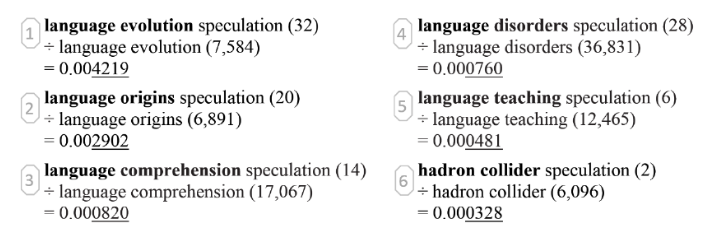
The topic of language evolution is characterised by the scarcity of records, but also by a large flow of research produced within multiple subtopics and perspectives. Over the past few decades, significant advancement has been made on the geographical and temporal origins of language, while current work is rather devoted to the underpinnings of language, in brain, genes, body, and culture of humans. Much of this literature is polarized over the crucial dichotomy of nativism versus emergentism. Our state of affairs report also confirms a high degree of speculation, albeit with a decrease for modelling. To tackle the speculation and the large research flow, we propose a more impersonal kind of review, focused on the topic’s questions rather than on particular accounts. Another observation is that novel perspectives are on the rise. One of these highlights the importance of perceptual cognition, often dubbed ‘embodiment,’ in the earlier evolution of language. In following this lead, we adapted a previous experiment which had investigated the correspondence between certain perceptual features of events, and different grammatical orders arising as participants acted out those events. That design made a perfect basis for us to put in an additional variable, namely the contrast between body-based communication (gestures), and more disembodied communication (symbol matching). Albeit tentative, the results of this pilot experiment reveal a greater effect of the embodiment variable on the grammatical preferences, which we see as inviting further exploration of embodied cognition in language evolution.
View full textStudy at a glance
participants act out events"] --> B["Perceptual features of events"] A --> C["Added variable:
communication mode"] C --> D["Body-based communication
(gestures)"] C --> E["Disembodied communication
(symbol matching)"] B --> F["Resulting grammatical
orders / preferences"] D --> F E --> F F --> G["Greater effect of embodiment
on grammatical preferences"]
Reference
Bernabeu, P., & Vogt, P. (2015, June 18). Language evolution: Current status and future directions [Paper presentation]. 10th Language at the University of Essex Postgraduate Conference (LangUE), Colchester, United Kingdom. https://eprints.lancs.ac.uk/id/eprint/130664/
Related references
Aarts, B. (2006). Syntactic Gradience. https://doi.org/10.1093/oso/9780199219261.001.0001
Abadía, O. M., & Nowell, A. (2014). Palaeolithic Personal Ornaments: Historical Development and Epistemological Challenges. Journal of Archaeological Method and Theory, 22(3), 952–979. https://doi.org/10.1007/s10816-014-9213-z
Abdai, J., & Miklósi, Á. (2024). Ethology. An Introduction to Ethorobotics, 3–92. https://doi.org/10.4324/9781003182931-2
Abele, R. (2021). The Self-Conscious, Thinking Subject. Springer International Publishing. https://doi.org/10.1007/978-3-030-79557-3
Abner, N. (2017). Syntactic Categorization in Sign Languages I am extremely indebted to all of the individuals who have shared their language and their research with me and with the scientific community. I also thank Carlo Geraci and the editors for valuable feedback and suggestions. Any remaining errors are my own. Handbook of Categorization in Cognitive Science, 549–566. https://doi.org/10.1016/B978-0-08-101107-2.00022-1
Abner, N., Flaherty, M., Stangl, K., Coppola, M., Brentari, D., & Goldin-Meadow, S. (2019). The Noun-Verb Distinction in Established and Emergent Sign Systems. Language, 95(2), 230–267. https://doi.org/10.1353/lan.2019.0030
Aboitiz, F. (2017). A Brain for Speech. Palgrave Macmillan UK. https://doi.org/10.1057/978-1-137-54060-7
Abrahamson, D. (2022). Enactive Perception as Mathematics Learning. The Learning Sciences in Conversation, 151–168. https://doi.org/10.4324/9781003089728-18
Abrahamson, D., Nathan, M. J., Williams-Pierce, C., Walkington, C., Ottmar, E. R., Soto, H., & Alibali, M. W. (2020). The Future of Embodied Design for Mathematics Teaching and Learning. Frontiers in Education, 5. https://doi.org/10.3389/feduc.2020.00147
Abrahamson, D., Worsley, M., Pardos, Z. A., & Ou, L. (2022). Learning analytics of embodied design: Enhancing synergy. International Journal of Child-Computer Interaction, 32, 100409. https://doi.org/10.1016/j.ijcci.2021.100409
Abreu, F., & Pika, S. (2022). Turn-taking skills in mammals: A systematic review into development and acquisition. Frontiers in Ecology and Evolution, 10. https://doi.org/10.3389/fevo.2022.987253
Abu-Ayyash, E. A. S., & McKenny, J. (2017). The flesh and the bones of cohesive devices: towards a comprehensive model. Journal of World Languages, 4(2), 94–117. https://doi.org/10.1080/21698252.2017.1417687
Acarturk, C., Indurkya, B., Nawrocki, P., Sniezynski, B., Jarosz, M., & Usal, K. A. (2021). Gaze aversion in conversational settings: An investigation based on mock job interview. Journal of Eye Movement Research, 14(1). https://doi.org/10.16910/jemr.14.1.1
Acciai, A., Guerrisi, L., Perconti, P., Plebe, A., Suriano, R., & Velardi, A. (2025). Narrative coherence in neural language models. Frontiers in Psychology, 16. https://doi.org/10.3389/fpsyg.2025.1572076
Acha, J., Agirregoikoa, A., Barreto-Zarza, F., & Arranz-Freijo, E. B. (2022). Cognitive predictors of language abilities in primary school children: A cascaded developmental view. Journal of Child Language, 50(2), 417–436. https://doi.org/10.1017/S0305000921000908
Acquaviva, P. (2022). Word meaning: a linguistic dimension of conceptualization. Synthese, 200(5). https://doi.org/10.1007/s11229-022-03910-9
Acuña-Fariña, C. (2022). Parsers and Grammars: A Tutorial Overview from the Linguistics Building. Brain Sciences, 12(12), 1659. https://doi.org/10.3390/brainsci12121659
Acuña-Fariña, C. (2023). Syntactic Processing. https://doi.org/10.4324/9781003405634
Acurio, J., Torres, Y., Manríquez, G., Bertoglia, P., Leon, J., Herltiz, K., & Escudero, C. (2021). Alteraciones en el discurso narrativo en hijos de madres con preeclampsia. Revista de Logopedia, Foniatría y Audiología, 41(2), 70–81. https://doi.org/10.1016/j.rlfa.2020.02.003
Adams, A. M. (2016). How Language Is Embodied in Bilinguals and Children with Specific Language Impairment. Frontiers in Psychology, 7. https://doi.org/10.3389/fpsyg.2016.01209
Adams, M. (2009). Slang. https://doi.org/10.1093/oso/9780195314632.001.0001
Adger, D., & Svenonius, P. (2015). Linguistic explanation and domain specialization: a case study in bound variable anaphora. Frontiers in Psychology, 6. https://doi.org/10.3389/fpsyg.2015.01421
Adloff, F., & Wacquant, L. (2015). For a Sociology of Flesh and Blood. Revealing Tacit Knowledge, 185–194. https://doi.org/10.14361/transcript.9783839425169.185
Adornetti, I. (2015). Competition and Cooperation in Language Evolution: A Comparison Between Communication of Apes and Humans. Conflict and Multimodal Communication, 91–101. https://doi.org/10.1007/978-3-319-14081-0_5
Adornetti, I. (2015). The Phylogenetic Foundations of Discourse Coherence: A Pragmatic Account of the Evolution of Language. Biosemiotics, 8(3), 421–441. https://doi.org/10.1007/s12304-015-9230-7
Adornetti, I. (2016). On the Phylogenesis of Executive Functions and Their Connection with Language Evolution. Frontiers in Psychology, 7. https://doi.org/10.3389/fpsyg.2016.01426
Adornetti, I., & Ferretti, F. (2024). Introduction. Introducing Evolutionary Pragmatics, 1–20. https://doi.org/10.4324/9781003390084-1
Adornetti, I., Chiera, A., Altavilla, D., Deriu, V., Lecci, C. M., Marini, A., Valeri, G., Magni, R., & Ferretti, F. (2022). How do we comprehend linguistic and visual narratives? A study in children with typical development. Language Sciences, 93, 101500. https://doi.org/10.1016/j.langsci.2022.101500
Adornetti, I., Chiera, A., Deriu, V., Altavilla, D., & Ferretti, F. (2023). Comprehending stories in pantomime. A pilot study with typically developing children and its implications for the narrative origin of language. Language & Communication, 93, 155–171. https://doi.org/10.1016/j.langcom.2023.10.001
Adornetti, I., Chiera, A., Nicchiarelli, S., & Vasileva, O. (2019). How Did Language Evolve? Biological, Psychological, and Linguistic Perspectives. Theoria et Historia Scientiarum, 16, 7. https://doi.org/10.12775/ths.2019.001
Adorning Bodies. (2022). Bloomsbury Publishing Plc. https://doi.org/10.5040/9781350104280
Affinito, S., Eteson, B., & Karakostis, F. A. (2025). Integrating EEG and EMG data: a novel statistical pipeline for investigating brain-muscle interaction in experimental neuroarchaeology. Brain Structure and Function, 230(6). https://doi.org/10.1007/s00429-025-02961-1
Affinito, S., Eteson, B., Cáceres, L. T., Moos, E. T., & Karakostis, F. A. (2024). Exploring the cognitive underpinnings of early hominin stone tool use through an experimental EEG approach. Scientific Reports, 14(1). https://doi.org/10.1038/s41598-024-77452-0
Agebjörn, A. (2020). Explicit and Implicit Knowledge of Article Semantics in Belarusian Learners of English: Implications for Teaching. Formal Linguistics and Language Education, 179–201. https://doi.org/10.1007/978-3-030-39257-4_10
Aguado-Orea, J., Witherstone, H., Bourgeois, L., & Baselga, A. (2019). Learning to construct sentences in Spanish: a replication of the Weird Word Order technique. Journal of Child Language, 46(6), 1249–1259. https://doi.org/10.1017/S0305000919000448
Ahern, A., Amenós-Pons, J., & Guijarro-Fuentes, P. (2023). Relevance theory and the study of linguistic interfaces in second language acquisition. Intercultural Pragmatics, 20(4), 429–453. https://doi.org/10.1515/ip-2023-4004
Akbarnezhad, S., Sadighi, F., & Bagheri, M. S. (2020). A syntactic-based approach to the perception and production of English verbs’ argument structures by Iranian EFL learners. Cogent Arts & Humanities, 7(1), 1770956. https://doi.org/10.1080/23311983.2020.1770956
Akbarnezhad, S., Sadighi, F., Bagheri, M. S., & Lu, X. (2019). Iranian EFL learners’ perception of the English verbs’ argument structure and their language proficiency: A semantic-syntactic approach. Cogent Education, 6(1). https://doi.org/10.1080/2331186X.2019.1674576
Akita, K., & Murasugi, K. (2022). Binomial adjective doublets in Japanese: A Relational Morphology account. Morphology, 32(3), 281–297. https://doi.org/10.1007/s11525-022-09395-z
Al-Dobaian, A. S. (2018). Arabic synthetic compounds. Language and Linguistics, 19(1), 32–60. Portico. https://doi.org/10.1075/lali.00002.ald
Al-khresheh, M. (2025). The subtle power of nonverbal communication in EFL classrooms: An observational study on teachers’ gestures and students’ comprehension. Australian Journal of Applied Linguistics, 8(5), 102643. https://doi.org/10.29140/ajal.v8n5.102643
Al-Shawaf, L., Conroy-Beam, D., Asao, K., & Buss, D. M. (2015). Human Emotions: An Evolutionary Psychological Perspective. Emotion Review, 8(2), 173–186. https://doi.org/10.1177/1754073914565518
Albers, U. (2024). A three-way distinction in definiteness: sortal, individual, and functional concepts in Réyoné. Linguistics, 62(5), 1185–1223. https://doi.org/10.1515/ling-2021-0218
Albessard-Ball, L., & Balzeau, A. (2018). Of Tongues and Men: A Review of Morphological Evidence for the Evolution of Language. Journal of Language Evolution, 3(1), 79–89. https://doi.org/10.1093/jole/lzy001
Albouy, P., Mehr, S. A., Hoyer, R. S., Ginzburg, J., Du, Y., & Zatorre, R. J. (2024). Spectro-temporal acoustical markers differentiate speech from song across cultures. Nature Communications, 15(1). https://doi.org/10.1038/s41467-024-49040-3
Alduais, A., Alduais, A., Amidfar, M., & Alizadeh Incheh, S. (2023). Neurolinguistics: A scientometric review. Cogent Arts & Humanities, 10(1). https://doi.org/10.1080/23311983.2023.2197341
Alduais, A., Almaghlouth, S., Alfadda, H., & Qasem, F. (2022). Biolinguistics: A Scientometric Analysis of Research on (Children’s) Molecular Genetics of Speech and Language (Disorders). Children, 9(9), 1300. https://doi.org/10.3390/children9091300
Alduais, A., Yassin, A. A., & Allegretta, S. (2025). Computational linguistics: a scientometric review. Quality & Quantity, 59(5), 4097–4136. https://doi.org/10.1007/s11135-025-02138-2
Alekseeva, M., Myachykov, A., Bermudez-Margaretto, B., & Shtyrov, Y. (2024). Morphosyntactic prediction in automatic neural processing of spoken language: EEG evidence. Brain Research, 1836, 148949. https://doi.org/10.1016/j.brainres.2024.148949
Alemán Bañón, J., & Martin, C. (2019). Anticipating information structure: An event-related potentials study of focus assignment via the it-cleft. Neuropsychologia, 134, 107203. https://doi.org/10.1016/j.neuropsychologia.2019.107203
Alenljung, B., Nalin, K., & Rambusch, J. (2022). The User Experience Design Program: Applying Situated and Embodied Cognition Together With Reflective Teaching. Frontiers in Computer Science, 4. https://doi.org/10.3389/fcomp.2022.794400
Alessandro Minelli, & Massimo Piattelli Palmirani. (2017). �Sic et non�. Quanto ha ancora ragione Darwin? (a cura di Antonello La Vergata) [JB]. Rivista di filosofia, 1, 91–108. https://doi.org/10.1413/86024
Alessandroni, N. (2016). Development of Metaphorical Thought before Language: the Pragmatic Construction of Metaphors in Action. Integrative Psychological and Behavioral Science, 51(4), 618–642. https://doi.org/10.1007/s12124-016-9373-3
Alghazo, S., Alrashdan, I., Nour Al Salem, M., & Salem, E. (2022). Idioms as Pragmatic Messages. Dirasat: Human and Social Sciences, 49(4), 425–442. https://doi.org/10.35516/hum.v49i4.2092
AlHammadi, F. S. (2016). Psycholinguistic determinants of immigrant second language acquisition. Lingua, 179, 24–37. https://doi.org/10.1016/j.lingua.2016.03.001
Allan, K. (2020). Linguistics and communication. Intercultural Pragmatics, 17(3), 293–313. https://doi.org/10.1515/ip-2020-3002
Allott, N., & Rey, G. (2017). The many errors of Vyvyan Evans’ The Language Myth. The Linguistic Review, 34(3), 1–20. https://doi.org/10.1515/tlr-2017-0011
Almécija, S., & Sherwood, C. C. (2017). Hands, Brains, and Precision Grips: Origins of Tool Use Behaviors. Evolution of Nervous Systems, 299–315. https://doi.org/10.1016/B978-0-12-804042-3.00085-3
Almeida, H. (2017). From comics to biology diagrams: structure and inference in visual narratives of transformation. Visual Communication, 16(1), 85–108. https://doi.org/10.1177/1470357216668694
Alsaedi, N. (2023). Delayed Exposure to Second Language Acquisition: The Robustness of Critical Period Hypothesis and the Limitations of the Plasticity Theory. Theory and Practice in Language Studies, 13(12), 3149–3156. https://doi.org/10.17507/tpls.1312.12
Alsaedi, N. (2024). Fifty Years of Second Language Acquisition Research: Critical Commentary and Proposal. PSYCHOLINGUISTICS, 35(1), 24–57. https://doi.org/10.31470/2309-1797-2024-35-1-24-57
Altakhaineh, A. R. M. (2016). Identifying Arabic compounds other than the Synthetic Genitive Construction. Acta Linguistica Hungarica, 63(3), 277–298. https://doi.org/10.1556/064.2016.63.3.1
Altakhaineh, A. R. M. (2019). A cross-linguistic perspective on the Right-Hand Head Rule: the rule and the exceptions. Linguistics Vanguard, 5(1). https://doi.org/10.1515/lingvan-2018-0033
Altamimi, H. S., & Alsager, H. N. (2023). Argument Structure and Word Order in Saudi Sign Language. Journal of Language Teaching and Research, 14(1), 203–214. https://doi.org/10.17507/jltr.1401.21
Alves, R. R. N., Souto, W. M. S., Fernandes-Ferreira, H., Bezerra, D. M. M., Barboza, R. R. D., & Vieira, W. L. S. (2018). The Importance of Hunting in Human Societies. Ethnozoology, 95–118. https://doi.org/10.1016/B978-0-12-809913-1.00007-7
Ambasciano, L. (2016). Mind the (Unbridgeable) Gaps. Method & Theory in the Study of Religion, 28(2), 141–225. https://doi.org/10.1163/15700682-12341372
Ambridge, B. (2017). Syntactic Categories in Child Language Acquisition. Handbook of Categorization in Cognitive Science, 567–580. https://doi.org/10.1016/B978-0-08-101107-2.00023-3
Ambridge, B., Pine, J. M., & Lieven, E. V. M. (2015). Explanatory adequacy is not enough: Response to commentators on ‘Child language acquisition: Why universal grammar doesn’t help.’ Language, 91(3), e116–e126. https://doi.org/10.1353/lan.2015.0037
Amici, F., & Liebal, K. (2025). Comparative perspectives on mother-infant communication in primates: Are humans unique? Neuroscience & Biobehavioral Reviews, 176, 106271. https://doi.org/10.1016/j.neubiorev.2025.106271
Amici, F., Oña, L., & Liebal, K. (2022). Compositionality in Primate Gestural Communication and Multicomponent Signal Displays. International Journal of Primatology, 45(3), 482–500. https://doi.org/10.1007/s10764-022-00316-9
Amici, F., Sánchez-Amaro, A., Sebastián-Enesco, C., Cacchione, T., Allritz, M., Salazar-Bonet, J., & Rossano, F. (2019). The word order of languages predicts native speakers’ working memory. Scientific Reports, 9(1). https://doi.org/10.1038/s41598-018-37654-9
Amphaeris, J., Shannon, G., & Tenbrink, T. (2022). Overlap not gap: Understanding the relationship between animal communication and language with Prototype Theory. Lingua, 272, 103332. https://doi.org/10.1016/j.lingua.2022.103332
An Analysis Of Linguistic Normativity And Communication As A Response To Objections To A Biopsychological Foundation For Linguistics. (2017). Linguistic and Philosophical Investigations, 16(0), 49. https://doi.org/10.22381/lpi1620173
Anbarasan, & Lee, J. S. A. (2018). Speech and Gestures for Smart-Home Control and Interaction for Older Adults. Proceedings of the 3rd International Workshop on Multimedia for Personal Health and Health Care, 49–57. https://doi.org/10.1145/3264996.3265002
Andersson, C., & Törnberg, P. (2018). Toward a Macroevolutionary Theory of Human Evolution: The Social Protocell. Biological Theory, 14(2), 86–102. https://doi.org/10.1007/s13752-018-0313-y
Andler, D. (2018). Philosophy of Cognitive Science. The Philosophy of Science. https://doi.org/10.1093/oso/9780190690649.003.0016
Andor, J. (2020). A magyar nyelv első kognitív szemléletű grammatikája. Magyar Nyelv, 116(2), 139–155. https://doi.org/10.18349/MAGYARNYELV.2020.2.139
Andrä, C., Mathias, B., Schwager, A., Macedonia, M., & von Kriegstein, K. (2020). Learning Foreign Language Vocabulary with Gestures and Pictures Enhances Vocabulary Memory for Several Months Post-Learning in Eight-Year-Old School Children. Educational Psychology Review, 32(3), 815–850. https://doi.org/10.1007/s10648-020-09527-z
Andreu, L., Sanz-Torrent, M., & Rodríguez-Ferreiro, J. (2016). Do Children with SLI Use Verbs to Predict Arguments and Adjuncts: Evidence from Eye Movements During Listening. Frontiers in Psychology, 6. https://doi.org/10.3389/fpsyg.2015.01917
Andrews, K. (2020). The Animal Mind. https://doi.org/10.4324/9780203712511
Anguita‐Acero, J. M., Navarro‐Martinez, O., & Jordan, L. R. (2024). Learning Difficulties of Students With Dyslexia in Spanish and
Antal, C., & de Almeida, R. G. (2021). Indeterminate and Enriched Propositions in Context Linger: Evidence From an Eye-Tracking False Memory Paradigm. Frontiers in Psychology, 12. https://doi.org/10.3389/fpsyg.2021.741685
Antonioni, A., Raho, E. M., Straudi, S., Granieri, E., Koch, G., & Fadiga, L. (2024). The cerebellum and the Mirror Neuron System: A matter of inhibition? From neurophysiological evidence to neuromodulatory implications. A narrative review. Neuroscience & Biobehavioral Reviews, 164, 105830. https://doi.org/10.1016/j.neubiorev.2024.105830
Antović, M. (2022). Form, Meaning and Intentionality: The Case of Metaphor in Music. Metaphors and Analogies in Sciences and Humanities, 553–577. https://doi.org/10.1007/978-3-030-90688-7_26
Antović, M., Jovanović, V. Ž., & Figar, V. (2023). Dynamic schematic complexes. Pragmatics and Cognition, 30(2), 258–295. Portico. https://doi.org/10.1075/pc.00032.ant
Antović, M., Jovanović, V. Ž., & Popović, M. (2024). From spatial perception to referential meaning: convergent image schemas in the music of and texts about Beethoven’s piano sonatas. Frontiers in Psychology, 15. https://doi.org/10.3389/fpsyg.2024.1497557
Antović, M., Mitić, J., & Benecasa, N. (2018). Conceptual rather than perceptual: Cross-modal binding of pitch sequencing is based on an underlying schematic structure. Psychology of Music, 48(1), 84–104. https://doi.org/10.1177/0305735618785242
Arai, M., Nakamura, C., & Mazuka, R. (2015). Predicting the unbeaten path through syntactic priming. Journal of Experimental Psychology: Learning, Memory, and Cognition, 41(2), 482–500. https://doi.org/10.1037/a0038389
Arana, S., Pesnot Lerousseau, J., & Hagoort, P. (2023). Deep learning models to study sentence comprehension in the human brain. Language, Cognition and Neuroscience, 39(8), 972–990. https://doi.org/10.1080/23273798.2023.2198245
Arbib, M. (2025). Are stories the chicken or the egg? [JB]. Rivista internazionale di Filosofia e Psicologia, 16(1), 22–29. https://doi.org/10.4453/rifp.2025.0003
Arbib, M. A. (2015). From Action-Oriented Perception to Language. Cognitive Semiotics, 8(1), 1–17. https://doi.org/10.1515/cogsem-2015-0005
Arbib, M. A. (2015). Language Evolution. The Handbook of Language Emergence, 600–623. Portico. https://doi.org/10.1002/9781118346136.ch27
Arbib, M. A. (2025). Towards an Evolutionary Science of Sacred Architecture: When Atmosphere Meets Narrative. Religions, 16(11), 1453. https://doi.org/10.3390/rel16111453
Archibald, J. (2019). Types of evidence and the Prosodic Transfer Hypothesis. Linguistic Approaches to Bilingualism, 9(6), 809–815. Portico. https://doi.org/10.1075/lab.19060.arc
Archibald, J. (2023). Using a contrastive hierarchy to formalize structural similarity as I-proximity in L3 phonology. Linguistic Approaches to Bilingualism, 13(5), 614–637. Portico. https://doi.org/10.1075/lab.22051.arc
Archibald, J. (2025). Waiting in the wings: The place of phonology in the study of multilingual grammars. Second Language Research, 41(3), 491–521. https://doi.org/10.1177/02676583241270763
Ardila, A. (2015). A Proposed Neurological Interpretation of Language Evolution. Behavioural Neurology, 2015, 1–16. https://doi.org/10.1155/2015/872487
Armeni, K., Willems, R. M., & Frank, S. L. (2017). Probabilistic language models in cognitive neuroscience: Promises and pitfalls. Neuroscience & Biobehavioral Reviews, 83, 579–588. https://doi.org/10.1016/j.neubiorev.2017.09.001
Armstrong, M. E., Andreu, L., Esteve-Gibert, N., & Prieto, P. (2016). Children’s processing of morphosyntactic and prosodic cues in overriding context-based hypotheses: an eye tracking study. Probus, 28(1). https://doi.org/10.1515/probus-2016-0004
Arnon, I. (2015). What can frequency effects tell us about the building blocks and mechanisms of language learning? Journal of Child Language, 42(2), 274–277. https://doi.org/10.1017/S0305000914000610
Arocha, H. H. (2016). Locución y modelos para su descripción semántica. Lebende Sprachen, 61(1), 117–174. https://doi.org/10.1515/les-2016-0005
Arredondo, M. M., Hu, X.-S., Satterfield, T., Tsutsumi Riobóo, A., Gelman, S. A., & Kovelman, I. (2019). Bilingual effects on lexical selection: A neurodevelopmental perspective. Brain and Language, 195, 104640. https://doi.org/10.1016/j.bandl.2019.104640
Arslan Aydin, Ü., Kalkan, S., & Acartürk, C. (2021). Speech Driven Gaze in a Face-to-Face Interaction. Frontiers in Neurorobotics, 15. https://doi.org/10.3389/fnbot.2021.598895
Asano, R. (2021). The evolution of hierarchical structure building capacity for language and music: a bottom-up perspective. Primates, 63(5), 417–428. https://doi.org/10.1007/s10329-021-00905-x
Asano, R., & Boeckx, C. (2015). Syntax in language and music: what is the right level of comparison? Frontiers in Psychology, 6. https://doi.org/10.3389/fpsyg.2015.00942
Aschenbrenner, L. (2022). Neo-Spiritual Aesthetics. https://doi.org/10.5040/9781350272903
Ash, M., & Welshon, R. (2020). Dynamicism, radical enactivism, and representational cognitive processes: The case of subitization. Philosophical Psychology, 33(8), 1096–1120. https://doi.org/10.1080/09515089.2020.1775798
Asia, D., & Gordon, R. E. (2021). CULTURAL VALUE AND EVOLVING TECHNOLOGIES: INSTANCES FROM MUSIC AND VISUAL ART. Social Philosophy and Policy, 38(2), 210–231. https://doi.org/10.1017/S0265052522000127
Asoulin, E. (2016). Language as an instrument of thought. Glossa: A Journal of General Linguistics, 1(1). https://doi.org/10.5334/gjgl.34
Asoulin, E. (2019). Phrase structure grammars as indicative of uniquely human thoughts. Language Sciences, 74, 98–109. https://doi.org/10.1016/j.langsci.2019.05.002
Asudeh, A., & Giorgolo, G. (2020). Enriched Meanings. https://doi.org/10.1093/oso/9780198847854.001.0001
Ataria, Y. (2025). It is the tool that invents the human: Rethinking the emergence of the genus Homo. Journal of Theoretical and Philosophical Psychology, 45(4), 365–376. https://doi.org/10.1037/teo0000294
Atkinson, D. (2019). Beyond the Brain: Intercorporeality and Co‐Operative Action for SLA Studies. The Modern Language Journal, 103(4), 724–738. Portico. https://doi.org/10.1111/modl.12595
Atkinson, D. (2019). Second Language Acquisition Beyond Borders? The Douglas Fir Group Searches for Transdisciplinary Identity. The Modern Language Journal, 103(S1), 113–121. Portico. https://doi.org/10.1111/modl.12530
Atkinson, M., & Smith, K. (2015). Language Development: Evolutionary Theories. International Encyclopedia of the Social & Behavioral Sciences, 319–323. https://doi.org/10.1016/B978-0-08-097086-8.23124-3
Audring, J. (2019). Mothers or sisters? The encoding of morphological knowledge. Word Structure, 12(3), 274–296. https://doi.org/10.3366/word.2019.0150
Audring, J. (2022). Advances in Morphological Theory: Construction Morphology and Relational Morphology. Annual Review of Linguistics, 8(1), 39–58. https://doi.org/10.1146/annurev-linguistics-031120-115118
Audring, J., & Booij, G. (2016). Cooperation and coercion. Linguistics, 54(4). https://doi.org/10.1515/ling-2016-0012
Audring, J., Booij, G., & Jackendoff, R. (2017). Menscheln, kibbelen, sparkle. Linguistics in the Netherlands, 34, 1–15. Portico. https://doi.org/10.1075/avt.34.01aud
Austin, J., Blume, M., & Sánchez, L. (2015). Bilingualism in the Spanish-Speaking World. https://doi.org/10.1017/CBO9780511844201
Avcu, E., Hwang, M., Brown, K. S., & Gow, D. W. (2023). A tale of two lexica: Investigating computational pressures on word representation with neural networks. Frontiers in Artificial Intelligence, 6. https://doi.org/10.3389/frai.2023.1062230
Awad, S., Debatin, T., & Ziegler, A. (2021). Embodiment: I sat, I felt, I performed – Posture effects on mood and cognitive performance. Acta Psychologica, 218, 103353. https://doi.org/10.1016/j.actpsy.2021.103353
Ayala, M. J. G., Vilca, G. E. Z., & Cuba-Raime, C. A. (2024). Influential Psycholinguistic Factors in the Development of Linguistic Competence in English as a Foreign Language. World Journal of English Language, 15(1), 265. https://doi.org/10.5430/wjel.v15n1p265
Aychet, J., Blois-Heulin, C., & Lemasson, A. (2021). Sequential and network analyses to describe multiple signal use in captive mangabeys. Animal Behaviour, 182, 203–226. https://doi.org/10.1016/j.anbehav.2021.09.005
Azumagakito, T., Suzuki, R., & Arita, T. (2018). An integrated model of gene-culture coevolution of language mediated by phenotypic plasticity. Scientific Reports, 8(1). https://doi.org/10.1038/s41598-018-26233-7
Bacelar Valente, M. (2022). Do All Languages Share the Same Conceptual Structure? Cognitive Semantics, 8(2), 159–180. https://doi.org/10.1163/23526416-08020001
Backus, A., Cohen, M., Cohn, N., Faber, M., Krahmer, E., Laparle, S., Maier, E., van Miltenburg, E., Roelofsen, F., Sciubba, E., Scholman, M., Shterionov, D., Sie, M., Tomas, F., Vanmassenhove, E., Venhuizen, N., & de Vos, C. (2023). Minds. Linguistics in the Netherlands, 40, 301–308. Portico. https://doi.org/10.1075/avt.00094.bac
Bagasheva, A., & Fernández-Domínguez, J. (2022). Fact-checking on compound verbs in English. Paradigms in Word Formation, 69–98. Portico. https://doi.org/10.1075/slcs.225.04bag
Bagci, M., Mehler, A., Abrami, G., Schrottenbacher, P., Spiekermann, C., Konca, M., Schreiber, J., Saukel, K., Quintino, M., & Engel, J. (2025). Simulation-Based Learning in Virtual Reality: Three Use Cases from Social Science and Technological Foundations in Terms of Va.Si.Li-Lab. Technology, Knowledge and Learning, 31(1), 11–50. https://doi.org/10.1007/s10758-025-09837-7
Baggio, G. (2020). Epistemic Transfer Between Linguistics and Neuroscience: Problems and Prospects. The Philosophy and Science of Language, 275–308. https://doi.org/10.1007/978-3-030-55438-5_11
Baggio, G. (2021). Imagery in action. G. H. Mead’s contribution to sensorimotor enactivism. Phenomenology and the Cognitive Sciences, 20(5), 935–955. https://doi.org/10.1007/s11097-021-09784-5
Baggio, G. (2023). Gesture, meaning, and intentionality: from radical to pragmatist enactive theory of language. Phenomenology and the Cognitive Sciences, 24(1), 33–62. https://doi.org/10.1007/s11097-023-09936-9
Baggio, G. (2025). G.H. Mead and the cognitive sciences. The Elgar Companion to George Herbert Mead, 163–185. https://doi.org/10.4337/9781035320592.00016
Baggio, G., Cohn, N., & Wittenberg, E. (2025). The Present and Future of Parallel Architectures of Language and Cognition. Topics in Cognitive Science, 17(4), 808–821. Portico. https://doi.org/10.1111/tops.70020
Bagher, M. M. (2020). Immersive VR and Embodied Learning: The Role of Embodied Affordances in The Long-term Retention of Semantic Knowledge. 2020 IEEE Conference on Virtual Reality and 3D User Interfaces Abstracts and Workshops (VRW), 537–538. https://doi.org/10.1109/VRW50115.2020.00120
Bagher, M. M., Sajjadi, P., Wallgrün, J. O., La Femina, P. C., & Klippel, A. (2021). Move The Object or Move The User: The Role of Interaction Techniques on Embodied Learning in VR. Frontiers in Virtual Reality, 2. https://doi.org/10.3389/frvir.2021.695312
Bahiyyih, H. (2020). Psychophysiological Methods in Language Research. Lexington Books. https://doi.org/10.5040/9781978725034
Bahr, C., & Hernández Arocha, H. (2018). ¿Tienen significado los nombres propios? Zeitschrift Für Romanische Philologie, 134(2), 329–348. https://doi.org/10.1515/zrp-2018-0022
Bahri, H., & Williams, R. (2017). Interconnectivity and metacommunication. Training Language and Culture, 1(3), 8–29. https://doi.org/10.29366/2017tlc.1.3.1
Baik, B., Kim, A. G., Kim, D. S., & Yoon, S. (2025). Vocal delivery quality in earnings conference calls. Journal of Accounting and Economics, 80(1), 101763. https://doi.org/10.1016/j.jacceco.2024.101763
Baills, F., Alazard-Guiu, C., & Prieto, P. (2022). Embodied Prosodic Training Helps Improve Accentedness and Suprasegmental Accuracy. Applied Linguistics, 43(4), 776–804. https://doi.org/10.1093/applin/amac010
Bailyn, J. F. (2015). Language, Music, Fire, and Chess: Remarks on Music Evolution and Acquisition. Language, Music, and Computing, 27–44. https://doi.org/10.1007/978-3-319-27498-0_3
Balari, S., & Lorenzo, G. (2015). It is an organ, it is new, but it is not a new organ. Conceptualizing language from a homological perspective. Frontiers in Ecology and Evolution, 3. https://doi.org/10.3389/fevo.2015.00058
Balari, S., Lorenzo, G., & Sultan, S. E. (2020). Language Acquisition and EcoDevo Processes: The Case of the Lexicon-Syntax Interface. Biological Theory, 15(3), 148–160. https://doi.org/10.1007/s13752-020-00352-9
Balboni, I., Rampinini, A., Kepinska, O., Berthele, R., & Golestani, N. (2025). Brain activation for language and its relationship to cognitive and linguistic measures. Cerebral Cortex, 35(8). https://doi.org/10.1093/cercor/bhaf231
Balogh, K. (2024). Negation and Information Structure in Tree-Wrapping Grammar. Logic and Engineering of Natural Language Semantics, 37–54. https://doi.org/10.1007/978-3-031-60878-0_3
Bandini, E., Harrison, R. A., & Motes-Rodrigo, A. (2022). Examining the suitability of extant primates as models of hominin stone tool culture. Humanities and Social Sciences Communications, 9(1). https://doi.org/10.1057/s41599-022-01091-x
Bangerter, A., Genty, E., Heesen, R., Rossano, F., & Zuberbühler, K. (2022). Every product needs a process: unpacking joint commitment as a process across species. Philosophical Transactions of the Royal Society B, 377(1859). https://doi.org/10.1098/rstb.2021.0095
Bannan, N., & Jan, S. (2022). Music. Evolutionary Studies in Imaginative Culture, 6(2), 147–154. https://doi.org/10.26613/esic.6.2.313
Bannour, N., Dias, G., Chahir, Y., & Akhmouch, H. (2020). Patch-Based Identification of Lexical Semantic Relations. Advances in Information Retrieval, 126–140. https://doi.org/10.1007/978-3-030-45439-5_9
Bánréti, Z., Hoffmann, I., & Vincze, V. (2016). Recursive Subsystems in Aphasia and Alzheimer’s Disease: Case Studies in Syntax and Theory of Mind. Frontiers in Psychology, 7. https://doi.org/10.3389/fpsyg.2016.00405
Bao, Z., & Xu, X. (2022). Evaluating word lists against word frequency, lexical age-of-acquisition and concreteness. Lingua, 278, 103417. https://doi.org/10.1016/j.lingua.2022.103417
Bar-On, D. (2021). How to do things with nonwords: pragmatics, biosemantics, and origins of language in animal communication. Biology & Philosophy, 36(6). https://doi.org/10.1007/s10539-021-09824-z
Baratta, A. (2021). A lack of phonological inherentness. Pragmatics of Accents, 141–162. Portico. https://doi.org/10.1075/pbns.327.06bar
Bardo, A., Kivell, T. L., Town, K., Donati, G., Ballieux, H., Stamate, C., Edginton, T., & Forrester, G. S. (2021). Get a Grip: Variation in Human Hand Grip Strength and Implications for Human Evolution. Symmetry, 13(7), 1142. https://doi.org/10.3390/sym13071142
Bardovi-Harlig, K., & Stringer, D. (2016). Unconventional Expressions: Productive syntax in the L2 acquisition of formulaic language. Second Language Research, 33(1), 61–90. https://doi.org/10.1177/0267658316641725
Bargetto Fernández, M. Á. (2017). William H. Calvin y Derek Bickerton: Lingua ex machina: La conciliación de las teorías de Darwin y Chomsky sobre el cerebro humano Traducción de Tomas Fernández Aúz (Barcelona: Gedisa, 2001. 360 páginas). Onomázein Revista de Lingüística Filología y Traducción, 35, 78–81. https://doi.org/10.7764/onomazein.35.06
Barham, L., & Everett, D. (2020). Semiotics and the Origin of Language in the Lower Palaeolithic. Journal of Archaeological Method and Theory, 28(2), 535–579. https://doi.org/10.1007/s10816-020-09480-9
Barker, H., & Bozic, M. (2024). Forms, Mechanisms, and Roles of Iconicity in Spoken Language: A Review. Psychological Reports. https://doi.org/10.1177/00332941241310119
Barnard, A. (2015). Language in Prehistory. https://doi.org/10.1017/CBO9781139644563
Barnard, A. (2016). Unity versus Interdisciplinarity. Current Anthropology, 57(S13), S145–S153. https://doi.org/10.1086/686022
Barratt, B. B. (2019). Oedipality and oedipal complexes reconsidered: On the incest taboo as key to the universality of the human condition. The International Journal of Psychoanalysis, 100(1), 7–31. https://doi.org/10.1080/00207578.2018.1489704
Barrett, H. C. (2019). Selected emergence in the evolution of behavior and cognition. Behavioural Processes, 161, 87–93. https://doi.org/10.1016/j.beproc.2018.04.019
Barrett, H. C. (2020). The Search for Human Cognitive Specializations. Evolutionary Neuroscience, 917–929. https://doi.org/10.1016/B978-0-12-820584-6.00039-8
Barrett, L. F., Atzil, S., Bliss-Moreau, E., Chanes, L., Gendron, M., Hoemann, K., Katsumi, Y., Kleckner, I. R., Lindquist, K. A., Quigley, K. S., Satpute, A. B., Sennesh, E., Shaffer, C., Theriault, J. E., Tugade, M., & Westlin, C. (2025). The Theory of Constructed Emotion: More Than a Feeling. Perspectives on Psychological Science, 20(3), 392–420. https://doi.org/10.1177/17456916251319045
Barrett, L., & Stout, D. (2024). Minds in movement: embodied cognition in the age of artificial intelligence. Philosophical Transactions of the Royal Society B: Biological Sciences, 379(1911). https://doi.org/10.1098/rstb.2023.0144
Barron, A., Gu, Y., & Steen, G. (Eds.). (2017). The Routledge Handbook of Pragmatics. Routledge. https://doi.org/10.4324/9781315668925
Basell, L. S., & Posnansky, M. (2025). Excavations at the Stone Age Site of Nyabusora in the western Lake Victoria-Nyanza Basin, Tanzania. Proceedings of the Prehistoric Society, 91, 1–24. https://doi.org/10.1017/ppr.2025.10074
Batiukova, O. (2021). Compositional mechanisms and selectional constraints in syntax and word formation. The Linguistic Review, 38(2), 149–190. https://doi.org/10.1515/tlr-2021-2062
Baunaz, L., & Lander, E. (2018). Nanosyntax. Oxford Scholarship Online. https://doi.org/10.1093/oso/9780190876746.003.0001
Bauters, M. (2024). Embodied Learning – Are We Losing It? Innovative Technologies and Learning, 309–316. https://doi.org/10.1007/978-3-031-65881-5_33
Bauters, M. L. M. (2017). Experience in Design and Learning Approaches – Enhancing the Framework for Experience. Romanian Journal of Communication and Public Relations, 19(1), 51. https://doi.org/10.21018/rjcpr.2017.1.230
Bayram, F., & Rothman, J. (2020). Formal Linguistics and Language Education: A View from Bilingualism Research. Formal Linguistics and Language Education, 11–19. https://doi.org/10.1007/978-3-030-39257-4_2
Beachem, E., Ghione, C., Soto, H., van den Berg, L., & Stanford, C. (2025). Age differences in bonobo (Pan paniscus) multimodal communication signals. Animal Cognition, 28(1). https://doi.org/10.1007/s10071-025-01961-2
Beal-Alvarez, J. S., & Figueroa Quintana, J. (2016). Generation of Signs Within Semantic and Phonological Categories: Data from Deaf Adults and Children Who Use American Sign Language. The Journal of Deaf Studies and Deaf Education, 22(2), 219–232. https://doi.org/10.1093/deafed/enw075
Beaudet, A. (2017). The Emergence of Language in the Hominin Lineage: Perspectives from Fossil Endocasts. Frontiers in Human Neuroscience, 11. https://doi.org/10.3389/fnhum.2017.00427
Beaudet, A., Du, A., & Wood, B. (2019). Evolution of the modern human brain. Evolution of the Human Brain: From Matter to Mind, 219–250. https://doi.org/10.1016/bs.pbr.2019.01.004
Beccaluva, E. A., Riccardi, F., Bettelli, G., Moskwa, L., Di Iorio, M., Di Gioia, F. R., Pasqua, E., Arosio, F., Guasti, M. T., & Garzotto, F. (2022). Grasping the Grammar with Moovy: a Tangible User Interface to Train Linguistic Skills in Children. CHI Conference on Human Factors in Computing Systems Extended Abstracts, 1–7. https://doi.org/10.1145/3491101.3519733
Becerra Parra, R., & Lizarralde Contreras, D. (2022). Expresión de relaciones topológicas en mapudungun. Atenea (Concepción), 28(525), 151–176. https://doi.org/10.29393/At525-8ERRD20008
Beck, J., Loretz, E., & Rasch, B. (2021). Exposure to relaxing words during sleep promotes slow-wave sleep and subjective sleep quality. SLEEP, 44(11). https://doi.org/10.1093/sleep/zsab148
Beck, R. J. (2024). Evolutionary development of mother–child scaffolding for moral comprehension. Frontiers in Psychology, 15. https://doi.org/10.3389/fpsyg.2024.1397547
Becker, Y., & Meguerditchian, A. (2022). Structural Brain Asymmetries for Language: A Comparative Approach across Primates. Symmetry, 14(5), 876. https://doi.org/10.3390/sym14050876
Bednarikova, M. (2015). Critical Thinking as a Multifaceted Phenomenon. Handbook of Research on Advancing Critical Thinking in Higher Education, 292–322. https://doi.org/10.4018/978-1-4666-8411-9.ch013
Bednarikova, M. (2017). Critical Thinking as a Multifaceted Phenomenon. Medical Imaging, 1618–1650. https://doi.org/10.4018/978-1-5225-0571-6.ch068
Beer, G. (2017). In(ter)discipline. https://doi.org/10.4324/9781351195195
Begby, E. (2015). Deranging the Mental Lexicon. Inquiry, 59(1), 33–55. https://doi.org/10.1080/0020174X.2015.1115276
Behme, C. (2018). The relevance of realism for language evolution theorizing. Essays on Linguistic Realism, 61–78. Portico. https://doi.org/10.1075/slcs.196.04beh
Belfer-Cohen, A., & Hovers, E. (2020). Prehistoric Perspectives on “Others” and “Strangers.” Frontiers in Psychology, 10. https://doi.org/10.3389/fpsyg.2019.03063
Belligh, T. (2021). Language as activity, linguistic knowledge and cognitive psychology: a Coserian perspective. Eugenio Coseriu, 327–344. https://doi.org/10.1515/9783110712391-020
Belligh, T., & Willems, K. (2022). Epistemological challenges in the study of alternating constructions. Lingua, 280, 103425. https://doi.org/10.1016/j.lingua.2022.103425
Belov, M. (2023). Animal Communication: From Human to Monkey, from Insect to Systematics. Sociology of Power, 35(2), 119–138. https://doi.org/10.22394/2074-0492-2023-2-119-138
BEN HAMAD, Leïla. (2020). Qu’est-ce qu’une construction? [JB]. Bulletin de La Société de Linguistique de Paris, 1, 103–140. https://doi.org/10.2143/BSL.115.1.3289157
Benati, A. (2023). Reconnecting to Second Language Acquisition for Innovative Language Pedagogy. Iranian Journal of Language Teaching Research, 11(2). https://doi.org/10.30466/ijltr.2023.121326
Benavides, C. (2022). Morphology Within the Parallel Architecture Framework. Isogloss. Open Journal of Romance Linguistics, 8(1), 1–87. https://doi.org/10.5565/rev/isogloss.200
Benavides, C. (2022). The historical present in Spanish and semantic/pragmatic structure. Pragmatics, 7–31. https://doi.org/10.1075/prag.18017.ben
Bender, A. (2020). What Early Sapiens Cognition Can Teach Us: Untangling Cultural Influences on Human Cognition Across Time. Frontiers in Psychology, 11. https://doi.org/10.3389/fpsyg.2020.00099
Bender, A., & Beller, S. (2019). The Cultural Fabric of Human Causal Cognition. Perspectives on Psychological Science, 14(6), 922–940. https://doi.org/10.1177/1745691619863055
Benetti, S., Ferrari, A., & Pavani, F. (2023). Multimodal processing in face-to-face interactions: A bridging link between psycholinguistics and sensory neuroscience. Frontiers in Human Neuroscience, 17. https://doi.org/10.3389/fnhum.2023.1108354
Benigno, V., Grossmann, F., & Kraif, O. (2015). Les collocations fondamentales : une piste pour l’apprentissage lexical. Revue Française de Linguistique Appliquée, Vol. XX(1), 81–96. https://doi.org/10.3917/rfla.201.0081
Benítez-Burraco, A. (2024). What about language? Behavioral and Brain Sciences, 47. https://doi.org/10.1017/S0140525X2400075X
Benítez-Burraco, A. (2025). Stories come together with the cognitive and behavioral innovations needed for human communication [JB]. Rivista internazionale di Filosofia e Psicologia, 16(1), 17–21. https://doi.org/10.4453/rifp.2025.0002
Benítez-Burraco, A., & Ferretti, F. (2025). Bridging consciousness to our narrative brain: evolutionary insights. Frontiers in Psychology, 16. https://doi.org/10.3389/fpsyg.2025.1691355
Benítez-Burraco, A., & Progovac, L. (2024). Syntax and the brain: language evolution as the missing link(ing theory)? Frontiers in Psychology, 15. https://doi.org/10.3389/fpsyg.2024.1445192
Benítez‐Burraco, A., Ferretti, F., & Progovac, L. (2021). Human Self‐Domestication and the Evolution of Pragmatics. Cognitive Science, 45(6). Portico. https://doi.org/10.1111/cogs.12987
Bennardo, G. (2018). Cultural models in Tongan metacognition. In Oxford Scholarship Online. Oxford University Press. https://doi.org/10.1093/oso/9780198789710.003.0013
Bennardo, G. (2019). Conclusion. Cultural Models of Nature, 264–284. https://doi.org/10.4324/9781351127905-13
Bennardo, G. (2020). Language and Space. The International Encyclopedia of Linguistic Anthropology, 1–9. Portico. https://doi.org/10.1002/9781118786093.iela0209
Bentley, D., & Ciconte, F. M. (2024). Microvariation at the Interfaces: The Subject of Predication of Broad Focus VS Constructions in Turinese and Milanese. Languages, 9(2), 37. https://doi.org/10.3390/languages9020037
Berent, I. (2020). The Blind Storyteller. https://doi.org/10.1093/oso/9780190061920.001.0001
Berent, I. (2021). On the matter of essence. Cognition, 213, 104701. https://doi.org/10.1016/j.cognition.2021.104701
Béres, L., Boncz, Á., & Winkler, I. (2023). Előrejelzés a kommunikációban – Áttekintés. Magyar Pszichológiai Szemle, 78(2), 251–271. https://doi.org/10.1556/0016.2023.00017
Berezenko, V., Cherkhava, O., & Musiienko, Y. (2022). COMMUNICATIVE LANGUAGE TEACHING APPROACH IN PROMOTING THE LINGUISTIC COMPETENCE OF EFL LEARNERS. Advanced Education, 88–96. https://doi.org/10.20535/2410-8286.224016
Bergen, L., Gibson, E., & O’Donnell, T. J. (2022). Simplicity and learning to distinguish arguments from modifiers. Journal of Language Modelling, 10(2). https://doi.org/10.15398/jlm.v10i2.263
Berghoff, R., & Bylund, E. (2025). Diversity in research on the psychology of language: A large-scale examination of sampling bias. Cognition, 256, 106043. https://doi.org/10.1016/j.cognition.2024.106043
Berio, L., & Moore, R. (2023). Great ape enculturation studies: a neglected resource in cognitive development research. Biology & Philosophy, 38(2). https://doi.org/10.1007/s10539-023-09908-y
Berry, M., Lewin, S., & Brown, S. (2022). Correlated expression of the body, face, and voice during character portrayal in actors. Scientific Reports, 12(1). https://doi.org/10.1038/s41598-022-12184-7
Berwick, R. C., & Chomsky, N. (2017). Why only us: Recent questions and answers. Journal of Neurolinguistics, 43, 166–177. https://doi.org/10.1016/j.jneuroling.2016.12.002
Besold, T. R., d’Avila Garcez, A., Bader, S., Bowman, H., Domingos, P., Hitzler, P., Kühnberger, K.-U., Lamb, L. C., Lima, P. M. V., de Penning, L., Pinkas, G., Poon, H., & Zaverucha, G. (2021). Chapter 1. Neural-Symbolic Learning and Reasoning: A Survey and Interpretation1. Neuro-Symbolic Artificial Intelligence: The State of the Art. https://doi.org/10.3233/FAIA210348
Bhattacharya, S. (2026). Brainmaker. https://doi.org/10.1515/9783111439198
Bhattasali, S., Fabre, M., Luh, W.-M., Al Saied, H., Constant, M., Pallier, C., Brennan, J. R., Spreng, R. N., & Hale, J. (2018). Localising memory retrieval and syntactic composition: an fMRI study of naturalistic language comprehension. Language, Cognition and Neuroscience, 34(4), 491–510. https://doi.org/10.1080/23273798.2018.1518533
Bi, X., Cui, H., & Ma, Y. (2023). Hyperscanning Studies on Interbrain Synchrony and Child Development: A Narrative Review. Neuroscience, 530, 38–45. https://doi.org/10.1016/j.neuroscience.2023.08.035
Bierwiaczonek, B. (2018). How metonymy motivates constructions. Conceptual Metonymy, 185–204. Portico. https://doi.org/10.1075/hcp.60.07bie
Bierwiaczonek, B. (2025). Event schemas revisited – a few comments on Radden and Dirven (2007). LINGUISTICA SILESIANA, 53–78. https://doi.org/10.24425/linsi.2024.152407
Billot-Vasquez, K., Lian, Z., Hirata, Y., & Kelly, S. D. (2020). Emblem Gestures Improve Perception and Evaluation of Non-native Speech. Frontiers in Psychology, 11. https://doi.org/10.3389/fpsyg.2020.574418
Birch, J. (2021). The Skilful Origins of Human Normative Cognition. Analyse & Kritik, 43(1), 191–202. https://doi.org/10.1515/auk-2021-0010
Birch, J. (2021). Toolmaking and the evolution of normative cognition. Biology & Philosophy, 36(1). https://doi.org/10.1007/s10539-020-09777-9
Birch, P. (2015). Why Men Buy Sex. https://doi.org/10.4324/9781315817293
Bischoff, J., Conermann, S., & Gymnich, M. (2023). Naming, Defining, Phrasing Strong Asymmetrical Dependencies: Introduction. Naming, Defining, Phrasing Strong Asymmetrical Dependencies, 1–12. https://doi.org/10.1515/9783111210544-001
Bishop, M. E., & Lerch, B. A. (2023). The influence of language on the evolution of cooperation. Evolution and Human Behavior, 44(4), 349–358. https://doi.org/10.1016/j.evolhumbehav.2023.04.003
Blackmore, S. (2019). Gene and Meme. Encyclopedia of Animal Behavior, 67–74. https://doi.org/10.1016/B978-0-12-809633-8.20756-5
Blackwell, N. L., Perlman, M., & Fox Tree, J. E. (2015). Quotation as a multimodal construction. Journal of Pragmatics, 81, 1–7. https://doi.org/10.1016/j.pragma.2015.03.004
Blank, I. A., & Fedorenko, E. (2020). No evidence for differences among language regions in their temporal receptive windows. NeuroImage, 219, 116925. https://doi.org/10.1016/j.neuroimage.2020.116925
Blank, I., Balewski, Z., Mahowald, K., & Fedorenko, E. (2016). Syntactic processing is distributed across the language system. NeuroImage, 127, 307–323. https://doi.org/10.1016/j.neuroimage.2015.11.069
Bleed, P., Douglass, M., Sumner, A., Behrendt, M., & Mackay, A. (2017). Photogrammetrical Assessment of Procedural Patterns and Sequential Structure in “Handaxe” Manufacture: A Case Study along the Doring River of South Africa. Lithic Technology, 42(1), 3–12. https://doi.org/10.1080/01977261.2016.1265205
Blinnikova, I. V., Rabeson, M. D., & Izmalkova, A. I. (2019). Eye Movements and Word Recognition during Visual Semantic Search: Differences between Expert and Novice Language Learners. Psychology in Russia: State of the Art, 12(1), 129–146. https://doi.org/10.11621/pir.2019.0110
Bloch-Trojnar, M., Cetnarowska, B., & Malicka-Kleparska, A. (2023). Editors’ Preface. Roczniki Humanistyczne, 71(11sp), 7–11. https://doi.org/10.18290/rh237111-0s
Bluvstein, S., Zhao, X., Barasch, A., & Schroeder, J. (2024). Imperfectly Human: The Humanizing Potential of (Corrected) Errors in Text-Based Communication. Journal of the Association for Consumer Research, 9(3), 332–343. https://doi.org/10.1086/728412
Bodur, K., Nikolaus, M., Kassim, F., Prévot, L., & Fourtassi, A. (2021). ChiCo: A Multimodal Corpus for the Study of Child Conversation. Companion Publication of the 2021 International Conference on Multimodal Interaction, 158–163. https://doi.org/10.1145/3461615.3485399
Bodur, K., Nikolaus, M., Prévot, L., & Fourtassi, A. (2023). Using video calls to study children’s conversational development: The case of backchannel signaling. Frontiers in Computer Science, 5. https://doi.org/10.3389/fcomp.2023.1088752
Boë, L.-J., Fagot, J., Perrier, P., & Schwartz, J.-L. (Eds.). (2017). Origins of Human Language: Continuities and Discontinuities with Nonhuman Primates. Peter Lang D. https://doi.org/10.3726/b12405
Boeckx, C. (2006). Title Page. Linguistic Minimalism, i–iv. https://doi.org/10.1093/oso/9780199297573.002.0001
Boeckx, C. (2021). Reflections on language evolution: From minimalism to pluralism. Zenodo. https://doi.org/10.5281/zenodo.5524633
Boeckx, C. (2023). What made us “hunter-gatherers of words.” Frontiers in Neuroscience, 17. https://doi.org/10.3389/fnins.2023.1080861
Boesch, C., Bombjaková, D., Boyette, A., & Meier, A. (2017). Technical intelligence and culture: Nut cracking in humans and chimpanzees. American Journal of Physical Anthropology, 163(2), 339–355. Portico. https://doi.org/10.1002/ajpa.23211
Bögel, T. (2020). German case ambiguities at the interface: Production and comprehension. Prosody in Syntactic Encoding, 51–84. https://doi.org/10.1515/9783110650532-003
Bohn, M., da Silva Vieira, W. F., Giner Torréns, M., Kärtner, J., Itakura, S., Cavalcante, L., Haun, D., Köster, M., & Kanngiesser, P. (2024). Mealtime conversations between parents and their 2-year-old children in five cultural contexts. Developmental Psychology, 60(7), 1255–1268. https://doi.org/10.1037/dev0001688
Bohn, M., Liebal, K., Oña, L., & Tessler, M. H. (2022). Great ape communication as contextual social inference: a computational modelling perspective. Philosophical Transactions of the Royal Society B, 377(1859). https://doi.org/10.1098/rstb.2021.0096
Bohn, M., Schmidt, L. S., Schulze, C., Frank, M. C., & Tessler, M. H. (2022). Modeling Individual Differences in Children’s Information Integration During Pragmatic Word Learning. Open Mind, 6, 311–326. https://doi.org/10.1162/opmi_a_00069
Bolender, J. (2016). Cognition by description. Filosofia Unisinos, 17(2). https://doi.org/10.4013/fsu.2016.172.07
Bolens, G. (2021). Kinesic Humor. https://doi.org/10.1093/oso/9780190930066.001.0001
Boles, D. B. (2019). Cognitive Evolution. Routledge. https://doi.org/10.4324/9780429028038
Boles, D. B. (2022). Cognitive Evolution. https://doi.org/10.4324/9781003137863
Bolhuis, J. J., Beckers, G. J. L., Huybregts, M. A. C., Berwick, R. C., & Everaert, M. B. H. (2018). Meaningful syntactic structure in songbird vocalizations? PLOS Biology, 16(6), e2005157. https://doi.org/10.1371/journal.pbio.2005157
Bolognesi, M., & Aina, L. (2019). Similarity is closeness: Using distributional semantic spaces to model similarity in visual and linguistic metaphors. Corpus Linguistics and Linguistic Theory, 15(1), 101–137. https://doi.org/10.1515/cllt-2016-0061
Bonelli, E., Secco, M., Gianotti, M., Di Marco, D., Garzotto, F., & Colombo, A. (2025). Bridging Climbing and Interactive Smart Spaces for Children. Proceedings of the ACM on Interactive, Mobile, Wearable and Ubiquitous Technologies, 9(4), 1–24. https://doi.org/10.1145/3770646
Bonfiglio, T. P. (2023). Linguistics and Psychoanalysis. https://doi.org/10.4324/9781003180197
Bongard, J. (2015). Using robots to investigate the evolution of adaptive behavior. Current Opinion in Behavioral Sciences, 6, 168–173. https://doi.org/10.1016/j.cobeha.2015.11.008
Bonvillian, J. D., Lee, N. K., Dooley, T. T., & Loncke, F. T. (2020). Simplified Signs. https://doi.org/10.11647/OBP.0205
Boogers, N., Badan, L., Samo, G., & Fiorin, G. (2022). The linear structure of narrative figures in the Saint Francis Cycle: a linguistic analysis. Social Semiotics, 34(2), 201–234. https://doi.org/10.1080/10350330.2022.2080544
Booij, G. (2019). The role of schemas in Construction Morphology. Word Structure, 12(3), 385–395. https://doi.org/10.3366/word.2019.0154
Booij, G., & Audring, J. (2015). Construction Morphology and the Parallel Architecture of Grammar. Cognitive Science, 41(S2), 277–302. Portico. https://doi.org/10.1111/cogs.12323
Boraxbekk, C.-J. (2018). Non-invasive brain stimulation and neuro-enhancement in aging. Clinical Neurophysiology, 129(2), 464–465. https://doi.org/10.1016/j.clinph.2017.12.001
Borg, E. (2025). The Problems of Polysemy. The Oxford Handbook of Contemporary Philosophy of Language, 287–311. https://doi.org/10.1093/oxfordhb/9780192856852.013.31
Borgohain, S. K., & Nair, S. B. (2015). An Immuno-inspired Approach Towards Sentence Generation. Proceedings of the 2015 Annual Conference on Genetic and Evolutionary Computation, 97–104. https://doi.org/10.1145/2739480.2754805
Bornkessel-Schlesewsky, I., & Schlesewsky, M. (2009). Processing Syntax and Morphology: A Neurocognitive Perspective. https://doi.org/10.1093/oso/9780199207817.001.0001
Bornkessel-Schlesewsky, I., & Schlesewsky, M. (2025). Processing syntax. Encyclopedia of the Human Brain, 442–457. https://doi.org/10.1016/B978-0-12-820480-1.00150-9
Boruta-Żywiczyńska, M., & Placiński, M. (2021). The Natural Order of Events: speakers of Polish do not follow the pattern. Theoria et Historia Scientiarum, 17, 59. https://doi.org/10.12775/THS.2020.002
Botha, R. (2020). Neanderthal Language. https://doi.org/10.1017/9781108868167
Botha, R. (2025). Did language originate with Homo erectus? The scavenging inference. Language & Communication, 105, 231–244. https://doi.org/10.1016/j.langcom.2025.10.005
Botha, R., & Knight, C. (Eds.). (2009). The Cradle of Language. Oxford University PressOxford. https://doi.org/10.1093/oso/9780199545858.001.0001
Bouchard, D. (2015). Brain readiness and the nature of language. Frontiers in Psychology, 6. https://doi.org/10.3389/fpsyg.2015.01376
Bouchard, D. (2021). Three conceptions of nativism and the faculty of language. Language Sciences, 85, 101384. https://doi.org/10.1016/j.langsci.2021.101384
Boucher, V. J. (2021). The Study of Speech Processes. https://doi.org/10.1017/9781316882764
Boucher, V. J., Gilbert, A. C., & Rossier-Bisaillon, A. (2018). The Structural Effects of Modality on the Rise of Symbolic Language: A Rebuttal of Evolutionary Accounts and a Laboratory Demonstration. Frontiers in Psychology, 9. https://doi.org/10.3389/fpsyg.2018.02300
Bouchon, C., & Toro, J. M. (2019). Is the consonant bias specifically human? Long–Evans rats encode vowels better than consonants in words. Animal Cognition, 22(5), 839–850. https://doi.org/10.1007/s10071-019-01280-3
Boudewyn, M. A., Long, D. L., & Swaab, T. Y. (2015). Graded expectations: Predictive processing and the adjustment of expectations during spoken language comprehension. Cognitive, Affective, & Behavioral Neuroscience, 15(3), 607–624. https://doi.org/10.3758/s13415-015-0340-0
Bourgeois-Gironde, S., & Deb, A. (2021). Cultural Cortical Recycling Hypothesis Applied to Money. Encyclopedia of Evolutionary Psychological Science, 1660–1663. https://doi.org/10.1007/978-3-319-19650-3_3866
Bourjade, M., Cochet, H., Molesti, S., & Guidetti, M. (2020). Is Conceptual Diversity an Advantage for Scientific Inquiry? A Case Study on the Concept of ‘Gesture’ in Comparative Psychology. Integrative Psychological and Behavioral Science, 54(4), 805–832. https://doi.org/10.1007/s12124-020-09516-5
Boutet, D. (2017). The dual origin of gesture. Language, Interaction and Acquisition, 8(2), 288–310. Portico. https://doi.org/10.1075/lia.15041.bou
Boutiche, S. (2023). Language evolution and computational capabilities: conceptualization of the first language units. International Journal of Anthropology and Ethnology, 7(1). https://doi.org/10.1186/s41257-023-00090-3
Boutonnet, B., & Lupyan, G. (2015). Words Jump-Start Vision: A Label Advantage in Object Recognition. Journal of Neuroscience, 35(25), 9329–9335. https://doi.org/10.1523/JNEUROSCI.5111-14.2015
Boutwell, B. B., & Maestripieri, D. (2023). On the Usefulness of Behavior Genetics: Using Family Studies in Evolutionary Psychological Science to Improve Causal Inference and Sharpen Theory. Adaptive Human Behavior and Physiology, 9(4), 387–399. https://doi.org/10.1007/s40750-023-00228-9
Bowern, C. (Ed.). (2023). The Oxford Guide to Australian Languages. https://doi.org/10.1093/oso/9780198824978.001.0001
Bowling, D. L. (2017). The continuing legacy of nature versus nurture in biolinguistics. Psychonomic Bulletin & Review, 24(1), 140–141. https://doi.org/10.3758/s13423-016-1202-7
Boxell, O. (2016). The Place of Universal Grammar in the Study of Language and Mind: A Response to Dabrowska (2015). Open Linguistics, 2(1). https://doi.org/10.1515/opli-2016-0017
Boyd, R., & Mathew, S. (2015). Third-party monitoring and sanctions aid the evolution of language. Evolution and Human Behavior, 36(6), 475–479. https://doi.org/10.1016/j.evolhumbehav.2015.06.002
Boyer, P. (2022). Ownership psychology as a cognitive adaptation: A minimalist model. Behavioral and Brain Sciences, 46. https://doi.org/10.1017/S0140525X22002527
Boyer, P., & Barrett, H. C. (2015). Domain Specificity and Intuitive Ontology. The Handbook of Evolutionary Psychology, 96–118. Portico. https://doi.org/10.1002/9780470939376.ch3
Boyer, P., & Barrett, H. C. (2015). Intuitive Ontologies and Domain Specificity. The Handbook of Evolutionary Psychology, 1–19. Portico. https://doi.org/10.1002/9781119125563.evpsych105
Bozşahin, C. (2016). Natural Recursion Doesn’t Work That Way: Automata in Planning and Syntax. Fundamental Issues of Artificial Intelligence, 95–112. https://doi.org/10.1007/978-3-319-26485-1_7
Bradley, C., & Wilbur, R. (2023). Visual Form and Event Semantics Predict Transitivity in Silent Gestures: Evidence for Compositionality. Cognitive Science, 47(8). Portico. https://doi.org/10.1111/cogs.13331
Brand, C. O., Mesoudi, A., & Smaldino, P. E. (2021). Analogy as a Catalyst for Cumulative Cultural Evolution. Trends in Cognitive Sciences, 25(6), 450–461. https://doi.org/10.1016/j.tics.2021.03.002
Branigan, H. P., & Pickering, M. J. (2016). An experimental approach to linguistic representation. Behavioral and Brain Sciences, 40. https://doi.org/10.1017/S0140525X16002028
Bratanova, B. (2025). Conceptualizing and Lexicalizing Pillars of Statehood: National Mottos Across Borders and Cultures. Cultures, Narratives, and Concepts, 3–22. https://doi.org/10.1007/978-3-031-86158-1_1
Brazma, A. (2023). Living Computers. https://doi.org/10.1093/oso/9780192871947.001.0001
Brefczynski-Lewis, J. A., & Lewis, J. W. (2017). Auditory object perception: A neurobiological model and prospective review. Neuropsychologia, 105, 223–242. https://doi.org/10.1016/j.neuropsychologia.2017.04.034
Breiss, C., & Hayes, B. (2020). Phonological Markedness Effects in Sentence Formation. Language, 96(2), 338–370. https://doi.org/10.1353/lan.2020.0023
Brentari, C. (2018). From the Hiatus Model to the Diffuse Discontinuities: A Turning Point in Human-Animal Studies. Biosemiotics, 11(3), 331–345. https://doi.org/10.1007/s12304-018-9329-8
Breuer, E. O. (2015). First Language versus Foreign Language. https://doi.org/10.3726/978-3-653-04262-7
Breuer, E. O., Binkofski, F. C., & Pellicano, A. (2025). The Parallel Architecture—application and explanatory power for neurolinguistic research. Frontiers in Language Sciences, 3. https://doi.org/10.3389/flang.2024.1380990
Brid, N. (2023). Procesos de lexicalización en angaité (enlhet-enenlhet). Cuadernos de Literatura, 21, e2107. https://doi.org/10.30972/clt.0216892
Briedis, M. (2024). Embodied cognition and the imaging of bio-pathologies: the question of experiential primacy in detecting diagnostic phenomena. History and Philosophy of the Life Sciences, 46(1). https://doi.org/10.1007/s40656-024-00609-7
Briedis, M., & Navarro, M. (2024). CONCEPTUAL PROBLEMS WITH DISEMBODIED COGNITION IN LEARNING ENVIRONMENT(S) AND THE ALTERNATIVE OF EMBODIED CREATIVITY. Creativity Studies, 17(1), 244–253. https://doi.org/10.3846/cs.2024.20755
Bril, B., Parry, R., & Dietrich, G. (2015). How similar are nut-cracking and stone-flaking? A functional approach to percussive technology. Philosophical Transactions of the Royal Society B: Biological Sciences, 370(1682), 20140355. https://doi.org/10.1098/rstb.2014.0355
Brink, N., & Breed, A. (2017). Hoe jong Afrikaanssprekende kinders betekenis aan hul vroeë taalgebruik verbind. Tydskrif Vir Geesteswetenskappe, 57(4), 1012–1036. https://doi.org/10.17159/2224-7912/2017/v57n4a10
Brinton, L. J., & Traugott, E. C. (2017). Non-syntactic Sources and Triggers of Syntactic Change. The Cambridge Handbook of Historical Syntax, 556–578. https://doi.org/10.1017/9781107279070.027
Brise, L. (2017). «Eating Regret and Seeing Contempt» – A Cognitive Linguistic Approach to the Language of Emotions in Igala (Nigeria). https://doi.org/10.3726/b11354
Briz i Godino, I., Pal, N. M., & Álvarez, M. R. (2023). Raw Material Consumption Strategies in Holocenic Hunter-Fisher-Gatherer Groups from the South-Eastern Coast of Tierra del Fuego (Argentina): A Use-Wear Perspective. Lithic Technology, 49(2), 133–147. https://doi.org/10.1080/01977261.2023.2225979
Brody, G., & Feiman, R. (2023). Polysemy does not exist, at least not in the relevant sense. Mind & Language, 39(2), 179–200. Portico. https://doi.org/10.1111/mila.12474
Brody, M. (2019). Some biolinguistic remarks. Acta Linguistica Academica, 66(3), 335–347. https://doi.org/10.1556/2062.2019.66.3.2
Bross, F. (2019). The clausal syntax of German Sign Language: A cartographic approach. Zenodo. https://doi.org/10.5281/zenodo.3560718
Bross, F., & Fraser, K. (2020). Contrastive focus reduplication and the modification puzzle. Glossa: A Journal of General Linguistics, 5(1). https://doi.org/10.5334/GJGL.1075
Brothers, T., Hoversten, L. J., & Traxler, M. J. (2021). Bilinguals on the garden-path: Individual differences in syntactic ambiguity resolution. Bilingualism: Language and Cognition, 24(4), 612–627. https://doi.org/10.1017/S1366728920000711
Brouillet, T., Michalland, A.-H., Martin, S., & Brouillet, D. (2021). When the Action to Be Performed at the Stage of Retrieval Enacts Memory of Action Verbs. Experimental Psychology, 68(1), 18–31. https://doi.org/10.1027/1618-3169/a000507
Brown, L., & Prieto, P. (2021). Gesture and Prosody in Multimodal Communication. The Cambridge Handbook of Sociopragmatics, 430–453. https://doi.org/10.1017/9781108954105.023
Brown, M., & Kuperberg, G. R. (2015). A Hierarchical Generative Framework of Language Processing: Linking Language Perception, Interpretation, and Production Abnormalities in Schizophrenia. Frontiers in Human Neuroscience, 9. https://doi.org/10.3389/fnhum.2015.00643
Brown, S. (2017). A Joint Prosodic Origin of Language and Music. Frontiers in Psychology, 8. https://doi.org/10.3389/fpsyg.2017.01894
Brown, S. (2020). The “Who” System of the Human Brain: A System for Social Cognition About the Self and Others. Frontiers in Human Neuroscience, 14. https://doi.org/10.3389/fnhum.2020.00224
Brown, S., Mittermaier, E., Kher, T., & Arnold, P. (2019). How Pantomime Works: Implications for Theories of Language Origin. Frontiers in Communication, 4. https://doi.org/10.3389/fcomm.2019.00009
Brown, S., Yuan, Y., & Belyk, M. (2020). Evolution of the speech‐ready brain: The voice/jaw connection in the human motor cortex. Journal of Comparative Neurology, 529(5), 1018–1028. Portico. https://doi.org/10.1002/cne.24997
Bruening, B. (2025). Selectional Violations in Coordination: A Response to Patejuk and Przepiórkowski 2023. Linguistic Inquiry, 56(3), 439–483. https://doi.org/10.1162/ling_a_00506
Bruner, E. (2024). Cognitive archaeology, and the psychological assessment of extinct minds. Journal of Comparative Neurology, 532(1). Portico. https://doi.org/10.1002/cne.25583
Bryche, C., Lesourd, M., & Osiurak, F. (2024). From stone tools to fMRI, studying human cognitive evolution when the mind doesn’t fossilize. Journal of Cultural Cognitive Science, 8(3), 199–221. https://doi.org/10.1007/s41809-024-00154-6
Bryche, C., Lesourd, M., Seye, A., Bluet, A., Uomini, N., Rossetti, Y., Reynaud, E., Federico, G., & Osiurak, F. (2025). Lithic industries, modern tools, and language: An evolutionary perspective through fMRI. NeuroImage, 318, 121404. https://doi.org/10.1016/j.neuroimage.2025.121404
Bryden, J., Wright, S. P., & Jansen, V. A. A. (2018). How humans transmit language: horizontal transmission matches word frequencies among peers on Twitter. Journal of The Royal Society Interface, 15(139), 20170738. https://doi.org/10.1098/rsif.2017.0738
Bryon, E. (2017). Transdisciplinary and interdisciplinary exchanges between embodied cognition and performance practice: working across disciplines in a climate of divisive knowledge cultures. Connection Science, 29(1), 2–20. https://doi.org/10.1080/09540091.2016.1273880
Buccellati, G. (2017). A Critique of Archaeological Reason. https://doi.org/10.1017/9781107110298
Bucci, J., Lorusso, P., Gerber, S., Grimaldi, M., & Schwartz, J.-L. (2019). Assessing the Representation of Phonological Rules by a Production Study of Non-Words in Coratino. Phonetica, 77(6), 405–428. https://doi.org/10.1159/000504452
Buchanan, E. M., De Deyne, S., & Montefinese, M. (2019). A practical primer on processing semantic property norm data. Cognitive Processing, 21(4), 587–599. https://doi.org/10.1007/s10339-019-00939-6
Buchholz, M. (2020). Clinically rethinking CA-studies to improve therapeutic conversation. Communication & Medicine, 16(2), 184–190. https://doi.org/10.1558/cam.41910
Buklijas, T. (2024). Transformations of the Maternal–Fetal Relationship in the Twentieth Century. The Handbook of DOHaD and Society, 28–43. https://doi.org/10.1017/9781009201704.004
Burigo, M., & Schultheis, H. (2018). The effects of direction and orientation of located objects on spatial language comprehension. Language and Cognition, 10(2), 298–328. https://doi.org/10.1017/langcog.2018.3
Burkart, J. M., Adriaense, J. E. C., Brügger, R. K., Miss, F. M., Wierucka, K., & van Schaik, C. P. (2022). A convergent interaction engine: vocal communication among marmoset monkeys. Philosophical Transactions of the Royal Society B, 377(1859). https://doi.org/10.1098/rstb.2021.0098
Burkart, J. M., Schubiger, M. N., & van Schaik, C. P. (2016). The evolution of general intelligence. Behavioral and Brain Sciences, 40. https://doi.org/10.1017/S0140525X16000959
Burke, M., & Bon, E. V. (2018). The Locations and Means of Literary Reading. In Oxford Scholarship Online. Oxford University Press. https://doi.org/10.1093/oso/9780190457747.003.0010
Burkette, A., & Kretzschmar Jr., W. A. (2018). Exploring Linguistic Science. https://doi.org/10.1017/9781108344326
Burling, R. (2005). The Talking Ape. Oxford University PressOxford. https://doi.org/10.1093/oso/9780199279401.001.0001
Buskell, A. (2020). Cognitive novelties, informational form, and structural-causal explanations. Synthese, 198(9), 8533–8553. https://doi.org/10.1007/s11229-020-02585-4
Buss, D. M. (2019). Evolutionary Psychology. Routledge. https://doi.org/10.4324/9780429061417
Butler, Y. G. (2022). Teaching vocabulary to young second- or foreign-language learners. Language Teaching for Young Learners, 4–33. https://doi.org/10.1075/ltyl.00003.but
Butt, M., Jabeen, F., & Bögel, T. (2020). Ambiguity resolution via the syntax-prosody interface: The case of kya ‘what’ in Urdu/Hindi. Prosody in Syntactic Encoding, 85–118. https://doi.org/10.1515/9783110650532-004
Butterfill, S. (2020). The Developing Mind. Routledge. https://doi.org/10.4324/9780203758274
Butz, M. V. (2021). Towards Strong AI. KI - Künstliche Intelligenz, 35(1), 91–101. https://doi.org/10.1007/s13218-021-00705-x
Butz, M. V., Achimova, A., Bilkey, D., & Knott, A. (2020). Event‐Predictive Cognition: A Root for Conceptual Human Thought. Topics in Cognitive Science, 13(1), 10–24. Portico. https://doi.org/10.1111/tops.12522
Byun, K.-S., Roberts, S. G., de Vos, C., Zeshan, U., & Levinson, S. C. (2022). Distinguishing selection pressures in an evolving communication system: Evidence from color-naming in “cross signing.” Frontiers in Communication, 7. https://doi.org/10.3389/fcomm.2022.1024340
Caffarra, S., Wolpert, M., Scarinci, D., & Mancini, S. (2020). Who are you talking to? The role of addressee identity in utterance comprehension. Psychophysiology, 57(4). Portico. https://doi.org/10.1111/psyp.13527
Cahoone, L. (2019). Mead and the Emergence of the Joint Intentional Self. European Journal of Pragmatism and American Philosophy, XI(2). https://doi.org/10.4000/EJPAP.1683
Cai, L., Wang, Z., Wang, C., Zou, B., & Zhang, X. (2025). Interactivity and signaling in Immersive Virtual Reality: Effects on EFL learning experiences and outcomes. Computers & Education, 238, 105412. https://doi.org/10.1016/j.compedu.2025.105412
Cain, E., & Ryskin, R. (2025). Semantic Representations Are Updated Across the Lifespan Reflecting Diachronic Language Change. Open Mind, 9, 2114–2148. https://doi.org/10.1162/OPMI.a.315
Cain, M. J. (2021). Innateness and Cognition. https://doi.org/10.4324/9781315644356
Călinescu, L., Ramchand, G., & Baggio, G. (2025). Lexical semantics trumps syntax during noun composition in predication and modification contexts: insights from the N400 and alpha and beta band synchronisation. Language, Cognition and Neuroscience, 40(5), 657–685. https://doi.org/10.1080/23273798.2025.2457975
Campbell, J. O., & Price, M. E. (2019). Universal Darwinism and the Origins of Order. Evolution, Development and Complexity, 261–290. https://doi.org/10.1007/978-3-030-00075-2_10
Canbul Yaroğlu, A. (2024). The effects of artificial intelligence on organizational culture in the perspective of the hermeneutic cycle: The intersection of mental processes. Systems Research and Behavioral Science, 42(6), 1515–1527. Portico. https://doi.org/10.1002/sres.3037
Cann, R. (2017). What do Words do for Us? Dialectica, 71(3), 425–460. https://doi.org/10.1111/1746-8361.12180
Cantlon, J. F., & Piantadosi, S. T. (2024). Uniquely human intelligence arose from expanded information capacity. Nature Reviews Psychology, 3(4), 275–293. https://doi.org/10.1038/s44159-024-00283-3
Canu Højgaard, C. (2024). Roles and Relations in Biblical Law. Semitic Languages and Cultures. https://doi.org/10.11647/OBP.0376
Cao, D. (2017). Chinese Law. Routledge. https://doi.org/10.4324/9781315260419
Cao, Y., & Wang, L. (2017). Processing of emotional information in written language. Chinese Science Bulletin, 63(2), 148–163. https://doi.org/10.1360/N972017-00701
Cao, Y., Majid, A., & Vanek, N. (2025). Not all verbal labels grease the wheels of odor categories. Language and Cognition, 17. https://doi.org/10.1017/langcog.2025.1
Cappelle, B. (2017). What’s Pragmatics Doing Outside Constructions? Semantics and Pragmatics: Drawing a Line, 115–151. https://doi.org/10.1007/978-3-319-32247-6_8
Cappelle, B. (2020). Not on my watch and similar not-fragments: stored forms with pragmatic content. Acta Linguistica Hafniensia, 52(2), 217–239. https://doi.org/10.1080/03740463.2020.1812365
Cardini, F.-E. (2017). Arguing for a conscious emergence of language. Lingua, 194, 67–86. https://doi.org/10.1016/j.lingua.2017.04.009
Cardini, F.-E. (2022). Consciousness and the Cultural Invention of Language. https://doi.org/10.4324/9781003347170
Carling, G. (2024). Linguistic Archaeology. https://doi.org/10.4324/9781003291664
Carnie, A. (2007). Constituent Structure. https://doi.org/10.1093/oso/9780199261994.001.0001
Carroll, S. E. (2015). Exposure and input in bilingual development. Bilingualism: Language and Cognition, 20(1), 3–16. https://doi.org/10.1017/S1366728915000863
Carroll, S. E. (2019). Prosodic effects on L2 grammars. Linguistic Approaches to Bilingualism, 9(6), 827–832. Portico. https://doi.org/10.1075/lab.19050.car
Carroll, S. E., & Hracs, L. (2024). Input Processing in Conceptual Semantics. The Routledge Handbook of Second Language Acquisition and Input Processing, 87–101. https://doi.org/10.4324/9781003041412-9
Carstairs-McCarthy, A. (2025). From Protolanguage to Deuterolanguage: The Importance of Compounds. The Evolution, Acquisition and Development of Syntax, 34–48. https://doi.org/10.1017/9781009221900.003
Carstairs‐McCarthy, A. (2017). Origins of Language. The Handbook of Linguistics, 1–19. Portico. https://doi.org/10.1002/9781119072256.ch1
Carston, R. (2024). Words and Roots – Polysemy and Allosemy – Communication and Language. Review of Philosophy and Psychology, 15(4), 1055–1087. https://doi.org/10.1007/s13164-024-00729-w
Carter, J. A. (2023). Digital Knowledge. https://doi.org/10.4324/9781003098966
Cartmill, E. A., Genty, E., Graham, K. E., Grund, C., & Hobaiter, C. (2025). Re-imagining great ape gesture (coding). The Oxford Handbook of Approaches to Language Evolution, 469–486. https://doi.org/10.1093/oxfordhb/9780192886491.013.33
Caruana, M. V. (2020). Pilot study comparing the effects of thinning processes on the cross‐sectional morphologies of Early and Late Acheulian handaxes. Archaeometry, 63(3), 481–499. Portico. https://doi.org/10.1111/arcm.12635
Caruana, M. V. (2020). South African handaxes reloaded. Journal of Archaeological Science: Reports, 34, 102649. https://doi.org/10.1016/j.jasrep.2020.102649
Caruana, M. V., Wilson, C. G., Blackwood, A. F., & Herries, A. I. R. (2022). Mitigating Mishaps: Diachronic Trends in Handaxe Shaping and Knapping Error Management at Amanzi Springs Area 2 (Eastern Cape, South Africa). Lithic Technology, 48(4), 347–363. https://doi.org/10.1080/01977261.2022.2155905
Casas Navarro, R., & Montoya Samamé, J. (2018). ASEDIOS A LA GRAMÁTICA UNIVERSAL. Atenea (Concepción), 517, 105–122. https://doi.org/10.4067/S0718-04622018000100105
Cassani, G., Chuang, Y.-Y., & Baayen, R. H. (2020). On the semantics of nonwords and their lexical category. Journal of Experimental Psychology: Learning, Memory, and Cognition, 46(4), 621–637. https://doi.org/10.1037/xlm0000747
Catasso, N., Coniglio, M., & De Bastiani, C. (2022). Interface phenomena and language change. Language Change at the Interfaces, 1–32. Portico. https://doi.org/10.1075/la.275.int
Caucheteux, C., Gramfort, A., & King, J.-R. (2023). Evidence of a predictive coding hierarchy in the human brain listening to speech. Nature Human Behaviour, 7(3), 430–441. https://doi.org/10.1038/s41562-022-01516-2
Caulfield, A. (2024). Symbol and Substrate: A Methodological Approach to Computation in Cognitive Science. Review of Philosophy and Psychology, 16(1), 91–114. https://doi.org/10.1007/s13164-023-00719-4
Cavicchio, F., & Grazia Busà, M. (2023). Lending a hand to speech. Language, Interaction and Acquisition, 14(2), 218–246. Portico. https://doi.org/10.1075/lia.22023.cav
Cecchetti, G., Herff, S. A., & Rohrmeier, M. A. (2022). Musical Garden Paths: Evidence for Syntactic Revision Beyond the Linguistic Domain. Cognitive Science, 46(7). Portico. https://doi.org/10.1111/cogs.13165
Cecchetti, G., Tomasini, C. A., Herff, S. A., & Rohrmeier, M. A. (2023). Interpreting Rhythm as Parsing: Syntactic‐Processing Operations Predict the Migration of Visual Flashes as Perceived During Listening to Musical Rhythms. Cognitive Science, 47(12). Portico. https://doi.org/10.1111/cogs.13389
Cedden, G., Eken, A., & Çakar, T. (2021). Extracting, computing, coordination: what does a triphasic ERP pattern say about language processing? Language, Cognition and Neuroscience, 37(4), 403–419. https://doi.org/10.1080/23273798.2021.2006726
Cerasa, A. (2024). Fractals in Neuropsychology and Cognitive Neuroscience. The Fractal Geometry of the Brain, 761–778. https://doi.org/10.1007/978-3-031-47606-8_38
Cerulo, K. A., Leschziner, V., & Shepherd, H. (2021). Rethinking Culture and Cognition. Annual Review of Sociology, 47(1), 63–85. https://doi.org/10.1146/annurev-soc-072320-095202
Cevoli, B., Watkins, C., & Rastle, K. (2022). Prediction as a basis for skilled reading: insights from modern language models. Royal Society Open Science, 9(6). https://doi.org/10.1098/rsos.211837
Chahboun, S., Kvello, Ø., & Page, A. G. (2021). Extending the Field of Extended Language: A Literature Review on Figurative Language Processing in Neurodevelopmental Disorders. Frontiers in Communication, 6. https://doi.org/10.3389/fcomm.2021.661528
Chahboun, S., Vulchanov, V., Saldaña, D., Eshuis, H., & Vulchanova, M. (2016). Can You Play with Fire and Not Hurt Yourself? A Comparative Study in Figurative Language Comprehension between Individuals with and without Autism Spectrum Disorder. PLOS ONE, 11(12), e0168571. https://doi.org/10.1371/journal.pone.0168571
Chai, Q., Huang, G., Fei, Y., Ma, G., Zhang, G., & Tang, H. (2023). A spatial cognition approach based on grid cell group representation for embodied intelligence. Chinese Science Bulletin, 68(35), 4872–4884. https://doi.org/10.1360/TB-2023-0850
Chai, X., & Ma, M. (2022). Exploring Relationships Between L2 Chinese Character Writing and Reading Acquisition From Embodied Cognitive Perspectives: Evidence From HSK Big Data. Frontiers in Psychology, 12. https://doi.org/10.3389/fpsyg.2021.779190
Chakrabarty, M. (2018). How Stone Tools Shaped Us: Post-Phenomenology and Material Engagement Theory. Philosophy & Technology, 32(2), 243–264. https://doi.org/10.1007/s13347-018-0310-x
Chakrabarty, M. (2021). Karl Popper on the Evolution of Consciousness. Karl Popper’s Science and Philosophy, 295–319. https://doi.org/10.1007/978-3-030-67036-8_16
Chandra, P. (2023). Language Evolution: Theories and Evidence. Language Studies in India, 215–233. https://doi.org/10.1007/978-981-19-5276-0_13
Chang, W., Wang, L., Yang, R., Wang, X., Gao, Z., & Zhou, X. (2022). Representing linguistic communicative functions in the premotor cortex. Cerebral Cortex, 33(9), 5671–5689. https://doi.org/10.1093/cercor/bhac451
Chang, Y.-Y., & Hsieh, S.-K. (2018). Filtered collocations as features in verbal polysemy disambiguation. Language and Linguistics, 19(1), 61–79. Portico. https://doi.org/10.1075/lali.00003.cha
Channon, A., Matthews, C. R., & Khomutova, A. (2018). Moving Lessons: Teaching Sociology Through Embodied Learning in the HE Classroom. Teaching with Sociological Imagination in Higher and Further Education, 135–151. https://doi.org/10.1007/978-981-10-6725-9_9
Charbonneau, M. (2016). Modularity and Recombination in Technological Evolution. Philosophy & Technology, 29(4), 373–392. https://doi.org/10.1007/s13347-016-0228-0
Charlesworth, J. E. G., Petkovic, G., Kelley, J. M., Hunter, M., Onakpoya, I., Roberts, N., Miller, F. G., & Howick, J. (2017). Effects of placebos without deception compared with no treatment: A systematic review and meta‐analysis. Journal of Evidence-Based Medicine, 10(2), 97–107. Portico. https://doi.org/10.1111/jebm.12251
Charvet, C. J., & Finlay, B. L. (2015). Evolving the Developing Cortex. Developmental Approaches to Human Evolution, 231–260. Portico. https://doi.org/10.1002/9781118524756.ch10
Chater, N. (2023). How could we make a social robot? A virtual bargaining approach. Philosophical Transactions of the Royal Society A: Mathematical, Physical and Engineering Sciences, 381(2251). https://doi.org/10.1098/rsta.2022.0040
Chater, N. (2025). Hunting for Paradoxes: A Research Strategy for Cognitive Science. Topics in Cognitive Science, 17(3), 770–801. Portico. https://doi.org/10.1111/tops.70004
Chater, N., & Christiansen, M. H. (2025). Social Tinkering: The Social Foundations of Cultural Complexity. Behavioral and Brain Sciences, 1–62. https://doi.org/10.1017/S0140525X25103981
Chater, N., Zeitoun, H., & Melkonyan, T. (2022). The paradox of social interaction: Shared intentionality, we-reasoning, and virtual bargaining. Psychological Review, 129(3), 415–437. https://doi.org/10.1037/rev0000343
Chatzikyriakidis, S., & Gibson, H. (2017). The Bantu-Romance-Greek connection revisited: Processing constraints in auxiliary and clitic placement from a cross-linguistic perspective. Glossa: A Journal of General Linguistics, 2(1). https://doi.org/10.5334/gjgl.135
Chaudhuri, S., & Bhattacharya, J. (2025). The Power of Brevity: Creativity Judgments in English Language Haiku and Senryu Poetry. The Journal of Creative Behavior, 59(2). Portico. https://doi.org/10.1002/jocb.70018
Chaves, R. P., & Dery, J. E. (2018). Frequency effects in Subject Islands. Journal of Linguistics, 55(3), 475–521. https://doi.org/10.1017/S0022226718000294
Chaves, R. P., & Putnam, M. T. (2020). Unbounded Dependency Constructions. https://doi.org/10.1093/oso/9780198784999.001.0001
Cheimariou, S., & Morett, L. M. (2023). Beyond the N400: Confirmed and Disconfirmed Lexical Predictions in Aging. Communication Disorders Quarterly, 45(3), 158–169. https://doi.org/10.1177/15257401231169207
Chemi, T., & Pompa, P. (2019). Embodied Learning. Arts-Based Education, 71–88. https://doi.org/10.1163/9789004399488_005
Chen, C. (2019). Estudio contrastivo sobre los adverbios de actos de habla en español y sus paralelos en chino: una perspectiva de semántica de eventos. Círculo de Lingüística Aplicada a La Comunicación, 79, 217–256. https://doi.org/10.5209/clac.65657
Chen, D., Zhang, R., Liu, J., Wang, P., Bei, L., Liu, C., & Li, X. (2022). Gamma‐band neural coupling during conceptual alignment. Human Brain Mapping, 43(9), 2992–3006. Portico. https://doi.org/10.1002/hbm.25831
Chen, X., & Hartsuiker, R. J. (2021). Do particle verbs share a representation with their root verbs? Evidence from structural priming. Journal of Memory and Language, 120, 104255. https://doi.org/10.1016/j.jml.2021.104255
Chen, X., Hartsuiker, R. J., Muylle, M., Sarah Slim, M., & Zhang, C. (2022). The effect of animacy on structural Priming: A replication of Bock, Loebell and Morey (1992). Journal of Memory and Language, 127, 104354. https://doi.org/10.1016/j.jml.2022.104354
Chen, Y., Jin, P., & Ding, N. (2020). The influence of linguistic information on cortical tracking of words. Neuropsychologia, 148, 107640. https://doi.org/10.1016/j.neuropsychologia.2020.107640
Cheng, L. L., & Griffiths, J. (2021). The Enduring Discoveries of Generative Syntax. A Companion to Chomsky, 52–73. Portico. https://doi.org/10.1002/9781119598732.ch4
Chernela, J. (2023). The Great Pirahã Brouhaha: Linguistic Diversity and Cognitive Universality. Annual Review of Anthropology, 52(1), 137–149. https://doi.org/10.1146/annurev-anthro-052721-091031
Cherniak, C. (2020). Extending the bounded rationality framework. Routledge Handbook of Bounded Rationality, 391–397. https://doi.org/10.4324/9781315658353-27
Chernigovskaya, T. V. (2020). Biology, environment, and culture: From animal communication to human language and cognition. Vestnik of Saint Petersburg University. Philosophy and Conflict Studies, 36(1), 157–170. https://doi.org/10.21638/SPBU17.2020.113
Chhaya, P. (2023). The Topological Model of Genome and Evolution. Springer Nature Singapore. https://doi.org/10.1007/978-981-99-4318-0
Chiang, J. N., Rosenberg, M. H., Bufford, C. A., Stephens, D., Lysy, A., & Monti, M. M. (2018). The language of music: Common neural codes for structured sequences in music and natural language. Brain and Language, 185, 30–37. https://doi.org/10.1016/j.bandl.2018.07.003
Chiera, A. (2019). Alignment as the Sensorimotor Basis of the Evolution of Conversation. Theoria et Historia Scientiarum, 16, 45. https://doi.org/10.12775/ths.2019.003
Chiera, A., Adornetti, I., Altavilla, D., Acciai, A., Cosentino, E., Deriu, V., McCarroll, C., Nicchiarelli, S., Preziotti, V., & Ferretti, F. (2022). Does the character-based dimension of stories impact narrative processing? An event-related potentials (ERPs) study. Cognitive Processing, 23(2), 255–267. https://doi.org/10.1007/s10339-021-01070-1
Chilton, P. (2025). Analysing Political Discourse. https://doi.org/10.4324/9781003406990
Chirkov, V. (2024). An Introduction to Culture and Psychology. https://doi.org/10.4324/9781003334996
Cho, J. (2016). The acquisition of different types of definite noun phrases in L2-English. International Journal of Bilingualism, 21(3), 367–382. https://doi.org/10.1177/1367006916629577
Choi, A., Kim, H., Jo, M., Kim, S., Joung, H., Choi, I., & Lee, K. (2024). The impact of visual information in speech perception for individuals with hearing loss: a mini review. Frontiers in Psychology, 15. https://doi.org/10.3389/fpsyg.2024.1399084
Chojnacka, M. A. (2020). Sartre and Merleau-Ponty’s Theories of Perception as Cognition in the Context of Phenomenological Thought in Cognitive Sciences. Diametros, 1–17. https://doi.org/10.33392/diam.1197
Chomsky, N. (2017). Two Notions of Modularity. In Oxford Scholarship Online. Oxford University Press. https://doi.org/10.1093/oso/9780190464783.003.0002
Chon, E. (2024). Phrasal Verbs with “Around” and “About” as a Grammatical Pattern. Korea Journal of English Language and Linguistics, 24, 62–86. https://doi.org/10.15738/kjell.24..202401.62
Choubsaz, Y., & Gheitury, A. (2016). Is Semantics Affected by Missing a Critical Period? Evidence from the Persian Deaf. Journal of Psycholinguistic Research, 46(1), 77–88. https://doi.org/10.1007/s10936-016-9421-7
Christensen, P., Fusaroli, R., & Tylén, K. (2016). Environmental constraints shaping constituent order in emerging communication systems: Structural iconicity, interactive alignment and conventionalization. Cognition, 146, 67–80. https://doi.org/10.1016/j.cognition.2015.09.004
Christiansen, M. H. (2017). Language Intertwined Across Multiple Timescales. Zenodo. https://doi.org/10.5281/zenodo.573775
Christiansen, M. H., & Chater, N. (2015). The language faculty that wasn’t: a usage-based account of natural language recursion. Frontiers in Psychology, 6. https://doi.org/10.3389/fpsyg.2015.01182
Christiansen, M. H., & Chater, N. (2015). The Now-or-Never bottleneck: A fundamental constraint on language. Behavioral and Brain Sciences, 39. https://doi.org/10.1017/S0140525X1500031X
Christiansen, M. H., & Oaksford, M. (2025). Introduction to the Special Issue in Honor of Nick Chater Receiving the 2023 Rumelhart Prize. Topics in Cognitive Science, 17(3), 625–635. Portico. https://doi.org/10.1111/tops.70007
Christman, S. D., & Prichard, E. C. (2024). Historical changes in everyday human lifestyles and their effects on hemispheric activation: Speculations on McGilchrist’sThe Master and His Emissary. Laterality, 29(2), 169–183. https://doi.org/10.1080/1357650X.2024.2315854
Chrupała, G. (2023). Putting Natural in Natural Language Processing. Findings of the Association for Computational Linguistics: ACL 2023, 7820–7827. https://doi.org/10.18653/v1/2023.findings-acl.495
Chuang, A. H. C., & Chang, Y. (2025). From Use to Mention: Path-Locative Constructions that Trigger Conversion in English. Linguistics, Language Education, and Language Contact, 21–40. https://doi.org/10.1007/978-3-031-86154-3_2
Chung, E. S. (2016). Second and heritage language acquisition of Korean case drop. Bilingualism: Language and Cognition, 21(1), 63–79. https://doi.org/10.1017/S1366728916001218
Cimentepe, I., & Bingol, H. O. (2017). Parent oriented teacher selection causes language diversity. Journal of Theoretical Biology, 429, 142–148. https://doi.org/10.1016/j.jtbi.2017.06.032
Cirillo, D., Gonen, H., Santus, E., Valencia, A., Costa-jussà, M. R., & Villegas, M. (2022). Sex and gender bias in natural language processing. Sex and Gender Bias in Technology and Artificial Intelligence, 113–132. https://doi.org/10.1016/B978-0-12-821392-6.00009-1
Clark Barrett, H. (2017). The Search for Human Cognitive Specializations. Evolution of Nervous Systems, 355–366. https://doi.org/10.1016/B978-0-12-804042-3.00122-6
Clark, J., & Linares-Matás, G. J. (2025). Setbacks in the use of a handaxe: lithic investment and seasonality in the Early Acheulean. Archaeological and Anthropological Sciences, 17(2). https://doi.org/10.1007/s12520-024-02133-y
Clement Kwamina Insaidoo Appah. (2016). Noun-adjective compounds in Akan [JB]. Lingue e linguaggio, 2, 259–284. https://doi.org/10.1418/84978
Clough, S., & Duff, M. C. (2020). The Role of Gesture in Communication and Cognition: Implications for Understanding and Treating Neurogenic Communication Disorders. Frontiers in Human Neuroscience, 14. https://doi.org/10.3389/fnhum.2020.00323
Cobos López, I. (2022). Traducción y multimodalidad para la divulgación de la ciencia dirigida a un público infantil. MonTI. Monografías de Traducción e Interpretación, 14, 87–118. https://doi.org/10.6035/MonTI.2022.14.03
Cocho, G., Flores, J., Gershenson, C., Pineda, C., & Sánchez, S. (2015). Rank Diversity of Languages: Generic Behavior in Computational Linguistics. PLOS ONE, 10(4), e0121898. https://doi.org/10.1371/journal.pone.0121898
Coco, M. I., & Keller, F. (2015). The interaction of visual and linguistic saliency during syntactic ambiguity resolution. Quarterly Journal of Experimental Psychology, 68(1), 46–74. https://doi.org/10.1080/17470218.2014.936475
Coëgnarts, M. (2020). How Motion Shapes Thought in Cinema. Projections, 14(2), 26–47. https://doi.org/10.3167/proj.2020.140203
Coëgnarts, M. (2023). Embodying the Audiovisual Scene. Projections, 17(2), 62–85. https://doi.org/10.3167/proj.2023.170204
Coëgnarts, M. (2024). The Interaction of Color in Film. Projections, 18(3), 67–89. https://doi.org/10.3167/proj.2024.180304
Coëgnarts, M. (2025). Art and embodied knowledge: the bodily basis of aesthetic cognitivism. The Journal of Aesthetics and Art Criticism, 83(3), 197–210. https://doi.org/10.1093/jaac/kpaf025
Coëgnarts, M. (2025). The predictive embodied mind: a case-based encounter with film aesthetics. Frontiers in Neuroscience, 19. https://doi.org/10.3389/fnins.2025.1583107
Coffey, J. R., & Snedeker, J. (2024). Disentangling the roles of age and knowledge in early language acquisition: A fine-grained analysis of the vocabularies of infant and child language learners. Cognitive Psychology, 153, 101681. https://doi.org/10.1016/j.cogpsych.2024.101681
Cohn, N. (2015). Narrative conjunction’s junction function: The interface of narrative grammar and semantics in sequential images. Journal of Pragmatics, 88, 105–132. https://doi.org/10.1016/j.pragma.2015.09.001
Cohn, N. (2016). A multimodal parallel architecture: A cognitive framework for multimodal interactions. Cognition, 146, 304–323. https://doi.org/10.1016/j.cognition.2015.10.007
Cohn, N. (2018). In defense of a “grammar” in the visual language of comics. Journal of Pragmatics, 127, 1–19. https://doi.org/10.1016/j.pragma.2018.01.002
Cohn, N. (2019). Being explicit about the implicit: inference generating techniques in visual narrative. Language and Cognition, 11(1), 66–97. https://doi.org/10.1017/langcog.2019.6
Cohn, N. (2019). Visual narrative comprehension: Universal or not? Psychonomic Bulletin & Review, 27(2), 266–285. https://doi.org/10.3758/s13423-019-01670-1
Cohn, N. (2019). Your Brain on Comics: A Cognitive Model of Visual Narrative Comprehension. Topics in Cognitive Science, 12(1), 352–386. Portico. https://doi.org/10.1111/tops.12421
Cohn, N. (2021). Who Understands Comics?. https://doi.org/10.5040/9781350156074
Cohn, N. (2023). The Patterns of Comics. Bloomsbury Publishing Plc. https://doi.org/10.5040/9781350381636
Cohn, N., & Bender, P. (2017). Drawing the line between constituent structure and coherence relations in visual narratives. Journal of Experimental Psychology: Learning, Memory, and Cognition, 43(2), 289–301. https://doi.org/10.1037/xlm0000290
Cohn, N., & Ehly, S. (2016). The vocabulary of manga: Visual morphology in dialects of Japanese Visual Language. Journal of Pragmatics, 92, 17–29. https://doi.org/10.1016/j.pragma.2015.11.008
Cohn, N., & Kutas, M. (2017). What’s your neural function, visual narrative conjunction? Grammar, meaning, and fluency in sequential image processing. Cognitive Research: Principles and Implications, 2(1). https://doi.org/10.1186/s41235-017-0064-5
Cohn, N., & Schilperoord, J. (2022). Reimagining Language. Cognitive Science, 46(7). Portico. https://doi.org/10.1111/cogs.13174
Cohn, N., & Schilperoord, J. (2022). Remarks on Multimodality: Grammatical Interactions in the Parallel Architecture. Frontiers in Artificial Intelligence, 4. https://doi.org/10.3389/frai.2021.778060
Cohn, N., & Schilperoord, J. (2024). A Multimodal Language Faculty. Bloomsbury Publishing Plc. https://doi.org/10.5040/9781350404861
Cohn, N., & Schilperoord, J. (2025). Language acquisition in the multimodal parallel architecture: A commentary on Karadöller, Sümer, and Özyürek. First Language, 45(6), 726–731. https://doi.org/10.1177/01427237251323072
Cohn, N., Murthy, B., & Foulsham, T. (2016). Meaning above the head: combinatorial constraints on the visual vocabulary of comics. Journal of Cognitive Psychology, 28(5), 559–574. https://doi.org/10.1080/20445911.2016.1179314
Cohn, N., van Middelaar, L., Foulsham, T., & Schilperoord, J. (2024). Anaphoric distance dependencies in visual narrative structure and processing. Cognitive Psychology, 149, 101639. https://doi.org/10.1016/j.cogpsych.2024.101639
Colagè, I., & d’Errico, F. (2025). An empirically-based scenario for the evolution of cultural transmission in the human lineage during the last 3.3 million years. PLOS One, 20(6), e0325059. https://doi.org/10.1371/journal.pone.0325059
Collins, J. (2020). Invariance as the Mark of the Psychological Reality of Language. Language and Reality from a Naturalistic Perspective, 7–44. https://doi.org/10.1007/978-3-030-47641-0_2
Colloca, L., & Howick, J. (2018). Placebos Without Deception: Outcomes, Mechanisms, and Ethics. Neurobiology of the Placebo Effect Part I, 219–240. https://doi.org/10.1016/bs.irn.2018.01.005
Colombetti, G., & Zavala, E. (2019). Are emotional states based in the brain? A critique of affective brainocentrism from a physiological perspective. Biology & Philosophy, 34(5). https://doi.org/10.1007/s10539-019-9699-6
Colombo, J. A. (2023). Evolution and the Human-Animal Drive to Conflict. https://doi.org/10.4324/9781003387695
Colombo, J. A. (2025). A New Approach to Human Social Evolution. https://doi.org/10.4324/9781003571544
Colverson, A., Barsoum, S., Cohen, R., & Williamson, J. (2024). Rhythmic musical activities may strengthen connectivity between brain networks associated with aging-related deficits in timing and executive functions. Experimental Gerontology, 186, 112354. https://doi.org/10.1016/j.exger.2023.112354
Colvin, M., Warren, T., & Dickey, M. W. (2019). Event Knowledge and Verb Knowledge Predict Sensitivity to Different Aspects of Semantic Anomalies in Aphasia. Grammatical Approaches to Language Processing, 241–259. https://doi.org/10.1007/978-3-030-01563-3_13
Comer, C., & Taggart, A. (2021). Brain, Mind, and the Narrative Imagination. https://doi.org/10.5040/9781350127838
Compagno, D., & Treleani, M. (2019). Introduction to Meaningful data/Données signifiantes. Semiotica, 2019(230), 1–17. https://doi.org/10.1515/sem-2018-0141
Compounds and multi-word expressions in German. (2019). Complex Lexical Units, 69–94. https://doi.org/10.1515/9783110632446-003
Compounds and multi-word expressions in the languages of Europe. (2019). Complex Lexical Units, 1–44. https://doi.org/10.1515/9783110632446-001
Constructions and Usage‐based Approaches to Language Acquisition. (2016). Language Learning, 66(S1), 23–44. Portico. https://doi.org/10.1111/LANG.1_12177
Contreras Kallens, P. A., Dale, R., & Smaldino, P. E. (2018). Cultural evolution of categorization. Cognitive Systems Research, 52, 765–774. https://doi.org/10.1016/j.cogsys.2018.08.026
Contreras Kallens, P., & Christiansen, M. H. (2024). Distributional Semantics: Meaning Through Culture and Interaction. Topics in Cognitive Science, 17(3), 739–769. Portico. https://doi.org/10.1111/tops.12771
Contreras Kallens, P., & Dale, R. (2018). Exploratory mapping of theoretical landscapes through word use in abstracts. Scientometrics, 116(3), 1641–1674. https://doi.org/10.1007/s11192-018-2811-x
Cook, N. D. (2018). The Triadic Roots of Human Cognition: “Mind” Is the Ability to go Beyond Dyadic Associations. Frontiers in Psychology, 9. https://doi.org/10.3389/fpsyg.2018.01060
Cook, S. W., Wernette, E. M. D., Valentine, M., Aldugom, M., Pruner, T., & Fenn, K. M. (2024). How Prior Knowledge, Gesture Instruction, and Interference After Instruction Interact to Influence Learning of Mathematical Equivalence. Cognitive Science, 48(2). Portico. https://doi.org/10.1111/cogs.13412
Cook, V. (2016). Premises of multi-competence. The Cambridge Handbook of Linguistic Multi-Competence, 1–25. https://doi.org/10.1017/CBO9781107425965.001
Coolidge, F. L. (2020). Evolutionary Neuropsychology. https://doi.org/10.1093/oso/9780190940942.001.0001
Coolidge, F. L., & Wynn, T. (2016). An Introduction to Cognitive Archaeology. Current Directions in Psychological Science, 25(6), 386–392. https://doi.org/10.1177/0963721416657085
Coolidge, F. L., & Wynn, T. (2022). The Evolution of Working Memory and Language. The Cambridge Handbook of Working Memory and Language, 31–50. https://doi.org/10.1017/9781108955638.006
Cooper, R. (2019). Representing Types as Neural Events. Journal of Logic, Language and Information, 28(2), 131–155. https://doi.org/10.1007/s10849-019-09285-4
Cooper, R. (2023). From Perception to Communication. https://doi.org/10.1093/oso/9780192871312.001.0001
Cooperrider, K. (2023). Fifteen ways of looking at a pointing gesture. Public Journal of Semiotics, 10(2), 40–84. https://doi.org/10.37693/PJOS.2023.10.25120
Coopmans, C. W., Kaushik, K., & Martin, A. E. (2023). Hierarchical structure in language and action: A formal comparison. Psychological Review, 130(4), 935–952. https://doi.org/10.1037/rev0000429
Corballis, M. C. (2015). Mirror Neurons, Theory of. International Encyclopedia of the Social & Behavioral Sciences, 582–588. https://doi.org/10.1016/B978-0-08-097086-8.23204-2
Corballis, M. C. (2015). What’s left in language? Beyond the classical model. Annals of the New York Academy of Sciences, 1359(1), 14–29. Portico. https://doi.org/10.1111/nyas.12761
Corballis, M. C. (2016). Precursors to Language. Topoi, 37(2), 297–305. https://doi.org/10.1007/s11245-016-9418-8
Corballis, M. C. (2017). Language Evolution: A Changing Perspective. Trends in Cognitive Sciences, 21(4), 229–236. https://doi.org/10.1016/j.tics.2017.01.013
Corballis, M. C. (2017). The evolution of language: Sharing our mental lives. Journal of Neurolinguistics, 43, 120–132. https://doi.org/10.1016/j.jneuroling.2016.06.003
Corballis, M. C. (2019). Minimalism and Evolution. Frontiers in Communication, 4. https://doi.org/10.3389/fcomm.2019.00046
Corballis, M. C. (2020). The Evolution of Language. The Cambridge Handbook of Evolutionary Perspectives on Human Behavior, 233–240. https://doi.org/10.1017/9781108131797.020
Corbey, R., Jagich, A., Vaesen, K., & Collard, M. (2016). The acheulean handaxe: More like a bird’s song than a beatles’ tune? Evolutionary Anthropology: Issues, News, and Reviews, 25(1), 6–19. Portico. https://doi.org/10.1002/evan.21467
Cornips, L., & van Koppen, M. (2024). Multimodal dairy cow–human interaction in an intensive farming context. Language Sciences, 101, 101587. https://doi.org/10.1016/j.langsci.2023.101587
Cornips, L., van Koppen, M., Leufkens, S., Melum Eide, K., & van Zijverden, R. (2023). A linguistic-pragmatic analysis of cat-induced deixis in cat-human interactions. Journal of Pragmatics, 217, 52–68. https://doi.org/10.1016/j.pragma.2023.09.002
Cornish, H., Dale, R., Kirby, S., & Christiansen, M. H. (2017). Sequence Memory Constraints Give Rise to Language-Like Structure through Iterated Learning. PLOS ONE, 12(1), e0168532. https://doi.org/10.1371/journal.pone.0168532
Corominas-Murtra, B., Sànchez Fibla, M., Valverde, S., & Solé, R. (2018). Chromatic transitions in the emergence of syntax networks. Royal Society Open Science, 5(12), 181286. https://doi.org/10.1098/rsos.181286
Coupé, C. (2018). Toward a unified view on language evolution and linguistic change. Physics of Life Reviews, 26–27, 173–175. https://doi.org/10.1016/j.plrev.2018.07.006
Courtenay, L. A. (2023). Exploring the reliability of handaxe morphological analyses in 2D: a simulation-based approach. Archaeological and Anthropological Sciences, 15(7). https://doi.org/10.1007/s12520-023-01807-3
Courtenay, L. A., Yravedra, J., Aramendi, J., Maté-González, M. Á., Martín-Perea, D. M., Uribelarrea, D., Baquedano, E., González-Aguilera, D., & Domínguez-Rodrigo, M. (2019). Cut marks and raw material exploitation in the lower pleistocene site of Bell’s Korongo (BK, Olduvai Gorge, Tanzania): A geometric morphometric analysis. Quaternary International, 526, 155–168. https://doi.org/10.1016/j.quaint.2019.06.018
Cowan, N. (2019). Short-term memory based on activated long-term memory: A review in response to Norris (2017). Psychological Bulletin, 145(8), 822–847. https://doi.org/10.1037/bul0000199
Coward, F. (2016). Scaling up: Material culture as scaffold for the social brain. Quaternary International, 405, 78–90. https://doi.org/10.1016/j.quaint.2015.09.064
Coward, F., Hosfield, R., Pope, M., & Wenban-Smith, F. (Eds.). (2015). Settlement, Society and Cognition in Human Evolution. Cambridge University Press. https://doi.org/10.1017/CBO9781139208697
Cowley, S. J., & Kuhle, A. (2020). The rise of languaging. Biosystems, 198, 104264. https://doi.org/10.1016/j.biosystems.2020.104264
Craighero, L., Granziol, U., & Sartori, L. (2023). Digital Intentions in the Fingers: I Know What You Are Doing with Your Smartphone. Brain Sciences, 13(10), 1418. https://doi.org/10.3390/brainsci13101418
Crawford, E., Gingerich, M., & Eliasmith, C. (2015). Biologically Plausible, Human‐Scale Knowledge Representation. Cognitive Science, 40(4), 782–821. Portico. https://doi.org/10.1111/cogs.12261
Crespi, B., & Leach, E. (2015). The Evolutionary Biology of Human Neurodevelopment. Developmental Approaches to Human Evolution, 205–230. Portico. https://doi.org/10.1002/9781118524756.ch9
Crocchiolo, P. R. (2020). Social Media: “Surrogate Tribes”? The Logic of Social Practices, 69–76. https://doi.org/10.1007/978-3-030-37305-4_5
Cruz, F. M., & Tamanaha, A. C. (2021). Do silêncio às ações corporificadas em interações de crianças com Transtorno do Espectro do autismo não-verbais. Calidoscópio, 19(2), 209–223. https://doi.org/10.4013/CLD.2021.192.04
Cuccio, V., & Gallese, V. (2018). A Peircean account of concepts: grounding abstraction in phylogeny through a comparative neuroscientific perspective. Philosophical Transactions of the Royal Society B: Biological Sciences, 373(1752), 20170128. https://doi.org/10.1098/rstb.2017.0128
Cueva-Temprana, A., Lombao, D., Morales, J. I., Geribàs, N., & Mosquera, M. (2019). Gestures During Knapping: A Two-perspective Approach to Pleistocene Technologies. Lithic Technology, 44(2), 74–89. https://doi.org/10.1080/01977261.2019.1587255
Cuevas, P., He, Y., Billino, J., Kozasa, E., & Straube, B. (2021). Age-related effects on the neural processing of semantic complexity in a continuous narrative: Modulation by gestures already present in young to middle-aged adults. Neuropsychologia, 151, 107725. https://doi.org/10.1016/j.neuropsychologia.2020.107725
Cuevas, P., Steines, M., He, Y., Nagels, A., Culham, J., & Straube, B. (2019). The facilitative effect of gestures on the neural processing of semantic complexity in a continuous narrative. NeuroImage, 195, 38–47. https://doi.org/10.1016/j.neuroimage.2019.03.054
Cuffari, E. C., & Figueiredo, N. M. (2025). Intentions in interactions: an enactive reply to expressive communication proposals. Synthese, 205(2). https://doi.org/10.1007/s11229-024-04836-0
Cui, G., Ren, Y., & Zhou, X. (2025). Language as a modulator to cognitive and neurological systems. Acta Psychologica, 254, 104803. https://doi.org/10.1016/j.actpsy.2025.104803
Culbertson, J. (2023). Artificial language learning. The Oxford Handbook of Experimental Syntax, 271–300. https://doi.org/10.1093/oxfordhb/9780198797722.013.9
Culbertson, J., & Kirby, S. (2016). Simplicity and Specificity in Language: Domain-General Biases Have Domain-Specific Effects. Frontiers in Psychology, 6. https://doi.org/10.3389/fpsyg.2015.01964
Culicover, P. W. (2009). Natural Language Syntax. https://doi.org/10.1093/oso/9780199230174.001.0001
Culicover, P. W. (2016). Syntactic Change in the Parallel Architecture: The Case of Parasitic Gaps. Cognitive Science, 41(S2), 213–232. Portico. https://doi.org/10.1111/cogs.12383
Culicover, P. W., & Varaschin, G. (2024). On the goals of theoretical linguistics. Theoretical Linguistics, 50(1–2), 49–61. https://doi.org/10.1515/tl-2024-2003
Culicover, P. W., & Varaschin, G. (2025). Deconstructing Syntactic Theory. Oxford University PressOxford. https://doi.org/10.1093/9780198947776.001.0001
Culicover, P. W., & Varaschin, G. (2025). Parallel Architecture: From Problems and Mysteries to Solutions and Explanations. Topics in Cognitive Science, 17(4), 843–854. Portico. https://doi.org/10.1111/tops.70010
Culicover, P. W., Varaschin, G., & Winkler, S. (2022). The Radical Unacceptability Hypothesis: Accounting for Unacceptability without Universal Constraints. Languages, 7(2), 96. https://doi.org/10.3390/languages7020096
Cumpa, J., & Brewer, B. (Eds.). (2019). The Nature of Ordinary Objects. https://doi.org/10.1017/9781316612897
Cunha, J. M., Hirskyj-Douglas, I., Kleinberger, R., Clubb, S., & Perry, L. K. (2023). Grapheme–phoneme correspondence learning in parrots. Interaction Studies, 24(1), 87–129. Portico. https://doi.org/10.1075/is.22040.cun
Currie, A., Killin, A., Lequin, M., Meneganzin, A., & Pain, R. (2024). Past materials, past minds: The philosophy of cognitive paleoanthropology. Philosophy Compass, 19(6). Portico. https://doi.org/10.1111/phc3.13001
Ćwiek, A., Fuchs, S., Draxler, C., Asu, E. L., Dediu, D., Hiovain, K., Kawahara, S., Koutalidis, S., Krifka, M., Lippus, P., Lupyan, G., Oh, G. E., Paul, J., Petrone, C., Ridouane, R., Reiter, S., Schümchen, N., Szalontai, Á., Ünal-Logacev, Ö., … Perlman, M. (2021). Novel vocalizations are understood across cultures. Scientific Reports, 11(1). https://doi.org/10.1038/s41598-021-89445-4
Ćwiek, A., Fuchs, S., Draxler, C., Asu, E. L., Dediu, D., Hiovain, K., Kawahara, S., Koutalidis, S., Krifka, M., Lippus, P., Lupyan, G., Oh, G. E., Paul, J., Petrone, C., Ridouane, R., Reiter, S., Schümchen, N., Szalontai, Á., Ünal-Logacev, Ö., … Winter, B. (2021). The bouba/kiki effect is robust across cultures and writing systems. Philosophical Transactions of the Royal Society B, 377(1841). https://doi.org/10.1098/rstb.2020.0390
Czaplicki, B. (2019). Measuring the phonological (un)naturalness of selected alternation patterns in Polish. Language Sciences, 72, 160–187. https://doi.org/10.1016/j.langsci.2018.10.002
Czaplicki, B. (2021). The strength of morphophonological schemas: Consonant mutations in Polish. Glossa: A Journal of General Linguistics, 6(1). https://doi.org/10.5334/gjgl.1255
Czaplicki, B. (2022). Construction-specific effects of phonological similarity avoidance. Poznan Studies in Contemporary Linguistics, 58(2), 159–204. https://doi.org/10.1515/psicl-2022-0010
Czarnocka, M. (2025). Reason in Science and Beyond. https://doi.org/10.1515/9783111704036
D’Alonzo, J. (2017). Ludwig Noiré and the Debate on Language Origins in the 19th Century. Historiographia Linguistica, 44(1), 47–71. Portico. https://doi.org/10.1075/hl.44.1.02dal
D’Ulizia, A., Ferri, F., & Grifoni, P. (2019). A Survey on Modeling Language Evolution in the New Millennium. New Generation Computing, 38(1), 97–124. https://doi.org/10.1007/s00354-019-00079-7
Da Cruz, F. M. (2018). Documentação multimodal de interações com crianças com Transtorno do Espectro do Autismo: corpo, língua e mundo material. Calidoscópio, 16(2). https://doi.org/10.4013/cld.2018.162.01
Dabouis, Q., & Fournier, J.-M. (2024). Opaque morphology and phonology: Historical prefixes in English. Journal of Linguistics, 61(2), 231–263. https://doi.org/10.1017/S002222672400015X
Dagan, G., Hupkes, D., & Bruni, E. (2021). Co-evolution of language and agents in referential games. Proceedings of the 16th Conference of the European Chapter of the Association for Computational Linguistics: Main Volume. https://doi.org/10.18653/v1/2021.eacl-main.260
Dahlgrün, M. H. (2014). The Broad Foundations of Adaptationist-Computational Evolutionary Psychology. Epistemological Dimensions of Evolutionary Psychology, 19–68. https://doi.org/10.1007/978-1-4939-1387-9_2
Dai, H. (2025). An exception-filtering approach to phonotactic learning. Phonology, 42. https://doi.org/10.1017/S0952675725000028
Dale, R. (2015). An Integrative Research Strategy for Exploring Synergies in Natural Language Performance. Ecological Psychology, 27(3), 190–201. https://doi.org/10.1080/10407413.2015.1068649
Dale, R., Kello, C. T., & Schoenemann, P. T. (2016). Seeking Synthesis: The Integrative Problem in Understanding Language and Its Evolution. Topics in Cognitive Science, 8(2), 371–381. Portico. https://doi.org/10.1111/tops.12199
Dancygier, B. (Ed.). (2017). The Cambridge Handbook of Cognitive Linguistics. https://doi.org/10.1017/9781316339732
Danner, S. G., Krivokapić, J., & Byrd, D. (2021). Co-Speech Movement in Conversational Turn-Taking. Frontiers in Communication, 6. https://doi.org/10.3389/fcomm.2021.779814
Dautriche, I., Buccola, B., Berthet, M., Fagot, J., & Chemla, E. (2022). Evidence for compositionality in baboons (Papio papio) through the test case of negation. Scientific Reports, 12(1). https://doi.org/10.1038/s41598-022-21143-1
Dauyey, K., & Saitou, N. (2022). Inferring intelligence of ancient people based on modern genomic studies. Journal of Human Genetics, 67(9), 527–532. https://doi.org/10.1038/s10038-022-01039-8
Davies, O. (2021). Love as Belonging. Love as Common Ground, 287–310. https://doi.org/10.5040/9781666994575.ch14
Davies, S. (2020). Evolution. The Oxford Handbook of Western Music and Philosophy, 677–703. https://doi.org/10.1093/oxfordhb/9780199367313.013.33
Davis, C. P., Morrow, H. M., & Lupyan, G. (2019). What Does a Horgous Look Like? Nonsense Words Elicit Meaningful Drawings. Cognitive Science, 43(10). Portico. https://doi.org/10.1111/cogs.12791
Davis, J. T. M., Cullen, E., & Suddendorf, T. (2016). Understanding deliberate practice in preschool-aged children. Quarterly Journal of Experimental Psychology, 69(2), 361–380. https://doi.org/10.1080/17470218.2015.1082140
de A. Moura, A. C. (2015). Hand Preference during Tool Use in Wild Bearded Capuchins. Folia Primatologica, 86(4), 411–419. https://doi.org/10.1159/000438989
de Almeida, R. G., & Antal, C. (2021). How Can Semantics Avoid the Troubles with the Analytic/Synthetic Distinction? Concepts, Frames and Cascades in Semantics, Cognition and Ontology, 103–120. https://doi.org/10.1007/978-3-030-50200-3_5
de Almeida, R. G., & Lepore, E. (2017). Semantics for a Module. In Oxford Scholarship Online. Oxford University Press. https://doi.org/10.1093/oso/9780190464783.003.0006
de Almeida, R. G., & Manouilidou, C. (2014). The Study of Verbs in Cognitive Science. Cognitive Science Perspectives on Verb Representation and Processing, 3–39. https://doi.org/10.1007/978-3-319-10112-5_1
de Almeida, R. V., Barnes-Holmes, D., & Leslie, J. C. (2024). Differential Trial-Type Effects in an Implicit Relational Assessment Procedure: Extending the DAARRE Model. The Psychological Record, 74(3), 251–270. https://doi.org/10.1007/s40732-024-00604-1
de Boer, B. (2015). Biology, culture, evolution and the cognitive nature of sound systems. Journal of Phonetics, 53, 79–87. https://doi.org/10.1016/j.wocn.2015.07.001
de Boer, B. (2016). Modeling Co‐evolution of Speech and Biology. Topics in Cognitive Science, 8(2), 459–468. Portico. https://doi.org/10.1111/tops.12191
de Boer, B. (2017). Complexity in Speech: Teasing Apart Culture and Cognition. Complexity in Language, 48–66. https://doi.org/10.1017/9781107294264.003
de Boer, B. (2019). Evolution of Speech: Anatomy and Control. Journal of Speech, Language, and Hearing Research, 62(8S), 2932–2945. https://doi.org/10.1044/2019_JSLHR-S-CSMC7-18-0293
de Boer, B., & Thompson, B. (2018). Biology-Culture Co-evolution in Finite Populations. Scientific Reports, 8(1). https://doi.org/10.1038/s41598-017-18928-0
de Boer, M., Kokal, I., Blokpoel, M., Liu, R., Stolk, A., Roelofs, K., van Rooij, I., & Toni, I. (2017). Oxytocin modulates human communication by enhancing cognitive exploration. Psychoneuroendocrinology, 86, 64–72. https://doi.org/10.1016/j.psyneuen.2017.09.010
De Carolis, L., Marsico, E., & Coupé, C. (2017). Evolutionary roots of sound symbolism. Association tasks of animal properties with phonetic features. Language & Communication, 54, 21–35. https://doi.org/10.1016/j.langcom.2016.10.003
de Chene, B. (2017). Root-Based Syntax And Japanese Derivational Morphology. Zenodo. https://doi.org/10.5281/zenodo.495442
De Deyne, S., Brysbaert, M., & Elgort, I. (2023). Cross-language influences in L2 semantic and conceptual representation and processing. Cross-Language Influences in Bilingual Processing and Second Language Acquisition, 152–186. Portico. https://doi.org/10.1075/bpa.16.07ded
de Diego-Balaguer, R., Martinez-Alvarez, A., & Pons, F. (2016). Temporal Attention as a Scaffold for Language Development. Frontiers in Psychology, 7. https://doi.org/10.3389/fpsyg.2016.00044
De Freitas, J., & Hafri, A. (2024). Moral thin-slicing: Forming moral impressions from a brief glance. Journal of Experimental Social Psychology, 112, 104588. https://doi.org/10.1016/j.jesp.2023.104588
de Jesus Dias Martins, M. (2024). Cognitive and Neural Representations of Fractals in Vision, Music, and Action. The Fractal Geometry of the Brain, 935–951. https://doi.org/10.1007/978-3-031-47606-8_46
De Maeyer, J., & Delva, J. (2020). When Computers were New: Shifts in the Journalistic Sensorium (1960s–1990s). Digital Journalism, 9(6), 792–809. https://doi.org/10.1080/21670811.2020.1780143
de Prada Pérez, A. (2018). Theoretical implications of research on bilingual subject production: The Vulnerability Hypothesis. International Journal of Bilingualism, 23(2), 670–694. https://doi.org/10.1177/1367006918763141
de Sousa, A. A., Beaudet, A., Calvey, T., Bardo, A., Benoit, J., Charvet, C. J., Dehay, C., Gómez-Robles, A., Gunz, P., Heuer, K., van den Heuvel, M. P., Hurst, S., Lauters, P., Reed, D., Salagnon, M., Sherwood, C. C., Ströckens, F., Tawane, M., Todorov, O. S., … Wei, Y. (2023). From fossils to mind. Communications Biology, 6(1). https://doi.org/10.1038/s42003-023-04803-4
de Vos, C. (2016). Sampling Shared Sign Languages. Sign Language Studies, 16(2), 204–226. https://doi.org/10.1353/sls.2016.0002
Dean, M. C. (2016). Measures of maturation in early fossil hominins: events at the first transition from australopiths to earlyHomo. Philosophical Transactions of the Royal Society B: Biological Sciences, 371(1698), 20150234. https://doi.org/10.1098/rstb.2015.0234
Deckers, S. R., Van Zaalen, Y., Stoep, J., Van Balkom, H., & Verhoeven, L. (2016). Communication performance of children with Down Syndrome: An ICF-CY based multiple case study. Child Language Teaching and Therapy, 32(3), 293–311. https://doi.org/10.1177/0265659016630775
Dediu, D., & de Boer, B. (2015). Language evolution needs its own journal. Journal of Language Evolution, 1(1), 1–6. https://doi.org/10.1093/jole/lzv001
Deem, M. J. (2016). Dehorning the Darwinian dilemma for normative realism. Biology & Philosophy, 31(5), 727–746. https://doi.org/10.1007/s10539-016-9529-z
Delaine, L. (2022). Habituation and wonder: embodied knowledge in Renaissance Italy’s memory. Ágora. Estudos Clássicos Em Debate, n.º 24.1 (2022): Ágora. Estudos Clássicos em Debate — Ars memorativa. https://doi.org/10.34624/agora.v0i24.1.29404
Delfitto, D. (2025). Externalization and language design [JB]. Rivista internazionale di Filosofia e Psicologia, 16(1), 35–42. https://doi.org/10.4453/rifp.2025.0005
Delia Bentley, & Nigel Vincent. (2023). LFG and Role and Reference Grammar. Language Science Press. https://doi.org/10.5281/zenodo.10186048
Delisle, R. (2015). Debating Humankind’s Place in Nature, 1860-2000. Routledge. https://doi.org/10.4324/9781315664361
Dell Ducas, K., Senra Filho, A. C. da S., Silva, P. H. R., Secchinato, K. F., Leoni, R. F., & Santos, A. C. (2021). Functional and structural brain connectivity in congenital deafness. Brain Structure and Function, 226(4), 1323–1333. https://doi.org/10.1007/s00429-021-02243-6
Dellantonio, S., & Pastore, L. (2017). In the Beginning There Were Categories. Internal Perception, 149–196. https://doi.org/10.1007/978-3-662-55763-1_4
Delliponti, A., Raia, R., Sanguedolce, G., Gutowski, A., Pleyer, M., Sibierska, M., Placiński, M., Żywiczyński, P., & Wacewicz, S. (2023). Experimental Semiotics: A Systematic Categorization of Experimental Studies on the Bootstrapping of Communication Systems. Biosemiotics, 16(2), 291–310. https://doi.org/10.1007/s12304-023-09534-x
Delogu, F., Crocker, M. W., & Drenhaus, H. (2017). Teasing apart coercion and surprisal: Evidence from eye-movements and ERPs. Cognition, 161, 46–59. https://doi.org/10.1016/j.cognition.2016.12.017
DeLouize, A. M., Coolidge, F. L., & Wynn, T. (2017). Dopaminergic systems expansion and the advent of Homo erectus. Quaternary International, 427, 245–252. https://doi.org/10.1016/j.quaint.2015.10.123
Demartsev, V., Strandburg-Peshkin, A., Ruffner, M., & Manser, M. (2018). Vocal Turn-Taking in Meerkat Group Calling Sessions. Current Biology, 28(22), 3661-3666.e3. https://doi.org/10.1016/j.cub.2018.09.065
Demuru, E., & Giacoma, C. (2022). Interacting primates: the biological roots of human communication. Ethology Ecology & Evolution, 34(3), 201–204. https://doi.org/10.1080/03949370.2022.2059788
Denisov, P., & Vu, N. T. (2020). Pretrained Semantic Speech Embeddings for End-to-End Spoken Language Understanding via Cross-Modal Teacher-Student Learning. Interspeech 2020, 881–885. https://doi.org/10.21437/Interspeech.2020-2456
Dennett, D. (2020). Comment on “Can memes explain the birth of comprehension?” AVANT. The Journal of the Philosophical-Interdisciplinary Vanguard, 11(2). https://doi.org/10.26913/AVANT.2020.02.13
Dennett, D. C. (2018). Facing up to the hard question of consciousness. Philosophical Transactions of the Royal Society B: Biological Sciences, 373(1755). https://doi.org/10.1098/rstb.2017.0342
Deshpande, A., Gupta, S., & Sinha, A. (2018). Intentional communication between wild bonnet macaques and humans. Scientific Reports, 8(1). https://doi.org/10.1038/s41598-018-22928-z
Dessalles, J.-L. (2014). Human Language: An Evolutionary Anomaly. Handbook of Evolutionary Thinking in the Sciences, 707–724. https://doi.org/10.1007/978-94-017-9014-7_33
Dessalles, J.-L. (2016). L’émergence du sens au cours de l’évolution. Langages, N° 201(1), 129–145. https://doi.org/10.3917/lang.201.0129
Dessalles, J.-L. (2021). Language: The missing selection pressure. Theoria et Historia Scientiarum, 17, 7. https://doi.org/10.12775/THS.2020.001
Destefano, M. (2017). La composicionalidad del lenguaje revisitada. Tópicos, Revista de Filosofía, 53, 51. https://doi.org/10.21555/top.v0i53.844
Destéfano, M. (2019). Procesamiento de la información lingüística y lenguaje del pensamiento. Tópicos. Revista de Filosofía de Santa Fe, 36, 20–38. https://doi.org/10.14409/TOPICOS.V0I36.8226
Destéfano, M. (2023). Somewhere in-between: Inner speech and proto-mental content [JD]. Rivista internazionale di Filosofia e Psicologia, 14(3), 181–191. https://doi.org/10.4453/rifp.2023.0015
Dewhurst, J. (2018). British cybernetics. The Routledge Handbook of the Computational Mind, 38–51. https://doi.org/10.4324/9781315643670-4
Di Paola, G., Progovac, L., & Benítez-Burraco, A. (2024). Revisiting the hypothesis of ideophones as windows to language evolution. Linguistics Vanguard, 10(1), 251–262. https://doi.org/10.1515/lingvan-2023-0127
Di Sciullo, A. M., & Jenkins, L. (2016). Biolinguistics and the human language faculty. Language, 92(3), e205–e236. https://doi.org/10.1353/lan.2016.0056
Dick, A. S., & Müller, U. (Eds.). (2017). Advancing Developmental Science. Routledge. https://doi.org/10.4324/8791315174686
Dierckx, C., Zaman, B., & Hannes, K. (2024). Explaining theory through artistic metaphors, an evaluation of arts-based works created by social science students. Arts and Humanities in Higher Education, 24(3), 219–238. https://doi.org/10.1177/14740222241305777
Diessel, H. (2015). 14. Usage-based construction grammar. Handbook of Cognitive Linguistics, 296–322. https://doi.org/10.1515/9783110292022-015
Diessel, H. (2019). Chapter 3: Usage-based construction grammar. Cognitive Linguistics - A Survey of Linguistic Subfields, 50–80. https://doi.org/10.1515/9783110626452-003
Diessel, H. (2019). The Grammar Network. https://doi.org/10.1017/9781108671040
Diessel, H. (2020). A Dynamic Network Approach to the Study of Syntax. Frontiers in Psychology, 11. https://doi.org/10.3389/fpsyg.2020.604853
Ding, N., Melloni, L., Yang, A., Wang, Y., Zhang, W., & Poeppel, D. (2017). Characterizing Neural Entrainment to Hierarchical Linguistic Units using Electroencephalography (EEG). Frontiers in Human Neuroscience, 11. https://doi.org/10.3389/fnhum.2017.00481
Ding, N., Melloni, L., Zhang, H., Tian, X., & Poeppel, D. (2015). Cortical tracking of hierarchical linguistic structures in connected speech. Nature Neuroscience, 19(1), 158–164. https://doi.org/10.1038/nn.4186
Dingemanse, M., Blasi, D. E., Lupyan, G., Christiansen, M. H., & Monaghan, P. (2015). Arbitrariness, Iconicity, and Systematicity in Language. Trends in Cognitive Sciences, 19(10), 603–615. https://doi.org/10.1016/j.tics.2015.07.013
Divjak, D., & Milin, P. (2023). Using Computational Cognitive Modeling in Usage‐Based Linguistics. The Handbook of Usage‐Based Linguistics, 305–324. Portico. https://doi.org/10.1002/9781119839859.ch17
Dobrovol’skij, D., & Piirainen, E. (2021). Figurative Language. https://doi.org/10.1515/9783110702538
Dockendorff, M., Schmitz, L., Knoblich, G., & Vesper, C. (2025). Joint action partners modulate the first step of an action sequence to communicate a distal goal. Acta Psychologica, 253, 104724. https://doi.org/10.1016/j.actpsy.2025.104724
Doerig, A., Sommers, R. P., Seeliger, K., Richards, B., Ismael, J., Lindsay, G. W., Kording, K. P., Konkle, T., van Gerven, M. A. J., Kriegeskorte, N., & Kietzmann, T. C. (2023). The neuroconnectionist research programme. Nature Reviews Neuroscience, 24(7), 431–450. https://doi.org/10.1038/s41583-023-00705-w
Doherty, E., Davila-Ross, M., & Clay, Z. (2023). Multimodal communication development in semiwild chimpanzees. Animal Behaviour, 201, 175–190. https://doi.org/10.1016/j.anbehav.2023.03.020
Doherty, J., Curran, K., & McKevitt, P. (2015). Pattern Matching Techniques for Replacing Missing Sections of Audio Streamed across Wireless Networks. ACM Transactions on Intelligent Systems and Technology, 6(2), 1–38. https://doi.org/10.1145/2663358
Dojčinović, P. (2015). The chameleon ofmens reaand the shifting guises of culture-specific genocidal intent in international criminal proceedings. Journal of Human Rights, 15(4), 454–476. https://doi.org/10.1080/14754835.2015.1127139
Dojčinović, P. (2023). The forensification of propaganda in epic poetry and Serb leadership cases at the ICTY. Art and Human Rights, 141–163. https://doi.org/10.4337/9781802208153.00019
Domínguez Romero, E. (2022). Reportive evidentiality. A perception-based complement approach to digital discourse in Spanish and English. Journal of Pragmatics, 201, 134–148. https://doi.org/10.1016/j.pragma.2022.09.011
Dong, C., & Jin, D. (2019). An Enthymematic Account of the Deduction of the Negative Meaning of the Chinese Shenme-based Rhetorical Question Construction. Studies in Chinese Linguistics, 40(1), 47–74. https://doi.org/10.2478/scl-2019-0002
Dor, D. (2017). From experience to imagination: Language and its evolution as a social communication technology. Journal of Neurolinguistics, 43, 107–119. https://doi.org/10.1016/j.jneuroling.2016.10.003
Dornbierer-Stuart, J. (2024). The Origins of Language. Springer Nature Switzerland. https://doi.org/10.1007/978-3-031-54938-0
dos Santos, M., & West, S. A. (2018). The coevolution of cooperation and cognition in humans. Proceedings of the Royal Society B: Biological Sciences, 285(1879), 20180723. https://doi.org/10.1098/rspb.2018.0723
Dresang, H. C., Dickey, M. W., & Warren, T. C. (2019). Semantic memory for objects, actions, and events: A novel test of event-related conceptual semantic knowledge. Cognitive Neuropsychology, 36(7–8), 313–335. https://doi.org/10.1080/02643294.2019.1656604
Drobňák, M. (2024). Compositionality, communication, and commitments. Synthese, 204(1). https://doi.org/10.1007/s11229-024-04594-z
Droste, K.-K. (2025). Constructing a hierarchical network of prefixal up from a Construction Morphology perspective. English Language and Linguistics, 1–24. https://doi.org/10.1017/S1360674325100555
Drożdż, G. (2016). Introduction. Studies in Lexicogrammar, 1–20. Portico. https://doi.org/10.1075/hcp.54.01dro
Drummond, J. J. (2023). Phenomenology Park: The Landscape of Husserlian Phenomenology. Horizons of Phenomenology, 49–62. https://doi.org/10.1007/978-3-031-26074-2_3
Du, Y., Wu, Y., & Lan, M. (2019). Exploring Human Gender Stereotypes with Word Association Test. Proceedings of the 2019 Conference on Empirical Methods in Natural Language Processing and the 9th International Joint Conference on Natural Language Processing (EMNLP-IJCNLP), 6132–6142. https://doi.org/10.18653/v1/D19-1635
Dube, M. R. (2020). Enhanced UML Use Case Meta-model Semantics from Cognitive and Utility Perspectives. Advances in Computing and Data Sciences, 85–95. https://doi.org/10.1007/978-981-15-6634-9_9
Duc Chau, D., & Thi Linh Nguyen, H. (2025). The Acquisition of Locative Alternation: A Multiple Account. 3L The Southeast Asian Journal of English Language Studies, 31(1), 211–234. https://doi.org/10.17576/3L-2025-3101-15
Dudschig, C., Maienborn, C., & Kaup, B. (2016). Is there a difference between stripy journeys and stripy ladybirds? The N400 response to semantic and world-knowledge violations during sentence processing. Brain and Cognition, 103, 38–49. https://doi.org/10.1016/j.bandc.2016.01.001
Duffley, P. (2020). Linguistic Meaning Meets Linguistic Form. https://doi.org/10.1093/oso/9780198850700.001.0001
Duke, H., Feibel, C., & Harmand, S. (2021). Before the Acheulean: The emergence of bifacial shaping at Kokiselei 6 (1.8 Ma), West Turkana, Kenya. Journal of Human Evolution, 159, 103061. https://doi.org/10.1016/j.jhevol.2021.103061
Dunst, A., Laubrock, J., & Wildfeuer, J. (Eds.). (2018). Empirical Comics Research. https://doi.org/10.4324/9781315185354
Dupre, G. (2021). (What) Can Deep Learning Contribute to Theoretical Linguistics? Minds and Machines, 31(4), 617–635. https://doi.org/10.1007/s11023-021-09571-w
Dupre, G. (2021). Empiricism, syntax, and ontogeny. Philosophical Psychology, 34(7), 1011–1046. https://doi.org/10.1080/09515089.2021.1937591
Duran, N. D., Paige, A., & D’Mello, S. K. (2024). Multi‐Level Linguistic Alignment in a Dynamic Collaborative Problem‐Solving Task. Cognitive Science, 48(1). Portico. https://doi.org/10.1111/cogs.13398
Echeverría, C. I. (2022). On the inertia of linguistic ideas: Revisiting the dichotomy between closed and open classes. Language Sciences, 89, 101445. https://doi.org/10.1016/j.langsci.2021.101445
Ecke, P. (2022). Grammatical gender and article use in beginning learners of German. The Acquisition of Gender, 127–156. Portico. https://doi.org/10.1075/sibil.63.06eck
Edwards, T. (2018). Re‐Channeling Language: The Mutual Restructuring of Language and Infrastructure among DeafBlind People at Gallaudet University. Journal of Linguistic Anthropology, 28(3), 273–292. Portico. https://doi.org/10.1111/jola.12199
Egorow, O., Siegert, I., & Wendemuth, A. (2018). Improving Emotion Recognition Performance by Random-Forest-Based Feature Selection. Speech and Computer, 134–144. https://doi.org/10.1007/978-3-319-99579-3_15
Ehineni, T. O. (2022). Construction Morphology in Yoruba names: Schemas and processes. STUDIES IN AFRICAN LANGUAGES AND CULTURES, 56. https://doi.org/10.32690/56.4
Ehrensberger-Dow, M., Albl-Mikasa, M., Andermatt, K., Hunziker Heeb, A., & Lehr, C. (2020). Cognitive load in processing ELF: Translators, interpreters, and other multilinguals. Journal of English as a Lingua Franca, 9(2), 217–238. https://doi.org/10.1515/jelf-2020-2039
Ekström, A. G. (2022). Motor constellation theory: A model of infants’ phonological development. Frontiers in Psychology, 13. https://doi.org/10.3389/fpsyg.2022.996894
Ekström, A. G., & Edlund, J. (2023). Evolution of the human tongue and emergence of speech biomechanics. Frontiers in Psychology, 14. https://doi.org/10.3389/fpsyg.2023.1150778
Eleuteri, V., Bates, L., Rendle-Worthington, J., Hobaiter, C., & Stoeger, A. (2024). Multimodal communication and audience directedness in the greeting behaviour of semi-captive African savannah elephants. Communications Biology, 7(1). https://doi.org/10.1038/s42003-024-06133-5
Ellard, D. B. (2018). Communicating Between Species and Between Disciplines—Lessons from the Old English Seafarer. Exemplaria, 30(4), 293–315. https://doi.org/10.1080/10412573.2018.1503865
Ellis, G. (2016). Kinds of Top-Down Causation. How Can Physics Underlie the Mind?, 133–216. https://doi.org/10.1007/978-3-662-49809-5_4
Ellis, L., Palmer, C. T., Hopcroft, R., & Hoskin, A. W. (2023). The Handbook of Sex Differences Volume IV Identifying Universal Sex Differences. https://doi.org/10.4324/9781003405290
Ellis, N. C. (2016). Cognition, Corpora, and Computing: Triangulating Research in Usage‐Based Language Learning. Language Learning, 67(S1), 40–65. Portico. https://doi.org/10.1111/lang.12215
Ellis, R. (2018). Bodies and Other Objects. https://doi.org/10.1017/9781107446809
Elyamany, N. (2022). Postcyberpunk dystopian cityscape and emotion artificial intelligence: A spatio-cognitive analysis of posthuman representation in Blade Runner 2049 Elyamany, N., & El Attar, A. A. (2025). The affects of elitism in three-tiered semioscapes: Mountain View’s ‘secret of happiness.’ Southern African Linguistics and Applied Language Studies, 43(2), 195–217. https://doi.org/10.2989/16073614.2024.2359962
Emmendorfer, A. K., & Holler, J. (2025). Facial signals shape predictions about the nature of upcoming conversational responses. Scientific Reports, 15(1). https://doi.org/10.1038/s41598-025-85192-y
Enfield, N. J. (2022). Enchrony. WIREs Cognitive Science, 13(4). Portico. https://doi.org/10.1002/wcs.1597
Engelberg, S. (2019). 7 Lexical decomposition: Foundational issues. Semantics - Foundations, History and Methods, 156–181. https://doi.org/10.1515/9783110368505-007
Engelhardt, P. E., Yuen, M. K. Y., Kenning, E. A., & Filipovic, L. (2021). Are Linguistic Prediction Deficits Characteristic of Adults with Dyslexia? Brain Sciences, 11(1), 59. https://doi.org/10.3390/brainsci11010059
Engemann, M. (2022). Paradigm uniformity in inflectional stems. https://doi.org/10.1515/9783111017754
Enger, H.-O. (2019). In defence of morphomic analyses. Acta Linguistica Hafniensia, 51(1), 31–59. https://doi.org/10.1080/03740463.2019.1594577
Epley, N., & Eyal, T. (2019). Through a looking glass, darkly: Using mechanisms of mind perception to identify accuracy, overconfidence, and underappreciated means for improvement. Advances in Experimental Social Psychology, 65–120. https://doi.org/10.1016/bs.aesp.2019.04.002
Erardi, S., Gardner, R. L., & Comploi, S. (2022). Anglicisms in Ladin: Loanwords and Local Perceptions. Forum Italicum: A Journal of Italian Studies, 56(2), 272–306. https://doi.org/10.1177/00145858221107342
Erbaba, B., Sinha, M., Guevara, E. E., Hecht, E. E., Hopkins, W. D., & Sherwood, C. C. (2025). Insights From Language‐Trained Apes: Brain Network Plasticity and Communication. Evolutionary Anthropology: Issues, News, and Reviews, 34(3). Portico. https://doi.org/10.1002/evan.70018
Érdi, P., & Bányai, M. (2016). Introduction to Cognitive Systems. Handbook on Computational Intelligence, 317–356. https://doi.org/10.1142/9789814675017_0009
Erdos, M. B. (2025). Transitions - Liminality as Lived Experience. Springer Nature Switzerland. https://doi.org/10.1007/978-3-031-96007-9
Erteschik-Shir, N. (2007). Information Structure. https://doi.org/10.1093/oso/9780199262588.001.0001
Eryilmaz, K., & Little, H. (2016). Using leap motion to investigate the emergence of structure in speech and language. Behavior Research Methods, 49(5), 1748–1768. https://doi.org/10.3758/s13428-016-0818-x
Escutia, M. (2019). Chomsky with Lewis: Human Nature, Science and Language Origin. Scientia et Fides, 7(1), 163. https://doi.org/10.12775/SetF.2019.008
Eskandari, Z., Khatin-Zadeh, O., Farsani, D., & Banaruee, H. (2024). The effect of type of task on EFL learners’ vocabulary learning. Frontiers in Psychology, 15. https://doi.org/10.3389/fpsyg.2024.1306306
Espinal, M. T., & Villalba, X. (2015). Ambiguity resolution and information structure. The Linguistic Review, 32(1). https://doi.org/10.1515/tlr-2014-0015
Esteve-Gibert, N., Prieto, P., & Pons, F. (2015). Nine-month-old infants are sensitive to the temporal alignment of prosodic and gesture prominences. Infant Behavior and Development, 38, 126–129. https://doi.org/10.1016/j.infbeh.2014.12.016
Estienne, V., Cohen, H., Wittig, R. M., & Boesch, C. (2019). Maternal influence on the development of nut‐cracking skills in the chimpanzees of the Taï forest, Côte d’Ivoire (Pan troglodytes verus). American Journal of Primatology, 81(7). Portico. https://doi.org/10.1002/ajp.23022
Eteson, B., Affinito, S., & Karakostis, F. A. (2025). The mind & muscles: Introducing a validated EEG/EMG protocol for recording cognitive-muscular interactions in experimental archaeology. PLOS One, 20(5), e0324103. https://doi.org/10.1371/journal.pone.0324103
Ettlinger, M., Morgan‐Short, K., Faretta‐Stutenberg, M., & Wong, P. C. M. (2015). The Relationship Between Artificial and Second Language Learning. Cognitive Science, 40(4), 822–847. Portico. https://doi.org/10.1111/cogs.12257
Evans, V., & Green, M. (2018). Congnitive Linguistics an Introduction. Routledge. https://doi.org/10.4324/9781315864327
Executive Brain Vitality. (2024). https://doi.org/10.1016/C2023-0-50727-X
Experience, B. (Ed.). (2017). Performing Interdisciplinarity. Routledge. https://doi.org/10.4324/9781315558639
Eyal, T., Steffel, M., & Epley, N. (2018). Perspective mistaking: Accurately understanding the mind of another requires getting perspective, not taking perspective. Journal of Personality and Social Psychology, 114(4), 547–571. https://doi.org/10.1037/pspa0000115
Fábrega, H. (2023). Evolution of Sickness and Healing. https://doi.org/10.2307/jj.8085272
Fabry, R. E., & Pantsar, M. (2019). A fresh look at research strategies in computational cognitive science: The case of enculturated mathematical problem solving. Synthese, 198(4), 3221–3263. https://doi.org/10.1007/s11229-019-02276-9
Fairlie, J. E., & Barham, L. S. (2016). From Chaîne Opératoire to Observational Analysis: A Pilot Study of a New Methodology for Analysing Changes in Cognitive Task-Structuring Strategies Across Different Hominin Tool-Making Events. Cambridge Archaeological Journal, 26(4), 643–664. https://doi.org/10.1017/S0959774316000469
Falandays, J. B., Batzloff, B. J., Spevack, S. C., & Spivey, M. J. (2018). Interactionism in language: from neural networks to bodies to dyads. Language, Cognition and Neuroscience, 35(5), 543–558. https://doi.org/10.1080/23273798.2018.1501501
Faluvégi, K., & Pléh, C. (2023). Thass-Thienemann and Fónagy: Two Hungarian Versions of Finding the Unconscious in Language. European Yearbook of the History of Psychology, 9, 129–159. https://doi.org/10.1484/J.EYHP.5.137226
Falzone, A. (2019). Evolution of Language. Continuity and Discontinuity through Models and Empirical Data. Theoria et Historia Scientiarum, 16, 63. https://doi.org/10.12775/ths.2019.004
Fan, K., & Wang, H. (2024). The productive processing of formulaic sequences by second language learners in writing. Frontiers in Psychology, 15. https://doi.org/10.3389/fpsyg.2024.1281926
Fang, X. (2021). The semiological implications of knowledge ideologies: A Harrisian perspective. Integrational Linguistics and Philosophy of Language in the Global South, 104–121. https://doi.org/10.4324/9781003088110-6
Fargier, P., Collet, C., Moran, A., & Massarelli, R. (2016). Inter‐disciplinarity in sport sciences: The neuroscience example*. European Journal of Sport Science, 17(1), 42–50. Portico. https://doi.org/10.1080/17461391.2016.1207710
Farina, E., Borgnis, F., & Pozzo, T. (2020). Mirror neurons and their relationship with neurodegenerative disorders. Journal of Neuroscience Research, 98(6), 1070–1094. Portico. https://doi.org/10.1002/jnr.24579
Farmer, T. A., Yan, S., Bicknell, K., & Tanenhaus, M. K. (2015). Form-to-expectation matching effects on first-pass eye movement measures during reading. Journal of Experimental Psychology: Human Perception and Performance, 41(4), 958–976. https://doi.org/10.1037/xhp0000054
Fassi Fehri, A., Saeed, S., & Alotaibi, B. (2025). Rooted Motion Events in a Distributed Model of the Arabic Lexicon. Studia Linguistica, 79(3), 540–566. Portico. https://doi.org/10.1111/stul.12262
Favier, S., & Huettig, F. (2021). Long-term written language experience affects grammaticality judgements and usage but not priming of spoken sentences. Quarterly Journal of Experimental Psychology, 74(8), 1378–1395. https://doi.org/10.1177/17470218211005228
Fay, N., Ellison, T. M., Tylén, K., Fusaroli, R., Walker, B., & Garrod, S. (2018). Applying the cultural ratchet to a social artefact: The cumulative cultural evolution of a language game. Evolution and Human Behavior, 39(3), 300–309. https://doi.org/10.1016/j.evolhumbehav.2018.02.002
Faye, J. (2023). The Biological and Social Dimensions of Human Knowledge. Springer Nature Switzerland. https://doi.org/10.1007/978-3-031-39137-8
Fayyaz, Z., Righetti, F., Wiskott, L., & Werning, M. (2025). Remembering without (representational) memory: a neuro-computational study on regaining categoricity and compositionality from minimal traces. Philosophical Psychology, 1–36. https://doi.org/10.1080/09515089.2025.2522966
Fedato, A. (2025). Medical imaging technologies applied to ancient human behaviour and lifestyle. STAR: Science & Technology of Archaeological Research, 11(1). https://doi.org/10.1080/20548923.2025.2555066
Fedato, A., & Bruner, E. (2023). Handling prehistory: tools, electrophysiology, and haptics. Cognitive Archaeology, Body Cognition, and the Evolution of Visuospatial Perception, 241–262. https://doi.org/10.1016/B978-0-323-99193-3.00012-X
Fedorenko, E., & Varley, R. (2016). Language and thought are not the same thing: evidence from neuroimaging and neurological patients. Annals of the New York Academy of Sciences, 1369(1), 132–153. Portico. https://doi.org/10.1111/nyas.13046
Fedorenko, E., Blank, I. A., Siegelman, M., & Mineroff, Z. (2020). Lack of selectivity for syntax relative to word meanings throughout the language network. Cognition, 203, 104348. https://doi.org/10.1016/j.cognition.2020.104348
Fedorenko, E., Piantadosi, S. T., & Gibson, E. A. F. (2024). Language is primarily a tool for communication rather than thought. Nature, 630(8017), 575–586. https://doi.org/10.1038/s41586-024-07522-w
Feijoo, S., & Anglada, M. (2024). Multimodal input in the foreign language classroom: the use of hand gesture to teach morphology in L2 Spanish. Frontiers in Communication, 9. https://doi.org/10.3389/fcomm.2024.1370898
Feist, M. I., & Duffy, S. E. (2015). Moving beyond ‘Next Wednesday’: The interplay of lexical semantics and constructional meaning in an ambiguous metaphoric statement. Cognitive Linguistics, 26(4), 633–656. https://doi.org/10.1515/cog-2015-0052
Feistel, R. (2017). Emergence of Symbolic Information by the Ritualisation Transition. Information Studies and the Quest for Transdisciplinarity, 115–164. https://doi.org/10.1142/9789813109001_0004
Feng, Y., & Zhou, R. (2021). Does Embodiment of Verbs Influence Predicate Metaphor Processing in a Second Language? Evidence From Picture Priming. Frontiers in Psychology, 12. https://doi.org/10.3389/fpsyg.2021.759175
Feng, Y., Qiu, L., & Sun, B. (2021). Internet and Cognition-Based Decision Making: A Survey. 5th International Conference on Crowd Science and Engineering, 50–54. https://doi.org/10.1145/3503181.3503190
Fenstad, J. E. (2018). The Miraculous Left Hand—On Leonardo Da Vinci and the Search for a Common Understanding of Man and Nature. Structures and Algorithms, 15–25. https://doi.org/10.1007/978-3-319-72974-9_2
Fernández Cuesta, J. (2021). Der Geist, der stets verneint: Roger Lass’s epistemology of linguistic change. Language & History, 65(1), 39–78. https://doi.org/10.1080/17597536.2021.1925494
Fernandez-Borsot, G. (2025). Artificial intelligence and the future of otherness: what kind of other can an AI be for a human? AI & SOCIETY, 40(7), 5409–5423. https://doi.org/10.1007/s00146-025-02281-2
Fernández-Domínguez, J. (2023). The Suffix ‑ment between the Available and the Unavailable. Anglia, 141(2), 171–196. https://doi.org/10.1515/ang-2023-0015
Fernandino, L., & Binder, J. R. (2025). Concept representation. Encyclopedia of the Human Brain, 421–441. https://doi.org/10.1016/B978-0-12-820480-1.00155-8
Fernandino, L., & Conant, L. L. (2024). The primacy of experience in language processing: Semantic priming is driven primarily by experiential similarity. Neuropsychologia, 201, 108939. https://doi.org/10.1016/j.neuropsychologia.2024.108939
Ferretti, F. (2021). The Narrative Origins of Language. Oxford Handbook of Human Symbolic Evolution, 679–700. https://doi.org/10.1093/oxfordhb/9780198813781.013.33
Ferretti, F., & Adornetti, I. (2021). Persuasive conversation as a new form of communication in Homo sapiens. Philosophical Transactions of the Royal Society B, 376(1824). https://doi.org/10.1098/rstb.2020.0196
Ferretti, F., Adornetti, I., & Chiera, A. (2022). Narrative pantomime: A protolanguage for persuasive communication. Lingua, 271, 103247. https://doi.org/10.1016/j.lingua.2022.103247
Ferretti, F., Adornetti, I., Chiera, A., Cosentino, E., & Nicchiarelli, S. (2018). Introduction: Origin and Evolution of Language—An Interdisciplinary Perspective. Topoi, 37(2), 219–234. https://doi.org/10.1007/s11245-018-9560-6
Ferretti, F., Adornetti, I., Chiera, A., Nicchiarelli, S., Magni, R., Valeri, G., & Marini, A. (2017). Mental Time Travel and language evolution: a narrative account of the origins of human communication. Language Sciences, 63, 105–118. https://doi.org/10.1016/j.langsci.2017.01.002
Ferretti, F., Adornetti, I., Chiera, A., Nicchiarelli, S., Valeri, G., Magni, R., Vicari, S., & Marini, A. (2018). Time and Narrative: An Investigation of Storytelling Abilities in Children With Autism Spectrum Disorder. Frontiers in Psychology, 9. https://doi.org/10.3389/fpsyg.2018.00944
Ferrigno, S. (2022). Sequencing, Artificial Grammar, and Recursion in Primates. Primate Cognitive Studies, 260–290. https://doi.org/10.1017/9781108955836.011
Feyereisen, P. (2017). The Cognitive Psychology of Speech-Related Gesture. Routledge. https://doi.org/10.4324/9781315203522
Fibigerova, K., & Guidetti, M. (2018). The impact of language on gesture in descriptions of voluntary motion in Czech and French adults and children. Language, Interaction and Acquisition, 9(1), 101–136. Portico. https://doi.org/10.1075/lia.15024.fib
Fidler, M. (2016). The Others in the Czech Republic: their image and their languages. International Journal of the Sociology of Language, 2016(238). https://doi.org/10.1515/ijsl-2015-0044
Fielding, R. (2022). Teaching The Tragedy of the Commons through an Iterative, Performance-based, Embodied Cognition Pedagogy. Journal of Geography in Higher Education, 47(3), 485–501. https://doi.org/10.1080/03098265.2022.2045577
Figdor, C. (2022). What could cognition be, if not human cognition?: Individuating cognitive abilities in the light of evolution. Biology & Philosophy, 37(6). https://doi.org/10.1007/s10539-022-09880-z
Filip, A., Białek, A., & Białecka-Pikul, M. (2027). Rekursja jako wspólna podstawa procesów umysłowych, komunikacyjnych i językowych. Roczniki Psychologiczne, 20(4), 701–721. https://doi.org/10.18290/rpsych.2017.20.4-1pl
Filippa, M., Monaci, M. G., Young, S., Grandjean, D., Nuti, G., & Nadel, J. (2020). Shall We Play the Same? Pedagogical Perspectives on Infants’ and Children’s Imitation of Musical Gestures. Frontiers in Psychology, 11. https://doi.org/10.3389/fpsyg.2020.01087
Filippi, P. (2020). Emotional Voice Intonation: A Communication Code at the Origins of Speech Processing and Word-Meaning Associations? Journal of Nonverbal Behavior, 44(4), 395–417. https://doi.org/10.1007/s10919-020-00337-z
Filippi, P., Hoeschele, M., Spierings, M., & Bowling, D. L. (2019). Temporal modulation in speech, music, and animal vocal communication: evidence of conserved function. Annals of the New York Academy of Sciences, 1453(1), 99–113. Portico. https://doi.org/10.1111/nyas.14228
Finley, S. (2017). Learning metathesis: Evidence for syllable structure constraints. Journal of Memory and Language, 92, 142–157. https://doi.org/10.1016/j.jml.2016.06.005
Finsterwalder, J., & Kuppelwieser, V. G. (2020). Intentionality and transformative services: Wellbeing co-creation and spill-over effects. Journal of Retailing and Consumer Services, 52, 101922. https://doi.org/10.1016/j.jretconser.2019.101922
Fiorin, G., & Delfitto, D. (2021). Harmony Effects Across Language and Perception. https://doi.org/10.3726/b18786
Fisch, G. S. (2014). Communication and Language in Animals. Organism Models of Autism Spectrum Disorders, 265–282. https://doi.org/10.1007/978-1-4939-2250-5_10
Fischer, M. H., Glenberg, A. M., Moeller, K., & Shaki, S. (2021). Grounding (fairly) complex numerical knowledge: an educational example. Psychological Research, 86(8), 2389–2397. https://doi.org/10.1007/s00426-021-01577-4
Fischer, O. (2006). Morphosyntactic Change. https://doi.org/10.1093/oso/9780199267040.001.0001
Fischmeister, F. P., Martins, M. J. D., Beisteiner, R., & Fitch, W. T. (2017). Self-similarity and recursion as default modes in human cognition. Cortex, 97, 183–201. https://doi.org/10.1016/j.cortex.2016.08.016
Fitch, W. T. (2017). Empirical approaches to the study of language evolution. Psychonomic Bulletin & Review, 24(1), 3–33. https://doi.org/10.3758/s13423-017-1236-5
Fitch, W. T. (2018). The Biology and Evolution of Speech: A Comparative Analysis. Annual Review of Linguistics, 4(1), 255–279. https://doi.org/10.1146/annurev-linguistics-011817-045748
Fitch, W. T. (2019). Animal cognition and the evolution of human language: why we cannot focus solely on communication. Philosophical Transactions of the Royal Society B: Biological Sciences, 375(1789), 20190046. https://doi.org/10.1098/rstb.2019.0046
Fitch, W. T. (2019). Sequence and hierarchy in vocal rhythms and phonology. Annals of the New York Academy of Sciences, 1453(1), 29–46. Portico. https://doi.org/10.1111/nyas.14215
Fitz, H., & Chang, F. (2017). Meaningful questions: The acquisition of auxiliary inversion in a connectionist model of sentence production. Cognition, 166, 225–250. https://doi.org/10.1016/j.cognition.2017.05.008
Fitz, H., Hagoort, P., & Petersson, K. M. (2024). Neurobiological Causal Models of Language Processing. Neurobiology of Language, 5(1), 225–247. https://doi.org/10.1162/nol_a_00133
Fitz, H., Uhlmann, M., van den Broek, D., Duarte, R., Hagoort, P., & Petersson, K. M. (2020). Neuronal spike-rate adaptation supports working memory in language processing. Proceedings of the National Academy of Sciences, 117(34), 20881–20889. https://doi.org/10.1073/pnas.2000222117
FitzGerald, J. M. (2017). The role of predictive coding in the pathogenesis of delirium. Medical Hypotheses, 103, 71–77. https://doi.org/10.1016/j.mehy.2017.04.015
Fitzpatrick, S. (2014). Nativism, Empiricism, and Ockham’s Razor. Erkenntnis, 80(5), 895–922. https://doi.org/10.1007/s10670-014-9688-8
Flicker, D., & Key, A. (2023). Statistical assessment of the temporal and cultural relationship between the Lomekwian and Oldowan. Journal of Archaeological Science: Reports, 48, 103834. https://doi.org/10.1016/j.jasrep.2023.103834
Fliessbach, J. (2023). The intonation of expectations: On marked declaratives, exclamatives, and discourse particles in Castilian Spanish. Zenodo. https://doi.org/10.5281/zenodo.7929375
Florkiewicz, B. N., & Lazebnik, T. (2025). Combinatorics and complexity of chimpanzee (Pan troglodytes) facial signals. Animal Cognition, 28(1). https://doi.org/10.1007/s10071-025-01955-0
Florkiewicz, B. N., Kemp, E., & Campbell, M. W. (2025). Gibbon Gestures: Hylobatid Facial Signals and Insights Into Language Evolution. American Journal of Biological Anthropology, 188(4). Portico. https://doi.org/10.1002/ajpa.70185
Fong, R. (2015). A Constructional-Cognitive Analysis of Chinese Directionals. Cognitive Semantics, 1(1), 104–130. https://doi.org/10.1163/23526416-00101004
Fong, R. (2017). Chinese Motion-Directional Construction: A Conceptual and Cognitive Analysis. Studies in Chinese Linguistics, 38(2), 119–147. https://doi.org/10.1515/scl-2017-0006
Fong, R. (2020). Caused-Motion Constructions in Chinese: A constructional-cognitive analysis. Ampersand, 7, 100059. https://doi.org/10.1016/j.amper.2020.100059
Fonseca, A., Boboeva, V., Brederoo, S., & Baggio, G. (2015). Disrupting morphosyntactic and lexical semantic processing has opposite effects on the sample entropy of neural signals. Brain Research, 1604, 1–14. https://doi.org/10.1016/j.brainres.2015.01.030
Fontanari, J. F., & Santos, M. (2017). The revival of the Baldwin effect. The European Physical Journal B, 90(10). https://doi.org/10.1140/epjb/e2017-80409-8
Foolen, A. (2017). Chapter 7. The hand in figurative thought and language. Studies in Figurative Thought and Language, 179–198. Portico. https://doi.org/10.1075/hcp.56.07foo
Fopp, D., Axelsson, I., & Tille, L. (2024). The Youth Climate Uprising. X-Texte Zu Kultur Und Gesellschaft. https://doi.org/10.14361/9783839470312
Forgács, B., Tauzin, T., Gergely, G., & Gervain, J. (2022). The newborn brain is sensitive to the communicative function of language. Scientific Reports, 12(1). https://doi.org/10.1038/s41598-022-05122-0
Forte, V., Sartori, L., Visalli, A., Yildirim, M., Galati, G., Vidale, M., Faresin, E., & Vallesi, A. (2025). Neural plasticity in early potters: Shape analysis and TMS-EEG co-registration trace the rise of a new motor skill. PLOS ONE, 20(1), e0316545. https://doi.org/10.1371/journal.pone.0316545
Foster-Cohen, S. H. (2017). Making the most of MOGUL: Reflections on interlanguage in childhood language disorders. International Review of Applied Linguistics in Language Teaching, 55(4), 349–364. https://doi.org/10.1515/iral-2017-0148
Foster, K., Foster, K., & Mitchell, V. (2020). Pears, pistachios, pencils and punctuation: Performative encounter and the art of conversation. Journal of Writing in Creative Practice, 13(2), 169–186. https://doi.org/10.1386/JWCP_00002_1
Fountoulakis, K. N. (2022). The Human Connectome. Springer International Publishing. https://doi.org/10.1007/978-3-031-10351-3
Frady, E. P., Kent, S. J., Olshausen, B. A., & Sommer, F. T. (2020). Resonator Networks, 1: An Efficient Solution for Factoring High-Dimensional, Distributed Representations of Data Structures. Neural Computation, 32(12), 2311–2331. https://doi.org/10.1162/neco_a_01331
Francesconi, D., Symeonidis, V., & Agostini, E. (2021). FridaysForFuture as an Enactive Network: Collective Agency for the Transition Towards Sustainable Development. Frontiers in Education, 6. https://doi.org/10.3389/feduc.2021.636067
Francis, N. (2021). Narrow and Broad Faculties in System 1 and System 2: Toward Consensus in the Debate on Modularity. Journal of Cognition and Culture, 21(3–4), 261–279. https://doi.org/10.1163/15685373-12340112
Francis, N. (2024). The evolution of communication and language in the voices of nature. Biology & Philosophy, 39(3). https://doi.org/10.1007/s10539-024-09947-z
FRANÇOIS, Jacques. (2018). Quelque chose d’indéfini [JB]. Bulletin de La Société de Linguistique de Paris, 1, 1–26. https://doi.org/10.2143/BSL.113.1.3285463
Frank, P. (2025). Sexual Harassment, Sexual Abuse, and the Serial Offender Personality: Derivations and Predictions from Evolutionary Psychology. The Open Psychology Journal, 18(1). https://doi.org/10.2174/0118743501347954250102063703
Frayer, D. W., Clarke, R. J., Fiore, I., Blumenschine, R. J., Pérez-Pérez, A., Martinez, L. M., Estebaranz, F., Holloway, R., & Bondioli, L. (2016). OH-65: The earliest evidence for right-handedness in the fossil record. Journal of Human Evolution, 100, 65–72. https://doi.org/10.1016/j.jhevol.2016.07.002
Freund, M. A. (2019). Sortal Predicates, Identity and Quantification. The Logic of Sortals, 1–21. https://doi.org/10.1007/978-3-030-18278-6_1
Friedman, R. (2023). Large Language Models and Logical Reasoning. Encyclopedia, 3(2), 687–697. https://doi.org/10.3390/encyclopedia3020049
Friis, J. K. B. O. (2025). Hermeneutics at the Intersection of Medical Technology. Springer Nature Switzerland. https://doi.org/10.1007/978-3-031-88755-0
Friston, K. J., & Frith, C. D. (2015). Active inference, communication and hermeneutics. Cortex, 68, 129–143. https://doi.org/10.1016/j.cortex.2015.03.025
Friston, K., & Frith, C. (2015). A Duet for one. Consciousness and Cognition, 36, 390–405. https://doi.org/10.1016/j.concog.2014.12.003
Froesel, M., Ben Hamed, S., & Cléry, J. (2023). Evolutionary perspective on peripersonal space and perception. Cognitive Archaeology, Body Cognition, and the Evolution of Visuospatial Perception, 51–83. https://doi.org/10.1016/B978-0-323-99193-3.00009-X
Fröhlich, M. (2017). Taking turns across channels: Conversation-analytic tools in animal communication. Neuroscience & Biobehavioral Reviews, 80, 201–209. https://doi.org/10.1016/j.neubiorev.2017.05.005
Fröhlich, M., & van Schaik, C. P. (2018). The function of primate multimodal communication. Animal Cognition, 21(5), 619–629. https://doi.org/10.1007/s10071-018-1197-8
Fröhlich, M., & van Schaik, C. P. (2020). Must all signals be evolved? A proposal for a new classification of communicative acts. WIREs Cognitive Science, 11(4). Portico. https://doi.org/10.1002/wcs.1527
Fröhlich, M., & van Schaik, C. P. (2022). Social tolerance and interactional opportunities as drivers of gestural redoings in orang-utans. Philosophical Transactions of the Royal Society B, 377(1859). https://doi.org/10.1098/rstb.2021.0106
Fröhlich, M., & van Schaik, C. P. (2025). Multi-Level Approaches to Assessing Flexibility in Great Ape Communication. The Oxford Handbook of Approaches to Language Evolution, 503–522. https://doi.org/10.1093/oxfordhb/9780192886491.013.25
Fröhlich, M., Aychet, J., Clark, P. R., Crockford, C., Dezecache, G., Rebout, N., van Schaik, C. P., & Graham, K. E. (2025). Assessing flexibility in meaning and context in non‐human communication. Biological Reviews, 100(6), 2471–2481. Portico. https://doi.org/10.1111/brv.70054
Fröhlich, M., Kuchenbuch, P., Müller, G., Fruth, B., Furuichi, T., Wittig, R. M., & Pika, S. (2016). Unpeeling the layers of language: Bonobos and chimpanzees engage in cooperative turn-taking sequences. Scientific Reports, 6(1). https://doi.org/10.1038/srep25887
Fröhlich, M., Müller, G., Zeiträg, C., Wittig, R. M., & Pika, S. (2017). Gestural development of chimpanzees in the wild: the impact of interactional experience. Animal Behaviour, 134, 271–282. https://doi.org/10.1016/j.anbehav.2016.12.018
Fröhlich, M., Sievers, C., Townsend, S. W., Gruber, T., & van Schaik, C. P. (2019). Multimodal communication and language origins: integrating gestures and vocalizations. Biological Reviews, 94(5), 1809–1829. Portico. https://doi.org/10.1111/brv.12535
Frommen, J. G. (2019). Aggressive communication in aquatic environments. Functional Ecology, 34(2), 364–380. Portico. https://doi.org/10.1111/1365-2435.13482
Frost, R. L. A., & Monaghan, P. (2020). Insights from studying statistical learning. Current Perspectives on Child Language Acquisition, 65–89. Portico. https://doi.org/10.1075/tilar.27.03fro
Fu, J. (2025). China’s Pathways to Prosperity. Springer Nature Singapore. https://doi.org/10.1007/978-981-96-2196-5
Fuertes-Olivera, P. A. (2022). The Mental Lexicon in Lexicography: The Diccionarios Valladolid-UVa. Lexikos, 32, 118–140. https://doi.org/10.5788/32-1-1712
Fuhrman, O., Eckerling, A., Friedmann, N., Tarrasch, R., & Raz, G. (2020). The moving learner: Object manipulation in virtual reality improves vocabulary learning. Journal of Computer Assisted Learning, 37(3), 672–683. Portico. https://doi.org/10.1111/jcal.12515
Fujita, K., & Boeckx, C. (Eds.). (2016). Advances in Biolinguistics. https://doi.org/10.4324/9781315709529
Fukano, Y., & Soga, M. (2025). The biophilia hypothesis revisited: back to basics, moving forward. Trends in Ecology & Evolution, 40(6), 527–528. https://doi.org/10.1016/j.tree.2025.04.001
Fukui, N. (2017). Merge in the Mind-Brain. https://doi.org/10.4324/9781315442808
Fulcher-Rood, K., & Higginbotham, J. (2019). Interacting With Persons Who Have ALS. Topics in Language Disorders, 39(4), 370–388. https://doi.org/10.1097/TLD.0000000000000195
Fulker, Z., Forber, P., Smead, R., & Riedl, C. (2024). Spontaneous emergence of groups and signaling diversity in dynamic networks. Physical Review E, 109(1). https://doi.org/10.1103/PhysRevE.109.014309
Futrell, R., & Hahn, M. (2022). Information Theory as a Bridge Between Language Function and Language Form. Frontiers in Communication, 7. https://doi.org/10.3389/fcomm.2022.657725
Gabora, L. (2024). How Does Culture Evolve? Handbook of Advances in Culture and Psychology, Volume 10, 1–52. https://doi.org/10.1093/oso/9780197689783.003.0001
Gabora, L., & Steel, M. (2020). A model of the transition to behavioural and cognitive modernity using reflexively autocatalytic networks. Journal of The Royal Society Interface, 17(171), 20200545. https://doi.org/10.1098/rsif.2020.0545
Gabora, L., & Steel, M. (2020). Modeling a Cognitive Transition at the Origin of Cultural Evolution Using Autocatalytic Networks. Cognitive Science, 44(9). Portico. https://doi.org/10.1111/cogs.12878
Gahl, S., & Baayen, R. H. (2024). Time and thyme again: Connecting English spoken word duration to models of the mental lexicon. Language, 100(4), 623–670. https://doi.org/10.1353/lan.2024.a947037
Gallagher, S. (2020). What in the World: Conversation and Things in Context. Minimal Cooperation and Shared Agency, 59–70. https://doi.org/10.1007/978-3-030-29783-1_4
Gallagher, S., & Zahavi, D. (2020). The Phenomenological Mind. Routledge. https://doi.org/10.4324/9780429319792
Gallotti, R. (2018). Before the Acheulean in East Africa: An Overview of the Oldowan Lithic Assemblages. The Emergence of the Acheulean in East Africa and Beyond, 13–32. https://doi.org/10.1007/978-3-319-75985-2_2
Gálvez-García, G., Aldunate, N., Bascour-Sandoval, C., Martínez-Molina, A., Peña, J., & Barramuño, M. (2020). Muscle activation in semantic processing: An electromyography approach. Biological Psychology, 152, 107881. https://doi.org/10.1016/j.biopsycho.2020.107881
Gamba, M., & De Gregorio, C. (2025). Observational work. The Oxford Handbook of Approaches to Language Evolution, 457–468. https://doi.org/10.1093/oxfordhb/9780192886491.013.23
Gamba, M., Torti, V., Estienne, V., Randrianarison, R. M., Valente, D., Rovara, P., Bonadonna, G., Friard, O., & Giacoma, C. (2016). The Indris Have Got Rhythm! Timing and Pitch Variation of a Primate Song Examined between Sexes and Age Classes. Frontiers in Neuroscience, 10. https://doi.org/10.3389/fnins.2016.00249
Gao, C.-J., Liu, X., Jia, G., Yang, H., Tao, W., Wu, H., Huang, R.-S., & Wan, F. (2025). Effect of Music Training in Neural Responses to Emotional Speech Prosody: Insights from EEG and Brain Network Analysis. Human Brain and Artificial Intelligence, 67–88. https://doi.org/10.1007/978-981-96-4001-0_5
Gao, J., Heng, F., Yuan, Y., & Liu, Y. (2024). A novel machine learning method for multiaxial fatigue life prediction: Improved adaptive neuro-fuzzy inference system. International Journal of Fatigue, 178, 108007. https://doi.org/10.1016/j.ijfatigue.2023.108007
Gao, Q., Ping, X., & Chen, W. (2019). Body Influences on Social Cognition Through Interoception. Frontiers in Psychology, 10. https://doi.org/10.3389/fpsyg.2019.02066
García Velasco, D. (2017). Modularity and derivation in Functional Discourse Grammar. DELTA: Documentação de Estudos Em Lingüística Teórica e Aplicada, 33(1), 1–23. https://doi.org/10.1590/0102-445079408678625808
García-Gámez, A. B., & Macizo, P. (2018). Learning nouns and verbs in a foreign language: The role of gestures. Applied Psycholinguistics, 40(2), 473–507. https://doi.org/10.1017/S0142716418000656
García-Gámez, A. B., & Macizo, P. (2023). Gestures as Scaffolding to Learn Vocabulary in a Foreign Language. Brain Sciences, 13(12), 1712. https://doi.org/10.3390/brainsci13121712
Garcia-Varela, F., Bekerman, Z., Nussbaum, M., Mendoza, M., & Montero, J. (2025). Reducing interpretative ambiguity in an educational environment with ChatGPT. Computers & Education, 225, 105182. https://doi.org/10.1016/j.compedu.2024.105182
Garcia, D., Lester, N., Lucchese, F., Cloninger, K. M., & Cloninger, C. R. (2019). Personality and the Brain: Person-Centered Approaches. Personality and Brain Disorders, 3–24. https://doi.org/10.1007/978-3-319-90065-0_1
Gärdenfors, P. (2021). Causal Reasoning and Event Cognition as Evolutionary Determinants of Language Structure. Entropy, 23(7), 843. https://doi.org/10.3390/e23070843
Gärdenfors, P. (2022). Teaching as evolutionary precursor to language. Frontiers in Communication, 7. https://doi.org/10.3389/fcomm.2022.970069
Gärdenfors, P., & Högberg, A. (2017). The Archaeology of Teaching and the Evolution ofHomo docens. Current Anthropology, 58(2), 188–208. https://doi.org/10.1086/691178
Gaskins, D. (2024). A Polish adaptation of the usage-based approach to metaphor identification and analysis in caregiver interactions with children. Research Methods in Applied Linguistics, 3(1), 100100. https://doi.org/10.1016/j.rmal.2024.100100
Gaskins, D. K. (2025). Frequency-based salience of dual meanings in conventional metaphor acquisition: Evidence from toddlers in Urban England. Language and Cognition, 17. https://doi.org/10.1017/langcog.2024.66
Gaskins, D., & Rundblad, G. (2023). Metaphor production in the bilingual acquisition of English and Polish. Frontiers in Psychology, 14. https://doi.org/10.3389/fpsyg.2023.1162486
Gasparri, L. (2020). A pluralistic theory of wordhood. Mind & Language, 36(4), 592–609. Portico. https://doi.org/10.1111/mila.12297
Gasparri, L. (2021). Lexical innovation and the periphery of language. Linguistics and Philosophy, 45(1), 39–63. https://doi.org/10.1007/s10988-020-09319-2
Gasparri, L. (2023). The first words ever spoken. Synthese, 201(5). https://doi.org/10.1007/s11229-023-04166-7
Gauthier, J., Vincent, A. T., Charette, S. J., & Derome, N. (2018). A brief history of bioinformatics. Briefings in Bioinformatics, 20(6), 1981–1996. https://doi.org/10.1093/bib/bby063
Geary, D. C. (2022). Spatial ability as a distinct domain of human cognition: An evolutionary perspective. Intelligence, 90, 101616. https://doi.org/10.1016/j.intell.2021.101616
Geary, D. C. (2025). Sexual selection and sex differences in brain and cognition. Encyclopedia of the Human Brain, 570–589. https://doi.org/10.1016/B978-0-12-820480-1.00032-2
Gebhardt, L. (2023). The Study of Words. https://doi.org/10.4324/9781003030188
Geenen, J., & Howard, A. (2023). Conflict in Interaction. Multimodality Studies in International Contexts, 219–240. https://doi.org/10.4324/9781003367550-15
Geertz, A. W. (2018). Hvorfor, hvorfra (og hvornår) kom religion? Religionsvidenskabeligt Tidsskrift, 67, 111–137. https://doi.org/10.7146/RT.V0I0.104022
Geertz, A. W., & Feldt, L. (2020). Religion og medier i et religionsvidenskabeligt perspektiv. Religionsvidenskabeligt Tidsskrift, 70, 6–37. https://doi.org/10.7146/RT.V0I70.120397
Gelepithis, P. A. M. (2024). Unification of Artificial Intelligence and Psychology. Springer Nature Switzerland. https://doi.org/10.1007/978-3-031-68319-0
Gelman, S. A., & Roberts, S. O. (2017). How language shapes the cultural inheritance of categories. Proceedings of the National Academy of Sciences, 114(30), 7900–7907. https://doi.org/10.1073/pnas.1621073114
Gennaro, R. J. (2018). The Routledge Handbook Of Consciousness (R. J. Gennaro, Ed.). Routledge. https://doi.org/10.4324/9781315676982
Genty, E. (2019). Vocal–gestural combinations in infant bonobos: new insights into signal functional specificity. Animal Cognition, 22(4), 505–518. https://doi.org/10.1007/s10071-019-01267-0
Genty, E., Heesen, R., Guéry, J.-P., Rossano, F., Zuberbühler, K., & Bangerter, A. (2020). How apes get into and out of joint actions. Interaction Studies, 21(3), 353–386. Portico. https://doi.org/10.1075/is.18048.gen
Geraci, C. (2023). Budding the tree. Towards a theory of structure removal. Glossa: A Journal of General Linguistics, 8(1). https://doi.org/10.16995/glossa.5759
Geurts, B., & Moore, R. (Eds.). (2025). Evolutionary Pragmatics. Oxford University PressOxford. https://doi.org/10.1093/9780191967566.001.0001
Geytenbeek, J. J. M., Heim, M. J. M., Knol, D. L., Vermeulen, R. J., & Oostrom, K. J. (2015). Spoken language comprehension of phrases, simple and compound‐active sentences in non‐speaking children with severe cerebral palsy. International Journal of Language & Communication Disorders, 50(4), 499–515. Portico. https://doi.org/10.1111/1460-6984.12151
Geytenbeek, J. J., Oostrom, K. J., Harlaar, L., Becher, J. G., Knol, D. L., Barkhof, F., Pinto, P. S., & Vermeulen, R. J. (2015). Language comprehension in nonspeaking children with severe cerebral palsy: Neuroanatomical substrate? European Journal of Paediatric Neurology, 19(5), 510–520. https://doi.org/10.1016/j.ejpn.2015.06.001
Ghazi, B., Haramaty, E., Kamath, P., & Sudan, M. (2017). Compression in a Distributed Setting. In C. H. Papadimitriou (Ed.), LIPIcs, Volume 67, ITCS 2017 (No.19; Vol. 67, pp. 19:1–19:22). Schloss Dagstuhl – Leibniz-Zentrum für Informatik. https://doi.org/10.4230/LIPIcs.ITCS.2017.19
Giacomo Romano. (2024). Un’altra Babele. Lo stallo tra le ipotesi sulle origini e l’evoluzione del linguaggio [JB]. Sistemi intelligenti, 1, 157–178. https://doi.org/10.1422/109016
Giannakidou, A., & Rathert, M. (Eds.). (2009). Quantification, Definiteness, and Nominalization. https://doi.org/10.1093/oso/9780199541089.001.0001
Giannakos, M. (2024). Theory and Intermediate-Level Knowledge in Multimodal Learning Analytics. Theory Informing and Arising from Learning Analytics, 87–104. https://doi.org/10.1007/978-3-031-60571-0_6
Gibbon, D., & Griffiths, S. (2017). Multilinear Grammar: Ranks and Interpretations. Open Linguistics, 3(1), 265–307. https://doi.org/10.1515/opli-2017-0014
Gibert Sotelo, E., & Pujol Payet, I. (2015). Semantic approaches to the study of denominal parasynthetic verbs in Spanish. Morphology, 25(4), 439–472. https://doi.org/10.1007/s11525-015-9267-y
Giblin, I., Zhou, P., Bill, C., Shi, J., & Crain, S. (2024). To acquire a recursive grammar, children start with a recursive procedure (MERGE). Multifaceted Multilingualism, 22–46. Portico. https://doi.org/10.1075/sibil.66.02gib
Gibson, E., Futrell, R., Piantadosi, S. P., Dautriche, I., Mahowald, K., Bergen, L., & Levy, R. (2019). How Efficiency Shapes Human Language. Trends in Cognitive Sciences, 23(5), 389–407. https://doi.org/10.1016/j.tics.2019.02.003
Gidon, A., Aru, J., & Larkum, M. E. (2025). Does neural computation feel like something? Frontiers in Neuroscience, 19. https://doi.org/10.3389/fnins.2025.1511972
Gil, D. (2021). Tense–aspect–mood marking, language-family size and the evolution of predication. Philosophical Transactions of the Royal Society B, 376(1824). https://doi.org/10.1098/rstb.2020.0194
Gil, J. M. (2019). Bunge’s Requirement of Neurological Plausibility for a Linguistic Theory. Mario Bunge: A Centenary Festschrift, 717–733. https://doi.org/10.1007/978-3-030-16673-1_38
Gilkey, P., Karousou, A., & Ornat, S. L. (2016). Applications of model theory to the study of ‘soft’ universals in language. Mathematical Methods in the Applied Sciences, 40(17), 6096–6102. Portico. https://doi.org/10.1002/mma.3778
Gillings, M. R., Hilbert, M., & Kemp, D. J. (2016). Information in the Biosphere: Biological and Digital Worlds. Trends in Ecology & Evolution, 31(3), 180–189. https://doi.org/10.1016/j.tree.2015.12.013
Ginsburgh, V., & Weber, S. (Eds.). (2016). The Palgrave Handbook of Economics and Language. Palgrave Macmillan UK. https://doi.org/10.1007/978-1-137-32505-1
Giorgio Francesco Arcodia, & Caterina Mauri. (2017). What is linguistic diversity? [JB]. Lingue e linguaggio, 2, 175–202. https://doi.org/10.1418/88239
Girard-Buttoz, C., Neumann, C., Bortolato, T., Zaccarella, E., Friederici, A. D., Wittig, R. M., & Crockford, C. (2025). Versatile use of chimpanzee call combinations promotes meaning expansion. Science Advances, 11(19). https://doi.org/10.1126/sciadv.adq2879
Girard-Buttoz, C., Zaccarella, E., Bortolato, T., Friederici, A. D., Wittig, R. M., & Crockford, C. (2022). Chimpanzees produce diverse vocal sequences with ordered and recombinatorial properties. Communications Biology, 5(1). https://doi.org/10.1038/s42003-022-03350-8
Gisborne, N., & Hippisley, A. (Eds.). (2017). Defaults in Morphological Theory. Oxford University PressOxford. https://doi.org/10.1093/oso/9780198712329.001.0001
Giulia Terzian, & María Inés Corbalán. (2020). Fare di falsità virtù. Acquisizione del linguaggio e idealizzazioni scientifiche [JB]. Sistemi intelligenti, 3, 473–494. https://doi.org/10.1422/99073
Giulio Massari, & Claudia Scorolli. (2024). Homo loquens, homo ridens. Interrelazioni tra risata e linguaggio [JB]. Sistemi intelligenti, 1, 179–206. https://doi.org/10.1422/109014
Giuseppe Varaschin. (2023). LFG and Simpler Syntax. Language Science Press. https://doi.org/10.5281/zenodo.10186052
Glackin, S. N. (2018). Against Thatcherite Linguistics: Rule‐following, Speech Communities, and Biolanguage. The Southern Journal of Philosophy, 56(2), 163–192. Portico. https://doi.org/10.1111/sjp.12276
Glanville, P. J. (2018). The Lexical Semantics of the Arabic Verb. Oxford Scholarship Online. https://doi.org/10.1093/oso/9780198792734.001.0001
Glass, L. (2021). English verbs can omit their objects when they describe routines. English Language and Linguistics, 26(1), 49–73. https://doi.org/10.1017/S1360674321000022
Gobbato, V. (2022). Collections Emerge from the Shadows: Exhibition Design, or a Multi-sensory Approach to Reinvesting in Collections. Museum International, 74(1–2), 18–29. https://doi.org/10.1080/13500775.2022.2157554
Goddard, C., & Wierzbicka, A. (2016). Explicating the English lexicon of ‘doing and happening.’ Functions of Language, 23(2), 214–256. Portico. https://doi.org/10.1075/fol.23.2.03god
Goldberg, A. E., & Michaelis, L. A. (2016). One Among Many: Anaphoric One and Its Relationship With Numeral One. Cognitive Science, 41(S2), 233–258. Portico. https://doi.org/10.1111/cogs.12339
Goldberg, A., Srivastava, S. B., Manian, V. G., Monroe, W., & Potts, C. (2016). Fitting In or Standing Out? The Tradeoffs of Structural and Cultural Embeddedness. American Sociological Review, 81(6), 1190–1222. https://doi.org/10.1177/0003122416671873
Goldin-Meadow, S., & Brentari, D. (2015). Gesture, sign, and language: The coming of age of sign language and gesture studies. Behavioral and Brain Sciences, 40. https://doi.org/10.1017/S0140525X15001247
Goldin‐Meadow, S. (2014). The Impact of Time on Predicate Forms in the Manual Modality: Signers, Homesigners, and Silent Gesturers. Topics in Cognitive Science, 7(1), 169–184. Portico. https://doi.org/10.1111/tops.12119
Goldin‐Meadow, S. (2024). The Mind Hidden in Our Hands. Topics in Cognitive Science, 17(3), 443–468. Portico. https://doi.org/10.1111/tops.12756
Goldstein, A., Zada, Z., Buchnik, E., Schain, M., Price, A., Aubrey, B., Nastase, S. A., Feder, A., Emanuel, D., Cohen, A., Jansen, A., Gazula, H., Choe, G., Rao, A., Kim, C., Casto, C., Fanda, L., Doyle, W., Friedman, D., … Hasson, U. (2022). Shared computational principles for language processing in humans and deep language models. Nature Neuroscience, 25(3), 369–380. https://doi.org/10.1038/s41593-022-01026-4
Goldstein, D. M., & Hall, K. (2021). Darwin’s hug. HAU: Journal of Ethnographic Theory, 11(2), 693–712. https://doi.org/10.1086/715754
Goldwater, M. B. (2017). Grammatical Constructions as Relational Categories. Topics in Cognitive Science, 9(3), 776–799. Portico. https://doi.org/10.1111/tops.12272
Golumbia, D. (2015). The Language of Science and the Science of Language: Chomsky’s Cartesianism. Diacritics, 43(1), 38–62. https://doi.org/10.1353/dia.2015.0004
Gómez Franco, L. E., Badilla-Quintana, M. G., Walker, E., Restrepo, M. A., & Glenberg, A. M. (2025). Embodied activity enhances young children’s STEM comprehension and vocabulary acquisition. First Language, 45(5), 570–595. https://doi.org/10.1177/01427237251345858
Gomez‐Lavin, J., & Rachar, M. (2018). Normativity in joint action. Mind & Language, 34(1), 97–120. Portico. https://doi.org/10.1111/mila.12195
Gong, S., Jiang, K., Li, J. G., Karadanaian, M., Meng, Z., & Gao, T. (2025). Communicating Through Acting: Affording Communicative Intention in Pantomimes. Cognitive Science, 49(10). Portico. https://doi.org/10.1111/cogs.70120
Gong, T., & Shuai, L. (2015). Modeling Coevolution between Language and Memory Capacity during Language Origin. PLOS ONE, 10(11), e0142281. https://doi.org/10.1371/journal.pone.0142281
Gong, T., & Shuai, L. (2016). Simulating the Effects of Cross-Generational Cultural Transmission on Language Change. Towards a Theoretical Framework for Analyzing Complex Linguistic Networks, 237–256. https://doi.org/10.1007/978-3-662-47238-5_11
Gong, T., Lam, Y. W., & Shuai, L. (2016). Influence of Perceptual Saliency Hierarchy on Learning of Language Structures: An Artificial Language Learning Experiment. Frontiers in Psychology, 7. https://doi.org/10.3389/fpsyg.2016.01952
Gong, T., Shuai, L., & Wu, Y. (2018). Extending research on language foundations and evolution. Physics of Life Reviews, 26–27, 184–197. https://doi.org/10.1016/j.plrev.2018.09.001
Gong, T., Shuai, L., & Wu, Y. (2018). Rethinking foundations of language from a multidisciplinary perspective. Physics of Life Reviews, 26–27, 120–138. https://doi.org/10.1016/j.plrev.2018.04.004
Gong, T., Shuai, L., & Yang, X. (2022). A simulation on coevolution between language and multiple cognitive abilities. Journal of Language Evolution, 7(1), 120–145. https://doi.org/10.1093/jole/lzab006
Gontier, N. (2017). What are the levels and mechanisms/processes of language evolution? Language Sciences, 63, 12–43. https://doi.org/10.1016/j.langsci.2017.05.002
Gontier, N. (2017). What are the Units of Language Evolution? Topoi, 37(2), 235–253. https://doi.org/10.1007/s11245-017-9474-8
Gontier, N. (2022). Defining Communication and Language from Within a Pluralistic Evolutionary Worldview. Topoi, 41(3), 609–622. https://doi.org/10.1007/s11245-022-09811-3
Gontier, N. (2023). The Evolution of the Symbolic Sciences. Oxford Handbook of Human Symbolic Evolution, 27–70. https://doi.org/10.1093/oxfordhb/9780198813781.013.43
Gontier, N., Hartmann, S., Pleyer, M., & Rodrigues, E. D. (2024). Combinatoriality and Compositionality in Communication, Skills, Tool Use, and Language. International Journal of Primatology, 45(3), 473–481. https://doi.org/10.1007/s10764-024-00416-8
Gonzales Arias, M., & Sanchez, M. (2018). Nemsu. Companion of the 2018 ACM/IEEE International Conference on Human-Robot Interaction, 343–344. https://doi.org/10.1145/3173386.3177834
Goodman, N. D., & Frank, M. C. (2016). Pragmatic Language Interpretation as Probabilistic Inference. Trends in Cognitive Sciences, 20(11), 818–829. https://doi.org/10.1016/j.tics.2016.08.005
Goodwin, C. (2017). Co-Operative Action. https://doi.org/10.1017/9781139016735
Goorha, P., & Potts, J. (2019). Creativity and Innovation. Springer International Publishing. https://doi.org/10.1007/978-3-319-94884-3
Gordon, J., Knoblich, G., & Pezzulo, G. (2023). Strategic Task Decomposition in Joint Action. Cognitive Science, 47(7). Portico. https://doi.org/10.1111/cogs.13316
Gosselke Berthelsen, S., Horne, M., Brännström, K. J., Shtyrov, Y., & Roll, M. (2018). Neural processing of morphosyntactic tonal cues in second-language learners. Journal of Neurolinguistics, 45, 60–78. https://doi.org/10.1016/j.jneuroling.2017.09.001
Götzsche, H. (2022). An Approach to Conceptualisation and Semantic Knowledge: Some Preliminary Observations. AI, 3(3), 582–600. https://doi.org/10.3390/ai3030034
Govrin, A. (2018). Ethics and Attachment. Routledge. https://doi.org/10.4324/9781315114286
Gow, D. W., Avcu, E., Schoenhaut, A., Sorensen, D. O., & Ahlfors, S. P. (2022). Abstract representations in temporal cortex support generative linguistic processing. Language, Cognition and Neuroscience, 38(6), 765–778. https://doi.org/10.1080/23273798.2022.2157029
Grady, W. O., & Kim, K. (2020). Two Approaches to Second Language Acquisition: Universal Grammar and Emergentism. English Teaching, 75(0), 3–8. https://doi.org/10.15858/engtea.75.s1.202006.3
Graves, M. (2016). Mind, Brain and the Elusive Soul. https://doi.org/10.4324/9781315595498
Graves, S. (2020). Differences in Sameness: A Semantic Account of Ambiguity and Argument Structure of Predicate Same. Cognitive Semantics, 6(2), 170–187. https://doi.org/10.1163/23526416-bja10010
Green, C. (2017). Usage-based linguistics and the magic number four. Cognitive Linguistics, 28(2), 209–237. https://doi.org/10.1515/cog-2015-0112
Green, J. (2016). Multimodal complexity in sand story narratives. Narrative Inquiry, 26(2), 312–339. Portico. https://doi.org/10.1075/ni.26.2.06gre
Green, M. (2023). Verbal Signaling. Oxford Studies in Philosophy of Language Volume 3, 67–98. https://doi.org/10.1093/oso/9780198892724.003.0003
Greif, H. (2015). What is the extension of the extended mind? Synthese, 194(11), 4311–4336. https://doi.org/10.1007/s11229-015-0799-9
Greif, H. (2017). Environments of Intelligence. https://doi.org/10.4324/9781315408101
Greif, H. (2021). Adaptation and its analogues: Biological categories for biosemantics. Studies in History and Philosophy of Science Part A, 90, 298–307. https://doi.org/10.1016/j.shpsa.2021.10.016
Greif, H. (2021). Likeness-making and the evolution of cognition. Biology & Philosophy, 37(1). https://doi.org/10.1007/s10539-021-09830-1
Grifoni, P., D’Ulizia, A., & Ferri, F. (2015). Computational methods and grammars in language evolution: a survey. Artificial Intelligence Review, 45(3), 369–403. https://doi.org/10.1007/s10462-015-9449-3
Grifoni, P., D’ulizia, A., & Ferri, F. (2021). When Language Evolution Meets Multimodality: Current Status and Challenges Toward Multimodal Computational Models. IEEE Access, 9, 35196–35206. https://doi.org/10.1109/ACCESS.2021.3061756
Grimaldi, M., & Iaia, C. (2023). From Neurons to Language and Speech: An Overview. Language Electrified, 3–27. https://doi.org/10.1007/978-1-0716-3263-5_1
Grimaud-Hervé, D., Albessard-Ball, L., Pokhojaev, A., Balzeau, A., Sarig, R., Latimer, B., McDermott, Y., May, H., & Hershkovitz, I. (2021). The endocast of the late Middle Paleolithic Manot 1 specimen, Western Galilee, Israel. Journal of Human Evolution, 160, 102734. https://doi.org/10.1016/j.jhevol.2019.102734
Grinstead, J., Ortiz-Ramírez, P., Carreto-Guadarrama, X., Arrieta-Zamudio, A., Pratt, A., Cantú-Sánchez, M., Lefcheck, J., & Melamed, D. (2022). Piecewise Structural Equation Modeling of the Quantity Implicature in Child Language. Language and Speech, 66(1), 35–67. https://doi.org/10.1177/00238309211066086
Grodniewicz, J. P. (2020). The process of linguistic understanding. Synthese, 198(12), 11463–11481. https://doi.org/10.1007/s11229-020-02807-9
Grose, D. R. (2022). Gestures and Adaptive Niches. Hrvatska Revija Za Rehabilitacijska Istraživanja, 58(Special Issue), 121–142. https://doi.org/10.31299/hrri.58.si.7
Grouchy, P., D’Eleuterio, G. M. T., Christiansen, M. H., & Lipson, H. (2016). On The Evolutionary Origin of Symbolic Communication. Scientific Reports, 6(1). https://doi.org/10.1038/srep34615
Gu, Z., Kjell, K., Schwartz, H. A., & Kjell, O. (2025). Natural Language Response Formats for Assessing Depression and Worry With Large Language Models: A Sequential Evaluation With Model Pre-Registration. Assessment. https://doi.org/10.1177/10731911251364022
Guan, C. Q., & Meng, W. (2022). Facilitative Effects of Embodied English Instruction in Chinese Children. Frontiers in Psychology, 13. https://doi.org/10.3389/fpsyg.2022.915952
Guardiola, M., Morales, J. I., & Vergès, J. M. (2016). From blunt to cutting: Distinguishing alternating method flakes in early stages on rounded blanks. Quaternary International, 411, 378–385. https://doi.org/10.1016/j.quaint.2015.08.039
Guerra-Manzanares, A., & Shamout, F. E. (2025). MILES: Modality-Informed Learning Rate Scheduler for Balancing Multimodal Learning. 2025 International Joint Conference on Neural Networks (IJCNN), 1–9. https://doi.org/10.1109/IJCNN64981.2025.11228348
Guerrero Medina, P. (2018). Towards a comprehensive account of English -erdeverbal synthetic compounds in Functional Discourse Grammar. Word Structure, 11(1), 14–35. https://doi.org/10.3366/word.2018.0114
Guilbeault, D., Nadler, E. O., Chu, M., Lo Sardo, D. R., Kar, A. A., & Desikan, B. S. (2020). Color associations in abstract semantic domains. Cognition, 201, 104306. https://doi.org/10.1016/j.cognition.2020.104306
Gulliksen, M. S. (2017). Making matters? Unpacking the role of practical aesthetic making activities in the general education through the theoretical lens of embodied learning. Cogent Education, 4(1), 1415108. https://doi.org/10.1080/2331186X.2017.1415108
Gulliksen, M. S. (2021). There and back again: A carver’s tale of losing and regaining sense of space due to a brain tumour. Craft Research, 12(1), 127–152. https://doi.org/10.1386/crre_00043_1
Gunasekaran, S. S., Ahmad, Mohd. S., Tang, A., & Mostafa, S. A. (2016). The Collective Intelligence concept: A literature review from the behavioral and cognitive perspective. 2016 2nd International Symposium on Agent, Multi-Agent Systems and Robotics (ISAMSR), 154–159. https://doi.org/10.1109/ISAMSR.2016.7810020
Günther, F., & Marelli, M. (2018). The language-invariant aspect of compounding: Predicting compound meanings across languages. Proceedings of the Fifth Italian Conference on Computational Linguistics CLiC-It 2018, 230–234. https://doi.org/10.4000/books.aaccademia.3411
Günther, F., Rinaldi, L., & Marelli, M. (2019). Vector-Space Models of Semantic Representation From a Cognitive Perspective: A Discussion of Common Misconceptions. Perspectives on Psychological Science, 14(6), 1006–1033. https://doi.org/10.1177/1745691619861372
Gupta, S., & Sinha, A. (2019). Gestural communication of wild bonnet macaques in the Bandipur National Park, Southern India. Behavioural Processes, 168, 103956. https://doi.org/10.1016/j.beproc.2019.103956
Gurvitch, M. (2021). The Darwin Is in the Details. Techné: Research in Philosophy and Technology, 25(1), 26–71. https://doi.org/10.5840/techne2020318120
Gylfe, P., Franck, H., Lebaron, C., & Mantere, S. (2015). Video methods in strategy research: Focusing on embodied cognition. Strategic Management Journal, 37(1), 133–148. Portico. https://doi.org/10.1002/smj.2456
Häberling, I. S., & Corballis, M. C. (2015). Cerebellar asymmetry, cortical asymmetry and handedness: Two independent networks. Laterality: Asymmetries of Body, Brain and Cognition, 21(4–6), 397–414. https://doi.org/10.1080/1357650X.2015.1110161
Haeuser, K. I., & Kray, J. (2022). How odd: Diverging effects of predictability and plausibility violations on sentence reading and word memory. Applied Psycholinguistics, 43(5), 1193–1220. https://doi.org/10.1017/S0142716422000364
Hafri, A., & Firestone, C. (2021). The Perception of Relations. Trends in Cognitive Sciences, 25(6), 475–492. https://doi.org/10.1016/j.tics.2021.01.006
Hagoort, P. (2016). MUC (Memory, Unification, Control). Neurobiology of Language, 339–347. https://doi.org/10.1016/B978-0-12-407794-2.00028-6
Hagoort, P. (2017). The core and beyond in the language-ready brain. Neuroscience & Biobehavioral Reviews, 81, 194–204. https://doi.org/10.1016/j.neubiorev.2017.01.048
Hagoort, P. (2018). Prerequisites for an evolutionary stance on the neurobiology of language. Current Opinion in Behavioral Sciences, 21, 191–194. https://doi.org/10.1016/j.cobeha.2018.05.012
Hagoort, P. (2019). The meaning-making mechanism(s) behind the eyes and between the ears. Philosophical Transactions of the Royal Society B: Biological Sciences, 375(1791), 20190301. https://doi.org/10.1098/rstb.2019.0301
Hagoort, P., & Özyürek, A. (2024). Extending the Architecture of Language From a Multimodal Perspective. Topics in Cognitive Science, 17(4), 877–887. Portico. https://doi.org/10.1111/tops.12728
Hahn, M., & Baroni, M. (2019). TabulaNearlyRasa:Probing the Linguistic Knowledge of Character-level Neural Language Models Trained on Unsegmented Text. Transactions of the Association for Computational Linguistics, 7, 467–484. https://doi.org/10.1162/tacl_a_00283
Hahn, M., Jurafsky, D., & Futrell, R. (2020). Universals of word order reflect optimization of grammars for efficient communication. Proceedings of the National Academy of Sciences, 117(5), 2347–2353. https://doi.org/10.1073/pnas.1910923117
Haiduk, F., & Fitch, W. T. (2022). Understanding Design Features of Music and Language: The Choric/Dialogic Distinction. Frontiers in Psychology, 13. https://doi.org/10.3389/fpsyg.2022.786899
Haig, B. D. (2018). How to Pursue the Adaptationist Program in Psychology. Method Matters in Psychology, 135–158. https://doi.org/10.1007/978-3-030-01051-5_7
Hakimi, M. (2021). Essence of grammar according to modern linguistics and Afghan linguists’ perspectives. International Journal of Innovative Research and Scientific Studies, 4(1), 25–32. https://doi.org/10.53894/ijirss.v4i1.52
Haladjian, H. H., & Montemayor, C. (2014). On the evolution of conscious attention. Psychonomic Bulletin & Review, 22(3), 595–613. https://doi.org/10.3758/s13423-014-0718-y
Hall, C. J. (2014). Morphology and Mind (RLE Linguistics C: Applied Linguistics). Routledge. https://doi.org/10.4324/9781315857206
Hallam, R. (2022). The Evolution of Human Cleverness. https://doi.org/10.4324/9781003165507
Halvorson, K. M., Bushinski, A., & Hilverman, C. (2019). The role of motor context in the beneficial effects of hand gesture on memory. Attention, Perception, & Psychophysics, 81(7), 2354–2364. https://doi.org/10.3758/s13414-019-01734-3
Hamberger, K. (2018). Kinship as Logic of Space. Current Anthropology, 59(5), 525–548. https://doi.org/10.1086/699736
Hampe, B. (Ed.). (2017). Metaphor. https://doi.org/10.1017/9781108182324
Hancock, P. M., Hilverman, C., Cook, S. W., & Halvorson, K. M. (2023). Emoji as gesture in digital communication: Emoji improve comprehension of indirect speech. Psychonomic Bulletin & Review, 31(3), 1335–1347. https://doi.org/10.3758/s13423-023-02411-1
Hanks, P., El Maarouf, I., & Oakes, M. (2018). Flexibility Of Multiword Expressions And Corpus Pattern Analysis. Zenodo. https://doi.org/10.5281/zenodo.1182593
Hannahs, S. J., & Bosch, A. R. K. (Eds.). (2017). The Routledge Handbook of Phonological Theory. Routledge. https://doi.org/10.4324/9781315675428
Hanssen, E., Versloot, A., Hoekstra, E., Banga, A., Neijt, A., & Schreuder, R. (2015). Morphological variation in the speech of Frisian-Dutch bilinguals. Linguistic Approaches to Bilingualism, 5(3), 356–378. Portico. https://doi.org/10.1075/lab.5.3.03han
Haralambous, Y. (2024). A Course in Natural Language Processing. Springer International Publishing. https://doi.org/10.1007/978-3-031-27226-4
Harley, T. (2017). Talking the Talk. Psychology Press. https://doi.org/10.4324/9781315755458
Harpham, G. G. (2018). Get Shorty: Steven Pinker on the Enlightenment. Evolutionary Studies in Imaginative Culture, 2(2), 103–110. https://doi.org/10.26613/esic.2.2.95
Harrington, K. (2018). The Role of Corpus Linguistics in the Ethnography of a Closed Community. https://doi.org/10.4324/9781351216104
Harris, R. A. (2021). The Linguistics Wars. https://doi.org/10.1093/oso/9780199740338.001.0001
Harrod, J. B. (2018). A post-structuralist revised Weil–Lévi-Strauss transformation formula for conceptual value-fields. Sign Systems Studies, 46(2/3), 255–281. https://doi.org/10.12697/SSS.2018.46.2-3.03
Hartmann, S. (2020). Language change and language evolution: Cousins, siblings, twins? Glottotheory, 11(1), 15–39. https://doi.org/10.1515/glot-2020-2003
Hartmann, S., & Pleyer, M. (2021). Constructing a protolanguage: reconstructing prehistoric languages in a usage-based construction grammar framework. Philosophical Transactions of the Royal Society B, 376(1824). https://doi.org/10.1098/rstb.2020.0200
Hartmann, S., & Pleyer, M. (2025). Corpus-based approaches to evolutionary dynamics in language. The Oxford Handbook of Approaches to Language Evolution, 111–126. https://doi.org/10.1093/oxfordhb/9780192886491.013.7
Hartshorne, J. K., O’Donnell, T. J., Sudo, Y., Uruwashi, M., Lee, M., & Snedeker, J. (2016). Psych verbs, the linking problem, and the acquisition of language. Cognition, 157, 268–288. https://doi.org/10.1016/j.cognition.2016.08.008
Hashim, M. S., Mason, C., & Menon, A. S. (2024). Semiotic Analysis on Sustainable Community Farming: Multimodal Analysis, A Case Study of Community Farming at Desa Impian, Merbau Sempak, Selangor, Malaysia. Media Konservasi, 29(3), 401. https://doi.org/10.29244/medkon.29.3.401
Hashimoto, T. (2020). The Emergent Constructive Approach to Evolinguistics: Considering Hierarchy and Intention Sharing in Linguistic Communication. Journal of Systems Science and Systems Engineering, 29(6), 675–696. https://doi.org/10.1007/s11518-020-5469-x
Haspelmath, M. (2019). Can cross-linguistic regularities be explained by constraints on change? Zenodo. https://doi.org/10.5281/zenodo.2583804
Haspelmath, M. (2020). Human Linguisticality and the Building Blocks of Languages. Frontiers in Psychology, 10. https://doi.org/10.3389/fpsyg.2019.03056
Haspelmath, M. (2021). General linguistics must be based on universals (or non-conventional aspects of language). Theoretical Linguistics, 47(1–2), 1–31. https://doi.org/10.1515/tl-2021-2002
Hasson, U., Egidi, G., Marelli, M., & Willems, R. M. (2018). Grounding the neurobiology of language in first principles: The necessity of non-language-centric explanations for language comprehension. Cognition, 180, 135–157. https://doi.org/10.1016/j.cognition.2018.06.018
Hatchard, R. (2021). Cognitive Aphasiology – A Usage-Based Approach to Language in Aphasia. Constructional Approaches to Language. Portico. https://doi.org/10.1075/cal.31
Hatfield, G. (2009). Perception and Cognition. https://doi.org/10.1093/oso/9780199228201.001.0001
Hatfield, G. (2019). Gibson and Gestalt: (re)presentation, processing, and construction. Synthese, 198(S9), 2213–2241. https://doi.org/10.1007/s11229-019-02380-w
Hathout, N., & Namer, F. (2022). ParaDis: a family and paradigm model. Morphology, 32(2), 153–195. https://doi.org/10.1007/s11525-021-09390-w
Hauck, J. D. (2020). Language Evolution. The International Encyclopedia of Linguistic Anthropology, 1–23. Portico. https://doi.org/10.1002/9781118786093.iela0124
Haufe, C. (2025). Illusory Riches. Oxford University PressNew York, NY. https://doi.org/10.1093/9780197751244.001.0001
Hauptman, M., Blank, I., & Fedorenko, E. (2023). Non-literal language processing is jointly supported by the language and theory of mind networks: Evidence from a novel meta-analytic fMRI approach. Cortex, 162, 96–114. https://doi.org/10.1016/j.cortex.2023.01.013
Hauskeller, M., Philbeck, T. D., & Carbonell, C. D. (Eds.). (2015). The Palgrave Handbook of Posthumanism in Film and Television. Palgrave Macmillan UK. https://doi.org/10.1057/9781137430328
Haviland, J. (2020). Signs, interaction, coordination, and gaze: Interactive foundations of “Z”—an emerging (sign) language from Chiapas, Mexico. Emerging Sign Languages of the Americas, 35–96. https://doi.org/10.1515/9781501504884-002
Hayashi, Y. (2019). Investigating Effects of Working Memory Training on Foreign Language Development. The Modern Language Journal, 103(3), 665–685. Portico. https://doi.org/10.1111/modl.12584
He, A. X., & Wittenberg, E. (2019). The acquisition of event nominals and light verb constructions. Language and Linguistics Compass, 14(2). Portico. https://doi.org/10.1111/lnc3.12363
Healey, P. G. T., de Ruiter, J. P., & Mills, G. J. (2018). Editors’ Introduction: Miscommunication. Topics in Cognitive Science, 10(2), 264–278. Portico. https://doi.org/10.1111/tops.12340
Hecht, E. (2016). Adaptations to vision-for-action in primate brain evolution: Comment on “Towards a Computational Comparative Neuroprimatology: Framing the language-ready brain” by Michael A. Arbib. Physics of Life Reviews, 16, 74–76. https://doi.org/10.1016/j.plrev.2016.01.010
Hecht, E. (2018). Plasticity, innateness, and the path to language in the primate brain. Interaction Studies, 19(1–2), 54–69. Portico. https://doi.org/10.1075/is.17039.hec
Hecht, E. E., Gutman, D. A., Bradley, B. A., Preuss, T. M., & Stout, D. (2015). Virtual dissection and comparative connectivity of the superior longitudinal fasciculus in chimpanzees and humans. NeuroImage, 108, 124–137. https://doi.org/10.1016/j.neuroimage.2014.12.039
Hecht, E. E., Gutman, D. A., Khreisheh, N., Taylor, S. V., Kilner, J., Faisal, A. A., Bradley, B. A., Chaminade, T., & Stout, D. (2014). Acquisition of Paleolithic toolmaking abilities involves structural remodeling to inferior frontoparietal regions. Brain Structure and Function, 220(4), 2315–2331. https://doi.org/10.1007/s00429-014-0789-6
Hecht, E. E., Pargeter, J., Khreisheh, N., & Stout, D. (2023). Neuroplasticity enables bio-cultural feedback in Paleolithic stone-tool making. Scientific Reports, 13(1). https://doi.org/10.1038/s41598-023-29994-y
Heesen, R., & Fröhlich, M. (2022). Revisiting the human ‘interaction engine’: comparative approaches to social action coordination. Philosophical Transactions of the Royal Society B, 377(1859). https://doi.org/10.1098/rstb.2021.0092
Heesen, R., Fröhlich, M., Sievers, C., Woensdregt, M., & Dingemanse, M. (2022). Coordinating social action: a primer for the cross-species investigation of communicative repair. Philosophical Transactions of the Royal Society B: Biological Sciences, 377(1859). https://doi.org/10.1098/rstb.2021.0110
Heesen, R., Genty, E., Rossano, F., Zuberbühler, K., & Bangerter, A. (2017). Social play as joint action: A framework to study the evolution of shared intentionality as an interactional achievement. Learning & Behavior, 45(4), 390–405. https://doi.org/10.3758/s13420-017-0287-9
Heft, H. (2021). Perceiving “Natural” Environments: An Ecological Perspective with Reflections on the Chapters. Nature and Psychology, 235–273. https://doi.org/10.1007/978-3-030-69020-5_8
Heine, B. (2016). On the role of context in language evolution. Physics of Life Reviews, 16, 77–79. https://doi.org/10.1016/j.plrev.2015.11.007
Heine, B. (2023). The Grammar of Interactives. https://doi.org/10.1093/oso/9780192871497.001.0001
Heine, B., & Kuteva, T. (2007). The Genesis of Grammar. https://doi.org/10.1093/oso/9780199227761.001.0001
Heinrich, S., Magg, S., & Wermter, S. (2015). Analysing the Multiple Timescale Recurrent Neural Network for Embodied Language Understanding. Artificial Neural Networks, 149–174. https://doi.org/10.1007/978-3-319-09903-3_8
Heintz, C., & Scott-Phillips, T. (2022). Expression unleashed: The evolutionary and cognitive foundations of human communication. Behavioral and Brain Sciences, 46. https://doi.org/10.1017/S0140525X22000012
Hengst, J. A. (2020). Understanding Everyday Communicative Interactions. Routledge. https://doi.org/10.4324/9781003034537
Henlein, A., Bauer, A., Bhattacharjee, R., Ćwiek, A., Gregori, A., Kügler, F., Lemanski, J., Lücking, A., Mehler, A., Prieto, P., Sánchez-Ramón, P. G., Schepens, J., Schulte-Rüther, M., Schweinberger, S. R., & von Eiff, C. I. (2024). An Outlook for AI Innovation in Multimodal Communication Research. Digital Human Modeling and Applications in Health, Safety, Ergonomics and Risk Management, 182–234. https://doi.org/10.1007/978-3-031-61066-0_13
Hennighausen, C., & Schwab, F. (2014). Evolutionary Media Psychology and Its Epistemological Foundation. Epistemological Dimensions of Evolutionary Psychology, 131–158. https://doi.org/10.1007/978-1-4939-1387-9_7
Herbst, A., & van Zyl, S. (2022). Multimodal Perception in Selected Visually Impaired Pianists. Music and Mental Imagery, 255–267. https://doi.org/10.4324/9780429330070-27
Hermas, A. (2018). Discourse-linking in advanced L3 English: Testing the Interface Hypothesis. Lingua, 212, 20–29. https://doi.org/10.1016/j.lingua.2018.05.004
Hernández Arocha, H., & Hernández Socas, E. (2019). The conceptual basis of ablativity. Review of Cognitive Linguistics, 17(2), 511–530. Portico. https://doi.org/10.1075/rcl.00045.her
Heyes, C. (2018). Précis of Cognitive Gadgets: The Cultural Evolution of Thinking. Behavioral and Brain Sciences, 42. https://doi.org/10.1017/S0140525X18002145
Heyes, C., Chater, N., & Dwyer, D. M. (2020). Sinking In: The Peripheral Baldwinisation of Human Cognition. Trends in Cognitive Sciences, 24(11), 884–899. https://doi.org/10.1016/j.tics.2020.08.006
Heyselaar, E., & Segaert, K. (2018). Memory encoding of syntactic information involves domain-general attentional resources: Evidence from dual-task studies. Quarterly Journal of Experimental Psychology, 72(6), 1285–1296. https://doi.org/10.1177/1747021818801249
Heyselaar, E., Segaert, K., Walvoort, S. J. W., Kessels, R. P. C., & Hagoort, P. (2017). The role of nondeclarative memory in the skill for language: Evidence from syntactic priming in patients with amnesia. Neuropsychologia, 101, 97–105. https://doi.org/10.1016/j.neuropsychologia.2017.04.033
Hickok, G. (2025). Wired for Words. https://doi.org/10.7551/mitpress/9000.001.0001
Hicks, J. M., & Addis, G. J. (2025). Introducing Lithikos 1 – A novel volumetric morphometric analyser via comparative analyses of Acheulean handaxe mirror asymmetry. Journal of Archaeological Science: Reports, 63, 105076. https://doi.org/10.1016/j.jasrep.2025.105076
Hiebert, E. H., Pugh, A., & Kearns, D. M. (2024). The Presence and Progression of Rare Vocabulary in Texts Across Elementary Grades and Between Genres. Education Sciences, 14(12), 1314. https://doi.org/10.3390/educsci14121314
Hillert, D. (2017). Editorial: The beginning of the human language story. Journal of Neurolinguistics, 43, 75–77. https://doi.org/10.1016/j.jneuroling.2017.05.001
Hillert, D. (2025). The Birth of Language. https://doi.org/10.4324/9781003667995
Hillert, D. G. (2015). On the Evolving Biology of Language. Frontiers in Psychology, 6. https://doi.org/10.3389/fpsyg.2015.01796
Hillert, D. G. (2023). On how “early syntax” came about. Frontiers in Language Sciences, 2. https://doi.org/10.3389/flang.2023.1251498
Hillert, D. G., & Fujita, K. (2023). Pragmatic grammar in genus homo. Biolinguistics, 17. https://doi.org/10.5964/bioling.11911
Hills, T. T., & Adelman, J. S. (2015). Recent evolution of learnability in American English from 1800 to 2000. Cognition, 143, 87–92. https://doi.org/10.1016/j.cognition.2015.06.009
Hilverman, C., Cook, S. W., & Duff, M. C. (2018). Hand gestures support word learning in patients with hippocampal amnesia. Hippocampus, 28(6), 406–415. Portico. https://doi.org/10.1002/hipo.22840
Hinaut, X., Lance, F., Droin, C., Petit, M., Pointeau, G., & Dominey, P. F. (2015). Corticostriatal response selection in sentence production: Insights from neural network simulation with reservoir computing. Brain and Language, 150, 54–68. https://doi.org/10.1016/j.bandl.2015.08.002
Hinnell, J., & Parrill, F. (2020). Gesture Influences Resolution of Ambiguous Statements of Neutral and Moral Preferences. Frontiers in Psychology, 11. https://doi.org/10.3389/fpsyg.2020.587129
Hinojosa, J. A., Moreno, E. M., & Ferré, P. (2019). Affective neurolinguistics: towards a framework for reconciling language and emotion. Language, Cognition and Neuroscience, 35(7), 813–839. https://doi.org/10.1080/23273798.2019.1620957
Hintz, F., Jongman, S. R., Dijkhuis, M., van ’t Hoff, V., McQueen, J. M., & Meyer, A. S. (2020). Shared lexical access processes in speaking and listening? An individual differences study. Journal of Experimental Psychology: Learning, Memory, and Cognition, 46(6), 1048–1063. https://doi.org/10.1037/xlm0000768
Hintz, F., Khoe, Y. H., Strauß, A., Psomakas, A. J. A., & Holler, J. (2023). Electrophysiological evidence for the enhancement of gesture-speech integration by linguistic predictability during multimodal discourse comprehension. Cognitive, Affective, & Behavioral Neuroscience, 23(2), 340–353. https://doi.org/10.3758/s13415-023-01074-8
Hinzen, W. (2017). Reference Across Pathologies: A New Linguistic Lens on Disorders of Thought. Theoretical Linguistics, 43(3–4). https://doi.org/10.1515/tl-2017-0013
Hinzen, W. (2017). What Language Is. Theoretical Linguistics, 43(3–4). https://doi.org/10.1515/tl-2017-0020
Hirata-Vale, F. B. de M., & Oliveira, T. P. de. (2017). Funcionalismo(s) em Linguística: interface(s) entre morfossintaxe, semântica e pragmática na descrição e análise de língua(s). DELTA: Documentação de Estudos Em Lingüística Teórica e Aplicada, 33(1), III–XIV. https://doi.org/10.1590/0102-445029863140153797
Hiratani, N., & Sompolinsky, H. (2023). Optimal Quadratic Binding for Relational Reasoning in Vector Symbolic Neural Architectures. Neural Computation, 35(2), 105–155. https://doi.org/10.1162/neco_a_01558
Hitchcock, T. J., Paracchini, S., & Gardner, A. (2019). Genomic Imprinting As a Window into Human Language Evolution. BioEssays, 41(6). Portico. https://doi.org/10.1002/bies.201800212
Hoemann, K. (2023). Beyond Linguistic Relativity, Emotion Concepts Illustrate How Meaning is Contextually and Individually Variable. Topics in Cognitive Science, 15(4), 668–675. Portico. https://doi.org/10.1111/tops.12659
Høffding, S., & Roald, T. (2019). Passivity in Aesthetic Experience: Husserlian and Enactive Perspectives. Journal of Aesthetics and Phenomenology, 6(1), 1–20. https://doi.org/10.1080/20539320.2019.1589042
Hoffecker, J. F., & Hoffecker, I. T. (2017). The Structural and Functional Complexity of Hunter-Gatherer Technology. Journal of Archaeological Method and Theory, 25(1), 202–225. https://doi.org/10.1007/s10816-017-9332-4
Hoffmann, C. P. (2023). Investor Relations as Strategic Communication: Insights from Evolutionary Psychology. International Journal of Strategic Communication, 17(3), 213–227. https://doi.org/10.1080/1553118X.2023.2230575
Hoffmann, C. P., & Strauß, N. (2024). Effective Financial Communication. https://doi.org/10.4324/9781003271826
Hoffmann, M. (2016). Cognitive, Conative and Behavioral Neurology. Springer International Publishing. https://doi.org/10.1007/978-3-319-33181-2
Hoffmann, M. W. (2019). Assembly of the Executive Mind. https://doi.org/10.1017/9781108589246
Hoffmann, T. (2017). Multimodal constructs – multimodal constructions? The role of constructions in the working memory. Linguistics Vanguard, 3(s1). https://doi.org/10.1515/lingvan-2016-0042
Hoffmann, T. (2018). Creativity and Construction Grammar: Cognitive and Psychological Issues. Zeitschrift Für Anglistik Und Amerikanistik, 66(3), 259–276. https://doi.org/10.1515/zaa-2018-0024
Högberg, A., & Gärdenfors, P. (2015). Children, Teaching and the Evolution of Humankind. Childhood in the Past, 8(2), 113–121. https://doi.org/10.1179/1758571615Z.00000000033
Høgenhaven, J., Bach, M. S., & Geertz, A. W. (2024). A Neurocognitive Model for Analyzing End Time Narratives: the Book of Revelation 14–16 as a Test Case. Numen, 71(4), 335–392. https://doi.org/10.1163/15685276-20240011
Hogeweg, L., & Vicente, A. (2020). On the nature of the lexicon: The status of rich lexical meanings. Journal of Linguistics, 56(4), 865–891. https://doi.org/10.1017/S0022226720000316
Hohlfeld, A., Martín-Loeches, M., & Sommer, W. (2019). The nature of morphosyntactic processing during language perception. Evidence from an additional-task study in Spanish and German. International Journal of Psychophysiology, 143, 9–24. https://doi.org/10.1016/j.ijpsycho.2019.06.016
Hohol, M. (2019). Foundations of Geometric Cognition. Routledge. https://doi.org/10.4324/9780429056291
Hollander, J., & Olney, A. (2024). Raising the Roof: Situating Verbs in Symbolic and Embodied Language Processing. Cognitive Science, 48(4). Portico. https://doi.org/10.1111/cogs.13442
Holler, J. (2022). Visual bodily signals as core devices for coordinating minds in interaction. Philosophical Transactions of the Royal Society B, 377(1859). https://doi.org/10.1098/rstb.2021.0094
Holler, J. (2025). Facial clues to conversational intentions. Trends in Cognitive Sciences, 29(8), 750–762. https://doi.org/10.1016/j.tics.2025.03.006
Holler, J., & Levinson, S. C. (2019). Multimodal Language Processing in Human Communication. Trends in Cognitive Sciences, 23(8), 639–652. https://doi.org/10.1016/j.tics.2019.05.006
Holler, J., Kendrick, K. H., & Levinson, S. C. (2017). Processing language in face-to-face conversation: Questions with gestures get faster responses. Psychonomic Bulletin & Review, 25(5), 1900–1908. https://doi.org/10.3758/s13423-017-1363-z
Holloway, R. L., Hurst, S. D., Garvin, H. M., Schoenemann, P. T., Vanti, W. B., Berger, L. R., & Hawks, J. (2018). Endocast morphology of Homo naledi from the Dinaledi Chamber, South Africa. Proceedings of the National Academy of Sciences, 115(22), 5738–5743. https://doi.org/10.1073/pnas.1720842115
Holmberg, A. (2017). Universal Grammar. The Cambridge Handbook of Historical Syntax, 275–300. https://doi.org/10.1017/9781107279070.014
Holmberg, A., & Roberts, I. (2018). Introduction. Diachronic and Comparative Syntax, 473–534. https://doi.org/10.4324/9781315310572-14
Holt, B. (2024). A comparison of gesture production in L1 and L2 during video-mediated task-based teletandem interaction. Multimodality across Epistemologies in Second Language Research, 153–170. https://doi.org/10.4324/9781003355670-11
Hömke, P., Holler, J., & Levinson, S. C. (2018). Eye blinks are perceived as communicative signals in human face-to-face interaction. PLOS ONE, 13(12), e0208030. https://doi.org/10.1371/journal.pone.0208030
Hömke, P., Levinson, S. C., Emmendorfer, A. K., & Holler, J. (2025). Eyebrow movements as signals of communicative problems in human face-to-face interaction. Royal Society Open Science, 12(3). https://doi.org/10.1098/rsos.241632
Hong, F., Lim, W., & Zhao, X. (2017). The emergence of compositional grammars in artificial codes. Games and Economic Behavior, 102, 255–268. https://doi.org/10.1016/j.geb.2016.12.009
Honing, H. (2017). Musical Cognition (H. Honing, Ed.). Routledge. https://doi.org/10.4324/9781351297363
Honing, H. (2021). Music Cognition. https://doi.org/10.4324/9781003158301
Hoot, B. (2016). Narrow presentational focus in heritage Spanish and the syntax‒discourse interface. Linguistic Approaches to Bilingualism, 7(1), 63–95. Portico. https://doi.org/10.1075/lab.14021.hoo
Hoot, B., & Leal, T. (2022). Crosslinguistic influence from Catalan and Yucatec Maya on judgments and processing of Spanish focus. Linguistic Approaches to Bilingualism, 13(4), 529–575. Portico. https://doi.org/10.1075/lab.21020.hoo
Horcik, Z. (2022). Renewing the Tools for Simulation-Based Training in Medical Education: How Situated Cognition Approaches Can Help Us? Simulation Training through the Lens of Experience and Activity Analysis, 61–80. https://doi.org/10.1007/978-3-030-89567-9_4
Horton, L. (2022). Lexical overlap in young sign languages from Guatemala. Glossa: A Journal of General Linguistics, 7(1). https://doi.org/10.16995/GLOSSA.5829
Houghton, C. (2025). Cooperation as Well as Learning: A Commentary on “How Learning Can Guide Evolution.” Complex Systems, 34(2), 253–258. https://doi.org/10.25088/ComplexSystems.34.2.253
Houser, D., & Yang, Y. (2024). Learning language: An experiment. Journal of Economic Behavior & Organization, 217, 547–559. https://doi.org/10.1016/j.jebo.2023.08.023
Hovav, M. R. (2015). A Constructional Idiom in Modern Hebrew: The Influence of English on a Native Hebrew Collocation. Journal of Jewish Languages, 3(1–2), 325–336. https://doi.org/10.1163/22134638-12340050
Hovers, E. (1992). The Lithic Assemblages of Qafzeh Cave. https://doi.org/10.1093/oso/9780195322774.001.0001
Howard-Jones, P. (2018). Evolution of the Learning Brain. Routledge. https://doi.org/10.4324/9781315150857
Howard-Spink, E., Hayashi, M., Matsuzawa, T., Schofield, D., Gruber, T., & Biro, D. (2024). Nonadjacent dependencies and sequential structure of chimpanzee action during a natural tool-use task. PeerJ, 12, e18484. Portico. https://doi.org/10.7717/peerj.18484
Hruby, F. (2019). The Sound of Being There: Audiovisual Cartography with Immersive Virtual Environments. KN - Journal of Cartography and Geographic Information, 69(1), 19–28. https://doi.org/10.1007/s42489-019-00003-5
Hruby, F., Ressl, R., & de la Borbolla del Valle, G. (2018). Geovisualization with immersive virtual environments in theory and practice. International Journal of Digital Earth, 12(2), 123–136. https://doi.org/10.1080/17538947.2018.1501106
Hu, D. (2025). Lexical Semantic Gene Structure of Modern Chinese. Springer Nature Singapore. https://doi.org/10.1007/978-981-96-6425-2
Hu, J., Small, H., Kean, H., Takahashi, A., Zekelman, L., Kleinman, D., Ryan, E., Nieto-Castañón, A., Ferreira, V., & Fedorenko, E. (2022). Precision fMRI reveals that the language-selective network supports both phrase-structure building and lexical access during language production. Cerebral Cortex, 33(8), 4384–4404. https://doi.org/10.1093/cercor/bhac350
Hu, Z., Zhang, Y., & Lv, C. (2022). Affine Layer-Enabled Transfer Learning for Eye Tracking with Facial Feature Detection in Human–Machine Interactions. Machines, 10(10), 853. https://doi.org/10.3390/machines10100853
Huang, R., Shen, H., Yuan, Y., Jiang, K., & Wang, Z. (2025). Exploring the Interplay Between Self‐Identity, Affective Style, Emotion Regulation, and Anxiety: Based on Bayesian Network Model. Brain and Behavior, 15(2). Portico. https://doi.org/10.1002/brb3.70290
Huang, X., Kim, N., & Christianson, K. (2018). Gesture and Vocabulary Learning in a Second Language. Language Learning, 69(1), 177–197. Portico. https://doi.org/10.1111/lang.12326
Huang, Y. (2023). Changing Languages of Guangxi, Southern China. The Rowman & Littlefield Publishing Group. https://doi.org/10.5040/9781978727458
Huang, Y., Jiang, M., Guo, Q., & Wang, Y. (2021). Delving Into the Working Mechanism of Prediction in Sentence Comprehension: An ERP Study. Frontiers in Psychology, 12. https://doi.org/10.3389/fpsyg.2021.608379
Huang, Y., Li, W., Tian, F., & Meng, X. (2020). A fitness landscape ruggedness multiobjective differential evolution algorithm with a reinforcement learning strategy. Applied Soft Computing, 96, 106693. https://doi.org/10.1016/j.asoc.2020.106693
Huber, J. (2018). Natural locations and the distinction between ‘what’ and ‘where’ concepts: Evidence from differential locative marking in Makalero. Linguistics, 56(3), 477–512. https://doi.org/10.1515/ling-2018-0003
Hudson, R. (2006). Language Networks. https://doi.org/10.1093/oso/9780199267309.001.0001
Hueber, T., Tatulli, E., Girin, L., & Schwartz, J.-L. (2020). Evaluating the Potential Gain of Auditory and Audiovisual Speech-Predictive Coding Using Deep Learning. Neural Computation, 32(3), 596–625. https://doi.org/10.1162/neco_a_01264
Huebner, D. R. (2022). Reintroducing George Herbert Mead. https://doi.org/10.4324/9781003028550
Huettig, F. (2015). Four central questions about prediction in language processing. Brain Research, 1626, 118–135. https://doi.org/10.1016/j.brainres.2015.02.014
Huettig, F., & Hulstijn, J. (2024). The Enhanced Literate Mind Hypothesis. Topics in Cognitive Science, 17(4), 909–918. Portico. https://doi.org/10.1111/tops.12731
Huettig, F., Audring, J., & Jackendoff, R. (2022). A parallel architecture perspective on pre-activation and prediction in language processing. Cognition, 224, 105050. https://doi.org/10.1016/j.cognition.2022.105050
Hufendiek, R. (2015). Embodied Emotions. https://doi.org/10.4324/9781315657769
Hughes, R., & Reed, B. S. (2016). Teaching and Researching Speaking. Routledge. https://doi.org/10.4324/9781315692395
Hulstijn, J. H. (2015). Discussion: How Different Can Perspectives on L2 Development Be? Language Learning, 65(1), 210–232. Portico. https://doi.org/10.1111/lang.12096
Hulstijn, J. H. (2015). Language Proficiency in Native and Non-native Speakers. Language Learning & Language Teaching. Portico. https://doi.org/10.1075/lllt.41
Huminski, A., Liausvia, F., & Goel, A. (2023). Semantic Roles in VerbNet and FrameNet: Statistical Analysis and Evaluation. Computational Linguistics and Intelligent Text Processing, 135–147. https://doi.org/10.1007/978-3-031-24340-0_11
Humphries, T., Kushalnagar, P., Mathur, G., Napoli, D. J., Rathmann, C., & Smith, S. (2019). Support for parents of deaf children: Common questions and informed, evidence-based answers. International Journal of Pediatric Otorhinolaryngology, 118, 134–142. https://doi.org/10.1016/j.ijporl.2018.12.036
Humphries, T., Mathur, G., Napoli, D. J., Padden, C., & Rathmann, C. (2022). Deaf Children Need Rich Language Input from the Start: Support in Advising Parents. Children, 9(11), 1609. https://doi.org/10.3390/children9111609
Huneman, P. (2014). Evolutionary Theory in Philosophical Focus. Handbook of Paleoanthropology, 127–175. https://doi.org/10.1007/978-3-642-39979-4_2
Huneman, P., & Machery, E. (2014). Evolutionary Psychology: Issues, Results, Debates. Handbook of Evolutionary Thinking in the Sciences, 647–657. https://doi.org/10.1007/978-94-017-9014-7_30
Hurford, J. R. (1990). Nativist and Functional Explanations in Language Acquisition. Logical Issues in Language Acquisition, 85–136. https://doi.org/10.1515/9783110870374-007
Hurst, S. D., Holloway, R. L., Balzeau, A., Garvin, H. M., Vanti, W. B., Berger, L. R., & Hawks, J. (2024). The endocast morphology of
Huss, E., & Samson, T. (2018). Drawing on the Arts to Enhance Salutogenic Coping With Health-Related Stress and Loss. Frontiers in Psychology, 9. https://doi.org/10.3389/fpsyg.2018.01612
Huybregts, M. A. C. (2019). Infinite Generation of Language Unreachable From a Stepwise Approach. Frontiers in Psychology, 10. https://doi.org/10.3389/fpsyg.2019.00425
Huyck, C. R. (2020). A neural cognitive architecture. Cognitive Systems Research, 59, 171–178. https://doi.org/10.1016/j.cogsys.2019.09.023
Huyck, C., & Mitchell, I. (2018). CABots and Other Neural Agents. Frontiers in Neurorobotics, 12. https://doi.org/10.3389/fnbot.2018.00079
Hwang, J. D., Bhatia, A., Han, N.-R., O’Gorman, T., Srikumar, V., & Schneider, N. (2017). Double Trouble: The Problem of Construal in Semantic Annotation of Adpositions. Proceedings of the 6th Joint Conference on Lexical and Computational Semantics (*SEM 2017), 178–188. https://doi.org/10.18653/v1/s17-1022
Ibbotson, P. (2020). What it Takes to Talk. https://doi.org/10.1515/9783110647914
Ienca, M. (2018). An evolutionary argument for the extended mind hypothesis. History of Ideas Research Centre, Jagiellonian University. https://doi.org/10.26106/HH4Q-QH42
Ihde, D., & Malafouris, L. (2018). Homo faber Revisited: Postphenomenology and Material Engagement Theory. Philosophy & Technology, 32(2), 195–214. https://doi.org/10.1007/s13347-018-0321-7
Iida, F., Sirithunge, C., Maiolino, P., & Hughes, J. (2025). Foundations of Embodied Intelligence for Robotic Systems. Foundations and Trends® in Robotics, 12(4), 350–435. https://doi.org/10.1561/2300000080
Inceoglu, S., & Loewen, S. (2022). Analyzing Nonverbal Corrective Feedback. Gesture and Multimodality in Second Language Acquisition, 26–47. https://doi.org/10.4324/9781003100683-2
Incurvati, L., & Sbardolini, G. (2024). The Evolution of Denial. The British Journal for the Philosophy of Science, 75(1), 177–208. https://doi.org/10.1086/715140
Insaidoo Appah, C. K., & Ansah, G. N. (2020). DumsorandDumsor-Based Neologisms. Ghana Studies, 23(1), 28–55. https://doi.org/10.3368/gs.23.1.28
Invitto, S., Faggiano, C., Sammarco, S., De Luca, V., & De Paolis, L. (2015). Interactive Entertainment, Virtual Motion Training and Brain Ergonomy. Proceedings of the 7th International Conference on Intelligent Technologies for Interactive Entertainment. https://doi.org/10.4108/icst.intetain.2015.259537
Ip, K. I., Hsu, L. S., Arredondo, M. M., Tardif, T., & Kovelman, I. (2016). Brain bases of morphological processing in Chinese‐English bilingual children. Developmental Science, 20(5). Portico. https://doi.org/10.1111/desc.12449
Irurtzun, A. (2019). Dessintactitzar la sintaxi? Preocupacions sobre l’arquitectura de la gramàtica i el paper dels components d’interfície. Catalan Journal of Linguistics, 165. https://doi.org/10.5565/REV/CATJL.231
Isbilen, E. S., & Christiansen, M. H. (2018). Chunk‐Based Memory Constraints on the Cultural Evolution of Language. Topics in Cognitive Science, 12(2), 713–726. Portico. https://doi.org/10.1111/tops.12376
Isbilen, E. S., Christiansen, M. H., & Chater, N. (2019). It’s about time: Adding processing to neuroemergentism. Journal of Neurolinguistics, 49, 224–227. https://doi.org/10.1016/j.jneuroling.2018.04.005
Ischen, C., Araujo, T. B., Voorveld, H. A. M., Van Noort, G., & Smit, E. G. (2022). Is voice really persuasive? The influence of modality in virtual assistant interactions and two alternative explanations. Internet Research, 32(7), 402–425. https://doi.org/10.1108/INTR-03-2022-0160
Ismail, A., Sarudin, A., Osman, Z., & Mohamed Redzwan, H. F. (2021). Proses Pembentukan Makna Simpulan Bahasa “Kepala Angin” Menggunakan Prinsip Metafora Integrasi (The Process of Forming a More Complex Idiomatic Meaning Using A Principle of Integration Metaphors). GEMA Online® Journal of Language Studies, 21(2), 86–110. https://doi.org/10.17576/gema-2021-2102-05
Ivanova, A. A., Srikant, S., Sueoka, Y., Kean, H. H., Dhamala, R., O’Reilly, U.-M., Bers, M. U., & Fedorenko, E. (2020). Comprehension of computer code relies primarily on domain-general executive brain regions. ELife, 9. CLOCKSS. https://doi.org/10.7554/eLife.58906
Iwasaki, S., Yoshimura, K., Asami, T., & Erdoğan, S. (2022). Comparative morphology and physiology of the vocal production apparatus and the brain in the extant primates. Annals of Anatomy - Anatomischer Anzeiger, 240, 151887. https://doi.org/10.1016/j.aanat.2022.151887
Iwata, S. (2017). ‘State-maintaining’ causatives: A close kin to resultatives. Language Sciences, 64, 103–129. https://doi.org/10.1016/j.langsci.2017.07.004
Iwata, S. (2021). Another look at the interaction between verbs and constructions. Constructions and Frames, 13(2), 263–308. Portico. https://doi.org/10.1075/cf.21006.iwa
Iyer, P., Nguyen, M., Everett, N., Primitivo, O., Collins, G., & Hajiarbabi, M. (2025). Ai-Based Sign Language to Text Translator Using Computer Vision and Deep Learning. 2025 6th International Conference on Data Intelligence and Cognitive Informatics (ICDICI), 83–92. https://doi.org/10.1109/ICDICI66477.2025.11135376
Jaakkola Hannu, & Thalheim Bernhard. (2020). Functions of Models in Scenarios and Their Maturity. Information Modelling and Knowledge Bases XXXI. https://doi.org/10.3233/FAIA200020
Jaber, A., Omari, O., & Abudalbuh, M. (2021). Reflections on Protolanguage: Evidence from Studies on Animal Communication. Journal of Educational and Social Research, 11(1), 113. https://doi.org/10.36941/jesr-2021-0012
Jackendoff, R. (2015). In Defense of Theory. Cognitive Science, 41(S2), 185–212. Portico. https://doi.org/10.1111/cogs.12324
Jackendoff, R. (2018). Representations and Rules in Language. In Oxford Scholarship Online. Oxford University Press. https://doi.org/10.1093/oso/9780199367511.003.0007
Jackendoff, R. (2019). 4. Conceptual Semantics. Semantics - Theories, 86–113. https://doi.org/10.1515/9783110589245-004
Jackendoff, R. (2022). Alternative theories of morphology in the Parallel Architecture. Isogloss. Open Journal of Romance Linguistics, 8(1), 1–10. https://doi.org/10.5565/rev/isogloss.250
Jackendoff, R. (2023). The Parallel Architecture in Language and Elsewhere. Topics in Cognitive Science, 17(4), 822–831. Portico. https://doi.org/10.1111/tops.12698
Jackendoff, R. S., & Erk, K. E. (2025). Toward a Deeper Lexical Semantics. Topics in Cognitive Science, 17(4), 962–972. Portico. https://doi.org/10.1111/tops.70013
Jackendoff, R., & Audring, J. (2016). Morphological schemas. The Mental Lexicon, 11(3), 467–493. Portico. https://doi.org/10.1075/ml.11.3.06jac
Jackendoff, R., & Audring, J. (2018). Morphology and Memory: Toward an Integrated Theory. Topics in Cognitive Science, 12(1), 170–196. Portico. https://doi.org/10.1111/tops.12334
Jackendoff, R., & Audring, J. (2019). The Texture of the Lexicon. https://doi.org/10.1093/oso/9780198827900.001.0001
Jackendoff, R., & Audring, J. (2020). Relational Morphology: A Cousin of Construction Grammar. Frontiers in Psychology, 11. https://doi.org/10.3389/fpsyg.2020.02241
Jackendoff, R., & Audring, J. (2023). Blends and Overlaps in Relational Morphology. Segmental Structure and Representations, 347–358. https://doi.org/10.1515/9783110730098-018
Jackendoff, R., & Wittenberg, E. (2016). Linear grammar as a possible stepping-stone in the evolution of language. Psychonomic Bulletin & Review, 24(1), 219–224. https://doi.org/10.3758/s13423-016-1073-y
Jacob, R. (2024). EMO Sapiens: a study on the enchantment of emoted language and its impact on the emoji usage behaviour of the interlocutors. International Journal of Business and Globalisation, 38(2), 262–284. https://doi.org/10.1504/IJBG.2024.142232
Jacobs, N., & Cooper, R. (2018). Living in Digital Worlds. Routledge. https://doi.org/10.4324/9781315592787
Jacoby, N., & Fedorenko, E. (2018). Discourse-level comprehension engages medial frontal Theory of Mind brain regions even for expository texts. Language, Cognition and Neuroscience, 35(6), 780–796. https://doi.org/10.1080/23273798.2018.1525494
Jacoby, N., Margulis, E. H., Clayton, M., Hannon, E., Honing, H., Iversen, J., Klein, T. R., Mehr, S. A., Pearson, L., Peretz, I., Perlman, M., Polak, R., Ravignani, A., Savage, P. E., Steingo, G., Stevens, C. J., Trainor, L., Trehub, S., Veal, M., & Wald-Fuhrmann, M. (2020). Cross-Cultural Work in Music Cognition. Music Perception, 37(3), 185–195. https://doi.org/10.1525/MP.2020.37.3.185
Jakielaszek, J. (2017). A Minimalist View on the Syntax–Semantics Relationship. https://doi.org/10.3726/b10789
James, K. H. (2017). The Importance of Handwriting Experience on the Development of the Literate Brain. Current Directions in Psychological Science, 26(6), 502–508. https://doi.org/10.1177/0963721417709821
Jamieson, E. (2020). Syntacticizing intonation? Tag questions in Glasgow Scots. Prosody in Syntactic Encoding, 219–244. https://doi.org/10.1515/9783110650532-008
Janda, L. A., Endresen, A., Zhukova, V., Mordashova, D., & Rakhilina, E. (2023). From data to theory. Constructions and Frames, 15(1), 1–58. Portico. https://doi.org/10.1075/cf.00066.jan
Janssen, R., & Dediu, D. (n.d.). Genetic Biases in Language: Computer Models and Experimental Approaches. Language, Cognition, and Computational Models, 256–288. https://doi.org/10.1017/9781316676974.010
Jara-Ettinger, J., & Rubio-Fernandez, P. (2024). Demonstratives as attention tools: Evidence of mentalistic representations within language. Proceedings of the National Academy of Sciences, 121(32). https://doi.org/10.1073/pnas.2402068121
Jaroš, F. (2017). The Three Semiotic Lives of Domestic Cats: A Case Study on Animal Social Cognition. Biosemiotics, 10(2), 279–293. https://doi.org/10.1007/s12304-017-9295-6
Jaroš, F., & Maran, T. (2019). Humans on Top, Humans among the Other Animals: Narratives of Anthropological Difference. Biosemiotics, 12(3), 381–403. https://doi.org/10.1007/s12304-019-09364-w
Jaszczolt, K. M. (2009). Representing Time: An Essay on Temporality as Modality. https://doi.org/10.1093/oso/9780199214433.001.0001
Jefferson, M., & Anderson, M. (2021). Transforming Education. https://doi.org/10.5040/9781350130104
Jehlička, J., & Lehečková, E. (2025). Islands of iconicity: a usage-based approach to capturing meaning-making processes in gesture. Cognitive Semiotics, 18(2), 123–146. https://doi.org/10.1515/cogsem-2025-2007
Jeon, H. (2023). Clausal Ellipsis and Non-Simultaneous Transfer. Korea Journal of English Language and Linguistics, 23, 642–657. https://doi.org/10.15738/kjell.23..202308.642
Jin, J., & Ke, S. (2020). Second Language Acquisition at Interfaces: A Study of the Word Order Variation in the Chinese Nominal Domain. Journal of Psycholinguistic Research, 50(3), 563–583. https://doi.org/10.1007/s10936-020-09707-6
Joas, H. (2021). The Power of the Sacred. https://doi.org/10.1093/oso/9780190933272.001.0001
John Hoffman, A. (2015). Philosophical Foundations of Evolutionary Psychology. Published by Lexington Books. https://doi.org/10.5040/9781978725980
Johnson, K. (2015). Notational Variants and Invariance in Linguistics. Mind & Language, 30(2), 162–186. Portico. https://doi.org/10.1111/mila.12076
Jones, C., & Van den Heever, J. (2022). The building blocks of art and its accompanying role and meaning. HTS Teologiese Studies / Theological Studies, 78(4). https://doi.org/10.4102/hts.v78i2.7572
Jones, M. N. (Ed.). (2016). Big Data in Cognitive Science. Psychology Press. https://doi.org/10.4324/9781315413570
Joseph, J. E. (2017). Language, Mind and Body. https://doi.org/10.1017/9781316569856
Kaduk, K., Bakker, M., Juvrud, J., Gredebäck, G., Westermann, G., Lunn, J., & Reid, V. M. (2016). Semantic processing of actions at 9months is linked to language proficiency at 9 and 18months. Journal of Experimental Child Psychology, 151, 96–108. https://doi.org/10.1016/j.jecp.2016.02.003
Kakzhanova, F. A. (2019). THE KAZAKH LANGUAGE HAS THE ASPECT CATEGORY IN ITS MATRIX. RUDN Journal of Language Studies, Semiotics and Semantics, 10(2), 513–521. https://doi.org/10.22363/2313-2299-2019-10-2-513-521
Kalinowski, K., Kozłowska, A., Malesza, M., & Danel, D. P. (2021). Evolutionary origins of music. Classical and recent hypotheses. Anthropological Review, 84(2), 213–231. https://doi.org/10.2478/anre-2021-0011
Kalmykova, E. (2025). Religion Extended. https://doi.org/10.4324/9781032646145
Kalnača, A., & Pakalne, T. (2023). Latviešu valodas lietvārdu darināšanas piedēkļu daudznozīmība teorētiskā skatījumā. Valoda: Nozīme Un Forma / Language: Meaning and Form, 14, 53–73. https://doi.org/10.22364/vnf.14.05
Kamiya, N. (2024). Learners’ preferred L2 vocabulary learning modalities. Instructed Second Language Acquisition, 8(1), 3–40. https://doi.org/10.1558/isla.23874
Kang, B. (2018). Unifying Opposites through Metaphor: A Cognitive Approach to the Buddhist Metaphors for the Mind in the Awakening of Faith Discourse. Religions, 9(11), 345. https://doi.org/10.3390/rel9110345
Karthikeyan, S., Rammairone, B., & Ramachandra, V. (2016). The Bouba-Kiki Phenomenon Tested via Schematic Drawings of Facial Expressions: Further Validation of the Internal Simulation Hypothesis. I-Perception, 7(1). https://doi.org/10.1177/2041669516631877
Katz, A., & Bowes, A. (2015). Embodiment in Metaphor and (Not?) in Bilingual Language. Bilingual Figurative Language Processing, 3–27. https://doi.org/10.1017/CBO9781139342100.004
Katz, J. (2017). Harmonic Syntax of the Twelve-Bar Blues Form. Music Perception, 35(2), 165–192. https://doi.org/10.1525/MP.2017.35.2.165
Katz, J. (2022). Musical grouping as prosodic implementation. Linguistics and Philosophy, 46(4), 959–988. https://doi.org/10.1007/s10988-022-09365-y
Kawabata, H., Shiba, R., Matsumoto, N., Matsugi, T., & Janik, L. (2021). HOW MODERN HUMANS SEE ANCIENT FIGURE FACES: THE DIFFERENTIAL IMPRESSIONS AND PERCEIVED EXPRESSIONS FROM CLAY FIGURE FACES FROM PREHISTORIC AND PROTOHISTORIC JAPAN. PSYCHOLOGIA, 63(2), 116–136. https://doi.org/10.2117/psysoc.2021-B019
Kazanina, N., & Tavano, A. (2022). What neural oscillations can and cannot do for syntactic structure building. Nature Reviews Neuroscience, 24(2), 113–128. https://doi.org/10.1038/s41583-022-00659-5
Kazen, T. (2021). Law and Emotion in Moral Repair: Circumscribing Infringement. Journal for the Study of the Old Testament, 45(4), 535–560. https://doi.org/10.1177/0309089220963421
Kaziev, E., & Otcherednoy, A. (2023). Cognitive Structures and Mechanisms of Form Making in the Analysis of Controlled Flaking Process. Stratum plus. Archaeology and Cultural Anthropology, 1, 231–248. https://doi.org/10.55086/sp231231248
Kecskes, I. (2023). The Paradox of Communication: A Socio-Cognitive Approach to Pragmatics. The Socio-Cognitive Approach to Communication and Pragmatics, 23–44. https://doi.org/10.1007/978-3-031-30160-5_2
Kecskes, I. (2023). Why Do We Say What We Say the Way We Say It? The Socio-Cognitive Approach to Communication and Pragmatics, 123–144. https://doi.org/10.1007/978-3-031-30160-5_7
Kecskes, I., & Sun, C. (Eds.). (2017). Key Issues In Chinese as a Second Language Research. Routledge. https://doi.org/10.4324/9781315660264
Keiser, J. (2021). On Meaning without Use. The Journal of Philosophy, 118(1), 5–27. https://doi.org/10.5840/jphil202111811
Keizer, E. (2016). Idiomatic expressions in Functional Discourse Grammar. Linguistics, 54(5). https://doi.org/10.1515/ling-2016-0022
Kellogg, R. T. (2023). More than language: Mental time travel, mentalizing, executive attention, and the left-hemisphere interpreter in human origins. Psychological Review, 130(6), 1592–1611. https://doi.org/10.1037/rev0000390
Kemmerer, D. (2022). Grounded Cognition Entails Linguistic Relativity: A Neglected Implication of a Major Semantic Theory. Topics in Cognitive Science, 15(4), 615–647. Portico. https://doi.org/10.1111/tops.12628
Kempe, V., Gauvrit, N., & Forsyth, D. (2015). Structure emerges faster during cultural transmission in children than in adults. Cognition, 136, 247–254. https://doi.org/10.1016/j.cognition.2014.11.038
Kempe, V., Gauvrit, N., Gibson, A., & Jamieson, M. (2019). Adults are more efficient in creating and transmitting novel signalling systems than children. Journal of Language Evolution, 4(1), 44–70. https://doi.org/10.1093/jole/lzy012
Kempe, V., Gauvrit, N., Panayotov, N., Cunningham, S., & Tamariz, M. (2021). Amount of Learning and Signal Stability Modulate Emergence of Structure and Iconicity in Novel Signaling Systems. Cognitive Science, 45(11). Portico. https://doi.org/10.1111/cogs.13057
Kempson, R. (2019). 11 Formal semantics and representationalism. Semantics - Foundations, History and Methods, 273–305. https://doi.org/10.1515/9783110368505-011
Kempson, R., & Cann, R. (2018). Grammar as Procedures: Language, Interaction, and the Predictive Turn. Pragmatics, Truth and Underspecification, 261–299. https://doi.org/10.1163/9789004365445_010
Kempson, R., Gregoromichelaki, E., & Howes, C. (2019). Language as Mechanisms for Interaction: Towards an Evolutionary Tale. Language, Logic, and Computation, 209–227. https://doi.org/10.1007/978-3-662-59565-7_11
Kenanidis, P., Dąbrowska, E., Llompart, M., & Pili-Moss, D. (2023). Can adults learn L2 grammar after prolonged exposure under incidental conditions? PLOS ONE, 18(7), e0288989. https://doi.org/10.1371/journal.pone.0288989
Kendrick, K. H., Brown, P., Dingemanse, M., Floyd, S., Gipper, S., Hayano, K., Hoey, E., Hoymann, G., Manrique, E., Rossi, G., & Levinson, S. C. (2020). Sequence organization: A universal infrastructure for social action. Journal of Pragmatics, 168, 119–138. https://doi.org/10.1016/j.pragma.2020.06.009
Kentner, G. (2019). Rhythmic parsing. The Linguistic Review, 34(1), 123–155. https://doi.org/10.1515/tlr-2016-0005
Kesen, I., Arkan Can, O., Erdem, E., Erdem, A., & Yuret, D. (2022). Modulating Bottom-Up and Top-Down Visual Processing via Language-Conditional Filters. 2022 IEEE/CVF Conference on Computer Vision and Pattern Recognition Workshops (CVPRW), 4609–4619. https://doi.org/10.1109/CVPRW56347.2022.00507
Kessler, R., Weber, A., & Friedrich, C. K. (2020). Activation of Literal Word Meanings in Idioms: Evidence from Eye-tracking and ERP Experiments. Language and Speech, 64(3), 594–624. https://doi.org/10.1177/0023830920943625
Key, A. J. M. (2016). Manual Loading Distribution During Carrying Behaviors: Implications for the Evolution of the Hominin Hand. PLOS ONE, 11(10), e0163801. https://doi.org/10.1371/journal.pone.0163801
Key, A. J. M., & Dunmore, C. J. (2018). Manual restrictions on Palaeolithic technological behaviours. PeerJ, 6, e5399. Portico. https://doi.org/10.7717/peerj.5399
Key, A. J. M., & Lycett, S. J. (2016). Investigating interrelationships between Lower Palaeolithic stone tool effectiveness and tool user biometric variation: implications for technological and evolutionary changes. Archaeological and Anthropological Sciences, 10(5), 989–1006. https://doi.org/10.1007/s12520-016-0433-x
Key, A. J. M., Farr, I., Hunter, R., & Winter, S. L. (2020). Muscle recruitment and stone tool use ergonomics across three million years of Palaeolithic technological transitions. Journal of Human Evolution, 144, 102796. https://doi.org/10.1016/j.jhevol.2020.102796
Key, A., Dunmore, C. J., Hatala, K. G., & Williams-Hatala, E. M. (2017). Flake morphology as a record of manual pressure during stone tool production. Journal of Archaeological Science: Reports, 12, 43–53. https://doi.org/10.1016/j.jasrep.2017.01.023
Khan, J., & Belk, R. (2024). Money you could touch: cash and psychological ownership. Qualitative Market Research: An International Journal, 27(5), 820–840. https://doi.org/10.1108/QMR-04-2023-0049
Khatin-Zadeh, O., Eskandari, Z., Yazdani-Fazlabadi, B., & Marmolejo-Ramos, F. (2022). Four Functions of Gesture in Promoting Thought Processes. Psychological Studies, 67(4), 411–418. https://doi.org/10.1007/s12646-022-00680-9
Khatin-Zadeh, O., Farsani, D., Eskandari, Z., & Marmolejo-Ramos, F. (2022). The roles of motion, gesture, and embodied action in the processing of mathematical concepts. Frontiers in Psychology, 13. https://doi.org/10.3389/fpsyg.2022.969341
Killeen, P. R., Tillery, S. H., & Cabrera, F. (2024). Agency. The Journal of General Psychology, 152(3), 526–576. https://doi.org/10.1080/00221309.2024.2433277
Killin, A. (2024). Culture, Cooperation, and Communication: The Co-evolution of Hominin Cognition, Sociality, and Musicality. British Journal of Aesthetics, 64(3), 335–360. https://doi.org/10.1093/aesthj/ayad038
Killin, A., & Pain, R. (2021). Cognitive Archaeology and the Minimum Necessary Competence Problem. Biological Theory, 18(4), 269–283. https://doi.org/10.1007/s13752-021-00378-7
Killin, A., & Pain, R. (2022). How WEIRD is Cognitive Archaeology? Engaging with the Challenge of Cultural Variation and Sample Diversity. Review of Philosophy and Psychology, 14(2), 539–563. https://doi.org/10.1007/s13164-021-00611-z
Kim, C.-E., & O’Grady, W. (2015). Asymmetries in children’s production of relative clauses: data from English and Korean. Journal of Child Language, 43(5), 1038–1071. https://doi.org/10.1017/S0305000915000422
Kim, H., & Rah, Y. (2019). Constructional Processing in a Second Language: The Role of Constructional Knowledge in Verb‐Construction Integration. Language Learning, 69(4), 1022–1056. Portico. https://doi.org/10.1111/lang.12366
Kiose, M. I. (2022). Event Construal in Text and Image. Gaze Behavior and Discourse Interpretations. RUDN Journal of Language Studies, Semiotics and Semantics, 13(2), 396–415. https://doi.org/10.22363/2313-2299-2022-13-2-396-415
Kiose, M. I., & Izmalkova, A. I. (2023). EVENT-MODELLING FRAMEWORK: HOW DOES VERBAL AUTOMATICITY AFFECT TEXT AND IMAGE CONSTRUAL IN GAZE AND SPEECH? Voprosy Kognitivnoy Lingvistiki, 3, 17–30. https://doi.org/10.20916/1812-3228-2022-3-17-30
Kirby, S. (2017). Culture and biology in the origins of linguistic structure. Psychonomic Bulletin & Review, 24(1), 118–137. https://doi.org/10.3758/s13423-016-1166-7
Kireev, M., Korotkov, A., Zheltyakova, M., Cherednichenko, D., Gershkovich, V., Moroshkina, N., Allakhverdov, V., & Chernigovskaya, T. (2021). Psychophysiological Interactions Underlying Meaning Selection in Ambiguity Resolution. Advances in Cognitive Research, Artificial Intelligence and Neuroinformatics, 213–221. https://doi.org/10.1007/978-3-030-71637-0_25
Kita, S., Alibali, M. W., & Chu, M. (2017). How do gestures influence thinking and speaking? The gesture-for-conceptualization hypothesis. Psychological Review, 124(3), 245–266. https://doi.org/10.1037/rev0000059
Kiverstein, J. (Ed.). (2016). The Routledge Handbook of Philosophy of the Social Mind. Routledge. https://doi.org/10.4324/9781315530178
Klævik-Pettersen, E. (2019). What is Germanic and what is not about Old French V2. Linguistic Variation, 19(1), 141–198. Portico. https://doi.org/10.1075/lv.00011.kla
Kleineberg, D. (2022). The expression of “collectivity” in Romance languages. https://doi.org/10.1515/9783110784695
Kleyko, D., Rachkovskij, D. A., Osipov, E., & Rahimi, A. (2022). A Survey on Hyperdimensional Computing aka Vector Symbolic Architectures, Part I: Models and Data Transformations. ACM Computing Surveys, 55(6), 1–40. https://doi.org/10.1145/3538531
Klimek-Jankowska, D., Hwaszcz, K., & Wieczorek, J. (2022). The Spectrum of Sense Remoteness in Polysemy: Bridging Computational and Theoretical Lexicography with Psycholinguistics (Part 1). Studies in Polish Linguistics, 17(1), 31–53. https://doi.org/10.4467/23005920SPL.22.002.15759
Knaebe, B., Taylor, A. H., Elliffe, D. M., & Gray, R. D. (2017). New Caledonian crows show behavioural flexibility when manufacturing their tools. Behaviour, 154(1), 65–91. https://doi.org/10.1163/1568539X-00003411
Knoeferle, P. (2019). Predicting (variability of) context effects in language comprehension. Journal of Cultural Cognitive Science, 3(2), 141–158. https://doi.org/10.1007/s41809-019-00025-5
Knoeferle, P. (2021). Grounding Language Processing: The Added Value of Specifying Linguistic/Compositional Representations and Processes. Journal of Cognition, 4(1). https://doi.org/10.5334/joc.155
Knoeferle, P. (2025). Modeling effects of comprehenders’ world knowledge on sentence processing. Language and Knowledge, 155–194. https://doi.org/10.1016/bs.plm.2025.07.001
Kocab, A., & Senghas, A. (2021). Language emergence. The Routledge Handbook of Theoretical and Experimental Sign Language Research, 636–663. https://doi.org/10.4324/9781315754499-28
Kocab, A., Davidson, K., & Snedeker, J. (2022). The Emergence of Natural Language Quantification. Cognitive Science, 46(2). Portico. https://doi.org/10.1111/cogs.13097
Koçak, Ö., & Warglien, M. (2020). When three’s a crowd: how relational structure and social history shape organizational codes in triads. Journal of Organization Design, 9(1). https://doi.org/10.1186/s41469-020-00078-9
Koch, N., & Günther, K. (2021). Transfer Phenomena in Bilingual Language Acquisition: The Case of Caused-Motion Constructions. Languages, 6(1), 25. https://doi.org/10.3390/languages6010025
Koebli, J. R. (2022). Cognitive communication connections and higher-level language with traumatic brain-injured population. Cellular, Molecular, Physiological, and Behavioral Aspects of Traumatic Brain Injury, 527–538. https://doi.org/10.1016/B978-0-12-823036-7.00030-X
Koelsch, S., Jacobs, A. M., Menninghaus, W., Liebal, K., Klann-Delius, G., von Scheve, C., & Gebauer, G. (2015). The quartet theory of human emotions: An integrative and neurofunctional model. Physics of Life Reviews, 13, 1–27. https://doi.org/10.1016/j.plrev.2015.03.001
Koga, K. (2024). [N1 + N2], [N + A], and [N1 + de + N2]. Competition in Word-Formation, 297–325. Portico. https://doi.org/10.1075/la.284.10kog
Kogan, B., Muñoz, E., Ibáñez, A., & García, A. M. (2020). Too late to be grounded? Motor resonance for action words acquired after middle childhood. Brain and Cognition, 138, 105509. https://doi.org/10.1016/j.bandc.2019.105509
Köhnlein, B. (2015). The morphological structure of complex place names: the case of Dutch. The Journal of Comparative Germanic Linguistics, 18(3), 183–212. https://doi.org/10.1007/s10828-015-9075-0
Koit, M., & Õim, H. (2015). A computational model of argumentation in agreement negotiation processes. Argument & Computation, 6(2), 101–129. https://doi.org/10.1080/19462166.2014.915233
Kolbeneva, M. G., & Alexandrov, Y. I. (2016). Mental Reactivation and Pleasantness Judgment of Experience Related to Vision, Hearing, Skin Sensations, Taste and Olfaction. PLOS ONE, 11(7), e0159036. https://doi.org/10.1371/journal.pone.0159036
Kolodny, O., & Edelman, S. (2018). The evolution of the capacity for language: the ecological context and adaptive value of a process of cognitive hijacking. Philosophical Transactions of the Royal Society B: Biological Sciences, 373(1743), 20170052. https://doi.org/10.1098/rstb.2017.0052
Kolodny, O., Edelman, S., & Lotem, A. (2015). Evolution of protolinguistic abilities as a by-product of learning to forage in structured environments. Proceedings of the Royal Society B: Biological Sciences, 282(1811), 20150353. https://doi.org/10.1098/rspb.2015.0353
Komorowska, H. (2017). Speech and Its Silent Partner: Gesture in Communication and Language Learning. Challenges of Second and Foreign Language Education in a Globalized World, 73–87. https://doi.org/10.1007/978-3-319-66975-5_5
Kompa, N. A. (2019). Language and embodiment—Or the cognitive benefits of abstract representations. Mind & Language, 36(1), 27–47. Portico. https://doi.org/10.1111/mila.12266
Kompa, N. A. (2019). On the Coevolution of Language and Cognition—Gricean Intentions Meet Lewisian Conventions. Logic and Algorithms in Computational Linguistics 2018 (LACompLing2018), 177–205. https://doi.org/10.1007/978-3-030-30077-7_8
Kompa, N. A. (2023). Inner Speech and ‘Pure’ Thought – Do we Think in Language? Review of Philosophy and Psychology, 15(2), 645–662. https://doi.org/10.1007/s13164-023-00678-w
Kompa, N. A. (2024). Language, Cognition, and the Way We Think. Bloomsbury Publishing Plc. https://doi.org/10.5040/9781350176881
Konderak, P. (2016). Between Language and Consciousness: Linguistic Qualia, Awareness, and Cognitive Models. Studies in Logic, Grammar and Rhetoric, 48(1), 285–302. https://doi.org/10.1515/slgr-2016-0068
Konieczna, E., & Kiełtyka, R. (Eds.). (2017). English versus Slavic. Peter Lang D. https://doi.org/10.3726/978-3-653-06299-1
Koornneef, A. (2021). The processing signature of anticipatory reading: an eye-tracking study on lexical predictions. Linguistics, 59(2), 449–479. https://doi.org/10.1515/ling-2021-0014
Koplenig, A., Wolfer, S., & Meyer, P. (2023). A large quantitative analysis of written language challenges the idea that all languages are equally complex. Scientific Reports, 13(1). https://doi.org/10.1038/s41598-023-42327-3
Körner, A., Castillo, M., Drijvers, L., Fischer, M. H., Günther, F., Marelli, M., Platonova, O., Rinaldi, L., Shaki, S., Trujillo, J. P., Tsaregorodtseva, O., & Glenberg, A. M. (2023). Embodied Processing at Six Linguistic Granularity Levels: A Consensus Paper. Journal of Cognition, 6(1). https://doi.org/10.5334/JOC.231
Kos, P. (2024). Instantiating variables in schemas within Relational Morphology. Linguistica Pragensia, 34(2), 77–99. https://doi.org/10.14712/18059635.2024.2.1
Kosecki, K., & Badio, J. (Eds.). (2015). Empirical Methods in Language Studies. Peter Lang D. https://doi.org/10.3726/978-3-653-04976-3
Koski, S. E., & Spännäri, J. (2024). Experiences of Intersubjectivity and Agency in Human–Horse Relationships Differ Between Box- and Open-Shed-Stable Environments. Anthrozoös, 37(4), 687–704. https://doi.org/10.1080/08927936.2024.2320999
Kosta, P. (2020). The Syntax of Meaning and the Meaning of Syntax. https://doi.org/10.3726/978-3-653-06463-6
Koster, J., Scelza, B., & Shenk, M. K. (Eds.). (2024). Human Behavioral Ecology. https://doi.org/10.1017/9781108377911
Kouhestani, M., Golfam, A., Aghagolzadeh, F., & Zafaranlu Kambuziya, A. (2016). Subject salience in SOV and SVO word orders as a result of agent animacy. XLinguae, 9(2), 37–46. https://doi.org/10.18355/XL.2016.09.02.37-46
Kousar Nikhath, A., Nagini, S., Vasavi, R., & Vasundra, S. (2020). SCP Design of Situated Cognitive Processing Model to Assist Learning-Centric Approach for Higher Education in Smart Classrooms. Intelligent System Design, 653–661. https://doi.org/10.1007/978-981-15-5400-1_63
Kovács, L., Bóta, A., Hajdu, L., & Krész, M. (2021). Networks in the mind – what communities reveal about the structure of the lexicon. Open Linguistics, 7(1), 181–199. https://doi.org/10.1515/opli-2021-0012
Kozubek, J. (2018). Modern Prometheus. https://doi.org/10.1017/9781108597104
Kramsch, C. (2022). Possible Selves. Multilingualism and Education, 184–193. https://doi.org/10.1017/9781009037075.022
Krason, A., Varley, R., & Vigliocco, G. (2025). Understanding discourse in face-to-face settings: The impact of multimodal cues and listening conditions. Journal of Experimental Psychology: Learning, Memory, and Cognition, 51(5), 837–854. https://doi.org/10.1037/xlm0001399
Krause, C. M., & Wille, A. M. (2021). Sign Language in Light of Mathematics Education: An Exploration Within Semiotic and Embodiment Theories of Learning Mathematics. American Annals of the Deaf, 166(3), 352–377. https://doi.org/10.1353/aad.2021.0025
Krause, E. (2020). High sensitivity to conceptual cues in Turkish heritage speakers with dominant German L2. Lost in Transmission, 197–228. Portico. https://doi.org/10.1075/sibil.59.08kra
Kreitler, S. (2022). The Construct of Meaning. https://doi.org/10.52305/BNOC7210
Krishnaswamy, N., & Pustejovsky, J. (2022). Affordance embeddings for situated language understanding. Frontiers in Artificial Intelligence, 5. https://doi.org/10.3389/frai.2022.774752
Krivochen, D. G. (2015). Tokens vs. Copies: Displacement Revisited. Studia Linguistica, 70(3), 250–296. Portico. https://doi.org/10.1111/stul.12044
Krivochen, D. G., & Lacková, Ľ. (2020). Iconicity in syntax and the architecture of linguistic theory. Studies in Language, 44(1), 95–131. Portico. https://doi.org/10.1075/sl.19017.lac
Kroliczak, G., & Przybylski, L. (2024). Handedness and the control of human technology and language. Humanities and Social Sciences Communications, 11(1). https://doi.org/10.1057/s41599-024-03985-4
Kruchinina, O., Stankova, E., Guillemard, D., & Galperina, E. (2022). Passive Voice Comprehension during Thematic-Role Assignment in Russian-Speaking Children Aged 4–6 Is Reflected in the Sensitivity of ERP to Noun Inflections. Brain Sciences, 12(6), 693. https://doi.org/10.3390/brainsci12060693
Krumholz, B. (2023). Why Do Actors Train? Bloomsbury Publishing Plc. https://doi.org/10.5040/9781350236998
Kuboshita, R., Fujisawa, T. X., Makita, K., Kasaba, R., Okazawa, H., & Tomoda, A. (2020). Intrinsic brain activity associated with eye gaze during mother–child interaction. Scientific Reports, 10(1). https://doi.org/10.1038/s41598-020-76044-y
Kuhle, A. (2018). (Dis)Continuity: The cultural intelligence hypothesis reconsidered. Language Sciences, 67, 59–71. https://doi.org/10.1016/j.langsci.2018.04.001
Kuhle, A. (2018). Clues to the puzzle: The significance of material cultures in nonhuman primates for the study of language. Language Sciences, 67, 72–88. https://doi.org/10.1016/j.langsci.2018.04.002
Kuleshova, S., & Pleyer, M. (2025). From extant to extinct: The role of experiments and interdisciplinary inferences in studying cognitive and language evolution. Journal of Archaeological Science, 184, 106423. https://doi.org/10.1016/j.jas.2025.106423
Kulik, V., Reyes, L. D., & Sherwood, C. C. (2023). Coevolution of language and tools in the human brain: An ALE meta-analysis of neural activation during syntactic processing and tool use. From Fossils to Mind, 93–115. https://doi.org/10.1016/bs.pbr.2022.10.003
Kuperberg, G. R., & Jaeger, T. F. (2015). What do we mean by prediction in language comprehension? Language, Cognition and Neuroscience, 31(1), 32–59. https://doi.org/10.1080/23273798.2015.1102299
Kurbatova, T. (2017). Basic Features of Conceptual Sphere “Geopolitics” in Modern English-Speaking Worldview. At the Crossroads: Challenges of Foreign Language Learning, 37–51. https://doi.org/10.1007/978-3-319-55155-5_3
Kurihara, Y., Kaburagi, T., Nishio, K., Hamada, Y., Matsumoto, T., & Kumagai, S. (2020). Discrimination of Verbal/Visuospatial Memory Retrieval Processes by Measuring Prefrontal Lobe Blood Volume With Functional Near-Infrared Spectrometry. IEEE Access, 8, 208683–208695. https://doi.org/10.1109/ACCESS.2020.3038553
Kuś, K., & Wójtowicz, K. (2024). Explanation versus Understanding: On Two Roles of Dynamical Systems Theory in Extended Cognition Research. Foundations of Science, 30(1), 175–200. https://doi.org/10.1007/s10699-024-09940-5
Kushch, O., Igualada, A., & Prieto, P. (2018). Prominence in speech and gesture favour second language novel word learning. Language, Cognition and Neuroscience, 33(8), 992–1004. https://doi.org/10.1080/23273798.2018.1435894
Kuteva, T., & Heine, B. (2021). On the Structure of Early Language. Oxford Handbook of Human Symbolic Evolution, 731–758. https://doi.org/10.1093/oxfordhb/9780198813781.013.32
Kuźniak, M. (2021). The Geometry of Choice. Springer International Publishing. https://doi.org/10.1007/978-3-030-78655-7
Kwok, S. (2020). The human-animal divide in communication: anthropocentric, posthuman and integrationist answers. Language & Communication, 74, 61–73. https://doi.org/10.1016/j.langcom.2020.06.005
Lacalli, T. (2021). Consciousness as a Product of Evolution: Contents, Selector Circuits, and Trajectories in Experience Space. Frontiers in Systems Neuroscience, 15. https://doi.org/10.3389/fnsys.2021.697129
Lacalli, T. (2025). Scaling up from sentience: modularity, conscious broadcast, and a constitutive solution to the combination problem. Frontiers in Psychology, 16. https://doi.org/10.3389/fpsyg.2025.1648930
LaCroix, T. (2019). Evolutionary Explanations of Simple Communication: Signalling Games and Their Models. Journal for General Philosophy of Science, 51(1), 19–43. https://doi.org/10.1007/s10838-019-09481-7
Lai, K. (2019). The Cicada Catcher. Skill and Mastery, 143–162. https://doi.org/10.5040/9798881811600.ch-010
Lai, M. K., Rommers, J., & Federmeier, K. D. (2021). The fate of the unexpected: Consequences of misprediction assessed using ERP repetition effects. Brain Research, 1757, 147290. https://doi.org/10.1016/j.brainres.2021.147290
Lai, V. T., Willems, R. M., & Hagoort, P. (2015). Feel between the Lines: Implied Emotion in Sentence Comprehension. Journal of Cognitive Neuroscience, 27(8), 1528–1541. https://doi.org/10.1162/jocn_a_00798
Laine, P., Rousi, R., Parviainen, T., & Kujala, T. (2025). Converging creativity through semantic processing. Journal of Creativity, 35(3), 100111. https://doi.org/10.1016/j.yjoc.2025.100111
Lake, B. M., Ullman, T. D., Tenenbaum, J. B., & Gershman, S. J. (2016). Building machines that learn and think like people. Behavioral and Brain Sciences, 40. https://doi.org/10.1017/S0140525X16001837
Laland, K., & Seed, A. (2021). Understanding Human Cognitive Uniqueness. Annual Review of Psychology, 72(1), 689–716. https://doi.org/10.1146/annurev-psych-062220-051256
Lameira, A. R., & Moran, S. (2023). Life of p: A consonant older than speech. BioEssays, 45(4). Portico. https://doi.org/10.1002/bies.202200246
Lampert, G. (2016). Between Composition and Emergentness: A Cognitive Semantics Re-Reading of the Way-Construction. Cognitive Semantics, 2(2), 164–189. https://doi.org/10.1163/23526416-00202002
Lane, C., Kanjlia, S., Omaki, A., & Bedny, M. (2015). “Visual” Cortex of Congenitally Blind Adults Responds to Syntactic Movement. The Journal of Neuroscience, 35(37), 12859–12868. https://doi.org/10.1523/JNEUROSCI.1256-15.2015
Lane, E. (2024). Metaphor and ambiguity. Philosophical Studies, 181(11), 3059–3087. https://doi.org/10.1007/s11098-024-02252-1
Lang, E., & Maienborn, C. (2019). 5. Two-level Semantics: Semantic Form and Conceptual Structure. Semantics - Theories, 114–153. https://doi.org/10.1515/9783110589245-005
Lange, B. P., Hennighausen, C., Brill, M., & Schwab, F. (2016). Only Cheap Talk after All? New Experimental Psychological Findings on the Role of Verbal Proficiency in Mate Choice. Psychology of Language and Communication, 20(1), 1–22. https://doi.org/10.1515/plc-2016-0001
Langs, R., Raney, J. O., & Smith, D. (2019). The Evolution of the Emotion-Processing Mind. Routledge. https://doi.org/10.4324/9780429481680
Lannelongue, K., Milly, M. D., Marcucci, R., Selevarangame, S., Supizet, A., & Grincourt, A. (2022). Compositional Grounded Language for Agent Communication in Reinforcement Learning Environment. Journal of Autonomous Intelligence, 2(1), 72. https://doi.org/10.32629/jai.v2i3.56
Lara, G., De Antonio, A., & Peña, A. (2016). Computerized spatial language generation for object location. Virtual Reality, 20(3), 183–192. https://doi.org/10.1007/s10055-016-0289-5
Larson, J. (2016). Understanding Greek Religion. Routledge. https://doi.org/10.4324/9781315647012
Larsson, M. (2015). Tool-use-associated sound in the evolution of language. Animal Cognition, 18(5), 993–1005. https://doi.org/10.1007/s10071-015-0885-x
Larsson, M. (2017). Did heart asymmetry play a role in the evolution of human handedness? Journal of Cultural Cognitive Science, 1(2), 65–76. https://doi.org/10.1007/s41809-017-0009-z
Laurence, S., & Margolis, E. (2024). The Building Blocks of Thought. Oxford University PressOxford. https://doi.org/10.1093/9780191925375.001.0001
Laury, R. (2018). The Finnish verb repeat response: Its emergence and its nature as a formulaic expression. Journal of Pragmatics, 123, 139–150. https://doi.org/10.1016/j.pragma.2017.03.003
Lavechin, M., de Seyssel, M., Titeux, H., Wisniewski, G., Bredin, H., Cristia, A., & Dupoux, E. (2025). Simulating Early Phonetic and Word Learning Without Linguistic Categories. Developmental Science, 28(2). Portico. https://doi.org/10.1111/desc.13606
Lawson‐Adams, J., & Dickinson, D. K. (2020). Building Lexical Representations With Nonverbal Supports. Reading Research Quarterly, 56(3), 603–622. Portico. https://doi.org/10.1002/rrq.326
Le Guen, O., Petatillo, R., & Kinil Canché, R. (2020). Yucatec Maya multimodal interaction as basis for Yucatec Maya Sign Language. Emerging Sign Languages of the Americas, 287–348. https://doi.org/10.1515/9781501504884-007
Leal Méndez, T., Rothman, J., & Slabakova, R. (2015). Discourse-sensitive clitic-doubled dislocations in heritage Spanish. Lingua, 155, 85–97. https://doi.org/10.1016/j.lingua.2014.01.002
Leal, T. (2018). Mapping at external interfaces. Meaning and Structure in Second Language Acquisition, 35–66. Portico. https://doi.org/10.1075/sibil.55.02lea
Leal, T., & Hoot, B. (2022). L2 representation and processing of Spanish focus. Language Acquisition, 29(4), 410–440. https://doi.org/10.1080/10489223.2022.2049599
Leal, T., Destruel, E., & Hoot, B. (2018). The acquisition of Focus in L2 Spanish. Second Language Research, 35(4), 449–477. https://doi.org/10.1177/0267658318784343
Leben, D. (2015). Neoclassical Concepts. Mind & Language, 30(1), 44–69. Portico. https://doi.org/10.1111/mila.12071
Lee, E. (2018). Korean Syntax and Semantics. https://doi.org/10.1017/9781108265041
Lee, E. (2022). An Introduction to Lexical Semantics. https://doi.org/10.4324/9781003349303
Lee, I. S. (2024). Emotional Analysis Based on Text Using X MBTI Data. Intelligent Systems and Applications, 465–475. https://doi.org/10.1007/978-3-031-66431-1_32
Lee, J. S. K., & David, E. M. (2021). Examining the indirect effects of embodied learning on adaptability: The mediating roles of challenge stressors and psychological capital. Personnel Psychology, 75(3), 707–737. Portico. https://doi.org/10.1111/peps.12482
Leeser, M. J. (2021). Why does processing instruction work? Research on Second Language Processing and Processing Instruction, 295–324. Portico. https://doi.org/10.1075/sibil.62.10lee
Legate, J. A. (2021). Noncanonical Passives: A Typology of Voices in an Impoverished Universal Grammar. Annual Review of Linguistics, 7(1), 157–176. https://doi.org/10.1146/annurev-linguistics-031920-114459
Leibfried, F., Grau-Moya, J., & Braun, D. A. (2015). Signaling equilibria in sensorimotor interactions. Cognition, 141, 73–86. https://doi.org/10.1016/j.cognition.2015.03.008
Leider, C. M., & Proctor, C. P. (2024). Toward a dynamic idiolect: Multilingual perspectives on the “science of reading.” Educational Psychologist, 59(4), 250–262. https://doi.org/10.1080/00461520.2024.2394026
Leisser, D. (2018). On the Role of Self-Efficacy as a Possible Component of Language Aptitude in the Acquisition of British [æ]. Exploring Language Aptitude: Views from Psychology, the Language Sciences, and Cognitive Neuroscience, 75–100. https://doi.org/10.1007/978-3-319-91917-1_5
Lenci, A., & Sahlgren, M. (2023). Distributional Semantics. https://doi.org/10.1017/9780511783692
Lenkei, R., Pérez Fraga, P., Zsiros, L. R., Szigeti, B., & Faragó, T. (2025). Let’s talk about “talking” dogs! Reviewing the science behind a bold idea. Biologia Futura, 76(2), 273–291. https://doi.org/10.1007/s42977-025-00276-0
León-Cabrera, P., Flores, A., Rodríguez-Fornells, A., & Morís, J. (2019). Ahead of time: Early sentence slow cortical modulations associated to semantic prediction. NeuroImage, 189, 192–201. https://doi.org/10.1016/j.neuroimage.2019.01.005
León-Cabrera, P., Rodríguez-Fornells, A., & Morís, J. (2017). Electrophysiological correlates of semantic anticipation during speech comprehension. Neuropsychologia, 99, 326–334. https://doi.org/10.1016/j.neuropsychologia.2017.02.026
Leon, F. (2024). Learning to Count with Cell Assemblies: A Neuro-Symbolic Approach. 2024 28th International Conference on System Theory, Control and Computing (ICSTCC), 290–296. https://doi.org/10.1109/ICSTCC62912.2024.10744731
Leopold, C., Mayer, R. E., & Dutke, S. (2019). The power of imagination and perspective in learning from science text. Journal of Educational Psychology, 111(5), 793–808. https://doi.org/10.1037/edu0000310
Leow, R. P. (2015). Explicit Learning in the L2 Classroom. Routledge. https://doi.org/10.4324/9781315887074
Lestrade, S. (2015). A case of cultural evolution. Linguistics in the Netherlands, 32, 105–115. Portico. https://doi.org/10.1075/avt.32.08les
Lestrade, S. (2018). The Emergence Of Differential Case Marking. Zenodo. https://doi.org/10.5281/zenodo.1228275
Levinson, S. C. (2016). Turn-taking in Human Communication – Origins and Implications for Language Processing. Trends in Cognitive Sciences, 20(1), 6–14. https://doi.org/10.1016/j.tics.2015.10.010
Levinson, S. C. (2022). The interaction engine: cuteness selection and the evolution of the interactional base for language. Philosophical Transactions of the Royal Society B, 377(1859). https://doi.org/10.1098/rstb.2021.0108
Levinson, S. C. (2023). Gesture, spatial cognition and the evolution of language. Philosophical Transactions of the Royal Society B, 378(1875). https://doi.org/10.1098/rstb.2021.0481
Levinson, S. C. (2025). The Interaction Engine. https://doi.org/10.1017/9781009570343
Levy, N. (2017). Evolutionary Psychology. https://doi.org/10.4324/9781315255750
Lewens, T. (2019). Neo-Paleyan biology. Studies in History and Philosophy of Science Part C: Studies in History and Philosophy of Biological and Biomedical Sciences, 76, 101185. https://doi.org/10.1016/j.shpsc.2019.101185
Lewis, A. (2023). A Functional - Helix Conceptualization of the Emergent Properties of the Animal Kingdom: Chronoception as a Key Sensory Process. Biosemiotics. https://doi.org/10.1007/s12304-023-09521-2
Lewis, A. G., Wang, L., & Bastiaansen, M. (2015). Fast oscillatory dynamics during language comprehension: Unification versus maintenance and prediction? Brain and Language, 148, 51–63. https://doi.org/10.1016/j.bandl.2015.01.003
Lewis, J. W., Silberman, M. J., Donai, J. J., Frum, C. A., & Brefczynski-Lewis, J. A. (2018). Hearing and orally mimicking different acoustic-semantic categories of natural sound engage distinct left hemisphere cortical regions. Brain and Language, 183, 64–78. https://doi.org/10.1016/j.bandl.2018.05.002
Lewis, S., & Phillips, C. (2014). Aligning Grammatical Theories and Language Processing Models. Journal of Psycholinguistic Research, 44(1), 27–46. https://doi.org/10.1007/s10936-014-9329-z
Li, C., & Zhang, M. (2025). A dual‐dimension collaborative enhancement framework to boost language model spatial semantic understanding. Annals of the New York Academy of Sciences, 1550(1), 335–348. Portico. https://doi.org/10.1111/nyas.15388
Li, G., Zhang, W., Qiu, H., Tan, C., & Niu, J. (2024). The allocation of carbon resources in marine capture fisheries. PLOS ONE, 19(3), e0293120. https://doi.org/10.1371/journal.pone.0293120
Li, H., Kuman, K., Lotter, M. G., Leader, G. M., & Gibbon, R. J. (2017). The Victoria West: earliest prepared core technology in the Acheulean at Canteen Kopje and implications for the cognitive evolution of early hominids. Royal Society Open Science, 4(6), 170288. https://doi.org/10.1098/rsos.170288
Li, K., Nguyen, H. V., Cheng, T. C. E., & Teng, C.-I. (2018). How do avatar characteristics affect avatar friendliness and online gamer loyalty? Perspective of the theory of embodied cognition. Internet Research, 28(4), 1103–1121. https://doi.org/10.1108/IntR-06-2017-0246
Li, L. H.-L., & Lin, P.-H. (2017). Monster character profiling and Chinese classifier cognition: linguistic and conceptual perspectives. Journal of Cognitive Psychology, 29(4), 433–449. https://doi.org/10.1080/20445911.2017.1282488
Li, P., Baills, F., Xi, X., & Prieto, P. (2024). Gesture shape and gesture–speech alignment predict simultaneous L2 sound production accuracy. Multimodality across Epistemologies in Second Language Research, 173–186. https://doi.org/10.4324/9781003355670-13
Li, W., Deng, N., Yang, Y., & Wang, L. (2017). Process focus and accentuation at different positions in dialogues: an ERP study. Language, Cognition and Neuroscience, 33(2), 255–274. https://doi.org/10.1080/23273798.2017.1387278
Li, Y. (2022). Universal Grammar and Iconicity. https://doi.org/10.1017/9781108885935
Li, Z., Liu, Y., Su, Y., & Collier, N. (2025). Prompt Compression for Large Language Models: A Survey. Proceedings of the 2025 Conference of the Nations of the Americas Chapter of the Association for Computational Linguistics: Human Language Technologies (Volume 1: Long Papers), 7182–7195. https://doi.org/10.18653/v1/2025.naacl-long.368
Lian, A. (2016). Language Evolution and Developmental Impairments. Palgrave Macmillan UK. https://doi.org/10.1057/978-1-137-58746-6
Lian, Y., Bisazza, A., & Verhoef, T. (2023). Communication Drives the Emergence of Language Universals in Neural Agents: Evidence from the Word-order/Case-marking Trade-off. Transactions of the Association for Computational Linguistics, 11, 1033–1047. https://doi.org/10.1162/tacl_a_00587
Liao, C., Sawayama, M., & Xiao, B. (2024). Probing the link between vision and language in material perception using psychophysics and unsupervised learning. PLOS Computational Biology, 20(10), e1012481. https://doi.org/10.1371/journal.pcbi.1012481
Libben, G., Yousefzadeh, B., Gallant, J., & Segalowitz, S. (2024). Using millisecond timing of typewritten production to understand lexical processing in non-Latin scripts. Routledge Handbook of Technological Advances in Researching Language Learning, 270–284. https://doi.org/10.4324/9781003459088-24
Liebal, K., & Oña, L. (2018). Mind the gap – moving beyond the dichotomy between intentional gestures and emotional facial and vocal signals of nonhuman primates. Interaction Studies, 19(1–2), 121–135. Portico. https://doi.org/10.1075/is.17040.lie
Lin, F. Y. (2017). A refutation of universal grammar. Lingua, 193, 1–22. https://doi.org/10.1016/j.lingua.2017.04.003
Lin, Y.-L. (2021). Gestures as scaffolding for L2 narrative recall: The role of gesture type, task complexity, and working memory. Language Teaching Research, 28(6), 2059–2081. https://doi.org/10.1177/13621688211044584
Lind, M. (2024). When Dogs Talk: Technologically Mediated Human-Dog Interactions as Semiotic Assemblages. Signs and Society, 12(1), 14–36. https://doi.org/10.1086/728033
Linguistic Parallelism in “La Belle Dame Sans Mercy” by John Keats and Urdu Poem “Husan ki Divy” by Shevan Rizvi. (2016). International Journal of Applied Linguistics and English Literature, 5(3). https://doi.org/10.7575/aiac.ijalel.v.5n.3p.121
Lipowska, D., & Lipowski, A. (2022). Emergence and evolution of language in multi-agent systems. Lingua, 272, 103331. https://doi.org/10.1016/j.lingua.2022.103331
Lipowska, D., & Lipowski, A. (2022). Stability and Evolution of Synonyms and Homonyms in Signaling Game. Entropy, 24(2), 194. https://doi.org/10.3390/e24020194
Little, H., Eryilmaz, K., & de Boer, B. (2017). Conventionalisation and discrimination as competing pressures on continuous speech-like signals. Interaction Studies, 18(3), 352–375. Portico. https://doi.org/10.1075/is.18.3.04lit
Littlemore, J. (2019). Metaphors in the Mind. https://doi.org/10.1017/9781108241441
Liu, M., & Dou, J. (2023). Metaphorical polysemy of the Chinese color termhēi黑 “black.” International Journal of Corpus Linguistics, 29(1), 1–33. Portico. https://doi.org/10.1075/ijcl.21067.liu
Liu, N., Iijima, A., Iwata, Y., Ohashi, K., Fujisawa, N., Sasaoka, T., & Hasegawa, I. (2022). Mental construction of object symbols from meaningless elements by Japanese macaques (Macaca fuscata). Scientific Reports, 12(1). https://doi.org/10.1038/s41598-022-07563-z
Liu, Y.-F., Kim, J., Wilson, C., & Bedny, M. (2020). Computer code comprehension shares neural resources with formal logical inference in the fronto-parietal network. ELife, 9. CLOCKSS. https://doi.org/10.7554/eLife.59340
Liu, Y.-F., Wilson, C., & Bedny, M. (2024). Contribution of the language network to the comprehension of Python programming code. Brain and Language, 251, 105392. https://doi.org/10.1016/j.bandl.2024.105392
Liu, Y.-T., & Tseng, W.-T. (2024). Seeing to understand better? The interplay between cognitive traits and nonverbal visual cues in L2 video comprehension. System, 123, 103328. https://doi.org/10.1016/j.system.2024.103328
Liu, Y., Li, Y., Mayfield, R., & Huang, Y. (2025). Improving Emotional Support Delivery in Text-Based Community Safety Reporting Using Large Language Models. Proceedings of the ACM on Human-Computer Interaction, 9(2), 1–31. https://doi.org/10.1145/3711012
Livengood, J., van Steenburgh, J. J., Jayatillake, R., Vannorsdall, T. D., Schretlen, D. J., & Gordon, B. (2015). Transcranial Direct Current Stimulation and Language. International Encyclopedia of the Social & Behavioral Sciences, 533–544. https://doi.org/10.1016/B978-0-08-097086-8.54052-5
Llanes-Coromina, J., Vilà-Giménez, I., Kushch, O., Borràs-Comes, J., & Prieto, P. (2018). Beat gestures help preschoolers recall and comprehend discourse information. Journal of Experimental Child Psychology, 172, 168–188. https://doi.org/10.1016/j.jecp.2018.02.004
Lloyd, E. A., & Gould, S. J. (2017). Exaptation Revisited: Changes Imposed by Evolutionary Psychologists and Behavioral Biologists. Biological Theory, 12(1), 50–65. https://doi.org/10.1007/s13752-016-0258-y
Lobben, M., & D’Ascenzo, S. (2015). Grounding grammatical categories: attention bias in hand space influences grammatical congruency judgment of Chinese nominal classifiers. Frontiers in Psychology, 6. https://doi.org/10.3389/fpsyg.2015.01299
Lobina, D. J., & García-Albea, J. E. (2017). On Language and Thought. In Oxford Scholarship Online. Oxford University Press. https://doi.org/10.1093/oso/9780190464783.003.0012
Locke, J. (2023). The development of linguistic systems. The Routledge International Handbook of Psycholinguistic and Cognitive Processes, 13–33. https://doi.org/10.4324/9781003204213-3
Logie, R. H., Saito, S., Morita, A., Varma, S., & Norris, D. (2015). Recalling visual serial order for verbal sequences. Memory & Cognition, 44(4), 590–607. https://doi.org/10.3758/s13421-015-0580-9
Loh, K. K., & Kanai, R. (2016). How Has the Internet Reshaped Human Cognition? The Neuroscientist, 22(5), 506–520. https://doi.org/10.1177/1073858415595005
Lombao, D., Guardiola, M., & Mosquera, M. (2017). Teaching to make stone tools: new experimental evidence supporting a technological hypothesis for the origins of language. Scientific Reports, 7(1). https://doi.org/10.1038/s41598-017-14322-y
Lombard, M. (2025). Towards an archaeology of attention: A neuro-genetic exploration. Journal of Archaeological Science, 182, 106344. https://doi.org/10.1016/j.jas.2025.106344
Lombard, M., & Gärdenfors, P. (2017). Tracking the evolution of causal cognition in humans [JB]. Journal of Anthropological Sciences, 95, 219–234. https://doi.org/10.4436/jass.95006
Lombard, M., & Gärdenfors, P. (2021). Causal Cognition and Theory of Mind in Evolutionary Cognitive Archaeology. Biological Theory, 18(4), 234–252. https://doi.org/10.1007/s13752-020-00372-5
Longa Martínez, V. M., & López Rivera, J. J. (2020). Reseña de Moliner, Soledad (2009): Primeros auxilios para hablar bien español. Pragmalinguistica, 28, 302–320. https://doi.org/10.25267/Pragmalinguistica.2020.i28.19
Loos, C., German, A., & Meier, R. P. (2022). Simultaneous structures in sign languages: Acquisition and emergence. Frontiers in Psychology, 13. https://doi.org/10.3389/fpsyg.2022.992589
López de Silanes de Miguel, C. (2019). Metonimia y lectura natural: filogenia del humano signo. Signa: Revista de La Asociación Española de Semiótica, 28, 173. https://doi.org/10.5944/signa.vol28.2019.25045
López-González, M. (2015). Cognitive psychology meets art: exploring creativity, language, and emotion through live musical improvisation in film and theatre. Human Vision and Electronic Imaging XX, 9394, 939403. https://doi.org/10.1117/12.2083880
López-González, M. (2023). 69 Emotional creativity. Handbücher Zur Sprach- Und Kommunikationswissenschaft / Handbooks of Linguistics and Communication Science [HSK] 46/3, 1437–1470. https://doi.org/10.1515/9783110795486-005
Lopez-Ozieblo, R. (2023). Theory and Practice from a Cognitive Perspective. Springer Nature Singapore. https://doi.org/10.1007/978-981-99-3921-3
Lopez-Soto, T. (2023). Analyzing the Dynamics Between Theory of Mind, Speech Disorders, and Brain Rewiring in Aphasia. The Theory of Mind Under Scrutiny, 281–325. https://doi.org/10.1007/978-3-031-46742-4_9
López-Varela Azcárate, A. (2025). Analogical thinking and media concepts. Intermedial Agencies, 27–50. https://doi.org/10.4324/9781003598510-2
Lopopolo, A., Frank, S. L., van den Bosch, A., & Willems, R. M. (2017). Using stochastic language models (SLM) to map lexical, syntactic, and phonological information processing in the brain. PLOS ONE, 12(5), e0177794. https://doi.org/10.1371/journal.pone.0177794
Loporcaro, M., & Faraoni, V. (2021). Il costrutto allocutivoa Nando!in romanesco: fonologia, morfologia, sintassi, semantica, pragmatica. Zeitschrift Für Romanische Philologie, 137(2), 561–600. https://doi.org/10.1515/zrp-2021-0022
Lotem, A., Halpern, J. Y., Edelman, S., & Kolodny, O. (2017). The evolution of cognitive mechanisms in response to cultural innovations. Proceedings of the National Academy of Sciences, 114(30), 7915–7922. https://doi.org/10.1073/pnas.1620742114
Louwerse, M. M. (2018). Knowing the Meaning of a Word by the Linguistic and Perceptual Company It Keeps. Topics in Cognitive Science, 10(3), 573–589. Portico. https://doi.org/10.1111/tops.12349
Löwenadler, J. (2015). Relative clause extraction: Pragmatic dominance, processing complexity and the nature of crosslinguistic variation. Nordic Journal of Linguistics, 38(1), 37–65. https://doi.org/10.1017/S0332586515000050
Lowney, C. W., Levy, S. D., Meroney, W., & Gayler, R. W. (2020). Connecting Twenty-First Century Connectionism and Wittgenstein. Philosophia, 48(2), 643–671. https://doi.org/10.1007/s11406-019-00154-9
Lücking, A. (2021). Gesture. Zenodo. https://doi.org/10.5281/zenodo.5599872
Lücking, A., Brückner, S., Abrami, G., Uslu, T., & Mehler, A. (2021). Computational Linguistic Assessment of Textbooks and Online Texts by Means of Threshold Concepts in Economics. Frontiers in Education, 5. https://doi.org/10.3389/feduc.2020.578475
Ludwig, D. (2018). Does Cognition Still Matter in Ethnobiology? Ethnobiology Letters, 9(2), 269–275. https://doi.org/10.14237/ebl.9.2.2018.1350
Luef, E. M., & Pika, S. (2017). Reciprocal greeting in chimpanzees ( Pan troglodytes ) at the Ngogo community. Journal of Neurolinguistics, 43, 263–273. https://doi.org/10.1016/j.jneuroling.2016.11.002
Luger, G. F., & Chakrabarti, C. (2016). From Alan Turing to modern AI: practical solutions and an implicit epistemic stance. AI & SOCIETY, 32(3), 321–338. https://doi.org/10.1007/s00146-016-0646-7
Lui, M., Chong, K.-Y. A., Mullally, M., & McEwen, R. (2023). Facilitated model-based reasoning in immersive virtual reality: Meaning-making and embodied interactions with dynamic processes. International Journal of Computer-Supported Collaborative Learning, 18(2), 203–230. https://doi.org/10.1007/s11412-023-09396-y
Luke, S. G., & Christianson, K. (2016). Limits on lexical prediction during reading. Cognitive Psychology, 88, 22–60. https://doi.org/10.1016/j.cogpsych.2016.06.002
Lumaca, M., Ravignani, A., & Baggio, G. (2018). Music Evolution in the Laboratory: Cultural Transmission Meets Neurophysiology. Frontiers in Neuroscience, 12. https://doi.org/10.3389/fnins.2018.00246
Lumaca, M., Vuust, P., & Baggio, G. (2021). Network Analysis of Human Brain Connectivity Reveals Neural Fingerprints of a Compositionality Bias in Signaling Systems. Cerebral Cortex, 32(8), 1704–1720. https://doi.org/10.1093/cercor/bhab307
Luo, G., & Mukherjee, S. (2020). In Search of Chaos and Complexity of a Cognitive Language-Learning System. Complexity, 2020, 1–10. https://doi.org/10.1155/2020/7169597
Luuk, E. (2015). Syntax–Semantics Interface. International Encyclopedia of the Social & Behavioral Sciences, 900–905. https://doi.org/10.1016/B978-0-08-097086-8.57035-4
Luuk, E. (2020). Type Theory and Universal Grammar. Software Engineering and Formal Methods, 180–194. https://doi.org/10.1007/978-3-030-57506-9_14
Lycett, S. J., & Eren, M. I. (2018). Built-in Misdirection: On the Difficulties of Learning to Knap. Lithic Technology, 44(1), 8–21. https://doi.org/10.1080/01977261.2018.1539322
M. Bagher, M., Sajjadi, P., Wallgrün, J. O., LaFemina, P., & Klippel, A. (2022). Virtual reality for geospatial education: immersive technologies enhance sense of embodiment. Cartography and Geographic Information Science, 50(3), 233–248. https://doi.org/10.1080/15230406.2022.2122569
Ma, H. L., Dawson, M. R. W., Prinsen, R. S., & Hayward, D. A. (2022). Embodying cognitive ethology. Theory & Psychology, 33(1), 42–58. https://doi.org/10.1177/09593543221126165
Ma, Z., & Xie, Z. (2019). Dubbing and Subtitling. https://doi.org/10.3726/b15607
Macedonia, M. (2015). Learning Styles and Vocabulary Acquisition in Second Language: How the Brain Learns. Frontiers in Psychology, 6. https://doi.org/10.3389/fpsyg.2015.01800
Macedonia, M., & Mueller, K. (2016). Exploring the Neural Representation of Novel Words Learned through Enactment in a Word Recognition Task. Frontiers in Psychology, 7. https://doi.org/10.3389/fpsyg.2016.00953
Macedonia, M., & Repetto, C. (2017). Why Your Body Can Jog Your Mind. Frontiers in Psychology, 8. https://doi.org/10.3389/fpsyg.2017.00362
Macedonia, M., Hammer, F., & Weichselbaum, O. (2018). Guided Embodiment and Potential Applications of Tutor Systems in Language Instruction and Rehabilitation. Frontiers in Psychology, 9. https://doi.org/10.3389/fpsyg.2018.00927
Macedonia, M., Lehner, A. E., & Repetto, C. (2020). Positive effects of grasping virtual objects on memory for novel words in a second language. Scientific Reports, 10(1). https://doi.org/10.1038/s41598-020-67539-9
Macedonia, M., Mathias, B., Lehner, A. E., Reiterer, S. M., & Repetto, C. (2023). Grasping Virtual Objects Benefits Lower Aptitude Learners’ Acquisition of Foreign Language Vocabulary. Educational Psychology Review, 35(4). https://doi.org/10.1007/s10648-023-09835-0
Macedonia, M., Repetto, C., Ischebeck, A., & Mueller, K. (2019). Depth of Encoding Through Observed Gestures in Foreign Language Word Learning. Frontiers in Psychology, 10. https://doi.org/10.3389/fpsyg.2019.00033
Mackay, H. A. (2016). From semantic to syntactic repertoires: the significance of three-term contingencies. European Journal of Behavior Analysis, 17(1), 87–104. https://doi.org/10.1080/15021149.2016.1140386
Mackiel, A., Link, J. K., & Geher, G. (2023). Dissecting Darwin’s Drama: Understanding the Politicization of Evolutionary Psychology Within the Academy. Ideological and Political Bias in Psychology, 541–560. https://doi.org/10.1007/978-3-031-29148-7_20
Macneilage, P. F., & Davis, B. L. (2015). The Evolution of Language. The Handbook of Evolutionary Psychology, 698–723. Portico. https://doi.org/10.1002/9780470939376.ch24
Macuch Silva, V., Holler, J., Ozyurek, A., & Roberts, S. G. (2020). Multimodality and the origin of a novel communication system in face-to-face interaction. Royal Society Open Science, 7(1), 182056. https://doi.org/10.1098/rsos.182056
Madary, M., & Metzinger, T. K. (2016). Recommendations for Good Scientific Practice and the Consumers of VR-Technology. Frontiers in Robotics and AI, 3. https://doi.org/10.3389/frobt.2016.00003
Madsen, J. K. (2017). Time During Time: Multi-scalar Temporal Cognition. Cognition Beyond the Brain, 155–174. https://doi.org/10.1007/978-3-319-49115-8_8
Madzia, R. (2017). Root-Brains: The Frontiers of Cognition in the Light of John Dewey’s Philosophy of Nature. Contemporary Pragmatism, 14(1), 93–111. https://doi.org/10.1163/18758185-01401006
Maes, P.-J., Nijs, L., & Leman, M. (2018). A Conceptual Framework for Music-Based Interaction Systems. Springer Handbook of Systematic Musicology, 793–804. https://doi.org/10.1007/978-3-662-55004-5_37
Maffongelli, L., Antognini, K., & Daum, M. M. (2018). Syntactical regularities of action sequences in the infant brain: when structure matters. Developmental Science, 21(6). Portico. https://doi.org/10.1111/desc.12682
Maftoon, P., & Esfandiari, L. T. (2015). Carroll’s Autonomous Induction Theory: Combining Views from UG and Information Processing Theories. Journal of Language Teaching and Research, 6(2), 423. https://doi.org/10.17507/jltr.0602.24
Mahdinazhad Sardhaei, N., Żygis, M., & Sharifzadeh, H. (2024). Facial expressions in different communication settings: A case of whispering and speaking with a face mask in Farsi. Language and Cognition, 16(4), 1639–1673. https://doi.org/10.1017/langcog.2024.21
Mahowald, K., Ivanova, A. A., Blank, I. A., Kanwisher, N., Tenenbaum, J. B., & Fedorenko, E. (2024). Dissociating language and thought in large language models. Trends in Cognitive Sciences, 28(6), 517–540. https://doi.org/10.1016/j.tics.2024.01.011
Majid, A., & van Staden, M. (2015). Can Nomenclature for the Body be Explained by Embodiment Theories? Topics in Cognitive Science, 7(4), 570–594. Portico. https://doi.org/10.1111/tops.12159
Majkić, A., Evans, S., Stepanchuk, V., Tsvelykh, A., & d’Errico, F. (2017). A decorated raven bone from the Zaskalnaya VI (Kolosovskaya) Neanderthal site, Crimea. PLOS ONE, 12(3), e0173435. https://doi.org/10.1371/journal.pone.0173435
Malafouris, L. (2020). How does thinking relate to tool making? Adaptive Behavior, 29(2), 107–121. https://doi.org/10.1177/1059712320950539
Malafouris, L. (2024). People are STRANGE: towards a philosophical archaeology of self. Phenomenology and the Cognitive Sciences, 24(3), 685–711. https://doi.org/10.1007/s11097-024-10002-1
Malafouris, L., & Prestininzi, F. (2024). Come si relaziona il pensiero alla produzione di utensili? Zenodo. https://doi.org/10.5281/zenodo.11121559
Malassé, A. D., & Cauche, D. (2022). Des traces de boucherie aux outils lithiques de Masol (Pliocène supérieur, Inde du Nord). Une approche psychomotrice de l’origine et de l’identité des hominiens. L’Anthropologie, 126(4), 103070. https://doi.org/10.1016/j.anthro.2022.103070
Malhotra, N., & Saravanan, P. (2025). In Pursuit of the Sustainable Development Goals: Success Stories of Women Entrepreneurs in Emerging Economies. https://doi.org/10.1108/9781836085324
Mallen, E., & Meneses, L. (2019). Adjoined Conceptual Domains in the Bilingual Poetry of Pablo Picasso. Digital Studies/Le Champ Numérique, 9(1). https://doi.org/10.16995/dscn.320
Malloy, T. E., Goldfield, B., & Kluger, A. N. (2022). MOTHERS LISTEN TO CHILDREN AND UNIQUELY ACCOMMODATE THEIR LANGUAGE WITH THEM. International Journal of Listening, 38(1), 1–15. https://doi.org/10.1080/10904018.2021.1993069
Malloy, T. E., Kluger, A. N., Martin, J., & Pery, S. (2021). WOMEN LISTENING TO WOMEN AT ZERO-ACQUAINTANCE: INTERPERSONAL BEFRIENDING AT THE INDIVIDUAL AND DYADIC LEVELS. International Journal of Listening, 37(3), 212–226. https://doi.org/10.1080/10904018.2021.1884080
Malyshevskaya, A., Fischer, M. H., Shtyrov, Y., & Myachykov, A. (2024). Horizontal mapping of time-related words in first and second language. Scientific Reports, 14(1). https://doi.org/10.1038/s41598-024-60062-1
Mamus, E., Speed, L. J., Ortega, G., Majid, A., & Özyürek, A. (2025). Gestural and Verbal Evidence of Conceptual Representation Differences in Blind and Sighted Individuals. Cognitive Science, 49(10). Portico. https://doi.org/10.1111/cogs.70125
Mangalam, M., Fragaszy, D. M., Wagman, J. B., Day, B. M., Kelty-Stephen, D. G., Bongers, R. M., Stout, D. W., & Osiurak, F. (2022). On the psychological origins of tool use. Neuroscience & Biobehavioral Reviews, 134, 104521. https://doi.org/10.1016/j.neubiorev.2022.104521
Manning, P. (2020). Methods for Human History. Springer International Publishing. https://doi.org/10.1007/978-3-030-53882-8
Manrique, H. M., & Walker, M. J. (2023). To copy or not to copy? That is the question! From chimpanzees to the foundation of human technological culture. Physics of Life Reviews, 45, 6–24. https://doi.org/10.1016/j.plrev.2023.02.005
Maquate, K., & Knoeferle, P. (2021). Referential vs. Non-referential World-Language Relations: How Do They Modulate Language Comprehension in 4 to 5-Year-Olds, Younger, and Older Adults? Frontiers in Psychology, 11. https://doi.org/10.3389/fpsyg.2020.542091
Marchant, P., Cornejo, C., & Felmer, P. (2022). Student Insights in Mathematics Problem Solving: Cognition, Affect, and Gesture. International Journal of Science and Mathematics Education, 21(3), 713–736. https://doi.org/10.1007/s10763-022-10270-w
Marcus, M., Acosta, D. I., Tõugu, P., Uttal, D. H., & Haden, C. A. (2021). Tinkering With Testing: Understanding How Museum Program Design Advances Engineering Learning Opportunities for Children. Frontiers in Psychology, 12. https://doi.org/10.3389/fpsyg.2021.689425
Maréchal, L., & Zee, E. (2024). Introduction to Human-Animal Interaction. Routledge. https://doi.org/10.4324/9781003221753
Marelli, M., & Baroni, M. (2015). Affixation in semantic space: Modeling morpheme meanings with compositional distributional semantics. Psychological Review, 122(3), 485–515. https://doi.org/10.1037/a0039267
Maria Vender, Arianna Compostella, & Denis Delfitto. (2023). Mapping precedence into containment: linear ordering in a bidimensional space [JB]. Lingue e linguaggio, 1, 49–88. https://doi.org/10.1418/107704
Marienberg, S. (2025). „Mit dem Menschen ändert sich die Szene ganz“ – Artikulation zwischen Evolution und qualitativer Differenz. European Journal of Pragmatism and American Philosophy, 17(2). https://doi.org/10.4000/15d8w
Marini, A. (2022). The beauty of diversity in cognitive neuroscience: The case of sex‐related effects in language production networks. Journal of Neuroscience Research, 101(5), 633–642. Portico. https://doi.org/10.1002/jnr.25096
Marino, C., & Gervain, J. (2019). The impact of generative linguistics on psychology: Language acquisition, a paradigm example. Acta Linguistica Academica, 66(3), 371–396. https://doi.org/10.1556/2062.2019.66.3.4
Markov, I., Kharitonova, K., & Grigorenko, E. L. (2023). Language: Its Origin and Ongoing Evolution. Journal of Intelligence, 11(4), 61. https://doi.org/10.3390/jintelligence11040061
Marlett, S. A. (2017). A panorama of valency changing operations in Seri. Verb Valency Changes, 193–225. Portico. https://doi.org/10.1075/tsl.120.08mar
Marotta, G. (2018). Remarks on the vulnerability of grammar. Structuring Variation in Romance Linguistics and Beyond, 365–378. Portico. https://doi.org/10.1075/la.252.25mar
Marotta, G. (2022). 7 Developmental Dyslexia and Morphosyntactic Competence in Italian Young Adults. A Linguistic Approach to the Study of Dyslexia, 165–187. https://doi.org/10.21832/9781800415973-009
Marsh, M. N. (2021). Tracing Our Origins. Sensing the Divine, 15–49. https://doi.org/10.1007/978-3-030-67326-0_2
Marsh, P., Chubb, S., Saber-Sheikh, K., Hooker, C., & Moore, A. (2016). A Gadamerian approach to interpreting pain: model-making metaphors through embodied cognitive theory. Digital Creativity, 27(4), 347–357. https://doi.org/10.1080/14626268.2016.1250782
Marten, L., Hurst-Harosh, E., Kula, N. C., & Zeller, J. (Eds.). (2025). The Oxford Guide to the Bantu Languages. Oxford University PressOxford. https://doi.org/10.1093/oso/9780198808343.001.0001
Martens, B. V. der V. (2023). Signals, Semiotics. Keywords In and Out of Context, 15–27. https://doi.org/10.1007/978-3-031-32530-4_2
Martín-Ramos, C. (2025). Evolutionary Cognitive Archaeology and Acheulean Technology. A Historiographic Review. Cambridge Archaeological Journal, 35(4), 633–647. https://doi.org/10.1017/S0959774325100073
Martin, A. E., & Baggio, G. (2019). Modelling meaning composition from formalism to mechanism. Philosophical Transactions of the Royal Society B: Biological Sciences, 375(1791), 20190298. https://doi.org/10.1098/rstb.2019.0298
Martin, A. E., & Doumas, L. A. A. (2019). Tensors and compositionality in neural systems. Philosophical Transactions of the Royal Society B: Biological Sciences, 375(1791), 20190306. https://doi.org/10.1098/rstb.2019.0306
Martínez, M., & Igoa, J. M. (2022). Rhythm as a Prototypical Example of the Relationship Between Intersubjective and Perceptual Development During the First Year of Life. Moving and Interacting in Infancy and Early Childhood, 123–159. https://doi.org/10.1007/978-3-031-08923-7_5
Martins, M. D., & Fitch, W. T. (2015). Do we represent intentional action as recursively embedded? The answer must be empirical. A comment on Vicari and Adenzato (2014). Consciousness and Cognition, 38, 16–21. https://doi.org/10.1016/j.concog.2015.10.003
Martins, M. D., Gingras, B., Puig-Waldmueller, E., & Fitch, W. T. (2017). Cognitive representation of “musical fractals”: Processing hierarchy and recursion in the auditory domain. Cognition, 161, 31–45. https://doi.org/10.1016/j.cognition.2017.01.001
Martins, M. D., Martins, I. P., & Fitch, W. T. (2015). A novel approach to investigate recursion and iteration in visual hierarchical processing. Behavior Research Methods, 48(4), 1421–1442. https://doi.org/10.3758/s13428-015-0657-1
Martins, M. de J. D., Muršič, Z., Oh, J., & Fitch, W. T. (2015). Representing visual recursion does not require verbal or motor resources. Cognitive Psychology, 77, 20–41. https://doi.org/10.1016/j.cogpsych.2015.01.004
Martins, M. J. D. (2025). From Fractal Geometry to Fractal Cognition: Experimental Tools and Future Directions for Studying Recursive Hierarchical Embedding. Fractal and Fractional, 9(10), 654. https://doi.org/10.3390/fractalfract9100654
Martins, P. T., & Boeckx, C. (2016). What we talk about when we talk about biolinguistics. Linguistics Vanguard, 2(1). https://doi.org/10.1515/lingvan-2016-0007
Marwan Jarrah, Mustafa Harb, & Mutasim Al-Deaibes. (2023). Object dropping in Arabic at the syntax-pragmatics interface [JB]. Lingue e linguaggio, 1, 19–48. https://doi.org/10.1418/107703
Mascelloni, M., Zamparelli, R., Vespignani, F., Gruber, T., & Mueller, J. L. (2019). Distinct Neural Processes for Memorizing Form and Meaning Within Sentences. Frontiers in Human Neuroscience, 13. https://doi.org/10.3389/fnhum.2019.00412
Massaro, D. W., & Perlman, M. (2017). Quantifying Iconicity’s Contribution during Language Acquisition: Implications for Vocabulary Learning. Frontiers in Communication, 2. https://doi.org/10.3389/fcomm.2017.00004
Masuda, H. (2017). Narrative Representation Theory: Identifying the human language with superstructure. Discourse Studies, 19(6), 648–672. https://doi.org/10.1177/1461445617727186
Masuda, H. (2021). Discourse module in mind: a biolinguistical hypothesis of macro-structure. Text & Talk, 42(1), 51–75. https://doi.org/10.1515/text-2019-0206
Matchin, W. G. (2017). A neuronal retuning hypothesis of sentence-specificity in Broca’s area. Psychonomic Bulletin & Review, 25(5), 1682–1694. https://doi.org/10.3758/s13423-017-1377-6
Matchin, W., & Hickok, G. (2019). The Cortical Organization of Syntax. Cerebral Cortex, 30(3), 1481–1498. https://doi.org/10.1093/cercor/bhz180
Matchin, W., Brodbeck, C., Hammerly, C., & Lau, E. (2018). The temporal dynamics of structure and content in sentence comprehension: Evidence from fMRI‐constrained MEG. Human Brain Mapping, 40(2), 663–678. Portico. https://doi.org/10.1002/hbm.24403
Matchin, W., Hammerly, C., & Lau, E. (2017). The role of the IFG and pSTS in syntactic prediction: Evidence from a parametric study of hierarchical structure in fMRI. Cortex, 88, 106–123. https://doi.org/10.1016/j.cortex.2016.12.010
Matchin, W., Mollasaraei, Z. K., Bonilha, L., Rorden, C., Hickok, G., den Ouden, D., & Fridriksson, J. (2024). Verbal working memory and syntactic comprehension segregate into the dorsal and ventral streams, respectively. Brain Communications, 6(6). https://doi.org/10.1093/braincomms/fcae449
Matheson, H. E., & Barsalou, L. W. (2018). Embodiment and Grounding in Cognitive Neuroscience. Stevens’ Handbook of Experimental Psychology and Cognitive Neuroscience, 1–27. Portico. https://doi.org/10.1002/9781119170174.epcn310
Mathias, B., Andrä, C., Schwager, A., Macedonia, M., & von Kriegstein, K. (2022). Twelve- and Fourteen-Year-Old School Children Differentially Benefit from Sensorimotor- and Multisensory-Enriched Vocabulary Training. Educational Psychology Review, 34(3), 1739–1770. https://doi.org/10.1007/s10648-021-09648-z
Mathias, B., Sureth, L., Hartwigsen, G., Macedonia, M., Mayer, K. M., & von Kriegstein, K. (2020). Visual Sensory Cortices Causally Contribute to Auditory Word Recognition Following Sensorimotor-Enriched Vocabulary Training. Cerebral Cortex, 31(1), 513–528. https://doi.org/10.1093/cercor/bhaa240
Mathias, B., Waibel, A., Hartwigsen, G., Sureth, L., Macedonia, M., Mayer, K. M., & von Kriegstein, K. (2021). Motor Cortex Causally Contributes to Vocabulary Translation following Sensorimotor-Enriched Training. The Journal of Neuroscience, 41(41), 8618–8631. https://doi.org/10.1523/JNEUROSCI.2249-20.2021
Matoba, R., Yonezawa, T., Hagiwara, S., Cooper, T., & Nakamura, M. (2020). Extension of iterated learning model based on real-world experiment. Artificial Life and Robotics, 26(2), 228–234. https://doi.org/10.1007/s10015-020-00665-9
Matoesian, G., & Gilbert, K. E. (2023). Practicing Linguistics Without a License. https://doi.org/10.1515/9783111025575
Matos, F. I. de A. (2019). Uma perspectiva etiológica sobre a função natural da Faculdade da Linguagem / An etiological perspective on the natural function of the Faculty of Language. Revista de Estudos Da Linguagem, 27(3), 1531–1570. https://doi.org/10.17851/2237-2083.27.3.1531-1570
Matsumoto, D. (2023). Social evolution and commitment: Bridging the gap between formal linguistic theories and language evolution research. Biolinguistics, 17. https://doi.org/10.5964/bioling.12787
Matsunaga, T. (2023). Scale-Free Patterns by Synchronous Word Connectivity Sustainably for Chronological Variation. IEEE Access, 11, 101537–101543. https://doi.org/10.1109/ACCESS.2023.3315322
Mattiello, E. (2024). A morphosyntactic and morphosemantic analysis of English slang suffixoids [JB]. Studi e Saggi Linguistici, 62(1). https://doi.org/10.4454/ssl.v62i1.380
Maurer, H. (2023). Chapter 10. Connectionist Neuroarchitectures in Cognition and Consciousness Theory Based on Integrative (Synchronization) Mechanisms. Compendium of Neurosymbolic Artificial Intelligence. https://doi.org/10.3233/FAIA230142
Mavilidi, M. F., Ouwehand, K., Schmidt, M., Pesce, C., Tomporowski, P. D., Okely, A., & Paas, F. (2021). Embodiment as a pedagogical tool to enhance learning. The Body, Embodiment, and Education, 183–203. https://doi.org/10.4324/9781003142010-10
Mazzi, G., Ferrari, A., Mencaroni, M. L., Valzolgher, C., Tommasini, M., Pavani, F., & Benetti, S. (2025). Prior expectations guide multisensory integration during face-to-face communication. PLOS Computational Biology, 21(9), e1013468. https://doi.org/10.1371/journal.pcbi.1013468
McAdams, D. P., & Cowan, H. R. (2020). Mimesis and Myth: Evolutionary Roots of Psychological Self-Understanding. Evolutionary Perspectives on Imaginative Culture, 93–108. https://doi.org/10.1007/978-3-030-46190-4_5
McAuliffe, W. H. B., Forster, D. E., Philippe, J., & McCullough, M. E. (2018). Digital altruists: Resolving key questions about the empathy–altruism hypothesis in an Internet sample. Emotion, 18(4), 493–506. https://doi.org/10.1037/emo0000375
Mcauliffe. (2015). How did Abduction Get Confused with Inference to the Best Explanation? Transactions of the Charles S. Peirce Society, 51(3), 300. https://doi.org/10.2979/trancharpeirsoc.51.3.300
McCall, G. S. (2016). Before Modern Humans. Routledge. https://doi.org/10.4324/9781315433172
McCauley, S. M., & Christiansen, M. H. (2019). Language learning as language use: A cross-linguistic model of child language development. Psychological Review, 126(1), 1–51. https://doi.org/10.1037/rev0000126
McCauley, S. M., Monaghan, P., & Christiansen, M. H. (2015). Language Emergence in Development. The Handbook of Language Emergence, 415–436. Portico. https://doi.org/10.1002/9781118346136.ch19
McCormick, K., Lacey, S., Stilla, R., Nygaard, L. C., & Sathian, K. (2021). Neural Basis of the Sound-Symbolic Crossmodal Correspondence Between Auditory Pseudowords and Visual Shapes. Multisensory Research, 35(1), 29–78. https://doi.org/10.1163/22134808-bja10060
McDougle, S. D., Ivry, R. B., & Taylor, J. A. (2016). Taking Aim at the Cognitive Side of Learning in Sensorimotor Adaptation Tasks. Trends in Cognitive Sciences, 20(7), 535–544. https://doi.org/10.1016/j.tics.2016.05.002
McGraw, J. J., & Krátký, J. (2017). Ritual ecology. Journal of Material Culture, 22(2), 237–257. https://doi.org/10.1177/1359183517704881
McKeown, G., Sneddon, I., & Curran, W. (2014). Gender Differences in the Perceptions of Genuine and Simulated Laughter and Amused Facial Expressions. Emotion Review, 7(1), 30–38. https://doi.org/10.1177/1754073914544475
McLaughlin, D. (2017). Embodiment: a cross-disciplinary provocation. Connection Science, 29(1), 36–42. https://doi.org/10.1080/09540091.2017.1284760
McMurray, B. (2016). Language at Three Timescales: The Role of Real‐Time Processes in Language Development and Evolution. Topics in Cognitive Science, 8(2), 393–407. Portico. https://doi.org/10.1111/tops.12201
McMurray, B. (2016). Nature, nurture or interacting developmental systems? Endophenotypes for learning systems bridge genes, language and development. Language, Cognition and Neuroscience, 31(9), 1093–1097. https://doi.org/10.1080/23273798.2016.1227859
McWhorter, J. (2017). LINGUISTICS AND PRAGMATICS. The Social Origins of Language, 37–45. https://doi.org/10.2307/j.ctvc777hz.6
McWhorter, J. H. (2018). The Creole Debate. https://doi.org/10.1017/9781108553308
Mealier, A.-L., Pointeau, G., Gärdenfors, P., & Dominey, P. F. (2016). Construals of meaning. Interaction Studies, 17(1), 48–76. Portico. https://doi.org/10.1075/is.17.1.03mea
Mealier, A.-L., Pointeau, G., Mirliaz, S., Ogawa, K., Finlayson, M., & Dominey, P. F. (2017). Narrative Constructions for the Organization of Self Experience: Proof of Concept via Embodied Robotics. Frontiers in Psychology, 8. https://doi.org/10.3389/fpsyg.2017.01331
Meares, R. (2016). The Poet’s Voice in the Making of Mind. Routledge. https://doi.org/10.4324/9781315670638
Medrano, J., & Sajid, N. (2024). A Broken Duet: Multistable Dynamics in Dyadic Interactions. Entropy, 26(9), 731. https://doi.org/10.3390/e26090731
Meewis, F., Fagot, J., Claidière, N., & Dautriche, I. (2025). Agent Preference in Chasing Interactions in Guinea Baboons ( Papio papio ): Uncovering the Roots of Subject–Object Order in Language. Psychological Science, 36(6), 465–477. https://doi.org/10.1177/09567976251344581
Mehler, A., Bagci, M., Schrottenbacher, P., Henlein, A., Konca, M., Abrami, G., Bönisch, K., Stoeckel, M., Spiekermann, C., & Engel, J. (2024). Towards New Data Spaces for the Study of Multiple Documents with Va.Si.Li-Lab: A Conceptual Analysis. Students’, Graduates’ and Young Professionals’ Critical Use of Online Information, 259–303. https://doi.org/10.1007/978-3-031-69510-0_12
Mehler, A., Lücking, A., & Dong, T. (2023). Editorial: Multimodal communication and multimodal computing. Frontiers in Artificial Intelligence, 6. https://doi.org/10.3389/frai.2023.1234920
Mehr, S. A., & Krasnow, M. M. (2017). Parent-offspring conflict and the evolution of infant-directed song. Evolution and Human Behavior, 38(5), 674–684. https://doi.org/10.1016/j.evolhumbehav.2016.12.005
Mehr, S. A., Krasnow, M. M., Bryant, G. A., & Hagen, E. H. (2020). Origins of music in credible signaling. Behavioral and Brain Sciences, 44. https://doi.org/10.1017/S0140525X20000345
Mehta, M., Arif, A. S., Gupta, A., DeLong, S., Manshaei, R., Williams, G., Lalwani, M., Chandrasekharan, S., & Mazalek, A. (2016). Active Pathways. Proceedings of the 2016 ACM International Conference on Interactive Surfaces and Spaces, 129–138. https://doi.org/10.1145/2992154.2992176
Mehu, M., & Sweeting, S. (2025). Automatic behaviour analysis reveals links between facial expression and speech acts’ illocutionary point, strength, and valence. Journal of Pragmatics, 241, 41–60. https://doi.org/10.1016/j.pragma.2025.03.006
Meir, I., Aronoff, M., Börstell, C., Hwang, S.-O., Ilkbasaran, D., Kastner, I., Lepic, R., Lifshitz Ben-Basat, A., Padden, C., & Sandler, W. (2017). The effect of being human and the basis of grammatical word order: Insights from novel communication systems and young sign languages. Cognition, 158, 189–207. https://doi.org/10.1016/j.cognition.2016.10.011
Mekheimer, M. A., & Fageeh, A. I. (2025). Prioritizing information over grammar: a behavioral investigation of information density and rhetorical discourse effects on EFL listening comprehension. Discover Education, 4(1). https://doi.org/10.1007/s44217-025-00411-y
Mekki, Y., Guillemot, V., Lemaître, H., Carrión-Castillo, A., Forkel, S., Frouin, V., & Philippe, C. (2022). The genetic architecture of language functional connectivity. NeuroImage, 249, 118795. https://doi.org/10.1016/j.neuroimage.2021.118795
Mellet, E., Colagè, I., Bender, A., Henshilwood, C. S., Hugdahl, K., Lindstrøm, T. C., & d’Errico, F. (2019). What processes sparked off symbolic representations? A reply to Hodgson and an alternative perspective. Journal of Archaeological Science: Reports, 28, 102043. https://doi.org/10.1016/j.jasrep.2019.102043
Mellet, E., Salagnon, M., Majkić, A., Cremona, S., Joliot, M., Jobard, G., Mazoyer, B., Tzourio Mazoyer, N., & d’Errico, F. (2019). Neuroimaging supports the representational nature of the earliest human engravings. Royal Society Open Science, 6(7), 190086. https://doi.org/10.1098/rsos.190086
Menary, R. (2018). Keeping Track with Things. Oxford Scholarship Online. https://doi.org/10.1093/oso/9780198769811.003.0016
Mendívil-Giró, J.-L. (2018). Is Universal Grammar ready for retirement? A short review of a longstanding misinterpretation. Journal of Linguistics, 54(4), 859–888. https://doi.org/10.1017/S0022226718000166
Mendívil-Giró, J.-L. (2019). Did language evolve through language change? On language change, language evolution and grammaticalization theory. Glossa: A Journal of General Linguistics, 4(1). https://doi.org/10.5334/GJGL.895
Meneganzin, A., & Killin, A. (2024). Beyond reasonable doubt: reconsidering Neanderthal aesthetic capacity. Phenomenology and the Cognitive Sciences, 24(3), 733–765. https://doi.org/10.1007/s11097-024-10003-0
Merchant, D. (2021). What’s in the bucket? Aspectual (non)compositionality in phrasal idioms. Natural Language & Linguistic Theory, 40(4), 1117–1158. https://doi.org/10.1007/s11049-021-09528-9
Mercier, H. (2017). How Gullible are We? A Review of the Evidence from Psychology and Social Science. Review of General Psychology, 21(2), 103–122. https://doi.org/10.1037/gpr0000111
Meyerhoff, M. (2018). Introducing Sociolinguistics. Routledge. https://doi.org/10.4324/9780429507922
Michaelov, J. A., Coulson, S., & Bergen, B. K. (2023). So Cloze Yet So Far: N400 Amplitude Is Better Predicted by Distributional Information Than Human Predictability Judgements. IEEE Transactions on Cognitive and Developmental Systems, 15(3), 1033–1042. https://doi.org/10.1109/TCDS.2022.3176783
Michele Di Francesco. (2017). Spiegazione neurocentrica e mente personale. Tra filosofia e neuroscienze [JB]. Rivista di filosofia, 2, 233–248. https://doi.org/10.1413/86812
Milanowicz, A., & Bokus, B. (2020). W krzywym zwierciadle ironii i autoironii. O kobietach i mężczyznach nie wprost. https://doi.org/10.31338/uw.9788323541301
Milburn, E., Warren, T., & Dickey, M. W. (2015). World knowledge affects prediction as quickly as selectional restrictions: evidence from the visual world paradigm. Language, Cognition and Neuroscience, 31(4), 536–548. https://doi.org/10.1080/23273798.2015.1117117
Miller, G. L. (2024). Sense and Symbolic Sensibility: The Rise of Amphibians and the Roots of Language in Whiteheadian Perspective. Process Studies, 53(1), 7–41. https://doi.org/10.5406/21543682.53.1.01
Miller, P., & Culicover, P. W. (2025). Lexical be. Journal of Linguistics, 1–24. https://doi.org/10.1017/S0022226724000422
Milošević, J., & Risku, H. (2024). Interpreting and embodied cognition. The Routledge Handbook of Interpreting and Cognition, 324–340. https://doi.org/10.4324/9780429297533-24
Minchenkov, A. G., & Gorelova, A. A. (2019). CONCEPT DISRESPECT: STRUCTURE AND LINGUISTIC REPRESENTATION. Voprosy Kognitivnoy Lingvistiki, 4, 141–150. https://doi.org/10.20916/1812-3228-2019-4-141-150
Mineiro, A. (2023). Editorial: Challenges in language evolution research. Frontiers in Psychology, 14. https://doi.org/10.3389/fpsyg.2023.1233239
Mineiro, A., Báez-Montero, I. C., Moita, M., Galhano-Rodrigues, I., & Castro-Caldas, A. (2021). Disentangling Pantomime From Early Sign in a New Sign Language: Window Into Language Evolution Research. Frontiers in Psychology, 12. https://doi.org/10.3389/fpsyg.2021.640057
Miranda, L. da S., de Moraes, J. A., & Rilliard, A. (2024). Visual channel facilitates the comprehension of the intonation of Brazilian Portuguese wh-questions and wh-exclamations: evidence from congruent and incongruent stimuli. Language and Cognition, 16(4), 1520–1540. https://doi.org/10.1017/langcog.2024.16
Mischler, G., Li, Y. A., Bickel, S., Mehta, A. D., & Mesgarani, N. (2024). Contextual feature extraction hierarchies converge in large language models and the brain. Nature Machine Intelligence, 6(12), 1467–1477. https://doi.org/10.1038/s42256-024-00925-4
Mishra, R. K. (2015). Interaction Between Attention and Language Systems in Humans. Springer India. https://doi.org/10.1007/978-81-322-2592-8
Mishu, A., & Jaashan, H. M. S. (2025). Effects of Transformational Generative Grammar (TGG) on Writing Skills of KKU EFL Students. Journal of Language Teaching and Research, 16(6), 1878–1888. https://doi.org/10.17507/jltr.1606.09
Mister, B., Baker, A., & Chen, H. (2021). Punching through the barrier. Journal of Second Language Pronunciation, 7(2), 265–290. Portico. https://doi.org/10.1075/jslp.19031.mis
Misyak, J., & Chater, N. (2022). Instantaneous systems of communicative conventions through virtual bargaining. Cognition, 225, 105097. https://doi.org/10.1016/j.cognition.2022.105097
Misyak, J., Noguchi, T., & Chater, N. (2016). Instantaneous Conventions. Psychological Science, 27(12), 1550–1561. https://doi.org/10.1177/0956797616661199
Mitchell, R., Myles, F., & Marsden, E. (2019). Second Language Learning Theories. Routledge. https://doi.org/10.4324/9781315617046
Mittelberg, I., & Hinnell, J. (2024). Iconicity, Schematicity, and Representation in Gesture. The Cambridge Handbook of Gesture Studies, 56–83. https://doi.org/10.1017/9781108638869.004
Miyagawa, S., & Clarke, E. (2019). Systems Underlying Human and Old World Monkey Communication: One, Two, or Infinite. Frontiers in Psychology, 10. https://doi.org/10.3389/fpsyg.2019.01911
Miyagawa, S., Arévalo, A., & Nóbrega, V. A. (2022). On the representation of hierarchical structure: Revisiting Darwin’s musical protolanguage. Frontiers in Human Neuroscience, 16. https://doi.org/10.3389/fnhum.2022.1018708
Miyagawa, S., DeSalle, R., Nóbrega, V. A., Nitschke, R., Okumura, M., & Tattersall, I. (2025). Linguistic capacity was present in the Homo sapiens population 135 thousand years ago. Frontiers in Psychology, 16. https://doi.org/10.3389/fpsyg.2025.1503900
Miyagawa, S., Lesure, C., & Nóbrega, V. A. (2018). Cross-Modality Information Transfer: A Hypothesis about the Relationship among Prehistoric Cave Paintings, Symbolic Thinking, and the Emergence of Language. Frontiers in Psychology, 9. https://doi.org/10.3389/fpsyg.2018.00115
Mizen, S. (2017). Preliminary thoughts on the neurobiology of innate unconscious structures and the psychodynamics of language acquisition. Journal of Analytical Psychology, 62(5), 756–770. Portico. https://doi.org/10.1111/1468-5922.12362
Moeschler, J. (2019). Non-Lexical Pragmatics. https://doi.org/10.1515/9783110218497
Moeschler, J. (2024). Language and Truth. https://doi.org/10.4324/9781003355816
Moghaddam, F. M. (2023). Political Plasticity. https://doi.org/10.1017/9781009277129
Moghtaderi, A. (2024). Neurobiological Evolution of Humans. https://doi.org/10.1201/9781003538400
Moisl, H. (2022). Dynamical Systems Implementation of Intrinsic Sentence Meaning. Minds and Machines, 32(4), 627–653. https://doi.org/10.1007/s11023-022-09590-1
Moisl, H. (2023). Intrinsic Lexical Intentionality and the Mathematics of Homomorphism. OBM Neurobiology, 07(01), 1–15. https://doi.org/10.21926/obm.neurobiol.2301152
Moldovan, A. (2019). Descriptions and Tests for Polysemy. Axiomathes, 31(3), 229–249. https://doi.org/10.1007/s10516-019-09445-y
Mollica, F., Siegelman, M., Diachek, E., Piantadosi, S. T., Mineroff, Z., Futrell, R., Kean, H., Qian, P., & Fedorenko, E. (2020). Composition is the Core Driver of the Language-selective Network. Neurobiology of Language, 1(1), 104–134. https://doi.org/10.1162/nol_a_00005
Monaco, E., Jost, L. B., Gygax, P. M., & Annoni, J.-M. (2019). Embodied Semantics in a Second Language: Critical Review and Clinical Implications. Frontiers in Human Neuroscience, 13. https://doi.org/10.3389/fnhum.2019.00110
Monaghan, P., & Rowland, C. F. (2016). Combining Language Corpora With Experimental and Computational Approaches for Language Acquisition Research. Language Learning, 67(S1), 14–39. Portico. https://doi.org/10.1111/lang.12221
Mondada, L., & Meguerditchian, A. (2022). Sequence organization and embodied mutual orientations: openings of social interactions between baboons. Philosophical Transactions of the Royal Society B, 377(1859). https://doi.org/10.1098/rstb.2021.0101
Mondal, P. (2016). Language and Cognitive Structures of Emotion. Springer International Publishing. https://doi.org/10.1007/978-3-319-33690-9
Mondal, P. (2019). How linguistic meaning harmonizes with information through meaning conservation. Pragmatics and Cognition, 26(2–3), 296–320. Portico. https://doi.org/10.1075/pc.18018.mon
Mondal, P. (2021). Meaning Relations, Syntax, and Understanding. Axiomathes, 32(3), 459–475. https://doi.org/10.1007/s10516-021-09534-x
Mondal, P. (2021). The Limits of Language-Thought Influences Can Be Set by the Constraints of Embodiment. Frontiers in Psychology, 12. https://doi.org/10.3389/fpsyg.2021.593137
Mondal, P. (2022). A Critical Perspective on the (Neuro)biological Foundations of Language and Linguistic Cognition. Integrative Psychological and Behavioral Science, 58(4), 1501–1525. https://doi.org/10.1007/s12124-022-09741-0
Mondal, P. (2022). Disunity with unity in cognition within the context of language–biology relations. Journal of Theoretical and Philosophical Psychology, 42(1), 19–36. https://doi.org/10.1037/teo0000156
Mondal, P. (2022). Predicate Concepts and their Normal Form. Computación y Sistemas, 26(1). https://doi.org/10.13053/CyS-26-1-4161
Mondal, P. (2022). The Puzzling Chasm Between Cognitive Representations and Formal Structures of Linguistic Meanings. Cognitive Science, 46(9). Portico. https://doi.org/10.1111/cogs.13200
Mondal, P. (2023). Towards a unified representation of linguistic meaning. Open Linguistics, 9(1). https://doi.org/10.1515/opli-2022-0225
Mondal, P. (2023). Towards a unifying theory of linguistic meaning. Communicative & Integrative Biology, 16(1). https://doi.org/10.1080/19420889.2023.2200666
Mondal, P. (2024). Bridging the Chasm Between Cognitive Representations and Formal Structures of Linguistic Meanings. Cognitive Science, 48(5). Portico. https://doi.org/10.1111/cogs.13456
Mondal, P. (2024). The Cognitive Variation of Semantic Structures. https://doi.org/10.4324/9781032726236
Mondal, P. (2025). On the relations over representations of linguistic structure and grammars. Humanities and Social Sciences Communications, 12(1). https://doi.org/10.1057/s41599-025-04543-2
Mondémé, C. (2021). Why study turn‐taking sequences in interspecies interactions? Journal for the Theory of Social Behaviour, 52(1), 67–85. Portico. https://doi.org/10.1111/jtsb.12295
Moñivas, J. R. (2018). Is the Ambivalence a Sign of the Multiple-Self Nature of the Human Being? Interdisciplinary Remarks. Integrative Psychological and Behavioral Science, 52(4), 523–545. https://doi.org/10.1007/s12124-018-9440-z
Montag, J. L., & MacDonald, M. C. (2015). Text exposure predicts spoken production of complex sentences in 8- and 12-year-old children and adults. Journal of Experimental Psychology: General, 144(2), 447–468. https://doi.org/10.1037/xge0000054
Moore, R. (2017). The evolution of syntactic structure. Biology & Philosophy, 32(4), 599–613. https://doi.org/10.1007/s10539-017-9571-5
Moreno-Fernandez, F. (2016). A Framework for Cognitive Sociolinguistics. Routledge. https://doi.org/10.4324/9781315545448
Morett, L. M. (2017). In hand and in mind: Effects of gesture production and viewing on second language word learning. Applied Psycholinguistics, 39(2), 355–381. https://doi.org/10.1017/S0142716417000388
Morett, L. M. (2022). How to Conduct Experimental Research Illuminating Gesture’s Role in L2 Acquisition. Gesture and Multimodality in Second Language Acquisition, 147–171. https://doi.org/10.4324/9781003100683-7
Moretti, S., & Greco, A. (2020). Nodding and shaking of the head as simulated approach and avoidance responses. Acta Psychologica, 203, 102988. https://doi.org/10.1016/j.actpsy.2019.102988
Morgan, B. (2017). Situated Cognition and the Study of Culture: An Introduction. Poetics Today, 38(2), 213–233. https://doi.org/10.1215/03335372-3868421
Morgan, E. U., van der Meer, A., Vulchanova, M., Blasi, D. E., & Baggio, G. (2020). Meaning before grammar: A review of ERP experiments on the neurodevelopmental origins of semantic processing. Psychonomic Bulletin & Review, 27(3), 441–464. https://doi.org/10.3758/s13423-019-01677-8
Morgan, G. (2019). Rewriting Leadership with Narrative Intelligence: How Leaders Can Thrive in Complex, Confusing and Contradictory Times. https://doi.org/10.1108/9781787567757
Morgan, T. J. H., & Harris, P. L. (2015). James Mark Baldwin and contemporary theories of culture and evolution. European Journal of Developmental Psychology, 12(6), 666–677. https://doi.org/10.1080/17405629.2015.1074068
Morgan, T. J. H., Suchow, J. W., & Griffiths, T. L. (2020). What the Baldwin Effect affects depends on the nature of plasticity. Cognition, 197, 104165. https://doi.org/10.1016/j.cognition.2019.104165
Morgenstern, A. (2024). Gesture and First Language Development: The Multimodal Child. The Cambridge Handbook of Gesture Studies, 368–397. https://doi.org/10.1017/9781108638869.015
Morgenstern, A. (2024). The choreography of multimedial procedures and multimodal languaging in French family dinners. Media as Procedures of Communication, 188–217. Portico. https://doi.org/10.1075/pbns.348.08mor
Morrish, L. (n.d.). Introduction: what is language? What is linguistics? Exploring Language and Linguistics, 1–23. https://doi.org/10.1017/CBO9781139548922.002
Morrison, D. M. (2020). Disambiguated Indexical Pointing as a Tipping Point for the Explosive Emergence of Language Among Human Ancestors. Biological Theory, 15(4), 196–211. https://doi.org/10.1007/s13752-020-00355-6
Morrison, D. M., & Miller, K. B. (2017). Teaching and Learning in the Pleistocene: A Biocultural Account of Human Pedagogy and Its Implications for AIED. International Journal of Artificial Intelligence in Education, 28(3), 439–469. https://doi.org/10.1007/s40593-017-0153-0
Morrissey, L., & Schalley, A. C. (2017). A Lexical Semantics forRefugee,Asylum SeekerandBoat Peoplein Australian English. Australian Journal of Linguistics, 37(4), 389–423. https://doi.org/10.1080/07268602.2017.1350130
Mosquera, M., Ollé, A., Saladié, P., Cáceres, I., Huguet, R., Rosas, A., Villalaín, J., Carrancho, A., Bourlès, D., Braucher, R., Pineda, A., & Vallverdú, J. (2016). The Early Acheulean technology of Barranc de la Boella (Catalonia, Spain). Quaternary International, 393, 95–111. https://doi.org/10.1016/j.quaint.2015.05.005
Moss, C. (2018). Neuroethological Studies of Cognitive and Perceptual Processes (C. F. Moss & S. J. Shettleworth, Eds.). Routledge. https://doi.org/10.4324/9780429498701
Motamedi, Y., Montemurro, K., Abner, N., Flaherty, M., Kirby, S., & Goldin-Meadow, S. (2022). The Seeds of the Noun–Verb Distinction in the Manual Modality: Improvisation and Interaction in the Emergence of Grammatical Categories. Languages, 7(2), 95. https://doi.org/10.3390/languages7020095
Mou, X., Qian, C., Liu, W., Yan, L., Hu, Y., Huang, X., & Wei, Z. (2025). EcoLANG: Efficient and Effective Agent Communication Language Induction for Social Simulation. Findings of the Association for Computational Linguistics: EMNLP 2025, 5287–5304. https://doi.org/10.18653/v1/2025.findings-emnlp.284
Mougenot, D., & Matheson, H. (2024). Theoretical strategies for an embodied cognitive neuroscience: Mechanistic explanations of brain-body-environment systems. Cognitive Neuroscience, 15(3–4), 85–97. https://doi.org/10.1080/17588928.2024.2349546
Mounier, A., Noûs, C., & Balzeau, A. (2020). Palaeoneurology and the Emergence of Language. Bulletins et Mémoires de La Société d’Anthropologie de Paris, 32(3–4), 147–157. https://doi.org/10.3166/BMSAP-2020-0098
Movsesian, A. A. (2025). Scaffolding minds? Toolmaking complexity and brain evolution in the hominin record. Journal of Archaeological Science, 184, 106412. https://doi.org/10.1016/j.jas.2025.106412
Mroczko-Wąsowicz, A. (2016). Editorial: Perception–Cognition Interface and Cross-Modal Experiences: Insights into Unified Consciousness. Frontiers in Psychology, 7. https://doi.org/10.3389/fpsyg.2016.01593
Mudd, K., de Vos, C., & de Boer, B. (2022). Shared Context Facilitates Lexical Variation in Sign Language Emergence. Languages, 7(1), 31. https://doi.org/10.3390/languages7010031
Mukherji, N. (2017). Reflections on Human Inquiry. Springer Singapore. https://doi.org/10.1007/978-981-10-5364-1
Mukherji, N. (2022). The Human Mind through the Lens of Language. https://doi.org/10.5040/9781350062719
Muller, A., & Clarkson, C. (2016). Identifying Major Transitions in the Evolution of Lithic Cutting Edge Production Rates. PLOS ONE, 11(12), e0167244. https://doi.org/10.1371/journal.pone.0167244
Muller, A., & Grosman, L. (2025). Middle Palaeolithic stone toolmaking skill of experimental and archaeological Levallois flakes. Archaeological and Anthropological Sciences, 17(12). https://doi.org/10.1007/s12520-025-02361-w
Muller, A., Barkai, R., Shemer, M., & Grosman, L. (2022). 3D morphology of handaxes from late Acheulean Jaljulia: a flexible reduction strategy in the Lower Paleolithic Levant. Archaeological and Anthropological Sciences, 14(10). https://doi.org/10.1007/s12520-022-01671-7
Muller, A., Clarkson, C., & Shipton, C. (2017). Measuring behavioural and cognitive complexity in lithic technology throughout human evolution. Journal of Anthropological Archaeology, 48, 166–180. https://doi.org/10.1016/j.jaa.2017.07.006
Muller, A., Sharon, G., & Grosman, L. (2025). The Skills of Handaxe Making: Quantifying and Explaining Variability in 3D Sinuosity and Bifacial Asymmetry. Journal of Archaeological Method and Theory, 32(2). https://doi.org/10.1007/s10816-025-09705-9
Muller, A., Shipton, C., & Clarkson, C. (2022). Stone toolmaking difficulty and the evolution of hominin technological skills. Scientific Reports, 12(1). https://doi.org/10.1038/s41598-022-09914-2
Muller, A., Shipton, C., & Clarkson, C. (2023). The Proceduralization of Hominin Knapping Skill: Memorizing Different Lithic Technologies. Cambridge Archaeological Journal, 33(4), 655–672. https://doi.org/10.1017/S0959774323000070
Müller, K. H. (2016). Expanding Socio-economics in Four Dimensions. Forum for Social Economics, 46(1), 26–51. https://doi.org/10.1080/07360932.2015.1094744
Müller, S. (2019). Grammatical theory: From transformational grammar to constraint-based approaches. Third revised and extended edition. Zenodo. https://doi.org/10.5281/zenodo.3364215
Müller, S. (2020). Grammatical theory: From transformational grammar to constraint-based approaches. Fifth revised edition. Zenodo. https://doi.org/10.5281/zenodo.7376662
Müller, S. (2020). Grammatical theory: From transformational grammar to constraint-based approaches. Fourth revised and extended edition. Zenodo. https://doi.org/10.5281/zenodo.3992307
Müller, T. F., Brinkmann, L., Winters, J., & Pescetelli, N. (2023). Machine Impostors Can Avoid Human Detection and Interrupt the Formation of Stable Conventions by Imitating Past Interactions: A Minimal Turing Test. Cognitive Science, 47(4). Portico. https://doi.org/10.1111/cogs.13288
Müller, T. F., Winters, J., & Morin, O. (2019). The Influence of Shared Visual Context on the Successful Emergence of Conventions in a Referential Communication Task. Cognitive Science, 43(9). Portico. https://doi.org/10.1111/cogs.12783
Müller, T. F., Winters, J., Morisseau, T., Noveck, I., & Morin, O. (2021). Colour terms: native language semantic structure and artificial language structure formation in a large-scale online smartphone application. Journal of Cognitive Psychology, 33(4), 357–378. https://doi.org/10.1080/20445911.2021.1900199
Murgiano, M., Motamedi, Y., & Vigliocco, G. (2021). Situating Language in the Real-World: The Role of Multimodal Iconicity and Indexicality. Journal of Cognition, 4(1). https://doi.org/10.5334/JOC.113
Murphy, E. (2020). The Oscillatory Nature of Language. https://doi.org/10.1017/9781108864466
Murphy, M. (2020). Training ecologies for the actor-creator and Gordon Craig’s School for the Art of the Theatre. Theatre, Dance and Performance Training, 11(3), 285–299. https://doi.org/10.1080/19443927.2020.1789721
Muysken, P. (2017). Linguistic Categories in Language Contact. Handbook of Categorization in Cognitive Science, 511–548. https://doi.org/10.1016/B978-0-08-101107-2.00021-X
Myachykov, A., Chapman, A. J., & Fischer, M. H. (2017). Cross-Representational Interactions: Interface and Overlap Mechanisms. Frontiers in Psychology, 07. https://doi.org/10.3389/fpsyg.2016.02028
Myers, J. (2019). The Grammar of Chinese Characters. https://doi.org/10.4324/9781315265971
Myin‐Germeys, I., Kasanova, Z., Vaessen, T., Vachon, H., Kirtley, O., Viechtbauer, W., & Reininghaus, U. (2018). Experience sampling methodology in mental health research: new insights and technical developments. World Psychiatry, 17(2), 123–132. Portico. https://doi.org/10.1002/wps.20513
Nóbrega, V. A., & Miyagawa, S. (2015). The precedence of syntax in the rapid emergence of human language in evolution as defined by the integration hypothesis. Frontiers in Psychology, 6. https://doi.org/10.3389/fpsyg.2015.00271
Nagarajan, H. (2022). The Routledge Companion to Linguistics in India. https://doi.org/10.4324/9781003099024
Naghibi, N., Jahangiri, N., Khosrowabadi, R., Eickhoff, C. R., Eickhoff, S. B., Coull, J. T., & Tahmasian, M. (2023). Embodying Time in the Brain: A Multi-Dimensional Neuroimaging Meta-Analysis of 95 Duration Processing Studies. Neuropsychology Review, 34(1), 277–298. https://doi.org/10.1007/s11065-023-09588-1
Nagoev, Z., Nagoeva, O., Pshenokova, I., Makoeva, D., Anchokov, M., Bzhikhatlov, K., Kankulov, S., & Enes, A. (2024). Algorithms for the Synthesis of Natural Language Statements Based on Analysis of the Mission Problem Situation Graph. Biologically Inspired Cognitive Architectures 2024, 278–288. https://doi.org/10.1007/978-3-031-76516-2_27
Nagy, Z. (2016). Embodiment of Musical Creativity. Routledge. https://doi.org/10.4324/9781315469010
Najar, A., & Chetouani, M. (2021). Reinforcement Learning With Human Advice: A Survey. Frontiers in Robotics and AI, 8. https://doi.org/10.3389/frobt.2021.584075
Napierała, S. J. (2017). Symmetry Breaking and Symmetry Restoration. https://doi.org/10.3726/b10790
Narcross, F. (2023). Artificial nervous systems – a technology to achieve biologically modeled intelligence and control for robotics. Journal of Physics: Conference Series, 2506(1), 012008. https://doi.org/10.1088/1742-6596/2506/1/012008
Nasukawa, K. (2015). Recursion in the lexical structure of morphemes. Representing Structure in Phonology and Syntax, 211–238. https://doi.org/10.1515/9781501502224-009
Nathan, M. J., & Walkington, C. (2017). Grounded and embodied mathematical cognition: Promoting mathematical insight and proof using action and language. Cognitive Research: Principles and Implications, 2(1). https://doi.org/10.1186/s41235-016-0040-5
Natochin, Y., & Chernigovskaya, T. (2020). From archebiosis to evolution of organisms and informational systems. Biological Communications, 65(3), 215–227. https://doi.org/10.21638/SPBU03.2020.301
Navarro, D. J., Perfors, A., Kary, A., Brown, S. D., & Donkin, C. (2018). When Extremists Win: Cultural Transmission Via Iterated Learning When Populations Are Heterogeneous. Cognitive Science, 42(7), 2108–2149. Portico. https://doi.org/10.1111/cogs.12667
Naya-Varela, M., Faina, A., & Duro, R. J. (2021). Morphological Development in Robotic Learning: A Survey. IEEE Transactions on Cognitive and Developmental Systems, 13(4), 750–768. https://doi.org/10.1109/TCDS.2021.3052548
Nefdt, R. M. (2016). Scientific modelling in generative grammar and the dynamic turn in syntax. Linguistics and Philosophy, 39(5), 357–394. https://doi.org/10.1007/s10988-016-9193-4
Nefdt, R. M. (2017). Infinity and the foundations of linguistics. Synthese, 196(5), 1671–1711. https://doi.org/10.1007/s11229-017-1574-x
Nefdt, R. M. (2019). Linguistics as a science of structure. Zenodo. https://doi.org/10.5281/zenodo.2654361
Nefdt, R. M. (2019). Formal Semantics and Applied Mathematics: An Inferential Account. Journal of Logic, Language and Information, 29(2), 221–253. https://doi.org/10.1007/s10849-019-09298-z
Nefdt, R. M. (2019). The philosophy of linguistics: Scientific underpinnings and methodological disputes. Philosophy Compass, 14(12). Portico. https://doi.org/10.1111/phc3.12636
Nefdt, R. M. (2020). A Puzzle concerning Compositionality in Machines. Minds and Machines, 30(1), 47–75. https://doi.org/10.1007/s11023-020-09519-6
Nefdt, R. M. (2020). The Role of Language in the Cognitive Sciences. The Philosophy and Science of Language, 215–238. https://doi.org/10.1007/978-3-030-55438-5_9
Nefdt, R. M. (2021). Concepts and conceptual engineering: answering Cappelen’s challenge. Inquiry, 67(1), 400–428. https://doi.org/10.1080/0020174X.2021.1926316
Nefdt, R. M. (2021). Structural realism and generative linguistics. Synthese, 199(1–2), 3711–3737. https://doi.org/10.1007/s11229-020-02952-1
Nefdt, R. M. (2022). Are machines radically contextualist? Mind & Language, 38(3), 750–771. Portico. https://doi.org/10.1111/mila.12429
Nefdt, R. M. (2023). Biolinguistics and biological systems: a complex systems analysis of language. Biology & Philosophy, 38(2). https://doi.org/10.1007/s10539-023-09903-3
Nefdt, R. M. (2023). Introduction. Language, Science, and Structure, 1–13. https://doi.org/10.1093/oso/9780197653098.003.0001
Nefdt, R. M. (2024). The Philosophy of Theoretical Linguistics. https://doi.org/10.1017/9781009082853
Neri, L., Robledo-Rella, V., García-Castelán, R. M. G., Gonzalez-Nucamendi, A., Escobar-Castillejos, D., & Noguez, J. (2020). Visuo-Haptic Simulations to Understand the Dependence of Electric Forces on Distance. Applied Sciences, 10(20), 7190. https://doi.org/10.3390/app10207190
Ness, T., & Meltzer-Asscher, A. (2018). Lexical inhibition due to failed prediction: Behavioral evidence and ERP correlates. Journal of Experimental Psychology: Learning, Memory, and Cognition, 44(8), 1269–1285. https://doi.org/10.1037/xlm0000525
Neubert, P., Schubert, S., & Protzel, P. (2019). An Introduction to Hyperdimensional Computing for Robotics. KI - Künstliche Intelligenz, 33(4), 319–330. https://doi.org/10.1007/s13218-019-00623-z
Newmeyer, F. J. (2016). Form and Function in the Evolution of Grammar. Cognitive Science, 41(S2), 259–276. Portico. https://doi.org/10.1111/cogs.12333
Newmeyer, F. J. (2021). Complexity and Relative Complexity in Generative Grammar. Frontiers in Communication, 6. https://doi.org/10.3389/fcomm.2021.614352
Nguyen, L. D., Preece, C., & Vom Lehn, D. (2023). Reframing art online through collective meaning-making. Journal of Marketing Management, 39(17–18), 1710–1737. https://doi.org/10.1080/0267257X.2023.2274486
Nickerson, J. V. (2020). Remixing systems: collective design through modification. Handbook of Digital Innovation. https://doi.org/10.4337/9781788119986.00018
Nieder, A. (2025). The calculating brain. Physiological Reviews, 105(1), 267–314. https://doi.org/10.1152/physrev.00014.2024
Nieuwland, M. S., Politzer-Ahles, S., Heyselaar, E., Segaert, K., Darley, E., Kazanina, N., Von Grebmer Zu Wolfsthurn, S., Bartolozzi, F., Kogan, V., Ito, A., Mézière, D., Barr, D. J., Rousselet, G. A., Ferguson, H. J., Busch-Moreno, S., Fu, X., Tuomainen, J., Kulakova, E., Husband, E. M., … Huettig, F. (2018). Large-scale replication study reveals a limit on probabilistic prediction in language comprehension. ELife, 7. CLOCKSS. https://doi.org/10.7554/eLife.33468
Nikanne, U. (2017). Finite Sentences In Finnish: Word Order, Morphology, And Information Structure. Zenodo. https://doi.org/10.5281/zenodo.1117710
Nikiforidou, K., & Fried, M. (2025). Grammar and multimodality. Multimodal Communication from a Construction Grammar Perspective, 1–24. Portico. https://doi.org/10.1075/cal.38.intro
Nilsson, J., & Norrthon, S. (2024). Opening interspecies encounters – Greetings between humans and nonhuman animals. Journal of Pragmatics, 229, 40–55. https://doi.org/10.1016/j.pragma.2024.05.007
Nisbet, T. (2019). Meaning, metaphor, and argument structure. Journal of Linguistics, 56(3), 629–662. https://doi.org/10.1017/S002222671900029X
Nishimura, T. (2018). The descended larynx and the descending larynx. Anthropological Science, 126(1), 3–8. https://doi.org/10.1537/ase.180301
Nishimura, T. (2020). Primate Vocal Anatomy and Physiology: Similarities and Differences Between Humans and Nonhuman Primates. The Origins of Language Revisited, 25–53. https://doi.org/10.1007/978-981-15-4250-3_2
Nittrouer, S., Antonelli, J., & Lowenstein, J. H. (2022). The emergence of bifurcated structure in children’s language. Journal of Experimental Psychology: General, 151(12), 3045–3059. https://doi.org/10.1037/xge0001245
Nölle, J., & Peeters, D. (2025). Virtual reality as a tool to study language evolution. The Oxford Handbook of Approaches to Language Evolution, 63–82. https://doi.org/10.1093/oxfordhb/9780192886491.013.5
Nölle, J., Staib, M., Fusaroli, R., & Tylén, K. (2018). The emergence of systematicity: How environmental and communicative factors shape a novel communication system. Cognition, 181, 93–104. https://doi.org/10.1016/j.cognition.2018.08.014
Norambuena, Y. S., Riffo, B., Rivas, L., Mariángel, S., & Gutiérrez, F. (2025). Lexical development and socioeconomic background in Spanish-speaking children. International Journal of Educational Research, 133, 102701. https://doi.org/10.1016/j.ijer.2025.102701
Nordström, J. (2017). Language without narrow syntax. The Linguistic Review, 34(4). https://doi.org/10.1515/tlr-2017-0015
Nordström, J. (2024). Semantic agreement and the dual model of language. Zeitschrift Für Sprachwissenschaft, 43(1), 65–92. https://doi.org/10.1515/zfs-2024-2009
Norris, D. (2017). Short-term memory and long-term memory are still different. Psychological Bulletin, 143(9), 992–1009. https://doi.org/10.1037/bul0000108
Norrthon, S., & Nilsson, J. (2025). Human affiliative responses to companion animal vocalizations. Language & Communication, 101, 1–14. https://doi.org/10.1016/j.langcom.2024.12.011
Nortier, J., & Svendsen, B. A. (Eds.). (2015). Language, Youth and Identity in the 21st Century. https://doi.org/10.1017/CBO9781139061896
Nota, N., Trujillo, J. P., & Holler, J. (2021). Facial Signals and Social Actions in Multimodal Face-to-Face Interaction. Brain Sciences, 11(8), 1017. https://doi.org/10.3390/brainsci11081017
Nota, N., Trujillo, J. P., & Holler, J. (2023). Conversational Eyebrow Frowns Facilitate Question Identification: An Online Study Using Virtual Avatars. Cognitive Science, 47(12). Portico. https://doi.org/10.1111/cogs.13392
Nota, N., Trujillo, J. P., & Holler, J. (2023). Specific facial signals associate with categories of social actions conveyed through questions. PLOS ONE, 18(7), e0288104. https://doi.org/10.1371/journal.pone.0288104
Nothhaft, H., & Seiffert-Brockmann, J. (2023). Peacocks, Penknives and Power. International Journal of Strategic Communication, 17(3), 163–180. https://doi.org/10.1080/1553118X.2023.2197441
Nowak, I., & Baggio, G. (2016). The emergence of word order and morphology in compositional languages via multigenerational signaling games. Journal of Language Evolution, 1(2), 137–150. https://doi.org/10.1093/jole/lzw007
Nowak, T. (2021). Reflection on the Borders of Language and Speech in Light of Discoveries in Zoosemiotics. Zoophilologica, 1 (7), 1–53. https://doi.org/10.31261/ZOOPHILOLOGICA.2021.07.10
Nowak, T. (2022). Komunikacja komplikacji i komplikacja komunikacji. Porozumiewanie się zwierząt ludzkich i nie-ludzkich na tle założeń biosemiotyki. Zoophilologica, 1 (9), 1–34. https://doi.org/10.31261/ZOOPHILOLOGICA.2022.09.02
Nuger, J. (2016). Setting the Stage. Building Predicates, 1–49. https://doi.org/10.1007/978-3-319-28682-2_1
Nungesser, F. (2017). The Evolution of Pragmatism. European Journal of Sociology, 58(2), 327–367. https://doi.org/10.1017/S0003975617000121
Nungesser, F. (2019). Folterbarkeit. Eine soziologische Analyse menschlicher Verletzungsoffenheit. Zeitschrift Für Soziologie, 48(5–6), 378–400. https://doi.org/10.1515/zfsoz-2019-0027
Nungesser, F. (2021). Pragmatism and interaction. The Routledge International Handbook of Interactionism, 25–36. https://doi.org/10.4324/9780429276767-4
Nungesser, F. (2022). The generalization, extension, and rivalry of social perspectives. Reconstructing and renewing Mead’s theory of normativity. Österreichische Zeitschrift Für Soziologie, 46(S1), 11–41. https://doi.org/10.1007/s11614-022-00486-z
O’Grady, W. (2015). Anaphora and the Case for Emergentism. The Handbook of Language Emergence, 100–122. Portico. https://doi.org/10.1002/9781118346136.ch4
O’Grady, W. (2015). Casting a wider net. Linguistic Approaches to Bilingualism, 5(4), 505–510. Portico. https://doi.org/10.1075/lab.5.4.11ogr
O’Grady, W. (2017). Working memory and language: From phonology to grammar. Applied Psycholinguistics, 38(6), 1340–1343. https://doi.org/10.1017/S0142716417000327
O’Keeffe, A., Knight, D., Mark, G., Fitzgerald, C., McNamara, J., Adolphs, S., Cowan, B., Fahey Palma, T., Farr, F., & Peraldi, S. (2024). “We’ve lost you Ian”: Multi-modal corpus innovations in capturing, processing and analysing professional online spoken interactions. Research in Corpus Linguistics, 12(2), 1–23. https://doi.org/10.32714/ricl.12.02.02
Oesch, N. (2016). Deception as a Derived Function of Language. Frontiers in Psychology, 7. https://doi.org/10.3389/fpsyg.2016.01485
Oesch, N. (2019). Music and Language in Social Interaction: Synchrony, Antiphony, and Functional Origins. Frontiers in Psychology, 10. https://doi.org/10.3389/fpsyg.2019.01514
Øhrn, H., Sjursen, E. P., Specht, K., Hugdahl, K., Straffon, L. M., & Bender, A. (2025). The neural underpinnings of repeated skill transfer in human cultural evolution. Frontiers in Psychology, 16. https://doi.org/10.3389/fpsyg.2025.1545120
Ohta, S. (2020). Why Only Us: Language and Evolution. English Linguistics, 37(1), 101–111. https://doi.org/10.9793/ELSJ.37.1_101
Okada, K., Rogalsky, C., O’Grady, L., Hanaumi, L., Bellugi, U., Corina, D., & Hickok, G. (2016). An fMRI study of perception and action in deaf signers. Neuropsychologia, 82, 179–188. https://doi.org/10.1016/j.neuropsychologia.2016.01.015
Oki, K., Kurihara, Y., Kaburagi, T., & Shiba, K. (2017). English ability score prediction algorithm based on prefrontal cortex blood volume utilizing a regulated linear regression model. 2017 5th International Winter Conference on Brain-Computer Interface (BCI), 20–23. https://doi.org/10.1109/IWW-BCI.2017.7858147
Olaya, C. (2019). The experimenting university. Kybernetes, 48(7), 1398–1417. https://doi.org/10.1108/K-05-2018-0276
Oleg Belyaev. (2023). Introduction to LFG. Language Science Press. https://doi.org/10.5281/zenodo.10185934
Oller, D. K., Caskey, M., Yoo, H., Bene, E. R., Jhang, Y., Lee, C.-C., Bowman, D. D., Long, H. L., Buder, E. H., & Vohr, B. (2019). Preterm and full term infant vocalization and the origin of language. Scientific Reports, 9(1). https://doi.org/10.1038/s41598-019-51352-0
Oller, D. K., Dale, R., & Griebel, U. (2016). New Frontiers in Language Evolution and Development. Topics in Cognitive Science, 8(2), 353–360. Portico. https://doi.org/10.1111/tops.12204
Olmstead, R., & Walls, M. (2024). Acheulean technology and emergent sociality: what material engagement means for the evolution of human-environment systems. Phenomenology and the Cognitive Sciences, 24(3), 809–828. https://doi.org/10.1007/s11097-024-10039-2
Olson, D. R. (2016). The Mind on Paper. https://doi.org/10.1017/CBO9781316678466
Olson, M. E. (2019). Spandrels and trait delimitation: No such thing as “architectural constraint.” Evolution & Development, 21(2), 59–71. Portico. https://doi.org/10.1111/ede.12279
Olszewski, D. I., Beyin, A., & Pargeter, J. (2025). Lithic analysis in African archaeology: Advances and key themes. Archaeometry. Portico. https://doi.org/10.1111/arcm.13062
Oña, L. S., Sandler, W., & Liebal, K. (2019). A stepping stone to compositionality in chimpanzee communication. PeerJ, 7, e7623. Portico. https://doi.org/10.7717/peerj.7623
Onnis, L., & Huettig, F. (2021). Can prediction and retrodiction explain whether frequent multi-word phrases are accessed ‘precompiled’ from memory or compositionally constructed on the fly? Brain Research, 1772, 147674. https://doi.org/10.1016/j.brainres.2021.147674
Opacki, M. (2016). Reconsidering Early Bilingualism. https://doi.org/10.3726/978-3-653-07250-1
Oppici, L., Mathias, B., Narciss, S., & Proske, A. (2023). Benefits of Enacting and Observing Gestures on Foreign Language Vocabulary Learning: A Systematic Review and Meta-Analysis. Behavioral Sciences, 13(11), 920. https://doi.org/10.3390/bs13110920
Oppong, E., Shore, B. M., & Muis, K. R. (2018). Clarifying the Connections Among Giftedness, Metacognition, Self-Regulation, and Self-Regulated Learning: Implications for Theory and Practice. Gifted Child Quarterly, 63(2), 102–119. https://doi.org/10.1177/0016986218814008
Orellana Figueroa, J. D., Reeves, J. S., McPherron, S. P., & Tennie, C. (2021). A proof of concept for machine learning-based virtual knapping using neural networks. Scientific Reports, 11(1). https://doi.org/10.1038/s41598-021-98755-6
Orians, G. H. (2018). Our Biological Mind in the Modern Verbal World. Sensory Perceptions in Language, Embodiment and Epistemology, 3–19. https://doi.org/10.1007/978-3-319-91277-6_1
Origgi, G. (2016). 2. The origins of human verbal communication. Verbal Communication, 23–38. https://doi.org/10.1515/9783110255478-003
Ormazabal, J., & Romero, J. (2024). Deconstructing SE-Constructions: Number Agreement and Postsyntactic Variation. Linguistic Inquiry, 55(3), 445–488. https://doi.org/10.1162/ling_a_00476
Ornelas, M. L., Smith, G. B., & Mansouri, M. (2022). Redefining culture in cultural robotics. AI & SOCIETY, 38(2), 777–788. https://doi.org/10.1007/s00146-022-01476-1
Ortega-Andrés, M., & Vicente, A. (2019). Polysemy and co-predication. Glossa: A Journal of General Linguistics, 4(1). https://doi.org/10.5334/GJGL.564
Ortega, G., & Özyürek, A. (2019). Types of iconicity and combinatorial strategies distinguish semantic categories in silent gesture across cultures. Language and Cognition, 12(1), 84–113. https://doi.org/10.1017/langcog.2019.28
Osiurak, F., Crétel, C., Uomini, N., Bryche, C., Lesourd, M., & Reynaud, E. (2021). On the Neurocognitive Co‐Evolution of Tool Behavior and Language: Insights from the Massive Redeployment Framework. Topics in Cognitive Science, 13(4), 684–707. Portico. https://doi.org/10.1111/tops.12577
Ota, M., & Skarabela, B. (2016). Reduplicated Words Are Easier to Learn. Language Learning and Development, 12(4), 380–397. https://doi.org/10.1080/15475441.2016.1165100
Ott, M. (2017). Confucius’ Embodied Knowledge. Asian Studies, 5(2), 65–85. https://doi.org/10.4312/as.2017.5.2.65-85
Ott, M. (2020). Deleuzian (Re)interpretation of Zhu Xi. Asian Studies, 8(2), 281–310. https://doi.org/10.4312/as.2020.8.2.281-310
Öttl, B., Dudschig, C., & Kaup, B. (2016). Forming associations between language and sensorimotor traces during novel word learning. Language and Cognition, 9(1), 156–171. https://doi.org/10.1017/langcog.2016.5
Overlan, M. C., Jacobs, R. A., & Piantadosi, S. T. (2017). Learning abstract visual concepts via probabilistic program induction in a Language of Thought. Cognition, 168, 320–334. https://doi.org/10.1016/j.cognition.2017.07.005
Overmann, K. A. (2020). The material difference in human cognition. Adaptive Behavior, 29(2), 123–135. https://doi.org/10.1177/1059712320930738
Overmann, K. A. (2021). Numerical Origins: The Critical Questions. Journal of Cognition and Culture, 21(5), 449–468. https://doi.org/10.1163/15685373-12340121
Overmann, K. A., & Wynn, T. (2019). On Tools Making Minds: an Archaeological Perspective on Human Cognitive Evolution. Journal of Cognition and Culture, 19(1–2), 39–58. https://doi.org/10.1163/15685373-12340047
Overmark, R. (2025). Competence and performance revised: pragmatic development may shape mentalizing development. Synthese, 206(2). https://doi.org/10.1007/s11229-025-05171-8
Owan, V. J., Alawa, D. A., Abang, K. B., Owan, M. V., Dan, F. A., Idika, D. O., & Agurokpon, D. C. (2023). Electronic Documentation of Nigerian Indigenous Arts and Crafts for Historical Research Engagements and Tourism. Digital Preservation and Documentation of Global Indigenous Knowledge Systems, 236–261. https://doi.org/10.4018/978-1-6684-7024-4.ch013
Özge, D., Ünal, G., & Bayirli, İ. K. (2022). Türkçe’de katkısız eylemlerin anlamlandırılması. Dilbilim Araştırmaları Dergisi, 33(1), 1–27. https://doi.org/10.18492/dad.917075
Pagán Cánovas, C., Valenzuela, J., Alcaraz Carrión, D., Olza, I., & Ramscar, M. (2020). Quantifying the speech-gesture relation with massive multimodal datasets: Informativity in time expressions. PLOS ONE, 15(6), e0233892. https://doi.org/10.1371/journal.pone.0233892
Pagano, L. C., Haden, C. A., & Uttal, D. H. (2020). Museum program design supports parent–child engineering talk during tinkering and reminiscing. Journal of Experimental Child Psychology, 200, 104944. https://doi.org/10.1016/j.jecp.2020.104944
Pagnotta, M., Psujek, M., Straffon, L. M., Fusaroli, R., & Tylén, K. (2025). Drawing Animals in the Paleolithic: The Effect of Perspective and Abbreviation on Animal Recognition and Aesthetic Appreciation. Topics in Cognitive Science. Portico. https://doi.org/10.1111/tops.70023
Paige, D. D. (2025). Teaching the Decoding Triangle. https://doi.org/10.4324/9781003395027
Pain, R. (2019). What Can the Lithic Record Tell Us About the Evolution of Hominin Cognition? Topoi, 40(1), 245–259. https://doi.org/10.1007/s11245-019-09683-0
Pain, R. (2022). Stone tools, predictive processing and the evolution of language. Mind & Language, 38(3), 711–731. Portico. https://doi.org/10.1111/mila.12419
Pain, R., & Brown, R. L. (2020). Mind the gap: a more evolutionarily plausible role for technical reasoning in cumulative technological culture. Synthese, 199(1–2), 2467–2489. https://doi.org/10.1007/s11229-020-02894-8
Palit, P., & Sahoo, A. (2025). VARIATIONS IN LANGUAGE AND ITS EQUATION WITH LINGUISTIC IDENTITY. Dialectologia, .34. https://doi.org/10.1344/DIALECTOLOGIA.34.7
Pally, R., Olds, D., & Solms, M. (2018). The Mind-Brain Relationship. Routledge. https://doi.org/10.4324/9780429482465
Pannitto, L., & Herbelot, A. (2022). Can Recurrent Neural Networks Validate Usage-Based Theories of Grammar Acquisition? Frontiers in Psychology, 13. https://doi.org/10.3389/fpsyg.2022.741321
Paolo Frugarello, & Elena Rusconi. (2024). Le basi cognitive del reato di evocazione [JB]. Giornale italiano di psicologia, 4, 655–684. https://doi.org/10.1421/115004
Papafragou, A., Trueswell, J. C., & Gleitman, L. R. (Eds.). (2022). The Oxford Handbook of the Mental Lexicon. https://doi.org/10.1093/oxfordhb/9780198845003.001.0001
Papeo, L., Vettori, S., Serraille, E., Odin, C., Rostami, F., & Hochmann, J.-R. (2024). Abstract thematic roles in infants’ representation of social events. Current Biology, 34(18), 4294-4300.e4. https://doi.org/10.1016/j.cub.2024.07.081
Parakilas, J. (2023). How Music and Our Faculty for Music Are Made for Each Other. Journal of the Royal Musical Association, 148(2), 193–230. https://doi.org/10.1017/rma.2024.1
Pargeter, J., Cebeiro, A., & Levy, S. B. (2024). Stone toolmaking energy expenditure differs between novice and expert toolmakers. American Journal of Biological Anthropology, 185(4). Portico. https://doi.org/10.1002/ajpa.25026
Pargeter, J., Khreisheh, N., & Stout, D. (2019). Understanding stone tool-making skill acquisition: Experimental methods and evolutionary implications. Journal of Human Evolution, 133, 146–166. https://doi.org/10.1016/j.jhevol.2019.05.010
Parncutt, R. (2019). Mother Schema, Obstetric Dilemma, and the Origin of Behavioral Modernity. Behavioral Sciences, 9(12), 142. https://doi.org/10.3390/bs9120142
Parola, A., Bosco, F. M., Gabbatore, I., Galetto, V., Zettin, M., & Marini, A. (2019). The impact of the Cognitive Pragmatic Treatment on the pragmatic and informative skills of individuals with traumatic brain injury (TBI). Journal of Neurolinguistics, 51, 53–62. https://doi.org/10.1016/j.jneuroling.2018.12.003
Parravicini, A. (2025). Mead as an interpreter of Darwin: the organism-environment relationship, perspective, and sociality, in light of contemporary evolutionism. The Elgar Companion to George Herbert Mead, 82–103. https://doi.org/10.4337/9781035320592.00013
Parravicini, A., & Pievani, T. (2016). Continuity and Discontinuity in Human Language Evolution: Putting an Old-fashioned Debate in its Historical Perspective. Topoi, 37(2), 279–287. https://doi.org/10.1007/s11245-016-9431-y
Parrigon, S. (2017). The Lexical Approach to Situations. The Oxford Handbook of Psychological Situations, 359–374. https://doi.org/10.1093/oxfordhb/9780190263348.013.34
Parrigon, S., Woo, S. E., Tay, L., & Wang, T. (2017). CAPTION-ing the situation: A lexically-derived taxonomy of psychological situation characteristics. Journal of Personality and Social Psychology, 112(4), 642–681. https://doi.org/10.1037/pspp0000111
Partee, B. H. (2018). Changing Notions of Linguistic Competence in the History of Formal Semantics. The Science of Meaning, 172–196. https://doi.org/10.1093/oso/9780198739548.003.0006
Parthemore, J. (2017). Consciousness, semiosis, and the unbinding problem. Language & Communication, 54, 36–46. https://doi.org/10.1016/j.langcom.2016.10.004
Pasquiou, A., Lakretz, Y., Thirion, B., & Pallier, C. (2023). Information-Restricted Neural Language Models Reveal Different Brain Regions’ Sensitivity to Semantics, Syntax, and Context. Neurobiology of Language, 4(4), 611–636. https://doi.org/10.1162/nol_a_00125
Patel-Grosz, P., Mascarenhas, S., Chemla, E., & Schlenker, P. (2023). Super Linguistics: an introduction. Linguistics and Philosophy, 46(4), 627–692. https://doi.org/10.1007/s10988-022-09377-8
Pathi, S., & Mondal, P. (2021). The mental representation of sounds in speech sound disorders. Humanities and Social Sciences Communications, 8(1). https://doi.org/10.1057/s41599-021-00706-z
Patihis, L. (2023). Did Dissociative Amnesia Evolve? Topics in Cognitive Science, 16(4), 608–615. Portico. https://doi.org/10.1111/tops.12655
Patterson, A. (2021). Predicting second language listening functor comprehension probability with usage-based and embodiment approaches. International Journal of Bilingualism, 25(3), 772–788. https://doi.org/10.1177/13670069211000851
Paulsen, G., & Nikanne, U. (2019). Causative purpose adjuncts in Estonian and Finnish: A non-linear approach. Nordic Journal of Linguistics, 42(3), 263–289. https://doi.org/10.1017/S033258651900012X
Paunov, A. M., Blank, I. A., & Fedorenko, E. (2019). Functionally distinct language and Theory of Mind networks are synchronized at rest and during language comprehension. Journal of Neurophysiology, 121(4), 1244–1265. https://doi.org/10.1152/jn.00619.2018
Pavlović, V., Janić Mitić, A., & Mitić, I. (2024). Motion-related image schemas in Serbian journalistic articles. Review of Cognitive Linguistics. https://doi.org/10.1075/rcl.00210.pav
Pawlett Jackson, S. (2024). Phenomenologies of loneliness: alone without you, alone without an us. Journal of Psychosocial Studies, 17(1), 46–61. https://doi.org/10.1332/14786737Y2024D000000011
Pawlett Jackson, S. (2025). The Phenomenology of the Second-Person Plural. https://doi.org/10.4324/9781003587811
Pawlett-Jackson, S. (2021). Bodies-in-Relation: Fine-Tuning Group-Directed Empathy. Danish Yearbook of Philosophy, 54(1), 113–132. https://doi.org/10.1163/24689300-bja10022
Pawlett-Jackson, S. (2021). Many faces, plural looks: Enactive intersubjectivity contra Sartre and Levinas. Phenomenology and the Cognitive Sciences, 21(4), 903–925. https://doi.org/10.1007/s11097-021-09766-7
Payne, R. (2016). Buddhist Ritual from Syntax to Cognition: Insight Meditation and Homa. Religions, 7(8), 104. https://doi.org/10.3390/rel7080104
Payrató, L. (2017). 16. Pragmatics and multimodality. A reflection on multimodal pragmastylistics. Doing Pragmatics Interculturally, 293–312. https://doi.org/10.1515/9783110546095-016
Pelletier, F. J. (2017). Compositionality and Concepts—A Perspective from Formal Semantics and Philosophy of Language. Compositionality and Concepts in Linguistics and Psychology, 31–94. https://doi.org/10.1007/978-3-319-45977-6_3
Pelloni, O., van der Goot, R., Ranacher, P., Vulic, I., & Samardzic, T. (2025). Subword symmetry in natural languages. Royal Society Open Science, 12(8). https://doi.org/10.1098/rsos.250295
Peng, L., Payne, H., & Grey, B. (2025). Healing developmental trauma: a pilot study on the discipline of Authentic Movement and attachment in adulthood. Body, Movement and Dance in Psychotherapy, 20(4), 345–363. https://doi.org/10.1080/17432979.2025.2528823
Peng, M. (2019). Religion and Religious Practices in Rural China. https://doi.org/10.4324/9780429327896
Penn, D. J., & Számadó, S. (2021). Commentary: Why Are No Animal Communication Systems Simple Languages? Frontiers in Psychology, 12. https://doi.org/10.3389/fpsyg.2021.722685
Pennington, L., Potts, L., Murray, J., Geytenbeek, J., Laws, K., Sargent, J., Clarke, M., Swettenham, J., Lachkovic, J., Martin, C., & McColl, E. (2025). The UK C‐BiLLT: Validity and reliability of an online assessment of spoken language comprehension for children with severe motor disorders. International Journal of Language & Communication Disorders, 60(2). Portico. https://doi.org/10.1111/1460-6984.70025
Pennisi, A. (2019). Dimensions of the Bodily Creativity. For an Extended Theory of Performativity. The Extended Theory of Cognitive Creativity, 9–40. https://doi.org/10.1007/978-3-030-22090-7_2
Pennisi, A., & Falzone, A. (2016). Chomsky and Biolinguistics. Darwinian Biolinguistics, 7–13. https://doi.org/10.1007/978-3-319-47688-9_2
Pennisi, A., & Falzone, A. (2016). The Nature of the Species-specificity of Human Language. Darwinian Biolinguistics, 87–98. https://doi.org/10.1007/978-3-319-47688-9_7
Pennisi, A., & Falzone, A. (2016). The Update of the Biolinguistic Agenda. Darwinian Biolinguistics, 31–38. https://doi.org/10.1007/978-3-319-47688-9_4
Perea García, J. O., Ehlers, K. R., & Tylén, K. (2017). Bodily constraints contributing to multimodal referentiality in humans: The contribution of a de-pigmented sclera to proto-declaratives. Language & Communication, 54, 73–81. https://doi.org/10.1016/j.langcom.2016.10.007
Pereira, R. (2019). A Morfologia Derivacional na Aquisição do Português como Língua Estrangeira / Língua Segunda. Diacrítica, 33(2), 278–298. https://doi.org/10.21814/diacritica.363
Perek, F. (2023). Construction Grammar and Usage‐Based Theory. The Handbook of Usage‐Based Linguistics, 215–231. Portico. https://doi.org/10.1002/9781119839859.ch12
Pérez y Pérez, R., & Sharples, M. (2023). An Introduction to Narrative Generators. https://doi.org/10.1093/oso/9780198876601.001.0001
Pérez-Parra, J. E., Suaza-Restrepo, A., & Restrepo-de-Mejía, F. (2022). Analysis of Verbal Language from the Theory of Human Movement as a Complex System. International Journal of Human Movement and Sports Sciences, 10(3), 384–395. https://doi.org/10.13189/saj.2022.100304
Perini, M. A. (2015). Describing Verb Valency. Springer International Publishing. https://doi.org/10.1007/978-3-319-20985-2
Perlman, M. (2017). Debunking two myths against vocal origins of language. Interaction Studies, 18(3), 376–401. Portico. https://doi.org/10.1075/is.18.3.05per
Perlman, M., & Clark, N. (2015). Learned vocal and breathing behavior in an enculturated gorilla. Animal Cognition, 18(5), 1165–1179. https://doi.org/10.1007/s10071-015-0889-6
Perlman, M., & Lupyan, G. (2018). People Can Create Iconic Vocalizations to Communicate Various Meanings to Naïve Listeners. Scientific Reports, 8(1). https://doi.org/10.1038/s41598-018-20961-6
Perlman, M., Little, H., Thompson, B., & Thompson, R. L. (2018). Iconicity in Signed and Spoken Vocabulary: A Comparison Between American Sign Language, British Sign Language, English, and Spanish. Frontiers in Psychology, 9. https://doi.org/10.3389/fpsyg.2018.01433
Perreiah, A. R. (2016). Renaissance Truths. https://doi.org/10.4324/9781315605326
Perry, L. K., Custode, S. A., Fasano, R. M., Gonzalez, B. M., & Savy, J. D. (2021). What Is the Buzz About Iconicity? How Iconicity in Caregiver Speech Supports Children’s Word Learning. Cognitive Science, 45(4). Portico. https://doi.org/10.1111/cogs.12976
Perry, L. K., Perlman, M., & Lupyan, G. (2015). Iconicity in English and Spanish and Its Relation to Lexical Category and Age of Acquisition. PLOS ONE, 10(9), e0137147. https://doi.org/10.1371/journal.pone.0137147
Perry, L. K., Perlman, M., Winter, B., Massaro, D. W., & Lupyan, G. (2017). Iconicity in the speech of children and adults. Developmental Science, 21(3). Portico. https://doi.org/10.1111/desc.12572
Pesce, C., & Tocci, N. (2024). Creativity and consciousness in motion: The roundtrip of “mindful” and “mindless” processes in embodied creativity. The Neurophysiology of Silence (C): Creativity, Aesthetic Experience and Time, 123–151. https://doi.org/10.1016/bs.pbr.2024.05.006
Peschl, M. F., Kaiser, A., & Fordinal, B. (2023). Enabling the Phronetically Enacted Self: A Path toward Spiritual Knowledge Management. Sustainability, 15(18), 13957. https://doi.org/10.3390/su151813957
Pescuma, V. N., Serova, D., Lukassek, J., Sauermann, A., Schäfer, R., Adli, A., Bildhauer, F., Egg, M., Hülk, K., Ito, A., Jannedy, S., Kordoni, V., Kuehnast, M., Kutscher, S., Lange, R., Lehmann, N., Liu, M., Lütke, B., Maquate, K., … Knoeferle, P. (2023). Situating language register across the ages, languages, modalities, and cultural aspects: Evidence from complementary methods. Frontiers in Psychology, 13. https://doi.org/10.3389/fpsyg.2022.964658
Pessoa, L. (2015). The cognitive-emotional amalgam. Behavioral and Brain Sciences, 38. https://doi.org/10.1017/S0140525X14001083
Peters, J., Waubert de Puiseau, C., Tercan, H., Gopikrishnan, A., Lucas de Carvalho, G. A., Bitter, C., & Meisen, T. (2025). Emergent language: a survey and taxonomy. Autonomous Agents and Multi-Agent Systems, 39(1). https://doi.org/10.1007/s10458-025-09691-y
Petracca, E. (2017). A cognition paradigm clash: Simon,situated cognitionand the interpretation of bounded rationality. Journal of Economic Methodology, 24(1), 20–40. https://doi.org/10.1080/1350178X.2017.1279742
Petreski, D., & Hashim, I. C. (2022). Word embeddings are biased. But whose bias are they reflecting? AI & SOCIETY, 38(2), 975–982. https://doi.org/10.1007/s00146-022-01443-w
Pęzik, P., & Waliński, J. T. (Eds.). (2017). Language, Corpora and Cognition. Peter Lang D. https://doi.org/10.3726/b10717
Pezzulo, G., Donnarumma, F., Dindo, H., D’Ausilio, A., Konvalinka, I., & Castelfranchi, C. (2019). The body talks: Sensorimotor communication and its brain and kinematic signatures. Physics of Life Reviews, 28, 1–21. https://doi.org/10.1016/j.plrev.2018.06.014
Phillips, N., & Moser, C. (2024). The Biological Basis of the Symbolic: Exploring the Implications of the Co‐Evolution of Language, Cognition and Sociality for Management Studies. Journal of Management Studies, 61(8), 3793–3823. Portico. https://doi.org/10.1111/joms.13037
Pi, Z., Zhu, F., Zhang, Y., & Yang, J. (2021). An instructor’s beat gestures facilitate second language vocabulary learning from instructional videos: Behavioral and neural evidence. Language Teaching Research, 28(5), 1997–2025. https://doi.org/10.1177/13621688211039023
Piantadosi, S. T. (2020). The Computational Origin of Representation. Minds and Machines, 31(1), 1–58. https://doi.org/10.1007/s11023-020-09540-9
Piantadosi, S. T., & Fedorenko, E. (2017). Infinitely productive language can arise from chance under communicative pressure. Journal of Language Evolution, 2(2), 141–147. https://doi.org/10.1093/jole/lzw013
Piattelli-Palmarini, M. (2017). Fodor and the Innateness of All (Basic) Concepts. In Oxford Scholarship Online. Oxford University Press. https://doi.org/10.1093/oso/9780190464783.003.0010
Piegzik, W. A., & Mitera, E. (2025). La construction de la compétence à communiquer langagièrement en français langue étrangère à l’époque de la pandémie du Covid-19 : entre succès et échecs. Romanica Cracoviensia, 25(1), 47. https://doi.org/10.4467/20843917RC.25.005.22093
Pietroski, P. M. (2018). Conjoining Meanings. Oxford Scholarship Online. https://doi.org/10.1093/oso/9780198812722.001.0001
Pietrzak, B. (Ed.). (2022). The Concept of Honor in the Language of Early Arabic Poetry. https://doi.org/10.3726/b20341
Pietrzak, P., & Deckert, M. (Eds.). (2016). Constructing Translation Competence. Peter Lang D. https://doi.org/10.3726/978-3-653-05760-7
Pika, S. (2017). Unpeeling the layers of communicative complexity. Animal Behaviour, 134, 223–227. https://doi.org/10.1016/j.anbehav.2017.07.002
Pika, S., & Fröhlich, M. (2018). Gestural acquisition in great apes: the Social Negotiation Hypothesis. Animal Cognition, 22(4), 551–565. https://doi.org/10.1007/s10071-017-1159-6
Pika, S., Wilkinson, R., Kendrick, K. H., & Vernes, S. C. (2018). Taking turns: bridging the gap between human and animal communication. Proceedings of the Royal Society B: Biological Sciences, 285(1880), 20180598. https://doi.org/10.1098/rspb.2018.0598
Piñango, M. M. (2019). Concept composition during language processing. The Routledge Handbook of Chinese Applied Linguistics, 624–644. https://doi.org/10.4324/9781315625157-40
Piñango, M. M. (2023). Solving the elusiveness of word meanings: two arguments for a continuous meaning space for language. Frontiers in Artificial Intelligence, 6. https://doi.org/10.3389/frai.2023.1025293
Pirrelli, V., Nahli, O., Boschetti, F., Del Gratta, R., & Marzi, C. (2014). Computational Linguistics and Language Physiology. Proceedings of the Third AIUCD Annual Conference on Humanities and Their Methods in the Digital Ecosystem, 1–8. https://doi.org/10.1145/2802612.2802637
Pisanski, K., Cartei, V., McGettigan, C., Raine, J., & Reby, D. (2016). Voice Modulation: A Window into the Origins of Human Vocal Control? Trends in Cognitive Sciences, 20(4), 304–318. https://doi.org/10.1016/j.tics.2016.01.002
Planer, R. J. (2024). Memetics and the Parallel Architecture. Topics in Cognitive Science, 17(4), 898–908. Portico. https://doi.org/10.1111/tops.12735
Pleyer, M. (2023). The role of interactional and cognitive mechanisms in the evolution of (proto)language(s). Lingua, 282, 103458. https://doi.org/10.1016/j.lingua.2022.103458
Pleyer, M., & Hartmann, S. (2019). Constructing a Consensus on Language Evolution? Convergences and Differences Between Biolinguistic and Usage-Based Approaches. Frontiers in Psychology, 10. https://doi.org/10.3389/fpsyg.2019.02537
Pleyer, M., Delliponti, A. D., Kuleshova, S., Placiński, M., Raia, R., Sanguedolce, G., & Sibierska, M. (2024). The role of communication channel in the emergence of novel communication systems in experimental semiotics. Introducing Evolutionary Pragmatics, 63–80. https://doi.org/10.4324/9781003390084-6
Pleyer, M., Lepic, R., & Hartmann, S. (2022). Compositionality in Different Modalities: A View from Usage-Based Linguistics. International Journal of Primatology, 45(3), 670–702. https://doi.org/10.1007/s10764-022-00330-x
Pleyer, M., Perlman, M., Lupyan, G., de Reus, K., & Raviv, L. (2025). The ‘design features’ of language revisited. Trends in Cognitive Sciences. https://doi.org/10.1016/j.tics.2025.10.004
Plummer, A. R., & Beckman, M. E. (2015). Framing a socio-indexical basis for the emergence and cultural transmission of phonological systems. Journal of Phonetics, 53, 66–78. https://doi.org/10.1016/j.wocn.2015.09.004
Podlipniak, P. (2022). Pitch syntax as part of an ancient protolanguage. Lingua, 271, 103238. https://doi.org/10.1016/j.lingua.2021.103238
Polak-Yitzhaki, H., & Maschler, Y. (2016). Disclaiming understanding? Hebrew ˈani lo mevin/a (‘I don’t understand’) in everyday conversation. Journal of Pragmatics, 106, 163–183. https://doi.org/10.1016/j.pragma.2016.06.013
Poletiek, F. H., Monaghan, P., van de Velde, M., & Bocanegra, B. R. (2021). The semantics-syntax interface: Learning grammatical categories and hierarchical syntactic structure through semantics. Journal of Experimental Psychology: Learning, Memory, and Cognition, 47(7), 1141–1155. https://doi.org/10.1037/xlm0001044
Polinsky, M. (2018). Heritage Languages and Their Speakers. https://doi.org/10.1017/9781107252349
Pons, J. A. (2022). El Estudio de la Lengua En Uso: Hacia una Lingüística del Hablar: Reflexiones en torno a Manual de lingüística del hablar, editado por Óscar Loureda y Ángela Schrott. Romanische Forschungen, 134(3), 363–384. https://doi.org/10.3196/003581222835797828
Popov, V., Hristova, P., & Anders, R. (2017). The relational luring effect: Retrieval of relational information during associative recognition. Journal of Experimental Psychology: General, 146(5), 722–745. https://doi.org/10.1037/xge0000305
Popova, Y. B. (2016). The Real and the Ordinary in Stevens’ Poetry: Enaction, Embodied Consciousness, and Phenomenal Experience in “The Emperor of Ice-Cream.” Wallace Stevens Journal, 40(2), 185–198. https://doi.org/10.1353/wsj.2016.0027
Pougnault, L., Levréro, F., & Lemasson, A. (2020). Conversation Among Primate Species. The Origins of Language Revisited, 73–96. https://doi.org/10.1007/978-981-15-4250-3_4
Pougnault, L., Levréro, F., Leroux, M., Paulet, J., Bombani, P., Dentressangle, F., Deruti, L., Mulot, B., & Lemasson, A. (2021). Social pressure drives “conversational rules” in great apes. Biological Reviews, 97(2), 749–765. Portico. https://doi.org/10.1111/brv.12821
Pouw, W., & Fuchs, S. (2022). Origins of vocal-entangled gesture. Neuroscience & Biobehavioral Reviews, 141, 104836. https://doi.org/10.1016/j.neubiorev.2022.104836
Prange, J., & Schneider, N. (2021). Draw mir a Sheep: A Supersense-based Analysis of German Case and Adposition Semantics. KI - Künstliche Intelligenz, 35(3–4), 291–306. https://doi.org/10.1007/s13218-021-00712-y
Praszkier, R. (2014). Empathy, mirror neurons and SYNC. Mind & Society, 15(1), 1–25. https://doi.org/10.1007/s11299-014-0160-x
Prat, S. (2023). Beyond the genus stereotype. Who were the first toolmarkers in Africa? Crossed views between archaeology and anatomy. L’Anthropologie, 127(4), 103187. https://doi.org/10.1016/j.anthro.2023.103187
Prat, Y. (2019). Animals Have No Language, and Humans Are Animals Too. Perspectives on Psychological Science, 14(5), 885–893. https://doi.org/10.1177/1745691619858402
Prat, Y., Bshary, R., & Lotem, A. (2022). Modelling how cleaner fish approach an ephemeral reward task demonstrates a role for ecologically tuned chunking in the evolution of advanced cognition. PLOS Biology, 20(1), e3001519. https://doi.org/10.1371/journal.pbio.3001519
Prestwood, L., Salnaitis, C., & Brice, A. (2021). Bilingualism. Encyclopedia of Evolutionary Psychological Science, 572–579. https://doi.org/10.1007/978-3-319-19650-3_2419
Preuss, T. M. (2017). An Introduction to Human Brain Evolutionary Studies. Evolution of Nervous Systems, 1–18. https://doi.org/10.1016/B978-0-12-804042-3.00101-9
Preuss, T. M. (2020). An Introduction to Human Brain Evolutionary Studies. Evolutionary Neuroscience, 711–731. https://doi.org/10.1016/B978-0-12-820584-6.00029-5
Prieur, J., Barbu, S., Blois‐Heulin, C., & Lemasson, A. (2019). The origins of gestures and language: history, current advances and proposed theories. Biological Reviews, 95(3), 531–554. Portico. https://doi.org/10.1111/brv.12576
Prieur, J., Lemasson, A., Barbu, S., & Blois‐Heulin, C. (2018). History, development and current advances concerning the evolutionary roots of human right‐handedness and language: Brain lateralisation and manual laterality in non‐human primates. Ethology, 125(1), 1–28. Portico. https://doi.org/10.1111/eth.12827
Privas-Bréauté, V. (2022). Mise en scène du corps dématérialisé de l’apprenant en langues : La réalité virtuelle comme dispositif enactif prometteur. Recherche et Pratiques Pédagogiques En Langues de Spécialité - Cahiers de l’APLIUT, Vol. 41 N°1. https://doi.org/10.4000/APLIUT.9830
Progovac, L. (2016). A Gradualist Scenario for Language Evolution: Precise Linguistic Reconstruction of Early Human (and Neandertal) Grammars. Frontiers in Psychology, 7. https://doi.org/10.3389/fpsyg.2016.01714
Progovac, L. (2017). WHERE IS CONTINUITY LIKELY TO BE FOUND? The Social Origins of Language, 46–61. https://doi.org/10.2307/j.ctvc777hz.7
Progovac, L. (2021). Was Syntax Borrowed from Toolmaking? Biolinguistics, 15, 23–33. https://doi.org/10.5964/bioling.9183
Progovac, L. (2022). Se middles in the evolution of predication: Is Serbian a split-accusative language? Journal of Slavic Linguistics, 30(3), 1–16. https://doi.org/10.1353/jsl.2022.a923072
Progovac, L., Rakhlin, N., Angell, W., Liddane, R., Tang, L., & Ofen, N. (2018). Diversity of Grammars and Their Diverging Evolutionary and Processing Paths: Evidence From Functional MRI Study of Serbian. Frontiers in Psychology, 9. https://doi.org/10.3389/fpsyg.2018.00278
Progovac, L., Rakhlin, N., Angell, W., Liddane, R., Tang, L., & Ofen, N. (2018). Neural Correlates of Syntax and Proto-Syntax: Evolutionary Dimension. Frontiers in Psychology, 9. https://doi.org/10.3389/fpsyg.2018.02415
Pronina, M., Grofulovic, J., Castillo, E., Prieto, P., & Igualada, A. (2023). Narrative Abilities at Age 3 Are Associated Positively With Gesture Accuracy but Negatively With Gesture Rate. Journal of Speech, Language, and Hearing Research, 66(3), 951–965. https://doi.org/10.1044/2022_JSLHR-21-00414
Proroković, J., & Malenica, F. (2023). Language corpora and first language acquisition—A case study of the ditransitive construction. Applied Corpus Linguistics, 3(1), 100041. https://doi.org/10.1016/j.acorp.2023.100041
Puddephatt, A. J. (2017). George Herbert Mead. The Interactionist Imagination, 95–119. https://doi.org/10.1057/978-1-137-58184-6_4
Puk, T. (2021). Intree: embodied experience in a flat screen world. Journal of Outdoor and Environmental Education, 24(1), 55–69. https://doi.org/10.1007/s42322-020-00073-4
Pulvermüller, F. (2018). Neural reuse of action perception circuits for language, concepts and communication. Progress in Neurobiology, 160, 1–44. https://doi.org/10.1016/j.pneurobio.2017.07.001
Pulvermüller, F. (2018). The case of CAUSE: neurobiological mechanisms for grounding an abstract concept. Philosophical Transactions of the Royal Society B: Biological Sciences, 373(1752), 20170129. https://doi.org/10.1098/rstb.2017.0129
Pulvermüller, F. (2023). Neurobiological mechanisms for language, symbols and concepts: Clues from brain-constrained deep neural networks. Progress in Neurobiology, 230, 102511. https://doi.org/10.1016/j.pneurobio.2023.102511
Pustejovsky, J., & Batiukova, O. (2019). The Lexicon. https://doi.org/10.1017/9780511982378
Pustejovsky, J., & Krishnaswamy, N. (2021). Embodied Human Computer Interaction. KI - Künstliche Intelligenz, 35(3–4), 307–327. https://doi.org/10.1007/s13218-021-00727-5
Pustejovsky, J., & Krishnaswamy, N. (2021). The Role of Embodiment and Simulation in Evaluating HCI: Theory and Framework. Digital Human Modeling and Applications in Health, Safety, Ergonomics and Risk Management. Human Body, Motion and Behavior, 288–303. https://doi.org/10.1007/978-3-030-77817-0_21
Pustejovsky, J., & Krishnaswamy, N. (2022). Multimodal Semantics for Affordances and Actions. Human-Computer Interaction. Theoretical Approaches and Design Methods, 137–160. https://doi.org/10.1007/978-3-031-05311-5_9
Putnam, M. (2017). Feature reassembly as constraint satisfaction. The Linguistic Review, 34(3). https://doi.org/10.1515/tlr-2017-0010
Putnam, M. T., & Klosinski, R. (2017). The good, the bad, and the gradient. Linguistic Approaches to Bilingualism, 10(1), 5–34. Portico. https://doi.org/10.1075/lab.16008.put
Putnam, M. T., Carlson, M., & Reitter, D. (2018). Integrated, Not Isolated: Defining Typological Proximity in an Integrated Multilingual Architecture. Frontiers in Psychology, 8. https://doi.org/10.3389/fpsyg.2017.02212
Putt, S. S. J., & Holden, C. (2025). Rethinking early hominin toolmaking through comparative primate models. Journal of Archaeological Science, 180, 106306. https://doi.org/10.1016/j.jas.2025.106306
Putt, S. S. J., Anwarzai, Z., Holden, C., Ruck, L., & Schoenemann, P. T. (2022). The evolution of combinatoriality and compositionality in hominid tool use: a comparative perspective. International Journal of Primatology, 45(3), 589–634. https://doi.org/10.1007/s10764-021-00267-7
Putt, S. S. J., Wijeakumar, S., & Spencer, J. P. (2019). Prefrontal cortex activation supports the emergence of early stone age toolmaking skill. NeuroImage, 199, 57–69. https://doi.org/10.1016/j.neuroimage.2019.05.056
Putt, S. S., & Wijeakumar, S. (2018). Tracing the evolutionary trajectory of verbal working memory with neuro-archaeology. Interaction Studies, 19(1–2), 272–288. Portico. https://doi.org/10.1075/is.17042.put
Putt, S. S., Wijeakumar, S., Franciscus, R. G., & Spencer, J. P. (2017). The functional brain networks that underlie Early Stone Age tool manufacture. Nature Human Behaviour, 1(6). https://doi.org/10.1038/s41562-017-0102
Qin, Y. (2024). Spice up the moment: The influence of spicy taste on people’s metaphorical perspectives on time. Perception, 53(4), 240–262. https://doi.org/10.1177/03010066241229269
Qirko, H. (2024). Pace setting as an adaptive precursor of rhythmic musicality. Annals of the New York Academy of Sciences, 1533(1), 5–15. Portico. https://doi.org/10.1111/nyas.15120
Qiu, X. bin, Shan, C., Yao, J., & Fu, Q. ke. (2023). The effects of virtual reality on EFL learning: A meta-analysis. Education and Information Technologies, 29(2), 1379–1405. https://doi.org/10.1007/s10639-023-11738-0
Qurbi, E. (2023). Second language word processing in sentence contexts: pre-lexical prediction versus post-lexical integration. East European Journal of Psycholinguistics. https://doi.org/10.29038/eejpl.2023.10.1.qur
Rabovsky, M., Hansen, S. S., & McClelland, J. L. (2018). Modelling the N400 brain potential as change in a probabilistic representation of meaning. Nature Human Behaviour, 2(9), 693–705. https://doi.org/10.1038/s41562-018-0406-4
Rácz, D. S., Boros, M., & Andics, A. (2025). Dogs as a model to study the emergence of concept manipulation skills for language-readiness. Biologia Futura, 76(2), 259–271. https://doi.org/10.1007/s42977-025-00267-1
Rączaszek-Leonardi, J. (2016). How does a word become a message? An illustration on a developmental time-scale. New Ideas in Psychology, 42, 46–55. https://doi.org/10.1016/j.newideapsych.2015.08.001
Rahul, D. R., & Ponniah, J. (2020). Understanding the robustness of incidental vocabulary acquisition through reading: Qualitative insights from biolinguistics. Rupkatha Journal on Interdisciplinary Studies in Humanities, 12(5). https://doi.org/10.21659/RUPKATHA.V12N5.RIOC1S23N2
Raja, V. (2017). A Theory of Resonance: Towards an Ecological Cognitive Architecture. Minds and Machines, 28(1), 29–51. https://doi.org/10.1007/s11023-017-9431-8
Raja, V. (2019). J. J. Gibson’s most radical idea: The development of a new law-based psychology. Theory & Psychology, 29(6), 789–806. https://doi.org/10.1177/0959354319855929
Raja, V., Biener, Z., & Chemero, A. (2017). From Kepler to Gibson. Ecological Psychology, 29(2), 146–160. https://doi.org/10.1080/10407413.2017.1297186
Rakhilina, E., Vyrenkova, A., & Polinsky, M. (2016). Linguistic Creativity in Heritage Speakers. Glossa: A Journal of General Linguistics, 1(1). https://doi.org/10.5334/gjgl.90
Raman, I., & Yildiz, Y. (2022). Orthographical, Phonological, and Morphological Challenges in Language Processing. Research Anthology on Bilingual and Multilingual Education, 304–326. https://doi.org/10.4018/978-1-6684-3690-5.ch017
Ramanathan, V. (2016). ‘The words are stuck inside me; I write to heal’: Memory, recall, and repetition in PTSD blogs. Communication & Medicine, 12(2–3), 257–271. https://doi.org/10.1558/cam.22049
Ramesh, S. (2025). The Political Economy of Contemporary Human Civilisation, Volume I. Springer Nature Switzerland. https://doi.org/10.1007/978-3-031-84181-1
Ranaldi, L., & Pucci, G. (2023). Knowing Knowledge: Epistemological Study of Knowledge in Transformers. Applied Sciences, 13(2), 677. https://doi.org/10.3390/app13020677
Rao, R., & Sessarego, S. (2016). On the intonation of Afro-Bolivian Spanish declaratives: Implications for a theory of Afro-Hispanic creole genesis. Lingua, 174, 45–64. https://doi.org/10.1016/j.lingua.2015.12.006
Rapaport, W. J. (2018). Syntactic Semantics and the Proper Treatment of Computationalism. Empirical Research on Semiotics and Visual Rhetoric, 128–176. https://doi.org/10.4018/978-1-5225-5622-0.ch007
Raphals, L. (2023). A Tripartite Self. https://doi.org/10.1093/oso/9780197630877.001.0001
Rappaport Hovav, M. (2016). A Constructional Idiom in Modern Hebrew: The Influence of English on a Native Hebrew Collocation. Language Contact and the Development of Modern Hebrew, 323–336. https://doi.org/10.1163/9789004310896_025
Rappaport, M. B., & Corbally, C. (2018). EVOLUTION OF RELIGIOUS CAPACITY IN THE GENUS HOMO: TRAIT COMPLEXITY IN ACTION THROUGH COMPASSION. Zygon: Journal of Religion and Science, 53(1). https://doi.org/10.1111/zygo.12388
Ras, M., Wyrwa, M., Stachowiak, J., Buchwald, M., Nowik, A. M., & Kroliczak, G. (2022). Complex tools and motor-to-mechanical transformations. Scientific Reports, 12(1). https://doi.org/10.1038/s41598-022-12142-3
Rasenberg, M., Özyürek, A., Bögels, S., & Dingemanse, M. (2022). The Primacy of Multimodal Alignment in Converging on Shared Symbols for Novel Referents. Discourse Processes, 59(3), 209–236. https://doi.org/10.1080/0163853X.2021.1992235
Rast, E. (2022). Metalinguistic disputes, semantic decomposition, and externalism. Linguistics and Philosophy, 46(1), 65–85. https://doi.org/10.1007/s10988-022-09357-y
Rastegar, A. (2025). Implications of cross-linguistic correspondence for teaching idioms. Pedagogical Linguistics, 7(1), 67–108. Portico. https://doi.org/10.1075/pl.25009.ras
Rastelli, S. (2019). The discontinuity model: Statistical and grammatical learning in adult second-language acquisition. Language Acquisition, 26(4), 387–415. https://doi.org/10.1080/10489223.2019.1571594
Rastelli, S. (2022). The uncertainty principle in second language acquisition. Second Language Acquisition Theory, 101–112. Portico. https://doi.org/10.1075/bpa.14.05ras
Rastelli, S. (2023). Noncombinatorial grammar: A challenge for memory research on second language acquisition and bilingualism. Journal of Neurolinguistics, 65, 101112. https://doi.org/10.1016/j.jneuroling.2022.101112
Rastelli, S. (2024). The Frequency-Grammar Interface. Bilingual Processing and Acquisition. Portico. https://doi.org/10.1075/bpa.20
Rastelli, S. (2025). Third-way linguistics: generative and usage-based theories are both right. Language Sciences, 107, 101685. https://doi.org/10.1016/j.langsci.2024.101685
Raviv, L., Meyer, A., & Lev-Ari, S. (2019). Compositional structure can emerge without generational transmission. Cognition, 182, 151–164. https://doi.org/10.1016/j.cognition.2018.09.010
Raviv, L., Meyer, A., & Lev-Ari, S. (2019). Larger communities create more systematic languages. Proceedings of the Royal Society B: Biological Sciences, 286(1907), 20191262. https://doi.org/10.1098/rspb.2019.1262
Ray, W. J. (2021). Introduction to Psychological Science. https://doi.org/10.4324/9781003143192
Ray, W. J. (2023). Fundamentals of Brain and Behavior. https://doi.org/10.4324/9781003266426
Real, K., Streeter, A. R., & Poole, M. S. (2021). Interprofessional Communication. The Routledge Handbook of Health Communication, 244–258. https://doi.org/10.4324/9781003043379-21
Reboul, A. (2021). Chomsky on the Evolution of the Language Faculty: Presentation and Perspectives for Further Research. A Companion to Chomsky, 476–487. Portico. https://doi.org/10.1002/9781119598732.ch30
Recchia, G., Sahlgren, M., Kanerva, P., & Jones, M. N. (2015). Encoding Sequential Information in Semantic Space Models: Comparing Holographic Reduced Representation and Random Permutation. Computational Intelligence and Neuroscience, 2015, 1–18. https://doi.org/10.1155/2015/986574
Reece, A., Cooney, G., Bull, P., Chung, C., Dawson, B., Fitzpatrick, C., Glazer, T., Knox, D., Liebscher, A., & Marin, S. (2023). The CANDOR corpus: Insights from a large multimodal dataset of naturalistic conversation. Science Advances, 9(13). https://doi.org/10.1126/sciadv.adf3197
References. (2016). Language Learning, 66(S1), 313–352. Portico. https://doi.org/10.1111/lang.11_12177
Regev, T. I., Kim, H. S., Chen, X., Affourtit, J., Schipper, A. E., Bergen, L., Mahowald, K., & Fedorenko, E. (2024). High-level language brain regions process sublexical regularities. Cerebral Cortex, 34(3). https://doi.org/10.1093/cercor/bhae077
Reich, R. R., & Goldman, M. S. (2015). Decision making about alcohol use: The case for scientific convergence. Addictive Behaviors, 44, 23–28. https://doi.org/10.1016/j.addbeh.2014.12.001
Reifegerste, J., Meyer, A. S., Zwitserlood, P., & Ullman, M. T. (2021). Aging affects steaks more than knives: Evidence that the processing of words related to motor skills is relatively spared in aging. Brain and Language, 218, 104941. https://doi.org/10.1016/j.bandl.2021.104941
Rejwan, I., & Caciularu, A. (2021). On the Evolution of Word Order. Proceedings of the Student Research Workshop Associated with RANLP 2021, 162–166. https://doi.org/10.26615/issn.2603-2821.2021_022
Renn, J. (2015). From the History of Science to the History of Knowledge – and Back. Centaurus, 57(1), 37–53. Portico. https://doi.org/10.1111/1600-0498.12075
Repetto, C., Pedroli, E., & Macedonia, M. (2017). Enrichment Effects of Gestures and Pictures on Abstract Words in a Second Language. Frontiers in Psychology, 8. https://doi.org/10.3389/fpsyg.2017.02136
Reshmi, L. B., Vipin, R. R., Balasubramaniam, S., & Kumar, K. S. (2024). 12 Generative AI and LLM: Case Study in Finance. Generative AI and LLMs, 231–252. https://doi.org/10.1515/9783111425078-012
Reuland, E. (2017). Grammar of binding in the languages of the world: Unity versus diversity. Cognition, 168, 370–379. https://doi.org/10.1016/j.cognition.2016.01.020
Reuland, E. (2017). Language and imagination: Evolutionary explorations. Neuroscience & Biobehavioral Reviews, 81, 255–278. https://doi.org/10.1016/j.neubiorev.2016.12.017
Rey, G. (2020). Representation of Language. https://doi.org/10.1093/oso/9780198855637.001.0001
Reyes, L. D., Do Kim, Y., Issa, H., Hopkins, W. D., Mackey, S., & Sherwood, C. C. (2022). Cytoarchitecture, myeloarchitecture, and parcellation of the chimpanzee inferior parietal lobe. Brain Structure and Function, 228(1), 63–82. https://doi.org/10.1007/s00429-022-02514-w
Rezac, M. (2024). The rise and fall of a person-case constraint in Breton. Natural Language & Linguistic Theory, 42(3), 1233–1306. https://doi.org/10.1007/s11049-023-09598-x
Rezaeian, M., Sadighi, F., Yamini, M., & Bagheri, M. S. (2018). The role of animacy and language proficiency in the comprehension of English restrictive relative clauses by Iranian EFL learners: an emergentist approach. Asian-Pacific Journal of Second and Foreign Language Education, 3(1). https://doi.org/10.1186/s40862-018-0051-5
Rhode, A. K., Voyer, B. G., & Gleibs, I. H. (2016). Does Language Matter? Exploring Chinese–Korean Differences in Holistic Perception. Frontiers in Psychology, 7. https://doi.org/10.3389/fpsyg.2016.01508
Richerson, P. J., Gavrilets, S., & de Waal, F. B. M. (2021). Modern theories of human evolution foreshadowed by Darwin’s Descent of Man. Science, 372(6544). https://doi.org/10.1126/science.aba3776
Richerson, P., Baldini, R., Bell, A. V., Demps, K., Frost, K., Hillis, V., Mathew, S., Newton, E. K., Naar, N., Newson, L., Ross, C., Smaldino, P. E., Waring, T. M., & Zefferman, M. (2016). Cultural group selection follows Darwin’s classic syllogism for the operation of selection. Behavioral and Brain Sciences, 39. https://doi.org/10.1017/S0140525X15000606
Righetti, F. (2024). Re-enactment and embodied resonance in episodic memory: reconciling phenomenological approaches and constructive theories. Phenomenology and the Cognitive Sciences. https://doi.org/10.1007/s11097-024-10026-7
Rik, S. (2018). Dawn. Routledge. https://doi.org/10.4324/9780203793817
Rimassa, C. (2016). Cognición: denominador común para los estudios del lenguaje en las ciencias cognitivas. Literatura y Lingüística, 33, 325–348. https://doi.org/10.4067/s0716-58112016000100016
Rimassa, C. (2018). Cognición: denominador común para los estudios del lenguaje en las ciencias cognitivas. Literatura y Lingüística, 33, 325–348. https://doi.org/10.29344/0717621X.33.1488
Rissman, L., & Majid, A. (2019). Thematic roles: Core knowledge or linguistic construct? Psychonomic Bulletin & Review, 26(6), 1850–1869. https://doi.org/10.3758/s13423-019-01634-5
Riyahi, M., Gheitury, A., & Tafakkori, S. (2022). Exploring knowledge of semantic categories in Persian deaf students. Clinical Linguistics & Phonetics, 37(10), 919–934. https://doi.org/10.1080/02699206.2022.2099303
Roberge, P. T. (2025). Broken Windows: Creoles, Pidgins, and Language Evolution. The Evolution, Acquisition and Development of Syntax, 74–95. https://doi.org/10.1017/9781009221900.005
Roberts, A. I., & Roberts, S. G. B. (2017). Convergence and divergence in gesture repertoires as an adaptive mechanism for social bonding in primates. Royal Society Open Science, 4(11), 170181. https://doi.org/10.1098/rsos.170181
Roberts, G. (2017). The linguist’sDrosophila: Experiments in language change. Linguistics Vanguard, 3(1). https://doi.org/10.1515/lingvan-2016-0086
Roberts, G., & Sneller, B. (2020). Empirical foundations for an integrated study of language evolution. Language Dynamics and Change, 10(2), 188–229. https://doi.org/10.1163/22105832-bja10001
Roberts, P. (2016). ‘We have never been behaviourally modern’: The implications of Material Engagement Theory and Metaplasticity for understanding the Late Pleistocene record of human behaviour. Quaternary International, 405, 8–20. https://doi.org/10.1016/j.quaint.2015.03.011
Roberts, S. G. B., & Roberts, A. I. (2020). Social and ecological complexity is associated with gestural repertoire size of wild chimpanzees. Integrative Zoology, 15(4), 276–292. Portico. https://doi.org/10.1111/1749-4877.12423
Roberts, S. G., Krykoniuk, K., Brown, M., & Jordan, F. M. (2025). Get data early, get data often, iterate constantly: an explorative, participatory approach to studying language evolution. Journal of Language Evolution, 10(1). https://doi.org/10.1093/jole/lzaf006
Robinson, B. S. (2021). Passion’s Fictions from Shakespeare to Richardson. https://doi.org/10.1093/oso/9780198869177.001.0001
Robles Aguirre, F. A., & Lara Galindo, W. F. (2015). Interferencia de la información léxica sobre la identificación de fonemas durante una tarea de decisión fonológica. Revista Latinoamericana de Psicología, 47(3), 147–155. https://doi.org/10.1016/j.rlp.2015.06.002
Rochat, P. (2023). The Evolution of Developmental Theories Since Piaget: A Metaview. Perspectives on Psychological Science, 19(6), 921–930. https://doi.org/10.1177/17456916231186611
Rodd, J. M. (2020). Settling Into Semantic Space: An Ambiguity-Focused Account of Word-Meaning Access. Perspectives on Psychological Science, 15(2), 411–427. https://doi.org/10.1177/1745691619885860
Rodrigues, A. S. (2022). Conversion in a paradigmatic framework of word formation. Paradigms in Word Formation, 215–248. Portico. https://doi.org/10.1075/slcs.225.09rod
Rodríguez Barraza, A. (2025). Octavio Paz o el lenguaje como condición de la existencia. Pensamiento. Revista de Investigación e Información Filosófica, 80(311), 1479–1490. https://doi.org/10.14422/pen.v80.i311.y2024.018
Rodríguez-Cuadrado, S., Ojedo, F., Vicente-Conesa, F., Romero-Rivas, C., Sampedro, M. Á. C., & Santiago, J. (2022). Sign iconicity helps learning new words for abstract concepts in a foreign language. Second Language Research, 39(3), 873–898. https://doi.org/10.1177/02676583221093841
Rodriguez, A., Pouydebat, E., Chacón, M. G., Moncel, M.-H., Cornette, R., Bardo, A., Chèze, L., Iovita, R., & Borel, A. (2020). Right or left? Determining the hand holding the tool from use traces. Journal of Archaeological Science: Reports, 31, 102316. https://doi.org/10.1016/j.jasrep.2020.102316
Rodriguez, S. (2024). AI Art and Creation as a Tool to Demystify AI. Human-Centered AI, 189–202. https://doi.org/10.1201/9781003320791-20
Rogers, N., Killcross, S., & Curnoe, D. (2016). Hunting for evidence of cognitive planning: Archaeological signatures versus psychological realities. Journal of Archaeological Science: Reports, 5, 225–239. https://doi.org/10.1016/j.jasrep.2015.11.002
Rogers, P. G., & Gries, S. Th. (2022). Grammatical Gender Disambiguates Syntactically Similar Nouns. Entropy, 24(4), 520. https://doi.org/10.3390/e24040520
Rohrmeier, M., & Neuwirth, M. (2015). TOWARDS A SYNTAX OF THE CLASSICAL CADENCE. What Is a Cadence?, 287–338. https://doi.org/10.2307/j.ctt14jxt45.12
Rohrmeier, M., & Pearce, M. (2018). Musical Syntax I: Theoretical Perspectives. Springer Handbook of Systematic Musicology, 473–486. https://doi.org/10.1007/978-3-662-55004-5_25
Rohrmeier, M., & Widdess, R. (2016). Incidental Learning of Melodic Structure of North Indian Music. Cognitive Science, 41(5), 1299–1327. Portico. https://doi.org/10.1111/cogs.12404
Rokotnitz, N. (2018). Performance and Cognition: How the Performing Arts Contribute to The Science of Mind. Interdisciplinary Literary Studies, 20(4), 470–485. https://doi.org/10.5325/intelitestud.20.4.0470
Roldán, J. P. (2021). ¿La comunicabilidad operativa de la persona requiere su comunicabilidad ontológica? Discusión sobre un dogma filosófico de nuestro tiempo. Scientia et Fides, 9(2), 75–90. https://doi.org/10.12775/SETF.2021.019
Rolls, E. T. (2017). Neurobiological foundations of aesthetics and art. New Ideas in Psychology, 47, 121–135. https://doi.org/10.1016/j.newideapsych.2017.03.005
Rolls, E. T. (2020). Brain Computations. https://doi.org/10.1093/oso/9780198871101.001.0001
Rolls, E. T. (2023). Brain Computations and Connectivity. Oxford University PressOxford. https://doi.org/10.1093/oso/9780198887911.001.0001
Romero-Rivas, C., Corey, J. D., Garcia, X., Thierry, G., Martin, C. D., & Costa, A. (2016). World knowledge and novel information integration during L2 speech comprehension. Bilingualism: Language and Cognition, 20(3), 576–587. https://doi.org/10.1017/S1366728915000905
Roncaglia-Denissen, M. P., Bouwer, F. L., & Honing, H. (2018). Decision Making Strategy and the Simultaneous Processing of Syntactic Dependencies in Language and Music. Frontiers in Psychology, 9. https://doi.org/10.3389/fpsyg.2018.00038
Rosly, N. J., & Yusof, M. (2018). Representasi Argumen Struktur Konseptual bagi Kata Kerja Kausatif Bahasa Melayu dan Hubungannya dengan Sintaksis (Conceptual Structure Representation of Causative Verb in Malay Language and Relation with Syntax). GEMA Online® Journal of Language Studies, 18(4), 143–167. https://doi.org/10.17576/gema-2018-1804-10
Rosselló, J., Celma-Miralles, A., & Martins, M. D. (2025). Visual recursion without recursive language? a case study of a minimally verbal autistic child. Frontiers in Psychiatry, 16. https://doi.org/10.3389/fpsyt.2025.1540985
Rota, A. (2022). (Re)Connecting Analytic Philosophy and Empirical Research: The Example of Ritual Speech Acts and Religious Collectivities. Sophia, 61(1), 79–92. https://doi.org/10.1007/s11841-021-00899-5
Rothman, J. (2013). Linguistic and cognitive motivations for the Typological Primacy Model (TPM) of third language (L3) transfer: Timing of acquisition and proficiency considered. Bilingualism: Language and Cognition, 18(2), 179–190. https://doi.org/10.1017/S136672891300059X
Rothman, J., González Alonso, J., & Puig-Mayenco, E. (2019). Third Language Acquisition and Linguistic Transfer. https://doi.org/10.1017/9781316014660
Roze, E., Flamand-Roze, C., Méneret, A., Ruiz, M., Le Liepvre, H., Duguet, A., Renaud, M.-C., Alamowitch, S., & Steichen, O. (2016). ‘The Move’, an innovative simulation-based medical education program using roleplay to teach neurological semiology: Students’ and teachers’ perceptions. Revue Neurologique, 172(4–5), 289–294. https://doi.org/10.1016/j.neurol.2016.02.007
Rozov, N. S. (2022). Anthropological Roots of Linguistic Universals. Chelovek, 33(4), 111. https://doi.org/10.31857/S023620070021631-1
Rozov, N. S. (2023). Basic Concepts and Principles of Cognitive Evolution. The Origin of Language and Consciousness, 19–47. https://doi.org/10.1007/978-3-031-30630-3_2
Rozov, N. S. (2023). Crossing the Language Rubicon: From Signal Multiplication to Distinguishing Protowords. The Origin of Language and Consciousness, 123–153. https://doi.org/10.1007/978-3-031-30630-3_5
Rozov, N. S. (2023). Structuring the Conceptual Field: Typologies, Paradigms, and Results. The Origin of Language and Consciousness, 1–17. https://doi.org/10.1007/978-3-031-30630-3_1
Rozov, N. S. (2023). The Need for Syntax and Illusion of the Consciousness Totality. The Origin of Language and Consciousness, 213–239. https://doi.org/10.1007/978-3-031-30630-3_8
Rubio-Fernandez, P., Berke, M. D., & Jara-Ettinger, J. (2025). Tracking minds in communication. Trends in Cognitive Sciences, 29(3), 269–281. https://doi.org/10.1016/j.tics.2024.11.005
Rucińska, Z., & Weichold, M. (2022). Pretense and imagination from the perspective of 4E cognitive science: introduction to the special issue. Phenomenology and the Cognitive Sciences, 21(5), 989–1001. https://doi.org/10.1007/s11097-022-09856-0
Ruck, L., Broadfield, D. C., & Brown, C. T. (2015). DETERMINING HOMINID HANDEDNESS IN LITHIC DEBITAGE: A REVIEW OF CURRENT METHODOLOGIES. Lithic Technology, 40(3), 171–188. https://doi.org/10.1179/2051618515Y.0000000009
Rühlemann, C. (2018). How Long Does it Take to Say ‘Well’? Evidence from the Audio BNC. Corpus Pragmatics, 3(1), 49–66. https://doi.org/10.1007/s41701-018-0046-y
Rühlemann, C. (2020). Turn structure and inserts. International Journal of Corpus Linguistics, 25(2), 186–215. Portico. https://doi.org/10.1075/ijcl.19098.ruh
Rühlemann, C. (2020). What dialog is absent from constructed dialog? English Text Construction, 13(2), 132–157. Portico. https://doi.org/10.1075/etc.00038.ruh
Rühlemann, C. (2022). How is emotional resonance achieved in storytellings of sadness/distress? Frontiers in Psychology, 13. https://doi.org/10.3389/fpsyg.2022.952119
Rühlemann, C., & Gries, S. Th. (2020). How do speakers and hearers disambiguate multi-functional words? Functions of Language, 28(1), 55–80. Portico. https://doi.org/10.1075/fol.18050.ruh
Rühlemann, C., & Gries, S. Th. (2020). Speakers advance-project turn completion by slowing down: A multifactorial corpus analysis. Journal of Phonetics, 80, 100976. https://doi.org/10.1016/j.wocn.2020.100976
Rühlemann, C., & Ptak, A. (2023). Reaching beneath the tip of the iceberg: A guide to the Freiburg Multimodal Interaction Corpus. Open Linguistics, 9(1). https://doi.org/10.1515/opli-2022-0245
Rühlemann, C., & Trujillo, J. (2024). The effect of gesture expressivity on emotional resonance in storytelling interaction. Frontiers in Psychology, 15. https://doi.org/10.3389/fpsyg.2024.1477263
Ruland, M., Andirkó, A., Romanowska, I., & Boeckx, C. (2023). Modelling of factors underlying the evolution of human language. Adaptive Behavior, 31(4), 351–364. https://doi.org/10.1177/10597123221147336
Russo, F. (2022). Techno-Scientific Practices. The Rowman & Littlefield Publishing Group. https://doi.org/10.5040/9798881816414
Ruthrof, H. (2021). Husserl’s Phenomenology of Natural Language. https://doi.org/10.5040/9781350230903
Ruthrof, H. (2024). What Makes Natural Language “Natural”? A Phenomenological Proposal. Journal of the British Society for Phenomenology, 55(4), 359–377. https://doi.org/10.1080/00071773.2024.2365716
Rydzewski, P. (2016). Backness Distinction in Phonology. https://doi.org/10.3726/b10672
Ryu, S. (2024). Facing, mirroring and echoing in human–avatar symbiosis. Technoetic Arts, 22(1), 97–114. https://doi.org/10.1386/tear_00124_1
Sabinasz, D., & Schöner, G. (2022). A Neural Dynamic Model Perceptually Grounds Nested Noun Phrases. Topics in Cognitive Science, 15(2), 274–289. Portico. https://doi.org/10.1111/tops.12630
Sadowski, P. (2022). Systemic Semiotics. https://doi.org/10.5040/9781350240698
Saeed, J. I. (2015). Semantics. International Encyclopedia of the Social & Behavioral Sciences, 585–591. https://doi.org/10.1016/B978-0-08-097086-8.53079-7
Sag, I. A., & Wasow, T. (2014). Flexible Processing and the Design of Grammar. Journal of Psycholinguistic Research, 44(1), 47–63. https://doi.org/10.1007/s10936-014-9332-4
Saha, S., Pandey, S. K., & Choudhury, M. (2025). Meta-Cultural Competence: Climbing the Right Hill of Cultural Awareness. Proceedings of the 2025 Conference of the Nations of the Americas Chapter of the Association for Computational Linguistics: Human Language Technologies (Volume 1: Long Papers), 8025–8042. https://doi.org/10.18653/v1/2025.naacl-long.408
Saifudin, A., Risagarniwa, Y., Citraresmana, E., & Sidiq, I. I. (2024). From Pictures to Words: A Linguistic Approach to Comic Strip Humor. International Journal of Society, Culture and Language, 12(1). https://doi.org/10.22034/ijscl.2024.2019157.3321
Sala, M., Vespignani, F., Casalino, L., & Peressotti, F. (2024). I know how you’ll say it: evidence of speaker-specific speech prediction. Psychonomic Bulletin & Review, 31(5), 2332–2344. https://doi.org/10.3758/s13423-024-02488-2
Salagnon, M., Cremona, S., Joliot, M., d’Errico, F., & Mellet, E. (2022). Neural correlates of perceiving and interpreting engraved prehistoric patterns as human production: Effect of archaeological expertise. PLOS ONE, 17(8), e0271732. https://doi.org/10.1371/journal.pone.0271732
Saldana, C., Kirby, S., Truswell, R., & Smith, K. (2019). Compositional Hierarchical Structure Evolves through Cultural Transmission: An Experimental Study. Journal of Language Evolution, 4(2), 83–107. https://doi.org/10.1093/jole/lzz002
Salguero-Lamillar, F. J. (2016). The Quest for the Concept in the Twentieth Century: Predicates, Functions, Categories and Argument Structure. Epistemology, Knowledge and the Impact of Interaction, 363–379. https://doi.org/10.1007/978-3-319-26506-3_16
Salle, A., & Krause, C. (2020). Cognitive functions of gestures in mathematical working processes. Journal Für Mathematik-Didaktik, 42(1), 123–158. https://doi.org/10.1007/s13138-020-00169-w
Salles, R. (2023). 21 Pirahã (Apáitisí). Language Isolates II: Kanoé to Yurakaré, 957–994. https://doi.org/10.1515/9783110432732-008
Salvato, G. (2022). The pragmatics of L2 gestures in beginners’ classes of Italian. Instructed Second Language Acquisition, 6(1), 81–108. https://doi.org/10.1558/isla.21106
Sampson, G., Gil, D., & Trudgill, P. (Eds.). (2009). Language Complexity as an Evolving Variable. https://doi.org/10.1093/oso/9780199545216.001.0001
Samuels, R. (2019). Nativism. The Routledge Companion to Philosophy of Psychology, 322–335. https://doi.org/10.4324/9780429244629-19
Samuels, R. (2023). The Psychoanalytic Understanding of Consciousness, Free Will, Language, and Reason. https://doi.org/10.4324/9781003364610
Sanches de Oliveira, G. (2022). From Something Old to Something New: Functionalist Lessons for the Cognitive Science of Scientific Creativity. Frontiers in Psychology, 12. https://doi.org/10.3389/fpsyg.2021.750086
Sanches de Oliveira, G. (2022). The strong program in embodied cognitive science. Phenomenology and the Cognitive Sciences, 22(4), 841–865. https://doi.org/10.1007/s11097-022-09806-w
Sanches de Oliveira, G. (2023). Explanatory Diversity and Embodied Cognitive Science: Reflexivity Motivates Pluralism. Situated Cognition Research, 51–76. https://doi.org/10.1007/978-3-031-39744-8_4
Sanches, C., Routier, A., Colliot, O., & Teichmann, M. (2018). The structure of the mental lexicon: What primary progressive aphasias reveal. Neuropsychologia, 109, 107–115. https://doi.org/10.1016/j.neuropsychologia.2017.12.018
Sánchez Fajardo, J. A. (2021). Morphophonological salience through constructional schemas : an analysis of two case studies of English Slang Words Ending in {o}. Brno Studies in English, 1, 47–71. https://doi.org/10.5817/BSE2021-1-4
Sánchez Fajardo, J. A. (2021). On nonce echo constructions expressing disapproval and annoyance. Languages in Contrast, 21(2), 275–297. Portico. https://doi.org/10.1075/lic.20003.san
Sánchez-González, J.-C. (2025). Psychogenesis in Evolution and History. Beyond Nature and Nurture, 109–128. https://doi.org/10.1007/978-3-031-87715-5_6
Sánchez‐Yustos, P., Diez‐Martín, F., Domínguez‐Rodrigo, M., Duque, J., Fraile, C., Baquedano, E., & Mabulla, A. (2017). Diversity and significance of core preparation in the Developed Oldowan technology: reconstructing the flaking processes at SHK and BK (Middle‐Upper Bed II, Olduvai Gorge, Tanzania). Boreas, 46(4), 874–893. Portico. https://doi.org/10.1111/bor.12237
Sanchez, L. (2019). Bilingual Alignments. Languages, 4(4), 82. https://doi.org/10.3390/languages4040082
Sanderson, S. K. (2018). Human Nature and the Evolution of Society. Routledge. https://doi.org/10.4324/9780429499968
Sanromán Vilas, B. (2017). From the heavy to the light verb. Lingvisticæ Investigationes, 40(2), 228–273. Portico. https://doi.org/10.1075/li.00005.san
Santolin, C., & Saffran, J. R. (2019). Non-Linguistic Grammar Learning by 12-Month-Old Infants: Evidence for Constraints on Learning. Journal of Cognition and Development, 20(3), 433–441. https://doi.org/10.1080/15248372.2019.1604525
Santos, M., Szathmáry, E., & Fontanari, J. F. (2015). Phenotypic plasticity, the Baldwin effect, and the speeding up of evolution: The computational roots of an illusion. Journal of Theoretical Biology, 371, 127–136. https://doi.org/10.1016/j.jtbi.2015.02.012
Sanz-Torrent, M., Andreu, L., Rodriguez Ferreiro, J., Coll-Florit, M., & Trueswell, J. C. (2017). Auditory word recognition of verbs: Effects of verb argument structure on referent identification. PLOS ONE, 12(12), e0188728. https://doi.org/10.1371/journal.pone.0188728
Satık, D. (2022). Cartography: Innateness or Convergent Cultural Evolution? Frontiers in Psychology, 13. https://doi.org/10.3389/fpsyg.2022.887670
Satık, D. (2022). The strong minimalist thesis is too strong: Syntax is more than just merge. Biolinguistics, 16. https://doi.org/10.5964/bioling.9861
Sauerland, U., & Alexiadou, A. (2020). Generative Grammar: A Meaning First Approach. Frontiers in Psychology, 11. https://doi.org/10.3389/fpsyg.2020.571295
Saugstad, P. (2018). A History of Modern Psychology. https://doi.org/10.1017/9781316272442
Saunders, D., & Parisot. (2023). Insights on the use of narrative perspectives in signed and spoken discourse in Quebec Sign Language, American Sign Language, and Quebec French. Signed Language and Gesture Research in Cognitive Linguistics, 243–272. https://doi.org/10.1515/9783110703788-010
Scheer, T. (2016). Melody-free syntax and phonologically conditioned allomorphy. Morphology, 26(3–4), 341–378. https://doi.org/10.1007/s11525-016-9283-6
Scheer, T. (2022). 3 x Phonology. Canadian Journal of Linguistics/Revue Canadienne de Linguistique, 67(4), 444–499. https://doi.org/10.1017/cnj.2022.22
Schell, M., Friederici, A. D., & Zaccarella, E. (2022). Neural classification maps for distinct word combinations in Broca’s area. Frontiers in Human Neuroscience, 16. https://doi.org/10.3389/fnhum.2022.930849
Schick, K., & Toth, N. (2017). Acheulean Industries of the Early and Middle Pleistocene, Middle Awash, Ethiopia. L’Anthropologie, 121(5), 451–491. https://doi.org/10.1016/j.anthro.2017.10.009
Schienle, A., & Kogler, W. (2024). Reducing Emotional Distress with Open-Label Placebos: Assessing the Role of Motor Engagement in Pill Consumption. Behavioral Sciences, 14(6), 455. https://doi.org/10.3390/bs14060455
Schiller, P., Phillips, A., & Straus, C. (2020). The Roles of Radiology in Anatomy Education. Teaching Anatomy, 379–392. https://doi.org/10.1007/978-3-030-43283-6_38
Schilperoord, J., & Cohn, N. (2021). Let there be . . . visual optimal innovations: making visual meaning through Michelangelo’s The Creation of Adam. Visual Communication, 22(4), 650–670. https://doi.org/10.1177/14703572211004994
Schirmer, A., Croy, I., Liebal, K., & Schweinberger, S. R. (2024). Non‐verbal effecting – animal research sheds light on human emotion communication. Biological Reviews, 100(1), 245–257. Portico. https://doi.org/10.1111/brv.13140
Schlenker, P., Pawlowitsch, C., Arnal, L. H., Chatain, K., Ravaux, L., Ryder, R., Salis, A., Steinert-Threlkeld, S., Wang, L., & Chemla, E. (2025). Ancestral Meanings: a prelude to evolutionary animal linguistics. Linguistics and Philosophy, 48(5–6), 823–878. https://doi.org/10.1007/s10988-025-09438-8
Schmid, H. B. (2023). We, Together. https://doi.org/10.1093/oso/9780197563724.001.0001
Schmidt, M., Benzing, V., Wallman-Jones, A., Mavilidi, M.-F., Lubans, D. R., & Paas, F. (2019). Embodied learning in the classroom: Effects on primary school children’s attention and foreign language vocabulary learning. Psychology of Sport and Exercise, 43, 45–54. https://doi.org/10.1016/j.psychsport.2018.12.017
Schmidtke, H. R. (2021). Multi-modal actuation with the activation bit vector machine. Cognitive Systems Research, 66, 162–175. https://doi.org/10.1016/j.cogsys.2020.10.022
Schneider, F. (2020). How Users Reciprocate to Alexa. HCI International 2020 – Late Breaking Posters, 376–383. https://doi.org/10.1007/978-3-030-60700-5_48
Schneider, F. (2021). Recommended by Google Home. HCI International 2021 - Posters, 485–493. https://doi.org/10.1007/978-3-030-78635-9_63
Schober, M. F., Rapp, D. N., & Britt, M. A. (Eds.). (2017). The Routledge Handbook of Discourse Processes. Routledge. https://doi.org/10.4324/9781315687384
Schoenemann, P. T. (2017). A Complex-Adaptive-Systems Approach to the Evolution of Language and the Brain. Complexity in Language, 67–100. https://doi.org/10.1017/9781107294264.004
Schon, V. R., & Celi, M. (2024). Future design narratives: an interdisciplinary approach to a decolonial glossary. Proceedings of the Design Society, 4, 125–134. https://doi.org/10.1017/pds.2024.15
Schrodt, F., Kneissler, J., Ehrenfeld, S., & Butz, M. V. (2017). Mario Becomes Cognitive. Topics in Cognitive Science, 9(2), 343–373. Portico. https://doi.org/10.1111/tops.12252
Schroeder, J., & Epley, N. (2015). The Sound of Intellect. Psychological Science, 26(6), 877–891. https://doi.org/10.1177/0956797615572906
Schroeder, J., & Epley, N. (2016). Mistaking minds and machines: How speech affects dehumanization and anthropomorphism. Journal of Experimental Psychology: General, 145(11), 1427–1437. https://doi.org/10.1037/xge0000214
Schroeder, J., Kardas, M., & Epley, N. (2017). The Humanizing Voice: Speech Reveals, and Text Conceals, a More Thoughtful Mind in the Midst of Disagreement. Psychological Science, 28(12), 1745–1762. https://doi.org/10.1177/0956797617713798
Schulz, A. W. (2025). It’s Only Human. Oxford University PressNew York, NY. https://doi.org/10.1093/9780197800188.001.0001
Schulz, J., Murphy, V., & Wonnacott, E. (2025). The role of input variability in generalizing phrasal constructions featuring non-adjacent dependencies. Pedagogical Linguistics, 7(1), 109–146. Portico. https://doi.org/10.1075/pl.25001.sch
Schwartz, M. (2022). Language-Conducive Strategies in Early Language Education. Handbook of Early Language Education, 641–668. https://doi.org/10.1007/978-3-030-91662-6_24
Schween, R., Taylor, J. A., & Hegele, M. (2018). Plan-based generalization shapes local implicit adaptation to opposing visuomotor transformations. Journal of Neurophysiology, 120(6), 2775–2787. https://doi.org/10.1152/jn.00451.2018
Scorolli, C., Borghi, A. M., & Tummolini, L. (2017). Cues of control modulate the ascription of object ownership. Psychological Research, 82(5), 929–954. https://doi.org/10.1007/s00426-017-0871-9
Scott-Phillips, T. C. (2015). Nonhuman Primate Communication, Pragmatics, and the Origins of Language. Current Anthropology, 56(1), 56–80. https://doi.org/10.1086/679674
Scott, J., Foley, R., & Bozic, M. (2025). Labelling and iconicity facilitate visual categorisation and discrimination. Language and Cognition, 17. https://doi.org/10.1017/langcog.2025.10023
Scotto, C. (2017). Wittgenstein: Iconicity In Language And «Experience Of Meaning» [Wittgenstein: Iconicidad En El Lenguaje Y «Experiencia Del Significado»]. Zenodo. https://doi.org/10.5281/zenodo.1418402
Scotto, S. C. (2022). A Pragmatics-First Approach to Faces. Topoi, 41(4), 641–657. https://doi.org/10.1007/s11245-022-09821-1
Seale, J. M., Bisantz, A. M., & Higginbotham, J. (2020). Interaction symmetry: Assessing augmented speaker and oral speaker performances across four tasks. Augmentative and Alternative Communication, 36(2), 82–94. https://doi.org/10.1080/07434618.2020.1782987
Sederias, I., Krakovitch, A., Stojanovik, V., & Zimmerer, V. C. (2024). Overuse of familiar phrases by individuals with Williams syndrome masks differences in language processing. Journal of Child Language, 52(5), 1198–1212. https://doi.org/10.1017/S0305000924000436
Segaert, K., Wheeldon, L., & Hagoort, P. (2016). Unifying structural priming effects on syntactic choices and timing of sentence generation. Journal of Memory and Language, 91, 59–80. https://doi.org/10.1016/j.jml.2016.03.011
Segovia-Martín, J., & Balari, S. (2020). Eco-evo-devo and iterated learning: towards an integrated approach in the light of niche construction. Biology & Philosophy, 35(4). https://doi.org/10.1007/s10539-020-09761-3
Seinhorst, K. T. (2017). Feature economy vs. logical complexity in phonological pattern learning. Language Sciences, 60, 69–79. https://doi.org/10.1016/j.langsci.2016.10.002
Sellami-Baklouti, A., & Fontaine, L. (Eds.). (2018). Perspectives from Systemic Functional Linguistics. https://doi.org/10.4324/9781315299877
Semaw, S., Rogers, M. J., Cáceres, I., Stout, D., & Leiss, A. C. (2018). The Early Acheulean ~1.6–1.2 Ma from Gona, Ethiopia: Issues related to the Emergence of the Acheulean in Africa. The Emergence of the Acheulean in East Africa and Beyond, 115–128. https://doi.org/10.1007/978-3-319-75985-2_6
Semaw, S., Rogers, M. J., Simpson, S. W., Levin, N. E., Quade, J., Dunbar, N., McIntosh, W. C., Cáceres, I., Stinchcomb, G. E., Holloway, R. L., Brown, F. H., Butler, R. F., Stout, D., & Everett, M. (2020). Co-occurrence of Acheulian and Oldowan artifacts with Homo erectus cranial fossils from Gona, Afar, Ethiopia. Science Advances, 6(10). https://doi.org/10.1126/sciadv.aaw4694
Senaldi, M. S. G., & Titone, D. (2024). Idiom meaning selection following a prior context: eye movement evidence of L1 direct retrieval and L2 compositional assembly. Discourse Processes, 61(1–2), 21–43. https://doi.org/10.1080/0163853X.2024.2311637
Senaldi, M. S. G., & Titone, D. A. (2022). Less Direct, More Analytical: Eye-Movement Measures of L2 Idiom Reading. Languages, 7(2), 91. https://doi.org/10.3390/languages7020091
Senghas, A. (2021). Connecting Language Acquisition and Language Evolution. Minnesota Symposia on Child Psychology, 57–85. Portico. https://doi.org/10.1002/9781119684527.ch3
Sessarego, S. (2019). Language Contact and the Making of an Afro-Hispanic Vernacular. https://doi.org/10.1017/9781108661782
Sessarego, S., & Rodríguez-Riccelli, A. (2018). Formal issues in Afro-Hispanic morphosyntax: The Afro-Bolivian Spanish case. Lingua, 202, 58–75. https://doi.org/10.1016/j.lingua.2017.12.003
Sevdali, C., Mertyris, D., & Anagnostopoulou, E. (Eds.). (2024). The Place of Case in Grammar. Oxford University PressOxford. https://doi.org/10.1093/oso/9780198865926.001.0001
Seyfarth, R. M., & Cheney, D. L. (2016). Precursors to language: Social cognition and pragmatic inference in primates. Psychonomic Bulletin & Review, 24(1), 79–84. https://doi.org/10.3758/s13423-016-1059-9
Sha’ked, A., Rokach, A., & Zverling, E. (2025). Accurate empathy in romantic relationships. The Psychology of Romantic Relationships, 15–44. https://doi.org/10.1016/B978-0-443-31320-2.00028-6
Shaikh, S. J. (2022). Artificially Intelligent, Interactive, and Assistive Machines: A Definitional Framework for Intelligent Assistants. International Journal of Human–Computer Interaction, 39(4), 776–789. https://doi.org/10.1080/10447318.2022.2049133
Shalin, D. N. (2020). Norbert Elias, George Herbert Mead, and the Promise of Embodied Sociology. The American Sociologist, 51(4), 526–544. https://doi.org/10.1007/s12108-020-09465-x
Shalini, V., & Perono Cacciafoco, F. (2023). The Evolutionary Origins of Language: Validating a New Theory. Annals of the University of Craiova. Series Philology. Linguistics, 45(1–2). https://doi.org/10.52846/aucssflingv.v45i1-2.115
Shang, Y., Dong, D., Liu, Q., & Li, J. (2025). Superiority of combining psychopathology and the second-generation cognitive science: a discussion of Kristopher Nielsen’s pluralist approach. Frontiers in Psychology, 16. https://doi.org/10.3389/fpsyg.2025.1578600
Shao, B., Doucet, L., & Caruso, D. R. (2014). Universality Versus Cultural Specificity of Three Emotion Domains. Journal of Cross-Cultural Psychology, 46(2), 229–251. https://doi.org/10.1177/0022022114557479
Shao, Z., van Paridon, J., Poletiek, F., & Meyer, A. S. (2019). Effects of phrase and word frequencies in noun phrase production. Journal of Experimental Psychology: Learning, Memory, and Cognition, 45(1), 147–165. https://doi.org/10.1037/xlm0000570
Shapiro, L., & Stolz, S. A. (2018). Embodied cognition and its significance for education. Theory and Research in Education, 17(1), 19–39. https://doi.org/10.1177/1477878518822149
Sharapkova, A., & Manerko, L. (2019). Culture-derived Concepts in Scientific Discourse: Transferring Knowledge through Metaphor. Fachsprache, 41(S1), 23–47. https://doi.org/10.24989/fs.v41is1.1769
Sharma, P., Gero, S., Payne, R., Gruber, D. F., Rus, D., Torralba, A., & Andreas, J. (2024). Contextual and combinatorial structure in sperm whale vocalisations. Nature Communications, 15(1). https://doi.org/10.1038/s41467-024-47221-8
Sharma, S., Aubin, S., & Eliasmith, C. (2016). Large-scale cognitive model design using the Nengo neural simulator. Biologically Inspired Cognitive Architectures, 17, 86–100. https://doi.org/10.1016/j.bica.2016.05.001
Sharwood Smith, M. (2017). Introducing Language and Cognition. https://doi.org/10.1017/9781316591505
Sharwood Smith, M. (2017). Language and affective processing implemented within a crossdisciplinary conceptual framework. Poznan Studies in Contemporary Linguistics, 53(1). https://doi.org/10.1515/psicl-2017-0003
Sharwood Smith, M. (2019). The compatibility within a modular framework of emergent and dynamical processes in mind and brain. Journal of Neurolinguistics, 49, 240–244. https://doi.org/10.1016/j.jneuroling.2018.04.010
Sharwood Smith, M. (2020). Language transfer: a useful or pernicious concept? Second Language Research, 37(3), 409–414. https://doi.org/10.1177/0267658320941035
Sharwood Smith, M. (2024). Applying a functionally specialized processing architecture to yield multilevel explanations of language. Discourse Processes, 62(8–9), 703–718. https://doi.org/10.1080/0163853X.2024.2433897
Sharwood Smith, M. (2024). The place of language in multimodal communication in humans and other primates. Cognitive Systems Research, 84, 101205. https://doi.org/10.1016/j.cogsys.2023.101205
Shaules, J. (2019). Language, Culture, and the Embodied Mind. Springer Singapore. https://doi.org/10.1007/978-981-15-0587-4
Shaw-Williams, K. (2017). The Social Trackways Theory of the Evolution of Language. Biological Theory, 12(4), 195–210. https://doi.org/10.1007/s13752-017-0278-2
Shayestehfar, M., & Rafei, S. R. (2024). Investigating spatial cognition in the production of chopper tools in the Lower Palaeolithic key sites of the Near East. Time and Mind, 17(3–4), 159–180. https://doi.org/10.1080/1751696X.2024.2415556
Sherry, J. L. (2015). Neuroscience and Communication. Communication Methods and Measures, 9(1–2), 117–122. https://doi.org/10.1080/19312458.2014.999756
Shi, W., & Wang, C. (2021). Compositional or Idiomatic: On The Diachrony of Yue Lai Yue… in Chinese. Journal of Chinese Linguistics, 49(2), 420–459. https://doi.org/10.1353/jcl.2021.0013
Shi, Y., Zhou, T., Zhao, S., Sun, Z., & Zhu, Z. (2024). The immediate integration of semantic selectional restrictions of Chinese social hierarchical verbs with extralinguistic social hierarchical information in comprehension. Language and Cognition, 16(4), 1418–1432. https://doi.org/10.1017/langcog.2024.11
Shilton, D. (2022). Sweet Participation: The Evolution of Music as an Interactive Technology. Music & Science, 5. https://doi.org/10.1177/20592043221084710
Shimelmitz, R., Groman-Yaroslavski, I., Weinstein-Evron, M., & Rosenberg, D. (2021). A Middle Pleistocene abrading tool from Tabun Cave, Israel: A search for the roots of abrading technology in human evolution. Journal of Human Evolution, 150, 102909. https://doi.org/10.1016/j.jhevol.2020.102909
Shipton, C. (2018). Biface Knapping Skill in the East African Acheulean: Progressive Trends and Random Walks. African Archaeological Review, 35(1), 107–131. https://doi.org/10.1007/s10437-018-9287-1
Shirai, Y. (2018). Connectionism and Second Language Acquisition. Routledge. https://doi.org/10.4324/9780203118085
Shortt, H. L., & Warren, S. K. (2017). Grounded Visual Pattern Analysis: Photographs in Organizational Field Studies. Organizational Research Methods, 22(2), 539–563. https://doi.org/10.1177/1094428117742495
Shweiry, Z. (2024). Arabizi as a Learning and Teaching Resource. Springer Nature Singapore. https://doi.org/10.1007/978-981-97-8594-0
Sibierska, M., & Wacewicz, S. (2025). Three points to strengthen the “stories-come-first” account of language origins: Protostories, story-susceptibility, and pantomime [JB]. Rivista internazionale di Filosofia e Psicologia, 16(1), 30–34. https://doi.org/10.4453/rifp.2025.0004
Sibierska, M., Żywiczyński, P., Zlatev, J., van de Weijer, J., & Boruta-Żywiczyńska, M. (2023). Constraints on communicating the order of events in stories through pantomime. Journal of Language Evolution, 8(1), 18–32. https://doi.org/10.1093/jole/lzad008
Siegel, J. (2008). The Emergence of Pidgin and Creole Languages. https://doi.org/10.1093/oso/9780199216666.001.0001
Sierpowska, J., Bryant, K. L., Janssen, N., Blazquez Freches, G., Römkens, M., Mangnus, M., Mars, R. B., & Piai, V. (2022). Comparing human and chimpanzee temporal lobe neuroanatomy reveals modifications to human language hubs beyond the frontotemporal arcuate fasciculus. Proceedings of the National Academy of Sciences, 119(28). https://doi.org/10.1073/pnas.2118295119
Sigmundson, R., Girard-Buttoz, C., Le Floch, A., Azaiez, T. S., McElreath, R., Zuberbühler, K., Wittig, R. M., & Crockford, C. (2025). Vocal sequence diversity and length remain stable across ontogeny in a catarrhine monkey (Cercocebus atys). Communications Biology, 8(1). https://doi.org/10.1038/s42003-025-07922-2
Silva-Gago, M., Fedato, A., Hodgson, T., Terradillos-Bernal, M., Alonso-Alcalde, R., & Bruner, E. (2021). Visual attention reveals affordances during Lower Palaeolithic stone tool exploration. Archaeological and Anthropological Sciences, 13(9). https://doi.org/10.1007/s12520-021-01413-1
Silva-Gago, M., Fedato, A., Hodgson, T., Terradillos-Bernal, M., Alonso-Alcalde, R., & Bruner, E. (2022). The Influence of Tool Morphology on Visual Attention During the Interaction with Lower Palaeolithic Stone Tools. Lithic Technology, 47(4), 328–339. https://doi.org/10.1080/01977261.2022.2070335
Silva, A., Limongi, R., MacKinley, M., & Palaniyappan, L. (2021). Small Words That Matter: Linguistic Style and Conceptual Disorganization in Untreated First-Episode Schizophrenia. Schizophrenia Bulletin Open, 2(1). https://doi.org/10.1093/schizbullopen/sgab010
Silva, G. A. F. (2019). A reinvenção da gramática em sala de aula / The Reinvention of Grammar in the Classroom. Revista de Estudos Da Linguagem, 27(1), 105–136. https://doi.org/10.17851/2237-2083.27.1.105-136
Silva, G. A. F. (2024). 40 anos de Metaphors we live by. Revista de Estudos Da Linguagem, 29(1), 153–214. https://doi.org/10.17851/2237-2083.29.1.153-214
Silva, G. A. F. (2024). On Ronald Langacker’s Semanticocentrism. Revista de Estudos Da Linguagem, 32(1), 312–336. https://doi.org/10.17851/2237-2083.32.1.312-336
Silvey, C., Kirby, S., & Smith, K. (2019). Communication increases category structure and alignment only when combined with cultural transmission. Journal of Memory and Language, 109, 104051. https://doi.org/10.1016/j.jml.2019.104051
Sims, A. D., Ussishkin, A., Parker, J., & Wray, S. (Eds.). (2022). Morphological Diversity and Linguistic Cognition. Cambridge University Press. https://doi.org/10.1017/9781108807951
Sindi, S. S., & Dale, R. (2016). Culturomics as a data playground for tests of selection: Mathematical approaches to detecting selection in word use. Journal of Theoretical Biology, 405, 140–149. https://doi.org/10.1016/j.jtbi.2015.12.012
Singh, M., & Nguyễn, T. H. N. (2018). Localising Chinese. Palgrave Macmillan UK. https://doi.org/10.1057/978-1-137-54282-3
Singletary, B. (2021). Learning Through Shared Care. Human Nature, 32(2), 326–362. https://doi.org/10.1007/s12110-021-09395-8
Sionti, M., Schack, T., & Aloimonos, Y. (2019). The Language of Motion MoCap Ontology. Advances in Computer Vision, 710–723. https://doi.org/10.1007/978-3-030-17798-0_56
Šíp, R., & Denglerová, D. (2024). The Art of Seeing: From 2D to 3D Visualization in Situational Analysis. International Journal of Qualitative Methods, 23. https://doi.org/10.1177/16094069241272212
Sivakumar, M. S., & Balakrishnan, V. (2022). Theorizing Language Evolution Using NCT and Conlangs: An Etiological Study. Journal of Asian Linguistic Anthropology, 4(2), 70–87. https://doi.org/10.47298/jala.v4-i2-a4
Skiba, S. A., & Taglialatela, J. P. (2017). Evolution of Laterality and Language in Primates. Evolution of Nervous Systems, 301–309. https://doi.org/10.1016/B978-0-12-804042-3.00121-4
Skidelsky, L. (2018). Facultad del lenguaje: la “hipótesis de solo ensamble” y la especificidad de dominio. Areté, 30(2), 357–385. https://doi.org/10.18800/arete.201802.008
Slabakova, R., Cabrelli Amaro, J., & Kyun Kang, S. (2014). Regular and Novel Metonymy: Can You Curl up with a Good Agatha Christie in Your Second Language? Applied Linguistics, 37(2), 175–197. https://doi.org/10.1093/applin/amu003
Sláma, J. (2022). Konstrukce s velkým K. Časopis pro Moderní Filologii, 104(1), 35–53. https://doi.org/10.14712/23366591.2022.1.2
Slobodenyuk, N. (2016). Towards cognitively grounded gaze-controlled interfaces. Personal and Ubiquitous Computing, 20(6), 1035–1047. https://doi.org/10.1007/s00779-016-0970-4
Slone, L. K., Abney, D. H., Smith, L. B., & Yu, C. (2023). The temporal structure of parent talk to toddlers about objects. Cognition, 230, 105266. https://doi.org/10.1016/j.cognition.2022.105266
Smart, P. (2017). Situating Machine Intelligence Within the Cognitive Ecology of the Internet. Minds and Machines, 27(2), 357–380. https://doi.org/10.1007/s11023-016-9416-z
Smart, P. R. (2020). Planet Braitenberg: Experiments in virtual psychology. Cognitive Systems Research, 64, 73–95. https://doi.org/10.1016/j.cogsys.2020.06.001
Smart, P., Clowes, R., & Heersmink, R. (2017). Minds Online: The Interface between Web Science, Cognitive Science and the Philosophy of Mind. Foundations and Trends® in Web Science, 6(1–2), 1–232. https://doi.org/10.1561/1800000026
Smirnova, A. (2024). Syntactic Variation in Reduced Registers Through the Lens of the Parallel Architecture. Topics in Cognitive Science, 17(4), 832–842. Portico. https://doi.org/10.1111/tops.12747
Smirnova, A., & Jackendoff, R. (2017). Case Assignment and Argument Realization in Nominals. Language, 93(4), 877–911. https://doi.org/10.1353/lan.2017.0061
Smith, A. R., Catt, I., & Klyukanov, I. (1900). Philosophy of Communication. https://doi.org/10.3726/b10835
Smith, H. N., Perrone, A., Wilson, M., Raghanti, M. A., Lovejoy, C. O., Rosen, M. J., Shanbhag, S. J., DeForrest, D. S., Lyman, R. L., & Eren, M. I. (2021). Rock Music: An Auditory Assessment of Knapping. Lithic Technology, 46(4), 320–335. https://doi.org/10.1080/01977261.2021.1967581
Smith, K. (2018). How Culture and Biology Interact to Shape Language and the Language Faculty. Topics in Cognitive Science, 12(2), 690–712. Portico. https://doi.org/10.1111/tops.12377
Smith, K. (2022). How Language Learning and Language Use Create Linguistic Structure. Current Directions in Psychological Science, 31(2), 177–186. https://doi.org/10.1177/09637214211068127
Smith, M. S. (2015). On virtual versus real spatio-temporal explanations of linguistic development. Linguistic Approaches to Bilingualism, 5(4), 537–540. Portico. https://doi.org/10.1075/lab.5.4.17sha
Smith, M. S. (2020). The cognitive status of metalinguistic knowledge in speakers of one or more languages. Bilingualism: Language and Cognition, 24(1), 185–196. https://doi.org/10.1017/S1366728920000371
Smith, M. S., & Truscott, J. (2024). Input Processing as an Interaction Between Internal and External Context. The Routledge Handbook of Second Language Acquisition and Input Processing, 120–133. https://doi.org/10.4324/9781003041412-12
Smith, N., & Allott, N. (2015). Chomsky. https://doi.org/10.1017/CBO9781139979634
Smithner, N. (2025). Embodied Learning in Educational Theatre. https://doi.org/10.4324/9781003128106
Snyder-Beattie, A. E., Sandberg, A., Drexler, K. E., & Bonsall, M. B. (2021). The Timing of Evolutionary Transitions Suggests Intelligent Life is Rare. Astrobiology, 21(3), 265–278. https://doi.org/10.1089/ast.2019.2149
Sobrino, A. (2015). Inquiry About the Origin and Abundance of Vague Language: An Issue for the Future. Towards the Future of Fuzzy Logic, 117–136. https://doi.org/10.1007/978-3-319-18750-1_7
Solan, L. M., & Dahmen, S. (n.d.). Legal Indeterminacy in the Spoken Word*. Meaning and Power in the Language of Law, 277–302. https://doi.org/10.1017/9781316285756.013
Solé, R. V., & Seoane, L. F. (2015). Ambiguity in language networks. The Linguistic Review, 32(1). https://doi.org/10.1515/tlr-2014-0014
Sommerer, L. (2020). Why we avoid the ‘Multiple Inheritance’ issue in Usage-based Cognitive Construction Grammar. Belgian Journal of Linguistics, 34, 320–331. Portico. https://doi.org/10.1075/bjl.00056.som
Sommerer, L. (2022). Day to day and night after night. English Noun Phrases from a Functional-Cognitive Perspective, 363–394. Portico. https://doi.org/10.1075/slcs.221.10som
Sommerer, L., & Van de Velde, F. (2025). Constructional Networks. The Cambridge Handbook of Construction Grammar, 220–246. https://doi.org/10.1017/9781009049139.010
Sonesson, G. (2018). On Mimicry, Signs and Other Meaning-Making Acts. Further Studies in Iconicity. Biosemiotics, 12(1), 99–114. https://doi.org/10.1007/s12304-018-9340-0
Sonesson, G. (2023). Cognitive Science and Semiotics. Bloomsbury Semiotics Volume 4: Semiotic Movements, 293–312. https://doi.org/10.5040/9781350139435.ch-14
Song, Y., Li, Y., & Wong, P. C. M. (2024). Neural Evidence for Syntactic Unification in Second Language Sentence Comprehension: A Time‐Frequency Analysis. Language Learning, 75(3), 735–770. Portico. https://doi.org/10.1111/lang.12676
Sonia Cristofaro. (2017). Constraints on language diversity [JB]. Lingue e linguaggio, 2, 203–226. https://doi.org/10.1418/88240
Southern, L. M., Deschner, T., & Pika, S. (2025). Inquiring Pant‐Hoots in Wild Chimpanzees and the Role of Social Bonds and Group Cohesion. American Journal of Primatology, 87(12). Portico. https://doi.org/10.1002/ajp.70092
Spaulding, S. (2017). How we think and act together. Philosophical Psychology, 30(3), 302–318. https://doi.org/10.1080/09515089.2017.1295640
Sperlich, D. (2023). The Design Features of Extraterrestrial Language. Xenolinguistics, 152–164. https://doi.org/10.4324/9781003352174-14
Spike, M. (2017). The evolution of linguistic rules. Biology & Philosophy, 32(6), 887–904. https://doi.org/10.1007/s10539-018-9610-x
Spike, M., Stadler, K., Kirby, S., & Smith, K. (2016). Minimal Requirements for the Emergence of Learned Signaling. Cognitive Science, 41(3), 623–658. Portico. https://doi.org/10.1111/cogs.12351
Spitzberg, B. H. (2025). Never Enough Time. https://doi.org/10.4324/9781003642459
Spivey, M. J. (2023). Cognitive Science Progresses Toward Interactive Frameworks. Topics in Cognitive Science, 15(2), 219–254. Portico. https://doi.org/10.1111/tops.12645
Srivastava, S. K. (2020). IT Capital in improving national innovation productivity: understanding IT productivity paradox through cognitive path-dependence model. Information Technology for Development, 27(2), 314–335. https://doi.org/10.1080/02681102.2020.1850407
Stade, C. M. (2020). Theory of mind as a proxy for Palaeolithic language ability. Language Dynamics and Change, 10(1), 59–85. https://doi.org/10.1163/22105832-20201000
Stahnisch, F. W. (2024). The Meandering Course from Psycholinguistics to Cognitive Science and Neuroimaging: The Organization of (Inter-) Disciplinary Research in the History of the Max Planck Institute for Psycholinguistics. Human Arenas, 8(3), 775–802. https://doi.org/10.1007/s42087-024-00432-3
Stalmaszczyk, P. (Ed.). (2021). The Cambridge Handbook of the Philosophy of Language. https://doi.org/10.1017/9781108698283
Stamp, R. (2025). Showing language change: examining depiction in Israeli Sign Language. Open Linguistics, 11(1). https://doi.org/10.1515/opli-2025-0075
Stamp, R., & Jaraisy, M. (2021). Language Contact between Israeli Sign Language and Kufr Qassem Sign Language. Sign Language Studies, 21(4), 455–491. https://doi.org/10.1353/sls.2021.0007
Stanisz, T., Drożdż, S., & Kwapień, J. (2023). Universal versus system-specific features of punctuation usage patterns in major Western languages. Chaos, Solitons & Fractals, 168, 113183. https://doi.org/10.1016/j.chaos.2023.113183
Stanlaw, J., & Adachi, N. (2025). Language, Culture, and Society. https://doi.org/10.4324/9781003330400
Stefanich, S., Cabrelli, J., Hilderman, D., & Archibald, J. (2019). The Morphophonology of Intraword Codeswitching: Representation and Processing. Frontiers in Communication, 4. https://doi.org/10.3389/fcomm.2019.00054
Stegemann-Philipps, C., & Butz, M. V. (2021). Learn It First: Grounding Language in Compositional Event-Predictive Encodings. 2021 IEEE International Conference on Development and Learning (ICDL), 1–6. https://doi.org/10.1109/ICDL49984.2021.9515621
Steinberg, J., & Sompolinsky, H. (2022). Associative memory of structured knowledge. Scientific Reports, 12(1). https://doi.org/10.1038/s41598-022-25708-y
Stephens, N. B., Kivell, T. L., Gross, T., Pahr, D. H., Lazenby, R. A., Hublin, J., Hershkovitz, I., & Skinner, M. M. (2016). Trabecular architecture in the thumb of Pan and Homo: implications for investigating hand use, loading, and hand preference in the fossil record. American Journal of Physical Anthropology, 161(4), 603–619. Portico. https://doi.org/10.1002/ajpa.23061
Sternberg, R. J., Preiss, D. D., & Karami, S. (2023). An Historical Causal-Chain Theory of Conceptions of Intelligence. Review of General Psychology, 27(3), 320–335. https://doi.org/10.1177/10892680231158790
Stetie, N. A. (2021). Modelos de procesamiento sintáctico y sus implicaciones para el estudio del lenguaje / Syntactic processing models and their implications for the study of language. REVISTA DE ESTUDOS DA LINGUAGEM, 29(3), 2117. https://doi.org/10.17851/2237-2083.29.3.2117-1262
Stetie, N. A., & Zunino, G. M. (2022). Non-binary language in Spanish? Comprehension of non-binary morphological forms: a psycholinguistic study. Glossa: A Journal of General Linguistics, 7(1). https://doi.org/10.16995/GLOSSA.6144
Stewart-Williams, S. (2018). The Ape that Understood the Universe. https://doi.org/10.1017/9781108348140
Stewart-Williams, S., & Shermer, M. (2019). The Ape that Understood the Universe. https://doi.org/10.1017/9781108763516
Stewart, A. E., & Bolton, M. J. (2023). Digital Weather Information in an Embodied World. Informatics, 10(1), 13. https://doi.org/10.3390/informatics10010013
Stock, K., Jones, C. B., & Tenbrink, T. (2022). Speaking of location: a review of spatial language research. Spatial Cognition & Computation, 22(3–4), 185–224. https://doi.org/10.1080/13875868.2022.2095275
Stolk, A., Blokpoel, M., van Rooij, I., & Toni, I. (2015). On the generation of shared symbols. Cognitive Neuroscience of Natural Language Use, 201–227. https://doi.org/10.1017/CBO9781107323667.010
Stolk, A., Verhagen, L., & Toni, I. (2016). Conceptual Alignment: How Brains Achieve Mutual Understanding. Trends in Cognitive Sciences, 20(3), 180–191. https://doi.org/10.1016/j.tics.2015.11.007
Stolz, S. A. (2021). Embodiment and education. The Body, Embodiment, and Education, 1–11. https://doi.org/10.4324/9781003142010-1
Stolz, S. A., & Thorburn, M. (2021). Phenomenology, embodiment, and education. The Body, Embodiment, and Education, 60–78. https://doi.org/10.4324/9781003142010-4
Stout, D. (2016). The modern era of research on language evolution: Moving forward. Physics of Life Reviews, 16, 99–100. https://doi.org/10.1016/j.plrev.2016.01.002
Stout, D. (2018). Archaeology and the evolutionary neuroscience of language. Interaction Studies, 19(1–2), 256–271. Portico. https://doi.org/10.1075/is.17033.sto
Stout, D. (2020). Culture, Mind, and Brain in Human Evolution. Culture, Mind, and Brain, 55–87. https://doi.org/10.1017/9781108695374.005
Stout, D. (2023). Experimental neuroarchaeology of visuospatial behavior. Cognitive Archaeology, Body Cognition, and the Evolution of Visuospatial Perception, 195–211. https://doi.org/10.1016/B978-0-323-99193-3.00008-8
Stout, D., & Hecht, E. E. (2017). Evolutionary neuroscience of cumulative culture. Proceedings of the National Academy of Sciences, 114(30), 7861–7868. https://doi.org/10.1073/pnas.1620738114
Stout, D., & Khreisheh, N. (2015). Skill Learning and Human Brain Evolution: An Experimental Approach. Cambridge Archaeological Journal, 25(4), 867–875. https://doi.org/10.1017/S0959774315000359
Stout, D., Chaminade, T., Apel, J., Shafti, A., & Faisal, A. A. (2021). The measurement, evolution, and neural representation of action grammars of human behavior. Scientific Reports, 11(1). https://doi.org/10.1038/s41598-021-92992-5
Stout, D., Hecht, E., Khreisheh, N., Bradley, B., & Chaminade, T. (2015). Cognitive Demands of Lower Paleolithic Toolmaking. PLOS ONE, 10(4), e0121804. https://doi.org/10.1371/journal.pone.0121804
Stout, D., Liu, C., Muller, A., Rogers, M. J., & Semaw, S. (2025). Imposed Form in the Early Acheulean? Evidence from Gona, Afar, Ethiopia. Journal of Archaeological Method and Theory, 32(4). https://doi.org/10.1007/s10816-025-09730-8
Stout, D., Rogers, M. J., Jaeggi, A. V., & Semaw, S. (2019). Archaeology and the Origins of Human Cumulative Culture: A Case Study from the Earliest Oldowan at Gona, Ethiopia. Current Anthropology, 60(3), 309–340. https://doi.org/10.1086/703173
Stovall, P. (2021). Normative Attitudes, Shared Intentionality, and Discursive Cognition. The Social Institution of Discursive Norms, 138–176. https://doi.org/10.4324/9781003047483-9
Stovall, P. (2021). The Metaphysics of Practical Rationality: Intentional and Deontic Cognition. Journal of the American Philosophical Association, 7(4), 549–568. https://doi.org/10.1017/apa.2020.35
Streeck, J. (2017). Self-Making Man. https://doi.org/10.1017/9781139149341
Streeck, J. (2018). Times of rest. Time in Embodied Interaction, 325–350. Portico. https://doi.org/10.1075/pbns.293.10str
Strickland, B. (2016). Language Reflects “Core” Cognition: A New Theory About the Origin of Cross‐Linguistic Regularities. Cognitive Science, 41(1), 70–101. Portico. https://doi.org/10.1111/cogs.12332
Strobel, T. (2024). Combining formal and functional approaches to variation in (morpho)syntax: Introduction to the special issue. Zeitschrift Für Sprachwissenschaft, 43(1), 1–17. https://doi.org/10.1515/zfs-2024-2002
Strugielska, A., & Piątkowska, K. (2018). Towards a unified, socio-cognitive approach to language-mediated intercultural competence. Cognitive Studies | Études Cognitives, 18. https://doi.org/10.11649/cs.1523
Stuart-Fox, M. (2014). The origins of causal cognition in early hominins. Biology & Philosophy, 30(2), 247–266. https://doi.org/10.1007/s10539-014-9462-y
Studdert-Kennedy, M., & Terrace, H. (2017). In the beginning‡. Journal of Language Evolution, 2(2), 114–125. https://doi.org/10.1093/jole/lzx005
Studying parent-child interaction with hyperscanning. (2020). New Perspectives on Early Social-Cognitive Development, 1–24. https://doi.org/10.1016/bs.pbr.2020.05.003
Sue Rumbaugh, E., Roffman, I., Pugh, E., & M. Rumbaugh, D. (2016). Ethical Methods of Investigation with Pan/Homo Bonobos and Chimpanzees. Biocommunication, 449–573. https://doi.org/10.1142/9781786340450_0016
Suffill, E., Branigan, H., & Pickering, M. (2019). Novel Labels Increase Category Coherence, But Only When People Have the Goal to Coordinate. Cognitive Science, 43(11). Portico. https://doi.org/10.1111/cogs.12796
Sukhoverkhov, A. V., & Gare, A. E. (2024). Ontology and Semiotics of Memory. Pathways to the Origin and Evolution of Meanings in the Universe, 85–99. Portico. https://doi.org/10.1002/9781119865667.ch5
Sukhoverkhov, A. V., & Gontier, N. (2021). Non-genetic inheritance: Evolution above the organismal level. Biosystems, 200, 104325. https://doi.org/10.1016/j.biosystems.2020.104325
Sullivan, K. (2019). Mixed Metaphors. https://doi.org/10.5040/9781350066076
Suman, F. (2018). Integrative and Separationist Perspectives: Understanding the Causal Role of Cultural Transmission in Human Language Evolution. Biological Theory, 13(4), 246–260. https://doi.org/10.1007/s13752-018-0301-2
Sumers, T. R., Ho, M. K., Griffiths, T. L., & Hawkins, R. D. (2024). Reconciling truthfulness and relevance as epistemic and decision-theoretic utility. Psychological Review, 131(1), 194–230. https://doi.org/10.1037/rev0000437
Sumers, T. R., Ho, M. K., Hawkins, R. D., & Griffiths, T. L. (2023). Show or tell? Exploring when (and why) teaching with language outperforms demonstration. Cognition, 232, 105326. https://doi.org/10.1016/j.cognition.2022.105326
Sun, X., Luo, X., Liu, J., Jiang, X., & Zhang, J. (2015). Semantics in Deep Neural-Network Computing. 2015 11th International Conference on Semantics, Knowledge and Grids (SKG), 81–88. https://doi.org/10.1109/SKG.2015.42
Sun, Y., & Poeppel, D. (2023). Syllables and their beginnings have a special role in the mental lexicon. Proceedings of the National Academy of Sciences, 120(36). https://doi.org/10.1073/pnas.2215710120
Sung, L. U., & Ferdman, A. (2025). Empathetic Large Language Models, the social capacities and human flourishing. Inquiry, 1–23. https://doi.org/10.1080/0020174X.2025.2518448
Sutliff, D. J. (2024). Were they appealing to the sun? On why cones and tetrahedra were so popular at the dawn of civilization. Psychology of Aesthetics, Creativity, and the Arts, 18(1), 92–104. https://doi.org/10.1037/aca0000619
Suzuki, D. (2015). Form and function of the modal adverbs: Recent linguistic change and constancy in British English. Linguistics, 53(6). https://doi.org/10.1515/ling-2015-0035
Svenonius, P. (2021). Merge and Features: The Engine of Syntax1. A Companion to Chomsky, 140–157. Portico. https://doi.org/10.1002/9781119598732.ch9
Sweetser, E. (2023). Gestural meaning is in the body(-space) as much as in the hands. Signed Language and Gesture Research in Cognitive Linguistics, 157–180. https://doi.org/10.1515/9783110703788-007
Szcześniak, K. (2019). Meaning hides in the confusion of the construction. Cognitive Linguistic Studies, 6(1), 58–83. Portico. https://doi.org/10.1075/cogls.00030.szc
Sze, F. (2022). From gestures to grammatical non-manuals in sign language: A case study of polar questions and negation in Hong Kong Sign Language. Lingua, 267, 103188. https://doi.org/10.1016/j.lingua.2021.103188
Szlinder, M. (2020). Walka o autonomię – Kathi Weeks i feministyczna polityka na rzecz dochodu podstawowego: Przedmowa do tłumaczenia. Praktyka Teoretyczna, 37(3). https://doi.org/10.14746/prt2020.3.5
Sztencel, M. (2018). Introduction. Semantics, Pragmatics and Meaning Revisited, 1–6. https://doi.org/10.1007/978-3-319-69116-9_1
Sztencel, M. (2018). The Locus of Semantics and the Decoding-Inferring Distinction. Semantics, Pragmatics and Meaning Revisited, 31–74. https://doi.org/10.1007/978-3-319-69116-9_3
Tacca, M. C. (2010). Seeing Objects: The Structure of Visual Representation. https://doi.org/10.30965/9783969751190
Tajsner, P. (2015). On focus marking and predication. Evidence from Polish with some notes on Hausa. Lingua Posnaniensis, 57(1), 113–138. https://doi.org/10.1515/linpo-2015-0006
Takashima, A., Konopka, A., Meyer, A., Hagoort, P., & Weber, K. (2020). Speaking in the Brain: The Interaction between Words and Syntax in Sentence Production. Journal of Cognitive Neuroscience, 32(8), 1466–1483. https://doi.org/10.1162/jocn_a_01563
Takaya, S., Kuperberg, G. R., Liu, H., Greve, D. N., Makris, N., & Stufflebeam, S. M. (2015). Asymmetric projections of the arcuate fasciculus to the temporal cortex underlie lateralized language function in the human brain. Frontiers in Neuroanatomy, 9. https://doi.org/10.3389/fnana.2015.00119
Tallerman, M. (2017). Can the integration hypothesis account for language evolution? Journal of Neurolinguistics, 43, 254–262. https://doi.org/10.1016/j.jneuroling.2016.06.006
Tallerman, M. (2025). Understanding Syntax. https://doi.org/10.4324/9781032629568
Tallerman, M. (Ed.). (2005). Language Origins. Oxford University PressOxford. https://doi.org/10.1093/oso/9780199279036.001.0001
Tamariz, M. (2017). Experimental Studies on the Cultural Evolution of Language. Annual Review of Linguistics, 3(1), 389–407. https://doi.org/10.1146/annurev-linguistics-011516-033807
Tamariz, M. (2020). A Comparative Evolutionary Approach to the Origins and Evolution of Cognition and of Language. The Handbook of Historical Linguistics, 500–522. Portico. https://doi.org/10.1002/9781118732168.ch23
Tang, M., Zhao, X., Chen, B., & Zhao, L. (2021). EEG theta responses induced by emoji semantic violations. Scientific Reports, 11(1). https://doi.org/10.1038/s41598-021-89528-2
Taniguchi, T., Oizumi, M., Saji, N., Horii, T., & Tsuchiya, N. (2025). Constructive approach to bidirectional influence between qualia structure and language emergence. Philosophy and the Mind Sciences, 6. https://doi.org/10.33735/phimisci.2025.11765
Tapia Aróstica, L., & Fossa, P. (2021). Embodied Remembering and Imagination. Human Arenas, 6(4), 750–759. https://doi.org/10.1007/s42087-021-00251-w
Tarkom, A., Kock, N., & Ujah, N. (2025). Religious and Linguistic Diversity: Opportunity or Threat to Working Capital Management? Review of Corporate Finance, 5(1–2), 199–244. https://doi.org/10.1561/114.00000057
Tatham, M., & Morton, K. (2006). Speech Production and Perception. Palgrave Macmillan UK. https://doi.org/10.1057/9780230513969
Tattersall, I. (2016). How can we detect when language emerged? Psychonomic Bulletin & Review, 24(1), 64–67. https://doi.org/10.3758/s13423-016-1075-9
Tattersall, I. (2016). Language Origins: An Evolutionary Framework. Topoi, 37(2), 289–296. https://doi.org/10.1007/s11245-016-9368-1
Tattersall, I. (2017). The material record and the antiquity of language. Neuroscience & Biobehavioral Reviews, 81, 247–254. https://doi.org/10.1016/j.neubiorev.2017.01.043
Tattersall, I. (2019). Evolution and Human Cognition. Aisthesis. Pratiche, Linguaggi e Saperi Dell’estetico, 12(2), 11–18. https://doi.org/10.13128/Aisthesis-10729
Tattersall, I. (2019). The Minimalist Program and the Origin of Language: A View From Paleoanthropology. Frontiers in Psychology, 10. https://doi.org/10.3389/fpsyg.2019.00677
Tau, R., Kloetzer, L., & Henein, S. (2021). The Dimension of the Body in Higher Education: Matrix of Meanings in Students’ Diaries. Human Arenas, 5(3), 441–468. https://doi.org/10.1007/s42087-021-00206-1
Tavares, R., Alemany-Pagès, M., Araújo, S., Cohn, N., Ramalho-Santos, J., & Azul, A. M. (2023). Comics in Science and Health Communication: Insights From Mutual Collaboration and Framing a Research Practice. International Journal of Qualitative Methods, 22. https://doi.org/10.1177/16094069231183118
Tay, D. (2021). Is the Social Unrest like COVID-19 or Is COVID-19 like the Social Unrest? A Case Study of Source-target Reversibility. Metaphor and Symbol, 36(2), 99–115. https://doi.org/10.1080/10926488.2021.1887708
Taylor, D., Clay, Z., Dahl, C. D., Zuberbühler, K., Davila-Ross, M., & Dezecache, G. (2022). Vocal functional flexibility: what it is and why it matters. Animal Behaviour, 186, 93–100. https://doi.org/10.1016/j.anbehav.2022.01.015
Taylor, M. A., Stoltz, D. S., & McDonnell, T. E. (2019). Binding significance to form: Cultural objects, neural binding, and cultural change. Poetics, 73, 1–16. https://doi.org/10.1016/j.poetic.2019.01.005
Teichmann, M., Rosso, C., Martini, J., Bloch, I., Brugières, P., Duffau, H., Lehéricy, S., & Bachoud‐Lévi, A. (2015). A cortical–subcortical syntax pathway linking
Temmerman, R. (2017). Verbalizing sensory experience for marketing success. Terminology, 23(1), 132–154. Portico. https://doi.org/10.1075/term.23.1.06tem
ten Hacken, P. (2019). Introduction. Word Formation in Parallel Architecture, 1–2. https://doi.org/10.1007/978-3-030-18009-6_1
ten Hacken, P. (2019). Morphology in Jackendoff’s Parallel Architecture. Word Formation in Parallel Architecture, 23–46. https://doi.org/10.1007/978-3-030-18009-6_3
ten Hacken, P. (2019). Productivity and Onomasiological Coercion. Word Formation in Parallel Architecture, 47–68. https://doi.org/10.1007/978-3-030-18009-6_4
ten Hacken, P. (2019). The Mental Lexicon in Jackendoff’s Parallel Architecture. Word Formation in Parallel Architecture, 3–22. https://doi.org/10.1007/978-3-030-18009-6_2
ten Hacken, P. (2019). The Word Formation Component in PA. Word Formation in Parallel Architecture, 95–99. https://doi.org/10.1007/978-3-030-18009-6_6
ten Hacken, P. (2020). Norms, New Words, and Empirical Reality. International Journal of Lexicography, 33(2), 135–149. https://doi.org/10.1093/ijl/ecaa005
Ten Hacken, P. (2023). The Meaning of Nominalisation. Roczniki Humanistyczne, 71(11sp), 129–147. https://doi.org/10.18290/rh237111-5s
Tennie, C., Premo, L. S., Braun, D. R., & McPherron, S. P. (2017). Early Stone Tools and Cultural Transmission: Resetting the Null Hypothesis. Current Anthropology, 58(5), 652–672. https://doi.org/10.1086/693846
Tennie, C., Snyder, W. D., & Planer, R. J. (2025). Costs of Early Stone Toolmaking cannot Establish the Presence of Know-how Copying. Human Nature, 36(2), 180–218. https://doi.org/10.1007/s12110-025-09494-w
ter Bekke, M., Levinson, S. C., van Otterdijk, L., Kühn, M., & Holler, J. (2024). Visual bodily signals and conversational context benefit the anticipation of turn ends. Cognition, 248, 105806. https://doi.org/10.1016/j.cognition.2024.105806
Terzian, G. (2021). Chomsky in the playground: Idealization in generative linguistics. Studies in History and Philosophy of Science Part A, 87, 1–12. https://doi.org/10.1016/j.shpsa.2021.02.006
Text and metatext event in the gaze behavior of impulsive and reflective readers. (2023). RESEARCH RESULT Theoretical and Applied Linguistics, 9(1). https://doi.org/10.18413/2313-8912-2023-9-1-0-8
Thagard, P. (2019). Brain-Mind. https://doi.org/10.1093/oso/9780190678715.001.0001
The contribution of statistical learning to language and literacy acquisition. (2020). Adult and Second Language Learning, 283–318. https://doi.org/10.1016/bs.plm.2020.02.001
The dual stream model of speech and language processing. (2022). Aphasia, 57–69. https://doi.org/10.1016/B978-0-12-823384-9.00003-7
The Future of Human Evolution. (2026). https://doi.org/10.1016/C2023-0-50943-7
The Philosophy of Daniel Dennett. (2018). In B. Huebner (Ed.), Oxford Scholarship Online. Oxford University Press. https://doi.org/10.1093/oso/9780199367511.001.0001
The syntactic nature of inflection. (2025). The Boundary between Grammar and Lexicon, 1–17. Portico. https://doi.org/10.1075/cilt.368.c1
The Whole Person. (2025). https://doi.org/10.1016/C2024-0-00168-3
Thiede, R. (2018). Children’s Books, Brain Development, and Language Acquisition. https://doi.org/10.4324/9781351113991
Thomas, J., & Kirby, S. (2018). Self domestication and the evolution of language. Biology & Philosophy, 33(1–2). https://doi.org/10.1007/s10539-018-9612-8
Thomas, V. (2019). Using Mental Imagery to Enhance Creative and Work-Related Processes. Routledge. https://doi.org/10.4324/9781315189055
Thompson, B., Kirby, S., & Smith, K. (2016). Culture shapes the evolution of cognition. Proceedings of the National Academy of Sciences, 113(16), 4530–4535. https://doi.org/10.1073/pnas.1523631113
Thompson, J. W. (2022). Theological and Historical Background. The Metaphysics of Resurrection in Seventeenth-Century Philosophy, 23–49. https://doi.org/10.1007/978-3-031-10168-7_2
Thompson, M. R., Mendoza, J. I., Luck, G., & Vuoskoski, J. K. (2023). Relationships Between Audio and Movement Features, and Perceived Emotions in Musical Performance. Music & Science, 6. https://doi.org/10.1177/20592043231177871
Thornton, C. (2019). Does Conceptual Compositionality Affect Language Complexity? Comment on Lou‐Magnuson and Onnis. Cognitive Science, 43(8). Portico. https://doi.org/10.1111/cogs.12772
Thornton, C. (2021). Extensional Superposition and Its Relation to Compositionality in Language and Thought. Cognitive Science, 45(5). Portico. https://doi.org/10.1111/cogs.12929
Thothathiri, M., & Rattinger, M. (2015). Ventral and dorsal streams for choosing word order during sentence production. Proceedings of the National Academy of Sciences, 112(50), 15456–15461. https://doi.org/10.1073/pnas.1514711112
Thothathiri, M., & Rattinger, M. G. (2016). Acquiring and Producing Sentences: Whether Learners Use Verb-Specific or Verb-General Information Depends on Cue Validity. Frontiers in Psychology, 7. https://doi.org/10.3389/fpsyg.2016.00404
Tian, Y., Liu, S., & Wang, J. (2023). A Corpus Study on the Difference of Turn-Taking in Online Audio, Online Video, and Face-to-Face Conversation. Language and Speech, 67(3), 593–616. https://doi.org/10.1177/00238309231176768
Timperley, C. (2021). “To Read What Was Never Written.” Subversive Pedagogies, 108–126. https://doi.org/10.4324/9781003217183-9
Tina Bögel. (2023). Prosody and its interfaces. Language Science Press. https://doi.org/10.5281/zenodo.10185970
Tipper, C. M., Signorini, G., & Grafton, S. T. (2015). Body language in the brain: constructing meaning from expressive movement. Frontiers in Human Neuroscience, 9. https://doi.org/10.3389/fnhum.2015.00450
Tirado, C., Khatin-Zadeh, O., Gastelum, M., Jones, N., & Marmolejo-Ramos, F. (2018). The strength of weak embodiment. International Journal of Psychological Research, 11(2), 77–85. https://doi.org/10.21500/20112084.3420
Tison, R. (2022). The fanciest sort of intentionality: Active inference, mindshaping and linguistic content. Philosophical Psychology, 37(5), 1017–1057. https://doi.org/10.1080/09515089.2022.2062315
Tison, R., & Poirier, P. (2021). Communication as Socially Extended Active Inference: An Ecological Approach to Communicative Behavior. Ecological Psychology, 33(3–4), 197–235. https://doi.org/10.1080/10407413.2021.1965480
Title Pending 9982. (2033). Glossa: A Journal of General Linguistics. https://doi.org/10.16995/glossa.9982
Titone, D., Columbus, G., Whitford, V., Mercier, J., & Libben, M. (2015). Contrasting Bilingual and Monolingual Idiom Processing. Bilingual Figurative Language Processing, 171–207. https://doi.org/10.1017/CBO9781139342100.011
Titone, D., Lovseth, K., Kasparian, K., & Tiv, M. (2019). Are figurative interpretations of idioms directly retrieved, compositionally built, or both? Evidence from eye movement measures of reading. Canadian Journal of Experimental Psychology / Revue Canadienne de Psychologie Expérimentale, 73(4), 216–230. https://doi.org/10.1037/cep0000175
Tobing, A. P. L. (2018). Event structure as a basis of semantic processing of familiar metaphors. Cognitive Systems Research, 49, 24–32. https://doi.org/10.1016/j.cogsys.2017.10.002
Toh, C., Dong, A., & Sharples, M. (2023). Designed to write. Expanding the Frontiers of Design, 7–25. https://doi.org/10.1201/b22630-3
Tok Thompson. (2018). Folklore beyond the Human: Toward a Trans-Special Understanding of Culture, Communication, and Aesthetics. Journal of Folklore Research, 55(2), 69. https://doi.org/10.2979/jfolkrese.55.2.04
Tomasello, M. (2019). The role of roles in uniquely human cognition and sociality. Journal for the Theory of Social Behaviour, 50(1), 2–19. Portico. https://doi.org/10.1111/jtsb.12223
Tomasello, M. (2025). The evolutionary psychology of syntax. Mind & Language, 40(4), 344–364. Portico. https://doi.org/10.1111/mila.12562
Tong, X., & Deacon, S. H. (2025). The Linguistic Pathways Model: Capturing the Multiple Dimensions of Reading Development. Reading Research Quarterly, 60(4). Portico. https://doi.org/10.1002/rrq.70069
Tonna, M. (2024). The Evolution of Symbolic Thought: At the Intersection of Schizophrenia Psychopathology, Ethnoarchaeology, and Neuroscience. Culture, Medicine, and Psychiatry, 48(4), 900–917. https://doi.org/10.1007/s11013-024-09873-5
Tonna, M., Lucarini, V., Borrelli, D. F., Parmigiani, S., & Marchesi, C. (2022). Disembodiment and Language in Schizophrenia: An Integrated Psychopathological and Evolutionary Perspective. Schizophrenia Bulletin, 49(1), 161–171. https://doi.org/10.1093/schbul/sbac146
Tonner, P. (2017). Dwelling. https://doi.org/10.4324/9781315105918
Tooby, J., & Cosmides, L. (2015). Conceptual Foundations of Evolutionary Psychology. The Handbook of Evolutionary Psychology, 5–67. Portico. https://doi.org/10.1002/9780470939376.ch1
Tooby, J., & Cosmides, L. (2015). The Theoretical Foundations of Evolutionary Psychology. The Handbook of Evolutionary Psychology, 1–85. Portico. https://doi.org/10.1002/9781119125563.evpsych101
Tooley, K. M., Pickering, M. J., & Traxler, M. J. (2019). Lexically-mediated syntactic priming effects in comprehension: Sources of facilitation. Quarterly Journal of Experimental Psychology, 72(9), 2176–2196. https://doi.org/10.1177/1747021819834247
Toquebiau, M., Jun, J.-Y., Benamar, F., & Bredeche, N. (2025). Towards Language-Augmented Multi-Agent Deep Reinforcement Learning. ECAI 2025. https://doi.org/10.3233/FAIA251260
Torner, S., Battaner, P., & Renau, I. (2023). Lexicografía hispánica / The Routledge Handbook of Spanish Lexicography. Routledge. https://doi.org/10.4324/9780429244353
Torreira, F., & Grice, M. (2018). Melodic constructions in Spanish: Metrical structure determines the association properties of intonational tones. Journal of the International Phonetic Association, 48(1), 9–32. https://doi.org/10.1017/S0025100317000603
Toth, N., & Schick, K. (2018). An overview of the cognitive implications of the Oldowan Industrial Complex. Azania: Archaeological Research in Africa, 53(1), 3–39. https://doi.org/10.1080/0067270X.2018.1439558
Tovar Torres, A., Schmeisser Nieto, W. S., Garí Soler, A., Morey Matamalas, C., & Hinzen, W. (2019). Language disintegration under conditions of severe formal thought disorder. Glossa: A Journal of General Linguistics, 4(1). https://doi.org/10.5334/GJGL.720
Toya, G., & Hashimoto, T. (2018). Recursive Combination Has Adaptability in Diversifiability of Production and Material Culture. Frontiers in Psychology, 9. https://doi.org/10.3389/fpsyg.2018.01512
Trettenbrein, P. C. (2015). Commentary: Cultural recycling of neural substrates during language evolution and development. Frontiers in Psychology, 6. https://doi.org/10.3389/fpsyg.2015.01507
Trevarthen, C. (2020). Discovering Our Music With Infants. Enfance, N° 1(1), 17–39. https://doi.org/10.3917/ENF2.201.0017
Triantafyllopoulos, A., Christ, L., Gebhard, A., Jing, X., Kathan, A., Milling, M., Tsangko, I., Amiriparian, S., & Schuller, B. W. (2024). Beyond Deep Learning: Charting the Next Frontiers of Affective Computing. Intelligent Computing, 3. https://doi.org/10.34133/icomputing.0089
Tripoli, C. S., & Fux, M. (2021). By-Product. Encyclopedia of Evolutionary Psychological Science, 847–850. https://doi.org/10.1007/978-3-319-19650-3_1705
Troscianko, E. T. (2018). Literary reading and eating disorders: survey evidence of therapeutic help and harm. Journal of Eating Disorders, 6(1). https://doi.org/10.1186/s40337-018-0191-5
Trouillas, P. (2024). A Quantum Theory of Syntax. https://doi.org/10.52305/UVCC6516
Troyer, M., & McRae, K. (2021). Thematic and other semantic relations central to abstract (and concrete) concepts. Psychological Research, 86(8), 2399–2416. https://doi.org/10.1007/s00426-021-01484-8
Truba, H., Goncharenko, M., Sobko, G., Kostina, L., & Krasilova, Y. (2024). Ethical requirements and boundaries of conduct for educators in the digital environment: Neurolinguistic foundations. Neuropsychiatria i Neuropsychologia, 19(1–2), 40–47. https://doi.org/10.5114/nan.2024.141888
Trujillo, J. P., Levinson, S. C., & Holler, J. (2022). A multi-scale investigation of the human communication system’s response to visual disruption. Royal Society Open Science, 9(4). https://doi.org/10.1098/rsos.211489
Trujillo, J., Özyürek, A., Holler, J., & Drijvers, L. (2021). Speakers exhibit a multimodal Lombard effect in noise. Scientific Reports, 11(1). https://doi.org/10.1038/s41598-021-95791-0
Truscott, J. (2017). Modularity, working memory, and second language acquisition: A research program. Second Language Research, 33(3), 313–323. https://doi.org/10.1177/0267658317696127
Truscott, J., & Sharwood Smith, M. (2016). Representation, Processing and Code-switching. Bilingualism: Language and Cognition, 20(5), 903–916. https://doi.org/10.1017/S1366728916000742
Truscott, J., & Sharwood Smith, M. (2024). Dangerous dichotomies and misunderstandings in L2 research. Second Language Research, 41(3), 605–616. https://doi.org/10.1177/02676583241276433
Tse, P. U. (2024). Free Imagination. Oxford University PressOxford. https://doi.org/10.1093/oso/9780198901181.001.0001
Tse, P. U. (2025). The disencapsulated mind: A premotor theory of human imagination. Psychological Review, 132(4), 895–915. https://doi.org/10.1037/rev0000535
Tsuchiya, K. (2023). Introduction. Multimodal Approaches to Healthcare Communication Research. https://doi.org/10.5040/9781350298507.0008
Tubau, S., González-Fuente, S., Prieto, P., & Espinal, M. T. (2015). Prosody and gesture in the interpretation of yes-answers to negative yes/no-questions. The Linguistic Review, 32(1). https://doi.org/10.1515/tlr-2014-0016
Tummolini, L. (2023). The curious origins of ownership. Behavioral and Brain Sciences, 46. https://doi.org/10.1017/S0140525X23001218
Tuomenoksa, A., Beeke, S., & Klippi, A. (2022). People with aphasia and their family members proposing joint future activities in everyday conversations: A conversation analytic study. International Journal of Language & Communication Disorders, 58(2), 310–325. Portico. https://doi.org/10.1111/1460-6984.12786
Turner, J. H., Maryanski, A., Petersen, A. K., & Geertz, A. W. (2017). The Emergence and Evolution of Religion. Routledge. https://doi.org/10.4324/9781315111995
Tzeng, C. Y., Duan, J., Namy, L. L., & Nygaard, L. C. (2017). Prosody in speech as a source of referential information. Language, Cognition and Neuroscience, 33(4), 512–526. https://doi.org/10.1080/23273798.2017.1391400
Uddén, J., Hultén, A., Schoffelen, J.-M., Lam, N., Harbusch, K., van den Bosch, A., Kempen, G., Petersson, K. M., & Hagoort, P. (2022). Supramodal Sentence Processing in the Human Brain: fMRI Evidence for the Influence of Syntactic Complexity in More Than 200 Participants. Neurobiology of Language, 3(4), 575–598. https://doi.org/10.1162/nol_a_00076
Ullman, M. T., & Lovelett, J. T. (2016). Implications of the declarative/procedural model for improving second language learning: The role of memory enhancement techniques. Second Language Research, 34(1), 39–65. https://doi.org/10.1177/0267658316675195
Ullrich, S., Kotz, S. A., Schmidtke, D. S., Aryani, A., & Conrad, M. (2016). Phonological Iconicity Electrifies: An ERP Study on Affective Sound-to-Meaning Correspondences in German. Frontiers in Psychology, 7. https://doi.org/10.3389/fpsyg.2016.01200
Ünal, E., Wilson, F., Trueswell, J., & Papafragou, A. (2024). Asymmetries in encoding event roles: Evidence from language and cognition. Cognition, 250, 105868. https://doi.org/10.1016/j.cognition.2024.105868
Ungureanu, M. L. (2015). A Momentous Triangle: Ontology, Methodology and Phenomenology in the Philosophy of Language. Romanian Studies in Philosophy of Science, 55–70. https://doi.org/10.1007/978-3-319-16655-1_4
Urbanski, K. (Buescher), & Stam, G. (2022). Overview of Multimodality and Gesture in Second Language Acquisition. Gesture and Multimodality in Second Language Acquisition, 1–25. https://doi.org/10.4324/9781003100683-1
Uriagereka, J. (2018). Biolinguistic Investigations and the Formal Language Hierarchy. https://doi.org/10.4324/9781315112510
Uriagereka, J. (2022). Categories with Complements. Philosophies, 7(5), 102. https://doi.org/10.3390/philosophies7050102
Ursini, F.-A., & Acquaviva, P. (2019). Nouns for visual objects: A hypothesis of the vision-language interface. Language Sciences, 72, 50–70. https://doi.org/10.1016/j.langsci.2019.01.001
Ursini, F.-A., & Zhang, Y. S. (2023). Place and place names: a unified model. Frontiers in Psychology, 14. https://doi.org/10.3389/fpsyg.2023.1237422
Vainio, L., Kilpeläinen, M., Wikström, A., & Vainio, M. (2023). Sound–action symbolism in relation to precision manipulation and whole-hand grasp usage. Quarterly Journal of Experimental Psychology, 77(1), 191–203. https://doi.org/10.1177/17470218231160910
Vainio, L., Myllylä, I. L., & Vainio, M. (2024). Sound symbolism in manual and vocal responses: phoneme-response interactions associated with grasping as well as vertical and size dimensions of keypresses. Cognitive Processing, 25(3), 363–378. https://doi.org/10.1007/s10339-024-01188-y
Valencia, G. N., Khoo, S., Wong, T., Ta, J., Hou, B., Barsalou, L. W., Hazen, K., Lin, H. H., Wang, S., Brefczynski-Lewis, J. A., Frum, C. A., & Lewis, J. W. (2021). Chinese-English bilinguals show linguistic-perceptual links in the brain associating short spoken phrases with corresponding real-world natural action sounds by semantic category. Language, Cognition and Neuroscience, 36(6), 773–790. https://doi.org/10.1080/23273798.2021.1883073
Valentina Bambini, Luca Bischetti, & Federico Frau. (2025). Special Issue - Language at the interface: Perspectives on multimodality in linguistics and cognitive science [JB]. Lingue e linguaggio, 1, 3–9. https://doi.org/10.1418/117439
Valentinova, O. I., Denisenko, V. N., & Rybakov, M. A. (2021). Topical Trends of Modern Linguistics with the Positions of the Systemic Approach. Some Thoughts on the Results of a Scientific Internship at RUDN University “General and Specialized Methodology of Philological Science”, 2019. RUDN Journal of Language Studies, Semiotics and Semantics, 12(3), 918–933. https://doi.org/10.22363/2313-2299-2021-12-3-918-933
Valenzuela-Gálvez, E. S., González-Benito, Ó., & Garrido-Morgado, Á. (2024). Smell, Touch, and Taste: Sensory Words as Stimuli to Influence Customer Engagement in Digital Contexts. International Journal of Business Communication. https://doi.org/10.1177/23294884241290221
Vallar, G. (2019). A “Purest” Impairment of Verbal Short-Term Memory. The Case of PV and the Phonological Short-Term Input Store. Cases of Amnesia, 261–291. https://doi.org/10.4324/9780429023880-13
Valls-Ratés, Ï., Niebuhr, O., & Prieto, P. (2023). Encouraging participant embodiment during VR-assisted public speaking training improves persuasiveness and charisma and reduces anxiety in secondary school students. Frontiers in Virtual Reality, 4. https://doi.org/10.3389/frvir.2023.1074062
van Biljon, J., Renaud, K., & Chimbo, B. (2018). Visualization of African knowledge to embody the spirit of African storytelling. Proceedings of the Second African Conference for Human Computer Interaction: Thriving Communities, 1–2. https://doi.org/10.1145/3283458.3283496
van Boekholt, B., & Pika, S. (2025). Infrastructure of mother-infant interactions across development in chimpanzees (Pan troglodytes) in the wild. Evolution and Human Behavior, 46(2), 106671. https://doi.org/10.1016/j.evolhumbehav.2025.106671
van Boekholt, B., Wilkinson, R., & Pika, S. (2024). Bodies at play: the role of intercorporeality and bodily affordances in coordinating social play in chimpanzees in the wild. Frontiers in Psychology, 14. https://doi.org/10.3389/fpsyg.2023.1206497
van de Weijer, J., Wei, W., Wang, Y., Ren, G., & Ran, Y. (2020). Words are constructions, too: A construction-based approach to English ablaut reduplication. Linguistics, 58(6), 1701–1735. https://doi.org/10.1515/ling-2020-0169
van der Burght, C. L., & Meyer, A. S. (2025). Semantic interference across word classes during lexical selection in Dutch. Cognition, 254, 105999. https://doi.org/10.1016/j.cognition.2024.105999
van der Burght, C. L., Friederici, A. D., Maran, M., Papitto, G., Pyatigorskaya, E., Schroën, J. A. M., Trettenbrein, P. C., & Zaccarella, E. (2023). Cleaning up the Brickyard: How Theory and Methodology Shape Experiments in Cognitive Neuroscience of Language. Journal of Cognitive Neuroscience, 35(12), 2067–2088. https://doi.org/10.1162/jocn_a_02058
van der Graaf, J., Segers, E., & Verhoeven, L. (2016). Scientific reasoning in kindergarten: Cognitive factors in experimentation and evidence evaluation. Learning and Individual Differences, 49, 190–200. https://doi.org/10.1016/j.lindif.2016.06.006
van der Graaf, J., Segers, E., & Verhoeven, L. (2018). Individual differences in the development of scientific thinking in kindergarten. Learning and Instruction, 56, 1–9. https://doi.org/10.1016/j.learninstruc.2018.03.005
van der Spuy, A. (2017). Construction Morphology and inflection. Lingua, 199, 60–71. https://doi.org/10.1016/j.lingua.2017.07.010
van der Velde, F. (2023). Chapter 12. The Neural Blackboard Theory of Neuro-Symbolic Processing: Logistics of Access, Connection Paths and Intrinsic Structures. Compendium of Neurosymbolic Artificial Intelligence. https://doi.org/10.3233/FAIA230144
van der Velde, F., & de Kamps, M. (2015). The necessity of connection structures in neural models of variable binding. Cognitive Neurodynamics, 9(4), 359–370. https://doi.org/10.1007/s11571-015-9331-7
van der Velde, F., Forth, J., Nazareth, D. S., & Wiggins, G. A. (2017). Linking Neural and Symbolic Representation and Processing of Conceptual Structures. Frontiers in Psychology, 8. https://doi.org/10.3389/fpsyg.2017.01297
van Gelderen, E. (2016). Features and affix-hop. Acta Linguistica Hungarica, 63(1), 1–22. https://doi.org/10.1556/064.2016.63.1.1
Van Gelderen, E. (2017). Generative coda. English Language and Linguistics, 21(2), 423–430. https://doi.org/10.1017/S1360674317000235
van Gelderen, E. (2018). The Diachrony of Verb Meaning. https://doi.org/10.4324/9781315180335
Van Hooste, K. (2021). Instruments and Related Concepts at the Syntax-Semantics Interface. De Gruyter. https://doi.org/10.1515/9783110720365
Van Lancker Sidtis, D. (2020). Familiar phrases in language competence. Grammar and Cognition, 29–58. Portico. https://doi.org/10.1075/hcp.70.01van
van Lier, E. (Ed.). (2023). The Oxford Handbook of Word Classes. https://doi.org/10.1093/oxfordhb/9780198852889.001.0001
Van Luven, K., & Toivonen, I. (2024). The obligatoriness of arguments. Language and Linguistics Compass, 18(3). Portico. https://doi.org/10.1111/lnc3.12511
Van Rensbergen, B., Storms, G., & De Deyne, S. (2015). Examining assortativity in the mental lexicon: Evidence from word associations. Psychonomic Bulletin & Review, 22(6), 1717–1724. https://doi.org/10.3758/s13423-015-0832-5
van Rootselaar, N. A., Flindall, J. W., & Gonzalez, C. L. R. (2018). Hear speech, change your reach: changes in the left-hand grasp-to-eat action during speech processing. Experimental Brain Research, 236(12), 3267–3277. https://doi.org/10.1007/s00221-018-5376-2
van Splunder, F. (2019). Language is Politics. Routledge. https://doi.org/10.4324/9780429346880
van Tiel, B., & Schaeken, W. (2016). Processing Conversational Implicatures: Alternatives and Counterfactual Reasoning. Cognitive Science, 41(S5), 1119–1154. Portico. https://doi.org/10.1111/cogs.12362
Vandaele, J. (2023). Translation and Big Details. https://doi.org/10.4324/9781003179955
Varaschin, G. (2019). Fonologia autônoma, sintaxe mais simples: explorando as interfaces na Arquitetura em Paralelo / Autonomous phonology, simpler syntax: exploring the interfaces in the Parallel Architecture. Revista de Estudos Da Linguagem, 27(2), 811–838. https://doi.org/10.17851/2237-2083.27.2.811-838
Varaschin, G., & Culicover, P. W. (2024). Flat structure: a minimalist program for syntax. The Linguistic Review, 41(3), 543–606. https://doi.org/10.1515/tlr-2024-2016
Varghese, M. (2022). English Bilingual Project. Springer Nature Singapore. https://doi.org/10.1007/978-981-19-4778-0
Varo Varo, C. (2020). El lenguaje como marco de abordaje de cromosomopatías de baja prevalencia. Pragmalinguistica, Monográfico 2, 354–372. https://doi.org/10.25267/Pragmalinguistica.2020.iextra2.22
Varo Varo, C. (2021). Business discourse from a psycholinguistic approach. Discourse Studies in Public Communication, 273–296. Portico. https://doi.org/10.1075/dapsac.92.12var
Varo Varo, C. (2021). Sintagmatismo y significado léxico: un acercamiento neurocognitivo. Bulletin Hispanique, 123–2, 299–314. https://doi.org/10.4000/BULLETINHISPANIQUE.14290
Vázquez-Larruscaín, M. (2022). La alocución en español: hacia una teoría modular del tratamiento. Lingüística, 38(2). https://doi.org/10.5935/2079-312X.20220020
Vázquez, C., Xia, L., Aikawa, T., & Maes, P. (2018). Words in Motion: Kinesthetic Language Learning in Virtual Reality. 2018 IEEE 18th International Conference on Advanced Learning Technologies (ICALT), 272–276. https://doi.org/10.1109/ICALT.2018.00069
Vela-Candelas, J., Català, N., & Demestre, J. (2022). Effects of world knowledge on the prediction of upcoming verbs: an eye-tracking study. Journal of Psycholinguistic Research, 51(6), 1335–1345. https://doi.org/10.1007/s10936-022-09900-9
Vera, J. (2016). Attention disruption in agent-based modeling of vocabulary formation. 2016 35th International Conference of the Chilean Computer Science Society (SCCC), 1–6. https://doi.org/10.1109/SCCC.2016.7836031
Veres, C., & Sampson, J. (2023). Self supervised learning and the poverty of the stimulus. Data & Knowledge Engineering, 147, 102208. https://doi.org/10.1016/j.datak.2023.102208
Verga, L., Kotz, S. A., & Ravignani, A. (2023). The evolution of social timing. Physics of Life Reviews, 46, 131–151. https://doi.org/10.1016/j.plrev.2023.06.006
Vergara Milla, I. (2025). Enactive didactics for visual arts in the school context. European Public & Social Innovation Review, 10, 1–23. https://doi.org/10.31637/epsir-2025-2302
Verhagen, A. (2025). Construction Grammar, multimodal communication, and design features of language. Multimodal Communication from a Construction Grammar Perspective, 26–37. Portico. https://doi.org/10.1075/cal.38.01ver
Verhoef, T., Marghetis, T., Walker, E., & Coulson, S. (2024). Brain responses to a lab-evolved artificial language with space-time metaphors. Cognition, 246, 105763. https://doi.org/10.1016/j.cognition.2024.105763
Veríssimo, J., Heyer, V., Jacob, G., & Clahsen, H. (2017). Selective Effects of Age of Acquisition on Morphological Priming: Evidence for a Sensitive Period. Language Acquisition, 25(3), 315–326. https://doi.org/10.1080/10489223.2017.1346104
Vernice, M., & Hartsuiker, R. J. (2019). Mapping thematic roles onto grammatical functions in sentence production: evidence from structural priming in Italian. Journal of Cultural Cognitive Science, 3(S1), 39–64. https://doi.org/10.1007/s41809-019-00044-2
Vierkant, T. (2022). Mindshaping and Non-Gricean Approaches to Language Evolution. Review of Philosophy and Psychology, 15(1), 131–148. https://doi.org/10.1007/s13164-022-00664-8
Vierkant, T. (2022). The Tinkering Mind. https://doi.org/10.1093/oso/9780192894267.001.0001
Vietri, M., Alessandroni, N., & Piro, M. C. (2022). Intentional Understanding Through Action Coordination in Early Triadic Interactions. Integrative Psychological and Behavioral Science, 57(2), 655–676. https://doi.org/10.1007/s12124-022-09677-5
Vilà-Giménez, I., Igualada, A., & Prieto, P. (2019). Observing storytellers who use rhythmic beat gestures improves children’s narrative discourse performance. Developmental Psychology, 55(2), 250–262. https://doi.org/10.1037/dev0000604
Villata, S., & Tabor, W. (2022). A self-organized sentence processing theory of gradience: The case of islands. Cognition, 222, 104943. https://doi.org/10.1016/j.cognition.2021.104943
Visani, E., Rossi Sebastiano, D., Garofalo, G., Duran, D., Tangorra, M., Mezzadri, M., & Buccino, G. (2025). Processing L2 action verbs shares the same mechanisms for processing L1 items: evidence from a combined behavioral and MEG study. Frontiers in Psychology, 16. https://doi.org/10.3389/fpsyg.2025.1585897
Vishnyakova, O., & Polyakova, N. (2017). Linguistic and functional cognitive peculiarities of media language as the basis of interpretations in the communicative sphere. Training Language and Culture, 1(2), 86–101. https://doi.org/10.29366/2017tlc.1.2.6
Vogel, C. A. (2020). Realism and Lexical Flexibility. Theoria, 86(2), 145–186. Portico. https://doi.org/10.1111/theo.12223
Vogt, P. (2015). Self-Organisation of Conceptual Spaces from Quality Dimensions. Applications of Conceptual Spaces, 141–163. https://doi.org/10.1007/978-3-319-15021-5_8
von Heiseler, T. N. (2019). Syntax of Testimony: Indexical Objects, Syntax, and Language or How to Tell a Story Without Words. Frontiers in Psychology, 10. https://doi.org/10.3389/fpsyg.2019.00477
von Tetzchner, S. (2018). Introduction to the special issue on aided language processes, development, and use: an international perspective. Augmentative and Alternative Communication, 34(1), 1–15. https://doi.org/10.1080/07434618.2017.1422020
von Tetzchner, S. (2022). Typical and Atypical Child and Adolescent Development 5. https://doi.org/10.4324/9781003292524
Vonk, J., & Aradhye, C. (2015). Evolution of Cognition. Basics in Human Evolution, 479–491. https://doi.org/10.1016/B978-0-12-802652-6.00035-9
Vulchanova, M., Saldaña, D., Chahboun, S., & Vulchanov, V. (2015). Figurative language processing in atypical populations: the ASD perspective. Frontiers in Human Neuroscience, 9. https://doi.org/10.3389/fnhum.2015.00024
Vulchanova, M., Vulchanov, V., Fritz, I., & Milburn, E. A. (2019). Language and perception: Introduction to the Special Issue “Speakers and Listeners in the Visual World.” Journal of Cultural Cognitive Science, 3(2), 103–112. https://doi.org/10.1007/s41809-019-00047-z
Vyshedskiy, A., Venkatesh, R., Khokhlovich, E., & Satik, D. (2024). Three mechanisms of language comprehension are revealed through cluster analysis of individuals with language deficits. Npj Science of Learning, 9(1). https://doi.org/10.1038/s41539-024-00284-0
Wacewicz, S. (2015). Concepts as Correlates of Lexical Labels. https://doi.org/10.3726/978-3-653-05287-9
Wacewicz, S. (2016). A contemporary look at language origins. AVANT. The Journal of the Philosophical-Interdisciplinary Vanguard, VII(2), 68–81. https://doi.org/10.26913/70202016.0112.0004
Wacewicz, S., & Żywiczyński, P. (2014). Language Evolution: Why Hockett’s Design Features are a Non-Starter. Biosemiotics, 8(1), 29–46. https://doi.org/10.1007/s12304-014-9203-2
Wacewicz, S., & Zywiczynski, P. (2017). The multimodal origins of linguistic communication. Language & Communication, 54, 1–8. https://doi.org/10.1016/j.langcom.2016.10.001
Wacewicz, S., & Żywiczyński, P. (2021). Pantomimic Conceptions of Language Origins. Oxford Handbook of Human Symbolic Evolution, 701–730. https://doi.org/10.1093/oxfordhb/9780198813781.013.30
Wacewicz, S., Pleyer, M., Szczepańska, A., Ewa Poniewierska, A., & Żywiczyński, P. (2022). The representation of animal communication and language evolution in introductory linguistics textbooks. Journal of Language Evolution, 7(2), 147–165. https://doi.org/10.1093/jole/lzac010
Wacewicz, S., Żywiczyński, P., & Orzechowski, S. (2016). Visible movements of the orofacial area. Gesture, 15(2), 250–282. Portico. https://doi.org/10.1075/gest.15.2.05wac
Wacquant, L. (2015). For a Sociology of Flesh and Blood. Qualitative Sociology, 38(1), 1–11. https://doi.org/10.1007/s11133-014-9291-y
Wacquant, L. (2019). Por una Sociología de carne y sangre. Revista Del Museo de Antropología, 117–124. https://doi.org/10.31048/1852.4826.V12.N1.24166
Wagner, N.-F. (2016). Transplanting brains? South African Journal of Philosophy, 35(1), 18–27. https://doi.org/10.1080/02580136.2015.1106705
Wagner, N.-F. (2020). Habits and Narrative Agency. Topoi, 40(3), 677–686. https://doi.org/10.1007/s11245-020-09695-1
Wah, A. (2019). Reflective Imagination via the Artistic Experience: Evolutionary Trajectory, Developmental Path, and Possible Functions. Evolutionary Studies in Imaginative Culture, 3(2), 53–72. https://doi.org/10.26613/esic.3.2.143
Wah, A. (2023). Behavioural adaptation through reflective imagination via artistic experience in an era of ecocide. Art and Creativity in an Era of Ecocide, 61–76. https://doi.org/10.5040/9781350237261.ch-003
Walden, J. S. (2017). Musical Portraits. In Oxford Scholarship Online. Oxford University Press. https://doi.org/10.1093/oso/9780190653507.001.0001
Walkden, G. (2019). The many faces of uniformitarianism in linguistics. Glossa: A Journal of General Linguistics, 4(1). https://doi.org/10.5334/GJGL.888
Walker, M. J. (2017). Palaeolithic Pioneers: Behaviour, abilities, and activity of early Homo in European landscapes around the western Mediterranean basin ~1.3-0.05 Ma. https://doi.org/10.2307/j.ctv1pzk26f
Wall, D., Foltz, S., Kupfer, A., & Glenberg, A. M. (2021). Embodied Action Scaffolds Dialogic Reading. Educational Psychology Review, 34(1), 401–419. https://doi.org/10.1007/s10648-021-09617-6
Walla, P., Wolman, A., & Northoff, G. (2025). A Call for Conceptual Clarity: “Emotion” as an Umbrella Term Did Not Work—Let’s Narrow It Down. Brain Sciences, 15(9), 929. https://doi.org/10.3390/brainsci15090929
Walls, L., & Tocaimaza-Hatch, C. C. (2018). Exposing Vocabulary Learning in Service Learning. International Journal of Research on Service-Learning and Community Engagement, 6(1). https://doi.org/10.37333/001c.6965
Walsh, R. L. (2021). An Inquisition for Propaganda and Mass Deception: Deposing the Neolithic Mind. Frontiers in Communication, 6. https://doi.org/10.3389/fcomm.2021.636292
Walter, D. R., & MacWhinney, B. (2018). The impact of co-occurrence and context on the prediction of long-distance separable prefixes. Language & Communication, 58, 24–33. https://doi.org/10.1016/j.langcom.2017.11.001
Wang, D., Chen, J., & Liu, L. (2016). How internal neurons represent the short context: an emergent perspective. Progress in Artificial Intelligence, 6(1), 67–77. https://doi.org/10.1007/s13748-016-0106-0
Wang, J. (2023). Interfaces and Features in Second Language Acquisition. Springer Nature Singapore. https://doi.org/10.1007/978-981-19-8629-1
Wang, L., Zhou, B., Zhou, W., & Yang, Y. (2016). Odor-induced mood state modulates language comprehension by affecting processing strategies. Scientific Reports, 6(1). https://doi.org/10.1038/srep36229
Wang, S., Kido, Y., & Snyder, W. (2022). Acquisition of English adjectival resultatives: Support for the Compounding Parameter. Language Acquisition, 29(3), 229–259. https://doi.org/10.1080/10489223.2021.2009835
Ward, J. (2016). The Student’s Guide to Social Neuroscience. Psychology Press. https://doi.org/10.4324/9781315694306
Ward, R. M., & Kelty-Stephen, D. G. (2018). Bringing the Nonlinearity of the Movement System to Gestural Theories of Language Use: Multifractal Structure of Spoken English Supports the Compensation for Coarticulation in Human Speech Perception. Frontiers in Physiology, 9. https://doi.org/10.3389/fphys.2018.01152
Warren, J. (2016). Revisiting Quine on Truth by Convention. Journal of Philosophical Logic, 46(2), 119–139. https://doi.org/10.1007/s10992-016-9396-8
Warren, J. (2020). Shadows of Syntax. https://doi.org/10.1093/oso/9780190086152.001.0001
Warren, T., & Dickey, M. W. (2021). The use of linguistic and world knowledge in language processing. Language and Linguistics Compass, 15(4). Portico. https://doi.org/10.1111/lnc3.12411
Warren, T., Milburn, E., Patson, N. D., & Dickey, M. W. (2015). Comprehending the impossible: what role do selectional restriction violations play? Language, Cognition and Neuroscience, 30(8), 932–939. https://doi.org/10.1080/23273798.2015.1047458
Wasserscheidt, P. (2019). A usage-based approach to “language” in language contact. Applied Linguistics Review, 12(2), 279–298. https://doi.org/10.1515/applirev-2019-0032
Watanabe, K., Tanaka, H., Takahashi, K., Niimura, Y., Watanabe, K., & Kurihara, Y. (2016). NIRS-Based Language Learning BCI System. IEEE Sensors Journal, 16(8), 2726–2734. https://doi.org/10.1109/JSEN.2016.2519886
Waterhouse, E. (2018). In-Sync. The Neurocognition of Dance, 55–75. https://doi.org/10.4324/9781315726410-4
Waters, D. P. (2021). Behavior and Culture in One Dimension. Routledge. https://doi.org/10.4324/9781003148210
Watts, D. P. (2015). Production of grooming-associated sounds by chimpanzees (Pan troglodytes) at Ngogo: variation, social learning, and possible functions. Primates, 57(1), 61–72. https://doi.org/10.1007/s10329-015-0497-8
Weber, K., Christiansen, M. H., Indefrey, P., & Hagoort, P. (2018). Primed From the Start: Syntactic Priming During the First Days of Language Learning. Language Learning, 69(1), 198–221. Portico. https://doi.org/10.1111/lang.12327
Weber, K., Christiansen, M. H., Petersson, K. M., Indefrey, P., & Hagoort, P. (2016). fMRI Syntactic and Lexical Repetition Effects Reveal the Initial Stages of Learning a New Language. Journal of Neuroscience, 36(26), 6872–6880. https://doi.org/10.1523/JNEUROSCI.3180-15.2016
Wee, J., Yoon, N., & Lee, Y.-J. (2024). Beyond Visual Realism. Journal of the Korean Society of Clothing and Textiles, 48(6), 1194–1210. https://doi.org/10.5850/JKSCT.2024.48.6.1194
Wei, Y., & Knoeferle, P. (2023). Causal inference: relating language to event representations and events in the world. Frontiers in Psychology, 14. https://doi.org/10.3389/fpsyg.2023.1172928
Wei, Z., Li, S., Ning, J., Chen, X., & Yang, X. (2024). Low-frequency constrained seismic impedance inversion combining large kernel attention and long short-term memory. Acta Geophysica, 72(6), 4045–4062. https://doi.org/10.1007/s11600-024-01298-3
Weissman, B., Engelen, J., Baas, E., & Cohn, N. (2023). The Lexicon of Emoji? Conventionality Modulates Processing of Emoji. Cognitive Science, 47(4). Portico. https://doi.org/10.1111/cogs.13275
Wellwood, A. (2020). Interpreting Degree Semantics. Frontiers in Psychology, 10. https://doi.org/10.3389/fpsyg.2019.02972
Welshon, R. (2016). Philosophy, Neuroscience and Consciousness. Routledge. https://doi.org/10.4324/9781315478777
Welshon, R. (2024). Representation, arbitrariness, and the emergence of speech. Phenomenology and the Cognitive Sciences, 24(3), 713–732. https://doi.org/10.1007/s11097-024-10006-x
Wen, Z. (Edward). (2015). 3. Working Memory in Second Language Acquisition and Processing: The Phonological/ Executive Model. Working Memory in Second Language Acquisition and Processing, 41–62. https://doi.org/10.21832/9781783093595-007
Wendt, A. (2015). Quantum Mind and Social Science. https://doi.org/10.1017/CBO9781316005163
Werner, R. (2018). Music, movement and memory: Pedagogical songs as mnemonic aids. TESOL Journal, 9(4), 1–11. Portico. https://doi.org/10.1002/tesj.387
Wertz, A. E., & Moya, C. (2019). Pathways to cognitive design. Behavioural Processes, 161, 73–86. https://doi.org/10.1016/j.beproc.2018.05.013
Wheeler, M. (2019). Evolutionary Models in Psychology. The Routledge Companion to Philosophy of Psychology, 471–484. https://doi.org/10.4324/9780429244629-29
White, M. J. (2022). A Global History of The Earlier Palaeolithic. https://doi.org/10.4324/9781003287827
Whiten, A., & van de Waal, E. (2017). Social learning, culture and the ‘socio-cultural brain’ of human and non-human primates. Neuroscience & Biobehavioral Reviews, 82, 58–75. https://doi.org/10.1016/j.neubiorev.2016.12.018
Whittingham, C. E., Hoffman, E. B., & Rumenapp, J. C. (2016). “It ain’t ‘nah’ it’s ‘no’”: Preparing preschoolers for the language of school. Journal of Early Childhood Literacy, 18(4), 465–489. https://doi.org/10.1177/1468798416674254
Widdows, D., Aboumrad, W., Kim, D., Ray, S., & Mei, J. (2024). Quantum Natural Language Processing. KI - Künstliche Intelligenz, 38(4), 293–310. https://doi.org/10.1007/s13218-024-00861-w
Widdows, D., Alexander, A., Zhu, D., Zimmerman, C., & Majumder, A. (2024). Near-term advances in quantum natural language processing. Annals of Mathematics and Artificial Intelligence, 92(5), 1249–1272. https://doi.org/10.1007/s10472-024-09940-y
Widmer, M., Auderset, S., Nichols, J., Widmer, P., & Bickel, B. (2017). NP Recursion Over Time: Evidence from Indo-European. Language, 93(4), 799–826. https://doi.org/10.1353/lan.2017.0058
Widoff, A. (2024). Towards a domain-neutral prepositional semantics. Lingua, 298, 103624. https://doi.org/10.1016/j.lingua.2023.103624
Wierzbicka, A. (2022). I and Thou: Universal human concepts present as words in all human languages. Russian Journal of Linguistics, 26(4), 908–936. https://doi.org/10.22363/2687-0088-31361
Wiese, H. (2023). Grammatical systems without language borders: Lessons from free-range language. Language Science Presss. https://doi.org/10.5281/zenodo.10276182
Wiese, H., & Pohle, M. (2016). „Ich geh Kino“ oder „… ins Kino“? Zeitschrift Für Sprachwissenschaft, 35(2), 171–216. https://doi.org/10.1515/zfs-2016-0012
Wiggins, G. A. (2020). Creativity, information, and consciousness: The information dynamics of thinking. Physics of Life Reviews, 34–35, 1–39. https://doi.org/10.1016/j.plrev.2018.05.001
Wiland, B. (2019). The spell-out algorithm and lexicalization patterns. Zenodo. https://doi.org/10.5281/zenodo.2636394
Wilcock, A., & Hocking, C. (2024). An Occupational Perspective of Health. https://doi.org/10.4324/9781003525233
Wildfeuer, J., & Bateman, J. A. (Eds.). (2016). Film Text Analysis. https://doi.org/10.4324/9781315692746
Wilding, E., Winter, B., Littlemore, J., & Perlman, M. (2025). Iconic Words Are Associated With Iconic Gestures. Cognitive Science, 49(8). Portico. https://doi.org/10.1111/cogs.70098
Wilhelm, M., Hermann, C., Rief, W., Schedlowski, M., Bingel, U., & Winkler, A. (2024). Working with patients’ treatment expectations – what we can learn from homeopathy. Frontiers in Psychology, 15. https://doi.org/10.3389/fpsyg.2024.1398865
Wilkins, J. (2020). Learner-driven innovation in the stone tool technology of earlyHomo sapiens. Evolutionary Human Sciences, 2. https://doi.org/10.1017/ehs.2020.40
Willems, K., & Munteanu, C. (Eds.). (2021). Eugenio Coseriu. https://doi.org/10.1515/9783110712391
Williams-Hatala, E. M., Hatala, K. G., Gordon, M., Key, A., Kasper, M., & Kivell, T. L. (2018). The manual pressures of stone tool behaviors and their implications for the evolution of the human hand. Journal of Human Evolution, 119, 14–26. https://doi.org/10.1016/j.jhevol.2018.02.008
Williams‐Hatala, E. M., Hatala, K. G., Key, A., Dunmore, C. J., Kasper, M., Gordon, M., & Kivell, T. L. (2020). Kinetics of stone tool production among novice and expert tool makers. American Journal of Physical Anthropology, 174(4), 714–727. Portico. https://doi.org/10.1002/ajpa.24159
Williams, D. (2018). Predictive coding and thought. Synthese, 197(4), 1749–1775. https://doi.org/10.1007/s11229-018-1768-x
Williams, J. D. (2022). Language Acquisition and Academic Writing. https://doi.org/10.4324/9781003329138
Williams, S., Guijarro-Fuentes, P., & Vulchanova, M. (2022). U-shaped trajectories in an L2 context: Evidence from the acquisition of verb morphology. Vigo International Journal of Applied Linguistics, 19, 223–266. https://doi.org/10.35869/VIAL.V0I19.3764
Willman, M. D. (2018). On the Comparative Analysis of Chinese Measure Words: Insights from Evolutionary Theory. Philosophy of Language, Chinese Language, Chinese Philosophy, 170–186. https://doi.org/10.1163/9789004368446_005
Wilson, B. (2024). Debating in Teaching and Learning English. Bloomsbury Publishing Plc. https://doi.org/10.5040/9781350413603
Wiltschko, M. (2022). Language is for thought and communication. Glossa: A Journal of General Linguistics, 7(1). https://doi.org/10.16995/glossa.5786
Winegard, B., Winegard, B., & Geary, D. C. (n.d.). The Evolution of Expertise. The Cambridge Handbook of Expertise and Expert Performance, 40–48. https://doi.org/10.1017/9781316480748.004
Winter, B., Perlman, M., Perry, L. K., & Lupyan, G. (2017). Which words are most iconic? Interaction Studies, 18(3), 443–464. Portico. https://doi.org/10.1075/is.18.3.07win
Wiseman, H. (2022). MEANING AND EMBODIMENT IN RITUAL PRACTICE. Zygon: Journal of Religion and Science, 57(3). https://doi.org/10.1111/zygo.12805
Wisher, I., Pettitt, P., & Kentridge, R. (2023). The deep past in the virtual present: developing an interdisciplinary approach towards understanding the psychological foundations of palaeolithic cave art. Scientific Reports, 13(1). https://doi.org/10.1038/s41598-023-46320-8
Witte, A. (2023). Bringing the body into play: The corporeal aspect in second language acquisition. The Modern Language Journal, 107(3), 693–712. Portico. https://doi.org/10.1111/modl.12861
Wittenberg, E., & Levy, R. (2017). If you want a quick kiss, make it count: How choice of syntactic construction affects event construal. Journal of Memory and Language, 94, 254–271. https://doi.org/10.1016/j.jml.2016.12.001
Wittenberg, E., Khan, M., & Snedeker, J. (2017). Investigating Thematic Roles through Implicit Learning: Evidence from Light Verb Constructions. Frontiers in Psychology, 8. https://doi.org/10.3389/fpsyg.2017.01089
Wittenberg, E., Momma, S., & Kaiser, E. (2021). Demonstratives as bundlers of conceptual structure. Glossa: A Journal of General Linguistics, 6(1). https://doi.org/10.5334/GJGL.917
Woensdregt, M., Fusaroli, R., Rich, P., Modrák, M., Kolokolova, A., Wright, C., & Warlaumont, A. S. (2024). Lessons for Theory from Scientific Domains Where Evidence is Sparse or Indirect. Computational Brain & Behavior, 7(4), 588–607. https://doi.org/10.1007/s42113-024-00214-8
Wong García, E. (2018). A Parallel Architecture Approach to Spanish Verbal Derivation with the Causative Prefix En–. Forum for Modern Language Studies, 55(1), 90–116. https://doi.org/10.1093/fmls/cqy065
Wong García, E. (2024). The Semantics of Beauty in Spanish Adjectives: Conceptual Structure and Implications for Folk Aesthetics. Forum for Modern Language Studies, 60(2), 253–281. https://doi.org/10.1093/fmls/cqae047
Wong, B., Yin, B., & O’Brien, B. (2016). Neurolinguistics: Structure, Function, and Connectivity in the Bilingual Brain. BioMed Research International, 2016, 1–22. https://doi.org/10.1155/2016/7069274
Wong, R., Reichle, E. D., & Veldre, A. (2024). Prediction in reading: A review of predictability effects, their theoretical implications, and beyond. Psychonomic Bulletin & Review, 32(3), 973–1006. https://doi.org/10.3758/s13423-024-02588-z
Wong, R., Veldre, A., & Andrews, S. (2024). Looking for immediate and downstream evidence of lexical prediction in eye movements during reading. Quarterly Journal of Experimental Psychology, 77(10), 2040–2064. https://doi.org/10.1177/17470218231223858
Wood, J., & Fitzhugh, B. (2018). Wound ballistics: The prey specific implications of penetrating trauma injuries from osseous, flaked stone, and composite inset microblade projectiles during the Pleistocene/Holocene transition, Alaska U.S.A. Journal of Archaeological Science, 91, 104–117. https://doi.org/10.1016/j.jas.2017.10.006
Woods, J. (2018). Suboptimality and Pretence. Truth in Fiction, 1–23. https://doi.org/10.1007/978-3-319-72658-8_1
Woods, R. (2015). The acquisition of dative alternation by German-English bilingual and English monolingual children. Linguistic Approaches to Bilingualism, 5(2), 252–284. Portico. https://doi.org/10.1075/lab.5.2.04woo
Woodworth, A. V. (2025). Agency and the Quality of Relationships as Environmental Variables. Routledge Handbook of Neuroscience and the Built Environment, 42–52. https://doi.org/10.4324/9781003469162-6
Workman, L., & Reader, W. (2015). Evolution and Behavior. Routledge. https://doi.org/10.4324/9781315726403
Wortham, R. H., & Bryson, J. J. (2018). Communication. In Oxford Scholarship Online. Oxford University Press. https://doi.org/10.1093/oso/9780199674923.003.0033
Woźniak, M., & Knoblich, G. (2022). Communication and action predictability: two complementary strategies for successful cooperation. Royal Society Open Science, 9(9). https://doi.org/10.1098/rsos.220577
Wright, C. (2015). 16. Working Memory and L2 Development Across the Lifespan: A Commentary. Working Memory in Second Language Acquisition and Processing, 285–298. https://doi.org/10.21832/9781783093595-020
Wright, J. (2016). Triggering the Flotsam of Behavior. Creative Technologies for Multidisciplinary Applications, 264–285. https://doi.org/10.4018/978-1-5225-0016-2.ch011
Wu, Y. (2017). The Interfaces of Chinese Syntax with Semantics and Pragmatics. https://doi.org/10.4324/9781315280653
Wu, Z. (2020). Why multilingual, and how to keep it—An evolutionary dynamics perspective. PLOS ONE, 15(11), e0241980. https://doi.org/10.1371/journal.pone.0241980
Wu, Z., & Chiang, F.-K. (2019). Effect on keyboard-based English word acquisition. Interactive Learning Environments, 30(1), 58–70. https://doi.org/10.1080/10494820.2019.1636076
Wynn, T., & Coolidge, F. L. (2025). Four signposts on the road to technition. Phenomenology and the Cognitive Sciences, 24(3), 853–874. https://doi.org/10.1007/s11097-025-10066-7
Xiang, M., & Kuperberg, G. (2014). Reversing expectations during discourse comprehension. Language, Cognition and Neuroscience, 30(6), 648–672. https://doi.org/10.1080/23273798.2014.995679
Xie, B., Brask, J. B., Dabelsteen, T., & Briefer, E. F. (2024). Exploring the role of vocalizations in regulating group dynamics. Philosophical Transactions of the Royal Society B: Biological Sciences, 379(1905). https://doi.org/10.1098/rstb.2023.0183
Xie, H., & Zhou, Z. (2023). Finger versus pencil: An eye tracking study of learning by drawing on touchscreens. Journal of Computer Assisted Learning, 40(1), 49–64. Portico. https://doi.org/10.1111/jcal.12863
Xie, H., Yang, X., Yang, C., Li, S., Song, Y., & Zhou, Z. (2024). Investigating the Effect of Drawing Medium on Learning. Applied Cognitive Psychology, 38(5). Portico. https://doi.org/10.1002/acp.4249
Xie, W. (2023). The methodological incompatibility between an innate grammar and a bottom-up approach. SN Social Sciences, 3(2). https://doi.org/10.1007/s43545-023-00619-5
Xu, A., Kemp, C., Frermann, L., & Xu, Y. (2024). Word reuse and combination support efficient communication of emerging concepts. Proceedings of the National Academy of Sciences, 121(46). https://doi.org/10.1073/pnas.2406971121
Xu, G., Zhong, W., Jin, H., & Mo, L. (2015). An ERP study on how subsequent sentence context can influence previous world knowledge constraints. Journal of Neurolinguistics, 33, 96–103. https://doi.org/10.1016/j.jneuroling.2014.09.003
Xu, L., Gong, Z., Dai, J., Wang, T., Cai, M., & Peng, J. (2024). CoELM: Construction-Enhanced Language Modeling. Proceedings of the 62nd Annual Meeting of the Association for Computational Linguistics (Volume 1: Long Papers), 10061–10081. https://doi.org/10.18653/v1/2024.acl-long.542
Xu, N., Zhang, Q., Du, C., Luo, Q., Qiu, X., Huang, X., & Zhang, M. (2025). Revealing emergent human-like conceptual representations from language prediction. Proceedings of the National Academy of Sciences, 122(44). https://doi.org/10.1073/pnas.2512514122
Yan, S. (2020). Syntactic and Discourse Features in Chinese Heritage Grammars: A Case of Acquiring Features in the Chinese Sentence-Final Particle ba. Languages, 5(2), 26. https://doi.org/10.3390/languages5020026
Yan, S., & Yuan, B. (2022). Asymmetric form-meaning mappings in L2 acquisition of Chinese sentence-final particles ba. Journal of Chinese Linguistics, 50(1), 1–38. https://doi.org/10.1353/jcl.2022.0002
Yan, Z. (2021). The origins of children’s understanding of technologies: A focused rapid review of three approaches. Human Behavior and Emerging Technologies, 3(4), 635–644. Portico. https://doi.org/10.1002/hbe2.269
Yang, B. (2022). Non-Finiteness. https://doi.org/10.1017/9781009072502
Yang, J., & Small, S. L. (2015). Language Processing, Functional Magnetic Resonance Imaging of. International Encyclopedia of the Social & Behavioral Sciences, 368–380. https://doi.org/10.1016/B978-0-08-097086-8.54033-1
Yang, Q., & Jiang, X. (2023). On the scope of presupposition in discourse reading comprehension. Acta Psychologica, 237, 103955. https://doi.org/10.1016/j.actpsy.2023.103955
Yang, S. (2023). Modeling and Case Analysis of Biological System Interpretation Based on Logical Meaning. 2023 International Conference on Asian Language Processing (IALP), 131–138. https://doi.org/10.1109/IALP61005.2023.10337323
Yao, R., Guan, C. Q., Smolen, E. R., MacWhinney, B., Meng, W., & Morett, L. M. (2022). Gesture–Speech Integration in Typical and Atypical Adolescent Readers. Frontiers in Psychology, 13. https://doi.org/10.3389/fpsyg.2022.890962
Ye, Z., Stolk, A., Toni, I., & Hagoort, P. (2017). Oxytocin Modulates Semantic Integration in Speech Comprehension. Journal of Cognitive Neuroscience, 29(2), 267–276. https://doi.org/10.1162/jocn_a_01044
Yin, K., DeHaan, K., & Alikhani, M. (2021). Signed Coreference Resolution. Proceedings of the 2021 Conference on Empirical Methods in Natural Language Processing, 4950–4961. https://doi.org/10.18653/v1/2021.emnlp-main.405
Ying, L., Zhi-Xuan, T., Wong, L., Mansinghka, V., & Tenenbaum, J. B. (2025). Understanding Epistemic Language with a Language-augmented Bayesian Theory of Mind. Transactions of the Association for Computational Linguistics, 13, 613–637. https://doi.org/10.1162/tacl_a_00752
Yong, J. C., & Li, N. P. (2018). The Adaptive Functions of Jealousy. The Function of Emotions, 121–140. https://doi.org/10.1007/978-3-319-77619-4_7
Yuan, C., González-Fuente, S., Baills, F., & Prieto, P. (2018). OBSERVING PITCH GESTURES FAVORS THE LEARNING OF SPANISH INTONATION BY MANDARIN SPEAKERS. Studies in Second Language Acquisition, 41(1), 5–32. https://doi.org/10.1017/S0272263117000316
Yue, J., Sun, Y., Bi, X., Chen, Z., & Zhang, Y. (2023). Retrospective Multi-granularity Fusion Network for Chinese Idiom Cloze-style Reading Comprehension. ACM Transactions on Asian and Low-Resource Language Information Processing, 22(7), 1–20. https://doi.org/10.1145/3603370
Yuhara, I. (2024). Revisiting Poser’s (1992) “Blocking of phrasal constructions by lexical items” from the perspective of the economy of language use principle. Competition in Word-Formation, 326–349. Portico. https://doi.org/10.1075/la.284.11yuh
Yurovsky, D. (2018). A communicative approach to early word learning. New Ideas in Psychology, 50, 73–79. https://doi.org/10.1016/j.newideapsych.2017.09.001
Zaefferer, D. (2021). Are new words predictable? Building Categories in Interaction, 111–154. Portico. https://doi.org/10.1075/slcs.220.05zae
Zaidel, D. W. (2018). Brain and Art: Neuro-Clues from Intersection of Disciplines. Neuroaesthetics, 153–170. https://doi.org/10.4324/9781315224091-8
Zaidel, D. W. (2019). Coevolution of language and symbolic meaning: Co‐opting meaning underlying the initial arts in early human culture. WIREs Cognitive Science, 11(2). Portico. https://doi.org/10.1002/wcs.1520
Zaitova, I., Stenger, I., Xue, W., Avgustinova, T., Möbius, B., & Klakow, D. (2024). Cross-Linguistic Intelligibility of Non-Compositional Expressions in Spoken Context. Interspeech 2024, 4189–4193. https://doi.org/10.21437/Interspeech.2024-416
Žanić, J. (2021). The geometry vs. the algebra of meaning. Jezikoslovlje, 22(1), 77–98. https://doi.org/10.29162/jez.2021.3
Zarrilli, P., & Thompson, E. (2019). (toward) a phenomenology of acting. Routledge. https://doi.org/10.4324/9780429322525
Zehentner, E. (2019). Competition in Language Change. https://doi.org/10.1515/9783110633856
Zeijlstra, H. (2020). Rethinking remerge: Merge, movement and music. Zenodo. https://doi.org/10.5281/zenodo.4280631
Zelli, B. (2015). Constructive Interrelationship Between Structural Components in Early Music and Language Learning. Language, Music, and Computing, 45–58. https://doi.org/10.1007/978-3-319-27498-0_4
Zellou, G., Barreda, S., Lahrouchi, M., & Smiljanić, R. (2024). Learning a language with vowelless words. Cognition, 251, 105909. https://doi.org/10.1016/j.cognition.2024.105909
Zembylas, T. (2022). Practical Intelligence and the Limitations of Practitioners. Tuning up! The Innovative Potential of Musikvermittlung, 131–150. https://doi.org/10.14361/9783839456811-011
Zembylas, T., & Niederauer, M. (2017). Composing Processes and Artistic Agency. https://doi.org/10.4324/9781315443928
Zeng, G. (2023). Joint attention and its linguistic representation in dialogue: embodiment revisited. Frontiers in Psychology, 14. https://doi.org/10.3389/fpsyg.2023.1202455
Zeng, T., Branigan, H. P., & Pickering, M. J. (2020). Do bilinguals represent between-language relationships beyond the word level in their lexicon? Journal of Neurolinguistics, 55, 100892. https://doi.org/10.1016/j.jneuroling.2020.100892
Zeng, T., Li, Y., & Wu, M. (2020). Syntactic and semantic processing of passive BEI sentences in Mandarin Chinese: evidence from event-related potentials. NeuroReport, 31(13), 979–984. https://doi.org/10.1097/WNR.0000000000001507
Zeng, T., Mao, W., & Lu, Q. (2016). Syntactic and semantic processing of Chinese middle sentences. NeuroReport, 27(8), 568–573. https://doi.org/10.1097/WNR.0000000000000569
Zerilli, J. (2017). Against the “system” module. Philosophical Psychology, 30(3), 235–250. https://doi.org/10.1080/09515089.2017.1280145
Zhang, B., Ma, H., Ding, J., Wang, J., Xu, B., & Lin, H. (2025). Distilling implicit multimodal knowledge into large language models for zero-resource dialogue generation. Information Fusion, 118, 102985. https://doi.org/10.1016/j.inffus.2025.102985
Zhang, E. Q., & Pleyer, M. (2024). Toward Interdisciplinary Integration in the Study of Comparative Cognition: Insights from Studying the Evolution of Multimodal Communication. Comparative Cognition & Behavior Reviews, 19, 85–90. https://doi.org/10.3819/CCBR.2024.190017
Zhang, F., Hu, M., Che, W., Lin, H., & Fang, C. (2018). Framework for Virtual Cognitive Experiment in Virtual Geographic Environments. ISPRS International Journal of Geo-Information, 7(1), 36. https://doi.org/10.3390/ijgi7010036
Zhang, Y. (2024). Análise das Traduções em Chinês do Prefácio do “Livro do Desassossego” sob a Perspetiva da Teoria do Construal. Confluenze. Rivista Di Studi Iberoamericani, Vol. 16 No. 1 (2024), and Circulation of Objects in the Americas. https://doi.org/10.6092/issn.2036-0967/17067
Zhang, Y., Diao, C., & Cai, N. (2024). On universality of clustering in natural evolution of particle systems: taking human languages as an example. Pramana, 98(4). https://doi.org/10.1007/s12043-024-02822-2
Zhang, Y., Frassinelli, D., Tuomainen, J., Skipper, J. I., & Vigliocco, G. (2021). More than words: word predictability, prosody, gesture and mouth movements in natural language comprehension. Proceedings of the Royal Society B: Biological Sciences, 288(1955), 20210500. https://doi.org/10.1098/rspb.2021.0500
Zhang, Y., Liu, L., Diao, C., & Cai, N. (2023). On Clustering Trend in Language Evolution Based on Dynamical Behaviors of Multi-Agent Model. 2023 35th Chinese Control and Decision Conference (CCDC), 4678–4683. https://doi.org/10.1109/CCDC58219.2023.10326979
Zhao, X., Chen, L., Fu, L., & Maes, J. H. R. (2015). "Wesley says": a children's response inhibition playground training game yields preliminary evidence of transfer effects. Frontiers in Psychology, 6. https://doi.org/10.3389/fpsyg.2015.00207
Zheng, C., Zhang, J., Kembhavi, A., & Krishna, R. (2024). Iterated Learning Improves Compositionality in Large Vision-Language Models. 2024 IEEE/CVF Conference on Computer Vision and Pattern Recognition (CVPR), 13785–13795. https://doi.org/10.1109/CVPR52733.2024.01308
Zheng, Z. L., Yang, X. H., & Li, W. J. (2019). Processing corrective focus and information focus at different positions: an electrophysiological investigation. Language, Cognition and Neuroscience, 34(8), 1059–1072. https://doi.org/10.1080/23273798.2019.1626455
Zheng, Z., Chien, Y.-F., Wang, W., Zhang, Z., & Li, W. (2022). The cognitive processing of tone sandhi in different information structural status during dialogue comprehension. Language, Cognition and Neuroscience, 37(10), 1207–1219. https://doi.org/10.1080/23273798.2022.2030482
Zhou, X., Zhou, Y., Gong, Y., Cai, Z., Qiu, A., Xiao, Q., Antle, A. N., & Bai, Z. (2024). “Bee and I need diversity!” Break Filter Bubbles in Recommendation Systems through Embodied AI Learning. Proceedings of the 23rd Annual ACM Interaction Design and Children Conference, 44–61. https://doi.org/10.1145/3628516.3655802
Zhou, Y., & Ma, Y. (2025). Reimagining Progress of Prehistoric Humans. Journal of Literary Studies, 41. https://doi.org/10.25159/1753-5387/18802
Zhu, Q., Lei, Y., Sun, X., Guan, Q., Zhong, Y., Zhang, L., & Li, D. (2022). Knowledge-guided land pattern depiction for urban land use mapping: A case study of Chinese cities. Remote Sensing of Environment, 272, 112916. https://doi.org/10.1016/j.rse.2022.112916
Zhu, T., Ahn, H. S., Broadbent, E., MacDonald, B. A., & Gasteiger, N. (2025). A Deep Dive into Human-Robot Interaction in Hospitals: Scoping Review on the Services Provided, Engagement Behaviours and Interaction Outcomes. International Journal of Social Robotics, 17(8), 1541–1561. https://doi.org/10.1007/s12369-025-01299-2
Ziegler, J., Bencini, G., Goldberg, A., & Snedeker, J. (2019). How abstract is syntax? Evidence from structural priming. Cognition, 193, 104045. https://doi.org/10.1016/j.cognition.2019.104045
Ziegler, J., Morato, R., & Snedeker, J. (2019). Priming semantic structure in Brazilian Portuguese. Journal of Cultural Cognitive Science, 3(S1), 25–37. https://doi.org/10.1007/s41809-019-00022-8
Ziegler, J., Snedeker, J., & Wittenberg, E. (2018). Event Structures Drive Semantic Structural Priming, Not Thematic Roles: Evidence From Idioms and Light Verbs. Cognitive Science, 42(8), 2918–2949. Portico. https://doi.org/10.1111/cogs.12687
Zilcha-Mano, S. (2025). How getting in sync is curative: Insights gained from research in psychotherapy. Psychological Review, 132(2), 470–487. https://doi.org/10.1037/rev0000471
Zlatev, J., Sonesson, G., & Konderak, P. (Eds.). (2016). Meaning, Mind and Communication. https://doi.org/10.3726/978-3-653-04948-0
Zlatev, J., Stutz, A., & Żywiczyński, P. (2024). A four-stage model of the co‑evolution of hominin cooperation and communication. Introducing Evolutionary Pragmatics, 103–123. https://doi.org/10.4324/9781003390084-9
Zlatev, J., Wacewicz, S., Zywiczynski, P., & van de Weijer, J. (2017). Multimodal-first or pantomime-first? Interaction Studies, 18(3), 465–488. Portico. https://doi.org/10.1075/is.18.3.08zla
Zlatev, J., Żywiczyński, P., & Wacewicz, S. (2020). Pantomime as the original human-specific communicative system. Journal of Language Evolution, 5(2), 156–174. https://doi.org/10.1093/jole/lzaa006
Zona, C. I., & Reifegerste, J. (2025). Visual context benefits spoken sentence comprehension across the lifespan. Journal of Memory and Language, 140, 104576. https://doi.org/10.1016/j.jml.2024.104576
Zora, H., Bowin, H., Heldner, M., Riad, T., & Hagoort, P. (2025). Functional roles of Swedish pitch accents and their phonological and cognitive markedness. Neuropsychologia, 219, 109273. https://doi.org/10.1016/j.neuropsychologia.2025.109273
Zou, X., Tang, C., Zheng, X., Sun, K., Zhang, W., & Ding, D. (2023). Inclusivity induced adaptive graph learning for multi-view clustering. Knowledge-Based Systems, 267, 110424. https://doi.org/10.1016/j.knosys.2023.110424
Zuercher, B. (2019). Why does polysemy vary across languages? An explanation in the framework of the Sign Theory of Language / Pourquoi la polysémie varie-t-elle d’une langue à l’autre? Une explication dans le cadre de la Théorie du langage basée sur le signe. Canadian Journal of Linguistics/Revue Canadienne de Linguistique, 64(02), 281–325. https://doi.org/10.1017/cnj.2018.37
Zufferey, S., Moeschler, J., & Reboul, A. (2019). Implicatures. https://doi.org/10.1017/9781316410875
Zuidema, W., & de Boer, B. (2018). The evolution of combinatorial structure in language. Current Opinion in Behavioral Sciences, 21, 138–144. https://doi.org/10.1016/j.cobeha.2018.04.011
Zuk, N. J., Teoh, E. S., & Lalor, E. C. (2020). EEG-based classification of natural sounds reveals specialized responses to speech and music. NeuroImage, 210, 116558. https://doi.org/10.1016/j.neuroimage.2020.116558
Żywiczyński, P. (2019). Biological Evolution, Cultural Evolution and the Evolution of Language. Review of Daniel Dennett’s From Bacteria to Bach and Back. Theoria et Historia Scientiarum, 16, 169. https://doi.org/10.12775/ths.2019.010
Żywiczyński, P., & Wacewicz, S. (2022). From Body to Language: Gestural and Pantomimic Scenarios of Language Origin in the Enlightenment. Topoi, 41(3), 539–549. https://doi.org/10.1007/s11245-021-09791-w
Źywiczyński, P., & Zlatev, J. (2024). The Role of Gesture in Debates on the Origins of Language. The Cambridge Handbook of Gesture Studies, 335–367. https://doi.org/10.1017/9781108638869.014
Zywiczynski, P., Gontier, N., & Wacewicz, S. (2017). The evolution of (proto-)language: Focus on mechanisms. Language Sciences, 63, 1–11. https://doi.org/10.1016/j.langsci.2017.06.004
Żywiczyński, P., Sibierska, M., Wacewicz, S., van de Weijer, J., Ferretti, F., Adornetti, I., Chiera, A., & Deriu, V. (2021). Evolution of conventional communication. A cross-cultural study of pantomimic re-enactments of transitive events. Language & Communication, 80, 191–203. https://doi.org/10.1016/j.langcom.2021.07.002
Żywiczyński, P., Wacewicz, S., & Lister, C. (2021). Pantomimic fossils in modern human communication. Philosophical Transactions of the Royal Society B, 376(1824). https://doi.org/10.1098/rstb.2020.0204
Бажанов, В. А. (2017). Противостояние психологизма и антипсихологизма. Подводить итоги рано. Психология. Журнал Высшей Школы Экономики, 14(3), 453–469. https://doi.org/10.17323/1813-8918-2017-3-453-469
Николаева, А. Ю., & Строганова, Т. А. (2018). ВЛИЯНИЕ ЛЕКСИКО-СЕМАНТИЧЕСКОЙ ОБРАБОТКИ ГЛАГОЛОВ ДВИЖЕНИЯ РУК И НОГ НА УКАЗАТЕЛЬНЫЕ ДВИЖЕНИЯ ТЕХ ЖЕ КОНЕЧНОСТЕЙ. Журнал Высшей Нервной Деятельности Им И П Павлова, 68(5), 627–636. https://doi.org/10.1134/S0044467718050118
惠貞蕭, & 吟玲魏. (2021). 漢語移動事件中「來」與「過來」之探究. Chinese as a Second Language Research, 10(2), 265–290. https://doi.org/10.1515/caslar-2021-2005
Alghaemdi, M., Alangari, N., & Alwahaibi, R. (2026). Parallax as Spatial Mediation: Configurational and Luminous Dynamics in Kiasma Museum’s Visitor Navigation. Buildings, 16(7), 1375. https://doi.org/10.3390/buildings16071375
Alphonse Raj, R. G. S., & Sandesh, B. J. (2026). Mathematical Frameworks in Image Captioning: A Comprehensive Survey and Real-Time Processing Analysis. SN Computer Science, 7(1). https://doi.org/10.1007/s42979-025-04680-0
Alviar, C., Jones, W., & Lense, M. (2025). InCHORRRuS: Infant‐directed communication highlights and organizes repetition and redundancy through rhythmic structure. Annals of the New York Academy of Sciences, 1556(1). https://doi.org/10.1111/nyas.70147
Bailey, R. P., Hoe, T. W., Morrison, G. Z., Ali, A., & Samsudin, N. (2026). Rethinking higher education: embodied learning and pedagogical transformation. Higher Education. https://doi.org/10.1007/s10734-025-01581-2
Banaruee, H., & Khatin-Zadeh, O. (2026). Embodied Language across Cultures. Springer Nature Switzerland. https://doi.org/10.1007/978-3-032-13848-4
Bentz, C., & Dutkiewicz, E. (2026). Humans 40,000 y ago developed a system of conventional signs. Proceedings of the National Academy of Sciences, 123(9). https://doi.org/10.1073/pnas.2520385123
Brown, R. L. (2026). Does evolutionary biology support the idea that our best theories of human cognitive evolution should be gradualist? Mind & Language. https://doi.org/10.1111/mila.70029
Bryche, C., Federico, G., Seye, A., Fournel, A., & Osiurak, F. (2026). Insights into the cognitive evolution of genus Homo: Eye-tracking analysis of stone tool recognition in trained versus novice modern humans. Current Research in Behavioral Sciences, 10, 100205. https://doi.org/10.1016/j.crbeha.2026.100205
Burtenshaw, T., Walker, B., Gignac, G., Grueter, C. C., & Fay, N. (2026). Individual differences in intelligence and personality guide human social learning. Personality and Individual Differences, 253, 113639. https://doi.org/10.1016/j.paid.2026.113639
Canudas-Grabolosa, I., Quam, M., Coppola, M., Snedeker, J., & Kocab, A. (2026). Is a linguistic model needed to build abstract event representations? Cognition, 271, 106474. https://doi.org/10.1016/j.cognition.2026.106474
Divjak, D., & Milin, P. (2026). The synergy of linguistic theories and models of learning. Linguistics Vanguard. https://doi.org/10.1515/lingvan-2024-0243
Ferretti, F. (2025). Stories come first. [JB]. Rivista internazionale di Filosofia e Psicologia, 16(1), 1–16. https://doi.org/10.4453/rifp.2025.0001
Fitch, W. T. (2026). “Deep Homology” in Language. Biolinguistics Vol III, 256–290. https://doi.org/10.4324/9781003763789-13
Friederici, A. D., & Brauer, J. (2026). Syntactic Complexity in the Brain. Biolinguistics Vol IV, 259–273. https://doi.org/10.4324/9781003763796-18
Fuentes, A., French, J. C., Hawks, J., Kissel, M., & Spikins, P. (2026). Social and emotional cognition in Pleistocene hominin evolution: The role of biocultural processes. Journal of Archaeological Science, 185, 106441. https://doi.org/10.1016/j.jas.2025.106441
Giofré, V. (2026). Designing material for ESP-XR: An augmented reality-based mobile application for English for specific purposes learning. Zenodo. https://doi.org/10.5281/zenodo.18409171
Guevara, D., & Muñoz, J. M. (2026). Disembodied neurorights? Reconsidering mental integrity and personal identity in memory modification. Frontiers in Psychology, 16. https://doi.org/10.3389/fpsyg.2025.1731892
Hex, S. B. S. W., Isbilen, E. S., Christiansen, M. H., & Rubenstein, D. I. (2026). Multimodality as a safeguard of honesty in communication and language: from Animals to Humans. Behavioral and Brain Sciences, 1–64. https://doi.org/10.1017/s0140525x26105093
Hicks, J. M. (2026). Introducing Lithikos 2 - a novel volumetric morphometric analyser via a volume-based approach to handaxe refinement. World Archaeology, 1–43. https://doi.org/10.1080/00438243.2025.2601694
Holler, J., & Kuhlen, A. K. (2026). Psycholinguistic perspectives on face-to-face conversation. Nature Reviews Psychology, 5(4), 240–255. https://doi.org/10.1038/s44159-026-00538-1
Huang, J., Li, R., Yu, W., Li, A., Li, X., Yan, M., Xie, L., Zeng, Q., Jia, X., Wang, S., Ju, R., Chen, F., Luo, Q., Gong, H., Zalesky, A., Yang, X., Feng, Y., & Wang, Z. (2025). Convergent and Divergent Connectivity Patterns of the Arcuate Fasciculus in Macaques and Humans. Advanced Science, 13(13). https://doi.org/10.1002/advs.202514352
Kemmerer, D. (2025). Fundamentals of language structure and use. Encyclopedia of the Human Brain, 294–305. https://doi.org/10.1016/b978-0-12-820480-1.00118-2
Koch, S. B., van Langen, J., Bašnáková, J., & Stolk, A. (2026). Partner-dependent communication without dynamic adaptation in autism. Autism, 30(3), 736–747. https://doi.org/10.1177/13623613251410418
Kuleshova, S., Ćwiek, A., Hartmann, S., Pleyer, M., Sibierska, M., Placiński, M., Blomberg, J., Żywiczyński, P., & Wacewicz, S. (2026). Exploring the Guessing‐Game Experimental Paradigm: Inferences From Closed‐ Versus Open‐Ended Semantic Space. Cognitive Science, 50(3). https://doi.org/10.1111/cogs.70199
Lv, F., Wang, L., Hong, R., Du, Y., Wu, X., Gao, T., Zhou, G., & Zhang, C. (2026). Beyond Tokens: Dynamic Latent Reasoning via Semantic Residual Refinement. Proceedings of the AAAI Conference on Artificial Intelligence, 40(38), 32383–32391. https://doi.org/10.1609/aaai.v40i38.40513
Martins, M. J. D., J. Cook, D., & Villringer, A. (2026). Recursion beyond language: Lexical and arithmetic interference in visual hierarchical embedding. Psychological Research, 90(2). https://doi.org/10.1007/s00426-026-02252-2
Muller, A., Shipton, C., Sharon, G., & Grosman, L. (2026). The influence of cognitive evolution on handaxe making skill in the Acheulean. Journal of Archaeological Science, 189, 106539. https://doi.org/10.1016/j.jas.2026.106539
Nóbrega, V. A., & Miyagawa, S. (2026). The Precedence of Syntax in the Rapid Emergence of Human Language in Evolution as Defined by the Integration Hypothesis. Biolinguistics Vol III, 354–370. https://doi.org/10.4324/9781003763789-17
Noronha, R. F., & Kaneko, K. (2026). Self-organized tower of Babel: Diversification through competition. Physical Review Research, 8(1). https://doi.org/10.1103/zf6b-mlrn
Piattelli-Palmarini, M. (2026). What is Language, that It May have Evolved, and What is Evolution, that It May Apply to Language 43. Biolinguistics Vol III, 217–235. https://doi.org/10.4324/9781003763789-11
Scharff, C., & Petri, J. (2026). Evo-Devo, Deep Homology And Foxp2. Biolinguistics Vol III, 301–333. https://doi.org/10.4324/9781003763789-15
Shipton, C., Foulds, F., Rawlinson, A., Ashton, N., Leroyer, M., & White, M. (2026). Pronounced increase in biface knapping skill half a million years ago in Britain. Journal of Archaeological Science: Reports, 69, 105563. https://doi.org/10.1016/j.jasrep.2025.105563
Smith, A. D. M. (2025). Dynamic Models of Language Evolution: The Linguistic Perspective. The Palgrave Handbook of Economics and Language, 31–72. https://doi.org/10.1007/978-3-031-88240-1_2
Stern, M. C., & Piñango, M. M. (2026). Contextual modulation of language comprehension in a dynamic neural model of lexical meaning. Cognition, 266, 106336. https://doi.org/10.1016/j.cognition.2025.106336
Stromswold, K. (2026). Genetics and the Evolution of Language. Biolinguistics Vol III, 236–255. https://doi.org/10.4324/9781003763789-12
Taylor, P. (2026). The consciousness spectrum: the emergent nature of purpose, memory, and adaptive response across organisms, humans, and technological beings. Frontiers in Computer Science, 7. https://doi.org/10.3389/fcomp.2025.1639677
Tedjosaputro, M., Csikvari, G., & Wilson, C. (2025). Embodied Creativity in Physical Model Making in the Age of Artificial Intelligence. Proceedings of the 58ᵗʰ International Conference of the Architectural Science Association. https://doi.org/10.65388/khkj7650
Tseng, T., Krzonowski, J., Brozzoli, C., Roy, A. C., & Boulenger, V. (2026). Embodied speech: Sensorimotor contributions to native and non-native phoneme processing and learning. Neurobiology of Language, 7. https://doi.org/10.1162/nol.a.215
Wang, Y., & Zhang, J. (2026). Visible embodiment, simulated action: iconicity of the Taoist hand seals from a cognitive perspective. Semiotica, 2026(269), 147–179. https://doi.org/10.1515/sem-2023-0057
Wu, T., Zhai, X., & Song, Y. (2026). The effects of GAI-enhanced pedagogical agents in the metaverse (GPAiM) on elementary school students’ conceptual understanding and cognitive engagement patterns. Computers & Education, 245, 105555. https://doi.org/10.1016/j.compedu.2025.105555
Xi, X., & Li, P. (2026). A review of the effectiveness of hand gestures in second language phonetic training. Languages, 11(3), 43. https://doi.org/10.3390/languages11030043
Xie, H., Ginns, P., Liu, X., Sun, S., Wang, F., & Chen, C. (2026). Pointing-tracing effect in computer-based multimedia learning: A potential explanation from the perspective of text-picture integration. Learning and Instruction, 104, 102372. https://doi.org/10.1016/j.learninstruc.2026.102372
Xing, J., Lau, J. C. Y., Nayar, K., Landau, E., Kumareswaran, M., Grabowecky, M., & Losh, M. (2026). Gaze-Speech Coordination During Narration in Autism Spectrum Disorder and First-Degree Relatives. Brain Sciences, 16(1), 107. https://doi.org/10.3390/brainsci16010107
Toomey, J. (2025). Darwin’s Reinach. Reinach and the Foundations of Private Law, 52–81. https://doi.org/10.1017/9781009446013.004
Clark, J., Timbrell, L., Padilla-Iglesias, C., van Holstein, L., Paige, J., Muller, A., Clarkson, C., Koops, K., Scerri, E. M. L., & Will, M. (2026). The Tool Systems Approach: Measuring Complexity in the Primatological, Archaeological, and Ethnographic Records. Journal of Archaeological Method and Theory, 33(3). https://doi.org/10.1007/s10816-026-09779-z
Ossmy, O. (2026). The development of problem solving: Integrating perception, cognition, and action in real time. Advances in Child Development and Behavior. https://doi.org/10.1016/bs.acdb.2026.04.004
Mojarrad, S., Khojasteh, L., & Soori, A. (2026). Arts-based empathy education in healthcare: a critical systematic review of pedagogical mechanisms and evidence gaps. BMJ Open, 16(4), e110509. https://doi.org/10.1136/bmjopen-2025-110509
Solovieva, Y., & Quintanar Rojas, L. (2025). The concepts of mediation and mediatization according to Vygotsky’s conception of development / Los conceptos mediación y mediatización según la concepción del desarrollo de Vygotski. Culture and Education: Cultura Y Educación, 37(3), 649–669. https://doi.org/10.1177/11356405251356226
de Sá, J. M. C., Da Silveira, M., & Pruski, C. (2026). Survey in characterizing semantic change. Natural Language Processing, 1–34. https://doi.org/10.1017/nlp.2026.10023
McBride, S. (2026). Embodied urban design: Fostering nature connectedness for pro‐conservation behaviour. People and Nature. https://doi.org/10.1002/pan3.70336
Bickerton, D. (2026). The Creation and Re-Creation of Language. Handbook of Evolutionary Psychology, 613–634. https://doi.org/10.4324/9781003785576-24
Laasanen, M. (2026). The historical roots of the apparent time method. The Diversity and the Unity of Linguistics, 250–268. https://doi.org/10.4324/9780429341601-15
Tibesar, P., Crockford, C., Le Floch, A., & Pika, S. (2026). Turn-taking in grooming interactions of sooty mangabeys (Cercocebus atys) in the wild. Animal Cognition, 29(1). https://doi.org/10.1007/s10071-025-02040-2
Charuau, D., & Harte, N. (2027). A multimodal perspective on adaptive communication: Extending the hyper- and hypo-articulation theory. Computer Speech & Language, 101, 101990. https://doi.org/10.1016/j.csl.2026.101990
Hauptman, M., Liu, Y.-F., & Bedny, M. (2024). Built to adapt: Mechanisms of cognitive flexibility in the human brain. Annual Review of Developmental Psychology, 6(1), 133–162. https://doi.org/10.1146/annurev-devpsych-120621-042108
Arshavsky, Y. I. (2026). On consciousness in animals and in artificial intelligence. Journal of Neurophysiology, 135(4), 909–918. https://doi.org/10.1152/jn.00019.2026
Brown, S., Phillips, E., Husein, K., & McBride, J. (2025). Musical scales optimize pitch spacing: a global analysis of traditional vocal music. Humanities and Social Sciences Communications, 12(1). https://doi.org/10.1057/s41599-025-04881-1
Huyck, C. R. (2026). Spiking neural networks: History, current status and the future. Dynamics, 6(1), 10. https://doi.org/10.3390/dynamics6010010
Liu, J., & Wang, H. (2026). Multimodal input for vocabulary learning: Chinese EFL learners’ perceived effectiveness across input combinations, word types, and proficiency levels. Frontiers in Psychology, 17. https://doi.org/10.3389/fpsyg.2026.1783303
Govindarajan, G., & Mondal, P. (2026). A semantic constraint on the variation in meanings of reduplicative constructions. Linguistics Vanguard. https://doi.org/10.1515/lingvan-2025-0193
Wiśniewska, K. (2026). Mapping Meaning in Translation through Force Dynamics. https://doi.org/10.4324/9781003681939
Zhao, Y.-c., Li, Z.-y., Zhang, H.-w., Shao, X.-y., Cai, H.-h., Cui, Y., Li, Y.-N., Cheng, H., Hou, Z., Bae, C. J., & Stewart, B. A. (2026). Earliest centripetal flaking system in eastern Eurasia reveals human behavioral complexity in late Middle Pleistocene China. Journal of Human Evolution, 103841. https://doi.org/10.1016/j.jhevol.2026.103841
Afoian, V., Vulchanova, M., & Baggio, G. (2025). The lexicon constrains grammar, grammar constrains composition: ERP evidence for sequential processing of morphological agreement and sentence meaning. Journal of Neurolinguistics, 75, 101261. https://doi.org/10.1016/j.jneuroling.2025.101261
Drennan, A., Sherwood, C. C., & Gómez-Robles, A. (2026). The evolution of extended neurodevelopment and increased neuroplasticity in human brains. Evolution of Nervous Systems, 288–309. https://doi.org/10.1016/b978-0-443-27380-3.00045-2
Jia, L., Chang, M., Liu, Y., & Du, N. (2026). How humans naturally refer to targets: Understanding multimodal instruction patterns in human–robot interaction. Proceedings of the 2026 CHI Conference on Human Factors in Computing Systems, 1–16. https://doi.org/10.1145/3772318.3790946
Preuss, T. M. (2026). Specializations of human cerebral cortex. Evolution of Nervous Systems, 199–223. https://doi.org/10.1016/b978-0-443-27380-3.00064-6
Rowland, C. F., Westermann, G., Theakston, A. L., Pine, J. M., Monaghan, P., & Lieven, E. V. M. (2026). Constructing language: a framework for explaining acquisition. Trends in Cognitive Sciences, 30(1), 26–39. https://doi.org/10.1016/j.tics.2025.05.015
Stout, D., & Hecht, E. E. (2026). The evolution of human tool use and technology. Evolution of Nervous Systems, 360–383. https://doi.org/10.1016/b978-0-443-27380-3.00046-4
Widoff, A. (2026). Order across domains: a domain-neutral account of two Swedish prepositions for sequential order. Folia Linguistica. https://doi.org/10.1515/flin-2025-0160
Audring, J., & Jackendoff, R. (2025). Construction Morphology and Relational Morphology. The Cambridge Handbook of Construction Grammar, 101–128. https://doi.org/10.1017/9781009049139.005
Li, J., Armstrong, B. C., & Xu, Y. (2026). Discovering regularity and mechanisms of word sense acquisition in childhood. Proceedings of the National Academy of Sciences, 123(20). https://doi.org/10.1073/pnas.2525788123
Petersen, T. (2025). Degrees of Compositionality (In the Realm of Idioms). KRITERION – Journal of Philosophy, 40(1-2), 37–75. https://doi.org/10.1515/krt-2024-0036
Turner, J. W. (2025). “In the Beginning Was the Word.”. Anthropos, 120(2), 375–390. https://doi.org/10.5771/0257-9774-2025-2-375
Yoon, J., & Park, C. (2026). Scenarios and Schemas in Tandem: Explaining Polysemy in English ‐ er and Korean ‐ i. Studia Linguistica, 80(2). https://doi.org/10.1111/stul.70017
Baturay Meral, S. (2026). Cross‐linguistic variations in word‐final position: The parametric hierarchies, connections and networks. Studia Linguistica, 80(2). https://doi.org/10.1111/stul.70018
Scotto, C. (2026). Desmantelando el sesgo linguacéntrico: la comunicación primate es multimodal. Crítica (México D F En Línea), 58(172), 85–126. https://doi.org/10.22201/iifs.18704905e.2026.1784
Yu, N. (2026). Language, culture, and embodiment. The Routledge Handbook of Language and Culture, 325–338. https://doi.org/10.4324/9781003363354-25
Harris, M., Westermann, G., Kim, S., & Bazhydai, M. (2024). A Student’s Guide to Developmental Psychology. https://doi.org/10.4324/9781003033431
Li, W., Wang, X., & Sun, W. (2025). Compositional Syntactico-SemBanking for English as a Second or Foreign Language. Findings of the Association for Computational Linguistics: ACL 2025, 24395–24406. https://doi.org/10.18653/v1/2025.findings-acl.1252
Michalon, O., & Baggio, G. (2026). Parallel by design? Meaning and grammar in single-stream and dual-stream neural network architectures. Journal of Experimental & Theoretical Artificial Intelligence, 38(3), 289–308. https://doi.org/10.1080/0952813x.2026.2633150
Sakai, Y., Kamigaito, H., & Watanabe, T. (2025). Revisiting compositional generalization capability of large language models considering instruction following ability. Proceedings of the 63rd Annual Meeting of the Association for Computational Linguistics (Volume 1: Long Papers), 31219–31238. https://doi.org/10.18653/v1/2025.acl-long.1508
Shaw, J. P. (2026). Meaning-Events: The Sensorimotor Foundation for Lifespan Development of Meaning. Behavioral Sciences, 16(5), 642. https://doi.org/10.3390/bs16050642
Anesa, P., Falcone, M., Giofré, V., Marcutti, S., & Patat, E. (2026). Designing Extended Reality for English for Specific Purposes: A Case Study of the ESP-XR System. ESP Today, 14(2), 415–439. https://doi.org/10.18485/esptoday.2026.14.2.9
de Miranda, L. (2026). Bioethics as bios ethikos. Medicine, Health Care and Philosophy. https://doi.org/10.1007/s11019-026-10367-x
Prasertsom, P., Silvi, A., Culbertson, J., Dubhashi, D., Johansson, M., & Smith, K. (2026). Recursive numeral systems are highly regular and easy to process. Proceedings of the 19th Conference of the European Chapter of the Association for Computational Linguistics (Volume 1: Long Papers), 4873–4885. https://doi.org/10.18653/v1/2026.eacl-long.226
Wu, T. (2026). Delayed Wh-Question Development in Children with Hearing Loss: Evidence for Morphosyntactic Vulnerability from Corpus-Based NLP and LLM Analyses. Proceedings of the 1st Workshop on Linguistic Analysis for Health (HeaLing 2026), 291–304. https://doi.org/10.18653/v1/2026.healing-1.26
Caines, A., McCarthy, M., & O’Keeffe, A. (2026). Spoken language corpora and pedagogic applications. The Routledge Handbook of Language Learning and Technology, 373–386. https://doi.org/10.4324/9781003412212-30
Orujova, D. I., Dinçer, A., Çitil, A., Ismayil, Z., Guliyev, A., Zeynalova, R. S., Ismayilli, T. M., & Nuri, A. B. (2026). Nonverbal communication strategies in second language learning through gestures and facial expressions. Indian Journal of Information Sources and Services, 16(2), 395–402. https://doi.org/10.51983/ijiss-2026.16.2.39
Polak, R., Pearson, L., & Horlor, S. (2026). Round Table: Audiency beyond the Concert Hall: Theory and Ethnographic Case Studies. Journal of the Royal Musical Association, 1–14. https://doi.org/10.1017/rma.2026.10064
Zeng, T., Branigan, H. P., & Pickering, M. J. (2026). Bilingual representation of multi-word phrases: Evidence from phrase-acceptability judgment in Chinese-English bilinguals. Cognition, 275, 106607. https://doi.org/10.1016/j.cognition.2026.106607
Mottron, L., Desrosiers, J., Lafrance Mcguire, O., Lestage, G., Krikorian, A.-L., Ostrolenk, A., & Gagnon, D. (2026). Autism-ness Does Not Exist, but Autism Does, Part 2: The Perception-Language Chimera Model Accounts for the Nature, Chronology, and Interrelation of Autistic Signs. Autism & Developmental Language Impairments, 11. https://doi.org/10.1177/23969415261454212
Bauer, L., & Valera, S. (Eds.). (2026). Conversion in Morphology. Oxford University PressOxford. https://doi.org/10.1093/9780198943990.001.0001
Mo, R.-F., Pang, Q., & Xiao, H.-Z. (2026). Metabolism of English Loanwords in Chinese: An Ecolinguistic Perspective. International Journal of Lexicography, 39. https://doi.org/10.1093/ijl/ecaf029
Nathan, M. J. (2024). Advances in grounded and embodied mathematical reasoning. The Routledge Handbook of Embodied Cognition, 260–278. https://doi.org/10.4324/9781003322511-28
Semiz, M., Millien, E., & Simoes Loureiro, I. (2026). Comparing approaches to treating anomia in early Alzheimer’s disease: Network model-based method vs. embodied cognition method. Neuropsychological Rehabilitation, 1–29. https://doi.org/10.1080/09602011.2026.2685294
Shapiro, L., & Spaulding, S. (2024). The Routledge Handbook of Embodied Cognition (, Ed.). Routledge. https://doi.org/10.4324/9781003322511
Zhao, Z. A., & Shirai, Y. (2026). Ultimate attainment in L2 semantics: Where and why do learners fail to achieve native-like knowledge of verb meaning? Frontiers in Psychology, 17. https://doi.org/10.3389/fpsyg.2026.1719015
Ćwiek, A., Fuchs, S., Pouw, W., & Kadavá, Š. (2026). Self-reported expressibility predicts communicative success: Open dataset, validation, and simulation. Behavior Research Methods, 58(7). https://doi.org/10.3758/s13428-026-03071-4
Longa, V. M., & López Rivera, J. J. (2026). Discurso de un lego en el lenguaje contra la diversidad lingüística. Discurso & Sociedad, 20(2), 613–642. https://doi.org/10.14198/dissoc.31480
Lu, S., Pan, W., & Xie, H. (2026). AI-generated Drawing Facilitates Children’s Poem Learning. 2026 15th International Conference on Educational and Information Technology (ICEIT), 515–521. https://doi.org/10.1109/iceit68991.2026.11521583
Miller, C. S., & Robins, A. (2026). Introduction to the Special Issue on Embodiment in Computing Education. ACM Transactions on Computing Education, 26(3), 1–6. https://doi.org/10.1145/3789252
Balari, S. (2026). On uniqueness claims and the nature of language. Language Sciences, 117, 101847. https://doi.org/10.1016/j.langsci.2026.101847
Shi, E. R. (2026). Binding events, building meaning: A new framework for pragmatic interpretation. Journal of Neurolinguistics, 80, 101359. https://doi.org/10.1016/j.jneuroling.2026.101359
Ursini, F.-A., & Zhang, Y. S. (2025). Syntactic Cartography meets semantic maps: charting the polysemy of Italian simple prepositions. The Linguistic Review, 42(4), 465–513. https://doi.org/10.1515/tlr-2025-0009
Assayag, M., Gero, S., Paradise, O., & Diamant, R. (2026). Exploring statistical relations between coda sequences of Dominica sperm whale pairs. Bioacoustics, 35(4), 472–500. https://doi.org/10.1080/09524622.2026.2684665
Gasparri, L. (2026). Words, articulations, and utterance plans. Philosophy and Phenomenological Research, 112(2), 498–509. https://doi.org/10.1111/phpr.70096
Igoa, J. M. (2025). Chapter 4 Psycholinguistics and biolinguistics. Biolinguistics at the Cutting Edge, 119–158. https://doi.org/10.1515/9783111293776-005
Inceoglu, S., & Morett, L. M. (2025). 5Introduction: Gesture in second language learning and pedagogy. Gesture in second language acquisition and pedagogy, 5–22. https://doi.org/10.1515/9783111568645-002
Kaur, U., Gupta, N., & Kaur, H. (2025). The impact of large language models on healthcare. Precision Healthcare: Patient Care, Decision Tools, Wearables, Legal and Ethical Issues, 141–163. https://doi.org/10.2174/9798898813512125010012
Lomele, G., Lencioni, T., D’Ambrosio, S., Comanducci, A., Lucchetti, F., Marzegan, A., Derchi, C., Garzonio, S., Atzori, T., Rabuffetti, M., Castiglioni, P., Ferrarin, M., & Fornia, L. (2026). High-Density EEG and Multi-Muscle EMG Dataset during Object Prehension with a sensorized Grasping Box in Humans. Scientific Data, 13(1). https://doi.org/10.1038/s41597-026-07242-y
Robledo, J.-P., Cross, I., Phillips, M., Kearney, J. F., & Taylor, J. R. (2026). Interpersonal neural synchrony in joint music-making and conversation: Toward an integrative Marr-level account. Neuroscience & Biobehavioral Reviews, 188, 106826. https://doi.org/10.1016/j.neubiorev.2026.106826
Nakatsukasa, K., Stam, G., & White, B. (2025). 2425Gestures and preposition learning: In, On, and At. Gesture in Second Language Acquisition and Pedagogy, 23–44. https://doi.org/10.1515/9783111568645-003
Rosborough, A., & Wimmer, J. (2025). 209Languaging-gestures: Second language learning and pedagogy in elementary classrooms. Gesture in second language acquisition and pedagogy, 209–232. https://doi.org/10.1515/9783111568645-011
Kim, J.-B. (2026). Form and Function Mapping in English Syntax. https://doi.org/10.4324/9781003711919
Vitevitch, M. S., Lachs, L., Flynn, M. B., & Kelly, R. (2026). The visome: Using cognitive networks to examine lip-reading errors in English words. The Journal of the Acoustical Society of America, 159(6), 5679–5692. https://doi.org/10.1121/10.0044182
Zlatev, J. (2024). Constraining Metaphor and Metonymy in Language and Depiction: A Cognitive Semiotics Approach. Studies in Logic, Grammar and Rhetoric, 69(1), 7–29. https://doi.org/10.2478/slgr-2024-0009
Taezaz, H. B., Wurz, S., Negash, A., & Caruana, M. V. (2026). Raw material utilisation and technological trends in Gadeb and Middle Awash during the Early to Middle Pleistocene: an analysis and comparison of large cutting tools and cores. Azania: Archaeological Research in Africa, 1–29. https://doi.org/10.1080/0067270x.2026.2674425
Žanić, J. (2025). Why Conceptual Semantics Is Preferable to the Truth-Conditional Approach in the Study of Meaning [JB]. Studia Semiotyczne, 39(2), 1. https://doi.org/10.26333/sts.xxxix2.06
Herzlinger, G., & Galanidou, N. (2026). The Acheulean Large Cutting Tool Assemblage from Rodafnidia, Lesvos: A 3D Morpho-technological Cross-regional Comparative Analysis. Journal of Archaeological Method and Theory, 34(1). https://doi.org/10.1007/s10816-026-09804-1
Capone, L., & Lenci, A. (2026). On the relationship between theoretical and empirical research in linguistics. Behavioral and Brain Sciences, 49. https://doi.org/10.1017/s0140525x26104774
Jackendoff, R. (2025). Parenthetical Constructions in the Parallel Architecture (, Ed.). Oxford University PressOxford. https://doi.org/10.1093/9780198951094.001.0001
An, D.-H. (2025). Extra deletion in retrospect and prospect. Journal of East Asian Linguistics, 34(3), 361–405. https://doi.org/10.1007/s10831-025-09298-0
Antović, M., & . (2025). Multilevel-Grounded Semantics: Representation, Intension and Referentiality in Music. Balkan Journal of Philosophy, 17(1), 22–37. https://doi.org/10.5840/bjp20251713
Baggio, G. (2025). Autonomous semantics and syntax on-demand in neurocomputational models of language. Cognitive Neuroscience, 16(1-4), 81–82. https://doi.org/10.1080/17588928.2025.2561588
Booij, G. (2025). 6 Word-formation in construction grammar. Word-formation - history, theories, units and processes, 99–118. https://doi.org/10.1515/9783111420561-006
Cipriani, E. (2025). chomsky on methodological naturalism. On the scientific status of Chomsky’s research programs [JB]. Rivista internazionale di Filosofia e Psicologia, 16(2), 100–111. https://doi.org/10.4453/rifp.2025.0012
Fang, X. (2025). Fundamentals of Integrationism and Foundations of Meaning. https://doi.org/10.4324/9781003537939
Floyd, S., Jouravlev, O., Poliak, M., Mineroff, Z., Gibson, E., & Fedorenko, E. (2025). Three distinct components of pragmatic language use: Social conventions, intonation, and world knowledge–based causal reasoning. Proceedings of the National Academy of Sciences, 122(50). https://doi.org/10.1073/pnas.2424400122
Głaz, A. (2026). From the linguistic sign to cultural models. The Diversity and the Unity of Linguistics, 87–103. https://doi.org/10.4324/9780429341601-5
Hernández Socas, E. (2026). Janus-verbs: A proposal for formal-semantic representation. Lebende Sprachen. https://doi.org/10.1515/les-2025-0025
Hüning, M., & Schlücker, B. (2025). 17 Multi-word expressions. Word-formation - history, theories, units and processes, 383–404. https://doi.org/10.1515/9783111420561-017
Jlassi, M. (2025). Toward a granular analysis of the discourse marker ti: in Tunisian Arabic. Journal of Pragmatics, 249, 139–153. https://doi.org/10.1016/j.pragma.2025.09.006
Ninio, A. (2025). Computing the Sentence (, Ed.). Oxford University PressOxford. https://doi.org/10.1093/9780198907565.001.0001
Olsen, S. (2025). 14 Composition. Word-formation - history, theories, units and processes, 307–332. https://doi.org/10.1515/9783111420561-014
Pavlič, M., & Perdih, A. (2026). Lexical processing of morphologically complex Slovene words in a lexical decision task: the role of pseudowords. Slovene Linguistic Studies, 17(1). https://doi.org/10.3986/17.1.04
Peti-Stantić, A. (2025). Društvena konstrukcija apstraktnog leksikona. Rasprave Instituta Za Hrvatski Jezik I Jezikoslovlje, 51(1), 233–253. https://doi.org/10.31724/rihjj.51.1.7
Pulvermüller, F., & Pauen, M. (2025). Making the private public: external grounding in inner States. Physics of Life Reviews, 55, 235–249. https://doi.org/10.1016/j.plrev.2025.10.005
Silva-Pereyra, J., García-Sierra, A., Reig Alamillo, A., & Sanchez-Lopez, J. (2026). Conceptual anaphora. An event-related brain potential study. Journal of Neurolinguistics, 78, 101311. https://doi.org/10.1016/j.jneuroling.2026.101311
Tong, J.-Q., Binder, J. R., Conant, L. L., Mazurchuk, S., Anderson, A. J., & Fernandino, L. (2025). A common representational code for event and object concepts in the brain. The Journal of Neuroscience, 45(41), e2166242025. https://doi.org/10.1523/jneurosci.2166-24.2025
Wang, J., Azam, Y., & Lahlou, H. (2025). Categorization of Hyphenated Noun-Adjective and Adjective-Adjective Compounds in English: A Semantic Study of Word Complexing. Forum for Linguistic Studies, 7(5). https://doi.org/10.30564/fls.v7i5.9085
Wiltschko, M. (2025). The grammar of self-talk. What different modes of talking reveal about language. Theoretical Linguistics, 51(3-4), 167–229. https://doi.org/10.1515/tl-2024-2024
Progovac, L. (2026). Survival of the wittiest (not friendliest): The art and science behind human linguistic and cognitive evolution. PNAS Nexus, 5(3). https://doi.org/10.1093/pnasnexus/pgag052
Stańczak, K., Meade, N., Bhatia, M., Zhou, H., Böttinger, K., Barnes, J., Stanley, J., Papernot, N., Chapados, N., Therien, D., Lillicrap, T. P., Marasović, A., Delacroix, S., Hadfield, G. K., & Reddy, S. (2026). Societal frameworks can improve LLM alignment. Proceedings of the 2026 ACM Conference on Fairness, Accountability, and Transparency, 4491–4510. https://doi.org/10.1145/3805689.3806486
Irvine, M. (2025). Remix and the Dialogic Engine of Culture. The Routledge Companion to Remix Studies, 17–44. https://doi.org/10.4324/9781003402459-3
Snyder, W. D., & Bandini, E. (2026). A missing piece of the puzzle? Applying the peer culture concept to the study of human cultural origins. Behavioral and Brain Sciences, 49. https://doi.org/10.1017/s0140525x25101933
Abad Espinoza, L. G. (2026). The behavioural and socio-cognitive implications of the evolution of the primate predatory pattern: An embodied and integrative theory of human carnivory. BioSystems, 267, 105891. https://doi.org/10.1016/j.biosystems.2026.105891
Blackmore, S. (2026). Gene and meme. Encyclopedia of Animal Behavior, 670–680. https://doi.org/10.1016/b978-0-443-29068-8.00020-9
Holding, T., Smaldino, P. E., & Brand, C. O. (2026). Analogies evolve by increasing transmission fidelity in the communication of complex information. Evolutionary Human Sciences, 1–26. https://doi.org/10.1017/ehs.2026.10063
Wang, M., & Lu, C. (2026). Hierarchical processing of continuous natural language: From monologue to conversation. Brain and Language, 280, 105815. https://doi.org/10.1016/j.bandl.2026.105815
Winters, J., & Charbonneau, M. (2026). Subjective selection needs socially transmitted goals and culturally evolving problems. Behavioral and Brain Sciences, 49. https://doi.org/10.1017/s0140525x25104482
Petersen, T. (2026). The Social Foundations of Language. Grazer Philosophische Studien, 103(1-2), 80–141. https://doi.org/10.1163/18756735-00000272
Melchionna, M., Di Costanzo, A., Morvillo, L., Serio, C., Girardi, G., Castiglione, S., Esposito, A., & Raia, P. (2026). Macroevolutionary Patterns of Endocast Lateralization in Catarrhines and Fossil Hominins. Brain, Behavior and Evolution, 1–13. https://doi.org/10.1159/000552647
Reybrouck, M. (2026). Music Listening Is an Action Verb: Phoronomy, Sound Tracking and Morphodynamic Transformation. Behavioral Sciences, 16(7), 1092. https://doi.org/10.3390/bs16071092
Ferretti, F. (2025). The triggering factor of the origin of language. Stories come first: Replies to Arbib, Benítez-Burraco, Delfitto, Romano, and Sibierska & Wacewicz [JB]. Rivista internazionale di Filosofia e Psicologia, 16(2), 81–99. https://doi.org/10.4453/rifp.2025.0011
Qi, G., Dal Monte, O., Fan, S., & Chang, S. W. C. (2026). Compositionality of social gaze in the prefrontal-amygdala circuits. Nature Communications, 17(1). https://doi.org/10.1038/s41467-026-74347-8
Gao, Z., Wang, H., Li, C., Zheng, G., Peng, W., & Chen, X. (2025). Digital Resuscitation of Heritage: Holographic Narratives and Gestural Interaction in Qin-Ao Cultural Tourism. 2025 8th Asia Conference on Cognitive Engineering and Intelligent Interaction (CEII), 286–293. https://doi.org/10.1109/ceii67787.2025.00057
Lindell, A. K. (2026). On the conceptualization and measurement of handedness. Laterality, 1–10. https://doi.org/10.1080/1357650x.2026.2708707
Yu, D. (2025). A Bidirectional Framework for Optimizing Language Models and Pedagogy through Cognitive Chunking. 2025 8th Asia Conference on Cognitive Engineering and Intelligent Interaction (CEII), 35–40. https://doi.org/10.1109/ceii67787.2025.00015
Caruana, M. V., & Wilson, C. G. (2026). Identifying Expert-Made Handaxes from the Amanzi Springs Acheulian Site (South Africa) Using Elastic Net Multinomial Logistic Regression. Journal of Paleolithic Archaeology, 9(1). https://doi.org/10.1007/s41982-026-00269-y
Cassinadri, G., & Fasoli, M. (2024). The extended mind thesis and the cognitive artifacts approach: A comparison. Brains and Machines: Towards a Unified Ethics of AI and Neuroscience, 167–189. https://doi.org/10.1016/bs.dnb.2024.02.004
Ho-Fernández, E. (2026). Semantic distinctions in Spanish word order. https://doi.org/10.4324/9781003476009
Stoljar, D. (2026). The Introspection Principle (, Ed.). Oxford University PressOxford. https://doi.org/10.1093/9780191897986.001.0001
Dashti, M., Nemati, F., Purmohammad, M., Khosrowabadi, R., & Ghimatgar, H. (2026). EFL Learners’ event-related brain responses to verbal argument congruency and cross - linguistic syntactic differences in processing English sentences modulated by proficiency. Language, Cognition and Neuroscience, 1–18. https://doi.org/10.1080/23273798.2026.2708081
Kersting, M. (2026). From Intuition to Intention: Co-Developing Design Principles for Embodied Science Instruction Through Participatory Inquiry. Journal of Science Teacher Education, 1–17. https://doi.org/10.1080/1046560x.2026.2713853
Schulz, J., Murphy, V., & Wonnacott, E. (2026). Input Variability in Foreign Language Verb–Argument Construction Learning: A Primary School Intervention. Language Learning. https://doi.org/10.1111/lang.70051
Glušac, M., & Matas Ivanković, I. (2026). Semantic features of the dependent word in temporal prepositional expressions. Jezikoslovlje, 27(1), 157–173. https://doi.org/10.29162/jez.2026.6
Raue, N. (2026). Indeterminate Quotational Constructions and Their Readings. SKASE Journal of Theoretical Linguistic, 23(2). https://doi.org/10.33542/jtl2026-s-3
Zhang, Y., Piao, Q., Yang, Y., Boland, J. E., Du, Y., Wang, Y., & Han, M. (2026). When Chinese verb transitivity meets wrong syntactic category. Brain and Language, 281, 105820. https://doi.org/10.1016/j.bandl.2026.105820
Eteson, B., Affinito, S., & Karakostis, F. A. (2026). “Mind over Muscle”: Neural and Biomechanical Signatures of Expertise in Early Stone Tool Use. Brain, Behavior and Evolution, 1–27. https://doi.org/10.1159/000553164
Morkovina, O., Ziberova, A., Sapunova, O., Manukyan, P., & Sharapkova, A. (2026). The evolution of phonemic verbal fluency test: bridging tradition with contemporary insights. Frontiers in Psychology, 17. https://doi.org/10.3389/fpsyg.2026.1774256
Rogers, C., Perry, R., & Thomas, M. S. C. (2026). A-Z of Educational Neuroscience. https://doi.org/10.4324/9781003602705
Joseph, A. G., & Kumar, V. (2026). Consensus from ambiguity: Language emergence in guessing games. Autonomous Agents and Multi-Agent Systems, 40(2). https://doi.org/10.1007/s10458-026-09762-8
Korotayev, A. (2026). Human Evolution in the Complexity Growth Perspective: Toward Periodization of the Big History Biosocial Era. Complexity in Universal Evolution, 359–409. https://doi.org/10.1007/978-3-032-20517-9_13
Beccaluva, E. A., Giudici, M., Pasqua, E., Arosio, F., & Garzotto, F. (2026). The Acting Argument Paradigm: An Innovative Approach to Speech Therapy Using the Moovy TUI. ACM Transactions on Computer-Human Interaction, 33(4), 1–29. https://doi.org/10.1145/3820893
Ntelitheos, D. (2024). Morphosyntactic Development in Child Emirati Arabic. https://doi.org/10.1515/9781501513794
Fischer, O., Akita, K., & Perniss, P. (Eds.). (2026). The Oxford Handbook of Iconicity in Language. https://doi.org/10.1093/oxfordhb/9780192849489.001.0001
Gilbert, S. F., & Pfennig, D. W. (2026). Eco-Evo-Devo (, Ed.). Oxford University PressNew York. https://doi.org/10.1093/oso/9780197664025.001.0001
Gutzmann, D., & Turgay, K. (Eds.). (2025). The Oxford Handbook of Expressivity. https://doi.org/10.1093/oxfordhb/9780198869450.001.0001
Killin, A., & Hiscock, P. (2026). The Phylogeny of Musicality. The Biology of Music, 71–89. https://doi.org/10.1093/9780197775097.003.0007
Tibesar, P., Crockford, C., Le Floch, A., & Pika, S. (2026). Who waits when? Age and interactional context shape turn-taking timing in sooty mangabeys (Cercocebus atys) in the wild. Frontiers in Ecology and Evolution, 14. https://doi.org/10.3389/fevo.2026.1863007
Benítez-Burraco, A., & Nikolsky, A. (2026). Language evolution and music evolution. International Encyclopedia of Language and Linguistics, 472–492. https://doi.org/10.1016/b978-0-323-95504-1.00854-1
Fröhlich, M. (2026). Multimodal Communication in Nonhuman Primates. International Encyclopedia of Language and Linguistics, 110–115. https://doi.org/10.1016/b978-0-323-95504-1.00173-3
Gontier, N. (2026). Referential, social, informational, semantic-pragmatic, and evolutionary approaches to language and communication. International Encyclopedia of Language and Linguistics, 532–538. https://doi.org/10.1016/b978-0-323-95504-1.00582-2
Jun, J. S. (2026). Lexical Conceptual Structure. International Encyclopedia of Language and Linguistics, 705–714. https://doi.org/10.1016/b978-0-323-95504-1.01469-1
Liebal, K. (2026). Gestural Communication in Nonhuman Primates. International Encyclopedia of Language and Linguistics, 51–55. https://doi.org/10.1016/b978-0-323-95504-1.00316-1
Little, H. (2026). Iconicity and Language Evolution. International Encyclopedia of Language and Linguistics, 462–465. https://doi.org/10.1016/b978-0-323-95504-1.00862-0
Progovac, L. (2026). Origins of Syntax: Adaptiveness of Gradual Emergence of Syntax/Grammar in Human Evolution. International Encyclopedia of Language and Linguistics, 392–398. https://doi.org/10.1016/b978-0-323-95504-1.00763-8
Pustejovsky, J. (2026). Lexical Semantics: An Overview. International Encyclopedia of Language and Linguistics, 560–577. https://doi.org/10.1016/b978-0-323-95504-1.01673-2
Smith, K. (2026). Language evolution through learning and use. International Encyclopedia of Language and Linguistics, 380–385. https://doi.org/10.1016/b978-0-323-95504-1.01105-4
Steen, G. (2006). Metaphor: Stylistic Approaches. International Encyclopedia of Language and Linguistics, 259–265. https://doi.org/10.1016/b978-0-323-95504-1.27054-3
ten Hacken, P. (2026). Compounding. International Encyclopedia of Language and Linguistics, 64–69. https://doi.org/10.1016/b978-0-323-95504-1.00530-5
Tria, F. (2026). Language Games From a Physics Perspective. International Encyclopedia of Language and Linguistics, 258–264. https://doi.org/10.1016/b978-0-323-95504-1.01117-0
van der Hulst, H., & Sandler, W. (2026). A History of Sign Linguistics. International Encyclopedia of Language and Linguistics, 82–105. https://doi.org/10.1016/b978-0-323-95504-1.01344-2
Chiera, A., Deriu, V., Altavilla, D., Adornetti, I., Di Fuccio, R., Bulgarelli, D., Marenga, A., Pirro, C., & Ferretti, F. (2026). The role of visual perception in narrative scene construction. Pragmatics and Cognition. https://doi.org/10.1075/pc.00053.chi
Jimenez, A., & Cosme, D. (2026). The role of order of acquisition, proficiency, and exposure in L3 Portuguese numeric approximators. Ampersand, 17, 100284. https://doi.org/10.1016/j.amper.2026.100284
Yamamoto, T., Morita, J., Higashinaka, R., & Takeuchi, Y. (2026). Dissociating communicative success from representational alignment in common ground formation. Frontiers in Computer Science, 8. https://doi.org/10.3389/fcomp.2026.1873726
Balari, S. (2026). The philosophy of biolinguistics: a perspectival approach. European Journal for Philosophy of Science, 16(4). https://doi.org/10.1007/s13194-026-00777-2
Griffiths, T. L., Chater, N., & Tenenbaum, J. (2024). Bayesian Models of Cognition. https://doi.org/10.7551/mitpress/8765.001.0001
Hyeonjoon Park. (2025). A constraint-based analysis of English NPN constructions. Korean Journal of Linguistics, 50(3), 799–834. https://doi.org/10.18855/lisoko.2025.50.3.003
Briedis, M., & Navarro, M. (2026). Alternative archival ecologies of memory: Mnemonic significance of body and media. Filosofija. Sociologija, 37(3), 273–281. https://doi.org/10.6001/fil-soc.2026.37.3.5
Leinweber, K., He, Y., Kircher, T., & Straube, B. (2026). Dysfunctional neural processing of object-related speech with semantically unrelated vs related co-verbal gesture in schizophrenia spectrum disorders. Neuropsychologia, 233, 109586. https://doi.org/10.1016/j.neuropsychologia.2026.109586
Gragnanello, L. C., Paranhos da Costa, M. J. R., Pizzutto, C. S., Cipreste, C. F., Young, R. J., & Sant’Anna, A. C. (2026). Positive reinforcement training in captive wild mammals: An integrative review. Animals, 16(18), 2914. https://doi.org/10.3390/ani16182914
Khatin-Zadeh, O., & Banaruee, H. (2026). Propositional and imagistic incongruity: a dual-route cognitive account of humor processing. Cognitive Processing. https://doi.org/10.1007/s10339-026-01398-6
Rodway, P., & Schepman, A. (2026). How many handednesses: The importance of preference and limb lateralization for the handedness phenotype. Laterality, 1–11. https://doi.org/10.1080/1357650x.2026.2735856
Nicoras, R., Fischer, R.-L., Hadley, L. V., Naylor, G., & Smeds, K. (2026). Sound is essential for observers to accurately assess unsuccessful conversations. Scientific Reports, 16(1). https://doi.org/10.1038/s41598-026-59805-z
Galor, O., Özak, Ö., & Sarid, A. (2025). Roots of cultural and linguistic traits. The Economic Journal, 136(679), 2443–2472. https://doi.org/10.1093/ej/ueaf117
Cánovas, C. P. (2025). Oral Poetics and Multimodal Language Models. Rethinking Orality III, 47–70. https://doi.org/10.1515/9783111434841-004
Kalan, A. K., Arandjelovic, M., Kuehl, H., Bartel‐Ens, S., Christensen, A., Whelan, J., Agbor, A., Dieguez, P., Lapuente, J., Meier, A. C., & Karakostis, F. A. (2026). Sticks and stones: Hand preference and grip in wild chimpanzee tool‐use. American Journal of Biological Anthropology, 191(2). https://doi.org/10.1002/ajpa.70364
Ayoun, D. (2025). The second language acquisition of English tense, aspect and modality. https://doi.org/10.1075/z.243
Maurer, A. P., Burke, S., Peterson, M. A., & Nadel, L. (2026). A neural framework for the origin of meaning: network dynamics, context and the hippocampus. Philosophical Transactions B, 381(1954). https://doi.org/10.1098/rstb.2025.0249
Dona, L., Özyürek, A., Holler, J., & Raviv, L. (2026). Investigating the role of pragmatic visual signals in language emergence using communication games and agent-based models. Cognitive Linguistics. https://doi.org/10.1515/cog-2026-0009
Hintz, F., Emmendorfer, A. K., Strauß, A., Khoe, Y. H., Moonen, L., & Holler, J. (2026). Language prediction in multimodal contexts: The contribution of iconic gestures to anticipatory sentence comprehension. Cortex, 205, 415–440. https://doi.org/10.1016/j.cortex.2026.09.015
Boas, H. C., & Gonzálvez-García, F. (2026). Towards a contrastive usage-based constructionist methodology for a cross-linguistic comparison of constructions. Languages in Contrast, 26(2), 182–212. https://doi.org/10.1075/lic.00068.boa
Brilmayer, I., Georgis, P., & Schumacher, P. B. (2026). Combined eye tracking and electroencephalography during referential selection in dyadic interaction. Behavior Research Methods, 58(11). https://doi.org/10.3758/s13428-026-03172-0
Key, A. (2026). The co-evolution of hominins and Stone Age culture. Proceedings of the Royal Society B: Biological Sciences, 293(2080). https://doi.org/10.1098/rspb.2026.0772
Matar, M., Heeren, A., De Raedt, R., & Pulopulos, M. M. (2026). Capturing eye-gaze synchrony in a triadic interaction: A proof-of-concept study. Scientific Reports, 16(1). https://doi.org/10.1038/s41598-026-58074-0
Mukherjee, S., & Ghosh, S. S. (2026). Phenomenology of Language Use. https://doi.org/10.1201/9781779642271
Comments are provided by Disqus and are not loaded automatically. Loading them connects your browser to Disqus, which may use cookies and process data under its privacy policy. See this site's privacy notice for details.